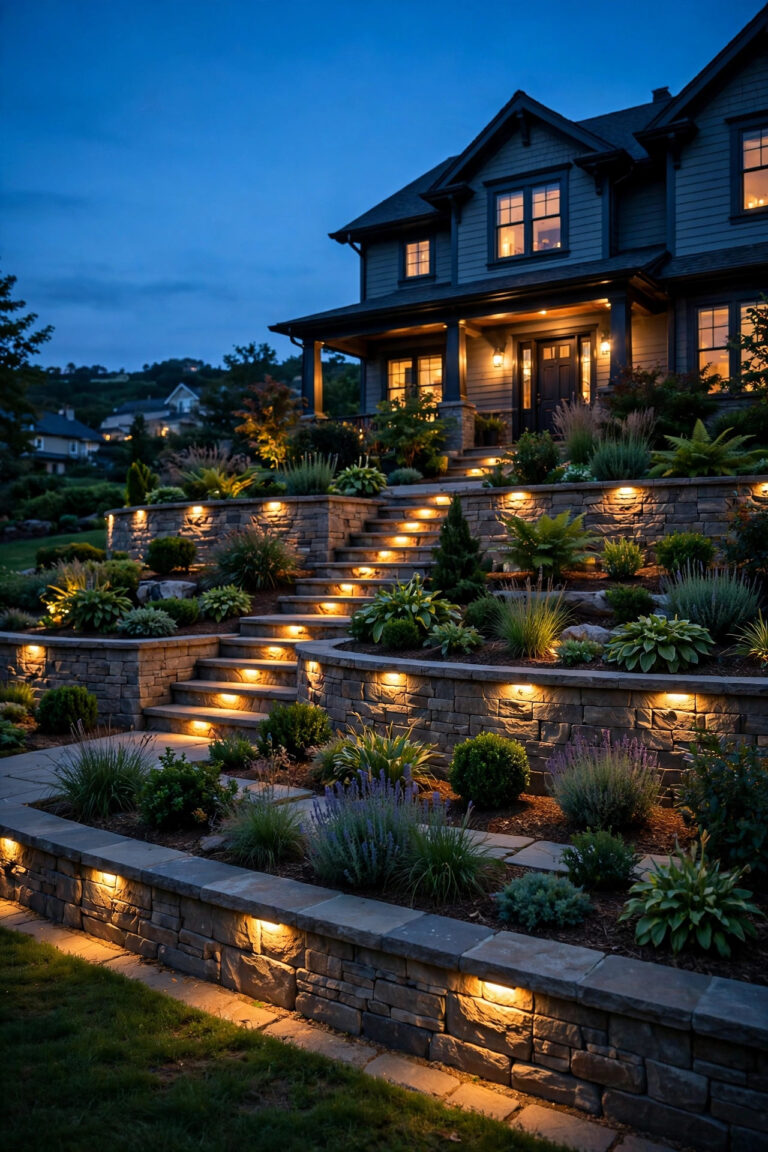
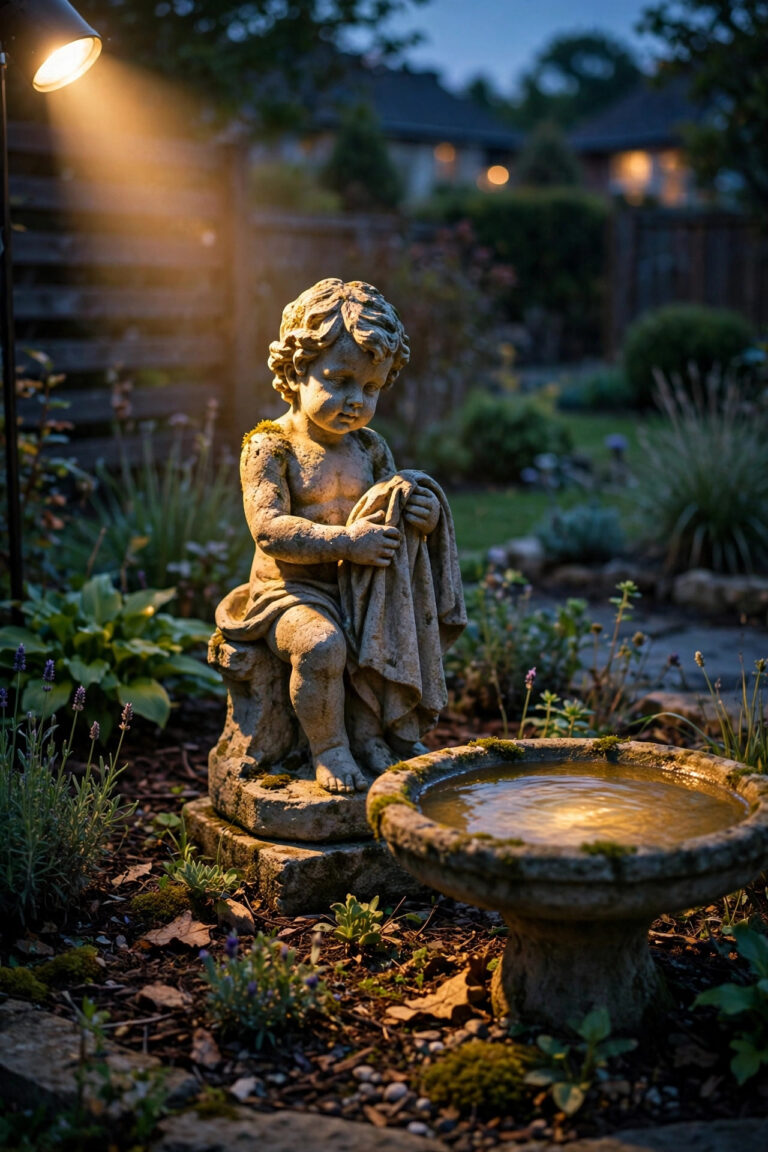
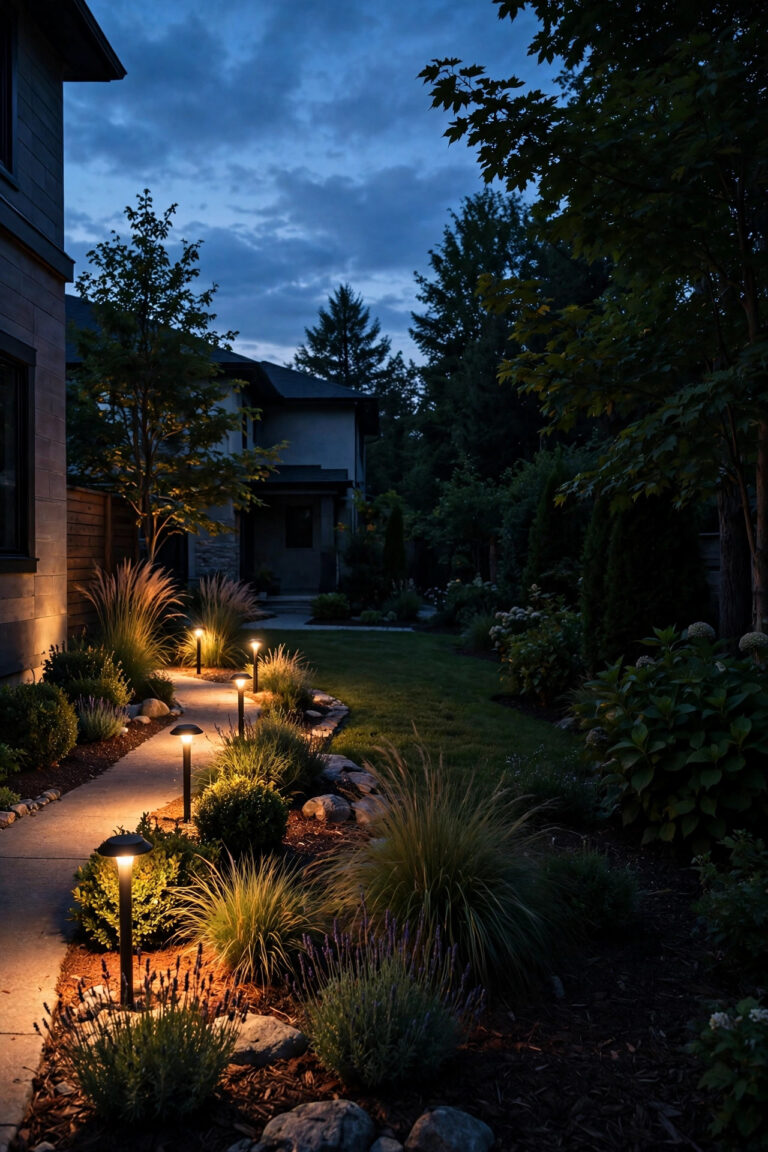
There is something about a curved hook with a lantern swaying gently at dusk that makes a whole yard feel finished. Shepherd's hook lights are my favorite no-wiring trick: you push the stake into the soil, hang something pretty, and by sunset the path you walked a hundred times suddenly looks like it belongs in a magazine. No trench, no transformer, no electrician. In my experience they work because the light hangs at eye-catching height — higher than a stake light, lower than a porch fixture — right in that sweet layer where a yard goes from flat to dimensional. That layering is the whole secret of outdoor lighting that feels designed instead of installed. Below are the 17 setups I rotate through my own paths, garden beds, and porch, with the heights, spacing, and little stability tricks that keep hooks standing straight through wind and watering cans.

1. Classic Hanging Lanterns Along the Front Path
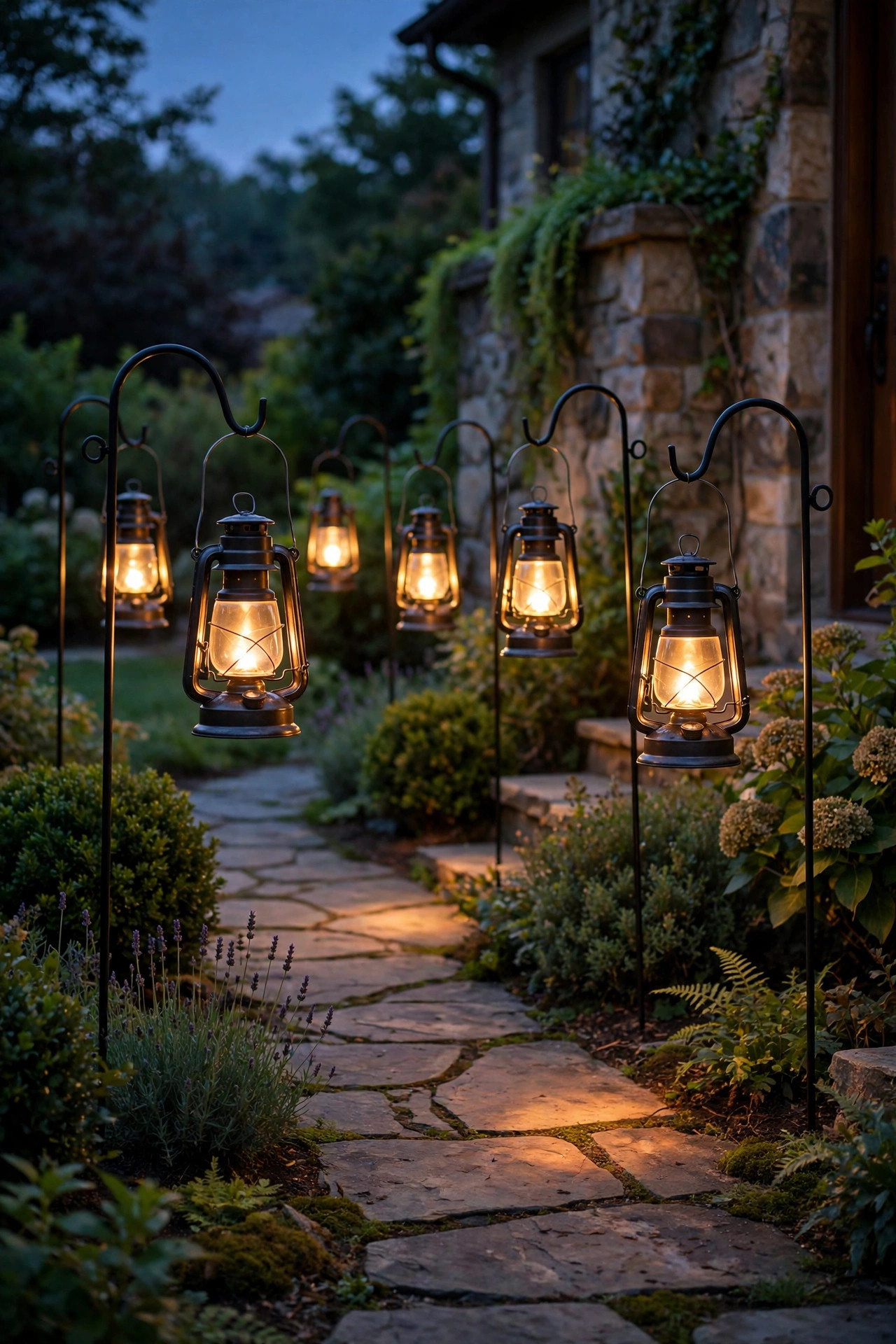
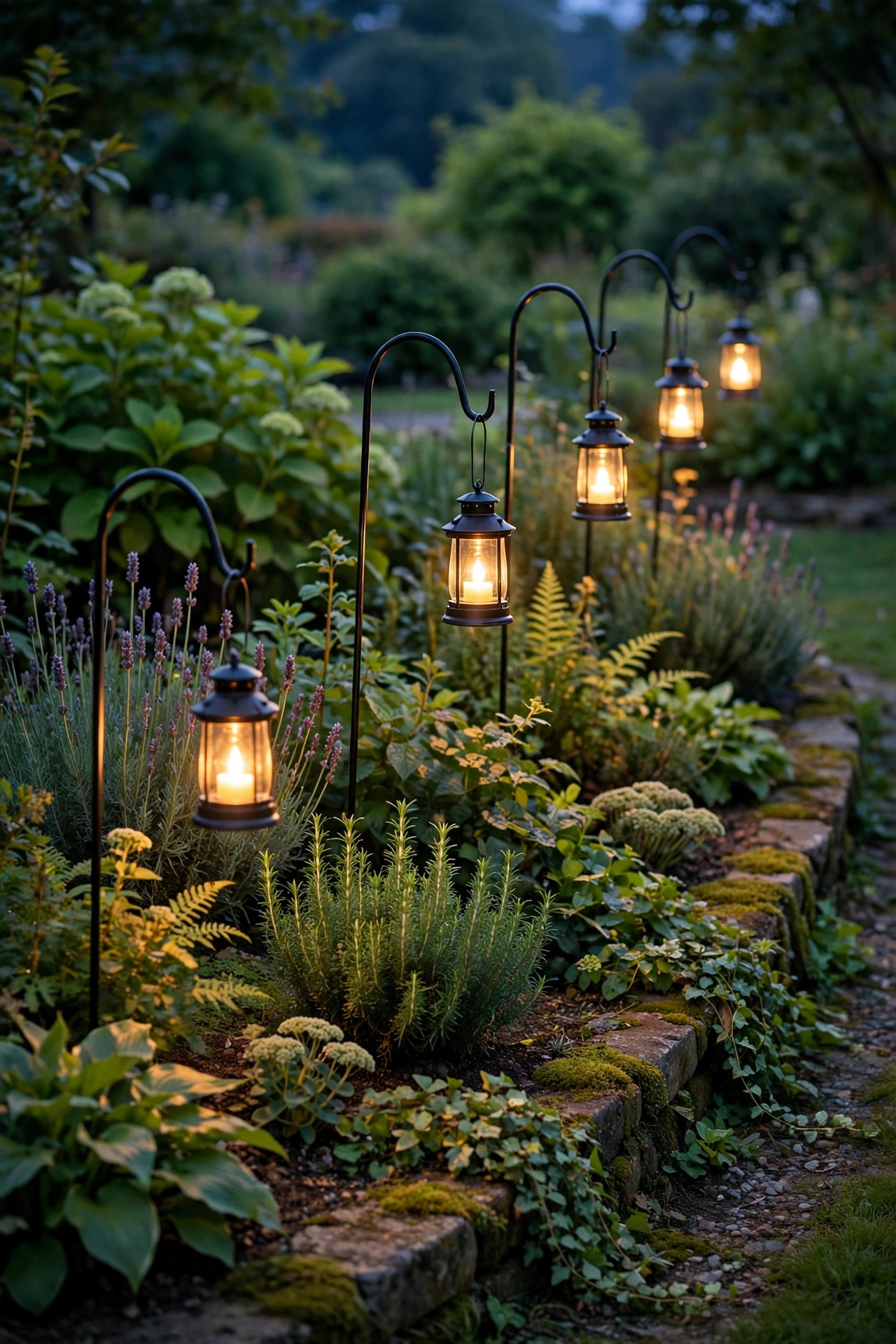
Start with the look that made me fall for these: a simple black steel hook, about 48 inches tall, with a small metal-and-glass lantern hanging from the curl. I line both sides of my front walk, staggered rather than mirrored, every 6 to 8 feet. Staggering matters — a mirrored runway can feel like an airport, while offset hooks read as relaxed and intentional. Choose lanterns with warm-white LED candles or low-lumen solar bulbs around 2700K so the path glows instead of glares. Push each stake at least 10 inches into the soil, and step on the foot peg rather than rocking the hook side to side, which wallows out the hole. If your soil is sandy, a 12-inch landscape spike beside the stake adds insurance. I pair these with the low plantings from my favorite walkway lighting ideas so the hanging light and the ground light layer together beautifully.
Suggested budget range: $60 – $140.
2. Solar Lantern Hooks for a Wire-Free Walkway
If the thought of running cable makes you close the tab, solar shepherd's hook lights are your answer. Each hook carries its own little lantern with a solar panel on top, so placement is limited only by sunshine. The honest rule I give everyone: the panel needs roughly six hours of direct sun, so test a spot for a day before committing the whole row. In partly shaded walks, choose lanterns with a separate cabled panel you can stake 3 feet away in the sun while the lantern hangs in the shade. Expect a soft 10 to 30 lumens per lantern — accent light, not security light — and about 6 to 8 hours of glow on a full summer charge. Come winter, I angle the panels slightly south and wipe them monthly; dust and pollen quietly steal brightness. My full breakdown of brightness and battery trade-offs lives in this solar path lights guide, and it pairs perfectly with hooks.
Suggested budget range: $45 – $110.

3. Mason Jar Fairy Lights in the Garden Beds
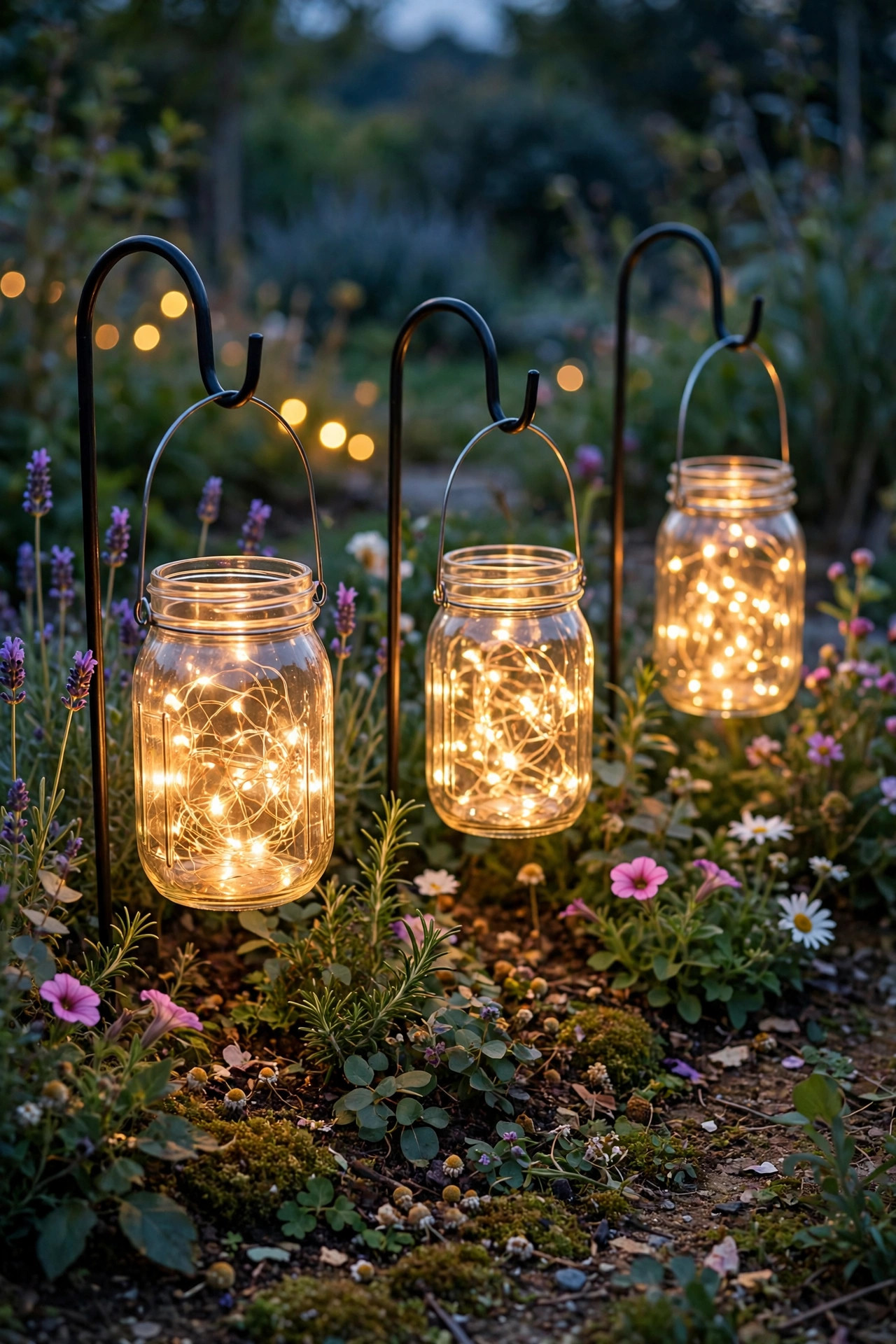
This is the project my neighbors ask about most, and it costs almost nothing. Take wide-mouth mason jars, drop in a strand of copper-wire fairy lights with a small solar cap lid, and hang the jar by its wire handle from hooks tucked into the flower beds. I use 36-inch hooks here so the jars float just above the hostas and daylilies instead of disappearing into them. The copper wire bends to any hook curl, and the warm pinpoints through glass look like bottled fireflies. Group jars in odd numbers — three hooks clustered at a bed corner beat a lonely single every time. One caution from experience: choose jars with drainage-friendly lids or drill a tiny weep hole, because a jar that fills with rainwater will drown the battery cap. Solar lids rated IP44 or better handle splashes fine. In fall I swap the warm-white strands for amber ones and the whole bed turns harvest-gold.
Suggested budget range: $25 – $60.
4. Double Hooks Framing the Porch Steps
A double shepherd's hook — one stake, two arms — is the hardest-working piece on my porch. I plant one on each side of the front steps and hang matching lanterns, and the symmetry instantly makes the entry feel deliberate, like the house is holding two candles out to welcome you. Keep the lanterns identical and hung at the same height; your eye notices a two-inch difference more than you'd think. Because these sit close to foot traffic, I use heavier-gauge hooks, the kind with a welded H-step base, and I sink them a full 12 inches. Battery-operated LED candles on timers are my pick here — set them to glow from 6 to 11 p.m. and you never think about them again. In December the lanterns get a small cedar sprig and red ribbon; in spring, a faux nest or a tiny potted pansy shares the hook. It is five minutes of styling for a month of curb appeal.
Suggested budget range: $50 – $120.

5. Hanging Basket and Light Combos on the Porch
Why should a hook hold only one thing? On my porch I run a row of tall hooks along the railing line and alternate: hanging basket of trailing petunias, lantern, basket, lantern. By day the flowers carry the show; after dusk the lanterns take over and the baskets become soft silhouettes above them. The trick is weight balance — a soaked 12-inch basket can top 12 pounds, so anchor these hooks in the ground beside the porch rather than in a planter, or choose the clamp-on railing hooks rated for the load. Water baskets in the morning so they are not dripping on your lantern electronics at happy hour. Choose lantern finishes that echo something already on the porch — mine are oil-rubbed bronze to match the door hardware — and the whole arrangement reads as one designed moment instead of yard-sale clutter. This layered trick works on decks and apartment balconies just as well.
Suggested budget range: $70 – $160.

6. Shepherd's Hook Lights for Garden Borders
Flower beds need edges after dark, and shepherd's hook lights for garden borders give you a soft scalloped line that stake lights can't match. I run 30- to 36-inch hooks along the front edge of the bed, spaced about 4 feet apart, each holding a small seeded-glass lantern or a solar globe. The light falls in overlapping pools on the mulch and catches the front row of plants — coral bells and creeping phlox practically shimmer under it. Keep the hooks 6 inches inside the bed edge so the mower and string trimmer never meet the stake. If the bed curves, follow the curve faithfully rather than straightening it; the gentle wave is the charm. I have collected more bed-planting combinations in my roundup of garden lighting ideas, and hooks feature in nearly every scheme because they move when the plants do — just pull and re-stake as the garden matures.
Suggested budget range: $55 – $130.
7. Vintage Edison Bulb Pendants on Tall Hooks
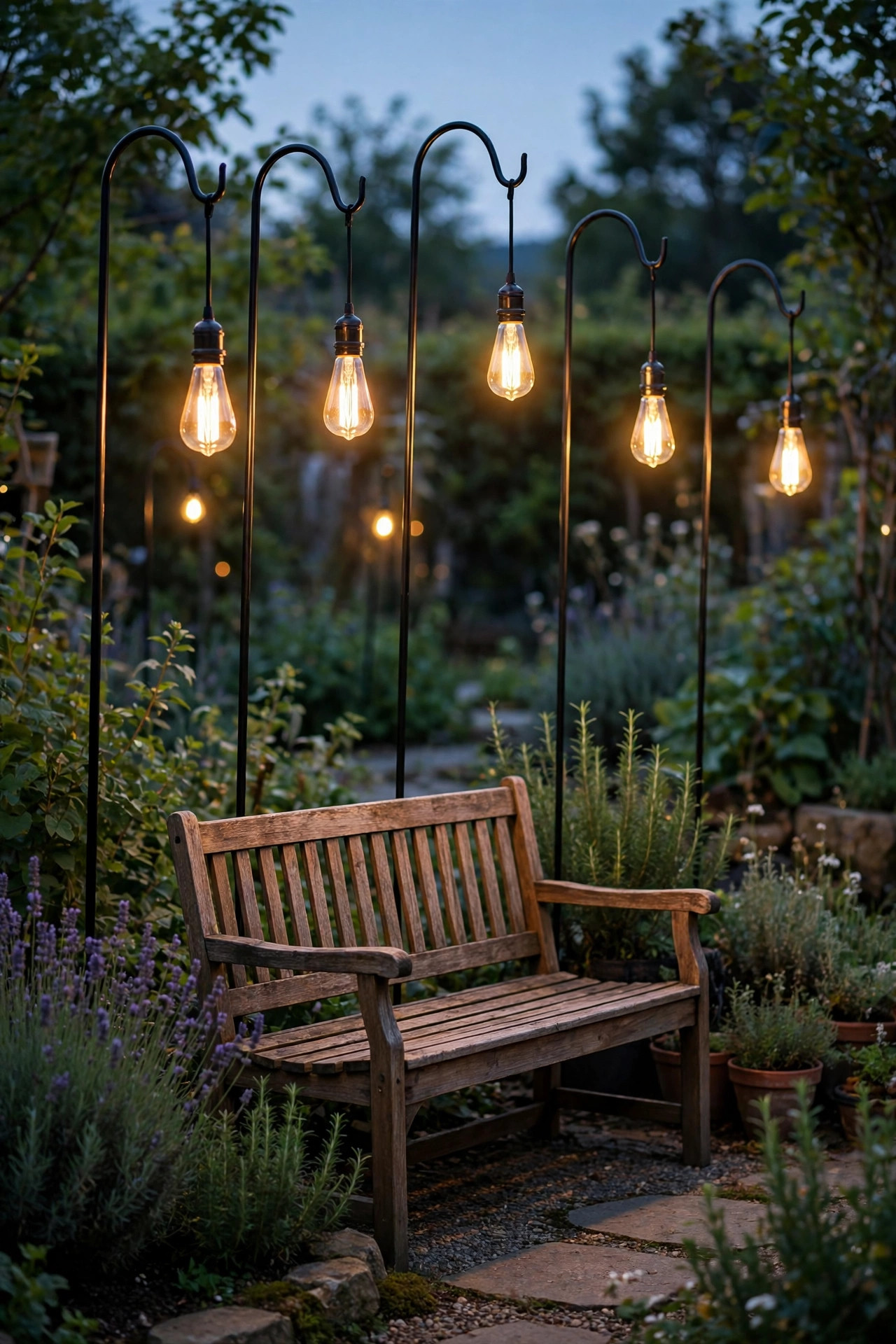
For a bistro mood, go tall and go filament. Extra-tall hooks, 72 to 84 inches, let you hang a weatherproof pendant socket with an LED Edison-style bulb that drapes at about head height over a seating area or garden gate. The exposed filament at 2200K reads like candlelight — instant café. Because these hang higher, wind swing is real, so I add a small clip or zip tie where the cord meets the hook curl, and I choose shatter-resistant plastic-envelope bulbs for anything over a walkway. One pendant per hook, always: doubling up looks tangled and overloads the arc. Line three tall hooks behind a bench and you have a photo backdrop people drift toward at every gathering. Keep the bulbs on a plug-in dimmer if they are corded, or choose solar pendants with a warm filament look if the spot is far from an outlet. Low, golden, and unhurried — that is the whole vibe.
Suggested budget range: $65 – $150.
8. Paper Lantern Hooks for Parties and Garden Gatherings
When I host, I cheat with paper. Lightweight paper lanterns — nylon outdoor versions, not the tissue kind — hang from hooks placed temporarily around the patio and lawn, and suddenly a Tuesday cookout looks like a wedding. Because they weigh almost nothing, even slim decorative hooks hold them fine, and I can stake out a whole party layout in fifteen minutes. Mix sizes, 8-, 10-, and 12-inch, and hang them at slightly varied heights by adjusting the drop string. A battery LED puck or a short fairy strand inside each lantern gives an even glow with no cords crossing the grass where guests walk. Choose nylon lanterns rated for outdoor use and bring them in if a storm rolls through; mine have survived three summers of parties. After the event, the hooks go back to their everyday lanterns and the lanterns fold flat into a tote. Instant atmosphere, zero storage guilt.
Suggested budget range: $30 – $75.

9. Candle Lanterns for a Flickering Porch Corner
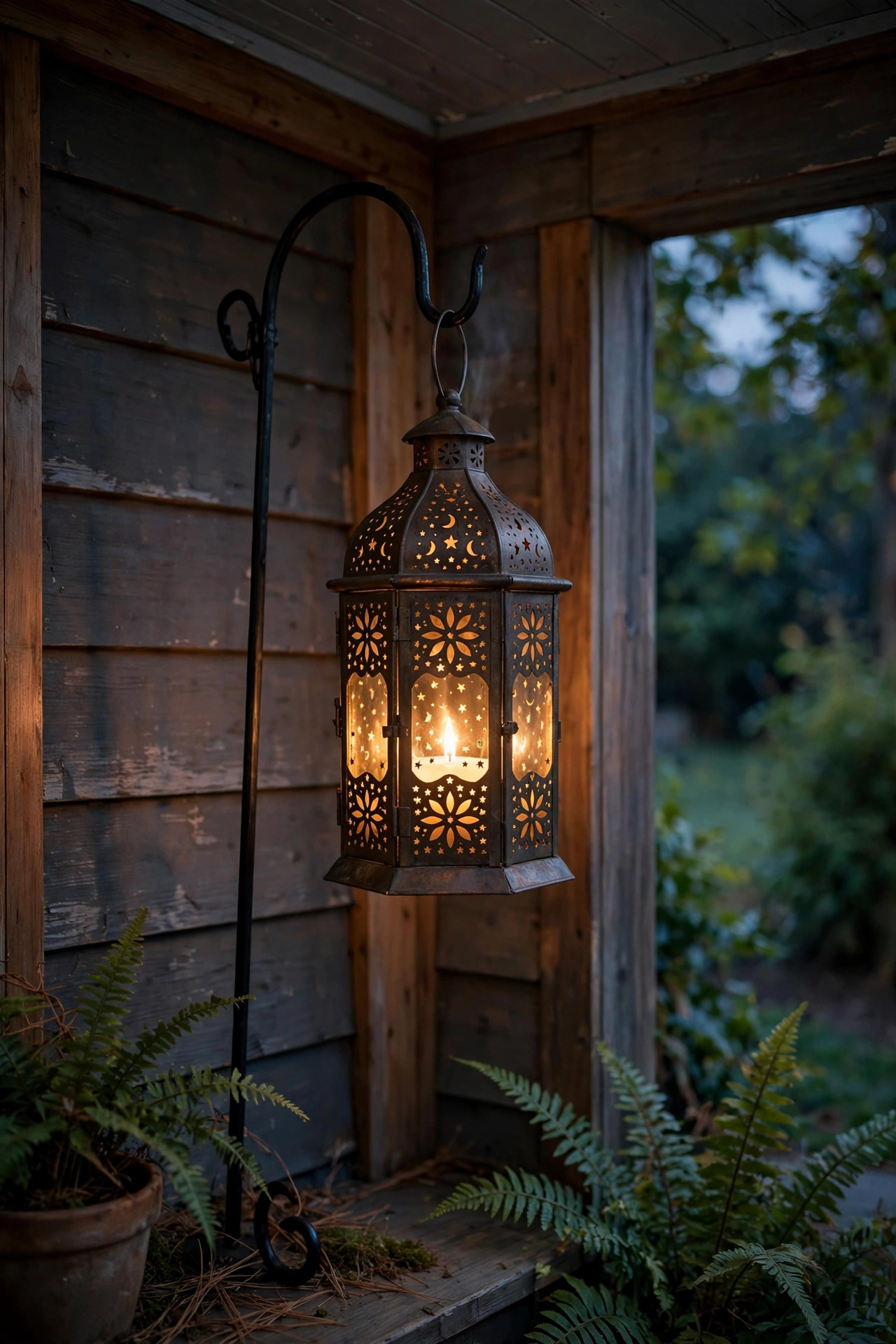
Every porch has that one dead corner. Mine got a single 54-inch hook and a pierced-metal candle lantern, and now it is my favorite seat in the house. The pierced pattern throws dotted light across the porch floor and wall — pattern is light you get for free. Use flameless LED candles with a realistic flicker and a remote; real flame in a hanging lantern near porch cushions is a risk I won't take, and the LED versions honestly fool everyone after dark. Add a small side table and the corner becomes a reading nook. If your corner is windy, choose a lantern with a latch door and a heavier base ring so it hangs steady instead of spinning. I match the lantern metal to my porch swing hardware so it feels built-in. On quiet evenings I sometimes hang two hooks of different heights in the corner, a little constellation over the chair.
Suggested budget range: $35 – $85.
10. Hooks Lining a Curved Garden Path
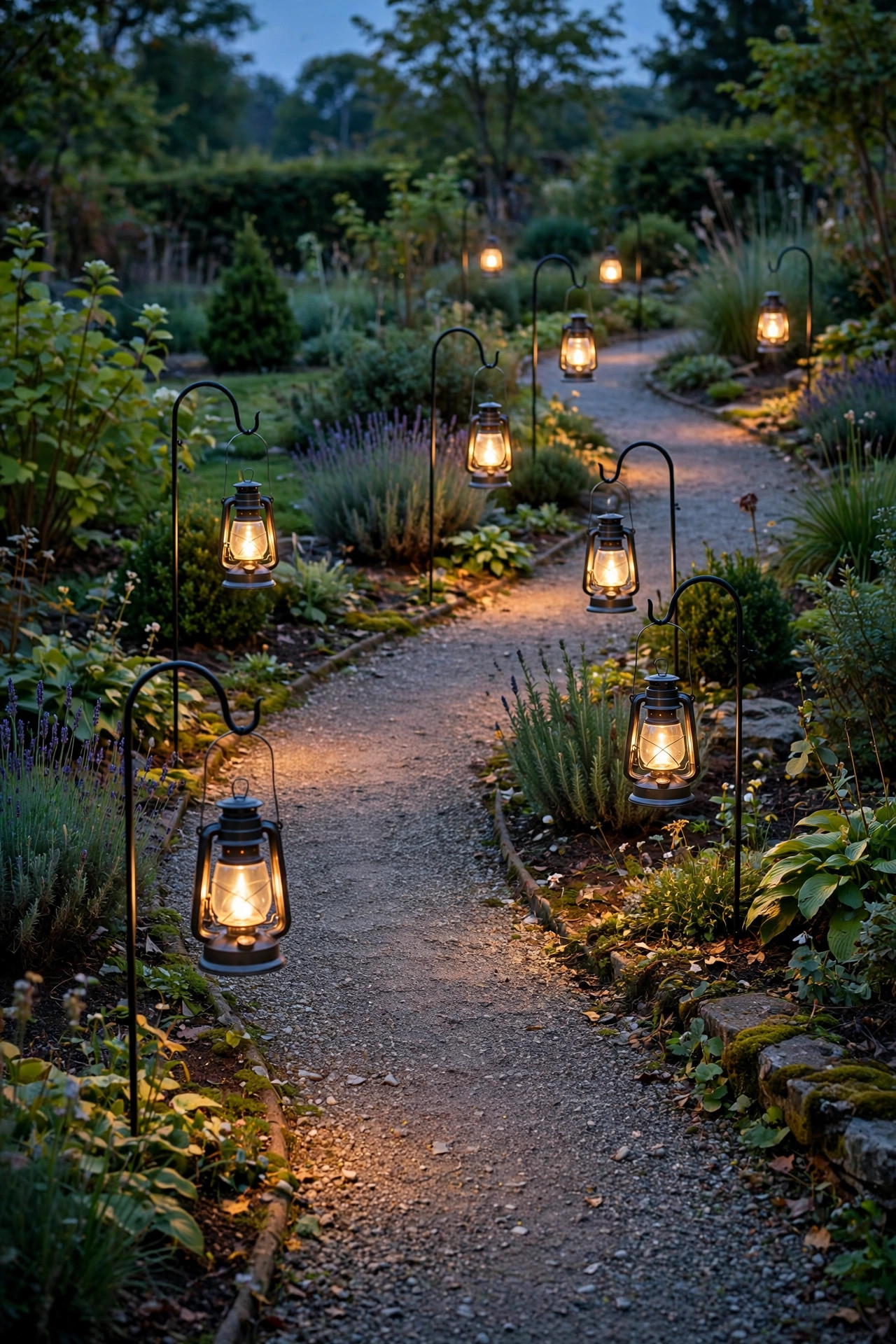
Straight paths forgive sloppy spacing; curves do not. On a curved path, place hooks on the outside of each bend — the eye follows the light around the turn, and guests naturally walk the lit line. I set them every 5 to 6 feet along the curve, closer on the bend, wider on the straights, and I hang the lanterns on the path side of the stake so the glow lands on the gravel, not the lawn. Stand at the start of the path at dusk and adjust before you commit: you want overlapping pools with no dark gap at the curve's apex, because that is exactly where feet hesitate. Low hooks, 36 to 44 inches, keep the light intimate and under the sightline of anyone seated nearby. This is also where solar lanterns earn their keep, since curved garden paths rarely run anywhere near an outlet, and trenching a curve is nobody's idea of a Saturday.
Suggested budget range: $60 – $135.
11. Shepherd's Hook Lights Around the Fire Pit
Circle the fire pit with hooks and you extend the gathering space well past the firelight's reach. I place four to six 48-inch hooks in a loose ring about 8 feet out from the pit's edge — close enough to share the warmth of the scene, far enough that lantern glass never heats up or collects soot. Hang metal lanterns with flameless candles here, never real flame near a fire pit's sparks, and let the fire be the only true flame. The ring of soft light marks the seating zone so guests stop tripping over the dark gap between chairs and the wood pile, which, honestly, was the original problem I was solving. Battery candles on a 6-hour timer mean the ring lights itself as we head out with the marshmallows. In the morning the hooks just look like garden sculpture among the Adirondack chairs. Practical, pretty, and nobody stubs a toe.
Suggested budget range: $55 – $125.

12. Rustic Metal Lanterns for a Farmhouse Porch
If your house leans farmhouse, hooks and lanterns should too. I look for galvanized or distressed-black lanterns with a slightly oversized bail handle, hung from hooks with a hand-forged look — the ones with a twisted shaft read much more authentic than smooth tube steel. Hang a pair flanking the porch door at about 54 inches and one more beside the porch swing. A sprig of faux cotton or a small grapevine wreath on the hook in fall leans all the way into the style. Keep bulb color warm and dim; bright white light fights the rustic mood. These lanterns also age gracefully — a little weather patina improves them, which is more than I can say for most outdoor decor. Pair with a buffalo-check cushion and a coir mat and call the porch done. Guests will assume a designer stopped by. Let them.
Suggested budget range: $45 – $110.

13. Color-Changing Solar Hooks for Holidays and Game Days
Here is my guilty pleasure: solar lanterns with a color-changing mode, hung from hooks that stay in the garden year-round. Most of the year they run warm white like respectable path lights. Then October arrives and they go orange and purple along the front walk; December turns them red and green; game day is, of course, team colors. Because the hooks never move, the seasonal swap is a button on a remote, not a ladder-and-storage-bin production. When you shop, check that the lantern defaults back to your chosen color after charging — some reset nightly, which gets old fast. Keep expectations honest: color modes are dimmer than white mode, so treat these as festive accents layered over your real path lighting, not a replacement for it. The neighbors' kids rate my front walk by which colors are showing. It is a whole thing now, and I have fully leaned in.
Suggested budget range: $50 – $115.

14. Mini Hooks for Flower Bed Accents
Not every hook needs to make a statement. Mini shepherd's hooks, 18 to 24 inches tall, are for tucking a single tiny lantern or glass orb right into the planting — at the base of a rose, beside a garden statue, in front of a birdbath. The light sits inside the foliage, so leaves catch it from behind and the whole plant glows like it is lit from within. I use three minis in a triangle around my birdbath and it is the prettiest accident in the garden. Mini hooks also solve the fairy-garden and container problem: one in a large planter with a micro lantern turns a patio pot into a nighttime feature. They push in with one hand, move in seconds, and cost little enough to buy in bundles. Solar minis with a warm pinpoint LED are my default; skip the rainbow color-wheel minis unless a grandchild is supervising the design, in which case, obviously, rainbow everything.
Suggested budget range: $20 – $50.

15. Hooks With Wind Chimes and Light by the Back Door
By the back door I hang a duet: a small wind chime on one hook and a lantern on its twin, set a few feet apart where the evening breeze comes off the garden. Sound plus glow makes the threshold feel like a place, not just a door. Choose chimes with a deep, low tone — the high tinkly ones at ear height by a door get unhooked by week two, trust me. Keep the lantern hook slightly taller so light spills over the chime and catches its movement; the shifting shadows are half the effect. This pairing also works beautifully beside a bedroom window or a screened porch where you sit in the evening. Both pieces are weather-tough and need nothing from you but a yearly wipe-down. On still nights you get the light; on breezy nights you get the whole performance. It is the cheapest sensory upgrade I know for under fifty dollars.
Suggested budget range: $30 – $70.

16. Mixing Heights for a Layered Glow
The single change that made my yard look professionally done was breaking the uniform line. Instead of twelve identical hooks, I now mix three heights — 36, 48, and 62 inches — in a loose rhythm along the path and beds. Tall hooks carry the statement lanterns at focal points: the gate, the big oak, the turn in the walk. Medium hooks do the steady path work, and the minis sparkle inside the plantings. Your eye reads the variation as depth, the same way layered lamps beat a single ceiling light indoors. A good rule: no more than two hooks of the same height in a row, and let a tall hook anchor every cluster. When you shop sets, buy singles in mixed heights instead of one matched box — the collected look is the goal. Stand across the street at dusk and squint; if the lights form one flat dotted line, swap two hooks and check again.
Suggested budget range: $75 – $170.

17. A Whole-Yard Plan: Front, Side, and Back in One Afternoon
Here is how I would spend one Saturday with a bundle of hooks. Front walk first: six medium hooks with solar lanterns, staggered, because curb appeal pays the bills. Side path second: three tall hooks with Edison pendants over the gate and the utility corner everyone ignores — light fixes ugly corners faster than paint. Garden beds third: a border run of short hooks plus three minis around the birdbath. Porch last: double hooks at the steps, a candle lantern in the corner, done. That is roughly twenty hooks and every zone layered. Buy hooks in two trips if budget matters; do the front and porch in spring, beds and side yard in fall when garden centers discount. Keep one spare hook in the garage — you will find a spot for it, I promise. Shepherd's hook lights reward this zone-by-zone approach because each piece moves the day your garden changes its mind.
Suggested budget range: $180 – $420.

Frequently Asked Questions
How tall should shepherd's hook lights be for a walkway?
For walkways, 36 to 48 inches is the sweet spot — the lantern hangs high enough to light the path surface without shining into your eyes. Use 30- to 36-inch hooks in garden beds where plants do half the work, and save 62-inch and taller hooks for focal points like gates and seating areas.
How do I keep a shepherd's hook from leaning?
Leaning almost always means the stake went in crooked or too shallow. Push the stake at least 10 to 12 inches deep using the foot peg, wiggle it plumb before hanging anything, and match lantern weight to hook gauge — heavy lanterns need heavy hooks. In soft or sandy soil, add a support spike beside the stake.
Are solar shepherd's hook lanterns bright enough?
They are accent lighting, honestly — typically 10 to 30 lumens, lovely for marking a path's edge and adding glow, but not enough to read by or to light steps safely on their own. Layer them with a porch light or low-voltage path lights where real visibility matters, and give the panels six hours of sun.
Can shepherd's hooks stay out all winter?
Yes, powder-coated steel hooks handle winter fine. I bring in delicate glass lanterns and paper or nylon pieces before freeze-thaw cycles and ice storms, and I store solar lantern tops indoors so the batteries live longer. A quick spring wipe-down and a check for rust at the welds is all the maintenance they ask for.
Conclusion
If I could keep only one lighting trick from twenty years of tinkering, it might be this one, because shepherd's hook lights ask for nothing — no wires, no trades, no commitment — and give back a yard that glows in layers. Start with a pair at the porch steps or a short run along the front path, live with them for a week, and you will start seeing dark corners everywhere that want a hook of their own. That is not a problem; that is the hobby. Browse the rest of my outdoor lighting ideas here on the site for the wired and solar pieces that layer underneath the hooks, and build your own evening garden one hook at a time.