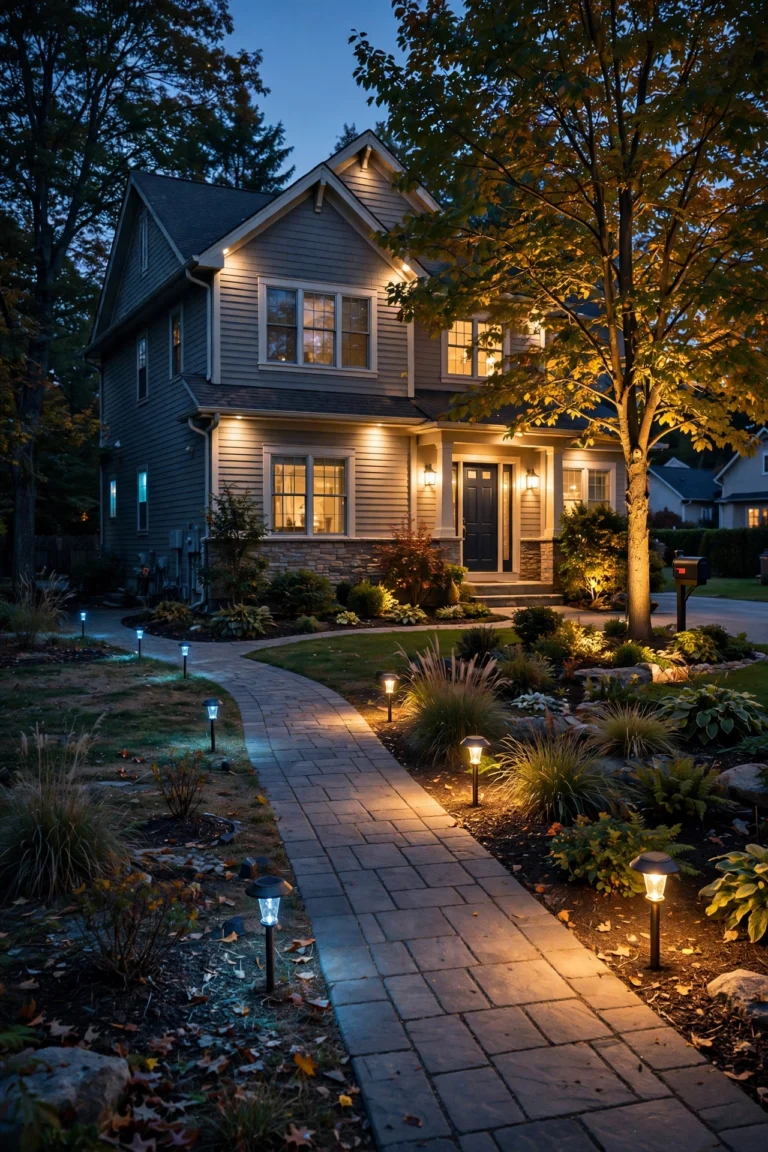
Every time I pass a grand old Queen Anne at dusk, I slow down. The wraparound porch, the spindle railing, the gingerbread trim in the gable — these houses were built in the gaslight era, and they still look their absolute best in a soft, flickering kind of glow. That is exactly why I collect victorian porch lighting ideas the way other people collect teacups: flame-shaped bulbs, ornate scrollwork, seeded glass, and copper that deepens with every season. In my experience, a Victorian porch does not want brighter light; it wants lower, warmer, more deliberate light, layered so the architecture does half the decorating. Below are the 19 ideas I reach for again and again, from the gas-style lantern by the door to fairy lights woven through the trim, each with honest budget ranges and the little placement tricks that keep ornament looking romantic instead of theme-park. Pour a cup of tea, step onto your own porch at dusk, and let us plan its storybook chapter.

1. Layer Your Victorian Porch Lighting Ideas in Three Heights
Start where I always start: with layers. A Victorian porch reads in three bands — the floor and steps below, the door and seating at eye level, and the ceiling, beams, and gable up high. Give each band its own gentle light source and the whole porch glows like a stage set instead of a security photo. Low light can be as simple as lantern-style lights at the porch steps or a slim shielded strip tucked under the bottom step riser. Middle light is your welcome layer: sconces or a door lantern mounted about 66 inches above the porch floor, right where guests see faces, not fixtures. High light is one pendant or a beam lantern washing the ceiling so the porch feels taller at night. If your porch wraps the corner of the house, my guide to wraparound porch lighting ideas shows how to keep those same layers consistent all the way around. Before buying anything, stand at the sidewalk at dusk and name which band looks darkest. Fix the darkest band first — honestly, that single habit prevents most of the mismatched, over-lit porches I get asked to rescue.
Suggested budget range: $150 – $400.
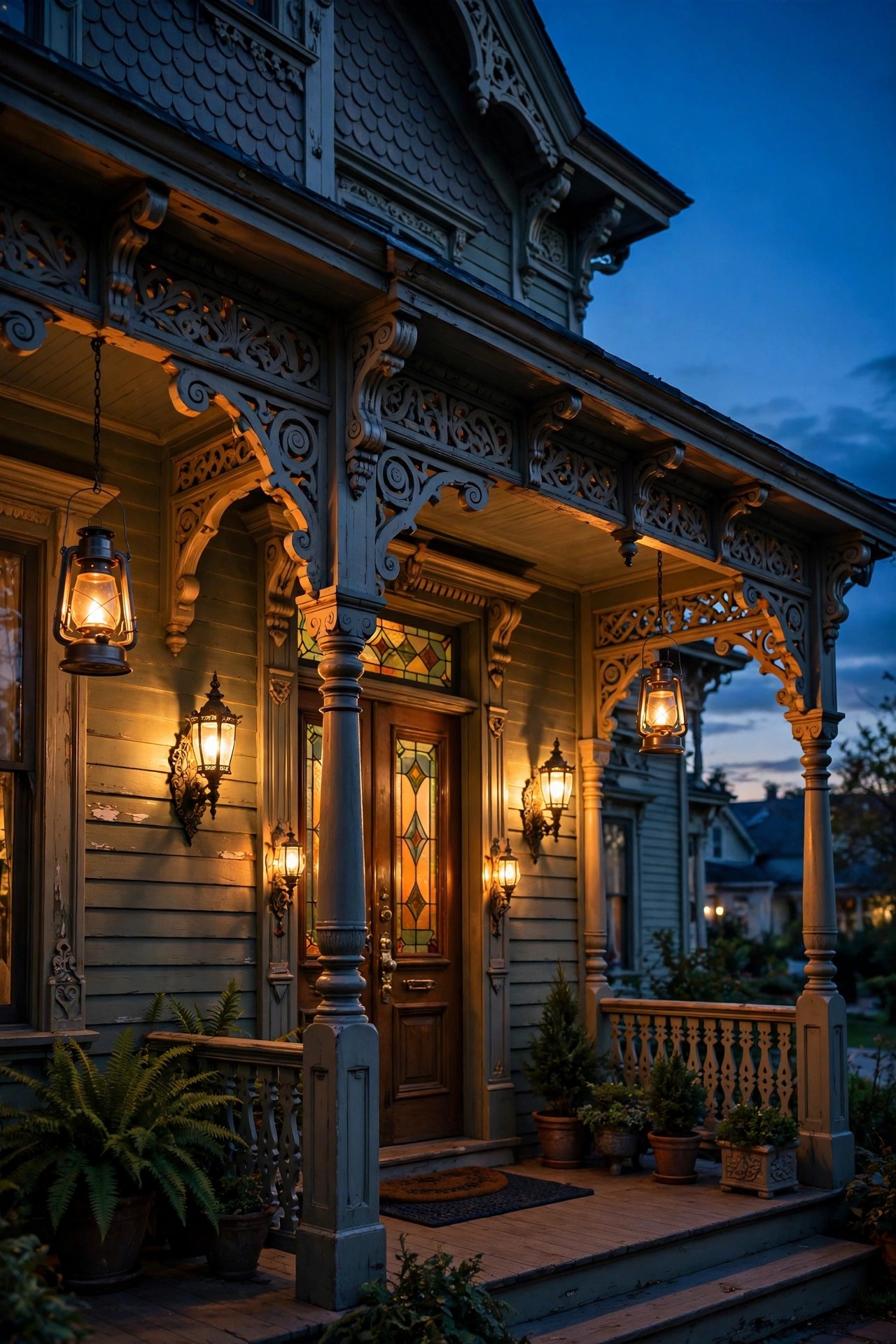
2. Flank the Front Door With a Gas-Style Flame Lantern
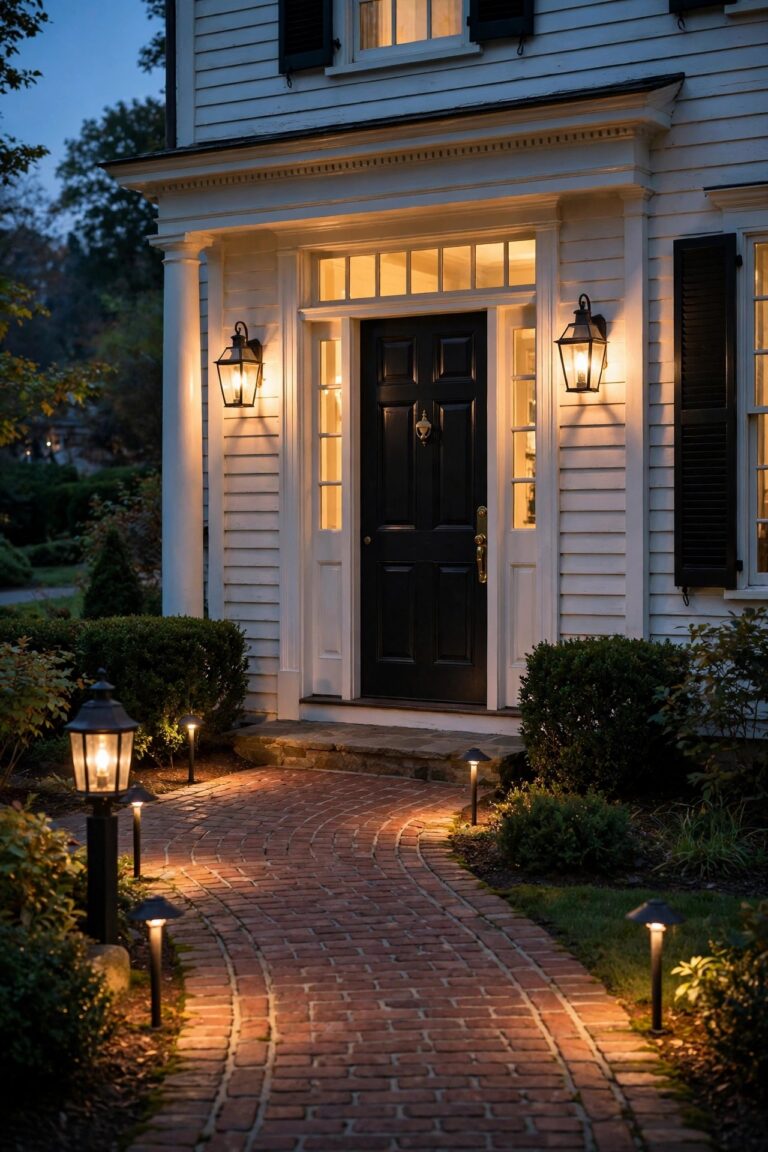
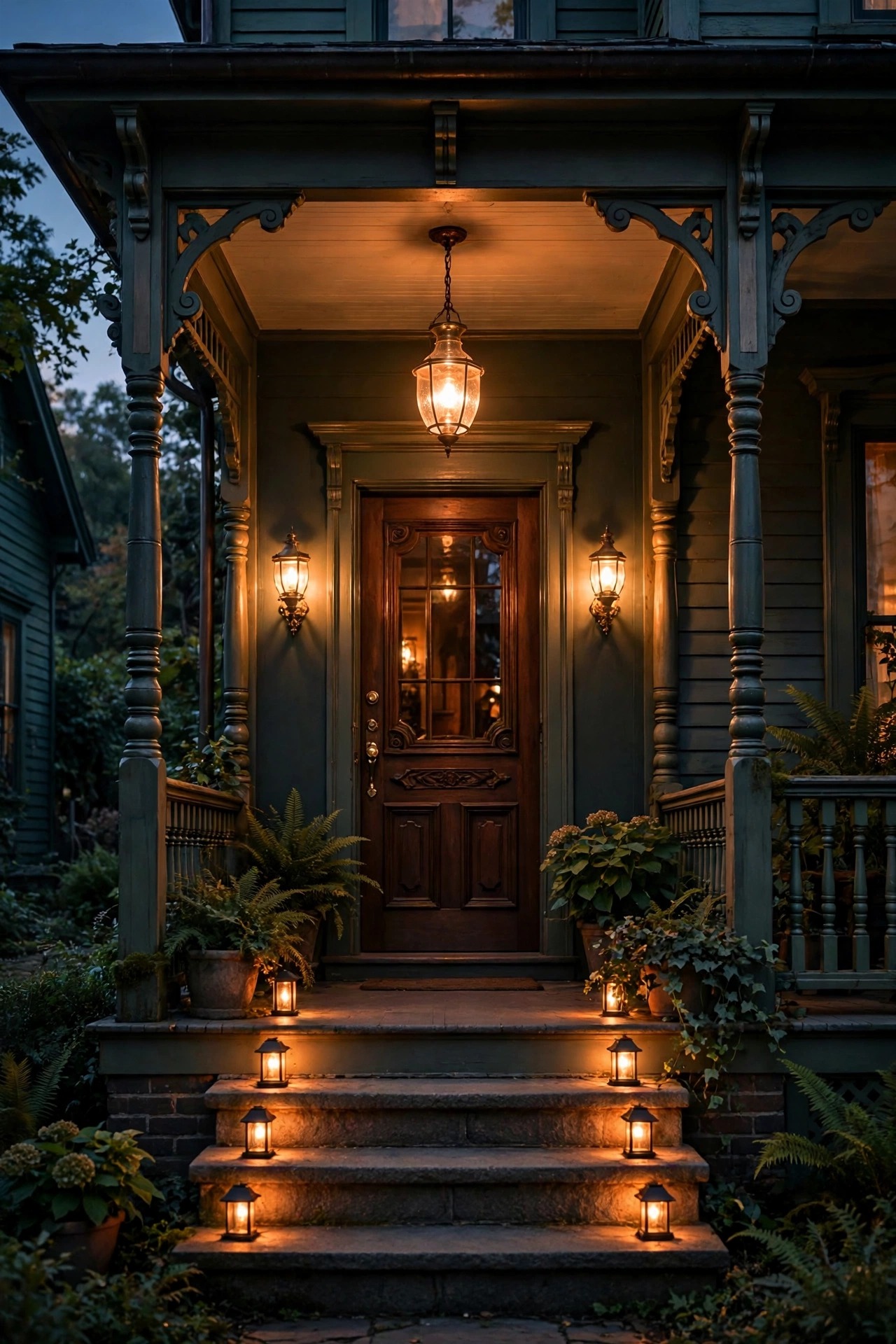
The single most transformative fixture on a Victorian porch is a gas-style lantern beside the front door — or better, a matched pair. Modern versions burn LED flame bulbs that flicker like real gas mantles, with none of the plumbing, permits, or open-flame worry. Look for a lantern at least 12 to 16 inches tall so it holds its own against a tall Victorian door; undersized fixtures are the number one mistake I see on these houses. Mount the center of the lantern roughly 66 inches above the porch floor, and choose seeded or lightly frosted glass so the flame reads as a glow, not a bare bulb you can stare at. If your porch has only one junction box, a single larger lantern on the hinge side of the door still delivers the storybook note. Keep the finish black or aged bronze and let the flame do the showing off. One caution from experience: put flame bulbs on a dimmer or choose a lower-lumen version for the door. A flickering lantern that runs too bright looks like a warning light, not a welcome.
Suggested budget range: $80 – $250.
3. Let Scrollwork Sconces Carry Your Victorian Porch Lighting Ideas
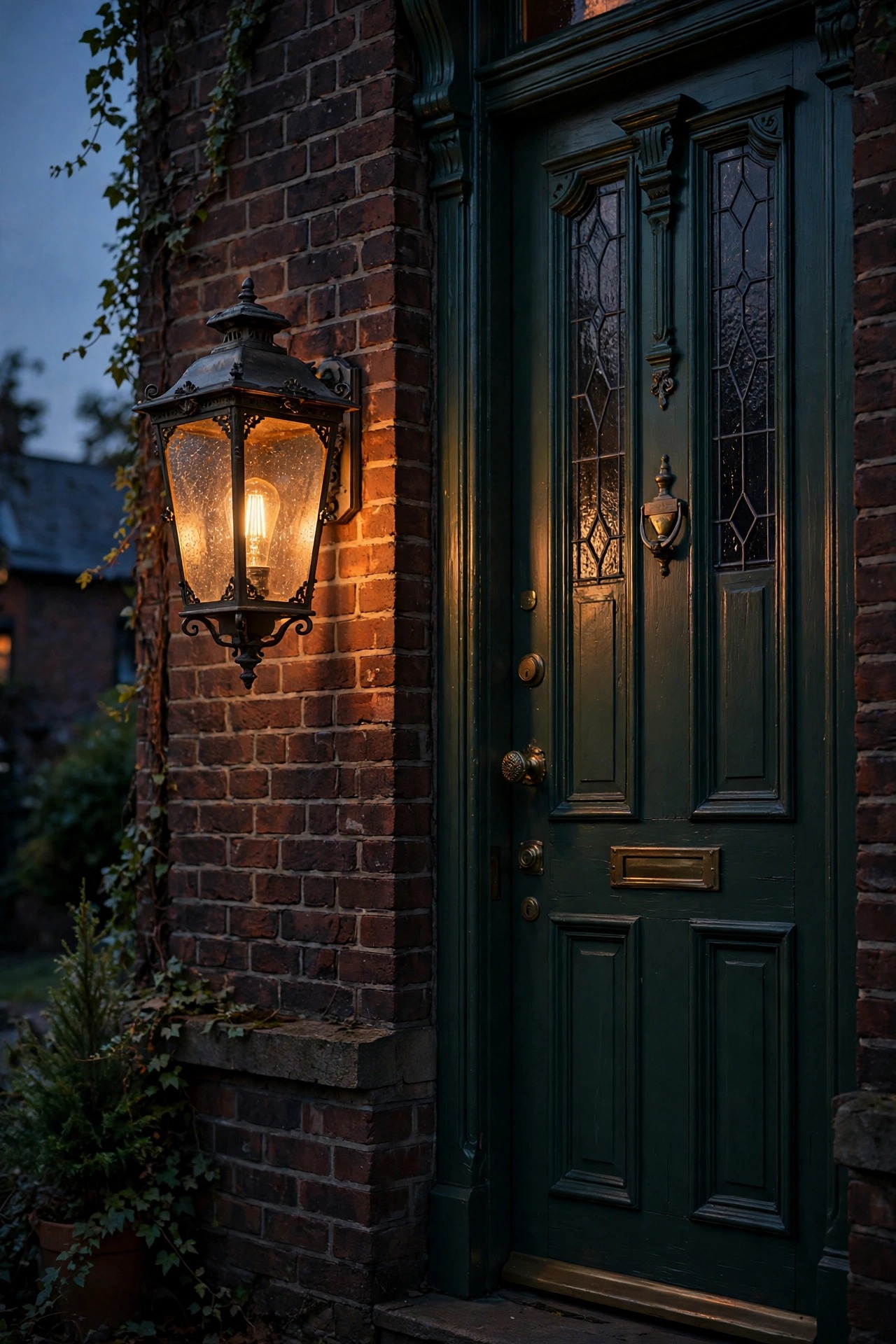
If the door lantern is the soloist, wall sconces are the choir. Ornate scrollwork sconces — curled arms, leaf details, a little crown or finial on top — repeat the language of your porch brackets and railing spindles, so the lighting looks original to the house instead of added last Tuesday. Space them to frame something: flanking a bay window, centered on the wall panels between windows, or marching down a long porch every 8 to 10 feet. I always recommend browsing outdoor wall lantern ideas with your porch measurements in hand, because scale is everything here: a sconce that is too small reads as a toy against a tall Victorian wall. Match the glass across every fixture — all seeded or all frosted — and the scrollwork can vary slightly without looking chaotic. For snowy or coastal climates, pick powder-coated cast aluminum over thin stamped steel; the scrolls are the first places rust creeps in. Wire them on one switch or photocell so the whole choir sings together at dusk, and keep bulbs at 2700K or warmer so the black metal glows amber instead of glaring white.
Suggested budget range: $60 – $180.

4. Hang Chain Pendants for Porch-Ceiling Drama
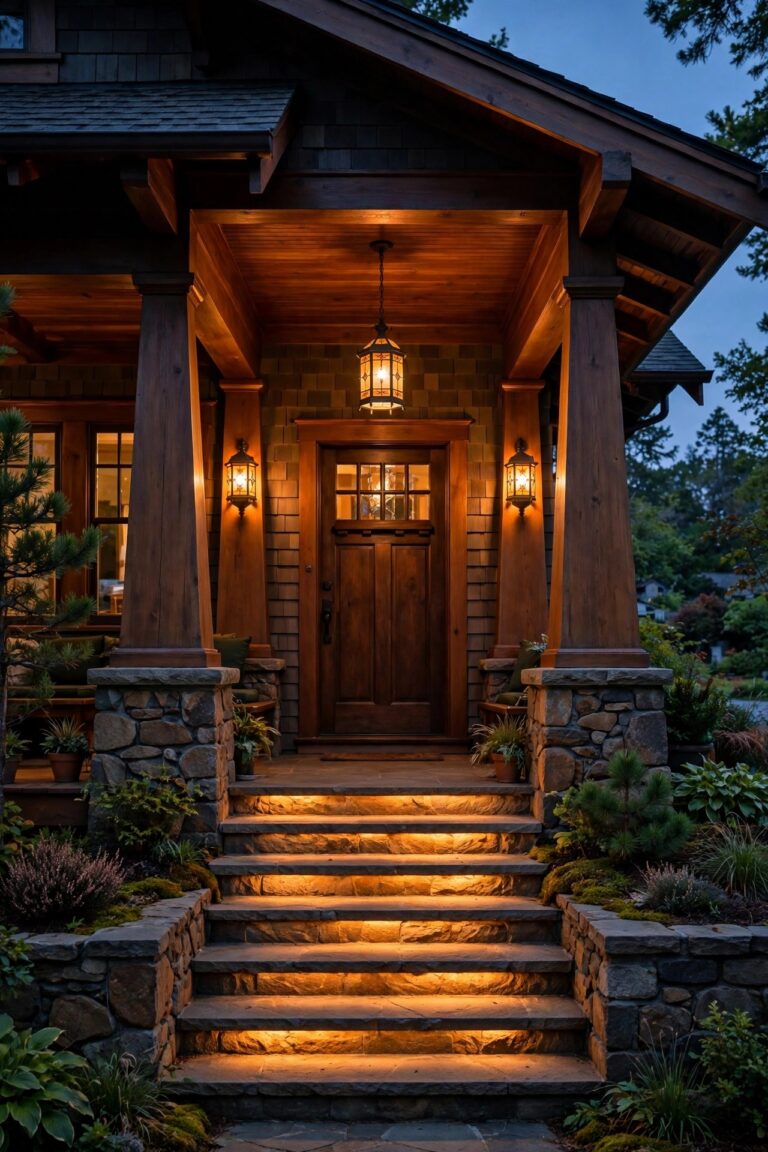
A chain-hung lantern under the porch ceiling is pure Victorian theater, and tall porch ceilings — nine feet and up — are exactly where it shines. Hang one centered over the seating area, or a pair in line with the door and steps, adjusting the chain so the lantern bottom sits about 7 feet above the floor: low enough to feel intimate, high enough that tall guests and ceiling-fan blades clear it comfortably. Choose a lantern with glass on all four sides so light spills across the ceiling boards and downward in equal measure. On open, windy porches, add a discreet stabilizer or choose a semi-flush version; a swinging lantern sounds romantic until the third storm. I learned that one the noisy way. If your porch ceiling is beadboard, a soft wash of light across it shows off the grooves beautifully, so avoid fully enclosed pendants that throw all their light at the floor. Put the pendants on their own dimmer if you can. Dropping them to a candle-like glow while the door lantern stays bright is the difference between a lit porch and a mood.
Suggested budget range: $90 – $300.

5. Soften Everything With Frosted Opal-Glass Globes
Not every Victorian porch wants another lantern. Frosted opal-glass globes were the other period staple — think schoolhouse and railway-station glass — and on a porch they give the softest, most shadowless light of any fixture on this list. Hang one globe over a seating corner or run two smaller ones along the porch, and the whole space feels like lamplight seen through a lace curtain. Because the glass hides the bulb completely, globes are my go-to where a fixture hangs near eye level or reflects in windows; there is no filament to stare at and no glare in evening photographs. Size them generously — 10 to 14 inches across — since a small frosted globe on a big porch all but disappears by day. One practical note: fully enclosed globes trap heat, so use LED bulbs only, and check the fixture is rated for enclosed use. Pair a globe with clear-glass lanterns elsewhere and the contrast actually works: the lanterns flicker, the globe glows steady, and together they mimic a house that still has both gaslight and early electric.
Suggested budget range: $70 – $220.

6. Cluster Flameless Candle Lanterns on the Steps
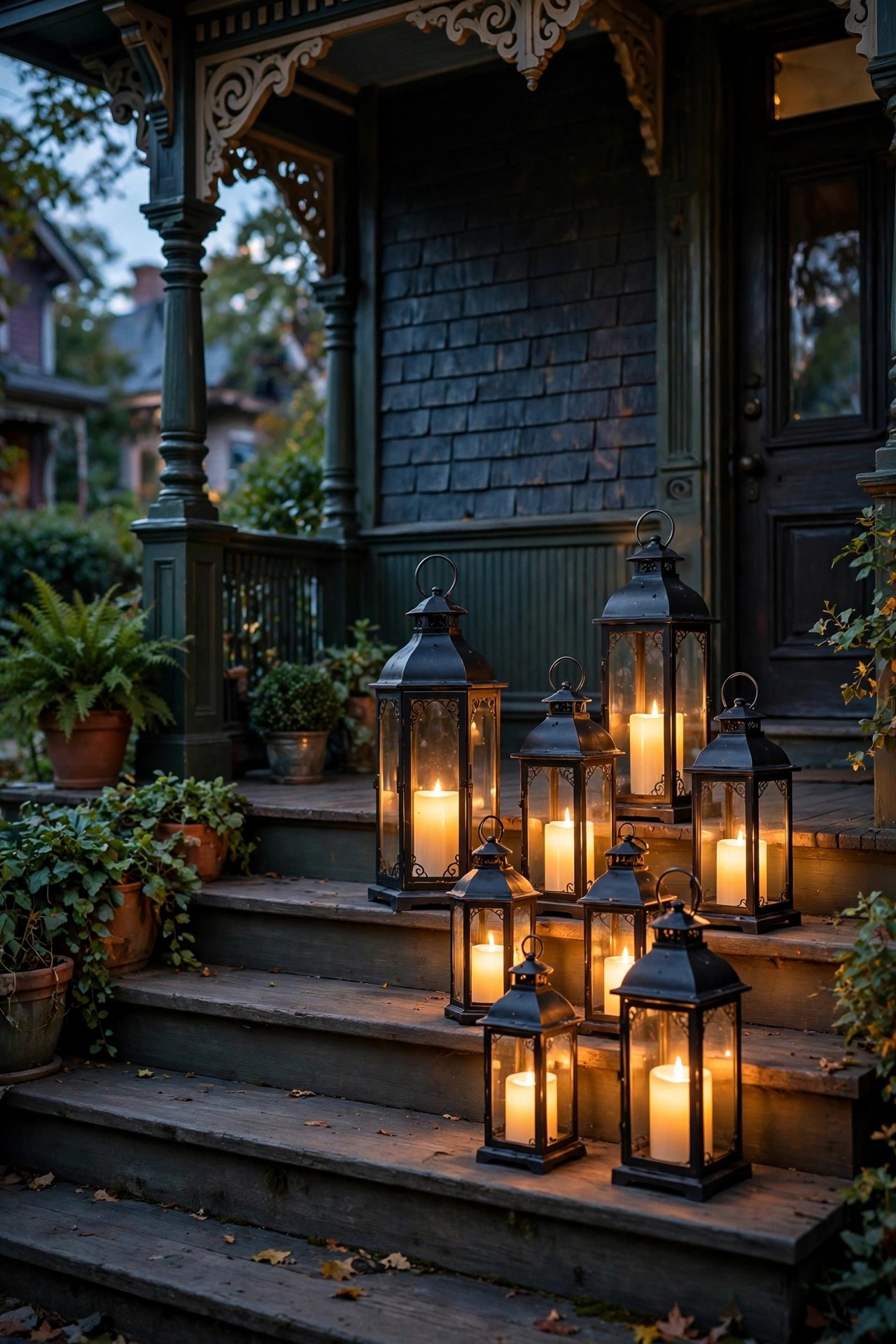
Some of my favorite Victorian porch light is not wired at all. Cluster flameless candle lanterns on the porch steps — three on one side, at staggered heights, in matching black metal frames — and guests get a pool of flickering welcome exactly where their feet need it. Flameless is non-negotiable for me on steps: real candles tip, drip wax on painted treads, and sit far too close to hems and grocery bags. Choose candles with a timer function so they wake at dusk and click off five hours later without you remembering a thing. Weather matters here too; look for lanterns with drainage holes and candles rated for outdoor use, and park the set under the porch roof edge rather than out in open rain. In autumn I tuck a few faux leaves around the bases; at the holidays the same lanterns get a sprig of cedar. Same fixtures, new costume. Keep the lanterns hugging the railing side, clear of the walking line, and let their light stay low and local. Steps are guidance light, not decoration competing with the door.
Suggested budget range: $40 – $120.
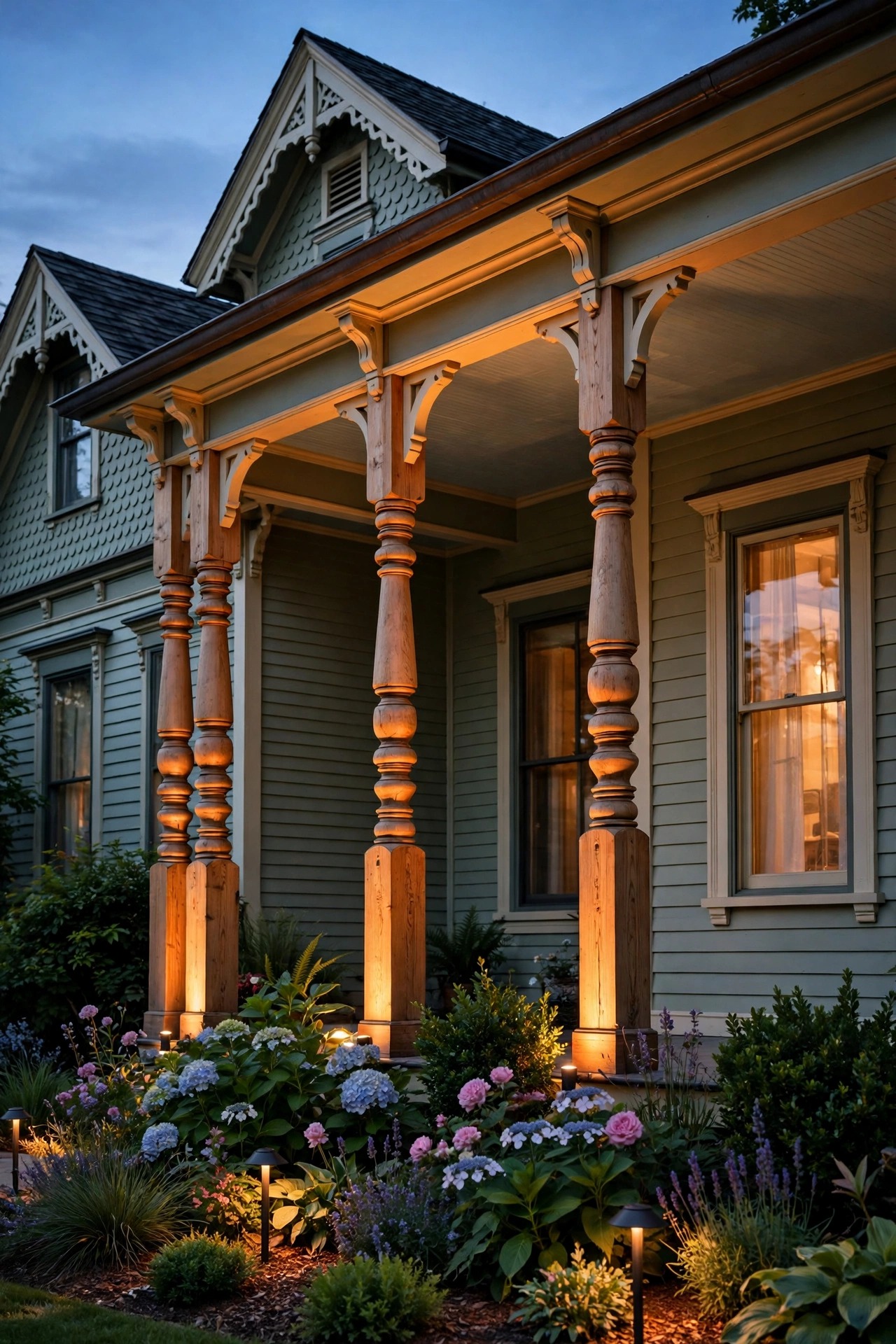
7. Uplight the Turned Columns and Spindle Work
Victorian porches stand on turned posts and columns that disappear completely after dark — a shame, because a wash of light from below makes them look carved from moonlight. Tuck small low-voltage well lights or compact uplights into the beds at the base of each column and aim straight up the shaft; the grazing light reveals every curve and bevel in the turning. If hardwiring feels heavy, solar uplights with a warm 2700K tone now do a respectable job for a season or two. My full walkthrough of porch column lighting ideas covers fixture angles and wiring routes in detail. Two tips from my own porch: keep the beam narrow, around 15 to 30 degrees, so light climbs the column instead of spraying the ceiling, and light every column — or every other one, in a steady rhythm — never a random single. Half-lit architecture reads as a mistake; a rhythm reads as design. The porch seems to float on a cushion of glow, and honestly, neighbors will ask which contractor did it.
Suggested budget range: $60 – $200.
8. Choose Seeded Glass for a Soft Vintage Blur
Glass choice is the quiet decision that makes or breaks the period feel. Seeded glass — full of tiny bubbles, like old hand-blown panes — blurs the bulb into a soft star and throws a gentle sparkle across porch walls. It is forgiving in a way clear glass never is: the filament outline softens, dust and water spots nearly vanish, and fixtures can run a touch brighter without glare. When a client cannot decide, I hold two lanterns side by side at dusk, one clear and one seeded, and the seeded one wins nine times out of ten. If your fixtures already wear clear glass, cheat the effect with frosted flame bulbs, or a lower-lumen bulb behind a clip-on shade. Just keep the glass consistent across the whole porch. Mixed clear and seeded fixtures on the same wall fight each other visually, the way mismatched whites do in a kitchen. For porches near the street, seeded glass has one more gift: it hides the modern LED inside so completely that from the sidewalk, your brand-new fixture passes for 1896 without even trying.
Suggested budget range: $50 – $160.

9. Line the Porch Beam With a Row of Small Lanterns
Long porches have a rhythm problem: one door lantern leaves the far ends in gloom. My fix is a row of smaller hanging lanterns along the porch beam, spaced 6 to 8 feet apart like notes on a staff. Hang them from simple hooks or short chains so the bottoms align — sight down the porch and adjust until the row reads level, because the Victorians were nothing if not precise. Battery or solar versions with remote controls make this an afternoon project with no wiring, though wired lanterns on a photocell win for set-and-forget reliability. Keep each lantern modest, 8 to 12 inches, so the row feels like punctuation rather than a second ceiling of fixtures. This is also the friendliest place to echo a color: lanterns in deep green or aged copper along a cream porch give that conservatory feel without a drop of paint. In my experience, the beam row is what makes guests slow down on the steps. The door lantern says welcome; a whole row of little flames says the house has been expecting you.
Suggested budget range: $75 – $250.

10. Light the Porch Swing Like a Reading Nook
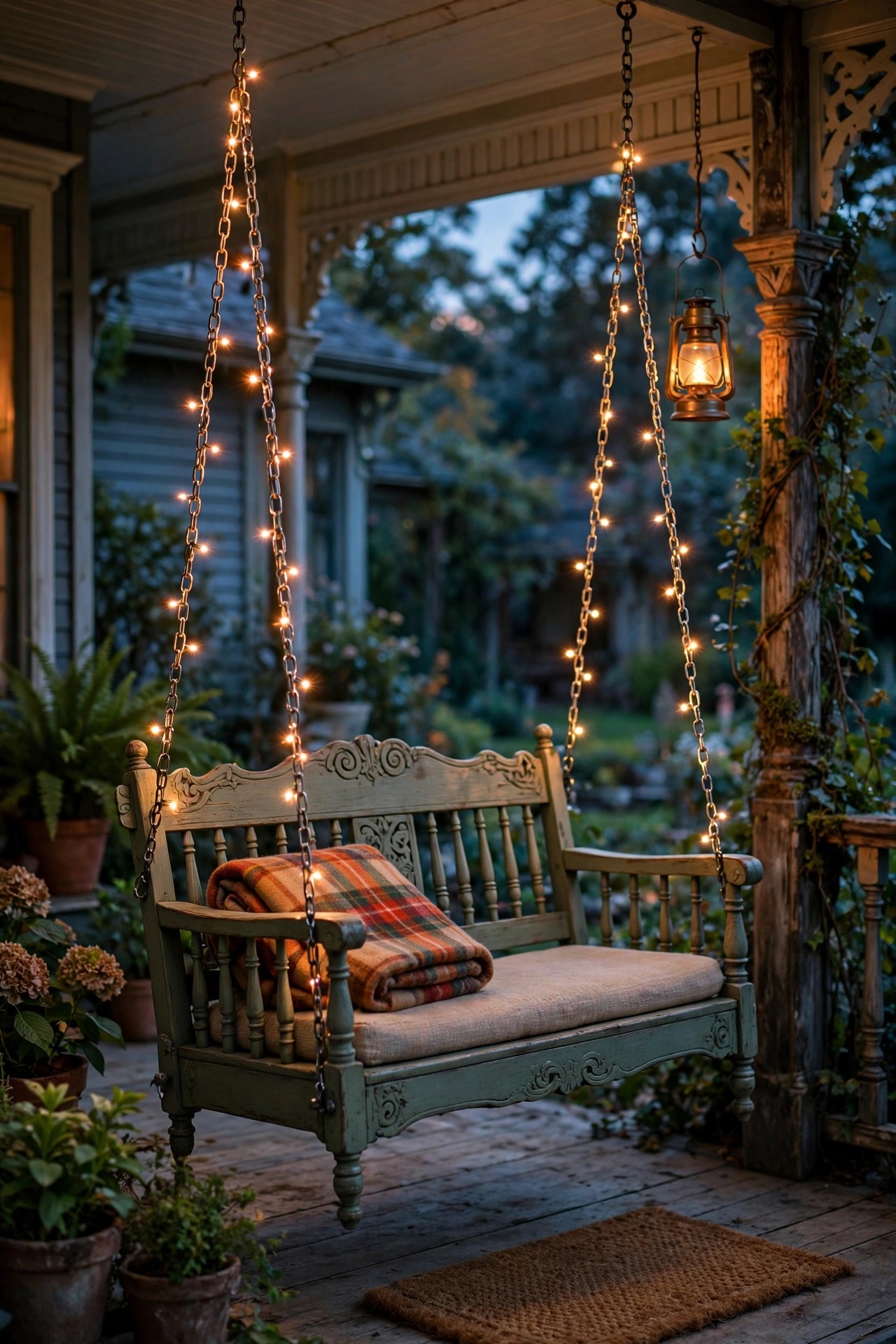
Every Victorian porch deserves one destination, and mine is the swing. Light it like a reading nook, not a stage: a small lantern or shaded sconce mounted behind and slightly above one end of the swing throws light over a shoulder and onto a book, while the swing itself stays in soft shadow. Aim for warm and local — a single 40-watt-equivalent LED is plenty — and avoid any fixture directly overhead, which flattens faces and invites every moth in the county into your hair. If wiring a new sconce is out of reach, a flameless candle lantern on the side table plus a strand of fairy lights along the swing chain gets you most of the mood for almost no money. Add a folded throw and the corner sells itself. One safety note I always give: keep cords and chains clear of the swing path, and check that the swinging arc cannot kiss a wall lantern. Porches move more than you think on a breezy night. Done right, this corner becomes the most contested seat in the house from May through October.
Suggested budget range: $45 – $150.
11. Weave Fairy Lights Through the Gingerbread Trim
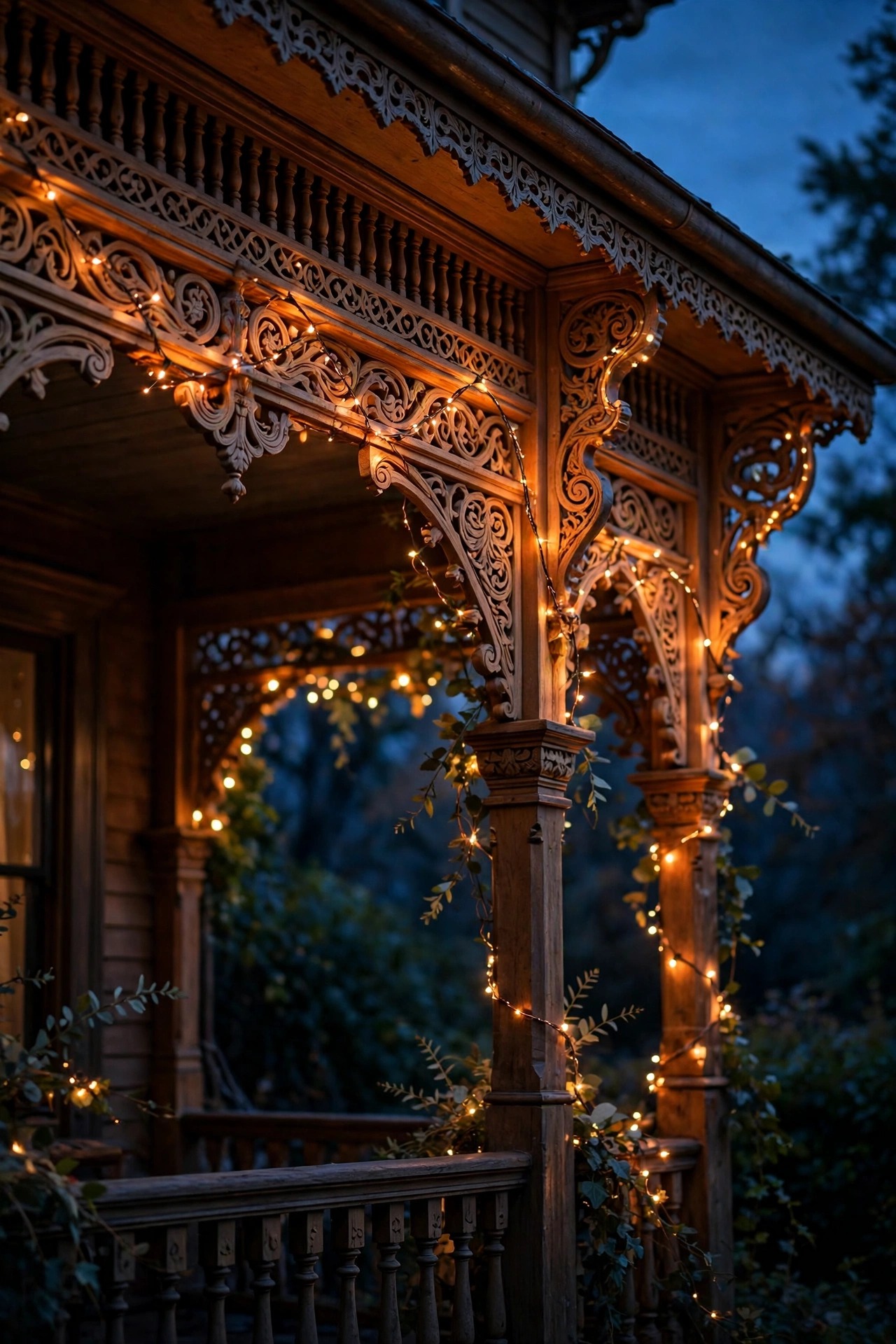
Here is the idea readers either gasp at or swear they would never do — until they see it at dusk. Copper-wire fairy lights, woven loosely along the frieze board or through the openwork of the gingerbread brackets, trace the architecture in a thread of gold. The wire nearly disappears by day, and at night the trim itself seems to sparkle. Use warm-white 2700K strands, never multicolor, and weave rather than wrap: in and out of the scrollwork with a little slack, so the line looks hand-drawn instead of shrink-wrapped. Staples are forbidden on painted trim in my book; tiny clear clips or twist ties come off clean in January. Keep strands LED-only and outdoor-rated, plug into a GFCI outlet, and let a timer handle the hours. Scale the effect to your house — a heavily ornamented Queen Anne can carry fairy lights along every bracket, while a simpler Victorian farmhouse looks best with one glowing run above the door. Restraint is the difference between storybook and carnival, and honestly, stepping back to the sidewalk to judge is the whole trick.
Suggested budget range: $25 – $80.
12. Tuck a Gentle Glow Into Window Boxes and Planters
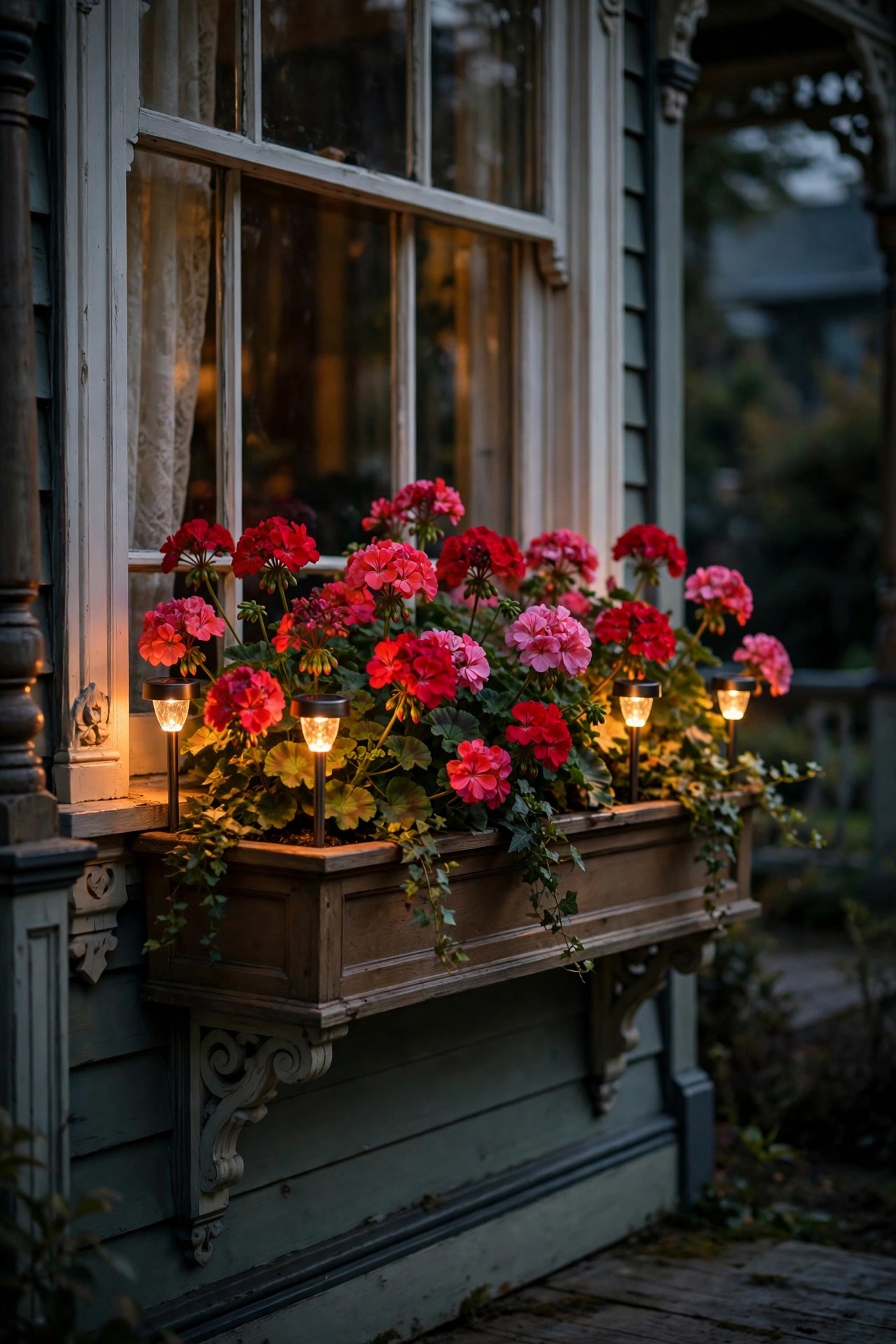
Window boxes and porch planters are daytime charmers that vanish at dusk, which wastes half their rent. A pair of small solar stakes tucked into each box, or a battery fairy strand woven through the geraniums, brings the flowers back as soft silhouettes against the porch light. Keep the light inside the planting low and warm; you are gilding the arrangement, not spotlighting it. For railing planters along the porch edge, a slim solar strip under the rail cap washes the blooms from above and doubles as a gentle edge marker for the porch itself. Watering is the practical catch: choose fixtures with sealed battery compartments, and lift solar stakes out before you soak the soil. I killed two sets learning that sequence in the wrong order. In winter, when the boxes hold cedar and pinecones instead of petunias, the same little lights turn the greenery into a holiday arrangement without a single new purchase. It is the smallest idea on this list, and in my experience the one that makes passersby stop and take photos of a porch that is otherwise simply lit.
Suggested budget range: $30 – $90.
13. Pick Copper and Aged Brass That Earn Their Patina
Finish is forever, so choose one that ages like the house does. Copper and aged brass lanterns earn a patina over the seasons — bright penny tones mellowing to brown, then hints of green in the creases — and that slow change is exactly right on a Victorian porch, where nothing should look shrink-wrapped new. Decide early whether you want the living finish or a lacquered one that stays bright; both are lovely, but mixing them on one porch looks indecisive. My rule: pick one metal family for every fixture — copper and brass together, or black iron everywhere — and repeat it at least three times so the eye reads a theme. Real copper costs more up front, though copper-clad and well-made faux finishes have closed the gap for porch budgets. Keep metal polish off living-finish fixtures; a rinse and a soft cloth are all they want. In my experience, patina is also forgiving: porch dust, pollen, and water spots that scream on glossy black simply disappear into copper tones, which makes this the lowest-maintenance pretty choice on the list.
Suggested budget range: $80 – $300.

14. Respect a Haint-Blue Ceiling With a Soft Flush Mount
Many Southern Victorian porches wear a haint-blue ceiling, painted to keep spirits — and, legend says, wasps — away. If yours does, a soft flush-mount fixture respects both the color and the lower ceiling that a hanging lantern would crowd. Choose a fixture with a frosted or opal dome and a period-style fitter in black or aged brass, and let it wash the blue boards with warm light; the color deepens at night in the prettiest way. On ceilings under 8 feet, flush is not a compromise — it is the correct period answer, since many original porches used a simple ceiling fixture pulled tight to the boards. Keep the dome generously sized, 14 to 16 inches, so it reads intentional, and choose an LED that dims smoothly, because a pale ceiling under harsh light goes gray and sad. Pair the flush mount with door lanterns for the flame effect and let the ceiling light do the steady work. It is the porch equivalent of good bones: nobody comments on it, and everything else looks better because of it.
Suggested budget range: $60 – $200.

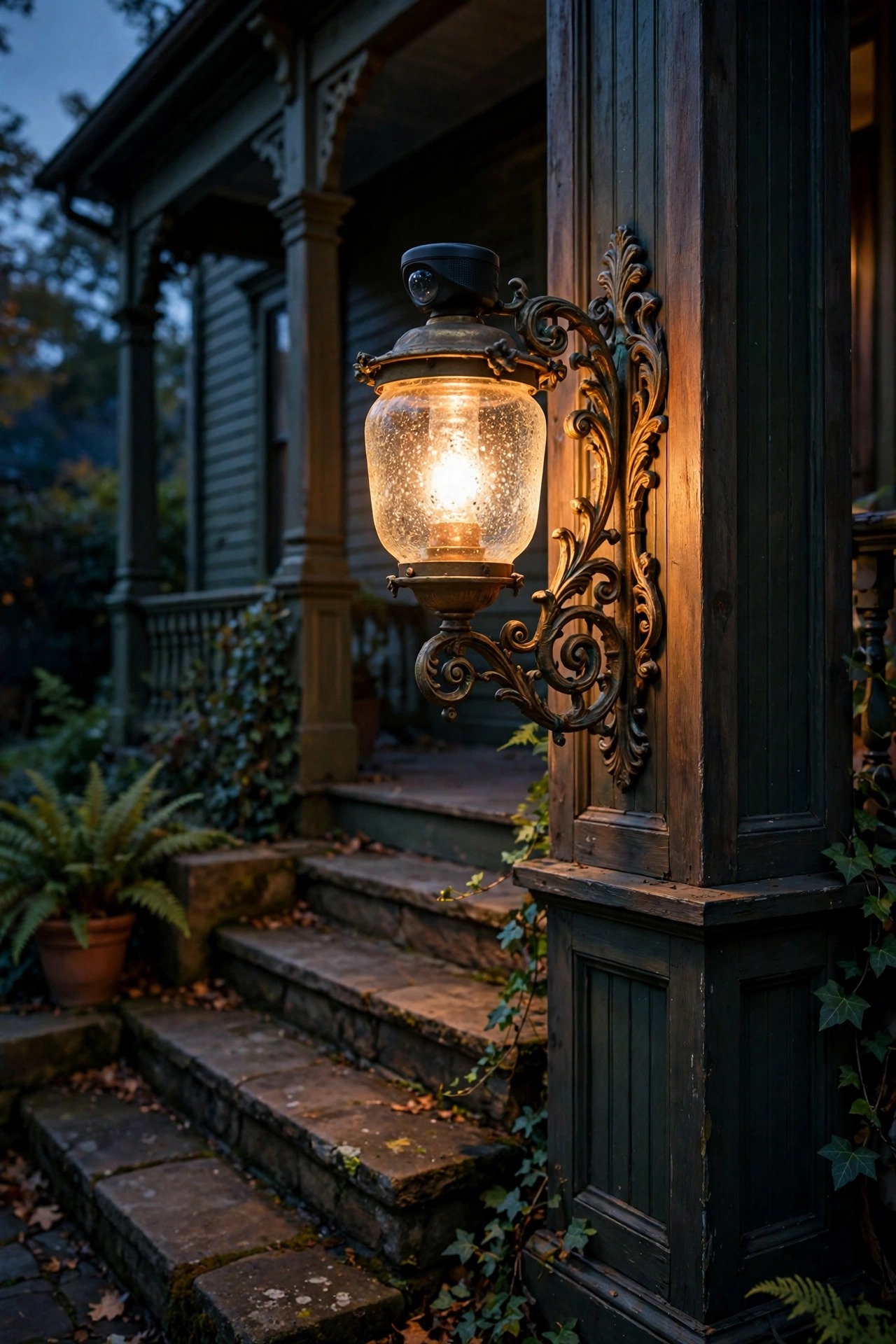
15. Add a Hidden Motion Welcome for Steps and Guests
A motion light sounds like the least Victorian idea imaginable, until you hide it properly. Modern sensor sconces in period dress — scrollwork, seeded glass, a flame bulb — brighten gently as a guest climbs the steps, then ease back to a dim idle glow instead of snapping off. That low idle glow is the key feature to shop for; fixtures that go fully dark between visits feel like a parking lot, not a porch. Aim the sensor where it sees the steps and walkway, not the street, or every passing car will trigger your welcome. Most models let you tune sensitivity and reach; start at the middle setting and walk-test at dusk. I always recommend pairing motion fixtures with at least one always-on lantern by the door, so the house never looks asleep while the sensor rests. For renters and the wiring-shy, solar motion lanterns have honestly become good enough for step duty. Security and storybook are not enemies. The trick is choosing fixtures that perform at night and pose beautifully by day.
Suggested budget range: $60 – $180.
16. Put It All on Timers, Photocells, and Dimmers
Gaslight had a lamplighter; your porch has a photocell. Putting every porch fixture on timers, photocells, or smart plugs is the unglamorous idea that makes all the others effortless — lights bloom at dusk whether you are home, on vacation, or simply forgetful. Photocell adapters screw into individual lantern sockets, while a single timer on the porch circuit runs the whole scheme at once. My own setup brings the door lanterns on at dusk, drops them a notch at eleven, and lets the step lanterns run their own built-in timers. Layered scheduling like that keeps the welcome bright for guests and candle-soft for the street at midnight. Dimmers matter as much as timers: most Victorian fixtures look best at 60 to 80 percent, where flame bulbs glow instead of glare. If you add smart controls, choose ones that fall back gracefully to simple on-at-dusk behavior. A porch that needs an app update to light the steps is a porch that will spend one dark weekend teaching you that lesson the hard way.
Suggested budget range: $25 – $150.
17. Keep Every Bulb at One Warm Temperature
If you change nothing else, change this: make every bulb on the porch the same warm temperature. Victorian atmosphere lives between 2200K and 2700K — candlelight to soft lamplight — and a single stray 4000K bulb will undo a whole porch of good fixtures like one wrong note in a hymn. Flame-effect bulbs sit at the warm end and belong in the showpiece lanterns; standard 2700K LEDs can fill sconces and pendants where you want steadier light. Buy bulbs in the same purchase whenever you can, because even two bulbs labeled 2700K from different makers can lean amber or pink against each other. I keep a labeled spare box in the hall closet — porch bulbs only — so a midnight replacement never introduces a stranger. Check the porch from three spots when you finish: the door, the steps, and the sidewalk. If any fixture reads white or blue next to its neighbors, swap it before judging the scheme. Warmth is the cheapest special effect there is, and on a Victorian porch it is honestly half the battle.
Suggested budget range: $20 – $60.

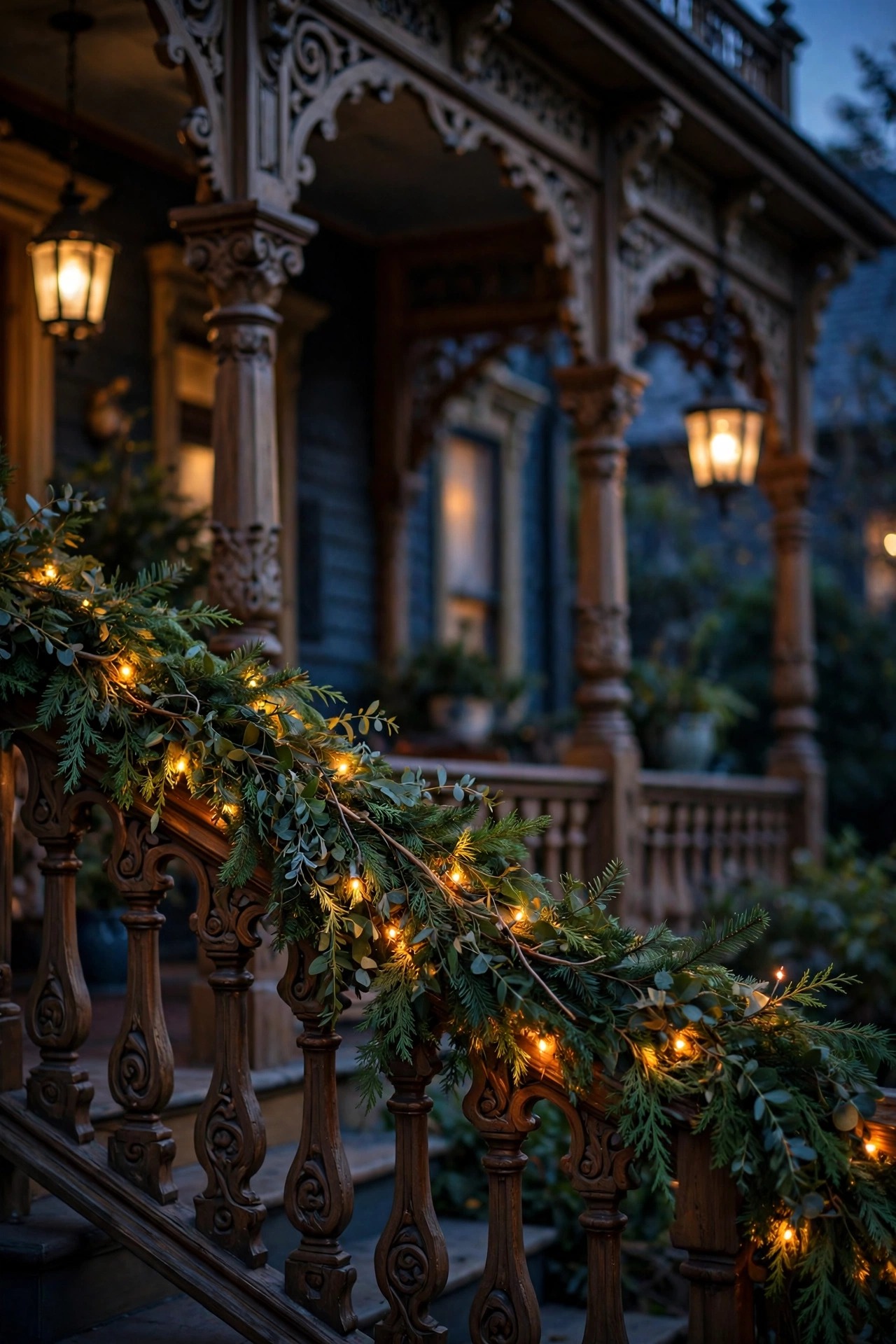
18. Dress the Railing With Seasonal Garland Glow
Victorian porches were built for seasons, and a garland woven with fairy lights along the railing or door frame is the seasonal swap that keeps the architecture the star. In autumn, tuck the strand through faux maple and bittersweet; in December, cedar and pinecones; come spring, a simple greenery swag keeps the line alive without shouting holiday. Use battery strands with timers where outlets are scarce, and keep every bulb LED — cool to the touch matters around dried botanicals and ribbon. Anchor the garland loosely so the wind moves it slightly; a rigid, zip-tied swag reads as store display, while a soft drape reads as home. My one firm rule: the garland echoes the porch, it does not replace it. Keep the door lanterns and sconces doing their steady work, and let the garland be the garnish. When the season turns, the strand rolls into a labeled bin and the porch underneath never missed a beat. Readers tell me this is the idea their neighbors copy first, and I believe them — it photographs like a greeting card.
Suggested budget range: $35 – $100.
19. Finish With a Dusk Walk-Through of Your Victorian Porch Lighting Ideas
Every scheme on this list ends the same way in my house: with a walk. Wait for that deep-blue ten minutes after sunset, switch everything on, and take the route a guest takes — sidewalk, path, steps, door — then turn around and look back at the porch the way the street sees it. You are hunting for three things: a dark band in your layers, a bulb you can stare at directly, and any fixture whose light lands in a neighbor window instead of on your porch. Adjust an angle, swap one bulb, add one lantern — small moves, judged from the sidewalk, are what separate a pretty porch from a storybook one. Take a photo from the curb; the camera is brutally honest about glare you have learned to ignore. Then give the scheme a week of evenings before buying anything else. Patina, plants, and your own eyes all need time to settle. Victorian porches were never finished in a day, and neither is their light — the walk-through just makes sure every evening moves yours one small glow closer.
Suggested budget range: $0 – $50.
Frequently Asked Questions
What color temperature looks most like real gaslight?
Real gaslight glowed around 1800K to 2200K — deep amber, more candle than lamp. Modern flame-effect LED bulbs land in that same range and are the closest match for door lanterns and showpiece fixtures. For sconces and pendants where you need a little more usable light, 2700K is as high as I would go; it still reads warm and period, while anything 3000K or above starts to look like a modern kitchen. Whatever you pick, pick one temperature family for the whole porch so the fixtures feel like relatives.
Can I light a Victorian porch with solar fixtures only?
For accents, absolutely — solar stakes in the window boxes, solar uplights at the columns, and solar lanterns on the beam all work beautifully in decent sun. Where solar struggles is the welcome layer: door lanterns and step lights need to burn from dusk to bedtime every night, including December, when a solar panel may only see five weak hours of daylight. My honest recommendation is a hybrid — wired or plug-in fixtures for the door and steps, solar for the accents deep in the scheme — which is also how most of my readers end up happiest.
How high should I hang porch lanterns and sconces?
For wall lanterns and sconces, mount the center of the fixture about 66 inches above the porch floor — roughly eye level — and size the lantern to the door: its height should run about one-quarter to one-third the height of the door itself. Hanging pendants should bottom out around 7 feet above the floor over walkways, higher over seating if tall guests pass beneath. When in doubt, mock it up with painter tape and a cardboard silhouette at dusk before drilling; five minutes of pretending saves a wall of patched holes.
How do I keep ornate fixtures from rusting or tarnishing badly?
Start with the right bones: powder-coated cast aluminum and solid brass or copper shrug off porch weather far better than thin plated steel, and a wet-location rating (not just damp) matters on open porches. Once a year, rinse fixtures with a soft cloth, check that gaskets and seals are intact, and touch up chips in painted finishes before rust gets a foothold. Copper and brass are meant to patina — that is character, not damage — so skip the polish unless you chose a lacquered finish on purpose.
Conclusion
A Victorian porch does not ask for more light; it asks for the right light — warm, low, layered, and just a little theatrical. Start with the bulb swap and one gas-style lantern, add a layer each evening it pleases you, and let these victorian porch lighting ideas grow the way the house itself was built: patiently, ornament by ornament. When the trim sparkles, the columns glow, and the door lantern flickers like it has a story to tell, you will know the porch has its chapter back. For more inspiration, browse the rest of my lighting ideas here on the site — your next glow is probably already waiting.