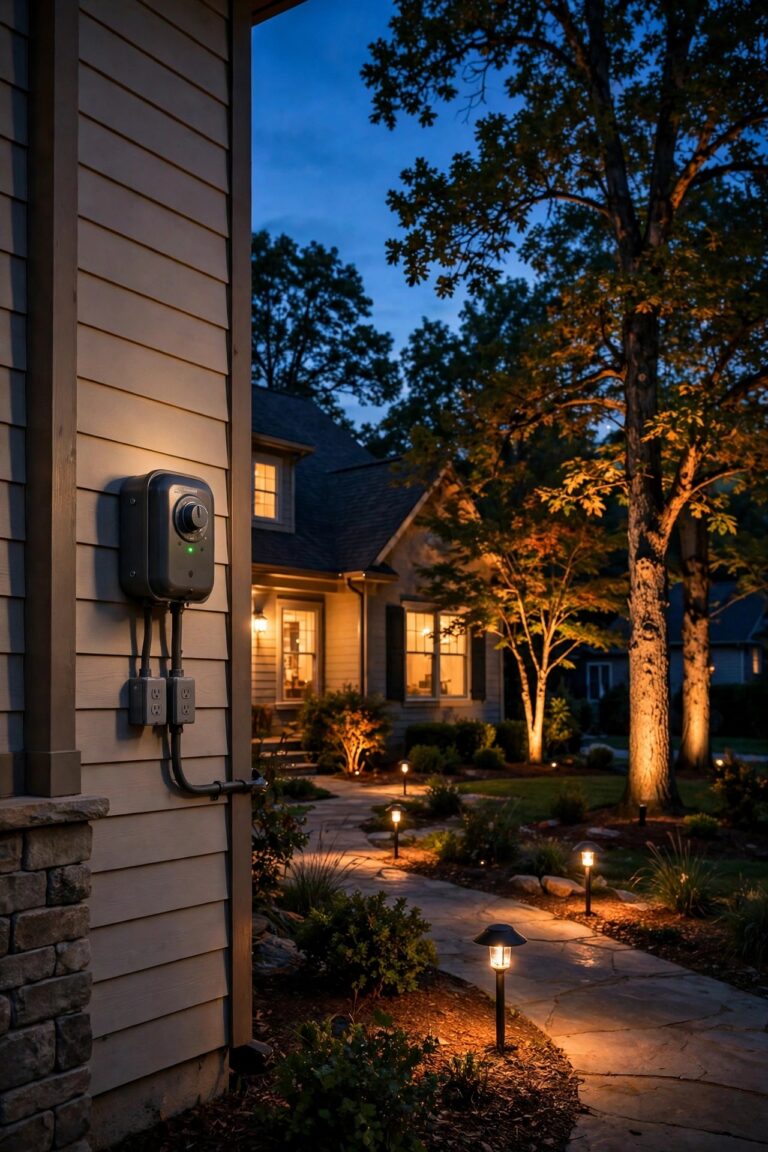
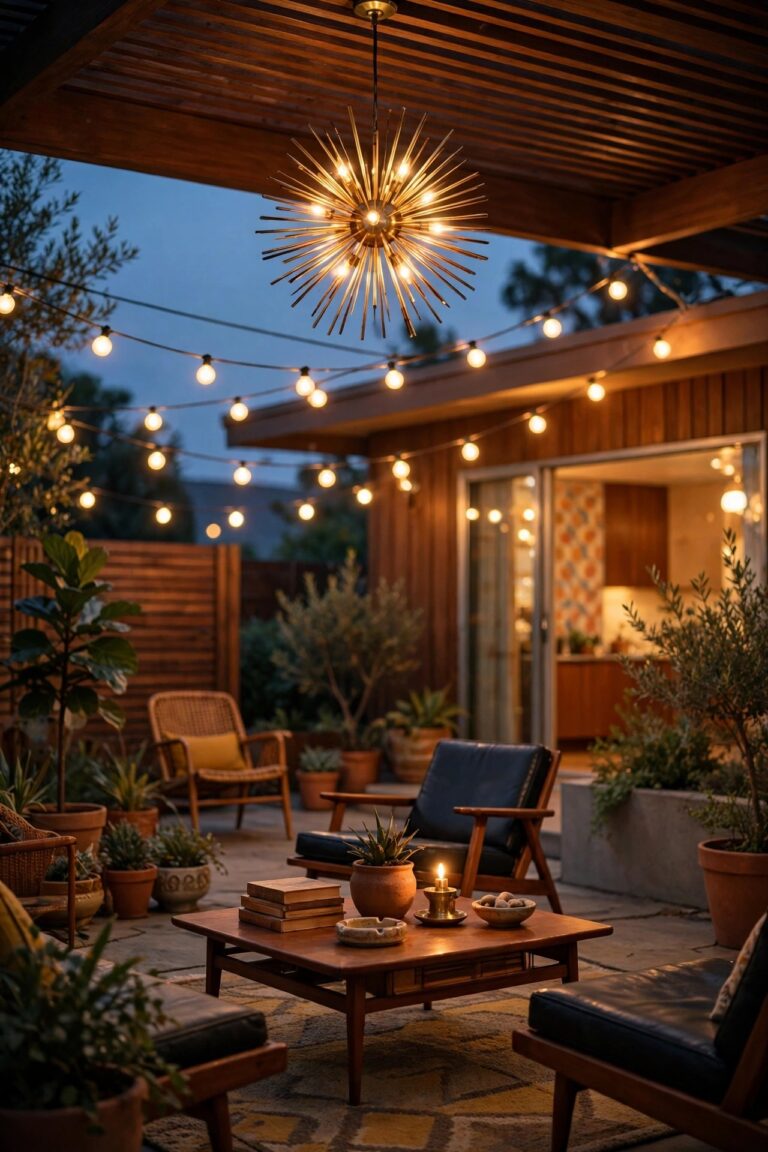
There is a particular kind of evening I chase every summer: the sky goes violet, the roses hold the last of the light, and the garden starts to look like a page from an old storybook. That is exactly the mood these victorian garden lighting ideas are built for. The Victorians understood something we keep rediscovering — a garden after dark should feel like a room, with pools of warm light, soft shadows, and one or two romantic focal points instead of a flat wash of brightness. My whole approach rests on layering: low lights to guide your feet, lanterns at eye level to welcome you in, and a gentle glow from above that mimics moonlight. In my experience, when those three layers work together, even a plain suburban yard turns hushed and magical. Below you will find 17 ideas I have tested in my own beds and borders, from flame-effect lanterns to a fairy-lit rose arch, each with honest budgets, placement measurements, and the safety notes that keep the romance worry-free.

1. Start With a Three-Layer Victorian Garden Lighting Ideas Plan
Every romantic garden I have ever lit started on paper, not at the store. Sketch your beds, paths, and seating, then mark three layers. The low layer is guidance: path lanterns and step lights 12 to 18 inches tall, spaced 6 to 8 feet apart so the pools of light just overlap. The middle layer is welcome: lanterns on posts, hooks, and tables at eye level, roughly 4 to 5 feet high. The high layer is atmosphere: moonlighting from a tree canopy or a shaded fixture on the house wall, washing down from 12 feet or higher. Victorian style lives in the fixtures themselves — scrollwork, seeded glass, aged bronze and black finishes — but the layers are what make it feel designed instead of decorated. I always recommend walking the plan at dusk with a flashlight before buying anything; move the light around and watch how shadows fall. Keep total fixture counts modest: for a 40-by-30-foot garden, 10 to 14 fixtures across all three layers is plenty. More than that and the mood tips from storybook to theme park.
Suggested budget range: $40 – $120.
2. Line the Path With Gas-Style Flame Lanterns
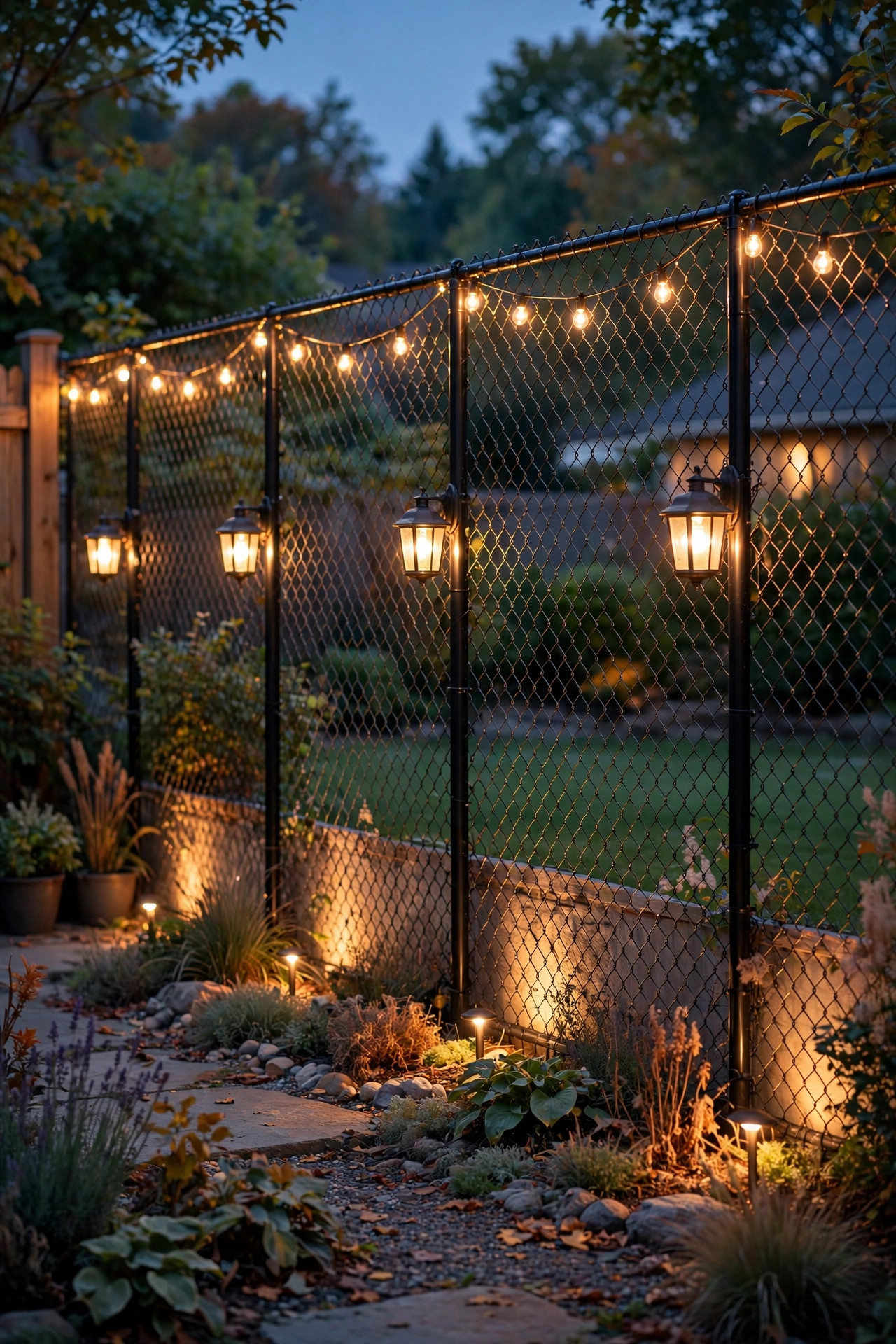
Nothing says Victorian like a flickering gas flame, and modern flame-effect LED lanterns copy it beautifully without a gas line or an open flame near your plantings. Look for path lanterns with a realistic dancing-flame bulb inside seeded or amber glass, in matte black or aged bronze metal with a little scrollwork on the cap. I stake mine 14 to 16 inches tall along the main garden path, set back about 6 inches from the edge so the mower passes cleanly, and spaced 6 to 7 feet apart on alternating sides — that gentle zigzag reads far more period than a rigid runway of pairs. Choose fixtures rated for wet locations, and if you go low-voltage, bury the cable 6 inches deep in a shallow trench along the bed edge. Solar versions have improved enormously, but on a shaded path the flame bulbs dim by midnight; wired or hybrid models hold the flicker until bedtime. Keep the color temperature at 2200K where you can — that amber candlelight tone is the whole illusion.
Suggested budget range: $90 – $260.

3. Crown the Garden Gate With an Ornate Post Lantern
A Victorian garden deserves an entrance, and a single ornate post lantern over the gate gives you one. Mount a carriage-style lantern on the gate post or a short pillar beside it, with the bulb center about 5-1/2 feet above the ground — high enough to light faces, low enough to feel intimate. Scrollwork arms, a pagoda or hexagonal cap, and clear seeded glass keep it period-correct. This is the one fixture I tell friends to splurge on, because it is the handshake of the whole garden. Wire it to a photocell so it wakes at dusk on its own, and use a 2700K LED filament bulb around 800 lumens; anything brighter turns the welcome into an interrogation. If your gate is far from power, a hardwired post is worth the trench, though a quality solar post lantern with a replaceable battery is a fair compromise for a sunny spot. Add a small bed of white flowers beneath it — they catch the light and glow like moths, a trick Victorian gardeners loved.
Suggested budget range: $120 – $340.

4. Tuck Solar Stake Lanterns Through the Flower Beds
Not every layer needs wiring. Solar stake lanterns shaped like miniature Victorian street lamps are my favorite way to thread light deep into the borders, where cables would tear up roots. Push the stakes 6 to 8 inches into soft soil among mid-height plantings — catmint, salvia, and lady's mantle hide the stakes by day and catch the glow by night. Space them 4 to 6 feet apart in loose drifts rather than rows; romance is irregular. Two honest cautions from my own beds: the solar panel needs at least 6 hours of direct sun, so north-facing and heavily shaded corners will fade early, and the cheapest stakes yellow within a season. I buy mid-range metal-and-glass versions with replaceable batteries and swap the batteries every 18 months or so. Set them on the warmest, dimmest setting if yours adjusts — in a flower bed, a whisper of light beats a shout. By midsummer, when the perennials fill in, the lanterns look like fireflies that decided to stay put.
Suggested budget range: $45 – $130.

5. Fake the Moonlight From a Tall Tree
The most romantic light in a Victorian garden is the one that pretends to be the moon. Moonlighting means mounting one or two shielded fixtures 15 to 25 feet up in a mature tree, angled down through the branches so the light dapples the lawn and paths the way real moonlight does. Use a cool-neutral bulb around 3000K here — slightly cooler than the lanterns, which sells the moonlit contrast — and keep the wattage low, roughly 3 to 5 watts LED per fixture, because the effect should be a shimmer, not a spotlight. The branches themselves become the lampshade, throwing lace-like shadows that shift in the breeze. This is the one job where I honestly recommend hiring an arborist or lighting pro: climbing, mounting to a living tree with stainless hardware, and aiming without glare takes skill, and a bad install can wound the tree. For the full technique, my moonlighting trees guide walks through fixture heights, beam angles, and how to avoid light trespass into neighbors' windows.
Suggested budget range: $250 – $700.
6. Drape Fairy Lights Over the Rose Arch
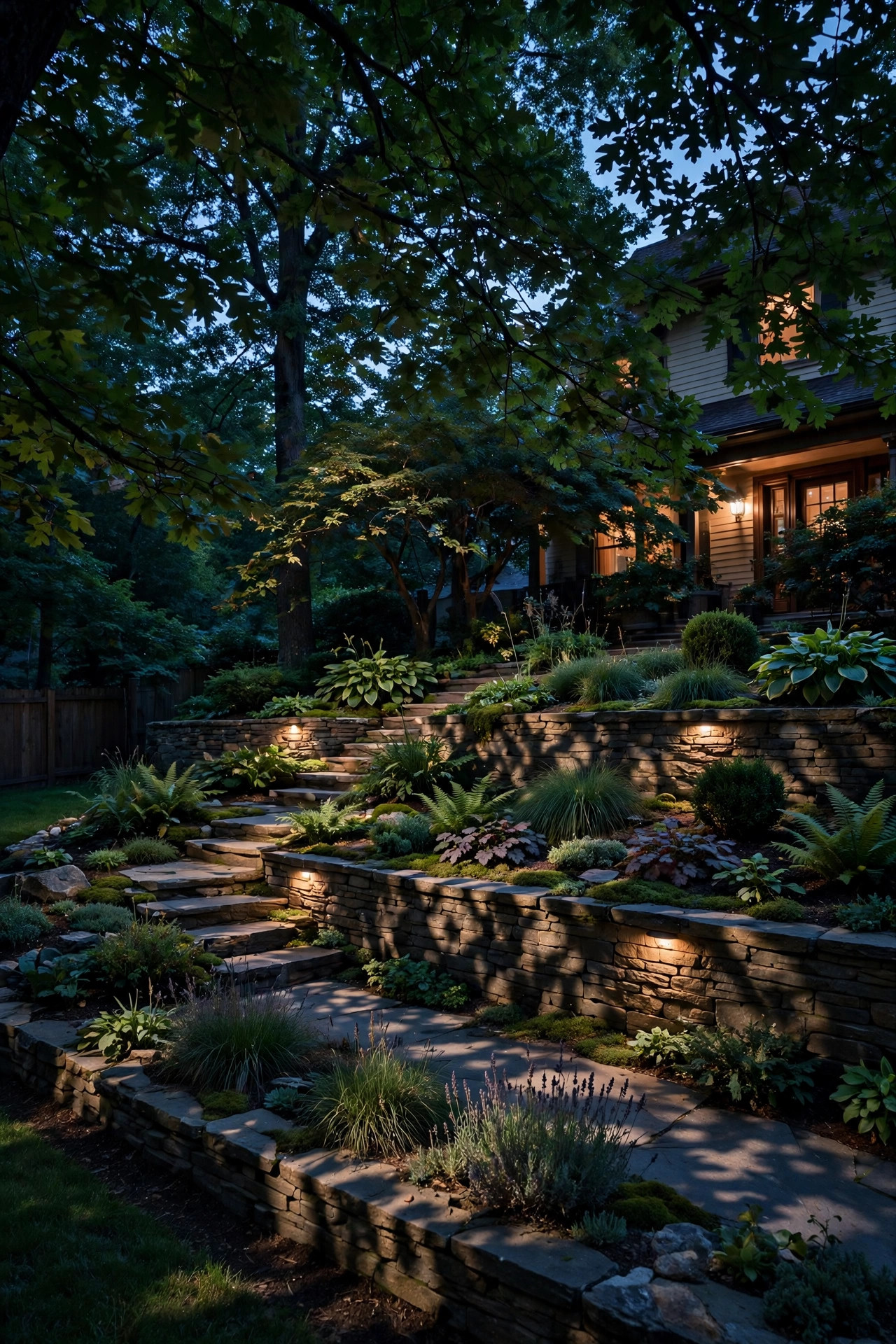
If I could keep only one idea from this whole list, it would be this one. A rose arch already owns the daytime garden; a few strands of warm copper-wire fairy lights hand it the night as well. Wind three or four 33-foot strands loosely through the climbers, following the stems rather than wrapping tight circles — you want sparkle tucked inside the foliage, not a glowing outline. LED fairy lights stay cool to the touch, which matters against leaves and petals, and the battery or solar versions free you from hunting for an outlet. Tuck the battery pack inside a small weatherproof box at the base, set the timer for 6 hours, and forget it. The effect peaks when the roses bloom, but honestly it is just as lovely in September when the hips turn red. For more ways to weave roses and lamplight together, my rose and cottage garden lighting ideas is full of combinations I have borrowed for my own arch. Budget-wise this is the cheapest transformation on the list, and guests gravitate to it like moths every single time.
Suggested budget range: $25 – $70.

7. Set Flameless Candle Lanterns on Steps and the Garden Table
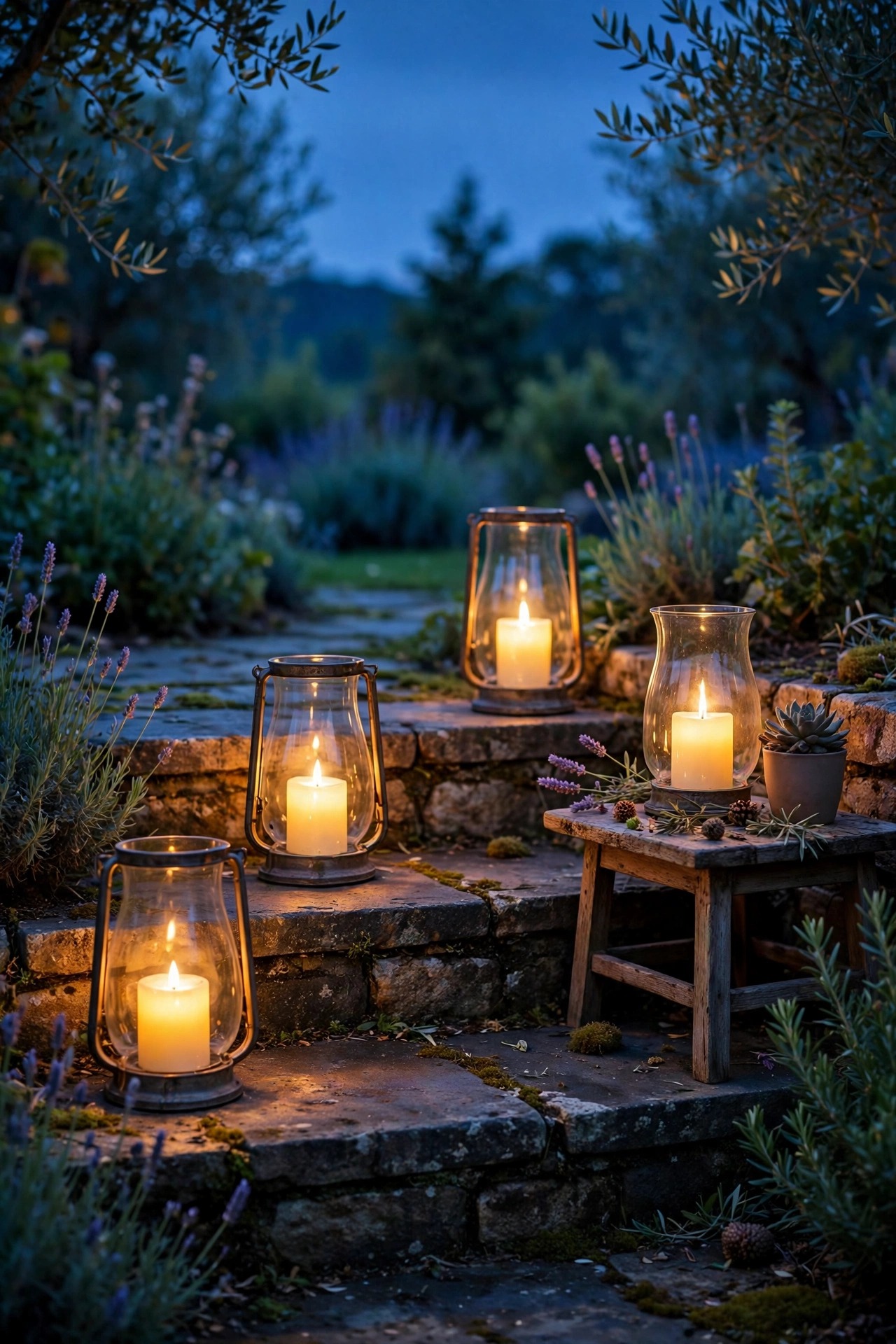
Victorians lit their evening gardens with candle lanterns, and we get to keep the ritual without the fire risk. I scatter flameless pillar candles inside glass hurricane lanterns — on the terrace steps, along a low wall, and as a cluster of three on the garden table. The better candles have a realistic flicker mode and a built-in timer, so they wake at dusk and bow out at midnight on their own. Vary the heights: 4, 6, and 9 inches in one cluster looks collected rather than matched. One non-negotiable in my house: real candles never go near dried arrangements, paper lanterns, or low foliage — flameless only, always, outdoors. Glass hurricanes need a rinse every few weeks because moths and pollen film the inside; a minute with a microfiber cloth restores the sparkle. On steps, place lanterns to one side, tight against the railing, leaving at least 3 feet of clear tread. Their light is more mood than illumination, so pair them with the path lanterns from idea 2 for actual footing.
Suggested budget range: $35 – $110.
8. Give the Fountain or Birdbath Its Own Glow
Water and warm light were made for each other, and a small focal water feature is pure Victorian garden theater. A single submersible LED spotlight, rated IP68, aimed up from the basin of a birdbath or small fountain turns falling water into strands of gold. Keep the fixture small and the beam narrow — around 30 degrees — and tuck it behind the central pedestal so visitors see the glow, not the hardware. Any cord near water must run through a GFCI outlet, no exceptions; I test mine monthly with the button on the outlet. If wiring feels like too much, solar floating lights drift charmingly in a birdbath, though they are gentler. Scale matters here: one lit water feature per garden room. A lit fountain plus a lit statue plus a lit arch in the same 20-foot view starts to feel like a gift shop. Choose your star, light it well, and let the rest of the garden stay in soft shadow.
Suggested budget range: $40 – $150.

9. Uplight a Statue, Urn, or Sundial Like a Museum Piece
Victorian gardens were full of ornaments — a weathered statue, a stone urn spilling geraniums, a sundial on a pedestal — and one well-aimed uplight turns yours into the evening's main character. Place a compact well light or stake spotlight 12 to 18 inches in front of the piece, tilted up at about 30 degrees, and keep it in the 200-to-400-lumen range; garden ornaments are small, and overlighting blows out every lovely shadow in the carving. Grazing light across textured stone or aged patina looks far richer than a flat frontal wash, so angle the beam slightly from one side. In-ground well lights sit flush for mowing, but in a bed I prefer a stake spot I can nudge as plants grow. Shield the source so nobody looking across the garden sees the bare LED — a honeycomb glare guard costs a few dollars and saves the whole illusion. White and pale-stone pieces glow best; dark bronze absorbs light and needs the beam a touch closer.
Suggested budget range: $35 – $120.

10. Hang a Chandelier in the Gazebo or Pergola
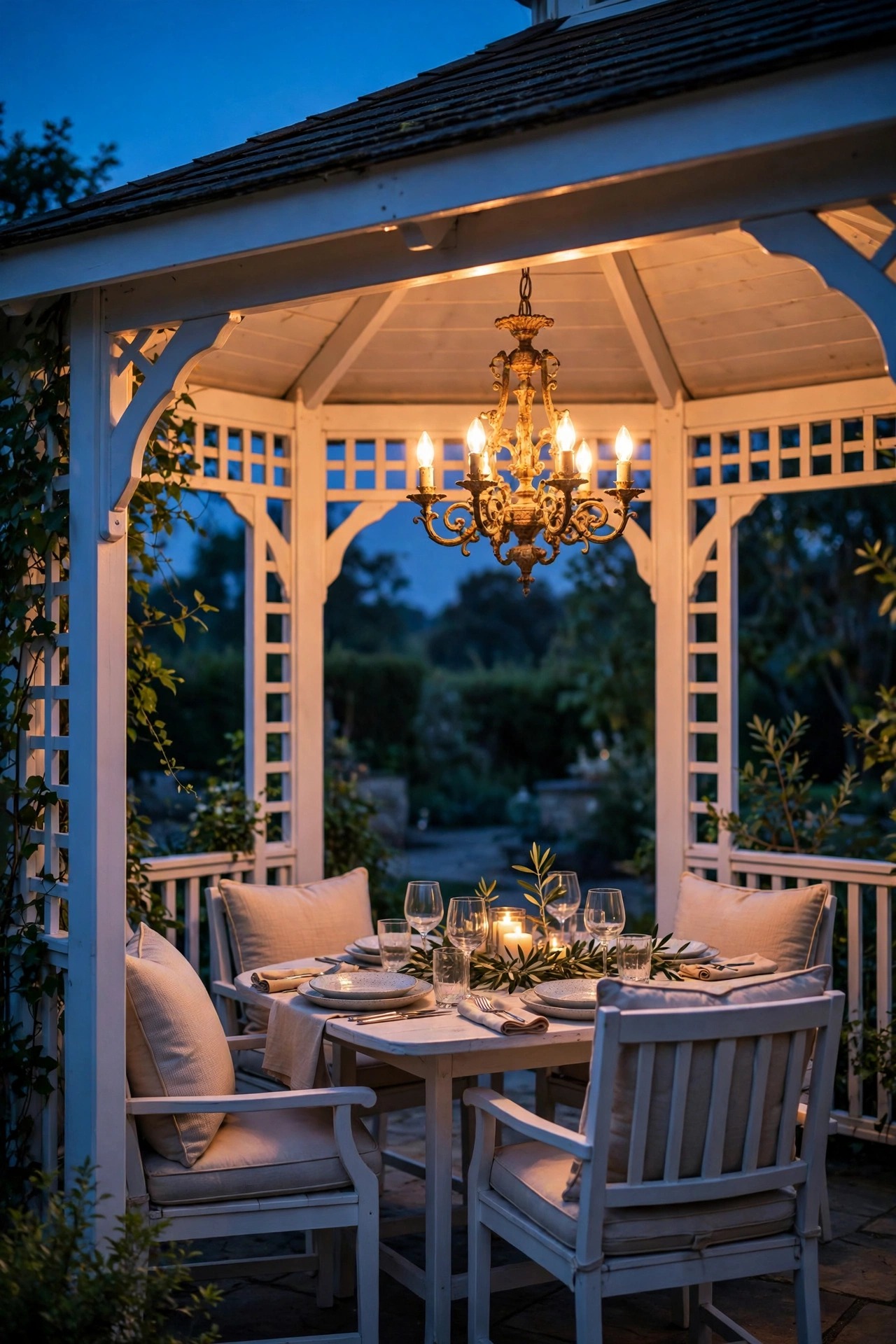
Every Victorian garden romance peaks under a roof, and a chandelier is how you crown it. Hang an outdoor-rated chandelier — damp or wet location rated, with flicker-flame LED bulbs — over the gazebo table or pergola seating, bottom of the fixture around 6-1/2 feet above the floor over a table, higher over open seating so heads clear it. Put it on a dimmer. Full brightness for serving dinner, then down to candlelight levels for the long talk afterward; that dimmer does more for mood than any other single purchase on this list. A hardwired install by an electrician is the gold standard, but battery and solar chandeliers have become genuinely pretty, with remote controls and timers, and they hang from a hook in ten minutes. Keep real scale in mind: a 20-to-24-inch chandelier suits most home gazebos. And because this fixture lives outdoors, I always recommend metal and seeded glass over crystal — it weathers gracefully instead of looking storm-worn by August.
Suggested budget range: $110 – $380.
11. Cluster Fairy Lights Inside Stone Urns and Planters
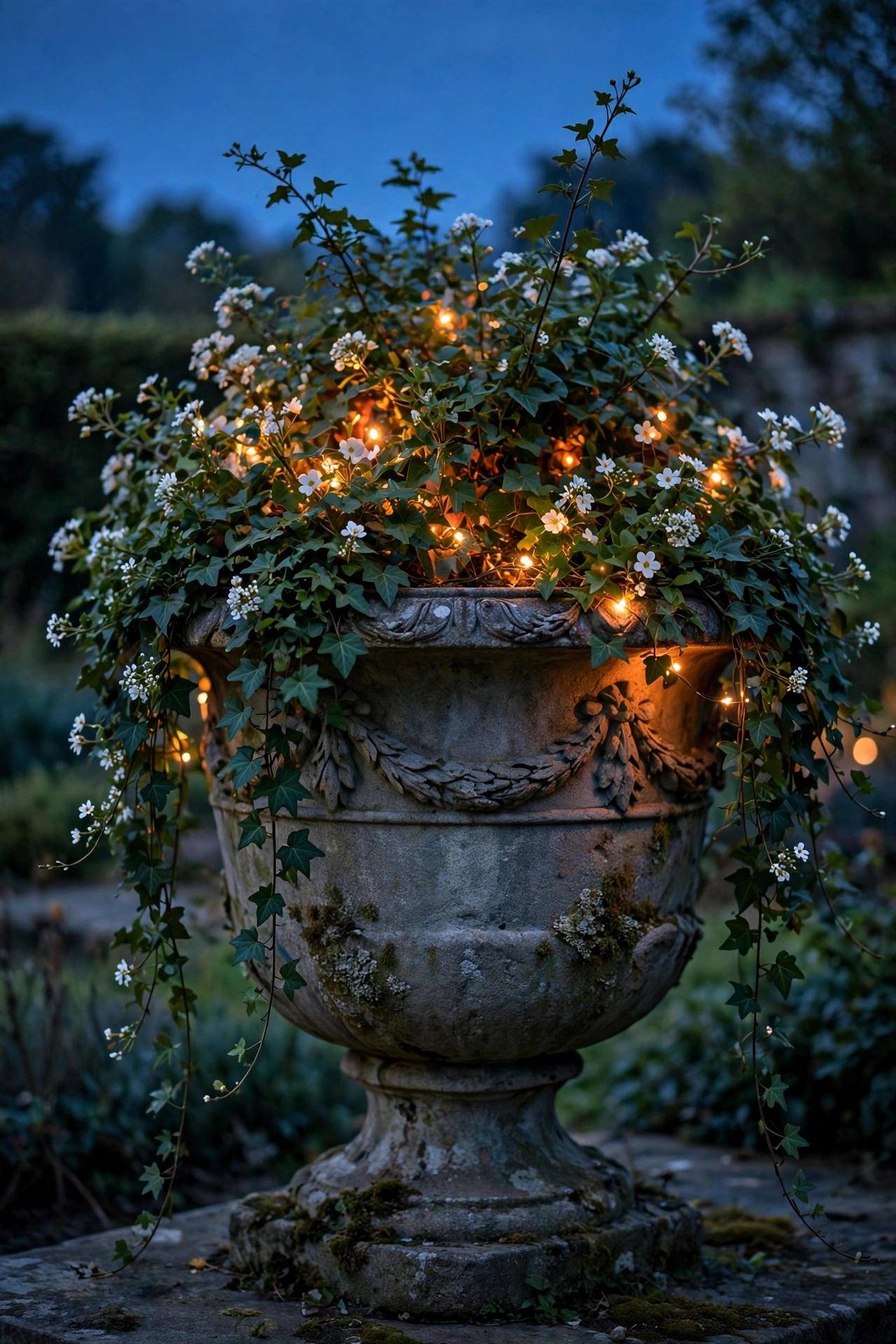
Here is a small trick that gets asked about at every garden party I host: an urn that glows from within. Take a large stone or cast-iron urn, plant it loosely with trailing ivy or white bacopa, and nestle two or three battery fairy-light strands inside the foliage so the whole planting sparkles like it caught fireflies. Keep the battery pack dry in a zip bag tucked under the rim, and use the timer mode so you are not fishing through leaves nightly. The same trick works in window boxes under a garden-facing window and in the big planters flanking the gate. White and silver-variegated foliage reflects the sparkle best; dark green alone can swallow it. Because these are low, gentle lights, they read as pure accent — do not count them toward your path lighting. In winter I move two urns to the covered porch and keep the glow going against the bare garden, which honestly is when I appreciate them most.
Suggested budget range: $30 – $90.
12. March Lanterns Along the Iron Fence or Garden Wall
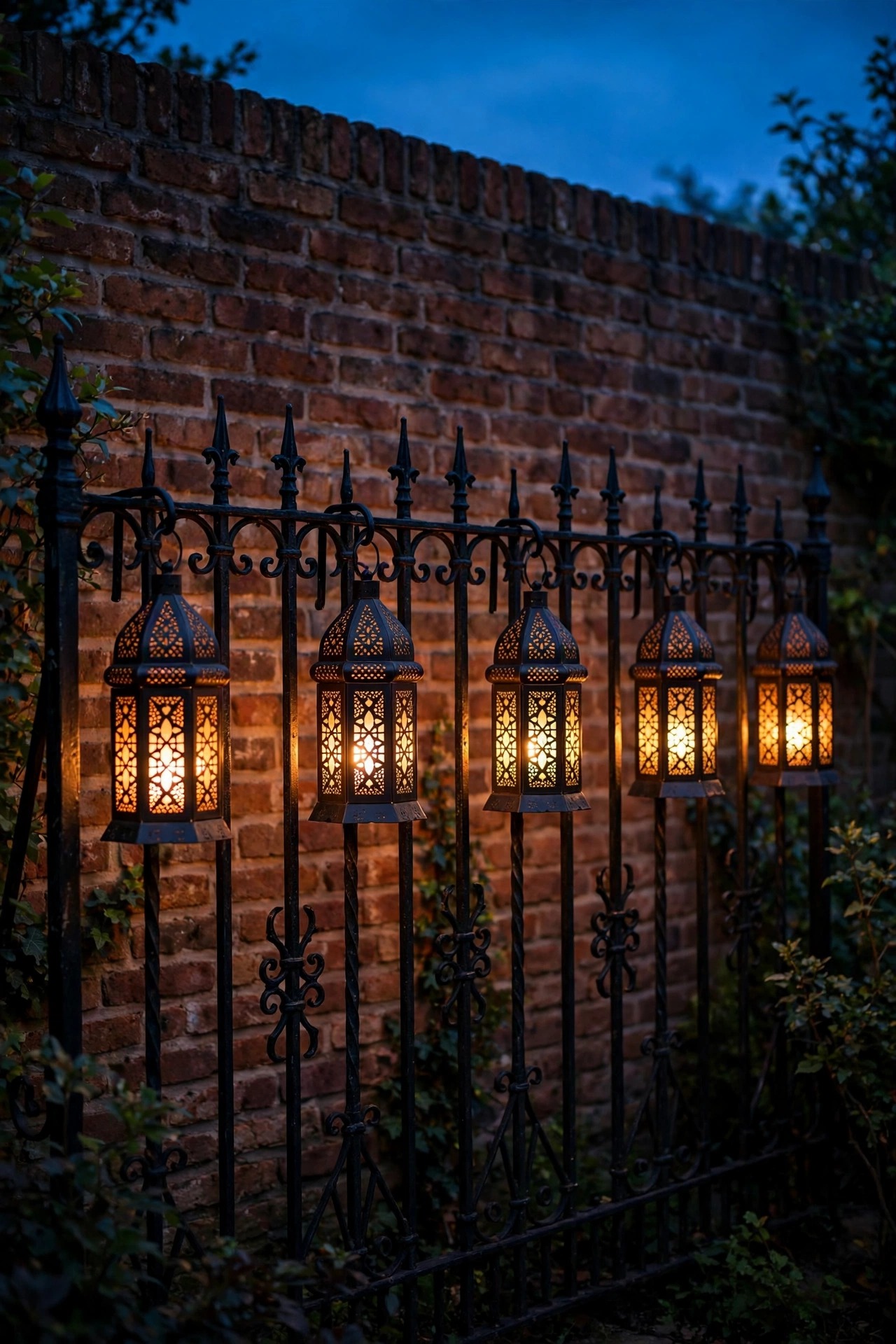
A Victorian garden has edges, and lighting them turns a yard into a room. If you have a low iron fence, a brick wall, or even a hedge line, a rhythm of small lanterns along it works like candlelight around a dining table. Screw shepherd hooks or clamp mounts every 8 to 10 feet and hang matching pierced-metal or glass lanterns with flameless candles or solar tops. The repetition is the point — five or six identical lanterns marching into the dusk give the whole garden bones. Keep them modest in brightness so the fence line glows as a backdrop rather than competing with the gate lantern and fountain. Metal lanterns with punched patterns throw constellations onto brick, which is its own small delight. One safety note: if you ever use real candles elsewhere indoors, keep the habit separate — along fences and dry hedges it is flameless and solar only, every time. I learned to check the hooks after storms; a swinging lantern in a gale finds the one weak screw.
Suggested budget range: $60 – $190.
13. Swag Globe String Lights Over the Seating Corner
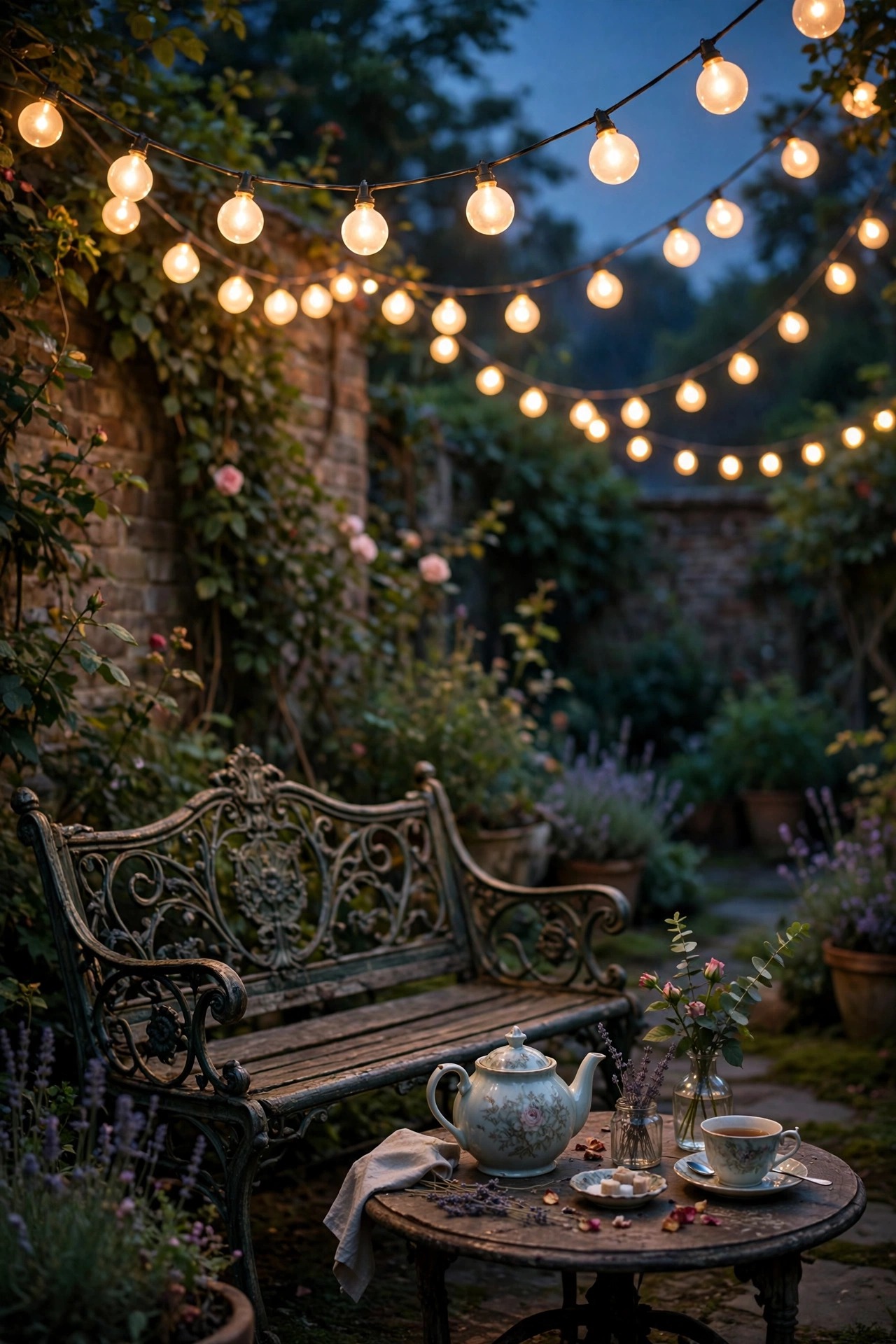
String lights can lean modern, but choose the right ones and they lean parlor. For a Victorian mood, pick strands with larger opal or amber glass globes — or vintage-style filament bulbs in clear glass — and swag them in gentle catenary curves over the garden bench or tea table instead of pulling them drum-tight. Two crossing swags at about 8 feet high make a ceiling for your garden room. Anchor to the house, a tree, or purpose-set poles with proper guide wires; a strand clipped to a weak branch will sag sadly by July. Commercial-grade strands with suspended sockets handle weather and heavier bulbs far better than the light-duty sets, and every connection should drip-loop downward so rain runs off instead of in. Keep real flame nowhere near them and plug into a GFCI outlet. On a dimmer or a warm 2200K bulb, globe strands at dusk look like a string of small moons — exactly the note a Victorian seating corner wants.
Suggested budget range: $55 – $170.
14. Keep Every Bulb in the Warm Flame Family
Victorian light was gaslight and candlelight, and both burn amber. The fastest way to break the spell is one stray blue-white bulb glaring among the gold. My rule: everything in the garden lives between 2200K and 2700K, with flame-effect bulbs at the amber end for lanterns and 2700K reserved for the gate and any place you need honest visibility. The moonlighting fixtures from idea 5 are the single deliberate exception at around 3000K, and even they stay subtle. When you buy replacements, buy two — bulb lines get discontinued, and a mismatched swap in a matched pair of lanterns will bother you every evening. Check the box, not the bulb's looks; two bulbs that both claim warm white can differ by 300 kelvins between brands. I keep a small labeled box in the potting bench with one spare for every fixture type in the garden. It sounds fussy. Then a bulb dies an hour before guests arrive, and it feels like genius.
Suggested budget range: $25 – $80.

15. Put It All on Photocells, Timers, and Dimmers
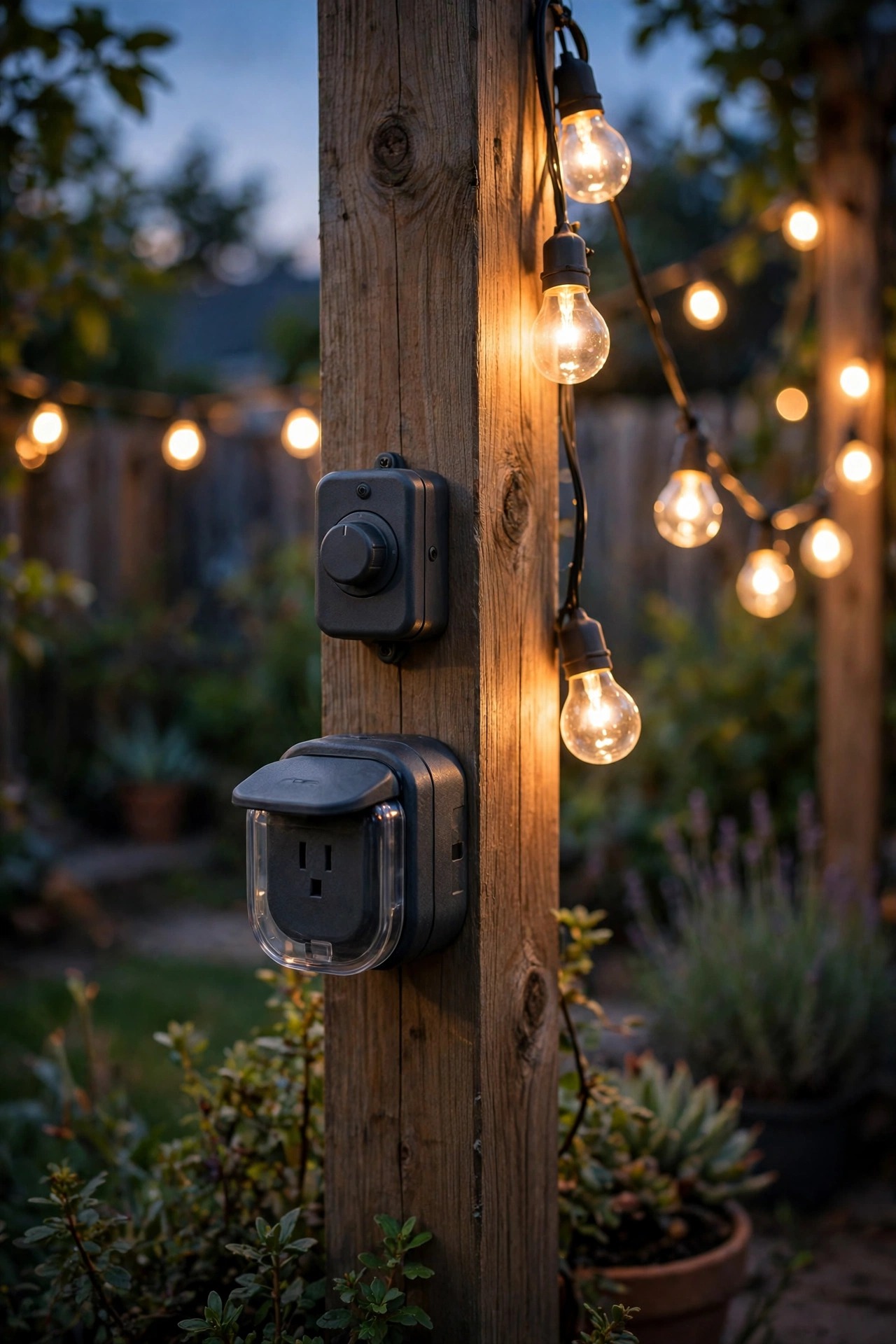
Romance dies fast when you are trudging out in slippers to switch things on. Automate the whole scheme: a photocell on the wired lanterns so they breathe on at dusk, timers on the battery fairy lights, and a smart plug or in-line dimmer for the chandelier and string lights. Set the main layers to run from dusk to about 11 p.m. on weeknights and a little later on weekends — a garden glowing at 2 a.m. wastes power and annoys the birds. The photocell matters more than people expect, because dusk slides by two hours between June and September, and a fixed clock timer leaves your garden dark at the prettiest hour in midsummer. Keep transformers and plugs under cover or in weatherproof boxes, and label each zone on the transformer with painter's tape: path, arch, water, overhead. When one zone fails at 8 p.m. before a party, you will thank yourself for the labels instead of unplugging things at random in the dark.
Suggested budget range: $40 – $140.
16. Dress the Lighting for the Seasons
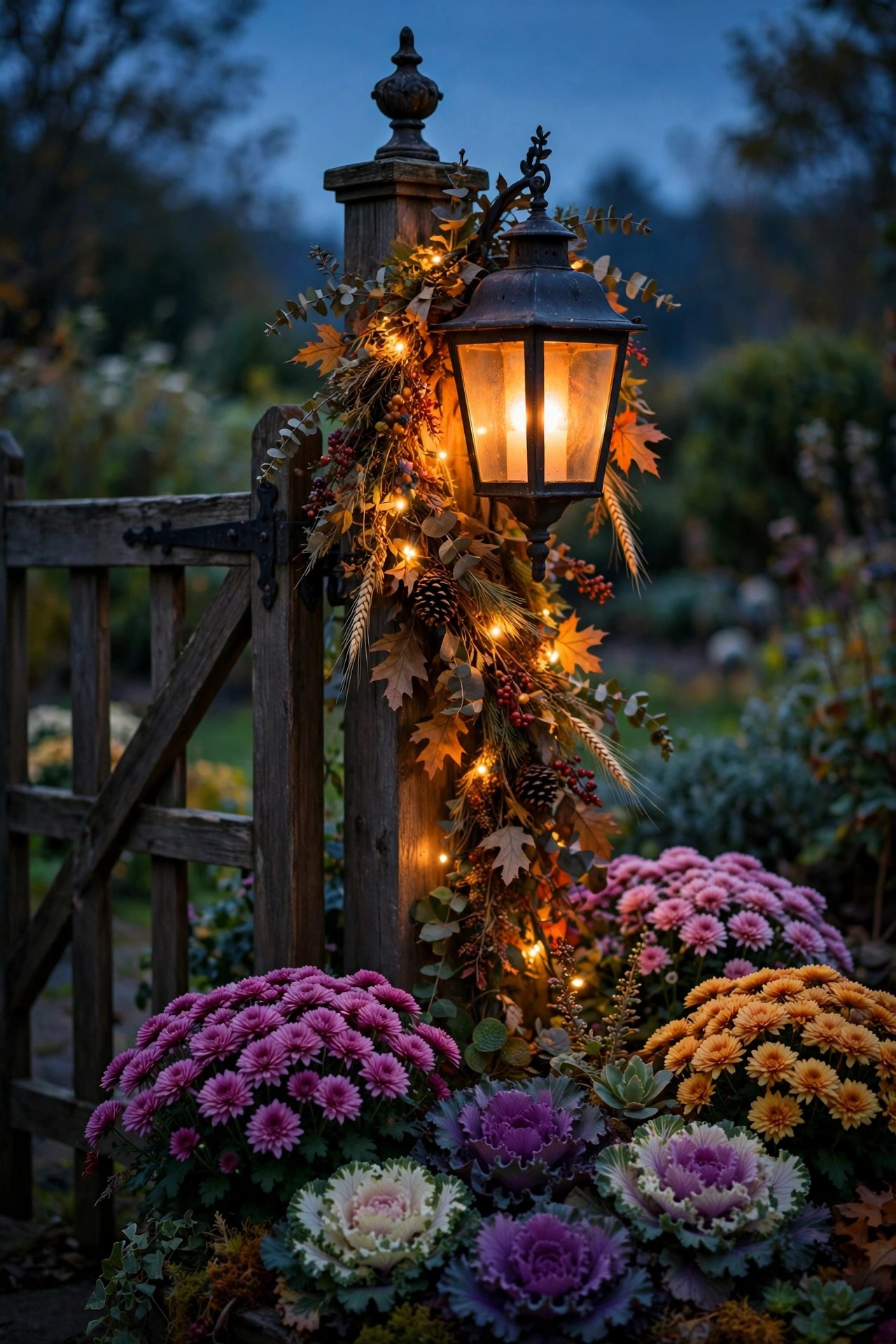
The Victorians were relentless seasonal decorators, and your lighting should change its costume a little as the year turns. In spring, tuck fairy strands into the lilac and let the arch carry the show. In summer, the full scheme runs: fountain, moonlighting, urns, and chandelier. Come fall, weave an artificial garland — LED lights only, since real flame and dried leaves are a dangerous pairing — around the gate lantern and swap white flowers under it for ornamental kale and mums, which catch warm light beautifully. Winter is when the bones show: the lanterns, the fence line, and the moonlit tree carry a bare garden, and a wreath with a battery fairy strand on the gate keeps the welcome alive. Seasonal dressing also forces a useful habit — twice a year you are up close to every fixture, wiping glass, checking stakes the frost heaved, and replacing tired batteries before they leak. Fifteen minutes in April and October keeps the whole system honest.
Suggested budget range: $30 – $100.
17. Finish With a Dusk Walk-Through of Your Victorian Garden Lighting Ideas
The last step of every garden I light is the same: wait for full dusk, pour something cold, and walk the whole garden slowly, from the street to the back fence, seeing it the way a guest would. This is where victorian garden lighting ideas stop being a shopping list and become a mood. Squint a little — you are looking for balance, not detail. Any bare bulb you can see directly gets a shield, a shade, or a repositioned plant. Any dark gap on the path gets one more stake lantern. Any fixture shouting louder than the fountain gets dimmed or moved deeper into the foliage. I usually shift three or four things on this walk, and it always feels like tuning an instrument. Take a photo from the gate and one from the bench; the camera exaggerates glare your eyes forgive, and it shows you exactly what your guests will post. Then sit down in the seating corner, under the globes, inside your own storybook — and let the garden do the rest.
Suggested budget range: $0 – $60.
Frequently Asked Questions
What color temperature looks most like Victorian gaslight?
Aim for 2200K to 2700K. Flame-effect LED bulbs around 2200K mimic gaslight and candlelight most closely, while 2700K suits spots where you need clearer visibility, like the gate. Anything at 4000K or above reads blue-white and modern, and one cool bulb in the mix breaks the whole spell.
Can I do a Victorian garden entirely with solar lighting?
Mostly, yes, with honest limits. Solar stake lanterns, fairy lights, and fence lanterns now look convincingly period and work well in beds and sunny paths. The weak points are shaded corners and anything that must run past midnight in winter — moonlighting and chandeliers still do better wired. A solar-heavy garden with one or two wired anchors is the sweet spot.
How do I keep Victorian lighting from looking like a theme park?
Restraint. Limit yourself to one star per view — the fountain, the arch, or the statue, not all three at full glow. Keep brightness low, hide every light source you can, repeat a small family of matching fixtures instead of collecting novelties, and leave real darkness between the pools of light. Shadow is half the design.
How much does a full Victorian garden lighting scheme cost?
For a typical backyard garden, expect roughly $600 to $1,900 spread across the layers in this list: path and bed lanterns, one statement fixture, automation, and accents. Hiring a pro for tree moonlighting is the biggest single line item. Most of my readers build it over two seasons, starting with the path and the arch.
Conclusion
If you take one principle from all of this, let it be layering: guidance at your feet, welcome at eye level, and a whisper of moonlight overhead. These victorian garden lighting ideas are not really about fixtures — they are about building a garden that keeps its manners after dark, warm and unhurried and a little bit enchanted. Start with the path lanterns and the rose arch, automate them so the magic happens without you, and add one romantic focal point each season. If you want a broader starting map before you commit, browse my full collection of garden lighting ideas for more styles and budgets — then come back and give your garden its storybook evenings.