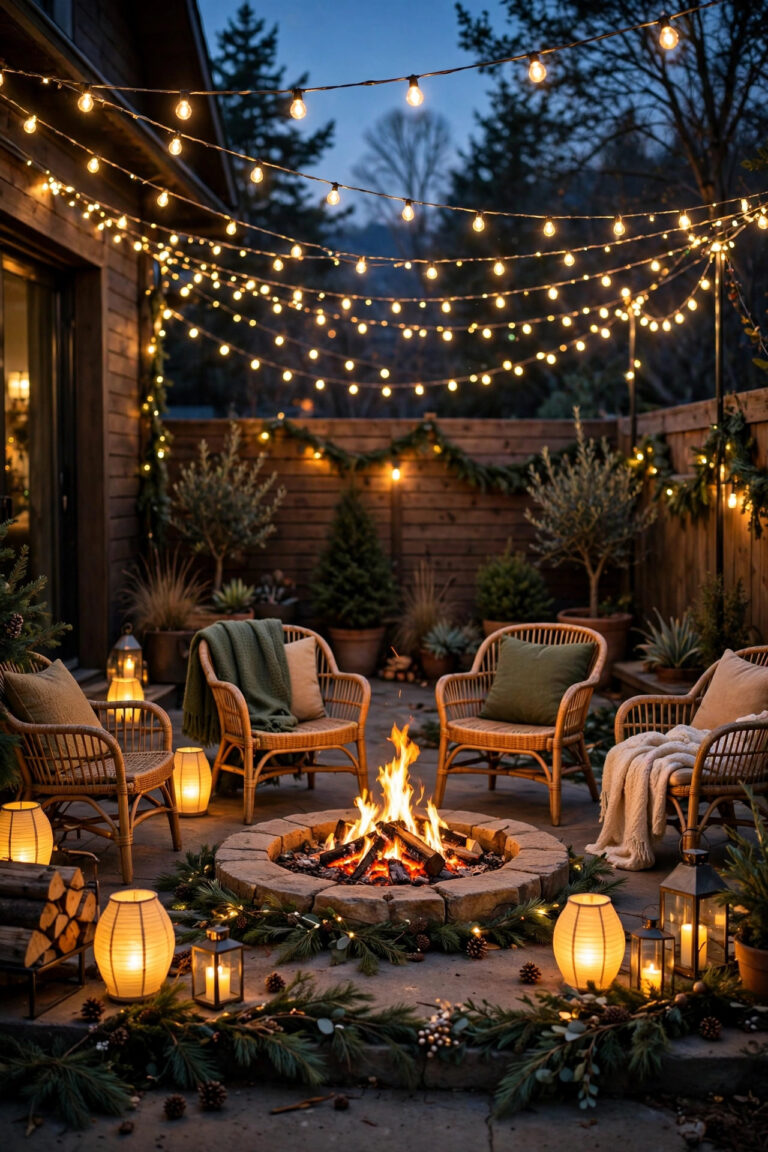
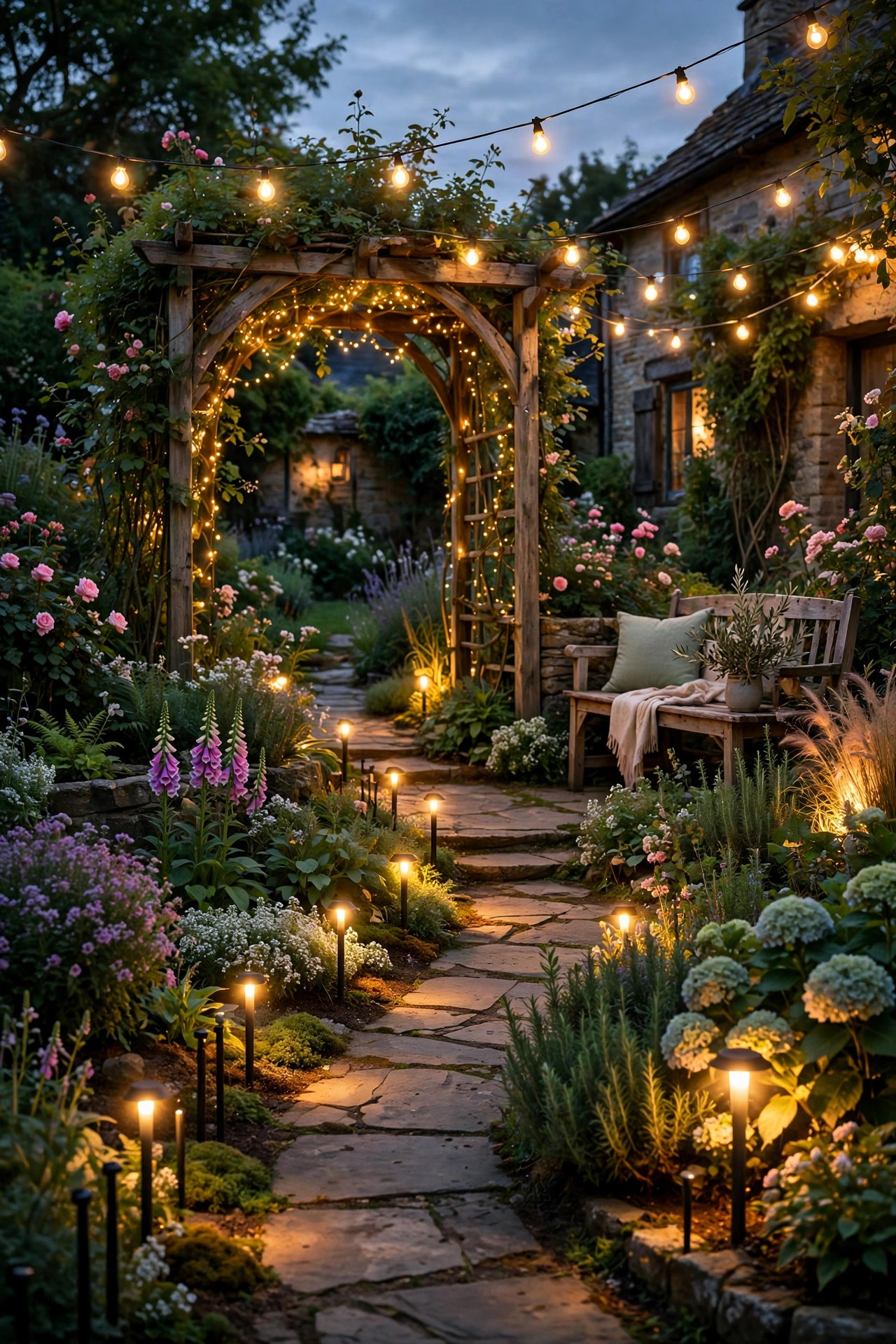
There is a half hour after sunset when a cottage garden turns into something out of a storybook, and in my experience that is exactly when most of us head back inside and miss it. These cottage garden lighting ideas changed that at my house. The trick is never one big light — it is layering: a soft glow along the winding path so you can wander safely, a wash of light through the rose beds so the blooms keep their color, and a few twinkling accents tucked into arches and branches overhead. None of it needs an electrician, and most of it goes in over a weekend. Below are the 19 ideas I rotate through my own beds and borders, from five-dollar solar stakes to the uplights that make my climbing roses look like theater scenery. If you want the whole-yard picture first, my broader garden lighting ideas guide is a good place to start, then come back here for the roses.
1. Plan Your Cottage Garden Lighting Ideas in Layers, Not Rows
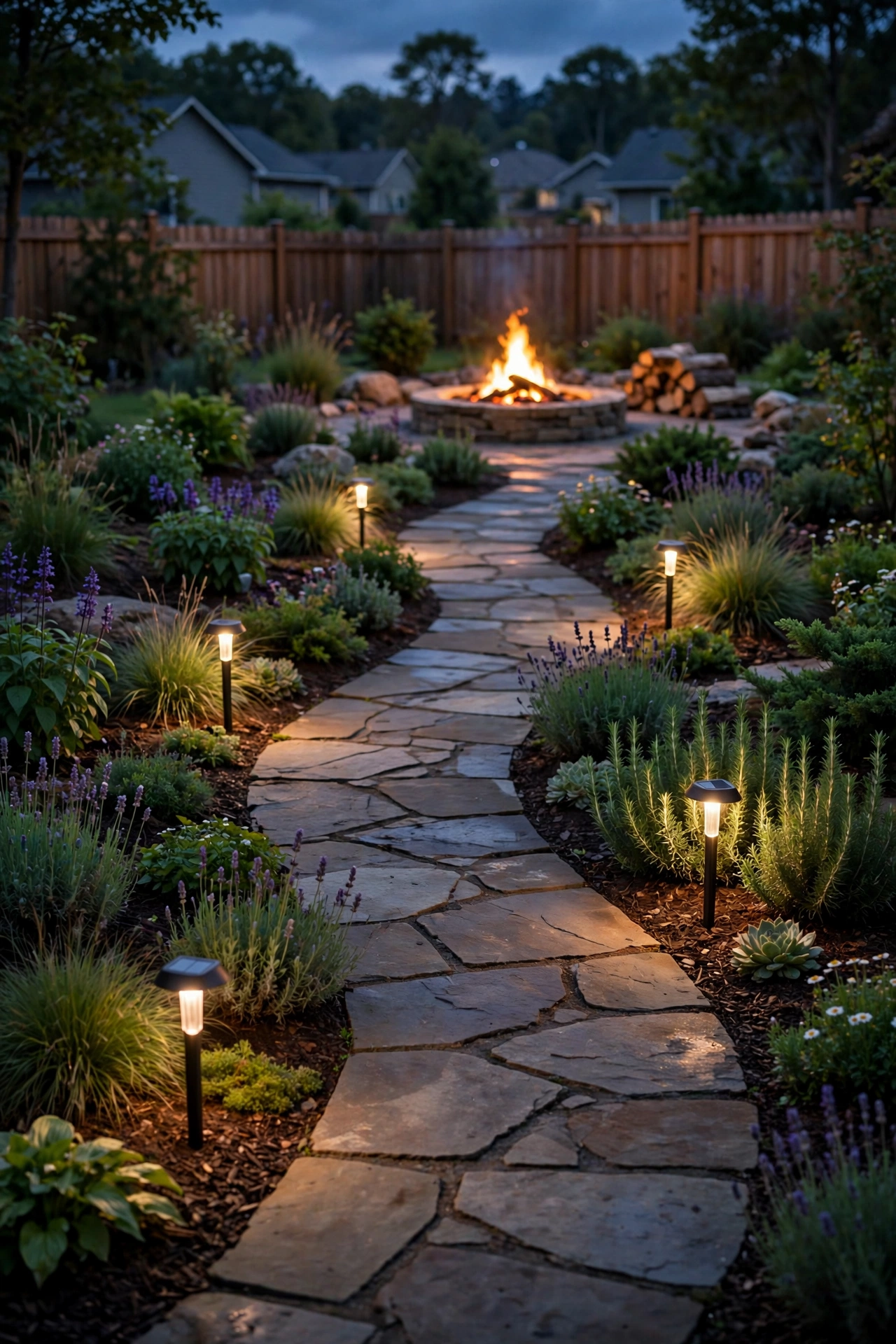
Before you buy a single fixture, take a mug of tea out at dusk and just look. That slow walk has saved me more money than any coupon, because a cottage garden is not a grid — it is a tangle of paths, beds, arches, and surprises, and the light has to follow that rhythm. I plan at three heights. Ground level is for footing: the path edges, the step down by the gate, the wobbly stone near the birdbath. Bed level is for the plants themselves, a low wash that keeps rose blooms and foxgloves glowing after dark. Overhead is the magic layer: something in the arch, the branches, or swagged above the bench that makes the whole garden feel like a room. On paper, sketch the winding path first, then mark where you actually stand and linger — the bench, the gate, the cutting bed where you gather roses for the table. Those lingering spots get the prettiest light. Note the sunny corners too, because they will carry your solar fixtures, and the deep-shade corners, where low-voltage wired lights will serve you better. Ten minutes of looking, and the shopping list writes itself.
Suggested budget range: $0 – $15.
2. Line the Winding Path With Solar Stake Lights
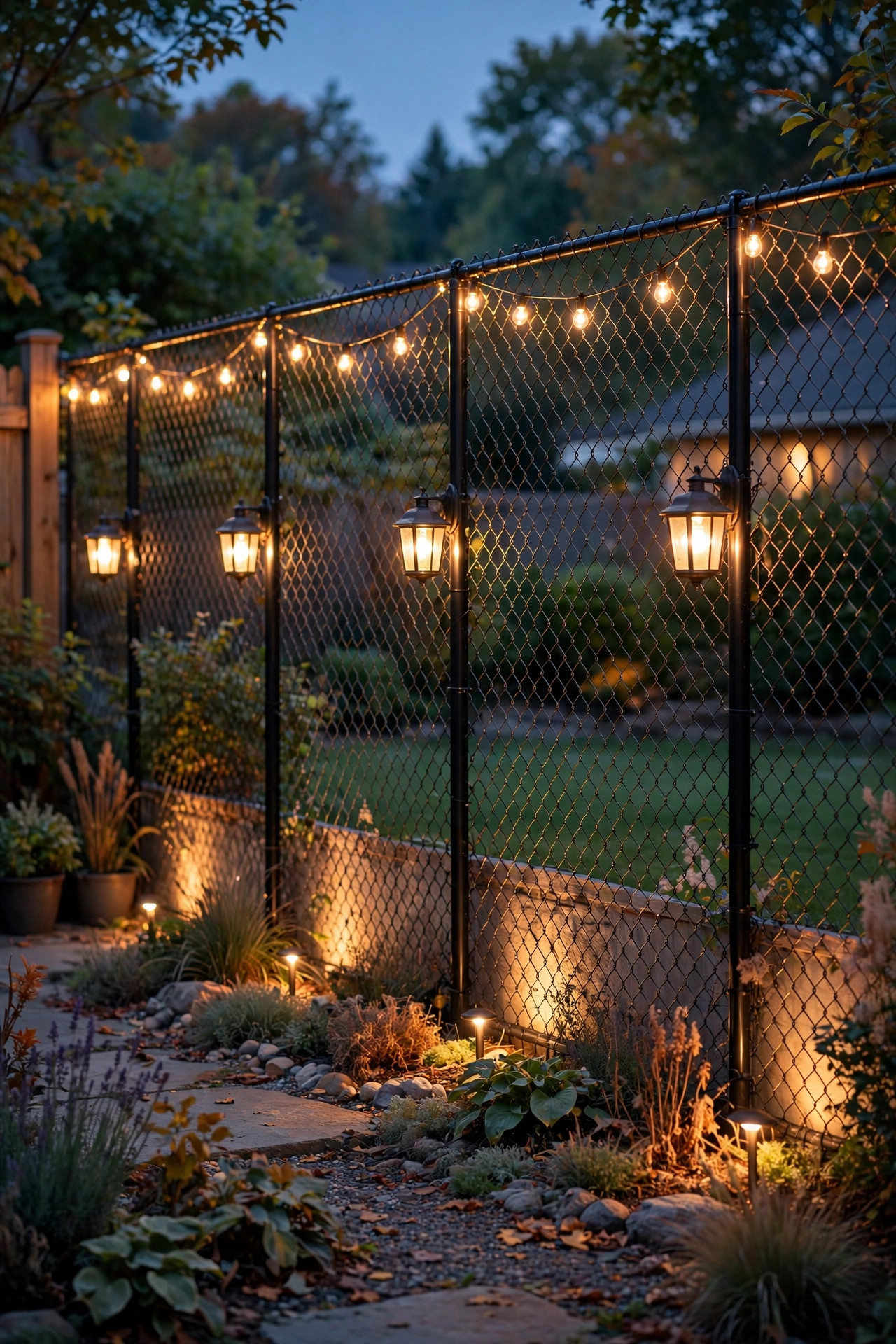
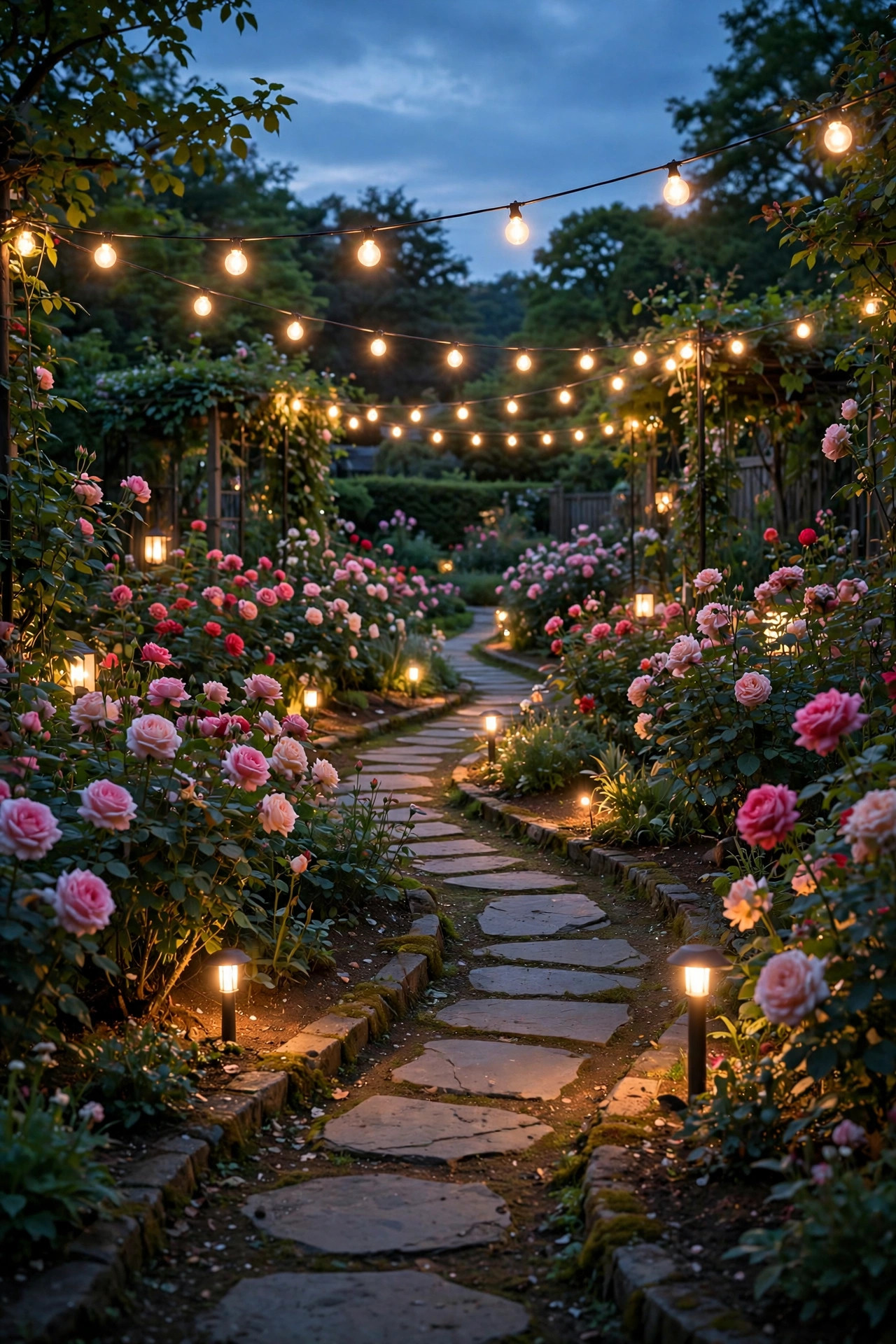
Cottage garden paths curve, and that curve is the whole charm — so the lights should curve too. I use warm white solar stakes along both edges of my gravel path, spaced about 18 to 24 inches apart and staggered instead of paired, which reads as a gentle trail of fireflies rather than a runway. Keep them short, 12 to 15 inches tall, so the light pools at your feet and never glares while you bend to deadhead. Warm white around 2700K to 3000K keeps the greens rich and the rose petals true; cool white turns a cottage garden into a parking lot, honestly. Look for stakes rated for 8 to 10 hours of runtime with replaceable batteries, and wipe the little panels with a damp cloth every few weeks, because pollen film quietly steals charge. Gravel and mulch shift, so push stakes in a good 4 inches deep and straighten them after heavy rain. Where the path ducks under the lilac and stays shady all day, swap every third stake for a wired low-voltage light or move the panel on a short lead into the sun. Start with one side of the path; you can always add the second.
Suggested budget range: $25 – $60.
3. Weave Copper-Wire Fairy Lights Through the Rose Arch
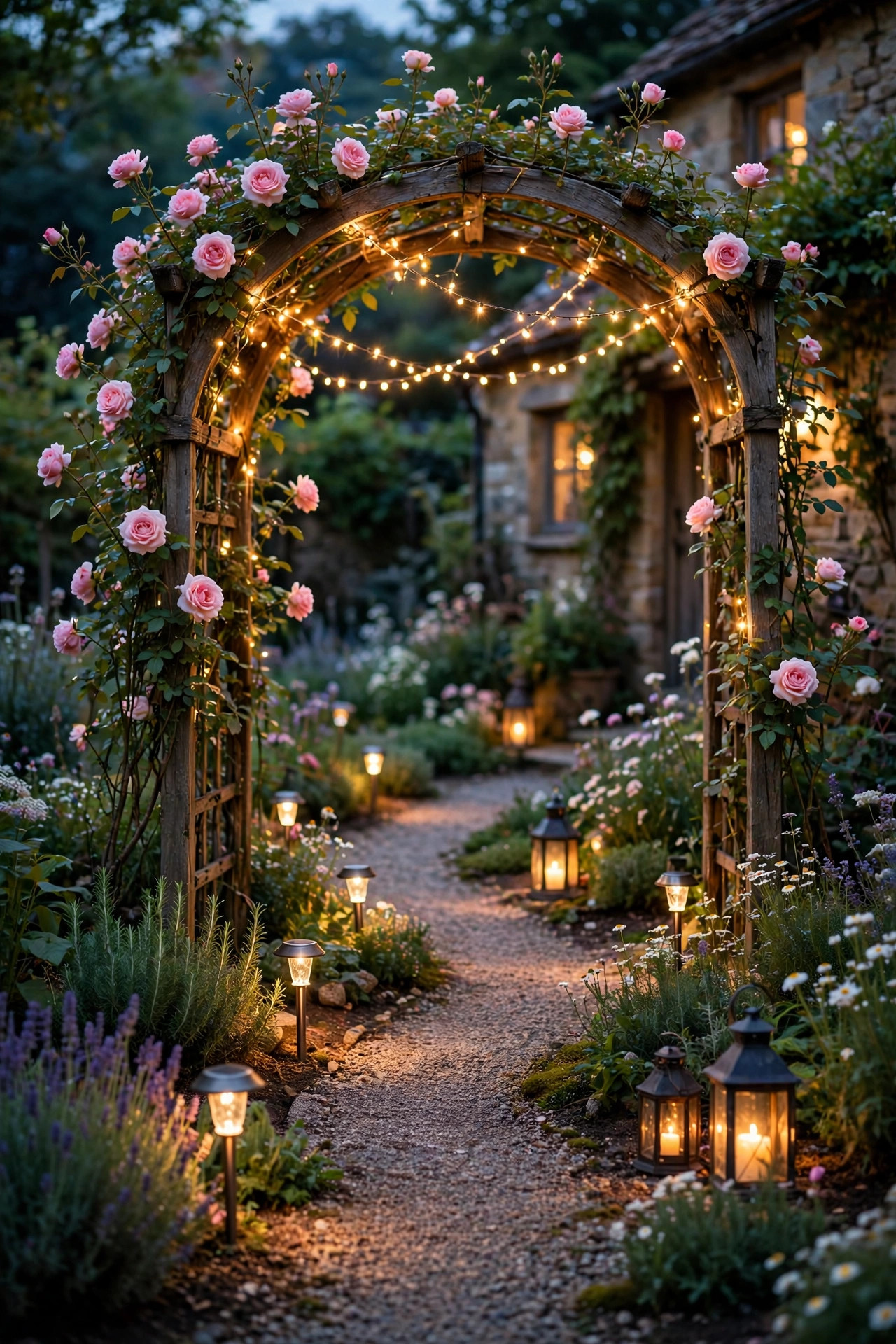
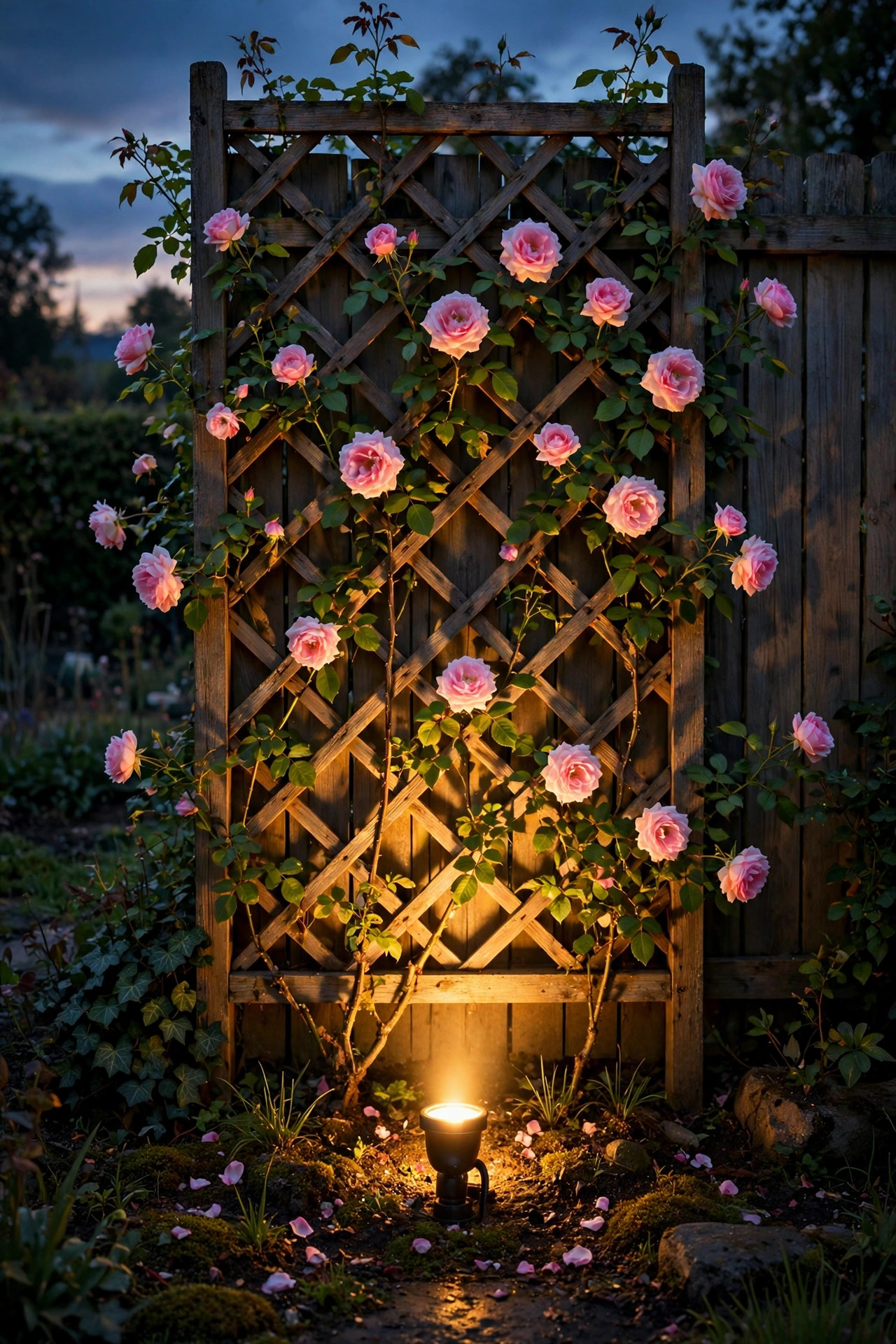
If a cottage garden has a heart, mine is the old wooden arch where the climbing roses ramble — and copper-wire fairy lights were made for exactly that tangle. The wire is thin enough to disappear against the canes, and you can bend it to follow every curve of the trellis without clips or ties. I weave one 33-foot strand in loose spirals around each post, then let the rest wander out along the top beam and dip into the roses themselves. Battery and solar versions both work here; solar is effortless if the arch gets sun, but I favor a battery pack with a timer for shady arches, set to glow for six hours from dusk. Keep the pack tucked in a weatherproof spot at the base, and use LED only — the bulbs stay cool against dry leaves and petals. The effect at night is pure storybook: a hundred pinpoints floating among the blooms, pretty enough that guests slow down on the path without knowing why. My roundup of outdoor fairy light ideas has more ways to thread them through trees and fences if the arch leaves you wanting more.
Suggested budget range: $15 – $40.

4. Uplight Climbing Roses on a Trellis or Fence
A climbing rose in full bloom deserves one dramatic moment, and a single low-voltage spotlight at its base delivers it. Set the fixture 12 to 18 inches out from the trellis, angled up at about 30 degrees so the beam grazes the foliage instead of blasting straight through it. Grazing light is the secret: it rakes across leaves and petals, throwing soft shadows that make the whole plant look twice as full. Choose a warm white LED around 300 to 500 lumens — plenty for a six-to-eight-foot rose — with an IP65 rating or better, and run the cable a few inches under the mulch so the mower never finds it. In my experience, one spotlight per feature rose is enough; two create a flat, stagey look. Add a small shield or position the light so it never shines toward the path or a neighbor window. When the blooms finish, the same light carries the structure through winter, showing off the canes and hips. If wiring feels like a leap, solar spotlights have improved, but give the panel its own sunny patch of ground rather than hiding it under the rose.
Suggested budget range: $35 – $90.
5. Hang Lanterns From Shepherd Hooks Along the Beds
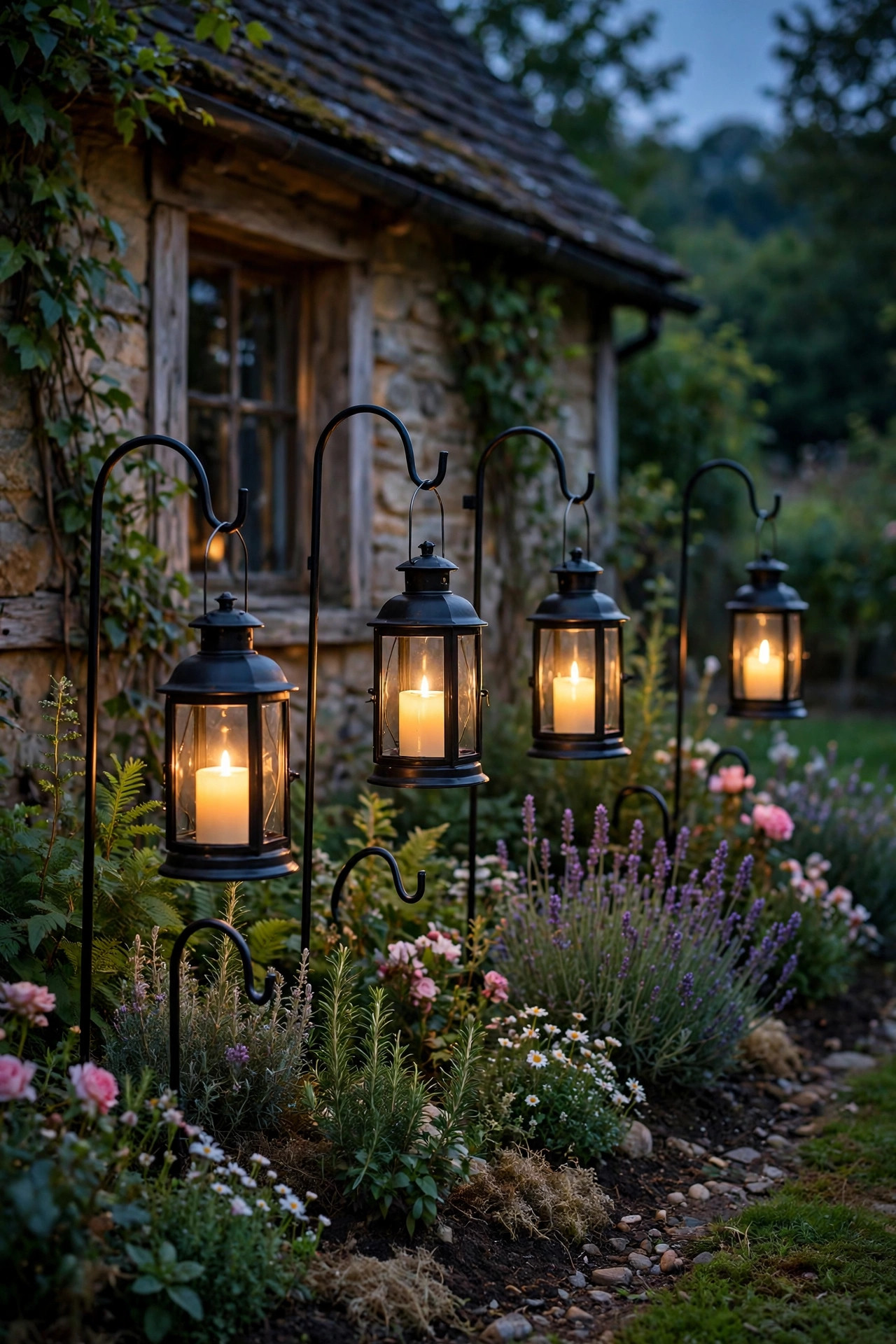
Shepherd hooks are the hardest-working hardware in my garden, and lanterns swinging from them are pure cottage theater. Push 36- to 48-inch hooks firmly along the bed edges and path corners, about 18 inches back from the front of the border so the lantern hangs over foliage rather than soil. Fill each lantern with a flameless LED candle on a timer, or choose solar lanterns that charge by day — real flame has no place near dry mulch and petals. I hang them in odd numbers, three or five along a bed, at slightly varied heights, because a matched row feels like a shop display and a loose cluster feels like home. Black metal hooks disappear against stems; in a pale, romantic scheme, white hooks read almost like ironwork furniture. The gentle sway in an evening breeze is the charm, so leave a little slack in the hanger rather than wiring lanterns rigid. Come autumn, the same hooks carry lanterns into the pumpkin patch without moving a thing. Cluster two hooks near the bench and the whole seating corner feels lit on purpose.
Suggested budget range: $30 – $75.
6. Swag String Lights Over the Garden Bench
Every cottage garden needs one spot where the evening slows down, and at my house that is the bench under the apple tree. Two strands of shatterproof LED café string lights, swagged between the tree and a sturdy 8-foot pole, turned it into the seat everyone claims after dinner. Keep the lowest dip about 7 feet up so nobody brushes bulbs with a raised lemonade glass, and choose warm white filament-style LEDs around 2700K — the glow reads as candlelight, only steadier. Shatterproof matters here: glass over a stone path and bare summer feet is a worry nobody needs. Plug into a GFCI-protected outdoor outlet with a cord rated for outdoor use, and give the strand a gentle swag — a 6- to 8-inch dip between anchors looks relaxed rather than sloppy. A simple plug-in timer or dusk sensor means the bench is glowing when you wander out, no switches to remember. If the bench sits far from power, solar café strands work, but they fade earlier on cloudy weeks, so treat them as the garnish rather than the main light.
Suggested budget range: $35 – $85.

7. Spotlight One Specimen Rose or Shrub as the Star
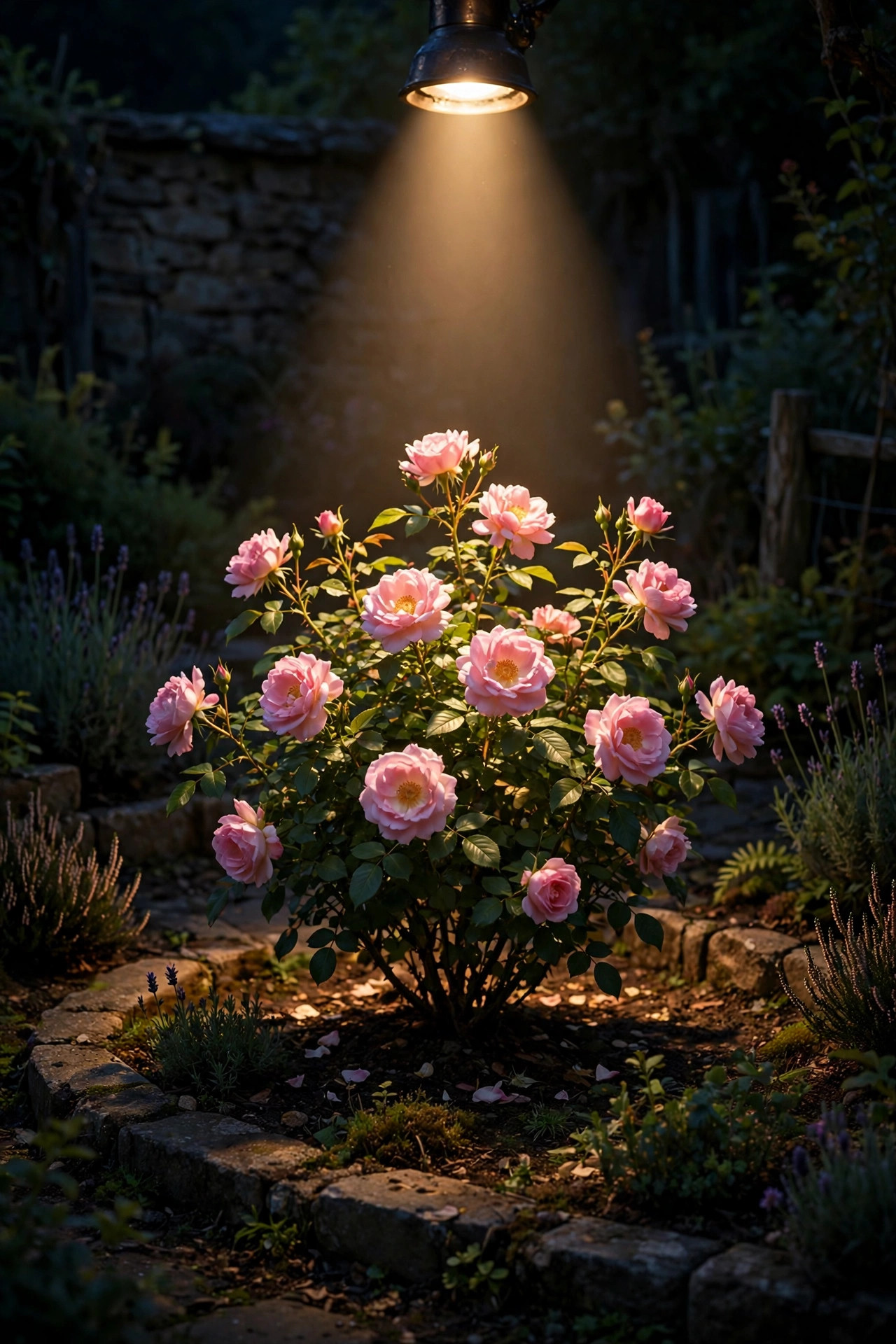
Walk your garden at dusk and ask which plant you would save if you could save only one. That rose, that blowsy peony, that perfect hydrangea — that is your star, and a star gets a spotlight. A single low-voltage spot with a narrow 30- to 45-degree beam, set at the base and tilted up into the canopy of blooms, lifts one plant out of the dusk while everything around it stays soft and dim. That contrast is what makes a garden feel designed rather than merely lit. Keep it warm, around 300 lumens for a shrub rose, and hide the fixture behind a clump of catmint or a low stone so the source never shows. Gardeners who light every plant evenly end up lighting none of them; one star per view is the rule I keep. My guide to front yard flower bed lighting digs into beam angles and placement for beds that face the street. Rotate the honor if you like — the spotlight that flatters the June rose can swing to the dahlias by August with a two-minute adjustment.
Suggested budget range: $25 – $70.
8. Tuck Solar Jar Lanterns Among the Blooms
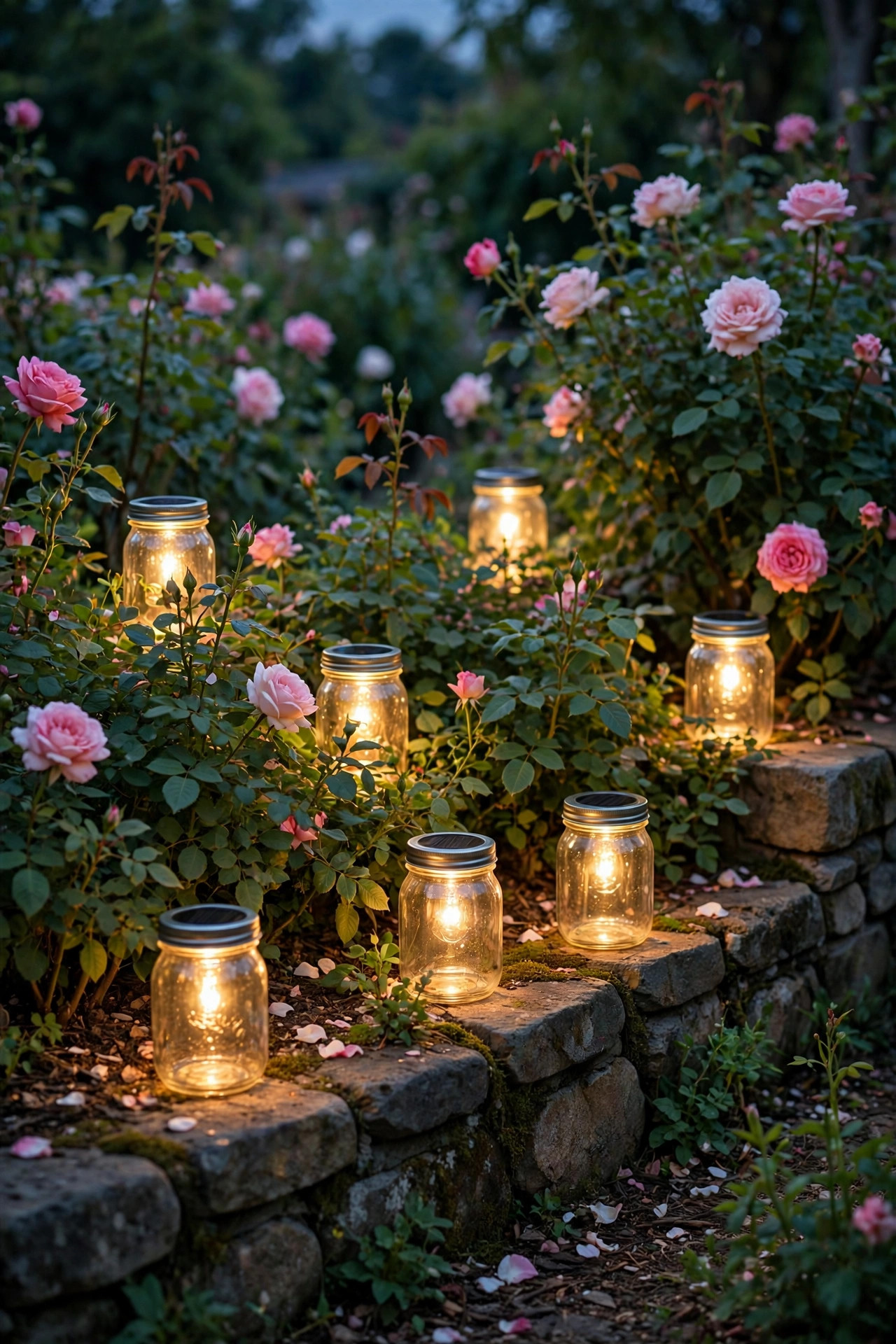
Solar jar lanterns are the sweetest little workhorses I own — glass jars with a solar lid and a tangle of warm micro lights inside, asking nothing of anyone. I nestle them right into the beds at the feet of the roses, hang a few from low branches on wire hooks, and line two or three along the low stone edge where the path turns. During the day they read as simple garden glass; after dark each one glows like captured fireflies, and the light is soft enough that it never competes with the blooms it nestles against. Because the panel sits in the lid, place jars where sun reaches for at least part of the day, and lift them out of deep shade beds — a jar in full shadow will sigh out by nine. Rinse the lids when you water, since dust and pollen dim the charge. They are inexpensive enough to buy in sets of six, which is the right scale for a cottage look; one lonely jar reads as forgotten, six read as a decision. Bring them onto the porch steps in winter so frost-free storage keeps the batteries kind.
Suggested budget range: $20 – $45.
9. Try Moonlighting, One of My Favorite Cottage Garden Lighting Ideas
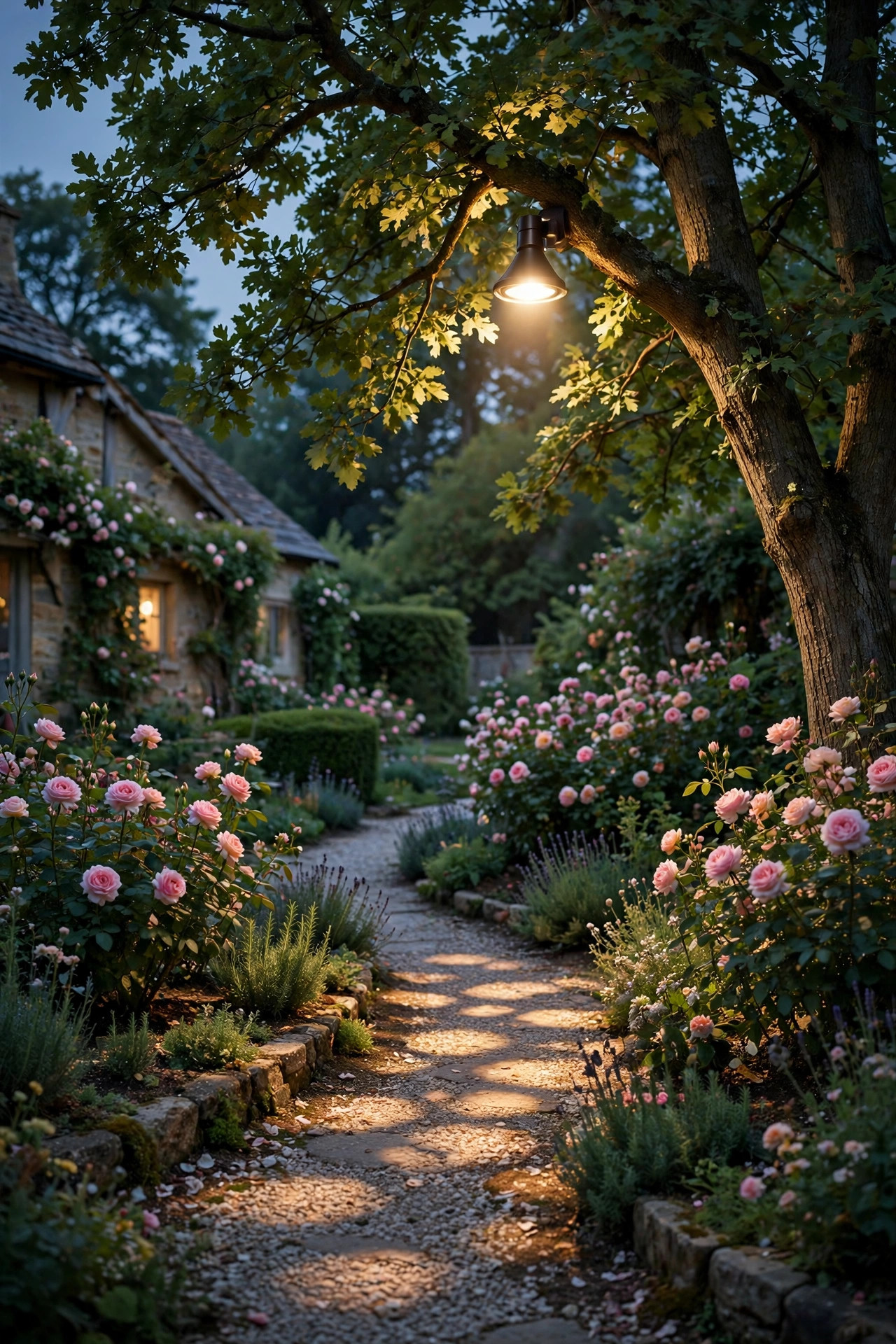
Moonlighting is the most romantic trick in the book: a single downlight mounted high in a tree, aimed through the branches so the garden below gets dappled pools of light, as if a full moon were permanently on duty. In my garden the fixture sits about 15 feet up in the maple, clipped to a sturdy limb, and the light filters through leaves onto the path and the tops of the roses. It flatters everything and lights nothing harshly, which is the whole point. Use a warm white LED despite the name — cool blue moonlight reads spooky in a flower garden, while 2700K feels like candlelit moonbeams. This is the one job where I will say hire help if heights make you nervous; an arborist or lighting installer can mount and aim the fixture safely, and the cable runs down the back of the trunk out of sight. A wide beam, 60 degrees or more, keeps the pools broad and gentle. Because the light comes from above, it never glares into eyes on the path, and it layers beautifully over every lower light in the garden without fighting them.
Suggested budget range: $60 – $150.
10. Hide an LED Strip Under the Stone Wall Cap
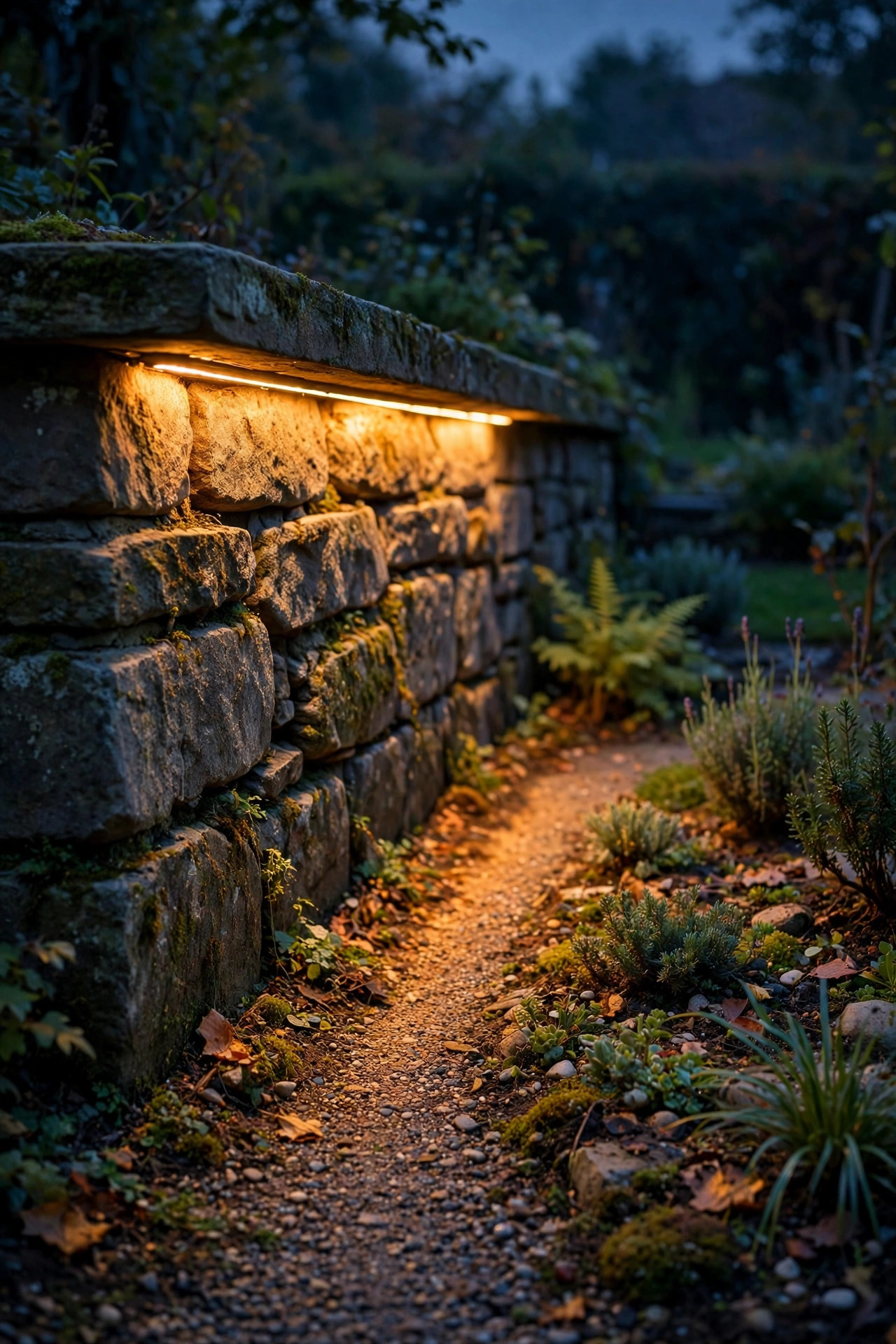
Some of the prettiest light in my garden comes from a fixture nobody ever sees. The low stone wall along the rose bed has a flat cap, and under that cap I stuck a waterproof LED strip, so at night the wall wears a soft ribbon of glow that spills down the stones and across the path edge. The strip itself vanishes; only the light remains, with a source you cannot find, which makes visitors lean in and ask. Choose an outdoor strip rated IP65 or better, warm white, and add small mounting clips every foot or so — summer heat softens adhesive, and a sagging strip looks tired. Low-voltage strips running from a small transformer are the steady choice; hide the transformer in a weatherproof box behind the wall and put it on the same timer as the rest of the garden. Keep brightness low: this is a whisper of light meant to outline the bed and mark the path edge, not a runway. The same trick works under a bench seat, a raised bed rail, or the top step of the porch, anywhere a lip of wood or stone can hide a quarter inch of strip.
Suggested budget range: $30 – $80.
11. Set Flameless Candle Lanterns on the Garden Table
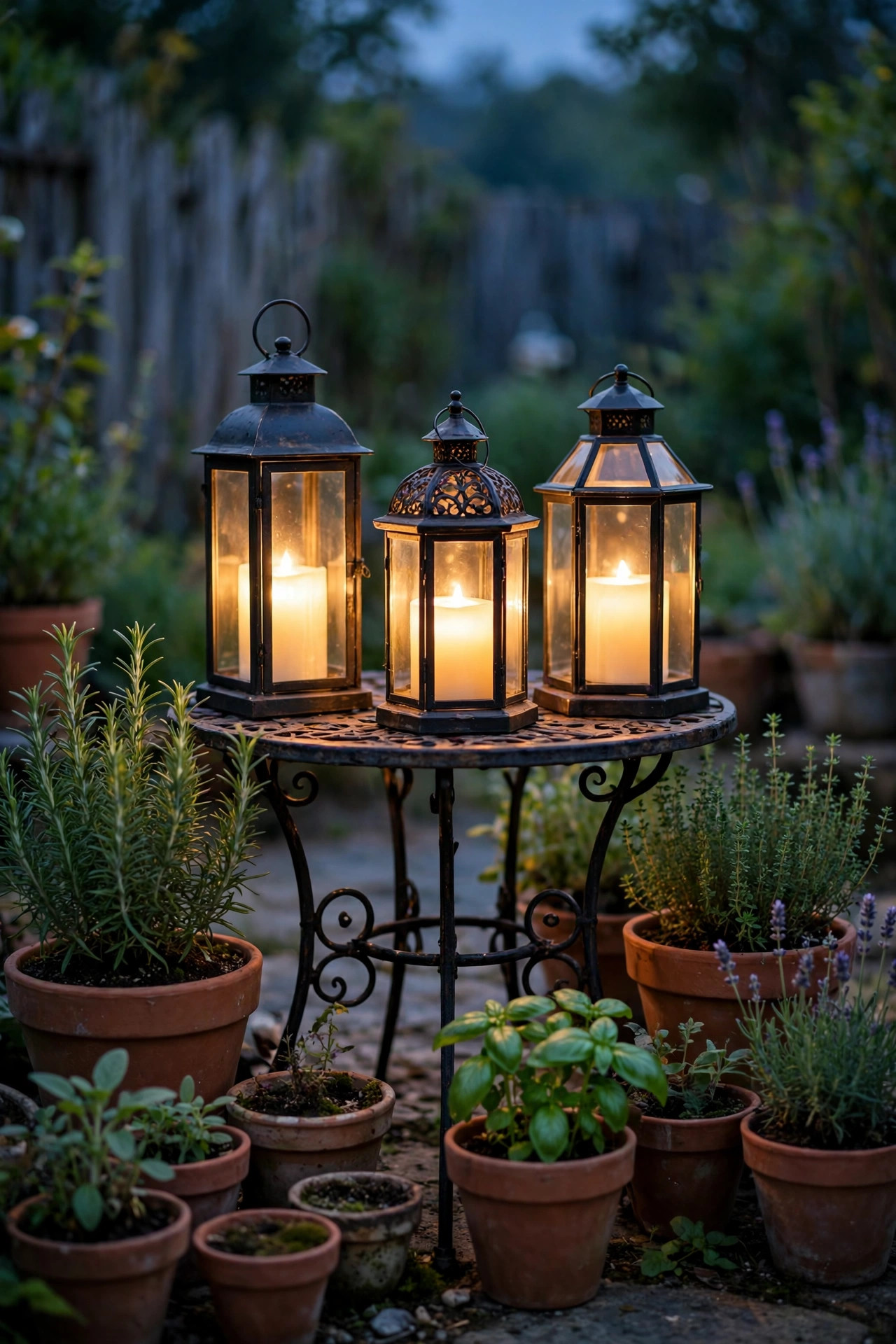
Our little iron table in the herb corner hosts more weeknight dinners than the dining room does, and it is lit entirely by flameless candle lanterns. I group three at different heights in the center, the kind with a warm flicker setting that fools everyone from six feet away, set on a four-hour timer so they are glowing when we sit down and off before bed. Flameless is non-negotiable in a working garden: real candles plus dry lavender, paper napkins, and a summer breeze is a combination I refuse to supervise. LED candles also shrug off the wind that murders real flames, and dew does them no harm overnight. Choose lanterns with a little weight so they stay put, and glass or metal frames rather than plastic, which fades to tired by August. Between meals the lanterns live on the porch steps and the gate posts, so no corner of the garden is far from a welcoming flicker. Battery life runs for weeks at a few hours a night, and swapping batteries twice a season keeps the ritual effortless.
Suggested budget range: $20 – $50.
12. Light the Garden Gate and Arbor Entrance
The gate is where the garden makes its first impression, and lighting it well takes five minutes and one decision: a lantern on each post. I use solar post-cap lights on the two gate posts, the flat-topped kind that sit like little hats, plus a small lantern sconce on the inside face so the latch side glows when you come home after dark. Match the finish to your hinges and latch — black on black disappears by day, which keeps the cottage look all flowers and no hardware. The pair of lights frames the arch and the roses spilling over it, and it tells guests exactly where to enter without a word. Solar caps need sun on the post tops, so if a tree shades the gate, choose caps with a remote panel you can stake a few feet away in the open. Keep the two lights the same model and temperature; mismatched gate lights look like one died, even when both are lit on purpose. It is a small project with an outsized welcome.
Suggested budget range: $25 – $65.

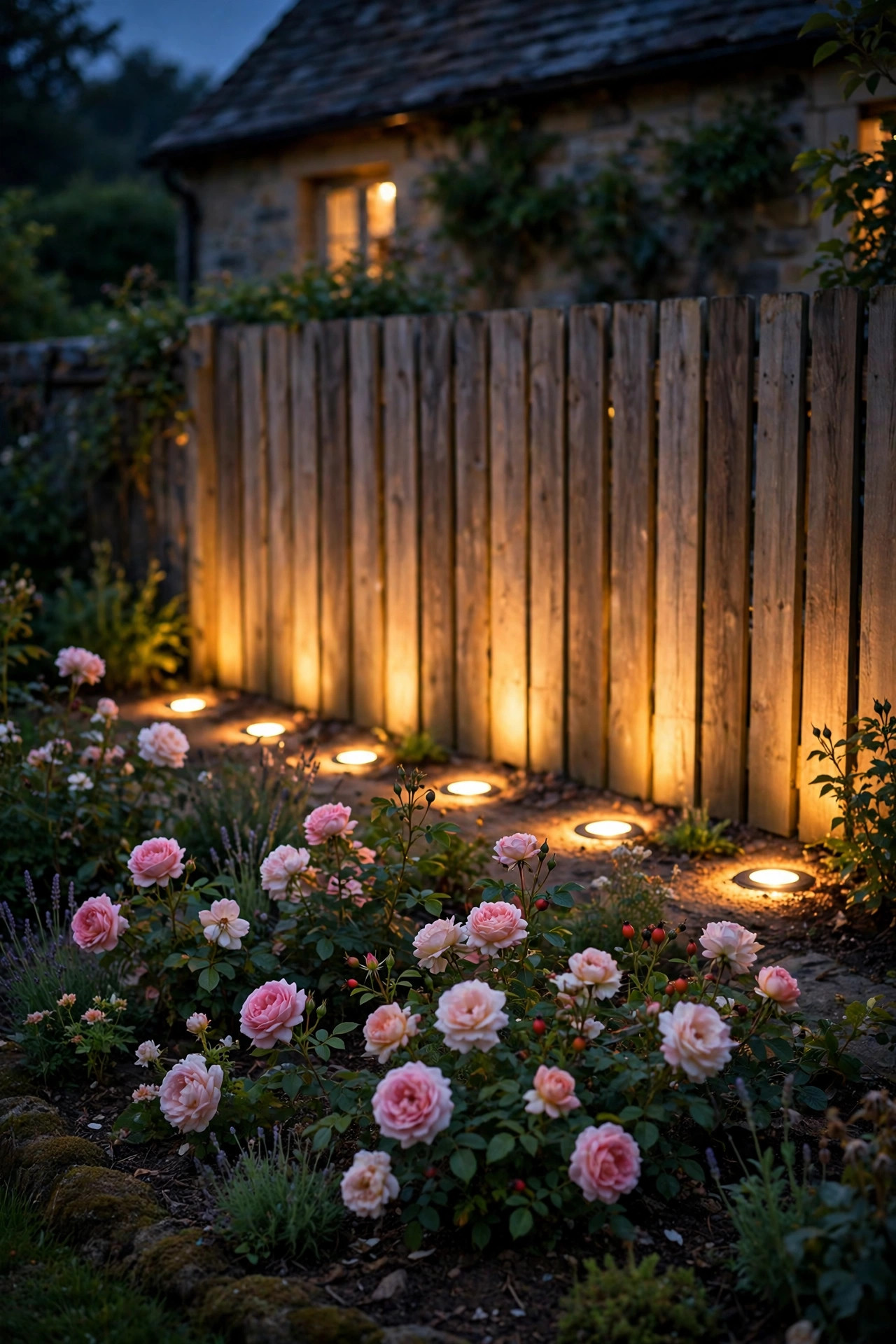
13. Wash a Cottage Wall or Fence With In-Ground Well Lights
Behind my longest bed stands a plain fence that used to vanish into blackness by nine, taking the back row of roses with it. In-ground well lights fixed that in one afternoon. Set flush at the base of the fence, spaced 4 to 6 feet apart, they wash light straight up the boards so the whole backdrop glows softly and the blooms in front stand out in silhouette and color at once. The fixtures sit level with the mulch in sealed, outdoor-rated housings — IP67 is the rating to look for, since these live in the wettest spot in the garden — and the lenses are tempered so a stray boot or wheelbarrow does no harm. Keep each light a hand span out from the fence so the beam spreads rather than streaking; tight vertical streaks look like a fence on stage, while a soft even wash looks like dusk lingering. Well lights also graze a stone cottage wall beautifully if your garden backs onto the house. Drainage matters; set each housing on a small bed of gravel so it never sits in a puddle.
Suggested budget range: $40 – $110.
14. Pick One Warm Color Temperature and Stick With It
Nobody notices color temperature until the garden looks wrong — one icy blue stake among twenty warm ones will pull every eye and cheapen the whole scene. My rule is simple: buy warm white, 2700K to 3000K, every time, for every fixture, and write the number on the box in marker so future replacements match. Warm light is why roses look like roses after dark. Reds deepen, pinks stay soft, and whites glow creamy instead of glaring blue, while green foliage goes rich rather than gray. Cool light above 4000K has its place over a workbench or a driveway, but in a flower garden it flattens everything it touches. When you shop, the number hides in the fine print as Kelvin or as the words warm white; soft white usually means the same warm range, while daylight almost always means cool. If a favorite old fixture runs cool, demote it to the compost corner or the side gate where nobody lingers. Consistency is the cheapest design upgrade there is — it costs nothing but attention, and it makes mixed fixtures from five different shopping trips read as one plan.
Suggested budget range: $0 – $30.
15. Add a Motion-Sensor Light Where the Path Meets the House
Cottage romance aside, somebody still has to carry the watering can back to the house in the dark, and that is where a motion-sensor light earns its place. I mounted a modest shielded fixture where the garden path meets the back steps, aimed down at the treads rather than out at the garden. It wakes when you approach, lights the step and the door handle for two unhurried minutes, then politely goes dark again so the fireflies can have the garden back. Choose a fixture with adjustable sensitivity and a warm bulb around 800 lumens — enough to see a wet step, never enough to flood the beds. Shielded matters twice over: bare sensor floods glare into your eyes at the exact moment you need your footing, and they blast the neighbors with every passing cat. A dusk-to-dawn setting with a motion boost is the best of both worlds if your fixture offers it, a low glow all evening that brightens as you pass. Keep the romance in the beds and the practicality at the door, and the garden works at every hour.
Suggested budget range: $25 – $60.

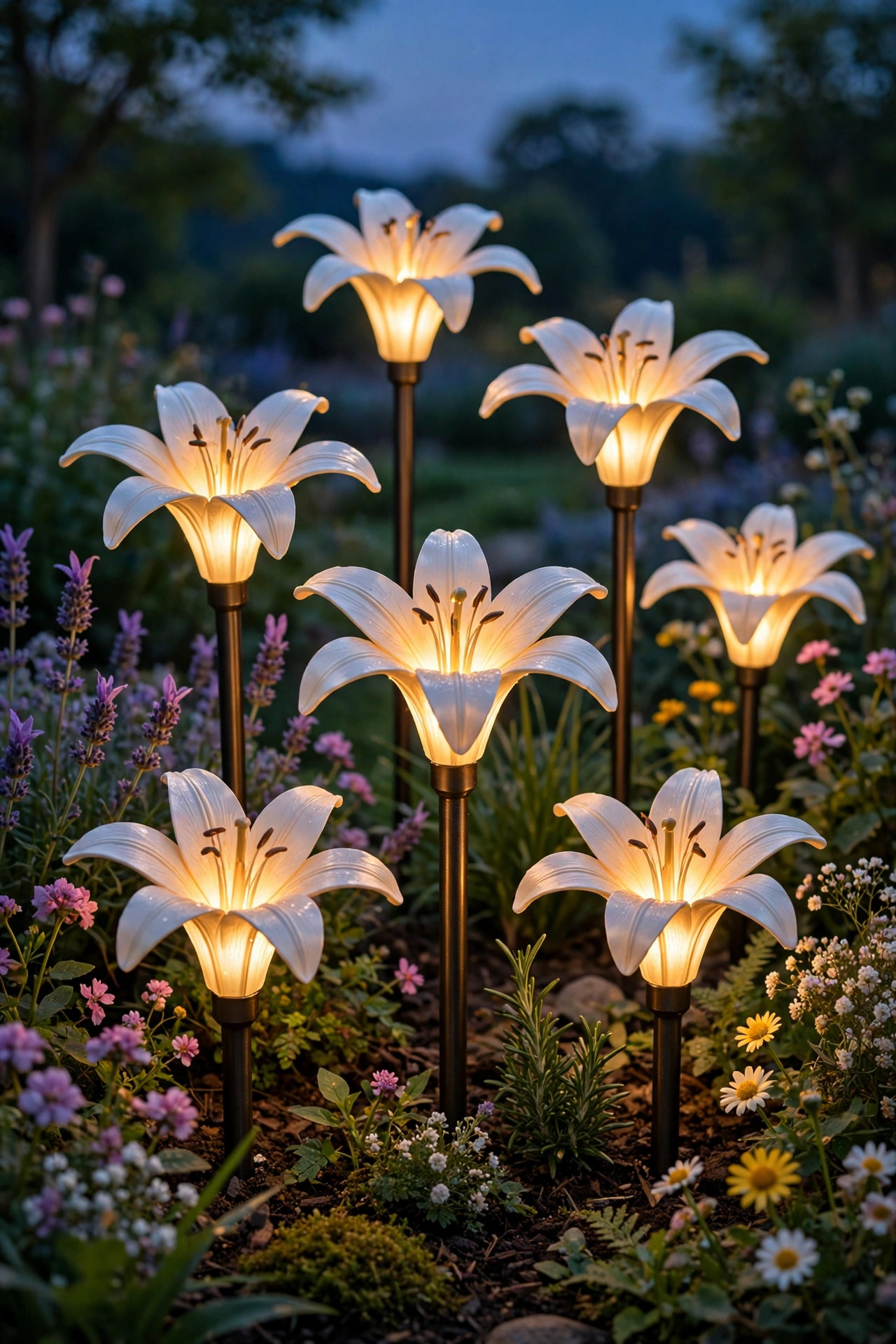
16. Dot Solar Flower Stakes Through the Borders
Yes, they are a little whimsical, and a cottage garden is exactly where whimsy belongs. Solar flower stakes — a small panel, a stem, and a glowing bloom in lily, tulip, or hydrangea form — dot my borders wherever a real flower has finished and left a gap. Tucked among living foliage at staggered heights, they read at first glance as a few late blooms catching the last light, and guests regularly bend down for a closer look before they catch on. Warm white versions blend most gracefully; the color-changing ones are party tricks I save for visits from the grandkids. The panels are small, so give each stake a reasonably sunny pocket and expect a gentle glow rather than real illumination — these are jewelry, not work lights. Plastic petals fade after a couple of seasons in strong sun, so treat them as the inexpensive, replaceable layer and spend the serious money on the wired pieces. A half dozen spread through one long border is the sweet spot; a crowd of them turns charming into theme park.
Suggested budget range: $15 – $40.
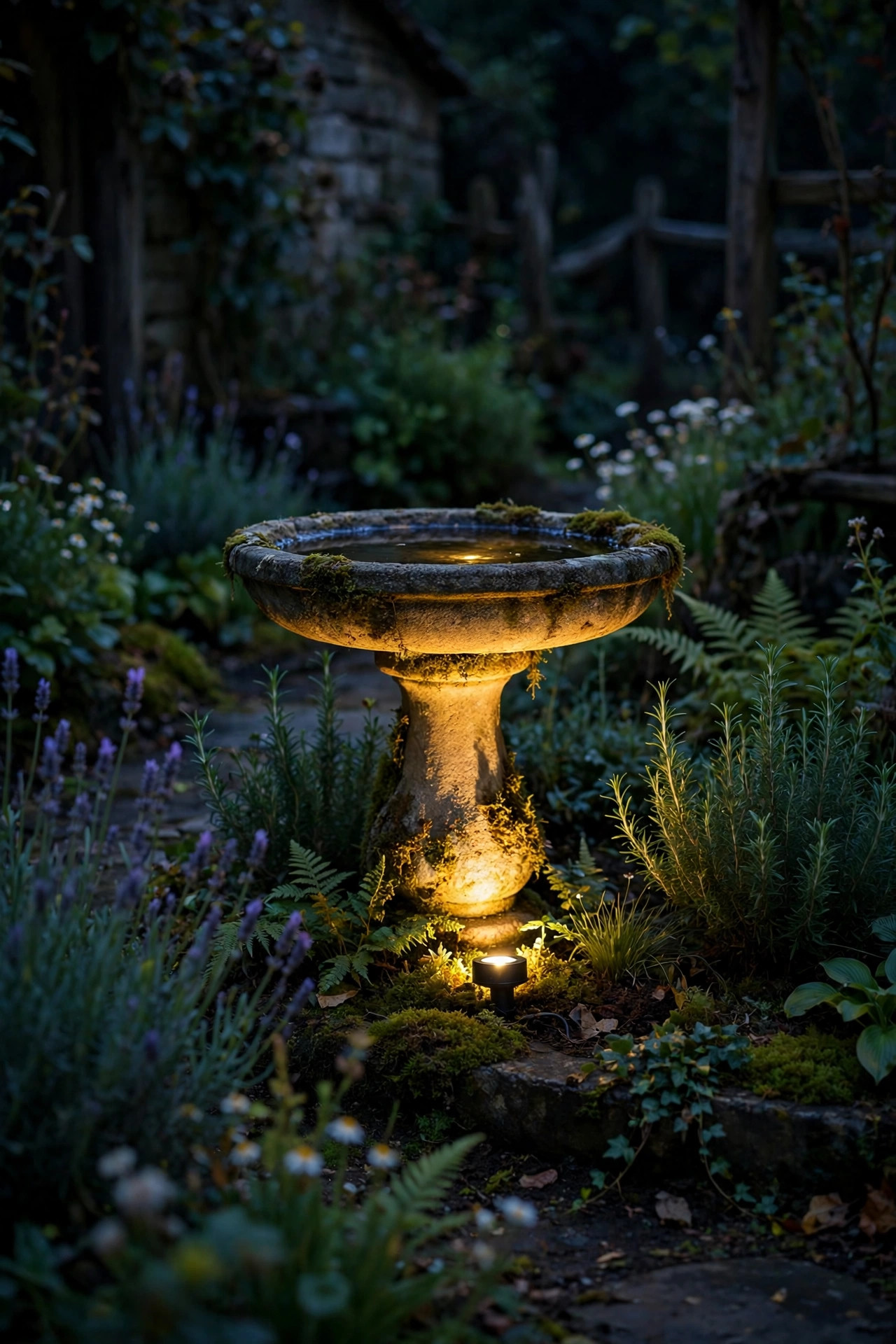
17. Uplight the Birdbath or Sundial as a Focal Point
Every cottage garden has a beloved ornament — for me it is the birdbath the robins treat as a public pool — and one small uplight turns it into the evening focal point. A single low-voltage spot or solar spotlight at its base, 200 to 300 lumens, lifts the stone into a soft column of light, and the water in the bowl catches the glow and trembles with it. Place the fixture off to one side rather than dead center; light raking in at an angle models the carving and keeps the look sculptural instead of spooky. The same treatment flatters a sundial, a small statue tucked in the border, or the gnarled trunk of an old lilac. Keep the circle of light tight on the ornament and let the surrounding plants fall dark, because the darkness is what makes the focal point read as a destination. On summer evenings that one glowing birdbath pulls the eye down the whole path. Solar versions suit ornaments far from the house; just give the little panel its own sunny clearing among the leaves.
Suggested budget range: $20 – $55.
18. Put Everything on Timers and Photocells
The most romantic garden light is the one already glowing when you step outside, and that is a scheduling job, not a memory job. Everything wired in my garden runs from one outdoor timer on the transformer, set to switch on at dusk and off at eleven — late enough for a long dinner outside, early enough that the roses get their darkness and the electric bill stays shy. Photocell models that read the light themselves adjust with the seasons, which I prefer, since a fixed clock has the garden glowing at five in December and dark at nine in June. Solar fixtures handle their own scheduling with built-in sensors, and battery lanterns with six-hour timers land close enough. Smart plugs rated for outdoor use add phone control for the string lights over the bench, lovely when guests arrive and you want the garden lit before you reach the door. Group the timers where you can reach them without wading through wet beds, and reset them after every power outage, because a garden glowing at noon is a garden whose timer has forgotten itself. Automate the routine, and evenings in the garden stop depending on anyone remembering a switch.
Suggested budget range: $15 – $45.

19. Layer All Your Cottage Garden Lighting Ideas Into One Evening Scene
Here is the whole recipe, in the order I would build it with a free month of weekends. First the footing: solar stakes along the winding path and a sensor light at the back steps, so the garden is safe to wander from night one. Then the beds: uplights on the climbing roses, well lights washing the fence, jar lanterns and flower stakes tucked among the blooms, so the plants themselves carry the middle layer. Then the overhead magic: fairy lights in the arch, moonlight in the maple, string lights over the bench, the layer that makes people say the garden feels enchanted without knowing why. Finish with the ornaments and the timer — the birdbath glowing at the path turn, everything warm at 2700K, everything switching itself on at dusk. Notice what the recipe leaves out: no floods, no cool white, no plant lit twice. Build one layer a month and the cost stays gentle, and by high summer the garden where you deadhead roses at noon becomes the room where everyone lingers after dinner. That is the entire secret, and it was never really about the lights.
Suggested budget range: $75 – $250.
Frequently Asked Questions
What color temperature makes roses look best at night?
Warm white, between 2700K and 3000K, every time. Reds deepen, pinks stay soft, and white blooms glow creamy instead of blue. Cool daylight bulbs around 5000K wash petals out to gray and make green foliage look tired, so save those for a work area. Whatever fixtures you mix — solar, battery, or low-voltage — keep them all in that same warm range so the garden reads as one scene.
Are solar lights enough for a cottage garden, or do I need wiring?
Solar handles more than most people expect: path stakes, jar lanterns, flower stakes, and gate caps all run happily on sun alone, as long as their panels get about six hours of direct light. Where solar struggles is drama — uplighting a tall climbing rose or washing a fence takes the steady power of a small low-voltage system. Most gardens I know end up a mix: solar for the wandering glow, one modest wired run for the stars.
Will garden lights bother pollinators or keep my plants awake?
Gentle warm lighting on a timer is not a problem in practice. Keep lights low and warm, aim them at paths and focal plants rather than blasting whole beds, and let a timer switch everything off by late evening so the garden gets real darkness overnight. LEDs run cool, so blooms and leaves near a fixture stay safe, and moths gather far less around warm, shielded light than around a bare cool bulb.
How much does it cost to light a whole cottage garden?
A starter layer of solar path stakes, jar lanterns, and fairy lights for the arch runs about $60 to $120 and goes in over one weekend. A mid-range layered garden with low-voltage uplights, well lights, string lights, and a timer lands around $200 to $350. Add moonlighting or a full wired plan and you can reach $400 to $600, but building one layer per season spreads the cost and lets the garden show you what it needs next.
Conclusion
The gardens that stay with me are never the brightest ones — they are the ones where the light feels borrowed from the flowers themselves. These cottage garden lighting ideas all serve that one thought: sure footing on the path, a warm wash through the beds, a little twinkle overhead, and darkness left alone where darkness belongs. Start with the path and one arch this weekend, and let the garden teach you where the next light wants to go. Then browse more of my lighting ideas for the porch, the patio, and the front walk, because a garden that glows this sweetly deserves a whole house that keeps it company.