There's nothing quite like a movie under the stars — until the porch light turns the big night scene into a pale gray smudge. I learned that the hard way at our very first outdoor movie night, when the floodlight over the back door washed out half the picture and nobody could tell the hero from the villain. The secret to great backyard movie night lighting isn't more light; it's less light, in the right places. Think in layers: a completely dark zone around the screen, a soft warm glow behind and below the seating, and just enough low light on paths and snack tables so nobody trips over the cooler. Every idea below follows that one rule — light the people and the edges of the yard, never the screen. You'll find dim string lights, shielded path lights, lantern tricks, and a few smart controls that let you fade everything down the moment the opening credits roll. Pick four or five, test them the night before your guests arrive, and your backyard will feel like the coziest little cinema on the block.

1. Keep a Pitch-Dark Bubble Around the Screen
Before you buy a single bulb, decide where the screen goes and declare a no-light zone around it — I aim for at least 8 to 10 feet on each side and nothing bright within the projector's cone of light. Any lamp, sconce, or neighbor-facing fixture inside that bubble competes with your projector and flattens the image, especially the dark scenes. Walk the yard at night with everything on and note what spills toward the screen: the garage coach light, the kitchen window, even a bright pathway light two beds over. Switch those off, shield them, or relocate them for movie nights. If a house fixture can't be turned off, a simple clip-on shade or a piece of blackout fabric over a lantern works wonders. I also angle the screen slightly away from the house so leftover spill slides past instead of landing on it. Once that bubble is truly dark, everything else on this list gets easier, because the string lights and lanterns behind your guests can glow as warmly as you like without touching the picture. This one free fix does more for picture quality than any projector upgrade I've ever tried.
Suggested budget range: $0 – $20.

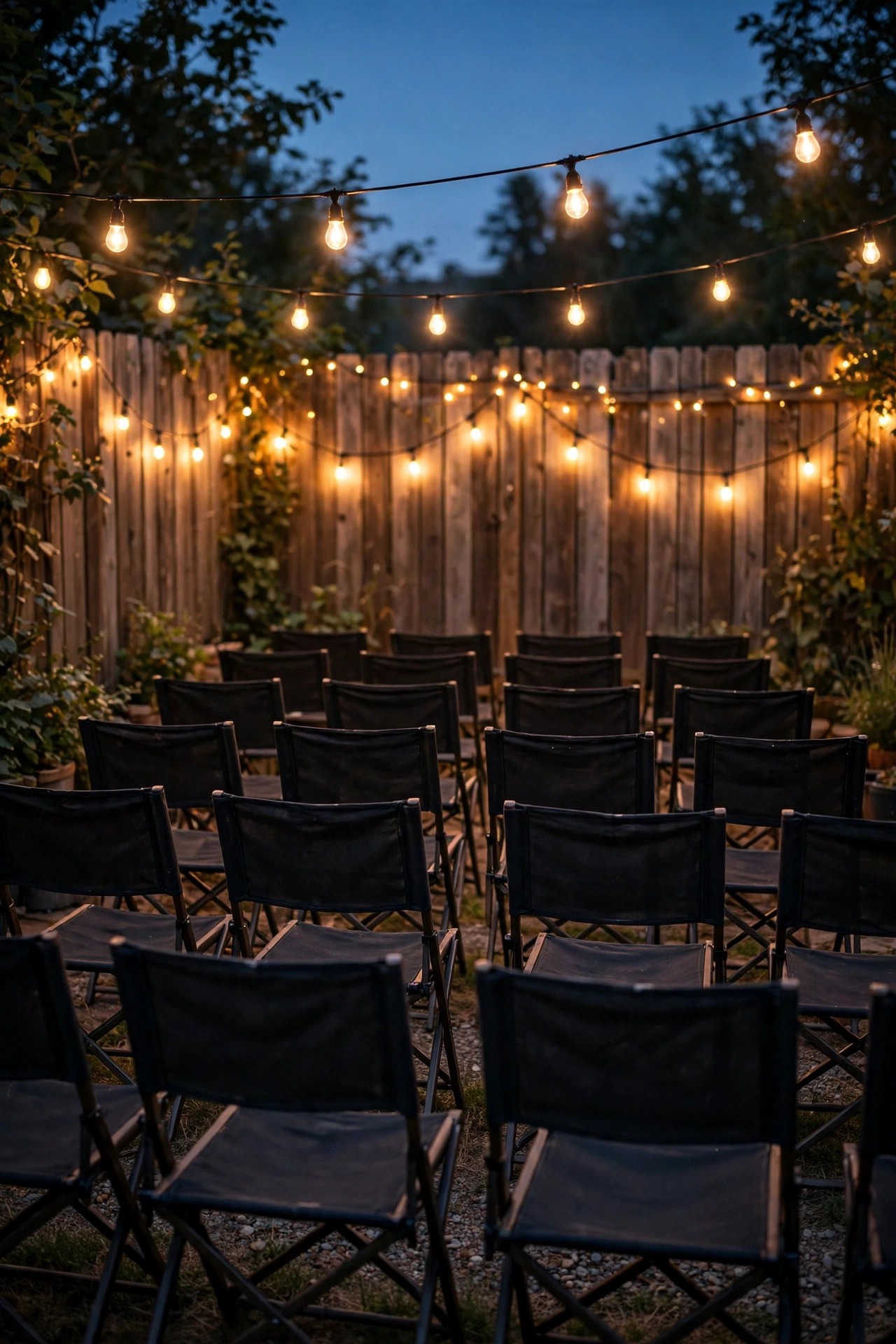
2. Hang Dim String Lights Behind the Seating for Glare-Free Backyard Movie Night Lighting
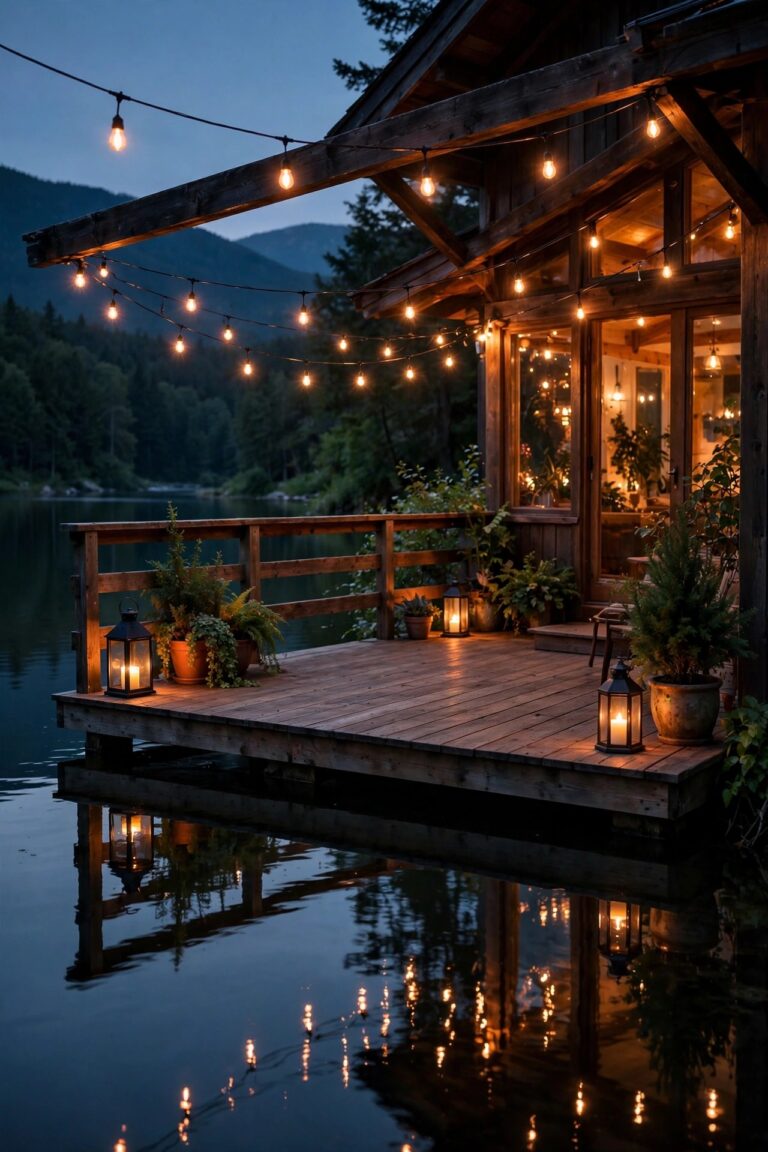
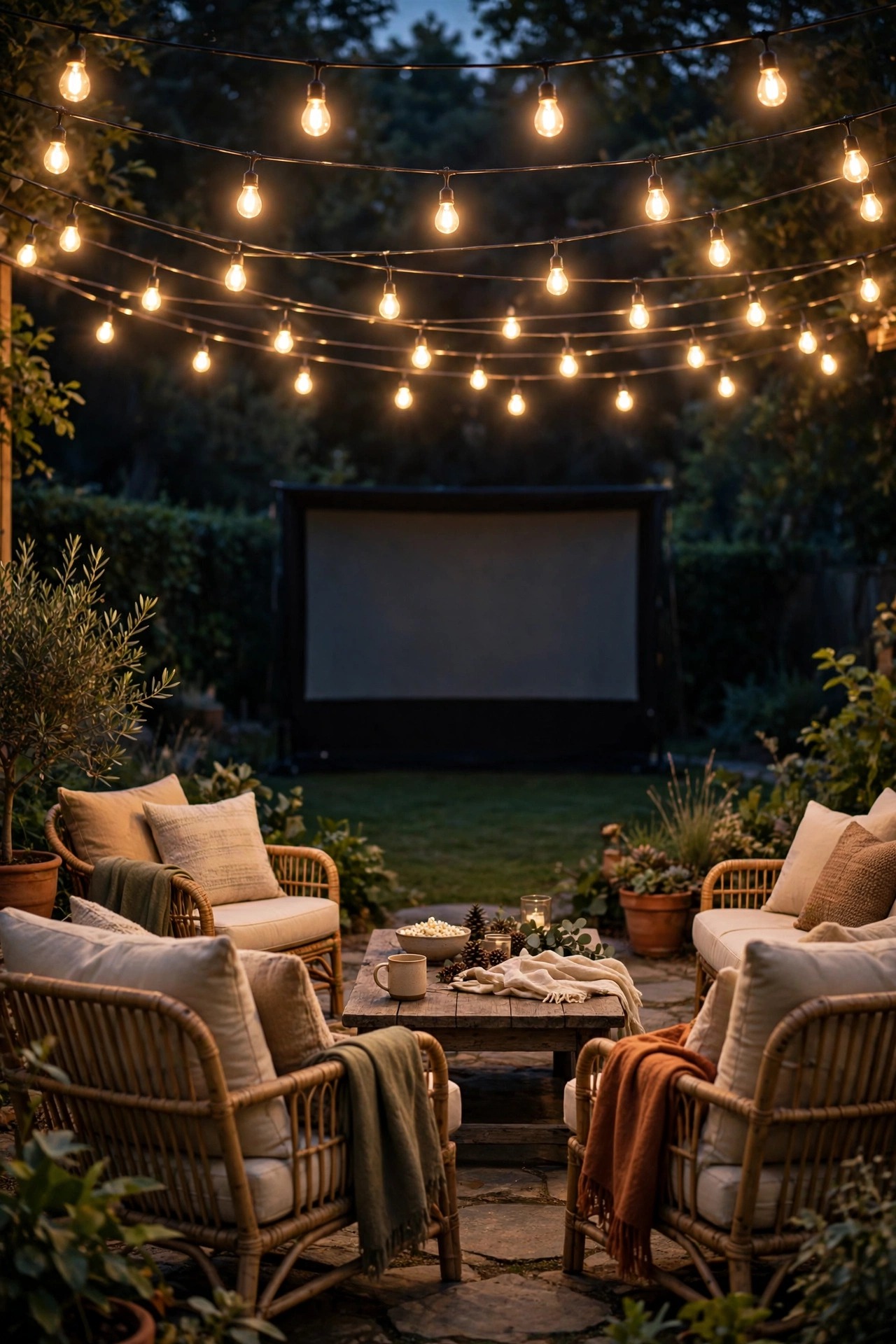
String lights are the backbone of backyard movie night lighting in my yard, but placement is everything: they belong behind the last row of chairs, along the back fence, or overhead above the audience — never between the seats and the screen, and never beside it. Behind the viewers, their warm pools of light read as atmosphere, not competition, and they give guests just enough glow to find their seats. Choose warm white bulbs in the 2200K to 2700K range and keep the total brightness low; one strand across a 20-foot fence is plenty. If your strands are too bright, swap in lower-wattage bulbs or run them through a plug-in dimmer and drop them to about 30 percent during the film. I zigzag ours across the back fence at about 7 feet high so the light grazes faces softly instead of shining into eyes. Between movies, I bump them back up for intermission so people can mingle and refill drinks. For more ways to layer an evening setup like this, my guide to backyard lighting for evening entertaining walks through the same zones step by step.
Suggested budget range: $25 – $60.
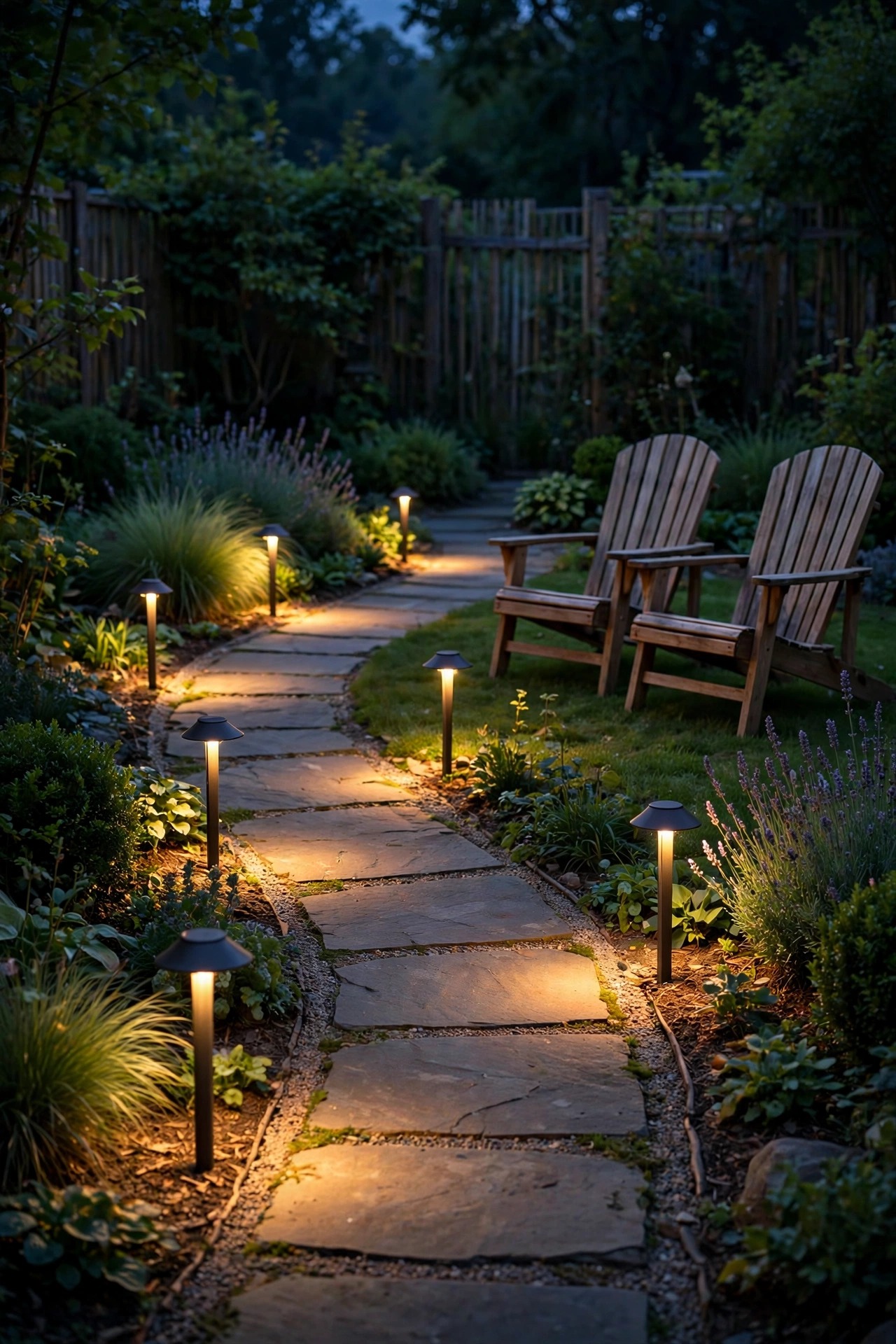
3. Line the Snack Path With Low, Shielded Path Lights
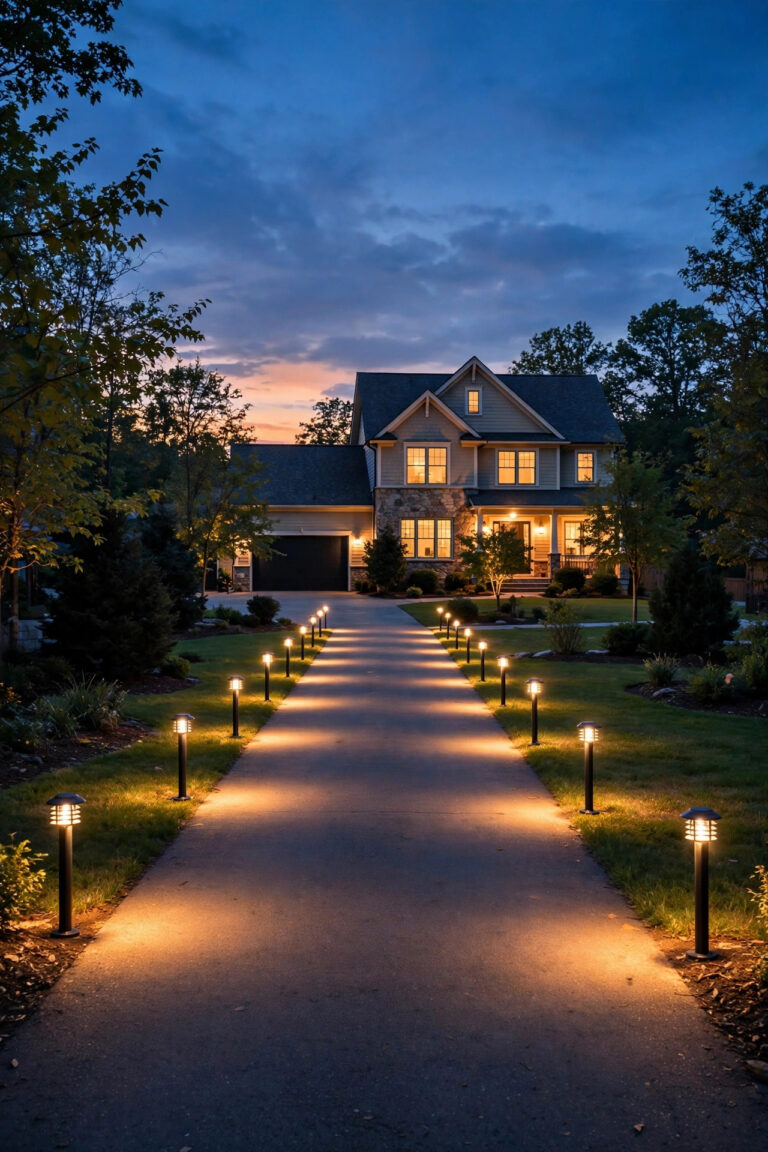
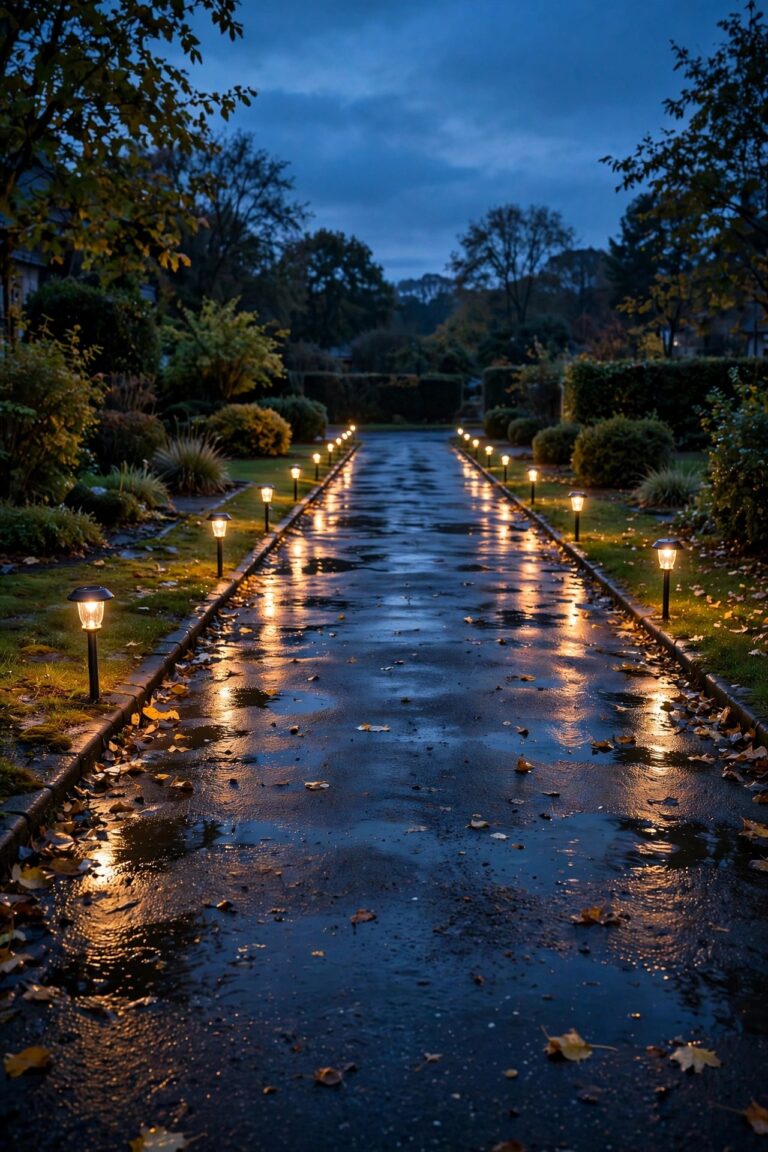
Somebody will make a popcorn run in the middle of the best scene — count on it. A few low path lights along the route from the chairs to the patio door keep that trip safe without lighting up the whole yard. The trick is height and shielding: choose fixtures under 12 inches tall with caps that throw light straight down onto the grass or pavers, and keep them under 100 lumens each. Mushroom-style and bollard-style caps are perfect because the bulb itself stays hidden, so there's no bare glare for eyes adjusted to the dark. Space them 6 to 8 feet apart on alternating sides of the path — you're marking a route, not landing a plane. Solar versions are ideal here since you can stick them in the ground an hour before the show and pull them up the next morning; just make sure they charged in full sun all afternoon. Battery puck lights tucked under a step edge work too. In my experience, three or four gentle pools of light are all anyone needs to navigate with a bowl of popcorn in both hands, and the screen stays blissfully untouched.
Suggested budget range: $20 – $50.
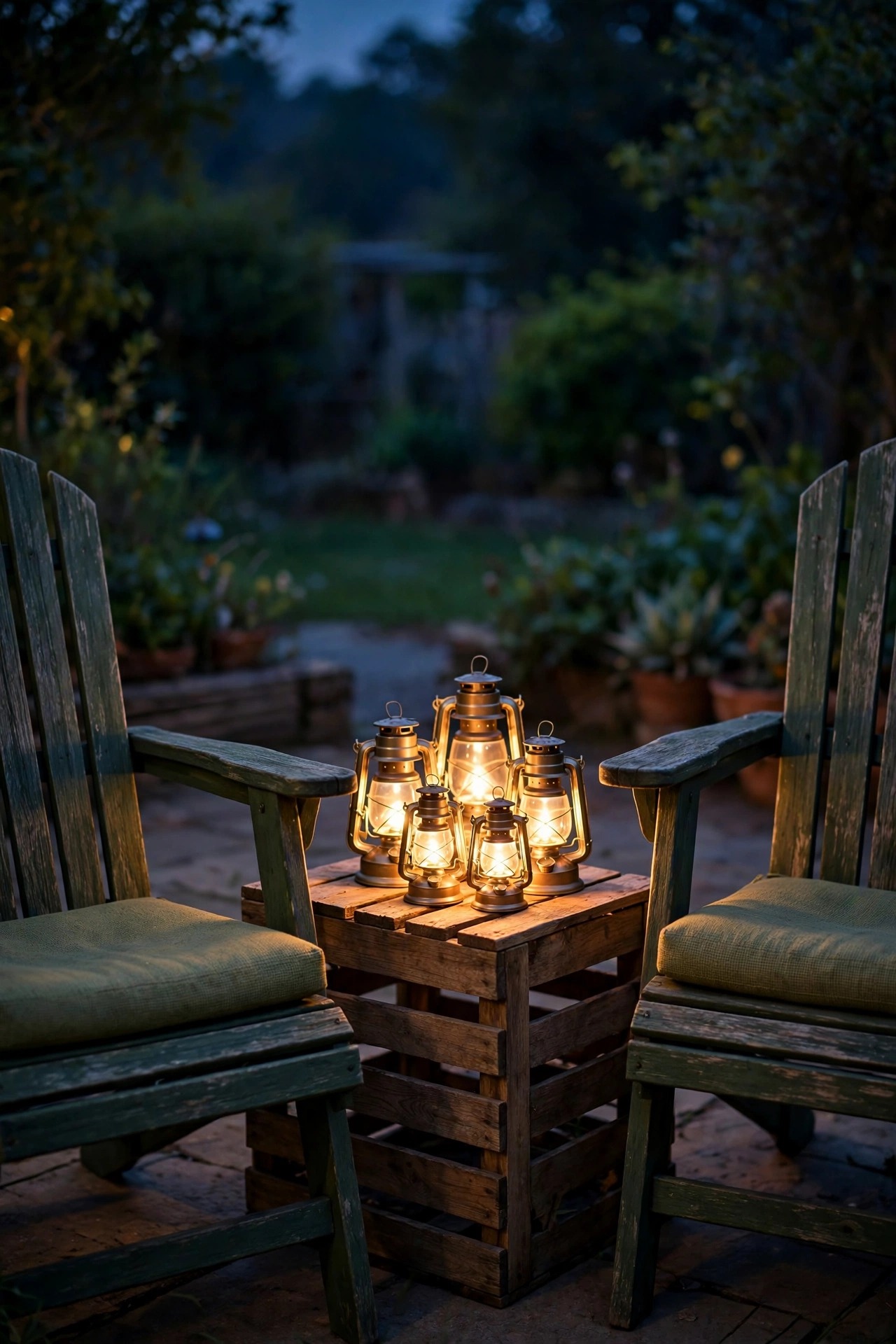
4. Cluster Battery Lanterns on the Side Tables
Every seating row needs a little island of light for drinks, remotes, and the all-important popcorn bowl, and battery lanterns are my favorite way to do it. Group two or three small lanterns on each side table or crate between chairs, set to their lowest brightness. Because they're portable, guests can nudge them closer to read a label or dim them down when the movie starts rolling. Look for lanterns with a warm 2700K setting and a frosted globe — bare, clear globes create a hot spot that pulls eyes away from the screen. Flameless candle lanterns work beautifully here too, and there's zero worry about a knocked-over flame near blankets. I keep ours at ankle-to-table height, roughly 18 inches off the ground, so the glow stays in laps and never reaches the screen 15 feet away. A matching cluster on the snack table ties the whole setup together visually. When the credits roll, carry them inside, plug them in to recharge, and they're ready for the next double feature. Honestly, this is the idea guests compliment most, because it feels like candlelight without any of the fuss.
Suggested budget range: $15 – $45.
5. Use Flameless LED Candles for Zero-Glare Table Glow
Real candles are romantic, but near blankets, paper napkins, and excited kids they're a worry I don't need — and their flicker can actually be distracting in your peripheral vision during dark scenes. Flameless LED candles solve all of it. The better ones have a warm 2200K glow, a realistic wobble, and — this is the important part — a dimmer or timer remote so you can drop a whole tray of them to a faint shimmer at showtime. Scatter them in clusters of three along the snack table, inside hurricane glass on the ground by the chairs, and along the top of a low retaining wall behind the seating. Keep every flame below knee height and behind the audience line, and they'll read as cozy ambience rather than light sources. Because they're LED, they stay cool to the touch and run for weeks on one set of batteries. I set the timers for four hours so they switch themselves off long after we've gone inside. A dozen flameless pillars cost less than one fancy lantern, and in my experience they're the single cheapest way to make a backyard feel like an old-fashioned picture palace.
Suggested budget range: $12 – $35.

6. Add Recessed Step Lights for Safe Stairs and Deck Edges
If your movie crowd has to cross a deck or climb a couple of steps to reach the bathroom, step lights are the safety upgrade worth making permanent. Recessed fixtures that sit in the stair riser or along the deck edge wash each tread with a soft downward glow, so feet find their way while the light itself never rises above ankle height. That downward throw is exactly what a projector screen wants — illumination that stays glued to the ground. Choose warm 2700K LEDs with louvered or hooded faces so no bare diode is visible from the seating area, and wire them to their own switch so you can run them during the show without lighting the rest of the deck circuit. Three steps usually need just one fixture each, spaced evenly. If hardwiring isn't in the cards this season, battery motion-sensor step lights are a decent stand-in: they blink on only when someone walks up, then fade off. I installed ours two summers ago for exactly this reason, and they've quietly prevented more stubbed toes and spilled lemonades than I can count. Safety light that behaves itself is the best kind.
Suggested budget range: $40 – $120.

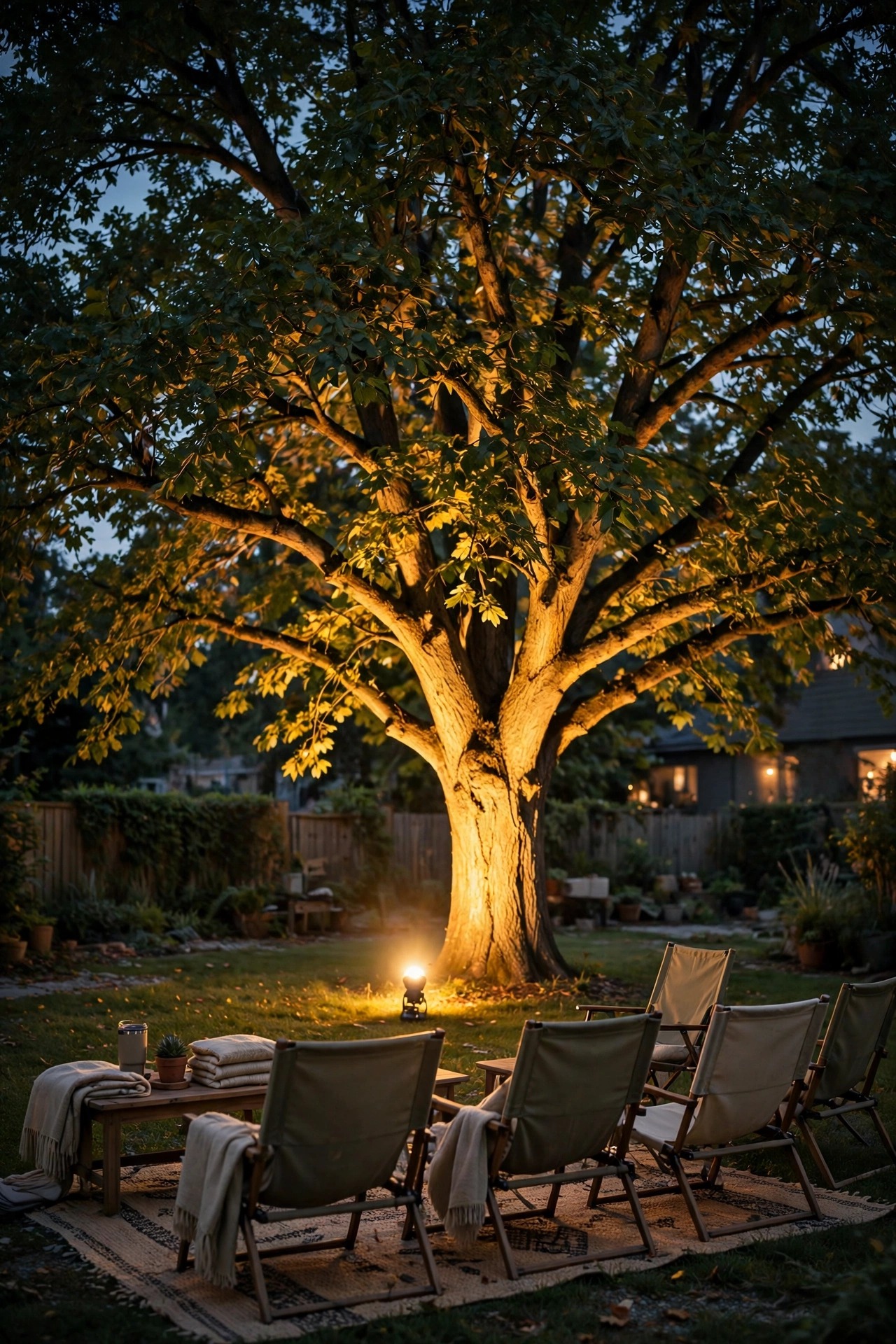
7. Uplight One Tree Behind the Audience
A single uplit tree makes a gorgeous backdrop for a movie night — as long as it's behind the audience and nowhere near the screen. The canopy catches a warm wash from a ground spotlight aimed straight up the trunk, and the whole yard gains depth without adding any forward-facing glare. Use one narrow-beam spotlight, around 300 to 500 lumens, tucked into the planting bed at the base of the tree and angled slightly toward the trunk so the light climbs into the branches instead of spraying across the yard. Low-voltage LED fixtures are ideal, and a warm 2700K color keeps it feeling like moonlight's cozier cousin. During the film, this becomes the "wall" your guests see when they glance back for snacks — pretty enough to photograph, dim enough to ignore. If your only good tree sits beside the screen, skip this one or use a timer to kill it at showtime; a glowing canopy in the corner of your eye will fight the picture all night. When the movie ends, that same tree light becomes the star of your intermission hangout, which is exactly how layered lighting should earn its keep.
Suggested budget range: $30 – $80.
8. Tuck Rope Lights Under Bench and Planter Edges
Hidden light is a movie night's best friend, and LED rope lights tucked under edges are the easiest way to get it. Run a warm strand under the front lip of a bench, along the underside of a planter box, or beneath the railing cap behind your seating, and you get a floating ribbon of glow that lights the ground without a single visible bulb. Because the source is concealed, there's no glare point for dark-adjusted eyes, and the screen stays perfectly black at the edges. Outdoor-rated rope light is cheap by the foot, cuts to length, and clips up in minutes with screw-in mounting clips every 12 inches. I ran ours under the long garden bench that forms the back row of our seating, pointed down so it washes the gravel strip where people set their drinks. Choose 2700K, and if the strand feels too strong, remember rope lights dim beautifully on a plug-in dimmer. Keep runs on the audience side of the yard only — a bright line under a fence near the screen will reflect off a white screen just enough to notice on dark scenes.
Suggested budget range: $15 – $40.

9. Put Every Accent Light on a Dimmer or Smart Plug
Here's the idea that ties the whole list together: if a light can't dim, it doesn't belong in a movie yard. Plug your string lights, lanterns' charging bases, and rope lights into dimmers or smart plugs, group them in an app or on one remote, and you can drop the entire yard to "showtime level" in five seconds — then bring it back up for intermission without wandering around flipping switches. Plug-in lamp dimmers cost very little and work with most LED strands; smart plugs add schedules, so the yard can fade down automatically at 8:30 when the feature starts. My routine: full glow while guests arrive and find seats, 30 percent for previews and shorts, near-dark for the feature, then back up the moment credits roll. If you're shopping for fixtures too, my roundup of dimmable outdoor light ideas covers which types dim smoothly without flicker. One caution: some cheap LEDs buzz or strobe at low dimmer settings, so test your combination before guests arrive. That single dress rehearsal will tell you everything about how your yard behaves after dark.
Suggested budget range: $10 – $35.

10. Hang Paper Lanterns With the Lowest-Lumen Bulbs You Can Find
Paper lanterns give you that festival glow everybody loves, and for movie night they're surprisingly screen-friendly — the paper itself is a giant diffuser, so instead of a harsh point of light you get a soft ball of warmth. The trick is the bulb inside: use the lowest-lumen LED bulbs you can find, around 100 to 200 lumens in a warm 2200K, so each lantern glows like a moon rather than a lamp. Hang them high on the far side of the yard, over the snack station or above the back row, strung from a cord between two poles or tree branches at 8 to 9 feet. At that height and distance, their light pools down on the people who need it and never reaches the screen. A cluster of five to seven lanterns in mixed sizes looks far better than a long uniform row. Paper doesn't love dew or rain, so bring them in after the show or choose nylon versions if movie night is a weekly habit at your house. In my experience, guests walk in, see the lanterns, and immediately relax — the yard just feels like an event.
Suggested budget range: $20 – $55.

11. Let a Fire Pit Be Your Ambient Light — Off to the Side
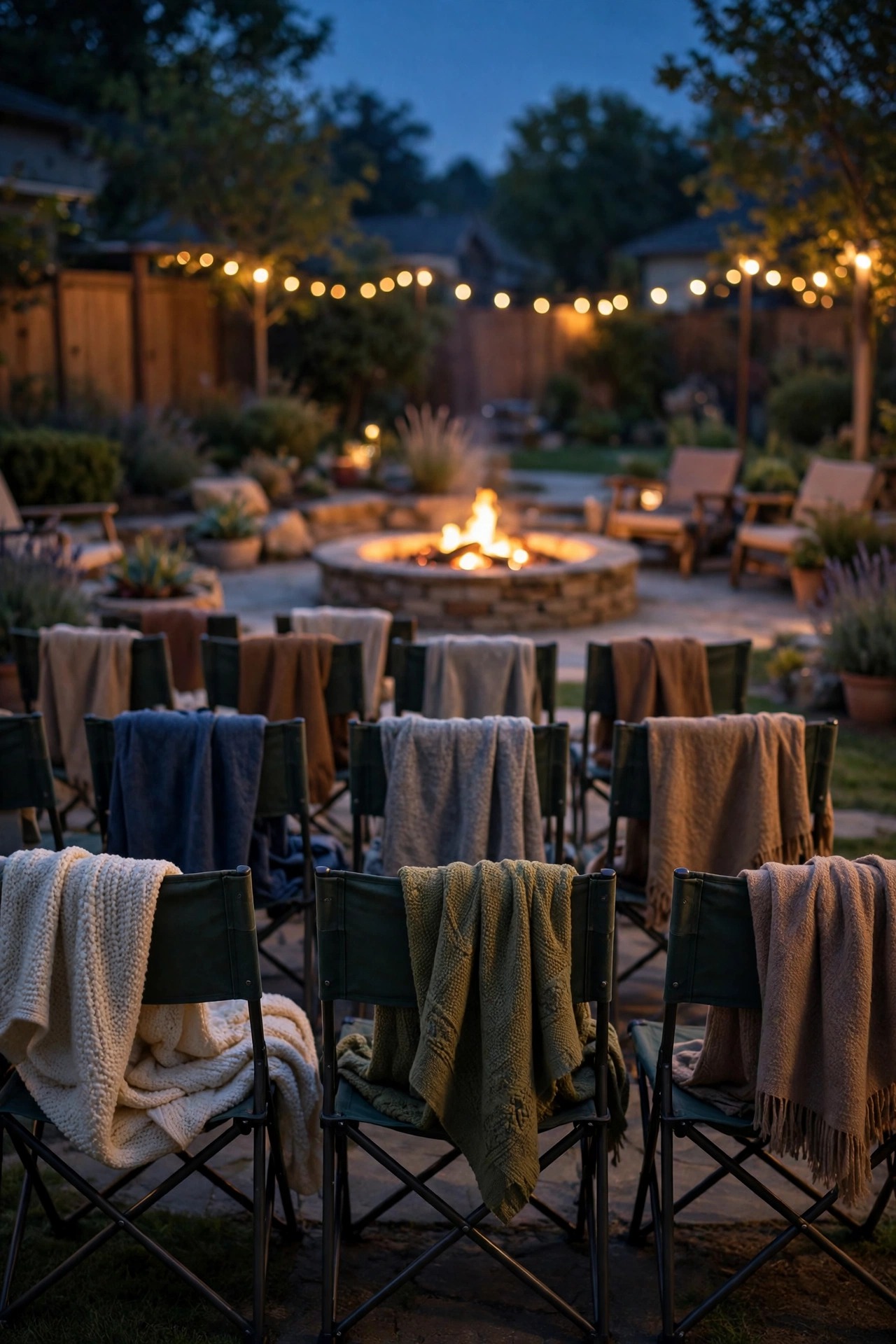
A fire pit throws the warmest, most flattering light there is, and for the gathering before and after the film it's unbeatable. During the movie, though, flames need a thoughtful seat: place the pit behind the audience or well off to one side, at least 15 feet from the screen, so the flicker stays in peripheral vision instead of dancing across the picture. A low, contained fire — think a few small logs rather than a bonfire — throws gentle light that rises and falls like candlelight, which eyes read as cozy rather than distracting. The pit also does double duty as the intermission magnet where everyone refills cocoa and talks about the plot twist. Keep the woodpile and seating circle outside your screen's dark bubble, and use a spark screen for safety around blankets. Gas fire tables are even easier: many have adjustable flames, so you can turn the glow down to a whisper at showtime and back up for s'mores. In my yard, the fire pit sits behind the last row, and honestly, half my guests say the firelight behind them is what makes the night feel like camping and a cinema rolled into one.
Suggested budget range: $60 – $250.
12. Stake Solar Lights Along the Back Fence Line
The back fence is prime movie-night real estate: it's behind every viewer, it usually borders the snack and mingling zone, and a row of soft lights there gives the yard a finished edge. Solar stake lights are the zero-effort way to do it — no wiring, no outlets, just push them into the soil along the fence every 4 to 6 feet. Choose models with warm light and modest output; the inexpensive ones that glow rather than beam are actually perfect here, because you want a dotted line of warmth, not a row of searchlights. Their gentle brightness stays below fence height and never reaches the screen at the far end of the yard. I also stake two at the gate so latecomers can slip in without a phone flashlight sweeping the crowd. Charge matters: set them out in full sun by noon on movie day, and wipe the little panels clean, since a dusty panel can halve the runtime. By the final credits they'll still be glowing softly, and the next morning you can leave them right where they are — they simply become part of the garden until the sequel.
Suggested budget range: $18 – $45.

13. Fill Mason Jars With Copper-Wire Fairy Lights
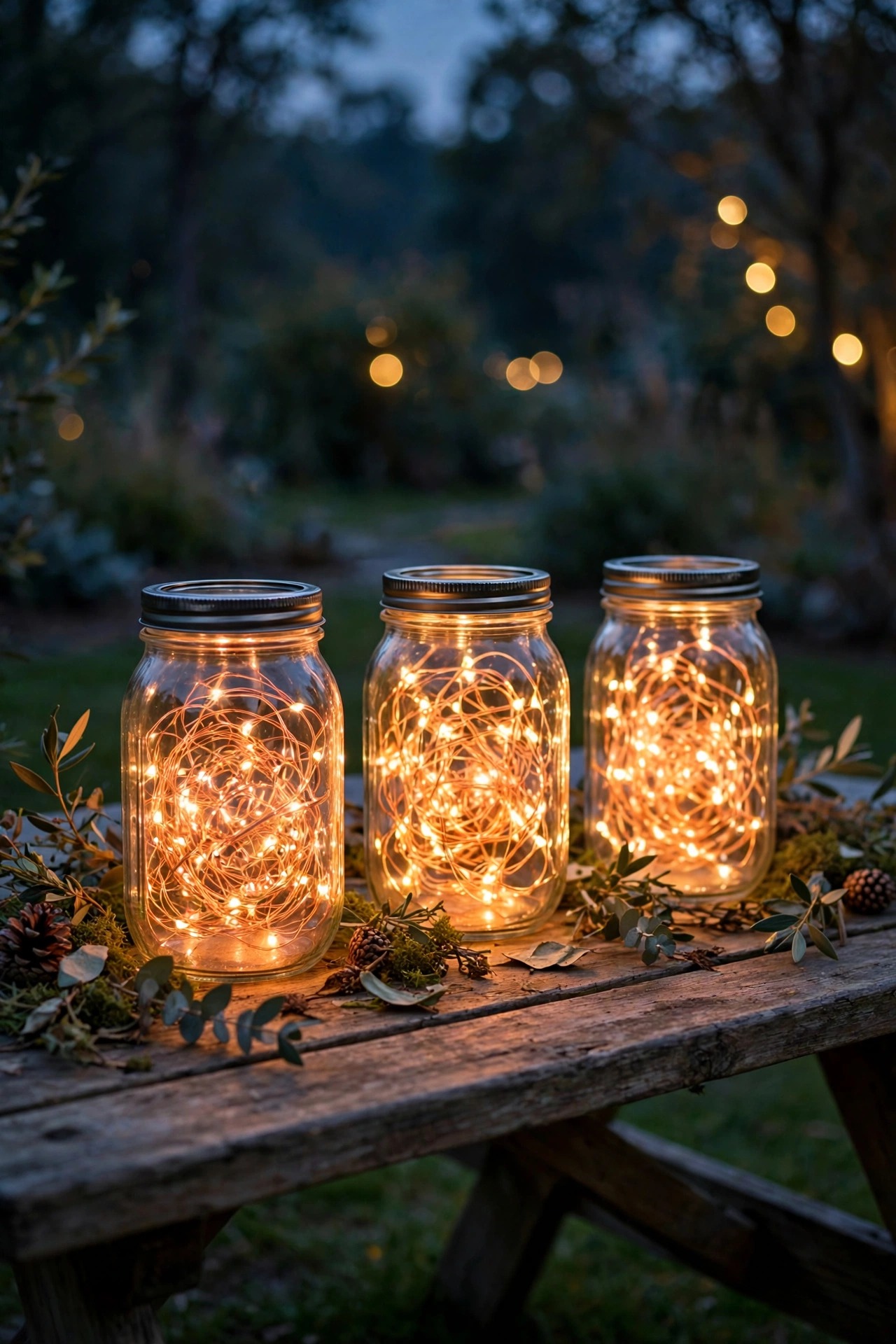
For pure charm per dollar, nothing beats a mason jar stuffed with copper-wire fairy lights. The wire string winds into loose spirals inside the glass, and the whole jar glows like it caught a swarm of fireflies. Because each jar is dim and self-contained, you can place them anywhere your setup needs a whisper of light: flanking the snack bowls, marching down the center of a picnic table, or marking the corners of the blanket zone for the kids. Battery packs tuck under the jar lid, and most strings run 30-plus hours, so a Friday double feature is no problem. Keep jars below seat height and on the audience side of the yard, and their sparkle never touches the screen. I like grouping them in odd numbers — three on the drinks table, five along the blanket edge — with the brightness balanced against the lanterns nearby. They're also the perfect guest job: hand a kid a jar and a string of lights and let them "design" one. When the night ends, the jars come inside and live on a shelf, ready to be grabbed the moment someone says the words "movie night."
Suggested budget range: $10 – $25.
14. Drape Icicle Lights on the Far Fence for a Drive-In Backdrop
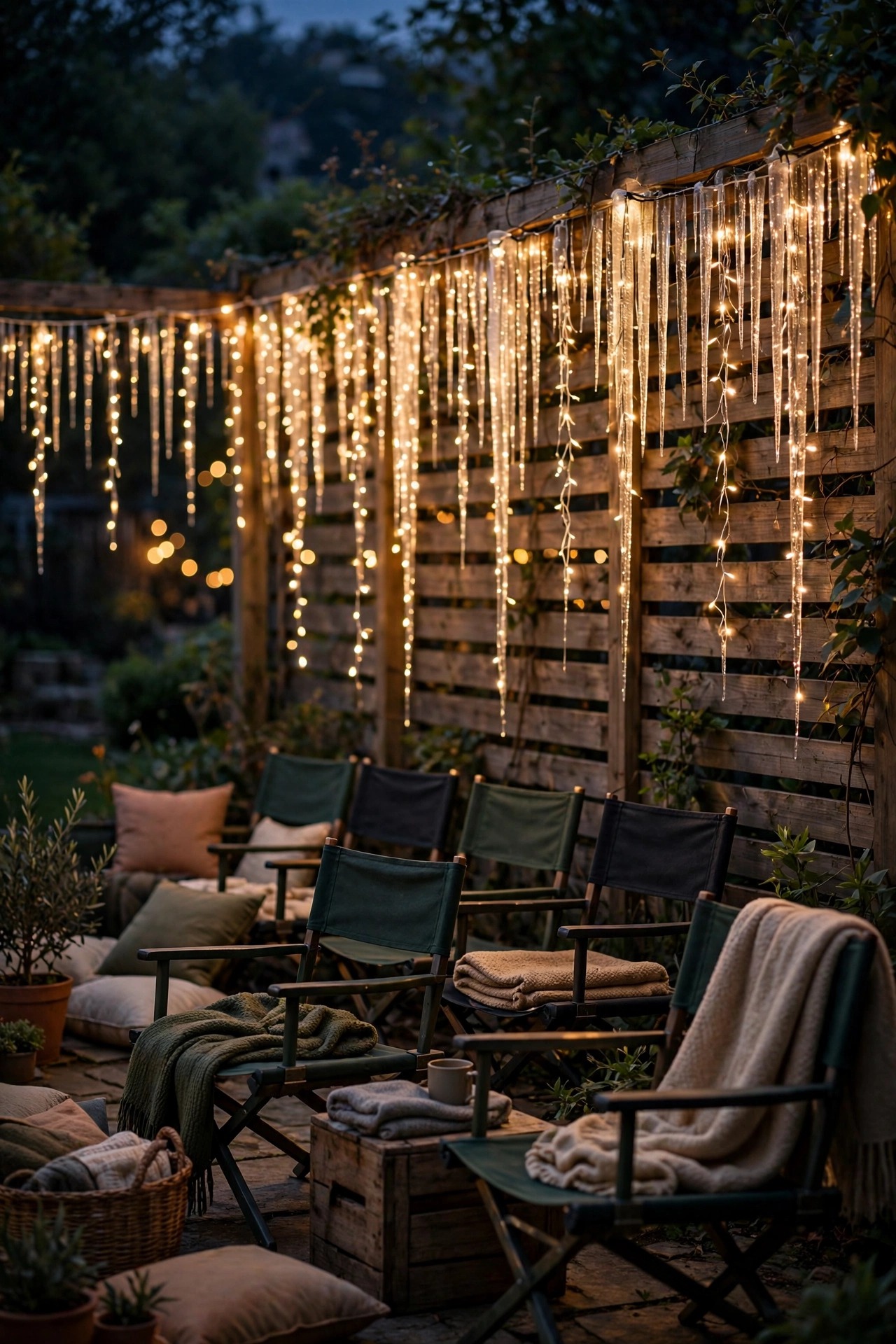
If you loved the drive-in as a kid, this one's for you. Icicle curtain lights draped along the fence behind the audience create a sparkling backdrop that frames the whole scene when guests look back — and, crucially, sends zero light toward the screen in front of them. The strands hang in short drops, so the effect is a twinkling curtain rather than a solid wall of brightness. Choose warm white and connect just one or two strands across the seating end of the yard; more than that starts to feel like December. On a dimmer, at 40 percent, the curtain reads as distant city sparkle and photographs beautifully behind your crowd. I hang ours from small hooks along the top rail of the fence, which takes ten minutes and comes down just as fast. During the feature, nobody's facing it, but at intermission it's the backdrop for every photo and the glow that lights the dessert table without a single harsh fixture. It's a little theatrical, a little nostalgic, and completely screen-safe — honestly the definition of what backyard movie night lighting should be: all of the magic, none of the washout.
Suggested budget range: $22 – $48.
15. Try Moonlighting From a High Tree Branch
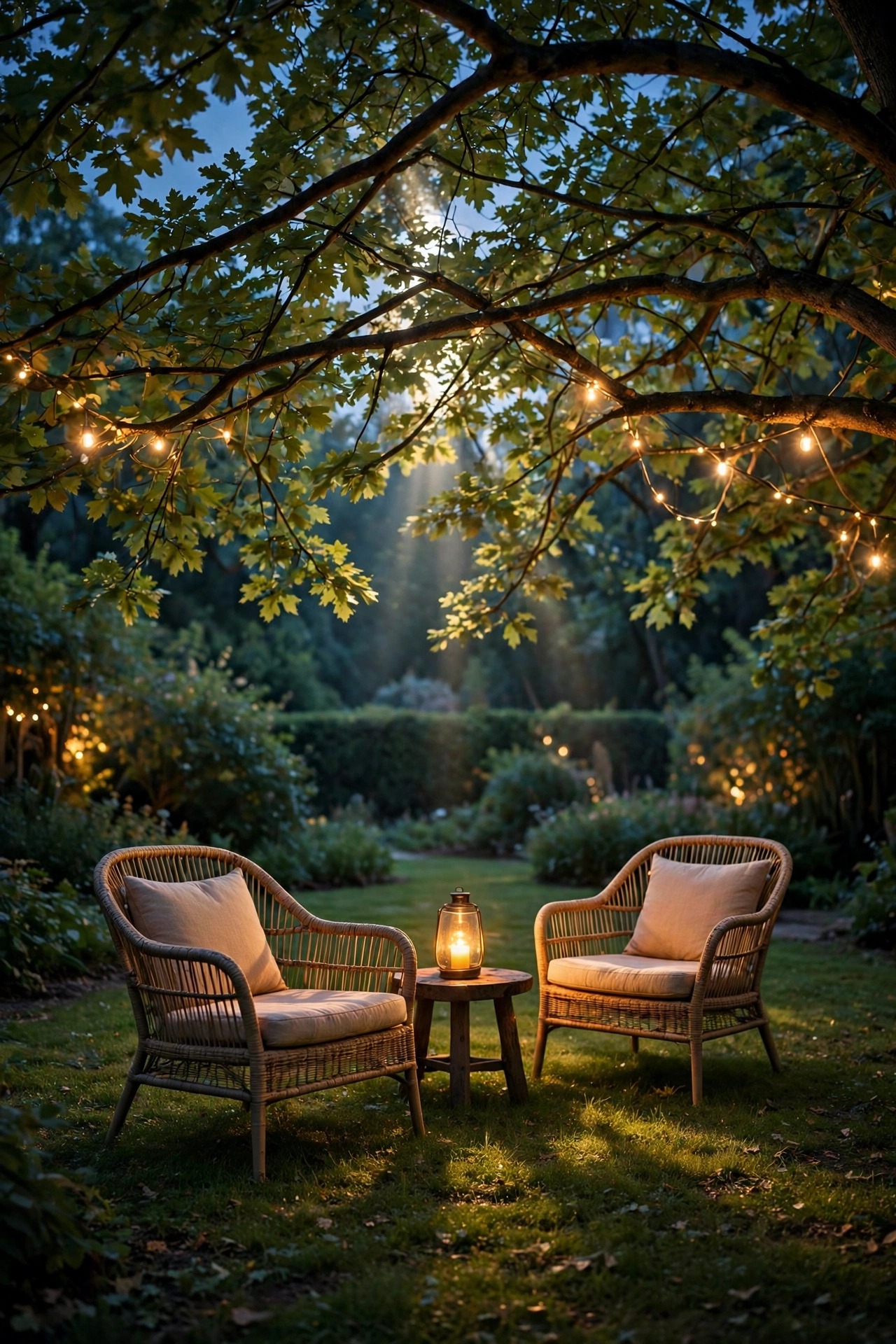
Moonlighting is the landscape trick of hiding a fixture high in a tree so light filters down through the leaves like, well, moonlight. For movie nights it's a gift: the dappled glow lands on the lawn and seating area in soft patches, bright enough to see faces and find your flip-flops, with no visible source and no direct beam anywhere near the screen. Mount one low-voltage downlight 15 to 20 feet up in a sturdy branch on the audience side of the yard, aimed into the canopy so the leaves do the diffusing. A cool-neutral 3000K to 4000K actually mimics moonlight best here — the one exception to my warm-everything rule — but keep output modest, around 200 to 400 lumens, so it whispers rather than shines. The moving leaf shadows during a breeze are half the magic. This is the one semi-permanent install on the list, and it earns its place all summer for dinners and parties too. During the feature I sometimes switch it off entirely and let the lanterns carry the room, then bring the "moon" back up for the walk inside. Pure cinema, courtesy of your oak tree.
Suggested budget range: $45 – $110.
16. Choose Shielded Bollard Lights for the Walk From the Driveway
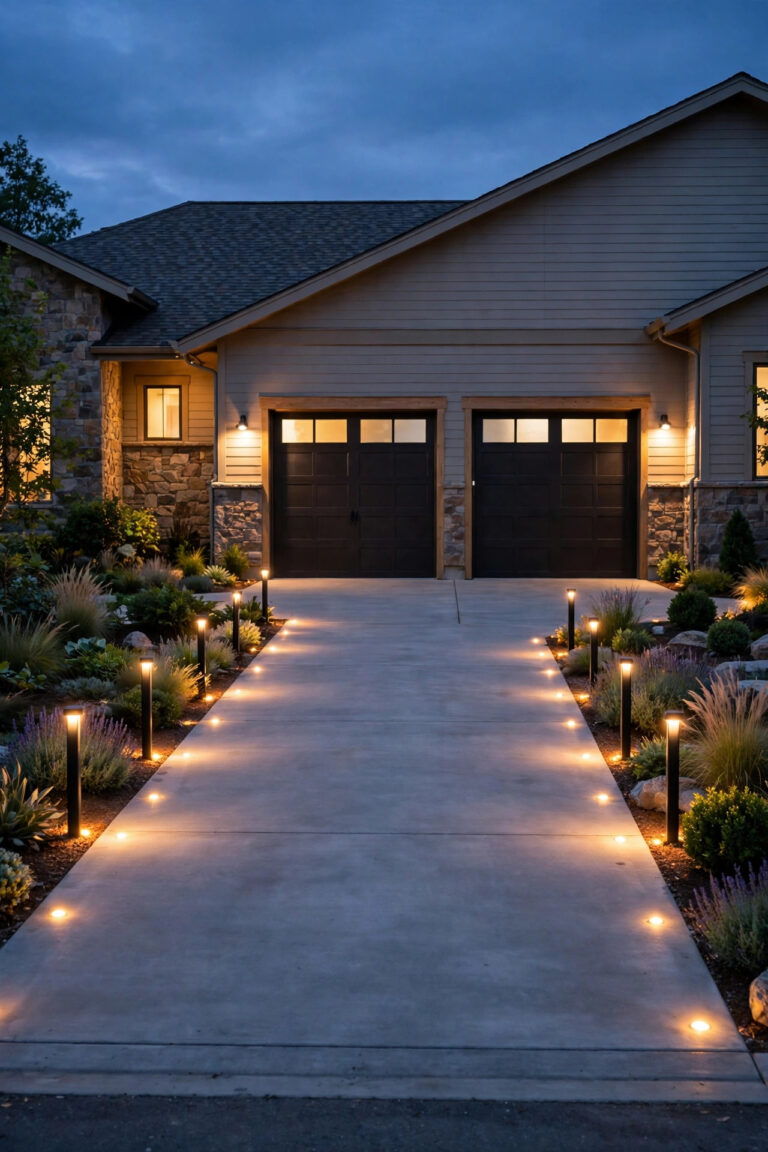
Guests arriving after dark have to get from the car to the backyard, and that walk along the side of the house is where harsh fixtures love to live — a bare porch bulb by the side door will greet them like an interrogation lamp and, worse, can spill into the movie yard. Swap or supplement with short bollard lights that have louvered, shielded heads: the light pours downward onto the path in a neat oval while the source itself stays invisible from every angle. Two bollards, one at the gate and one at the corner of the house, usually cover a side-yard walk. At 100 to 200 lumens each in warm 2700K, they're bright enough for safe footing and dim enough to keep the night's mood intact. Solar bollards make this a ten-minute job with no wiring at all. Because they're shielded, arriving guests can slip into a seat without a flash of light washing across the screen mid-scene — a courtesy your audience will never notice, which is exactly the point. Good lighting design, like good hosting, is mostly invisible when it's working.
Suggested budget range: $35 – $90.

17. Build a String-Light Ceiling Over the Seating Only
A canopy of string lights overhead feels like a bistro ceiling, and for movie night it works beautifully — with one firm condition: the canopy covers the seating area only, stopping well short of the screen, so the "ceiling" glows behind and above the audience while the screen end of the yard stays dark. Run two or three strands from the house or a pergola beam to poles at the back corners of the seating zone, about 8 feet up, with a gentle swag between anchor points. Use shatterproof LED bulbs in warm white and put the whole canopy on a dimmer; at full brightness it's your pre-show and intermission light, and at 25 percent it's a starfield your guests sit under during the film. Keep bulbs out of the projector's throw path — if the projector sits behind the seats, mount it below the strands or thread the beam between them. I anchor ours to the same poles every summer, so setup is a ten-minute ladder job. Sitting under that soft ceiling with a blanket and a bowl of popcorn, honestly, is my favorite seat in any "theater" in town.
Suggested budget range: $40 – $95.
18. Save Color-Changing Lights for Intermission and Pre-Show
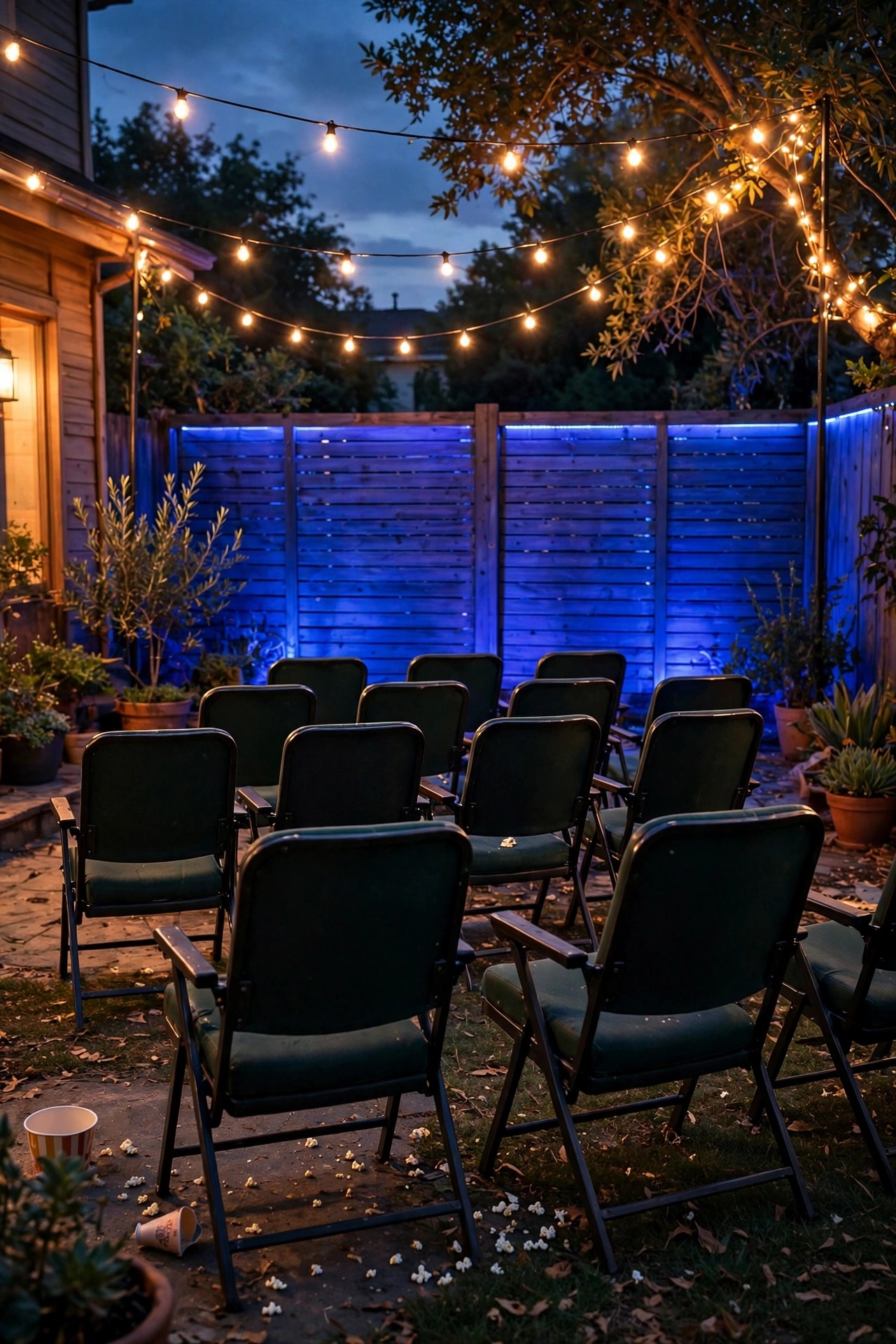
Color-changing bulbs and light strips are pure fun, and movie night gives them a perfect role — just not during the film itself. A colored wash competes with the projector's own colors and can tint a white screen from surprisingly far away, so I treat color as the opening act and the intermission show. Before the movie, wash the back fence in a deep blue or let the patio glow amber; it signals "event" the moment guests walk in. At intermission, bring the color back up while everyone stretches and raids the snack table. Then, at showtime, everything color goes off or fades to the dimmest warm white. Smart bulbs make this a one-tap scene change, and kids absolutely love being put in charge of the "theater lighting." Keep any strip lights on the house or fence behind seating, aimed at walls rather than open yard, so even during pre-show the bounce stays contained. Used this way, color becomes part of the ritual — the moment the fence goes dark blue, my whole family knows it's five minutes to showtime, and the scramble for the good chairs begins.
Suggested budget range: $25 – $70.
19. Create a "House Lights" Moment: The Easiest Backyard Movie Night Lighting Trick of All
Old theaters had it right: lights up for arrival and intermission, lights down for the show. Recreating that ritual is the simplest idea on this list and the one that makes a backyard screening feel like an event instead of a TV moved outside. Designate two or three of your brighter, well-placed fixtures — the patio sconces, the string light canopy at full power, the lantern clusters — as your "house lights," all on one switch, dimmer, or smart routine. When guests arrive, house lights up: people can see the snack spread, choose seats, and settle drinks. Five minutes before showtime, dim to half as a warning, then fade to your movie levels when the previews start. Intermission reverses it. The beauty is that none of these fixtures needs to be bright during the film at all, so their placement can favor the patio and seating rather than the screen zone. For bigger gatherings, browse my outdoor party lighting ideas for more crowd-friendly setups that follow the same lights-up, lights-down logic. It costs nothing but a plan, and it runs the whole night like clockwork.
Suggested budget range: $0 – $30.

Frequently Asked Questions
Will string lights wash out my projector screen?
Only if they're in front of the audience or beside the screen. String lights hung behind the seating, along the back fence or overhead above the chairs, add warm ambience without touching the picture. Keep them warm white, dim them to around 30 percent during the film, and keep every bulb out of the projector's cone of light and you'll never see them in the image.
How many lumens do I actually need for backyard movie night lighting?
Far fewer than you'd think. Your screen zone should be as close to zero lumens as possible, while accent lighting works best between about 100 and 300 lumens per fixture. A typical yard needs only four to six gentle light sources total — a lantern cluster, a few path lights, one string light run — all dimmable. If your eyes can comfortably read the snack labels, you have plenty.
What color temperature is best for watching movies outdoors?
Warm light in the 2200K to 2700K range is the sweet spot for seating and snack areas: it feels cozy, doesn't fight the warm tones in most films, and is easy on dark-adjusted eyes. Avoid daylight bulbs above 4000K anywhere near the yard during a screening — their blue-white glare is the fastest way to flatten contrast and make the whole setup feel like a parking lot.
How do I keep bugs away from the lights and screen?
Warm and amber-toned light attracts far fewer insects than cool white, which is another reason to stay in the 2200K to 2700K range. Keep the brightest fixtures away from the screen and seating, place a fan near the snack table to disrupt flying bugs, and set citronella candles or torches at the yard's edges rather than beside the chairs. A small fan near the audience also keeps viewers comfortable on still, humid nights.
Conclusion
Great movie nights aren't about darkness or brightness — they're about control. Keep the screen in its own dark bubble, layer warm, dim, dimmable light behind and below your audience, and give every fixture a job it can do without touching the picture. Start with three or four ideas from this list, run a dress rehearsal the night before, and adjust until the yard disappears and only the story remains. That's the heart of good backyard movie night lighting, and once you've felt it work, there's no going back to the floodlight. Browse the rest of our outdoor lighting ideas here on the site for more ways to make every evening outside feel this good — then pick a clear night, cue the previews, and enjoy the show.