Most sellers I know scrub the kitchen, stage the living room, and then forget the one view nearly every buyer sees first: the house at dusk. Serious buyers drive by in the evening before they ever book a showing, and outdoor lighting for selling a home quietly decides whether your listing feels loved or left behind. A warm, even glow at the front door says someone cared about this place. One burned-out bulb, one leaning path light, and one pitch-black staircase say the opposite, and buyers read it instantly. In my experience, lighting is the cheapest staging you will ever do. You are not rewiring the yard or installing a designer system before you list. You are making every fixture work, match, and glow on cue for drive-bys, twilight photos, and evening showings. This guide walks through what buyers actually notice, what they never pay extra for, and the exact pre-listing fix list I would hand any friend putting a sign in the yard, in priority order, with honest costs.

The Short Answer
Buyers notice working, matching, warm light in the first ten seconds: a front door they can find, a walk lit end to end, house numbers they can read from the street, and steps they can climb without guessing. They do not notice fixture labels, smart features, or elaborate effects. Before listing, replace every dead bulb with matched warm lamps in the 2700K to 3000K range, clean every lens, straighten anything leaning, and set your timers so the house glows for every evening drive-by and every showing. Do that, and your lighting quietly argues for the asking price instead of against it.
First Impressions at the Curb: The Evening Drive-By
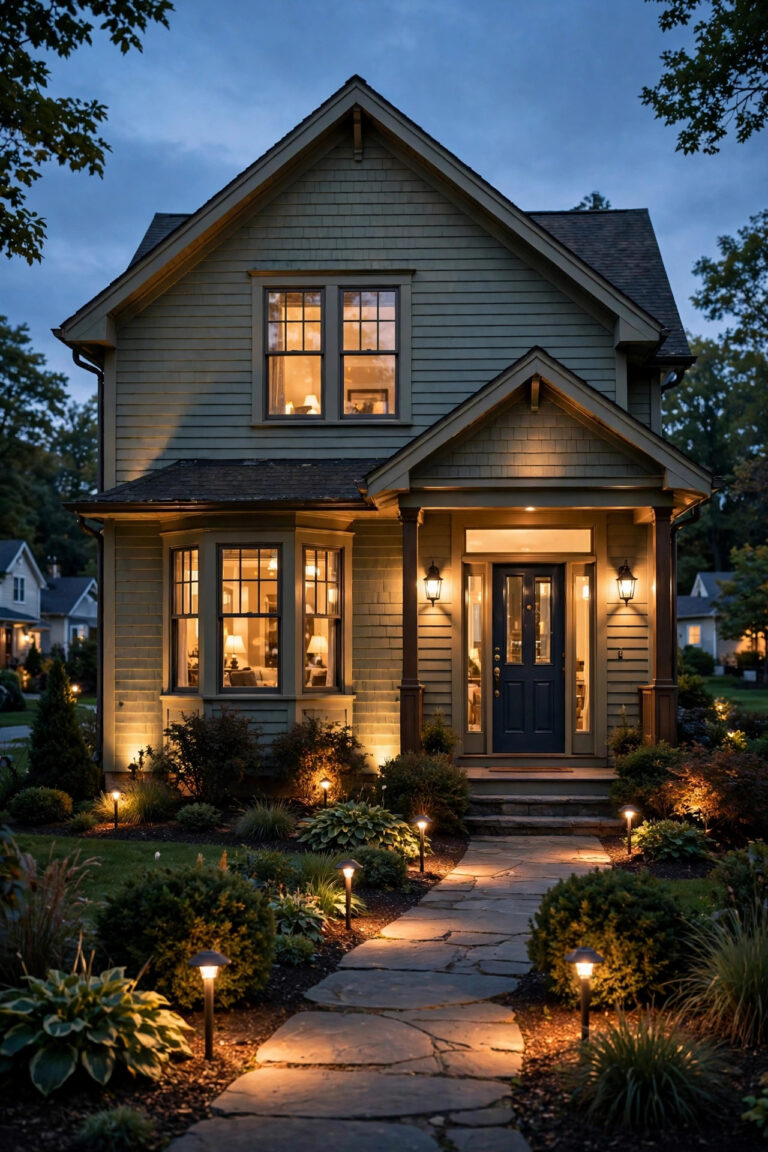
Here is a habit worth knowing about: buyers shop with their headlights. Before a showing is ever booked, the serious ones cruise the street after dinner, slow down in front of your house, and form a feeling about it in about eight seconds. A house that glows warm and even reads as maintained, safe, and loved. A house with a dead porch bulb, one blue-white lamp glaring beside a warm one, and darkness swallowing the front steps reads as a project, and buyers mentally start subtracting money before they ever see your kitchen.
That curb moment matters because it frames everything after it. The buyer who felt welcomed at dusk walks into your showing looking for reasons to say yes. The buyer who felt a flicker of unease at the curb walks in looking for what else might be neglected, and suddenly the dripping faucet and the tired carpet weigh twice as much. I keep a short list of curb-appeal lighting ideas for selling a home that I share with friends before they list, and every single one starts with the same unglamorous step: stand across the street at dusk, look at your own house the way a stranger would, and write down everything that is dark, crooked, mismatched, or glaring. That ten-minute audit is the whole game. Fix what the street can see, in the order the street sees it, and you have done most of what this guide recommends.

What Buyers Notice First About Outdoor Lighting for Selling a Home
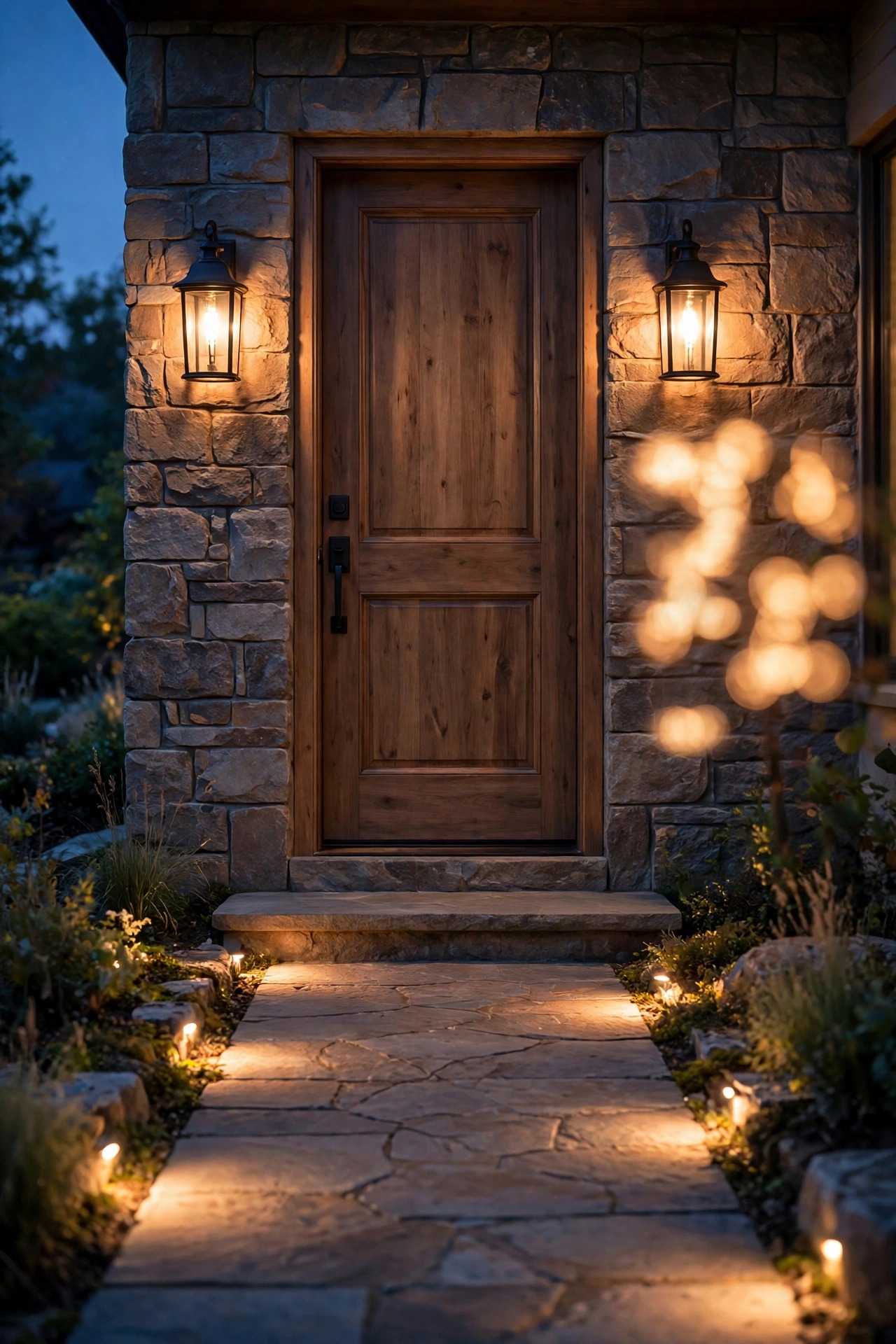
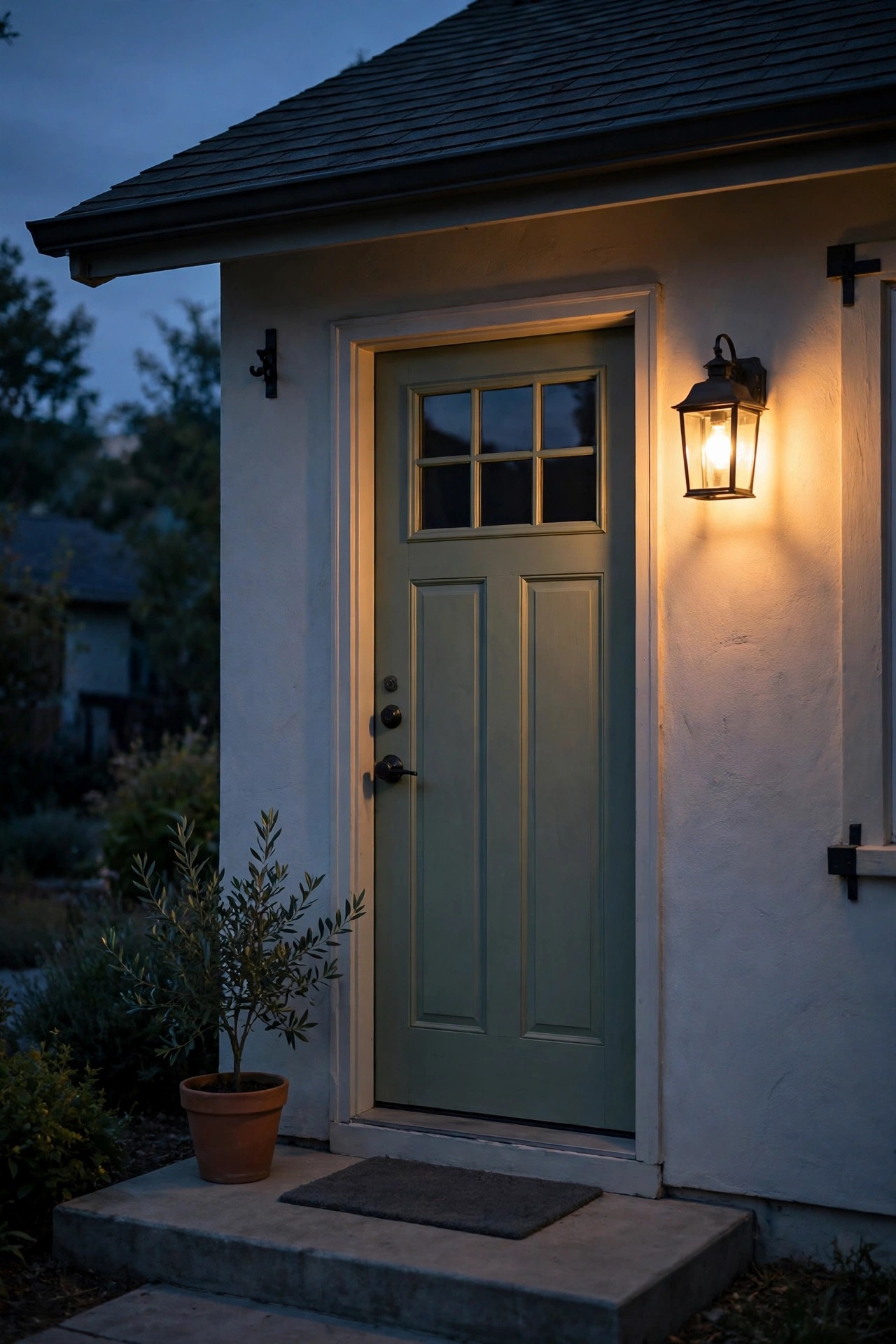
Stand where the buyer stands, and the priorities sort themselves. First, the front door. Buyers look for the entry the way guests do, and a door lit warm and even, ideally with a matched pair of fixtures or one well-scaled lantern, tells them they have arrived at a home that is ready. Bare bulbs, one working sconce out of two, or a glaring floodlight washing the porch in interrogation light all undercut that welcome. Light faces, not eyes: the goal is a soft pool at the door and the lock, bright enough to find the keyhole, never bright enough to squint at.
Second, the walk. A front path lit end to end, with no black gaps between pools of light, reads as safe and intentional. Fixtures spaced every 6 to 8 feet, all glowing the same warm color, all standing straight, do more for perceived value than any single expensive fixture. Third, and sellers forget this constantly, the house numbers. Buyers, agents, and delivery drivers all hunt for the address, and numbers that can be read from a slow-moving car at night make the whole showing feel easier. If yours are dark, tiny, or hidden behind a shrub, take a look at these illuminated house number ideas before you list. Softly lit number shapes beside the door, readable at a glance, are one of the smallest upgrades with the largest effect on how findable and finished a home feels.
The Listing-Photo Effect: Twilight Shots Sell the Click
Your buyer meets your house as a thumbnail first. On every listing site, the hero photo does the selling, and a twilight shot, taken in that blue hour just after sunset when the sky is deep cobalt and every window glows amber, outperforms a flat noon photo almost every time. Photographers who specialize in listings know this, and many agents now schedule the twilight session on purpose. Your job is to make sure the house can perform when that camera arrives.
That means every single fixture working, because a camera notices a dead path light you have trained your eyes to skip, and it will sit in the lead photo for the entire life of the listing. It means every bulb matched in warm color, because one cool white lamp in a row of warm ones photographs like a mistake, bright blue and impossible to unsee. It means turning everything on a full hour early, including the interior lights buyers will see through the windows, so timers and photocells have settled into their full glow. And it means walking the photographer's likely angles yourself with a phone camera the night before. Take the shot from the street, from the driveway, and from the front walk. Whatever looks dark, crooked, or harsh in your phone will look worse in the listing, and nearly all of it is fixable in an evening with a ladder, a cloth, and a multipack of bulbs.

Safety Signals Buyers Feel Without Naming
Ask buyers what they noticed about a home's lighting and they will rarely mention safety. Watch them at an evening showing, though, and their bodies tell the story. They relax on a walk where every step is visible. They hesitate at a dark stair edge. They grip the rail a little tighter where the path from the driveway to the door crosses an unlit patch of lawn. That ease, or that hesitation, becomes part of the feeling they attach to the house, and feelings are what offers are made of.
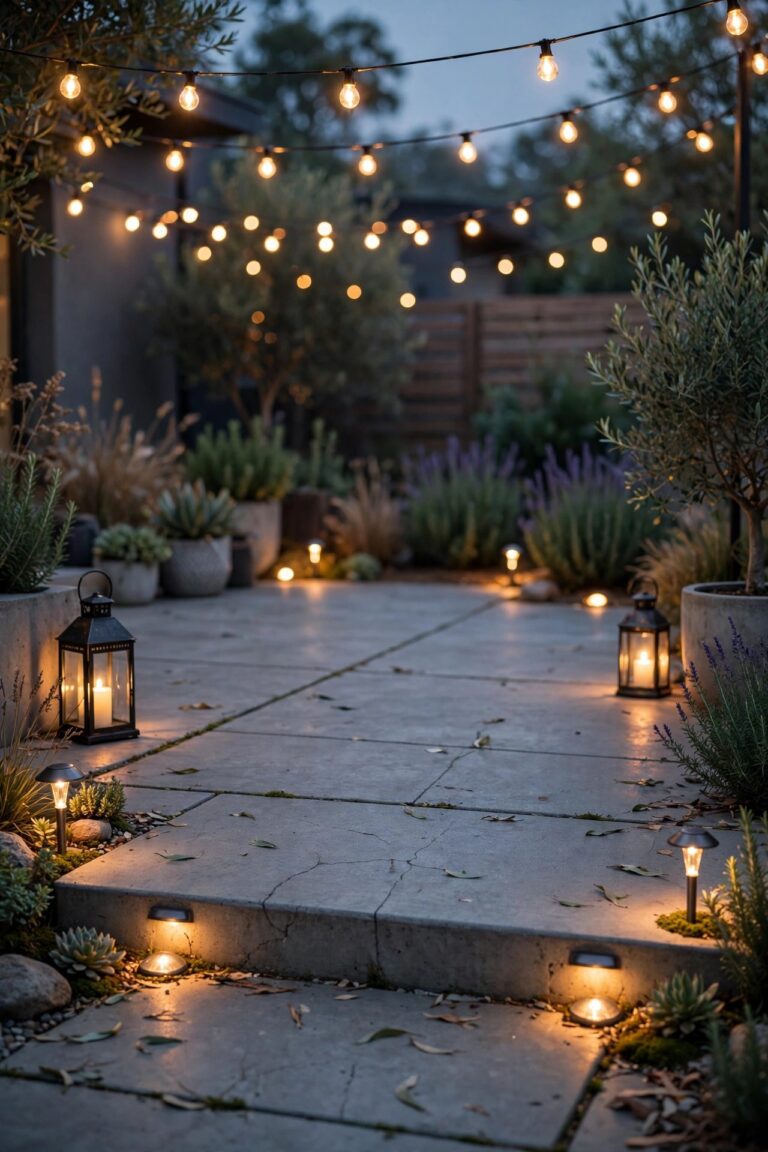
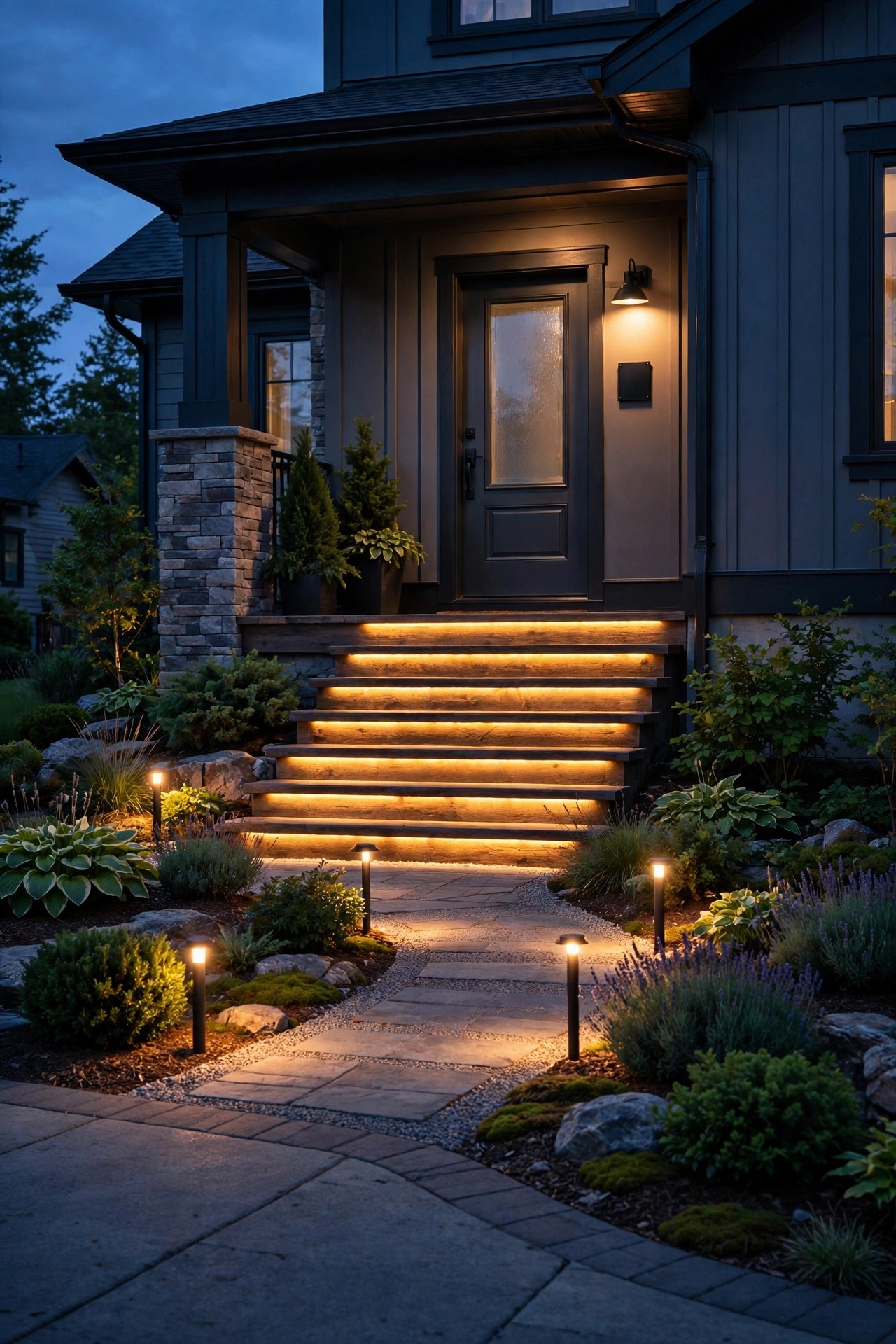
So light the transitions. The front steps should glow at every tread, with no shadow band where a foot lands. The route a guest actually walks, from parked car to front door, needs continuous gentle light rather than one bright island at the porch and darkness the rest of the way. If your driveway sits dark, a few low fixtures along its edge solve both the photo and the footing; these driveway lighting ideas cover the layouts that work for typical suburban drives. Pay attention to the side gate and the path to the trash bins too, because buyers picture real life, including taking the dog out at night and carrying groceries in from the car. A home that feels safe to move around after dark feels bigger, calmer, and better kept. None of this requires new wiring in most homes. It requires noticing where the dark gaps are and closing the two or three that sit on the routes people actually walk.
The Backyard Promise: Selling a Second Living Room
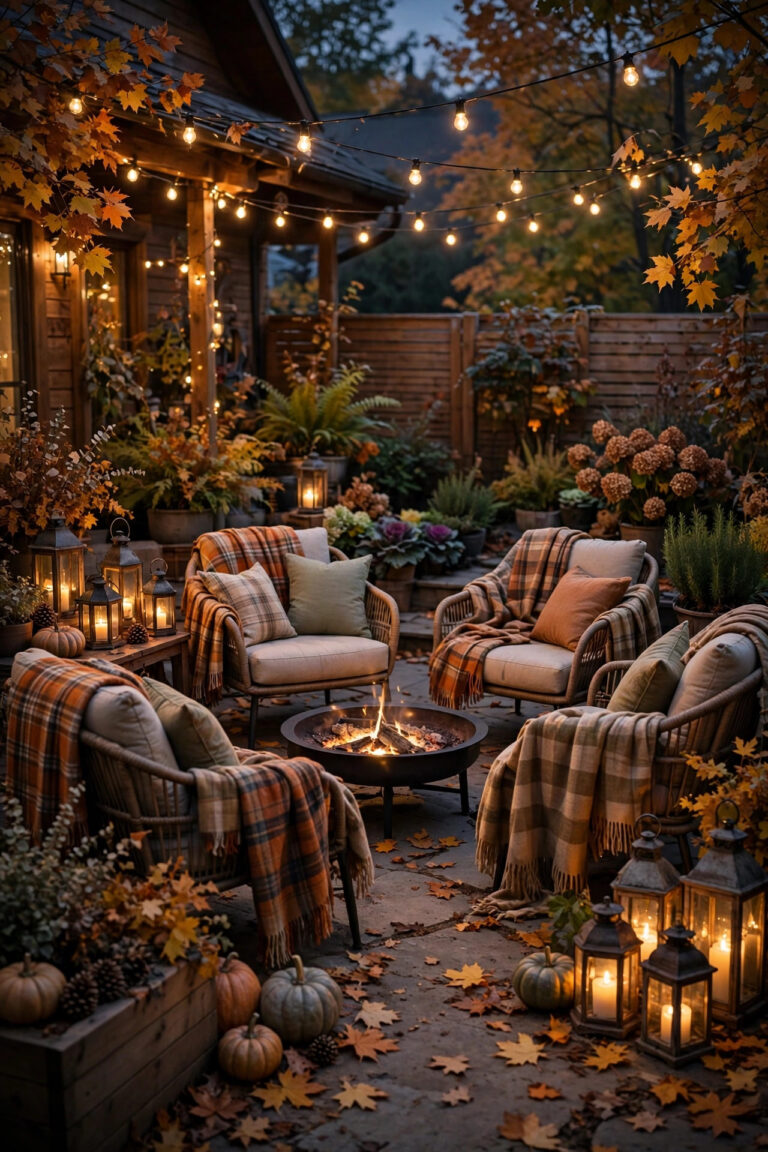
Buyers may enter through the front, but they dream in the backyard. In listing photos and evening showings, a patio that glows softly extends the living space in the buyer's imagination, and a yard that feels like an extra room supports a stronger offer than the same square footage reading as dark lawn. The trick is suggestion, not installation. You are painting a picture of evenings out there, and a few warm layers do it: string lights or a pair of lanterns over the seating area, one tree uplit so the yard has depth instead of a black wall at the fence line, and subtle light on the deck steps so the space feels finished.
Keep it honest and simple. A borrowed-from-the-neighbors look, where the patio glows like the last photo they saw online, beats an elaborate setup every time, and it costs almost nothing to stage for the selling season. Solar lanterns you already own, a fresh set of bulbs in the porch fixture over the patio door, and one spotlight aimed up into the best tree will carry the whole scene. If the yard has a pool, a fence line, or a garden bed with good bones, give each one a whisper of light so the photos show shape and depth. Then stop. Buyers are purchasing the promise of their own evenings in that yard, and a gentle glow leaves room for them to imagine it.

What Buyers Do Not Notice, and Will Not Pay For
Now for the liberating part: much of what homeowners splurge on before listing is invisible to buyers. Nobody at a showing has ever admired a fixture's price tag, because at dusk, in context, a well-chosen modest lantern and a very expensive one read almost identically, as a warm glow beside a door. If an existing fixture works, holds a warm bulb, and is not visibly rusted or cracked, it is doing its entire job for the sale. Spend your effort on making it clean and lit, not on upgrading it.
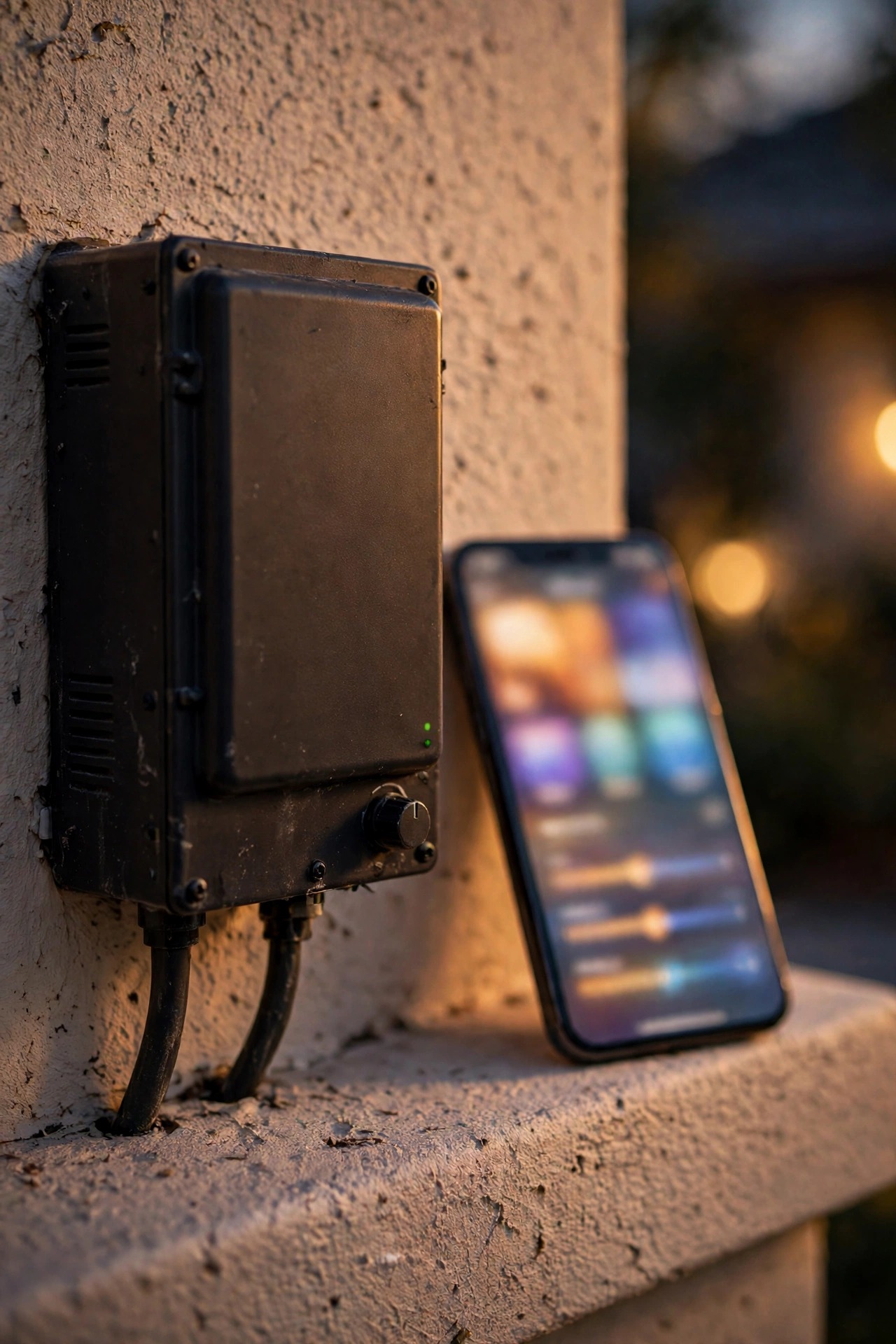
Smart systems fall in the same category. Buyers assume they will reprogram everything to their own phone anyway, app-controlled color scenes rarely survive the transfer of ownership, and a complicated setup can even read as one more thing to learn. Leave the system simple, set to warm white, and running on a plain dusk schedule, and put a friendly note by the panel if a switch needs to stay on. Color-changing novelty is the one feature to actively switch off: rainbow effects that feel playful at a party photograph as gimmicky in a listing and can make a home look dated rather than fun. The same goes for elaborate effects in the beds and trees. Buyers pay for the feeling of a warm, safe, well-kept home. Everything you spend that does not build that feeling in the first eight seconds is money the sale will not hand back to you.
The Pre-Listing Fix List for Outdoor Lighting for Selling a Home
When a friend asks me where to start, I hand over this exact order, because it follows the buyer's eye and spends the least money for the most visible change. One: every bulb working, everywhere, no exceptions. Walk the property at dusk with a notepad and test each fixture, including the garage pair and the one by the side door everyone forgets. Two: every bulb matched. Replace the odd cool white and tired amber stragglers so the whole house glows one warm color, 2700K to 3000K, from the street to the back fence.
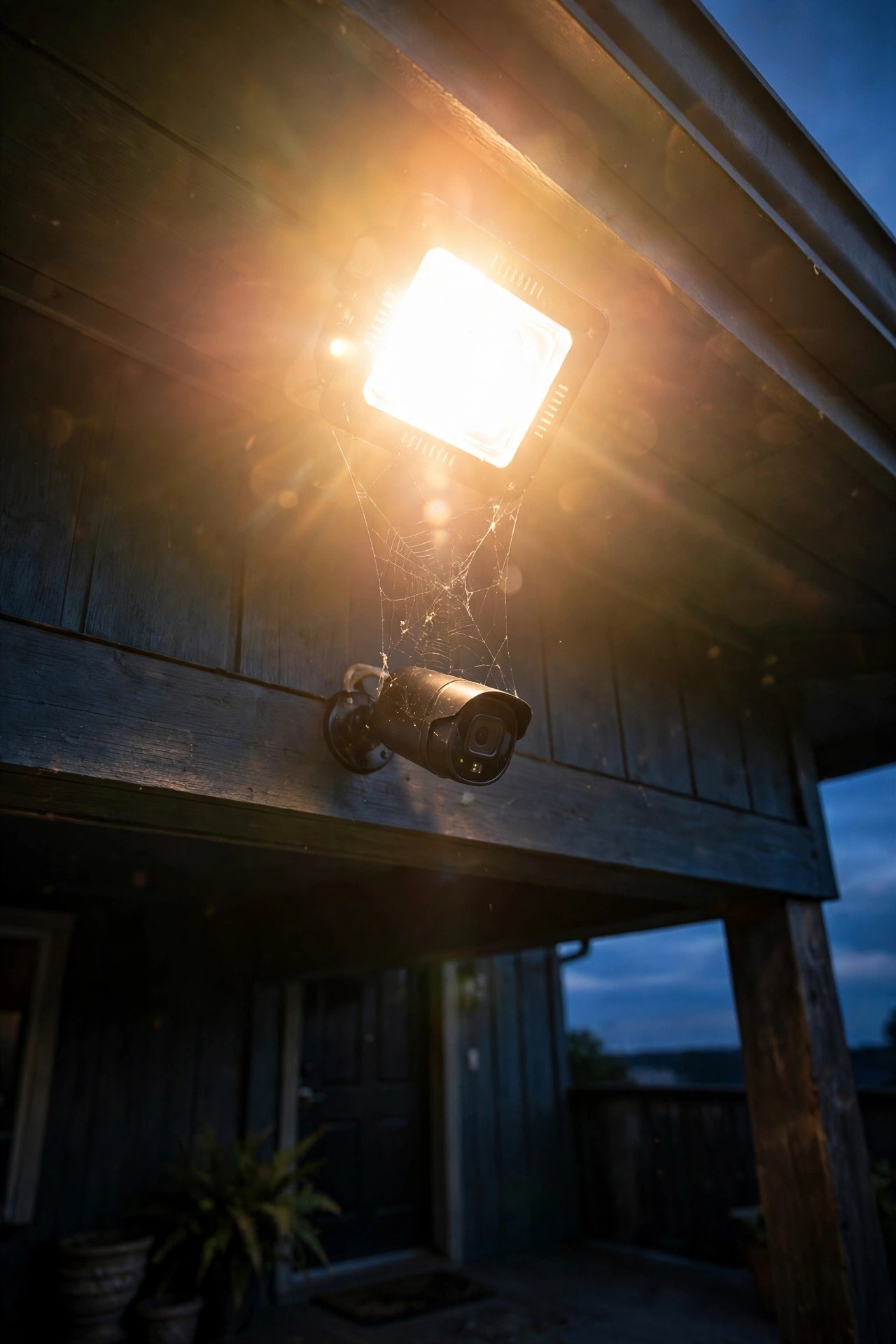
Three: clean every lens, globe, and solar panel. A season of dust, pollen, and cobweb can dim a fixture by a third, and ten minutes with a damp cloth is the cheapest brightness you will ever buy. Four: straighten and reseat anything leaning, sunken, or aimed at the sky, and snip back the shrubs and perennials that have swallowed your path lights. Five: set the timing. Timers and photocells should bring the house to full glow before the evening drive-by hours and any scheduled showing, not flicker on halfway through. Six: fresh batteries in every solar fixture, or retire the tired ones for the season rather than leaving them dark in a row. Seven: do the phone test the night before photos, from the street, and fix whatever the camera complains about. Leave your agent a short note about which switches must stay on, and the system will behave for every visit.

What It Costs in 2026
Almost everything on the fix list is priced in tens, not hundreds. A multipack of warm white LED bulbs runs $12 to $25 and can re-lamp most of a home's exterior fixtures in one pass. A matched set of solar path lights costs $35 to $80 if the old ones are too tired to revive, and fresh rechargeable batteries for the fixtures you keep run $8 to $15 a pack. A plug-in photocell or a replacement timer is $15 to $40 and takes minutes to install. If one entry fixture is genuinely dead or rusted through, a clean replacement lantern costs $40 to $150, and having an electrician swap it, or diagnose a fixture that is dead at the junction box, typically runs $100 to $250 for the visit.
Added up honestly, most sellers I know spend $75 to $300 total and one Saturday afternoon to take outdoor lighting from neglected to glowing. Some agents offer or recommend a twilight photography add-on, usually $75 to $200 through their photographer, which is worth it when the hero shot will lead the listing for weeks. Running the whole display costs pennies a night with LED lamps, roughly $1 to $3 a month on the timer schedule, so there is no reason to ration the glow during the selling period. Compare all of that with the cost of sitting on the market an extra month, or taking a $5,000 price reduction from a buyer who felt the house was tired. The arithmetic is not close, and it is why I put lighting at the very top of the pre-listing list.

Mistakes to Avoid When You List
A few errors show up in listing after listing, and all of them are easy to dodge. The most common is the mismatched rescue bulb: a seller replaces one dead lamp the night before photos with whatever is in the junk drawer, usually a cool white bulb, and that single blue note glows through every warm photo like a wrong tooth. Buy the multipack and replace in matched sets, at least per fixture group, so the color never breaks.
Second, the dead fixture left in plain sight. A dark lantern beside the door in the hero photo does not read as a small thing to a buyer scanning fifty listings; it reads as the visible tip of deferred maintenance, and they will wonder what else was skipped. If you cannot fix it before photos, it is often better to remove a broken fixture entirely than to photograph it dark. Third, please do not rip out your lighting to declutter. Sellers strip porches and yards bare aiming for minimal, and at dusk the result is not clean, it is empty and a little bleak, exactly the wrong feeling for an evening showing. Fourth, forgetting the second showing shift: lights set for a daytime open house get switched off and never come back on for the twilight drive-bys that happen all week. Set the timer once, tape a reminder on any manual switch, and let the house sell itself every evening until the sign comes down.
Frequently Asked Questions
Does outdoor lighting really help a house sell faster?
It helps in the ways that decide shortlists. Good light makes the hero photo glow, makes evening drive-bys feel welcoming, and removes the small unease buyers feel at dark steps and black walkways. It will not rescue an overpriced listing, but between two similar homes, the one that glows warm at dusk consistently makes the stronger first impression, and first impressions are what get showings booked.
What color temperature should my bulbs be for listing photos and showings?
Choose warm white, 2700K to 3000K, for every exterior fixture, and match them all. Warm light reads as cozy and cared-for in photos and flatters siding, brick, and skin tones at the door. Cool white lamps in the 5000K range read as harsh and commercial, and mixing the two is the fastest way to make an otherwise tidy home look patched together.
Should I install brand-new fixtures before listing, or fix what I have?
Fix what you have, almost every time. Replace dead bulbs, clean lenses, straighten the leaners, and swap only fixtures that are broken, rusted through, or visibly dated in a way cleaning cannot cure. Buyers respond to light that works and matches, not to new hardware, so the refresh budget almost always beats the replacement budget for return on effort.
When should the lights be on while my home is listed?
Every evening, from just before dusk until around 10 or 11 at night, for the entire listing period. That window covers twilight photography, scheduled evening showings, and the unannounced drive-bys that serious buyers make after dinner. A timer or photocell makes it automatic, so the house is glowing even on the evenings you forget, which are exactly the evenings a buyer might roll past.
Conclusion
Selling a home is a first-impression business, and most of those impressions happen at dusk, from a slow car, or through a phone screen. The good news is that outdoor lighting for selling a home is the rare staging project that is cheap, fast, and entirely in your control: every bulb working, every color matched, every lens clean, every step lit, and a timer that brings the whole house to a warm glow right on cue. Do that one Saturday of work, and your home will look loved in every photo and every drive-by until the sold sign goes up. For more ways to make your exterior glow, browse the lighting ideas across the site and pick the two or three that suit your street.