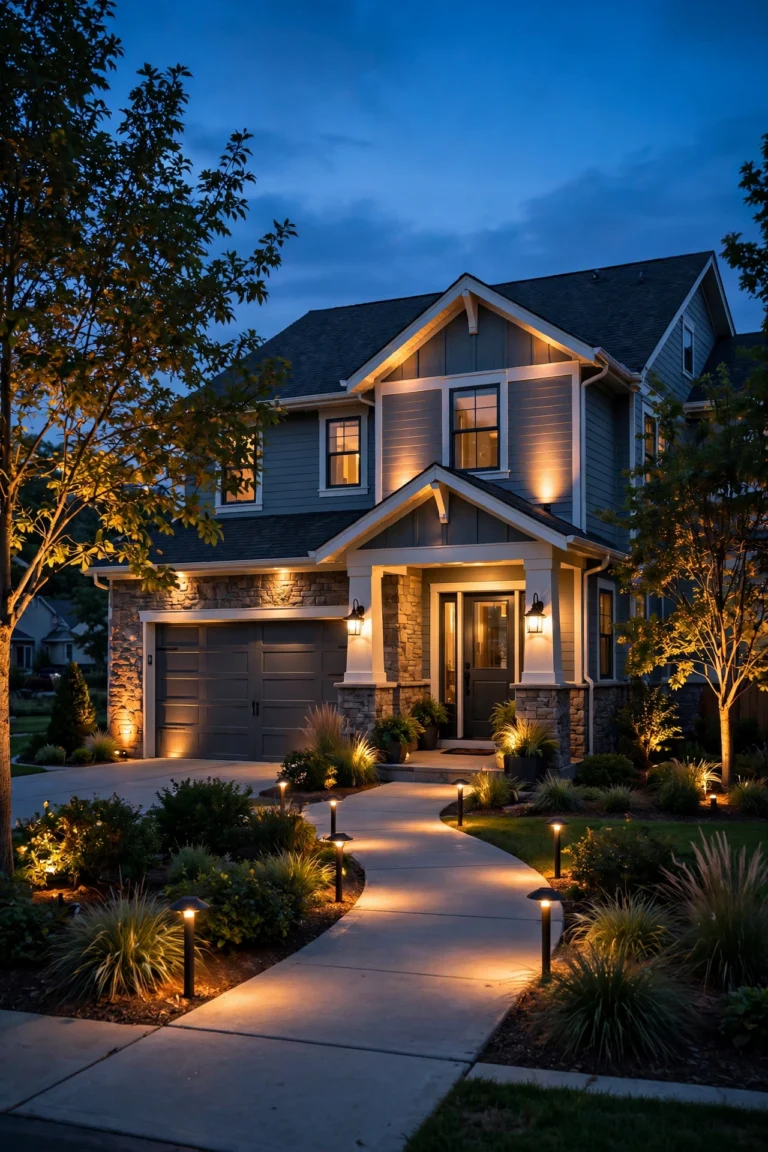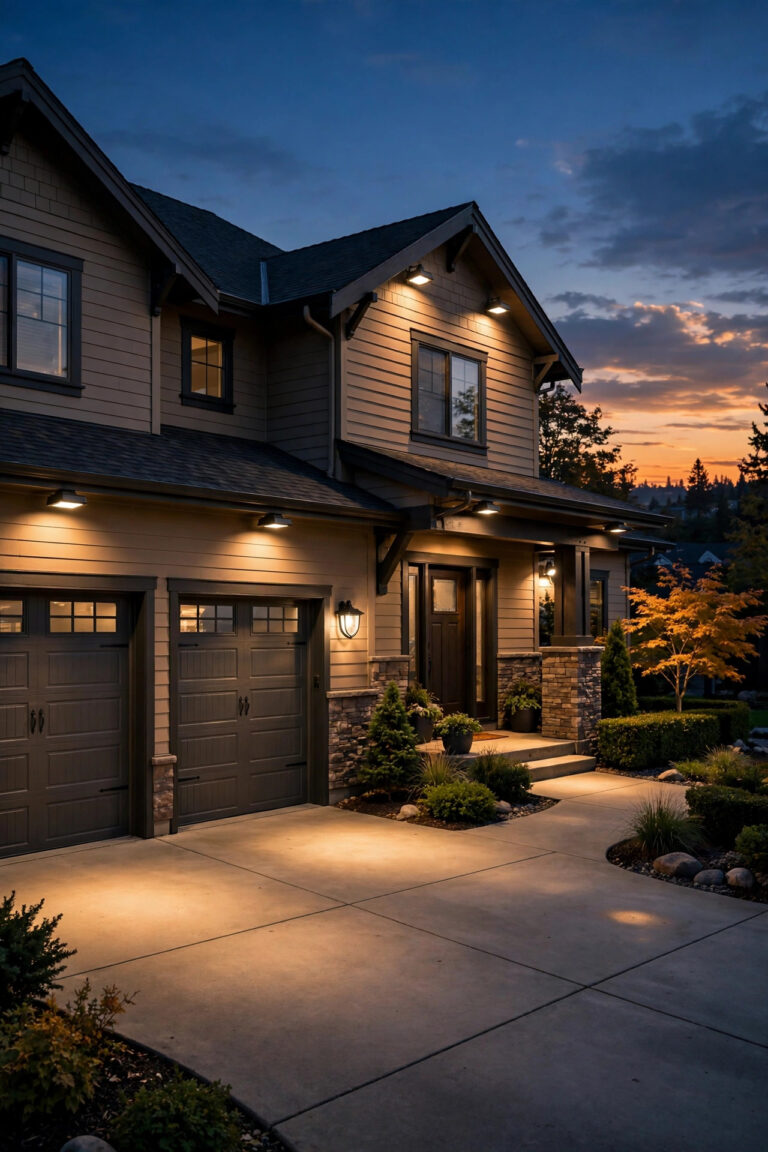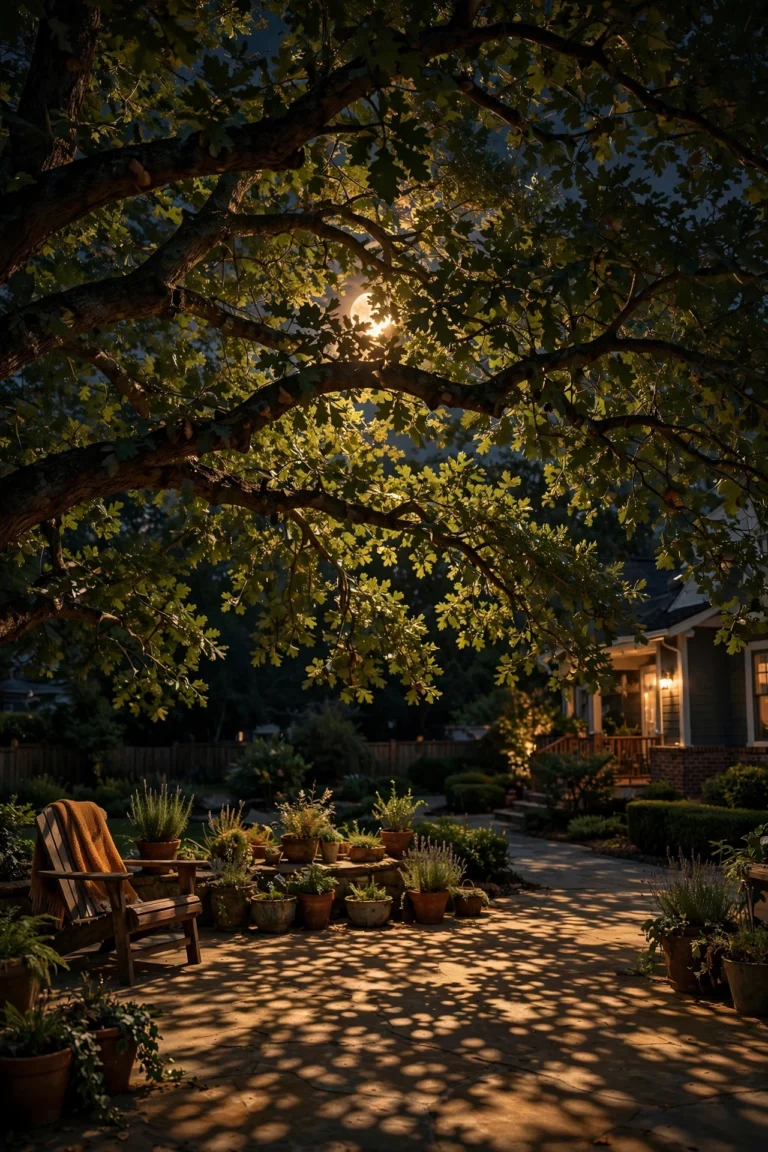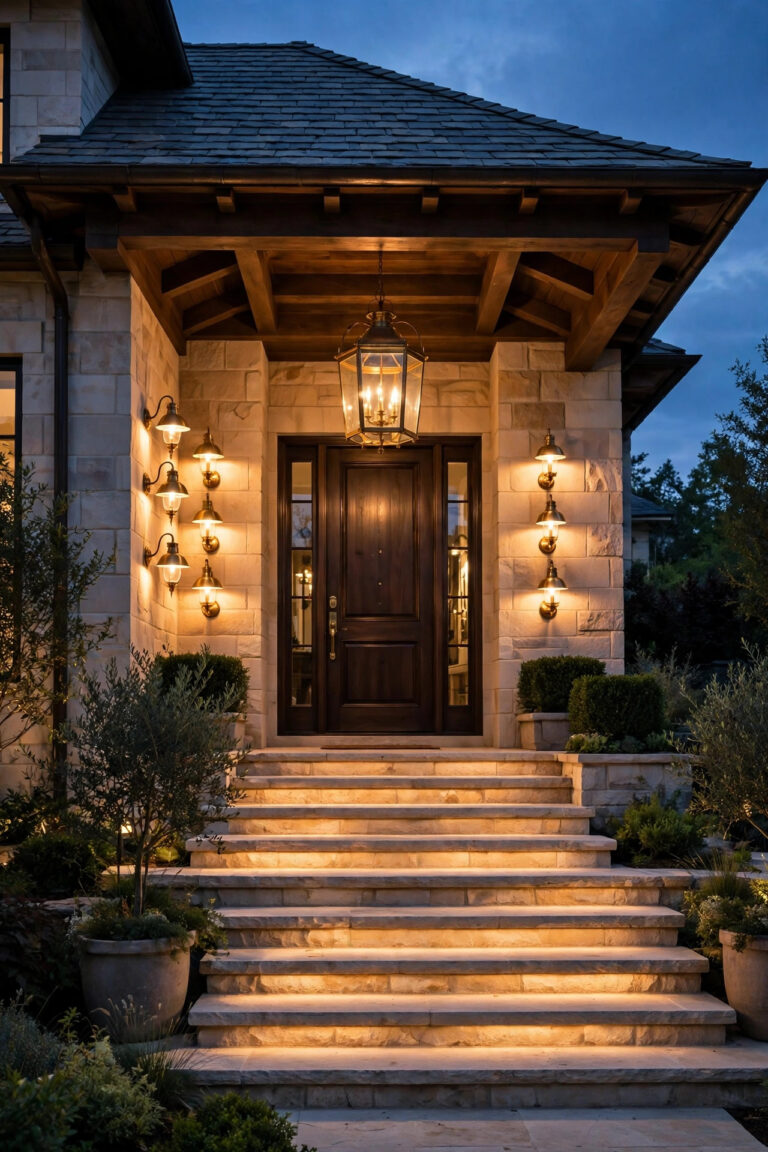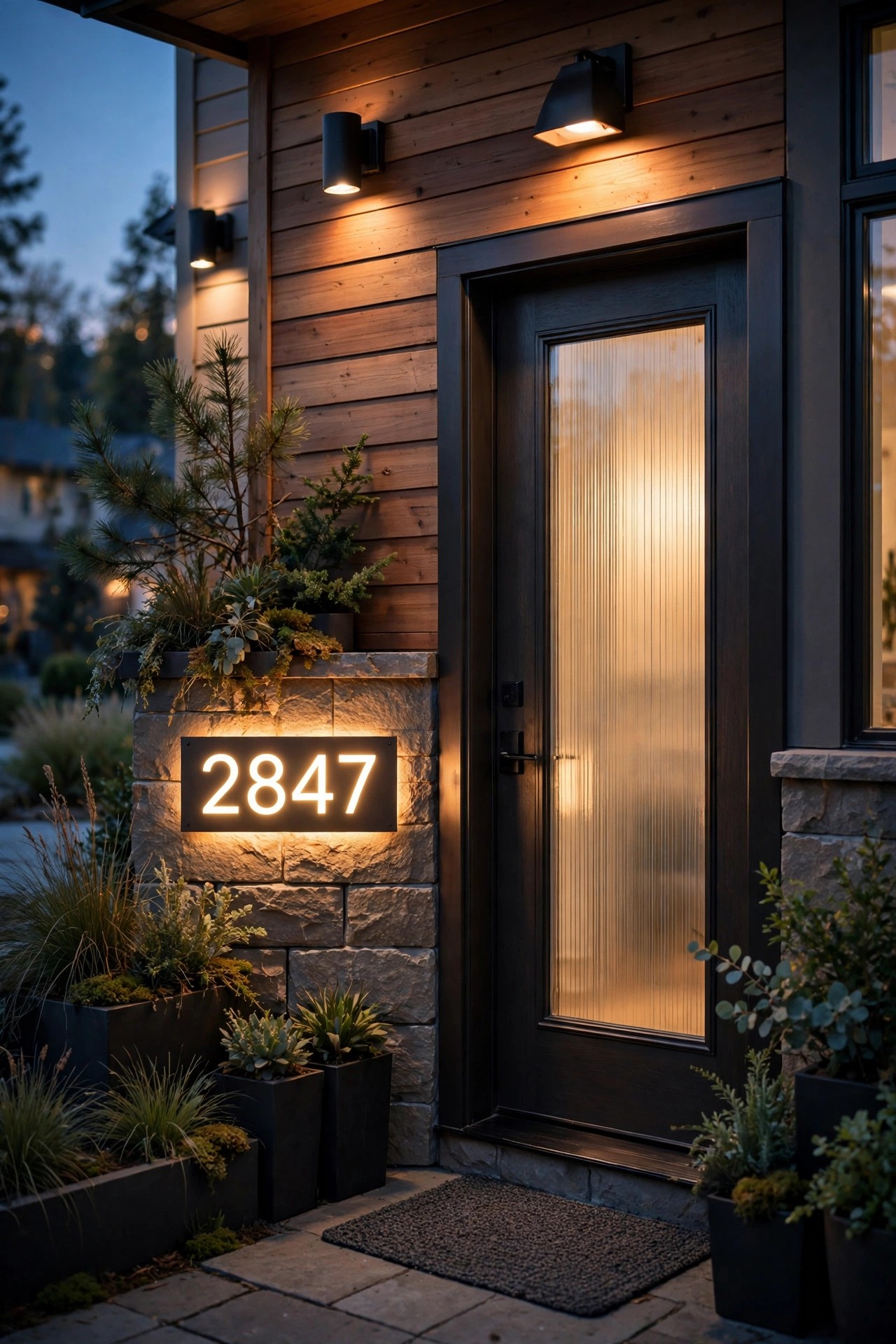
You know the scene: the delivery driver circles your block twice, your dinner guests text "I think I'm outside?" from three houses down, and the paramedic — the one time it really matters — wastes precious seconds squinting at dark mailboxes. I fixed all of that the week I installed illuminated house numbers, and honestly? I wish I'd done it years earlier. A lit address is the final layer of a welcoming entry, the finishing touch that works alongside your front porch lighting ideas to guide people straight to your door. Think of your entry lighting in layers: ambient light so the house reads as occupied, task light at the door itself, and then your glowing numbers as the beacon on top. Below are the 19 approaches I've tested, recommended to friends, or installed for neighbors — solar, battery, plug-in, and hardwired — in every style from sleek modern to cozy farmhouse, with honest notes on brightness, wiring, and what each one really costs.
1. Halo-Lit Metal Numbers (The Classic Illuminated House Numbers Look)
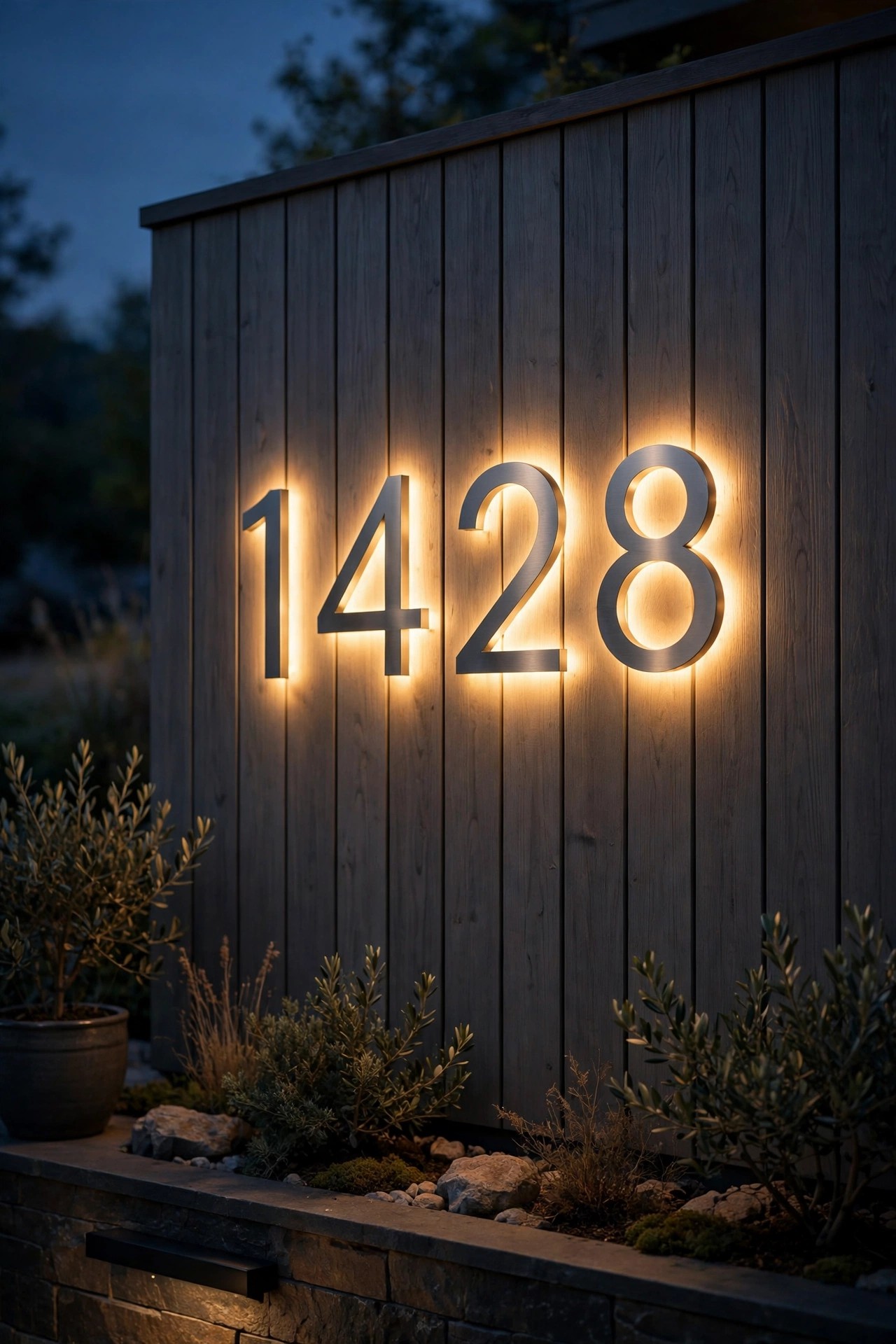
If you picture illuminated house numbers in a design magazine, it's this: individual metal digits mounted on slim standoffs, with LED modules tucked behind each one washing the wall in a soft halo of light. The digits themselves stay dark, so they read as crisp silhouettes against the glow — incredibly legible from the street, and genuinely beautiful up close. Choose 5- to 6-inch digits in brushed stainless, matte black, or oil-rubbed bronze, wired to a 12-volt low-voltage transformer or a plug-in adapter with the cable run discreetly into the garage or through the wall. Mount the baseline about 48 to 60 inches off the porch floor, close to the door on the handle side, and space digits roughly half an inch apart. In my experience this is the option that gets the most compliments, and because it's low voltage, it's a confident DIY project — no electrician needed for the plug-in versions. Pick warm 2700–3000K LEDs so the halo matches your porch light instead of fighting it.
Suggested budget range: $120 – $300.
2. Solar-Powered LED Address Plaque
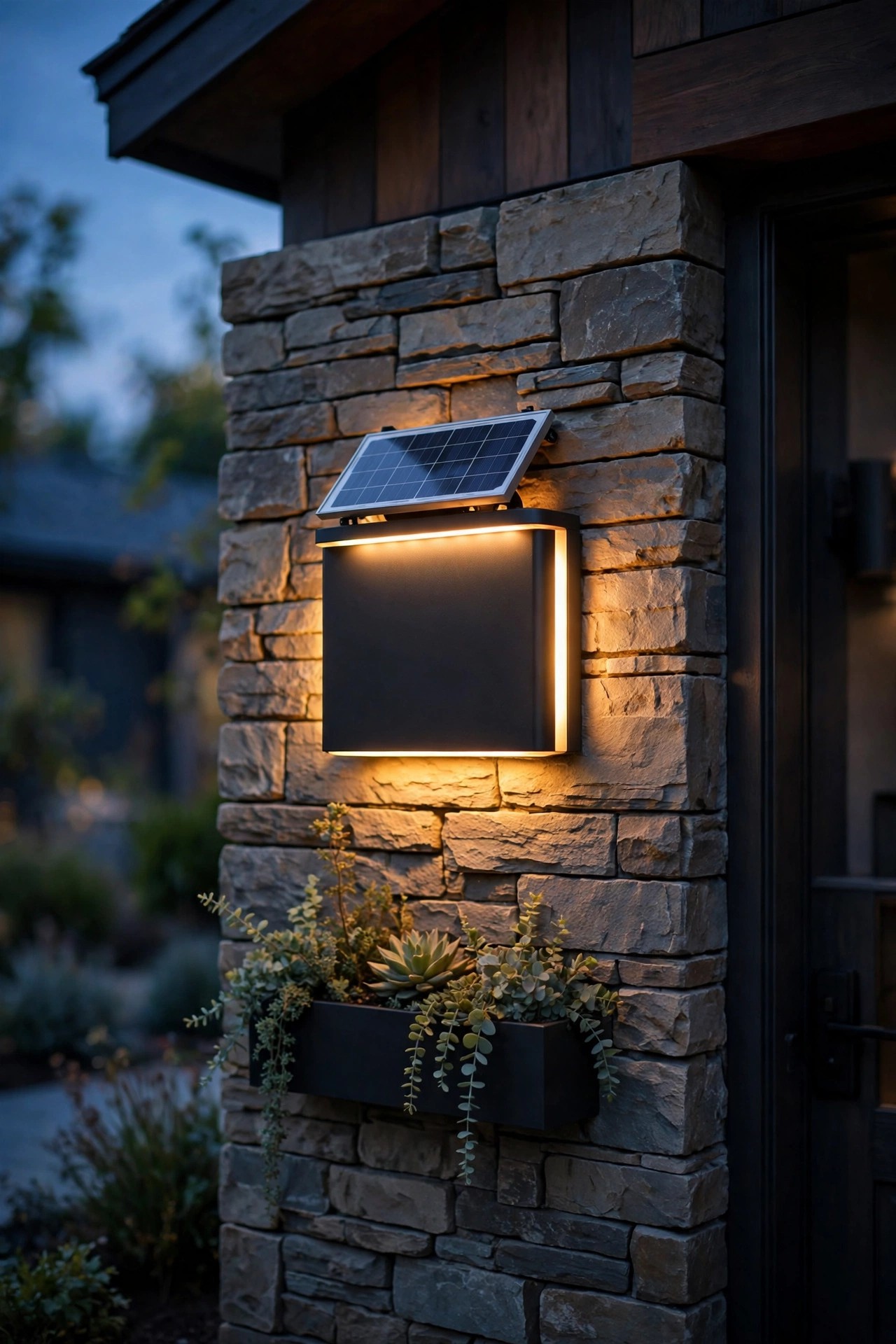
No outlet near the door? A solar address plaque is the easiest yes on this list. It's a single rectangular panel — brushed metal, black, or faux stone — with cut-out or printed digits lit from behind by LEDs and a small solar cell on top that charges all day and switches the light on automatically at dusk. Most run 8 to 10 hours on a full charge. The honest catch: the panel needs real sun, ideally 6 hours of direct light, so mount it on a sun-facing wall rather than under a deep porch roof, or choose a model with a separate solar panel on a cable you can stake in a sunny spot. Digits are typically 4 to 5 inches tall, which reads clearly from about 30 to 40 feet — fine for most suburban setbacks. Installation is two screws and ten minutes. This was my first lit address, and it worked beautifully for three years before the battery needed replacing.
Suggested budget range: $35 – $80.
3. Front-Lit Acrylic Numbers With LED Modules
Front-lit numbers flip the halo idea around: instead of glowing from behind, the face of each digit lights up, like a miniature channel-letter sign from a storefront. The digits are usually acrylic-faced with LED modules inside, and they throw a clean, even brightness that's the easiest of all to read from a moving car. If your street is wide, your house sits far back, or your guests reliably arrive after dark, this is the heavy-duty answer. Letters come in white, warm white, and sometimes colors — I'd gently steer you to warm white for a home; it reads classy instead of commercial. Most sets are 12-volt and connect to the same kind of small transformer used for landscape lighting, so if you already have a low-voltage system, you can often tap into it. Keep digit height at 5 inches minimum, and mount them where the porch roof won't shadow them from the street's sightline.
Suggested budget range: $150 – $350.
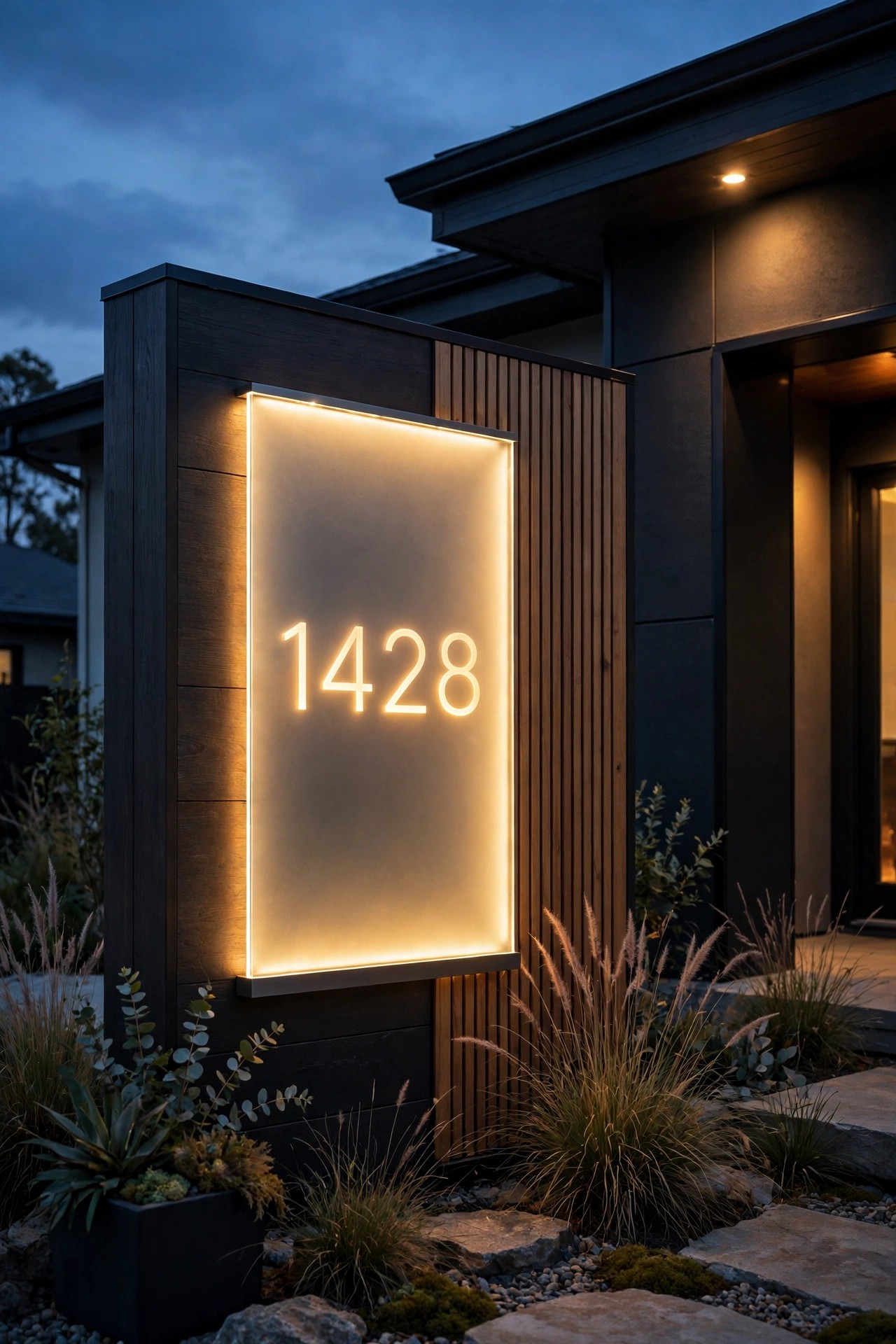
4. Edge-Lit Glass Address Panel
For a modern or mid-century house, an edge-lit panel is pure jewelry. A single sheet of frosted glass or clear acrylic has your numbers etched or printed on it, and a slim LED bar along the top or bottom edge shoots light through the panel — the etching catches the light and glows while the rest of the sheet stays subtle. From the street it looks like your address is floating in a pane of light. I love this style beside a pivot door or on a smooth stucco wall where individual digits might look fussy. Choose a panel roughly 14 to 18 inches wide for a three- or four-digit address, and specify warm-white LEDs around 3000K. Because the whole panel is one piece, alignment is foolproof — level it once and you're done. Just note that etched panels are a little less bold than backlit digits at long distances, so this one suits shorter setbacks best, under about 40 feet from curb to door.
Suggested budget range: $140 – $280.
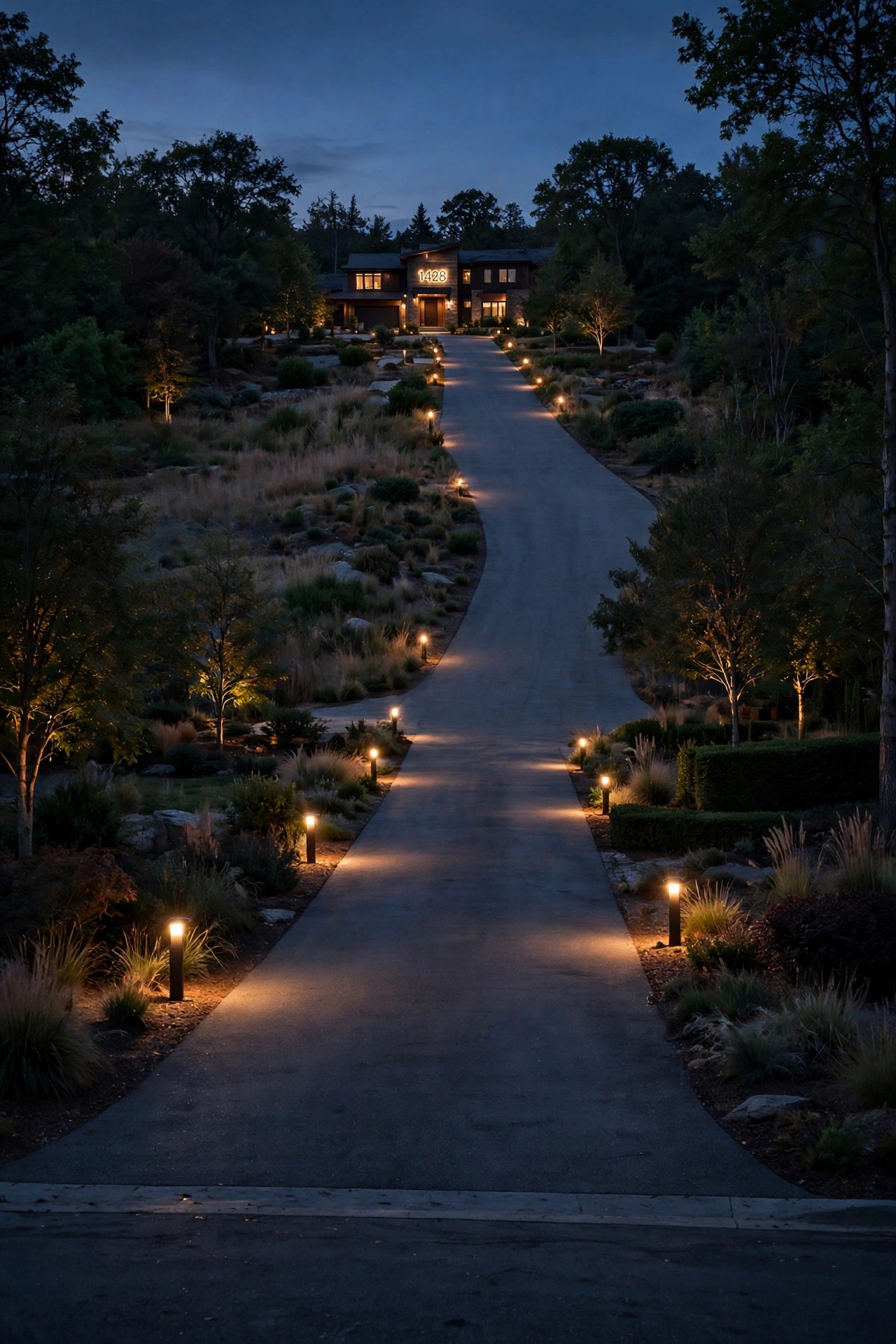
5. Oversized Illuminated House Numbers for Long Driveways
Here's the rule I give everyone: you need roughly one inch of digit height for every 10 feet of viewing distance. A standard 4-inch number reads from about 40 feet — but if your house sits 80 or 100 feet back from the road, you need 8- to 10-inch digits, and at that size illuminated house numbers become a genuine design statement. Oversized backlit or front-lit digits in a bold sans-serif font look fantastic on contemporary, ranch, and farmhouse exteriors alike. Buy them as individual digits so you can spread the spacing — with big numbers, generous letter spacing (an inch or more) improves readability a lot. Low-voltage wiring is the norm here; plan the cable run along the wall and into a GFCI-protected outlet or transformer. One tip from experience: photograph your house from the street at night before ordering, and hold up a tape measure where the numbers will go. It tells you instantly whether 8 inches is enough or whether you should go bigger.
Suggested budget range: $200 – $450.
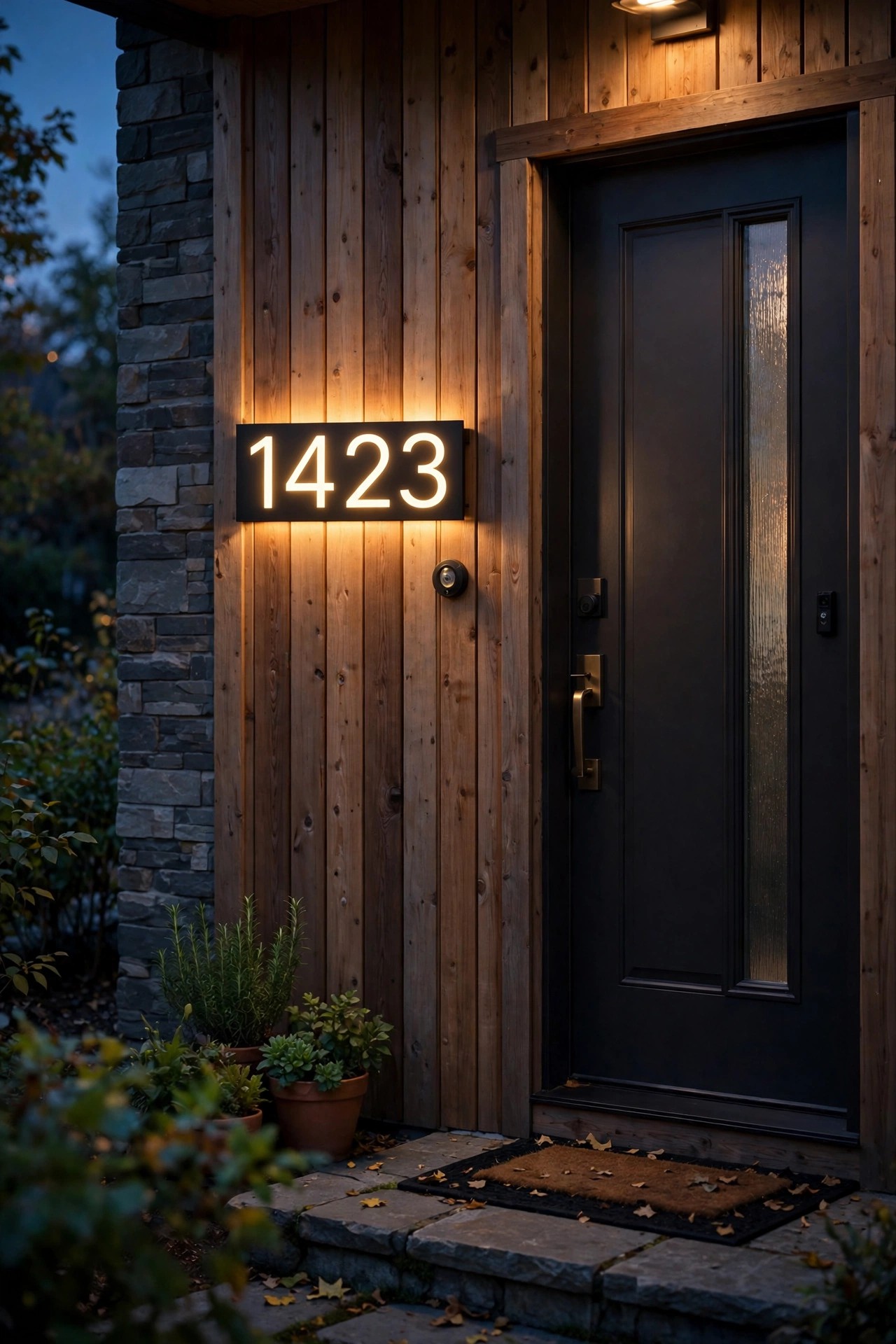
6. Smart Numbers With App Control and a Photocell
If your porch light already runs on a schedule, smart illuminated numbers slot right into that ecosystem. These are backlit digits or plaques with Wi-Fi or a built-in photocell, so they switch on at sunset, dim late at night, and turn off at dawn without you touching anything. The better models let you adjust brightness — genuinely useful, because numbers that are too bright bloom into an unreadable blob in phone photos and security-camera footage; about 50–70% brightness is usually the sweet spot. Choose ones with a dusk sensor even if you skip the app, because a photocell alone removes 90% of the fuss. Most plug into a standard outlet with a slim adapter, and the low-voltage cable is easy to hide along trim. I always recommend setting a schedule that keeps them lit until at least midnight; delivery drivers and rideshares do most of their address-hunting in the evening, not at 3 a.m.
Suggested budget range: $90 – $220.
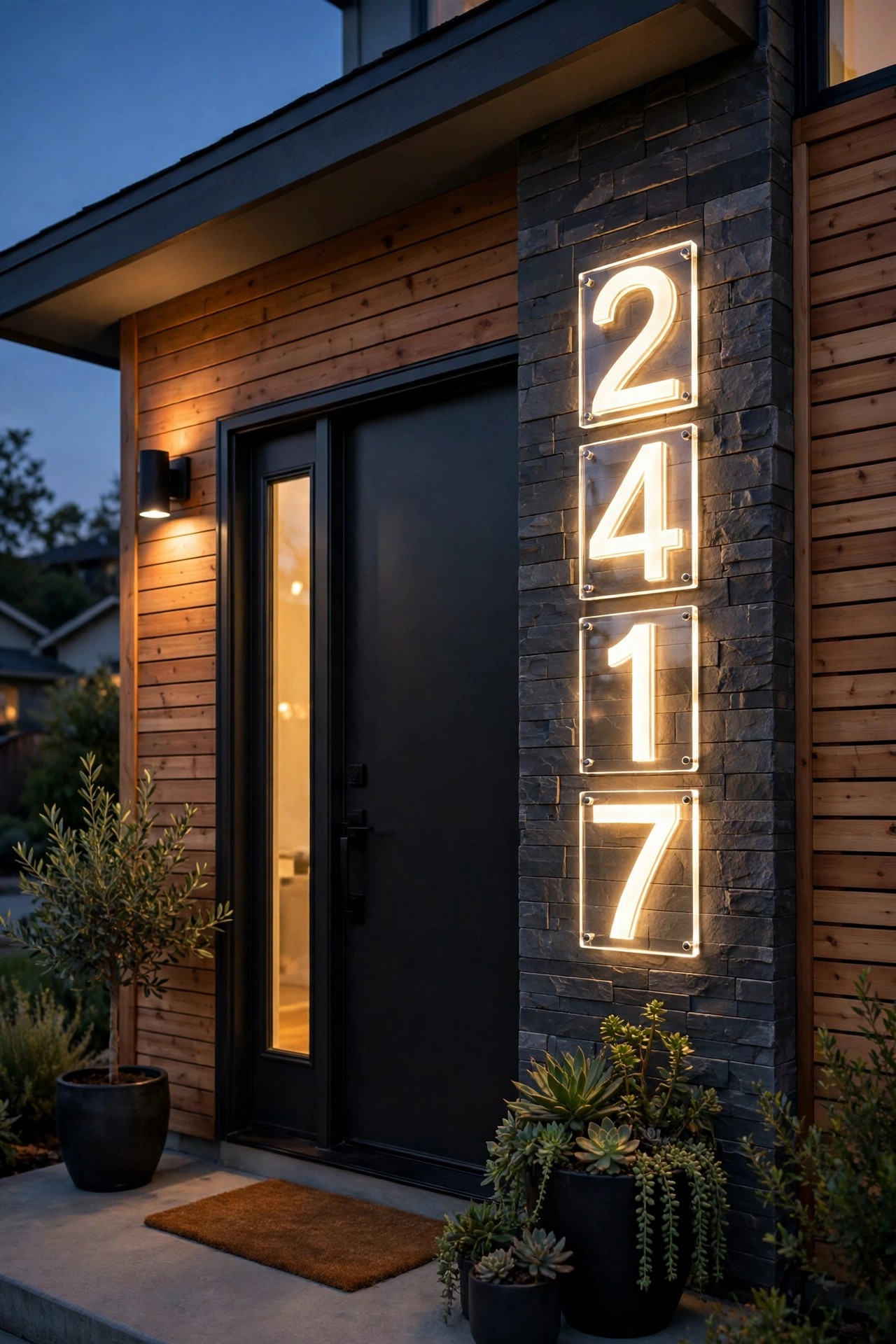
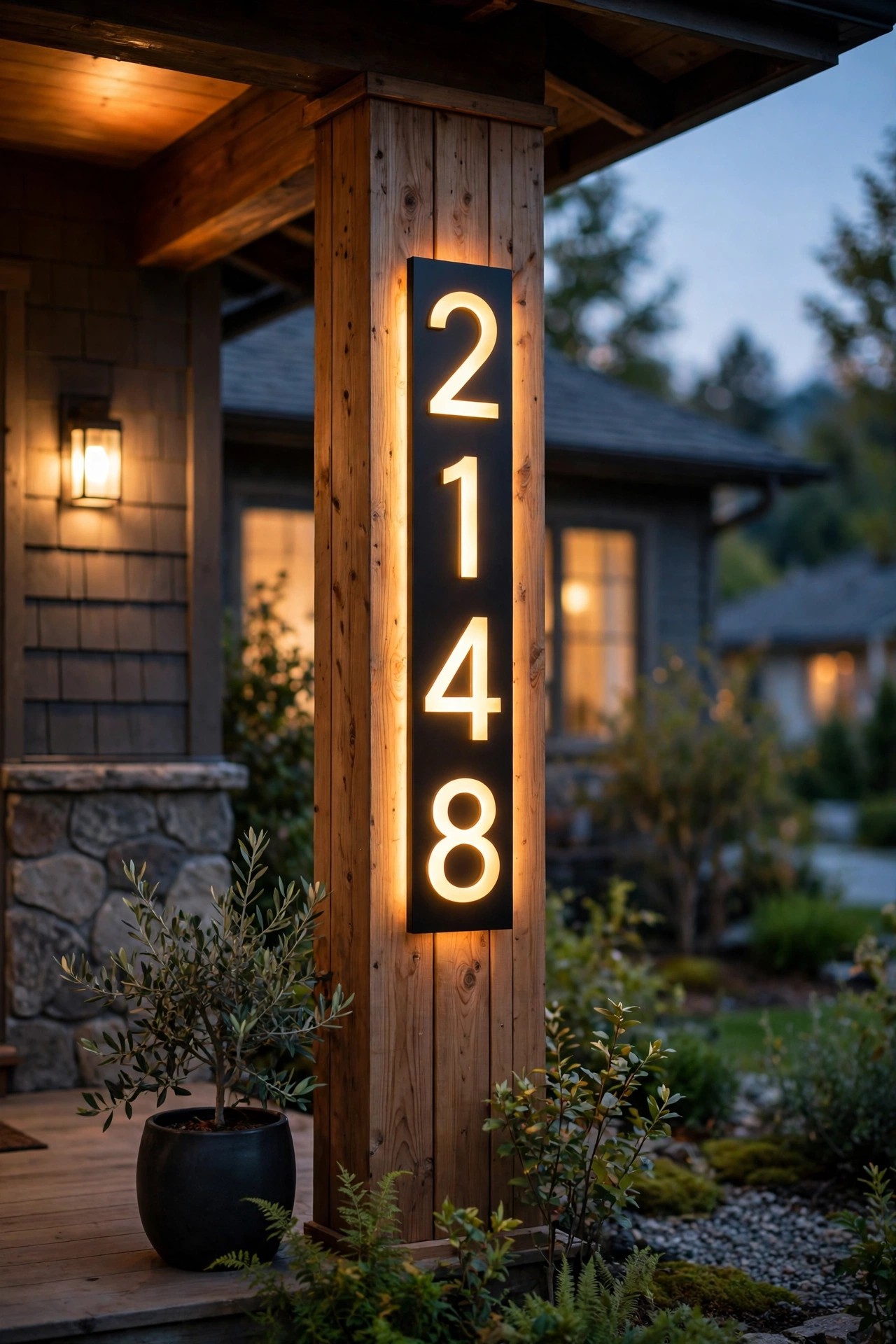
7. A Vertical Illuminated Address Column
Narrow entry, no good wall space beside the door? Turn the address sideways — literally. A vertical sign, with digits stacked top to bottom (or a tall narrow panel with the numbers arranged vertically), mounts beautifully on a porch column, a gate post, or the slim strip of wall between the door and a window. It reads like the address markers on city brownstones and boutique hotels, and guests spot it precisely because it looks different from everything else on the street. For stacked individual digits, 4 inches is the minimum height that stays legible; a backlit vertical panel can go slightly smaller since the whole column glows. Solar and battery versions exist, which makes this a renter-friendly option for a column you can't drill wiring through. Mount the column so its center sits around 54 inches off the ground, right where headlights sweep as cars slow down — that headlight catch plus the glow is a combination nobody misses.
Suggested budget range: $60 – $180.
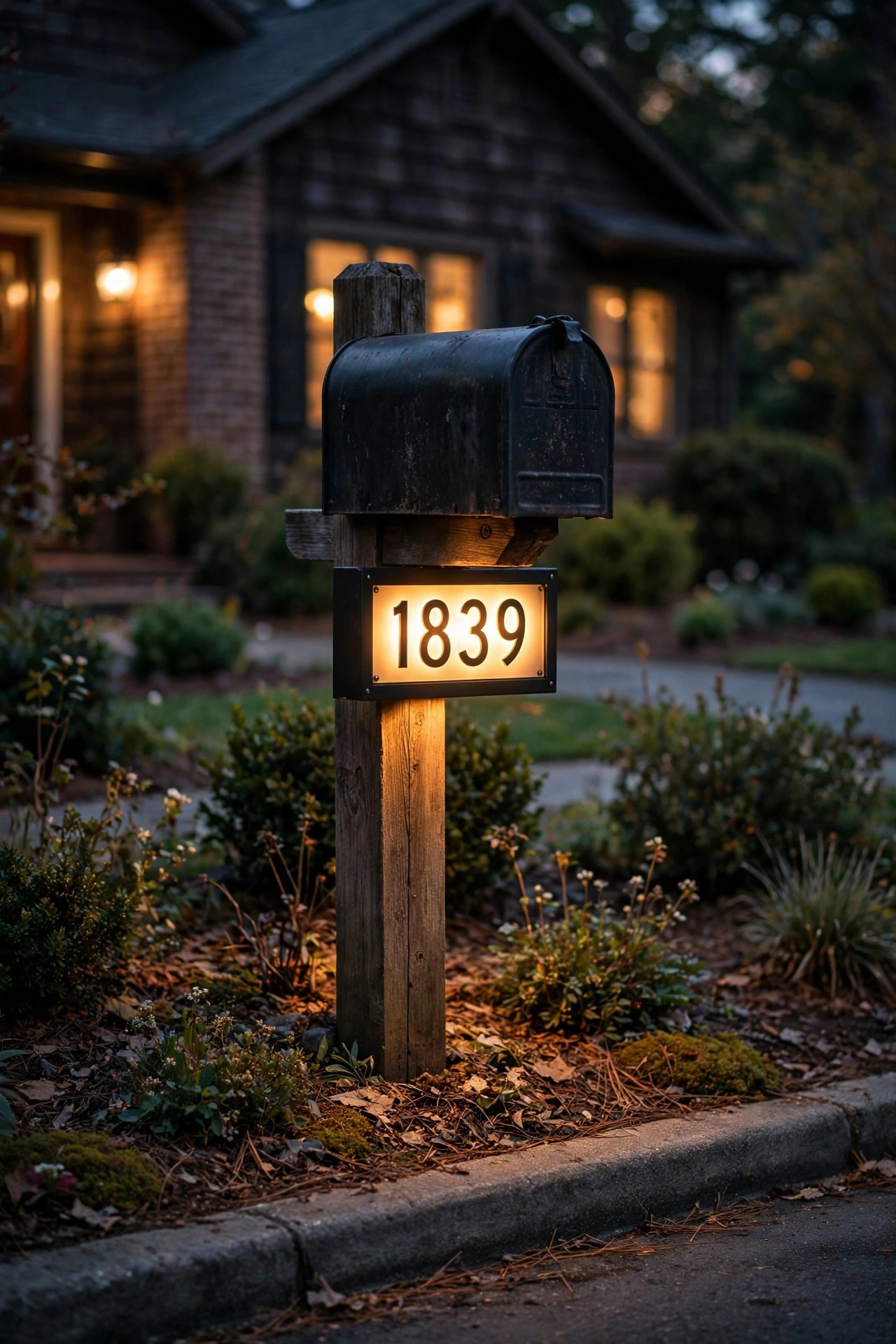
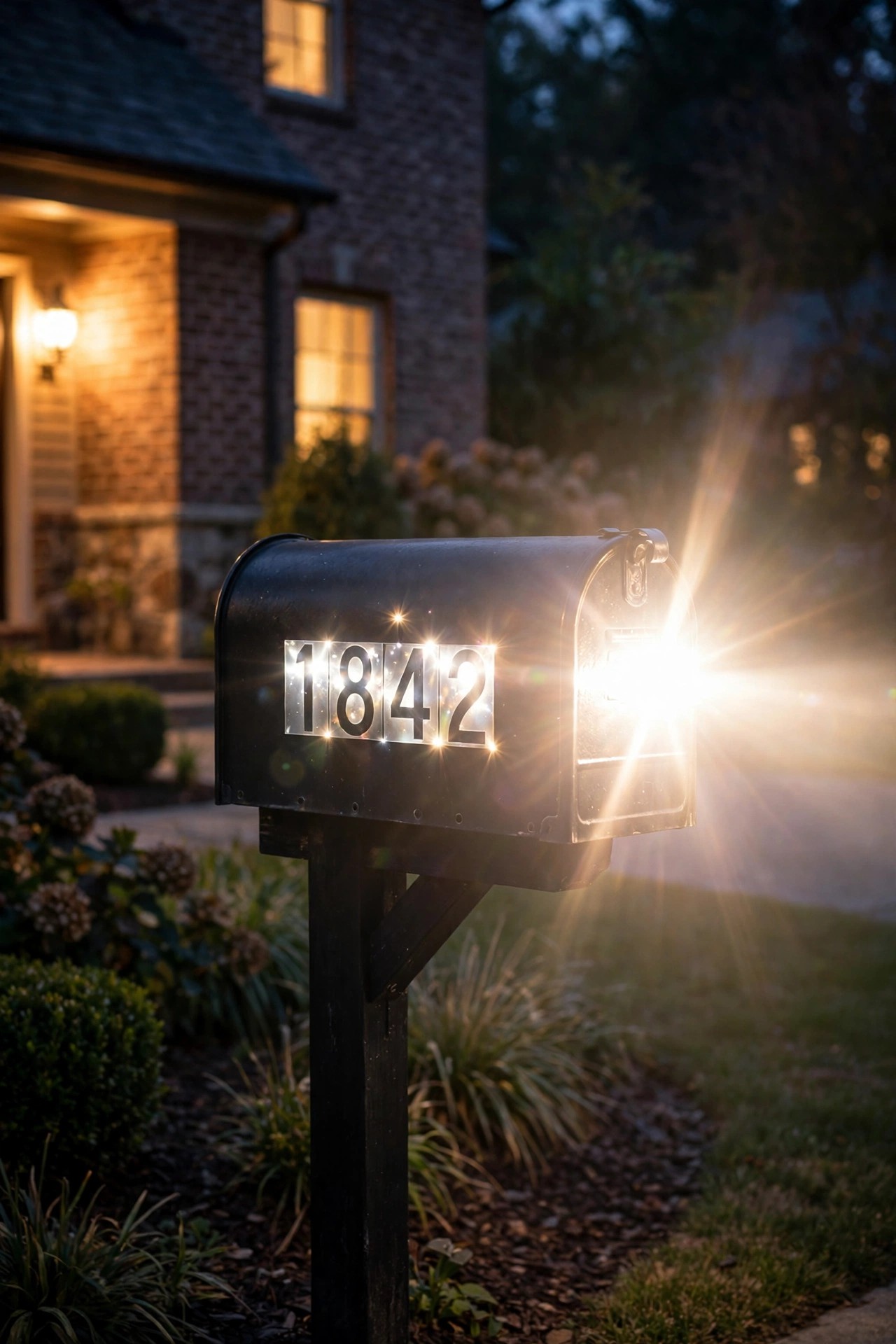
8. Mailbox-Mounted Illuminated Numbers
Sometimes the house is just too far from the road for wall numbers to do the job, and the smartest place for your address is the mailbox itself. Illuminated mailbox numbers come as solar-lit digit boxes that clamp onto the post, backlit panels that replace the mailbox door, or a small lit sign bracketed beneath the box. Match the digit size to your road speed: on a quiet cul-de-sac, 3-inch digits are fine; on a 35-mph road, go 4 to 5 inches so drivers can read them without stopping. Solar is the obvious power choice out at the curb, and most units light both sides of the post — important if guests approach from either direction. While you're out there, add a reflective or lit treatment on both faces and check your local mailbox rules; some municipalities and HOAs specify number height and placement. My neighbor added these after one missed ambulance call and calls them the best $70 she ever spent.
Suggested budget range: $40 – $110.
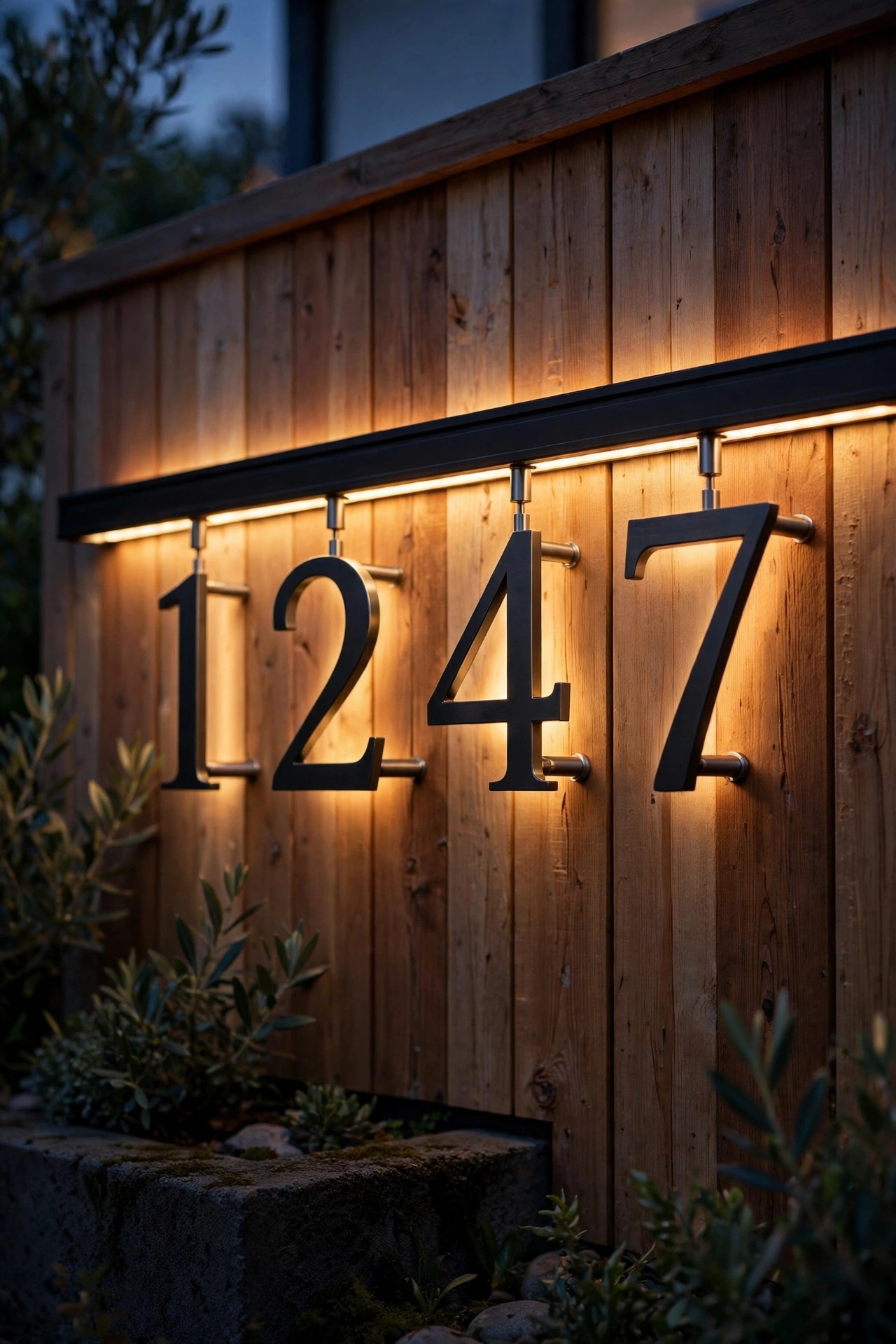
9. Floating Numbers With an LED Strip Behind the Rail
This is the DIY I'm proudest of. Mount standard floating house numbers — the kind on hidden standoffs that cast pretty shadows by day — onto a slim metal or wood rail, then hide a warm LED strip light behind the rail facing the wall. At night the whole row of digits gets a continuous ribbon of backlight, softer and more even than per-digit halos, and it costs a fraction of factory-backlit numbers. Use an outdoor-rated (IP65 or better) LED strip in 2700K, a 12-volt plug-in driver you can put on a timer, and keep the rail 1 to 1.5 inches off the wall so the light can spread. The strip must be fully hidden — if you can see individual LED dots from the street, add a frosted channel cover to diffuse them. Because everything is low voltage and plug-in, this is weekend-project territory, and it pairs beautifully with the layered approach I use in my outdoor entryway lighting ideas.
Suggested budget range: $70 – $160.
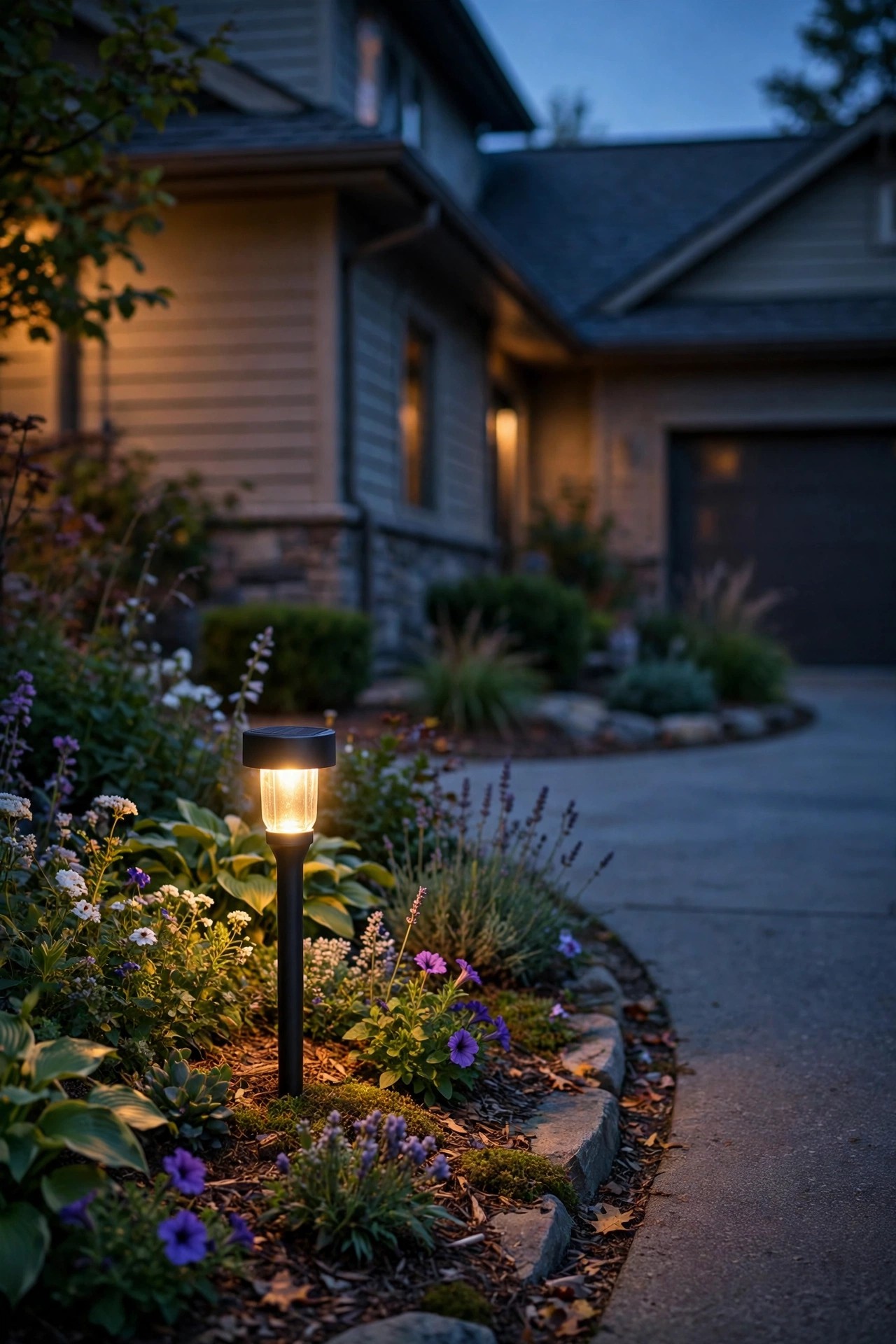
10. Solar Address Stake Sign for the Front Yard
When the mailbox is shared, the house is hidden, or you simply rent and can't touch the facade, put the address in the yard. A solar stake sign — a handsome plaque on a 24- to 36-inch stake with its own solar panel — plants right into a flower bed or beside the driveway entrance, glows all night, and moves with you when you leave. Angle it toward the street rather than flat against the house's sightline, and clear any plants that will grow up and shade the panel by midsummer (ask me how I know). Digits on stake signs are usually 3.5 to 5 inches; that's curb-distance reading, so place the stake within about 15 feet of the road for best effect. Look for a metal stake rather than plastic — it survives string trimmers and winter heaving. I keep one at the top of our driveway even though our wall numbers are lit, because visitors turning in after dark see the yard sign a full second sooner.
Suggested budget range: $30 – $75.
11. Dusk-to-Dawn Sensor Plaque With Your Street Name
Most plaques show numbers only, but the most helpful version shows your street name underneath — because half of "I can't find your house" is really "am I even on the right road?" A dusk-to-dawn plaque with a photocell lights itself from sunset to sunrise with zero programming, and the two-line layout (big numbers, smaller street name) reads like the address plates on European houses. Choose digits at least 4.5 inches tall with the street name at about 1.5 inches; that proportion stays legible in the right order — drivers catch the glowing numbers first, then confirm the street. These are usually hardwired or plug-in LED panels, and the steady all-night burn costs pennies a month in electricity — a 3-watt panel running 12 hours a night uses about 13 kilowatt-hours a year. If you like set-and-forget lighting generally, the same photocell logic powers the fixtures in my guide to dusk to dawn outdoor lights.
Suggested budget range: $80 – $190.
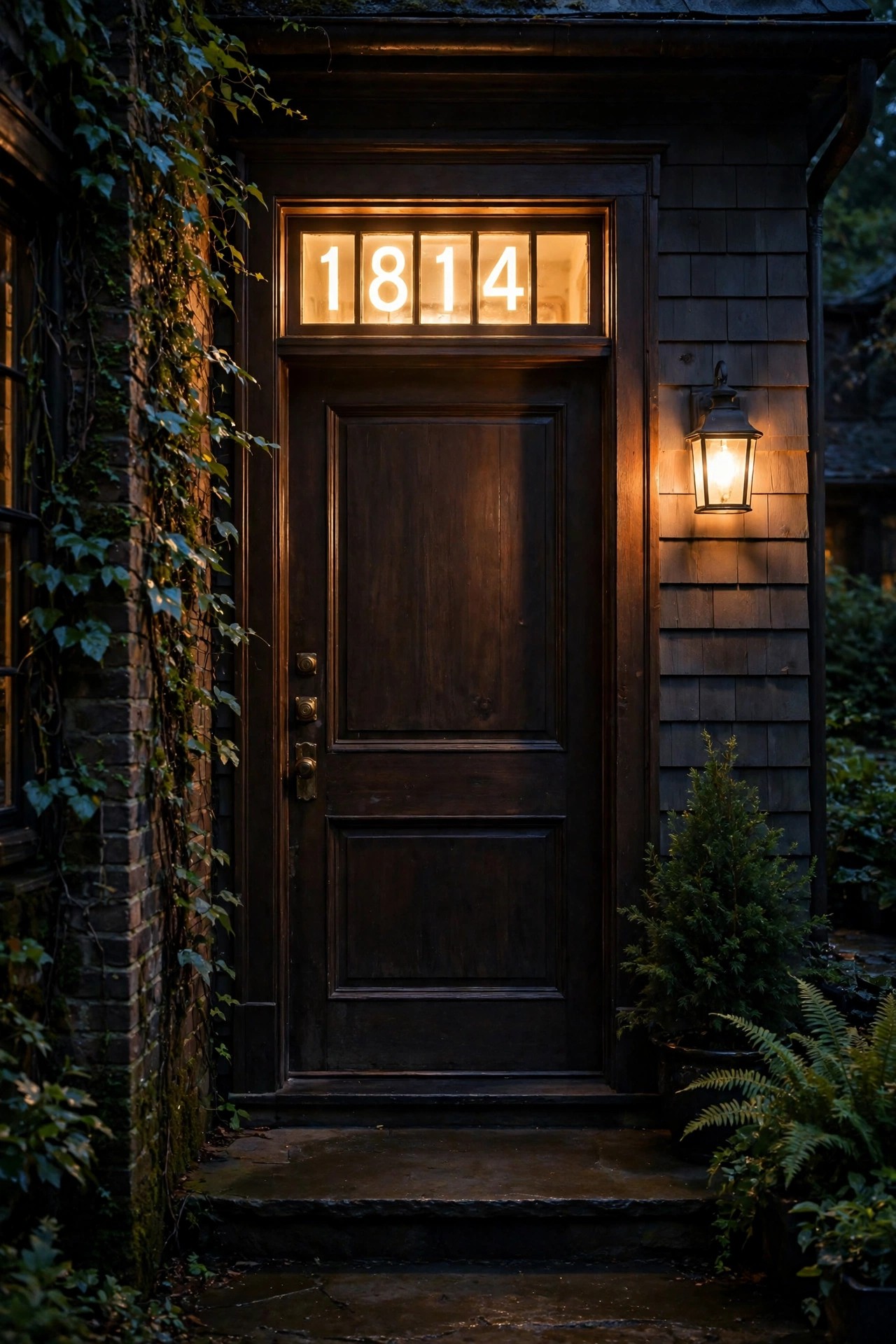
12. Backlit Numbers in the Transom Above the Door
Victorian, craftsman, and colonial homes often have a transom window above the front door — and it's a secretly perfect home for your address. A slim backlit panel mounted inside (or a frosted film with cut digits applied to the glass, lit by the entry light behind it) turns that transom into a glowing marquee, high enough to see over parked cars and porch railings. Historically, this is exactly where painted gold-leaf house numbers lived, so the look is period-correct in a way neighbors will love. Keep digits 4 to 6 inches tall — the transom's height adds viewing distance — and use a warm light source; a cool white glow above the door reads institutional. If your entry hall light isn't on a timer, add a smart bulb or a plug-in timer so the transom lights reliably every evening. Renters can fake it beautifully with a battery LED strip along the inside top of the transom frame and removable frosted decals.
Suggested budget range: $60 – $170.
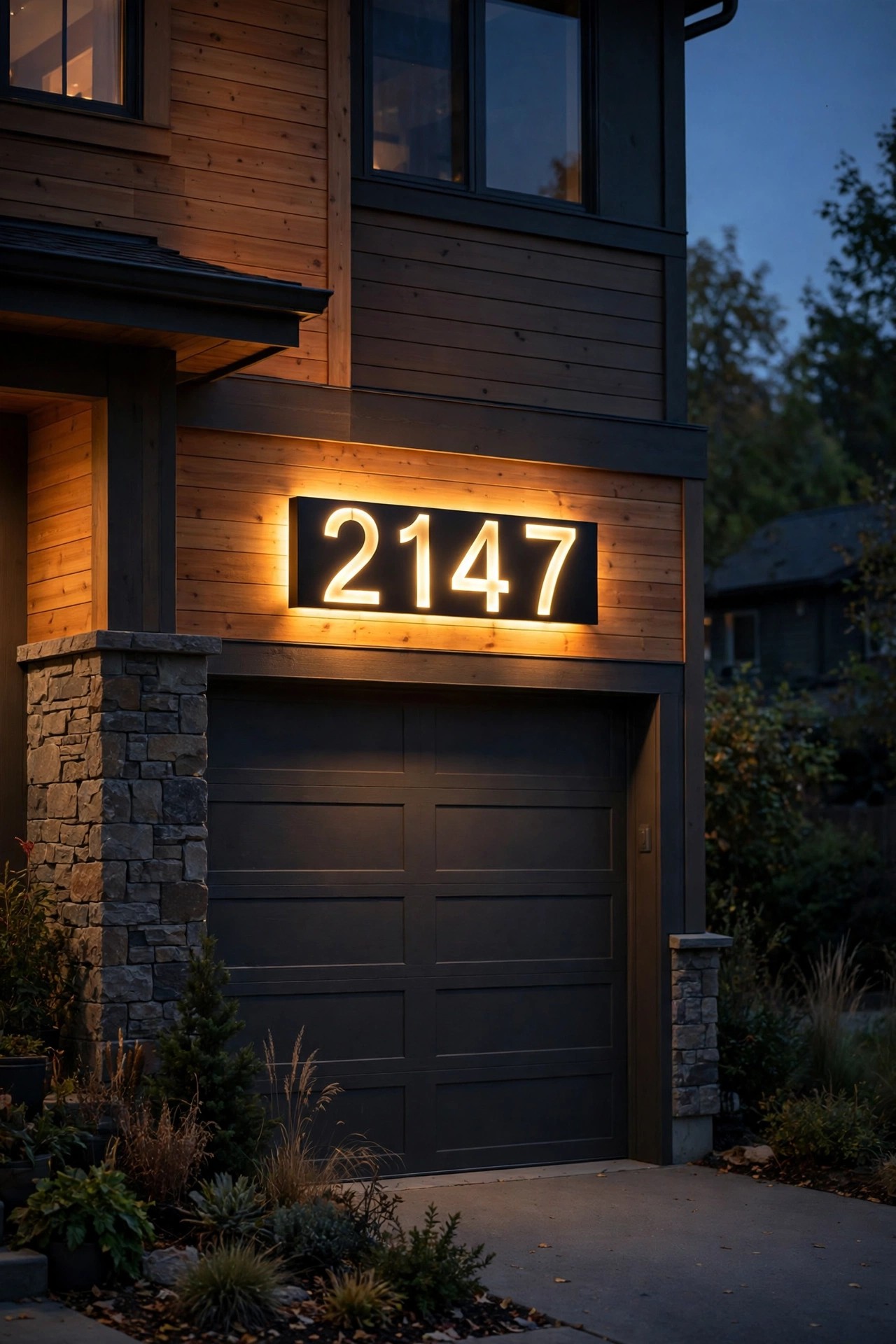
13. Garage-Mounted Backlit Numbers for Set-Back Entries
Plenty of homes hide their front door — down a side walkway, behind a courtyard, around a corner — while the garage faces the street like a billboard. In that layout, wall numbers by the door are nearly useless, so mount your illuminated numbers on the garage facade instead, right where headlights land. A backlit digit set centered above the garage door, or offset to the side guests will approach from, solves the find-the-house problem at the exact point of confusion. Use 6-inch digits minimum on a garage; the scale of a two-car door swallows smaller numbers whole. Power is usually easy here since garages have outlets — a plug-in low-voltage adapter and a cable run in a paintable channel keeps it tidy and code-friendly. Then add one small lit marker at the actual door (idea 19's sconce, or a simple solar plaque) so the journey ends as clearly as it began. Two glowing waypoints beat one every time.
Suggested budget range: $130 – $320.
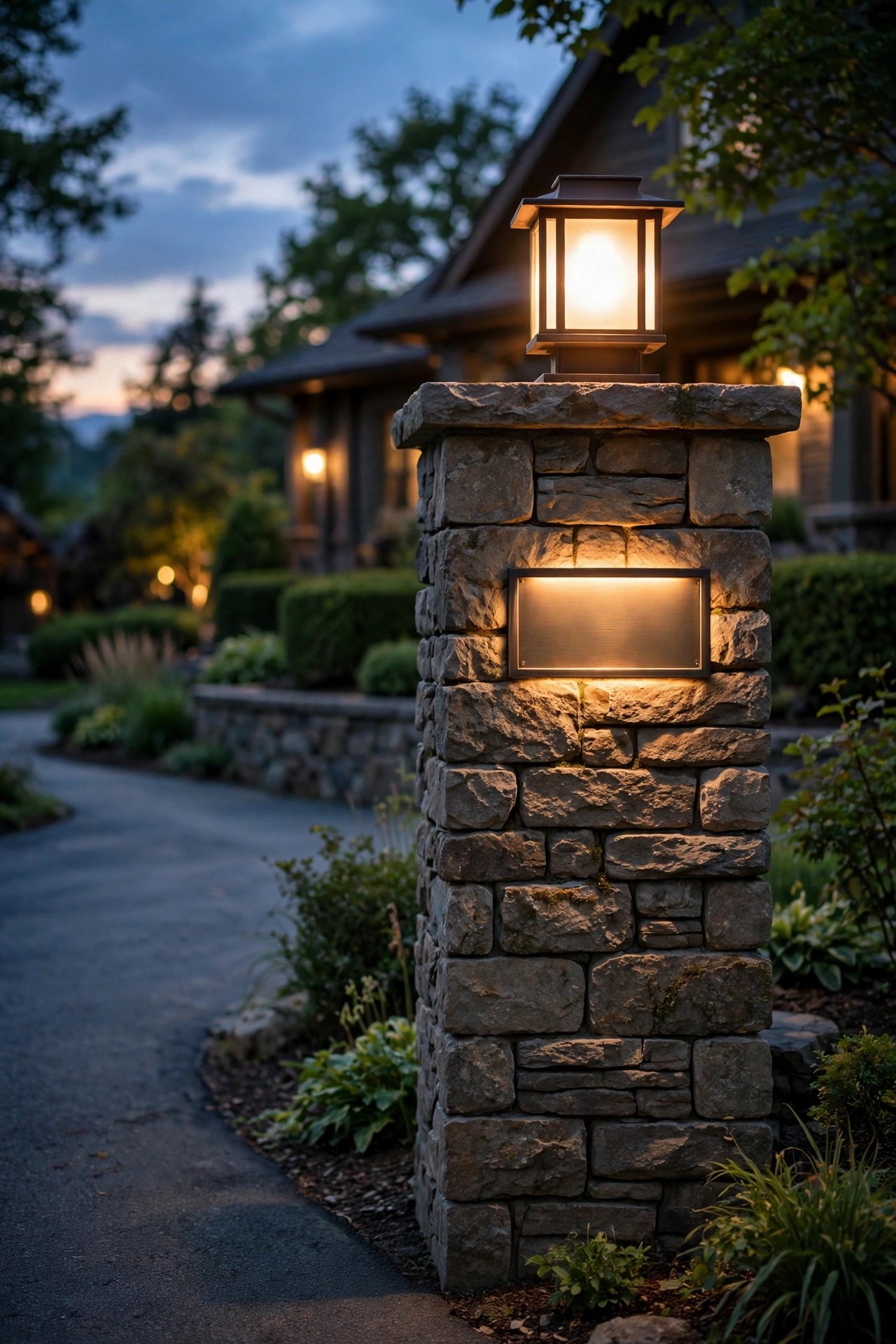
14. A Lit Address Pillar at the Driveway Entrance
For homes on acreage, long lanes, or wooded lots, the find-me moment happens at the driveway entrance, not the house. A masonry or faux-stone pillar at the road — with an illuminated address plaque inset into it and a soft cap light on top — is the gold-standard solution, and it looks like it belongs on an estate. Build the pillar 36 to 48 inches tall, set the plaque's center around 42 inches (delivery-driver eye height from a car window), and aim for 5-inch backlit digits. Solar cap lights plus a solar plaque make this a no-trenching project; if you're already running low-voltage landscape cable down the drive, hardwired is even better and brighter. Check setback rules before you build — many counties require entrance features to sit outside the road right-of-way, and some need a permit for masonry. It's the priciest idea here, but on a dark rural road it's the difference between guests arriving relaxed and guests arriving rattled.
Suggested budget range: $250 – $700.
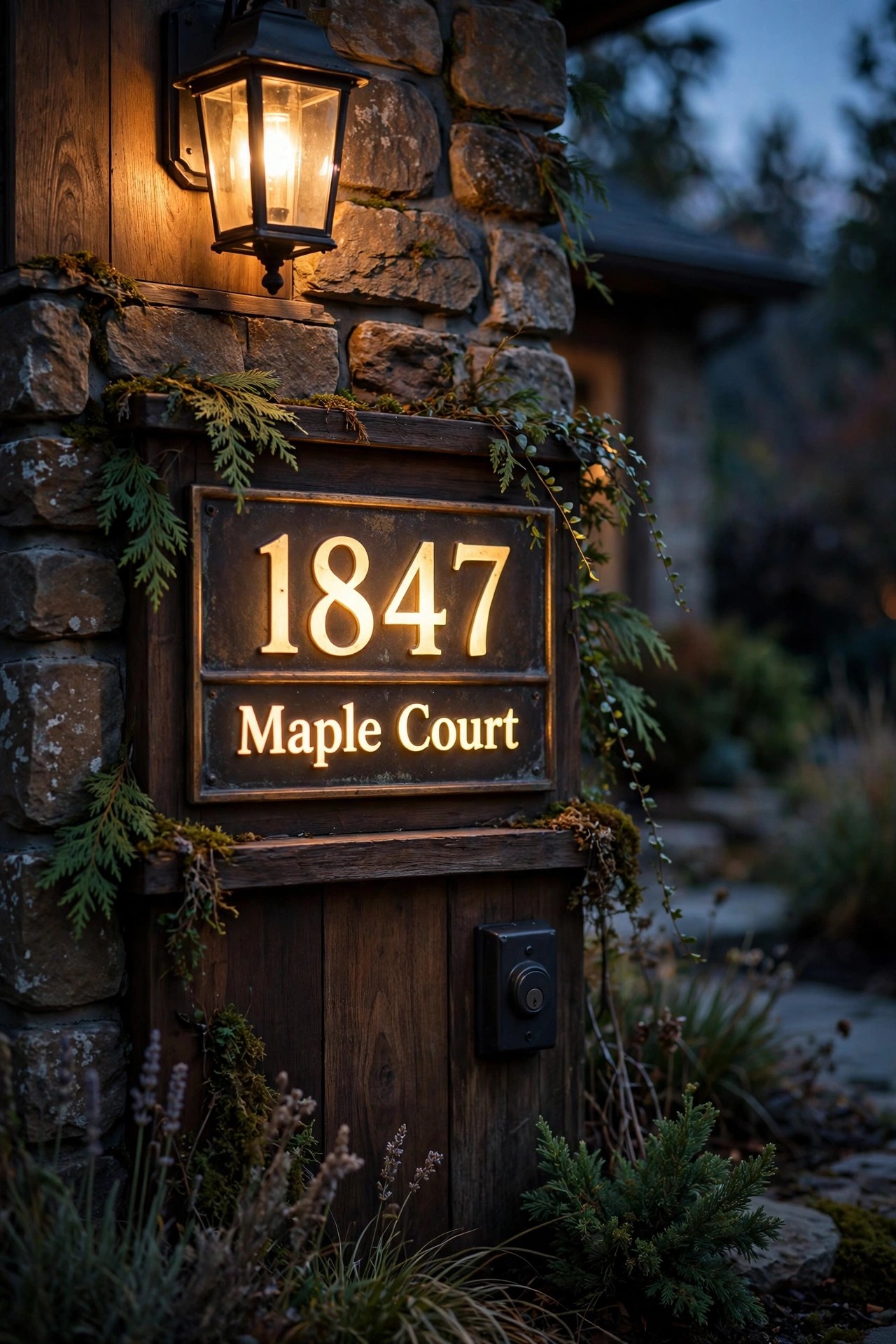
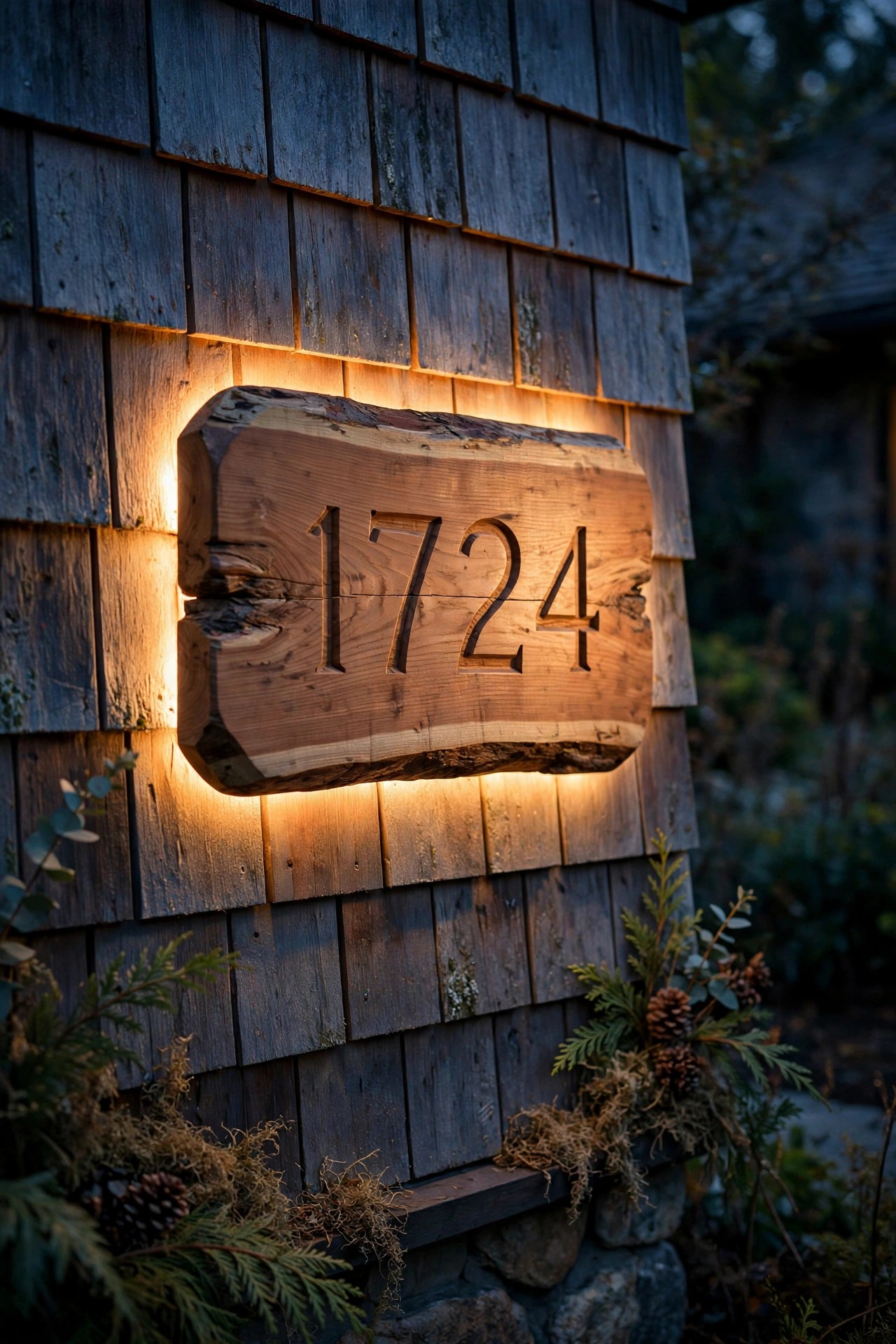
15. A Rustic Wood Plaque With Routed Numbers and Hidden LEDs
Farmhouse and cottage homes deserve numbers that glow without looking like airport signage. My favorite rustic build: a thick cedar or reclaimed-wood plaque with the numbers routed or carved in, then a warm LED strip hidden in a shallow channel behind a slightly raised mounting board — the light spills out around the plaque's edges and through the routed digits if you leave them open-backed over frosted acrylic. The effect at night is a warm wooden sign with a halo, like something outside a country inn. Seal the wood with an exterior spar urethane and expect to re-coat every couple of years; cedar handles weather best. Keep the LED strip IP65-rated and the driver tucked inside a weatherproof box. You can buy this style ready-made or DIY it in an afternoon with a router template. Digits 5 inches tall suit the format, and the chunky serif or farmhouse fonts read surprisingly far because the contrast is excellent.
Suggested budget range: $55 – $150.
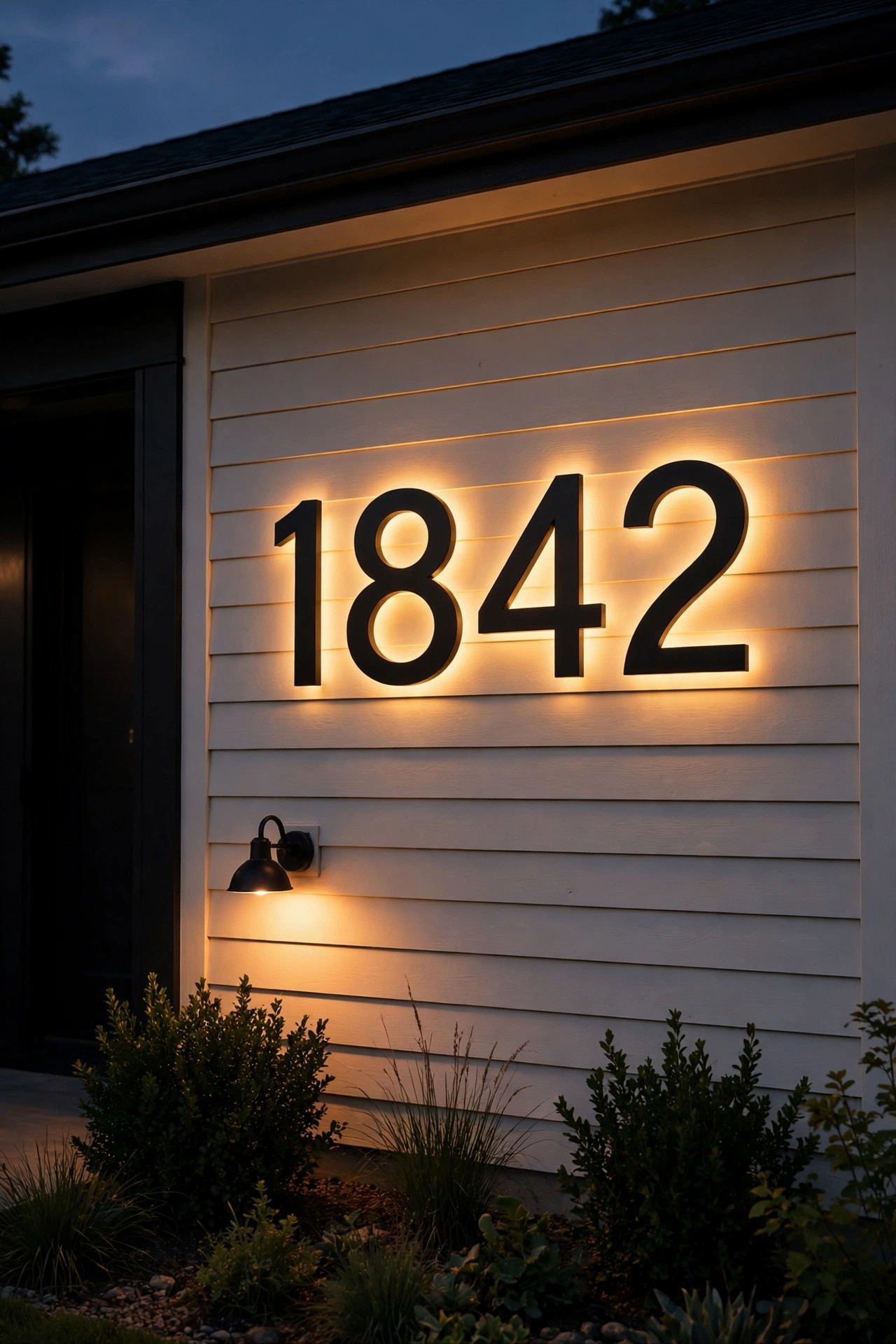
16. Matte Black Numbers With a Warm 2700K Halo
Styling matters, because these numbers live on your facade all day too. The combination I recommend most in 2026 is matte black digits with a strictly warm 2700K backlight. By day, the black reads crisp and modern against light siding, stucco, or brick; by night, that warm amber halo looks like candlelight rather than signage, and it matches the 2700K bulbs in most porch fixtures so your whole entry speaks one color language. The mistake to avoid is mixing color temperatures — a 5000K bluish number set next to a warm porch lantern looks like a mistake, because it is one. If your siding is dark charcoal or black, flip the scheme: brushed nickel or white digits with the same warm halo. Whatever you choose, order one digit first and hold it against the wall at dusk before committing to the full set; metal finishes and LED warmth both shift in real light versus a product photo, and returns on a full address set are a headache nobody needs.
Suggested budget range: $110 – $260.
17. Glow-Charged and Reflective Numbers as a Budget Layer
Not every solution needs electricity. Photoluminescent (glow-in-the-dark) digits charge in daylight and glow for 6 to 10 hours after sunset, while prismatic reflective numbers flare brightly the moment headlights sweep them. Neither matches a true LED for all-night visibility — glow digits fade by the small hours, and reflective ones only work when a light source hits them — but as a budget layer or a backup they're genuinely useful, and emergency responders specifically look for reflective numbers because their spotlights light them up. I use them as supplements: reflective digits on the mailbox even though the house numbers are LED, glow digits on the side gate. For your main address, treat these as a starting point while you save for a lit set, or pair them with an existing porch light that already washes the wall — under a decent sconce, quality reflective digits are readable all evening. Installation is screws or industrial adhesive, ten minutes, done.
Suggested budget range: $15 – $45.
18. A Backlit Address Light Box, Hotel Style
Think of the slim glowing sign outside a boutique hotel, scaled down for a house. An address light box is a single rectangular fixture — metal housing, frosted acrylic face, your numbers applied or cut into the face — with an LED panel behind it, so the entire box glows evenly and the digits stand out in dark relief. It's one fixture, one mounting point, one power connection, which makes it the tidiest install of the plaque styles, and the long horizontal shape flatters mid-century, ranch, and contemporary homes especially. Sizes run about 12 to 20 inches wide; choose the largest your wall space allows, since the whole luminous face is what the eye catches. Most are hardwired in place of (or beside) an existing junction box, though plug-in versions exist. Ask for a model with a replaceable LED module or at least a 5-year warranty — sealed boxes that die mean replacing the whole fixture. Positioned beside the door at eye level, this is the option guests describe as "oh, THAT house, the one with the sign."
Suggested budget range: $100 – $240.
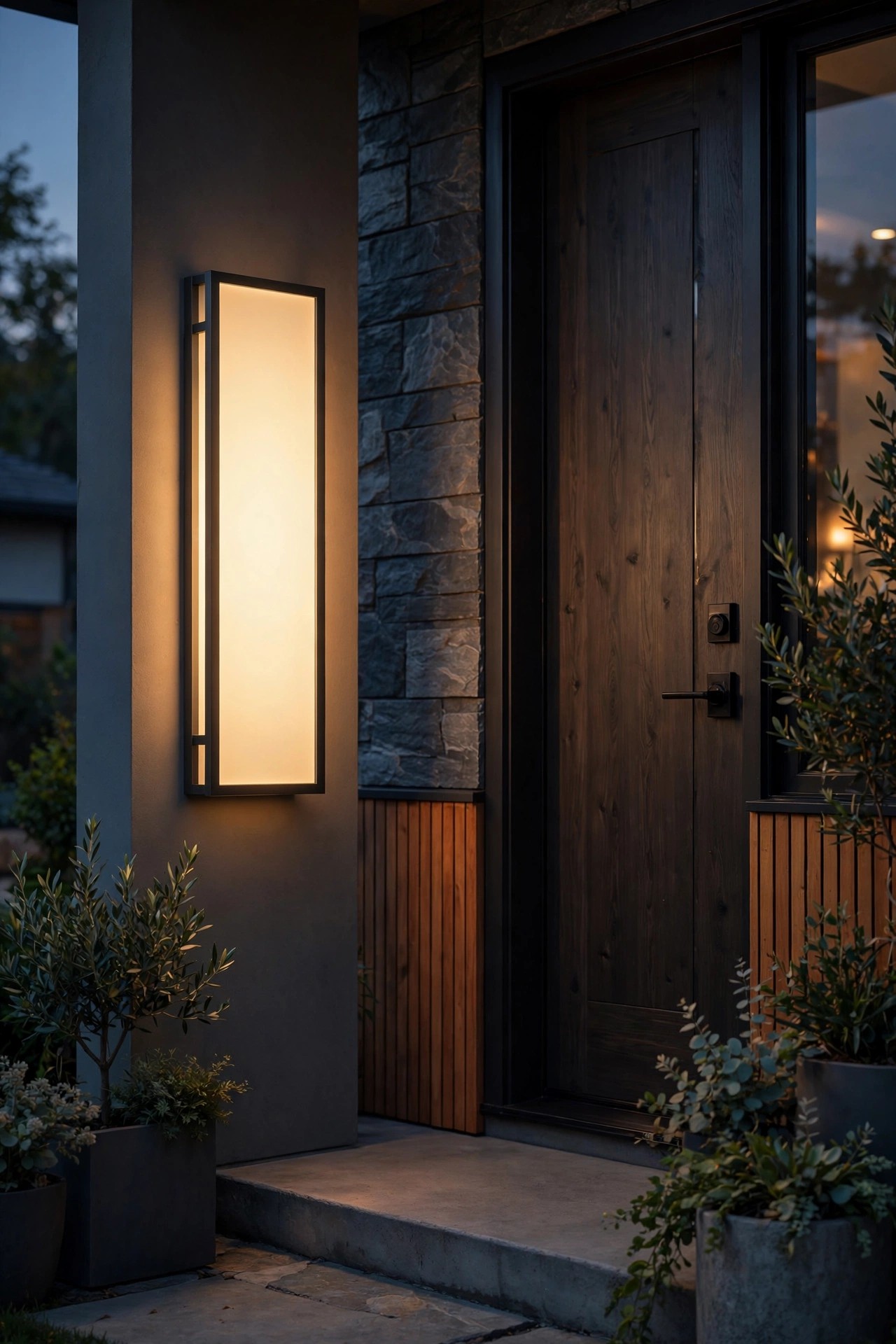
19. Numbers Built Into Your Porch Sconce
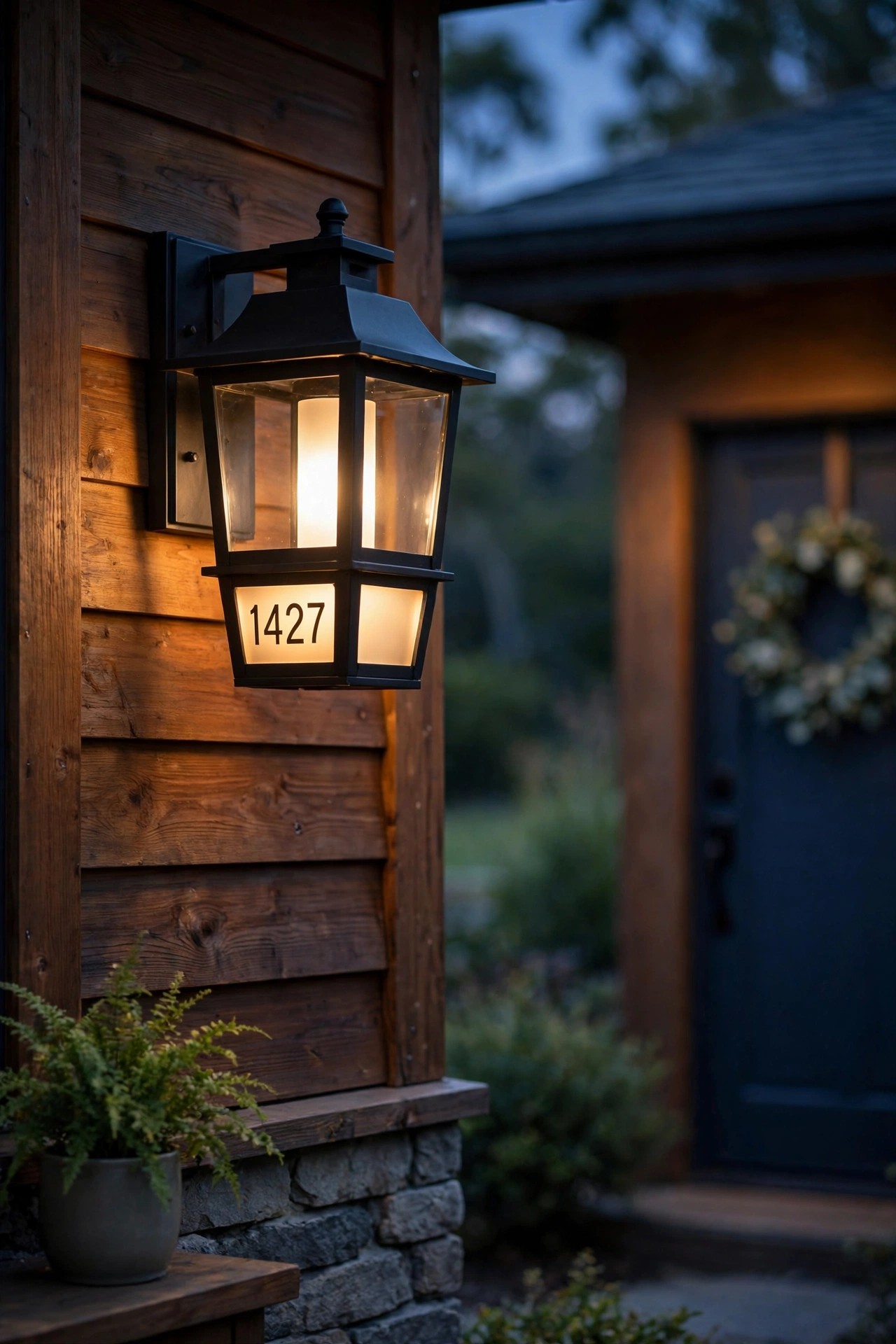
The cleverest two-birds solution: a porch sconce or lantern with an address panel built into the fixture itself — the numbers sit on a frosted pane within or beneath the light, lit by the same bulb that welcomes guests to the door. If your entry has only one junction box and no room for a separate plaque, this replaces a plain fixture with one that does both jobs, and the wiring is a standard fixture swap (breaker off, three wire nuts, done — or an hour of an electrician's time if you'd rather). Choose a fixture whose number panel uses black digits on a frosted, backlit pane; that contrast reads far better than etched metal at night. Digit height runs smaller here, typically 3 to 4 inches, so this suits homes where guests park close or walk up a path — pair it with mailbox numbers (idea 8) if your house sits deep. It's the idea I suggest most to friends in townhomes and tight entries, where wall space is precious and every fixture has to earn its place.
Suggested budget range: $90 – $210.
Frequently Asked Questions
How big should my house numbers be to read them from the street?
Aim for a minimum of 4 inches tall — many fire codes require at least that, and some cities now specify 4 to 6 inches with a contrasting background. The working rule is one inch of digit height for every 10 feet between the numbers and the viewer, so measure from your wall to the curb: 50 feet means 5-inch digits, 80 feet means 8-inch. Backlit and front-lit digits read slightly farther than plain ones at the same size because the glow adds contrast, but don't count on more than about 10 extra feet.
Are solar illuminated house numbers actually bright enough?
Yes, for typical suburban setbacks — a decent solar plaque or digit set is clearly readable from 30 to 50 feet after a full day's charge. The fine print is placement: the panel needs around 6 hours of direct sun, so a north-facing wall under a deep porch roof will underperform by midwinter when nights are longest. Models with a detached solar panel on a cable solve most shade problems. Expect the internal battery to need replacing every 2 to 3 years, which is a $10 part and five minutes.
Do I need an electrician to install lighted house numbers?
Usually not. Solar and battery models need nothing but screws. Most LED digit sets run on 12-volt low-voltage power from a plug-in adapter, which is DIY-safe and doesn't require a permit in most places — just plug the adapter into a GFCI-protected outlet. The exception is a fixture that wires directly into a 120-volt junction box, like some address light boxes and sconces; if you're not comfortable swapping a light fixture with the breaker off, hire an electrician for a one-hour visit.
What light color is best for house numbers?
Warm white, 2700–3000K, wins for almost every home: it matches porch lighting, looks welcoming rather than commercial, and photographs well. What matters even more than color is contrast — pale digits on a dark wall or dark digits against a glowing backlight. Avoid colored LEDs for your primary address; red and blue glows read as party decor and are harder for older eyes and emergency drivers to parse quickly. Whatever you choose, keep every light at your entry the same color temperature.
Conclusion
The best illuminated house numbers share three traits: digits sized honestly for your setback, strong light-to-dark contrast, and a warm glow that turns itself on every single night without you thinking about it. Pick the power source that fits your house — solar for easy, low-voltage for polish, a smart set for control — and style it to match your facade, because this is the one piece of "signage" that also works as decor. Start at the curb after dark and look at your house the way a stranger would; if you can't read your address in three seconds, now you have 19 ways to fix it. And once your numbers are glowing, keep the whole welcome going with more entry and porch lighting inspiration right here on the site — your future guests (and your pizza) will thank you.