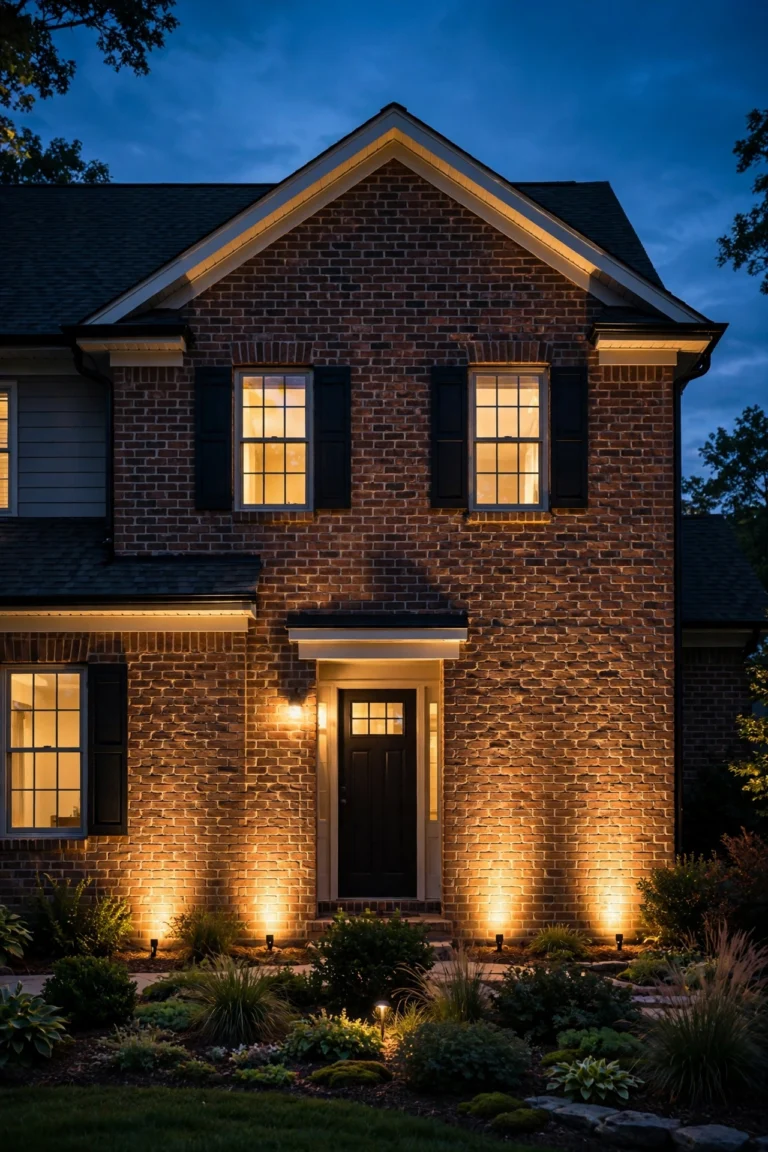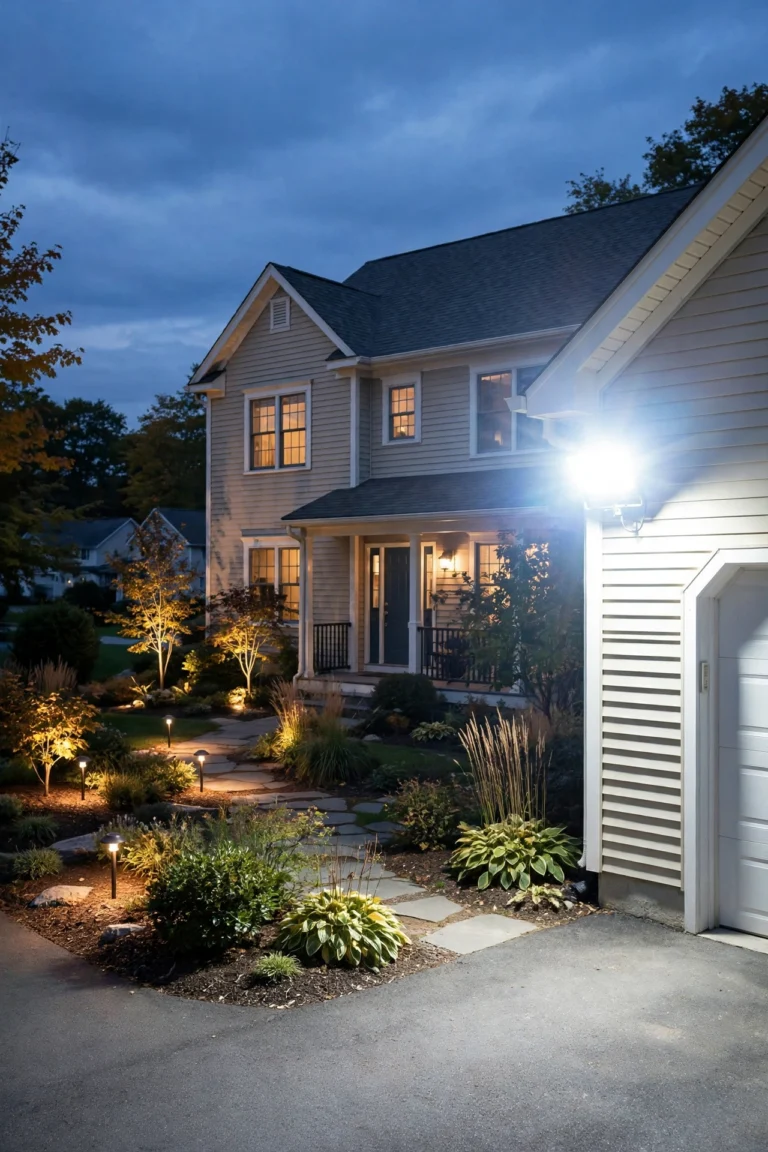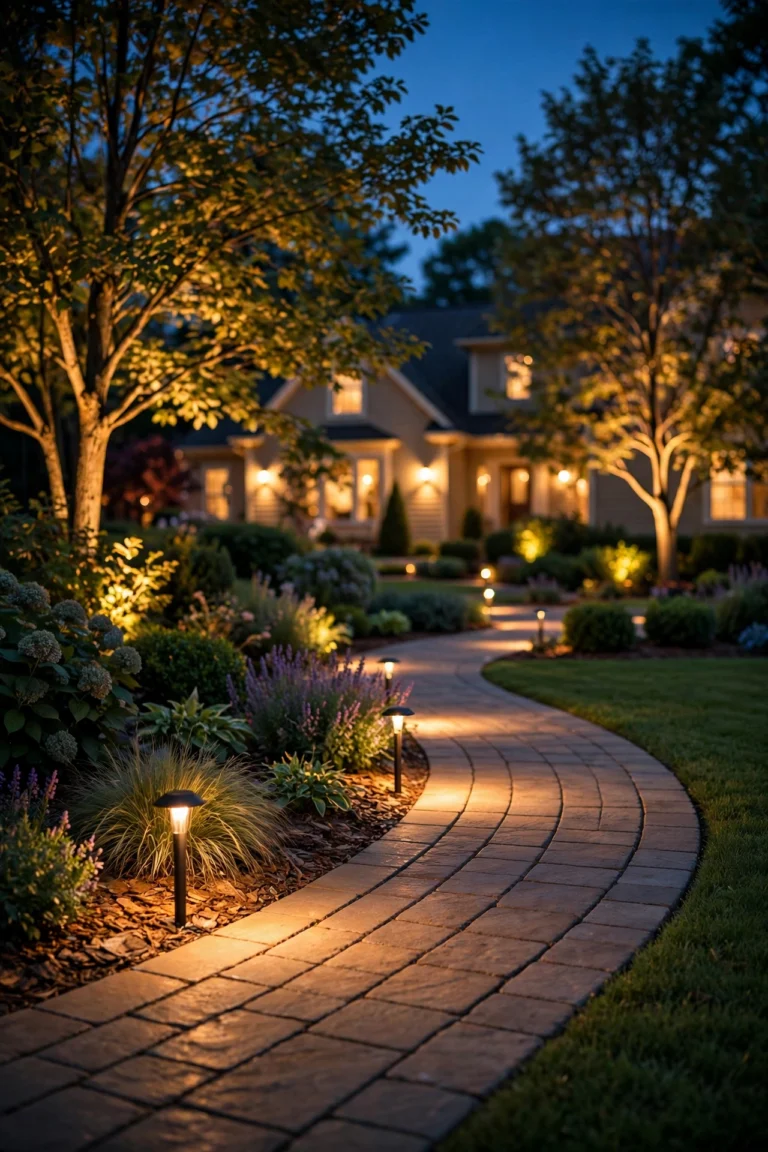

There's a special kind of relief in pulling into your driveway after dark and finding the house already glowing — porch light warm, walkway lit, garage door clearly visible — without touching a switch. That's the everyday magic of dusk to dawn outdoor lights, and honestly? They were one of the most satisfying upgrades I've made to my home's exterior.
In my experience, the best outdoor lighting is the kind you never have to think about. No fumbling for the porch switch with your arms full of groceries. No pitch-black driveway because somebody forgot the garage light. No bleary-eyed 6 a.m. walk to shut off floodlights blazing since noon. A tiny sensor handles the whole schedule — lights on at dusk, lights off at dawn, three hundred and sixty-five days a year.
By the end of this guide, you'll know exactly how these lights work, which type belongs in every spot around your home, how bright to go, what they cost in 2026, and the placement mistakes that make them misbehave. Pour something warm — let's get your house glowing all on its own.
The Short Answer
A dusk-to-dawn light has a tiny photocell sensor that measures ambient light. When the sky darkens past a set threshold, the sensor switches the light on; when morning light crosses that threshold again, it switches the light off. One small electronic eye doing your light-switch duty all year.
Pick dusk-to-dawn for a steady, welcoming all-night glow — front porches, garage doors, barns, walkways. Choose a motion sensor when you only need light during activity — a back door or side gate — since it saves energy and spares the neighbors. Timers and smart scheduling sit in the middle: more control, but you're the one adjusting them as the seasons shift the sunset hour.
How Photocells Actually Work (Plain English)
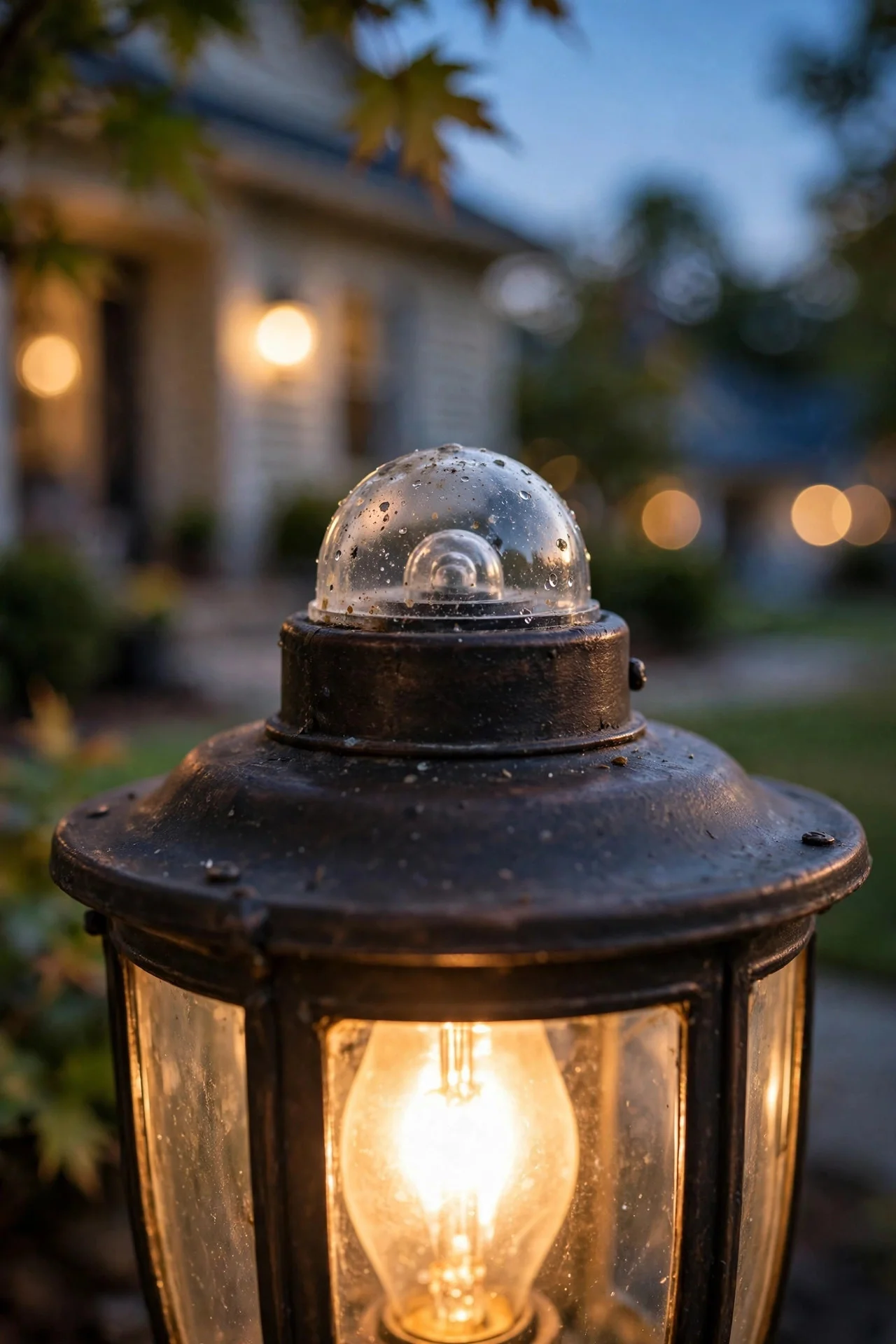
At the heart of every dusk-to-dawn fixture sits a photocell — a small light-sensitive resistor, usually a little amber dome or dark lens mounted on top or on the side of the fixture. When daylight hits it, its electrical resistance drops; in darkness, the resistance climbs. A simple circuit reads that change and flips the light on or off accordingly. That's the whole trick. No Wi-Fi, no programming, no batteries to remember — just physics doing the scheduling for you.
The sensor doesn't switch at full daylight or full dark. It waits for deep twilight, roughly the light level of a sky about 20 minutes after sunset, and it shuts off at the same brightness at sunrise. And here's the detail that keeps them from driving you crazy: every decent photocell has a built-in delay of 10 to 30 seconds, so passing headlights, a flash of lightning, or someone flicking a nearby porch light won't make your fixture strobe on and off. The sensor needs a sustained change before it acts.
A few practical things worth knowing. First, photocells play perfectly with LEDs — if an LED fixture flickers on a photocell, the problem is almost always the fixture's own dimming circuitry, not the sensor. Second, the sensor must be able to see the sky. It reads *ambient* light, not the fixture's own output, which is exactly why pointing it toward its own bulb (or another light) causes the cycling problems I'll cover below. And third, you can turn almost any existing fixture into a dusk-to-dawn light with a screw-in photocell adapter — a small socket that goes between the bulb and the fixture — which is a lovely option if you adore your current porch sconce and just want it to manage itself.
The Main Types of Dusk-to-Dawn Outdoor Lights, Compared Honestly
Not all dusk-to-dawn options are created equal, and the right pick depends entirely on where the light is going and whether you have wiring there. Here's how the four main types stack up:
| Type | Typical cost | Coverage / brightness | Best for | Drawbacks |
|—|—|—|—|—|
| Photocell wall-mount / porch fixtures | $40–$120 | 400–1,000 lumens; covers a porch or entry about 15–20 feet wide | Front doors, porches, and patios where looks matter | Needs a wired junction box — you're replacing an existing fixture |
| Screw-in dusk-to-dawn bulbs | $8–$15 each | 500–900 lumens, same spread as any standard bulb | Renters, or when you love your current fixture | The bulb's sensor needs open sky; enclosed globes can confuse it |
| Dusk-to-dawn flood / security lights | $60–$150 | 1,000–3,000 lumens; a 30–40 foot wide beam | Garages, barns, driveways, and big backyards | Easy to aim badly and annoy neighbors or drivers |
| Solar dusk-to-dawn lights | $25–$80 per fixture; path-light sets of six run $30–$60 | 100–800 lumens, depending on panel size | Walkways, fences, sheds — anywhere without wiring | Shorter winter runtime; needs 6+ hours of direct sun daily |
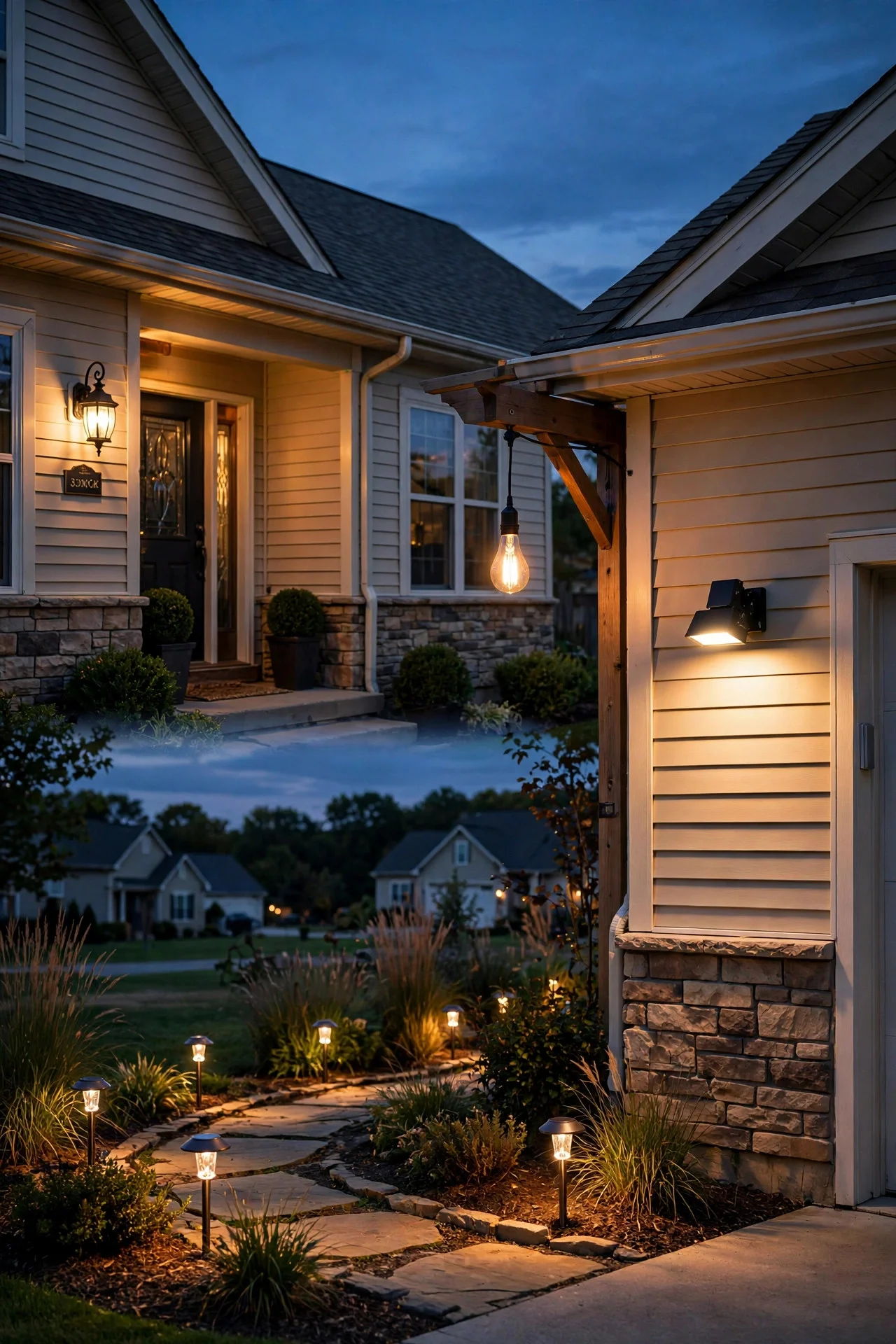
In my experience, most homes end up with a mix. I always recommend a proper hardwired photocell fixture for the front porch and garage — those are your curb-appeal anchors, and they deserve reliable, bright, all-night light that never depends on yesterday's weather. Screw-in bulbs are my go-to suggestion for renters or for side doors where the existing fixture is perfectly fine and just needs a brain. Save the floods for work areas — driveways, barns, equipment pads — where brightness genuinely matters more than beauty. And solar? I love solar for path lights and fence posts, and I've rounded up my favorites in my top solar lights picks — just go in with honest expectations about winter runtime, which I'll cover in the FAQ.
What to Look for When You Buy (Features Worth Paying For)
Once you've picked a type, the details separate the fixtures that last a decade from the ones that fade by next summer. Here's what I actually check before buying.
Start with the weather rating. Look for IP65 on anything fully exposed to rain — floodlights, barn lights, fence posts. Under a covered porch, IP44 is fine. Those two digits just mean dust protection first, water protection second; bigger second number, tougher against rain. A fixture with no IP rating listed is a gamble I don't take anymore.
Housing material matters more than it looks. Die-cast aluminum or solid metal housings shrug off years of sun and storms; cheap plastic housings yellow, crack, and go brittle — sometimes within two or three summers in southern heat. If the price seems too good to be true, check what it's made of.
Then decide: integrated LED or replaceable bulb? Integrated fixtures are sleeker and fully sealed against moisture, and their LEDs run 25,000 to 50,000 hours — but when the LED eventually dies, the whole fixture goes. Fixtures that take standard bulbs let you swap in a new dusk-to-dawn bulb forever. In my experience, integrated wins for floods and security lights (sealing matters there), while replaceable bulbs win for pretty porch sconces you'll want to keep for decades.
A few more worth-paying-for details: an adjustable photocell (better fixtures let you tweak sensitivity so twilight timing suits your yard), a twist-lock replaceable sensor on floods so a $15 part — not a $120 fixture — fixes a future failure, a powder-coated finish that matches your trim and resists rust, and a warranty of three to five years, which tells you the maker expects it to last. Trust the lumens number on the box over vague "replaces a 100-watt bulb" claims.
Where to Put Dusk-to-Dawn Outdoor Lights (and Where Not To)
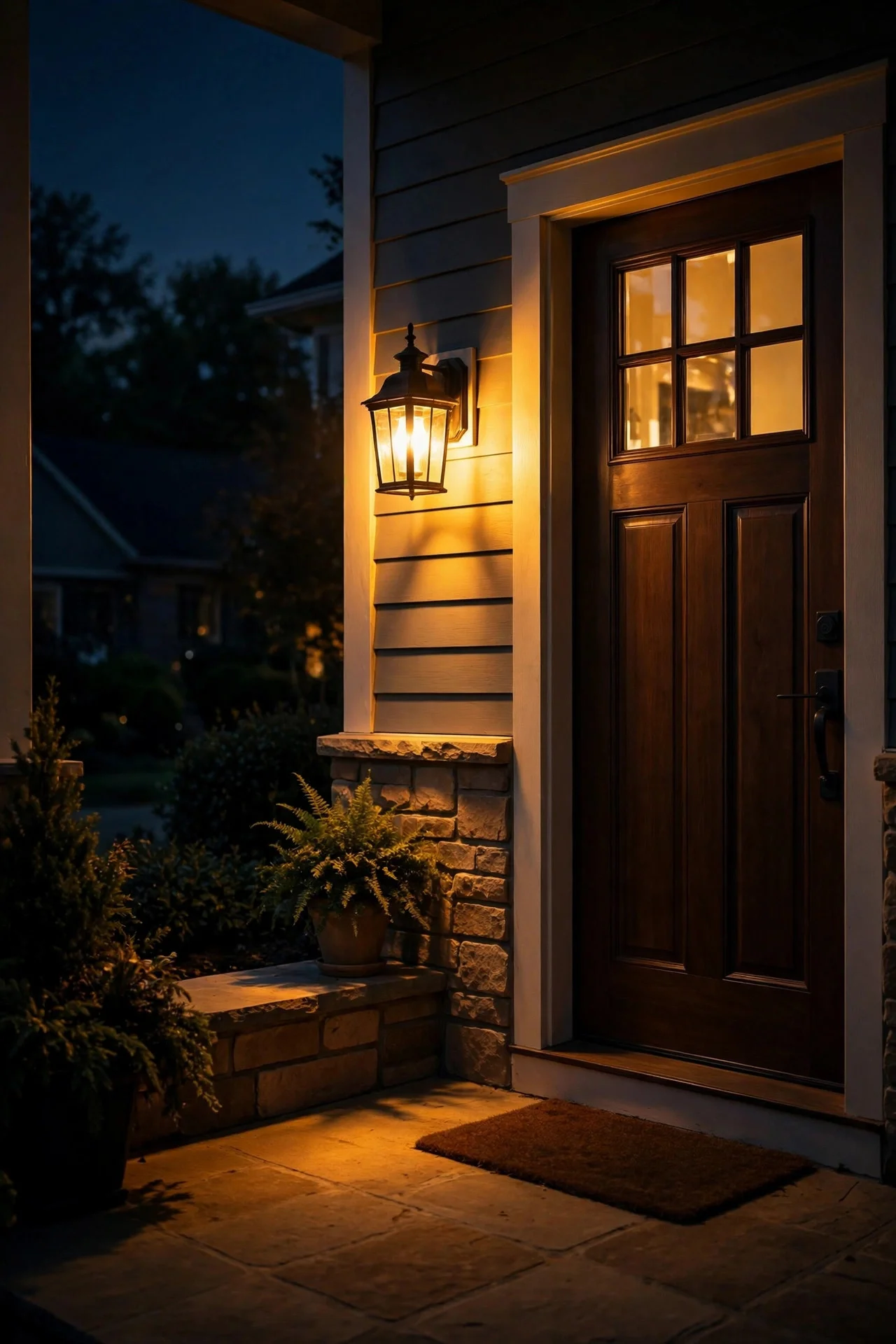
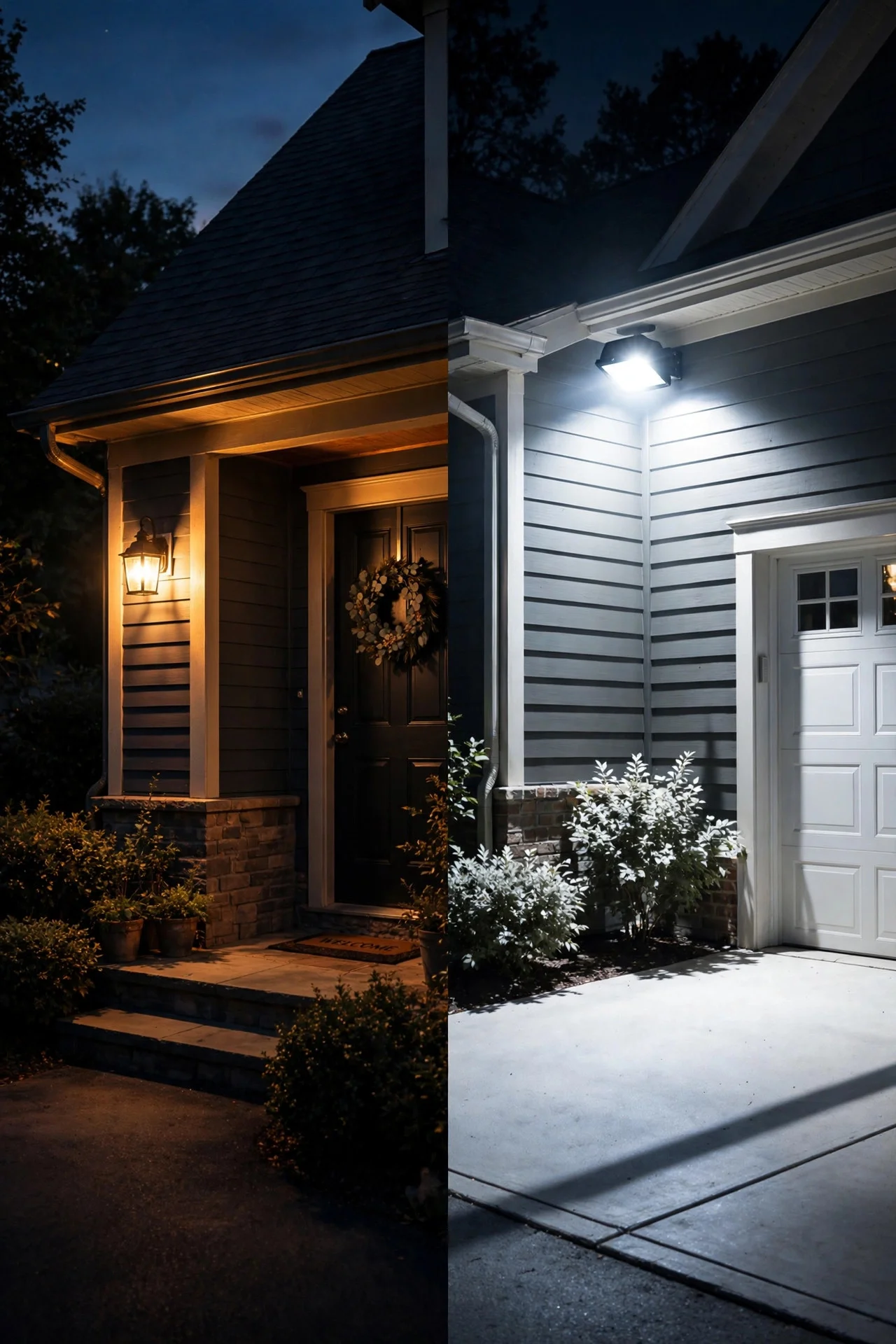
Start with the spots that earn their keep. The front porch is the classic: flank the door with two sconces mounted so their centers sit 66 to 72 inches off the porch floor, or center one lantern-style fixture above the door at about 80 inches. A 400–800 lumen warm glow here does double duty — it welcomes guests and it makes your whole house look cared-for from the street.
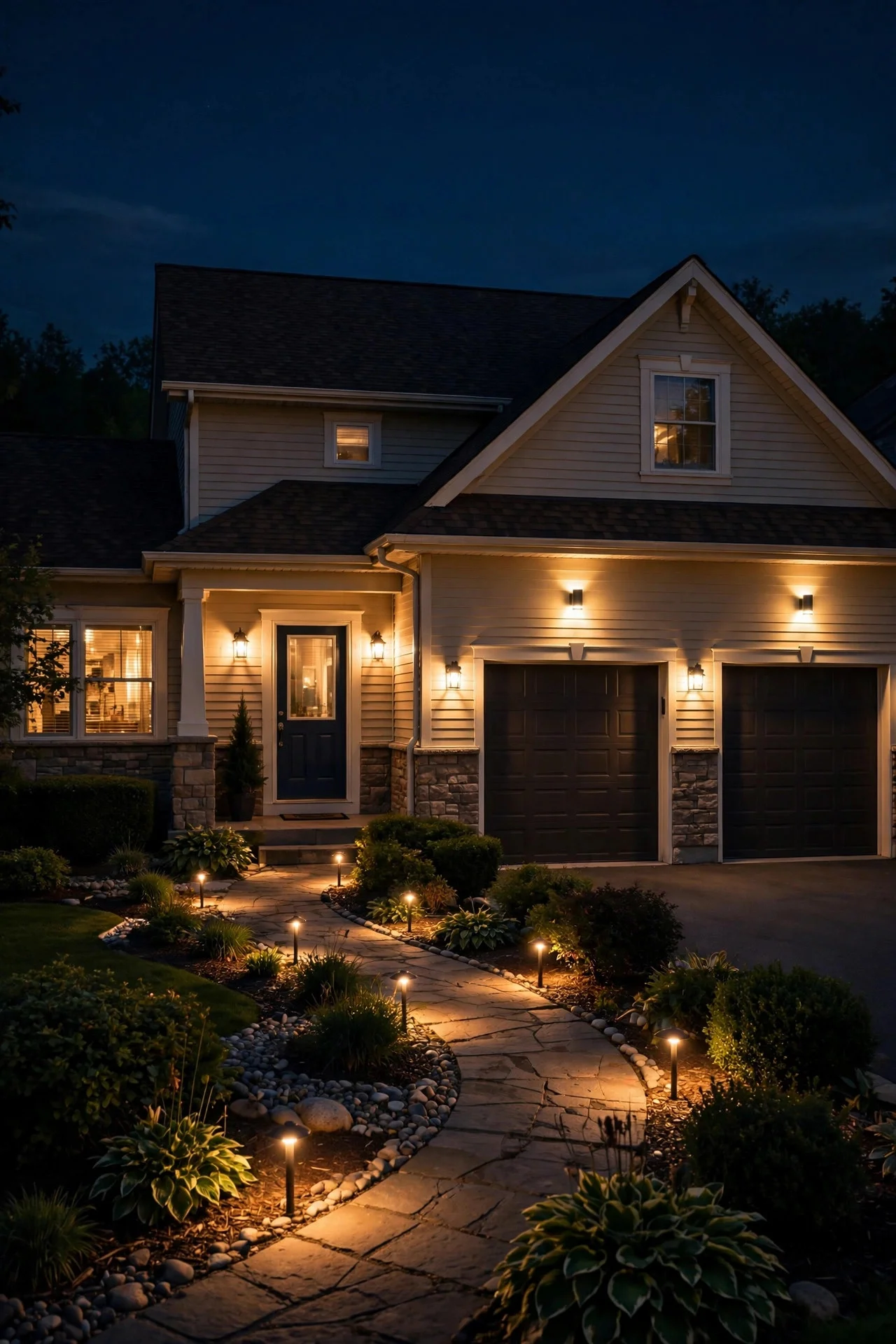
The garage is the other big win. Mount fixtures 8 to 10 feet high, flanking the garage door or centered above it, with the beam angled down and slightly outward. If your garage faces the street, keep the brightness modest — 800 to 1,500 lumens total is plenty for a two-car door, and anything brighter mostly just washes out your siding and glares at drivers.
Side doors and back entries deserve a small 400–600 lumen fixture so nobody fumbles for keys in the dark. Barns, sheds, and workshops are perfect for a dusk-to-dawn flood mounted 10 to 12 feet up, where the steady all-night light deters curious animals and makes late feedings safer. And along walkways, stake solar path lights every 6 to 8 feet, alternating sides, so the route reads clearly without turning your yard into a runway.
Now, where *not* to put them. Keep bright dusk-to-dawn fixtures away from bedroom windows — yours and your neighbors'. A flood blazing all night two feet from a sleeping child's window is how feuds start. Avoid aiming any fixture toward the street, where glare blinds drivers. And check your local rules: many towns and HOAs have dark-sky ordinances limiting brightness and requiring shielded, downward-facing fixtures. The golden rule I always recommend is simple — light your own property, and keep the light on your property.

Choosing Brightness and Color Temperature
Here's where most people overbuy. You do not need stadium lighting to make a home feel safe and welcoming — in fact, too-bright fixtures create harsh shadows and glare that make things *harder* to see. My rule of thumb: a porch sconce wants 400–800 lumens, an entry or garage fixture 600–1,500, a driveway flood 1,500–3,000 for large areas, and each path light just 100–200 lumens. Add up the lumens if a fixture has two heads — a "2,000 lumen" twin flood is really two 1,000-lumen beams.
For color temperature, I always recommend 2700K to 3000K — warm white — anywhere near living spaces. It flatters wood, brick, and siding; it feels welcoming rather than institutional; and it attracts fewer insects than cooler light. Honestly? The single biggest aesthetic upgrade in outdoor lighting is swapping harsh 5000K "daylight" bulbs for warm 2700K. Reserve 4000K for true task areas — a workshop pad, a barn aisle — where you need to see detail clearly, and never let cooler temps wash across bedrooms or patios.
One more thing: judge brightness by lumens, not watts. A 12-watt LED can outshine a 60-watt incandescent, so the old wattage instincts will mislead you. And remember that dusk-to-dawn light is your *ambient* layer — the steady base glow. If you also need startle-on-demand security, pair it with a motion sensor aimed at the dark corners rather than cranking every fixture to maximum.
Step-by-Step: Swapping in a Dusk-to-Dawn Fixture
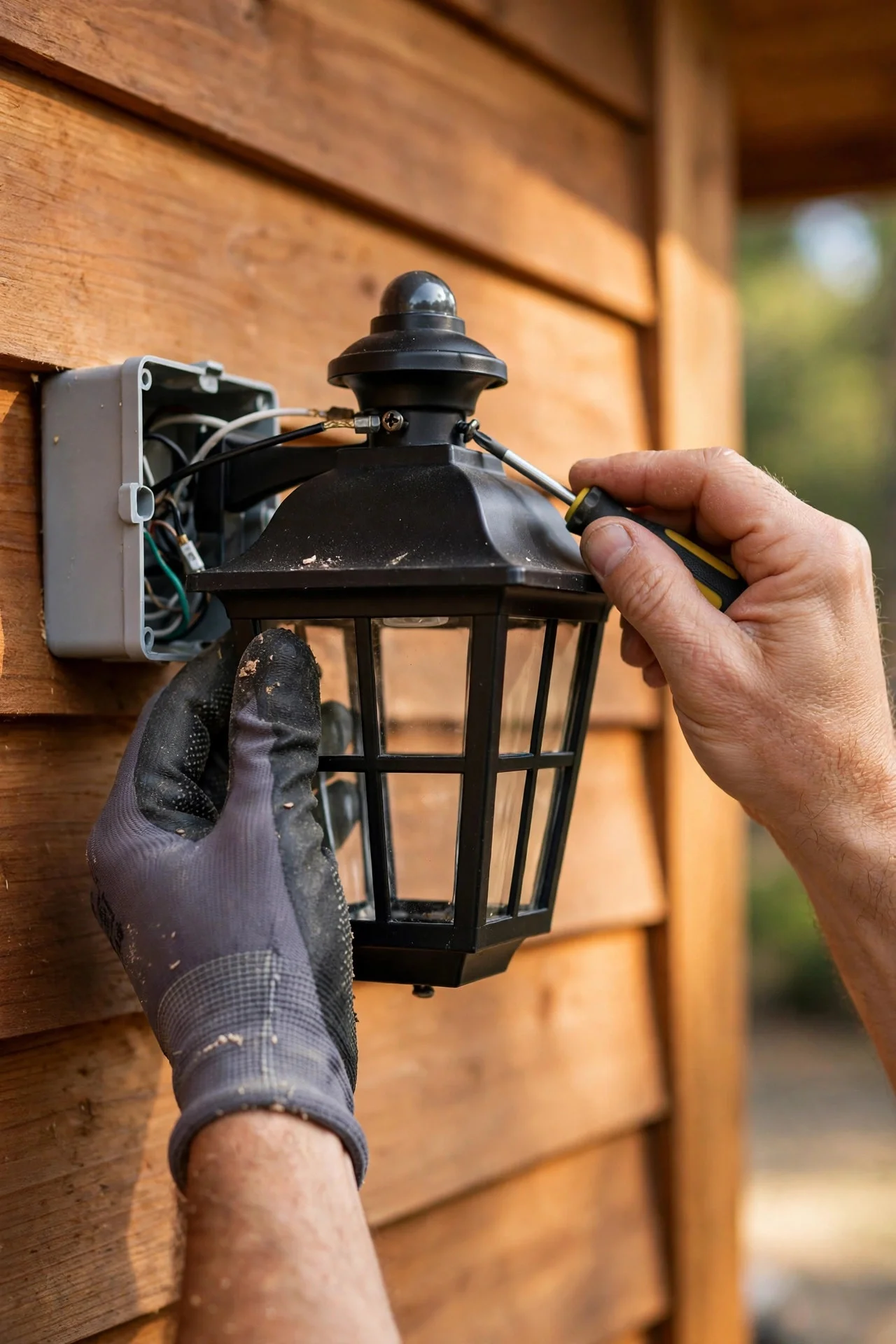
Replacing an existing porch or garage fixture with a dusk-to-dawn version is a genuinely easy 20-minute job — the wiring is identical, the fixture just has a sensor built in. If you're new to outdoor wiring, read my electrical safety tips first, and never skip the voltage test.
1. Kill the power. Flip the breaker for that circuit — not just the wall switch — and confirm the wires are dead with a non-contact voltage tester.
2. Remove the old fixture. Unscrew the mounting plate, ease the fixture away from the wall, and snap a phone photo of the wire connections before you undo them.
3. Inspect the box. It should be an outdoor-rated junction box in solid condition. Cracked or indoor-only boxes need replacing — that's electrician territory if you're unsure.
4. Attach the new mounting bracket and run a thin bead of outdoor caulk along the top and sides of the box (leave the bottom edge uncaulked so condensation can drain).
5. Connect the wires: black to black (hot), white to white (neutral), and the bare or green wire to the ground screw. Twist on the wire nuts firmly and give each a gentle tug.
6. Mount the fixture, positioning it so the little photocell dome faces open sky — not the fixture's own bulb, not the wall.
7. Restore power and test. Cover the sensor with your palm or a piece of tape; the light should switch on within 30 to 60 seconds.
8. Do a dusk check. Watch it that first evening to confirm it clicks on at twilight, not at full dark and not in the afternoon.
Call an electrician if there's no ground wire, if you see aluminum wiring, if there's no junction box at all, or if the fixture sits 12-plus feet up a ladder you don't trust. A pro install typically runs $150–$300 per fixture, and for anything above the first floor it's money well spent.
What Dusk-to-Dawn Outdoor Lights Cost in 2026
Honest numbers, no surprises. Screw-in dusk-to-dawn bulbs run $8–$15 each. A quality photocell porch or wall fixture costs $40–$120 depending on finish and size. Dusk-to-dawn flood and security lights land at $60–$150. Solar path-light sets of six go for $30–$60, and a solar motion-flood runs $40–$80. If you hire an electrician for a new or high-mounted fixture, budget $150–$300 per install.
Now the running costs — this is where LEDs changed everything. A typical 12-watt LED porch fixture burning about 10 hours a night uses roughly 44 kilowatt-hours a year. At the 2026 national average of around $0.17 per kilowatt-hour, that's about $7.50 a year per fixture. Three porch fixtures glowing all night, every night, cost you roughly $22 a year — less than one takeout dinner.
Compare that to the old days: a 60-watt incandescent on the same schedule would burn through about $37 a year *per bulb*. So if someone tells you dusk-to-dawn lighting is expensive because it runs all night, they're remembering the 1990s. With LEDs, the convenience of always-on light costs less than the timer or smart plug you'd buy to avoid it.
6 Photocell Placement Mistakes That Cause Flickering (or All-Night Burn)
When a dusk-to-dawn light misbehaves, the sensor is almost never broken — it's just confused. These are the six mix-ups I see most often, and every one is fixable.
1. The sensor sees its own light. The fixture glows, the sensor thinks it's daytime, the light switches off — then it's dark again, so it switches on. Endless cycling. Fix it by rotating the fixture so the little eye faces away from the bulb, or slip on a small shade hood.
2. The sensor is tucked under a deep eave or dense tree. It never sees true daylight, so it assumes it's always night and burns 24/7. The sensor needs a clear view of the sky — relocate the fixture or choose one with a remote photocell on a short cord you can position in the open.
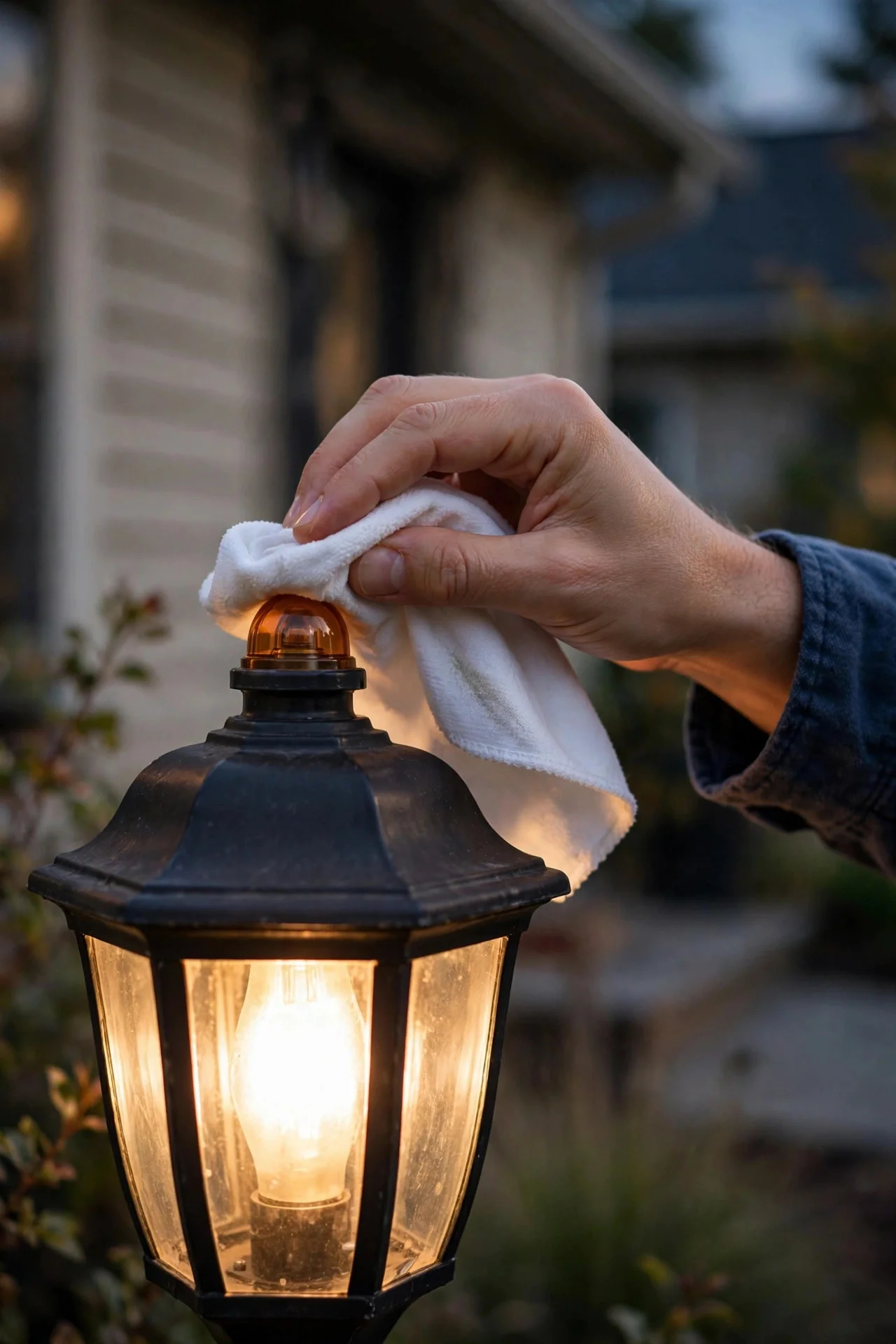
3. The sensor is dirty. Dust, pollen, spiderwebs, and wasp nests all dim the eye's view of the sky. A fixture that slowly starts staying on later into the morning is usually just filthy. Wipe it down and watch the problem vanish.
4. The sensor faces another light source. A neighbor's floodlight, a streetlight, or even your own landscape spotlight aimed at the sensor convinces it that dawn arrived at 9 p.m. Reposition the fixture or add shielding between the sensor and the offending light.
5. Screw-in dusk-to-dawn bulbs inside enclosed globes. The glass traps the bulb's own glow right around the built-in sensor, which then can't tell dusk from its own reflection. Use open-bottom or clear fixtures for these bulbs.
6. The sensor stares at the eastern horizon. A sensor aimed due east gets blasted by sunrise and may switch off an hour early, while a hill or tall fence shading the west can delay the evening switch-on. In the US, facing the sensor north gives the most even, reliable readings year-round.

Dusk-to-Dawn vs. Motion Sensor vs. Smart Scheduling
So which automation style actually fits your life? Each has a real job, and most homes I visit end up using at least two of the three.
Dusk-to-dawn gives you a steady, welcoming glow all night — beautiful curb appeal, no dark gaps, and with LEDs the energy cost is trivial. The trade-offs: it can contribute to light pollution, it won't startle anyone (a burglar doesn't care about a porch light that's always on), and neighbors may grumble if it's bright.
Motion sensors are the energy misers and the security stars. The light only fires when something moves, which saves the most electricity and gives that startling *snap* of brightness that actually deters prowlers. The downsides: raccoons and swaying branches trigger false alarms, and your yard sits dark between triggers — less of that welcoming glow. I go deep on positioning and sensitivity settings in my motion sensor lighting guide if you want the full playbook.
Smart scheduling — Wi-Fi fixtures, smart switches, and plug-in timers — offers total control: on at dusk, off at midnight, dimmed after 10 p.m., whatever you like. The catch is complexity: apps to maintain, Wi-Fi to reach the fixture, and seasonal or daylight-saving adjustments that are supposedly automatic but somehow never quite are.
My honest verdict? Layer them. Dusk-to-dawn on the porch and garage for the always-welcome look, motion sensors on the back and sides for security, and a smart timer on anything decorative. That's the combination that makes a house feel both loved and locked-down.
Maintenance and Sensor Cleaning
Dusk-to-dawn lights are gloriously low-maintenance, but "low" isn't "none." Put two dates on your calendar — I do spring and fall, right when I change the smoke-detector batteries — and give every photocell dome a wipe with a damp cloth. While you're up there, check for spiderwebs, wasp nests, and wasp-nest *foundations* around the fixture, since insects love the warmth.
After big storms, glance at your fixtures to make sure wind hasn't rotated a floodlight or knocked a solar stake sideways; even a few degrees of rotation can aim a beam — or a sensor — somewhere unhelpful. For solar fixtures, clean the panel quarterly with a soft cloth and brush snow off after storms, since a snow-covered panel charges nothing at all.
On lifespan: integrated LED fixtures typically last 25,000 to 50,000 hours, which at 10 hours a night is roughly 7 to 14 years of nightly service. The photocell itself usually gives out first, after 5 to 10 years — and here's the good news: many fixtures use a standard twist-lock sensor you can swap for $10 to $20 without replacing the whole light. Solar fixtures need their rechargeable batteries replaced every 2 to 3 years; when runtime mysteriously shortens, the batteries are almost always the culprit, not the panel.
Frequently Asked Questions
Why won't my dusk-to-dawn light turn off during the day?
Nine times out of ten, the sensor can't see the daylight. Check whether it's shaded by an eave, a tree, or a new awning; wipe off any dust, webs, or grime; and make sure it isn't catching the fixture's own reflected glow. If the eye has a clear view of bright sky and the light *still* won't switch off, the photocell itself has failed — replace the sensor (often a $10–$20 twist-lock part) or the fixture.
Can I use dusk-to-dawn bulbs with a dimmer switch?
Please don't. Dimmer switches choke the steady power the photocell needs to operate, which causes flickering, buzzing, or a sensor that never triggers at all. Keep dusk-to-dawn fixtures on a standard on/off switch left in the ON position. If you want both dimming and automation, that's smart-bulb territory — a different product with its own scheduling.
Do solar dusk-to-dawn lights work in winter?
They do, but with shorter runtimes. Fewer daylight hours and a low sun angle mean less charge going in, so expect 4 to 6 hours of glow on the shortest days instead of all night. Give panels a south-facing spot with at least 6 hours of direct sun, brush snow off after every storm, and if you live north of the Mason-Dixon line, choose fixtures with oversized panels and batteries — they're built for exactly this.
How long do photocells last?
Typically 5 to 10 years. The classic symptom of a dying photocell is a fixture that works fine when you cover the eye with your hand (proving the bulb and wiring are good) but no longer cycles on its own at dusk. Many fixtures use a standard twist-lock photocell you can replace for $10 to $20 — a five-minute fix that buys the fixture years more life.
Will my dusk-to-dawn lights bother the neighbors?
They can if you're careless, but they don't have to. Aim floods down and inward, keep bright fixtures away from bedroom windows — yours and theirs — stick to warm 2700–3000K light, and choose full-cutoff fixtures that throw light downward instead of sideways. And honestly, a quick heads-up chat with the neighbor before you mount a 3,000-lumen flood 15 feet from their bedroom window prevents nearly every dispute I've ever heard about.
The Bottom Line
If you take one thing from this guide, let it be this: dusk to dawn outdoor lights are the closest thing exterior lighting has to a set-it-and-forget-it solution — a ten-dollar sensor that quietly handles your home's glow every night of the year, for about the cost of a pizza in annual electricity. Start with the porch and the garage, keep the light warm and aimed at your own property, and wipe the sensors twice a year. Do that, and your house will welcome you home long after you've forgotten the lights were even there. When you're ready for your next project, browse our other outdoor lighting ideas and keep the glow going.