
Intro
Your garage covers more front-facing wall space than almost any other feature of your home — honestly, it often *is* your home's face. And yet most of us light it like an afterthought: one sad builder-grade floodlight, or nothing at all. If you've been hunting for carriage lights for garage walls that actually flatter your exterior instead of just blinking on and off, you're in the right place.
In my experience, the difference between a garage that looks like a utility box and one that looks like a deliberate design feature comes down to two or three well-chosen fixtures. A pair of warm lanterns flanking the door — right height, right scale — is all it takes to turn your home's biggest surface into its best one.
Carriage lights earned their name from old horse-drawn lanterns, and that old-fashioned silhouette is why they work: the glass-box shape reads "front of house" even from the street, and the warm glow says *welcome* instead of *watch out*. Below are 19 ideas covering sizes, finishes, placement heights, bulbs, and smart upgrades — plus honest notes on when to DIY and when to call an electrician. Let's make your garage glow.
1. A Centered Carriage Light Above a Single Garage Door
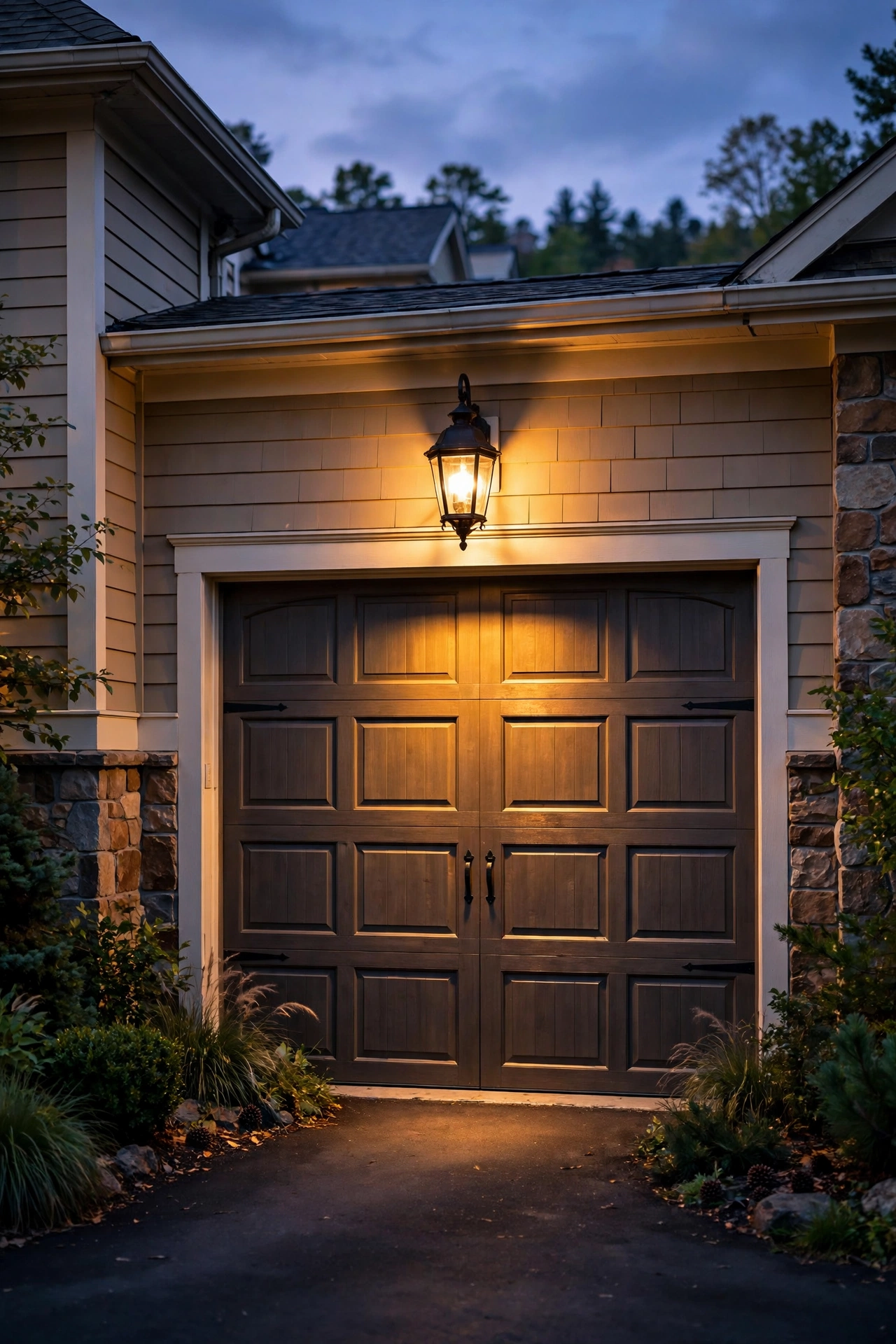
If you have a single-bay garage (typically an 8- or 9-foot-wide door), one beautiful lantern centered above the door is the cleanest, most classic move you can make. It's symmetrical by default, it needs only one wiring point, and it frames the door like a picture frame instead of competing with it.
The secret is getting the scale right. For a single door, look for a fixture that's roughly one-quarter the width of the door — so about 24 inches tall for a standard 9-foot door. In my experience, people almost always buy too small; a tiny 8-inch lantern floating over a big door looks lost. Mount it 6–12 inches above the trim header, centered dead-on.
Choose a fixture with an open or vented bottom so you can change the bulb easily, and pick warm-white bulbs (2700K) for that cozy candlelit feel. If there's no wiring above the door, an electrician can usually run a line from an interior ceiling light in about an hour — it's one of the simplest exterior lighting jobs there is.
Suggested budget range: $60 – $180.
2. The Flanking Pair: Classic Carriage Lights for a Double Garage
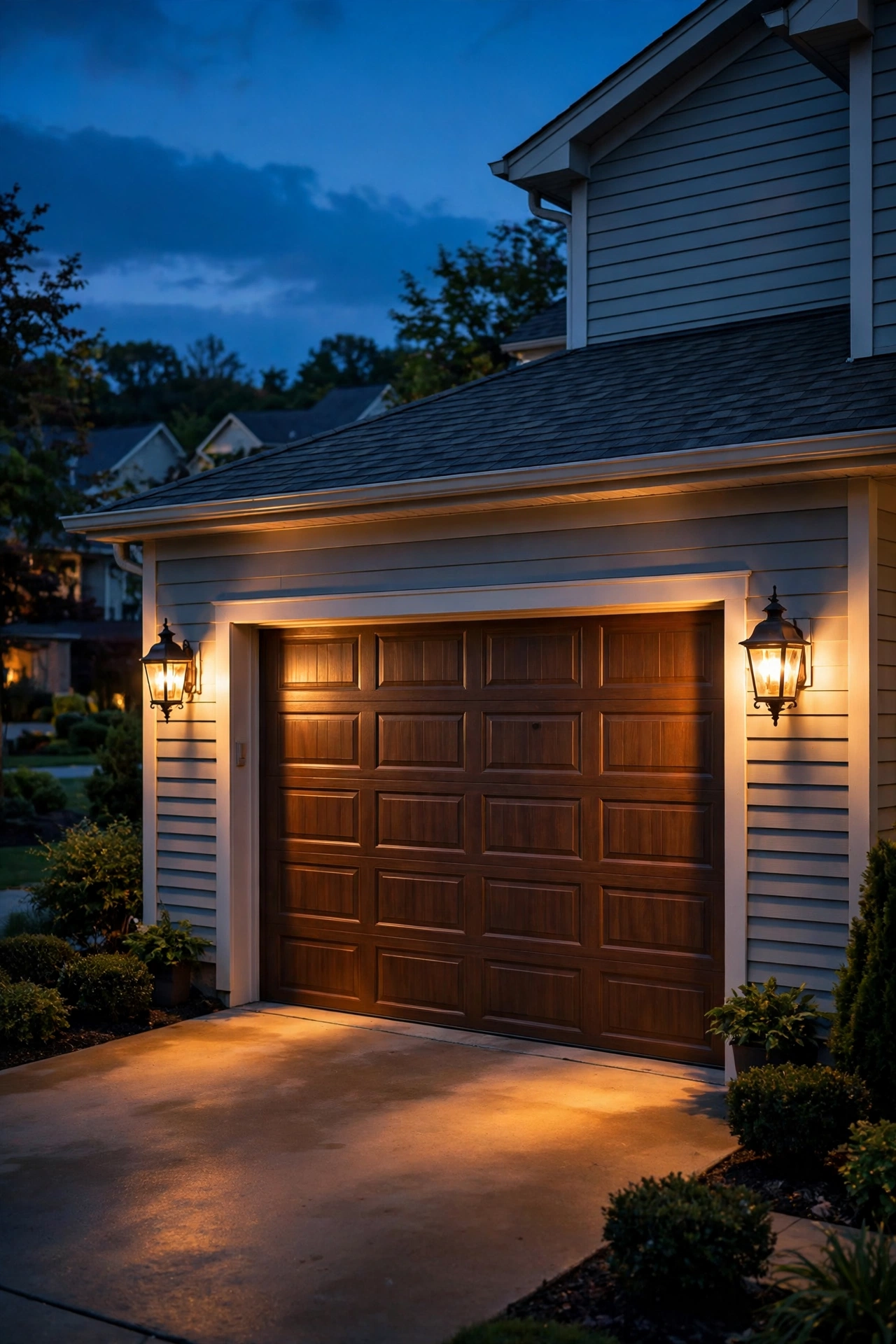
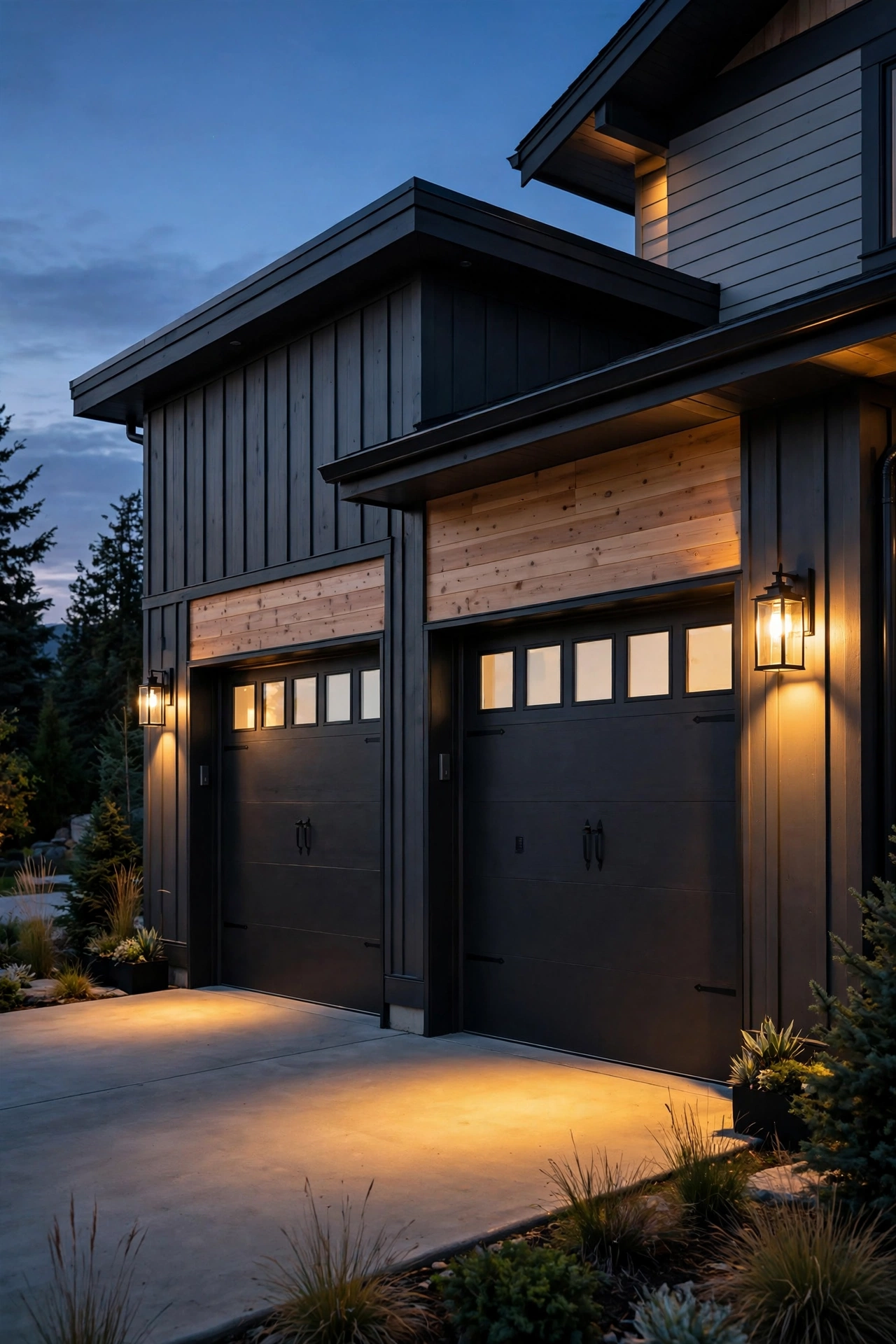
For a standard two-car garage with a 16-foot door, nothing looks more polished than a pair of matching carriage lanterns — one on each side of the door, like sentries. This is the look that defines "carriage lights for garage" in most people's minds, and for good reason: the symmetry makes the whole wall feel designed rather than assembled.
Mounting height matters more than anything here. Center the fixtures at about 5.5 to 6.5 feet off the ground — roughly eye level or a touch above. Go too high and the light washes past the driveway; go too low and cars will steal the glow. Each lantern should sit 6–12 inches out from the door trim on the wall, giving the light room to spread across both the door and the driveway apron.
Sizing rule of thumb: each fixture should be about one-sixth the height of the garage door (so a 7-foot-tall door pairs with fixtures around 14 inches tall). Keep both fixtures identical — same finish, same bulb, same everything — because mismatched lanterns are the fastest way to make a symmetrical layout look accidental.
Suggested budget range: $120 – $350.
3. Three Lanterns Across a Three-Car Garage
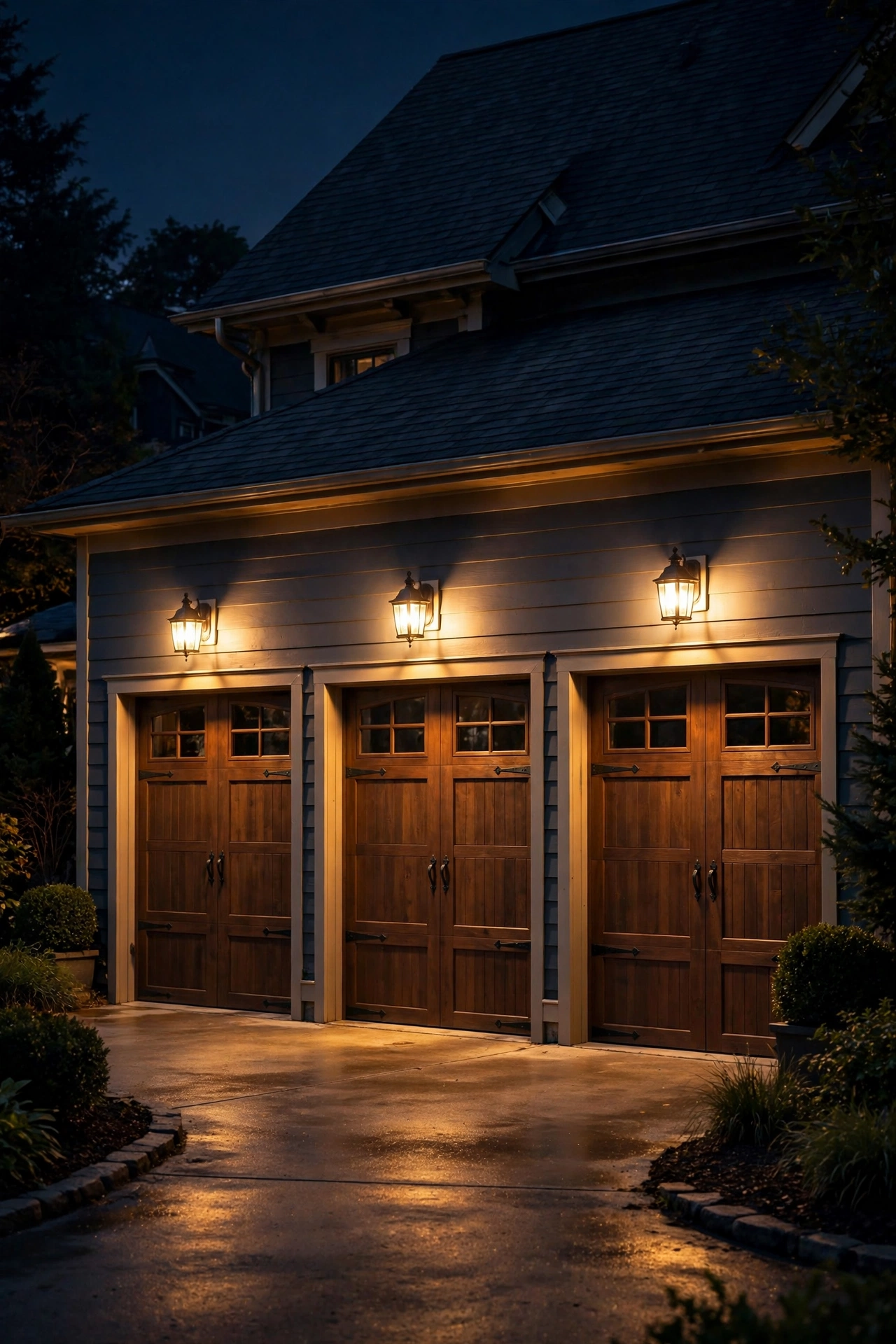
Big walls need more jewelry. On a three-car garage — often 30 or more feet wide — a single pair of lanterns gets swallowed by all that blank siding or brick, and the exterior can feel like a blank billboard at night. Three evenly spaced carriage lights (one over each door, or one between each door) restore the balance.
You have two placement strategies, and both work beautifully. The *over-each-door* approach gives every bay its own focal point, which looks fantastic when the doors have windows or panel details you want to highlight. The *between-doors* approach creates a steady rhythm of light across the wall and often needs less wiring if there's an existing run. Either way, keep spacing even and heights identical — a laser level is your best friend here.
Because you're buying three, watch your per-fixture budget; mid-range lanterns in the $60–$90 range will outshine one expensive fixture flanked by cheap ones. And if you're on the fence about whether your wall can take it, hold up cardboard cutouts at night first. In my experience, mock-ups prevent 90% of scale regrets.
Suggested budget range: $180 – $500.
4. Oversized Carriage Lights for a Tall or Double-Height Garage Wall
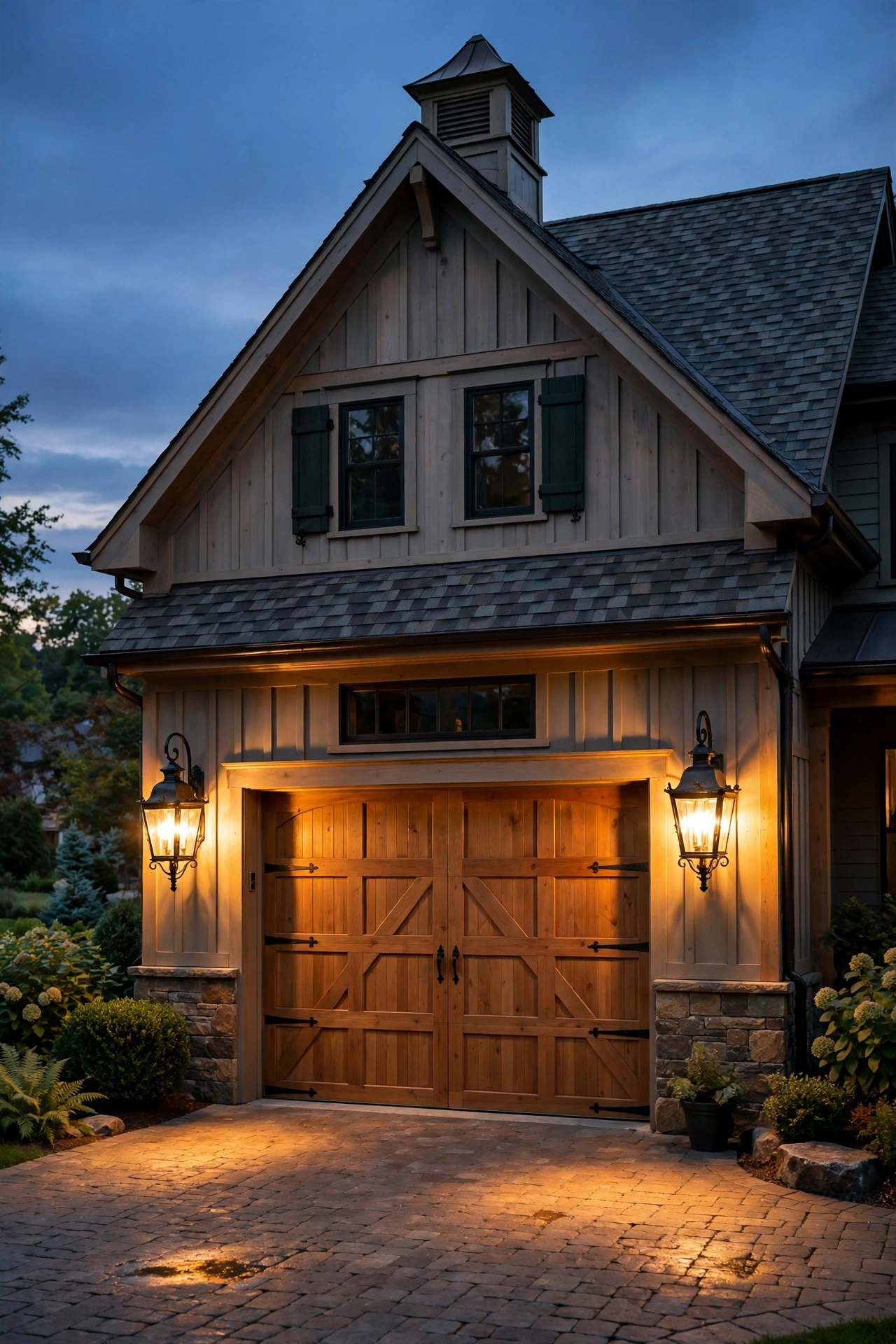
Some garages — carriage-house styles, homes with bonus rooms above, or anything with a steep gable — have walls that tower 12, 14, even 18 feet. Standard 12-inch lanterns disappear on those walls like postage stamps on a poster. The fix is drama: oversized carriage lanterns, 20 to 30 inches tall, sized like they were made for the wall they live on.
The design rule here is that the fixture should be roughly one-third the width of the garage door bay it accents — so a 16-foot door can easily carry a pair of 24-inch lanterns. Hang them lower than you'd think, centered around 6 feet high, so the glow pools on the driveway where you actually see it. A huge lantern mounted at 12 feet just lights the sky.
These oversized fixtures are almost always hardwired, so budget for an electrician if there's no existing junction box. Look for fixtures rated for wet locations with real glass — cheap plastic panels fog up fast on a big fixture. Honestly? This is the single most transformative idea on this list for tall garage walls.
Suggested budget range: $200 – $600.
5. Mini Carriage Lights for a Narrow Garage Bay
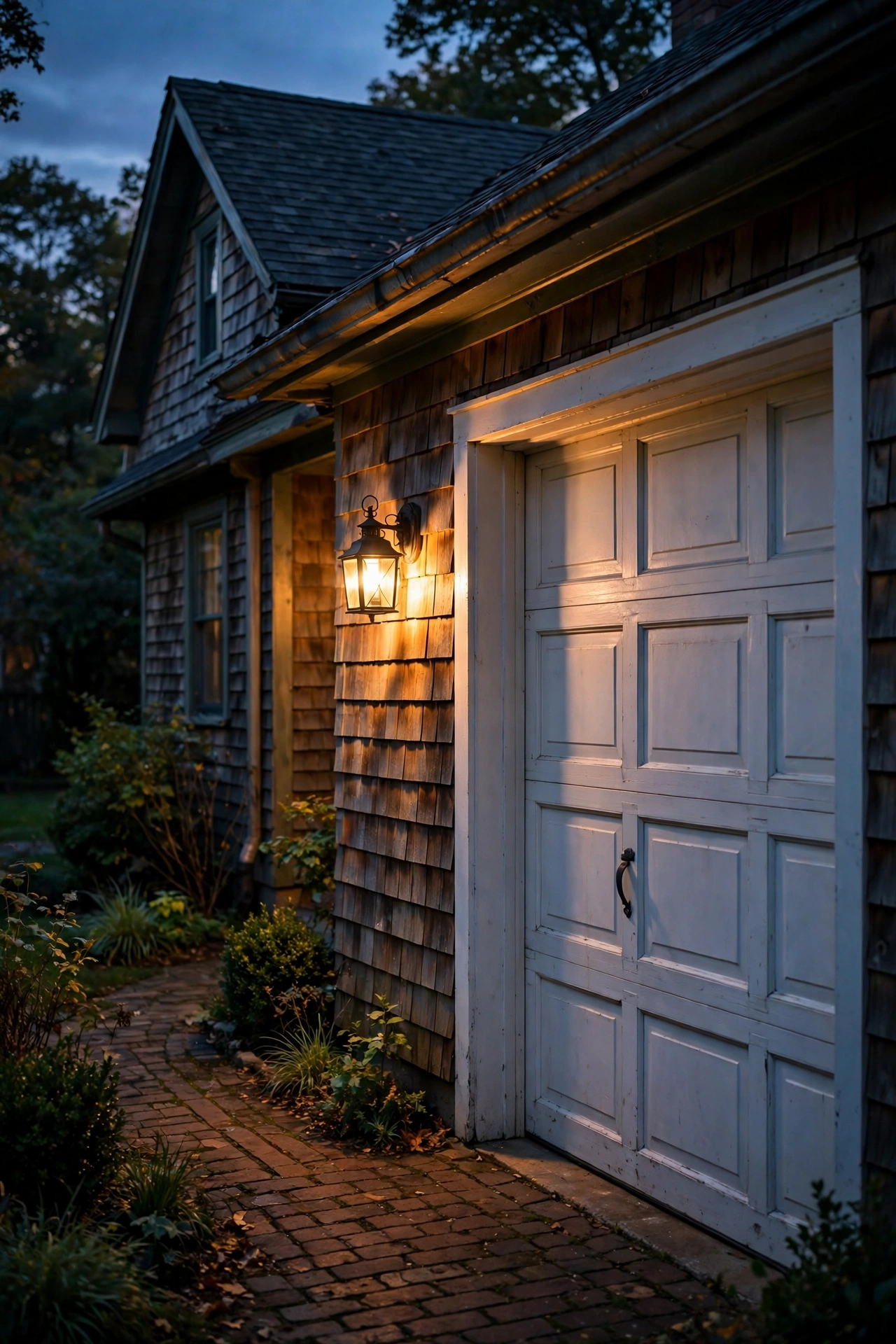
Not every garage is a showpiece — side-loading bays, garage additions, and the narrow 7-foot doors on older homes need a smaller touch. Mini carriage lanterns (8 to 11 inches tall) keep the proportion right on slim walls and tight clearances where a full-size fixture would feel like it's shouting.
These little lanterns shine brightest when treated as part of a family: one mini carriage light by a side-entry garage door, a matching one on the side of the house, and suddenly the narrow bay looks intentional instead of apologetic. They're also perfect for garage walls where a walkway runs close — the smaller profile means nobody's shoulder meets the fixture in the dark.
Because they're light and easy to wire, minis are a genuinely easy DIY install on an existing box — swap, wire, done in twenty minutes. Choose an LED fixture (or LED bulbs) so the small glass panels glow evenly instead of showing a single harsh hot spot. And keep the finish consistent with your front door hardware so the whole entry sequence feels coordinated.
Suggested budget range: $50 – $160.
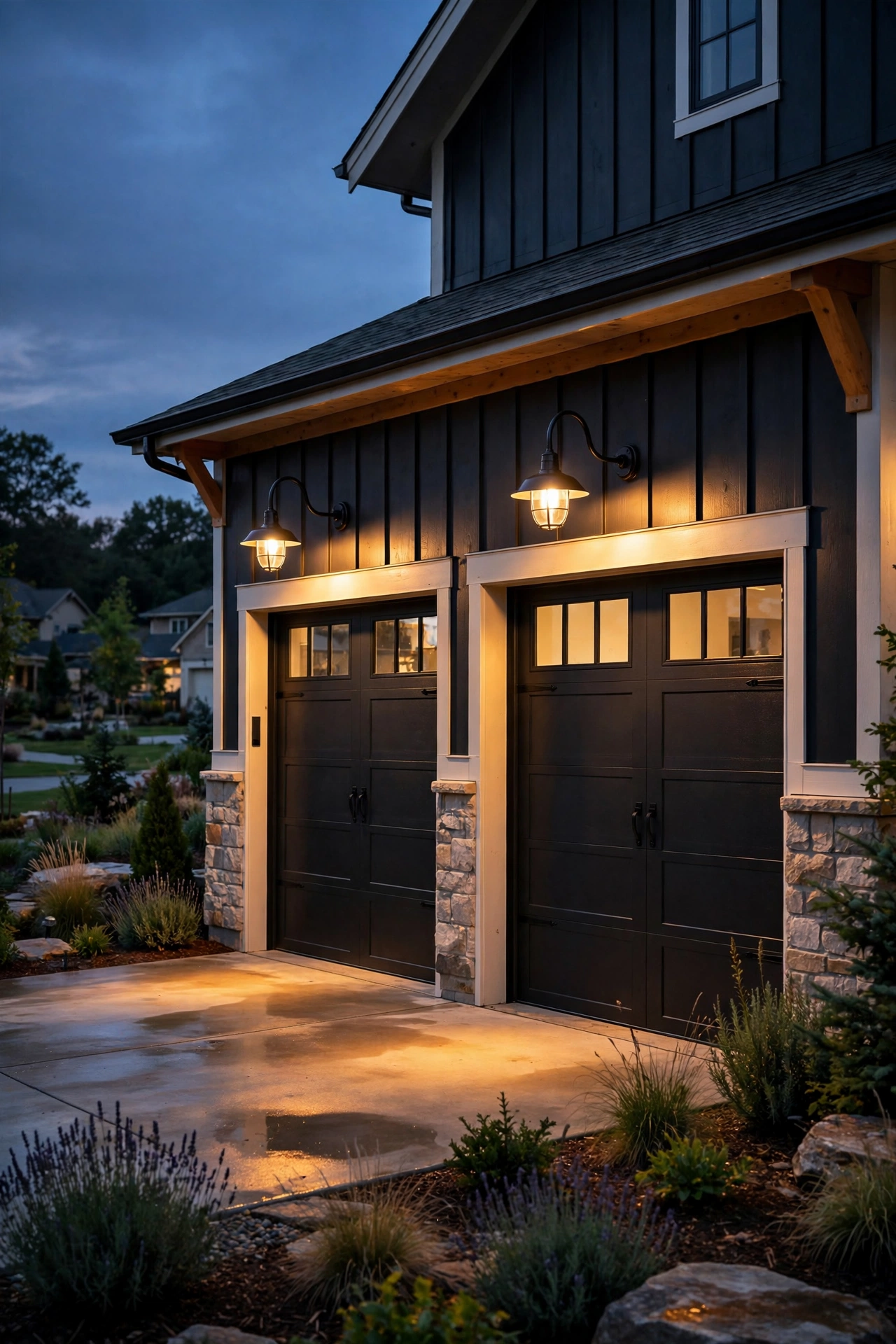
6. Gooseneck Carriage Lights Washing Down the Door
Want a carriage light that does more *work*? Gooseneck fixtures — lantern heads on a curved arm that throws light straight down — combine the charm of a carriage lantern with the function of a floodlight, minus the floodlight's hostile glare. Mounted over each garage door, they wash the door and driveway in a soft, even pool.
This style is especially kind to modern farmhouse exteriors, where the barn-inspired silhouette feels right at home. Mount the fixture so the shade sits 12–18 inches above the door header; the downward beam will cover the door face and spill onto the driveway apron. Choose shades 10–14 inches across so they have presence without overwhelming the trim.
One caution: goosenecks with dark, opaque shades create crisp pools of light and deep shadows elsewhere, which can look dramatic but leave dark pockets. If security is a concern, pair them with a motion-activated fixture elsewhere on the wall. In my experience, a matte black gooseneck with a warm LED inside is the single best-looking work light a garage can wear.
Suggested budget range: $90 – $280.
7. Copper Carriage Lights That Age Into Patina
Few finishes age as gracefully as real copper. Copper carriage lanterns start out as a bright penny-bright metal and, over a year or two, mellow into deep browns and eventually a blue-green patina — each season making them look more like they've always belonged. On brick, stone, or warm-toned siding, copper is simply the prettiest finish you can put on a garage.
There are two paths here. Solid copper fixtures cost more upfront but patina evenly and last for decades — honestly, they're often the last lanterns you'll buy. Copper-*finish* fixtures (usually powder-coated aluminum) look convincing on day one and stay that way, never changing; they're a great budget stand-in and easier to find in modern shapes.
One heads-up: copper near sprinkler spray can develop uneven spotting, so if your garage wall takes a regular hit from irrigation, either redirect the spray or choose the coated finish. Whichever route you take, pair copper lanterns with warm 2700K bulbs — the glow off a metal shade flatters copper like nothing else.
Suggested budget range: $110 – $450.

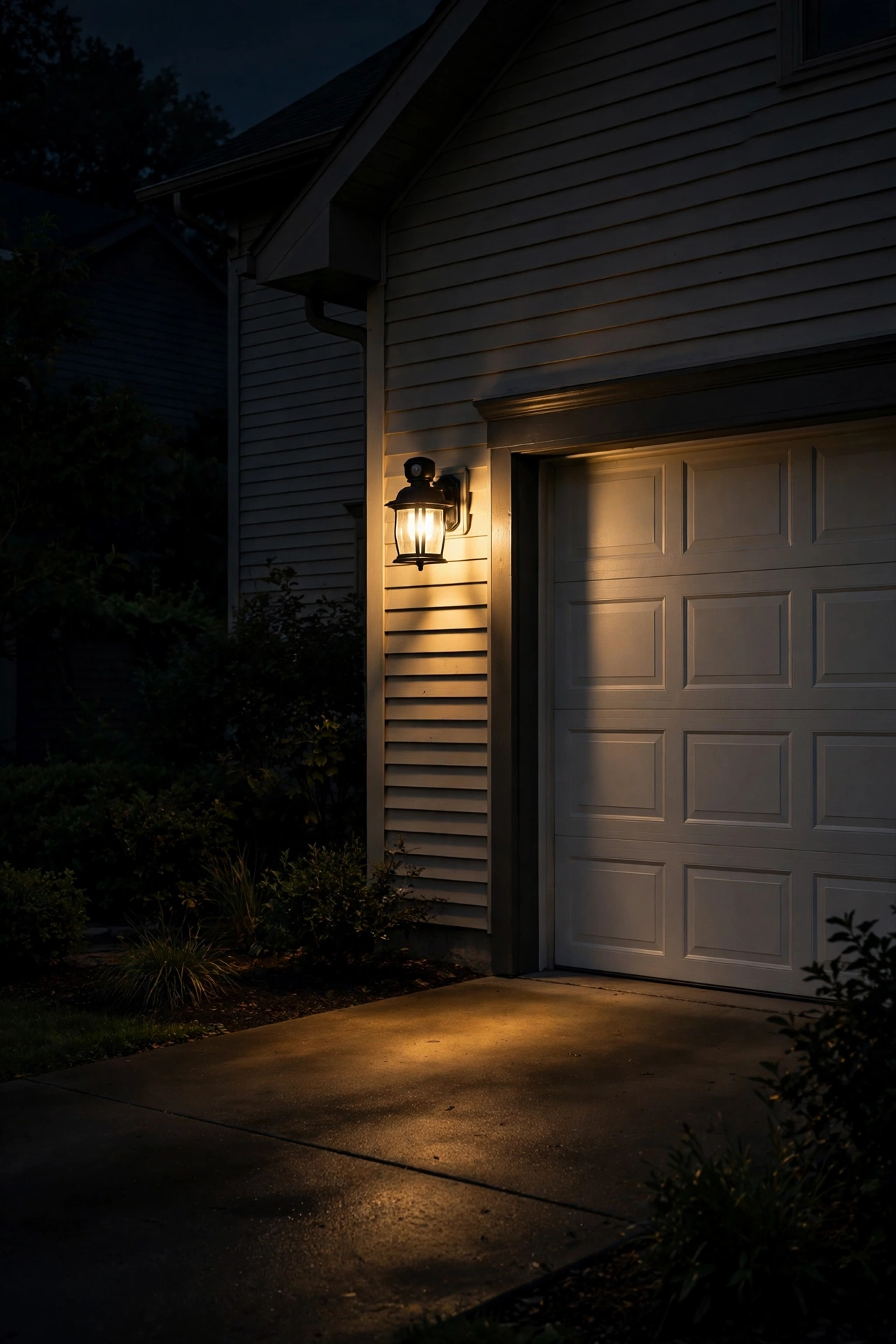
8. Motion-Sensor Carriage Lights for Security That Still Looks Good
Here's the thing about motion-sensor lights: they don't have to look like the spaceship landing pad on the eaves. Many carriage lanterns now come with built-in motion sensors tucked discreetly inside the fixture — all the security, none of the ugly plastic nub. When someone approaches the driveway, the lantern gently ramps up; after a few quiet minutes, it dims back down.
Placement is the whole game. Mount motion-sensor carriage lights to cover the driveway apron and the pedestrian path to your side door, not to stare at the street — you don't want every passing car triggering a light show. Most sensors have adjustable sensitivity and range; dial them to a 20–30 foot detection zone and a 5-minute timeout.
Look for fixtures with a "dual-bright" mode: a dim all-night glow that brightens to full when motion is detected. You get the polished look of a lit garage 24/7 plus the security kick when it counts. In my experience, this is the upgrade that turns a skeptical spouse into a lighting convert — it's practical *and* pretty.
Suggested budget range: $70 – $240.
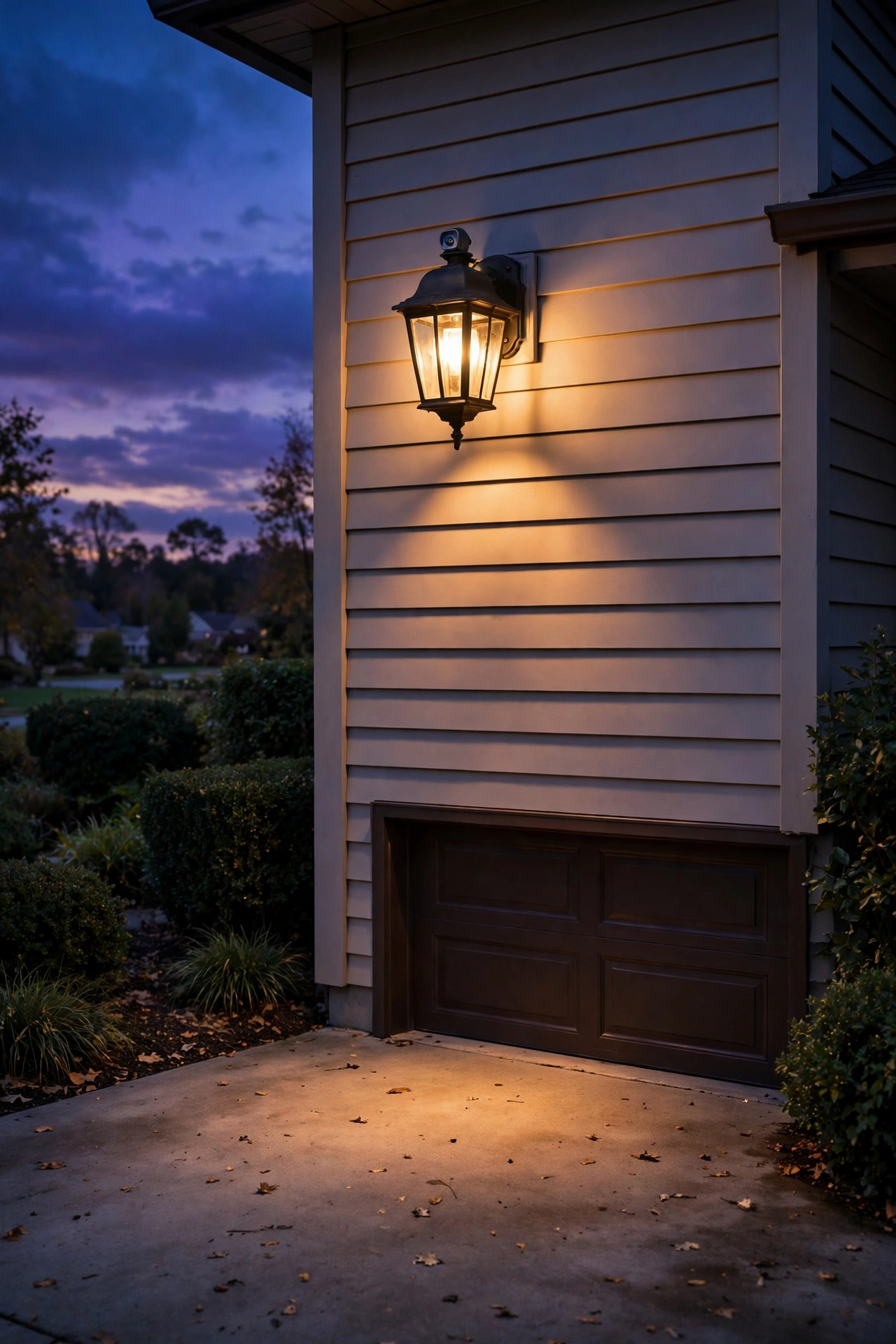
9. Dusk-to-Dawn Carriage Lights You Never Have to Think About
Some of us (me, it's me) will not remember to flip a switch at sundown. Dusk-to-dawn carriage lanterns solve the problem with a tiny photocell, usually hidden in the fixture's top: the light clicks on when daylight fades and off when morning comes. Your garage glows every single night without a single thought from you.
The photocell needs a clear view of ambient daylight to work reliably — so don't tuck these fixtures under a deep porch overhang or beneath a bright eave light that might confuse the sensor. If the lantern sits between a streetlight and your garage, check that streetlight glare won't keep it perpetually "daytime." Most photocells are adjustable, and many fixtures let you screw a small cap over the sensor to disable it seasonally.
Running cost is almost nothing: a 9-watt LED burning roughly 10 hours a night costs about a dollar a year in electricity. In my experience, dusk-to-dawn is the set-it-and-forget-it choice for rental properties and busy households alike — the garage always looks cared for, even when life isn't.
Suggested budget range: $60 – $200.
10. A Carriage Light + Illuminated House Number Combo
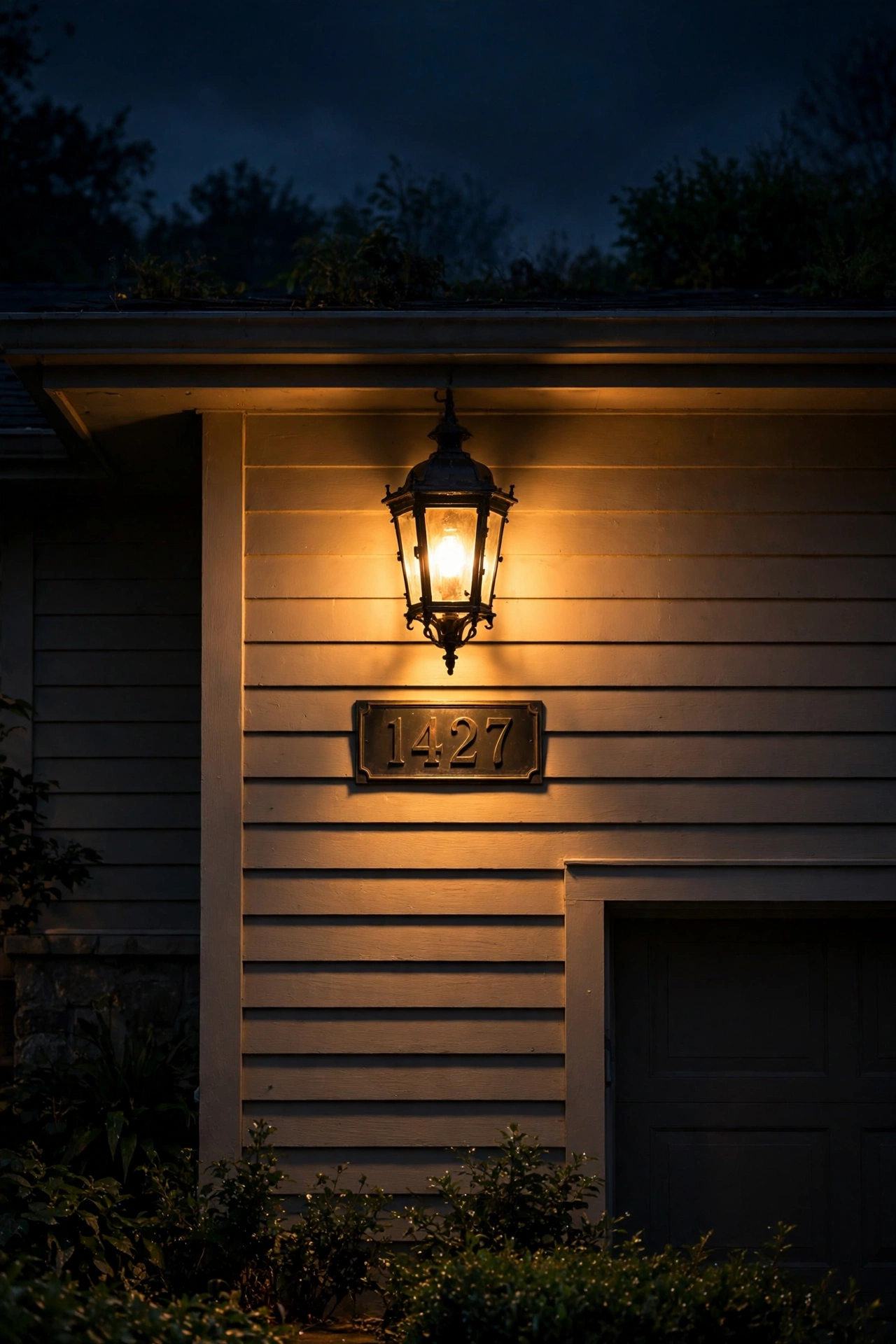
Two jobs, one fixture point: some carriage lanterns come with a house-number panel built right into the design, or you can mount a lit number plaque directly beneath a lantern so the light washes down across it. The result is a garage wall that's both beautiful and genuinely useful — delivery drivers and first responders can read your address at 11 p.m. from the street.
The trick is contrast. Light-washed numbers need to be dark figures on a light plaque (or vice versa) so they're readable in glare, not just glowing. Mount the plaque so its top edge sits a few inches below the lantern's light source, letting the beam graze across the digits. Choose letters at least 4 inches tall for street readability.
If your garage faces a long driveway, consider backlit numbers — individual digits mounted on standoffs with light spilling behind them. They're legible from farther away and look incredibly sharp against brick or stone. Either way, test the readability from the street at night before you call it done — what looks clear from the porch can vanish from the curb.
Suggested budget range: $80 – $260.
11. Carriage Lights on Garage Pilasters or Stone Columns
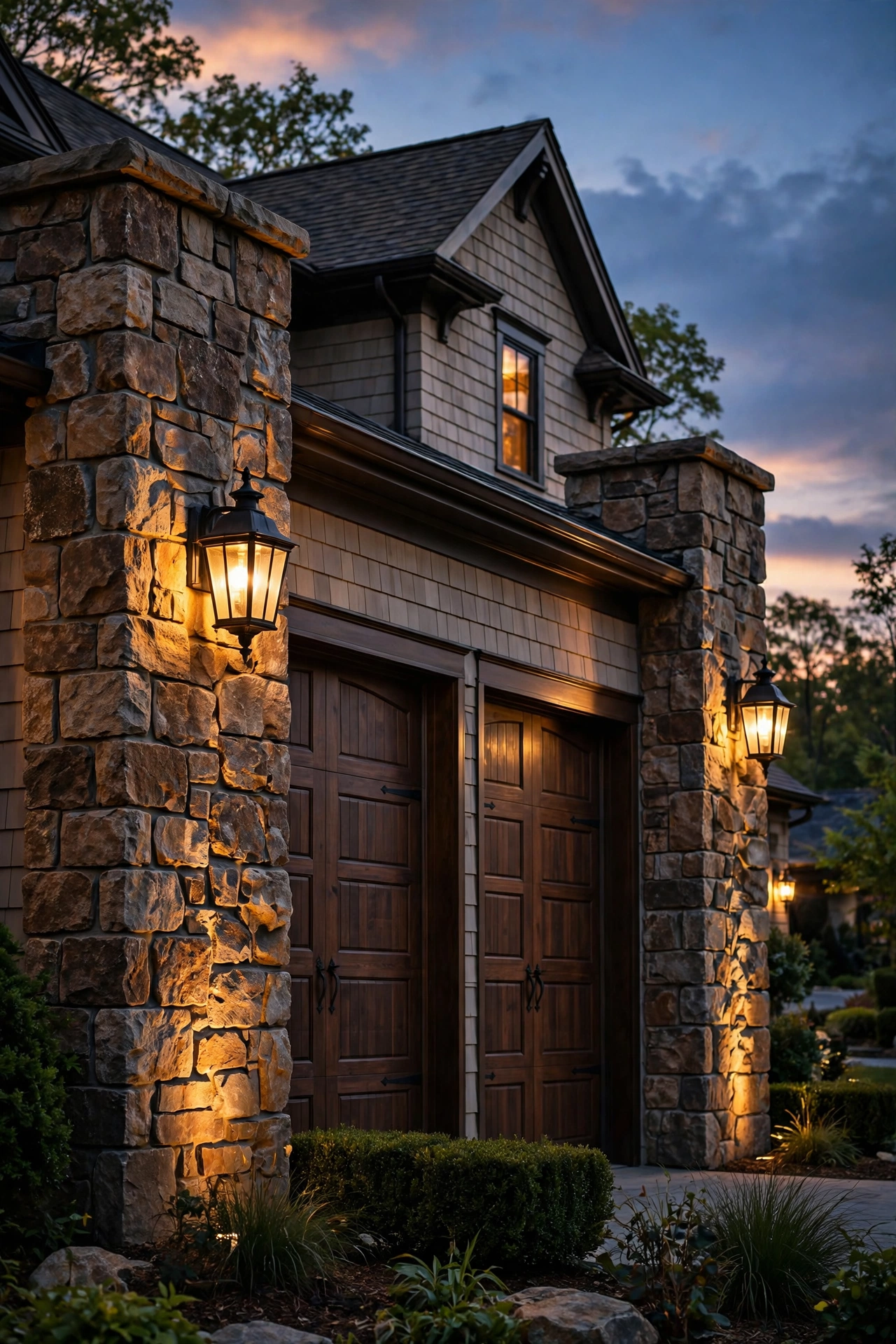
If your garage has brick or stone pilasters — those chunky columns framing each door — you have the single best mounting surface in residential lighting. A carriage lantern mounted on the face of each pilaster looks custom and expensive, like something from a historic estate, because the light grazes down the stone and shows off every bit of texture.
Mounting here needs a little planning: the lantern should sit centered on the pilaster face, with its top roughly at or just above the door header line so the whole composition lines up. Because pilasters are often 12–24 inches wide, choose fixtures at least 10 inches wide so they hold their own on the stone — skinny lanterns get lost.
Wiring through masonry means either surface-mount conduit (painted to match) or a mason's help fishing wire through — this is a job for an electrician in most cases. The payoff is worth it: uplight off stone is one of the richest effects in all of exterior lighting, and a pilaster-mounted lantern gives you that grazing texture plus a warm welcoming pool on the driveway.
Suggested budget range: $150 – $400 (including pro installation).
12. Carriage Lights on a Detached Garage or Barn
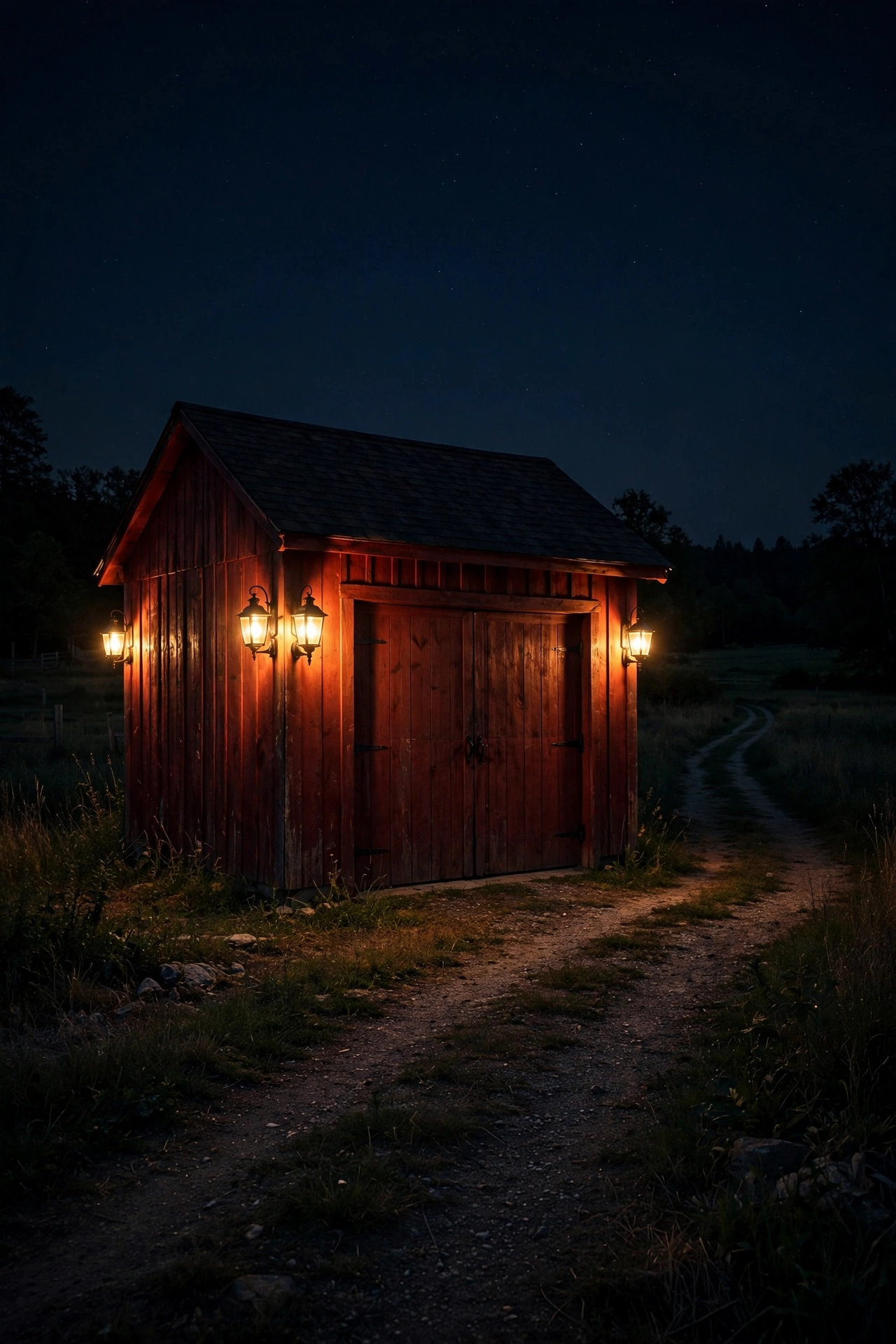
A detached garage — especially a barn-style one set back on the property — is its own little world, and it deserves its own lighting plan. Carriage lanterns on the barn's corners or flanking its doors give the outbuilding presence at night instead of letting it dissolve into the dark. There's also a real practical case: walking to a detached garage at night with no light is nobody's idea of fun.
Because there's no house wall nearby to bounce light off, go slightly brighter here — 800 to 1,600 lumens per fixture — and choose wide-beam lanterns that throw light in all directions rather than tight downlights. If running power to the barn is impractical, this is the one scenario where I give solar wall lanterns an honest thumbs-up; modern ones can genuinely light a doorway, though not a whole driveway. For more lantern inspiration in rustic settings, browse these outdoor wall lantern styles to find silhouettes that suit barns and carriage houses.
Mount lanterns at least 6 feet high on the barn's corners so the glow reaches both the doors and the path back to the house. And add a motion sensor — a barn that lights up when you approach feels like magic.
Suggested budget range: $100 – $380.
13. Matching Carriage Lights for Garage and Front Door
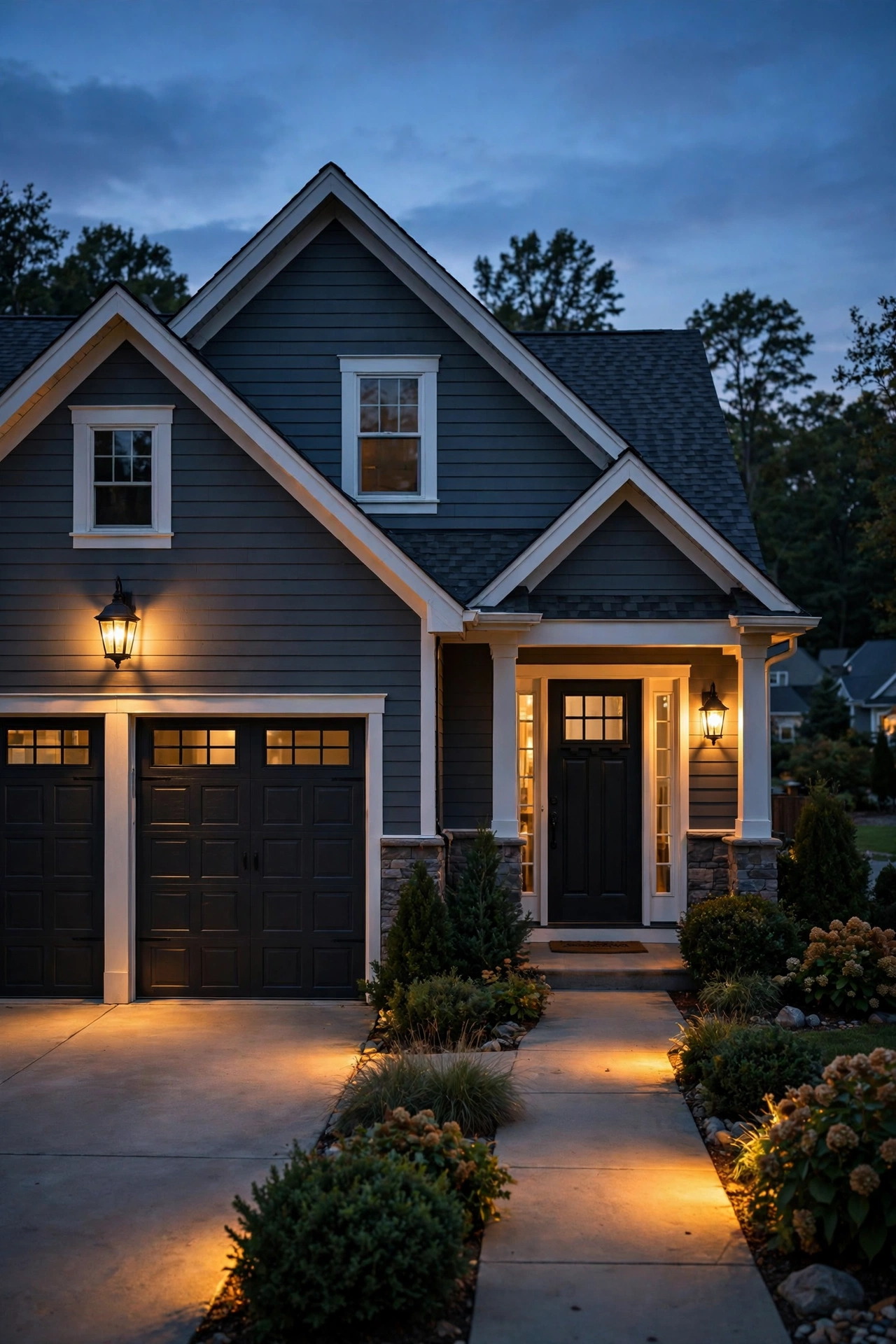
Here's the move that makes the whole house look designed: carry the *same* carriage lantern style from your garage to your front door. When the garage fixtures echo the entry fixtures — same silhouette, same finish, same bulb temperature — the exterior reads as one cohesive composition instead of two strangers sharing a wall.
You don't need identical fixtures everywhere; the garage versions can be one size up or down. What matters is the family resemblance: if your front door wears a classic black four-sided lantern, your garage should wear its bigger (or smaller) sibling, not a random gooseneck. Scale each to its wall — front-door lanterns around 12–15 inches, garage lanterns sized to the door per the rules above — and keep the finishes matched.
In my experience, this single choice adds more "finished" to a house than any amount of extra landscaping. For help nailing the entry side of the equation, this front-door sconce pair guide walks through sizing and placement at the entry in detail. Start with the garage if that's the bigger eyesore — then let the front door catch up.
Suggested budget range: $160 – $500 (for garage + entry fixtures).
14. Dark-Sky-Friendly Carriage Fixtures
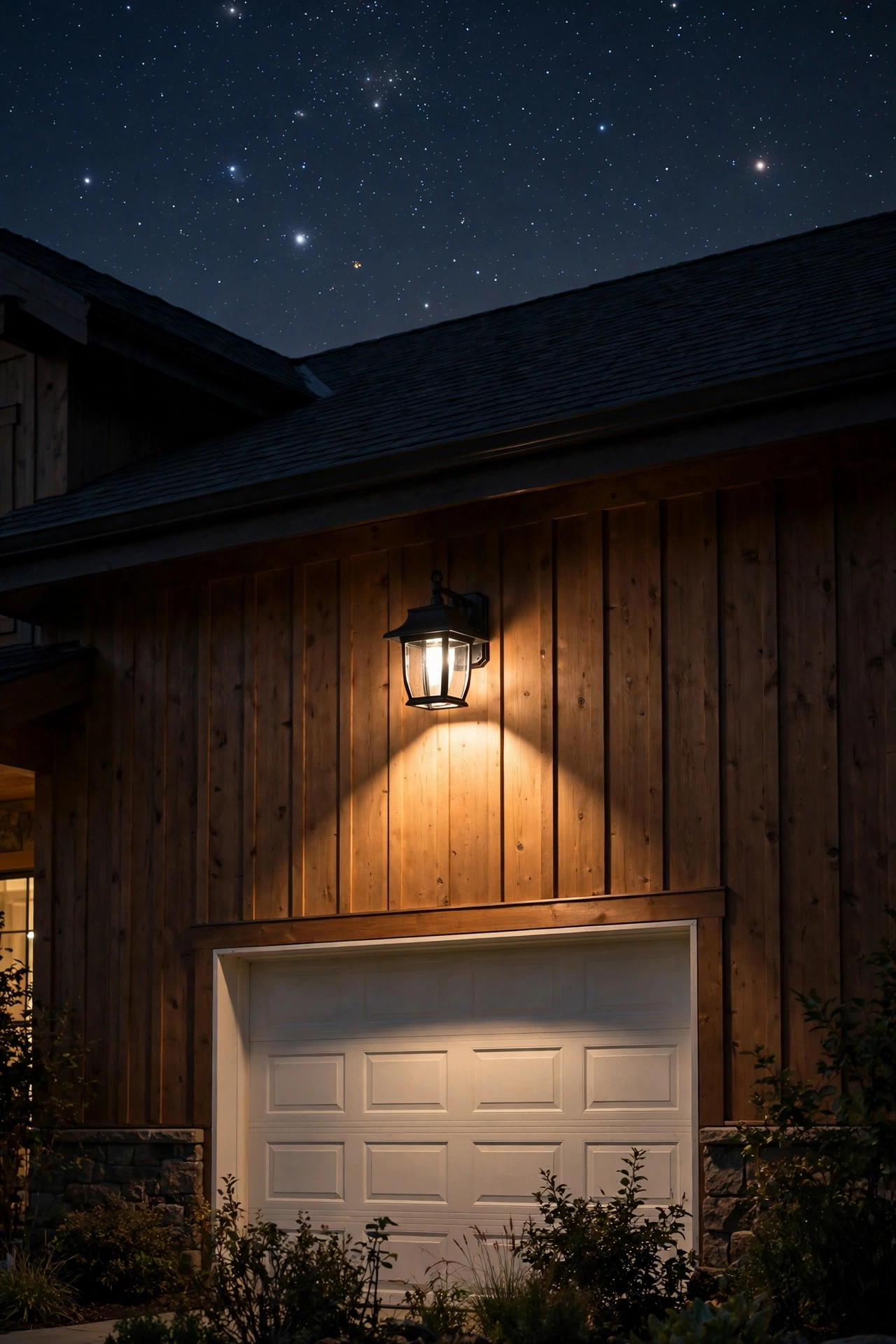
If you love stars — or you live under a neighborhood light-pollution ordinance — look for carriage lanterns with full-cutoff or downward-only designs. They keep the warm, welcoming glow you want on the driveway while sending *zero* light up into the sky. Your neighbors, migrating birds, and stargazers will all thank you.
The key feature is a shielded top: light exits only through the bottom and lower panels. Many "dark sky compliant" carriage lanterns keep the classic glass-box look from the sides while hiding the bulb behind an internal reflector, so you honestly can't tell them apart from a regular lantern from the street. Pair them with warm 2700K bulbs — cool white light scatters more in the atmosphere and is worse for the night sky.
Mount these slightly lower than usual (5–6 feet) so the downward beam concentrates where you walk and drive rather than spilling sideways. In my experience, dark-sky fixtures also reduce glare in your own windows, which means less light leaking into the bedroom at night — a quiet win nobody talks about enough.
Suggested budget range: $90 – $280.
15. Carriage Lights with Vintage Edison-Style Filament Bulbs
Nothing says "carriage" quite like a visible filament. LED filament bulbs — those golden, looped-glass beauties — sit inside the lantern's glass panels and glow like a candle flame from a century ago. Inside a carriage lantern, the effect is pure romance: the old-world silhouette, the warm amber glow, the gentle flicker-free shimmer.
A few practical notes. Choose LED filament bulbs (not true incandescents) — they draw about 4–8 watts, last years, and won't cook the fixture's wiring. Look for "amber" or "extra warm" versions around 2200K for that candlelight feel, or standard 2700K if you want brightness with vintage charm. And because filaments are meant to be *seen*, this is one case where clear glass panels beat frosted or seeded ones.
The trade-off: filament bulbs typically top out around 400–600 lumens, so they won't light a long driveway alone. Treat them as accent glow and pair with a brighter downlight or motion flood elsewhere on the wall if you need real task lighting. For a garage that's mostly about curb appeal, though? Honestly, nothing beats them.
Suggested budget range: $70 – $230.
16. Solar Carriage Lights When There's No Wiring
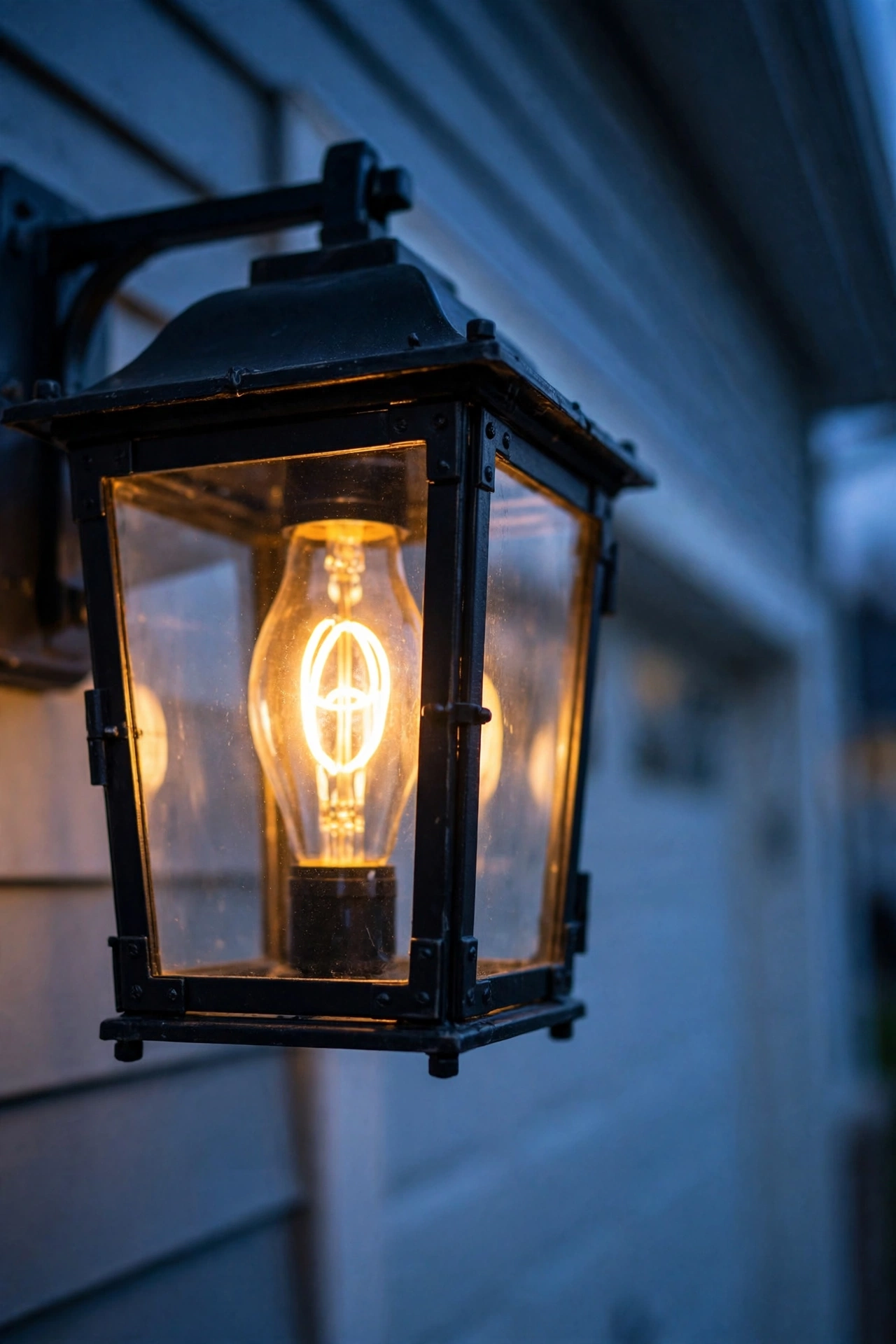
No junction box? No problem — at least for accent lighting. Solar carriage lanterns have gotten genuinely good in the last few years: a small solar panel hidden in the fixture's cap charges a battery by day, and the lantern glows for 6–8 hours after dark. They're perfect for detached garages, fence-line bays, or that side of the garage where running wire would mean trenching the whole yard.
The honest caveat: solar lanterns are accent lights, not security lights. Expect a soft 50–150 lumen glow — enough to mark a doorway and look beautiful, not enough to read by or light a driveway. Placement matters enormously: the fixture needs a south- or west-facing exposure and full sun for most of the day. Tucked under an overhang or shaded by trees, it'll fizzle out by 10 p.m.
For best results, bring them inside for a full-day charge before the first use (manufacturers recommend this, and it genuinely doubles early performance). And keep the solar cap wiped clean — a dusty panel can cut charging by a third. At $20–$50 per lantern, they're the cheapest way to test-drive the carriage look before committing to wiring.
Suggested budget range: $40 – $150 (for a pair).
17. A Carriage Light at the Garage Side Entry Door
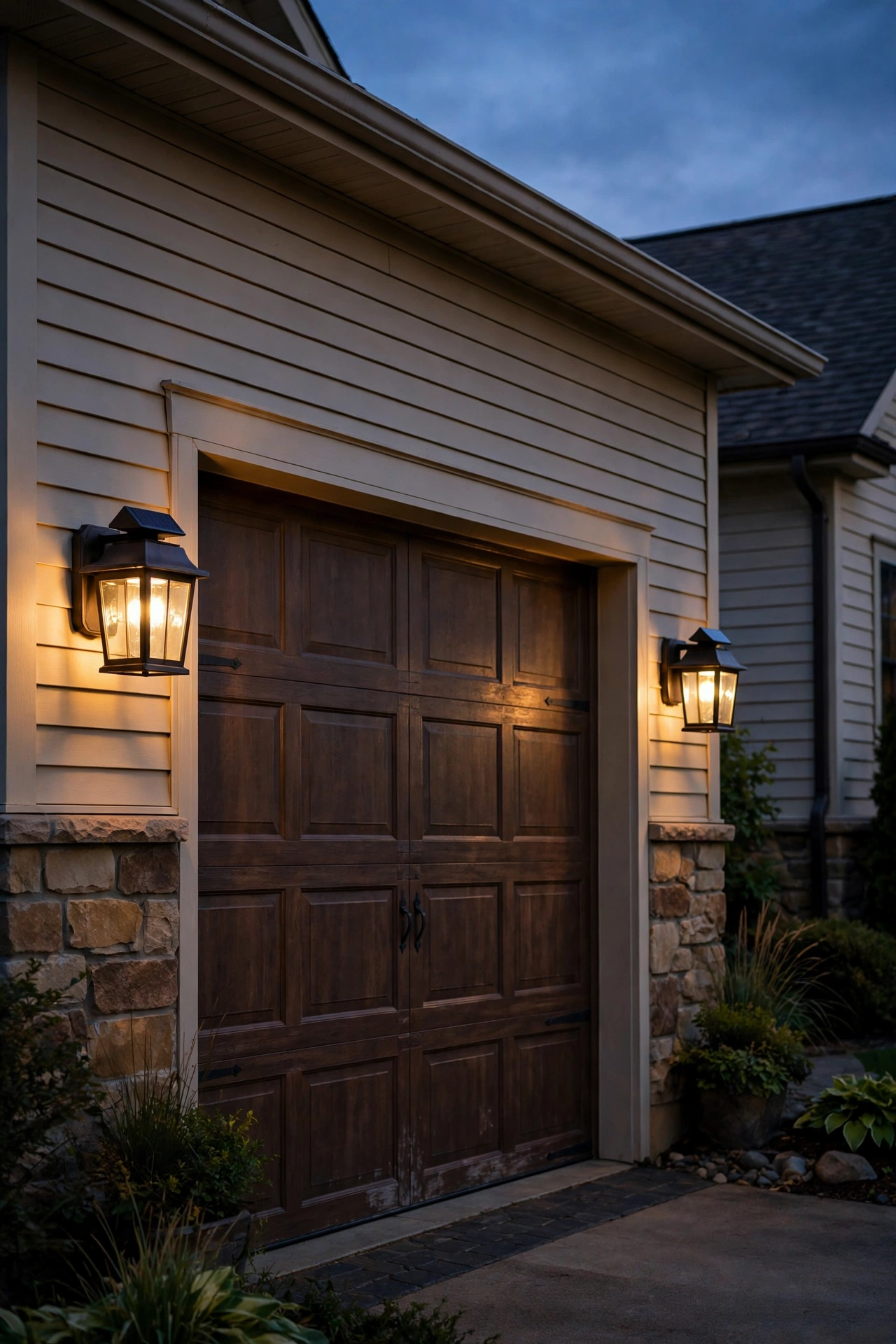
Everyone lights the big garage doors — and almost nobody lights the side door. That pedestrian door on the side of the garage is where you actually walk in and out with groceries, trash cans, and kids, yet it sits dark while the driveway glows. One small carriage lantern beside it is the most useful lighting dollar you'll spend on your garage.
Mount a single fixture on the handle side of the door (the side your hand naturally reaches for), centered about 6 feet high. A motion-sensor version is ideal here — hands full of groceries can't reach a switch, but a sensor doesn't care. Choose a fixture with a downcast beam so the light lands on the lock and the step, not in your eyes.
If the side door is recessed under a small overhang, confirm the fixture's clearance — some carriage lanterns are 6–8 inches deep, and a recessed door might need a flush-mount or half-lantern style instead. In my experience, this one fixture gets more daily compliments ("oh, I can actually see!") than any showpiece on the front.
Suggested budget range: $50 – $180.
18. Seeded-Glass Carriage Lanterns for a Handmade Feel
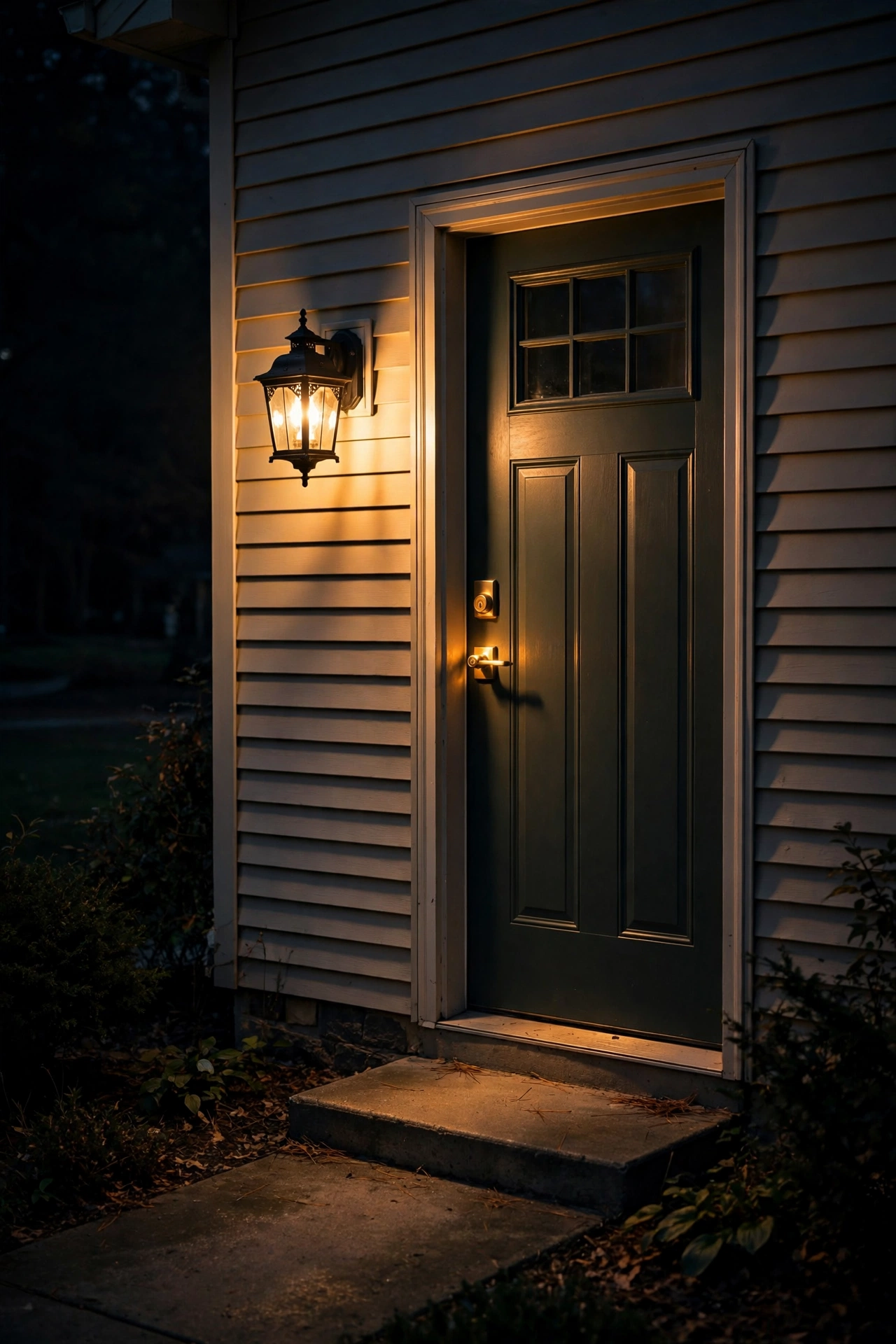
If standard clear glass feels a little too crisp, seeded glass is your answer. Those tiny air bubbles trapped in the glass catch the light and scatter it into a warm, rippled glow — like candlelight through old windowpanes. On brick and stone garages especially, seeded-glass carriage lanterns look artisanal and handmade rather than mass-produced.
Because the glass diffuses the beam, seeded panels slightly soften and reduce light output — compensate with a slightly brighter bulb (800 lumens rather than 400) so the fixture still earns its keep on the driveway. Pair seeded glass with dark finishes — matte black, oil-rubbed bronze, or aged copper — for the classic craftsman look, and keep bulb temperature at 2700K to lean into the warmth.
Maintenance is easy: seeded glass hides dust and water spots far better than clear panels, which means less wiping. In my experience, this is the finish detail guests actually notice — they'll lean in and say "I love these," and it's almost always the glass they're responding to.
Suggested budget range: $90 – $300.
19. Smart Carriage Lights with Timers and App Control
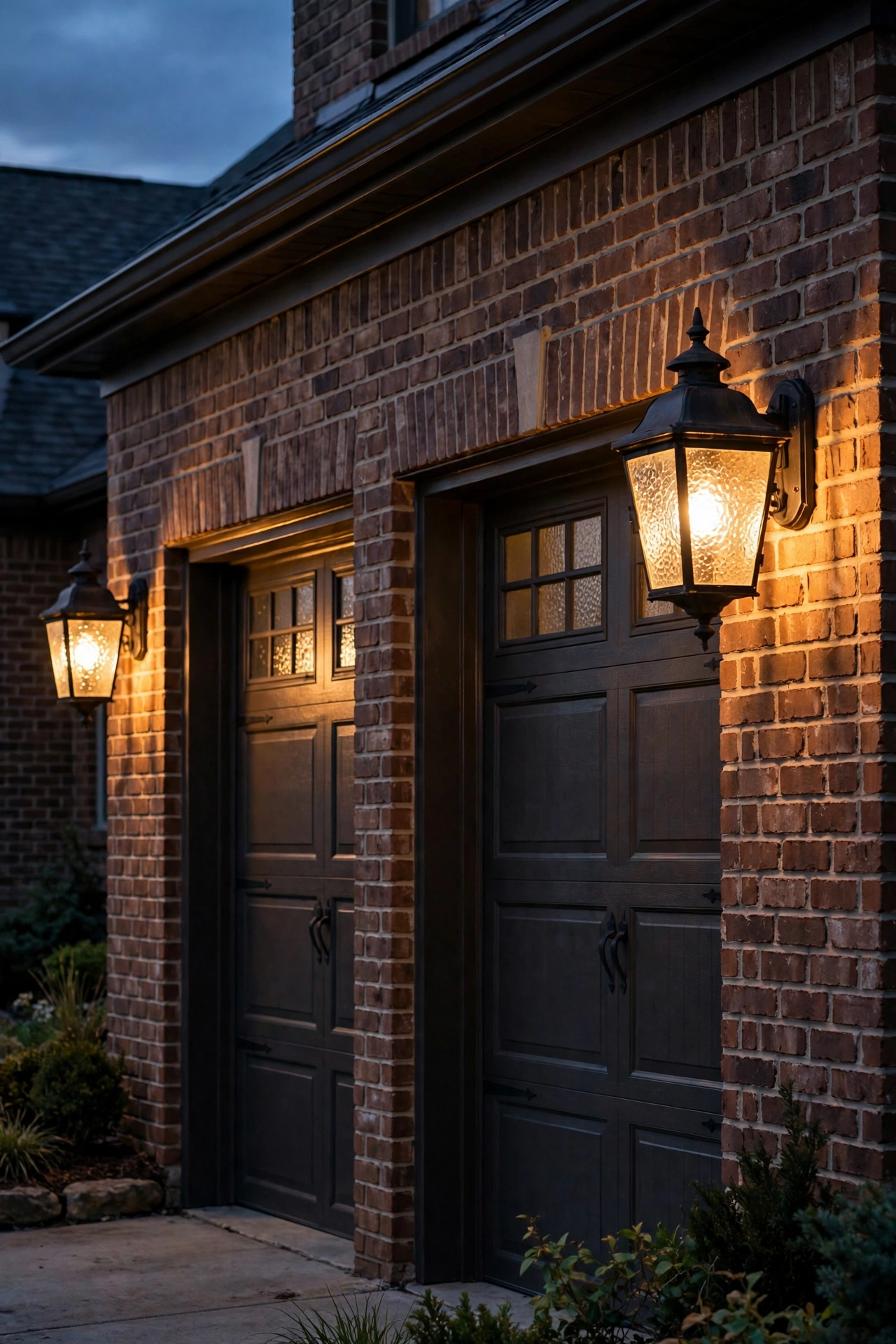
The final frontier: carriage lanterns you control from the couch. Smart bulbs or smart fixtures bring scheduling, dimming, and voice control to your garage walls — set them to glow at 50% all night, ramp to full when the car pulls in, and dim to candlelight mode after midnight. It's the polished-exterior look with a brain.
The simplest route is screw-in smart bulbs in any carriage fixture you like — no new wiring, and you can group the garage lanterns with your porch and landscape lights into scenes like "welcome home" or "away." If you go with fully smart fixtures, confirm they work with your ecosystem (the big ones all speak to the major voice assistants now) and that your Wi-Fi reaches the garage wall — a weak signal is the number one cause of flaky smart lights.
One practical tip: smart bulbs in outdoor fixtures must be rated for enclosed or damp locations, and cold weather can make some budget bulbs sluggish to respond. Spend the extra $5–$10 per bulb on quality ones. And keep a physical switch accessible — when the Wi-Fi hiccups, you'll be glad you did.
Suggested budget range: $80 – $320 (fixtures + smart bulbs).
Frequently Asked Questions
What's the right height to mount carriage lights for a garage?
Center the fixture about 66 to 78 inches off the ground — roughly eye level to just above — which puts the glow where it lands on the driveway and door instead of washing into the sky. For a single lantern centered above the door, mount it 6–12 inches above the trim header. If your garage wall is unusually tall, resist the urge to mount higher; a lantern at 10 feet lights the roof, not the driveway. Keep flanking pairs at identical heights — even a one-inch difference is visible from the street.
How big should carriage lights be for my garage?
Use the wall and door as your ruler, not the fixture's price tag. For a lantern centered over a single 8–9 foot door, aim for a fixture about one-quarter the door's width (roughly 20–24 inches tall). For a flanking pair on a double door, each fixture should be about one-sixth the door's height (around 14 inches for a 7-foot door). On three-car garages or tall gabled walls, go bigger — 20–30 inch oversized lanterns — because small fixtures vanish on wide walls. When in doubt, mock up with cardboard: in my experience, people under-size nine times out of ten.
Can I install carriage lights on my garage myself?
If there's an existing junction box and you're just swapping fixtures, absolutely — it's a 20-minute job: kill the breaker, disconnect the old fixture, and wire the new one color-to-color (black to black, white to white, ground to ground). If there's no wiring at the spot you want, call an electrician; running new circuits through exterior walls and siding is not a beginner project. For step-by-step guidance on the wiring side, see this walkthrough on how to install exterior wall lights safely. Either way, use only fixtures rated for wet or damp locations, and never work on a live circuit.
Solar or wired carriage lights — which is better for a garage?
It depends on the job. Wired (hardwired) carriage lights are brighter, work every night regardless of weather, and can power motion sensors and smart bulbs reliably — they're the right choice for your main garage doors and any fixture that handles security. Solar carriage lanterns are genuine accent lights: a soft glow that marks a doorway and looks lovely, but typically only 50–150 lumens. They're perfect for detached garages with no power run, side doors, or testing a look before committing to wiring. My rule of thumb: wire the fixtures that matter, and use solar for the nice-to-haves.
Conclusion
A garage doesn't have to look like a garage — not at night, anyway. The right carriage lights for garage walls turn the biggest blank wall on your home into its warmest, most welcoming feature, and the rules are refreshingly simple: size the fixture to the wall, mount it at eye level, match it to your front door, and glow warm at 2700K. Everything else — copper patinas, seeded glass, motion sensors, smart schedules — is personality layered on top of that solid foundation.
Start with the spot that bugs you most: the dark side door, the lost-looking double door, the barn that disappears after sunset. One or two well-chosen lanterns, mounted with intention, will change how the whole house feels from the street. And when you're ready to carry the look further, browse more lighting ideas on the site — your front door, porch, and landscape are all waiting for their glow-up too.