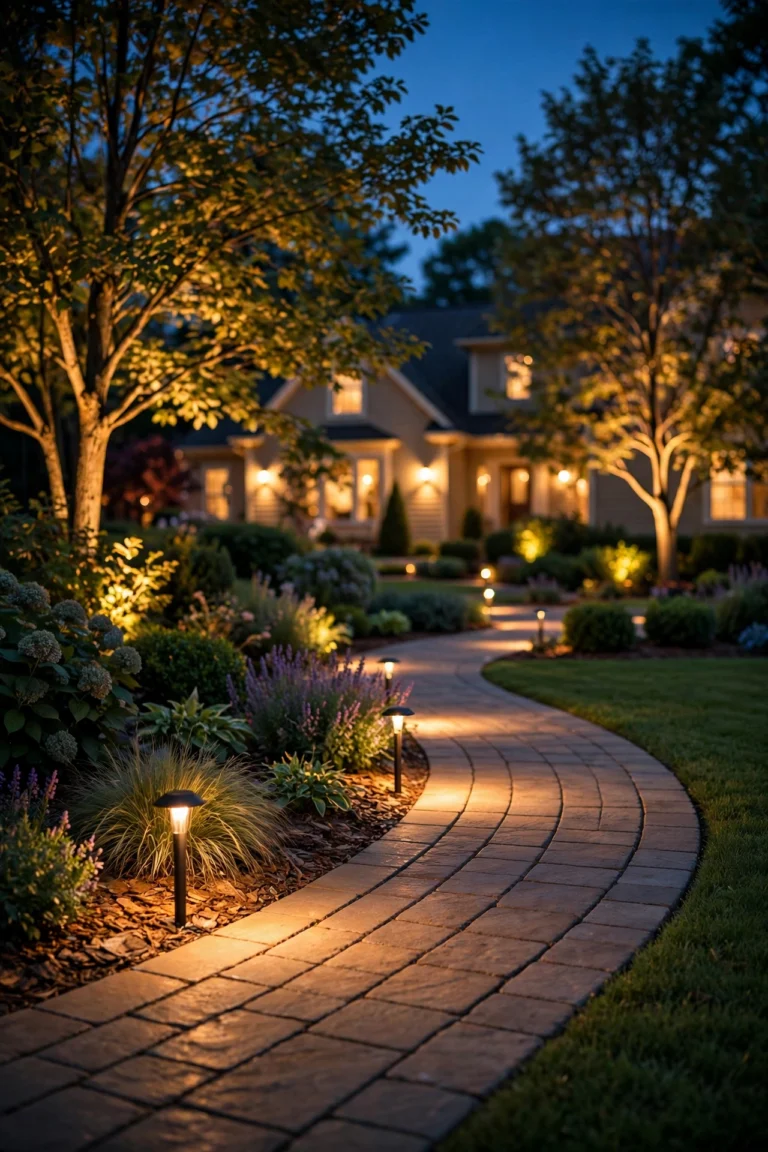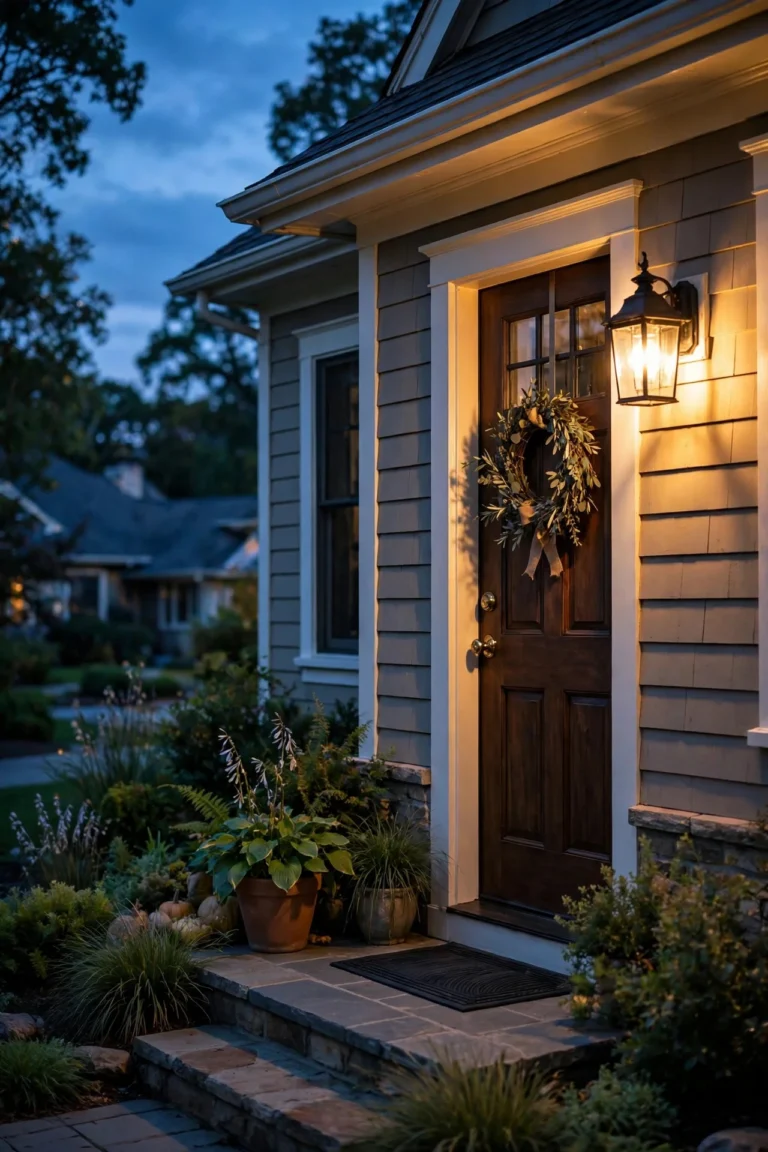
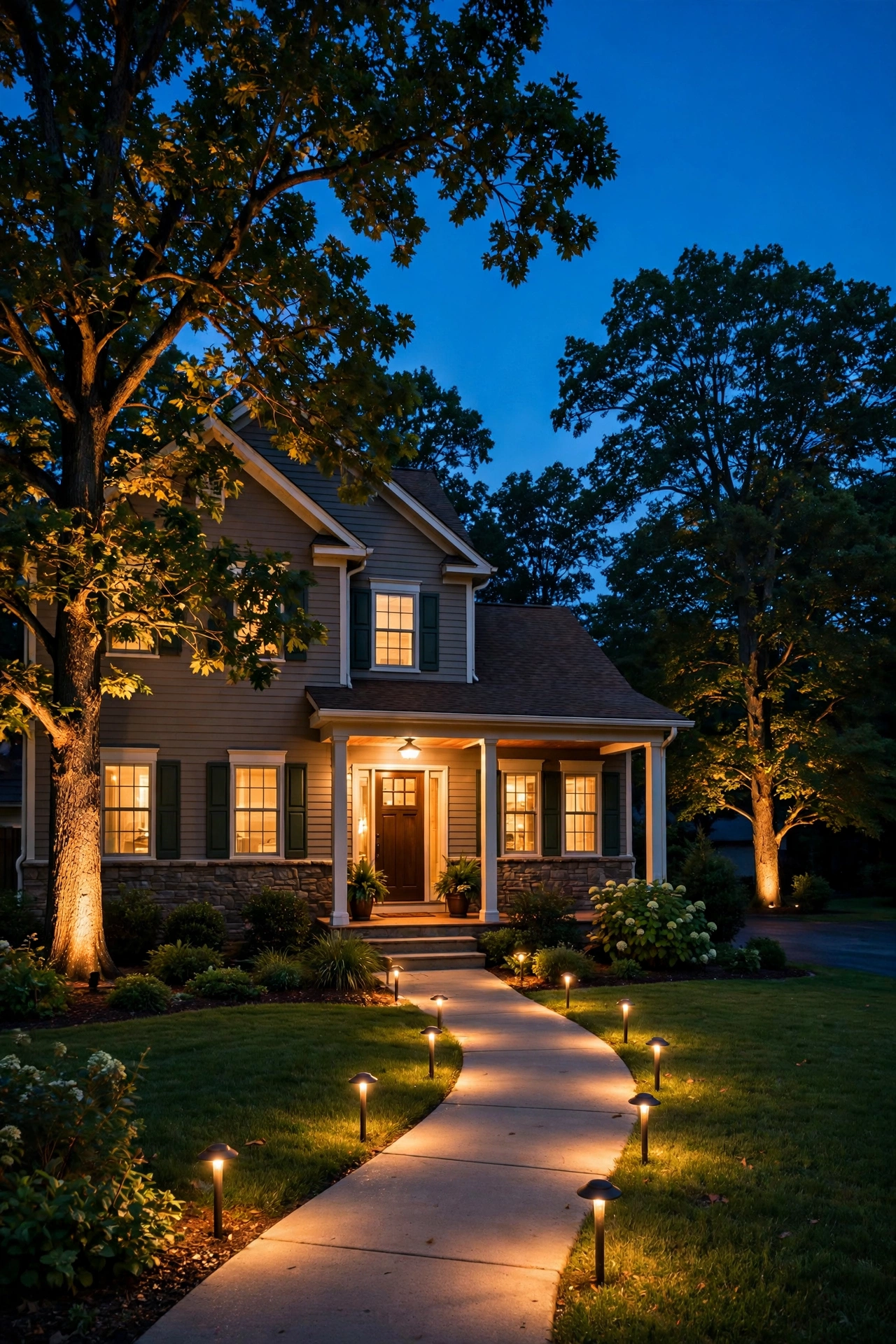
I get asked this question at least once a week: *"Are LEDs really worth it outside?"* Most people believe the answer is yes, but when I press them on the actual numbers — how much led outdoor lighting energy savings will land back in their pocket each year — they draw a blank. And honestly? The lighting industry hasn't helped. Marketing shouts "uses 80% less energy!" while the fine print quietly admits your mileage may vary.
Here's the thing: I converted my own yard from halogen to LED about four years ago — path lights, tree uplights, the whole driveway — and I kept the electric bills. So this guide isn't a sales pitch. It's the real math: how LEDs actually save power outdoors, a worked example using the 2026 national average electricity rate, what fixtures cost right now, and the honest caveats nobody puts on the box.
By the end, you'll know exactly how to calculate your own savings, when the upgrade pays for itself, and the handful of mistakes that can quietly wipe out every dollar you thought you were saving.
The Short Answer
For a typical suburban setup — say 10 to 12 low-voltage path and accent lights running about five hours a night — switching from halogen to LED cuts lighting electricity use by roughly 75–85% and saves around $40–$70 per year on the electric bill at the 2026 national average rate of about $0.175 per kWh. You also stop buying replacement halogen bulbs every year or two, which saves another $20–$40 annually. Most homeowners break even in 1–3 years on a DIY conversion, and everything after that is pure savings for the 10-plus-year life of the fixtures.
How Outdoor LEDs Actually Work (and Why They Sip Power)
To understand the savings, it helps to know where the old bulbs were wasting all that power. An incandescent bulb makes light by heating a tiny wire filament until it glows white-hot — which means roughly 90% of the electricity you pay for becomes heat, not light. Halogen bulbs are a fancier version of the same trick: same glowing filament, a bit hotter, a bit more efficient, but still mostly a tiny space heater that happens to glow.
LEDs skip the filament entirely. Inside every LED bulb is a semiconductor chip — a diode — that releases energy as light when current passes through it, a process called electroluminescence. Very little heat, very little waste. A small electronic driver tucked into the bulb converts your 120-volt household current down to the low-voltage direct current the chip wants.
That design difference is exactly why LEDs are so well suited to outdoor use. They reach full brightness instantly in freezing weather (unlike old compact fluorescents, which flickered and sulked below about 40°F), they run cool enough to sit safely inside small sealed fixtures, and they thrive on low-voltage 12-volt landscape systems, which are cheaper and simpler to install than line-voltage wiring. In my experience, the instant-on-in-the-cold trait alone is the reason LEDs finally killed the last excuse for keeping old yard lighting.
LED Outdoor Lighting Energy Savings: The Head-to-Head Comparison
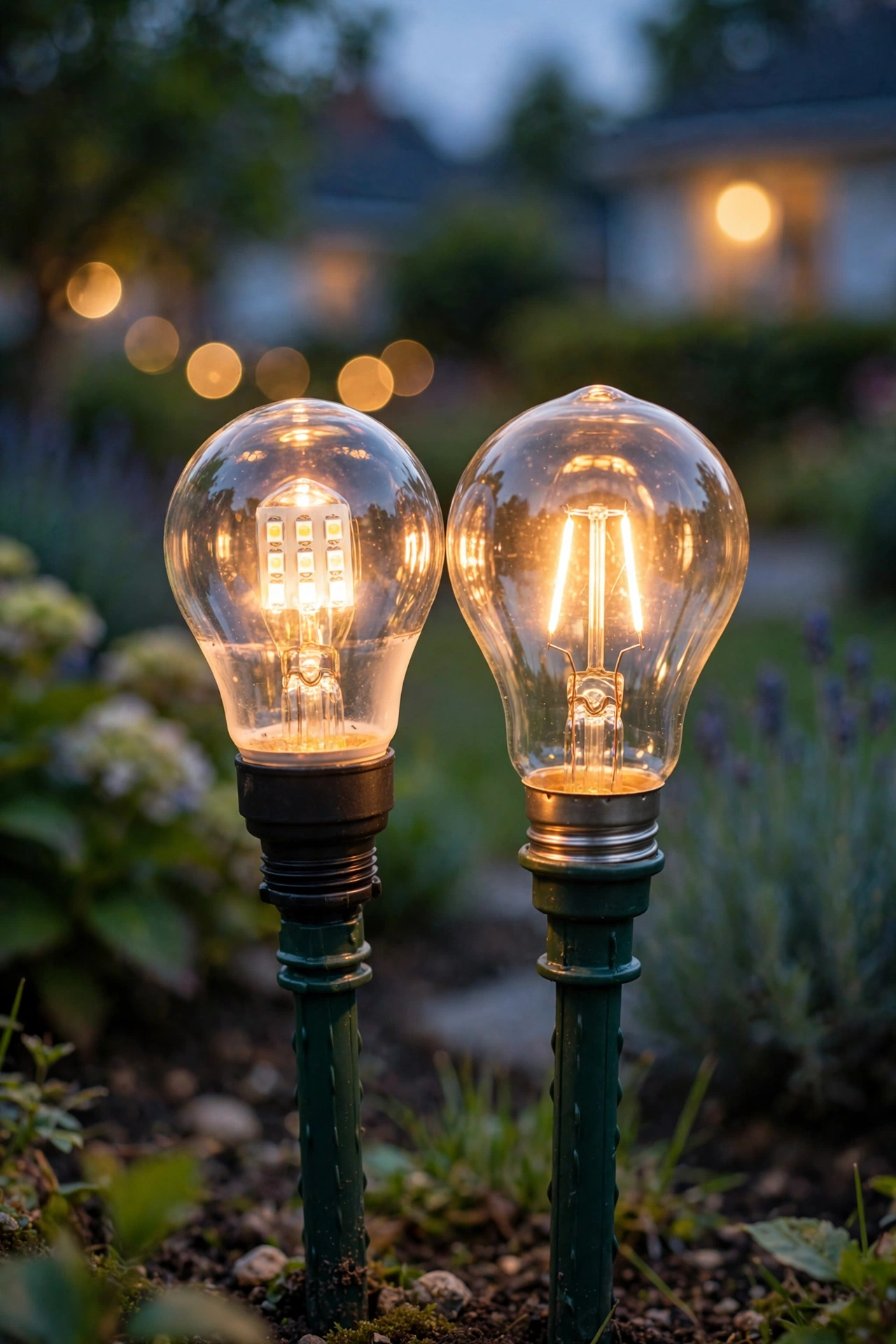
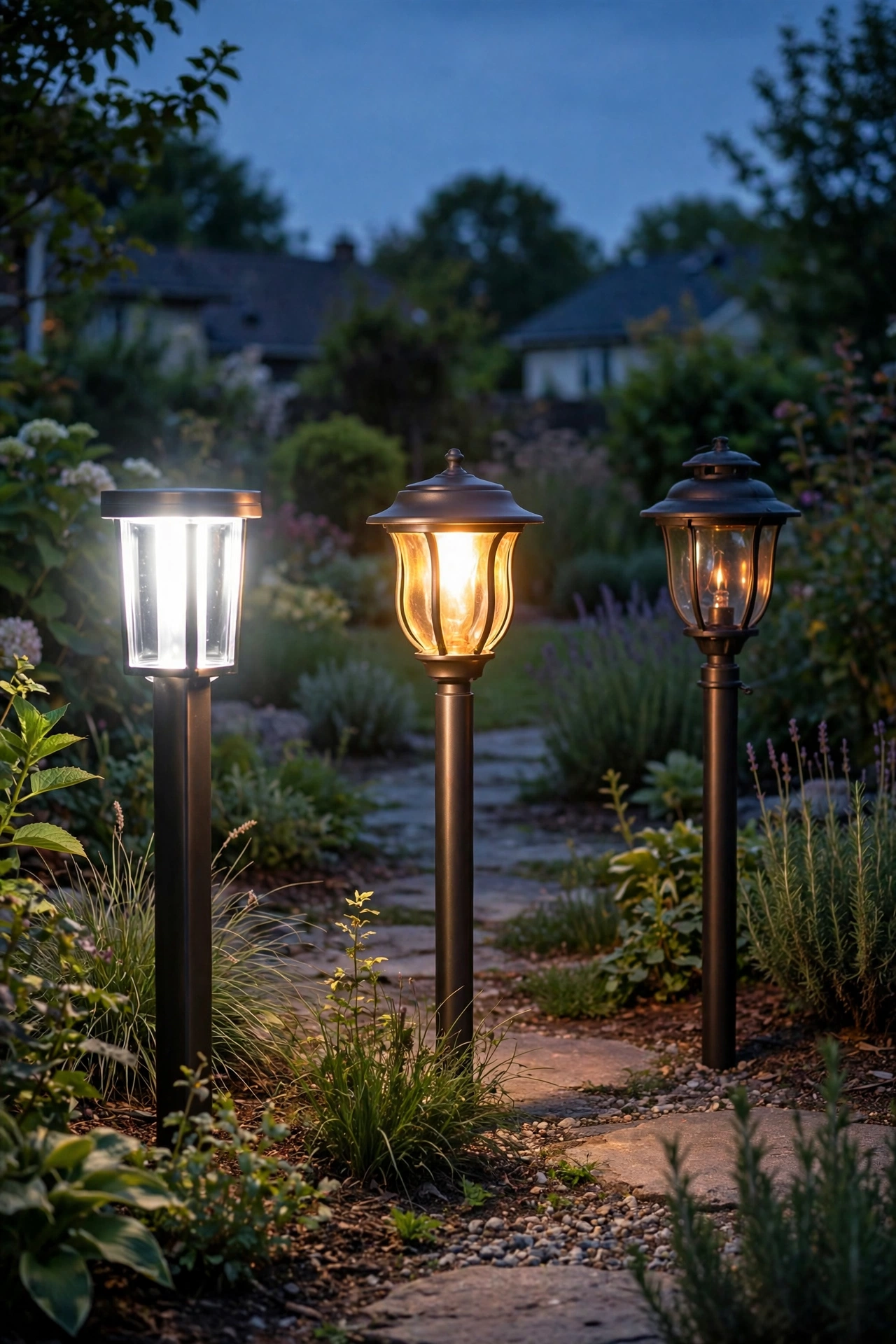
Comparing bulbs by wattage is the old way of thinking, and honestly? It's how most people get confused. Wattage measures how much power a bulb *consumes*; lumens measure how much light it *produces*. LED technology simply produces far more lumens per watt. A 20-watt halogen path light and a 4-watt LED path light can put out the exact same 200 lumens — the LED just does it with one-fifth the electricity.
Here's the honest comparison at equal brightness (about 200 lumens, a typical path light output):
| Bulb type | Wattage (~200 lumens) | Rated lifespan | Annual running cost* |
|---|---|---|---|
| LED | 3–5 W | 25,000 hrs | ~$1.60 |
| Halogen | 20 W | 2,000 hrs | ~$6.40 |
| Incandescent | 25 W | 1,500 hrs | ~$8.00 |
| CFL | 6 W | 8,000 hrs | ~$1.90 |
*\*5 hours per night, 365 days, at $0.175/kWh — the approximate 2026 U.S. residential average.*
Two things jump out. First, the LED runs for roughly $1.60 a year per fixture versus $6.40 for halogen — about a 75% cut. Second, and this is the part people forget: the halogen bulb dies in roughly a year of nightly use (2,000 hours ÷ 1,825 hours/year ≈ 13 months), while the LED keeps going for over a decade. At $4–$6 per replacement halogen bulb, that's another $20–$40 a year in bulbs alone across a 10-fixture yard. The running cost is the headline; the replacement-bulb savings are the quiet bonus.
LED Outdoor Lighting Energy Savings Math: A Worked Example
Let's do this properly, step by step, so you can swap in your own numbers. There are only two formulas you need.
Formula 1 — annual electricity use:
kWh = (total watts × hours per night × 365) ÷ 1,000
Formula 2 — annual cost:
Cost = kWh × your electricity rate ($/kWh)
Find your rate on your electric bill — look for the "$/kWh" or "cents per kWh" line. The national residential average for 2026 is roughly $0.175 per kWh, but if you're in California or New England you might pay over $0.30, and in the South you might pay under $0.13. Higher rates make the LED math dramatically better, so check yours.
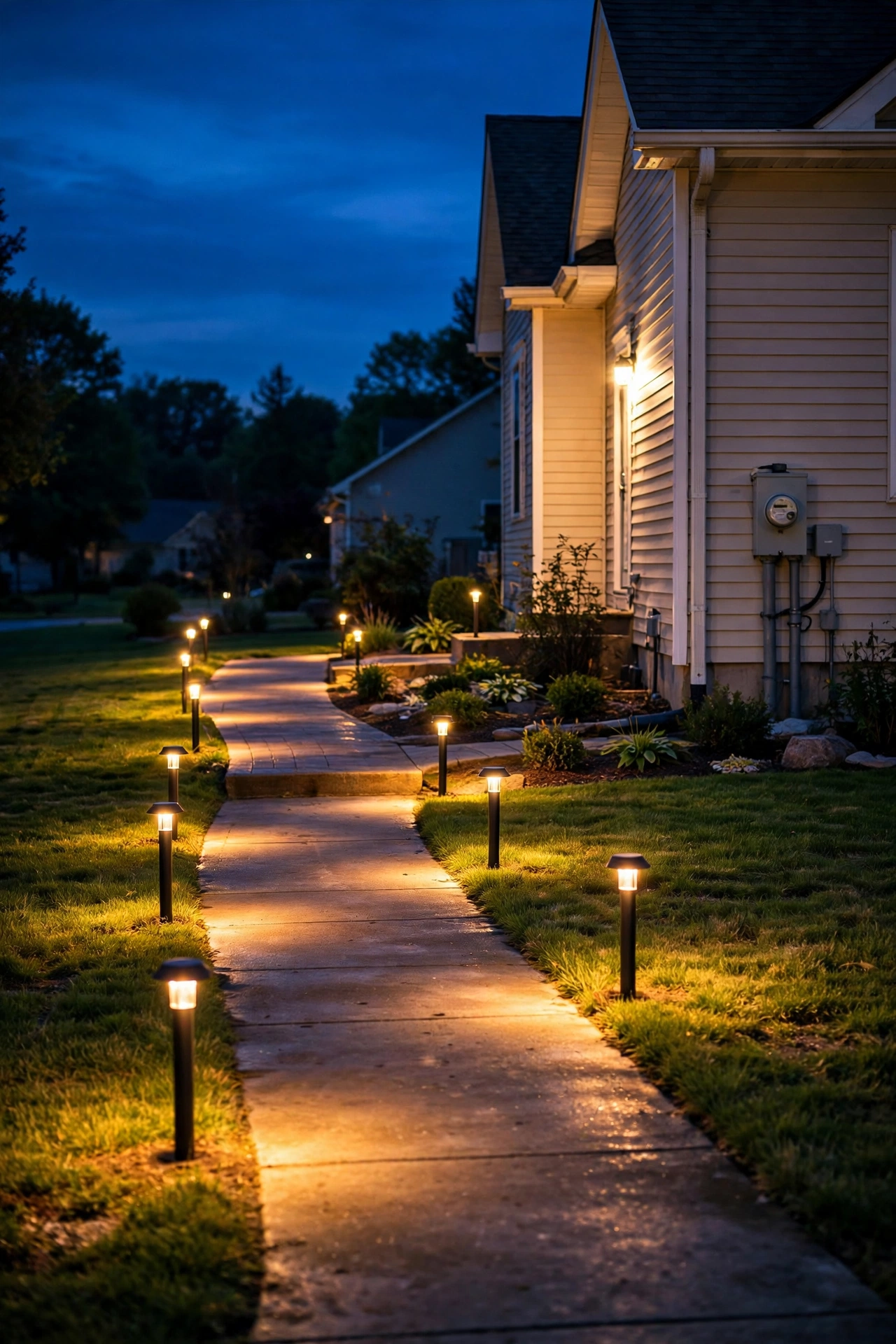
Now the worked example: a typical front-yard setup of 10 low-voltage path and accent lights, on 5 hours a night.
*Halogen system:* 10 fixtures × 20 watts = 200 watts. 200 × 5 × 365 ÷ 1,000 = 365 kWh/year. At $0.175/kWh: $63.88/year.
*LED system:* 10 fixtures × 4 watts = 40 watts. 40 × 5 × 365 ÷ 1,000 = 73 kWh/year. At $0.175/kWh: $12.78/year.
Annual savings: $51.10 — an 80% reduction. And remember the bulbs: those halogen bulbs are rated for about 2,000 hours, so at 1,825 hours/year you're replacing most of them every year, roughly $40–$50 in bulbs. Add it up and a 10-fixture yard saves close to $90–$100 a year in total — electricity plus bulbs you never buy again. And if your rate is higher — many California and Northeast bills top $0.30/kWh — the same 10 fixtures save nearly $90 a year on electricity alone, and payback shrinks from years to months.
What Switching to LEDs Will Cost You in 2026
Here's the part the LED evangelists skip: the payback only makes sense relative to what you spend upfront. The good news is that LED outdoor fixtures are cheaper than they've ever been.
If your fixtures are fine and take replaceable bulbs: this is the easiest win. LED retrofit bulbs that drop straight into standard low-voltage sockets run $3–$8 each. For 10 path lights, you're looking at roughly $30–$80 and an afternoon of work. Payback: usually under a year.
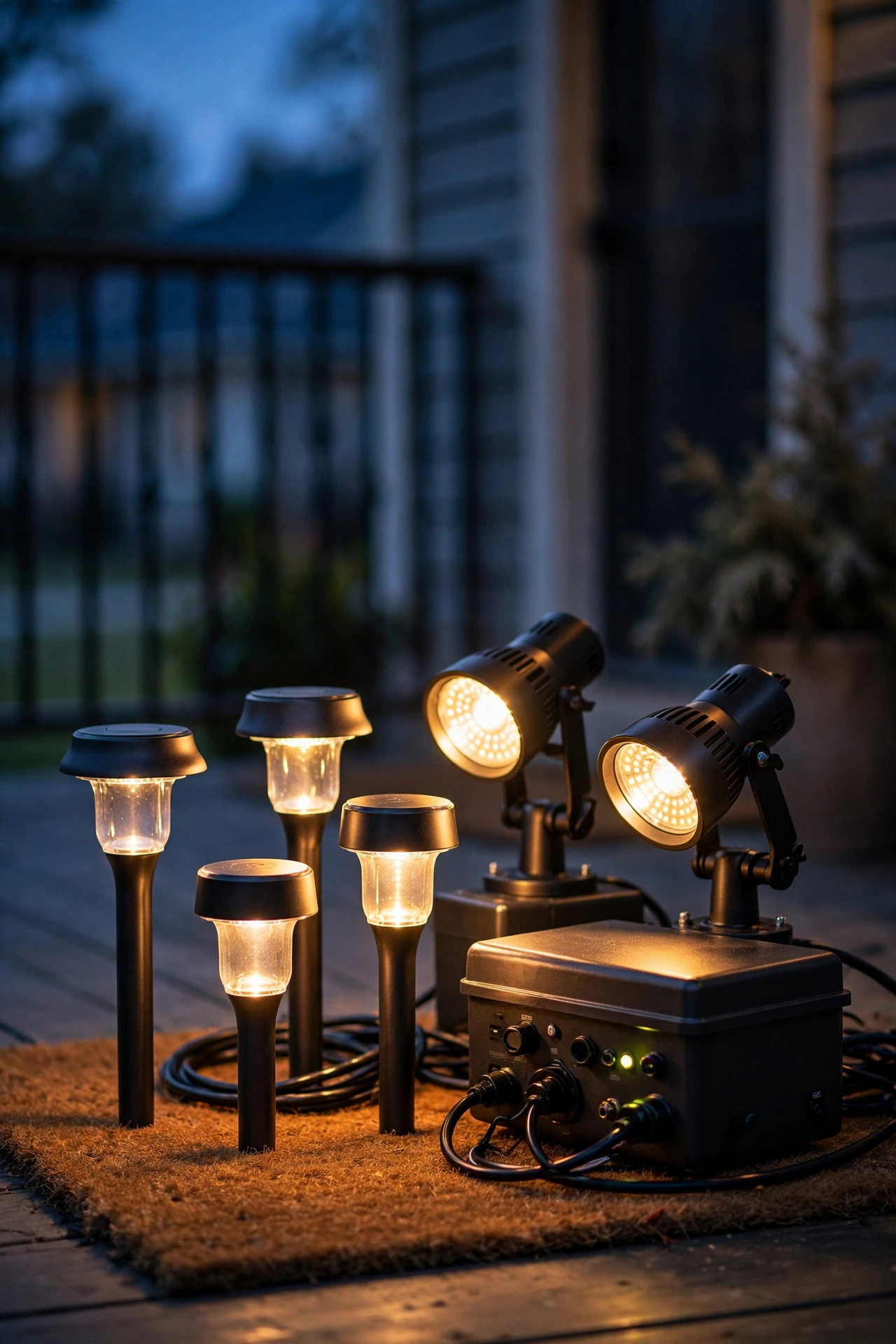
If you need new fixtures: LED path lights run $18–$45 each, spotlights and accent uplights $25–$60, floodlights $30–$70, and a good 300-watt low-voltage transformer $80–$150. A full 10–12 fixture DIY conversion typically lands between $150 and $600, depending on how fancy the fixtures are. Payback: 2–4 years, and the fixtures last 10–15.
If you hire a pro: a professionally installed low-voltage LED landscape lighting system for a typical yard runs $1,500–$4,000, including design, wiring, and labor. You're paying for expertise and a warranty, not just electricity savings — but at that price, the energy payback stretches to 5–10 years. Do it for the beauty and the warranty, not the utility bill.
Don't forget the transformer question. If your existing transformer is 10–15 years old, buzzing, or undersized for your plans, budget $80–$150 for a replacement with a built-in timer and photocell — the combo unit pays for itself in convenience alone. On the other hand, a healthy modern transformer with a working timer is perfectly reusable; LED retrofit bulbs draw so little power that your old transformer will be loafing along at a fraction of its capacity, which actually extends its life.
Honestly, for most people I recommend the middle path: keep any fixtures you like, swap in LED retrofit bulbs, and replace the transformer only if it's undersized or humming. That's the fastest payback with the least waste.
Installing LEDs Outdoors: Practical Notes That Save You Money
The electrical work is where cheap mistakes live, so here are the practical notes I wish someone had given me before my first install.
Start at the transformer. Add up your fixtures' wattage, then size the transformer at about 1.25× that total — the "80% rule." A 200-watt transformer comfortably runs 160 watts of lighting. Undersizing makes the transformer run hot and fail early; oversizing wildly wastes money. LEDs make this easy since a whole yard might total just 40–60 watts.
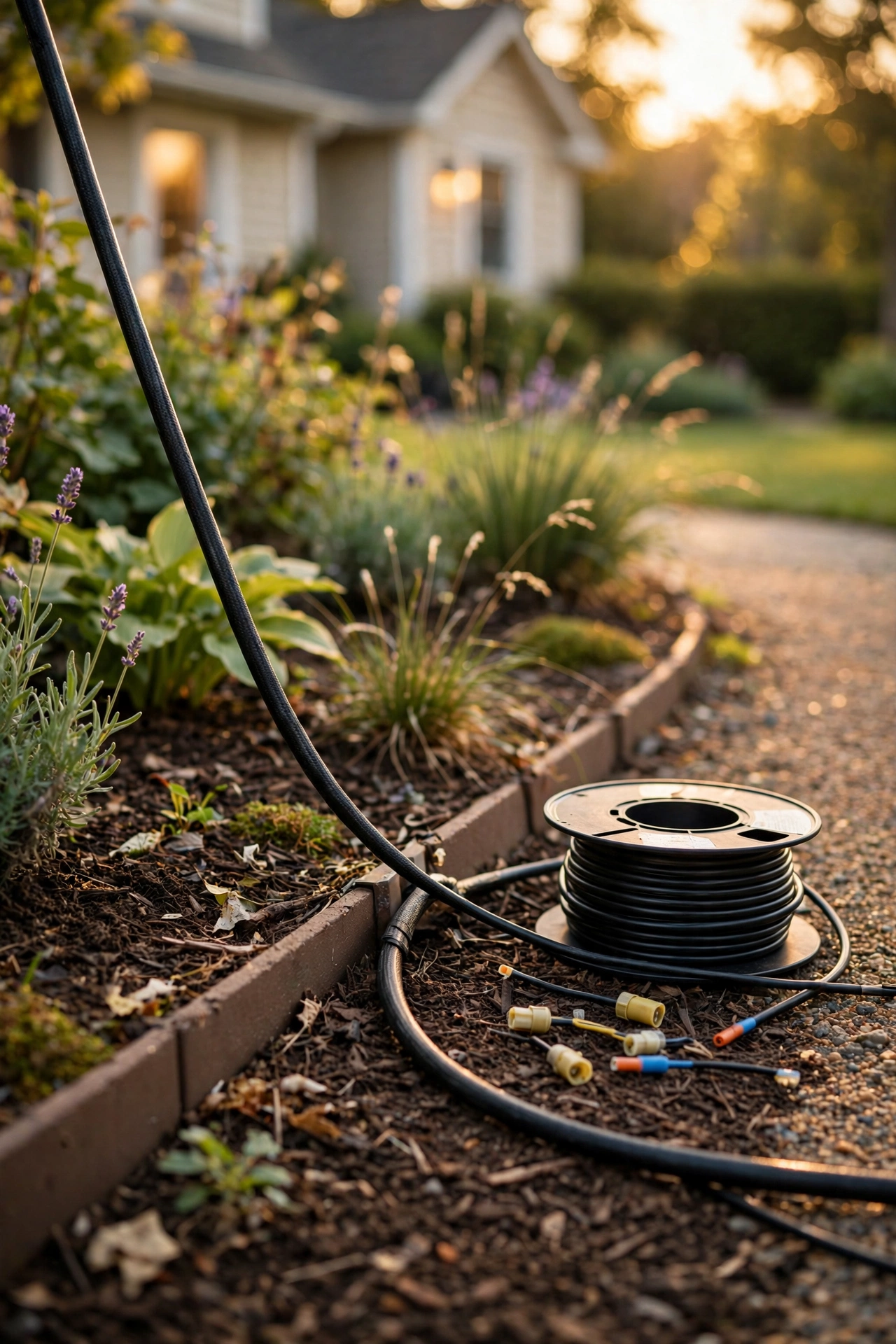
Mind your cable runs. On long wire runs, voltage drops along the cable, and fixtures at the far end burn dimmer. For runs over about 100 feet, use thicker 12/2 low-voltage cable instead of 16/2, or wire in a hub layout (cables radiating from the transformer like spokes) instead of daisy-chaining everything in one long line. With LED's tiny power draw this is less of an issue than it was with halogen, but on a big yard it still shows up.
Use a GFCI-protected outlet. Your transformer plugs into a standard outdoor outlet — it must be GFCI-protected and weather-rated. If yours isn't, have an electrician swap it before you plug in a single light.
Test everything at dusk before you bury cable. Lay the fixtures out, power them up, and walk the yard at night. Adjust angles, swap positions, pull one fixture out entirely if the look is crowded. Only after you're happy should you bury cable 6 inches deep and stake everything down. Re-digging a finished bed because fixture #7 aims at the fence is a special kind of regret.
Timers, Motion Sensors, and Dimmers: The Force Multipliers
Here's a secret the bulb box won't tell you: the cheapest watt is the one you never use. Controls — timers, motion sensors, dimmers — can save as much as the LED upgrade itself, and they're often cheaper than a single fixture.
Dusk-to-dawn photocells are the baseline. A $10–$20 sensor turns your system on at sunset and off at sunrise automatically. But consider: do your lights really need to run all night? That's 10–12 hours in winter.
Timers let you run the pretty lights during the hours you actually see them — say dusk to 11 p.m., about 5 hours — instead of dusk to dawn. Cutting runtime from 11 hours to 5 nearly halves the bill for the price of a $15 smart timer.
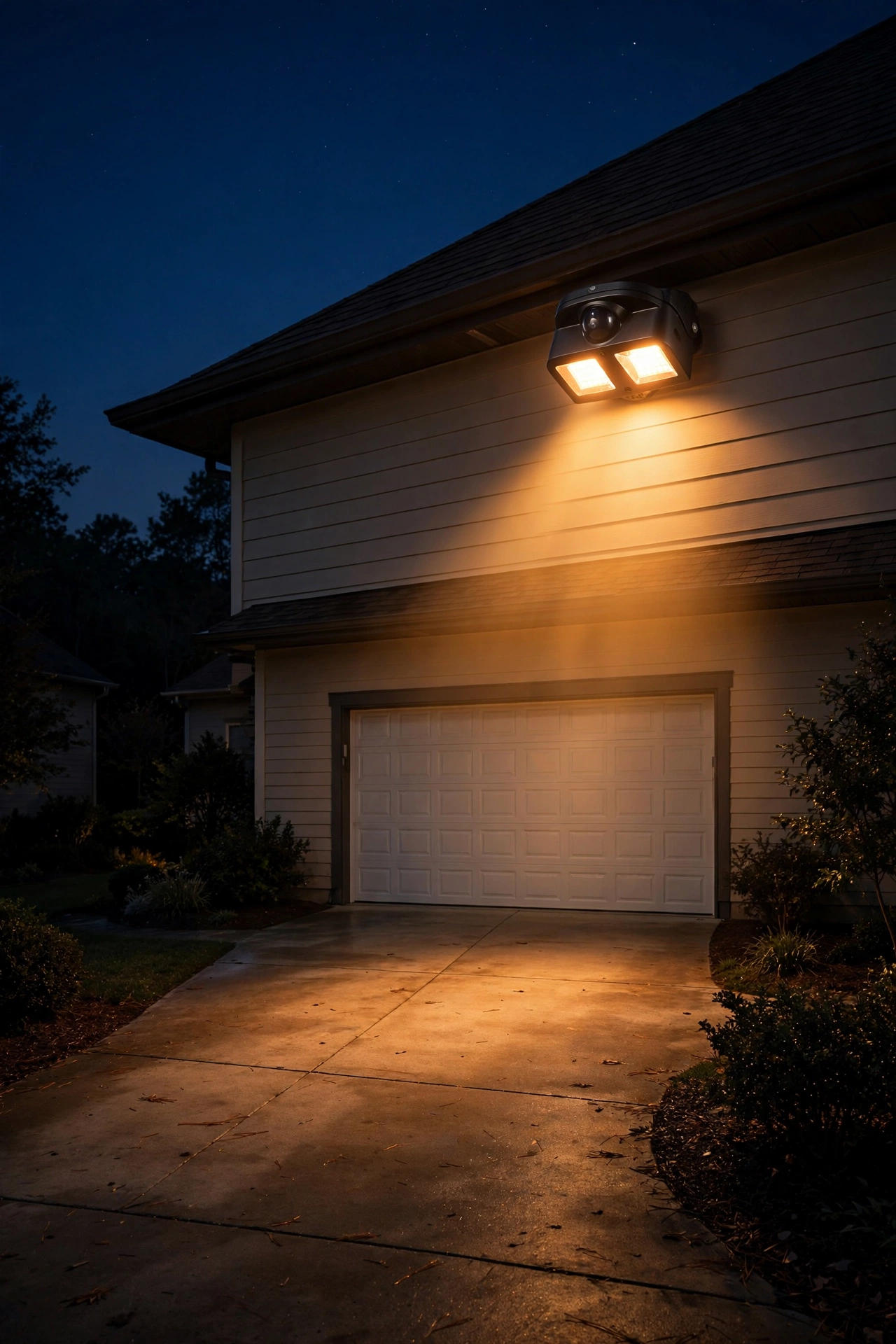
Motion sensors are the real force multipliers for security lighting. A floodlight that runs 11 hours a night for nothing is absurd; the same fixture on a sensor might run an effective 1–2 hours a night — an 80%+ cut on top of the LED savings. If you're lighting for security rather than ambiance, my motion sensor outdoor lights guide walks through placement so you actually catch what you want to see.
Dimmers reduce wattage directly. A dimmed-to-50% LED uses roughly half the power. For evening ambiance, dimming your landscape lights after 10 p.m. keeps the beauty and trims the bill.
7 Mistakes That Quietly Wipe Out Your LED Savings
I've seen every one of these in real yards — including, I'll admit, a couple in my own before I knew better.
1. No timer, no sensor, no off switch. A beautiful LED system running dusk-to-dawn, 365 days a year, still burns over 4,000 hours annually. Controls cost $10–$20 and can halve your bill. Skipping them is the single biggest money-waster I see.
2. An undersized transformer. Sizing to exactly 100% of your load (or — shudder — under it) runs the transformer at its thermal limit. It dies early, and the replacement wipes out two years of savings. Remember the 80% rule.
3. Ignoring voltage drop on long runs. Thin cable on a 150-foot run leaves your far fixtures dim and flickery, so you buy more fixtures to compensate — burning the money you saved. Thicker 12/2 cable is a few dollars more per roll. Worth it.
4. Over-lighting the yard. More fixtures than the space needs is the classic beginner move. Every extra fixture burns money for 15 years. Start with fewer than you think, live with it for a week, then add only what's missing. Layering beats flooding.
5. Cheap integrated fixtures with cheap drivers. A $12 LED stake light from the bargain bin often dies in 18–24 months because the driver electronics are garbage, even though the LED chip itself could have lasted a decade. When the driver is sealed inside, the whole fixture is trash. Mid-range fixtures with replaceable bulbs are the smarter money.
6. Mixing dimmable and non-dimmable. Put non-dimmable LEDs on a dimmer and you get flickering, buzzing, and sometimes early death — not savings. If you're dimming, every bulb in the circuit must be marked dimmable, and the dimmer must be LED-rated.
7. Aiming lumens at the sky and the neighbors. Glare bouncing off nothing is wasted electricity. Shielded, downward-aimed fixtures put the same lumens where your eyes actually use them, so you can light *less* and see *more*.
Color Temperature: Why Your Neighbor's LEDs Look Cheap
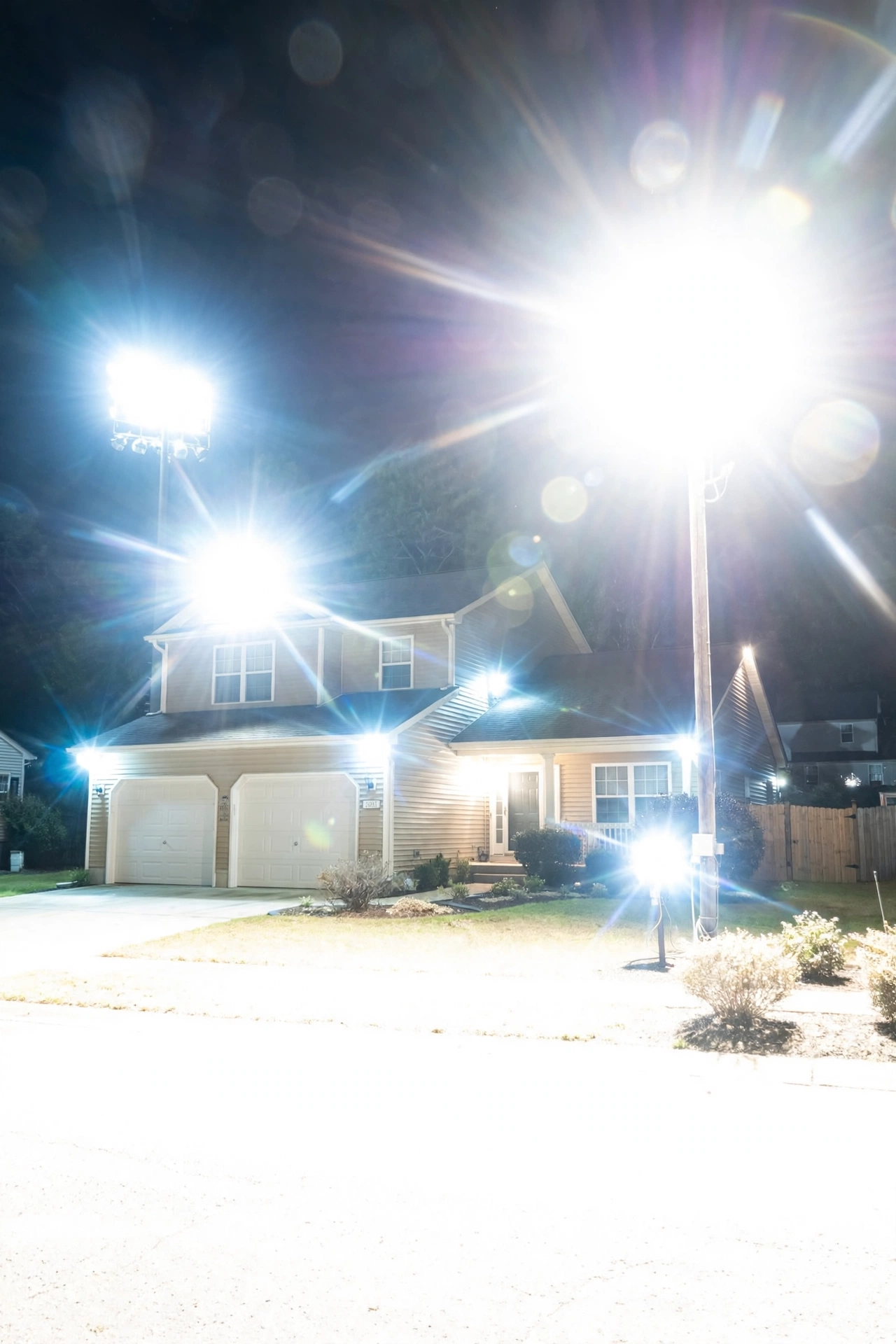
Raise your hand if you've seen a house where the LED lights look like a hospital parking lot. That harsh, cold, bluish glare is almost always one thing: the wrong color temperature.
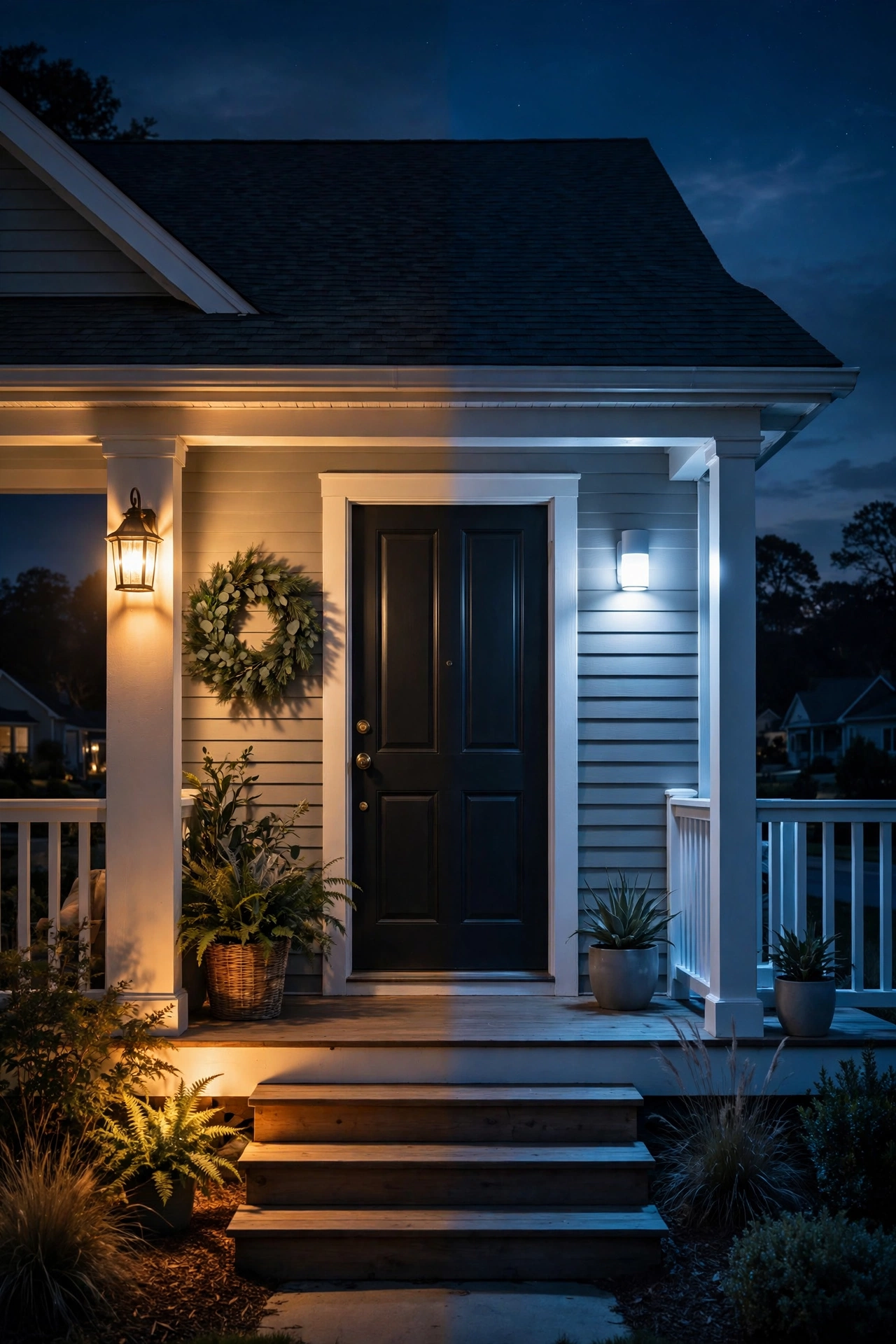
Color temperature is measured in Kelvin (K). Lower numbers are warm and golden; higher numbers are cold and blue. For residential outdoor lighting, 2700K–3000K is the sweet spot — it reads as cozy candlelight, flatters landscaping and siding, and matches the warm light spilling from your windows. Anything 4000K or above starts looking commercial, and 5000K+ is pure parking-lot energy.
The money angle? Warm-white (2700K–3000K) LEDs produce slightly fewer lumens per watt than cold-white ones, so you pay a tiny efficiency penalty — we're talking a few percent, maybe a dollar a year across the whole yard. Worth every penny. And whatever you choose, keep it consistent: mixing 2700K path lights with 5000K floodlights makes a yard look cobbled together no matter how much you spent.
One more spec worth glancing at: CRI (Color Rendering Index). Anything 80+ is fine for the yard; it just means plants and brick look natural instead of washed out. In my experience, nobody has ever complained their yard looked too warm at 2700K. Plenty have regretted 5000K.
Weather, Bugs, and Snow: Keeping Your LEDs Alive Outdoors
LEDs are tough, but "outdoor-rated" doesn't mean maintenance-free. A little care is the difference between fixtures that last 15 years and ones that die in five — and every early replacement eats your savings.
Clean the lenses. Dust, pollen, and sprinkler mineral deposits film over lenses every season, cutting light output by 20–30%. Wipe them down twice a year with a soft cloth and mild soap. If your lights look dimmer than last year, it's probably dirt, not dying LEDs.
Check the fixtures' ratings. Look for IP65 (dust-tight, rain-safe) or IP67 (survives brief submersion) on anything near sprinklers or low-lying beds. Fixtures with no IP rating are indoor lights playing dress-up — rain will find their seams.
Trim the landscaping. Shrubs grow; light doesn't shrink. A path light swallowed by a juniper is burning electricity to light the inside of a bush. Trim back growth every spring and re-aim anything that's drifted.
Inspect connections yearly. Pull up a few wire connectors and look for corrosion — green, crusty copper. Re-strip, reconnect, and seal with dielectric grease or waterproof wire nuts. Corroded connections are the #1 cause of "my lights just stopped working," and they're a $2 fix.
After big storms, walk the yard. Re-aim anything the wind shoved, stand up any leaning stakes, and check that downed branches aren't shading your fixtures. My full low-voltage path lights walkthrough covers the install details that make this maintenance easier from day one.
When LED Outdoor Lighting Isn't the Answer
I believe in LEDs — but an honest guide includes the caveats, and there are real ones.
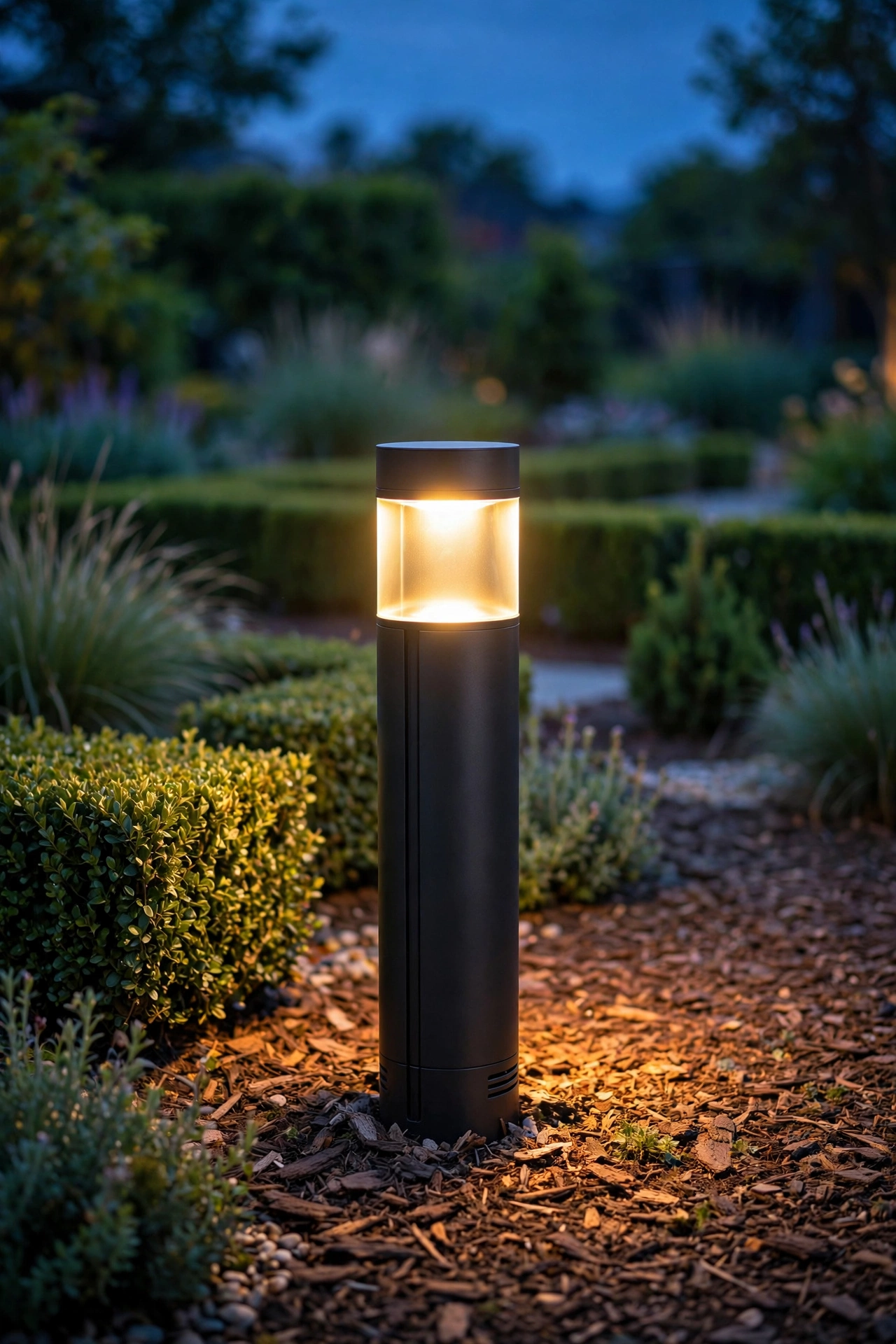
Integrated fixtures are a gamble. Many modern LED fixtures have the LED chip soldered in permanently. When the driver dies in year six, the whole $40 fixture goes in the trash, not a $5 bulb. If you can, buy fixtures that accept standard replaceable LED bulbs (MR16, G4, and PAR bases are common outdoors). You'll thank yourself in a decade.
The "25,000 hours" fine print. That rating assumes reasonable temperatures and decent airflow. Seal an LED into a tiny airless fixture in a Phoenix summer and the driver cooks itself years early. Realistic outdoor life is more like 15,000–25,000 hours — still excellent, just not the fairy tale on the box.
Ultra-low-use fixtures. A guest-room sconce that burns 20 hours a year? The LED saves you about 40 cents annually. Converting a fixture you barely use is a payback measured in decades — fine for convenience, but don't pretend it's economics.
When you actually want heat. Halogen's inefficiency is a feature in a few odd cases: some people keep a halogen lamp in a pump house or chicken coop because the waste heat prevents freezing. An LED won't do that job.
The already-efficient yard. If your lights are all on motion sensors and run barely an hour a night, your bill is already tiny — switching to LED saves pennies. Spend that money on the fixtures you'd *leave on* instead.
And if you're weighing wired LED against solar for some spots, the economics differ more than you'd think — my LED vs. solar exterior lights comparison breaks down where each one actually wins.
Frequently Asked Questions
How long does it take for outdoor LEDs to pay for themselves?
For a simple bulb swap in existing fixtures — about $30–$80 for a 10-fixture yard — most people break even in under a year, since the savings run $50–$100 annually (electricity plus replacement bulbs). A full fixture replacement at $150–$600 DIY typically pays back in 2–4 years. Professionally installed systems ($1,500–$4,000) take 5–10 years on energy savings alone, so weigh the beauty and warranty benefits too.
Do LED bulbs really last 25,000 hours outdoors?
The chip usually does, but the driver electronics are the weak link — especially in sealed fixtures that bake in summer heat. Realistically, expect 15,000–25,000 hours outdoors, which is still 7–14 years at five hours a night. Fixtures with replaceable bulbs are the safer bet: when something eventually fails, you're swapping a $5 bulb, not a $40 fixture.
What color temperature is best for outdoor lighting?
2700K–3000K (warm white) for nearly every residential application. It looks inviting, flatters landscaping and architecture, and matches the glow from your windows. Go above 4000K only for task areas like a grill station or workshop, never for ambiance. And keep the whole yard at one temperature — mixed temperatures look accidental.
Can you dim outdoor LED lights?
Yes — but only if every bulb in the circuit is marked "dimmable" and the dimmer or smart controller is LED-rated. Old dimmers designed for incandescent loads cause flickering, buzzing, and premature LED failure. Dimming is worth doing: a light dimmed to 50% uses roughly half the power.
Are solar lights or wired LEDs cheaper to run?
Solar lights cost nothing to run — the sun pays the bill — but they put out a fraction of the light and their batteries fade in 2–3 years. Wired low-voltage LEDs cost about $1–$2 per fixture per year to run but deliver far brighter, more reliable light for a decade-plus. For accent glow along a path, solar is fine; for real illumination, wired LED wins on total cost over time.
Conclusion
The honest verdict on led outdoor lighting energy savings: a typical 10-fixture yard saves roughly $50 on electricity and another $40 in replacement bulbs every year — an 80% cut in lighting costs — with payback in 1–3 years for most DIY upgrades and a decade or more of nearly free light after that. Add a $15 timer or motion sensor and the savings get even better. Skip the bargain-bin sealed fixtures, keep everything at 2700K–3000K, and your yard will glow beautifully while your electric bill quietly shrinks. If you're ready to plan the layout, browse the rest of our outdoor lighting ideas for inspiration — your walkway will thank you.