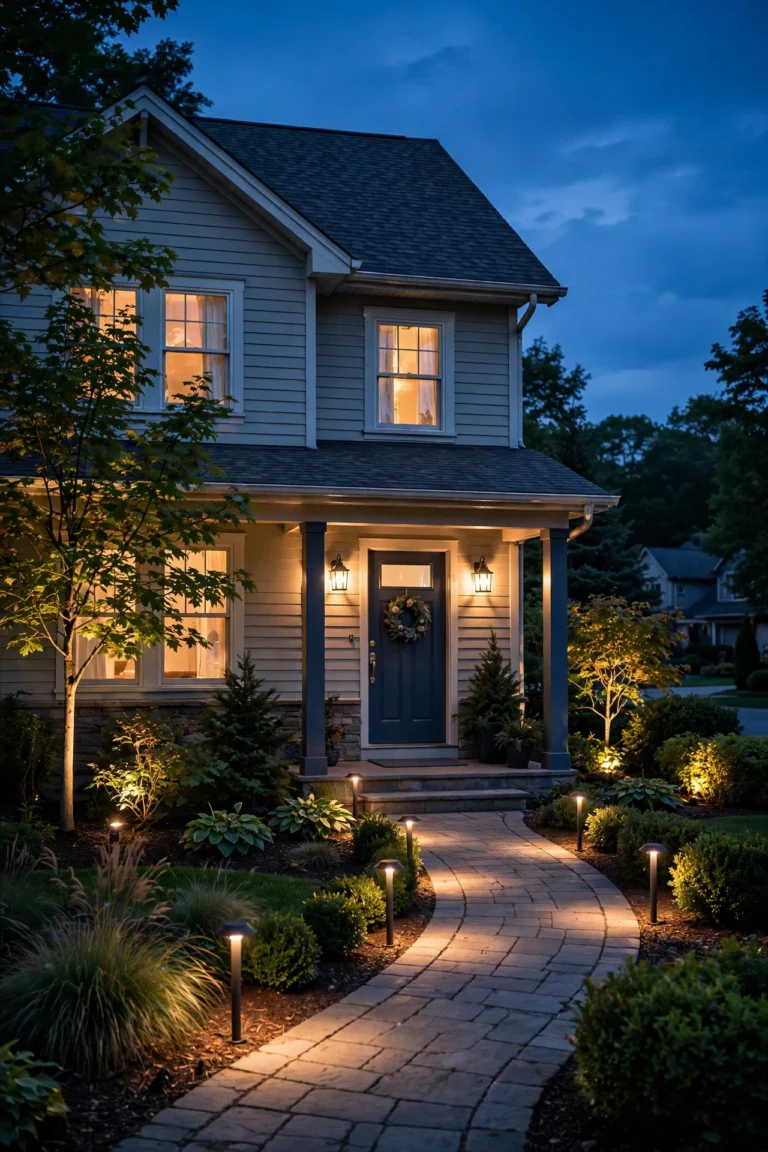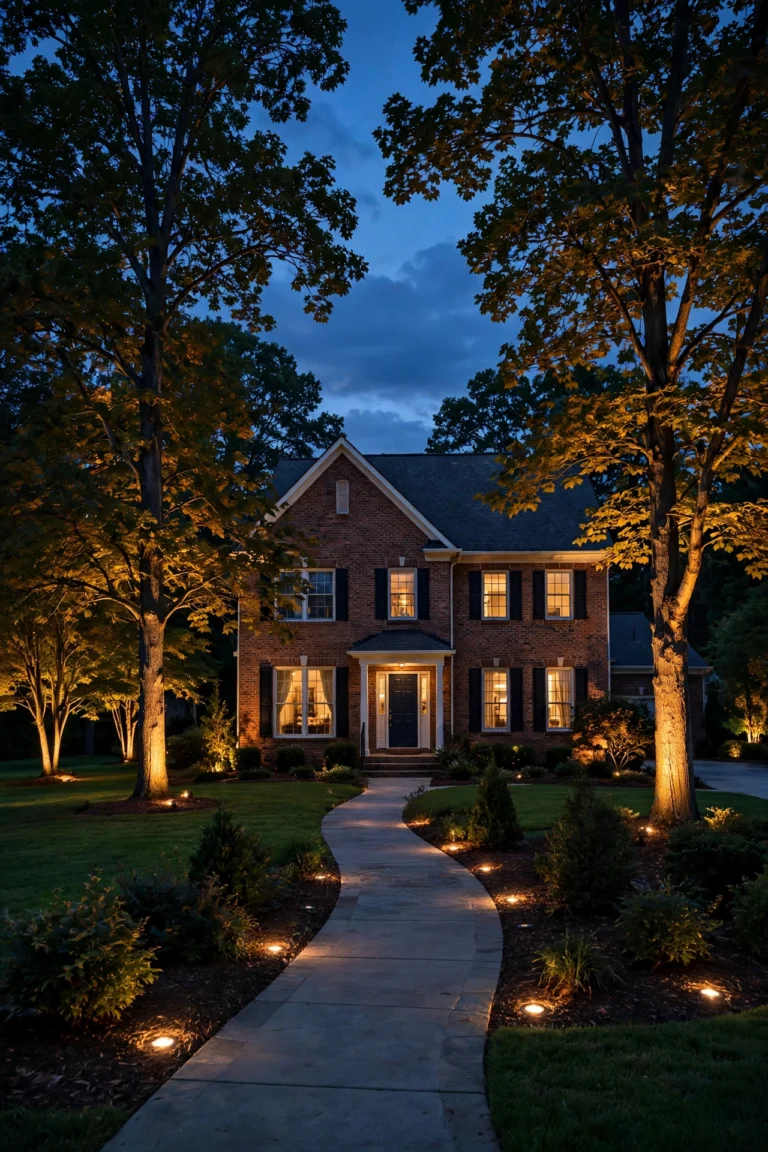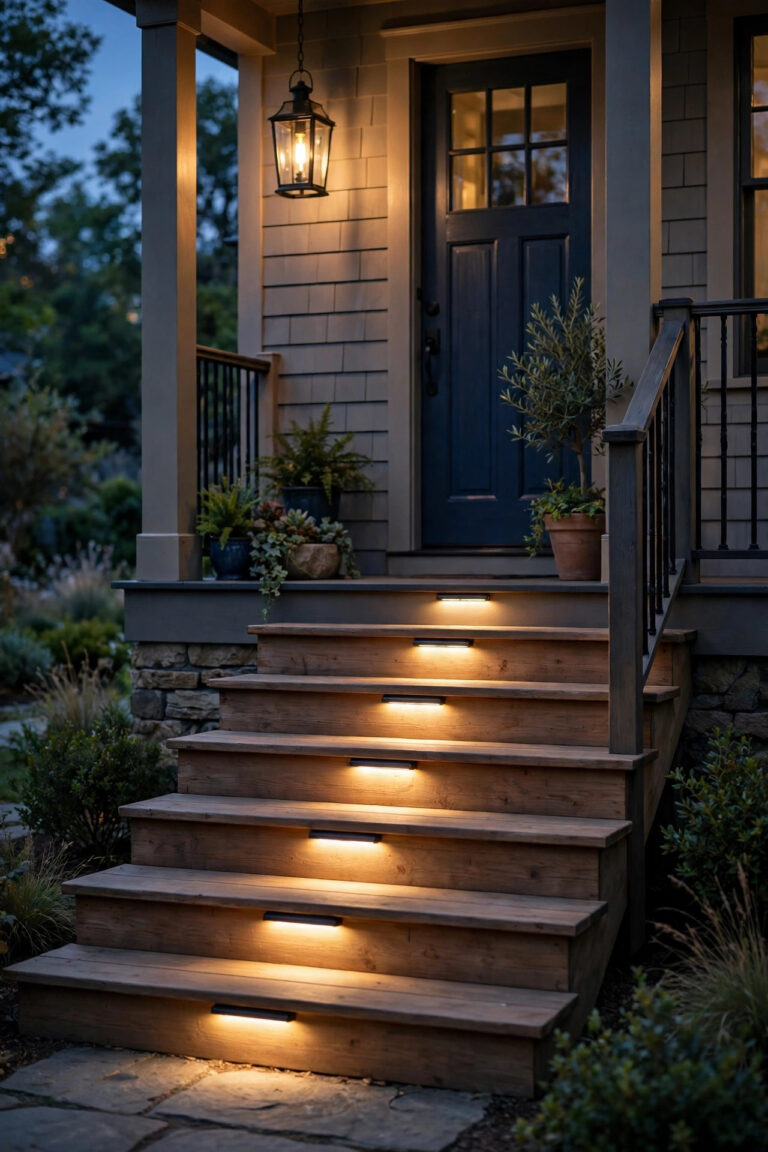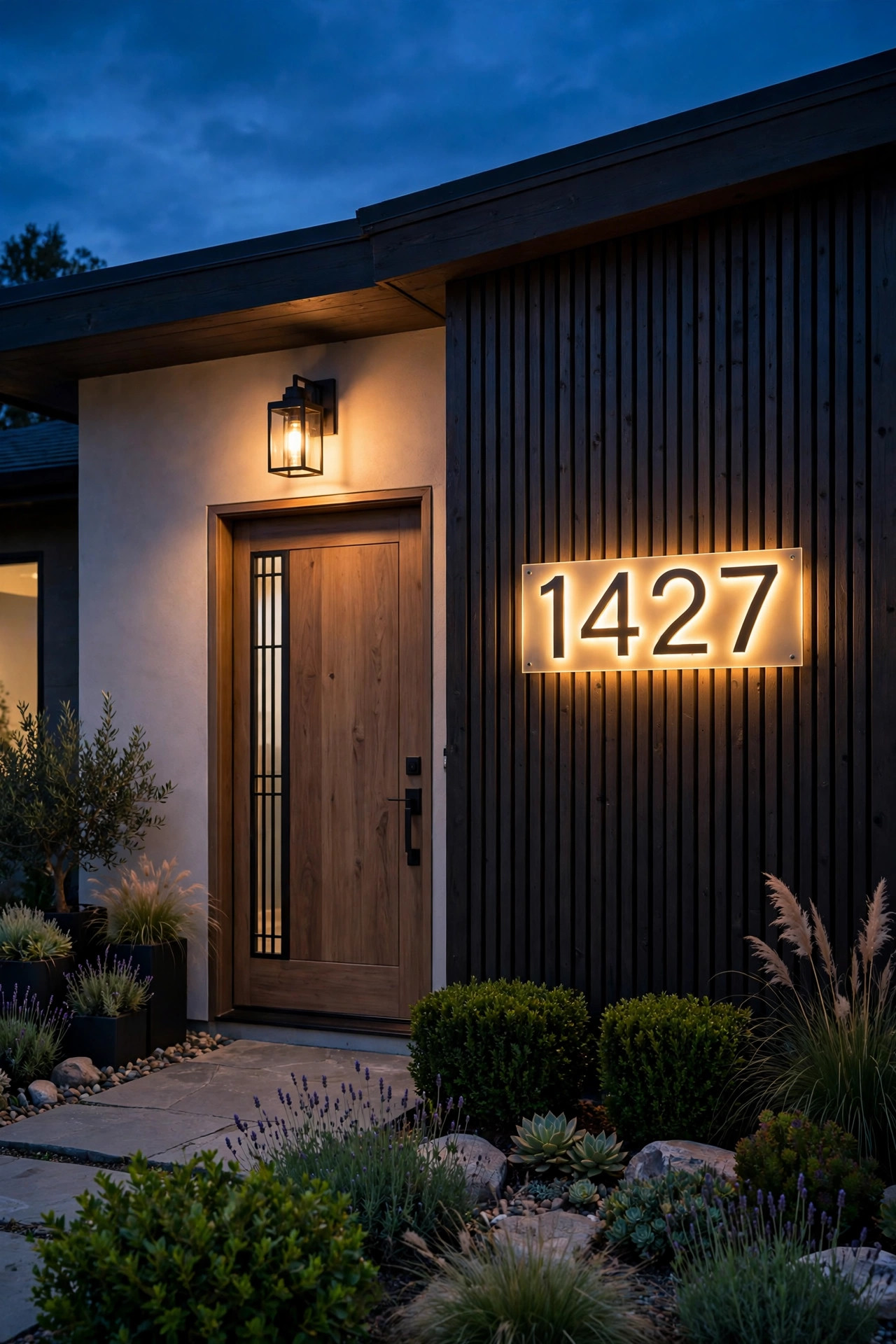
There is a particular kind of frustration I think we have all felt: circling a dark street at night, squinting at mailboxes, while your friend texts "I'm outside… somewhere?" A beautiful backlit address plaque fixes that in one stroke. It makes your house findable for guests, delivery drivers, and — the one nobody likes to think about — emergency vehicles, and it does it while looking like a piece of modern architecture rather than a hardware-store afterthought. In my experience, it is the single highest-impact detail you can add to an entry for the money.
The secret is the same layering philosophy I use for every exterior: a soft halo of light at the plaque, balanced by your porch light and path lights, so the numbers read clearly without glaring. Below are 15 ways to do it, from sleek floating panels to solar options that need no wiring at all, each with honest costs and the placement details that make the difference between "pretty" and "actually readable from the street."
1. Floating Halo-Lit Numbers on a Matte Black Panel
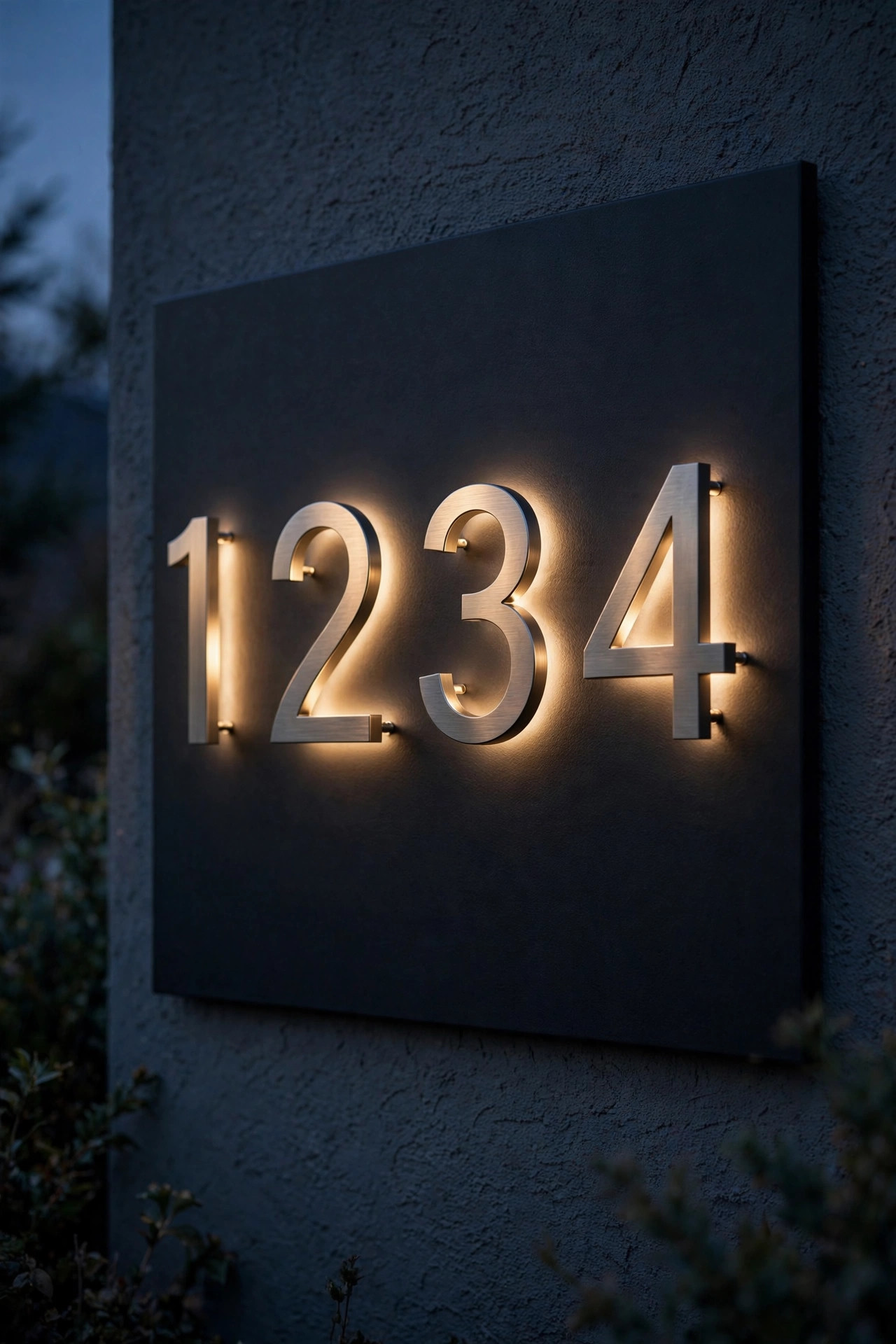
This is the look that started the whole trend, and honestly? It is still my favorite. Individual metal numbers, usually 5 to 6 inches tall, mount on 3/4-inch to 1-inch standoff spacers in front of a matte black aluminum panel, with a warm LED strip hidden behind each digit. The light spills out around the numbers and washes the panel, so each digit reads as a glowing silhouette. That standoff gap is everything: too shallow (under 1/2 inch) and the halo looks pinched and uneven; a full inch gives you that soft, floating bloom.
Choose 2700K to 3000K LEDs for a warm, welcoming halo — cooler temperatures can make black panels look blue-ish and stark. The numbers should contrast with your siding even in daylight: brushed silver or white digits on the black panel work on almost any facade. Wire it to a low-voltage transformer with a photocell so it comes on at dusk automatically, and seal the panel edges with outdoor-rated silicone where they meet stucco or brick to keep wind-driven rain out of the housing. Expect a weekend-morning install if you are comfortable drilling masonry anchors.
Suggested budget range: $120 – $260.
2. Frosted Acrylic Panel With a Soft Edge Glow
If the halo look feels a touch dramatic for your home, a frosted acrylic panel is the gentler cousin. The numbers are cut into or applied onto an opaque white-frosted acrylic sheet, and LEDs around the inside edge light the whole panel evenly, so it glows like a small lantern with dark, crisp digits floating on it. Because the panel itself is the light source, this style is exceptionally readable — there is no relying on spill light, and the contrast stays strong even in fog or rain.
Look for UV-stable, outdoor-rated acrylic at least 3/8 inch thick so the panel does not yellow or warp after two summers of afternoon sun. I always recommend mounting it with four stainless standoff bolts, one in each corner, which lifts it about 3/4 inch off the wall and lets a little light escape at the edges for depth. Pair it with a dimmable driver if your porch is small; a full-brightness panel at close range can feel like a sign rather than decor. This style suits modern, Scandinavian, and minimalist entries especially well, and it photographs beautifully for listing photos if you are selling.
Suggested budget range: $90 – $220.

3. Brushed Aluminum Backlit Address Plaque With Crisp White Light
Some entries want precision rather than warmth, and that is where a brushed aluminum plaque with a cooler backlight shines. A solid aluminum faceplate with the numbers precision-cut straight through the metal sits over a diffused LED cavity, so the digits themselves glow — not a halo, the actual numbers — in a clean 3500K to 4000K white. From the street it reads like the signage on a boutique hotel, and it pairs perfectly with concrete, steel railings, and black-framed glass doors.
Because the numbers are cut through, the diffuser layer behind them matters: a milky polycarbonate backing spreads the light so you do not see individual LED dots through the cutouts. Ask for a marine-grade or anodized finish if you live within a few miles of the coast — raw brushed aluminum pits in salt air. Mounting height matters here too: because the digits glow directly, a plaque centered about 54 inches off the porch floor, beside the door, is readable from a car without headlight glare washing it out. For more ways to carry this crisp modern feel across the whole facade, my roundup of modern outdoor lighting ideas is a good next read.
Suggested budget range: $150 – $320.

4. Solar Backlit Address Plaque for a No-Wiring Install
No outdoor outlet near the door? No appetite for running low-voltage cable? A solar backlit address plaque is the honest answer, and the newer ones are genuinely good. A small solar panel — either built into the top edge of the plaque or on a short stake you angle toward the sky — charges a lithium battery all day, and the numbers glow for 8 to 10 hours after dark. Most use a light sensor, so there is nothing to program.
The placement rules are stricter than with wired versions, and this is where people go wrong. The panel needs roughly 6 hours of direct sun, so a north-facing, porch-shaded entry will leave you with a dim plaque by 9 p.m. If your entry is shaded, choose a model with a separate panel on a 6- to 10-foot cord and mount that panel on the sunny side of the porch column. Expect the glow to be softer than hardwired versions — fine for a quiet residential street where cars are close, less ideal on a fast road where drivers need to read numbers at distance. Clean the panel with a damp cloth every couple of months; a film of pollen can cut charging noticeably.
Suggested budget range: $35 – $90.

5. Hardwired Backlit Address Plaque Tied Into Your Landscape Lighting
If you already have a low-voltage landscape lighting system, this is the smartest money you will ever spend: tap the plaque into the same 12-volt transformer and it inherits your timers, your photocell, and your whole lighting schedule. The plaque lights when the path lights light, and everything feels like one designed system — because it is. I always recommend this route when a transformer with spare capacity already exists near the front of the house.
Check your wattage math first: most plaques draw just 3 to 8 watts, so even a small 45-watt transformer usually has room, but add up every fixture on the run to be sure you stay under 80 percent of capacity. Use the same waterproof wire connectors you used for the landscape lights, bury the cable at least 6 inches deep or run it along the foundation where a mulch bed hides it, and keep the connection point off the ground in a small junction box if your winters are wet. Because it runs on the landscape timer, set the schedule generously — dusk to midnight covers deliveries and guests, and the LED draw costs only a few dollars a year.
Suggested budget range: $80 – $200.

6. Vertical Stacked Numbers Beside the Front Door
Most plaques run horizontally, but a tall, narrow entry — think a townhouse or a door flanked by sidelights and a skinny strip of wall — often has no room for a wide panel. Stacking the numbers vertically solves it elegantly. Each digit gets its own small backlit tile, about 5 inches square, hung in a column on matching standoffs, and the whole column glows like a little tower of light beside the door. It reads modern, a little playful, and very intentional.
Keep the spacing between tiles consistent — 1/2 inch to 3/4 inch gaps look tailored — and align the column's center with the door handle height, roughly 48 to 54 inches from the porch floor to the middle digit. One caution from experience: vertical arrangements are slightly harder to read at speed, because our eyes scan addresses horizontally. If your street has fast traffic, make the digits bigger (6 inches) and the backlight brighter, or choose the vertical stack for a secondary position and add a horizontal plaque or lit mailbox numbers near the street for drivers.
Suggested budget range: $100 – $240.
7. Horizontal Plaque Over the Garage for Street Visibility
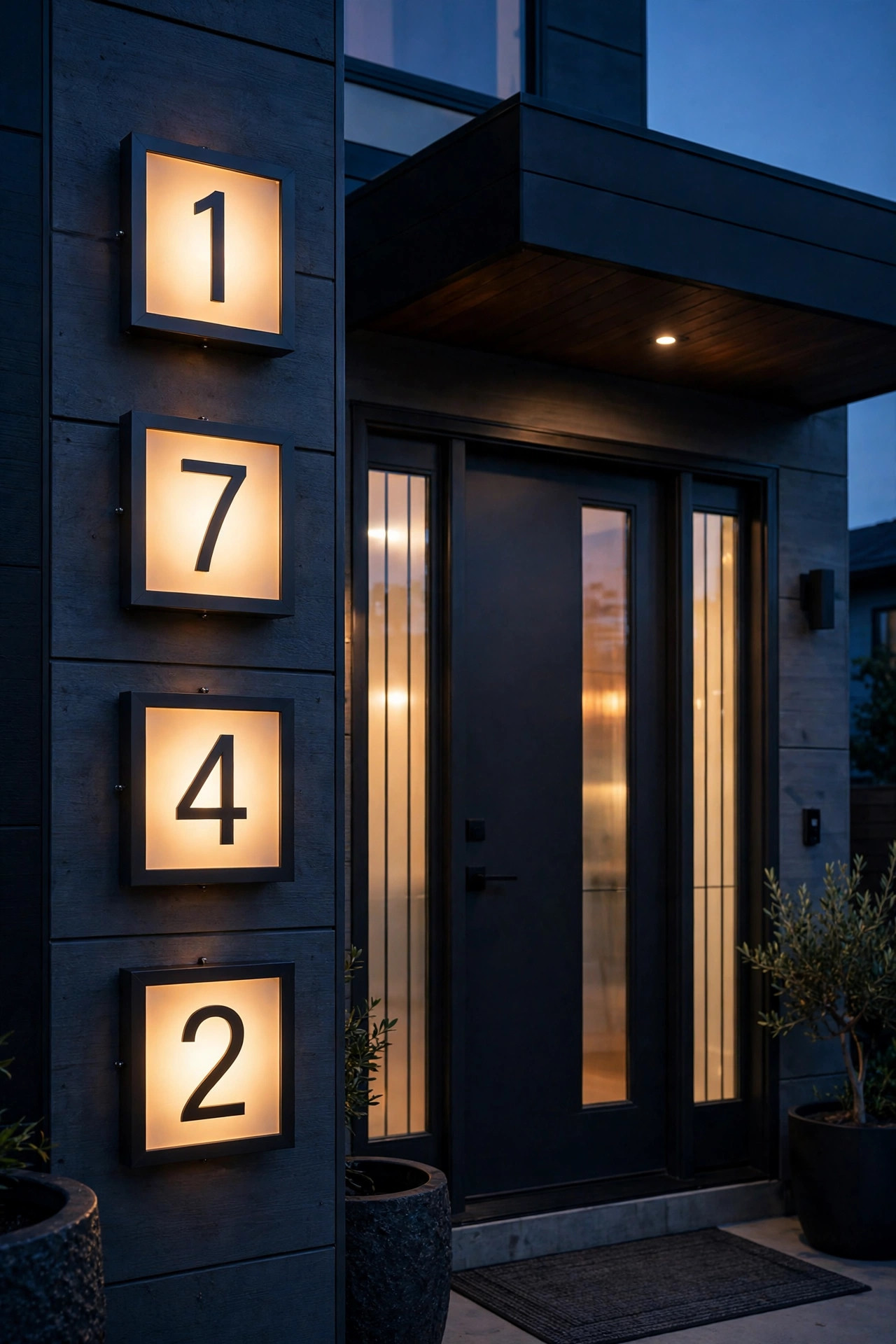
Here is a placement most people never consider, and it might be the most practical one on this list: a wide backlit plaque centered over the garage door. On many suburban homes the garage face is the closest, clearest surface to the street — no porch columns, no shrubs, no parked cars blocking the view. A 24- to 36-inch plaque with 6-inch numbers up there is readable from well over 100 feet away, which is exactly what a delivery driver scanning addresses at dusk needs.
The trade-off is wiring: you will likely need to run cable through the garage wall from an interior outlet or tie into the garage door opener circuit with a low-voltage transformer mounted inside, which keeps the electronics dry and happy. Use a plaque rated IP65 or better since this position takes direct weather, and angle your thinking about glare — mount it high enough (centered above the door, about 9 to 10 feet up) that the glow does not sit in drivers' eyes at windshield height. This works beautifully alongside a tidy outdoor entryway lighting scheme, where the garage plaque handles the street and softer layers handle the welcome.
Suggested budget range: $160 – $350.
8. Stone or Brick Pillar-Mounted Backlit Plaque
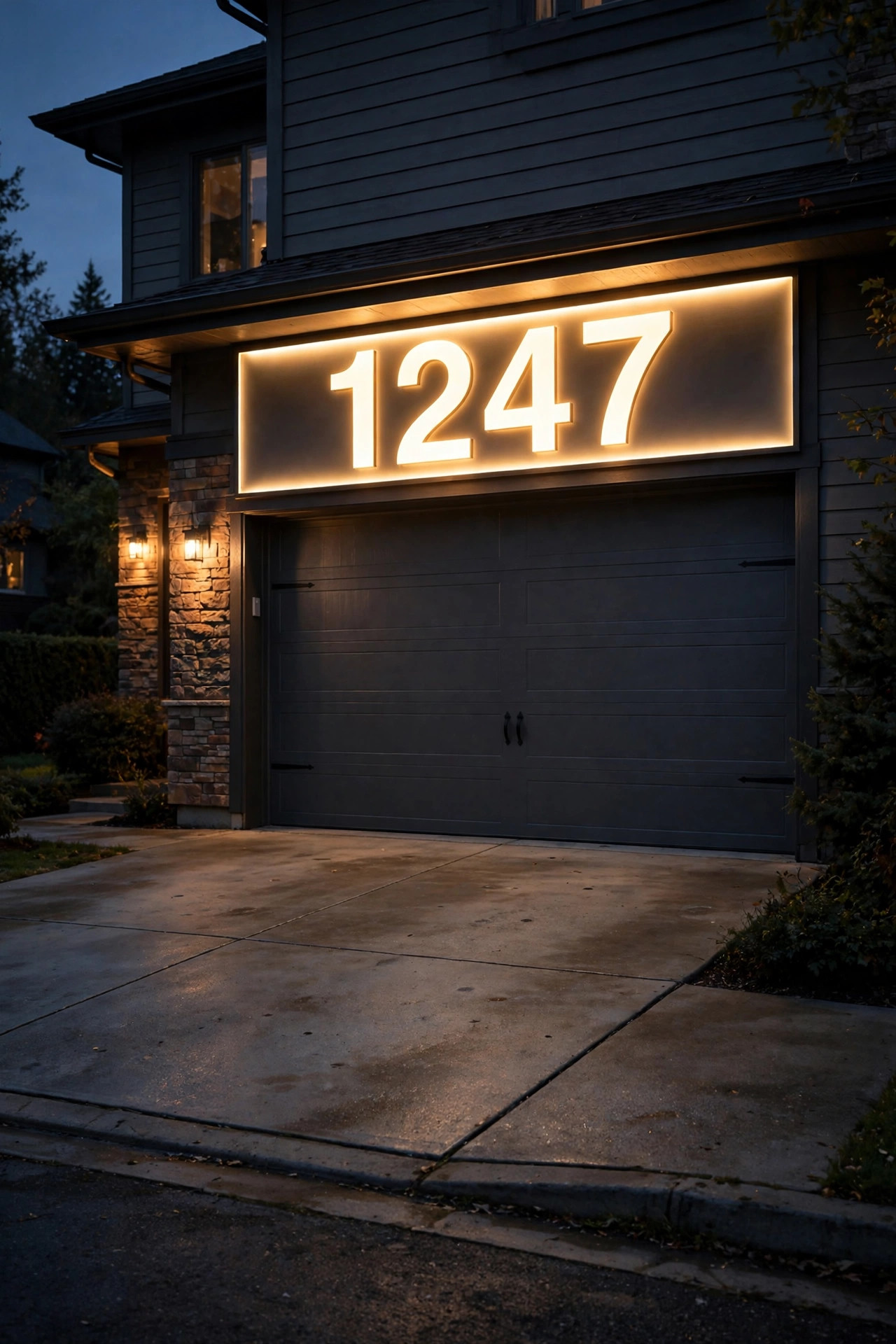
If your driveway or walkway has masonry pillars — or you have ever wanted an excuse to build one — a plaque recessed into a pillar is the most architectural option here. The numbers sit in a shallow niche or on the flat face of a stone or brick column at the end of the driveway, backlit so the glow plays across the texture of the masonry. The light on rough stone at night is genuinely dramatic, and the plaque is the first thing headlights find as a car turns in.
Plan the wiring before the pillar is capped: a conduit run during construction costs almost nothing, while retrofitting one means trenching. If your pillar already exists, a solar or battery model made for masonry, or a surface-mount plaque with cable run in a mortar joint, is the realistic path. Keep the numbers at about 42 to 48 inches high — comfortable for a driver in a sedan to read without leaning. Choose warm 2700K light, which flatters natural stone and red brick; cool white on masonry can look ghostly. Seal the top edge of the plaque housing so melting snow does not creep behind it.
Suggested budget range: $200 – $450.
9. Wood-Slat Backdrop With a Glowing Plaque Centerpiece
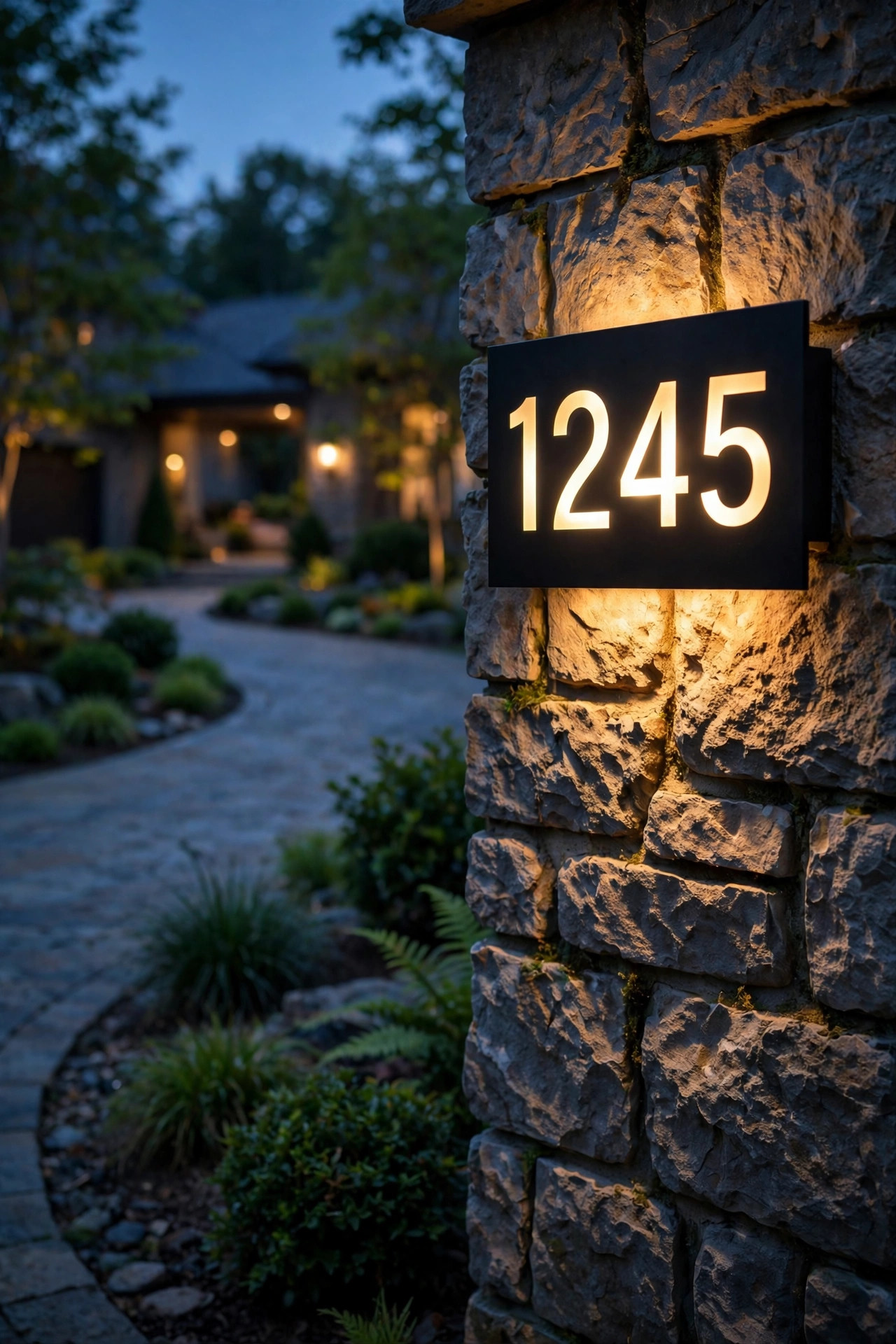
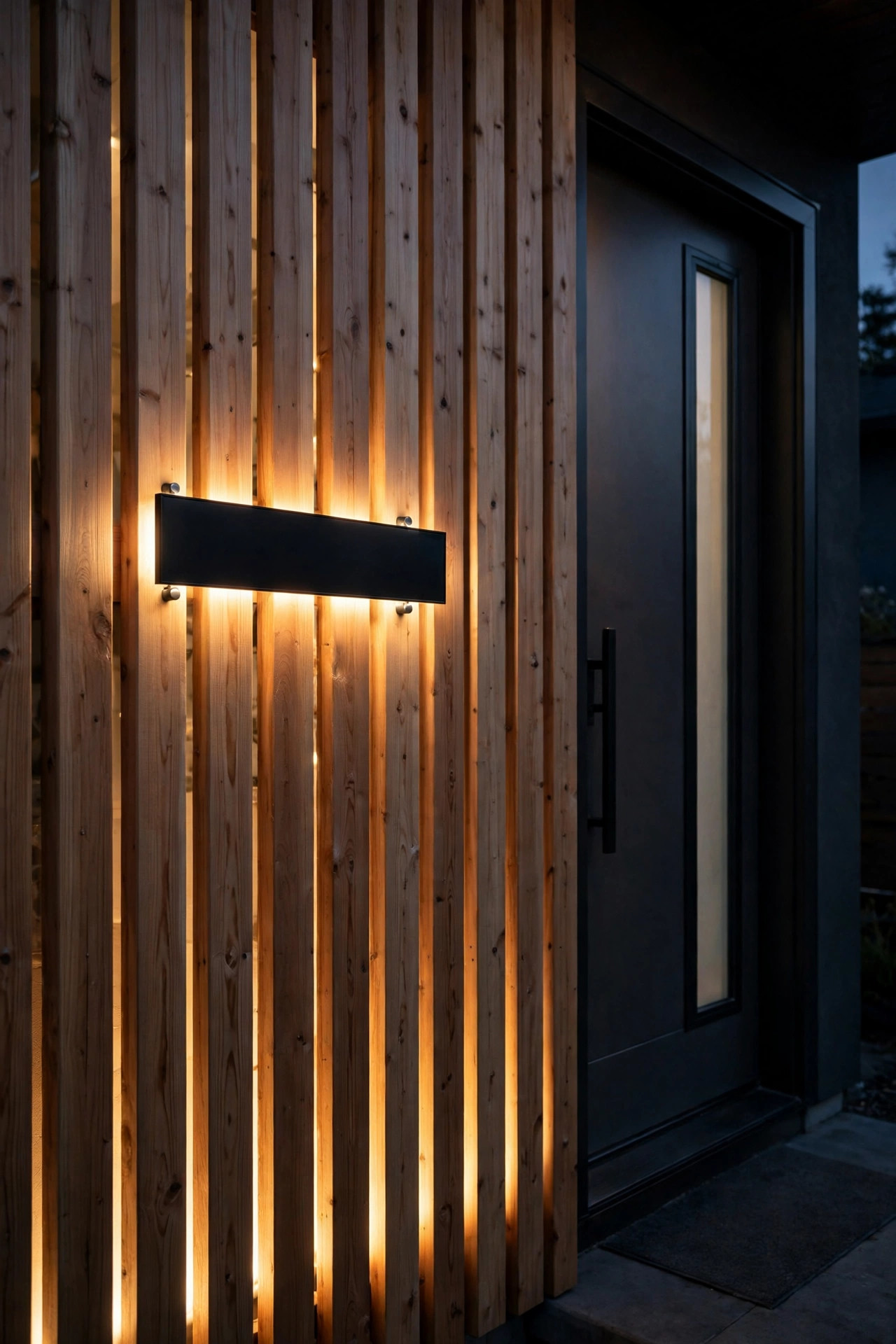
Modern entries love a wood-slat feature wall — vertical cedar or composite battens beside the door — and floating a backlit plaque in the middle of it is a combination that stops neighbors mid-dog-walk. The plaque, usually a slim black or charcoal rectangle, mounts on standoffs over the slats so its halo spills between the wood strips. The contrast of cool metal, warm light, and natural grain does all the decorating for you.
Two practical notes I have learned the hard way. First, real wood moves and greys: use a UV-protective exterior oil or choose composite slats if you want the color to hold, and leave a 1/4-inch shadow gap around the plaque so seasonal wood movement never pinches the housing. Second, keep the LED light off the wood's face as much as possible — aim for halo spill from behind the plaque only, because a bright wash at close range shows every grain bump and can look harsh. Feed the cable down behind the slats to a transformer tucked by the foundation, totally hidden. This is the plaque to choose if your entry is your home's design statement.
Suggested budget range: $250 – $520.
10. Oversized Numbers With a Slim Light Bar
Some plaques light the numbers; this one lights the wall and lets bold, oversized matte numbers do the talking. A slim LED light bar — basically a miniature picture light, 12 to 18 inches long — mounts a few inches above (or below) large 8- to 10-inch numbers and washes them with an even sheet of light. It is the look of a gallery or a modern boutique, and on a big two-story facade where a standard plaque would get lost, the scale is exactly right.
Because the numbers are not self-lit, evenness is the whole game: choose a bar with a built-in diffuser and mount it 4 to 6 inches off the wall on its angled arms so the light spreads instead of striping. Numbers this size are readable from 150 feet or more, which makes this a smart pick for homes set far back from the road. Make sure the numbers themselves are a matte, non-reflective finish — glossy digits under a light bar flare and go unreadable at certain angles. Hardwire it with the porch light circuit or on its own photocell, and pick a bar housing color that matches your door hardware for a pulled-together finish.
Suggested budget range: $140 – $300.

11. Smart Backlit Plaque on a Dusk-to-Dawn Photocell
The set-it-and-forget-it option: a plaque with a built-in photocell (or a smart low-voltage controller) that turns itself on at dusk, dims after midnight if you like, and never needs you to think about switches or schedules. Some models connect to a smart plug or a low-voltage smart controller so the plaque joins your porch light scenes — full brightness when the doorbell camera spots a visitor, a soft glow the rest of the night. Honestly, once you have lived with automatic, manual feels broken.
A photocell needs a clear view of the sky to judge dusk honestly, so do not tuck a sensor-equipped plaque deep under a porch roof where it thinks it is always night — it will run 24 hours a day and age the LEDs early. If the plaque must live in shade, use a remote sensor on a short lead positioned at the porch edge, or skip the sensor and run it from a smart timer set to your local sunset instead. Battery-backup models exist for areas with frequent outages, and they double as a reassuring beacon when the street goes dark. Budget a little extra for the controller if you are adding one.
Suggested budget range: $110 – $280.
12. Two-Tone Plaque: Dark Panel, Bright Halo, Big Contrast
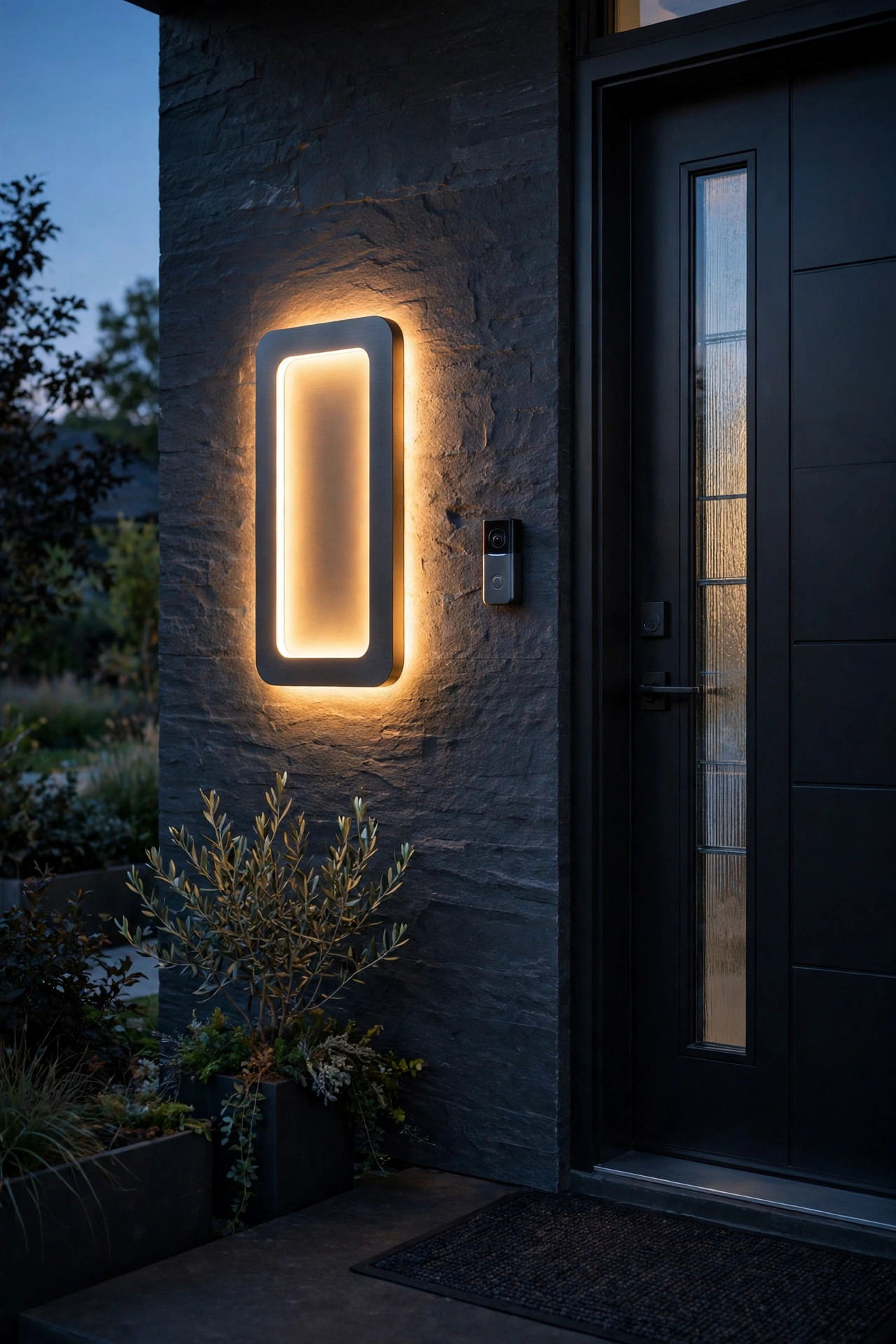
Legibility is mostly contrast, and the two-tone plaque is engineered around that fact: a deep charcoal or black panel, bright silver or white numbers, and a strong halo in between to separate everything at a glance. Of all the styles here, this is the one I recommend to anyone whose top priority is "my pizza arrives at the right house" — paramedics and fire crews will tell you the same thing, since many local codes actually require numbers that contrast with their background and are visible from the street.
To max out the effect, size the numbers for your setback: a good rule is 1 inch of digit height for every 10 feet of viewing distance, so a house 60 feet from the curb wants 6-inch numbers minimum. Keep the halo color and the digit color telling the same story — warm halo with warm-white digits, not a mix. And do a daylight check too: the plaque spends half its life unlit, and the dark-panel/light-digit contrast carries the daytime shift on its own. Mount it where headlights sweep it as cars approach, usually on the door-side wall or a garage-side column, and you have done your future self a kindness.
Suggested budget range: $95 – $230.

13. Planter-Base Stake Plaque for Homes Set Back From the Street
Long driveway? House tucked behind trees? A wall plaque can glow all night and still help nobody if the street is 100 feet and two bends away. A stake-mounted backlit plaque planted at the end of the driveway — tucked into a low planter bed or a tidy gravel border — puts your numbers where drivers actually look. Most are solar, with the panel angled up from the plaque's cap, though low-voltage versions exist if you are already trenching cable for path lights.
Stake it on the driver's approach side, angled about 20 to 30 degrees toward oncoming traffic, at roughly 24 to 30 inches tall so it clears plantings but stays below headlight glare. Keep the bed around it disciplined: ornamental grasses are lovely until September, when they swallow the plaque whole — I plant low sedum or dwarf mondo grass around mine instead. Choose a model with a replaceable battery, because the battery is what wears out in year three or four; a sealed unit means replacing the whole plaque. Winter note for northern readers: brush snow off the little panel after storms, or the numbers will fade by mid-evening.
Suggested budget range: $45 – $130.

14. Backlit Plaque Paired With a Matching Lighted Mailbox
Matching your plaque to a lighted mailbox sounds like a small thing until you see it done: the same black finish, the same warm glow, the same number font at the curb and at the door, telling one calm design story from street to entry. It is also genuinely functional redundancy — the mailbox numbers catch drivers first, and the door plaque confirms they have the right house as they walk up. Delivery drivers quietly love streets where people do this.
Coordinate the color temperature above all else: a 2700K plaque beside a 5000K mailbox light looks like a mistake even if each piece is pretty alone. If the mailbox is solar and the plaque is hardwired, nobody will ever know — just match the glow. Keep fonts in the same family (clean sans-serifs pair best) and digit sizes proportional: bigger at the curb, where viewing distance is longer from a moving car. This pairing is also one of the easiest wins for overall outdoor lighting curb appeal, because it reads as intentional design from the very first glance at the property.
Suggested budget range: $180 – $400.

15. Minimalist Edge-Lit Plaque in a Slim Powder-Coated Frame
The last idea is the quietest: a slim aluminum frame, just deep enough to hide an LED strip around its inner edge, holding a plain panel whose face catches only the faintest rim of light. The numbers are unlit, cut in a clean modern font, and the edge glow outlines the whole rectangle like a picture light in a gallery. It will not shout from the street — and for a serene, design-led entry, that restraint is exactly the point.
Because the numbers rely on ambient light, this style demands backup: pair it with a decent porch light or sconce so the digits stay readable, and choose the highest-contrast face you can (white panel, black numbers or the reverse). Powder-coated finishes shrug off weather for a decade or more, and the slim profile — most are under 1 1/2 inches deep — fits narrow trim boards where a chunky housing would never sit flat. This is the plaque architects pick, and placed well, with the rest of the entry lighting doing its part, it looks like it was always there.
Suggested budget range: $130 – $290.

Frequently Asked Questions
How big should the numbers on a backlit address plaque be?
A reliable rule is 1 inch of digit height for every 10 feet of distance from the street. Most homes do well with 4- to 6-inch numbers; homes set back 80 feet or more should look at 8-inch digits or a second plaque near the driveway. Many local codes set a 4-inch minimum with contrasting colors, so check yours before ordering.
Is solar or hardwired better for a backlit address plaque?
Hardwired (or low-voltage) is brighter, steadier, and runs all night without fading, so it wins wherever wiring is practical. Solar is the right call when there is no power near the mounting spot and the panel can get about 6 hours of direct sun. In deep shade, solar plaques dim early — choose a remote-panel model or go hardwired.
What color temperature looks best for a backlit address plaque?
Warm white, 2700K to 3000K, flatters most homes and matches typical porch and landscape lighting. Cooler 3500K to 4000K light suits ultra-modern facades with concrete and steel, but avoid mixing temperatures between the plaque, mailbox, and porch fixtures — matched glow always looks more designed.
Can I install a backlit address plaque myself?
Usually, yes. Solar and battery models are a 15-minute job with a drill and a level. Hardwired low-voltage plaques are a comfortable DIY project if a transformer already exists nearby. Anything that ties into 120-volt house wiring should follow local code — and when in doubt, that final connection is a fair place to hire an electrician for an hour.
Conclusion
A backlit address plaque is small, but it does three jobs at once: it guides the people you want to your door, it reassures the people who might need to find you in an emergency, and it gives your entry a finished, modern polish after dark. Pick the style that matches your architecture, size the numbers honestly for your setback, keep the color temperature warm and consistent with the rest of your lighting, and let a photocell or timer handle the rest. If this has you looking at your whole entry with fresh eyes, browse more of our lighting ideas on the site — your front door is about to become the easiest house on the street to find, and the prettiest.