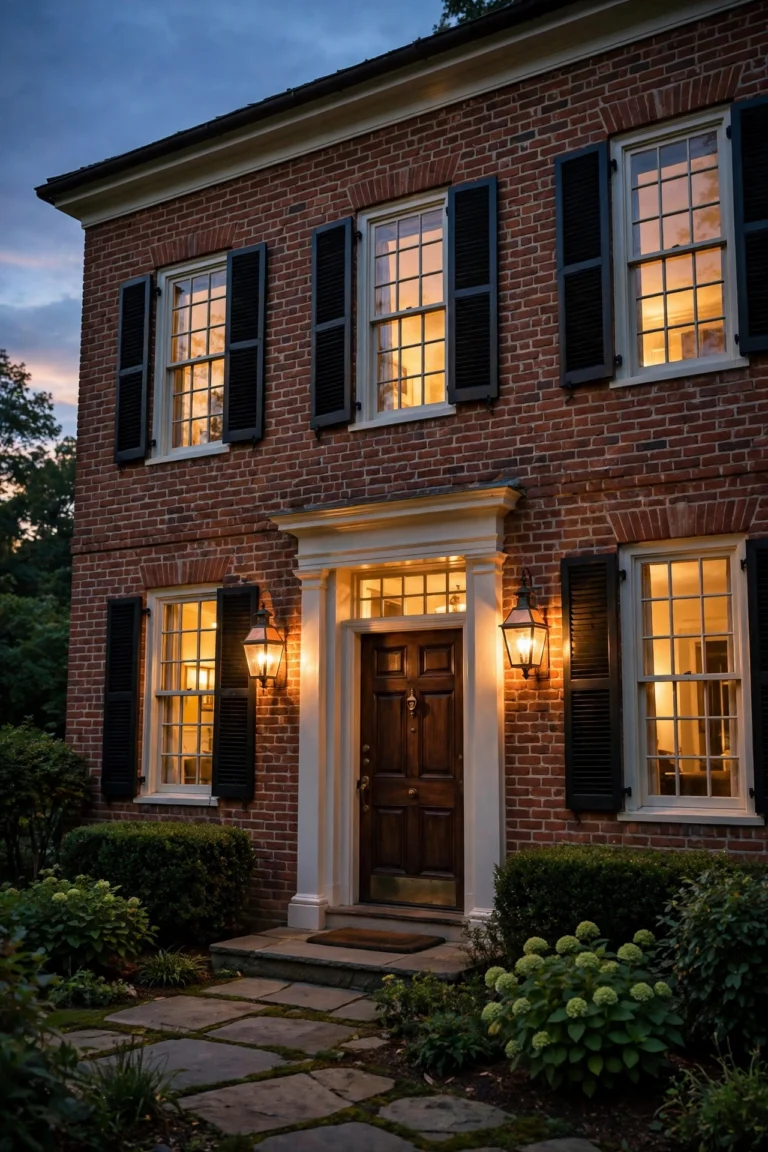
There is a moment at every great karaoke night when the patio stops feeling like a patio and starts feeling like a venue. The music helps, obviously, but honestly? The lighting does most of the heavy lifting. I learned this the year I hosted a birthday sing-along under one bare porch bulb and spent the whole night watching my friends squint at a lyric phone like it owed them money. These outdoor music night lighting ideas are the fix I wish I had then: a warm overhead canopy so faces look good on camera, a soft spotlight where the singer stands, gentle color for energy, and low guiding light so nobody trips over a speaker cable on the way to the snack table. My rule for every event space is layering — light from above, light at face level, and light down low — and a music night is just that formula with a little stagecraft sprinkled on top. Below are the 17 layers I now use for every karaoke night on my patio. If you want the broader party playbook, my roundup of outdoor party lighting ideas pairs beautifully with everything here.

1. Start With a Three-Layer Plan for Outdoor Music Night Lighting Ideas That Actually Work
Before you buy a single bulb, walk your patio at dusk and divide it into three zones: the stage corner where the singer and speakers live, the audience zone with chairs and tables, and the traffic paths between them, the drinks table, and the back door. Each zone gets light at three heights. Overhead light — a string light canopy or patio fixtures — sets the overall mood and keeps the space from feeling like a cave. Face-level light, meaning lanterns, sconces, and table candles around 3 to 5 feet high, is what makes singers look warm and alive instead of shadowy. Ground light from path lights and step lights quietly handles safety. In my experience, most disappointing party lighting comes from buying one product and expecting it to do all three jobs. Sketch the zones on paper, note where your outlets are, and mark any spot where a cable will cross a walkway so you can plan tape or a cord cover. Ten minutes of planning saves you the mid-party scramble I know far too well. Once the zones are set, every idea below simply fills one layer of one zone.
Suggested budget range: $10 – $30.
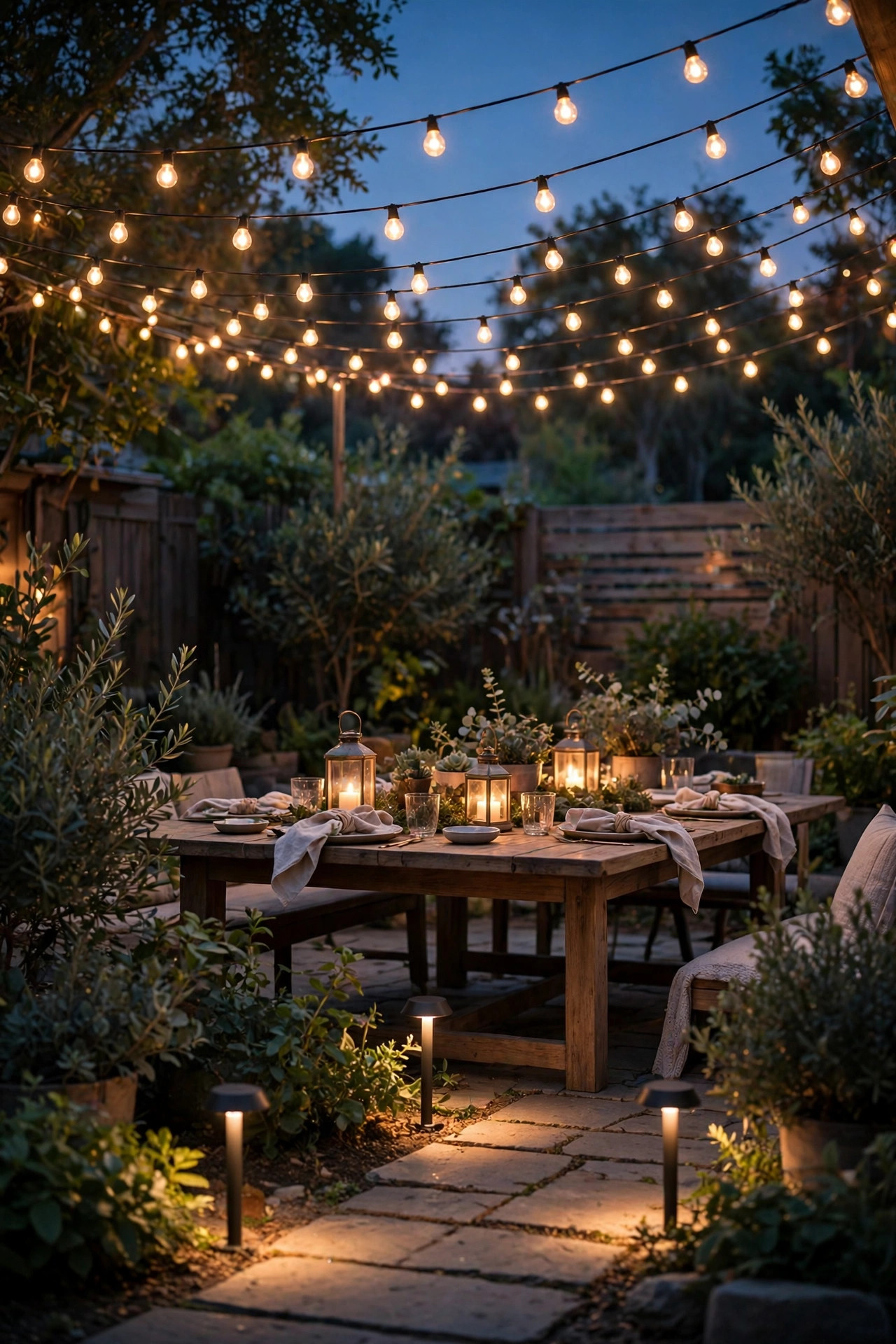
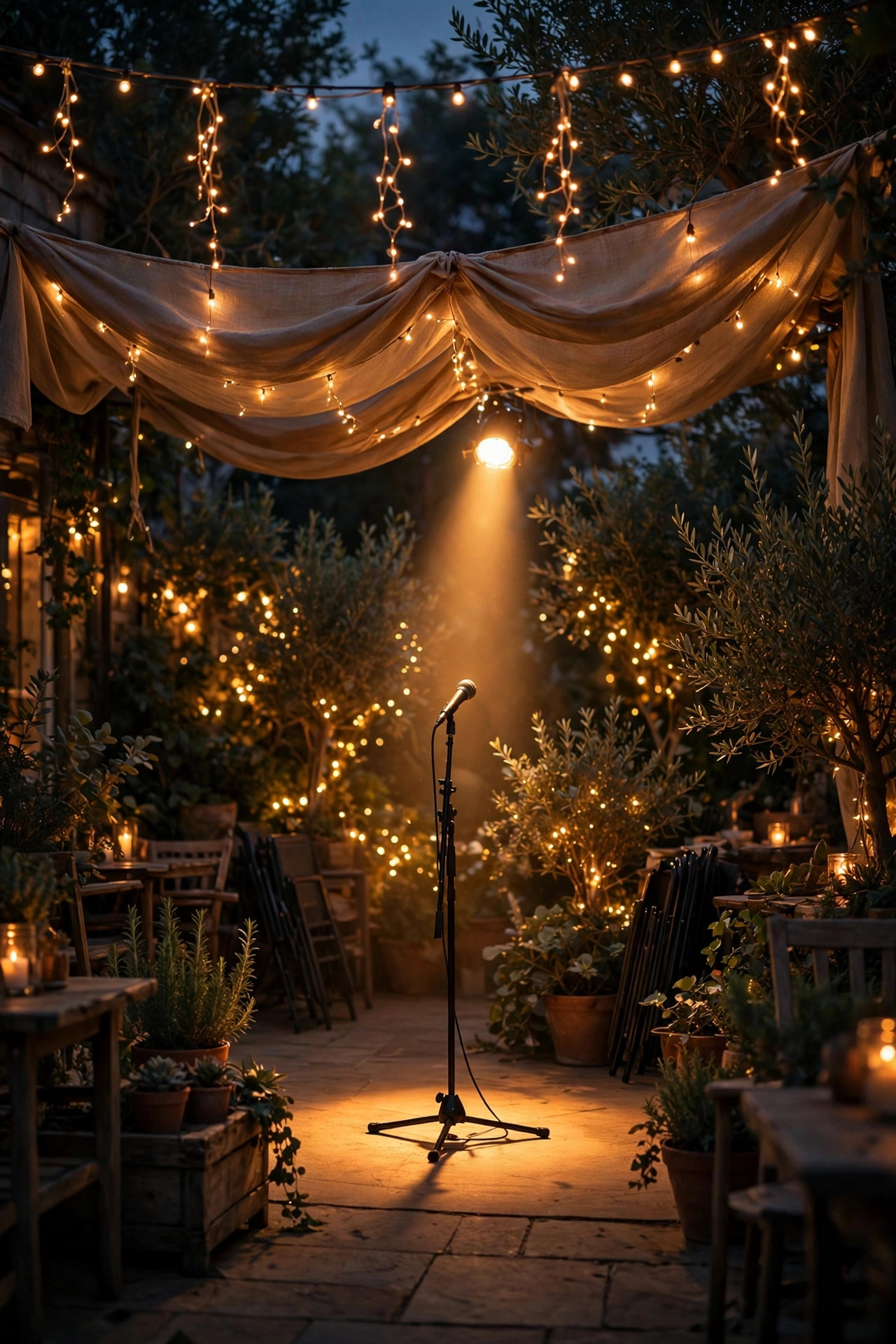
2. Swag a Café String Light Canopy Over the Whole Patio
The canopy is the single highest-impact layer for a music night, because it flatters everyone under it and photographs like a dream. I run commercial-grade café string lights in a zigzag or X pattern above the seating and stage zones, anchoring to the house, a pergola, or two poles set in heavy planters. Keep the lowest swag at least 7 feet above the floor so tall singers and raised arms clear it, and space strands roughly 4 to 6 feet apart for even coverage. Choose shatterproof LED bulbs in 2700K warm white — the filament style gives that golden bistro glow without the heat or the fragility of glass. A 48-foot strand covers a typical 12-by-16-foot patio in three passes. Hang the canopy before you place anything else, because its glow decides how much additional light you actually need. My full walkthrough of strand patterns and hardware lives with my backyard string light ideas, and it is worth a read before you climb the ladder. Use outdoor-rated strands only, and plug into a GFCI outlet.
Suggested budget range: $35 – $90.

3. Put the Canopy on a Dimmer So Faces Stay Flattering
Full-bright string lights can flatten faces and make singers feel interrogated, so I always run the canopy through an outdoor-rated plug-in dimmer. At about 70 percent brightness the light turns honeyed and forgiving — skin looks warm, photos look kind, and the whole patio relaxes. Drop to 40 percent during ballads and the mood shift is instant. Dimmers also solve the neighbor problem, because lower light reads as ambience rather than a stadium. Check that your bulbs are labeled dimmable; most LED filament café bulbs are, but bargain strands sometimes are not, and a non-dimmable bulb on a dimmer will buzz or flicker right through the chorus. I keep the dimmer remote clipped near the karaoke machine so whoever is hosting can adjust between songs without crossing the room. If your canopy is on a smart plug instead, a dimmable smart bulb setup in key fixtures gives similar control from your phone. This tiny layer of control is honestly the difference between lighting that guests endure and lighting they compliment. Test your dimmer the night before with the actual playlist playing, because buzzing only shows up when things get quiet.
Suggested budget range: $15 – $35.
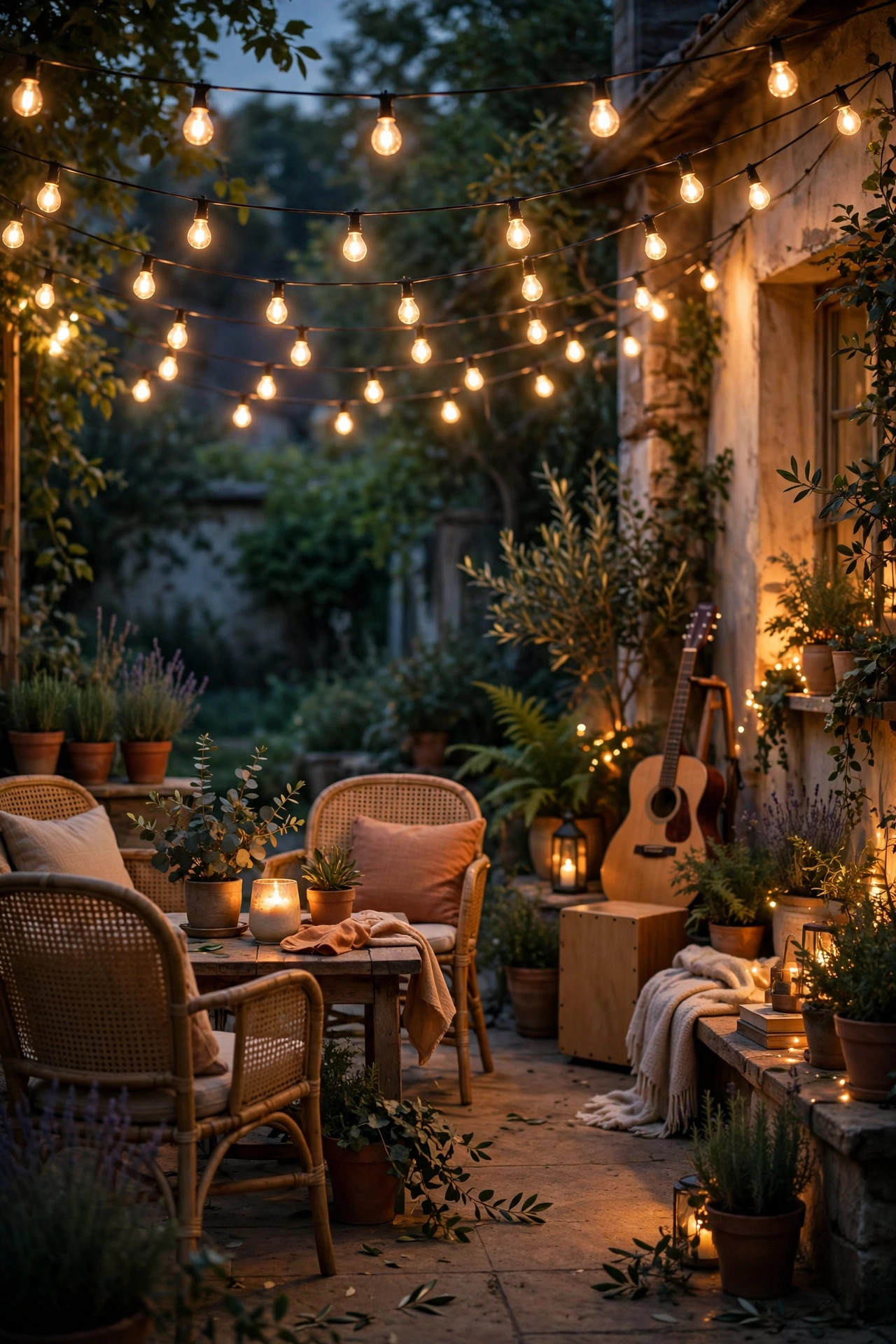
4. Give the Singer a Soft Spotlight Spot
Every karaoke setup needs one defined performance spot, and a gentle spotlight makes shy singers feel like stars instead of suspects. I use a single adjustable LED spot or a small wash light placed low and angled up at about 45 degrees, 6 to 8 feet in front of where the singer stands. Uplighting at a low angle is flattering because it fills under-chin shadows, and keeping it warm white at 2700K to 3000K avoids the blue concert glare that washes people out. A ground stake spot made for landscape lighting works perfectly and costs little. If two people duet, widen the beam or add a second light from the other side at half intensity. Keep the light out of the direct sightline of the audience — position it below knee height or shield it with a plant — so guests see the glow, not the source. Mark the sweet spot with a small outdoor rug; singers instinctively stand on it, and your photos will thank you. Avoid shining any light directly at the lyric screen, which brings us to a later idea about glare.
Suggested budget range: $20 – $50.
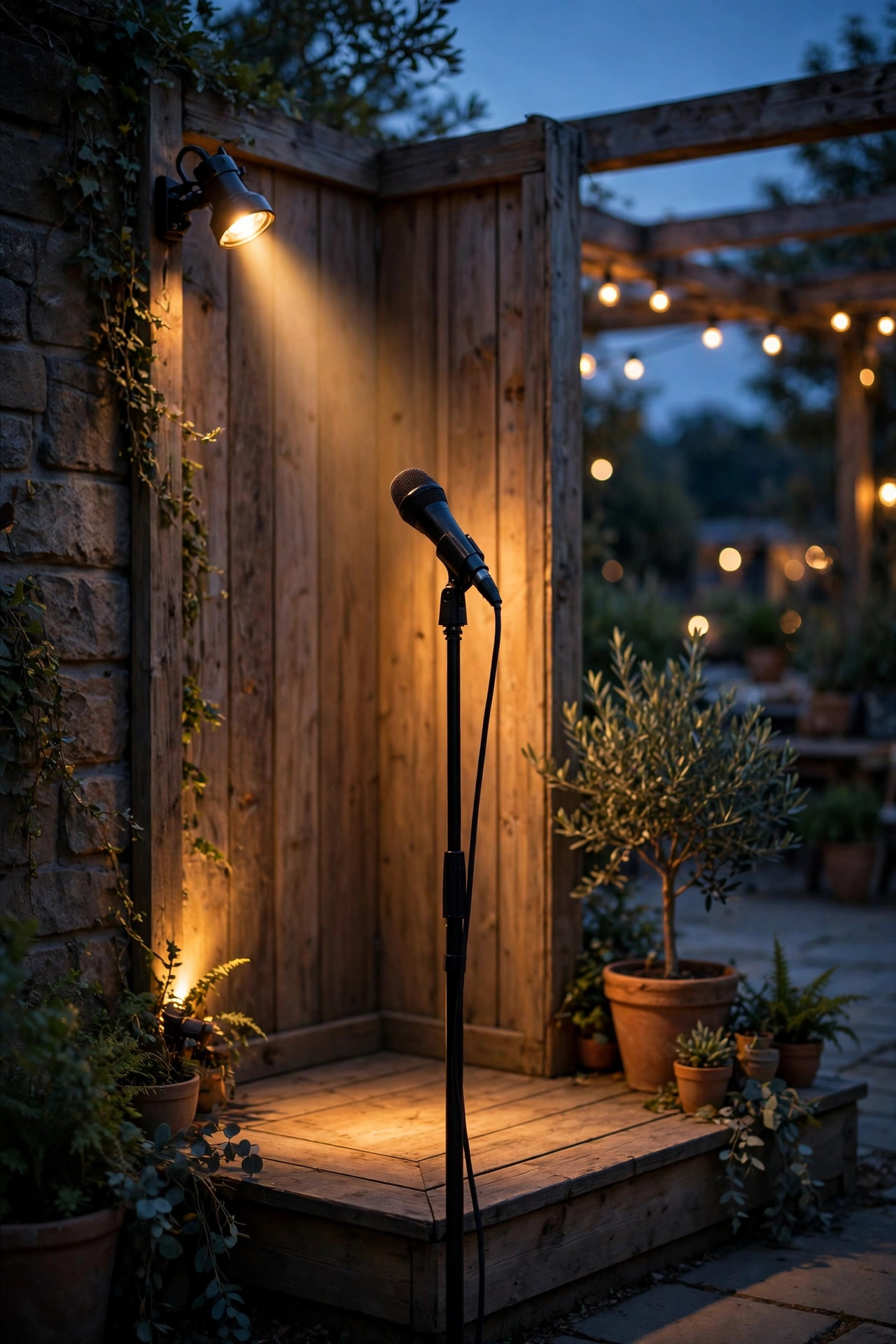
5. Add Color-Changing Smart Bulbs for Big-Chorus Energy
Warm white carries 90 percent of the night, but a little controlled color turns a good chorus into a moment. I swap two or three bulbs — in the porch fixture and a pair of lanterns flanking the stage — for color-changing smart bulbs, then build simple scenes in the app: warm amber for dinner and mingling, soft magenta for pop songs, deep teal for rock ballads. Keep the color lights at the edges of the space rather than overhead, so faces stay natural while the background goes festive. The trick is restraint. One accent color at a time, matched saturation, and brightness a notch below the canopy, or the patio tips into arcade territory. Many smart bulbs can pulse gently with music through their app microphone mode; I use the slowest setting for a breathing effect rather than a strobe, which gets old in about four minutes and bothers some guests. Set your scenes before guests arrive and label them by song mood, because nobody wants to watch the host troubleshoot an app mid-performance. Color is a spice here, not the meal.
Suggested budget range: $25 – $60.

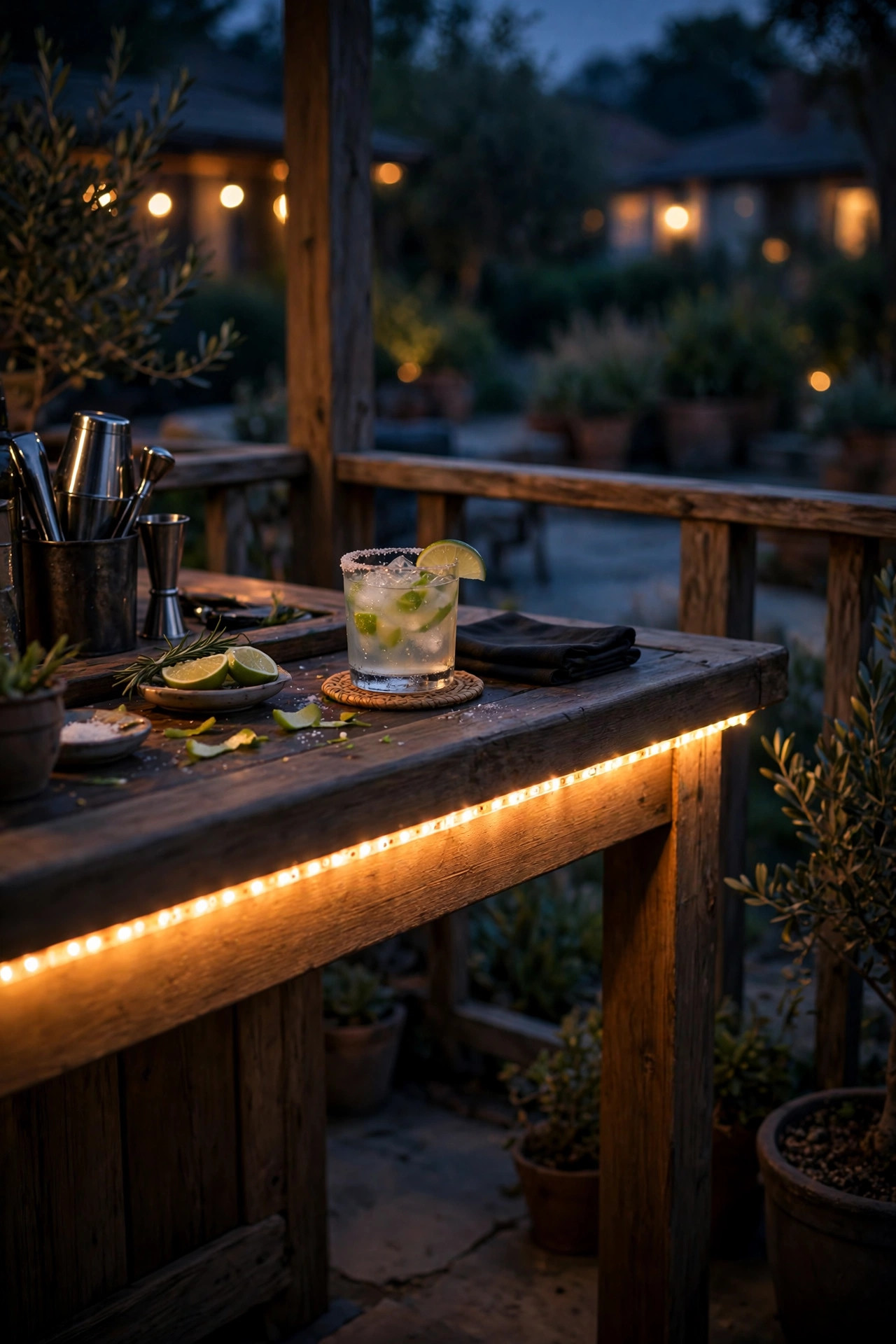
6. Run an LED Strip Under the Bar Rail or Drink Table Edge
The drink station is where guests congregate between songs, and it deserves its own quiet glow. I stick a waterproof LED strip under the front edge of my drink table and under the patio bar rail, facing downward so the light washes the floor and the counter front without anyone seeing the diodes. Warm white at 2700K keeps it cohesive with the canopy. The strip does three jobs at once: it shows guests where the drinks are, it lights bottle labels and cups just enough to pour safely, and it hides the ugly cord zone under the table in shadow. Choose IP65-rated strip for outdoor use, and mount it on the underside of an overhang so rain sheds off. A battery-powered strip works if your drink table sits far from an outlet, and one charge easily lasts a full evening. Keep the brightness low — this is a guide light, not a work light — and if your strip has a remote, tape it to the table leg so it stays findable. Guests will drift toward this glow all night like friendly moths.
Suggested budget range: $15 – $40.
7. Set Flameless Candle Lanterns on Every Table
Table-level light is the layer that makes faces look genuinely lovely, and flameless candles are my safest way to get it. I group two or three lanterns of different heights at the center of each table, or one per side table in the audience zone. The flicker setting on modern flameless candles is convincing, the timers mean they switch themselves on at dusk, and there is zero risk when a paper song list or a napkin drifts too close — a real candle near set lists and drink napkins at a karaoke night is a story I never want to tell. LED-only near anything flammable is a hard rule in my house. Look for lanterns with a warm 2200K to 2700K glow for that candlelight feel, and choose outdoor-rated or resin styles that shrug off dew. Battery life runs weeks on a set of AAs, so one pack covers a whole season of music nights. Scatter a few extra lanterns on the steps and the speaker stands to tie the layers together visually.
Suggested budget range: $20 – $55.

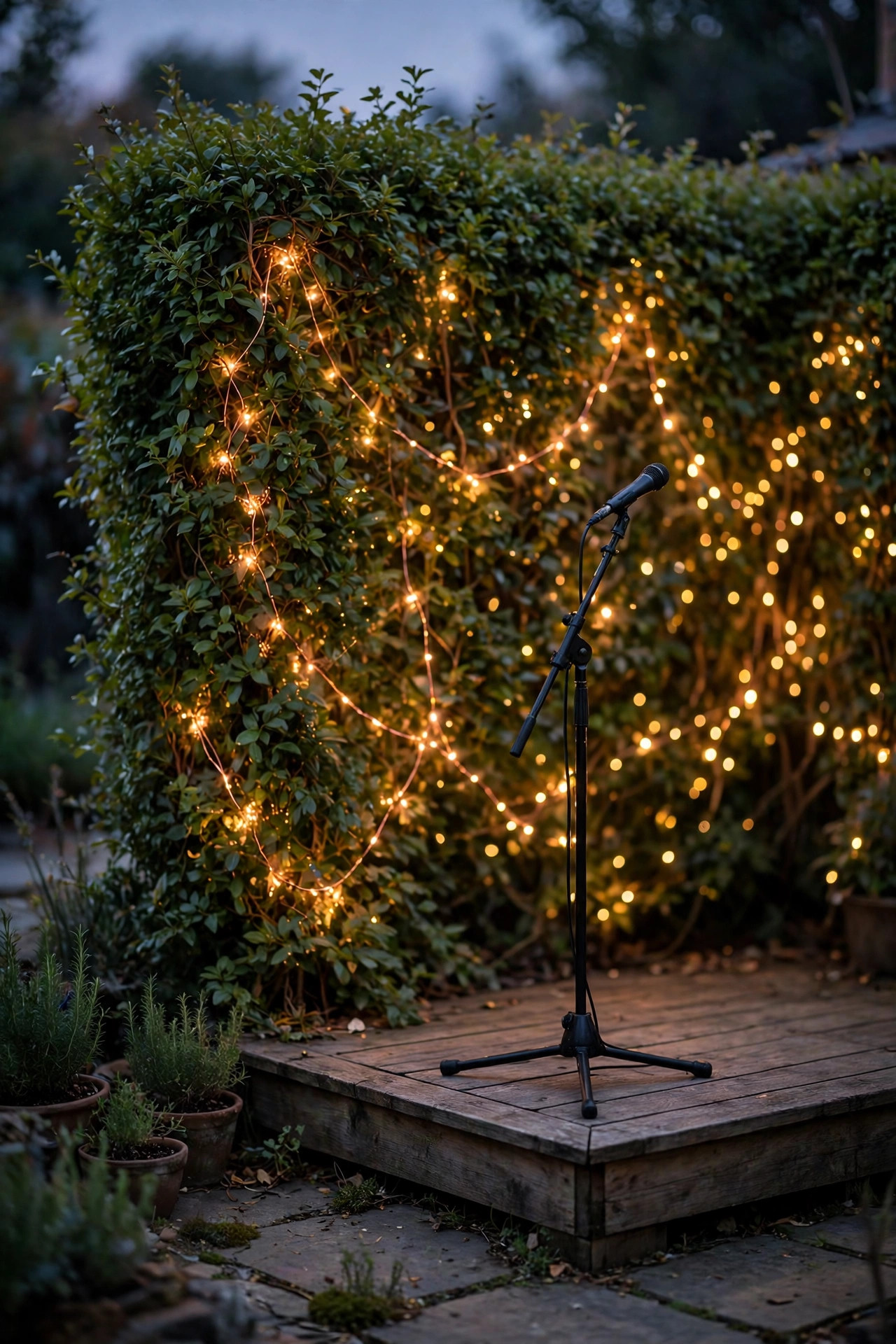
8. Weave Fairy Lights Through the Hedge or Trellis Behind the Stage
The backdrop behind your singer matters more than you think, because it is in every photo and video of the night. I weave two or three strands of copper-wire fairy lights through the hedge, trellis, or potted plants behind the stage corner, letting them twinkle softly out of focus behind the performer. That sparkle reads as pure magic on camera and costs almost nothing. Fairy lights are low heat LED, so they are safe tucked into foliage for an evening, though I always unplug them before bed rather than leaving them out for weeks in the weather. Solar fairy strands work here too and free up an outlet for the speakers, which frankly need it more. Keep the density loose — one strand per 3 to 4 feet of hedge — so it twinkles instead of blazing. If your backdrop is a plain fence, zigzag the strands on small hooks and add a few hanging lanterns at face height for depth. This is the single cheapest idea in the list and the one guests ask about most.
Suggested budget range: $10 – $30.
9. Mark the Walking Paths With Low Solar Path Lights
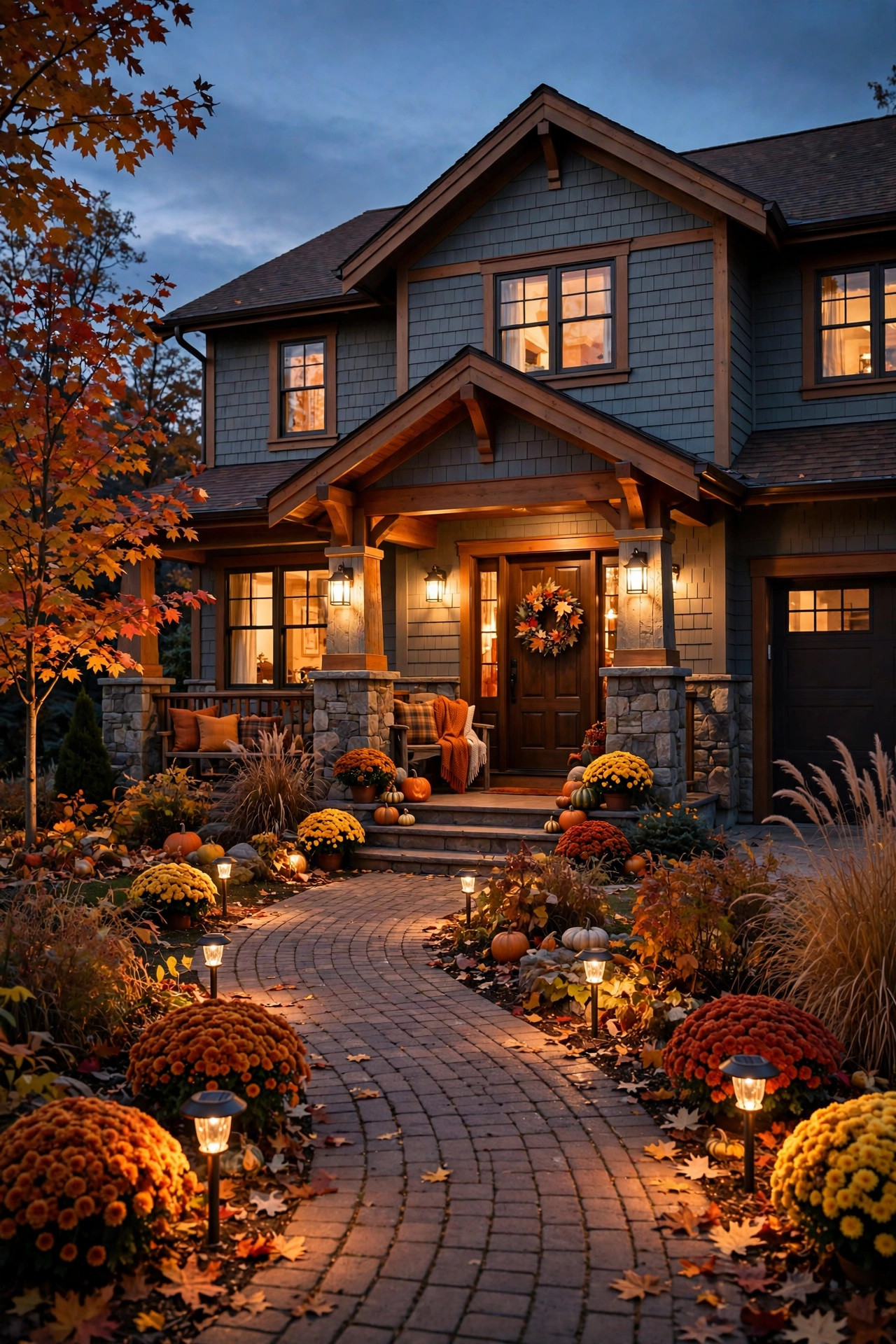
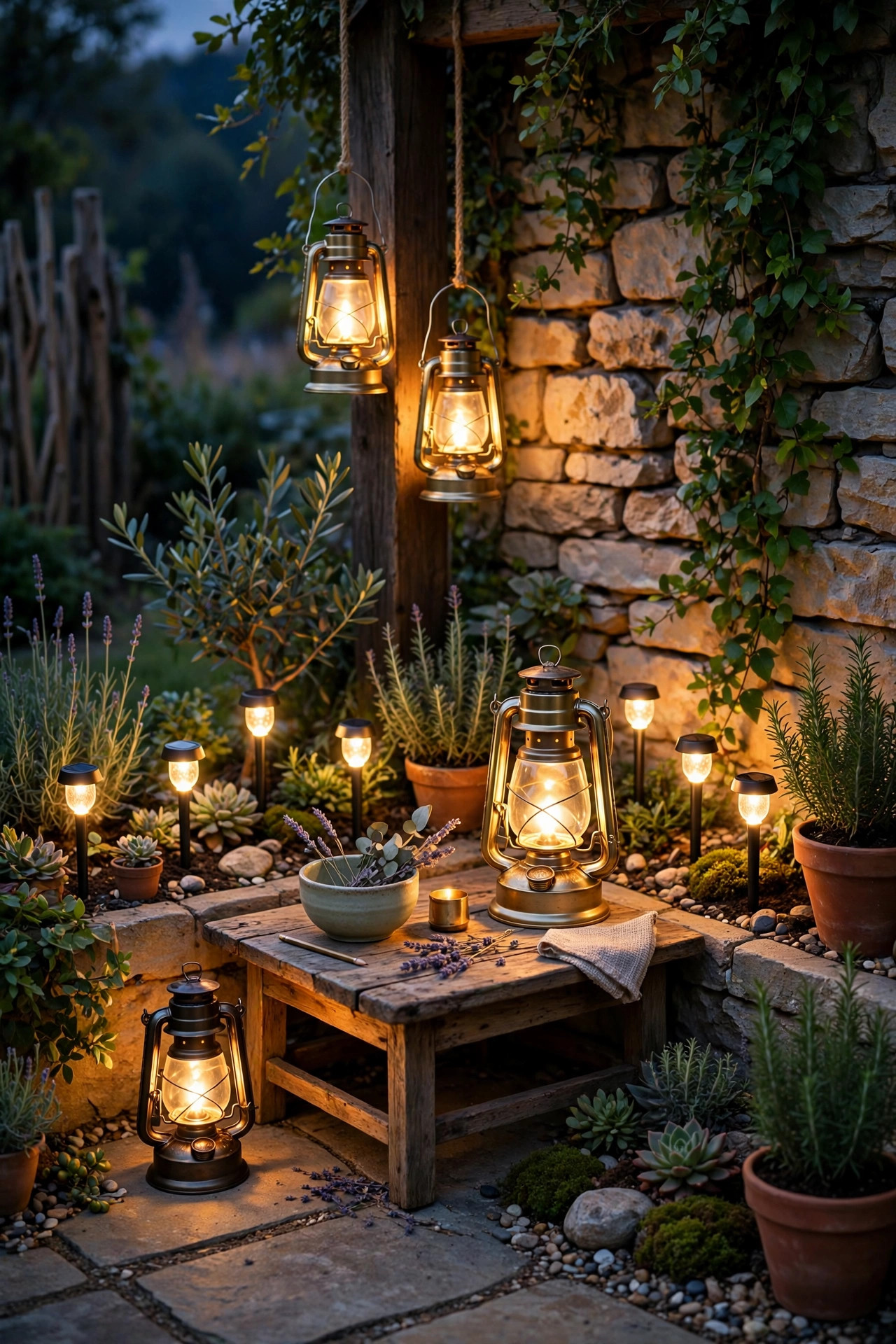
By the third song, guests are moving: to the drink table, to the bathroom, to the cooler in the garage. Low path lights along those routes prevent the trips, spills, and stepped-on cables that end parties early. I stake solar path lights every 6 to 8 feet along the patio edge and the route to the back door, choosing warm white models that match the canopy instead of the blue-white ones that clash horribly. Solar means no cords crossing the walkway, which is exactly the point. Set them out the morning of the party so they charge fully, and wipe the little panels clean — a dusty panel halves the runtime. If your party route crosses a lawn, path lights also keep guests off your flower beds, a benefit my hostas appreciate deeply. Keep fixtures low and hooded so the light pools on the ground instead of glaring into seated eyes. For a permanent setup, low-voltage wired path lights are brighter and more reliable, but solar is the honest winner for occasional party nights.
Suggested budget range: $20 – $45.
10. Kill the Glare on the Lyric Screen
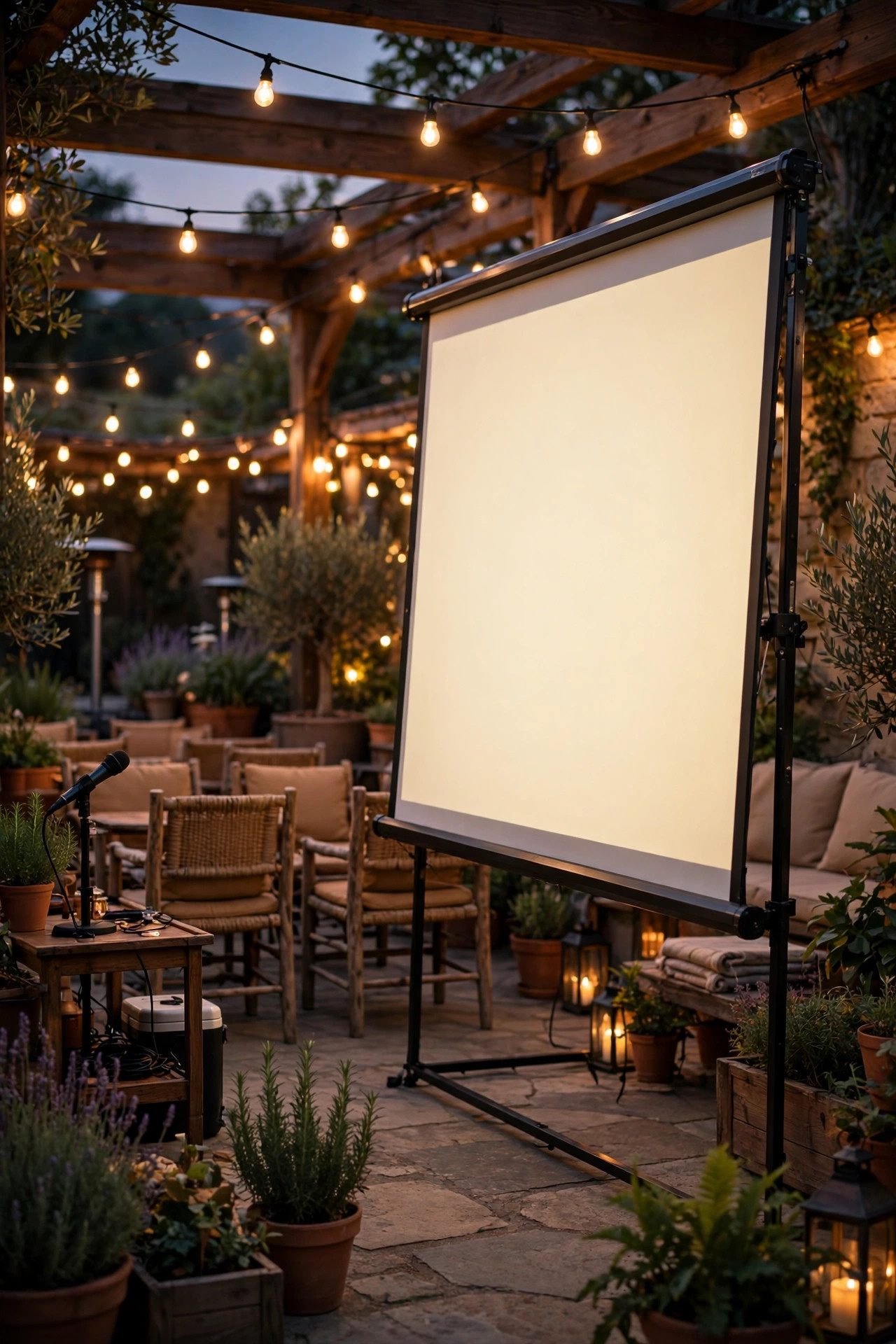
Nothing deflates a singer like a lyric screen nobody can read. Glare usually comes from a bright fixture reflected in the TV or tablet, so I angle the screen slightly downward, move any lantern out of its reflection zone, and keep the canopy dimmed behind the audience rather than behind the screen. If your lyrics run on an outdoor TV, a matte screen protector helps enormously. Place the screen at standing eye height, roughly 5 feet to center, and give it its own small pool of darkness: I deliberately leave the corner immediately around the screen unlit except for the singer spotlight from the side, which does not reflect. This is the same principle I use for my backyard movie night lighting setup, where screen contrast is everything. Also dim the screen brightness a touch after full dark — screens set for daylight will blast retinas at 10 p.m. Do a full test from the singer spot and from the back row of chairs before guests arrive, and adjust while you still have time and patience.
Suggested budget range: $0 – $25.
11. Aim One Disco-Style Accent Light at the Ceiling or Wall
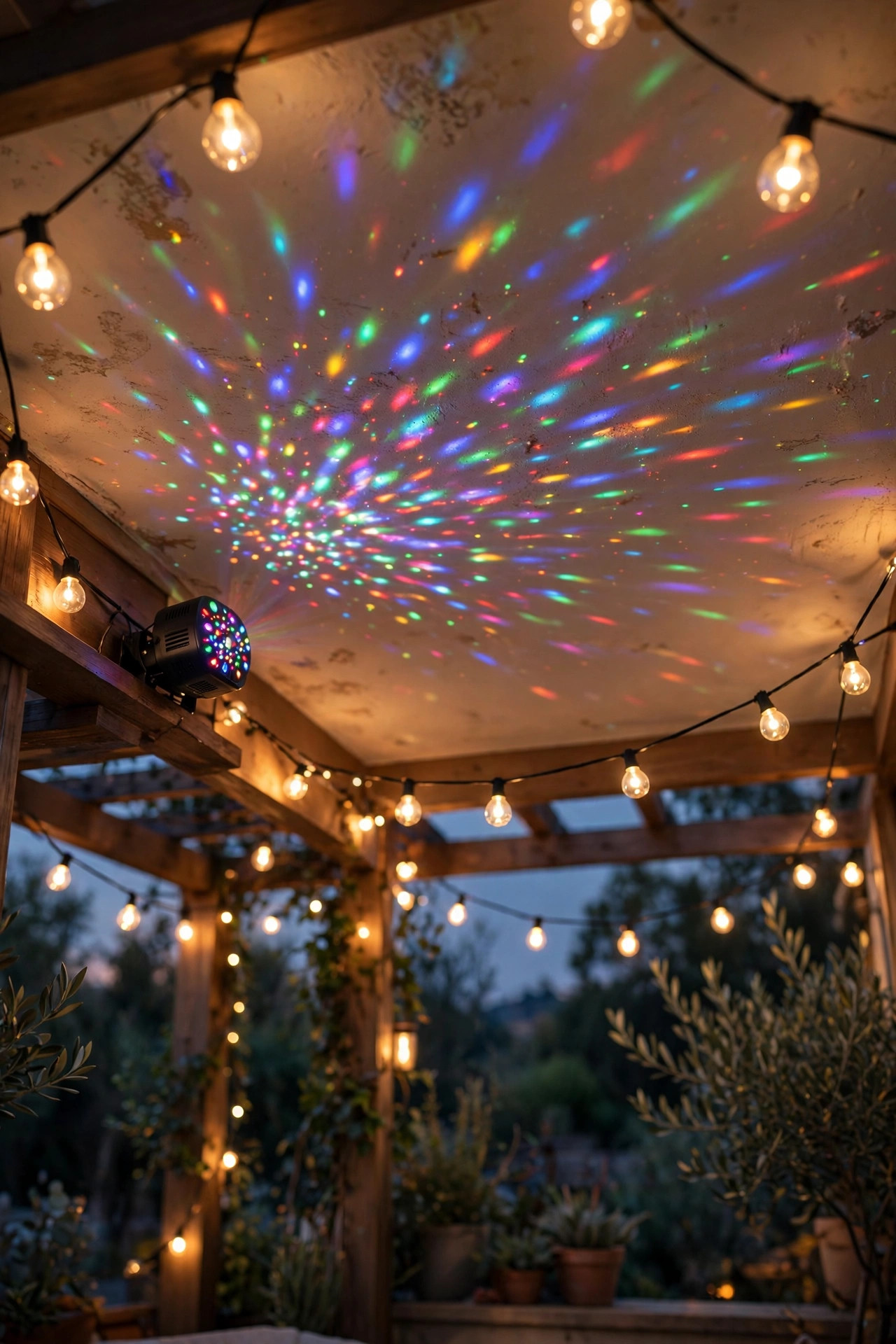
For dance breaks and big finales, one moving accent light earns its keep. I use a small LED party light that throws slow-moving dots or a water-ripple pattern onto the patio ceiling or the house wall — never aimed at faces, and never strobing. Aimed upward from the floor behind the stage, it adds motion and energy without blinding anyone or turning the party into a nightclub. Keep it on the slowest, softest setting; fast disco effects fight with the warm layered look everywhere else. In my experience this light should appear for maybe a quarter of the night — the upbeat group numbers — and rest during ballads and dinner. Many of these little units are sound-activated, which is fun, but I prefer manual control so a quiet conversation does not trigger a light show. Choose a model with a remote and warm color options if you can find one, and set it on the floor angled at the wall so curious kids and pets cannot stare into the lens.
Suggested budget range: $15 – $40.
12. Edge the Stage Corner With Rope Light
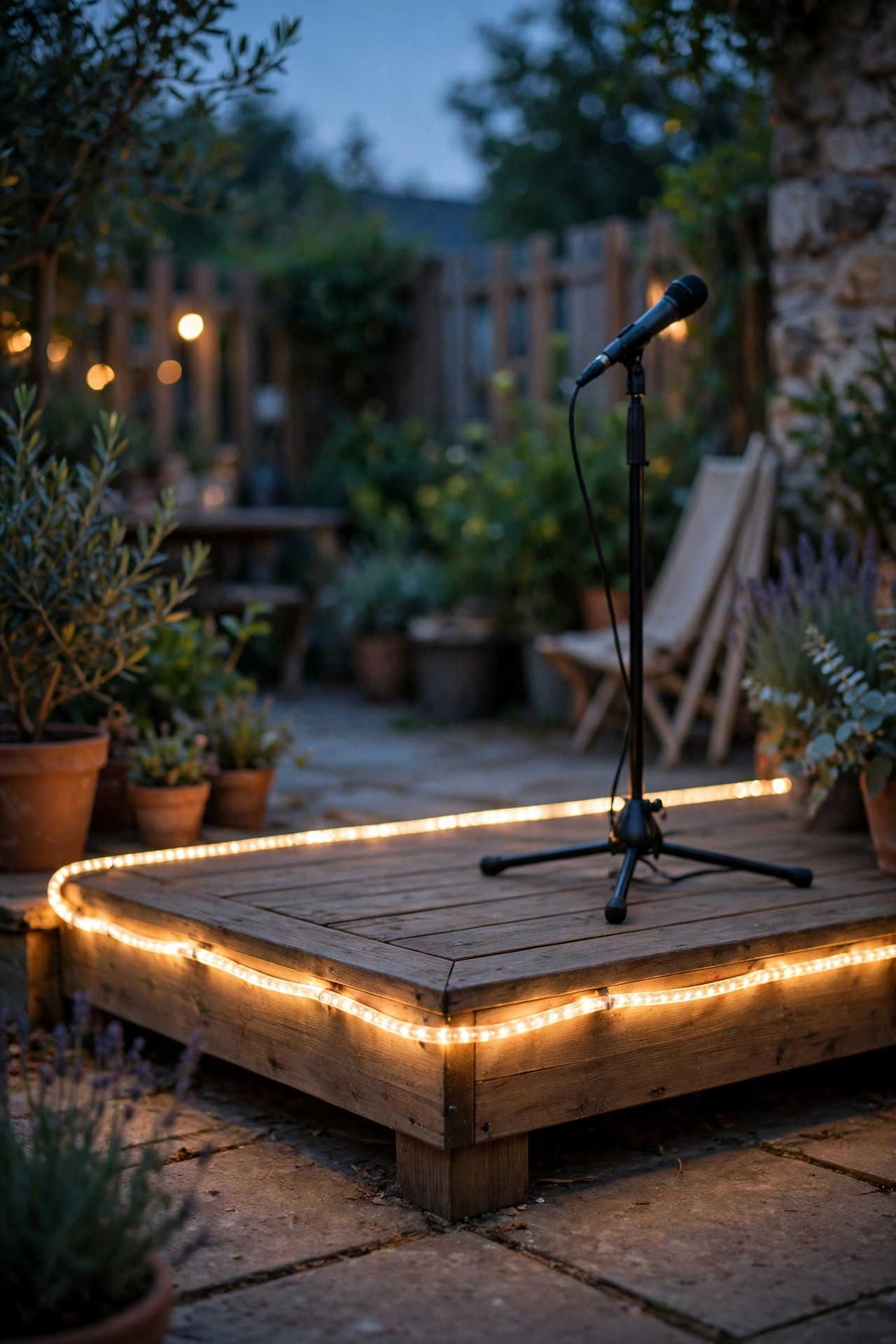
Defining the stage floor helps singers know where they are and keeps guests from wandering into the speaker zone. I run a length of warm white LED rope light along the front edge of the stage corner — along a deck step, a rug border, or a low platform if you have one. The soft line of light reads as intentional stagecraft, shows the step edge so nobody catches a toe, and frames every performance photo beautifully. Rope light is flexible, weatherproof, and cheap per foot; secure it with clips every 12 inches so it lies flat and nobody snags it. If your stage sits on a deck step, add a short strip of the same rope light under the step lip for a floating glow. LED rope stays cool, which matters because singers stand right beside it in bare feet half the summer. Avoid chasing or flashing modes — a steady warm line looks classy all night. This is also the trick I use at the holidays, so one purchase works double duty.
Suggested budget range: $15 – $35.
13. Hang Paper Lanterns or Globe Clusters Over the Audience
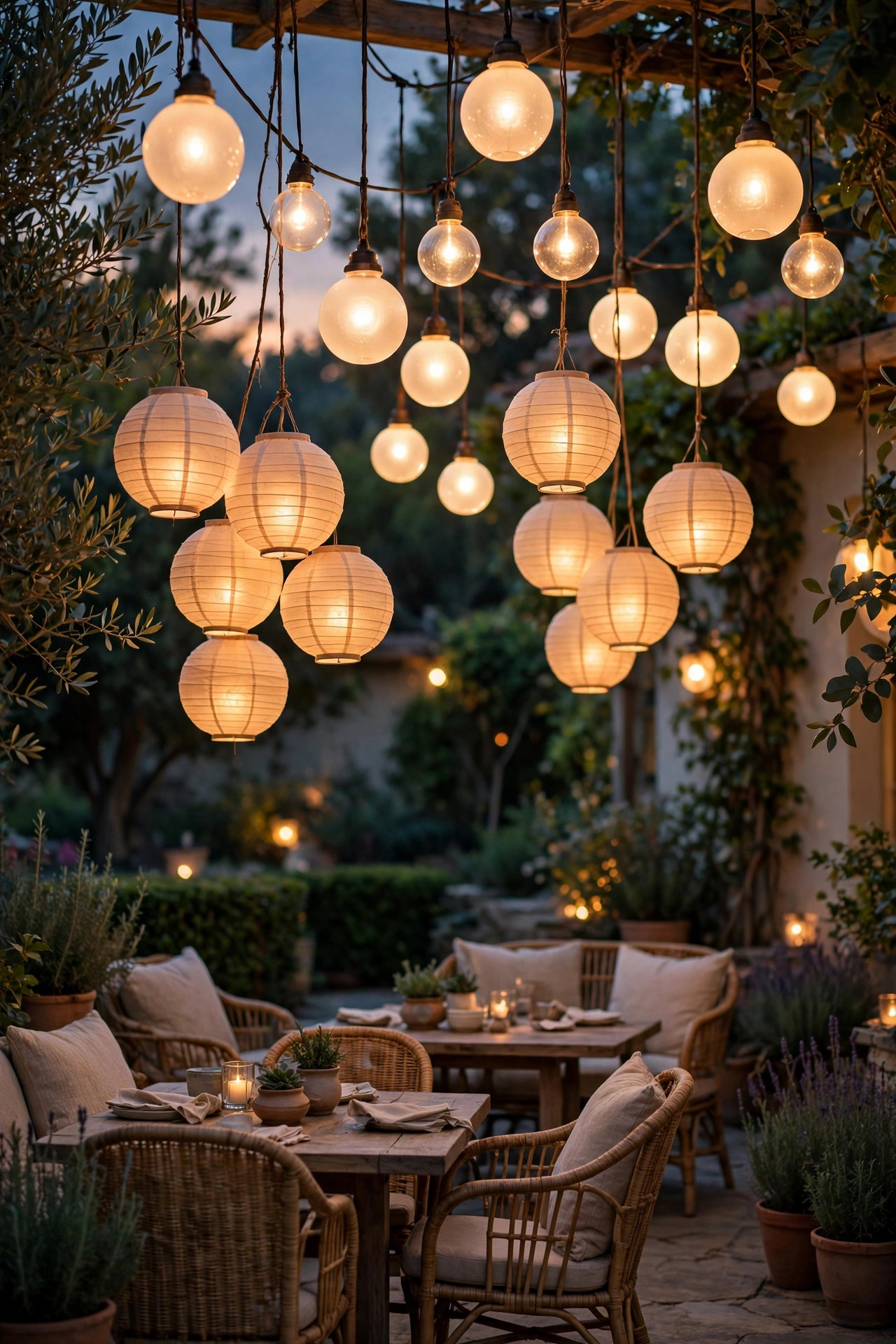
Over the audience zone, I like a second overhead texture so the seating feels like its own room. Clusters of paper lanterns or frosted globe string lights at varied heights — hung between the canopy strands — soften the light and look wonderful drifting slightly in a breeze. Always use LED bulbs inside paper lanterns; paper and hot bulbs are a dangerous pairing, and LED inserts or flameless tea lights give the same glow safely. Group lanterns in odd numbers, three or five, at 7 to 9 feet high, and mix two sizes for a designed look. Globe string lights with frosted bulbs are the weather-tougher option for uncovered patios, since paper lanterns should come down if rain threatens. This layer sits directly over seated faces, so warm white is non-negotiable — colored globes here will tint every photo. The clusters also gently signal the quieter zone of the patio, which helps conversation corners form away from the speakers. In my experience, guests migrate to wherever this soft light pools.
Suggested budget range: $20 – $50.
14. Park an Amber Bug-Smart Light Away From the Seating
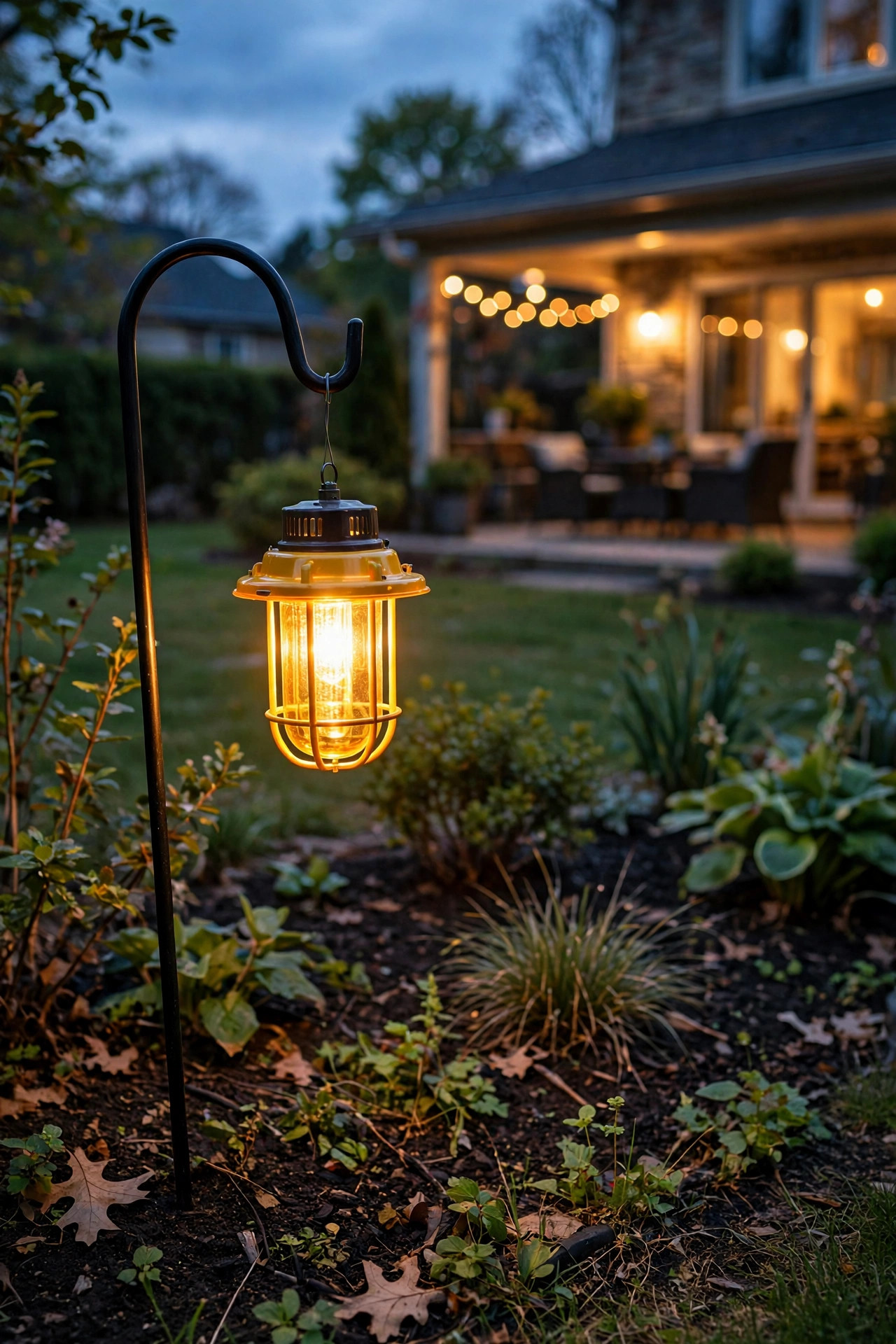
Moths dive-bombing the singer is comedy for one song and misery by the fifth. Insects are drawn to light, so I use that against them: one amber or warm bug-light fixture placed 15 to 20 feet away from the seating, near the yard edge, pulls the crowd of flying guests toward itself and away from faces, drinks, and the stage. Amber-spectrum bulbs attract far fewer insects than bright white, so the decoy can be modest — a single porch-style fixture or a solar lantern on a shepherd hook does the job. Meanwhile, keep the lights over food and faces warm and dim, which insects find less exciting anyway. Citronella torches near the perimeter add a second line of defense, but keep real flame well away from the patio crowd and never near hanging paper or fabric; LED flame-effect torches give the look without the risk. I set the decoy light up at dusk, a good half hour before the singing starts, so the insect traffic pattern is established before your human guests arrive.
Suggested budget range: $10 – $30.
15. Build Two or Three Scenes With Timers and Smart Plugs
A music night has acts: arrival, dinner, performances, dance break, wind-down. I program each as a lighting scene using smart plugs and the smart bulb app so transitions take one tap. Arrival scene is everything at full warm brightness for setup and hellos. Performance scene dims the canopy to 50 percent, keeps the singer spotlight and backdrop fairy lights on, and drops the table lanterns to flicker only. Dance scene brings the canopy up and wakes the color bulbs and accent light. Wind-down returns everything to a low amber glow that says the night is ending kindly. Smart plugs with a dusk timer also guarantee the path lights come on even if I am busy greeting guests, and everything shuts itself off at midnight so the neighbors stay friendly. Label your scenes in the app by act name, test the sequence once during setup, and keep one manual switch you can reach in the dark. Automation should make you look calm, not keep you poking at your phone.
Suggested budget range: $25 – $60.
16. Cover the No-Outlet Corners With Battery and Solar Pieces
Every patio has a dead corner far from power, and on music night that corner usually becomes the gift table, the queue for the next singer, or the kids zone. Battery and solar pieces cover it without a cord snaking across the room. I use a pair of rechargeable lanterns with USB charging — one charge honestly lasts two full parties — plus solar stake lights around the corner bed. Battery puck lights stuck under a shelf or the song-request table make sign-up sheets readable, which reduces the host questions by half. Keep a small charging station inside the back door so swapping a dim lantern takes ten seconds. The golden rule stands: no extension cords across walkways ever, and any cord that must run along a wall gets taped down or covered. If you truly need power at the far corner for a second speaker, run the cord overhead along the canopy line instead of across the floor. Guests forgive a dim corner; they do not forgive a twisted ankle.
Suggested budget range: $20 – $50.
17. Pull It All Together: My Full Outdoor Music Night Lighting Ideas Recipe
Here is the exact setup I run now, start to finish. The café canopy goes up first, dimmed to 70 percent, with paper lantern clusters over the seating. The stage corner gets the fairy light hedge behind it, a warm spotlight low in front, and rope light tracing its edge. Table lanterns flicker on their timers at dusk, the drink table glows from its hidden LED strip, and solar path lights mark every walk. The lyric screen sits in its own little pocket of darkness, glare-tested from the singer spot. Color bulbs wait in the porch fixture for the dance break, the accent light sleeps until the finale, and the amber decoy by the fence quietly handles the insect situation. Total spend across a season of buying pieces gradually was under $300, and almost every item serves my ordinary patio evenings too. Start with the canopy, the singer spotlight, and table lanterns if your budget is tight — those three layers alone transform a music night from a lit backyard into a venue your friends will ask you to book again.
Suggested budget range: $150 – $300.

Frequently Asked Questions
What color temperature is best for karaoke and music night lighting?
Warm white, 2700K to 3000K, is the sweet spot for faces, photos, and a relaxed mood. It flatters skin, keeps the patio feeling cozy, and mixes well with candle-style lanterns. Save cooler or colored light for small accents only, and keep anything blue-white away from the singer, where it reads harsh and clinical on camera.
How do I light a singing area without blinding the performer?
Place one warm spotlight low, below knee height, angled up at roughly 45 degrees from 6 to 8 feet in front of the singer. Uplight fills shadows without shining into eyes. Keep bright fixtures out of the singer sightline entirely, dim the canopy behind the audience rather than behind the performer, and test the spot yourself by standing in it and looking out.
Can solar lights handle a whole music night party?
Solar path lights, fairy strands, and stake lights can cover your ground and backdrop layers if they get a full day of sun, and good models run 6 to 8 hours. For the canopy, singer spotlight, and speakers, plug-in power is honestly more reliable. A hybrid setup — wired for the stars of the show, solar for support — is what I recommend.
How do I keep cords and cables safe at an outdoor party?
Route cords along walls and overhead along the canopy line, never across walkways. Tape down or cover any cord that must touch the floor, plug everything into GFCI outlets, and keep connections off the ground and out of splash zones near drinks. Battery and solar pieces are the simplest fix for corners far from outlets.
Conclusion
Great music nights are built on layers, not wattage. A dimmable warm canopy, a kind spotlight for the singer, twinkle in the backdrop, and safe guiding light for your guests — stack those outdoor music night lighting ideas and your patio becomes the venue everyone talks about on the drive home. Start with the three layers that matter most, add color and motion once the basics feel effortless, and keep everything LED, outdoor-rated, and cord-safe. If you want more ways to make the whole yard party-ready, browse the other lighting ideas here on the site — your next favorite layer is probably one post away. Now go warm up those vocal cords.