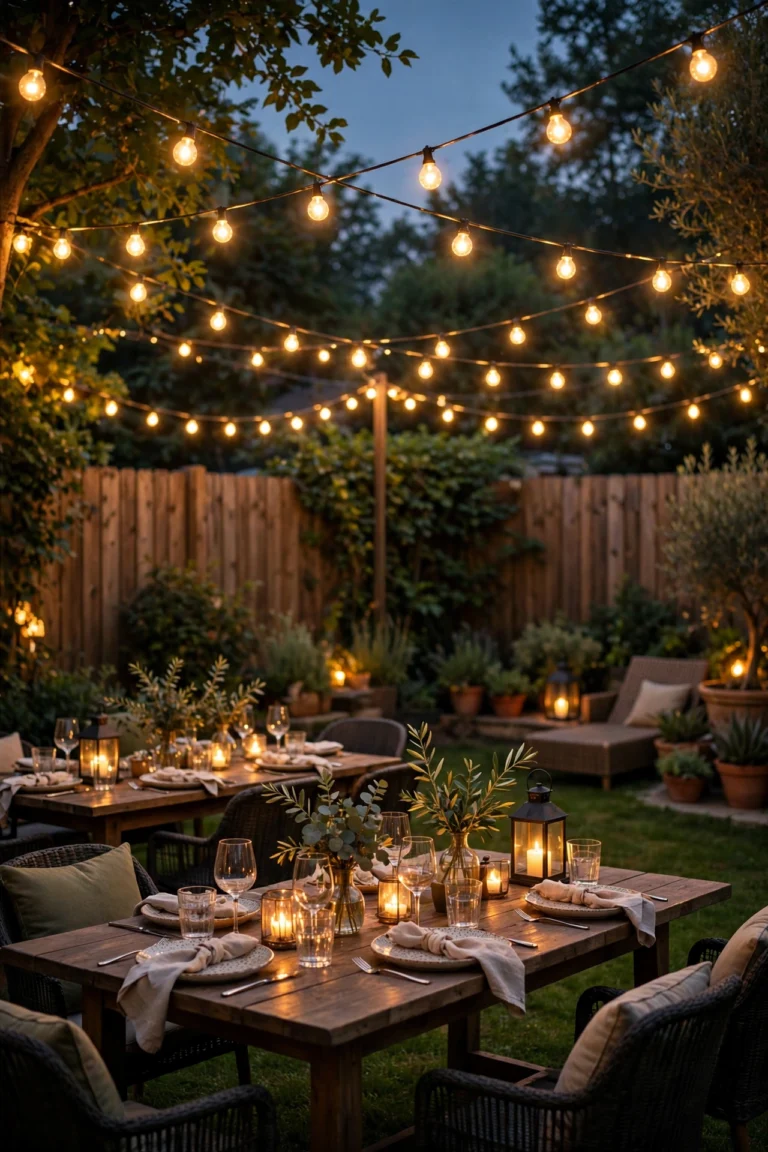
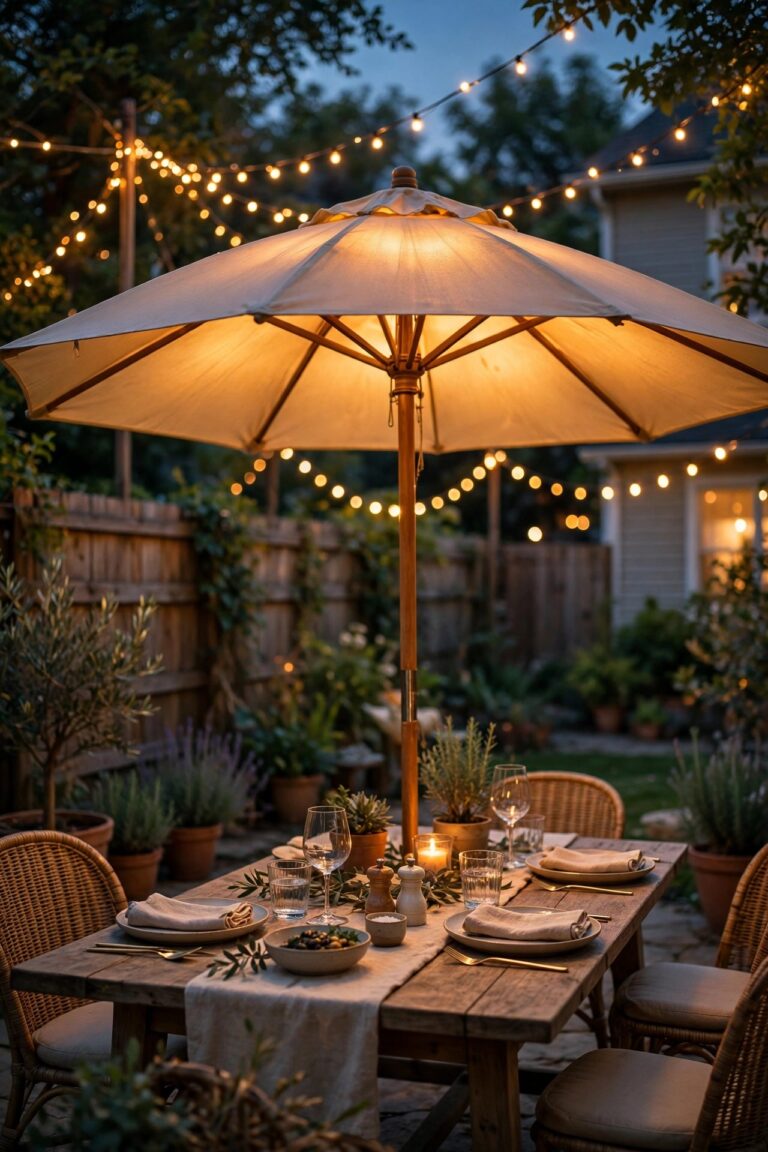
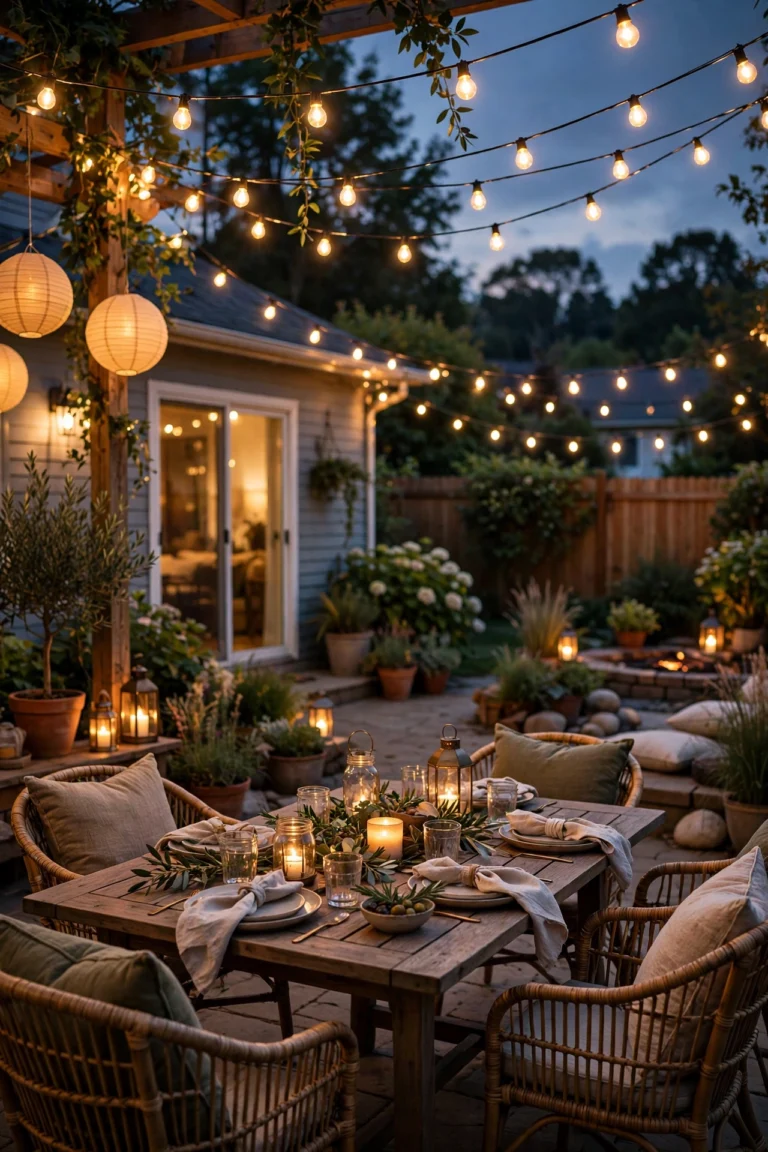
The first warm evening of the year, I always end up standing in my backyard at dusk thinking the same thing: this space is one layer of light away from being my favorite room in the house. That's exactly why I collect backyard string light ideas the way other people collect recipes. A few well-placed strands turn an ordinary lawn into a place where dinner runs long, kids chase fireflies under a golden ceiling, and nobody wants to go inside. The trick is layering. Anchor high points on trees, run a soft line along the fence, and float a canopy over open lawn so the whole yard glows instead of one bright corner doing all the work. In this list I've gathered 21 ways to do it, from classic bistro swags to solar strands for yards without a single outdoor outlet. Every idea includes the practical details I wish someone had told me years ago: strand lengths, hanging heights, bulb spacing, and how to keep everything weatherproof and safe. Pick two or three, mix your layers, and your backyard will feel finished by this weekend.

1. The Classic Canopy Swag: Backyard String Light Ideas That Always Work
If you only try one look from this whole list, make it the classic canopy. Run three or four commercial-grade strands from a central high point — the corner of your house, a tall tree, or a mounted hook about 10 to 12 feet up — and fan them outward to fence posts or trees around the yard. Let each strand dip in a gentle catenary curve, roughly a 1-foot sag for every 10 feet of run, so the light feels soft instead of strung tight like a clothesline. I use 48-foot strands with bulbs spaced 24 inches apart for this; the wide spacing reads elegant from underneath and keeps the total wattage low. Warm white 2700K LED filament bulbs are my pick because they mimic that café glow without the heat or fragility of real glass incandescents. Attach with stainless cup hooks screwed into wood, and add a zip tie at every socket-to-wire point if your yard gets windy. Put the whole canopy on a plug-in timer set from dusk to 11 p.m. and it will welcome you home every single night without you lifting a finger.
Suggested budget range: $60 – $140.

2. Zigzag Crisscross Over the Patio
A zigzag pattern is the fastest way to make a patio feel like an outdoor restaurant. Anchor strands on two parallel sides — house wall to fence, or two poles — and run them back and forth in a tight W shape with each pass about 3 to 4 feet apart. Because the strands cross the space so many times, you get beautifully even light with no dark patches over the table, which matters when you're actually trying to see your dinner. I keep the low point of each swag at least 7 feet above the patio floor so taller guests never duck, and I aim for 8 to 9 feet if there's a ceiling fan or umbrella involved. Shorter 24-foot strands are easier to manage here than one giant run, and connecting three or four end to end covers most patios. Use guide wire (thin galvanized cable) for runs over 20 feet so the strand's own cord isn't bearing all the tension — that's the number one reason sockets crack by mid-season. Honestly, this is the layout friends ask me about most, and it takes one ladder and one afternoon.
Suggested budget range: $45 – $100.

3. Tree-to-Tree Catenary Runs
Big shade trees are the best lighting infrastructure you already own. A single strand run between two sturdy trunks, 25 to 40 feet apart, floats a ribbon of light right over the middle of the lawn where no fixture could ever reach. Choose anchor points 12 to 15 feet up on the trunk — high enough that the sagging middle still clears heads by a good margin — and always attach with wide nylon tree straps or padded hooks rather than screws, so the bark isn't damaged as the tree grows. I check my straps every spring and loosen them a notch; a growing trunk will swallow hardware faster than you'd think. For spans this long, a support cable is non-negotiable: run galvanized aircraft cable tree to tree, then clip the light strand to it every few bulbs with S-hooks or carabiner clips. That way wind load goes into the cable, not your sockets. One strand is lovely; two parallel runs about 6 feet apart creates a genuine "room" of light over a picnic table or fire pit area.
Suggested budget range: $50 – $120.

4. Fence Line Perimeter Glow
Running string lights along the top of your fence defines the whole yard in one move, and it's the easiest install on this list. Screw cup hooks into the inside face of each fence post, about 2 inches below the top rail, and let the strand swag gently from post to post. The rhythm of those little dips is what makes it look intentional instead of like you draped leftover holiday lights. On a standard 6-foot fence, the bulbs will sit around 5½ feet high — perfect for ambient glow, though you'll want to pair this with a higher layer if you need task light for grilling. I run mine on the inside of the fence only, which keeps the light in my yard (neighbors appreciate this) and protects the strands from street-side weather. Solar strands work beautifully here since the fence line usually gets full sun, but plug-in gives you brighter, more consistent output. If your fence is vinyl, use adhesive-backed hooks rated for outdoor use or clamp hooks over the top rail instead of drilling.
Suggested budget range: $35 – $90.

5. Wrapped Trunk and Canopy Glow
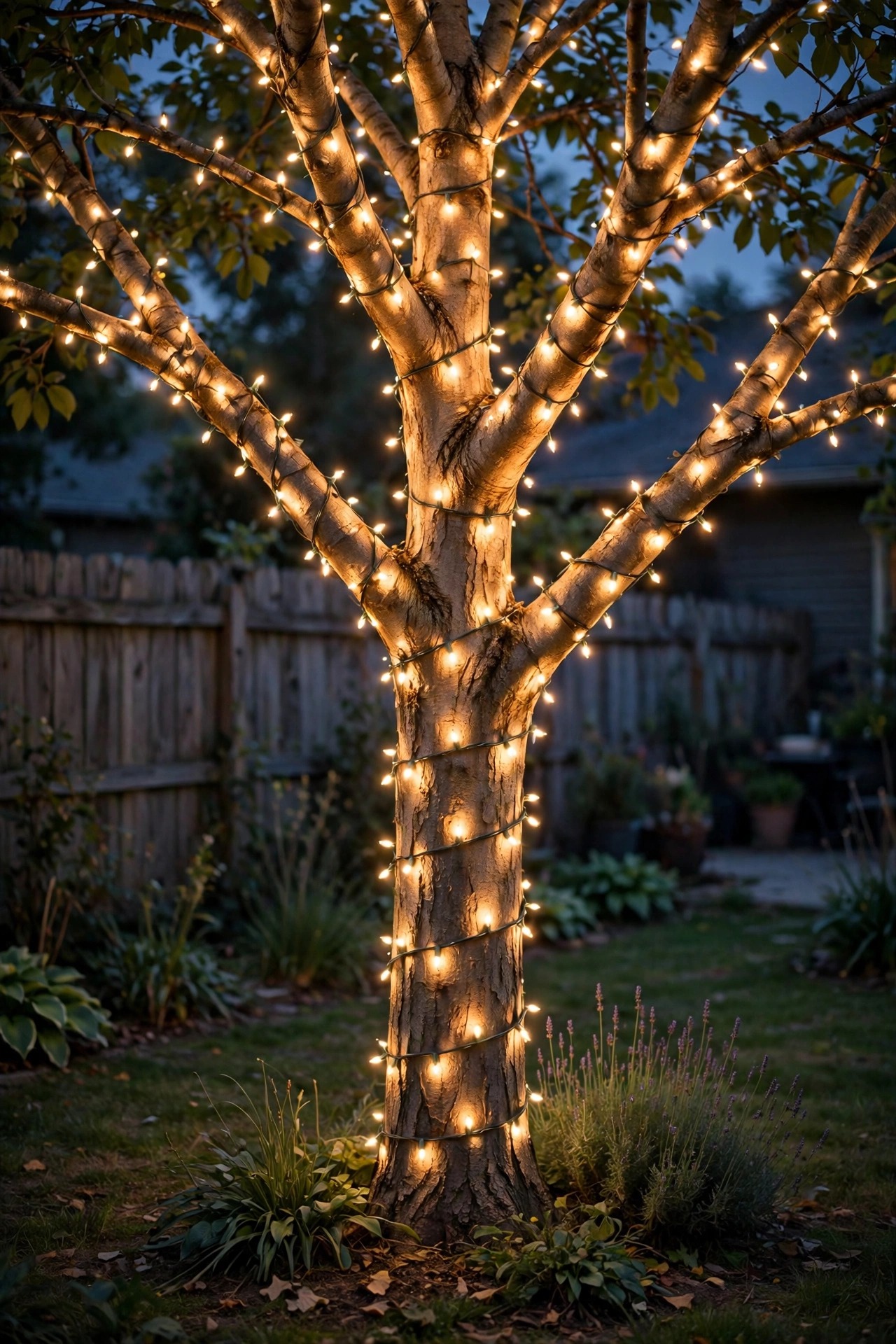
Wrapping a tree turns it into a sculpture after dark, and it's the look that made my neighbors knock on my door. Start at the base and spiral a mini string light strand — the thin copper-wire or small-bulb kind — up the trunk with about 6 inches between wraps, then continue out along two or three main branches, spacing the wraps wider as the branches thin. A mature oak trunk 18 inches around takes roughly 100 feet of mini lights for the full effect, so buy more than you think you need; running out halfway up a branch looks worse than not starting. Keep the plug connection at the base inside a weatherproof connection box, and never wrap so tightly that the wire bites into bark. For a softer, less "holiday" feel, use warm white instead of multicolor and stop the wrap at the first big fork rather than chasing every twig. This pairs beautifully with the tree-to-tree runs above — one lit tree becomes the anchor for the whole yard.
Suggested budget range: $25 – $70.
6. Pole-Mounted Lights Over an Open Lawn
No trees, no problem — this is the idea that saves wide-open lawns. Set sturdy poles (10-foot galvanized conduit, cedar 4×4 posts, or purpose-built string light poles) in the ground around your seating area and string your canopy from them. I set poles in buckets of concrete hidden inside large planters for a no-dig option, or bury them 18 to 24 inches with gravel and concrete for a permanent install. Space poles 12 to 15 feet apart at most; longer spans sag too much even with guide wire. If you're comparing styles before you commit, my roundup of string light pole ideas covers everything from whiskey-barrel planters to in-ground steel. Screw an eye bolt through the top of each pole, clip strands on with carabiners, and you'll have them down in five minutes when a storm rolls in — a genuine advantage over tree anchors. Three poles in a triangle over a fire pit is my personal favorite starter layout.
Suggested budget range: $80 – $200.

7. Edison Bulb Bistro Strands
Edison-style filament bulbs are the strand I reach for when the goal is pure atmosphere. Their elongated filaments throw that amber, vintage glow that makes everyone look good and every meal look like it came from a bistro kitchen. Because the bulbs are bigger — usually an ST64 or S14 shape — space them on strands with 12 to 18 inches between sockets, and hang them where they'll be seen up close: over the dining table, along the porch rail, or low over a lounge corner. One caution from experience: true glass Edison bulbs are fragile and many aren't shatterproof, so for high runs over lawn I choose LED filament versions in shatter-resistant plastic, which look identical from six feet away and survive being dropped on the patio. I have a whole post of Edison bulb string light ideas if you want shape-by-shape comparisons. Dimmer plugs work wonderfully with LED filament strands — drop them to 40 percent after dinner and the mood shifts instantly.
Suggested budget range: $40 – $110.

8. Globe Bulb Strands for a Soft, Modern Glow
Globe bulbs — the round G40 style — give off the softest, most even light of any strand I own, and they suit modern and minimalist yards where Edison filaments feel too rustic. The milky or clear globes read like little moons floating over the lawn, especially in a long straight run pulled nearly taut between two points. Because the bulbs are light and round, globe strands catch the breeze and sway gently, which I find charming over a garden but distracting directly over a dining table — keep them at the yard's edges. G40 LED globes draw about 1 watt each, so a 25-bulb strand sips power and stays cool enough to hang near fabric shade sails and umbrellas. My globe string light ideas post digs into sizes and finishes if you want the full tour. Mix two globe sizes on parallel runs — G40s high, smaller G30s low — for a designer layered effect that costs almost nothing extra.
Suggested budget range: $30 – $85.

9. Solar Strands for Corners With No Outlet
Every yard has that far corner where running an extension cord is impossible or just plain ugly — that's solar string light territory. Modern solar strands with a separate panel on a ground stake genuinely work now, as long as the panel gets six hours of direct sun. Stake the panel in the sunniest spot within cord reach, angle it south, and wipe it clean monthly; a dusty panel is the number one reason people think solar "doesn't work." Expect a softer output than plug-in — solar strands are mood lighting, not task lighting — and about 6 to 8 hours of glow after a good charging day. I use them along the back fence and around the garden shed where they'd never justify an electrician. Look for strands with a replaceable rechargeable battery and an IP65 rating so a summer downpour isn't the end of them. In winter, bring the battery units into the garage if your nights drop below freezing for weeks at a stretch.
Suggested budget range: $20 – $55.

10. Mason Jar Lantern Strings
For a handmade, farmhouse feel, mason jar strands are hard to beat. You can buy them ready-made or DIY them: a strand of socket-style string lights where each bulb drops into a hanging glass jar, or solar lids that turn ordinary jars into self-contained lanterns. My favorite use is a single strand hung low — about 6 feet — along a porch beam or between two shepherd's hooks over a potting bench, where the jars glow like captured fireflies. Keep the jars' lids vented or choose LED bulbs only; a sealed jar with a hot incandescent bulb is a genuine safety problem. If you're DIY-ing with solar lids, hang the jars where the lids get direct afternoon sun or they'll fade by 9 p.m. Frosted jars soften the light beautifully and hide the bulb hardware, while clear jars show off a pretty filament. Add a sprig of faux greenery zip-tied at each hanger for a finished, styled look that takes ten extra minutes total.
Suggested budget range: $25 – $65.

11. Fence-Mounted Icicle Strands
Icicle-style strands aren't just for December roof lines. Hung along a fence in warm white, the staggered drops — short, medium, long — create a dripping-light effect that makes a plain fence look like a backdrop from a garden party. I run them on the inside top rail of the back fence, letting the drops hang 8 to 18 inches, and the variation in length keeps your eye moving around the whole yard. Because the drops hang down, keep them out of reach of climbing vines that will happily swallow the strand by August. Icicle strands are typically connectable three to five end to end, so measure your fence run before buying. Choose the steady-on type rather than twinkle for a calm backyard mood, and remember these look best as a background layer: pair them with one brighter focal strand over the seating area so the yard has both sparkle and usable light. In my experience, this is the highest compliments-per-dollar idea on the entire list.
Suggested budget range: $20 – $60.

12. Fairy Light Curtain Backdrop
A fairy light curtain turns one section of fence into a wall of twinkle — the single best backdrop for photos, parties, and outdoor movie nights. Curtains come in standard sizes like 10 by 10 feet: dozens of vertical copper-wire drops hanging from one horizontal lead. Mount the lead along the top of the fence or a pergola beam, let the drops hang straight, and weight the very bottom with a few discreet clips if your yard is breezy. Behind a seating area or a drink station, it glows like a starfield and hides an ugly fence completely. Most curtains run on a small plug or USB power bank, and the better ones offer a twinkle mode plus a remote. The copper wire strands are delicate, so install them once and leave them — this is not the strand to take up and down weekly. LED-only and low heat means you can safely drape a sheer outdoor curtain fabric in front for an even dreamier diffused effect.
Suggested budget range: $25 – $70.

13. Shepherd's Hook Clusters in the Garden Beds
Short shepherd's hooks — the 3- to 4-foot garden kind — let you thread light right through your planting beds at flower height. Push three or four hooks into a bed in a gentle arc, then swag a mini string light strand between them so the bulbs nestle among the blooms. The effect at dusk is magical: flowers lit from within their own bed, and a soft guide of light along the garden edge. Use solar mini strands here to avoid cords snaking through mulch, and keep bulbs a few inches from dry mulch and leaves — LED bulbs run cool, but tidy placement is a good habit. This works beautifully around a birdbath or garden statue as a mini focal point. Hooks rust over seasons, so I hit mine with a coat of outdoor spray paint each spring. For a bigger statement, use taller 6-foot hooks flanking a garden bench and drape a fuller bistro strand between them.
Suggested budget range: $30 – $75.

14. Fire Pit Circle of Light
A circle of string lights around the fire pit area defines the coziest zone in any yard. Set four to six short poles or hooks in a loose circle 12 to 15 feet across, with the fire pit at the center, and swag strands from point to point so the seating sits inside a glowing boundary. Critical safety note from my own near-mistake: keep every strand well outside the fire's heat and spark zone — I maintain at least 10 feet of horizontal distance from the pit's edge and never run a strand directly over open flame, since rising heat and embers can damage cords and sockets. LED bulbs only here, no exceptions. The light circle does double duty: it marks the social space so guests drifting to the cooler can find their way back, and it keeps the fire itself as the brightest focal point, which is exactly the hierarchy you want. Add a dimmer and lower the circle as the night deepens.
Suggested budget range: $45 – $110.

15. One-Tree Umbrella Canopy
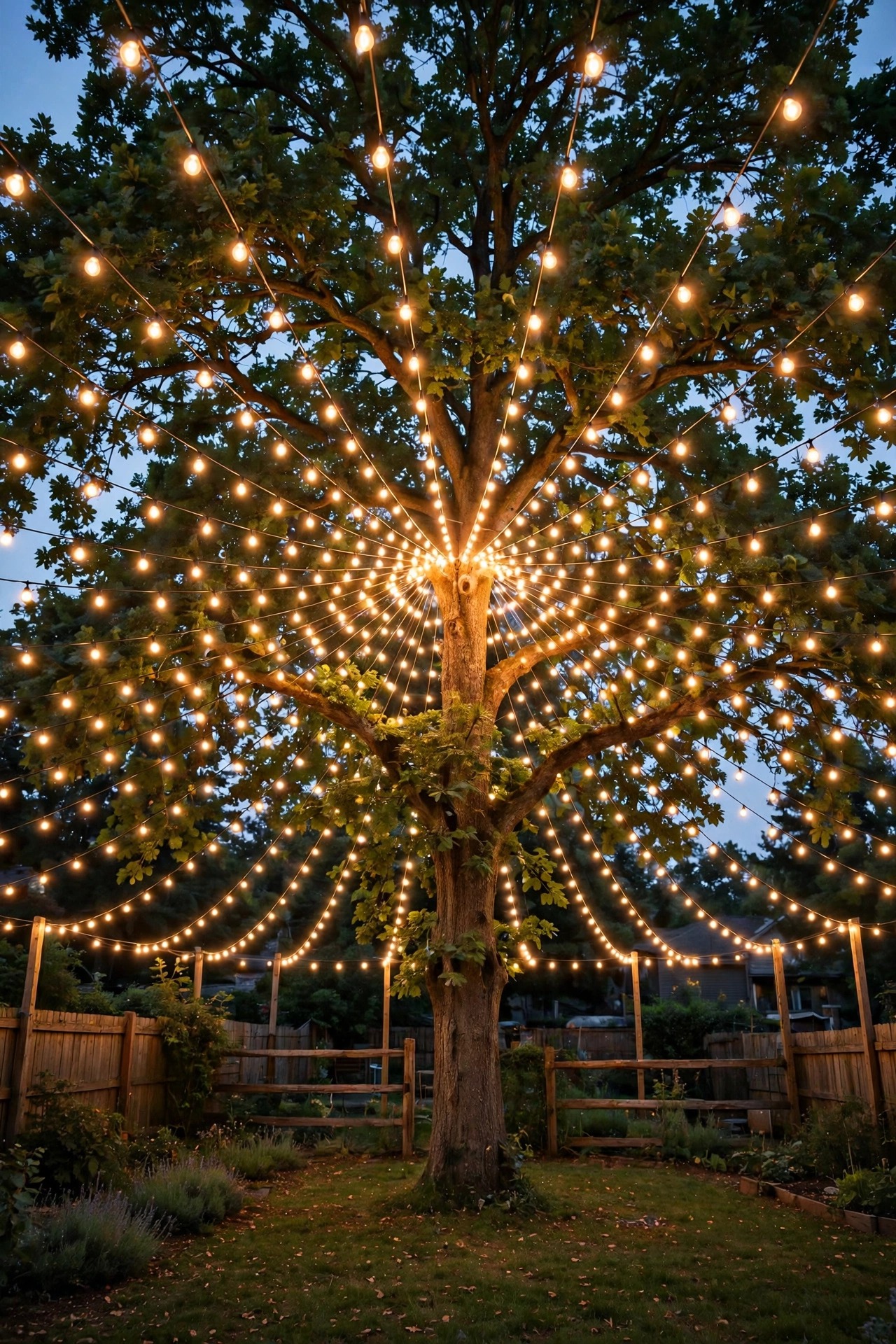
If your yard has a single magnificent tree, make it the chandelier. Run six to eight strands from one high point in the canopy — around 14 to 16 feet up — outward and downward to shorter poles, fence points, or ground anchors arranged in a wide circle. The result is an umbrella of light that covers a huge area from one anchor, perfect for lawns where the only shade tree stands off to the side. The high center and sloped lines make rain run off instead of pooling in swags, a quiet practical bonus. You'll need a sturdy mounting: I use a wide ratchet strap around the trunk with a circle of carabiner clips, checked and loosened each spring as the tree grows. Because all strands converge, use a weatherproof multi-plug connection box at the base with a drip loop so water can't follow the cords in. Stand underneath at night and look up — honestly, it's the prettiest view in my whole yard.
Suggested budget range: $70 – $160.
16. Layered Heights: High Canopy Plus Low Fence Line
This is the idea that ties the whole philosophy together: two layers at two heights. A high layer — a canopy or tree-to-tree run at 9 to 12 feet — gives the yard its ceiling, while a low layer along the fence or garden edge at 3 to 5 feet gives it walls and depth. Lit only from above, a yard can feel like a stage; lit only from the fence, it feels like a border with a dark hole in the middle. Together, your eye reads a complete outdoor room. The trick is matching color temperature exactly — buy both layers at 2700K, ideally from the same product line — because a warm canopy over cool fence lights looks like a mistake even if guests can't name why. Put the layers on separate timers or smart plugs so you can run the low layer alone for quiet weeknights and fire up both for parties. This two-layer approach is the exact framework I use in my own yard.
Suggested budget range: $90 – $220.

17. Color-Changing Smart Strands
Color-changing strands used to mean a holiday-only look, but modern smart strands with warm-white modes earn a year-round place. Run them on their softest warm setting 95 percent of the time, then shift to amber for autumn evenings, red and green for one December weekend, or your team's colors on game day — the flexibility is the entire point. App-controlled strands let you dim, schedule, and group zones from the couch, and most remember their last setting after a power blink. Buy commercial-grade sockets and sealed bulbs; the cheap color strands are the ones that fail after one rainy season. A little restraint goes a long way: one smart strand as an accent over the bar cart or along the porch, with plain warm strands doing the rest, looks designed rather than decorated. Check that the strand is rated for outdoor use and that the control box can live under an eave or in a weatherproof enclosure.
Suggested budget range: $50 – $130.

18. Dining Table Spotlight Swags
Over an outdoor dining table, I like tight, deliberate swags: two or three parallel strands run the long way of the table, about 7½ to 8 feet above the tabletop, with the bulbs hanging low enough to feel intimate but never in anyone's sightline across the table. Parallel runs beat a random zigzag here because the even rows photograph beautifully and light faces evenly — no harsh single bulb glaring behind someone's head. Choose dimmable strands and a plug-in dimmer; full brightness for serving, 40 percent for lingering over dessert. If the table sits under open sky, anchor the runs between the house and two poles, or build a simple frame from conduit clamped to the table's ends for a rental-friendly version. Keep a spare bulb or two in the junk drawer — one dark socket in a short, visible run is the first thing every guest notices. This is the setup that made our weeknight dinners migrate outside all summer.
Suggested budget range: $40 – $95.

19. Paper Lantern Strands for Party Nights
Paper lantern strands are my party trick — inexpensive, joyful, and stored in a shoebox between events. The lanterns, usually 8 to 12 inches across in white or soft pastels, hang from a standard socket strand and diffuse the bulb inside into a floating orb. String two strands across the yard for a birthday or summer party and the whole space feels decorated in twenty minutes. The honest caveats: paper lanterns are not weatherproof, so they come down if rain threatens and they live indoors between parties; and you must use LED bulbs only, since a hot bulb inside paper is a fire risk I won't take. Nylon lanterns cost a bit more but survive seasons of use and shrug off dew. Hang them slightly higher than your everyday strands — around 9 feet — so the big orbs don't crowd anyone's head. Mixed sizes on one strand look more styled than uniform ones, in my experience.
Suggested budget range: $15 – $45.

20. Pathway Border Strands on Short Stakes
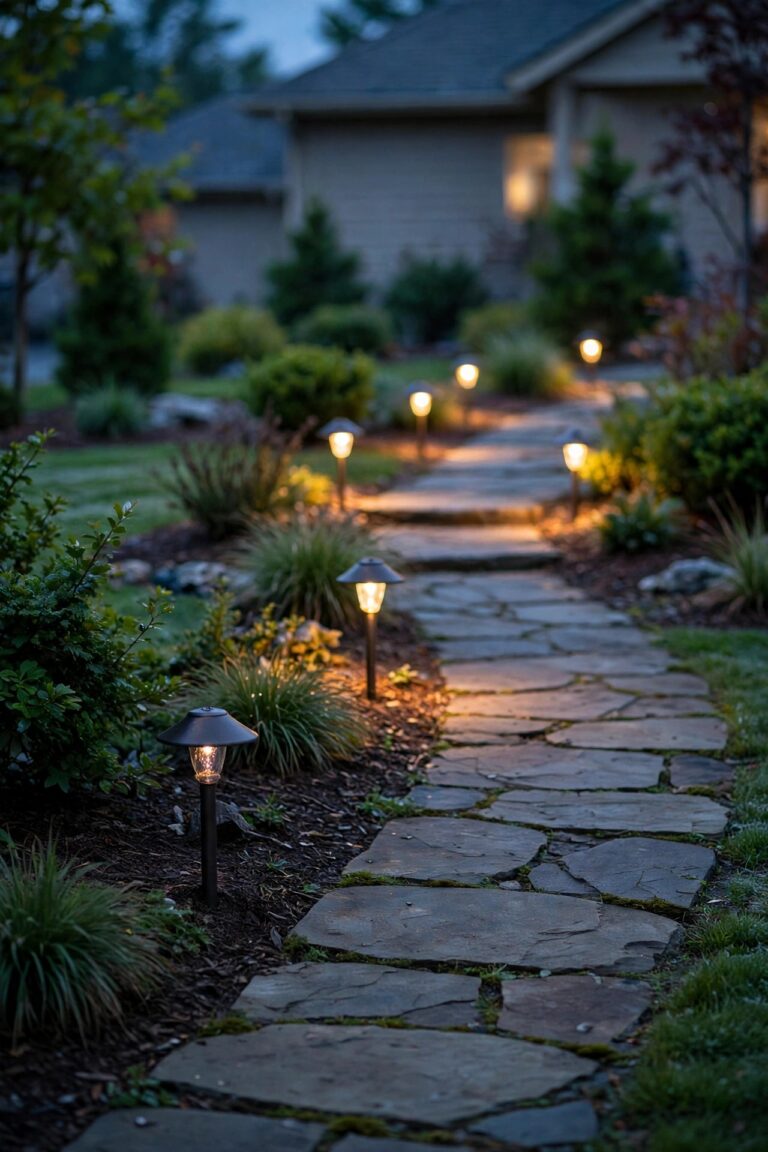
String lights don't have to fly — a low strand tracing a path or lawn edge is quietly gorgeous. Push short 12- to 18-inch stakes along the walkway or the border between lawn and beds, and swag a mini strand between them so the bulbs float just above the plantings. The light pools softly at ankle height, marking the route from patio to garden gate without the glare of path fixtures in your eyes. Solar mini strands are ideal here since the runs are short and the stakes double as the solar panel mounts on some models — just keep panels out from under overhanging leaves. This is also a kind, practical idea for guests: a lit edge prevents the classic stepped-in-the-flowerbed moment at every gathering. In winter I move my border strands to outline the front walk for the holidays, then bring them back to the garden in spring — two seasons of use from the cheapest strands I own.
Suggested budget range: $18 – $50.

21. Ground-Level Lawn Outline: Backyard String Light Ideas for Big Open Yards
For a big open lawn with nothing to hang from, outline the space itself. Run a long strand in a wide rectangle or gentle oval directly around the lawn's perimeter, draped between short poles every 10 to 12 feet at about 3 feet high. From the patio, the glowing outline reads like the walls of an enormous outdoor room, and it makes even a plain rectangle of grass feel planned. Kids read it instantly as the boundary of the play space, and at parties it keeps the gathering gently corralled around the lit center. Because everything is low, this is the most wind-tolerant layout on the list, and teardown is a five-minute job before mowing — unclip, coil, mow, rehang. I use my heaviest commercial strand here since it lives close to sprinklers and foot traffic; the thicker cord shrugs off both. Add one high element if you can — even a single wrapped tree — so the outline has a companion layer.
Suggested budget range: $55 – $120.

Frequently Asked Questions
How high should I hang backyard string lights?
Aim for 8 to 10 feet over seating and dining areas, with the lowest point of any swag at least 7 feet above where people walk. Over open lawn you can go higher — 10 to 12 feet looks graceful — while low accents like fence lines and garden borders work beautifully at 3 to 6 feet. Just keep strands well away from fire pits and grills.
Can I leave string lights up all year?
Yes, if they're commercial-grade strands rated for outdoor use with sealed sockets and LED bulbs. Take down lightweight decorative strands, paper lanterns, and anything not rated for wet locations before winter storms. Check cords each spring for cracks, loosen tree straps as trunks grow, and replace any strand with damaged insulation rather than taping it.
How many strands can I connect end to end?
It depends on the strand: most LED strands allow 3 to 10 connections, while older incandescent strands often max out at 3. The limit is printed on the tag near the plug — follow it exactly. When in doubt, run a second outlet or use a support cable and a separate feed rather than overloading one run.
Do solar string lights work as well as plug-in ones?
They're softer and simpler. A good solar strand gives 6 to 8 hours of gentle ambient light after a sunny day, which is plenty for fence lines and garden accents. For canopies over dining areas where you need real, reliable brightness, plug-in strands on a timer are the better choice. Many yards, mine included, happily use both.
Conclusion
The best backyard string light ideas aren't about buying the most strands — they're about layers: something high to give the yard a ceiling, something low to give it edges, and one focal glow that draws everyone in. Start with a single canopy over the spot where you actually sit, add a fence line or garden layer next season, and let the yard grow brighter year by year. Every idea on this list is a weekend project at most, and most take under an hour. If you'd like more inspiration for the rest of your outdoor spaces, browse the other lighting ideas here on the site — your front porch deserves the same treatment your backyard just got.