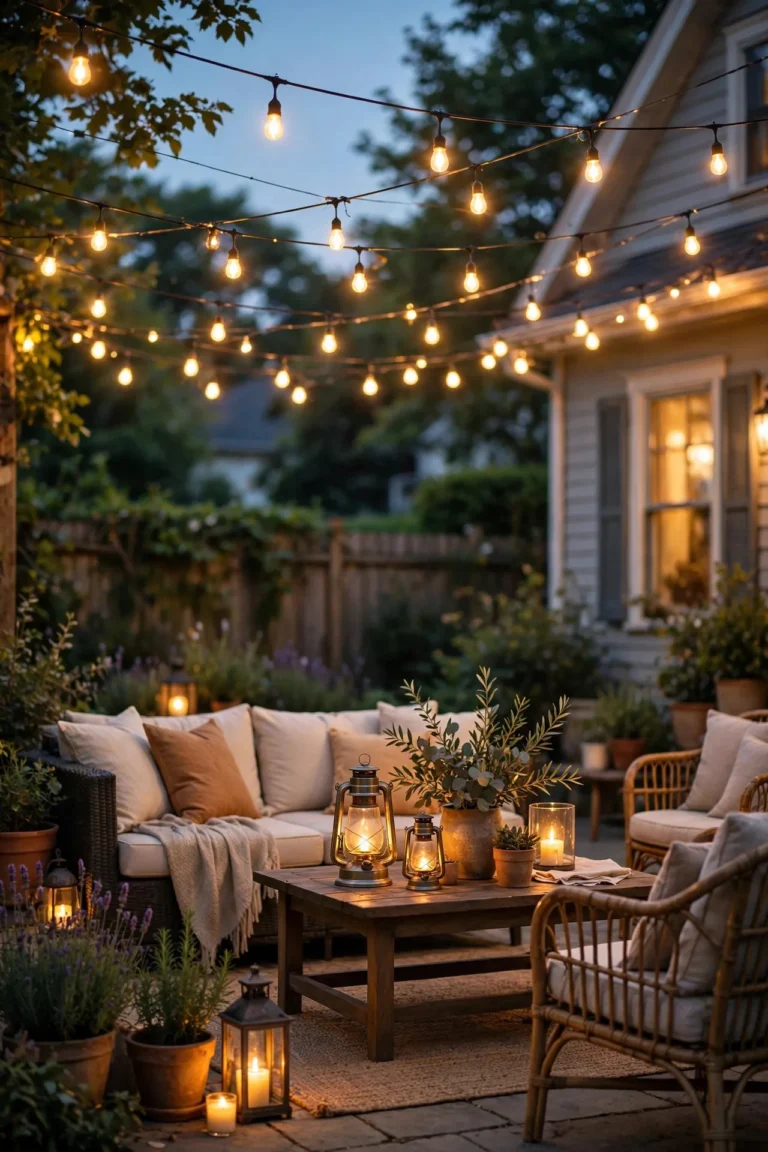
There is a moment, right at dusk, when a strand of globe lights switches on and the whole backyard seems to exhale. The round bulbs don't glare or spotlight anything — they just hover, soft and warm, like a low constellation you installed yourself. That's exactly why I reach for globe string light ideas whenever a space feels flat after dark: the light is gentle, the look is forgiving, and one or two strands can completely change how a patio feels. In my experience, the secret is layering. A single strand is pretty; two or three hung at different heights and angles give you that floating, cafe-at-the-beach glow everyone asks about. Below I'm sharing 17 ways I use globe strings — over pergolas, between trees, along fences, and yes, even over the pool — with the spacing, hardware, and honest budgets that actually work. Most of these go up in an afternoon with a ladder and a handful of cup hooks, and every one of them makes a warm evening outside feel a little bit magical.

1. A Zigzag Canopy Over the Pergola
If you have a pergola, this is the first look I'd try, because the structure does half the work for you. Run your globe strands back and forth in a zigzag between the two long beams, letting each pass dip about 6 to 10 inches so the globes hang at slightly different heights instead of forming a flat grid. For a standard 12-by-14-foot pergola, three to five passes of a 25-foot strand usually covers it beautifully. Attach with stainless cup hooks screwed into the beams every 4 to 5 feet, and clip the strand rather than wrapping it, so a burned-out section lifts off in minutes. I always recommend warm-white LED globes here, around 2700K, because the wood overhead warms the light even further and the whole canopy turns amber at dusk. Keep the drop low enough to feel intimate — roughly 7 to 7½ feet of clearance at the lowest dip — but high enough that a tall guest never ducks. If your pergola sits over a dining set, center the densest part of the zigzag over the table and let the edges run a little sparser.
Suggested budget range: $45 – $110.

2. Gentle Swags Between Two Trees
No structure? Two sturdy trees and a little patience give you the most romantic version of this look. The trick is supporting the strand with a guide wire or a length of black cord strung tight between the trunks at about 9 to 10 feet, then clipping the globe strand to it so it falls in natural swags — aim for a dip of 12 to 18 inches in the middle of each span. Without the guide wire, the strand's own weight stretches it and drags the sockets down over a single season; I've learned that one the hard way. Wrap the tree attachment points with a short length of rubber or use wide tree straps so nothing cuts into the bark as the tree grows. Measure your span before you shop: most backyard tree pairs are 20 to 35 feet apart, which means a 48-foot strand gives you the swag plus slack to reach an outlet. Keep bulbs LED and shatterproof here, because wind moves these strands more than any other installation on this list.
Suggested budget range: $40 – $95.
3. Globe String Light Ideas for a Single Statement Tree
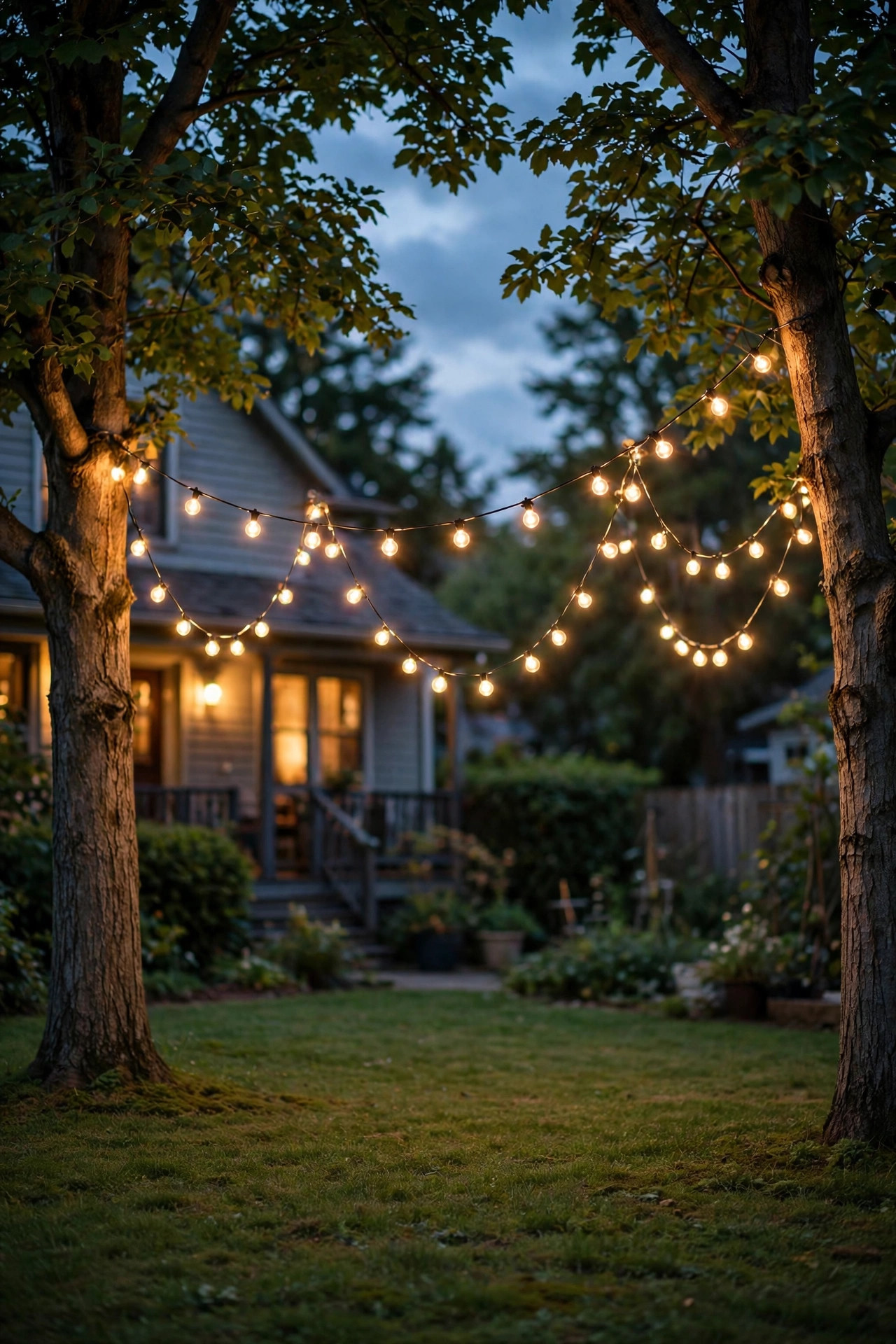
One big tree in the middle of the yard can carry the whole lighting design if you treat it like a chandelier. Start at a central branch about 10 to 12 feet up and radiate strands outward and downward to fence posts, shepherd's hooks, or the corners of the house, so the globes fan out like spokes. Six to eight strands is the sweet spot for a mature oak or maple; fewer looks skimpy, more turns into a project you'll never finish. The magic is in the varied heights — let the ends land anywhere from 6 to 8 feet so the globes float at staggered levels instead of one flat ring. I like to add one strand wound loosely up the trunk for a grounded glow at the base. Use a pulley or a simple loop of cord at the central branch if you can, because being able to lower the whole arrangement to change a strand in October is worth the ten extra minutes in May. This is the setup neighbors photograph over the fence, honestly.
Suggested budget range: $75 – $180.

4. A Fence-Line Border That Defines the Yard
Running globe strands along the top of a fence is the easiest way I know to make a plain rectangular yard feel finished. Mount small hooks or screw eyes along the fence rail every 5 to 6 feet and let the strand swag gently between them — a shallow 6-inch dip keeps it tidy rather than droopy. The effect is a soft frame of light that tells your eye exactly where the garden ends, and it makes even a small yard feel considered. For a typical 50-foot fence line, two 25-foot strands end to end cover one side; doing two or three sides turns the whole yard into a courtyard at night. Solar strands work surprisingly well here since the fence top usually catches good sun all day. One practical note: keep the strand on your side of the fence and choose warm 2700K bulbs, because a long run of cool-white globes along a property line reads more "parking lot" than "garden party" for the neighbors.
Suggested budget range: $35 – $90.

5. Parallel Runs Over the Dining Table
For outdoor dining, straight parallel runs beat swags every time — the light is even, nothing dips into anyone's sightline, and the table gets a soft, shadowless wash that makes food look wonderful. Hang three or four strands parallel to the long side of the table, spaced 18 to 24 inches apart, pulled fairly taut with only a slight 3- to 4-inch sag. You'll need anchor points at both ends: house wall to pergola beam, or two well-set poles if the table sits in the open. Height matters most here — 7½ to 8 feet above the ground keeps globes clear of raised wine glasses and tall centerpieces. I pair this with a dimmer, because full brightness is great while you're cooking and serving, but dinner itself is better at about half power. My outdoor string lights guide covers strand lengths and connectable runs in more detail if you're planning a big table. Shatterproof LED globes are non-negotiable over any eating surface.
Suggested budget range: $50 – $120.

6. A Poolside Perimeter With Serious Safety Notes
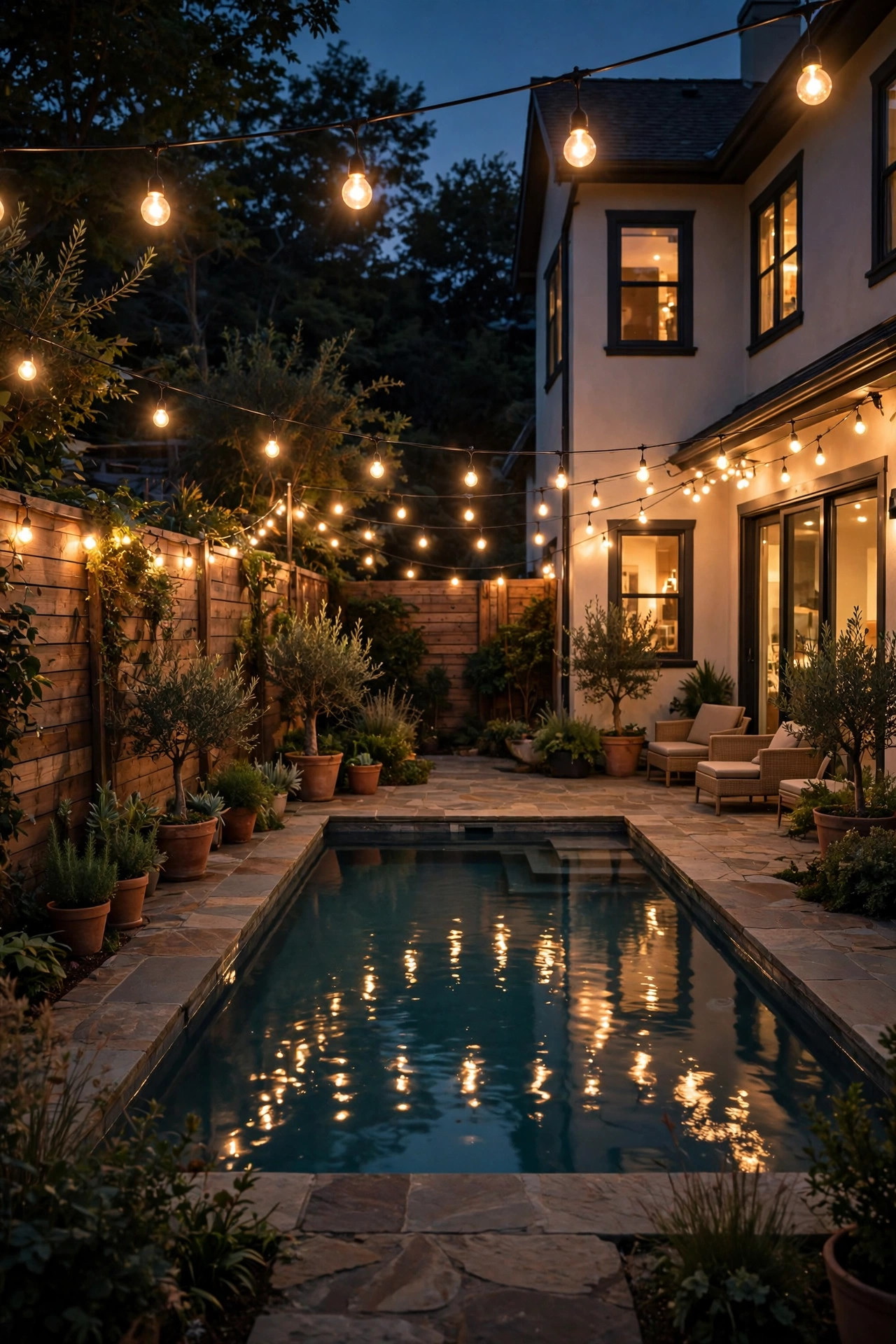
Globe lights around a pool look like a boutique hotel at night, and I love the look — but this is the one installation where the safety rules come first, full stop. Keep every strand and wire well away from the water's edge and overhead clearance generous; electrical codes generally want fixtures and cords at least 10 feet horizontally from the pool wall, and nothing should ever be reachable by someone in the water. In practice, that means stringing the globes around the deck perimeter — fence to post to house — so they reflect on the water without hanging over it. The reflection doubles your light for free and looks absolutely dreamy. Use only strands rated for wet locations, plug into a GFCI outlet, and choose plastic shatterproof globes rather than glass anywhere near wet concrete. Solar strands on the far fence are the worry-free option if your deck layout makes wired runs awkward. Done carefully, this is the single most complimented setup at our summer parties.
Suggested budget range: $60 – $140.
7. Milky Frosted Globes for the Softest Possible Glow
If clear globes ever feel a touch sparkly or harsh to you, frosted — sometimes called milky or opal — globes are the answer. The diffused glass hides the filament or LED inside and turns each bulb into a smooth ball of light with no hot spots, which is exactly the "floating" quality this whole post is about. I use frosted strands anywhere people sit for a long time: over lounge chairs, around a fire pit conversation area, on a reading porch. Because the diffusion eats a little brightness, plan on roughly one extra strand compared to a clear-globe layout, or space your swags slightly closer together — every 4 feet instead of 5. Frosted globes also hide dust and the occasional dead LED far better than clear ones, so the strand looks good for more seasons with less fussing. Pair them with warm 2700K bulbs only; cool light through frosted glass tends to look grey and a little sad. Honestly, once you live with the frosted glow for a week, clear globes feel like they're trying too hard.
Suggested budget range: $35 – $85.

8. Mixed Globe Sizes for a Designer Look
Uniform strands are pretty, but mixing two globe sizes on the same run is what makes a setup look styled instead of installed. The classic combo is a standard 2-inch globe strand as your base layer with a second strand of larger 3-inch globes swagged slightly lower, so the big orbs drift in front of the smaller ones and create real depth. Alternate approach: hang one strand all-large over the focal point — the table, the fire pit — and keep the perimeter strands smaller and simpler. Keep the color temperature identical across both sizes, or the mix looks like a mistake instead of a choice; buy both strands in 2700K warm white and test them side by side on the ground before you hang anything. Spacing helps too: the larger globes read best with a touch more air around them, so let that strand dip a little deeper. This is my go-to trick when someone says their yard feels "fine but flat" — it's a twenty-minute change with an outsized payoff.
Suggested budget range: $55 – $130.

9. Solar Globe Strands for Wire-Free Corners
Every yard has that one corner with no outlet within thirty feet, and solar globe strands finally make it usable. Modern solar strings store enough in a day of decent sun for 6 to 8 hours of light, and the globes have gotten genuinely pretty — warm-toned, nicely round, no more of that blue-white glare from the early days. The whole game is panel placement: mount the little panel on a fence top or a short stake where it gets direct sun until mid-afternoon, even if that means the first globe starts a few feet into the shade. Expect a softer output than wired strands, which honestly suits a quiet corner — a garden bench, a hammock, a potting shed door. I group two strands in one spot rather than stretching one thin across a long run. My roundup of solar string light ideas has more placement tricks if you're going fully solar. Bring the strands in for the darkest winter weeks and they'll greet you happily in spring.
Suggested budget range: $25 – $60.

10. Deck Railing Drapes
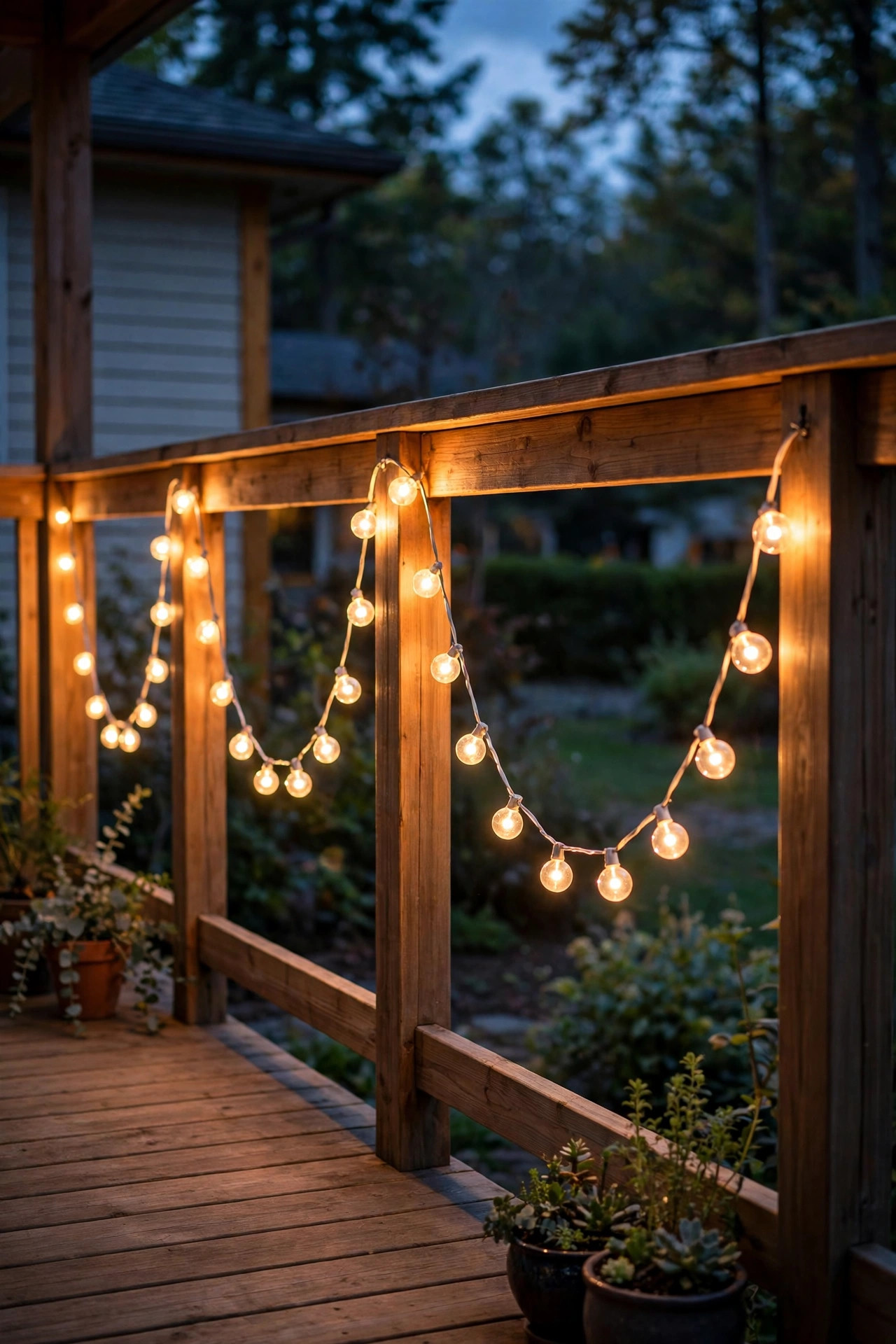
A deck railing is a ready-made track for globe lights, and draping strands along it defines the deck's edge so beautifully that guests stop hovering near the door and actually spread out. I run the strand along the inside of the top rail, clipping it every 3 to 4 feet and letting it fall in small, even scallops about 8 inches deep. Inside, not outside — the globes light the deck surface and people's faces instead of the lawn, and they're protected from knees and weather a little better. Small adhesive-backed or screw-in clips made for railings keep everything tidy without a single zip tie showing. If your deck has posts, wrap one loose spiral of globes up the corner post nearest the steps; it marks the way down after dark better than any step light I've tried. One caution from experience: keep strands off the railing section right beside the grill. Heat and grease film are both unkind to pretty globes.
Suggested budget range: $30 – $75.
11. A Globe-Lit Gazebo Ceiling
Inside a gazebo, globe strings solve the problem every gazebo owner knows: the harsh single light in the center of the ceiling that makes everyone look like they're being interrogated. Instead, run three or four strands from the center hub outward to the corners like spokes, then one more strand around the inner perimeter. The spokes give you that circus-tent canopy feeling, and the perimeter ring bounces light off the ceiling so faces get lit from all sides — flattering and shadow-free. Because a roof covers this installation, you can use strands rated for damp rather than fully wet locations, which widens your choices a little. If your gazebo has curtains or screens, keep globes at least a foot from the fabric and LED-only, always — LED globes stay cool to the touch, which is the whole reason they're safe near curtains, sheers, and dry decorations. Add a remote-controlled dimmer plug and the gazebo becomes the best seat in the yard from May through October.
Suggested budget range: $55 – $125.

12. Globe String Light Ideas for a Welcoming Front Porch
Don't save all the glow for the backyard — a front porch strung with globes is the friendliest house on the street. My favorite arrangement is a single strand swagged across the porch ceiling from corner to corner, plus a second strand outlining the porch opening so the whole entry reads as a lit frame from the sidewalk. Keep the dips shallow, around 6 inches, so the look stays tailored rather than backyard-casual. If your porch has columns, a vertical strand spiraled down one column adds height and balances a door wreath or a pair of planters. Stick with warm 2700K and modest brightness here; the front of the house should glow, not beam, and your neighbors across the street will thank you. On a timer set for dusk to 11 p.m., this costs pennies a week with LED globes. Pairing a pergola lighting ideas style canopy over a front patio works too, if your entry has the structure for it.
Suggested budget range: $30 – $80.

13. Shepherd's Hook Path Borders
Globe strands don't have to live overhead — strung low between shepherd's hooks, they make a path border that feels like a garden party entrance. Use hooks 4 to 5 feet tall, set every 6 to 8 feet along the path, and hang a single strand so the globes float just above the plantings at knee-to-waist height. Because the strand is low, even a modest solar strand performs well here, and the light pools right where feet need to see. Stagger the hooks slightly — a foot closer, a foot farther — so the line breathes instead of marching. This is my favorite trick for a wedding-style garden entrance or for guiding guests from a driveway to a backyard party without a single word of direction. In winter, the same hooks hold the strand a little higher and it becomes a genuinely pretty snow-glow border. Just keep globes a few inches clear of mulch and dry ornamental grasses; LED globes run cool, but clearance is a good habit.
Suggested budget range: $35 – $85.

14. Umbrella Spokes Over a Cafe Set
A market umbrella is a string-light structure hiding in plain sight. Run short globe strands from the top of the pole outward along each rib, or swag one strand around the underside edge from rib tip to rib tip — either way, a small bistro set underneath gets its own private canopy of light. Because the span is tiny, a battery-operated or USB strand is perfect here and saves you trailing a cord across the patio; a little power bank in the pole's base runs a strand all evening. Two details make it look intentional: match the strand count to the umbrella so every rib gets the same treatment, and let the globes hang just below the fabric edge so they read as a glowing fringe from across the yard. When storm season threatens, the whole rig unclips and comes inside in under five minutes, which is more than I can say for most of my other installations.
Suggested budget range: $20 – $50.

15. Dimmer Nights: Put Your Globes on a Dimmer
The difference between "nice" and "unforgettable" with globe lights is very often just a dimmer. Full brightness is for grilling, finding dropped earrings, and setting up; about 50 to 60 percent is where the floating glow lives, and 30 percent with a fire pit going is pure atmosphere. An outdoor-rated plug-in dimmer or a smart plug with dimming costs little and takes two minutes to add — just confirm your strands are dimmable LED, since the cheapest solar and battery strands usually aren't. I run our main patio strands on a smart plug schedule: on at dusk at 80 percent, dropping to 50 percent at nine, off at midnight. That schedule also stretches bulb life noticeably and keeps the light neighborly late at night. If you entertain often, put the dimmer control somewhere you can reach it without a ladder and without an app — a simple remote by the back door gets used ten times more than any phone setting.
Suggested budget range: $15 – $45.
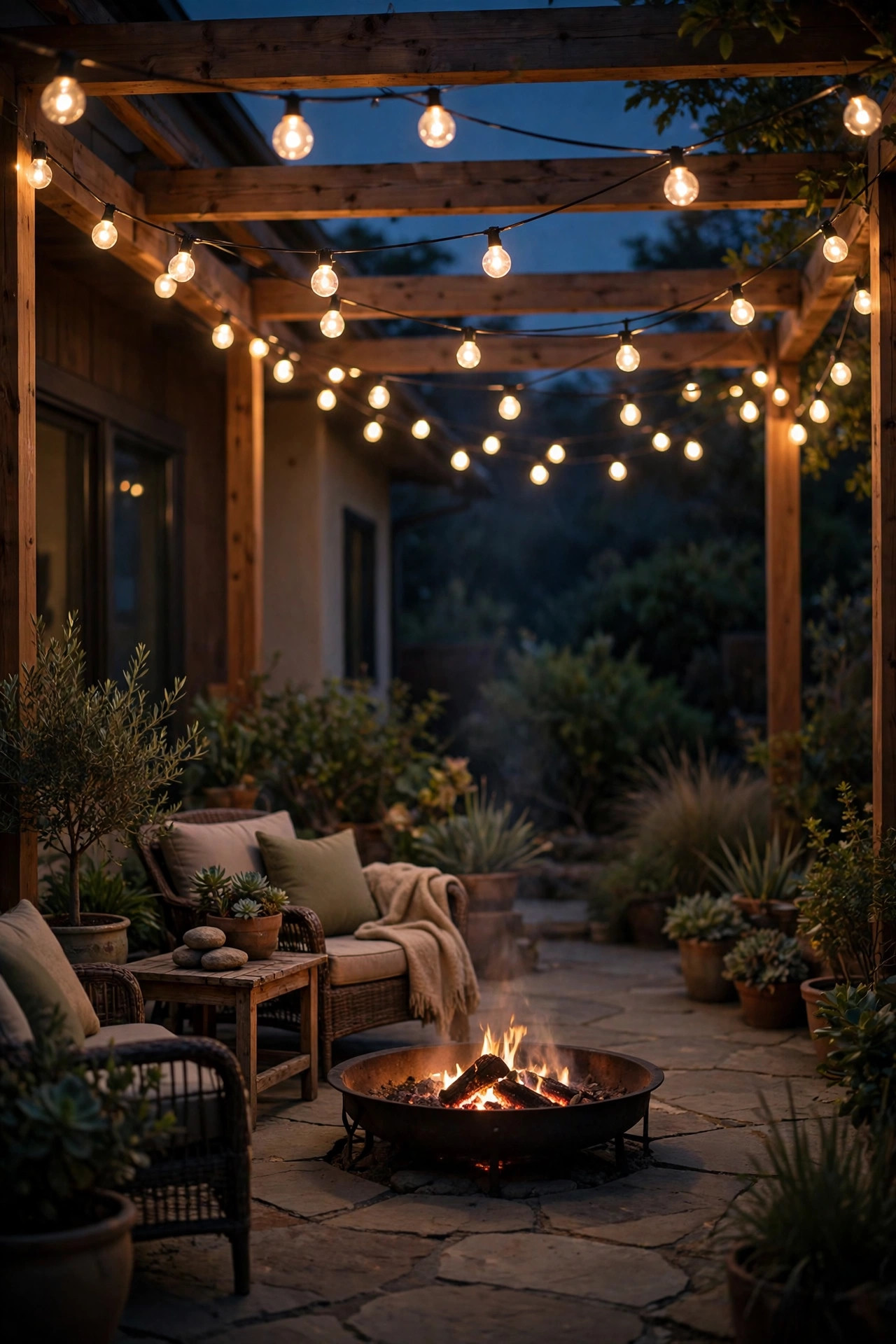
16. Cluster Pendants at Varied Heights
For a modern take, skip the swags entirely and hang globes in clusters: group five to nine individual globe pendants or a multi-drop strand at deliberately varied heights — anywhere from 5½ to 8 feet — over one focal zone like a hot tub deck, a reading nook, or a bar cart corner. The varied heights are the whole point; a cluster at one level looks like a mistake, while globes drifting at three or four levels look like floating lanterns frozen mid-air. You can fake the effect with a regular strand by clipping it up and down a pergola corner post or a tall pole so the swags stack at different heights. Keep the cluster tight — within about a 4-foot circle — so it reads as one sculptural moment rather than scattered lights. This is the one arrangement I'd call genuinely contemporary, and it photographs like a magazine. Warm white only, and keep every globe the same size within a cluster.
Suggested budget range: $60 – $150.

17. A Year-Round Indoor-Outdoor Sunroom Glow
Finally, the installation that works in January: a sunroom, screened porch, or covered patio strung with globes stays inviting all year, and honestly it's where we end up most winter evenings. Two strands around the ceiling perimeter plus one swagged set across the middle gives you dinner-party light without a single overhead fixture. Because the space is sheltered, your strands will last years longer than fully exposed ones, so this is the place to splurge slightly on prettier glass globes if your heart is set on them. Layer in the room's other small lights — a table lamp, flameless candles — and let the globes be the soft ceiling of light above everything. If the room has a ceiling fan, keep strands a full foot below the blade path and clipped snug so nothing sways into it. Of all the globe string light ideas in this list, this is the one that earns its keep in every single season.
Suggested budget range: $40 – $95.

Frequently Asked Questions
What color temperature is best for globe string lights?
Warm white, 2700K, is my recommendation for almost every globe installation. It matches candlelight and firelight, flatters skin tones, and gives that soft golden "floating" effect. A 3000K strand is fine if your other outdoor lighting already leans that way, but avoid 4000K and above — cool globes look clinical and a little like a string of tiny office lights.
Are globe string lights weatherproof enough to leave up year-round?
Commercial-grade strands rated for wet locations, with sealed sockets and shatterproof LED globes, can stay up year-round in most climates. Residential-grade strands do better with a season off — I take lighter strands down before heavy snow or ice, since the weight of ice on a swag is what actually breaks them. Whatever the grade, plug into a GFCI outlet and check cords each spring for cracks.
How many strands can I connect together?
It depends on the strand: most LED globe strands allow 3 to 5 connected runs, and commercial-grade lines often allow more, but always follow the limit printed on the tag near the plug — it's based on the wire's capacity. If your design needs more length, run a second strand from the outlet in the opposite direction instead of chaining past the limit. LED strands draw so little power that two separate runs are rarely a problem.
How do I hang globe lights without a pergola or trees?
Poles are the answer. Dedicated string light poles, sturdy shepherd's hooks, or even fence posts with extender arms give you anchor points anywhere. Set poles 8 to 10 feet apart for gentle swags, anchor them in heavy planters or ground sleeves, and always use a guide wire on spans over about 15 feet so the strand isn't carrying its own weight.
Conclusion
The best globe string light ideas all come back to the same simple principle: soft light, hung with a little intention, layers into something that feels like magic. Start with one strand over the spot where you actually sit, live with it for a week, then add the second layer — a different height, a fence line, a tree. Before long your whole yard glows like the good part of a summer evening. Browse the rest of my outdoor lighting ideas here on the site whenever you're ready for the next corner — there's always another corner.