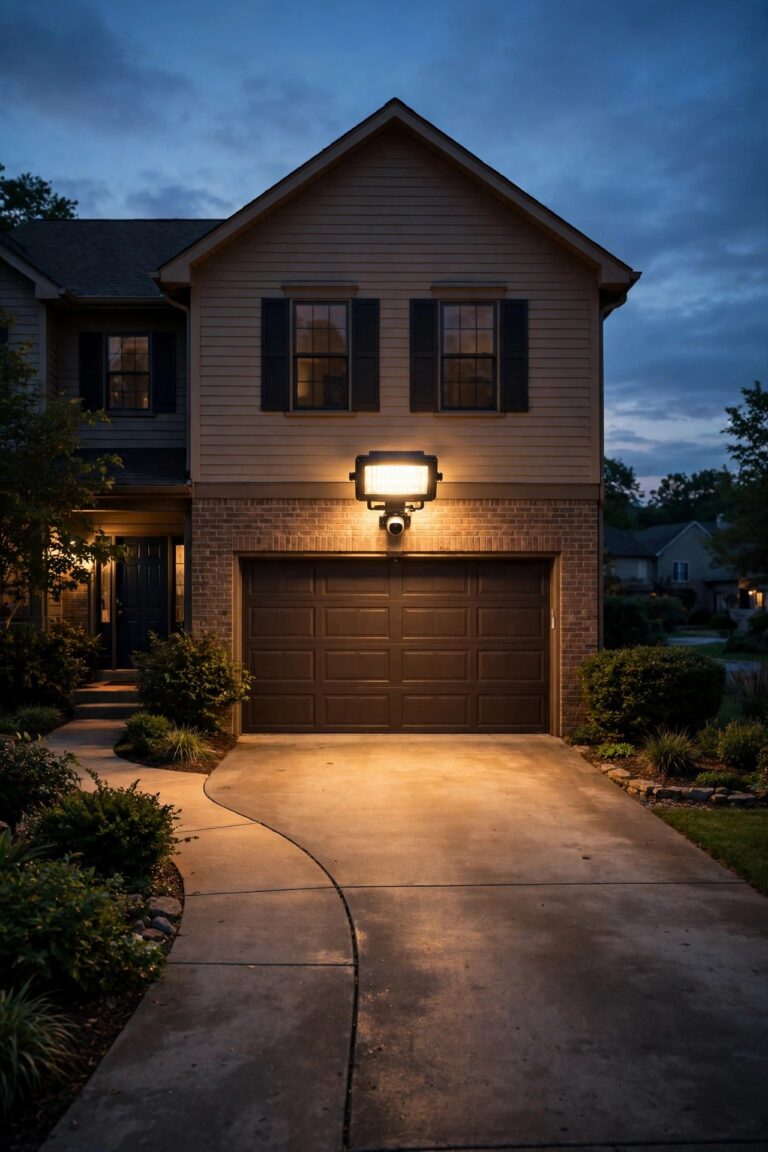
When we added path lights and two new porch sconces last spring, the fixtures were the easy part. The part that stopped me mid-project, standing in the driveway with a shovel in my hand, was a simple question: am I actually allowed to do this myself? If you've ever hesitated over outdoor lighting permits and codes, you're not alone — and honestly, the confusion is understandable. The rules aren't written for homeowners, they change from one town to the next, and the internet offers everything from "you need a permit to change a bulb" to "just bury it and forget it." Neither extreme is true. Here's the reassuring part: most of the lighting projects we all love — low-voltage path lights, solar stakes, a transformer plugged into an existing outlet — sit on the simple side of the rules. It's the hardwired, 120-volt work where permits, inspections, and the National Electrical Code start to matter. In this guide, I'll walk you through exactly where that line falls, what the code actually requires in plain English, what a permit costs, and how to keep your project legal, safe, and neighbor-friendly.

The Short Answer
For most homeowners, the short answer is this: plug-in, low-voltage (12-volt) landscape lighting and solar lights almost never need a permit, because they don't touch your home's wiring. Permits enter the picture when a project adds or extends 120-volt circuits — a new outdoor outlet, hardwired sconces on a new run, or a new breaker. Burial depth, GFCI protection, and wet-location ratings come from the National Electrical Code, and your city or county enforces them locally. When in doubt, one call to your building department settles it — they're friendlier than you'd expect, and asking is always free.
Why Lighting Codes Exist in the First Place
It helps to remember what these rules are actually for, because it isn't paperwork for its own sake. Every requirement traces back to three practical worries: electricity meeting water, wires getting damaged, and light going where it shouldn't. Outdoor wiring lives a hard life — rain, sprinklers, shovels, freezing soil, and curious roots all conspire against it. A cable nicked by a garden spade or a junction box that fills with rainwater can become a genuine shock or fire risk, which is why the code cares so much about burial depth, GFCI protection, and sealed, weatherproof connections.
The second worry is subtler: light trespass. A badly aimed floodlight pouring into a neighbor's bedroom window is the number-one complaint behind most local lighting ordinances, and it's why many towns now regulate brightness, shielding, and even the hours decorative lighting can run.
Once you see codes as a safety checklist rather than a hurdle, they get much easier to work with. In my experience, following them rarely costs more — a GFCI outlet here, a few extra inches of trench there — and it buys you a system that survives weather, inspections, and eventually, the scrutiny of a buyer when you sell the house. That's a trade I'll take every time.

The One Distinction That Decides Everything: Low-Voltage vs. Line-Voltage
Nearly every permit question you'll ever ask comes down to a single number: the voltage running through the wire.
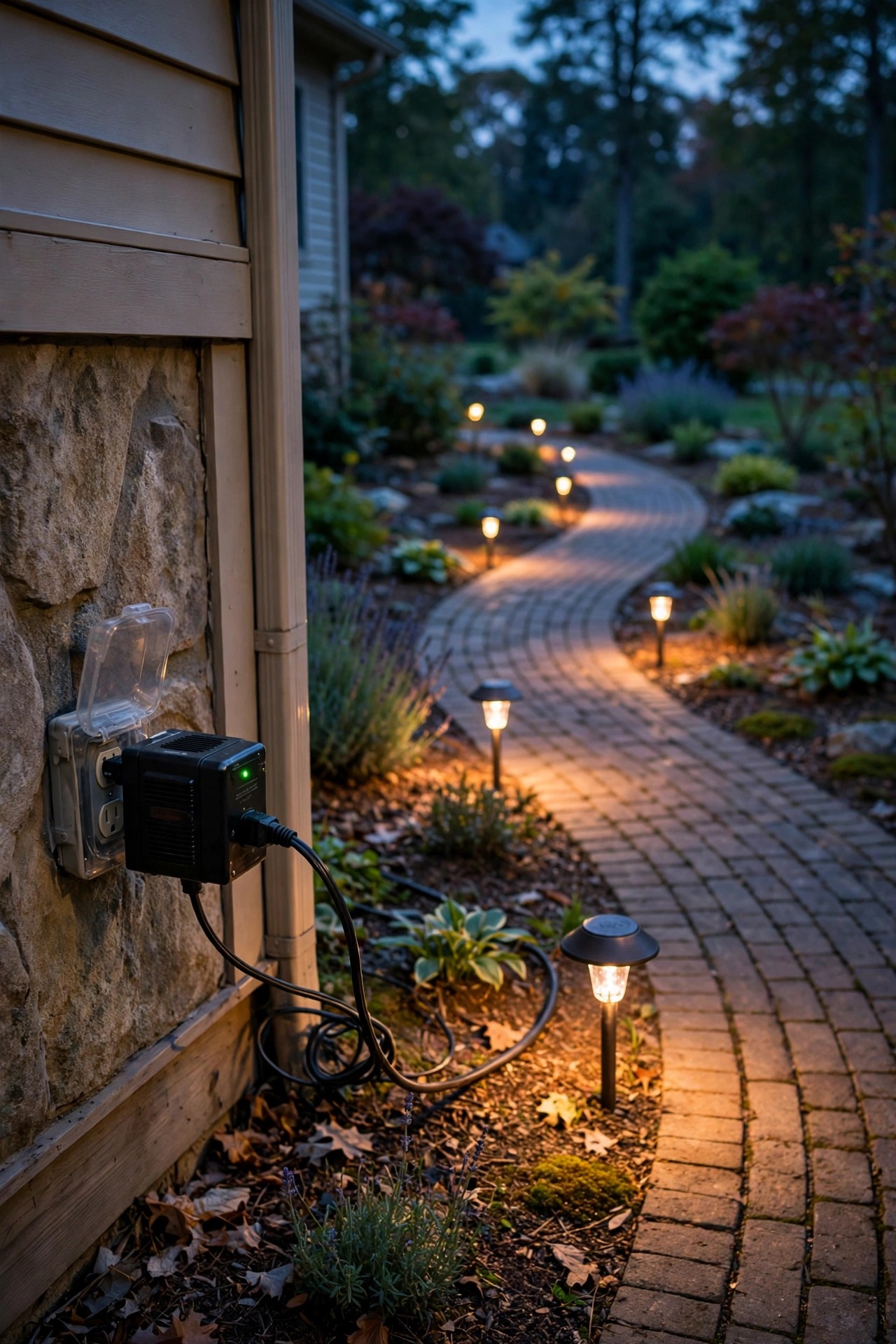
Low-voltage lighting — almost always 12 volts, stepped down by a plug-in transformer — is treated gently by the rules. The NEC covers these systems in Article 411, and because 12 volts can't deliver a dangerous shock under normal conditions, most jurisdictions don't require a permit, an inspection, or a licensed electrician for them. You can run the cable, bury it shallow, and move a fixture on a whim. This is the world of path lights, spotlights, and deck lights most of us live in.
Line-voltage lighting is the 120-volt power that runs the rest of your house: hardwired porch sconces, floodlights tied into a switch, lamp posts wired directly to a circuit. This work plays by full electrical rules. New circuits, new outlets, and new switch runs typically need a permit and inspection, and some cities require a licensed electrician to do or sign off on the work. Even swapping a fixture on an existing box usually doesn't need a permit — but adding the box does.
Solar and battery lights sit outside the system entirely: no wires, no voltage, no permit, ever. If you're ever unsure which side of the line a project falls on, ask one question: does anything new get connected to my home's 120-volt wiring? If the answer is no, you're almost certainly in permit-free territory.
When Outdoor Lighting Permits and Codes Actually Require Paperwork
So when does a friendly weekend project officially become permitted work? These are the situations where most building departments want to hear from you first:
– Adding a new outdoor outlet or circuit. Any new 120-volt run from your panel — say, an outlet on the back patio for a transformer or string lights — almost always requires a permit.
– Hardwiring new fixtures where none existed. A lamp post at the end of the driveway, sconces flanking a garage that never had them, or floodlights on a fresh circuit.
– Extending or altering existing circuits. Moving an outlet, tapping a new branch off a porch light, or adding a switch leg.
– Work in regulated areas. Historic districts, flood zones, and some coastal areas add their own review layer, even for modest projects.
– Anything tied to a pool, spa, or hot tub. Water plus electricity gets the strictest rules in the book and the least flexibility.
The pattern is simple: permits follow new 120-volt wiring, not light itself. One honest caveat — rules genuinely vary. A few progressive cities ask for a simple electrical permit for almost any exterior work, while many rural counties barely regulate residential wiring at all. Your local building department's website usually has a "do I need a permit?" page, and it's worth five minutes before you dig a single trench.

Projects That Almost Never Need a Permit
Here's the happy list — the projects that fill most of our yards and, in the vast majority of towns, require nothing more than a free weekend:
– Low-voltage landscape lighting plugged into an existing outdoor outlet, including new cable runs and fixtures.
– Solar lights of every kind — stakes, spots, string lights, motion lights.
– Battery and plug-in string lights, as long as you're using an existing outlet and the set is rated for outdoor use.
– Replacing an existing fixture on an existing box, one-for-one — the classic porch light swap.
– Plug-in timers, smart plugs, and photocells that sit between an outlet and a fixture.
If your whole plan lives on this list, you can skip the permit office with a clear conscience and go straight to the fun part. My weekend guide to installing low-voltage landscape lighting walks through that entire plug-and-play process step by step. Do still respect the spirit of the code even when nobody's checking: use outdoor-rated cable and fixtures, keep connections weatherproof, and never run an indoor extension cord as a permanent outdoor solution — that one actually is a violation almost everywhere, permit or not. When we did our own path lights last spring, the whole job — transformer, cable, eight fixtures — went in over a single Saturday with zero paperwork, and it has glowed flawlessly every night since.

The National Electrical Code, Translated Into Plain English
The National Electrical Code — the NEC — is the rulebook nearly every state and city adopts, usually with small local amendments. You don't need to read all 900 pages. For outdoor lighting, four ideas cover almost everything:
GFCI protection. Every outdoor receptacle must be GFCI-protected (NEC 210.8), with a weather-resistant rating and an in-use cover that keeps rain out while something's plugged in. This is the single most-checked item on any outdoor inspection.
Burial depth. Direct-buried line-voltage cable generally goes 24 inches down; a residential 120-volt circuit protected by a GFCI can be 12 inches; cable in PVC conduit needs 18 inches, and rigid metal conduit just 6. Low-voltage landscape cable under 30 volts gets the friendly rule — only 6 inches of cover. My full breakdown of how to bury landscape lighting cable at the right depth covers the tools and the technique.
Wet-location ratings. Fixtures, boxes, and connectors exposed to weather must be listed for wet locations — "damp location" gear belongs under a covered porch, not out in the rain.
Low-voltage specifics. Article 411 governs landscape lighting systems under 30 volts, and it mainly asks for listed transformers and cable, and for conductors to stay out of pools and fountains.
Memorize those four and you'll pass the sniff test on any residential project — and understand exactly what an inspector is looking at.

The Rules Nobody Mentions: HOAs, Dark-Sky Ordinances, and Historic Districts
Here's the layer that catches homeowners off guard: even when the building department doesn't care about your project, somebody else might.
If you live in an HOA community, your covenants can regulate fixture style, color temperature, brightness, and whether lights can stay on all night — and the HOA doesn't need the government's permission to fine you. I always recommend reading the architectural guidelines before ordering a single fixture; my roundup of HOA-friendly front yard lighting ideas shows how much you can do within typical rules.
A growing number of towns also have dark-sky or light-trespass ordinances. These usually ask for shielded fixtures that point light down instead of up, warm color temperatures (often 3000K or lower), and timers or motion sensors so decorative lighting isn't blazing at 3 a.m. Nothing about them prevents a beautiful yard — honestly, shielded, downward light looks better anyway — but they can make an unshielded floodlight a code violation even if its wiring is perfect.
Historic districts add aesthetic review: visible fixtures may need approval for style and placement. And if your home sits near protected wetlands or sea-turtle nesting beaches in Florida and the Southeast, seasonal lighting rules can be surprisingly strict. The theme across all of these: the stricter rule always wins, so check every layer that applies to your address.

Step-by-Step: How to Get a Permit Without the Headache
If your project does need a permit, take a breath — for a small residential lighting job, the process is far less intimidating than its reputation.
1. Call or check online first. Your building department can confirm in two minutes whether your exact project needs a permit and which form applies.
2. Sketch a simple plan. A rough drawing of your yard showing the panel, the new circuit's path, fixture locations, and burial depths is usually enough. Inspectors think in drawings.
3. Submit the application and fee. Most small electrical permits are handled over the counter or online, often approved the same day.
4. Do the work (or schedule your electrician). Keep the trenches open if a rough-in inspection is required — nothing stings like refilling a trench an inspector wanted to see.
5. Call for inspection. For simple jobs there's often just one final visit. The inspector checks GFCI protection, burial depth, box and fixture ratings, and that everything works.
6. Keep the paperwork. File the approved permit and final sign-off with your home records; you'll be glad you have them when you sell.
Total elapsed time for most homeowners: a few days of waiting sprinkled around one weekend of work. It's an errand, not an ordeal — and for hardwired work, that little inspection sticker is genuinely valuable peace of mind.

What It Costs in 2026
Permits themselves are the cheap part. A basic residential electrical permit for a lighting project typically runs $50–$250, depending on your city — some towns charge a flat fee, others scale it to the project's value. Add an inspection fee in a few jurisdictions, though it's often bundled in.
The real money decisions sit elsewhere:
– DIY line-voltage work (where your city allows homeowners to pull their own permit): materials for a new outdoor circuit — breaker, GFCI outlet, UF cable, boxes, fixtures — usually land between $150 and $450.
– Hiring an electrician to add an outdoor outlet or circuit: expect $300–$800 for a straightforward run, more if the panel is far from the yard or needs an upgrade.
– A lighting designer's permit-ready plan, if you want one: $150–$400, sometimes folded into an installation quote.
Compare that with skipping the permit: fines for unpermitted electrical work commonly start around double the original permit fee, and some cities can require the work to be exposed or even removed for inspection. Honestly, at these prices, the permit is the bargain of the whole project — it costs less than one nice lamp post and buys you an inspector's second set of eyes on your wiring.
What Happens If You Skip the Permit
Let's be honest about the risks, because they're real but rarely dramatic. Nobody's knocking on doors checking for unpermitted path lights — remember, low-voltage work usually doesn't need one in the first place. The exposure concentrates on unpermitted 120-volt work, and it tends to surface at three moments.
When you sell. Home inspectors and sharp-eyed buyers notice fresh wiring, and unpermitted electrical work can become a negotiation chip, a required fix, or in strict markets a deal complication. Sellers' disclosure forms in many states ask directly about unpermitted work.
When something goes wrong. If an electrical fire or injury is ever traced to wiring that should have been inspected, your homeowner's insurance claim gets much harder. Insurers don't need much excuse to scrutinize a claim, and "the installation violated code" is a powerful one.
When a neighbor complains. A blinding floodlight plus annoyed neighbors plus a code-enforcement visit is a combination that tends to expand in scope once an inspector is standing in your driveway.
None of this is meant to scare you off hardwired projects — plenty are worth doing properly. It's simply that the permit is cheap insurance against the three worst days of owning a house, and skipping it saves almost nothing.

When Outdoor Lighting Permits and Codes Require a Licensed Electrician
Can you legally do your own electrical work? In most of the country, yes — homeowners are generally allowed to pull a permit and wire their own owner-occupied home. But there are bright-line situations where a licensed electrician is required by rule or just plain sense:
– Service panel work. Adding a breaker is five minutes for a pro and the one place amateur mistakes get expensive fast. Some cities flatly reserve panel work for licensees.
– Rentals and multi-family properties. Many jurisdictions require licensed electricians for any electrical work in homes you don't personally live in.
– Cities with strict licensing rules. A handful of major metros require a licensed electrician or a registered contractor to pull electrical permits at all.
– Pool, spa, and fountain circuits. Equipotential bonding and GFCI rules around water are where the code gets genuinely unforgiving.
– Anything you feel unsure about. Electricity rewards humility. If a diagram makes you nervous, that nervousness is information.
A good middle path I recommend often: hire the electrician for the circuit and outlet work, then enjoy the entire low-voltage layout — fixtures, aiming, tweaking at dusk with a glass of something — yourself. You get professional safety where it matters and creative control where it's fun.

5 Mistakes That Turn a Simple Project Into a Code Problem
1. Burying cable too shallow. The classic. Line-voltage cable at 4 inches deep is a shovel accident waiting to happen; match the depth rules above, and when in doubt, go deeper or use conduit.
2. Skipping GFCI protection. An unprotected outdoor outlet is the fastest inspection failure there is — and a real safety gap, since outdoor circuits meet wet hands and wet ground daily.
3. Using indoor gear outside. Indoor-rated fixtures, boxes, or extension cords pressed into permanent outdoor service corrode, fill with water, and fail. "Wet location" on the label, every time.
4. Overloading or improvising connections. Wire nuts in an open trench, connections buried without a listed waterproof connector, lamp cord standing in for real cable — inspectors have seen them all, and so have fire investigators.
5. Ignoring the layers beyond the NEC. Passing inspection but violating your HOA's rules or your town's dark-sky ordinance still ends with you redoing the work — this time with an audience.
Every one of these is easier to avoid than to fix, and none of them requires professional help to get right — just ten minutes of reading before the ten hours of digging. I keep a little pre-project checklist on my phone now — depth, GFCI, ratings, connections, local rules — and it takes two minutes to run through before I buy a single thing.
Frequently Asked Questions
Do I need a permit for low-voltage landscape lighting?
Almost never. Because a 12-volt system plugs into an existing outlet and runs at a voltage the NEC treats as low-risk (Article 411), the vast majority of cities and counties don't require a permit, an inspection, or a licensed installer. A few strict jurisdictions are the exception, so a quick check of your building department's website is worth two minutes — but for most homeowners, low-voltage lighting is gloriously permit-free.
Can I replace a hardwired porch light myself without a permit?
In most places, yes. Swapping an existing fixture on an existing junction box, one-for-one, is considered maintenance rather than new work, and homeowners are generally allowed to do it. The permit line is crossed when you add a new box, extend the circuit, or move the wiring — that's new work. Either way, kill the breaker, test that the wires are dead, and make sure the new fixture is rated for its location: wet-rated for exposed spots, damp-rated under a covered porch.
How much does an electrical permit for outdoor lighting cost?
For a small residential lighting project, expect roughly $50–$250, depending on your city and whether the fee is flat or based on project value. Inspection is often included; where it isn't, budget another modest fee. It's genuinely one of the smallest line items in a hardwired project — usually less than the fixtures themselves — and it buys you a professional inspection of your work.
My outdoor lights were installed years ago without a permit. What should I do?
First, figure out whether a permit was ever needed — if the system is low-voltage or solar, you're almost certainly fine and there's nothing to fix. If you suspect unpermitted 120-volt work, many building departments offer a straightforward path: apply for a retroactive permit and let an inspector verify the installation. It feels awkward, but inspectors handle it routinely, and sorting it out now is far cheaper than meeting the problem during a home sale or an insurance claim.
Conclusion
Outdoor lighting permits and codes sound intimidating until you see the shape of them: plug-in and low-voltage projects are almost always yours to enjoy freely, while new 120-volt wiring is where permits, GFCI rules, and burial depths earn their keep. Check your local rules, respect the layers that apply to your address, and treat the code as what it really is — a safety checklist written by people who've seen every mistake already made. Do that, and the only thing left to worry about is the enjoyable part: standing in your yard at dusk, watching it all glow. Browse the lighting guides and ideas here for your next project, and build it once, build it right.