Two springs ago, I pulled a "weatherproof" solar path light out of my front flower bed and poured a teaspoon of rusty water out of the housing. The box had promised it was built for the outdoors. What it never told me was its actual rating — and that's when I finally sat down and learned how IP ratings for outdoor lights work. Honestly? It changed how I shop for every fixture in my yard. Those two little digits quietly decide whether a light shrugs off a thunderstorm, survives your sprinklers, or slowly fills with water and dies. In this guide, I'll decode the whole scale in plain English: what IP44, IP65 and IP67 actually protect against, where each one belongs (and where it absolutely doesn't), how the ratings interact with UL listings, and what the upgrade costs in 2026. By the end, you'll be able to glance at any fixture box and know in five seconds whether it belongs on your covered porch, in your garden beds, or nowhere near your yard at all.
The Short Answer
Short version: the IP code rates how well a fixture's housing keeps out dust (first digit, 0–6) and water (second digit, 0–9). IP44 handles splashes and is fine under a porch roof. IP65 is dust-tight and shrugs off rain and hose spray — it's the rating I default to for exposed fixtures. IP67 can survive being dunked a meter deep for half an hour, which is what ground-level and in-ground lights need. Match the rating to the wettest moment the fixture will ever face, not the average day, and you'll stop replacing drowned lights.
How IP Ratings for Outdoor Lights Actually Work
IP stands for Ingress Protection, and the two-digit code comes from an international standard (IEC 60529) that independent labs use to test how well an enclosure seals out solids and liquids. The first digit rates protection against solid objects — everything from a fingertip to fine dust. The second rates protection against water, from a few drips all the way up to full immersion. Higher is stronger on each scale, and the two digits are judged separately, so a fixture can be mediocre against dust and excellent against water, or the other way around.
You'll also see an X in place of a digit, as in IPX4. That simply means that side of the code wasn't tested or isn't being claimed — the light was checked for water only. Treat an X as "unknown," not "fine."
The tests themselves are refreshingly literal. Dust ratings come from hours in a chamber filled with fine powder. Water ratings come from spray nozzles, jets and immersion tanks at specified pressures, angles and times. One thing I always remind people: the rating applies to the fixture exactly as it left the factory. Crack the housing swapping a bulb, pinch a gasket, drill a new mounting hole, or leave a cable entry pointing up, and the number on the box no longer describes the light in your hand. The rating also says nothing about brightness, color or build quality — a dim, flimsy fixture can carry a genuinely excellent IP code.
The First Digit: Dust, Bugs and Fingers
The first digit runs from 0 to 6, and it climbs like this. Zero means no protection at all. One keeps out objects bigger than about 2 inches — a hand brushing the fixture. Two stops fingers and anything over roughly half an inch. Three blocks tools and thick wires down to about a tenth of an inch. Four stops most wires, screws and larger insects at around a millimeter. Five is "dust-protected": a little fine dust may creep in over time, but not enough to harm the light. Six is fully dust-tight, verified in the powder chamber.
Why should you care about dust in a garden light? Because your yard is full of airborne grit: pollen, mulch dust, mower clippings, and desert or gravel dust if you live somewhere dry. Fine particles creep through weak seals and coat the inside of the lens, slowly dimming the light. Worse, a roomy, poorly sealed housing is an engraved invitation to spiders and earwigs, and I have cleaned enough webs out of porch lanterns to take that personally. Dust and debris packed around a socket also holds moisture against the connections, which is where corrosion starts.
In practice, nearly every decent outdoor fixture is a 5 or a 6 on this digit, and that's what I look for. If you see a 4 or lower as the first digit, that fixture belongs somewhere sheltered — under a deep eave or inside a covered porch — where grit and bugs arrive in smaller doses.
The Second Digit: Where Water Ratings Get Real
The second digit runs from 0 to 9, and this is the scale that decides whether your fixtures live or die. One means dripping water, like condensation. Two covers drips when the fixture tilts. Three is spraying water at angles up to 60 degrees — think windblown drizzle. Four is splashing from any direction. Five survives water jets from a small nozzle — real rain and a garden hose at conversational distance. Six takes powerful jets. Seven means immersion in up to about 3 feet of water for 30 minutes. Eight is continuous immersion at a depth the manufacturer specifies. Nine is high-pressure, high-temperature jet spray, which you'll mostly meet on commercial gear.
Two nuances matter here. First, ordinary rain maps to roughly the 3-to-4 range, a hose is a 5, and a pressure washer exceeds nearly all of it — which is why you should never pressure-wash your fixtures, no matter what the second digit says. Second, the water digits aren't strictly cumulative at the top end. A fixture rated IP67 for immersion wasn't necessarily tested against the pounding jets of IP65 or IP66, which is why serious ground lights sometimes carry a dual rating like IP65/IP67. For yard purposes, though, the ladder works simply: splashes need a 4, open sky needs a 5 or better, and sitting in water needs a 7 or better.
IP44: Splash-Proof, and Perfectly Happy Under a Roof
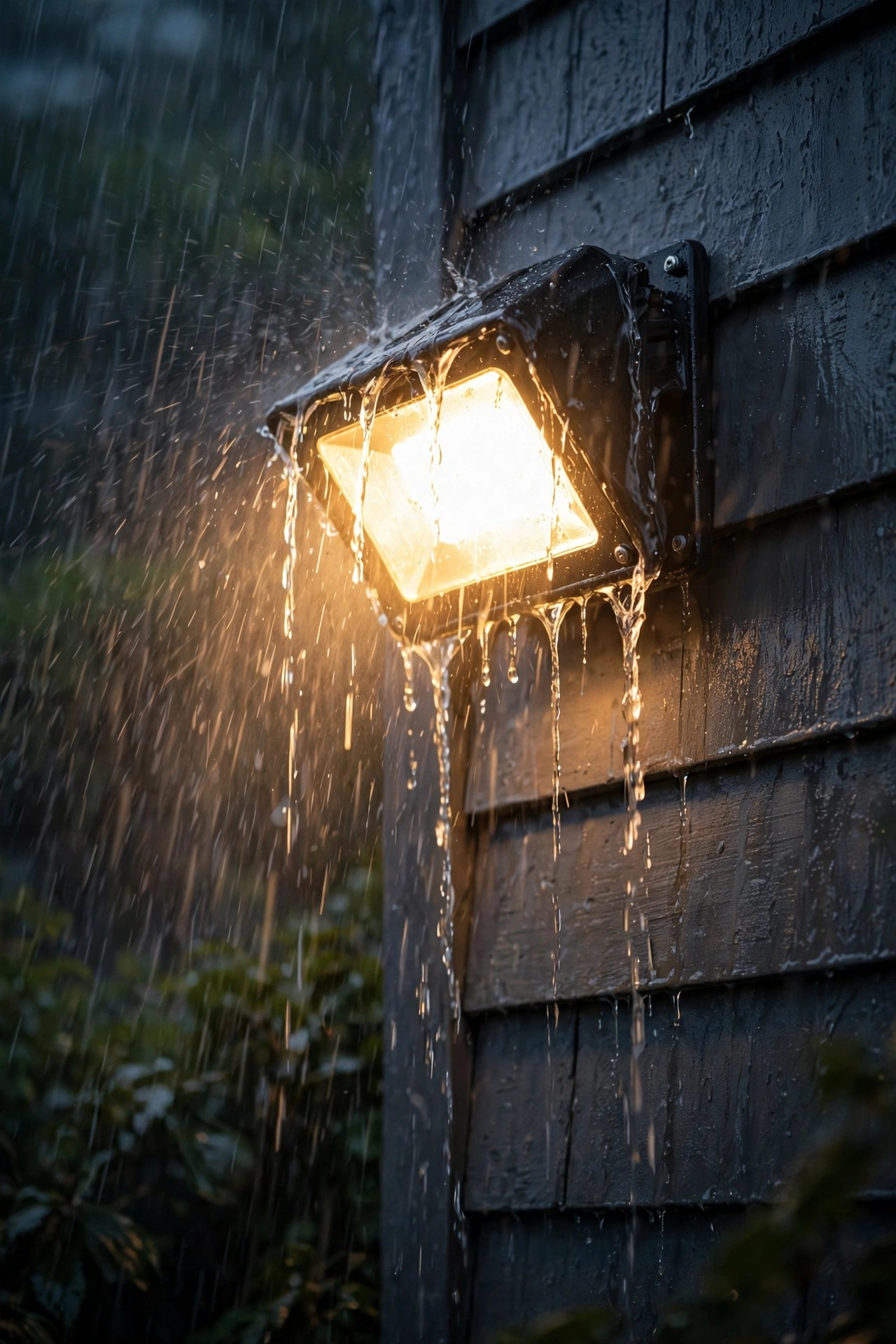
IP44 is the most common rating on residential fixtures, and it's genuinely useful — as long as you respect what the second 4 promises. Splash-proof means water sprayed or splashed against the housing from any direction won't get inside. What IP44 does not promise is survival under direct, sustained rain or a jet of water. The first 4 also means dust protection stops at the millimeter level, so grit and insects eventually find their way in.
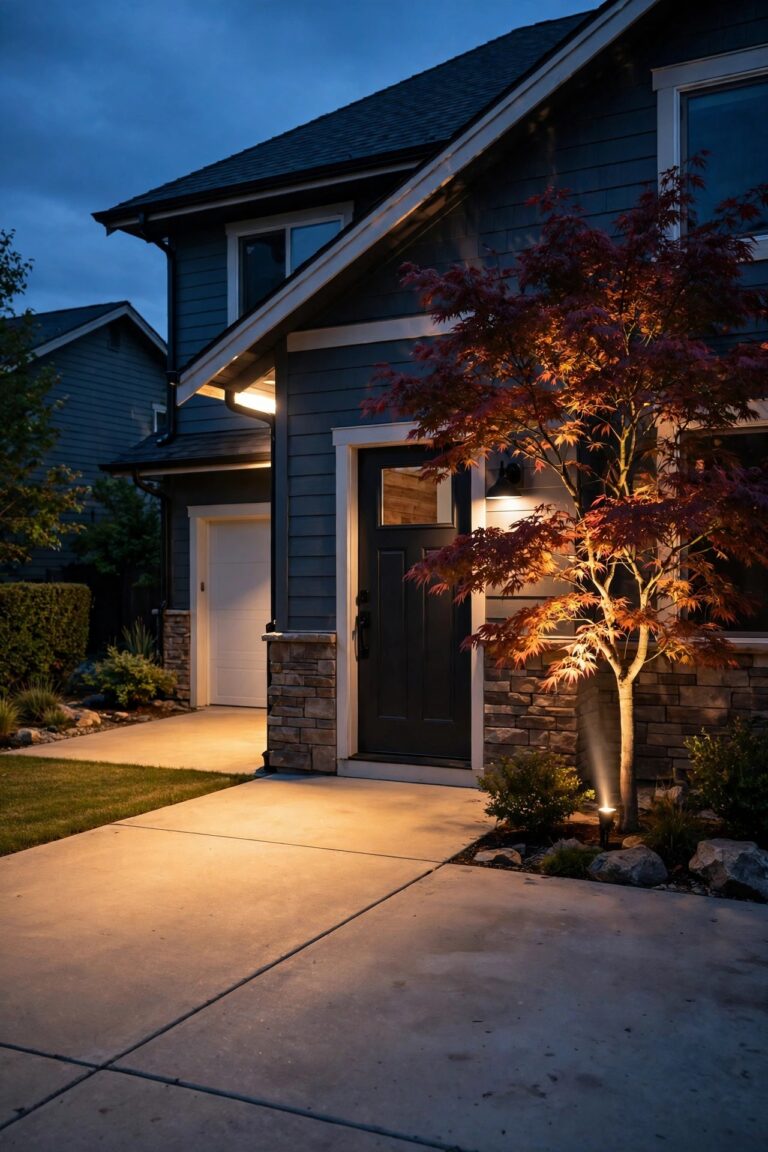
Where does IP44 shine? Covered porches and verandas, where the roof takes the rain and only the occasional gust sneaks a splash sideways. Under deep eaves that overhang at least a couple of feet. Inside a gazebo or covered pergola. On garage and workshop walls near the door. Plenty of porch lanterns, ceiling mounts and string-light sockets carry IP44 and serve happily for a decade in those spots — I have two by my front door that are nine years old.
Where does it fail? Anywhere in the open yard: staked in a bed, mounted on an exposed wall, sitting in a sprinkler's path, or placed at ground level where mulch holds moisture against it all season. My rule of thumb is simple. If a fixture can get rained on directly for hours at a stretch, IP44 is not enough, whatever the box's marketing words claim. Save the money IP44 saves you for the sheltered spots, and spend up where the sky is open.
IP65: The Sweet Spot for Most of Your Yard
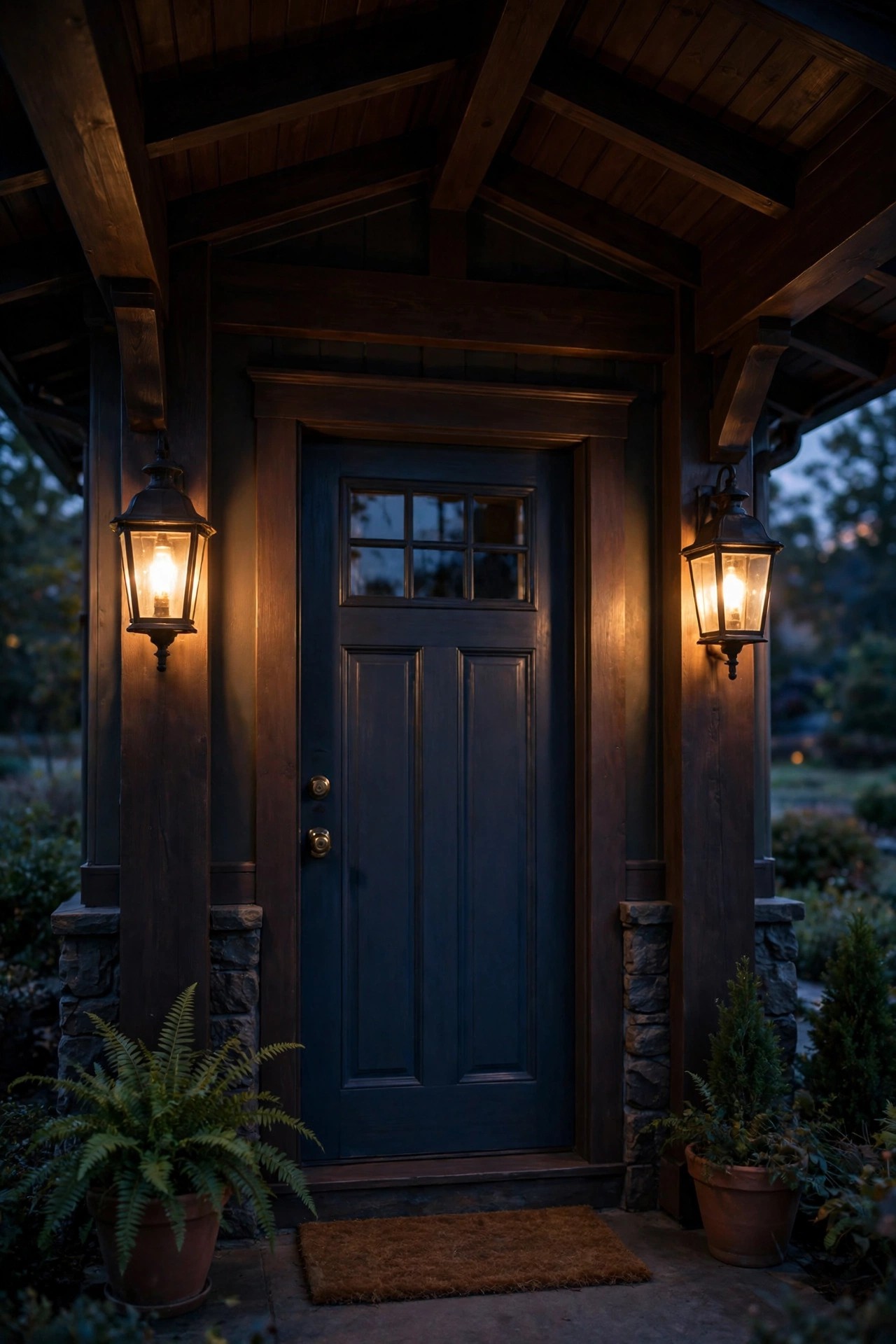
If I could only hand you one number from this whole guide, it would be IP65. The 6 means fully dust-tight — no pollen, no grit, no spider condos inside the lens. The 5 means the housing shrugs off water jets from any direction, which comfortably covers driving rain, a garden hose rinsing the flower beds, and the occasional sprinkler overspray. For a fixture that lives under open sky but above ground, that combination handles essentially everything a residential yard throws at it.
This is the rating I default to for wall sconces beside the front and garage doors, flood lights mounted under open eaves, spotlight heads aimed up into trees, and the heads of path lights along a walkway. It is also the point where the price premium stays modest — stepping from IP44 to IP65 typically adds maybe 15 to 30 percent to a fixture's price, and in exchange you stop playing the replacement game every couple of seasons.
Two honest caveats. First, IP65 is about the fixture, not the whole installation: a jet-proof spotlight fed by a bargain connector with no seal is a system that leaks at the connector. Match your fittings to the fixture. Second, IP65 doesn't promise anything about standing water. A dust-tight, jet-proof light that spends a week submerged in a flooded bed is living outside its test conditions — which is exactly what the next rating is for.
IP67: For Fixtures That Live at Ground Level
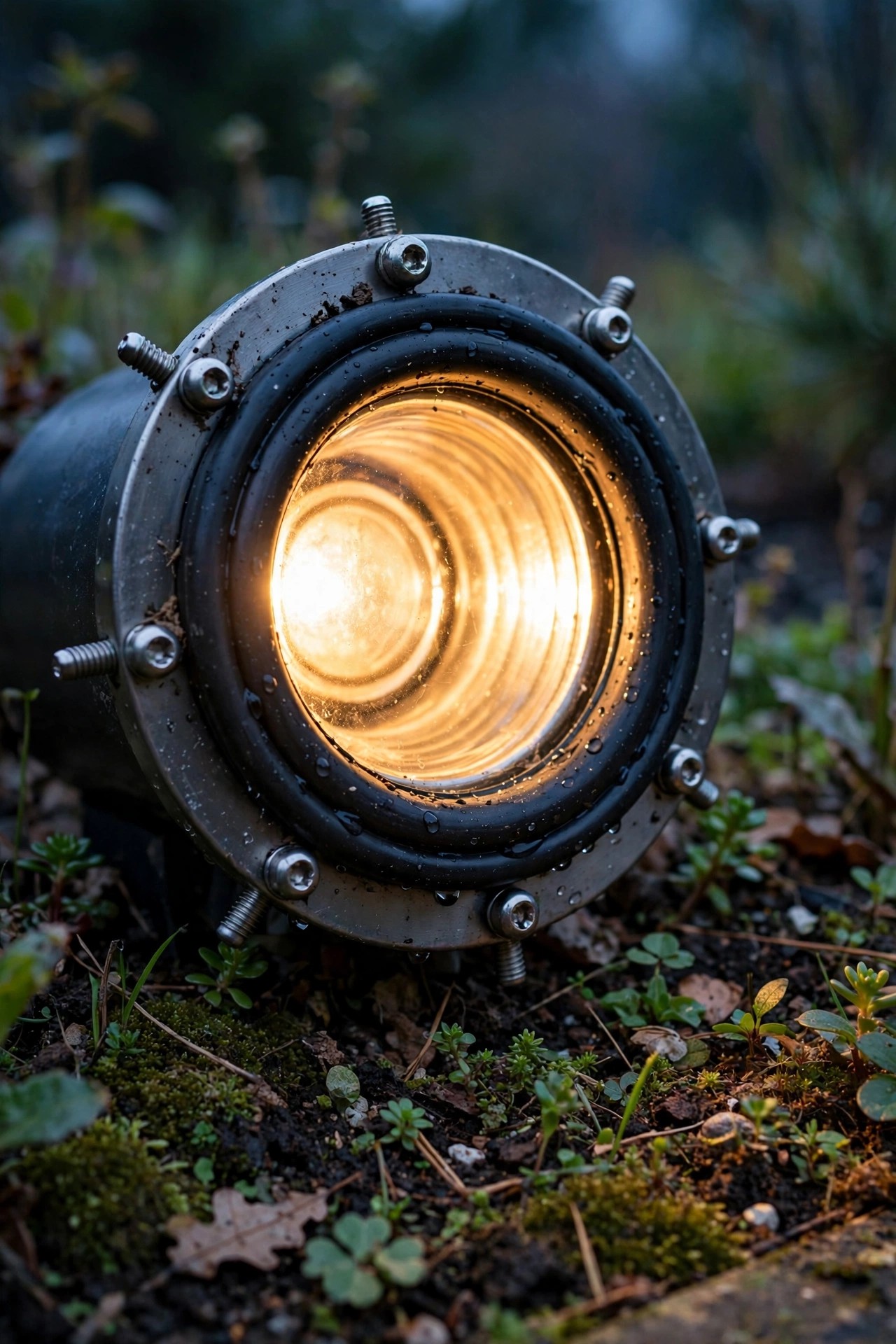
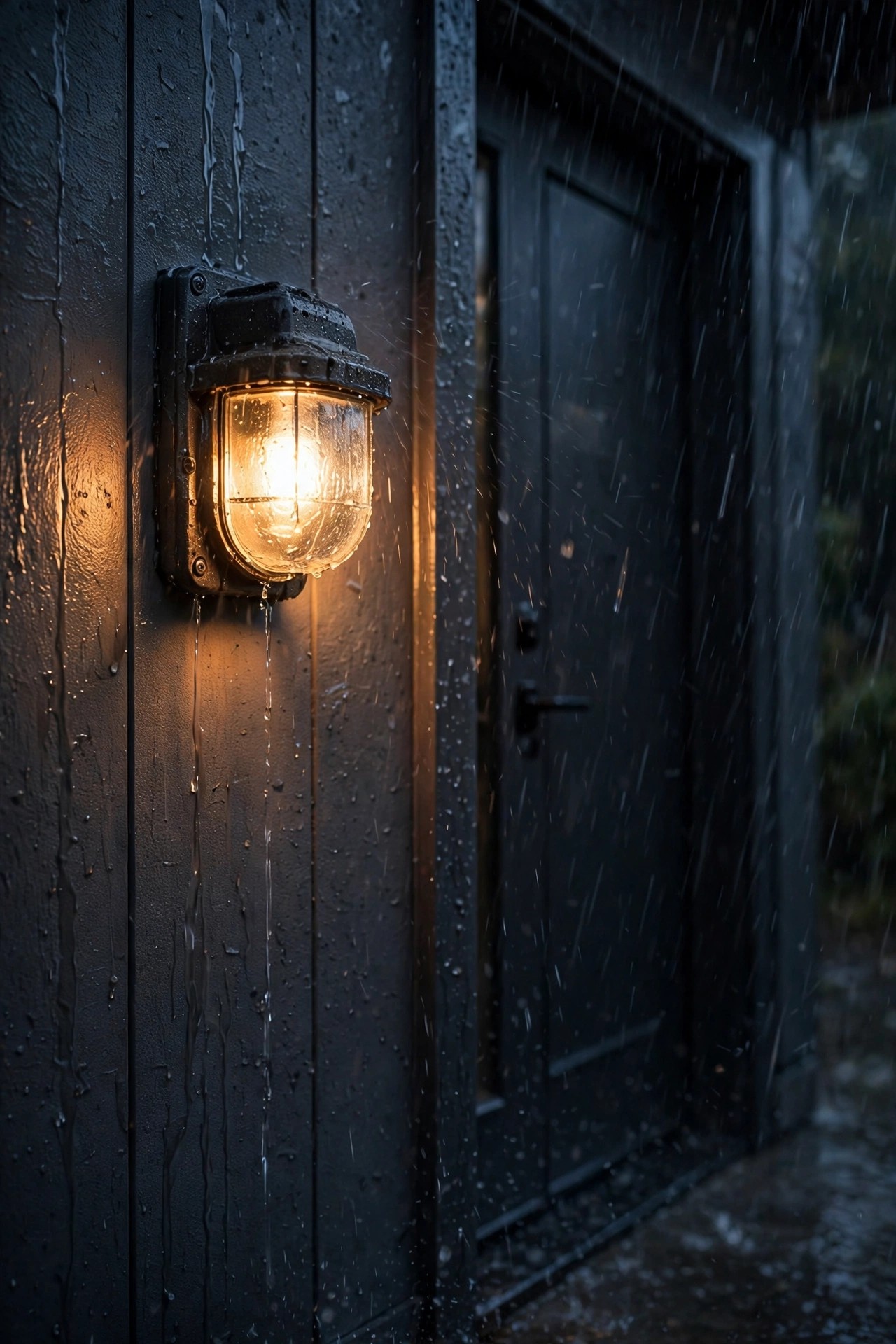
Ground level is the harshest neighborhood in your yard. Rain doesn't just fall on fixtures there — it pools. Mulch and soil hold moisture against housings for days, beds flood during downpours, and every freeze-thaw cycle works water into seams. That's why anything sitting at or below grade in my yard wears IP67: it can be immersed in roughly 3 feet of water for 30 minutes and come out fine, which translates beautifully to "sat in a puddle all weekend and didn't notice."
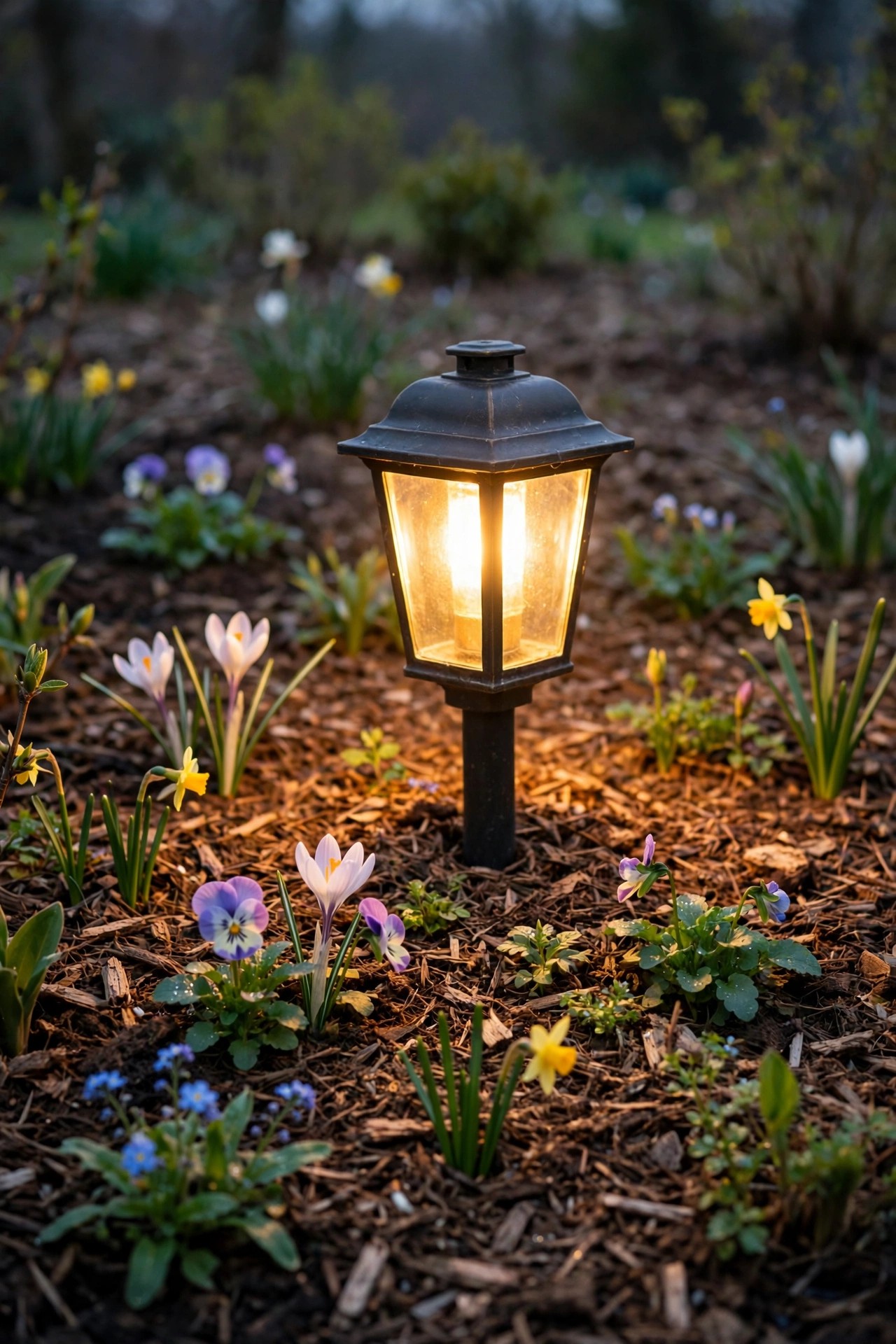
The fixtures that need it most are in-ground well lights uplighting trees and house walls, recessed deck and step lights that get washed by runoff, and low path-light heads in beds that flood. When I shop for solar path lights, I apply the same thinking — they live right in the mulch, so I look for IP65 at minimum and IP67 when I can get it, a rule I follow throughout my solar path lights guide.
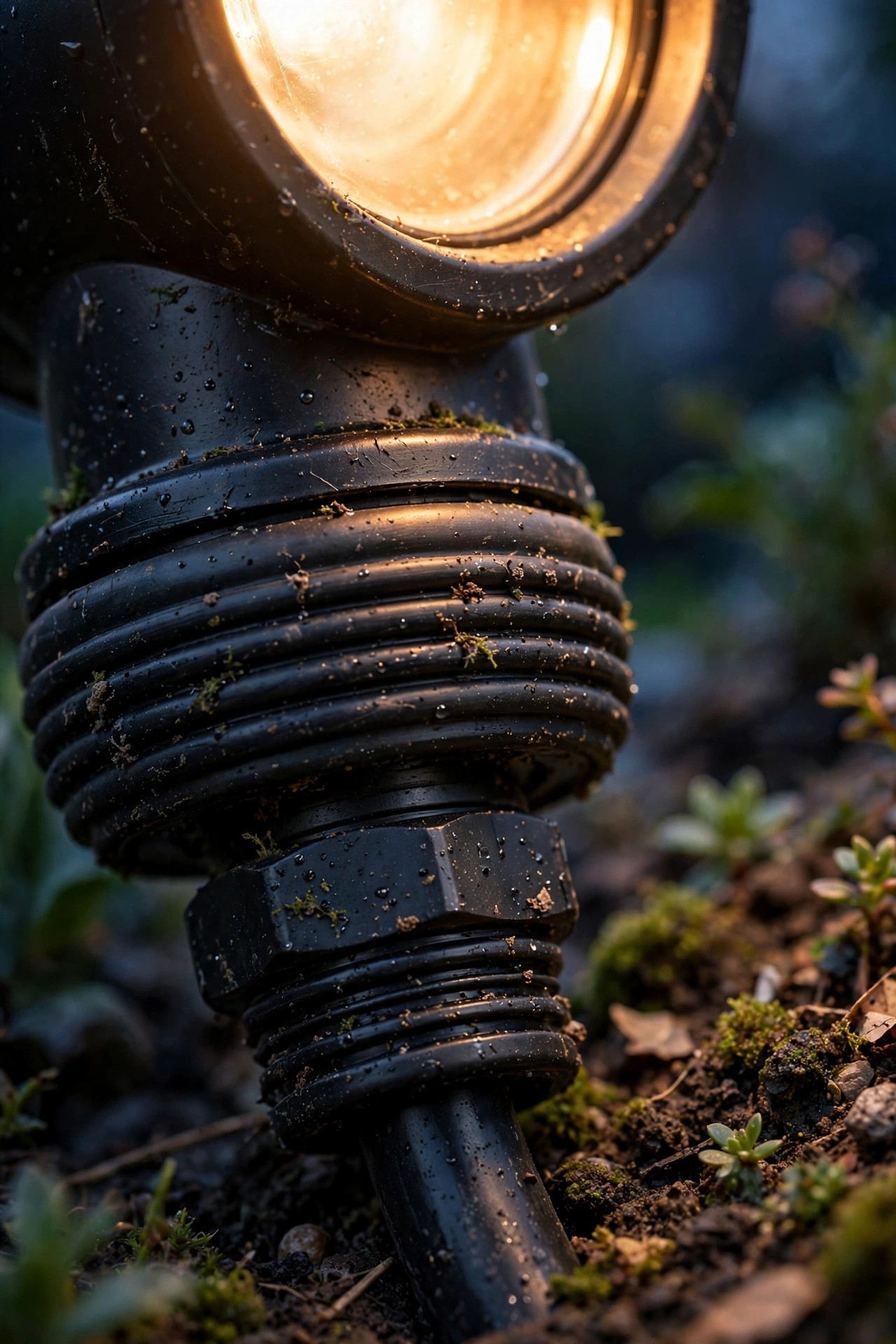
One warning from experience: an IP67 fixture is only as waterproof as its weakest opening. The cable entry is the usual betrayal. Look for molded, potted cable exits or proper compression glands, and use gel-filled waterproof connectors on every splice. An IP67 light on an IP44 connector is, in every way that matters, an IP44 system waiting for a storm. Also remember IP67 means temporary immersion — a light that will live underwater permanently needs the next step up.
IP68: Underwater and Permanently Wet Spots
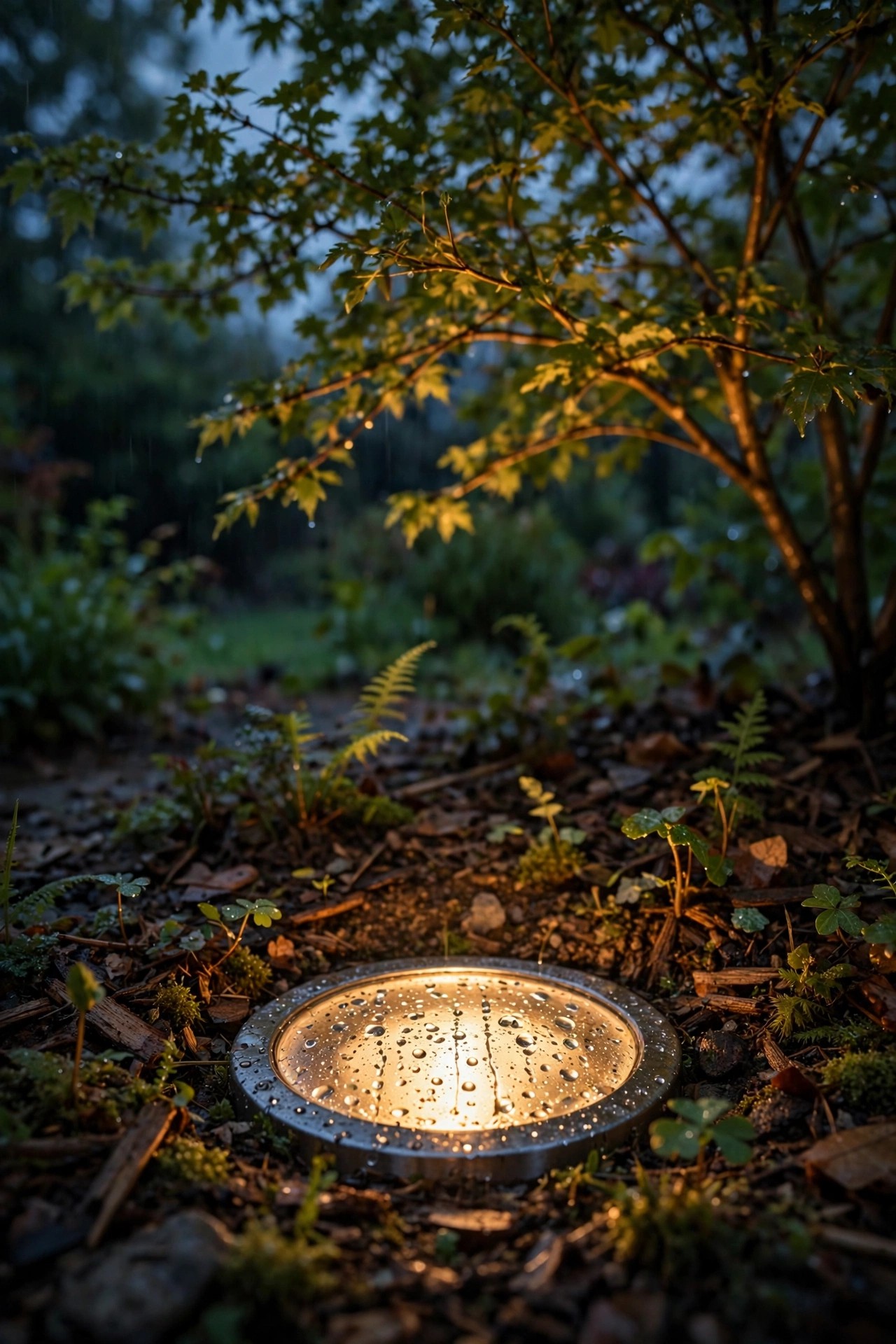
IP68 is the top of the everyday scale: continuous immersion, at a depth and duration the manufacturer declares. That declaration matters — "IP68" alone doesn't tell you whether the light was certified for 3 feet or 30, so check the fine print for a depth figure before anything goes in the water.
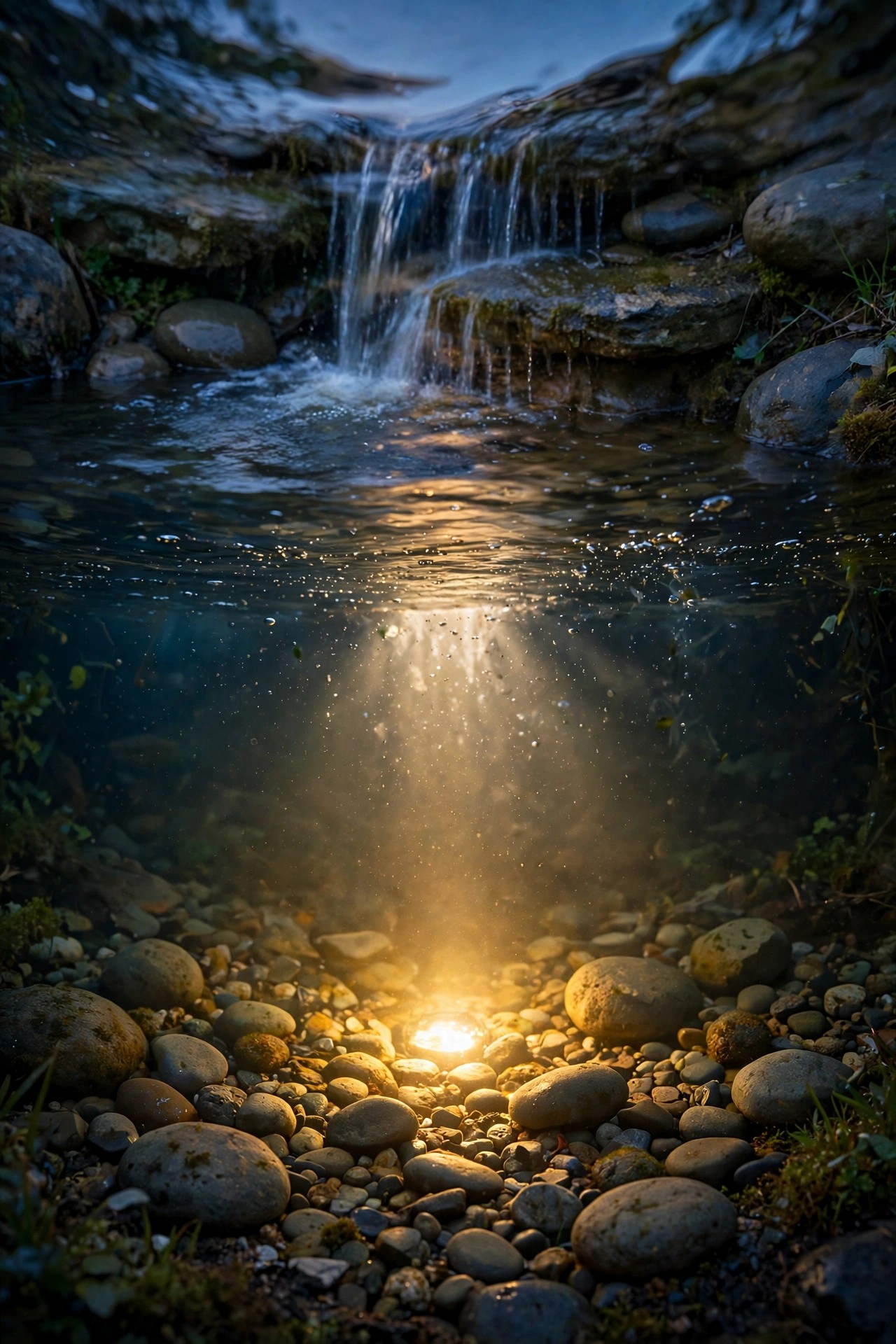
This is the rating for true water features: pond and fountain lights, lights inside a stream or waterfall, submersible accents in a water garden. It's the world covered by my favorite pool and underwater lighting ideas, where fixtures spend their whole lives submerged and seals are everything. In-pool and poolside fixtures also play by extra rules, so treat IP68 as the starting requirement there, not the whole story.
A few practical notes. Keep everything around water low-voltage and on a GFCI-protected circuit — non-negotiable in my book. And when you shop, compare the housing materials as well as the number: thick cast housings, silicone gaskets and stainless hardware are what keep an IP68 promise true after five summers of sun and chlorine, not the digits alone. Expect IP68 fixtures to cost noticeably more; you're paying for potted electronics, serious gaskets and long sealed cable runs, since every splice you can move out of the water should be out of the water. And if a fixture merely gets splashed poolside rather than submerged, honest IP65 or IP66 usually does the job for a lot less money.
The In-Between Ratings: IP54, IP55 and IP66
Shelf labels love the in-between numbers, so here's the honest translation. IP54 pairs dust-protected (5) with splash-proof (4). It's the rating on a lot of budget solar lights, and it's fine in sheltered spots — under eaves, on a covered patio — but I don't stake IP54 in an open bed and expect a long life. IP55 keeps the dust-protected 5 and upgrades the water side to jets, which makes it a reasonable exposed-fixture rating, a small step below the dust-tight security of IP65.
IP66 is the one in-betweener I actively like: dust-tight like IP65, but proof against powerful jets rather than ordinary ones. That extra muscle earns its keep in coastal yards with wind-driven rain, in beds where a sprinkler head hits the fixture dead-on every cycle, and on low fixtures that get hosed down during cleanup. If the price gap over IP65 is small, I take IP66 in those spots without hesitation.
The lesson across all three: read both digits, not just the headline number, and don't pay extra for a stronger digit where the fixture will never meet that threat. A porch ceiling light gains nothing from an immersion rating. Money spent on the right rating beats money spent on the biggest rating, every time.
Match the Rating to the Spot: My Yard-by-Yard Cheat Sheet
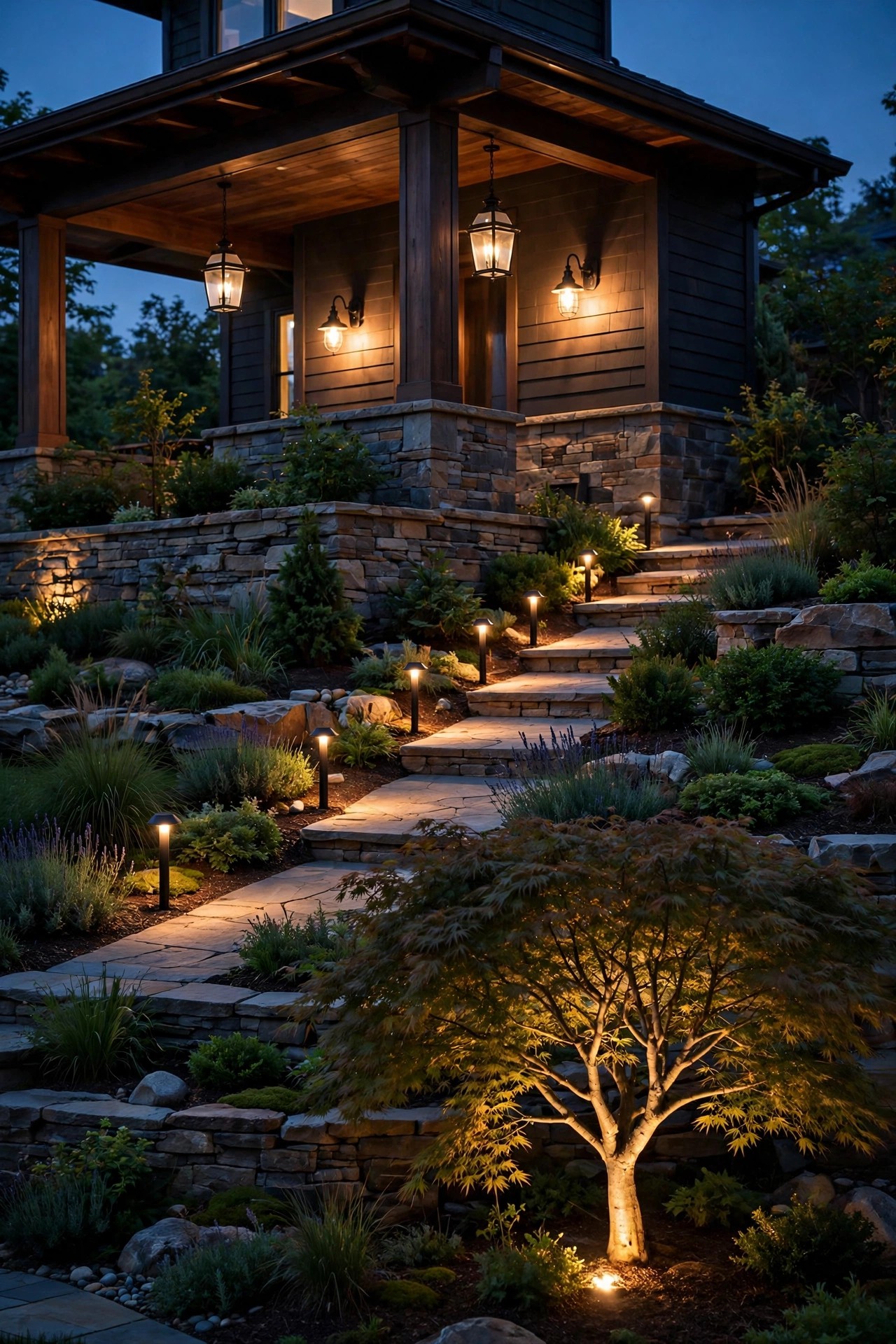
Here's how I actually assign ratings when I walk a yard, from the roofline down. Covered porch ceilings and walls: IP44 is plenty, since the roof does the heavy lifting. Exposed walls, front doors and garage fronts with no overhang: IP65 minimum. Wall-mounted floods under open eaves: IP65, or IP66 where sprinklers reach them.
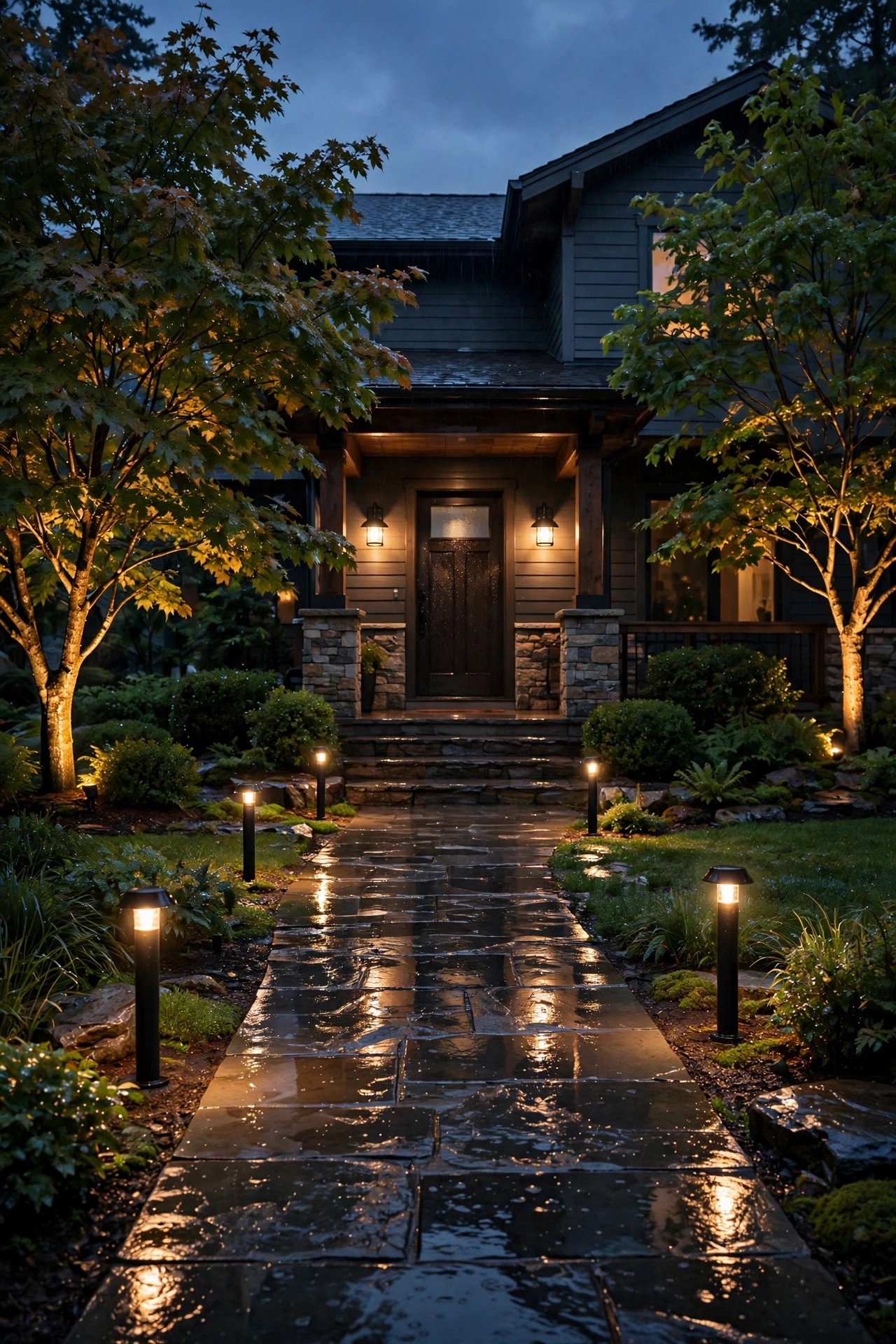
Along walkways, path-light heads do fine at IP65, but I want IP67 connectors and cable entries, because that's where the water hides. In-ground well lights and anything recessed into a bed: IP67, full stop. Deck step and railing lights: IP65 works, IP67 is better where runoff washes over them. String lights are the mixed bag — IP44 sockets under a covered pergola are fine, while open-yard runs deserve IP65-rated sockets and plugs, kept off the ground.
Garden beds inside a sprinkler's arc deserve one notch more than your first instinct: a fixture that gets blasted at close range twice a week lives a harder life than one that only meets rain. Solar stakes in open beds: IP65 at minimum, IP67 preferred. Anything in or under water: IP68, with the splice moved to dry land. Finally, the forgotten spot — fixtures near the ground by a driveway get splashed with gritty road water all winter; IP65 and a rinse each spring keeps them honest.
IP Ratings for Outdoor Lights vs UL Listings: Not the Same Thing
Here's a confusion worth clearing up, because American shelves mix two systems. The IP code is an enclosure test from an international standard — it tells you how the housing performed against dust and water in a lab. A UL or ETL listing is a North American safety certification, and for outdoor fixtures it usually speaks in a different vocabulary: "suitable for damp locations" or "suitable for wet locations."
Damp location means the fixture can handle moisture and condensation but expects shelter — covered porches, under eaves, no direct rain. That's roughly IP44 territory. Wet location means direct contact with water is expected, which is the natural partner of IP65 and up.
The catch: a fixture can advertise an IP65 claim with no UL or ETL listing at all, and plenty of bargain imports do exactly that. An IP number is a manufacturer's test claim; a listing means an independent lab certified the whole product's electrical safety. For hardwired 120-volt fixtures, I personally want both — wet-location listed and IP65. For low-voltage and solar lights the stakes are lower, but a listing is still a good quality signal. When the box shouts "WATERPROOF!" with neither an IP code nor a listing mark, I put it back on the shelf.
What It Costs in 2026
Good news: ratings are one of the cheaper upgrades in outdoor lighting. IP44 solar path-light sets run about $25 to $45 for six or eight lights, while IP65 solar stakes land around $8 to $15 each and IP67 versions a few dollars more. Wired fixtures follow the same gentle ladder: IP44 porch lanterns from $25 to $60, IP65 sconces and floods roughly $35 to $90, IP67 well lights $30 to $75 each, and IP68 submersible pond lights or small kits from $60 to $150. Stepping up a rating class typically adds 15 to 30 percent — not the doubling people fear.
Ratings don't change running costs at all. A 300-watt low-voltage transformer loaded to about 240 watts and running six hours a night uses roughly 1.4 kilowatt-hours, or about 23 cents a night at 16 cents per kilowatt-hour — and LED fixtures sip far less than that in most real yards.
The math that matters is replacement math. A bargain IP44 stake that drowns in its second season isn't cheap; it's a subscription. In my experience, buying the right rating once costs less over five years than buying the wrong one twice — plus you skip the Saturday spent digging dead fixtures out of the mulch.

5 Mistakes That Ruin the Effect (and the Fixture)
One: staking IP44 lights in an open bed because the box said "weatherproof." Marketing adjectives are not a rating; the two digits are. Two: trusting the fixture and ignoring the connections. One unsealed splice or bargain connector lowers the whole run to its level, and it's where I find the failure nine times out of ten.
Three: pressure-washing the patio and blasting the fixtures while you're at it. Those jets exceed every residential rating, and they drive water past gaskets that rain would never trouble — I have seen a healthy IP65 floodlight develop a fogged lens in a single afternoon of enthusiastic deck cleaning, and the seal never quite recovered. Four: breaking the seal yourself — overtightening cover screws until the gasket bulges, painting over a seam, or mounting a fixture so its drainage weep hole faces up. Five: reading only the second digit. A "waterproof" light with a 3 or 4 for dust fills with grit and bugs, the lens clouds from the inside, and the pretty glow you installed turns murky by July.
Every one of these mistakes is free to avoid. Read both digits, seal every joint like it matters — because it does — and let the fixtures keep the weather out on their own terms.
Keeping the Seal Sealed: Maintenance That Protects the Rating
An IP rating describes a fixture on day one. Keeping it true is a light-touch maintenance habit, not a project. Once each spring, I walk the yard and check gaskets: rubber seals dry out and flatten over three to five years, and a cover that no longer compresses its gasket is a cover that's quietly downgrading itself. Re-seat covers evenly, tightening screws in a crisscross pattern like lug nuts.
Wipe lenses with a soft cloth rather than anything abrasive, and clear the little drainage holes and weep slots that manufacturers build into the bottom of housings — they're meant to let condensation escape, and a clogged weep turns a breathable fixture into a terrarium. Check cable glands where wires enter, and after any big storm, glance at ground-level fixtures to make sure none are sitting in new puddles where the grading has shifted. My full seasonal routine lives in my outdoor lighting maintenance checklist, and ten minutes with it each spring is genuinely all this takes. A fixture whose gasket crumbles at a touch has told you its rating is history — replace the seal if parts exist, or promote the fixture to a sheltered spot and put a fresh IP65 or IP67 in its place.
Frequently Asked Questions
Is IP65 better than IP44 for outdoor lights?
For anything under open sky, yes. IP65 is dust-tight and resists water jets, so it handles direct rain, hose spray and sprinkler overspray. IP44 only resists splashes, which makes it suitable for covered porches and deep eaves but risky in an open bed. Under a solid roof, though, IP44 performs just as well in practice — don't pay the upgrade where the weather never arrives.
Can I use an IP44 light outside if it's under a porch roof?
Absolutely — that's exactly the job IP44 was made for. A covered porch, veranda or deep eave keeps direct rain off the fixture, and splash-level protection handles the occasional gust of windblown spray. Just keep it out of a sprinkler's direct path, and check the gasket every spring or two, since the dust digit of 4 lets grit accumulate slowly over the years.
What IP rating do I need for lights installed in the ground?
IP67 is my minimum for in-ground and ground-level fixtures, because they don't just get rained on — they sit in puddles, wet mulch and melting snow. IP67 certifies immersion in about 3 feet of water for 30 minutes, which covers anything a flooded bed delivers. If the spot holds standing water for days, or the light goes in a pond or fountain, step up to IP68.
Does a higher IP rating mean a light will last longer?
Not by itself. The rating only describes sealing on the day of the test. A well-made IP65 fixture with a replaceable gasket will outlive a cheaply built IP67 whose seals crumble in two summers. Treat the IP code as a placement requirement — the right rating for the spot — and judge longevity separately by housing material, gasket quality and whether parts can be replaced.
Conclusion
Once you can read IP ratings for outdoor lights, fixture shopping gets fast and a little bit ruthless: IP44 under the roof, IP65 under the open sky, IP67 at ground level, IP68 in the water, and both digits checked before the box goes in the cart. Pair that with sealed connectors and a spring gasket check, and the lights you install this year will still be glowing seasons from now. If you're ready to put the ratings to work, browse the lighting ideas and guides here on the site — your future self, not pouring rusty water out of a path light, thanks you.