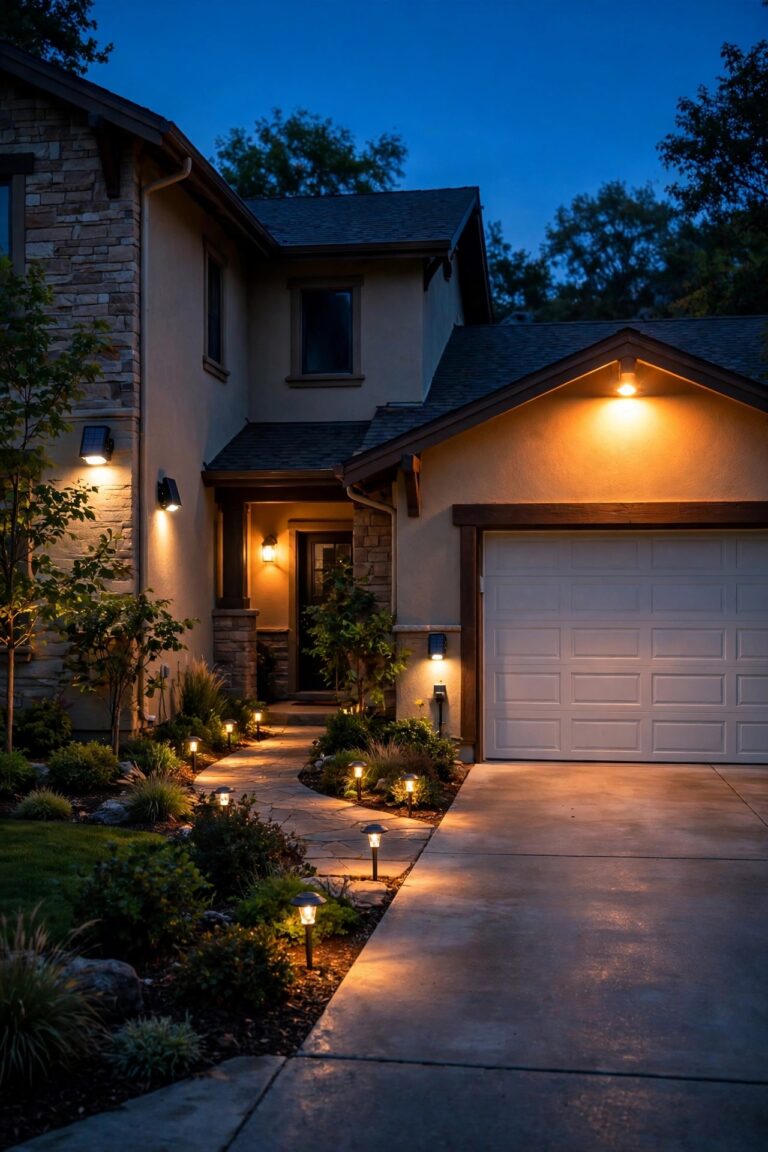
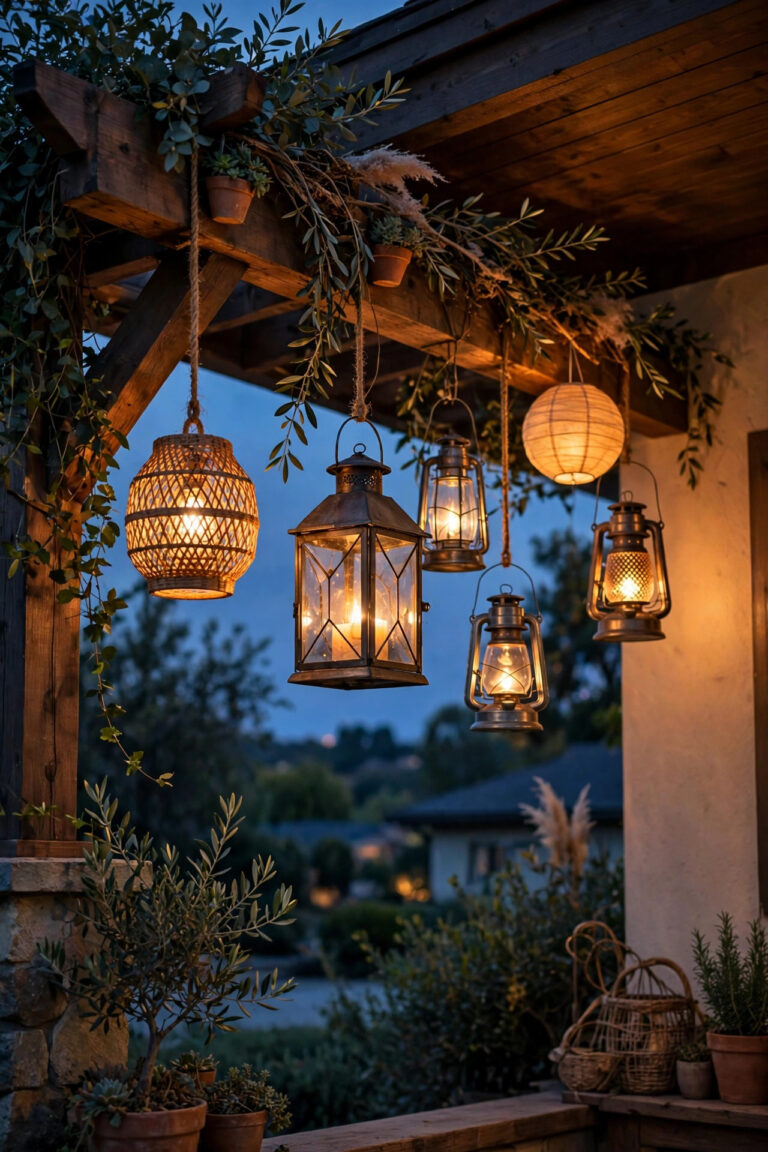
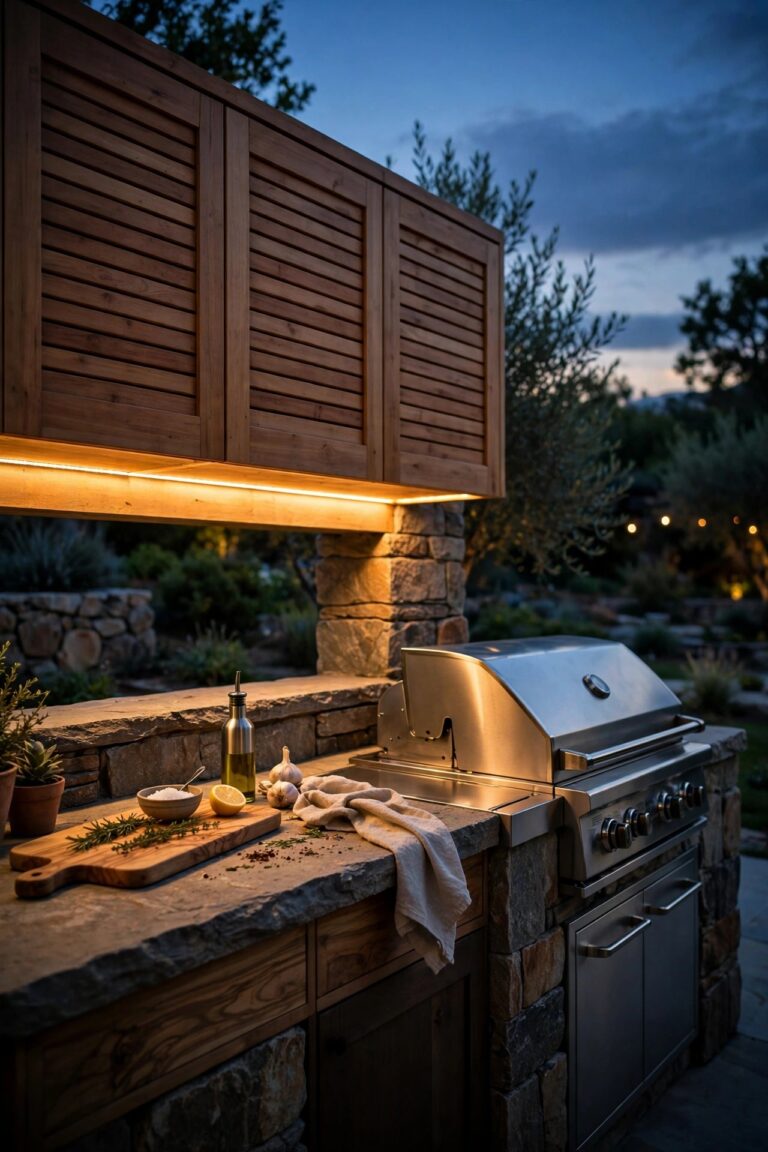
The first porch light I ever bought for our house lasted exactly one winter. It was a pretty little sconce, the box cheerfully said "for outdoor use," and by March the finish was blistering, the socket was green with corrosion, and the bulb flickered like a horror movie. That's when I finally learned what wet vs damp location light fixtures really means — and honestly? It's the single most ignored spec in outdoor lighting. Every fixture carries a location rating: dry, damp, or wet. That rating tells you exactly how much water the fixture is built and certified to handle, from bathroom humidity to a direct hit from the sprinkler. Guess wrong and you'll get corrosion, nuisance tripping, and an early replacement bill. In this guide I'll decode all three ratings in plain English, walk your house spot by spot so you know which rating each location demands, and show you how to read the label before money leaves your wallet.
The Short Answer
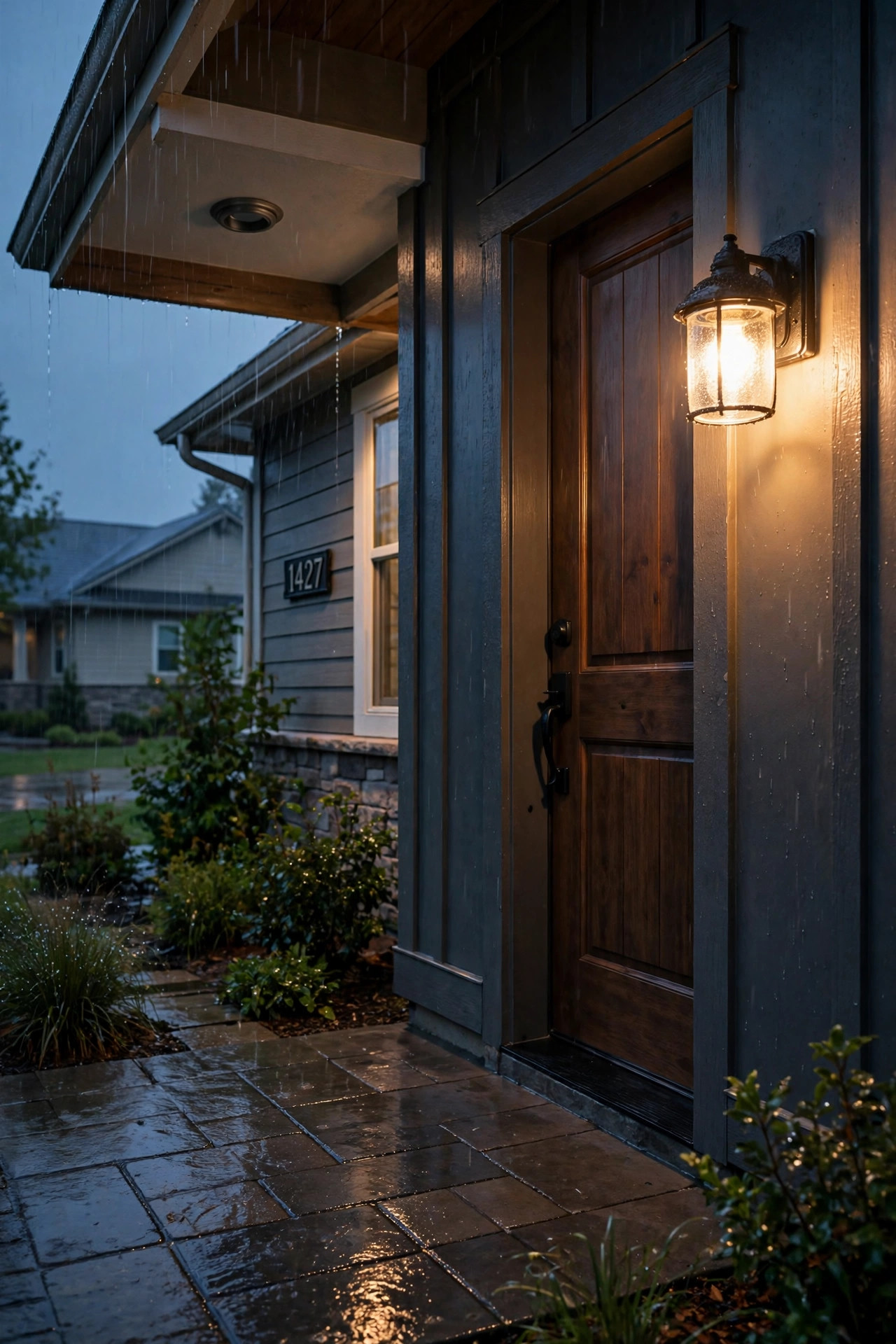
Short on time? Here it is. A dry-rated fixture belongs indoors, where water never reaches it. A damp-rated fixture handles humidity and condensation in covered spots — porch ceilings, under eaves, screened porches — but must never take direct rain. A wet-rated fixture is sealed to survive rain, sprinklers, and splashes hitting it head-on. If water can physically touch it, you need wet. If only damp air can, damp is fine. And here's the golden rule: a wet-rated fixture can always go in a damp or dry spot, but a damp-rated fixture can never, ever go in a wet one. When you're torn between two ratings, buy the wetter one.
What a Location Rating Actually Is
A location rating isn't marketing language — it's a certification category. The National Electrical Code (NEC) defines three kinds of locations: dry, damp, and wet. Independent testing labs (you'll see UL or ETL marks on the box) test fixtures against the construction rules for each category, and the fixture earns the right to be labeled for the harshest environment it passes. That's why two fixtures that look identical on the shelf can be certified for completely different lives — the difference hides in the seams, the socket, and the seals, not on the surface.
What separates the categories physically is sealing and materials. A wet-rated fixture has gasketed seams, a sealed or shielded lamp compartment, corrosion-resistant hardware, protected wire entries, and usually a small drain or "weep" path so any water that sneaks in can escape instead of pooling around the socket. A damp-rated fixture has some moisture resistance — powder-coated metal, a protected socket — but its vents and joints assume water only ever arrives as humid air, never as liquid.
One subtlety worth knowing: the rating applies to the fixture *as installed*, in the orientation the maker specifies. Some fixtures are wet-rated only when mounted base-up or with the lamp pointing down. Install one sideways against its listing and you've quietly voided the certification. Always read the mounting notes, not just the headline rating.

Dry Locations: Almost Nothing Outdoors Qualifies
The NEC calls a location dry when it isn't normally subject to dampness or wetness — think living rooms, bedrooms, hall closets. A dry-rated fixture (often labeled "indoor use only") is built with zero moisture defense: bare socket contacts, unsealed joints, finishes that were never meant to meet weather.
Here's the part that surprises people: a roof overhead does *not* make an outdoor spot dry. Even the deepest covered porch breathes humid summer air, gathers condensation on cool spring mornings, and collects wind-blown mist during storms. By code logic, that's a damp environment, full stop. The only genuinely dry "outdoor-adjacent" spaces are fully enclosed ones — a sunroom with real walls and windows, for example — and even those are usually safest treated as damp if they're unheated.
So my rule is simple: dry-rated fixtures stay inside the house. If a fixture's box or listing says "dry locations only" or "indoor use only," it doesn't go on the porch, it doesn't go under the eave, and it definitely doesn't go in the garden — no matter how sheltered the spot looks on a calm day. Weather is patient, and it only has to win once. Big-box "outdoor-look" fixtures are the worst offenders here, so flip the box over and check the rating before you fall in love. Give the dry-rated beauties to your hallway instead — they'll live happily indoors for decades.
Damp Locations: Covered, Humid, Never Rained On
A damp location is one that's protected from direct weather but exposed to moderate moisture — humidity, condensation, the occasional fine mist. This is the natural home of the damp-rated fixture, and it covers more of your house than you'd think.
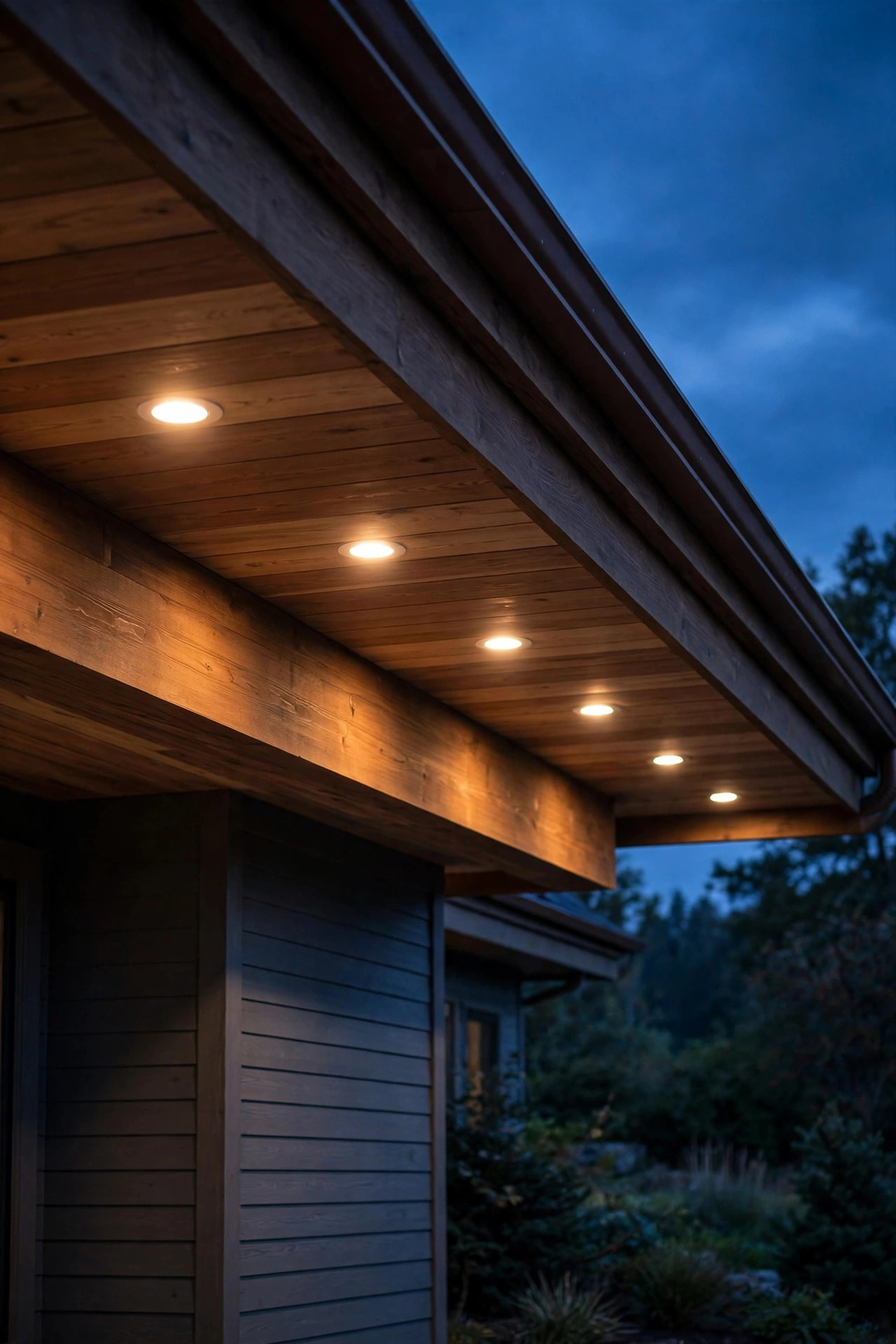
Classic damp locations include the ceiling and walls of a properly covered porch (real roof overhead, fixture tucked well back from the open edge), the underside of wide eaves and soffits, screened-in porches, carports, gazebos and pergolas with solid roofs, covered outdoor kitchens away from the sink, and the ceilings of covered patios and lanais. Unheated garages and workshops are usually wise to treat as damp too.
Damp-rated fixtures are built for exactly this life: corrosion-resistant finishes, sockets shielded from drips, and housings that can breathe humid air without trapping it. What they can't survive is liquid water landing on them — a driving rainstorm reaching the porch's outer wall, a sprinkler arc, or roof runoff sheeting off an overflowing gutter.
My honest test for any spot: stand there during the worst storm of the year, not the nicest evening. If the only moisture that could reach the fixture is the wetness in the air itself, damp is enough. The moment actual drops could land on it, you've crossed into wet territory — which brings us to the next rating.

Wet Locations: Where Water Actually Lands
A wet location is anywhere water or other liquid can drip, splash, or flow against the fixture. That definition is broader than most homeowners expect, because it includes the sprinkler system you forget about until July.
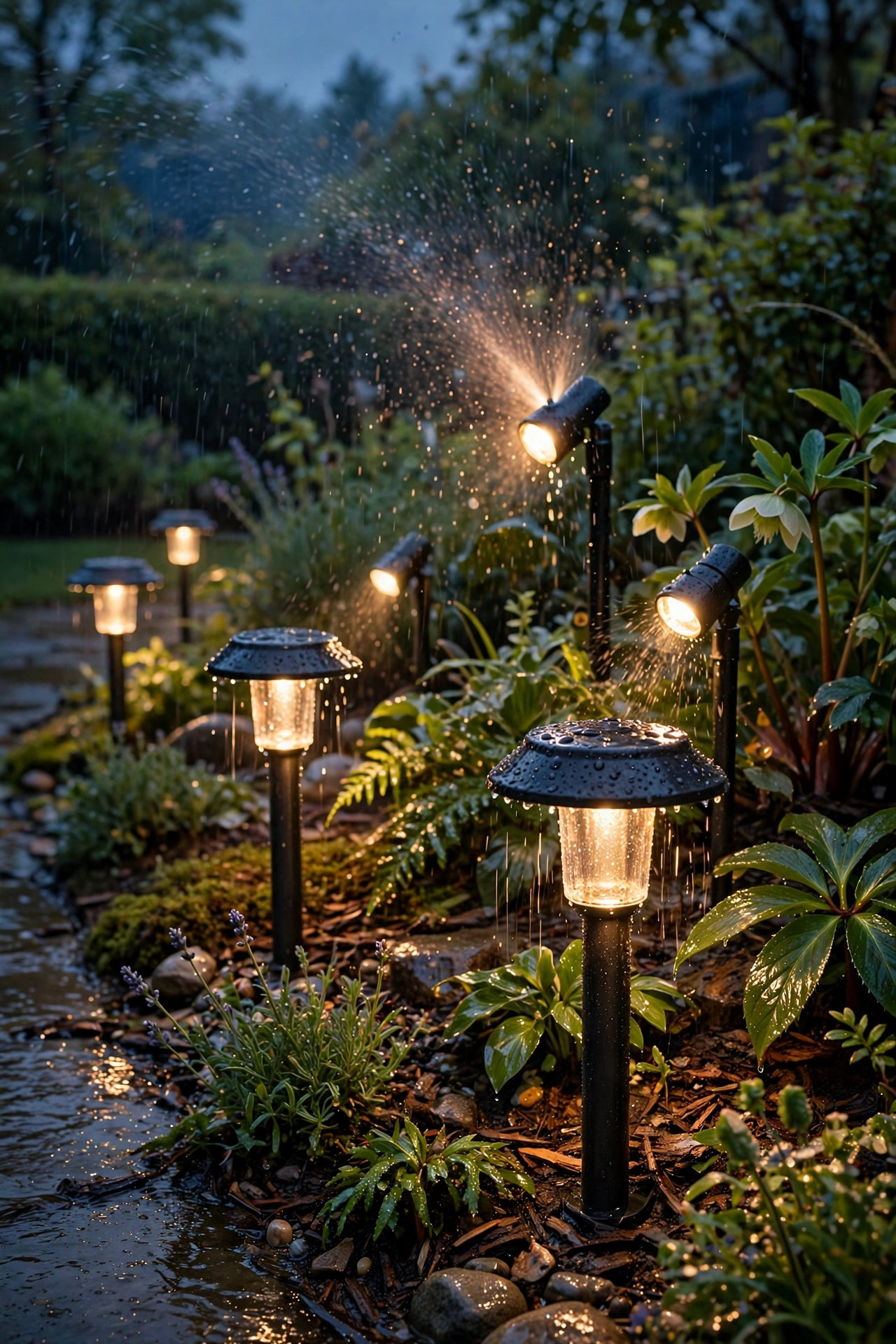
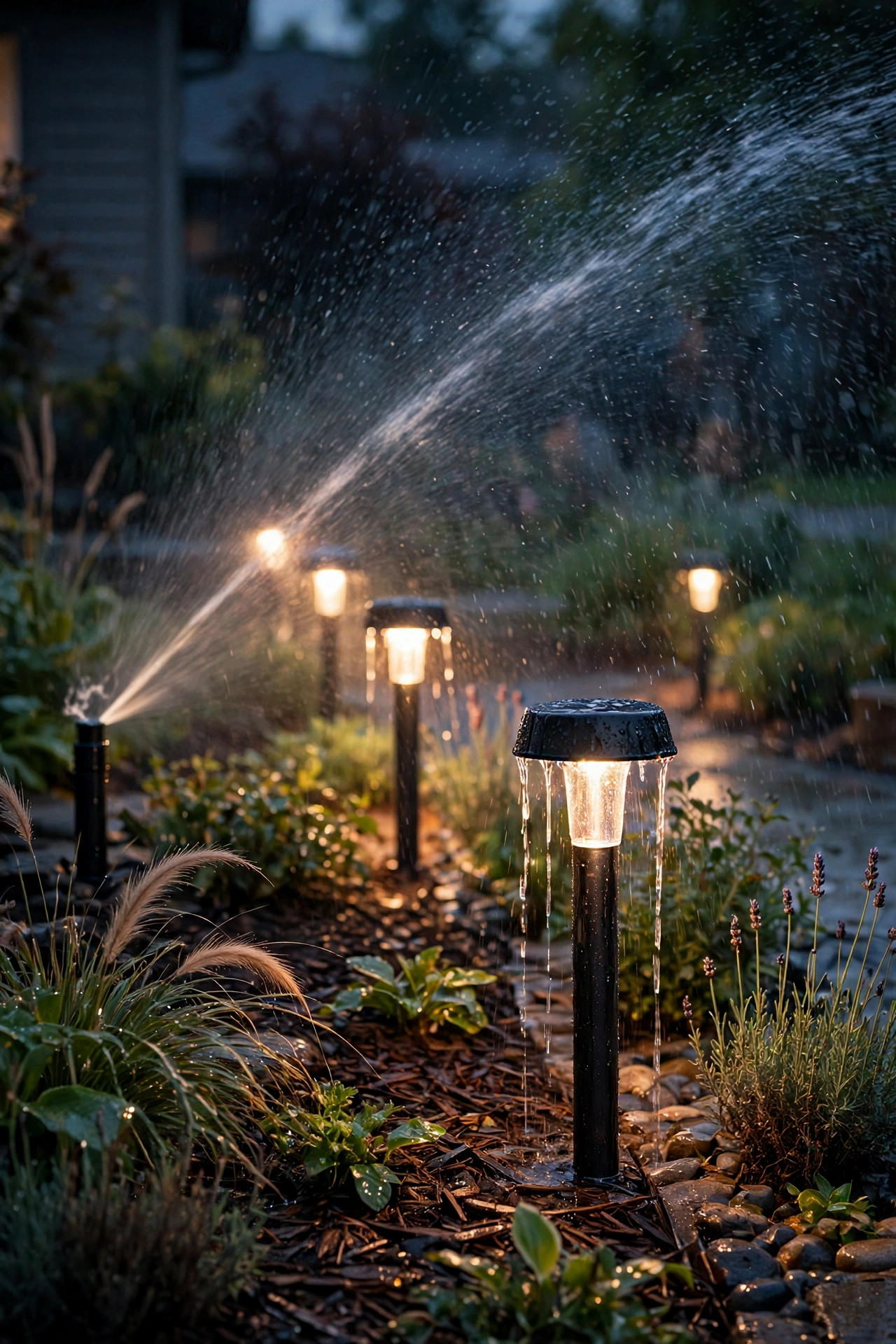
Open-air fixtures are wet, obviously: sconces on an uncovered wall, pendants over an open deck, post lights, and every landscape fixture in your beds — path lights, spotlights, and well lights all take rain *and* irrigation spray, which makes them wet-location fixtures by definition. So are fixtures around pools and hot tubs, on docks, beside outdoor showers, and anywhere along a splash line. Even a wall under a short eave counts as wet if storms regularly wet that wall — the eave protects the top of the wall, not the part where your sconce hangs after wind gets involved.
Wet-rated fixtures are engineered accordingly: silicone or rubber gaskets at every seam, sealed lenses, drain channels, marine-tough finishes, and wiring compartments that stay dry even when the outside is soaked. When you're placing flood lights — the most exposed fixtures most homes own — wet rating is non-negotiable, and placement matters just as much, as I cover in my guide to outdoor flood light placement.
Also check the lamp itself: an open wet-rated fixture needs a bulb that's rated for wet or enclosed use, or the bulb becomes the weak point in an otherwise sealed system.
Wet vs Damp Location Light Fixtures: The Side-by-Side
If you only remember one chart, make it this one. Here's how wet vs damp location light fixtures stack up on everything that matters:
| Factor | Damp-Rated | Wet-Rated |
|---|---|---|
| Water exposure allowed | Humidity and condensation only | Direct rain, sprinklers, splashes |
| Typical spots | Covered porch ceilings, under eaves, screened porches | Open walls, landscape beds, pool decks, posts |
| Construction | Protected socket, moisture-resistant finish | Full gaskets, sealed lens, drain paths, marine-grade finishes |
| Typical price | $30–$120 for a wall fixture | $45–$180 for the same style |
| Can it substitute? | Never in a wet location | Yes — fine in damp or dry spots |
The asymmetry in that last row is the whole ballgame. Ratings only substitute *downward*: wetter-rated fixtures can serve in drier locations, never the reverse. That's why, when a spot sits anywhere near the borderline, I spend the modest premium on the wet version and stop worrying. The price difference between comparable damp and wet fixtures is usually 15–30 percent — far less than the cost of replacing a corroded fixture a few seasons early.
And a dry-rated fixture? It's not on this chart because it doesn't belong outdoors at all. No exceptions for "really covered" porches — covered means damp at best.
Reading the Label: How to Tell Wet vs Damp Location Light Fixtures Apart
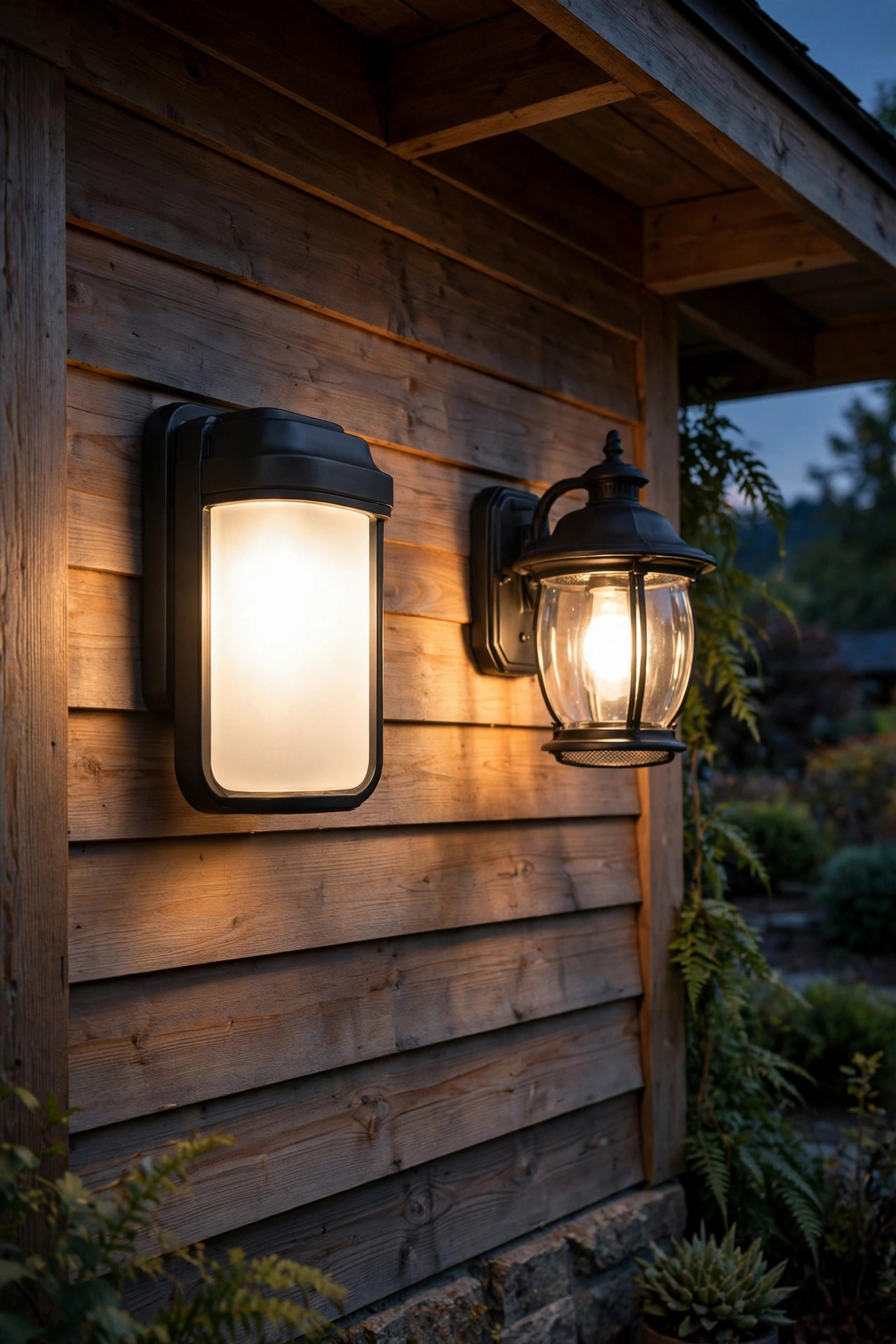
Manufacturers don't exactly shout the rating from the front of the box, so here's where it hides. Look for the exact phrases "Suitable for Wet Locations" or "Suitable for Damp Locations" — printed on a sticker on the fixture's backplate or canopy, stamped near the socket, listed in the spec table of the manual, or in the "location rating" line of an online product listing. The UL or ETL listing mark nearby confirms it's a real certification, not a vibe.
Some labels carry orientation fine print: "wet location only when base up," or a maximum mounting angle. Take those seriously — they're part of the certification. If a listing states no location rating at all, treat the fixture as dry/indoor-only until proven otherwise. Silence is not a rating.
Two more traps. First, "weather resistant" and "for outdoor use" are unregulated phrases; the word that matters is the location rating itself. Second, the lamp: a fixture's rating assumes a lamp that's also approved for that exposure, so check the bulb's packaging for wet-location or enclosed-fixture approval when the bulb sits exposed.
I keep a simple habit: before I buy any exterior fixture, I screenshot or save the spec line showing its rating. If anything ever fails or a warranty claim comes up, that one line settles the argument.
The Gray Zones: Real Spots Around Your House, Judged One by One
Most homes have only a handful of truly borderline spots, so let me call them like an inspector would:
– Covered porch, fixture near the open edge: wind-driven rain reaches it in any real storm. That's wet.
– Covered porch, ceiling fixture well back from the edge: the textbook damp location. Damp-rated is fine.
– Under wide eaves and soffits: damp, as long as the eave is deep relative to the wall height and storms don't routinely soak the wall below. Low, exposed eaves over a first-floor fixture? I'd go wet.
– Screened porch: damp. The screens stop rain, not humidity.
– Pergola with no solid roof: wet, always — a slatted top is decoration, not shelter.
– Under a deck: water drips through the boards, so treat it as wet near the edges and anywhere in the drip line.
– Outdoor kitchen under a solid roof: damp away from the sink; wet within splash range of it.
– Porch with no roof at all: there's no gray here — it's fully exposed. I wrote a whole post about porch lighting with no overhang, and every fixture in it needs a wet rating.
– Garage interior: usually classified dry-to-damp; I use damp-rated for unheated garages because of condensation.
Notice the pattern: the question is never "does it have a roof nearby?" It's "can a drop of water land on it?" Answer that honestly, spot by spot, and the rating chooses itself.
What Happens When You Get the Rating Wrong
Nobody's damp-rated sconce explodes the first time it rains. The failure is slower and more expensive than that. Water wicks in through an unsealed joint and sits. Socket contacts corrode, turning a clean connection into a flickering, arcing one. Finishes blister from the inside out. Trapped moisture finds the wiring, and you start getting nuisance GFCI trips every humid week — the circuit protecting you by announcing, over and over, that something is wet that shouldn't be. Bulbs die young in the wrong fixture too: moisture creeps onto the lamp base, corrodes the contacts, and shortens the lamp's life right along with the fixture's.
Within a season or two, the fixture is usually done: rust streaks down the siding, the lens clouds, and the internals look like a shipwreck. Worse, the warranty won't save you. Manufacturers check installation environment on claims, and a damp-rated fixture mounted in a wet location is a textbook misuse denial. If a home inspector spots it later, it becomes a negotiation item; if an insurer ever reviews a fire claim, it becomes a headache.
The economics are lopsided, too. The wet-rated version of a fixture might cost $20 more. Replacing the wrong one costs the fixture, possibly an electrician's visit at $150–$350, and your whole Saturday. Ratings are the cheapest insurance in all of outdoor lighting.

Location Ratings vs IP Ratings: Cousins, Not Twins
Spend any time shopping for landscape lights and you'll meet a second system: IP ratings, like IP44, IP65, or IP67. IP stands for Ingress Protection — two digits rating how well a housing keeps out dust (first digit) and water (second digit), from drips to jets to full immersion. It's common on low-voltage landscape fixtures, in-ground well lights, and European-designed products.
The NEC location rating and the IP rating are cousins, not twins. The location rating is the US listing category your inspector and your insurance company recognize; it assumes a whole installation context, including orientation and lamp exposure. IP is a lab test of the bare housing. There's no official conversion chart, but roughly: IP44 (splash-proof) behaves like light-duty wet protection, IP65 (water jets) is comfortably wet, and IP67/IP68 (immersion) is what you want in-ground or underwater-adjacent.
My buying habit: for wall-mounted and line-voltage fixtures, shop by the location rating first — that's the certification that matters. For landscape fixtures, look for a wet listing *or* a strong IP number (IP65+), and treat the two together as your confidence check. When both agree, buy without a second thought. One more wrinkle: IP tests are directional, so a housing can shrug off splashes from above yet fail against jets from below — another reason the digits alone never tell the whole story, and why the installed orientation always deserves a second look.

What Wet and Damp Fixtures Cost in 2026
Ratings do move the price, but less than people fear. Here's what I see on shelves this year:
– Damp-rated wall sconces and porch ceiling lights: $30–$120, with most nice options around $60–$90.
– Wet-rated equivalents: $45–$180. The premium buys real gaskets, sealed optics, and better finishes.
– Marine-grade or solid-brass wet fixtures: $120–$400 — the "buy it once" tier for coastal and fully exposed spots.
– Landscape fixtures: path lights and spotlights are wet-rated by nature, $25–$90 each for quality low-voltage models.
– Wet/enclosed-rated LED lamps: $6–$15 each, a small but essential add-on for open fixtures.
The honest math: upgrading a whole porch from damp-rated to wet-rated might add $40–$80 total. Compare that with one premature replacement plus an electrician, and the wet rating is the bargain. Where damp genuinely suffices — a deep, dry-feeling covered porch ceiling — I'll happily save the money and put it toward better bulbs instead. Spend where the water is; save where it isn't.
Installation cost doesn't change with the rating, either — an electrician charges the same visit whether the fixture is damp- or wet-rated, which is one more reason to choose correctly the first time. And budget a few dollars for the supporting cast in exposed runs: gasketed junction boxes and weatherproof wire connectors run $5–$15 apiece, and they're part of the system the fixture's rating quietly assumes.
6 Mistakes That Ruin Perfectly Good Fixtures
After a decade of admiring other people's porches and replacing a few casualties of my own, these are the errors I see again and again. Every one of them has the same shape: a fixture asked to live somewhere wetter than its certification.
1. Trusting the words "outdoor use." Unregulated marketing. Only the location rating counts — I've seen "outdoor" table lamps that were effectively dry-rated.
2. Calling a covered porch "dry." It's damp at best. Condensation alone disqualifies every dry-rated fixture out there.
3. Forgetting the sprinklers. A fixture can sit under a roofline and still get soaked nightly by an irrigation head. Landscape fixtures are wet-location fixtures, full stop.
4. Ignoring roof runoff. A damp-rated sconce under a chronically overflowing gutter is living in a waterfall. Fix the gutter or upgrade the fixture.
5. Pairing a sealed fixture with the wrong bulb. A non-rated lamp in an open wet fixture is the leak in the system — check the lamp's own rating.
6. Caulking the weep hole shut. That little drain at the bottom of a wet fixture is a feature. Sealing it traps water inside and guarantees corrosion.
Read the rating, respect the rating, and you'll never meet the green, corroded socket that taught me this lesson the expensive way.
Keeping Them Alive: Gaskets, Weep Holes and Seasonal Checks
A wet-rated fixture isn't a magic fixture — it's a well-built one, and a five-minute checkup twice a year keeps it that way. I do mine in spring and fall, the same walk I make around my low-voltage system.
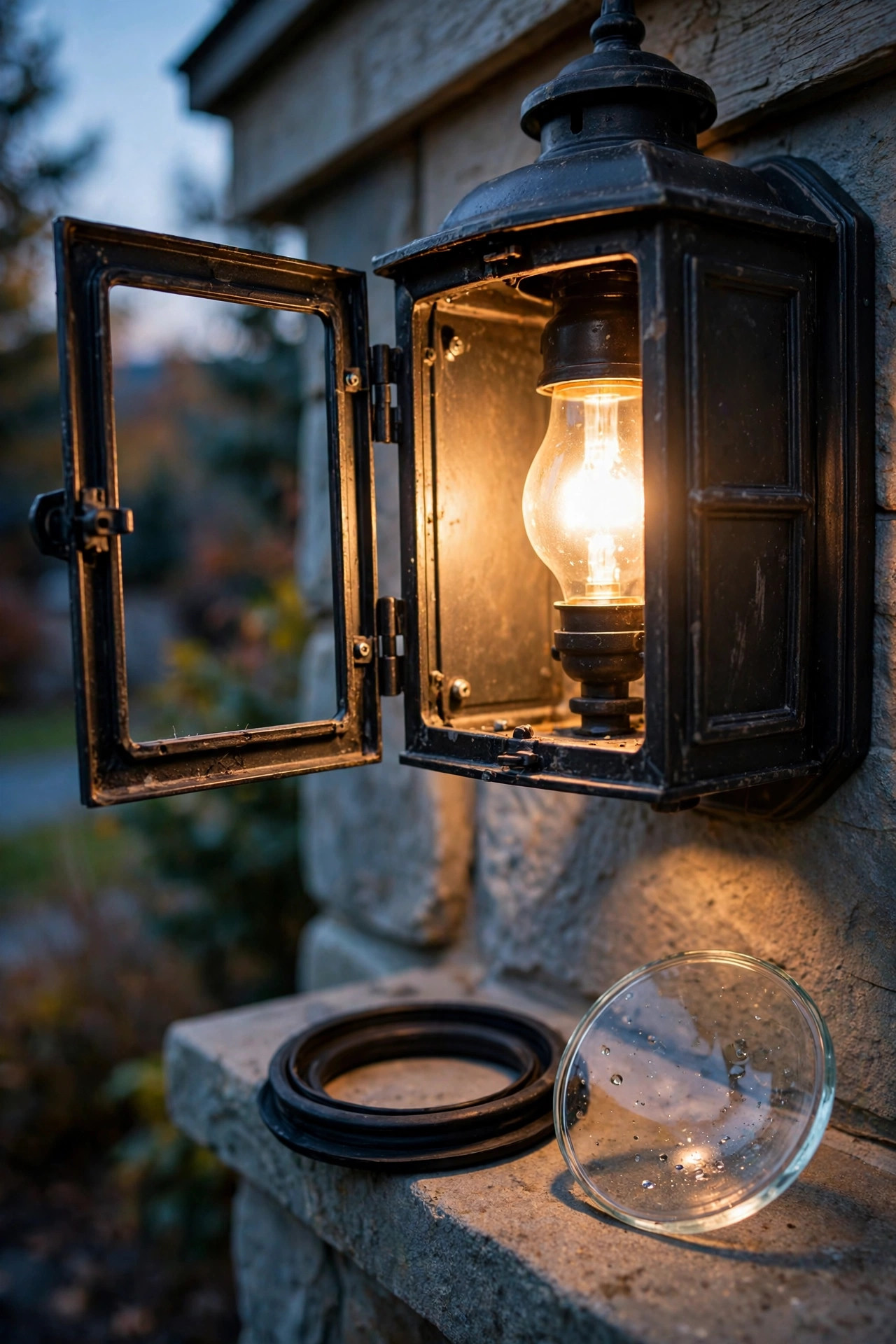
Press on the gasket around the lens and backplate; it should feel springy, not cracked or flattened into cardboard. Replace tired gaskets — they're cheap and they're the whole seal. Run a thin bead of exterior silicone along the *top* of a wall fixture's canopy where it meets the siding, and deliberately leave the bottom edge open so any intruding water can escape. Poke the weep hole clear with a toothpick. Inside the lens, look for the two failure signatures: water pooled at the bottom, and insect tenants. Both tell you a seal has given up.
Clear debris off lenses (it traps moisture against the glass), snug any mounting screws that have worked loose, and give finishes a gentle wash — road salt and fertilizer overspray are corrosive, and rinsing them off a wet-rated fixture takes thirty seconds. If you installed your system following a plan like my step-by-step low-voltage landscape lighting install, add these checks to the same seasonal list and your fixtures will quietly outlast their warranties.
Frequently Asked Questions
Can a damp-rated light go on a covered porch?
Yes — a covered porch is exactly what damp-rated fixtures are made for, as long as the fixture sits well back under the roof where direct rain can't reach it. The closer it is to the open edge of the porch, the more likely wind-blown rain can land on it, and that pushes the spot into wet territory. When in doubt, mount it deeper under cover or step up to a wet-rated fixture.
Can I use a wet-rated fixture in a damp or dry location?
Absolutely, and I do it all the time. Ratings substitute downward: a wet-rated fixture is more than qualified for a damp location, and it works indoors too. The reverse is never true — damp-rated fixtures must stay out of wet spots. If a location is borderline, buying the wet version is the safe, code-friendly default.
Is my covered porch considered a dry location?
No. Even a deep, roofed porch is a damp location, because humidity, condensation, and wind-blown mist all reach it. Dry is reserved for interiors that never see moisture at all. That's why indoor-only, dry-rated fixtures should never be installed on a porch, no matter how sheltered it feels on a calm evening.
What rating do landscape and path lights need?
Wet — no contest. Path lights, spotlights, and well lights live directly in the rain and in sprinkler spray, which is the definition of a wet location. Look for a wet-location listing or a strong IP rating (IP65 or better) on landscape fixtures, and remember the low-voltage wiring connections in the bed need weatherproofing too.
Conclusion
Choosing between wet vs damp location light fixtures comes down to one honest question: can a drop of water actually land on it? If yes, it needs a wet rating. If only humid air can reach it under solid cover, damp will serve you well for years. And if it's indoors, dry is fine — but dry never goes outside. Walk your house once with that question in mind, read the label before you buy, and your fixtures will stop dying young. For more guidance on placing and installing the lights themselves, browse the rest of my outdoor lighting guides here on the site.