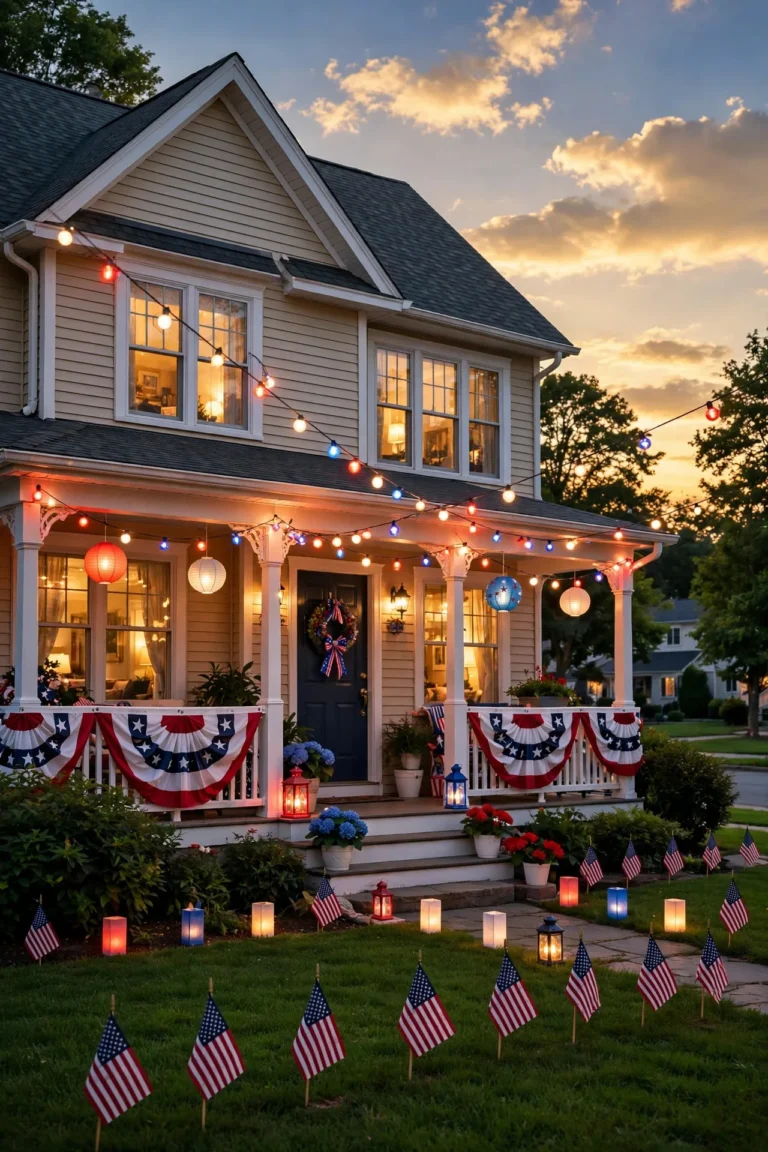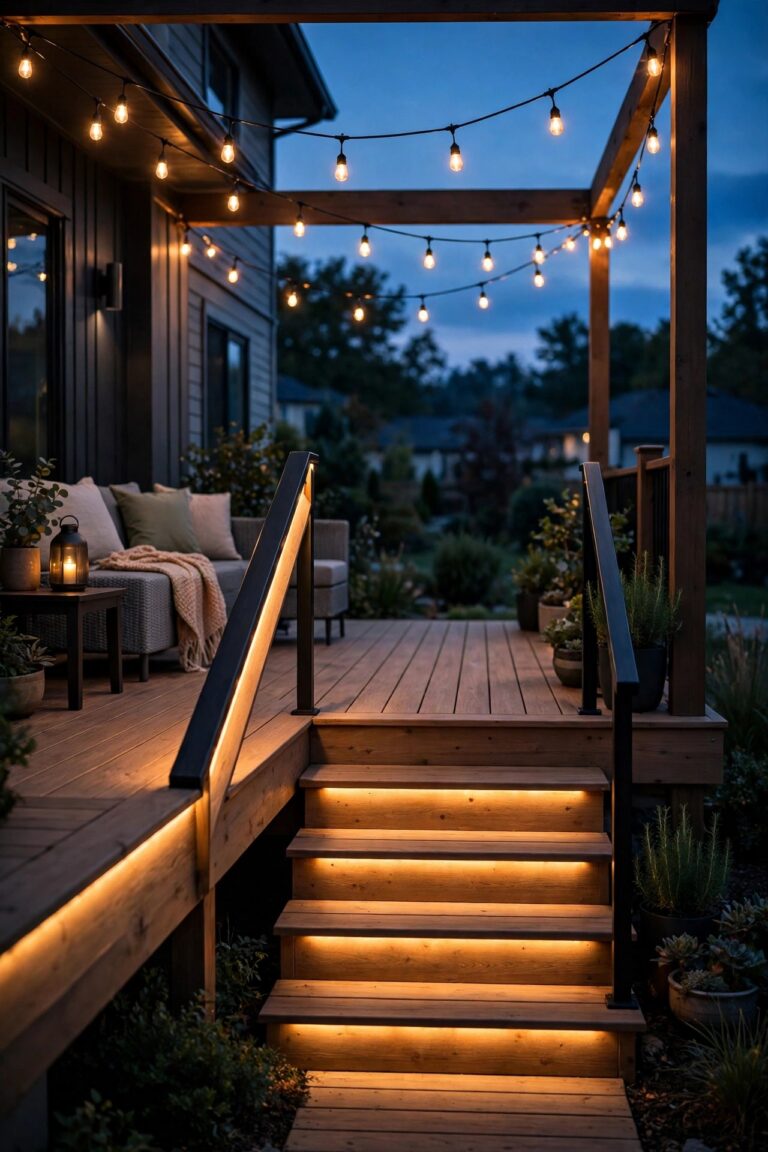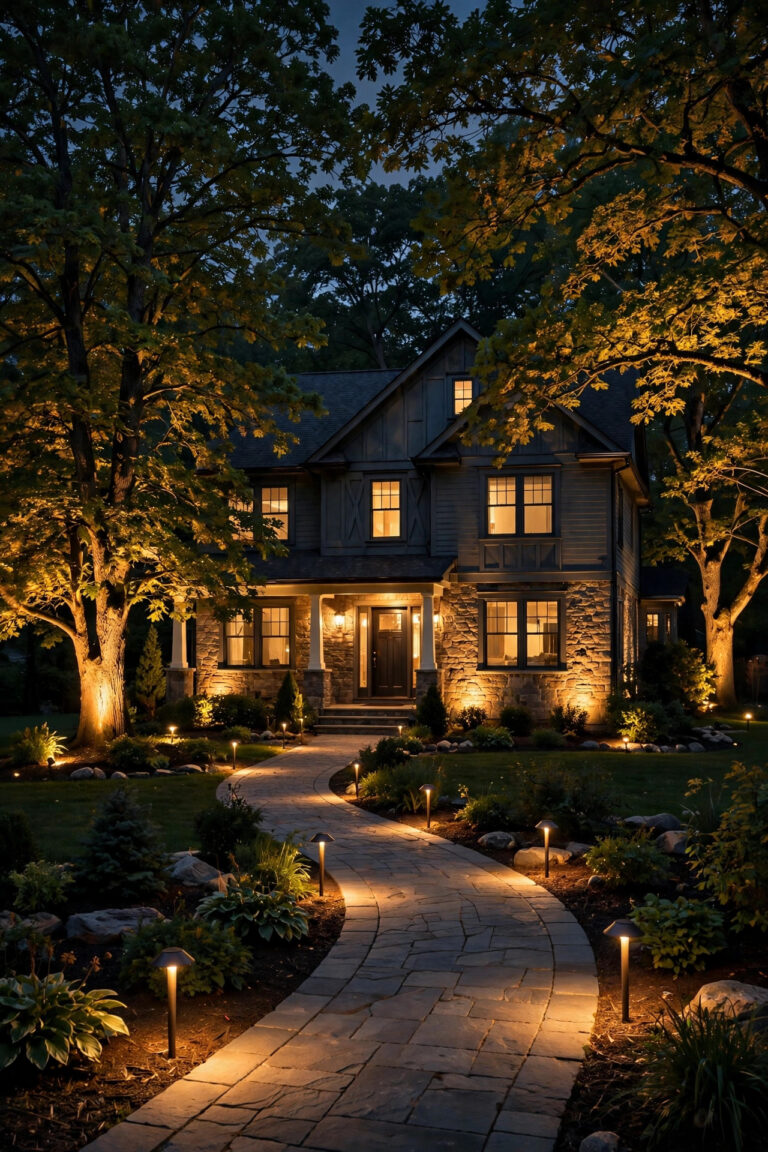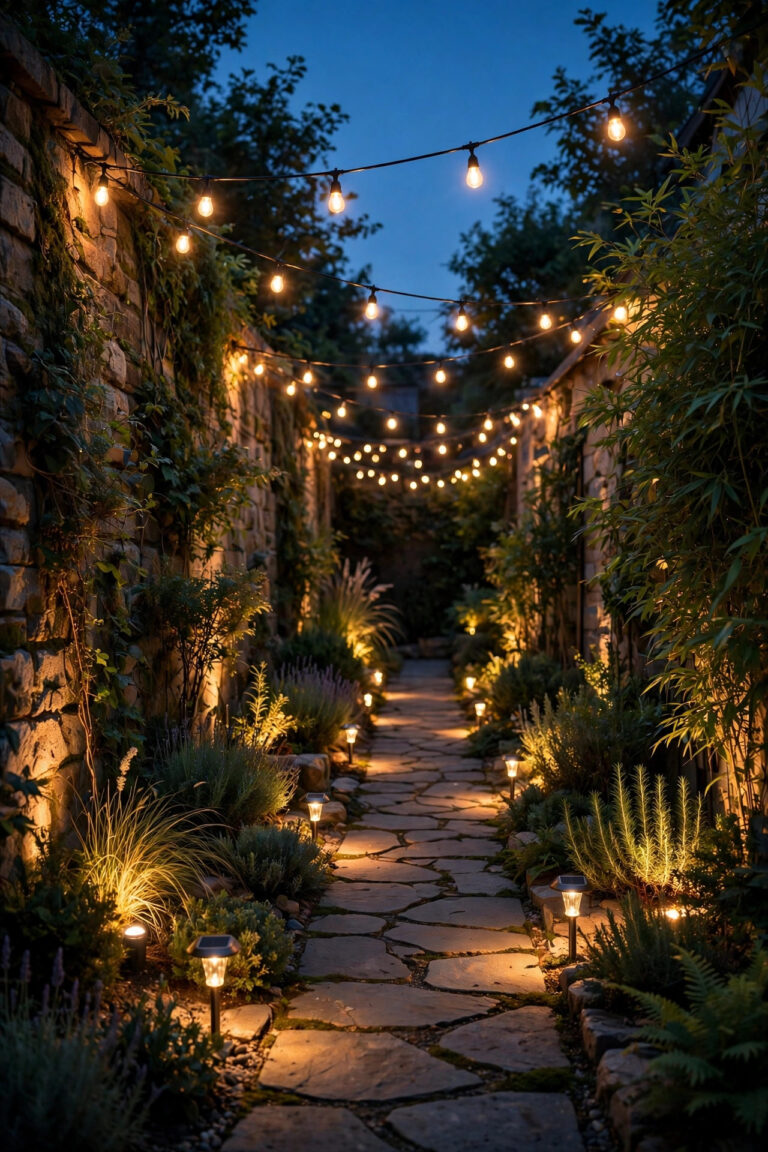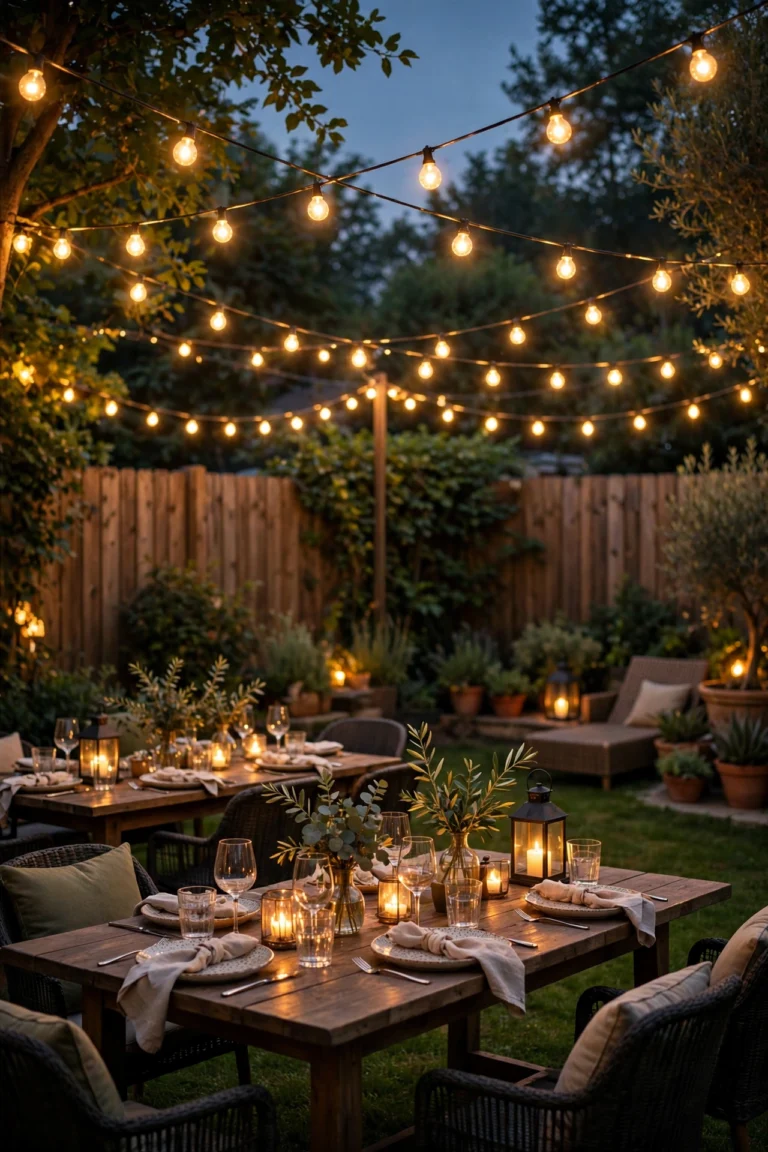
There is something about a lantern that swings gently overhead that a wall sconce just can't match. Hanging outdoor lanterns float at eye level, they move a little in the evening breeze, and they pull a whole porch or pergola together the way a pendant light finishes a kitchen. Over the years I've hung them from porch beams, low oak branches, pergola rafters, and even a pair of shepherd's hooks by the garden gate, and honestly? They are the single fastest way I know to make an outdoor space feel intentional after dark. The secret is the same layering I use everywhere: one anchor lantern where people gather, a few mid-level accents, and tiny glows tucked where you'd never expect them. In this post I'm sharing 21 ways to hang lanterns outside — hardwired, solar, and candle-style — with the heights, spacing, and little safety details that make them look good and last. Whether you have a deep farmhouse porch, a shady backyard tree, or a bare pergola that needs a personality, there's a lantern here with your name on it.
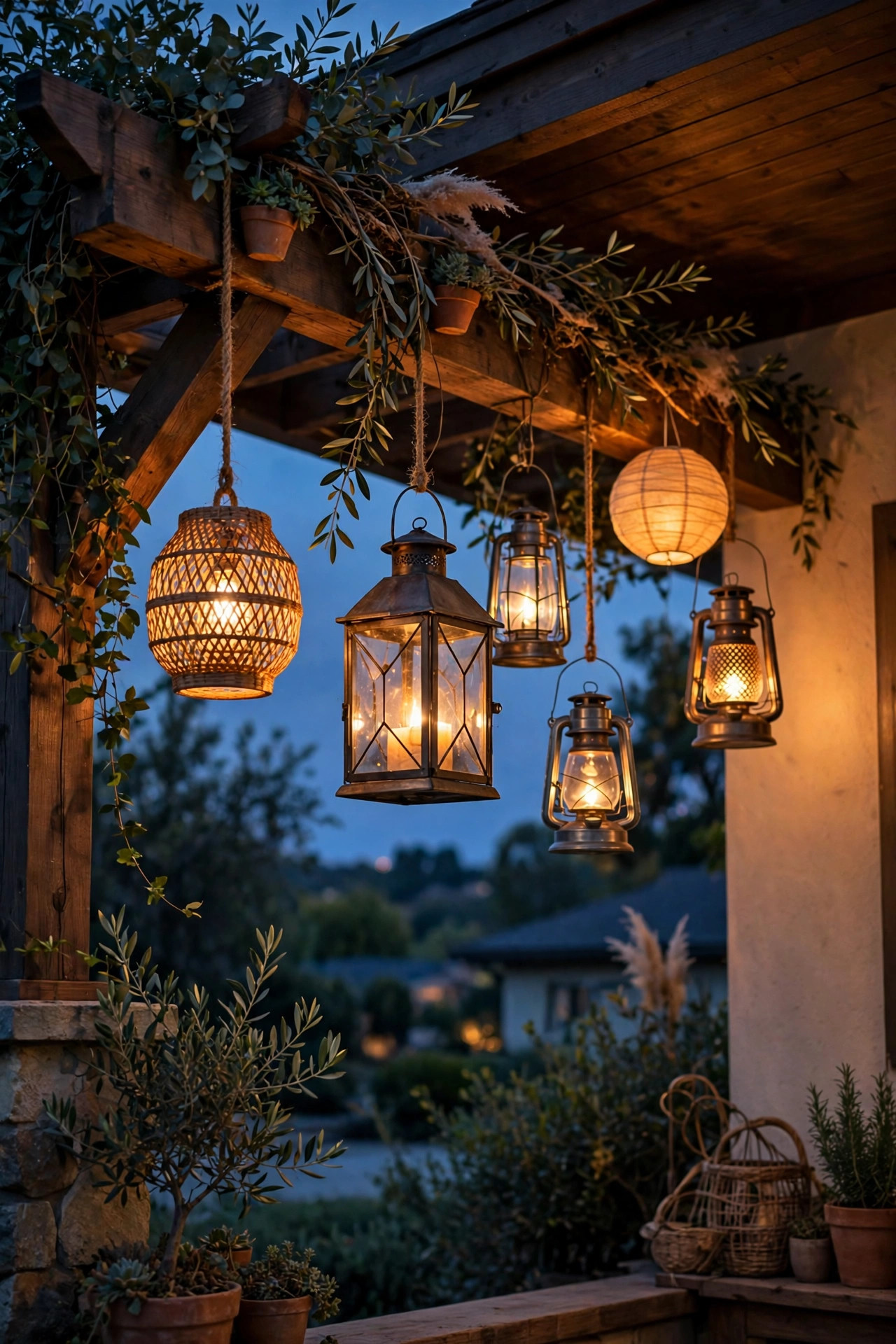
1. A Hardwired Pendant Lantern Centered Over the Front Door
If your porch has a ceiling and a junction box, start here — this is the anchor everything else layers around. A hardwired pendant lantern centered on the front door reads like jewelry for your entry, and because it's wired to the porch switch, it's the most reliable light you'll own. Hang it so the bottom of the lantern sits about 7 feet above the porch floor, or at least 80 inches above any walkway so nobody ducks. Most pendants come with 3 to 6 feet of chain, so you can fine-tune the drop with a pair of pliers and a little patience. Size matters more than people think: for a standard 36-inch door, a lantern 12 to 18 inches tall looks balanced; go bigger — 20 inches or more — if you have a two-story entry. Choose a fixture rated for damp or wet locations, and pair it with an LED filament bulb in 2700K for that candlelit warmth. On my own porch, this one lantern on a timer does 80 percent of the work, and everything else I add is just gravy. For more entry inspiration, my roundup of front porch lighting ideas shows how a pendant pairs with sconces and path lights.
Suggested budget range: $60 – $180.
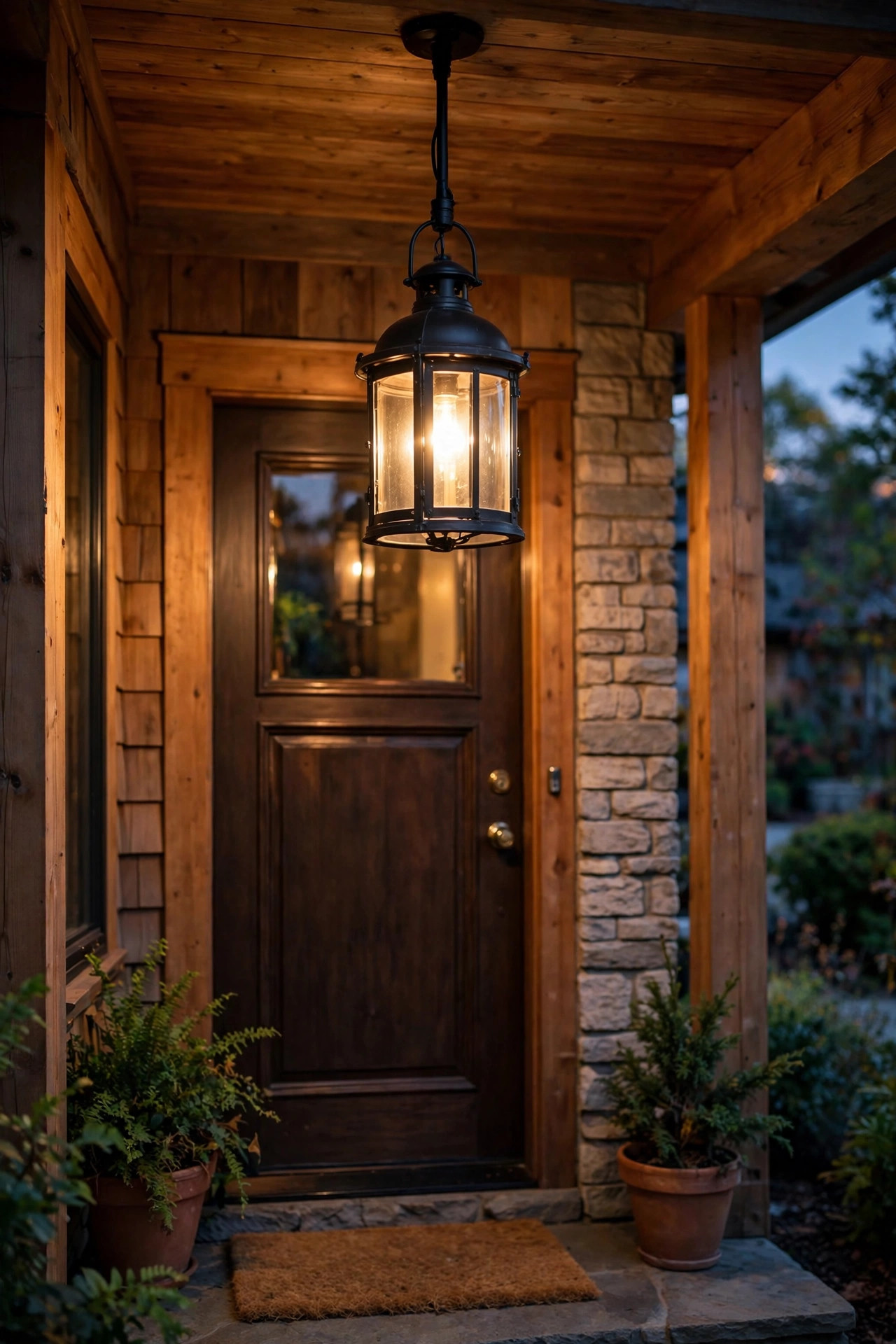
2. Hang a Trio of Hanging Outdoor Lanterns at Staggered Heights
One lantern is a light; three lanterns at different heights are a moment. I love this look in a porch corner or over a seating nook on the pergola — a cluster of matching lanterns hung at staggered drops, maybe 6 inches apart in height, so the glow overlaps and the eye keeps moving. Use odd numbers, keep the lanterns in the same finish and family, and vary the size slightly (large, medium, small) rather than buying three identical ones. You can hang the cluster from a single heavy-duty ceiling hook with three chains, or run them along a short beam about 12 to 18 inches apart. Battery-operated LED candles on timers are the practical choice up high — no cords, no climbing a ladder with a lighter, and they flicker on at dusk like magic. If the cluster hangs over a table, keep the lowest lantern at least 30 inches above the tabletop so conversation sightlines stay open. This is the arrangement guests photograph, every single time. It works especially well in a corner that otherwise goes dark and forgotten by 8 p.m.
Suggested budget range: $45 – $120.
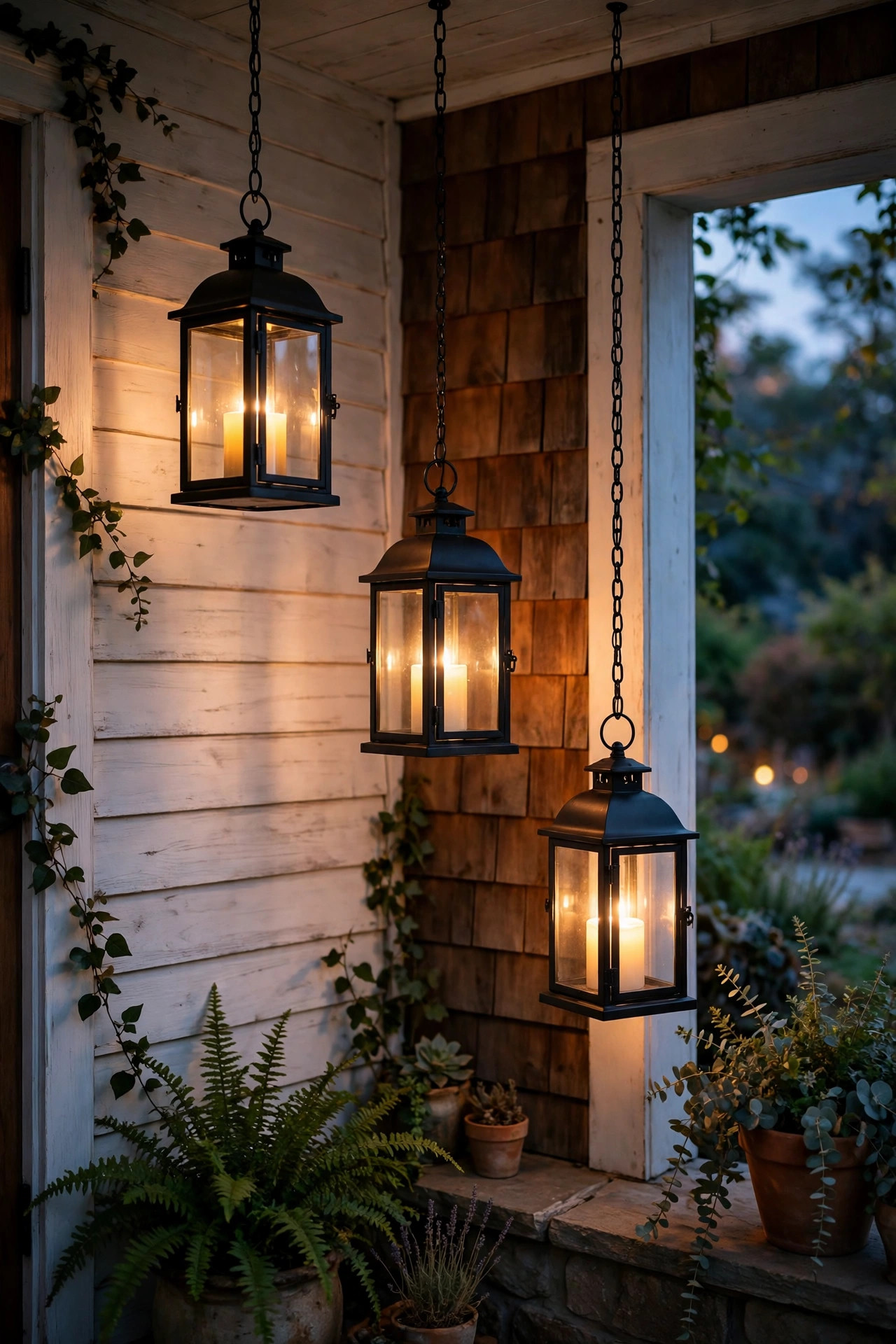
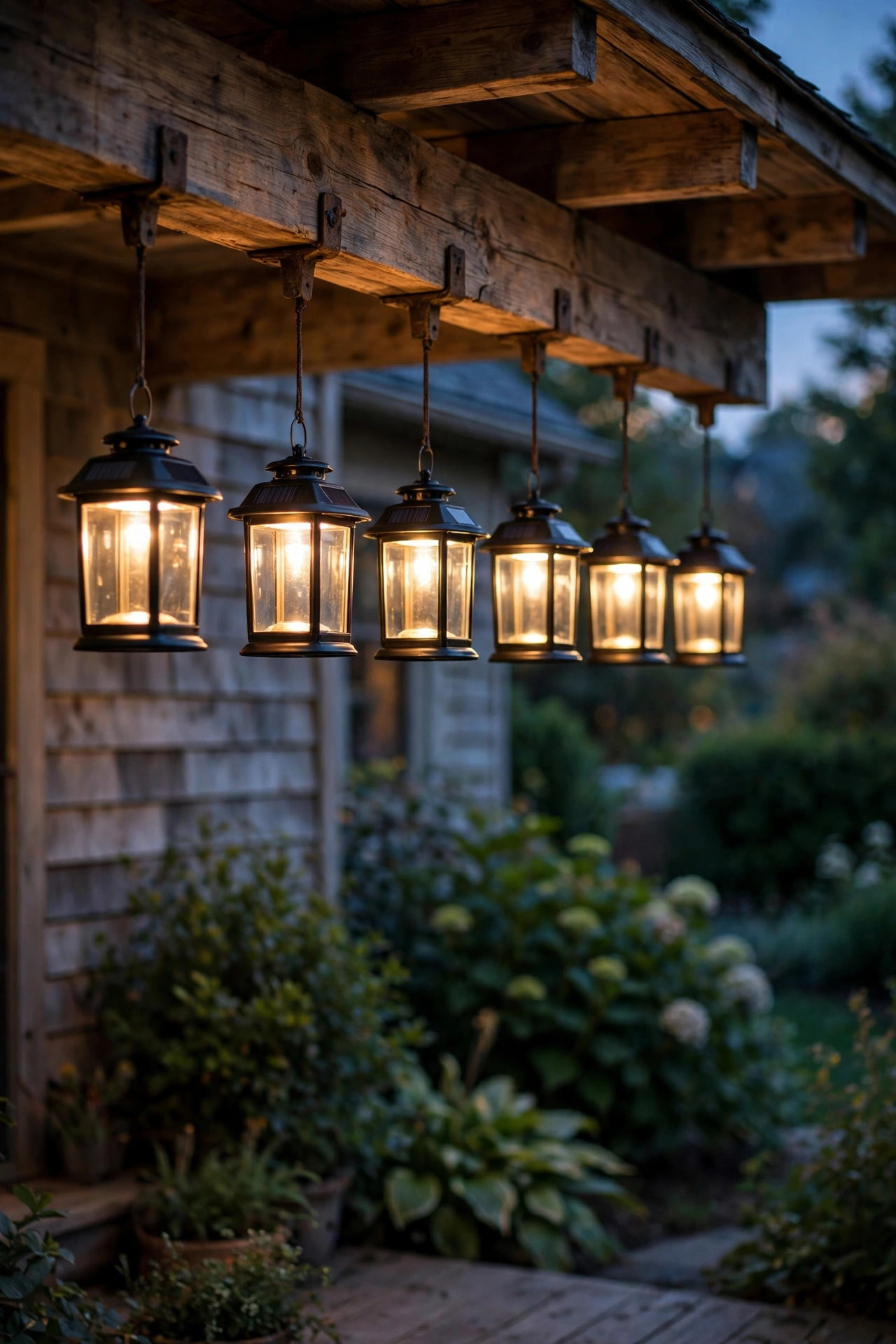
3. Solar Hanging Outdoor Lanterns Along a Porch Beam
No junction box? No problem. Solar hanging lanterns have gotten genuinely good — the panels are bigger, the batteries last 8 to 10 hours on a full charge, and the warm-white LEDs finally look warm instead of hospital blue. I hang them in a row along the front porch beam, spaced about 3 to 4 feet apart, using simple screw-in hooks. The key detail everyone misses: the solar panel needs direct sun for at least 6 hours, so on a north-facing or deeply shaded porch, choose models with a detachable panel on a cord that you can mount up on the sunny edge of the roofline while the lantern hangs in the shade. Look for lanterns with an IP44 rating or better, real glass or sturdy polycarbonate panels, and a manual on/off switch so you can save the charge for the nights you're actually outside. Expect a soft ambient glow rather than task light — think ambiance, not reading light. A row of five or six along the beam gives my porch that lantern-lit café feel for almost no running cost, and installation took me one afternoon and zero electricians.
Suggested budget range: $30 – $90.
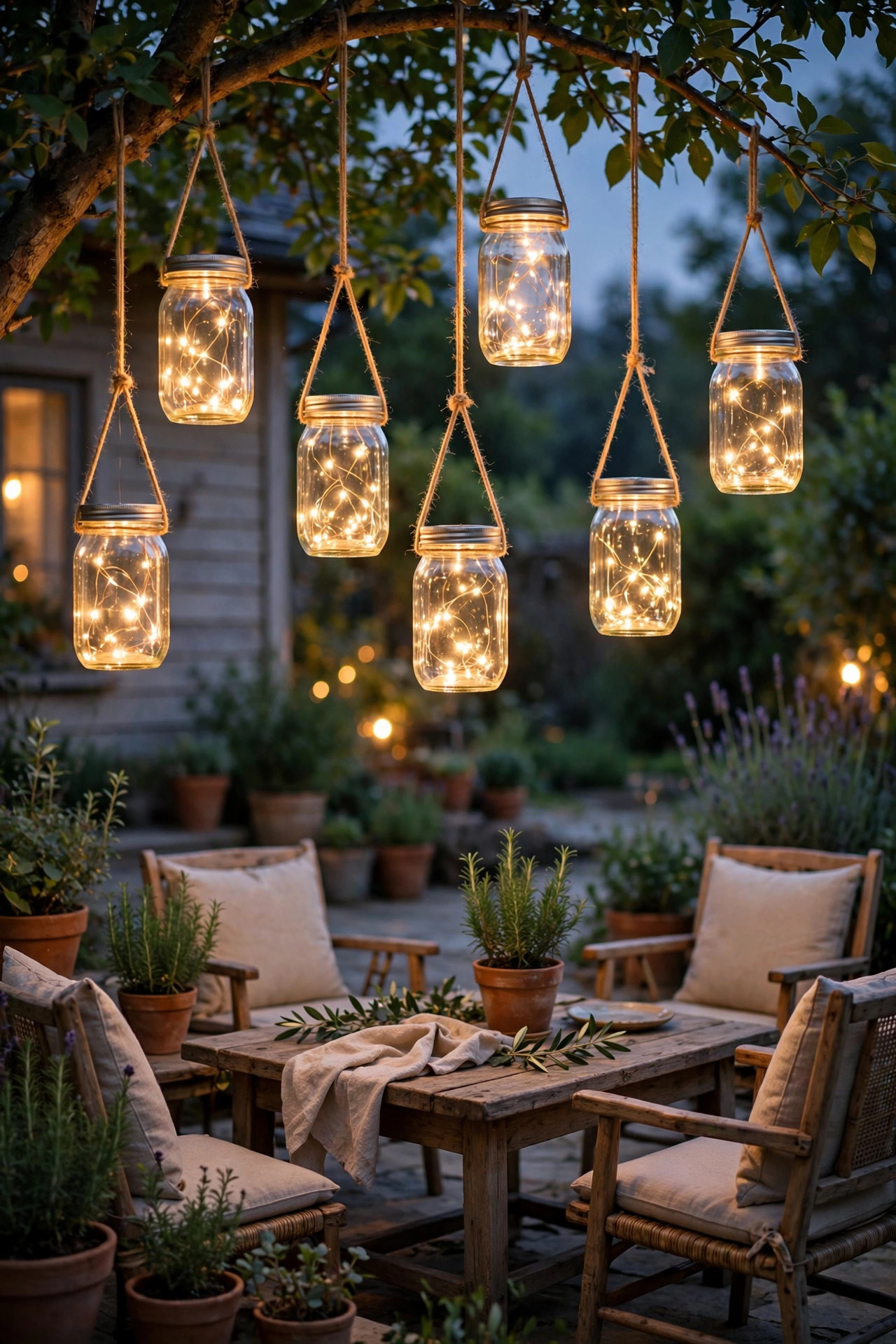
4. Mason Jar Lanterns Dangling From Low Tree Branches
This is the project that started my whole lantern obsession, and it still makes me happy every June. Wide-mouth mason jars, a coil of 16-gauge wire for a handle, and a solar lid insert or an LED tea light inside — that's it. Hang them from low, sturdy tree branches at about 6 to 7 feet, high enough to walk under but low enough that the light pools where people sit. I do groups of three to five jars per branch zone, never a lonely single jar, and I vary the drop length by 6 to 12 inches so it feels gathered rather than installed. Frosted or amber-tinted jars soften the light beautifully and hide the LED hardware. A few ground rules from experience: only use LED lights, never real candles in jars under a canopy; bring jars in before a hard freeze so condensation doesn't crack the glass; and check wire handles each spring for rust. Kids can help make these, the whole tree costs less than a pizza night, and when the fireflies come out, the combination is pure summer.
Suggested budget range: $25 – $60.
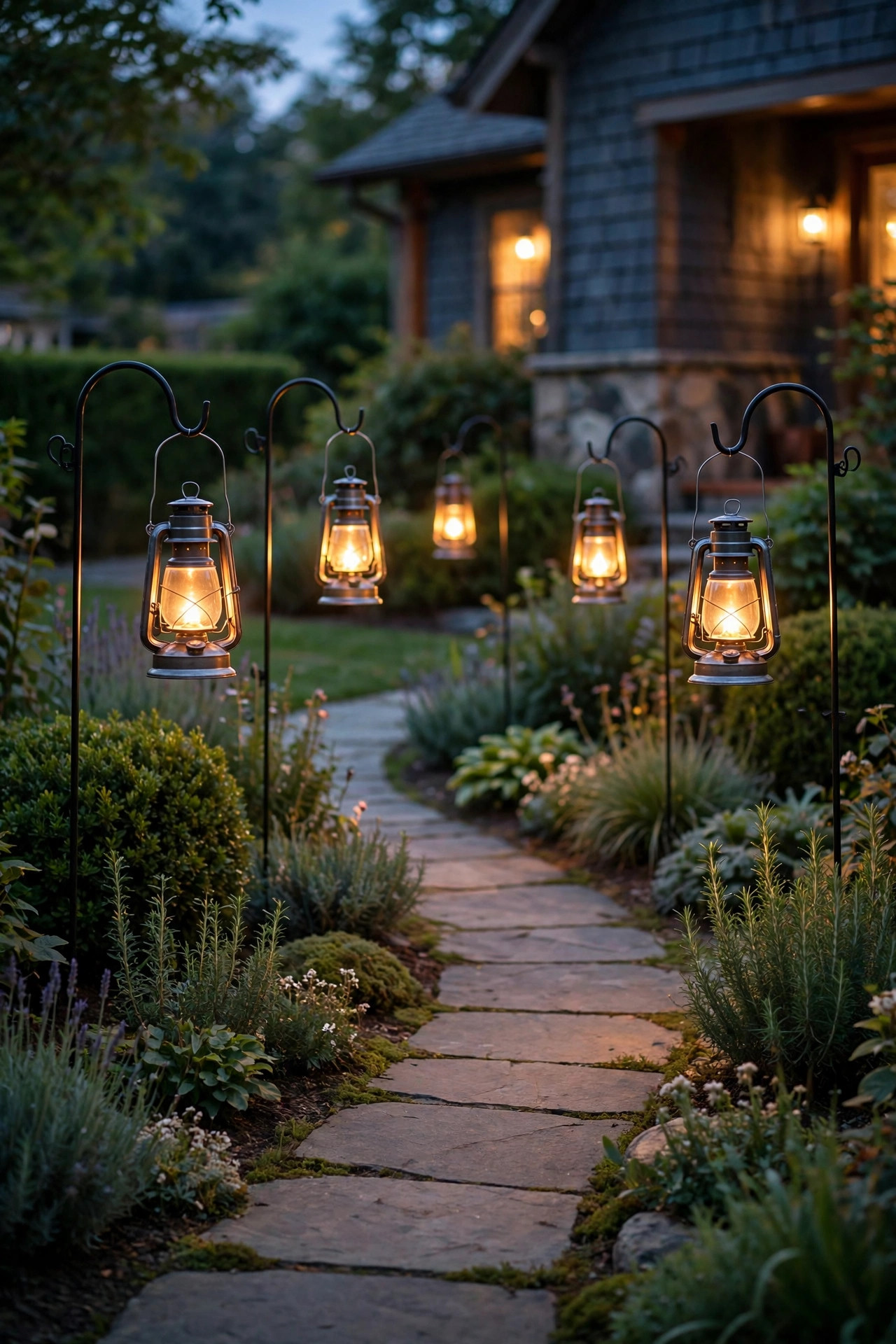
5. Shepherd's Hook Lanterns Lining a Garden Path
Shepherd's hooks turn any lantern into path lighting without a single wire. Push 48- to 72-inch hooks into the soil every 6 to 8 feet along a walkway or garden bed edge, alternating sides so the path feels like a gentle zigzag of light rather than a runway. Hang a medium lantern — 10 to 14 inches tall — from each hook with the bottom about 4 feet off the ground, which is the sweet spot for lighting the path surface without shining in your eyes. Solar lanterns are the obvious pairing here since there's no outlet mid-garden, but on a covered entry path, battery candles on timers work too. Buy hooks with a double-prong or H-base foot; the single-spike kind leans by August, ask me how I know. In windy areas, a small zip tie or a wrap of floral wire where the lantern handle meets the hook keeps everything from swinging into the hook pole. Come winter in cold climates, I pull the lanterns in and leave the hooks — they hold bird feeders and holiday wreaths just as happily.
Suggested budget range: $40 – $110.
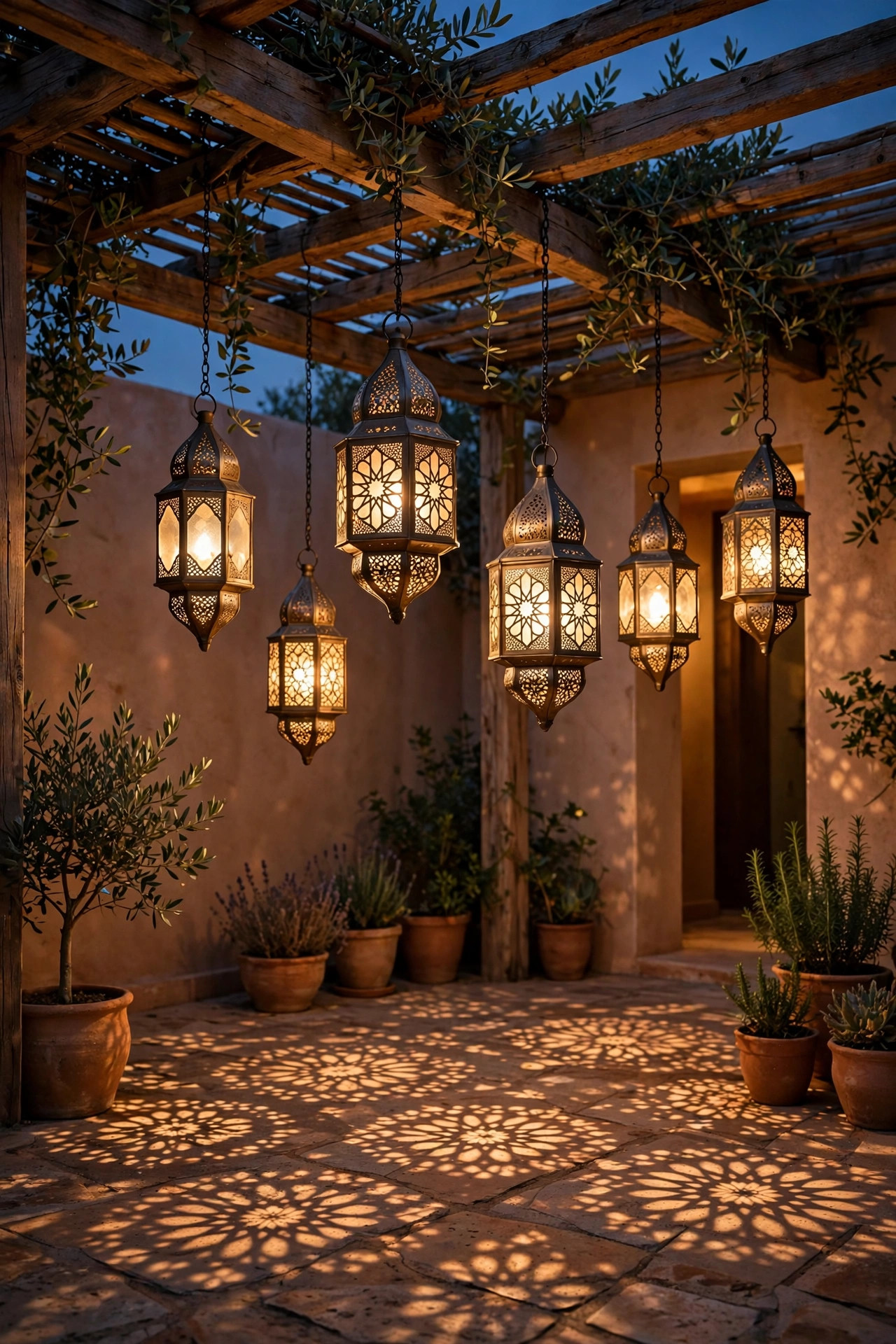
6. Moroccan-Style Pierced Metal Lanterns Under the Pergola
If your pergola leans even slightly boho or Mediterranean, pierced-metal lanterns are the ones. The punched patterns throw constellations of light across the beams and the table below — it's the most dramatic effect on this whole list, and it happens all by itself. Hang three to five lanterns down the center line of the pergola at about 7 to 7.5 feet, or cluster them over the dining table at staggered heights. Because the metal shades block direct glare, you can use a slightly brighter LED candle or a low-wattage LED bulb inside without anyone squinting. Brass, copper, and matte black finishes all work; just know that unlacquered brass will patina outdoors, which I personally love. These lanterns are decorative first, so layer them with something practical — a string of café lights along the rafters or a couple of discreet downlights — if you actually need to see your dinner. Wipe the interiors out each season; spiders adore the little punched holes. Hung over a low table with floor cushions and a rug, this setup turns a plain pergola into the best seat in the yard. My pergola lighting ideas post has more layering combinations if you're planning the whole structure.
Suggested budget range: $50 – $150.
7. Rattan and Wicker Lanterns for a Laid-Back Pergola
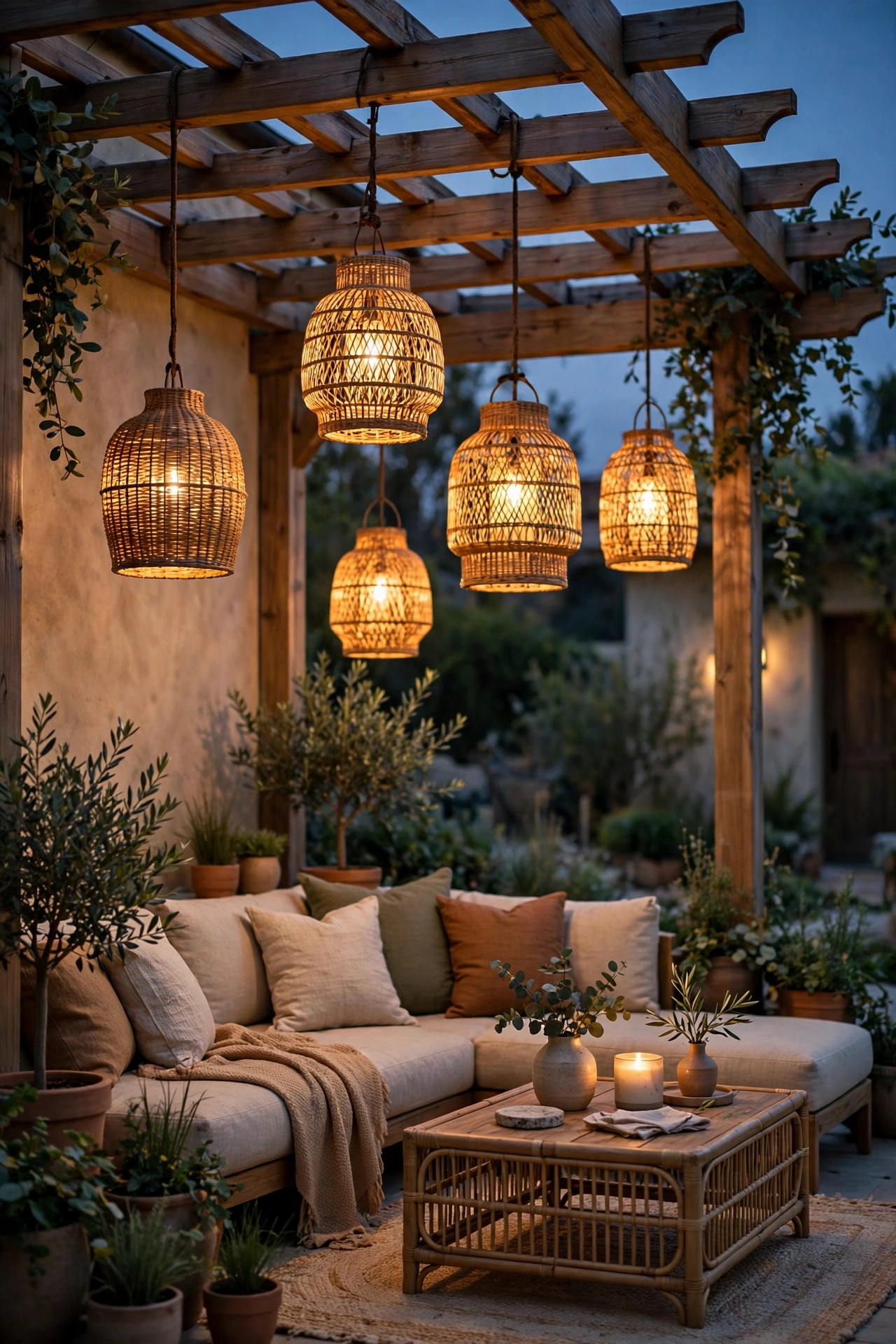
Rattan lanterns give you that breezy, coastal-boho glow — the light filters through the weave and everything within ten feet looks like golden hour. They belong under cover, though: a pergola roof, a porch ceiling, or at least a deep overhang, because natural rattan and wicker go brittle and moldy after a season of direct rain. Hang them in pairs or trios over a lounge area at staggered heights, roughly 6.5 to 7.5 feet at the bottom, and use LED filament bulbs or battery candles — the weave diffuses the light so well that a modest bulb looks lush. The oversized bell and drum shapes (16 to 24 inches across) make a statement over a sectional; smaller 10-inch versions work in a row along a beam. One styling trick: mix rattan lanterns with one metal lantern in the cluster. The contrast keeps the look collected instead of matchy. Dust them with a soft brush monthly, because the weave traps pollen like a job. If your pergola is fully open to the sky, look for resin-wicker versions instead — same look, far better weather tolerance.
Suggested budget range: $35 – $100.
8. Industrial Cage Lanterns Over the Outdoor Dining Table
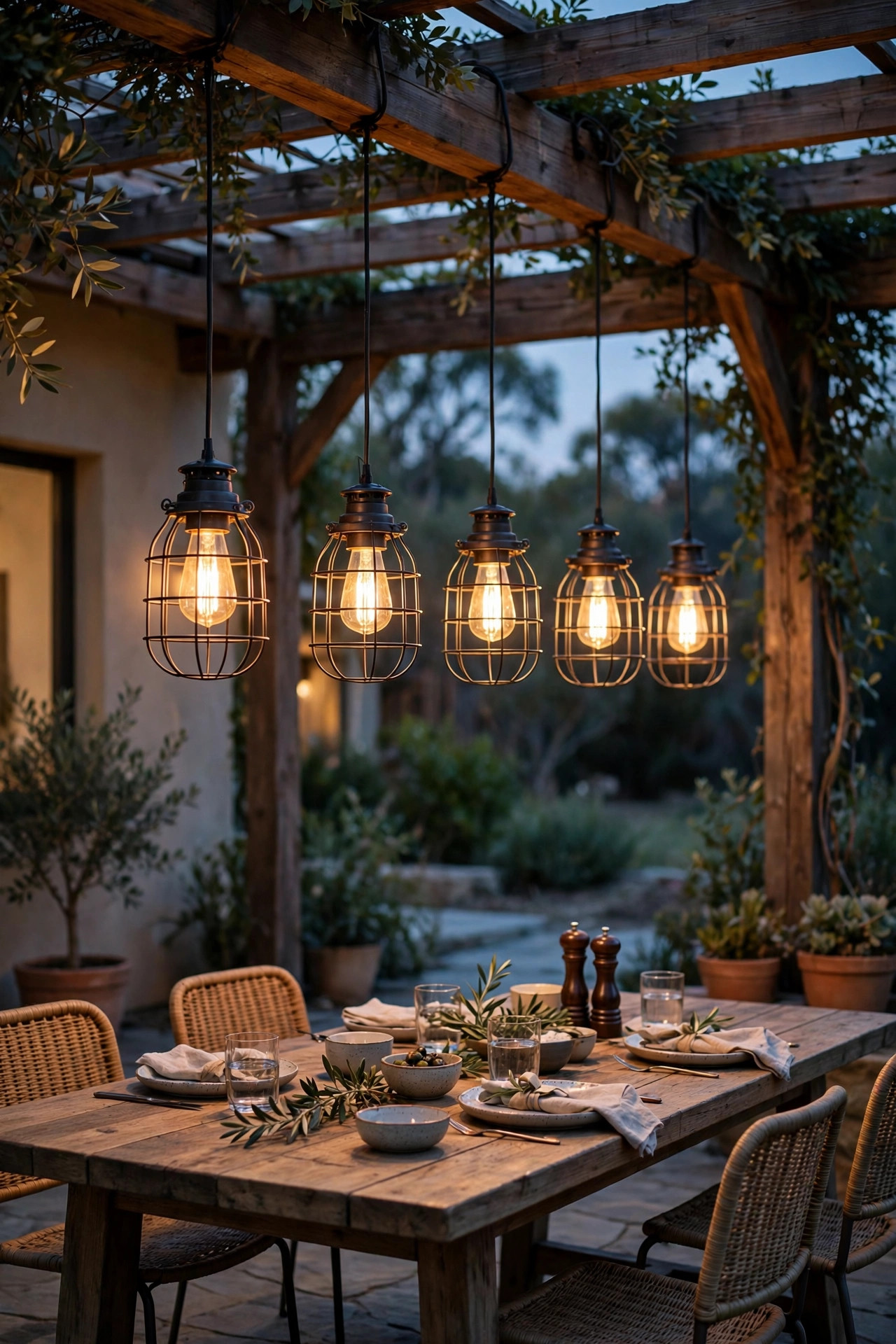
For a pergola or porch that hosts actual dinners, cage lanterns are my workhorse pick. The open metal cage protects the bulb, throws light in every direction, and the farmhouse-industrial lines suit almost any house style. Hang two or three in a row over the center of the table, spaced about 24 to 30 inches apart, with the bottoms 30 to 36 inches above the tabletop — high enough to see faces across the table, low enough to pool light on the plates. This is one spot where I do recommend hardwiring if you can, ideally on a dimmer, because dining light needs to flex from bright (grilling, serving) to low (lingering). If wiring isn't possible, high-output battery puck lights tucked into each cage get surprisingly close. Use LED filament bulbs in 2700K, and if your table seats eight or more, go with three lanterns minimum or the ends of the table go moody-dark. Black is the classic finish; galvanized reads more farmhouse, and aged bronze warms up a wood-heavy space. Either way, this is task light that still looks like decor.
Suggested budget range: $70 – $200.
9. A Hanging Lantern Chandelier as the Pergola Centerpiece
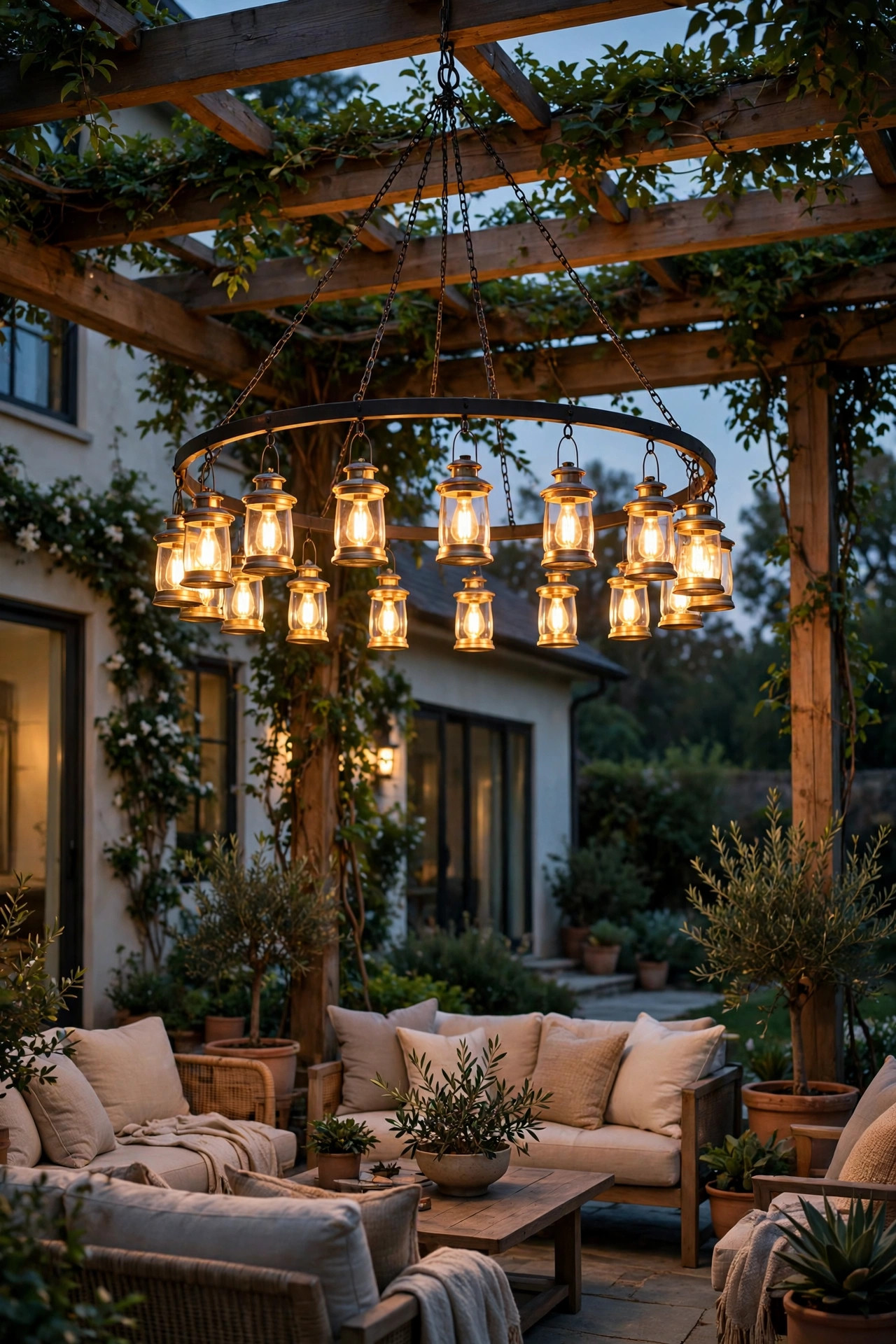
Here's the splurge that changes everything: one oversized lantern fixture — or a ring or branch frame strung with five to nine small lanterns — hung dead center over your pergola seating. It's a chandelier in spirit, and it makes an ordinary structure feel like an outdoor room. The frame versions are easy to DIY: a metal hoop or a length of driftwood, chains to the rafters, lanterns wired or hooked on at even intervals. Center it over the coffee table or dining table, keep the lowest point at least 6.5 feet above the floor (7 feet if people walk under it), and make sure the whole assembly hangs from a joist or blocking, not just the decorative slats — a loaded ring can weigh 20 to 40 pounds. Battery candles on a shared timer remote are the sanity-saving choice; nobody wants to climb up and switch on nine lanterns individually. Because this piece is the star, keep other hanging elements in the same space minimal. One great lantern moment beats six competing ones, every time.
Suggested budget range: $90 – $300.
10. Fairy Lights Inside Oversized Glass Lanterns in the Trees
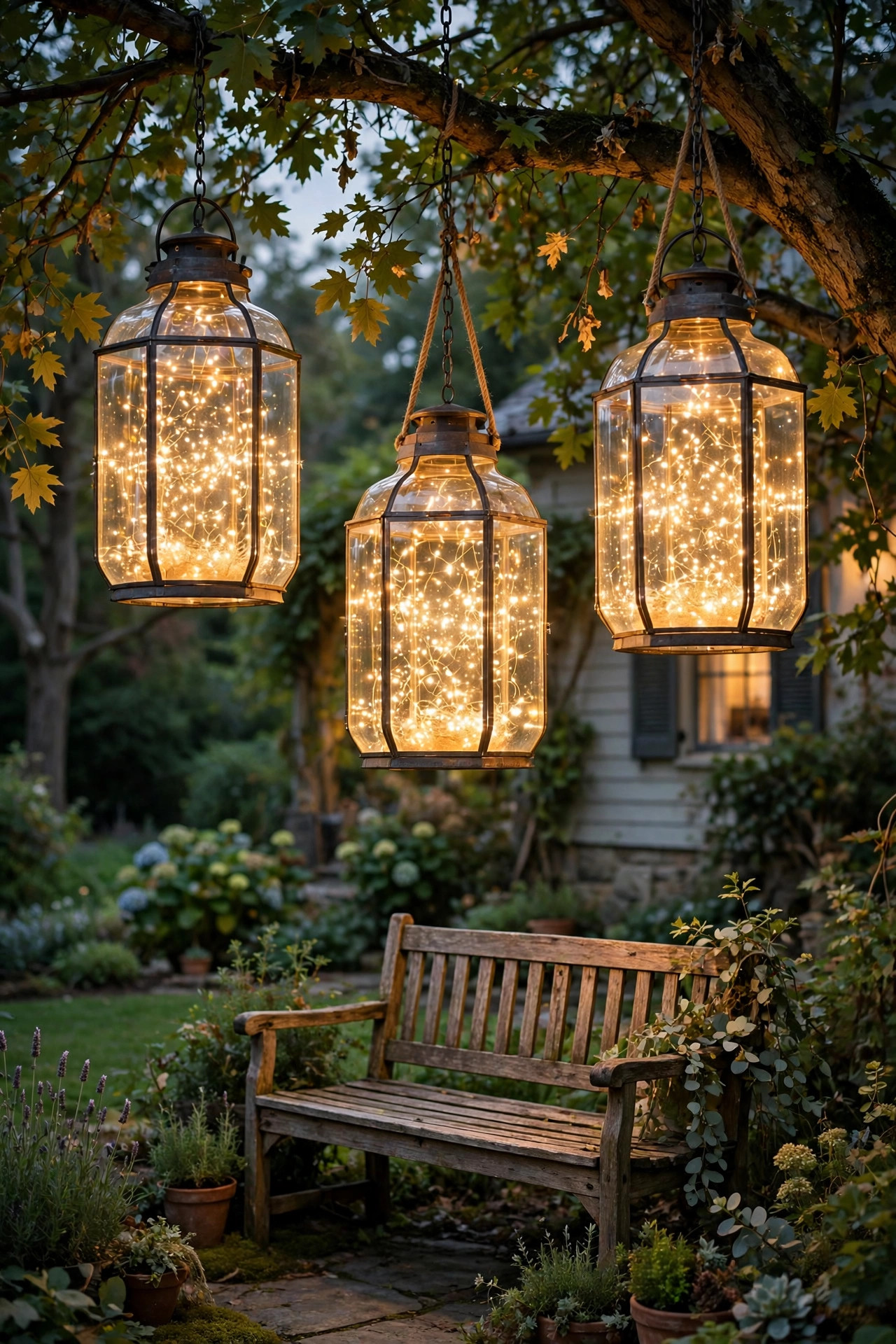
Take the biggest clear-glass lanterns you can find — 14 to 20 inches tall — and instead of a candle, coil a strand of copper-wire fairy lights inside. The result looks like captured fireflies, and hung from tree branches around a seating area, it's the most magical ten minutes of work on this list. Solar fairy strands mean each lantern is fully independent: hang it anywhere the panel gets sun, and it glows for 6 to 8 hours after dark. Use branches at least 2 inches thick, hang the lanterns at 6 to 8 feet, and cluster them over where people actually sit rather than scattering them all over the yard — concentration is what creates the effect. The copper wire is nearly invisible at night, so all you see is the sparkle. Glass gets heavy when it's oversized, so check that your handle and hook are rated for the weight, and skip this idea in genuinely windy spots. Indoors for winter storage, the same lanterns do beautiful work on a mantel, which softens the cost considerably.
Suggested budget range: $30 – $80.
11. Farmhouse Galvanized Lanterns on Chains Along the Porch Rail Beam
Galvanized metal lanterns are the farmhouse workhorse: cheap, tough, unbothered by weather, and they look better with a little age on them. My favorite placement is a rhythm of them along the front porch beam — one every 4 to 5 feet — hung on short lengths of black chain so they read as a deliberate row. Keep them all at exactly the same height; this is the one arrangement where staggered looks like a mistake. The chain length is usually 10 to 14 inches from beam to lantern top. Inside, go with LED candles or, for a porch with power nearby, lantern-style string fixtures with real bulbs for stronger light. A row like this throws gentle scallops of light onto the porch floor and makes the whole front of the house look finished from the street. It pairs beautifully with a couple of potted evergreens below and a wreath on the door. If galvanized feels too silvery-new, a coat of matte black spray paint made for metal unifies them with black porch hardware in an afternoon.
Suggested budget range: $40 – $120.
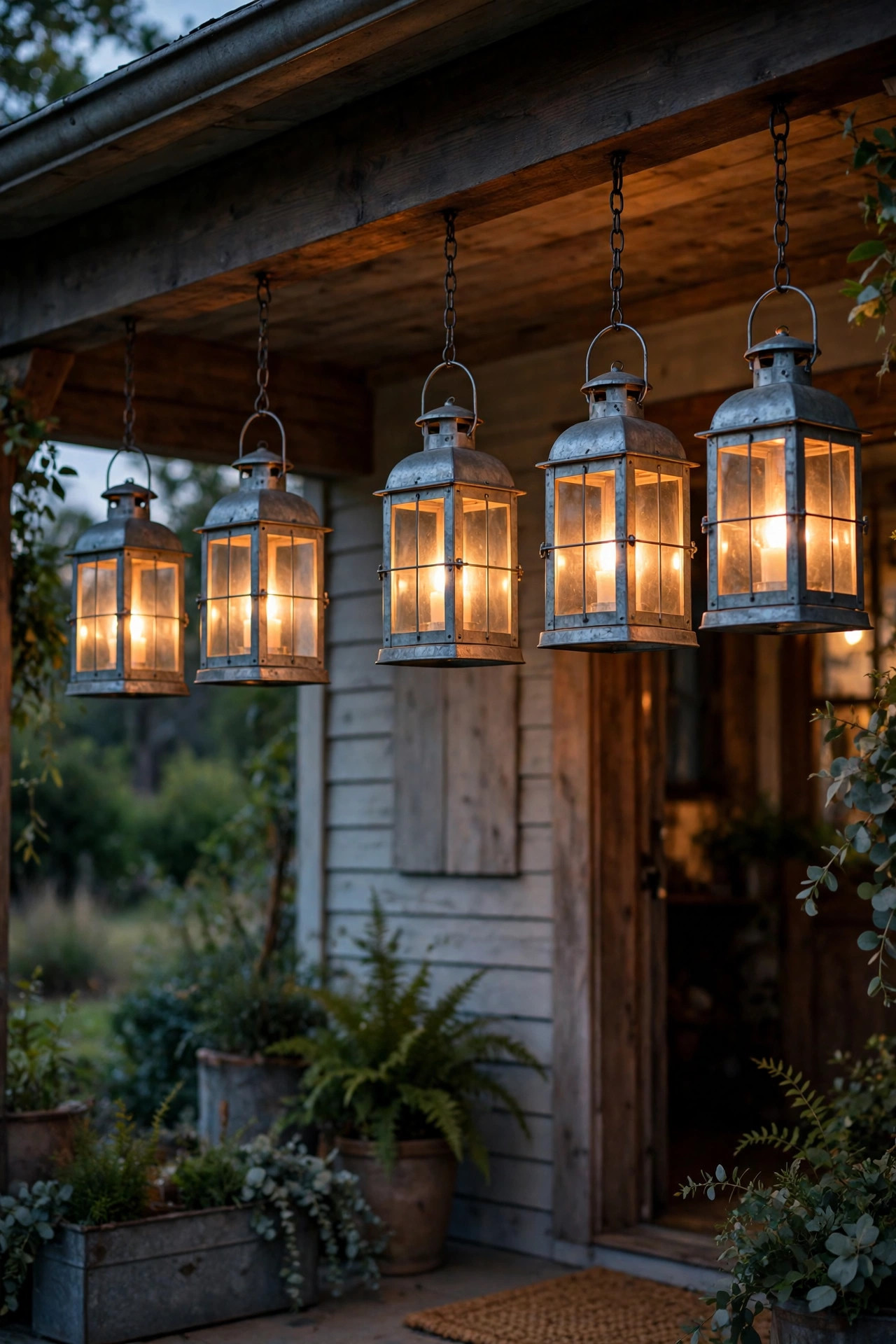
12. LED Filament Lanterns — All the Candle Glow, None of the Flame
I have a hard rule at my house: no open flame in a hanging lantern, ever. Wind, dry leaves, curious kids, a dog's tail — the math never works out. LED filament lanterns are how I keep the rule without losing the look. The filament-style LED bulbs mimic a candle's warm flicker-free glow, and the lantern-style fixtures with built-in LEDs and rechargeable batteries are even simpler — hang, switch, done. Many have timers (on for 6 hours, off for 18) and remotes, so a whole pergola of lanterns can run themselves. Brightness is the spec to check: 100 to 200 lumens per lantern gives real ambient light; the 10-lumen novelty ones are just dots in the dark. Rechargeables last anywhere from a weekend to a month per charge depending on brightness, so for a big installation, standardize on one model and keep a charging routine. This is also the safest category around fabrics, pergola curtains, and wooden structures, which is exactly why nine out of ten lanterns at my house have quietly become LED. Nobody has ever noticed the difference — they just ask where I got them.
Suggested budget range: $35 – $95.
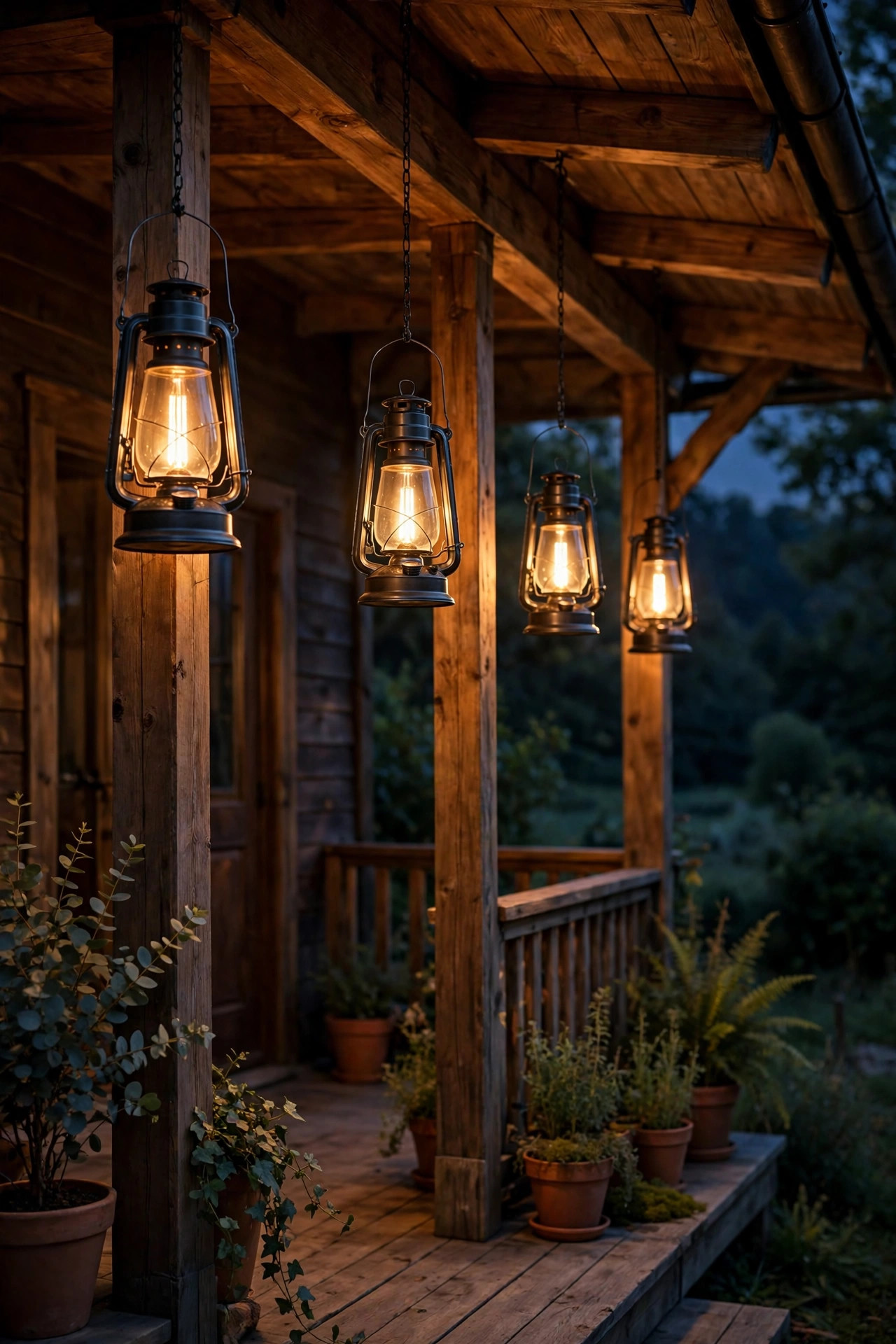
13. Rope-Wrapped Coastal Lanterns for a Breezy Porch
If your style runs coastal, rope-wrapped lanterns are the fastest way to say it with light. The rope hanger replaces the chain, the glass is often seeded or rippled like old ship glass, and the whole thing sways like it belongs on a dock. Hang them singly flanking the front door from porch hooks, or in a loose trio over a porch swing — the movement over a swing is half the charm. Jute and manila rope look best but do absorb moisture, so this is another covered-porch idea, or plan on replacing rope hangers every couple of seasons. Real rope also stretches slightly under load, so tie off with a proper knot and check the first week. Inside, a soft white LED candle keeps the palette calm; amber looks great too and leans into the ship-lantern vibe. Round out the scene with striped outdoor cushions and a couple of potted grasses, and keep every finish weathered — nothing shiny. It's a whole porch personality for the price of two lanterns, and it photographs like a vacation rental listing.
Suggested budget range: $30 – $85.
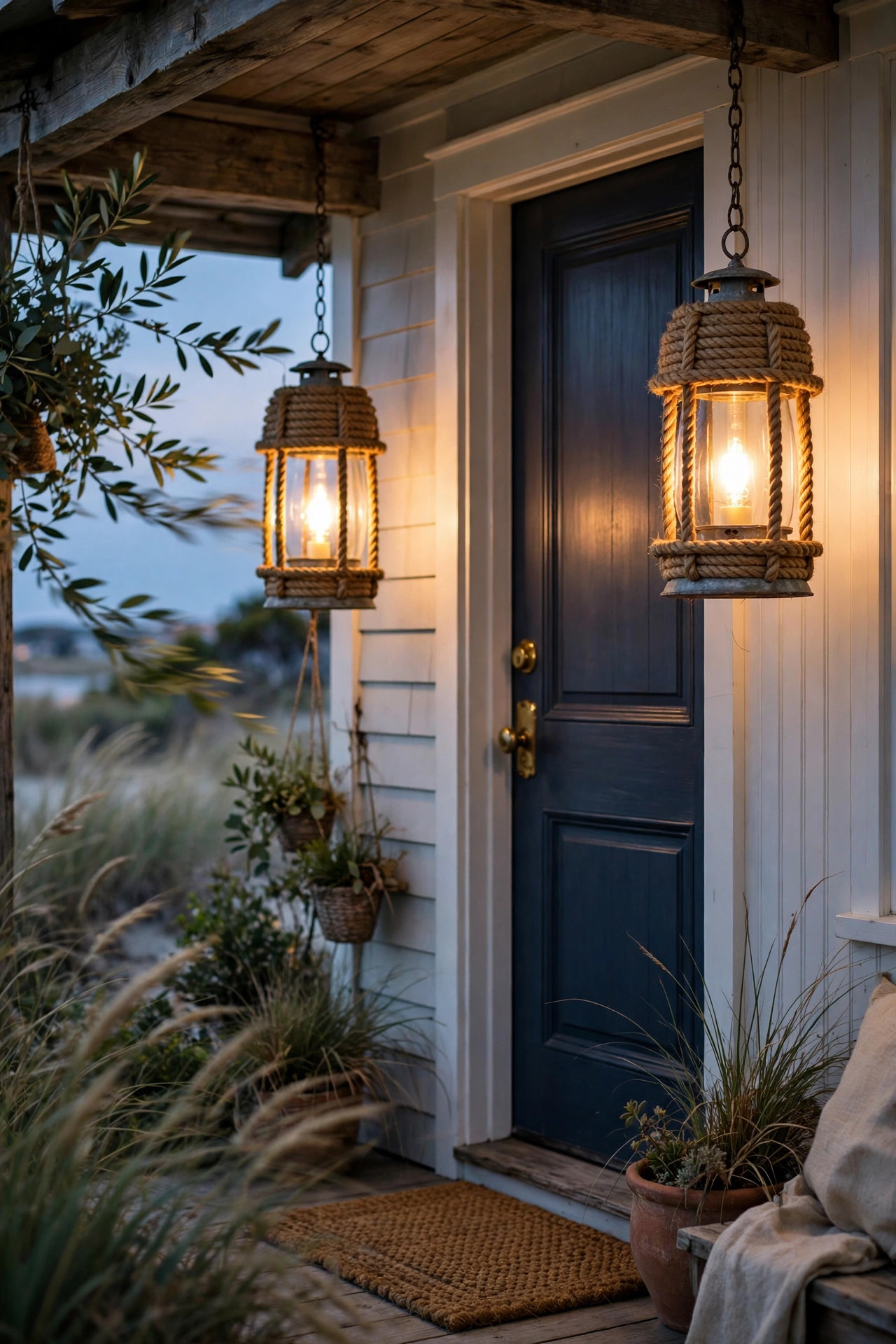
14. Copper and Brass Lanterns That Patina Beautifully
Some lanterns you buy for how they'll look in five years. Unlacquered copper and brass start bright and shiny, then settle into a deep bronze, and finally grow that soft blue-green patina in the seams and sheltered spots. It's a living finish, and on a traditional or colonial-style house, nothing else comes close. Hang a pair flanking a portico, or one generous lantern centered over the entry steps. Because these are usually quality fixtures, they're often hardwired or built for real candles — I retrofit mine with LED filament bulbs or flameless candles and lose nothing. Weight is the practical note: solid copper lanterns are heavy, so hang them from joists or proper blocking with rated hooks, not from trim. If you love the patina, never polish them; if you prefer the warm bronze stage, a light wax once a year holds it there. Keep the metal tones consistent with your door hardware and house numbers, and the entry reads as one designed thought. This is a buy-it-once category, and the cost-per-year math is genuinely kind.
Suggested budget range: $60 – $220.
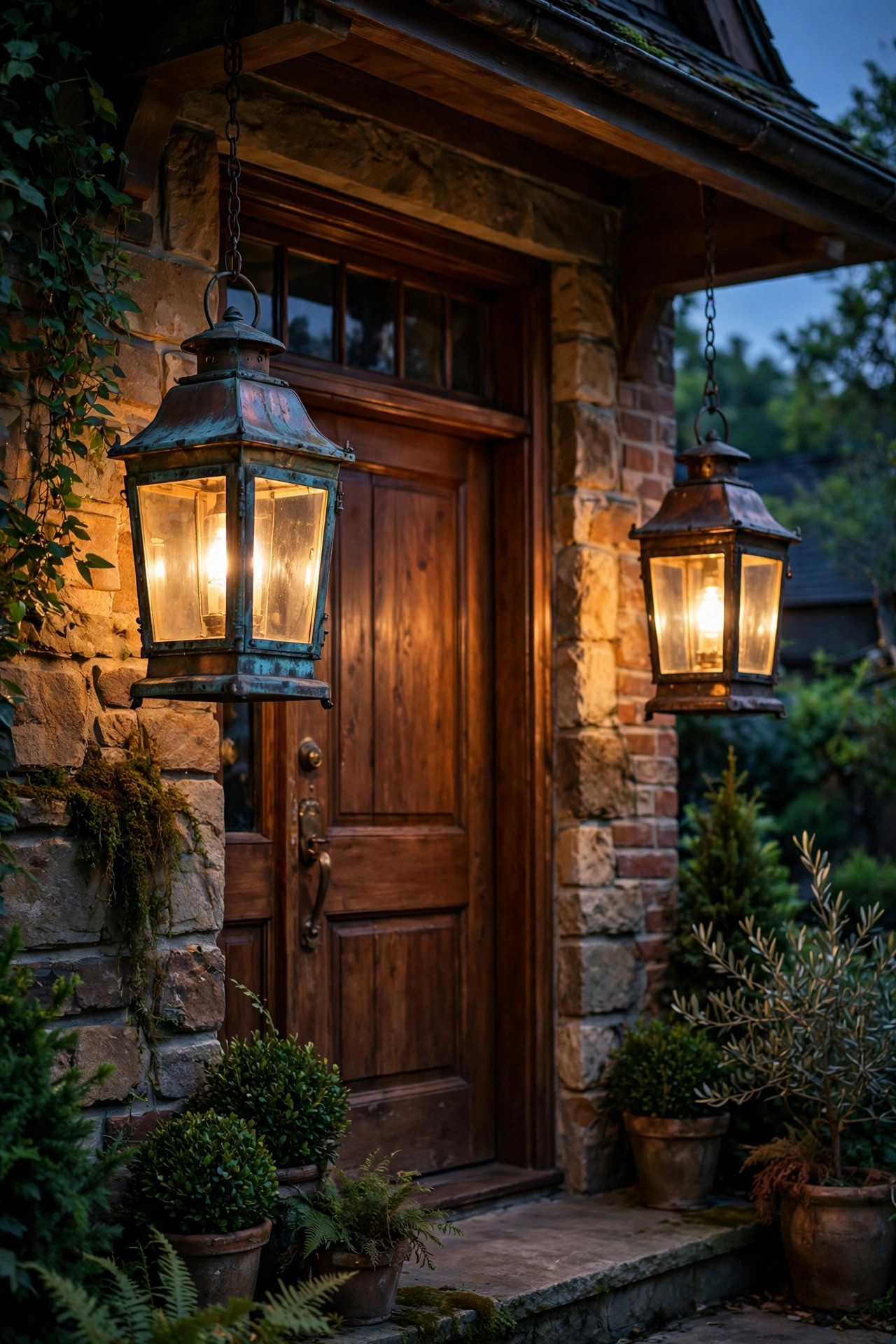
15. Long-Drop Lanterns From Tall Tree Branches
Hanging lanterns from a tall branch — 10, 12, even 15 feet up — creates the closest thing to moonlight you can buy. The lantern itself becomes a small glowing moon, and the light falls in a wide, soft pool instead of a hot spot. The trick is the drop: use black chain or coated cable long enough that the lantern ends up 7 to 9 feet above the ground, reachable with a step ladder for battery changes but high enough to feel lofty. Solar lanterns with the panel built into the cap struggle up in a canopy, so choose battery lanterns on timers, or solar models with a remote panel you can stake in a sunny gap. This is a wonderful trick over a dining area or a fire pit seating circle, where one high lantern replaces the glare of a floodlight. Use a proper tree strap or a lag hook into a healthy limb — never wire wrapped around bark, which girdles the branch over time. From the street at night, a single lantern floating in a dark tree canopy stops people mid-walk. It's that pretty.
Suggested budget range: $45 – $130.
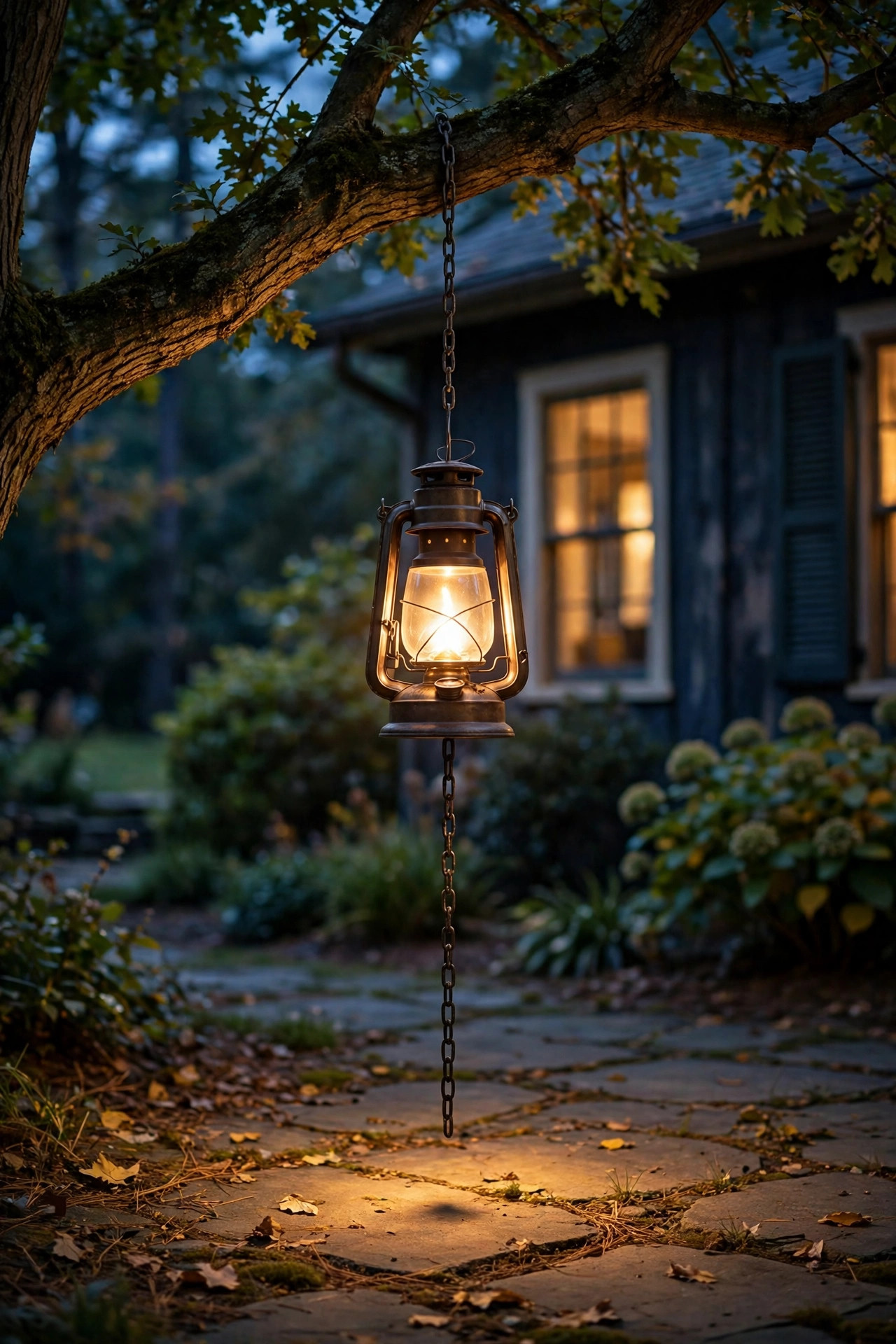
16. A Festoon Row of Mini Lanterns Along the Pergola Edge
Mini lanterns — the 5- to 7-inch kind sold in sets — strung along the front edge of a pergola give you the bistro look without a single café bulb. Clip or hook them every 18 to 24 inches along a taut line of black chain, picture wire, or the edge beam itself, and let the whole row glow like a garland of light. Solar sets exist and are wonderfully lazy to install, but read the specs: in cheaper sets, one panel powers the whole string, so the panel placement matters and run time drops to 5 or 6 hours. Individually solar minis cost more but fail one at a time instead of all at once. The light is purely decorative — a sparkle line that defines the edge of the structure — so layer it over real light from a pendant or lantern cluster inside the pergola. This row is also my favorite backdrop for evening photos, because the string of small glows frames faces beautifully. At season's end the whole thing unclips in five minutes and stores in one shoebox.
Suggested budget range: $35 – $90.
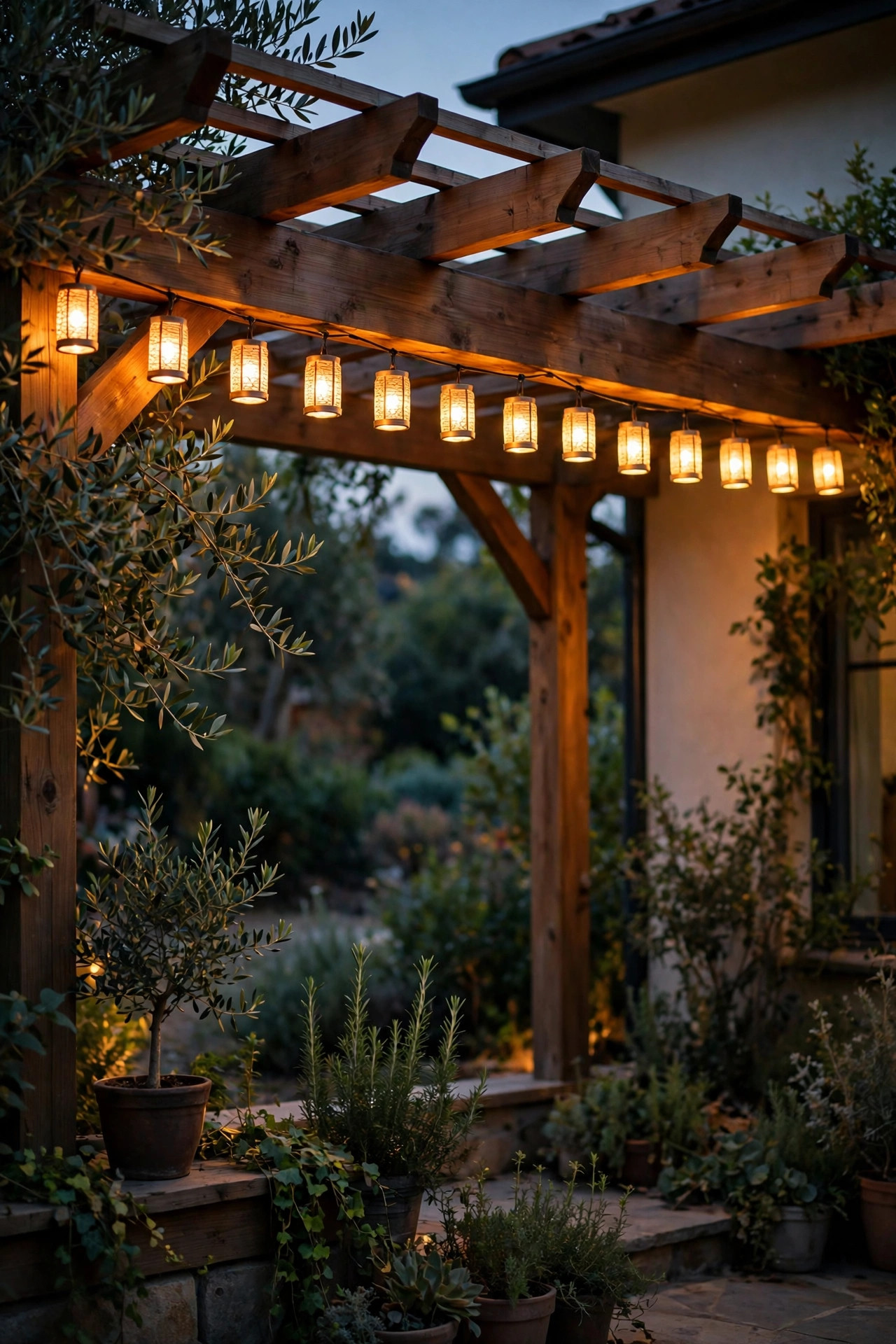
17. Hurricane Lanterns With LED Candles for a Vintage Note
Hurricane lanterns — the tall glass chimney style, whether classic oil-lamp shape or modern cylinder — were designed to keep a flame alive in wind, which makes their silhouettes perfect for breezy porches and open pergolas. Fill them with chunky LED candles, the real-wax kind with a flicker setting, and you get nineteenth-century charm with twenty-first-century common sense. Hang them at entries and along porch steps where a lower lantern, around 5.5 to 6.5 feet, puts the glow right where faces and footing are. The glass chimney concentrates the candle look and shields the "flame," so these read beautifully even in a stiff breeze. Black and antique bronze are the easy finishes; a galvanized pair leans farmhouse. Because the candles are the consumable, standardize on one candle size across all your lanterns — your future self, buying replacements in November, will thank you. Group one hurricane lantern with a small potted plant and a stack of outdoor books on a side table beneath it, and a dead porch corner becomes a whole vignette.
Suggested budget range: $25 – $70.
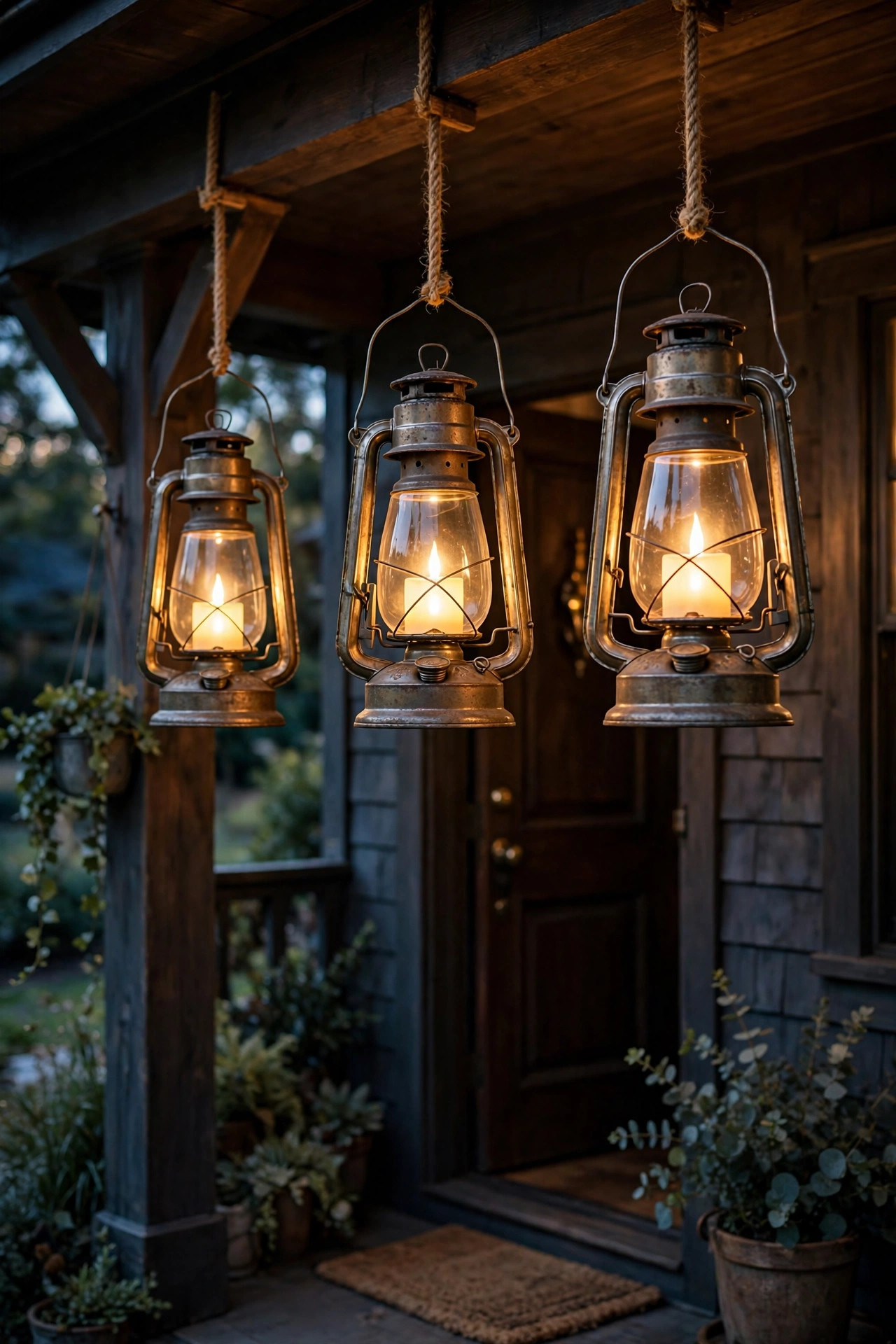
18. Lantern and Hanging Planter Combos
Here's a two-for-one I use on porch hooks all summer: alternate a hanging lantern with a hanging planter down the length of the porch, or choose the combo baskets that pair a small solar lantern in the center of a planted ring. By day you get trailing flowers and greenery; by night the lanterns take over and the plants become silhouettes. Keep the rhythm strict — lantern, planter, lantern, planter — spaced 3 to 4 feet apart, all hung at the same height. Trailing plants that tolerate a little shade, like sweet potato vine, creeping jenny, or ivy, work best under a porch roof, and the lantern glow actually shows off their texture after dark. Mind the watering: a freshly watered planter is heavy, so rated hooks and chains matter, and hang planters where drips won't land on a lantern below. Solar lanterns are the practical light source here since cords and watering cans don't mix. Come fall, I swap the planters for hanging baskets of mums and keep the lanterns, and the porch transitions seasons in about ten minutes.
Suggested budget range: $50 – $140.
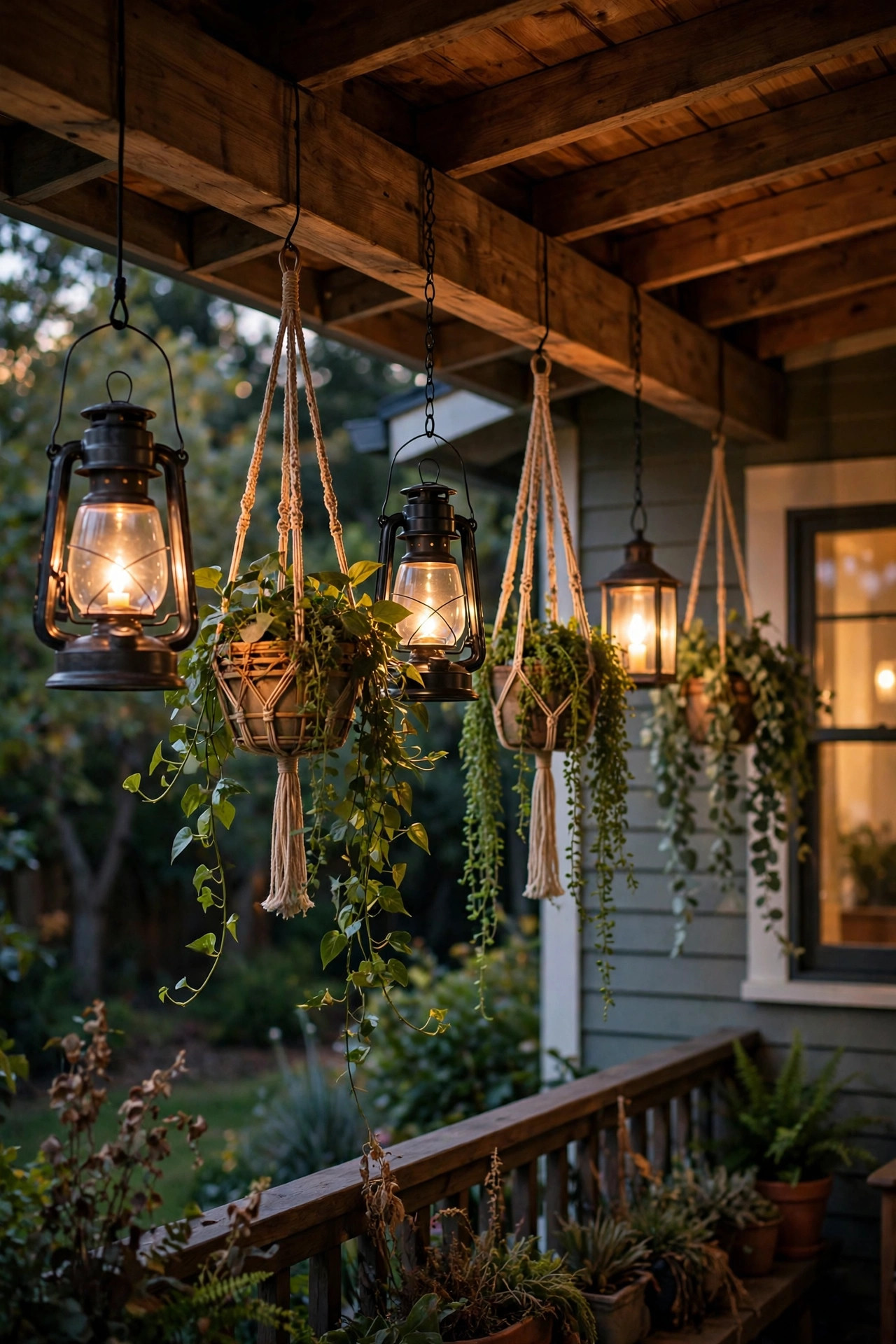
19. Smart Hanging Outdoor Lanterns on Timers and Dimmers
The lanterns themselves can stay classic — it's the controls that got smart. My whole porch and pergola run on a simple system: hardwired lanterns on a smart dimmer switch, battery lanterns on built-in 6-hour timers, and solar ones left to their own devices. Everything wakes up at dusk without me touching a thing, which means the house looks lived-in and welcoming even when we're traveling. If you're wiring a pendant or chandelier lantern, a smart dimmer gives you the dinner-party dim and the full-bright cleanup mode from one fixture. For a deeper dive into schedules and sensors, my guide to outdoor pendant light ideas covers most of the fixtures I mention here. Battery lanterns with remotes are the budget version of the same idea — one remote, every lantern, grouped on the coffee table charging shelf. The one caution: put smart switches indoors or in covered boxes, since most aren't rated for direct weather. Set it up once in spring, and the nightly "turning on the lanterns" ritual becomes something your house does for you.
Suggested budget range: $80 – $250.
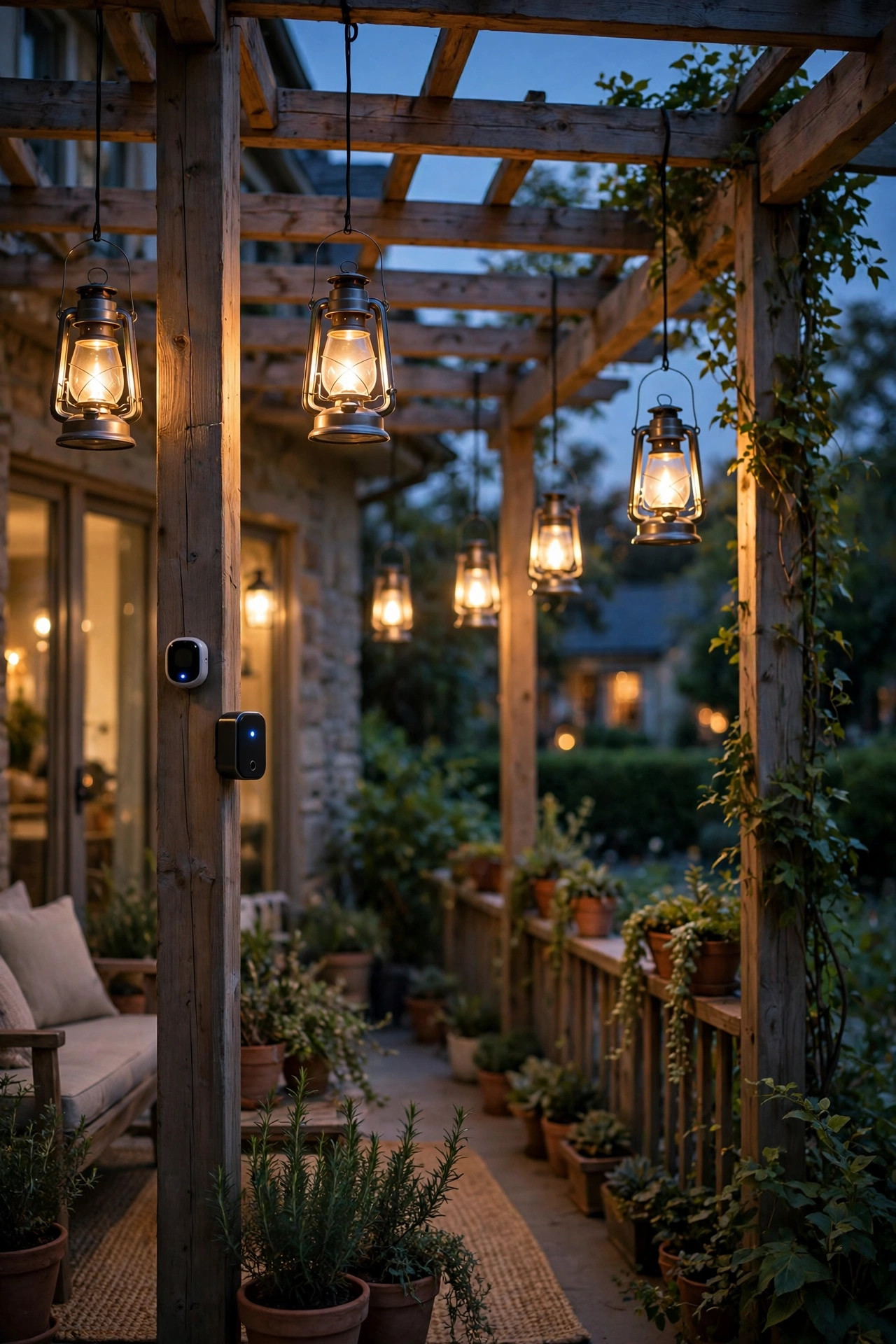
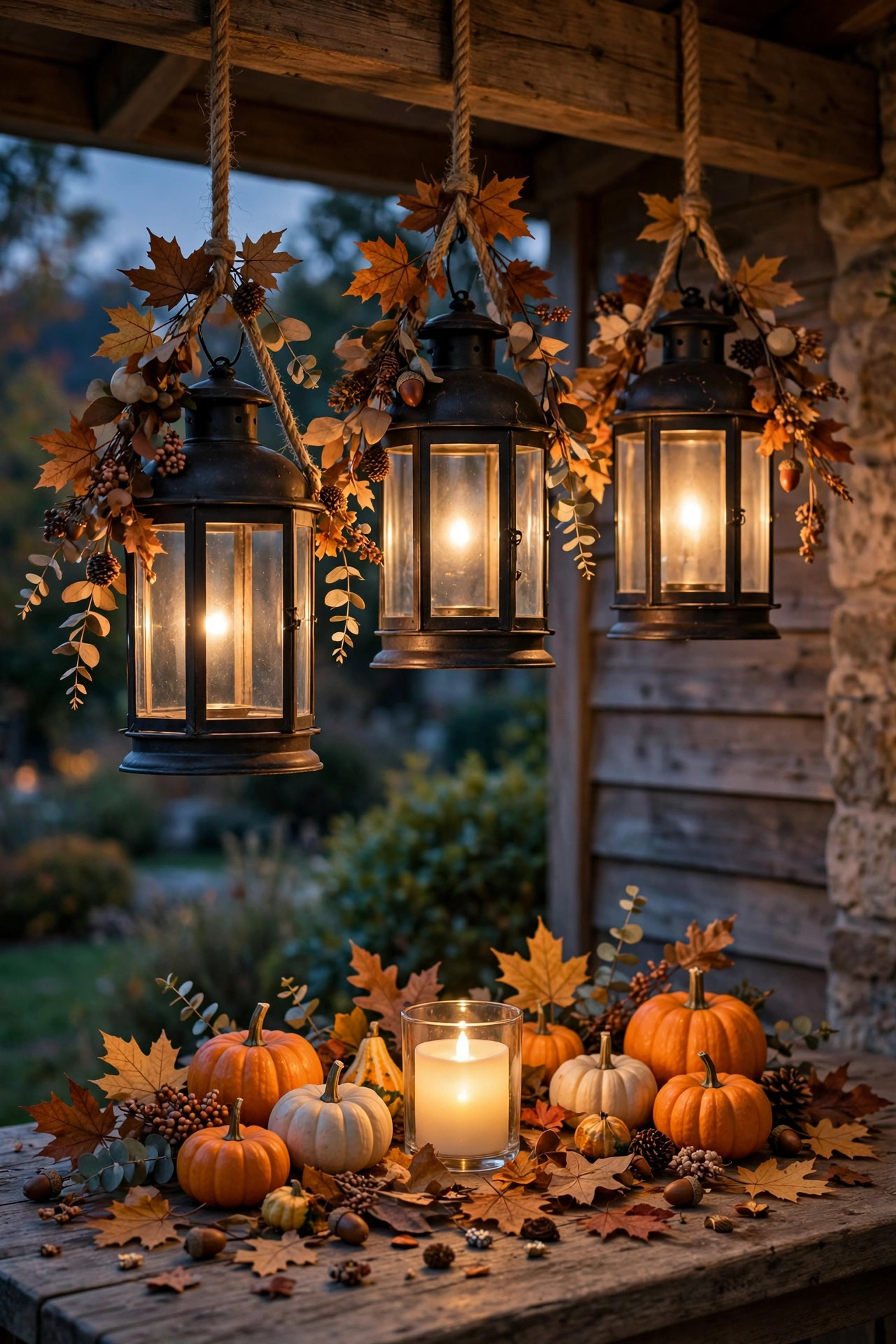
20. Seasonal Lantern Styling — One Lantern, Four Seasons
Buy one good pair of large lanterns for the porch, and instead of buying more fixtures, restyle them. The lantern frame stays; what sits inside and around the base changes with the calendar. Spring gets a nest of faux greenery and a soft white candle. Summer goes coastal with sand and a shell or two around the candle base. Fall is the showpiece — mini pumpkins and dried leaves tucked around the candle (LED only, always, near anything flammable) — and winter takes pinecones, a sprig of faux evergreen, and the warmest amber candle setting you have. Hang them flanking the door at about 6.5 feet, and echo the same styling in a wreath so the entry tells one story. This approach is why I tell people to buy bigger, better lanterns than they think they need: a 20-inch lantern styled for the season looks like a boutique display, while a small one just looks small. Storage for four seasons of fillers fits in a single tote. It's the highest-impact, lowest-cost decorating habit I've picked up in years.
Suggested budget range: $20 – $75.
21. A Layered Lantern Moment: Mixing Heights, Sizes and Finishes
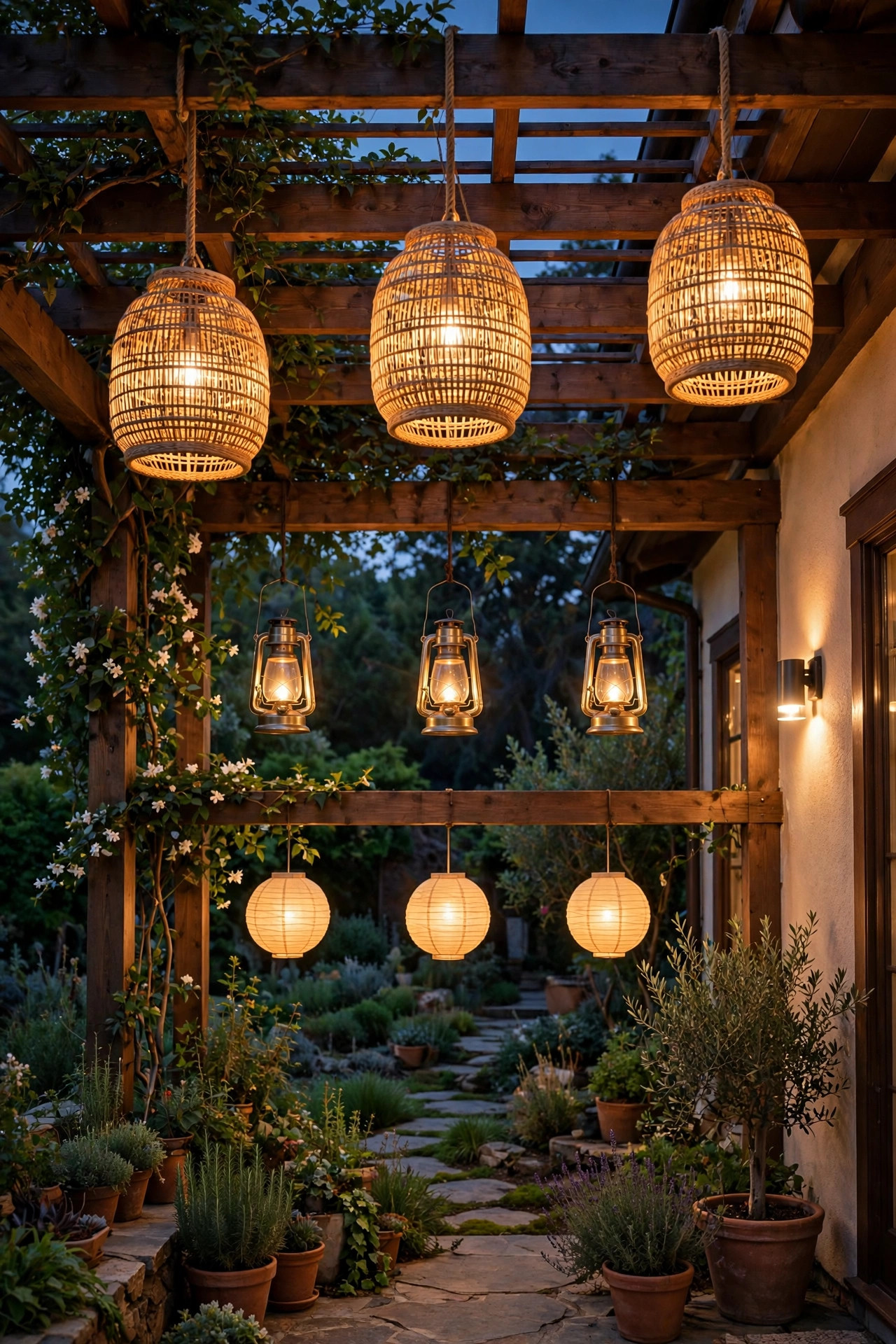
After twenty specific ideas, here's the one that ties them together — and it's how designers actually do it. Pick one anchor: a pendant over the door or a chandelier over the table. Add a mid layer: a staggered trio in the corner, or a festoon row along the beam. Finish with a low layer: hurricane lanterns by the steps, shepherd's hooks along the path, jars in the tree. Three heights of light — roughly 7 feet, 5 feet, and 2 to 3 feet off the ground — is what makes a yard feel rich instead of merely lit. You can mix finishes more than the magazines admit; just repeat each finish at least twice so it looks intentional, and keep every bulb and candle at the same 2700K warmth so the light itself is the thread that ties it together. Stand at the street when you're done and squint: you should see pools and sparkles, not individual fixtures. Add one lantern at a time over a season or two. The best porches and pergolas I know were built exactly that way — collected, not carted home in one trip.
Suggested budget range: $60 – $180.
Frequently Asked Questions
How high should hanging outdoor lanterns be above a porch or pergola?
As a rule, keep the bottom of the lantern at least 6.5 to 7 feet above the floor anywhere people walk, and 80 inches is the classic minimum over a walkway. Over a dining table, 30 to 36 inches above the tabletop is the sweet spot. On a two-story entry, you can hang a larger lantern higher — 8 to 9 feet — as long as the fixture is sized up to match.
Are solar hanging lanterns bright enough to actually light a space?
They're bright enough for ambiance, not for tasks. A good solar lantern puts out roughly 20 to 100 lumens — plenty for glow, sparkle, and defining a space, but not for reading or grilling. My approach is hybrid: one wired or high-output lantern where you need real light, and solar lanterns everywhere else. And place panels where they get at least 6 hours of direct sun, or run time drops fast.
Can hanging lanterns stay outside all year?
The lanterns rated IP44 or higher, in metal, resin, or treated materials, generally can — that's most quality solar and hardwired fixtures. Natural rattan, wicker, paper, and unsealed wood should live under cover and come in for winter in harsh climates. Glass jars and delicate finishes do best stored indoors through freezing months. When in doubt, check the rating, and remember that "covered porch safe" and "full weather" are different promises.
How many lanterns do I need for a pergola?
For a typical 10×12 or 12×14 pergola, start with one anchor (a chandelier-style cluster or a central pendant), plus three to five accent lanterns at the corners or along the beams. That's usually five to seven total for a layered look. Add a festoon row of minis only if you love the bistro feel — more than that tips from cozy into cluttered.
Conclusion
If there's one thing I hope you take from this list, it's that hanging outdoor lanterns aren't really about the lanterns — they're about the layers. One anchor light where people gather, a few glows at mid-height, and a little sparkle down low will make a plain porch feel like a destination and turn a bare pergola into the room everyone drifts toward after dinner. Start with whichever idea made you nod — the pendant over the door is never wrong — hang it at the right height, keep the warmth at 2700K, and let the collection grow a lantern at a time. Browse the rest of my outdoor lighting ideas here on the site for the paths, fences, and garden beds around your new lanterns, and your whole yard will start to glow as one.