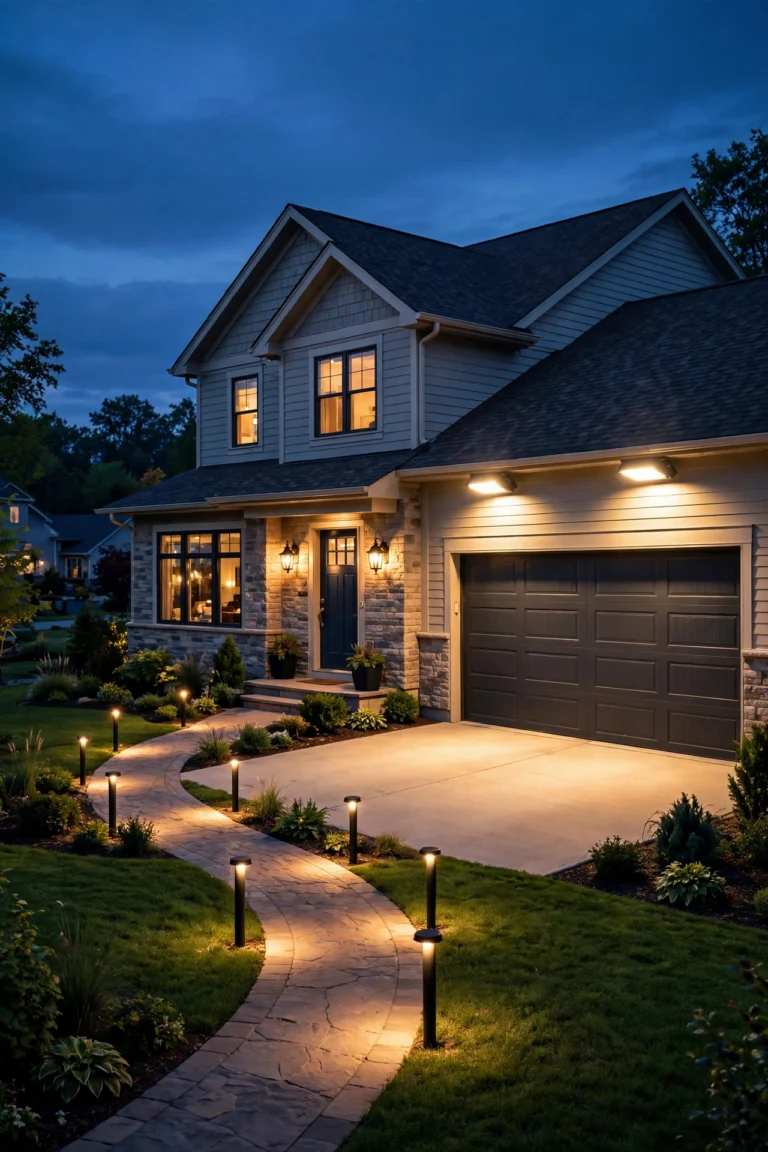
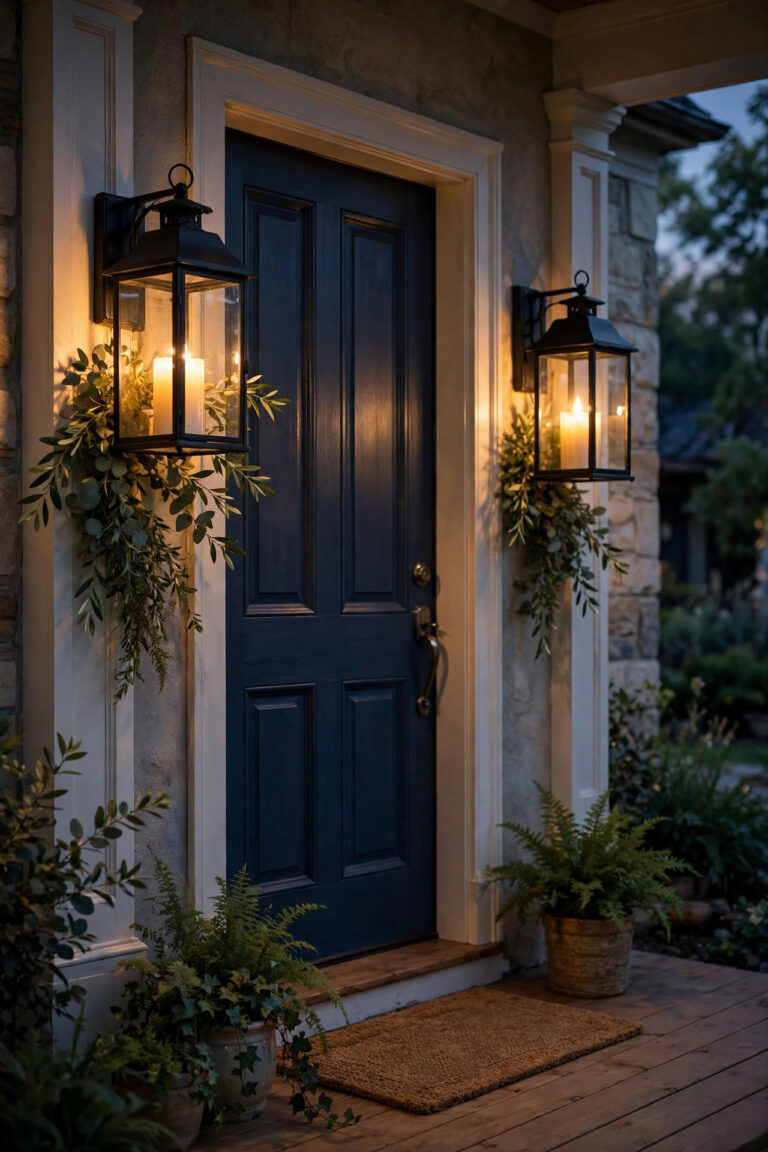
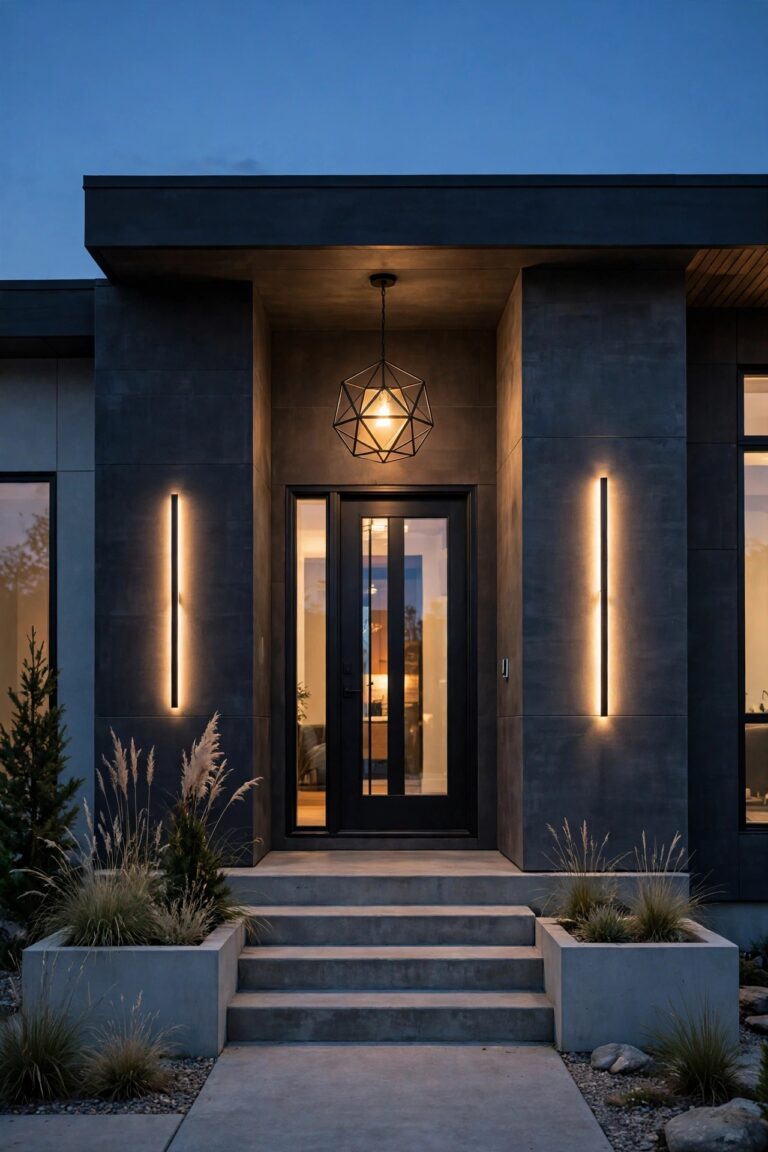
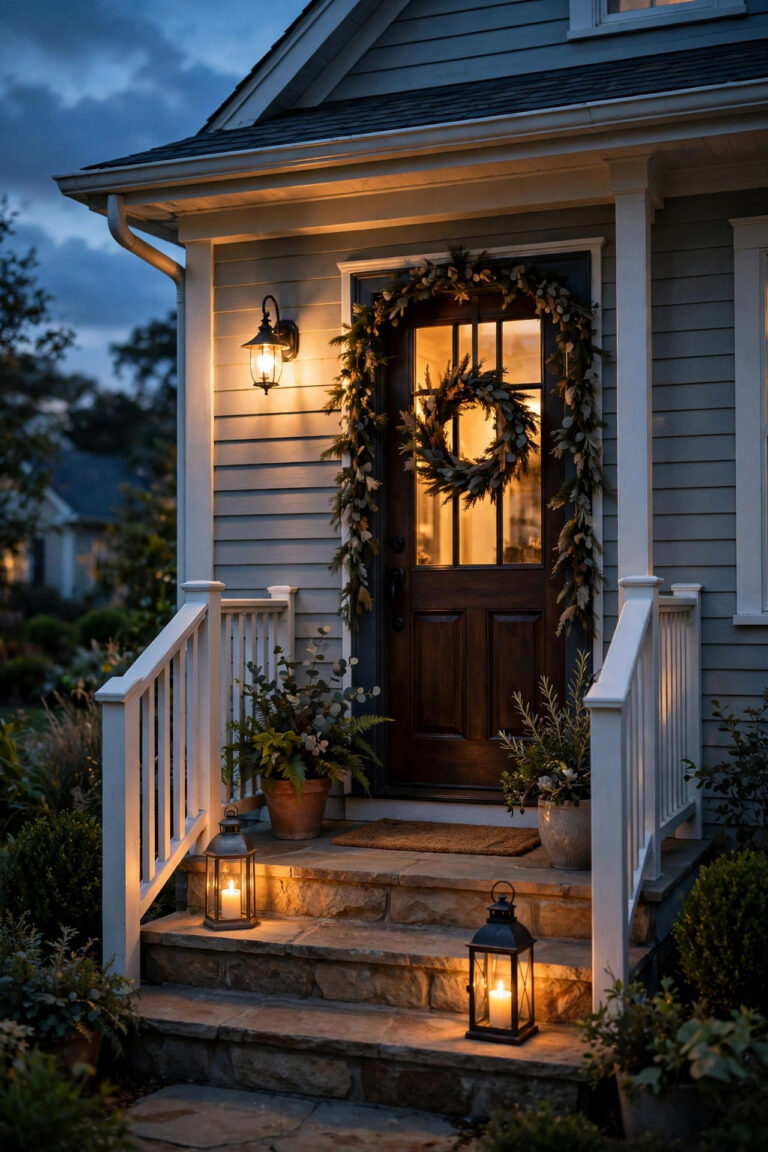
You know that moment: arms full of groceries, keys somewhere in the bottom of your bag, and the front entry is completely dark. That is exactly the problem motion sensor sconces solve so beautifully. Unlike a plain porch light you have to remember to switch on (and pay to run all evening), a motion-activated sconce wakes up the second you step onto the walkway, gives you a warm pool of light to find the lock, and then quietly turns itself off. In my experience, they are the hardest-working fixtures on a home's exterior — part welcome light, part security guard, part energy saver. The trick is layering them the way you'd layer any good lighting plan: a welcoming pair at the front door, hardworking coverage at the garage, and a helper or two at side entries and gates. Below I've gathered 15 styles that actually work in real life, with the mounting heights, sensor settings, and budgets I recommend to friends. Pick the ones that match your home's style and your wiring situation, and your entries will never leave you fumbling in the dark again.

1. Classic Lantern Motion Sensor Sconces Flanking the Front Door
If you only buy one style from this list, make it a matched pair of lantern-style motion sensor sconces beside the front door. The symmetry instantly makes an entry look intentional and polished, and because both fixtures trigger together, you get even, shadow-free light across the whole porch — no more squinting at the keyhole. Look for lanterns sized about one-quarter to one-third the height of your door; for a standard 80-inch door, that means fixtures roughly 12 to 18 inches tall. Mount them with the center of the fixture around 66 inches from the porch floor, and set the sensors to a medium range, about 20 to 30 feet, so they greet you at the walkway without firing every time a car passes. I always recommend warm 2700K LED filament-style bulbs inside clear or seeded glass for that candlelit glow. Choose fixtures rated for wet locations, since most entries take direct rain. For more help sizing and spacing a pair, my front door sconce pair guide walks through the measurements in detail. Honestly, this is the upgrade neighbors ask about most.
Suggested budget range: $70 – $180.

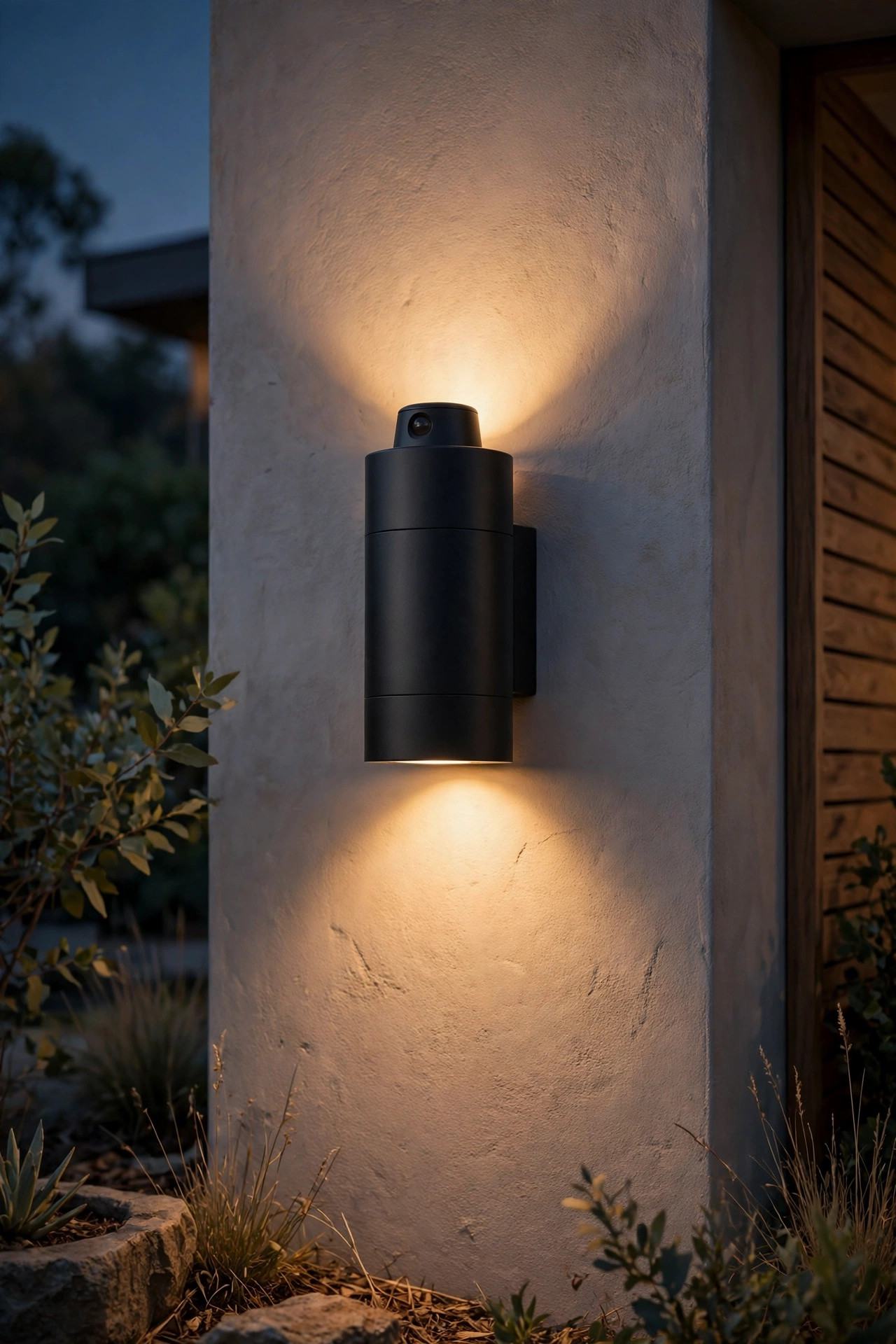
2. A Sleek Cylinder Sconce With a Hidden Sensor
Modern homes deserve motion lighting that doesn't look like a security gadget, and the minimalist cylinder sconce is my favorite disguise. These fixtures are simple metal tubes — matte black, brushed nickel, or bronze — that wash light up and down the wall in two soft fans, while the PIR sensor hides in a small frosted window at the base where nobody notices it. Because the light is indirect, you can go brighter without glare: 600 to 900 lumens feels luxurious, not harsh. Mount a pair beside a front door or a single one beside a side entry, about 6 to 7 feet high, and aim for a detection zone of 25 feet or so. The up-down wash also grazes siding texture beautifully, which adds real curb appeal after dark. One caution: cylinders with fully open tops can collect rain and bugs, so choose a wet-location-rated model with a closed or shielded top lens, and plan a quick wipe-down each spring. Pair two at the entry and one at the garage pedestrian door for a calm, coordinated look that reads high-end.
Suggested budget range: $60 – $150.
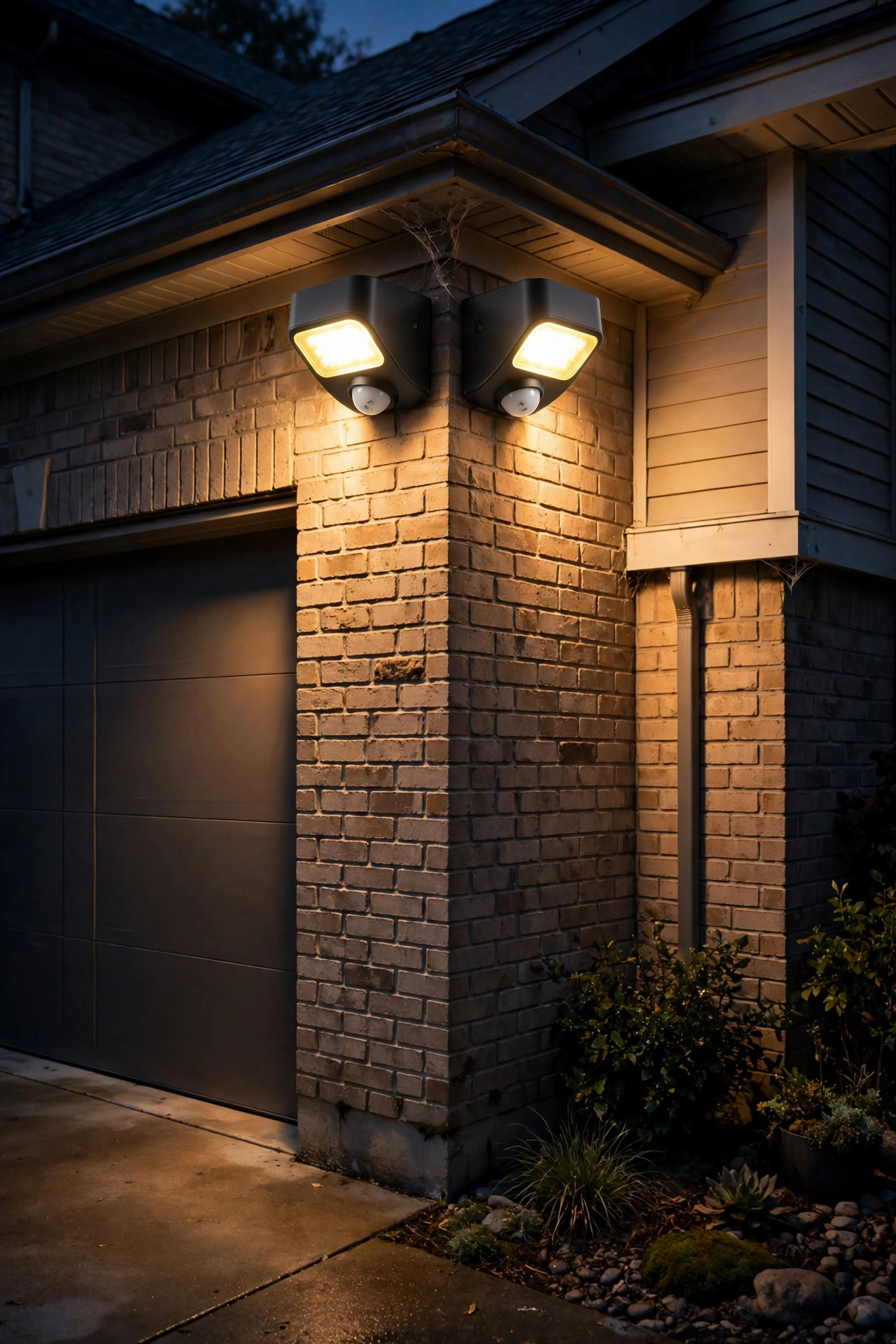
3. A Dual-Head Adjustable Sconce for Wide Garage Doors
A single decorative sconce can't honestly cover a two- or three-car garage, and that's where a dual-head adjustable fixture earns its keep. Think of it as a sconce-floodlight hybrid: one backplate, two lamp heads you can tilt and swivel independently, and a wide-angle sensor watching the whole driveway apron. Aim one head at the driveway approach and the other at the walkway to the pedestrian door, and you'll eliminate the dark corners where rakes, bikes, and skunks like to hide. Look for 1,500 to 2,200 lumens total, a 240-degree sensor, and an adjustable run time from 1 to 10 minutes so the light stays on while you unload the trunk. Mount it centered above the garage door at 8 to 10 feet for the best sensor sweep. My full motion sensor outdoor lights guide explains how to fine-tune sensitivity so headlights on the street don't set it off all night. Choose a powder-coated aluminum housing rated for wet locations, and this workhorse will shrug off weather for years.
Suggested budget range: $45 – $110.

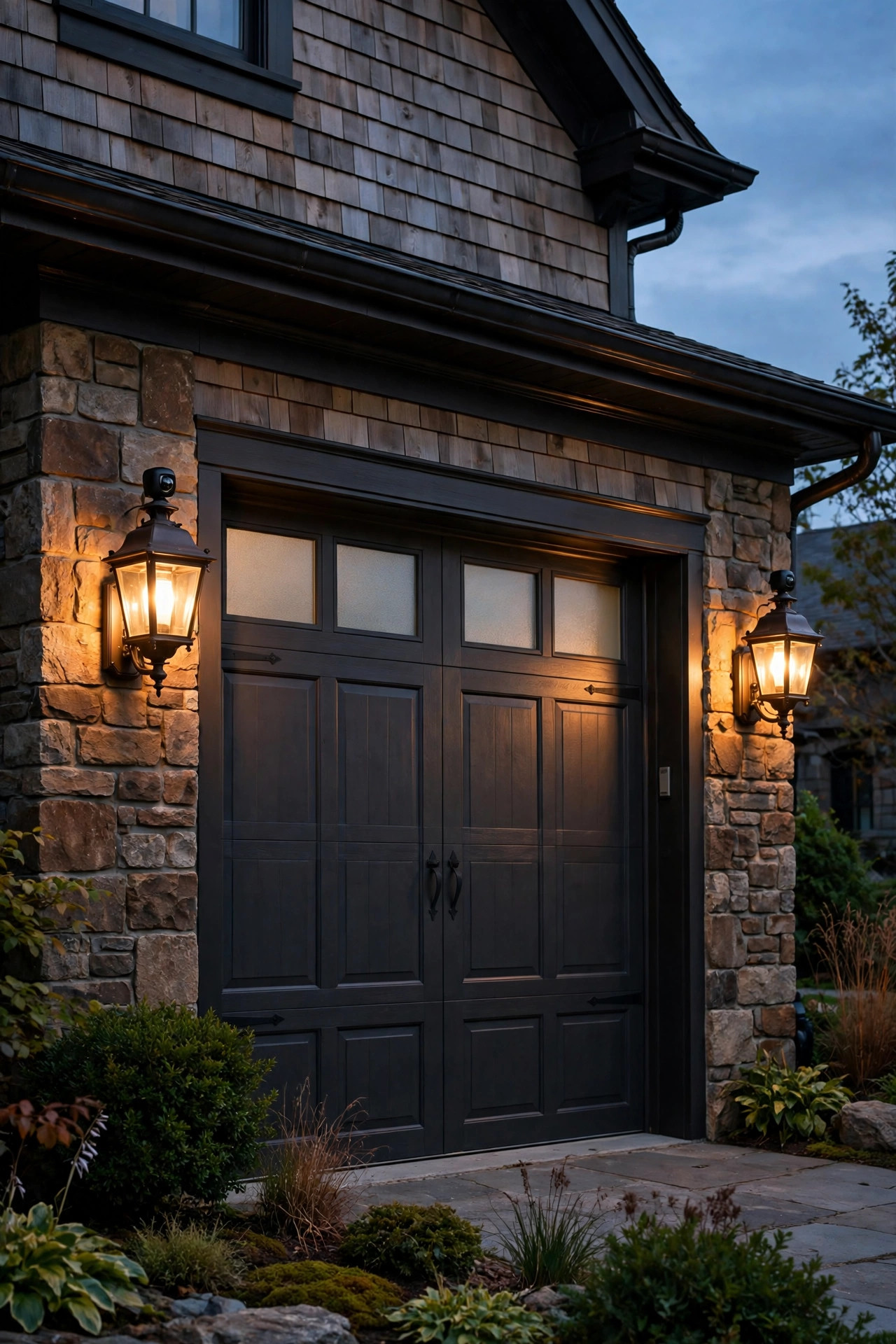
4. A Carriage-Style Motion Sconce for Traditional Garages
If your home leans traditional, colonial, or farmhouse, a carriage-style motion sconce gives you modern convenience without breaking the period charm. These look like old coach lanterns — scrolled arms, four-sided glass panes, a little chimney cap — but the sensor tucks discreetly into the backplate or the lantern's base. Flanking a garage door with two of them is pure storybook: the proportions echo horse-barn lighting, and the warm glow makes even a plain garage feel designed. Size matters here — for a standard 9-foot-wide garage door, lanterns 14 to 18 inches tall look balanced; go a bit larger for a double door. Mount at 66 to 72 inches beside the door trim, and set the shut-off delay to 3 to 5 minutes so the light lingers while you close up. Use 2700K filament-style LEDs for that flickering-lantern feel. I have more styling combinations in my roundup of garage carriage light ideas if you want to coordinate with the front entry. Black and oil-rubbed bronze finishes are the most forgiving in all weather.
Suggested budget range: $80 – $200.
5. Solar Motion Sensor Sconces for Spots With No Wiring
Side gates, detached garages, garden entries, the dark corner by the trash bins — plenty of spots need light but have no junction box anywhere nearby. A solar motion sensor sconce is the honest answer: a small solar panel on top charges all day, and the light fires only when someone walks up, which stretches a modest battery through the whole night. Expect 200 to 600 lumens — plenty for finding a gate latch or lighting two or three steps, though not enough to flood a driveway. The secret to success is sun placement: the panel needs 6 to 8 hours of direct light, so mount the fixture on a south- or west-facing wall, or choose a model with a separate panel on a cable you can position up on the eave. Installation is four screws and ten minutes, no electrician, which makes these perfect for renters too. In northern winters, shorter days mean dimmer performance by February, so treat solar as a helper light, not your main security fixture. Clean the panel with a damp cloth every couple of months; dust quietly steals a third of the charge.
Suggested budget range: $25 – $60.

6. A Dusk-to-Dawn Sconce With a Motion Boost
This is the style I recommend most often to friends who can't decide between ambiance and security, because it genuinely gives you both. A photocell keeps the sconce glowing at a low, welcoming level — about 20 to 30 percent brightness — from dusk to dawn, so your entry always looks lived-in. The moment the sensor detects movement, it ramps to full brightness for a minute or two, then settles back down. You get the curb appeal of a lit entry all evening, the deterrent of a sudden bright light, and a fraction of the energy cost of a full-brightness fixture running ten hours a night. Look for models where you can adjust both the standby brightness and the boost duration; some even let you schedule the standby to switch off at midnight. Mount exactly like a standard sconce, 66 inches at the door or centered over the garage pedestrian door. Integrated LED versions in the 800 to 1,200 lumen range at full boost are the sweet spot. Honestly, once you live with the gentle evening glow plus the smart boost, plain fixtures feel a little dumb by comparison.
Suggested budget range: $55 – $140.
7. An Up-Down Wall Wash Sconce for Contemporary Entries
For contemporary and mid-century homes, an up-down sconce with a built-in sensor creates the most dramatic effect on this list: two cones of light, one reaching toward the eaves and one pooling on the ground, with the wall itself becoming part of the design. The sensor usually sits in a slim band at the fixture's center, and because the beams are narrow — often 30 to 60 degrees — placement precision matters. Mount at 6 to 8 feet, and keep the fixture at least a foot from corners so the wash spreads evenly. A pair flanking a front door looks like a boutique hotel entrance; a row of three across a wide garage wall is quietly stunning. Choose 3000K for a crisp modern feel or 2700K if the rest of your lighting is warm — mixing temperatures is the one mistake I see constantly, and it always looks accidental. Output of 500 to 800 lumens per fixture is plenty since the light is concentrated. Confirm the top aperture is sealed or angled to shed water, and choose fixtures rated for wet locations if the wall has no overhang.
Suggested budget range: $50 – $130.

8. A Gooseneck Barn Sconce Over the Garage Door
Farmhouse and country homes, this one's yours. A gooseneck sconce — that graceful curved arm holding a wide metal shade — throws a generous downward pool of light exactly where you work: the garage apron, the potting bench, the woodpile. Adding a motion sensor at the base of the arm turns a purely decorative fixture into a genuinely practical one that lights your arrival home. The wide shade, usually 10 to 14 inches across, also shields the bulb from view, so there's no bare-bulb glare when you're backing in. Mount the backplate 8 to 9 feet up so the shade clears the opening garage door — measure your door's swing arc before drilling, please learn from my mistake — and set the sensor range to about 30 feet. These look best in matte black, galvanized metal, or classic barn red, with a 2700K bulb tucked up inside. Because the shade faces down, rain rarely reaches the socket, but still choose a wet-location-rated fixture and a bulb rated for enclosed or semi-enclosed use. One gooseneck over a single garage plus a matching sconce at the pedestrian door is a complete, charming setup.
Suggested budget range: $65 – $160.

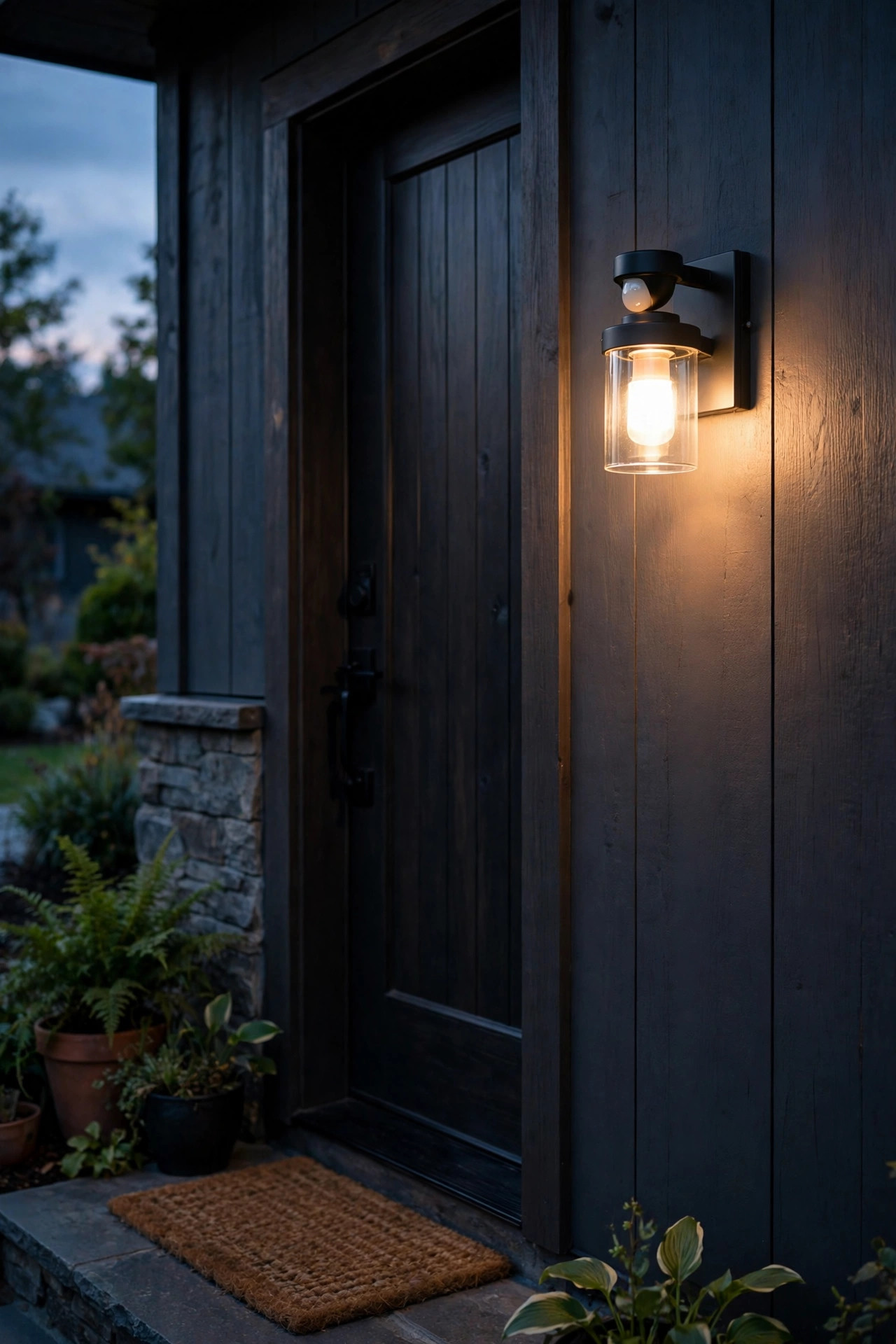
9. A Craftsman-Style Motion Sconce for the Front Porch
Craftsman bungalows have such strong architectural character that the wrong fixture looks jarring — but the right one, with straight lines, a pyramidal cap, and amber or mica-look glass panels, looks like it was always there. Several makers now hide a PIR sensor in the base of these classic designs, so you get automatic light without a plastic gadget bolted to your porch. The amber-toned glass softens the output beautifully, so choose a slightly brighter bulb than usual: 800 lumens behind amber glass feels like 600 through clear glass. Mount beside the front door at the classic 66 inches, and if your porch has tapered columns, a second sconce on the column face creates a gorgeous layered welcome. Set the timer short — 1 to 3 minutes — since porch sensors trigger often with foot traffic. Keep the color temperature at 2700K maximum; anything cooler fights the warm craftsman palette of wood, stone, and earth tones. Wipe the glass panels each season, because porch spiders adore these fixtures, and a web-covered sensor is a blind sensor. Paired with a matching non-motion lantern over the steps, the whole porch glows like 1912 — with 2026 brains.
Suggested budget range: $75 – $190.

10. A Corner-Mount Wide-Angle Sconce for Driveway Turns
Every home has that one blind corner: the side of the garage where the driveway curves, the corner where the walkway turns toward the gate. A corner-mount motion sconce is built specifically for it, with a wraparound bracket that sits on the corner itself and a sensor watching 240 to 270 degrees. One fixture does the work of two, covering both walls and the turn between them. This is also my go-to recommendation for the corner of a detached garage facing an alley — it catches movement from either direction long before someone reaches the door. Mount it 8 to 9 feet high so the sensor's view clears shrubs and parked cars, and take time with the sensitivity dial: corner installations near streets are the most prone to false triggers from passing traffic, so start at medium and test over a few evenings. Choose a model with an adjustable photocell too, so it won't fire during daylight when kids are playing in the drive. Output around 1,000 to 1,500 lumens covers a typical corner generously. It is not the prettiest fixture on this list, but for pure problem-solving, nothing else comes close.
Suggested budget range: $40 – $100.
11. A Smart Wi-Fi Motion Sensor Sconce That Sends You Alerts
If you travel often or just like knowing what's happening at home, a smart motion sensor sconce adds a layer no bulb can: it pings your phone when it triggers. The better models combine a decorative sconce, a motion sensor, and sometimes a small camera and two-way speaker in one fixture, so the "who's at the door" question answers itself. At the garage, an alert when the sensor fires at 2 a.m. is genuinely reassuring; at the front entry, you can flash the light or speak to a delivery driver from the couch. Look for models that work with your existing smart home setup, offer adjustable detection zones drawn on a map of your yard, and store clips without a mandatory subscription if that matters to you. Hardwired versions are the most reliable — Wi-Fi still needs a decent signal at the fixture, so test your phone's connection at the mounting spot first; garages at the back of a lot are notorious dead zones. Color temperature and styling have improved enormously; you no longer have to choose between smart and pretty. Expect to pay more, but for a main entry, I think it's worth it.
Suggested budget range: $120 – $300.
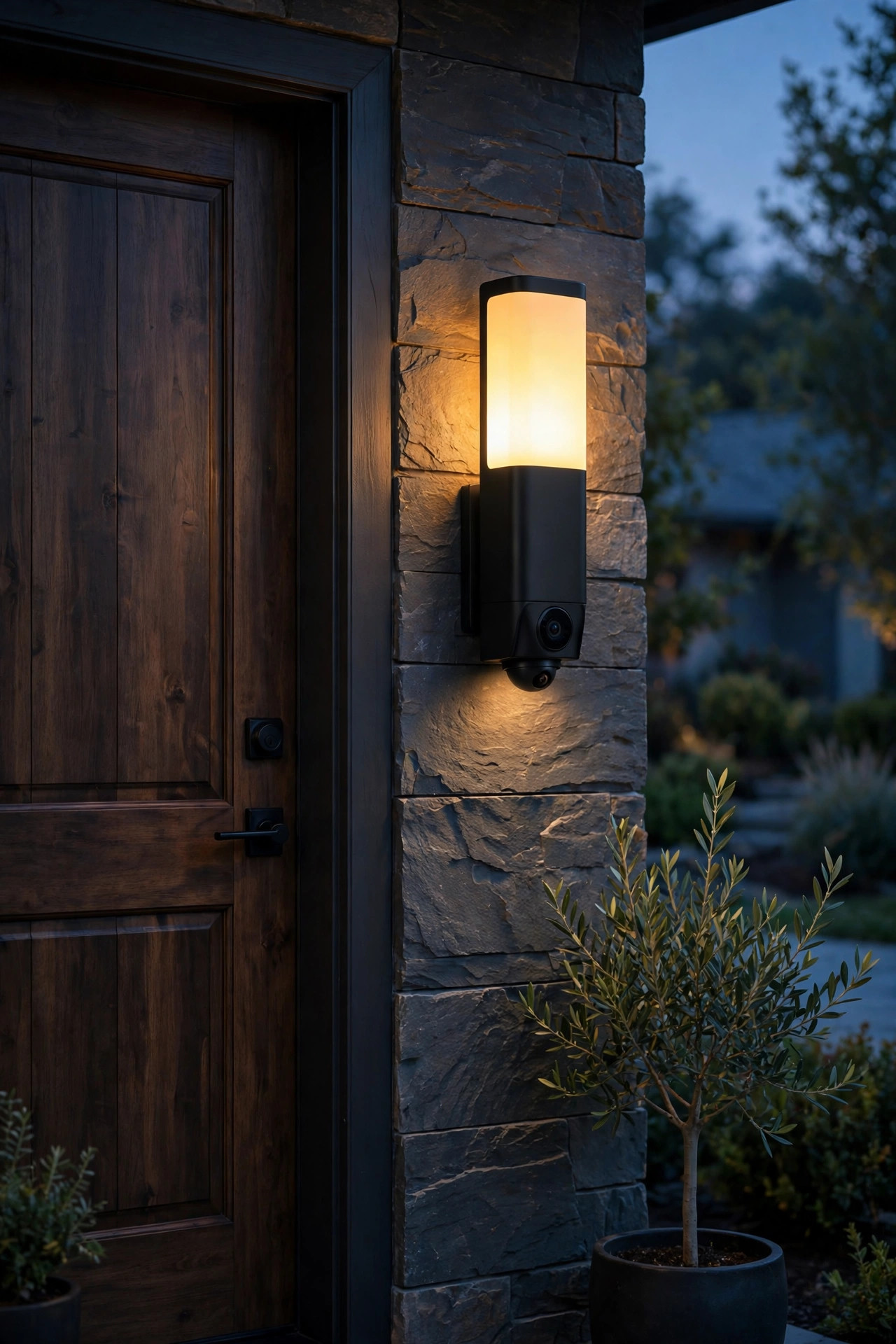
12. A Battery-Powered Sconce for Renters and Fences
No wiring, no solar panel, no problem: a battery-powered motion sconce mounts with screws or even heavy-duty adhesive strips and runs for months on a set of batteries, because it only lights when triggered. These are the unsung heroes for renters who can't touch the wiring, for fence gates at the end of a dark side yard, and for the inside of a garage door where you just need light to find the steps. Output is modest — 150 to 400 lumens — but in a narrow passage or at a gate latch, that's exactly enough, and the motion-only design means it's never wasting power lighting an empty yard. Many newer models are USB-rechargeable, which I strongly prefer; a quick charge every couple of months beats a drawer full of batteries. Mount at 6 to 7 feet where the sensor looks along the path of travel rather than straight at approaching people — side-on detection is always more reliable with PIR sensors. Keep a spare charged unit in a drawer and you'll never have a dark week. For the price of a pizza, you can light every awkward corner your home has.
Suggested budget range: $20 – $50.
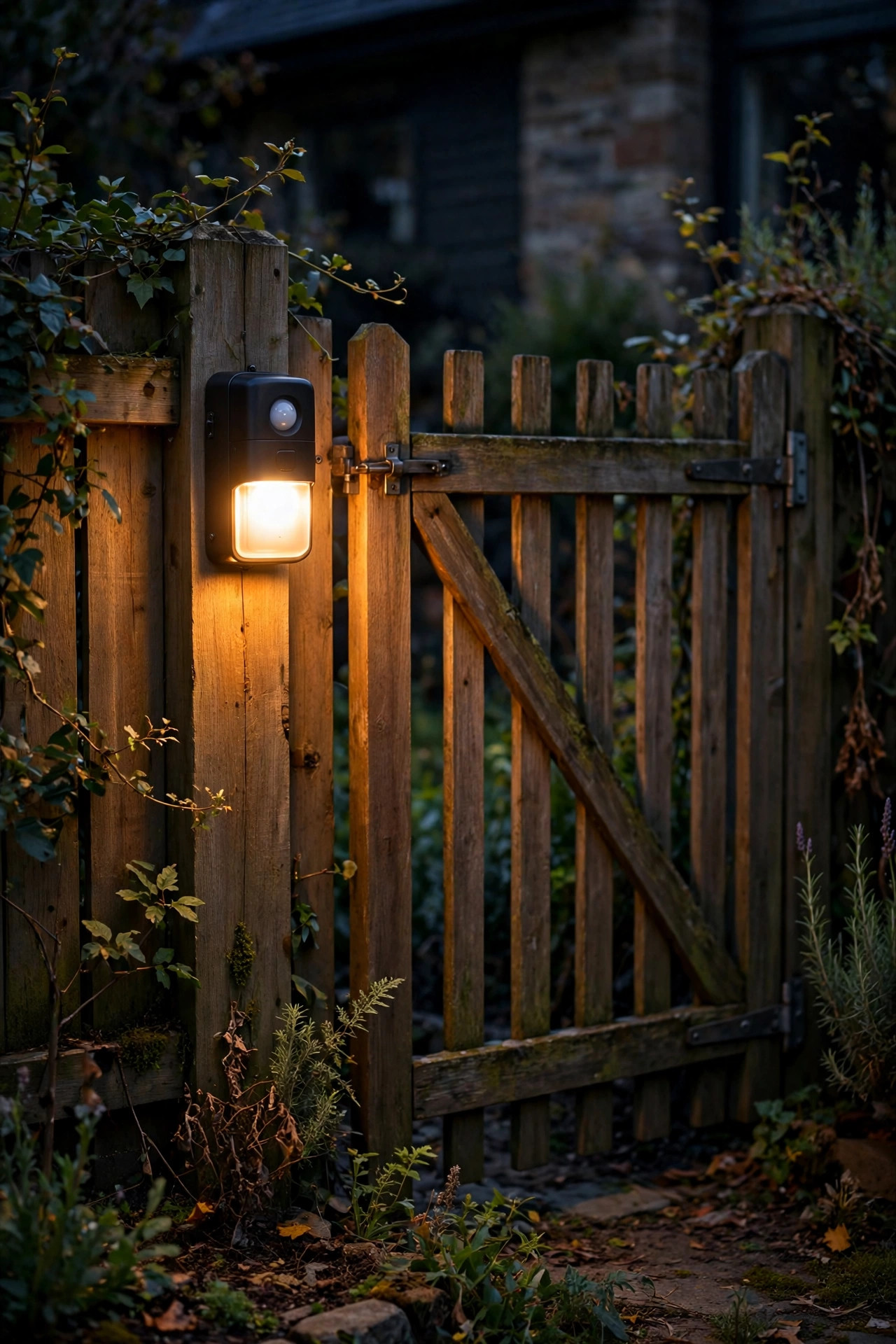
13. A Rust-Proof Coastal Sconce for Humid Climates
If you live near the ocean, a lake, or anywhere humidity hangs in the air all summer, standard fixtures quietly corrode — first the finish pits, then the sensor lens clouds, then the whole thing gives up in year three. A marine-grade motion sconce built from cast resin, polycarbonate, or powder-coated stainless costs a little more upfront and outlasts everything else on the street. The giveaway details are a fully sealed sensor housing, stainless mounting hardware, and a finish warranty measured in decades rather than years. Style-wise, coastal sconces tend toward nautical lantern shapes and white, black, or weathered finishes that suit beach-house architecture beautifully. Mount as usual at 66 inches by the door or above the garage pedestrian door, and rinse the fixture with a garden hose a few times a year to wash off salt spray — that one habit doubles its life. Because the sensor lens is sealed and UV-stabilized, it won't yellow and go blind the way cheap plastic does. If your current fixtures have rust streaks running down the siding beneath them, that's your sign: replace them with coastal-grade and stop repainting the wall every spring.
Suggested budget range: $85 – $210.

14. A Shielded Low-Glare Sconce for Dark-Sky-Friendly Entries
Motion lights have a reputation problem: the badly aimed ones blast light into neighbors' windows and wash out the stars. A shielded motion sensor sconce fixes that by design — the bulb sits recessed inside a cap or hood, so all the light goes down and out at a low angle, never up into the sky or sideways into the street. This is the style I recommend for anyone in a community with dark-sky or light-trespass rules, and honestly for anyone with a bedroom window near the entry. Because the light is directed, you need less of it: 400 to 700 lumens lights a porch and steps thoroughly when none is wasted. Many shielded models also use warmer 2200K to 2700K output, which is gentler on night vision and less disruptive to wildlife and sleeping humans alike. Mount at the standard 66 inches beside the door, or above the garage door where the downward throw covers the apron without lighting the whole street. Pair one with a low, shielded path light or two, and your home looks welcoming from the sidewalk while the sky above it stays properly dark. Responsible and beautiful can absolutely coexist.
Suggested budget range: $55 – $140.
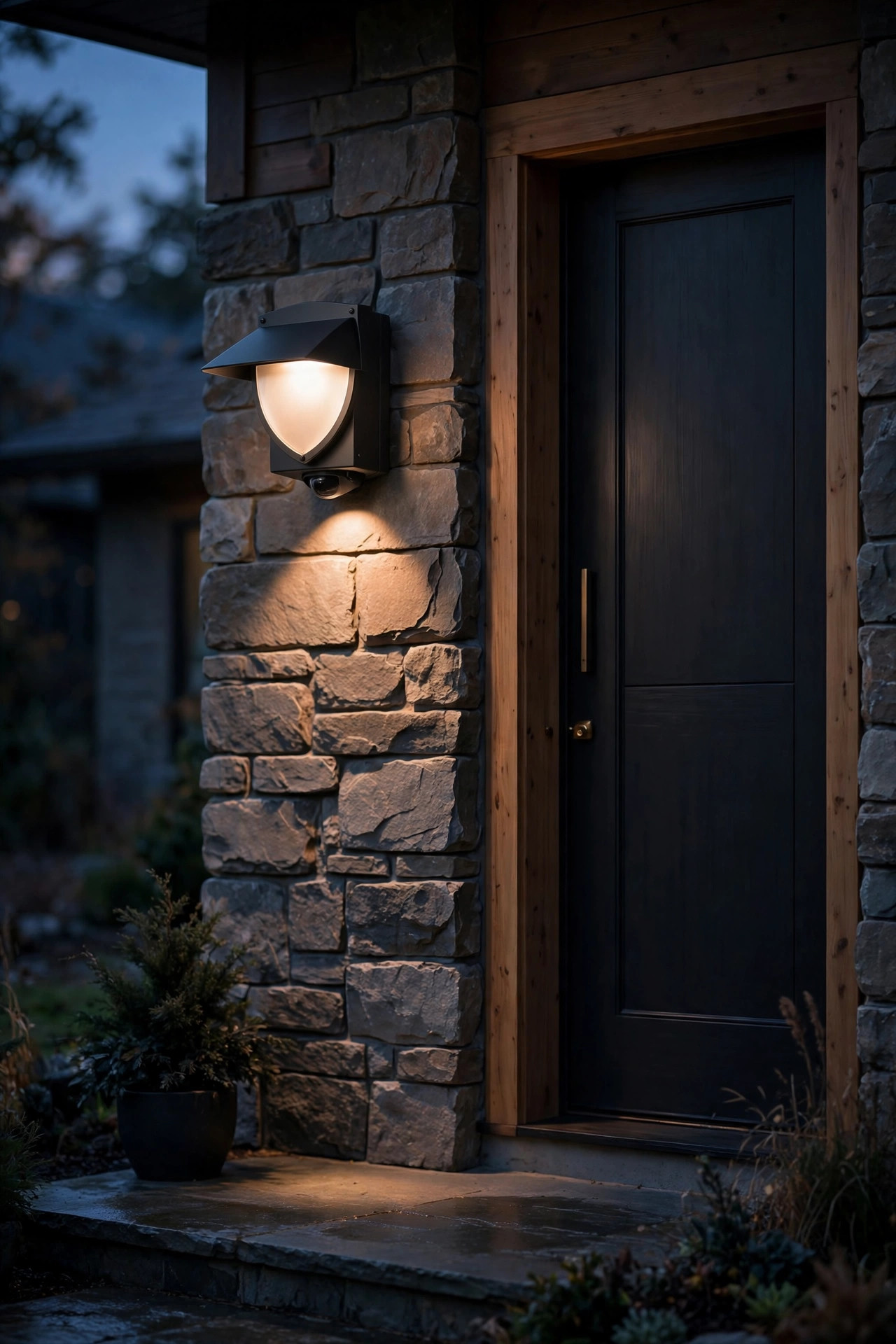
15. An Adjustable-Range Sconce You Can Tune for Pets and Passing Cars
The final idea is less a style and more a feature worth hunting for in any style above: a sconce with genuinely adjustable sensor controls — range, sensitivity, and duration on real dials or in an app. This is what separates a light you love from a light you're at war with. A cat crossing the porch shouldn't trigger the same response as a person at the garage, and with a range dial you can shrink the detection zone to 10 feet at the front door (key in hand, light on) while stretching the garage sensor to 50 feet. Sensitivity controls let you ignore small animals and swaying branches; duration controls decide whether the light lingers 20 seconds or 10 minutes. Some models add a lux dial so the light won't fire at dusk when there's still enough ambient light to see. My setup advice: install, then spend two evenings walking the zones like a burglar and a guest in turn, tweaking until both experiences feel right. It takes twenty minutes and transforms the fixture from gadget to butler. Whatever style you choose from this list, choose the version with knobs you can turn.
Suggested budget range: $45 – $120.

Frequently Asked Questions
How high should I mount a motion sensor sconce?
For entries, mount the fixture with its center around 66 inches from the ground — roughly eye level — which puts the sensor in its happiest zone for detecting people on the walkway. Over a garage door, 8 to 10 feet works best. Avoid going above 10 feet at entries: PIR sensors lose reliability at steep angles, and you'll get a light that triggers for raccoons but not for you.
Why does my motion sensor light keep turning on for no reason?
The usual culprits are heat sources and movement at the edge of the detection zone: dryer vents, HVAC exhaust, sun-warmed walls releasing heat at dusk, and branches swaying in front of the sensor. Lower the sensitivity one notch, shorten the range so it doesn't reach the street, and angle the sensor slightly downward. If it fires when cars pass, the sensor is seeing too far — range, not sensitivity, is your fix.
Are solar motion sensor sconces bright enough for a garage?
For a pedestrian door, steps, or a gate, yes — a good solar model at 400 to 600 lumens handles those jobs well. For lighting a whole driveway while you back in at night, no; you'll want a hardwired fixture at 1,200 lumens or more. Solar performance also depends on the panel getting 6 to 8 hours of direct sun, so shaded north-facing walls are poor candidates.
Can I override a motion sensor sconce to stay on for a party?
Usually, yes. Many hardwired models have a manual override: flip the wall switch off and on in a specific pattern and the light stays on until dawn or until you reset it. Smart models let you schedule "on" periods in the app. Check the manual before a party rather than during one — every manufacturer uses a slightly different switch sequence.
Conclusion
The best motion sensor sconces disappear into your home's architecture and quietly handle the two moments that matter: welcoming you home and discouraging anyone who shouldn't be there. Layer them the way you'd layer any light — a styled pair at the front door, real coverage at the garage, helpers at the side entries — tune the sensors over a couple of evenings, and then forget they exist until the night they save you a fumble, a fall, or worse. Start with the entry pair, add the garage coverage next, and browse the rest of my outdoor lighting ideas here on the site whenever you're ready for the next corner of the house to glow.