A small porch is not a limitation — honestly, I think it's an advantage. When your entry is only a few feet wide, every light you add actually shows up, and a couple of well-chosen fixtures can make the whole stoop feel like a warm little welcome instead of an afterthought. The trick with small porch lighting ideas is scale and layering: one anchor light by the door, one soft layer of glow at ground level, and one tiny bit of sparkle for personality. Three layers, that's it. You don't need square footage, and in most cases you don't even need an electrician.
Below are my 15 favorite ways to light a compact entry, from a single right-sized sconce to solar stakes and backlit house numbers. Most are renter-friendly, many need no wiring at all, and every single one is sized for real-life stoops, narrow landings, and townhome entries. Pick two or three, keep your bulb color consistent, and watch your little porch punch way above its weight.
1. Start With One Right-Sized Wall Sconce Beside the Door
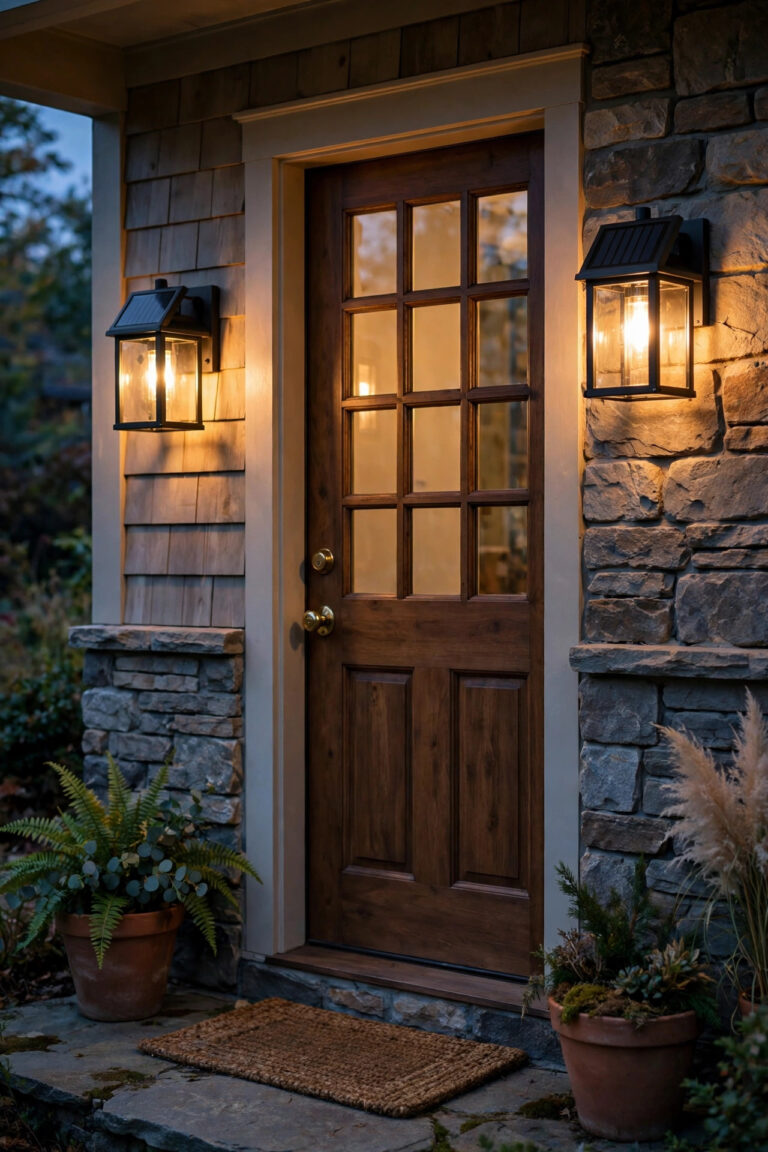
If a small porch gets only one light, this is the one. A single wall sconce beside the door is the anchor of almost all good small porch lighting ideas, because it lights faces, lights the lock, and tells guests exactly where the welcome happens. The secret is sizing: on a compact entry, choose a fixture roughly one-quarter to one-third the height of your door, and keep it fairly slim — about 5 to 8 inches wide is plenty. Anything bigger will swallow a small wall.
Mount the center of the fixture about 60 to 66 inches off the porch floor, roughly at eye level, and leave 4 to 6 inches between the fixture edge and the door trim so it doesn't crowd the casing. For brightness, a single LED bulb around 450 to 800 lumens in warm 2700K is the sweet spot; more than that and a tiny porch feels like an interrogation room. Always choose a fixture rated for wet locations, since a small stoop usually has little roof protection, and put it on a timer or photocell bulb so it greets you automatically at dusk.
Suggested budget range: $30 – $75.

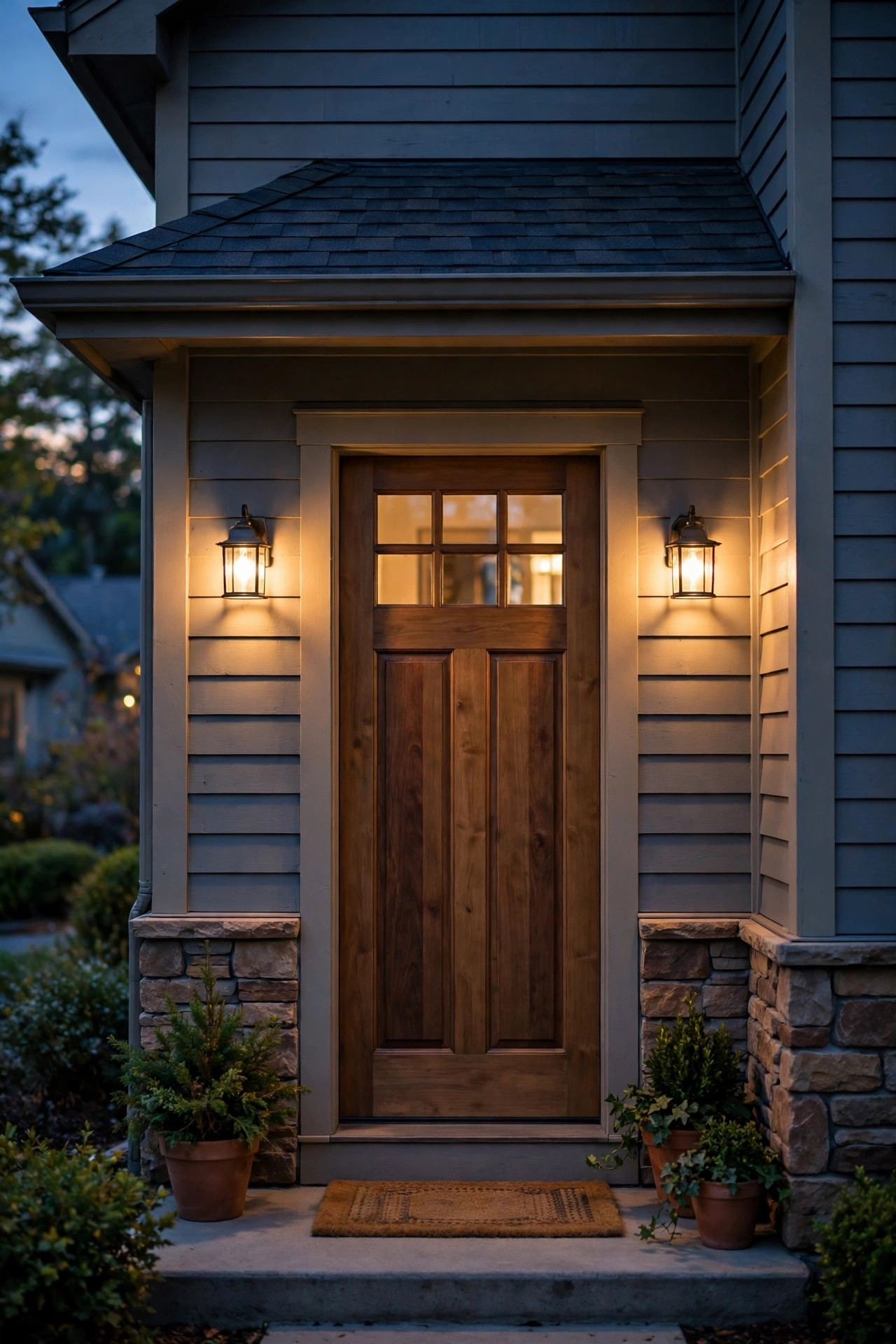
2. Flank the Door With a Matched Pair of Mini Sconces
When one sconce feels a little lonely and your door has trim space on both sides, a matched pair of mini sconces gives a compact entry instant symmetry — and symmetry reads as "designed" even in the tiniest footprint. The key word is mini: look for fixtures no wider than about 6 to 8 inches each, and mount them at the same height as a single sconce, centered around 62 inches, with their inner edges at least 4 inches clear of the door casing.
Wiring two fixtures does mean either existing junction boxes on both sides or a call to an electrician, so on a small porch I often cheat with battery-powered or solar sconce pairs that mount with two screws — or even heavy-duty outdoor adhesive for renters. Whatever the power source, use identical bulbs in both and keep the color temperature matched at 2700K; mismatched bulbs are the fastest way to make a small entry look accidental. If you're planning the spacing and mounting heights, my notes on how to hang a pair of front door sconces walk through the measurements in detail.
Suggested budget range: $50 – $120.
3. Cluster Flameless LED Lanterns on the Stoop Steps
This is the idea I recommend to anyone who says their porch is "too small for decor." Three flameless LED lanterns, grouped in odd numbers at the corner of the stoop or on the top step, take up less than a square foot and add the coziest pool of flickering glow. Vary the heights — say 10, 14, and 18 inches — and tuck the cluster tight against the wall or beside a planter so it never blocks the walking path.
Only ever use LED candles outdoors, never real flame near a doorway, wreaths, or welcome mats. Look for lanterns in powder-coated metal or resin rated for outdoor use, with candles that have a built-in 5-hour timer: they click on at dusk, flicker through the evening, and shut themselves off while you're asleep. Because they're battery powered, you can rearrange them in thirty seconds for holidays, flank a pumpkin in October, or line both sides of the steps when guests come for dinner. Bring them under cover during heavy storms and they'll last for years.
Suggested budget range: $25 – $60.

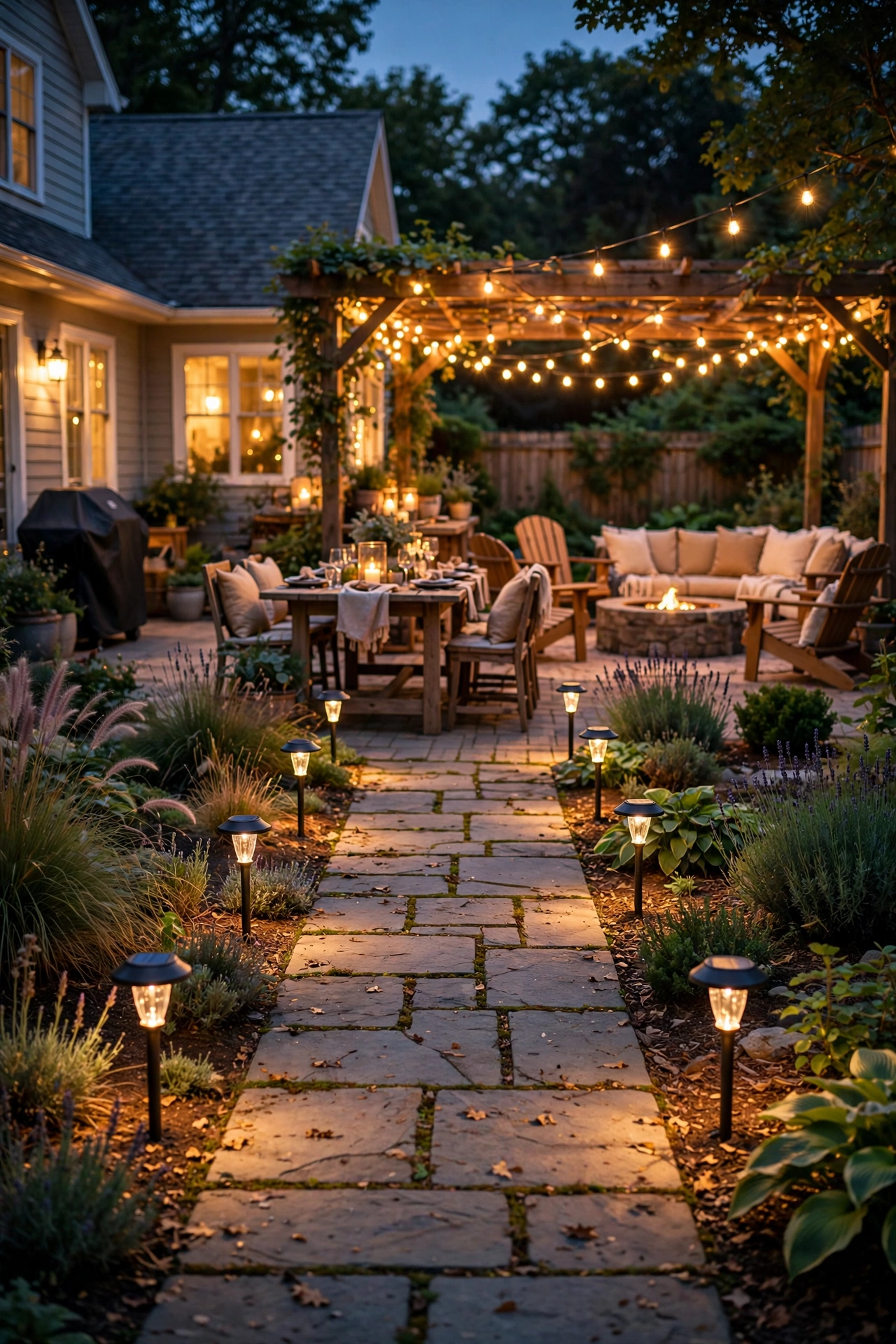
4. Line the Short Walk With Solar Path Lights
A compact entry usually comes with a short walkway, and four to six solar path lights turn that little strip into a runway that leads the eye — and your guests — straight to the door. On a short walk, resist the urge to space them evenly like an airport; instead, stagger them slightly or line one side only, about 4 to 6 feet apart, which looks more natural and keeps the focus on the porch itself.
Choose warm white solar stakes in the 2700K to 3000K range so they blend with your sconce instead of clashing blue-white against it. Each light should get at least 6 hours of direct sun to charge, so on a shaded stoop, slide them a foot or two toward the sunnier edge of the walk. Height matters on a small scale: 12- to 16-inch stakes read proportional, while tall 24-inch stakes can look top-heavy beside a tiny porch. Wipe the panels with a damp cloth every month or so — dust and pollen quietly steal brightness — and the whole walk glows for pennies a year.
Suggested budget range: $20 – $45.
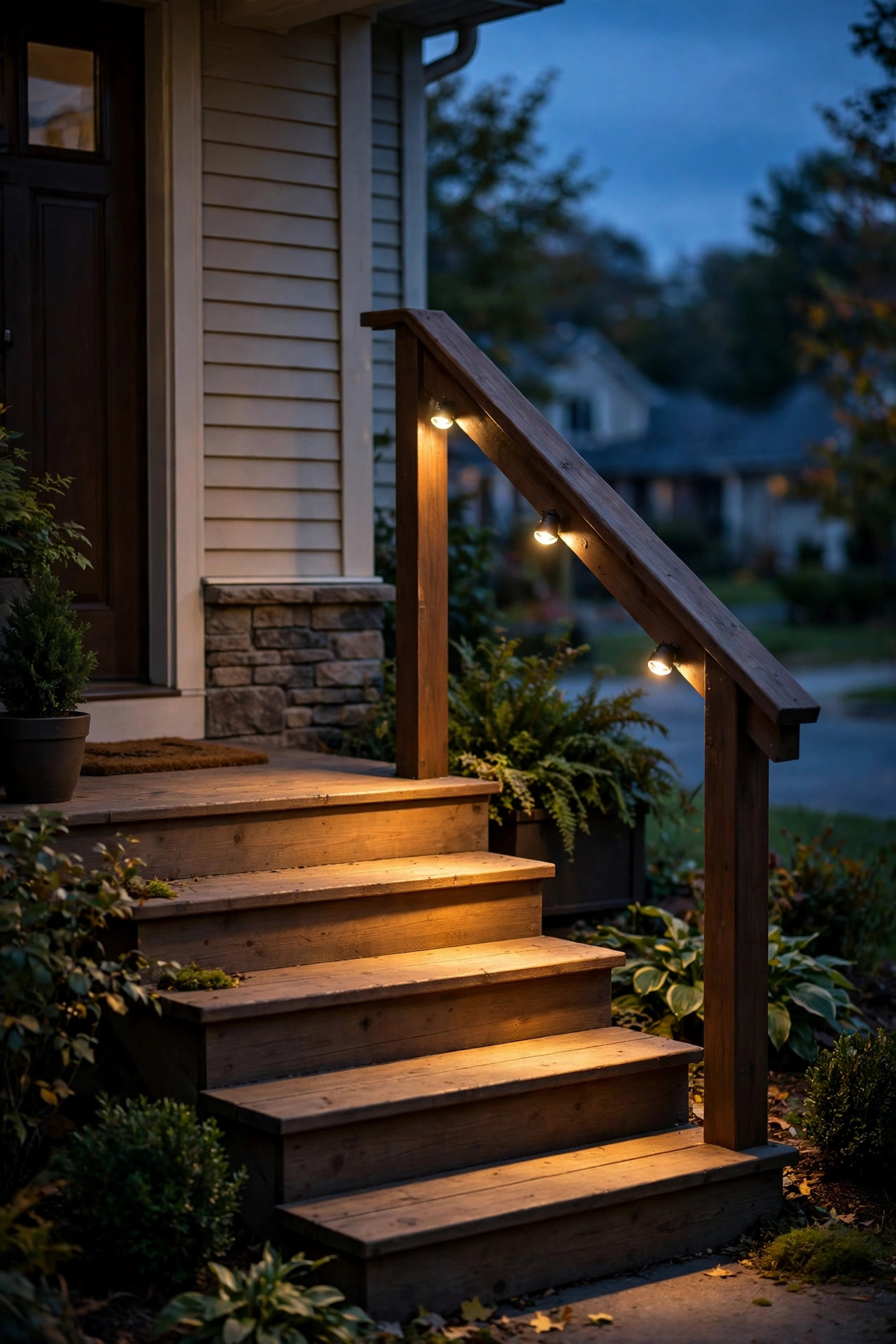
5. Tuck Battery Puck Lights Under the Handrail
Here's a small-space trick most people never think of: slim battery puck lights mounted underneath the porch handrail, washing soft light down onto the steps. On a narrow stoop where every inch of floor space counts, under-rail lighting adds a whole layer of glow without a single fixture sitting out in the open — and it makes the steps dramatically safer at night.
Look for puck or strip lights rated IP65 or better so rain and splashing can't hurt them, with adhesive backing plus screw mounts for security. Three pucks spaced evenly along a standard 4- to 6-foot rail section is usually plenty. Many come with a remote and a timer function, so you can set them to glow from dusk for four hours and forget about them; others are motion-activated, which saves batteries on a low-traffic stoop. Cool trick: if your small porch has a built-in bench or a planter ledge instead of a rail, the same pucks mount underneath those edges just as well. Expect to swap or recharge batteries every couple of months.
Suggested budget range: $15 – $35.
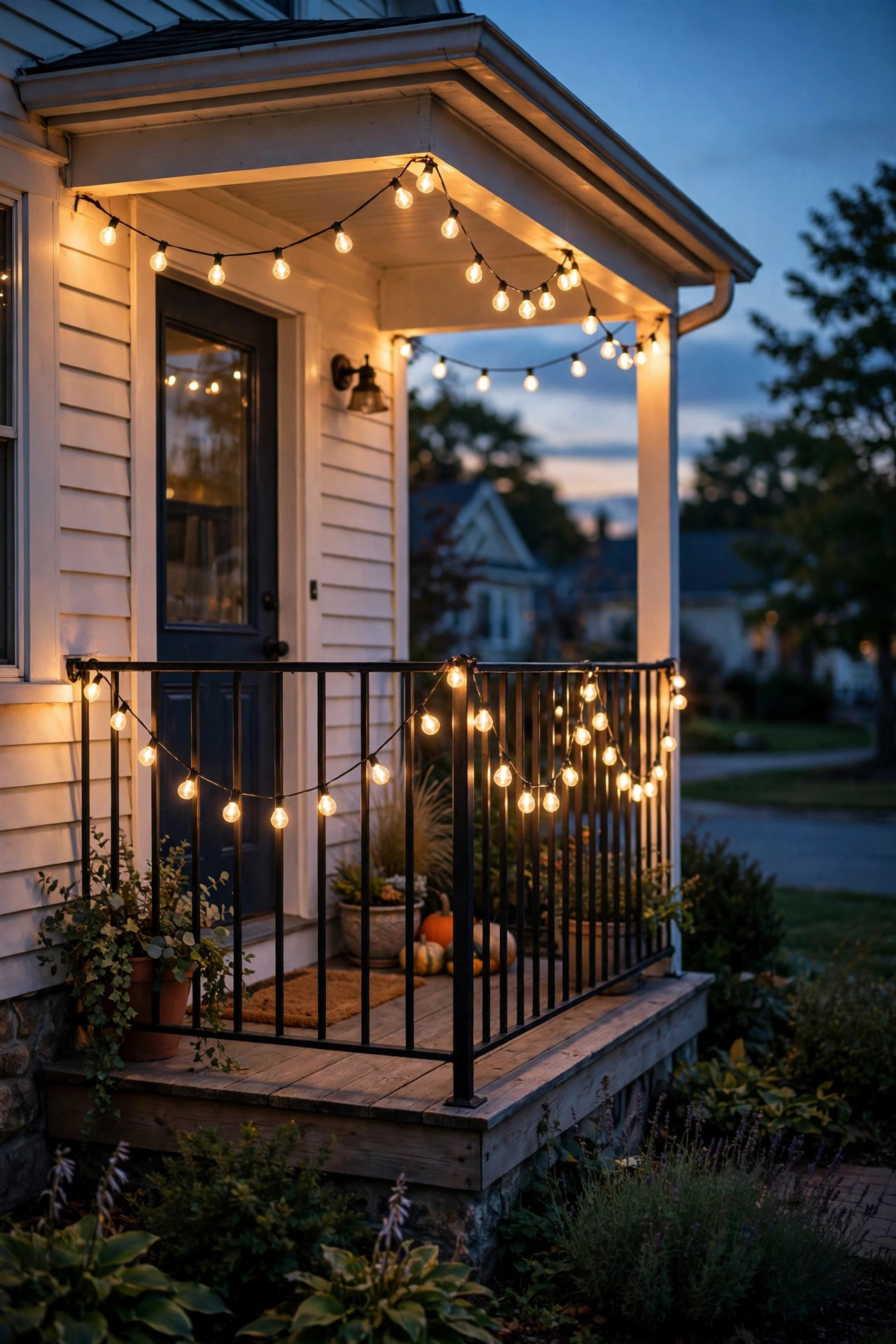
6. Drape String Lights Along the Railing or Ceiling Edge
String lights aren't just for big back patios — a single short strand is one of the happiest small porch lighting ideas there is. On a compact entry, drape one 10- to 15-foot strand in gentle swags along the railing or around the inside edge of the porch ceiling, letting each swag dip about 12 to 18 inches. That scalloped line of warm bulbs instantly makes a plain stoop feel like a tiny bistro.
Use LED string lights only, especially anywhere near fabric cushions, dried wreaths, or foliage, and choose a strand rated for outdoor use with shatterproof bulbs — glass bulbs and a busy doorway are a bad combination. Keep the bulbs small, too: globe bulbs around 1 inch across look right at this scale, while big patio globes overwhelm a little porch. Plug the strand into a simple outdoor timer so it runs from dusk to bedtime, and secure it with clips every 18 inches or so rather than wrapping it tightly around railings, which stresses the wire. If your porch has no outlet, battery-powered copper-wire fairy strands give a lighter, more delicate version of the same glow.
Suggested budget range: $20 – $50.
7. Hang a Plug-In Pendant or Swag Light Overhead
If your little porch has a ceiling but only a bare bulb or an ugly flush mount up there, a hanging pendant changes everything — it pulls the light down to human height and makes a 5-foot-wide entry feel like an actual room. For a small space, pick a pendant with a shade no wider than about 10 to 12 inches, in a lantern, bell, or small drum shape that echoes your door hardware.
Clearance is the whole game here: the bottom of the fixture should hang at least 6 feet 8 inches above the porch floor, and never in the swing path of a storm door. No hardwired box in the right spot? A plug-in swag pendant solves it — the cord runs along the ceiling to a swag hook and down the wall to an outlet, no electrician required. Use a dimmable outdoor-rated LED bulb around 800 lumens in 2700K, and add a plug-in dimmer if you like a softer mood for evening sitting. On a tiny porch, that one hanging layer of light does more than any three fixtures at ground level.
Suggested budget range: $40 – $90.

8. Add a Motion-Sensor Light for a Safe, Self-Welcoming Entry
A small porch is where you juggle groceries, keys, and a phone flashlight — a motion-sensor light ends that dance. Mounted beside or above the door, it clicks on the moment you step onto the stoop and turns any compact entry into a safe, self-welcoming landing. It also quietly doubles as security lighting, which matters on entries that sit close to the street.
Aim the sensor carefully on a small lot: you want it triggered by your own steps, not every passing car. Set the detection range to its lower or medium setting, angle the sensor slightly downward toward the steps, and choose a 20- to 60-second on-time so it lights your key-in-the-lock moment without staying on all evening. Brightness around 800 to 1,200 lumens is plenty for an entry this size. Battery and solar motion lights have gotten genuinely good, so renters and no-outlet porches are covered too. If your fixture allows it, pick one with a dusk-to-dawn low-glow mode plus full brightness on motion — soft welcome light all night, real light when you need it.
Suggested budget range: $25 – $65.

9. Light Every Step With Stick-On or Recessed Step Lights
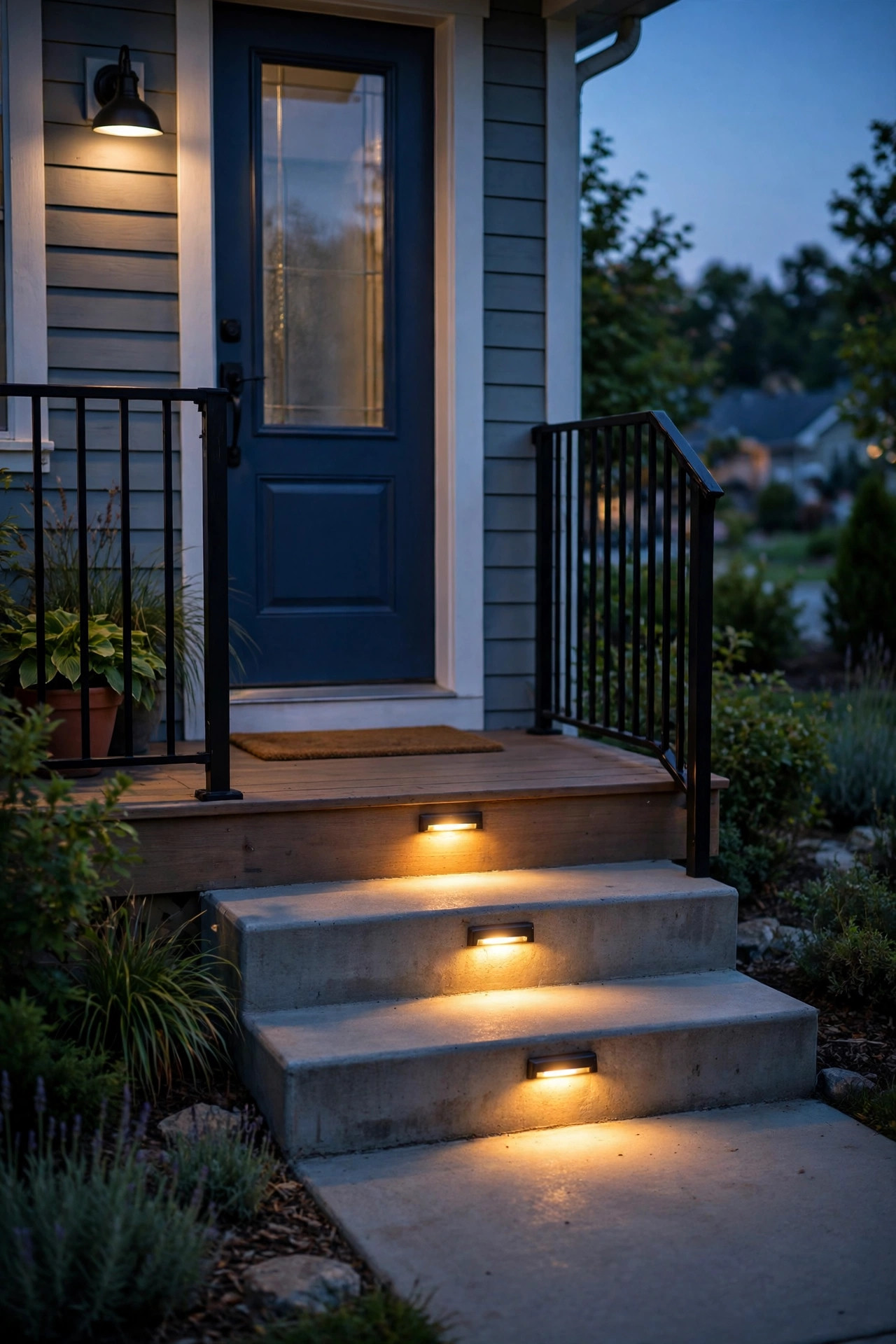
On a compact stoop, two or three steps are the whole staircase — and they're exactly where guests trip. Small step lights solve it beautifully: a slim light at the nose of each tread, or one mounted on the riser or side wall, lays a ribbon of light across every step so nobody has to guess where the edge is in the dark.
For hardwired porches, recessed step lights that sit flush in the riser look the most polished and cast light downward with almost no glare. But my honest favorite for small porches is the modern stick-on version: solar or battery step lights, about 3 to 4 inches wide, that mount with screws or outdoor adhesive in ten minutes. Place one per step, offset to the same side as the handrail, or center one on each riser for a tidy, symmetrical look. Choose warm 2700K light at a modest brightness — step lights should outline the treads, not spotlight them. Keep the lens hooded or downward-facing so the light lands on the step, not in your eyes as you climb.
Suggested budget range: $20 – $55.
10. Make Your House Numbers Glow
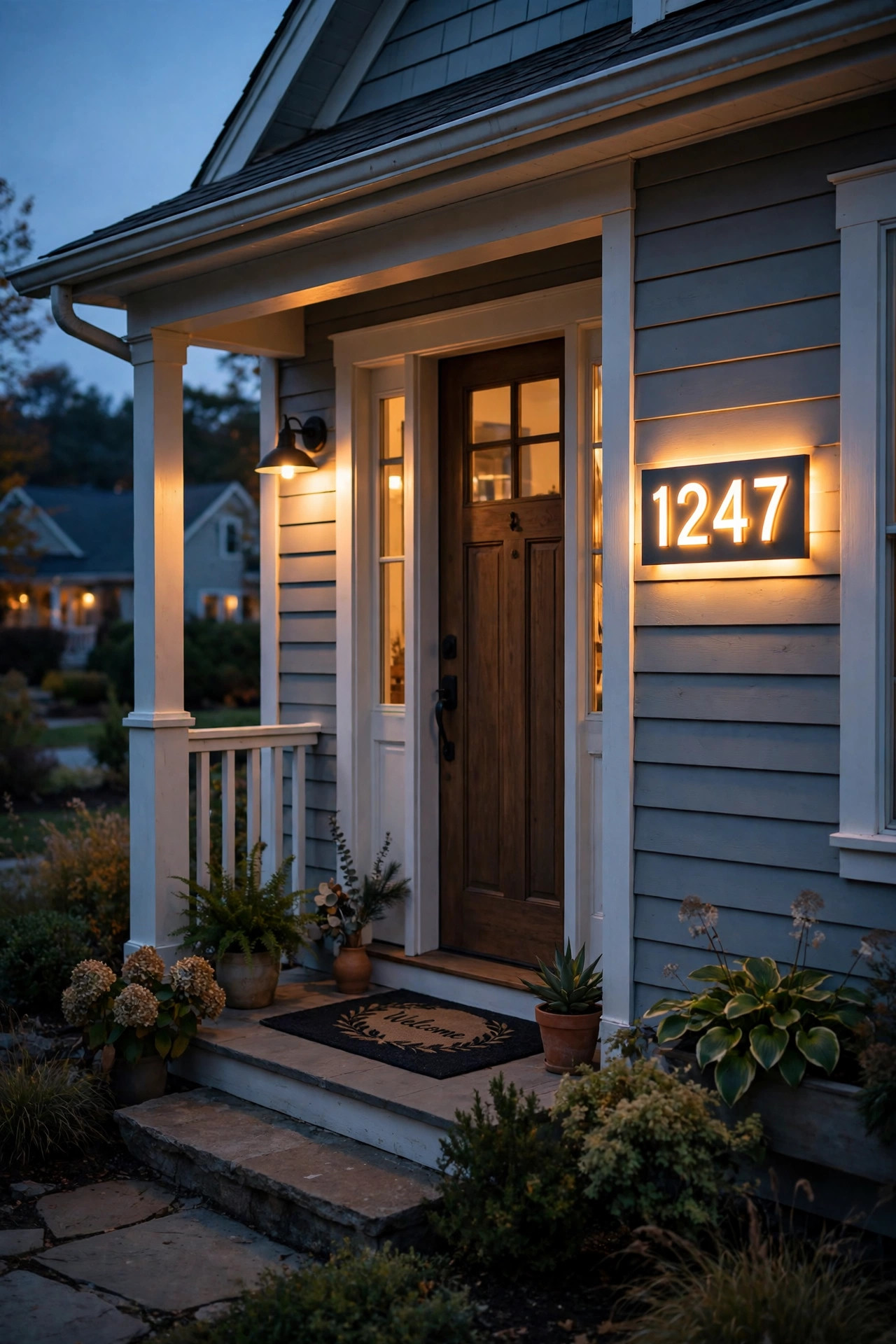
Delivery drivers and first-time guests will thank you for this one. A backlit or solar-lit house number plaque turns a small porch's most practical detail into a design feature, and on a compact entry — where there's barely wall space for decor — it earns its keep twice over. Lit numbers are visible from the street, help rideshares and ambulances find you faster, and add a soft halo of light right beside the door.
Size the numbers generously, at least 5 to 6 inches tall, in a simple font with strong contrast against your siding. Mount the plaque at eye level, around 5 feet, somewhere the sconce light doesn't create glare across it. Solar plaques charge by day and glow all night with zero wiring, while battery and low-voltage versions give a steadier, brighter halo. In my experience, warm white backlighting looks the most welcoming and photographs beautifully for listings, too. Pair lit numbers with even one other idea from this list and a tiny stoop suddenly looks intentional — like the entry was planned, not just built.
Suggested budget range: $25 – $70.
11. Twine Fairy Lights Through a Potted Plant by the Door
One potted plant plus one strand of copper-wire fairy lights equals the cheapest focal point a small porch can have. I twine micro LED fairy lights through a small topiary, a potted olive or rosemary, or even a fern on a plant stand beside the door, and that one sparkling planter does the decorating work of a whole porch full of accessories — perfect when floor space measures in inches.
Use a battery-powered copper-wire strand, about 10 to 20 feet with 30 to 60 micro LEDs, and wind it loosely from the base of the plant upward, leaving the tiny battery pack tucked behind the pot where it stays dry. Warm white is the classic choice; the wire nearly disappears, so all you see is floating sparkle. Set the built-in timer for 6 hours on, 18 off, and the plant lights itself every evening. Keep the plant scaled to the stoop — a 2- to 3-foot specimen in a 12- to 14-inch pot is the sweet spot beside most doors — and remember fairy lights are LED, so there's no heat risk to foliage at all.
Suggested budget range: $10 – $30.

12. Swap the Bare Bulb for a Compact Flush-Mount Ceiling Light
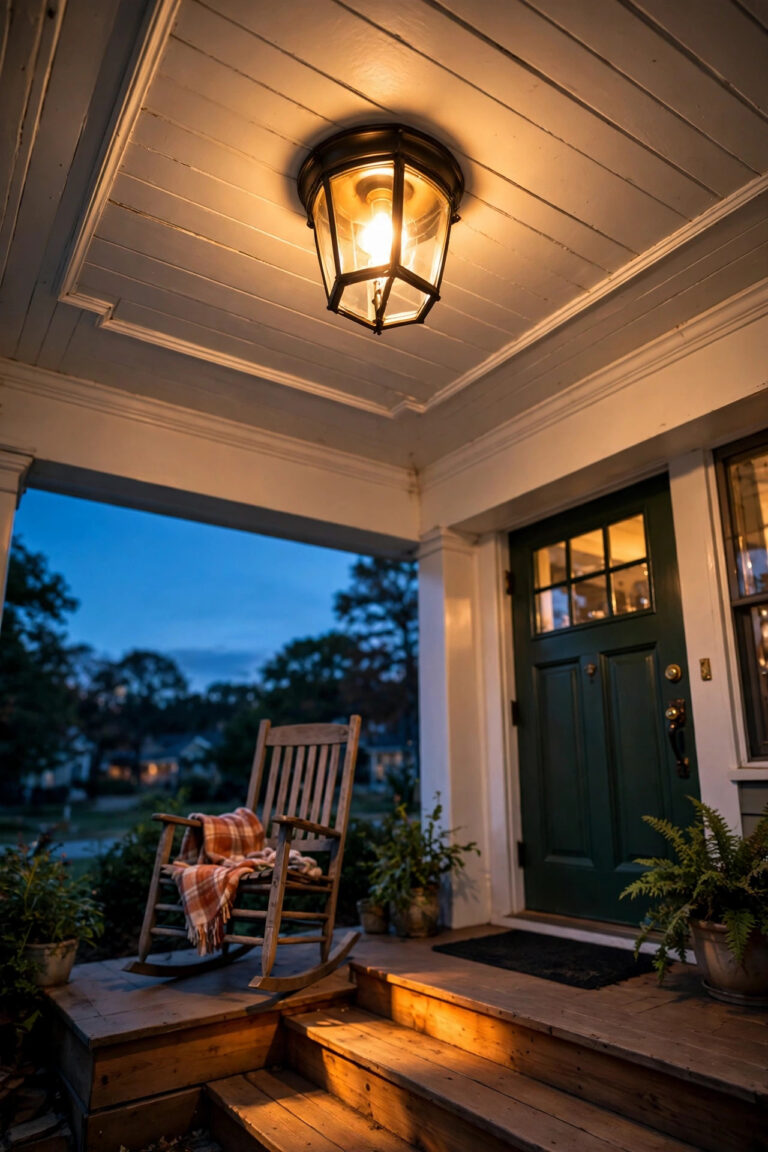
So many small porches have a single sad bare bulb screwed into the ceiling, washing everything in harsh, shadowless glare. Replacing it with a compact flush-mount fixture with a frosted or opal glass diffuser is a twenty-minute upgrade that softens the entire entry — faces look better, the door color looks richer, and the porch stops feeling like a storage closet.
Scale is everything: on a low or small porch ceiling, choose a fixture 11 to 13 inches across with a drop of 5 inches or less, so tall guests never feel crowded. A diffuser is non-negotiable at this height because the bulb sits almost at eye level when you're standing on the steps below. Aim for an integrated LED or a bulb around 800 to 1,100 lumens in 2700K; dimmable is a lovely bonus for late-evening sitting. Make sure the fixture is damp- or wet-rated for your porch's exposure, and if your ceiling has an existing junction box, this is a straightforward DIY swap — just cut the power at the breaker first, always.
Suggested budget range: $35 – $85.

13. Set Hurricane Lanterns on a Crate or Tiny Table
When a stoop is barely big enough for a chair, a wooden crate or a narrow plant stand doubles as your side table — and a hurricane lantern on top doubles as your decor, your ambient light, and your evening mood in one move. The glass chimney look flatters every porch style from farmhouse to coastal, and because the "candle" inside is LED, you get the flicker without a lick of fire risk near cushions and door mats.
Choose a lantern about 10 to 14 inches tall so it reads at porch scale without dominating, and fill it with a flameless pillar candle on a timer. Group it with one small potted plant or a stack of two crates for a styled corner that uses maybe 18 inches of floor space. Solar hurricane lanterns work too if your stoop gets decent sun. One practical note from experience: glass hurricanes are fine in sheltered spots, but on an exposed stoop, bring them in during storms or choose a metal-and-acrylic version that shrugs off wind and rain.
Suggested budget range: $20 – $50.

14. Aim a Single Uplight at a Statement Planter
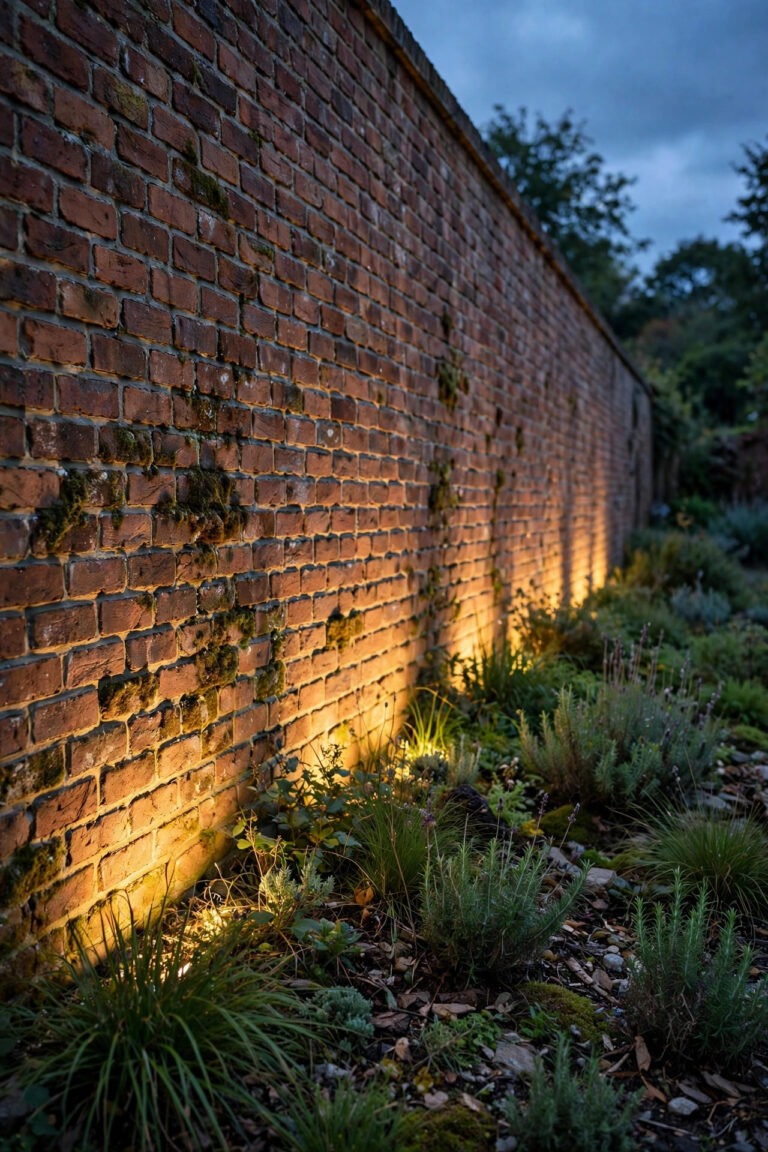
Small porches read flat at night because everything sits at the same height. One small uplight aimed at a tall planter, a slender evergreen, or a sculptural pot beside the door creates instant height and shadow play — the eye travels up, and suddenly the entry feels grand instead of squat. It's the same trick landscape designers use in big yards, shrunk down to a single fixture.
Use one solar or low-voltage spotlight with a warm 2700K beam, placed a few inches in front of the planter and tilted up at roughly a 30- to 45-degree angle so the light grazes the foliage and spills a soft pattern onto the wall behind it. That wall wash is the magic: it doubles the perceived glow without a second fixture. Keep the beam narrow-ish, around 30 to 45 degrees, so light stays on your plant instead of spilling into a neighbor's window — especially important on townhome and row-house stoops. Solar spotlights need a sunny charging spot, so if your entry is deeply shaded, a plug-in low-voltage uplight on a timer is the more reliable splurge.
Suggested budget range: $15 – $45.

15. Screw a Dusk-to-Dawn Smart Bulb Into the Fixture You Already Own
Last but honestly first in my heart: the ten-minute, no-tools upgrade. If your small porch already has any fixture at all — even the builder-grade one you're not crazy about — swapping the bulb for a dusk-to-dawn LED or a smart bulb transforms how the entry behaves. The light comes on by itself every evening, stays reliably warm, and you never again come home to a pitch-black stoop.
A photocell dusk-to-dawn bulb is the simplest route: screw it in, and its built-in sensor handles the rest, no hub, no app, no wiring. A smart bulb adds scheduling, dimming, and warm-to-cool tuning if you enjoy that control. Either way, choose 2700K and around 800 lumens for a small entry — bright enough to find your keys, soft enough to feel like a welcome. My full rundown of dusk-to-dawn outdoor lights covers sensor quirks and the fixtures they do and don't play well with, including enclosed-fixture heat notes. Start here if you're renting or testing the waters; you can always upgrade the fixture later.
Suggested budget range: $10 – $25.

Frequently Asked Questions
How many lights does a small porch actually need?
Fewer than you think. My rule for compact entries is three layers: one anchor light at the door (a sconce or ceiling fixture), one ground-level glow (lanterns, step lights, or path lights), and one sparkle or accent (fairy lights or lit house numbers). Two or three well-placed lights in a consistent warm color will always look better than six mismatched ones fighting for attention.
What color temperature looks best on a small porch?
Warm white, 2700K, almost every time. It flatters brick, wood doors, and skin tones, and it makes a small space feel cozy rather than clinical. The real secret is consistency: pick one temperature and use it in every fixture and bulb on the porch, because mismatched color temperatures are far more noticeable in a small space than in a big yard.
Can I light a small porch with no outlet and no wiring?
Absolutely — about half this list needs no power at all. Solar path lights, solar step lights, battery puck lights, flameless lanterns, and fairy lights all work beautifully on stoops with no outlet. Just be honest about sunlight: solar fixtures need roughly 6 hours of direct sun to charge, so deeply shaded or north-facing entries should lean on battery options with timers instead.
How bright should a small porch light be?
For a single door light, 450 to 800 lumens is the sweet spot — enough to light faces and locks without glare. A ceiling fixture can go a little higher, around 800 to 1,100 lumens, ideally with a diffuser or dimmer. Small spaces amplify brightness, so when in doubt, go one step dimmer than you'd choose for a big porch and let the layered accents do the rest.
Conclusion
A tiny stoop asks for less than you think: small porch lighting ideas succeed on scale, warmth, and layers — one good light at the door, one glow down low, and one little sparkle that makes people smile. Start with whichever idea fits the porch you actually have, keep everything at 2700K, and let timers and sensors do the nightly work for you. If your entry is part of a bigger refresh, browse my other front porch lighting ideas for larger layouts and seasonal looks — then come back and give your little porch the glow-up it deserves.