A black front door is a statement — bold, tailored, a little bit dramatic. But here's the catch nobody mentions at the paint counter: black absorbs light. The same sconce that glows beautifully against white siding can vanish against a dark door, leaving your entry looking flat after sunset. The right black front door lighting ideas solve that with contrast — a warmer metal, a brighter bulb temperature, a fixture with texture or clear glass that lets the light itself become the decoration. In my experience, a black door doesn't need *more* light; it needs light with something to bounce off. Below are 21 fixtures and tricks I reach for again and again, from classic brass pairs to a lit wreath that turns the door itself into the fixture. Mix two or three layers — one at the door, one overhead, one leading the eye in — and your entry will look intentional instead of swallowed by shadow. I cover the full layered approach in my outdoor entryway lighting ideas guide too.
1. Warm Brass Sconces: The Classic Black Front Door Lighting Move
If I could only recommend one finish against a black door, it would be warm brass — antique, aged, or brushed, never the shiny yellow kind. Brass sits opposite black on the contrast scale, so the fixture reads clearly from the street, and at night its warm tones merge with a 2700K bulb to create that amber halo a dark door desperately needs. Mount a matched pair with the center of each fixture 60 to 66 inches above the porch floor, roughly at eye level, and keep them 6 to 8 inches out from the door trim so the light washes across the door's panels instead of disappearing behind the fixture. Size matters here: each sconce should measure about one-quarter the height of your door — for a standard 80-inch door, that's a 16 to 20-inch fixture, taller than most people guess. Undersized sconces are the number-one reason black-door entries look timid. My front door sconce pair guide walks through the sizing math in detail. Choose wet-location rated brass or lacquered finishes if your porch is open to rain, and wipe them down twice a year to keep the finish even.
Suggested budget range: $90 – $260.

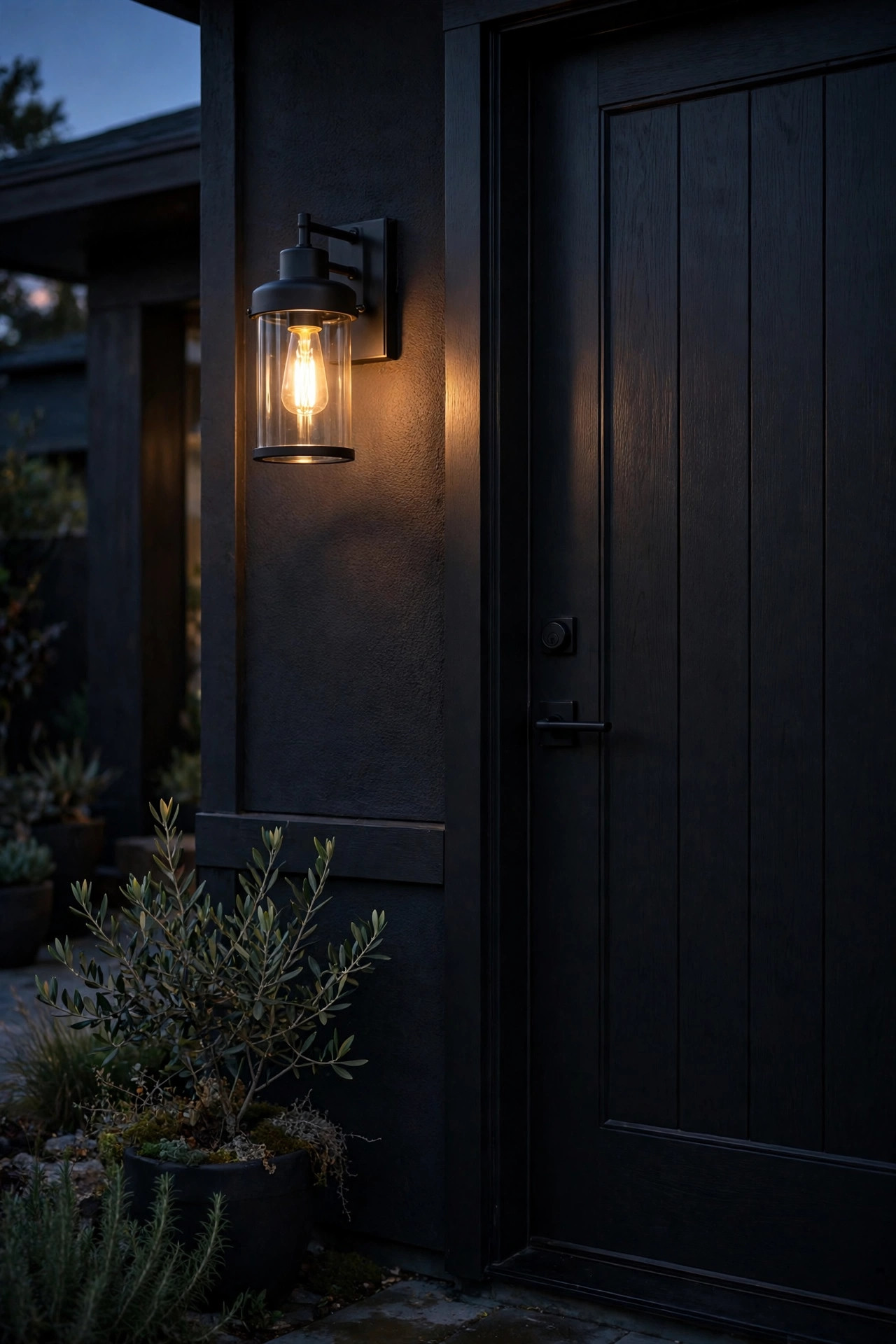
2. Matte Black on Black, Saved by the Bulb
Yes, you can absolutely do black fixtures on a black door — designers do it constantly — but the trick is that the *light*, not the fixture, has to provide the contrast. Choose matte black sconces with clear glass and an exposed LED filament bulb, and the fixture becomes a quiet silhouette while the glowing amber filament draws every eye. Texture is your other ally: a hammered, ribbed, or seeded-glass shade catches tiny highlights that a smooth glossy fixture never will. In my experience, this look works best on doors with raised panels or sidelights, because the bulb's glow rakes across the molding and creates shadow lines the flat door can't produce on its own. Keep bulbs at 2700K and 450 to 600 lumens each; cooler 4000K light turns the whole scheme icy and cheap. One caution: skip this pairing if your porch is deeply shaded and the siding is dark too — tone-on-tone needs *something* light nearby, even if it's just pale stone or a light porch ceiling, to keep the entry from reading as a black hole at noon.
Suggested budget range: $60 – $180.
3. Oversized Carriage Lanterns for Old-School Drama
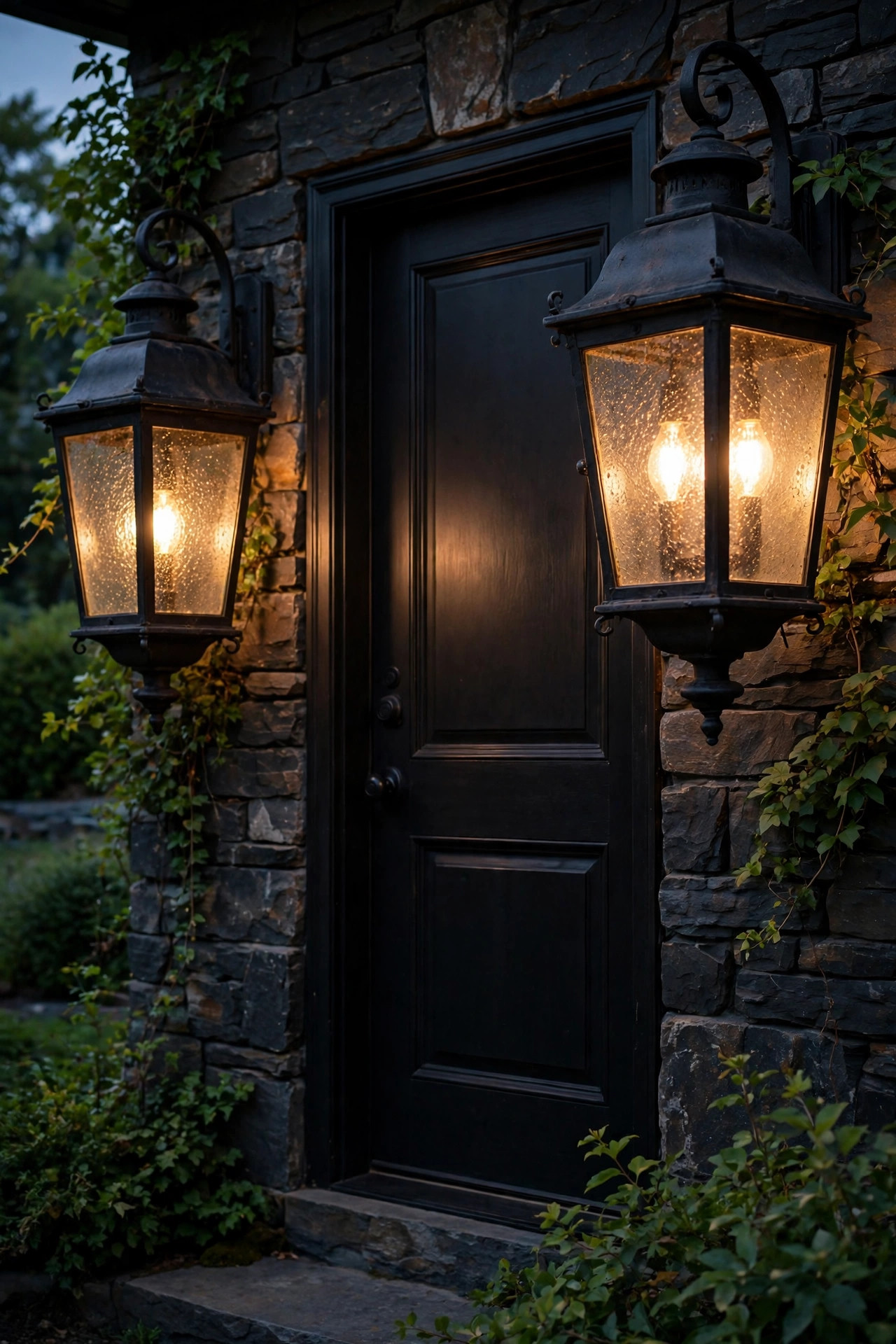
A black door has colonial bones even on a modern house, and oversized carriage-style lanterns lean right into that heritage. The key word is oversized: a lantern that's 18 to 24 inches tall holds its own against a dark 80-inch door where a standard 12-inch fixture looks like a toy. Hang one on each side if your trim allows at least 8 inches of clearance, or center a single large lantern above the door if the entry is narrow. Look for clear or lightly seeded glass — you want to see the bulb cluster glow, because that visible cluster is what sparkles against the black paint from the street. Three-bulb candelabra clusters with warm LED filament bulbs give the most convincing "real flame at a distance" effect. Carriage lanterns in blackened copper or oil-rubbed bronze read nearly black in daylight but glow warm at night, a nice compromise if brass feels too formal. This is an especially forgiving style for older homes with slightly imperfect trim, since the lantern's busy silhouette distracts from every flaw. Just confirm the fixture is wet-rated; those open-bottom designs invite wasps, so a quick nest check each spring is worth it.
Suggested budget range: $120 – $340.
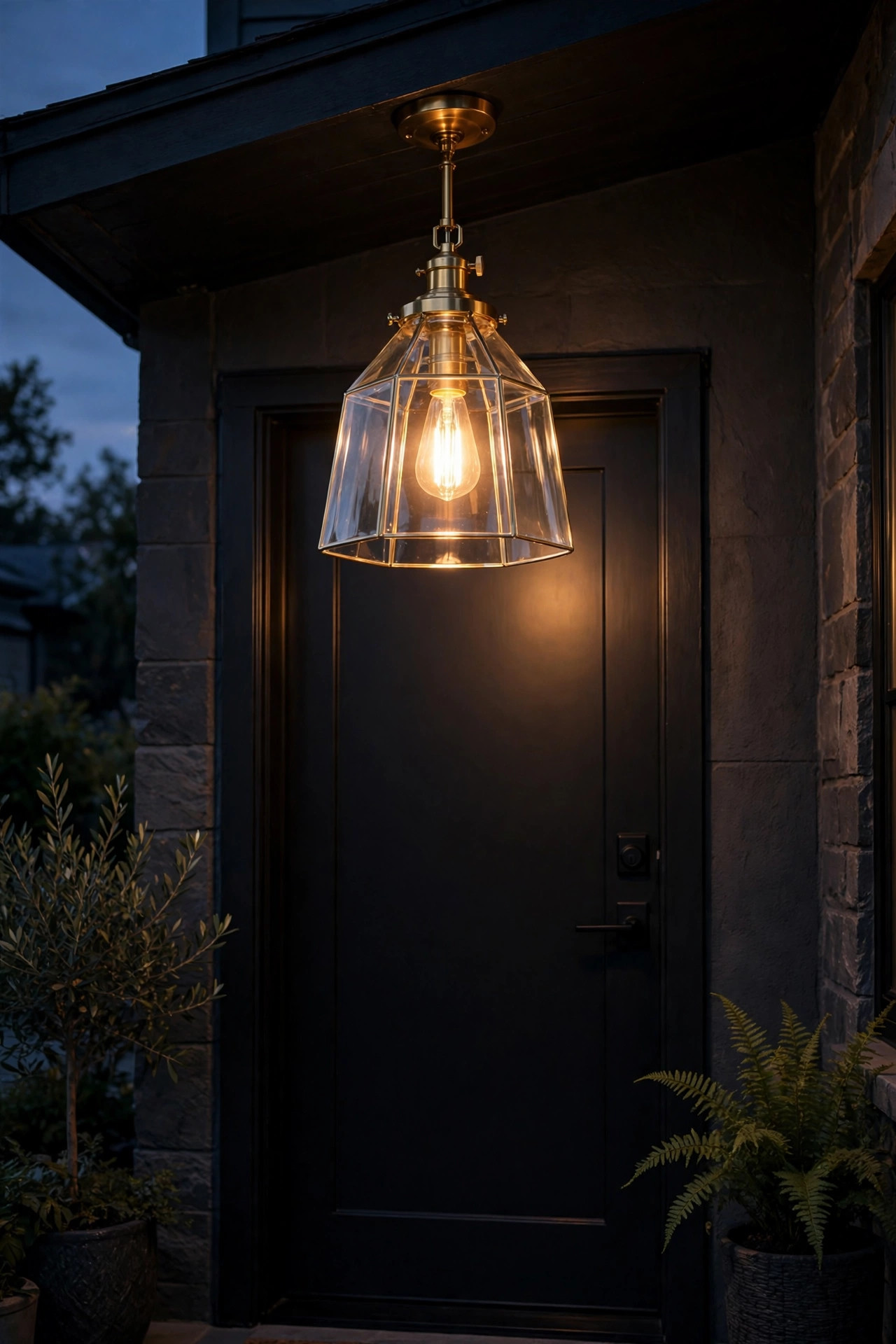
4. A Clear Glass Pendant Overhead
When wall space beside the door is too tight for sconces — hello, sidelights — the ceiling becomes your best friend. A clear glass pendant in a brass, black, or copper finish hangs the light *in front of* the door rather than beside it, and that placement is magic on black paint: the bulb glows against the dark backdrop like a lantern in a window. Aim for a pendant 12 to 16 inches wide for a single door, hung so the bottom sits at least 7 feet above the porch floor (80 inches above the door threshold is the classic rule) and clear of the door's swing if it opens outward. Chain-hung styles let you fine-tune the height, and an open-bottom design makes bulb changes painless from a step stool. Because the bulb is fully visible, spend the extra few dollars on a pretty LED filament bulb in 2700K — a bargain bulb's harsh coil will be the first thing guests see. If your porch ceiling is under 8 feet, choose a semi-flush version instead; idea 20 below covers the best flush-mount approach.
Suggested budget range: $80 – $220.
5. Copper Sconces That Patina With the Seasons
Copper is my favorite "living finish" against a black door. Fresh copper is bright and a little flashy; within a season outdoors it deepens to a warm brown, and within a few years unsheltered pieces develop those soft green edges that make gardeners swoon. Against black paint, every stage of that journey looks deliberate. Choose solid copper rather than copper-tone plating if your budget allows — plated finishes can peel in wet locations, while solid copper just keeps evolving. A lantern or barn-style copper sconce, one on each side of the door at eye level, gives you a glow that feels handcrafted rather than showroom. Pair copper with a warm 2700K bulb; anything cooler fights the metal's natural warmth. One honest warning: copper near a black door in a rainy, unsheltered spot will patina fast, and runoff can streak light-colored siding below. If your siding is white, a lacquered copper finish keeps the color fixed and the walls clean. Unlacquered or lacquered, wipe fingerprints off at installation — skin oils print permanently into the early patina.
Suggested budget range: $110 – $300.

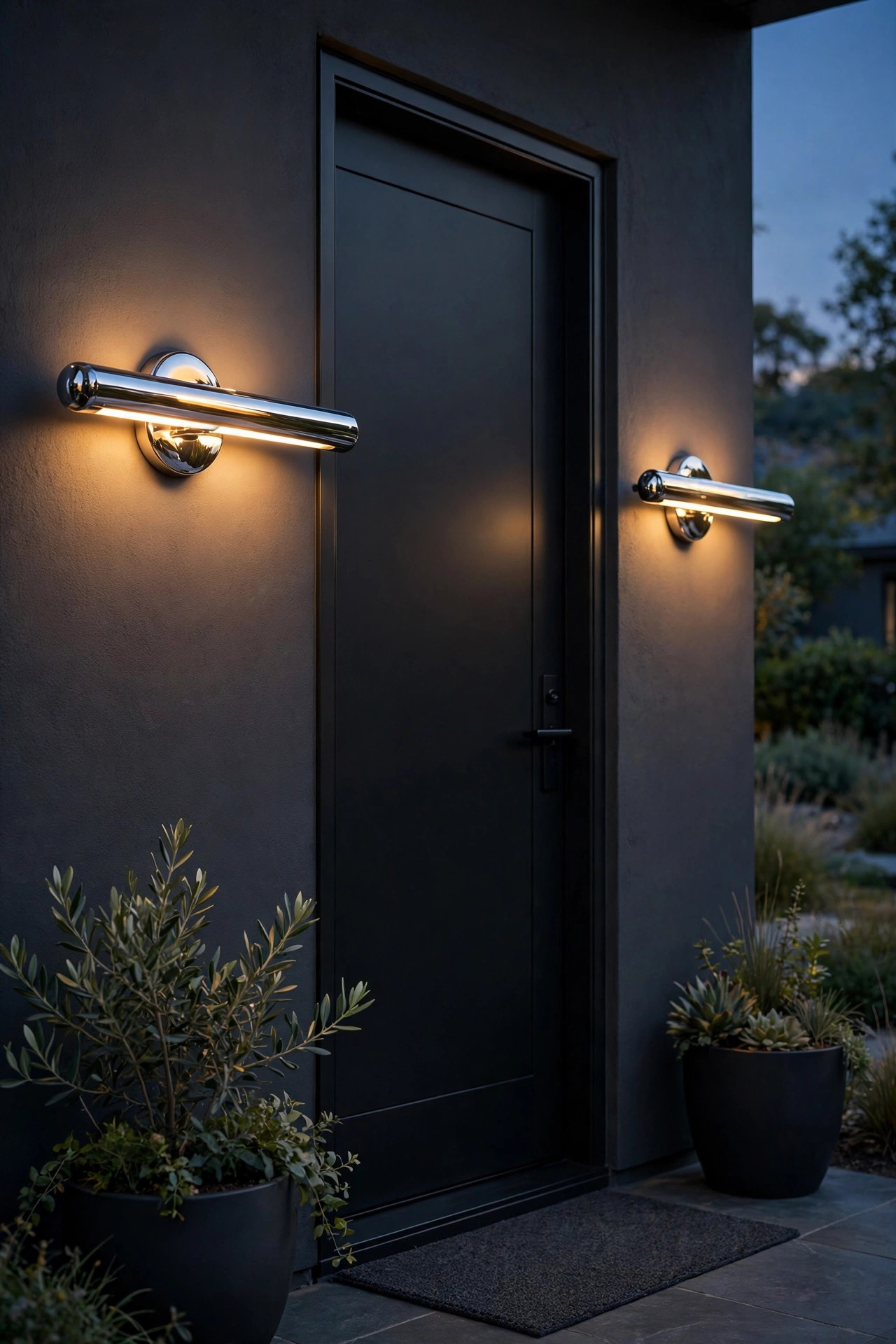
6. Polished Chrome and Nickel for a Modern Pop
For a contemporary black door — flat panels, long bar pull, not a molding in sight — warm brass can feel like it's from the wrong house. Polished chrome or polished nickel is the modern answer: the mirror finish literally reflects the porch, the sky, and the bulb's own light, so the fixture sparkles against the matte black door even at midday. Slim bar sconces and geometric cage designs look especially sharp. The reflection trick also means these fixtures visually "borrow" brightness, so you can choose a slightly lower-lumen bulb (around 400 lumens) without the entry feeling dim. The trade-off is maintenance. Polished finishes show every water spot and fingerprint, and in coastal air they need a wipe with a soft cloth every few weeks to stay crisp. Brushed nickel is the lower-effort cousin — less mirror, more soft sheen — and still contrasts beautifully with black. Whichever you pick, keep the bulb temperature at 2700 to 3000K; the cool blue-white bulbs often displayed with chrome in showrooms look clinical on a home's entry at night.
Suggested budget range: $70 – $210.
7. White or Cream Fixtures for Graphic Contrast
Nothing pops against black like white — it's the highest-contrast pairing there is, and it turns your entry into a clean black-and-white graphic that photographs beautifully. White or cream lantern sconces suit cottage, coastal, and farmhouse-leaning homes especially well, and they solve a subtle problem: against a black door, a white fixture is the one finish you can size *down* slightly, because contrast does the visual heavy lifting. A 12 to 14-inch white lantern reads as boldly as an 18-inch dark one. The look stays cohesive if you repeat the white somewhere else — porch railing planters, trim, a bench — so the fixtures feel like part of a palette, not an accident. Glossy white enamel shows dirt less than you'd fear; a hosedown twice a year keeps it fresh, though matte white can hold onto porch dust in dry climates. Bulb choice matters enormously here: warm 2700K light keeps the pairing cozy, while daylight bulbs push it toward stark and commercial. If your home's style is traditional, a cream or antique-white finish softens the contrast just enough.
Suggested budget range: $55 – $170.

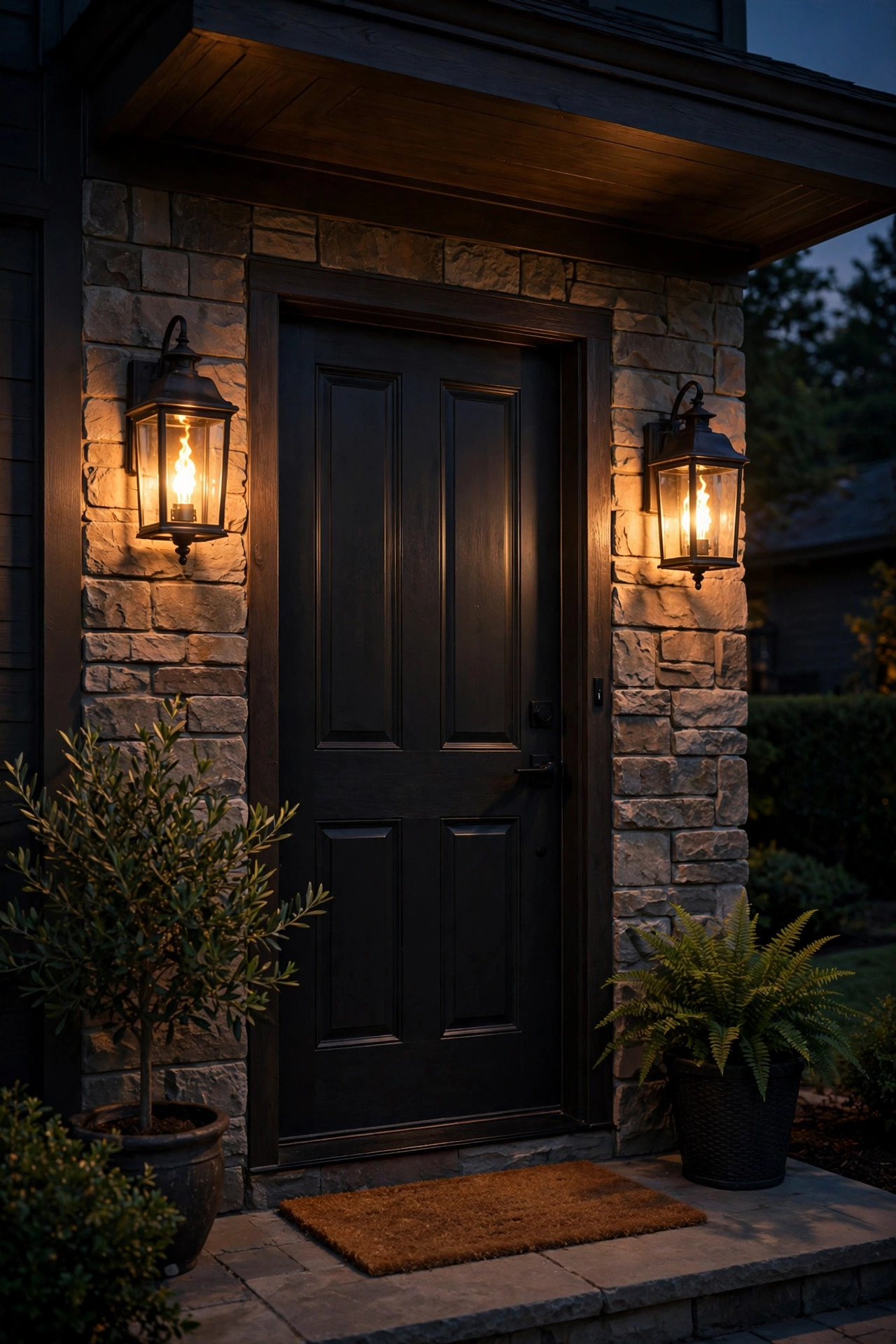
8. Flame-Effect Lanterns With a Living Flicker
Some black doors want charm more than polish, and a flickering flame-effect lantern delivers it instantly. Modern LED flame bulbs simulate a dancing gas flame convincingly enough that neighbors will ask if it's real — and against a black door, that moving amber light does something a steady bulb can't: it makes the whole entry feel alive. Use flame bulbs inside clear-glass lantern sconces, one flanking each side, and match them with a steady bulb in any overhead fixture so guests still get honest light on the steps. Honestly, the effect works best at dusk and after dark; in bright porch conditions the flicker can look faint, so choose lanterns with a dusk-to-dawn sensor or put them on a timer set for sunset. Flame bulbs are decorative first — most produce only 100 to 300 lumens — which is exactly why the steady companion light matters for safety. This pairing is pure magic in fall and through the holidays, when a black door, a flickering lantern, and a harvest wreath make the whole street slow down. Look for bulbs rated for enclosed or semi-enclosed fixtures if your lantern has a top cap.
Suggested budget range: $75 – $200.
9. A Gooseneck Barn Light Above the Door
Mount a single gooseneck fixture high above the door and let it throw a wide, welcoming pool of light down the door's face. The downward wash is uniquely flattering to black paint: instead of a bright spot floating in darkness, you get a soft gradient that reveals every panel and molding line. This is the farmhouse workhorse, usually in black, galvanized, or barn red — against a black door I like a white interior shade, which bounces more light downward and gives you that pretty bright "bowl" visible from the street. Position the fixture 12 to 18 inches above the door frame with the shade angled straight down; too flat an angle creates glare for anyone approaching. One gooseneck can replace a sconce pair entirely on narrow entries, and because it's a single fixture, installation is quicker and cheaper. Use a 800 to 1,100-lumen bulb in 2700K, ideally on a dimmer or smart bulb, since a bare downlight at full blast can feel like a stage light. Add a cage guard if your entry gets wind-blown debris or the occasional basketball.
Suggested budget range: $65 – $190.

10. Milk-Glass Globe Sconces for Soft, Even Glow
If exposed bulbs feel too harsh against your black door, diffuse them. Milk-glass (opal) globe sconces hide the bulb inside a soft white sphere, and the whole globe becomes the light source — a floating moon beside your door. Against black paint the effect is striking and a little mid-century, especially paired with a brass or black mounting arm. Globes scatter light in every direction, which means they illuminate faces beautifully (no raccoon-eye shadows for guests fumbling with keys) and they wash the door itself with gentle, shadowless light that shows off a glossy black finish. Choose globes 6 to 8 inches in diameter for a standard door; a matched pair flanking the door is classic, though a single offset globe suits modern asymmetrical entries. Because diffused light feels dimmer than bare-bulb light at the same wattage, step up to 600 to 800 lumens per globe. The glass is also forgiving in wet weather — just confirm the fixture is wet-location rated, since some globe designs are damp-rated only and belong strictly under a covered porch.
Suggested budget range: $60 – $185.

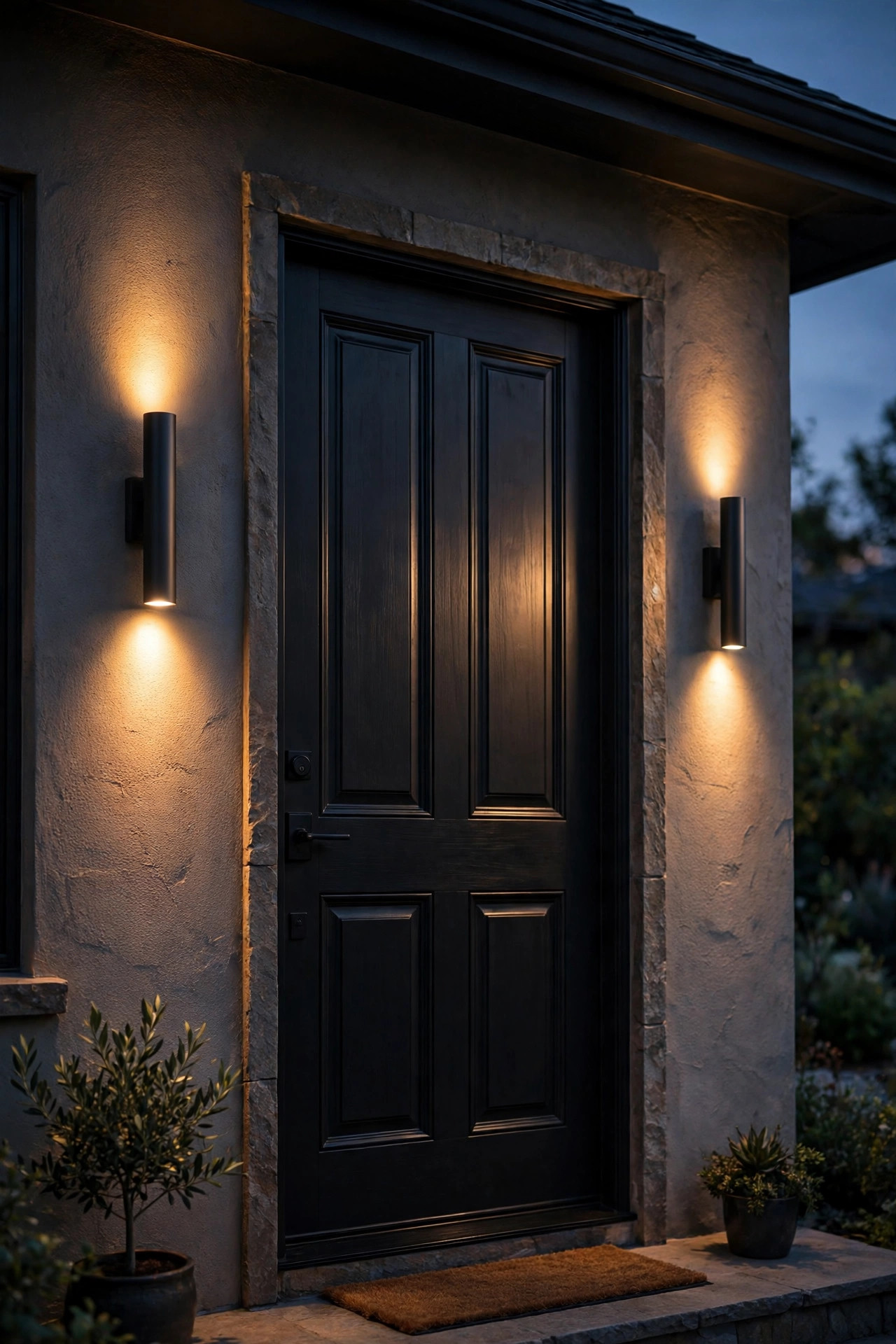
11. Up-Down Cylinder Sconces That Paint the Door With Light
Here's a modern trick I love for black front door lighting ideas that feel architectural: slim cylinder sconces that throw light both up and down. The downward beam pools on the porch floor while the upward beam grazes the wall and the edge of the door frame, outlining the entry in two ribbons of light. On a black door, that grazing light is gold — it skims across the surface at an angle and throws every panel edge into relief, turning a flat black rectangle into a sculpted feature. Mount cylinders tight to the door trim, about 66 inches high, and choose a narrow beam if your siding is textured brick or stone, since grazing light exaggerates texture beautifully (and, fair warning, also exaggerates flaws in flat siding). Most cylinder fixtures take GU10 or integrated LED modules; pick 2700K and look for a combined output around 700 to 900 lumens. Black cylinders disappear against a dark facade in daylight for a clean look, while bronze or brushed aluminum versions add a slim metallic accent line. These are among the most affordable ways to get a high-end hotel-entry feel.
Suggested budget range: $55 – $160.
12. Backlit House Numbers That Glow Beside the Door
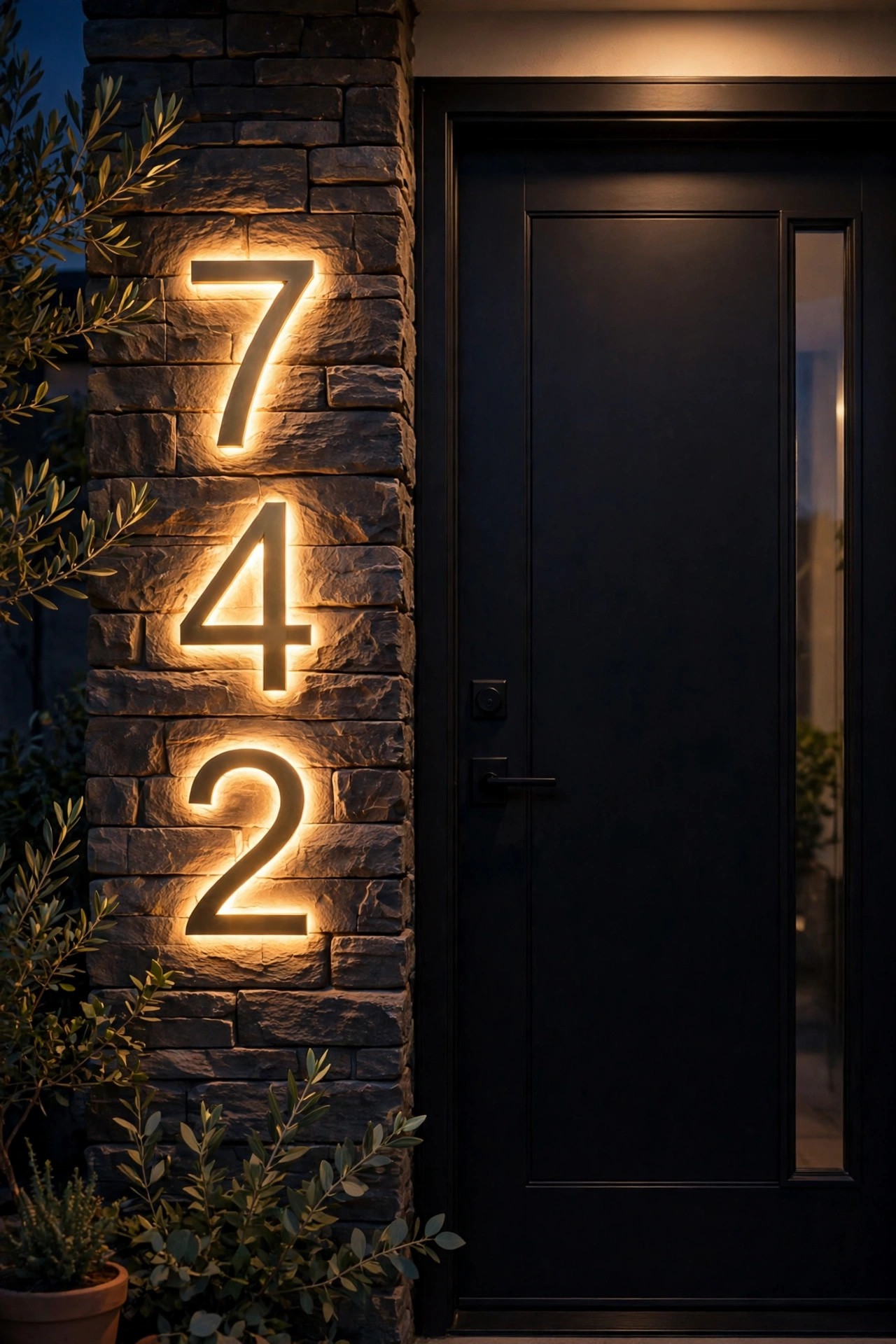
Sometimes the smartest fixture isn't a light at all — it's a glow with a job. Backlit LED house numbers mount a few inches beside the door and halo each digit in warm light, and against a black door or dark facade that floating halo looks impossibly chic. There's a practical payoff too: delivery drivers and first responders can read your address from the street, something a porch light alone rarely achieves. Choose numbers 5 to 6 inches tall in a finish that contrasts during the day — brushed brass or stainless against black — since the halo effect only appears after dark. Most backlit numbers run on low-voltage power shared with landscape lighting, or on a small plug-in transformer; a few solar versions exist but their glow is weaker and less even, so hardwired is worth the effort here. Wire them to the same timer as your sconces so the whole entry wakes up together at dusk. Mount numbers at about 60 inches, level with the sconce line, and space the digits evenly — crooked glowing numbers look worse than no numbers at all.
Suggested budget range: $45 – $130.
13. A Lit Wreath That Turns the Door Into the Fixture
Every other idea lights *around* the door; this one lights the door itself. A battery-operated LED wreath — warm white micro-lights woven through greenery, eucalyptus, or even a simple grapevine base — hangs at the center of a black door like a piece of jewelry, and the dark paint behind it makes each tiny light sparkle with nothing competing for attention. It's the single most photographed look in this whole list, and it works year-round if you swap the wreath seasonally: spring florals, summer greenery, fall leaves, winter pinecones. Choose a wreath 22 to 26 inches across for a standard 36-inch door, and look for a built-in timer (six hours on, eighteen off is typical) so you're not replacing batteries or flipping switches nightly. Lithium AAs last noticeably longer in cold weather than alkalines. Hang it on a matte black over-door hook so the hardware disappears. Because the lights are LED and battery-powered, there's no heat against the paint and no cord to route — the safest idea here for a freshly painted door.
Suggested budget range: $35 – $95.

14. Ground Uplights That Wash the Whole Entry
When the porch itself is small or the architecture doesn't allow wall fixtures, take the light to the ground. Two low-voltage well lights or spotlights, staked 12 to 18 inches out from the door and aimed up at a steep angle, wash the entry in a soft rising glow that makes a black door look like a theater backdrop. Uplighting flatters black paint because it eliminates the hard shadows sconces cast and reveals the door's full height. Keep the beams narrow (15 to 25 degrees) and the color at 2700K; wide flood beams will spill onto windows and annoy everyone inside. Well lights that sit flush with the mulch are nearly invisible by day — a real advantage if your front beds are tidy. This approach pairs beautifully with idea 15's path lights since they can share one low-voltage transformer and cable run, usually 12-gauge for runs under 100 feet. One safety note: aim and shield uplights so they don't shine into the eyes of anyone walking up — a simple glare guard or a slight tilt away from the walkway fixes it.
Suggested budget range: $70 – $190.
15. Solar Path Lights That Lead the Eye Home
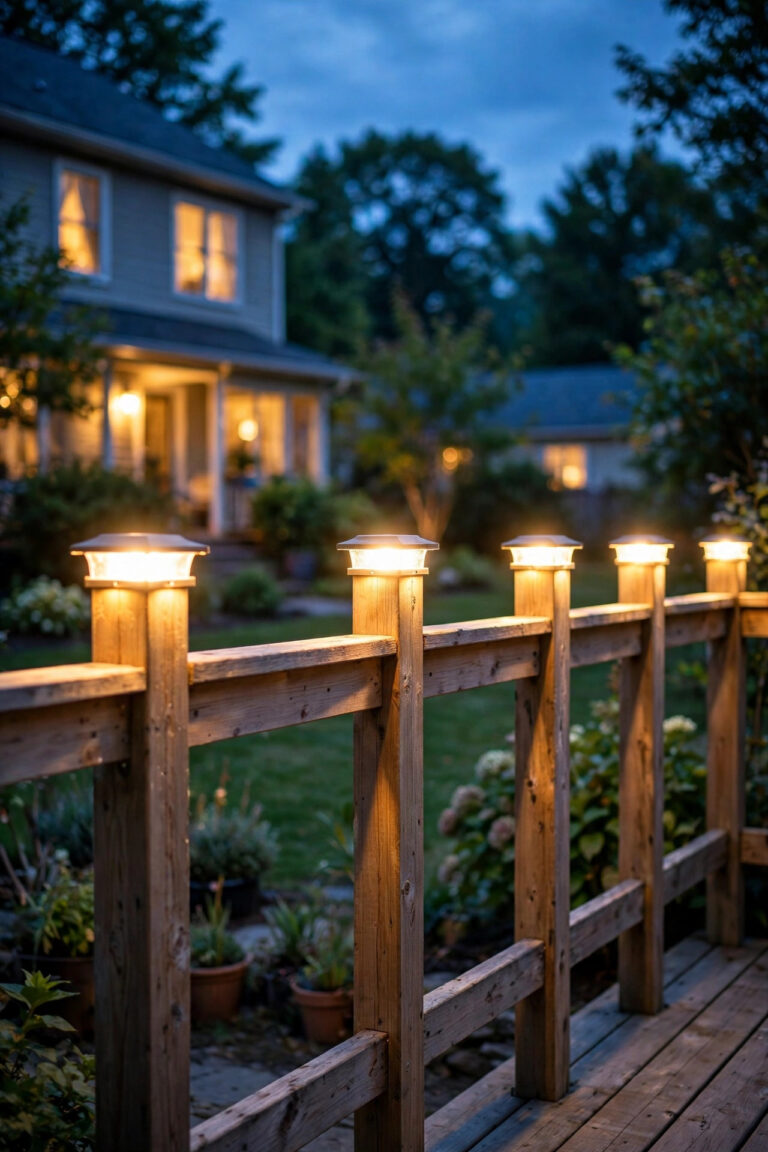
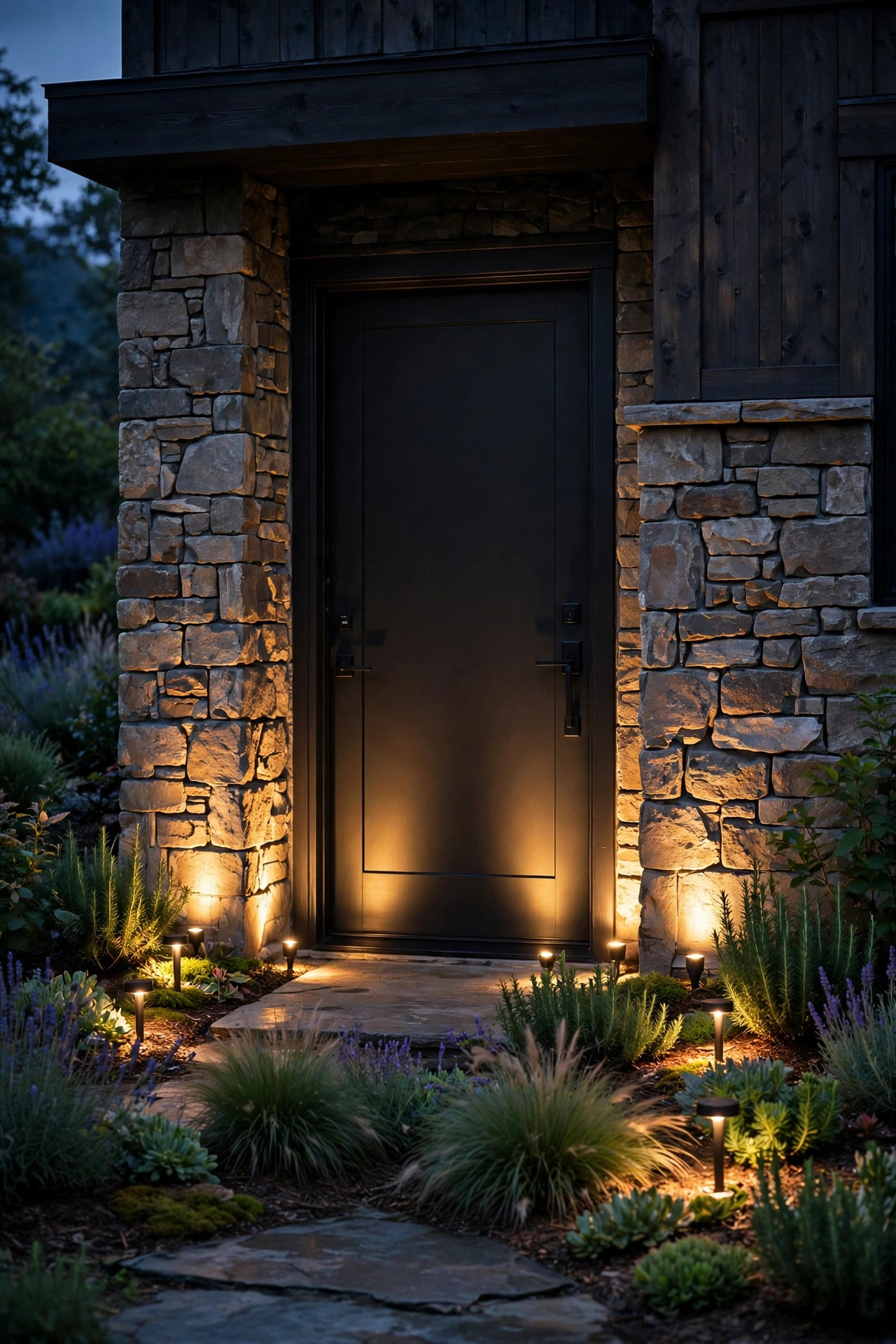
Your door lighting starts working long before anyone reaches the porch. A line of solar path lights along the walkway creates a dotted path of warm light that pulls the eye straight to the entry — and when the entry ends in a glowing black door framed by brass or lanterns, the whole composition lands like a runway. Spacing is everything: place path lights 5 to 6 feet apart, staggered or paired, and resist the urge to line them up like airport strips on both sides at tight intervals. Against the dark-door theme, choose path lights whose finish echoes your door fixtures (brass with brass, matte black with matte black) so the yard and porch read as one design. Solar quality varies wildly; look for at least 80 to 100 lumens per light, real glass lenses, and replaceable batteries — the dim 10-lumen grocery-store stakes will make your beautiful door lighting look accidental. In shaded yards, remote-panel solar lights let you hide the panel in a sunny spot. My favorite touch: end the path with two slightly brighter lights flanking the bottom step, like footlights announcing the entrance.
Suggested budget range: $40 – $140.
16. Café String Lights Framing the Porch
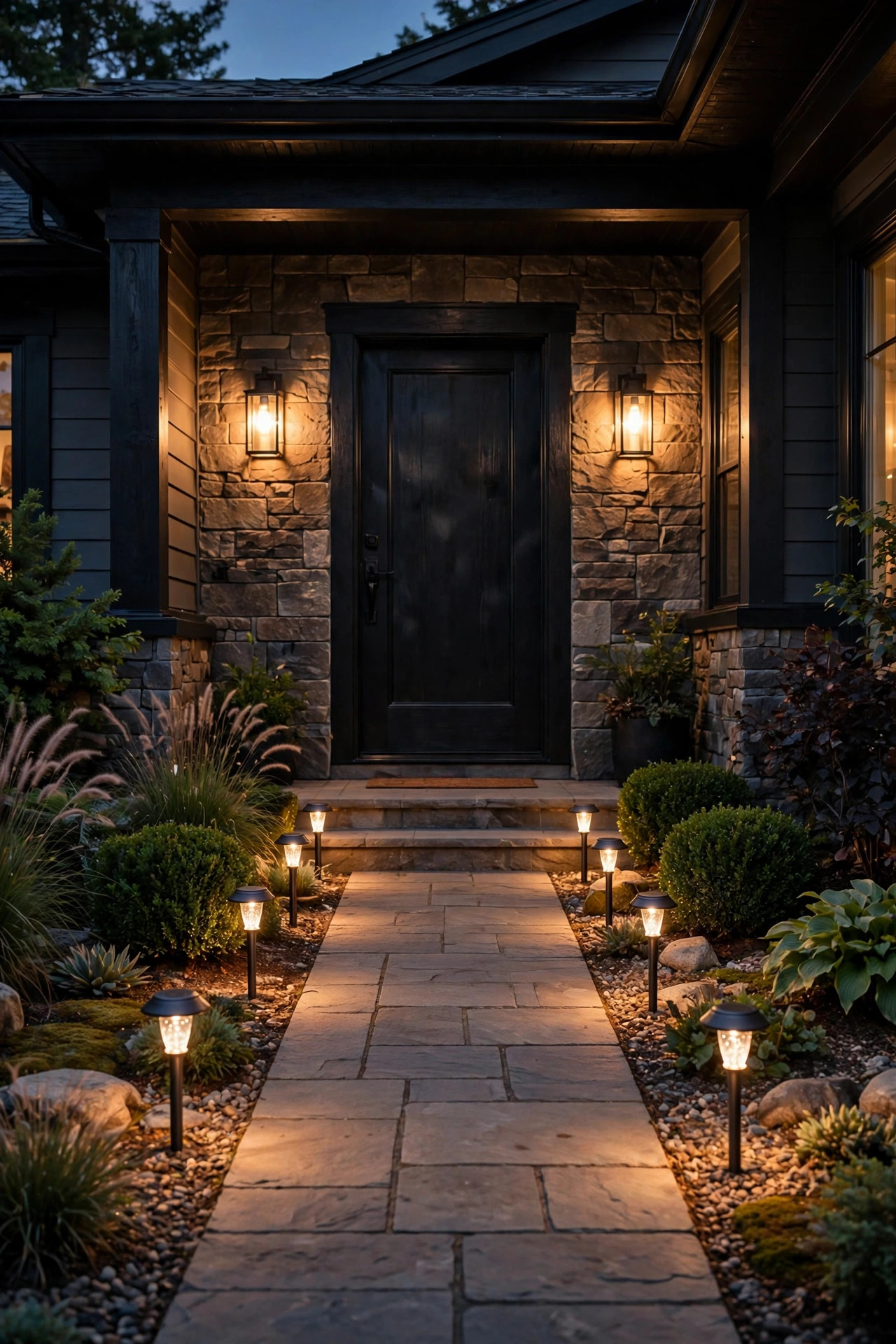
If your black door belongs to a porch with posts or a pergola edge, a swag of café string lights frames the whole entry like a marquee. The string of warm bulbs creates a bright *border* around the dark door, and borders are exactly what black paint needs — a defined edge that separates the door from the night around it. Drape one strand in a gentle swag between porch posts, or run it along the inside of the porch beam so the bulbs silhouette against the dark facade. Shatterproof LED café bulbs in 2700K are the practical choice: they sip power, survive weather, and won't shatter over a walkway. Keep strands on a timer or dusk sensor, and use guide wires or cup hooks every few feet so wind doesn't swing them against the door — a bulb tapping black paint all night will leave marks. This look leans casual and festive, perfect for cottage and bungalow entries; if your home is formal, keep the swag shallow and symmetrical. I collect more porch-framing tricks in my front porch lighting ideas roundup.
Suggested budget range: $30 – $110.

17. Step Lights That Make the Climb Glow
A stunning door means nothing if guests are guessing at the steps. Recessed step lights or small LED tread lights on each porch step solve the safety problem and, almost accidentally, create one of the prettiest effects on this list: a staircase of light rising toward the black door, each step edged in warmth. Hardwired step lights built into the riser look cleanest — choose louvered or eyelid styles that push light downward onto the tread rather than outward into eyes. One light per step, centered or offset toward the railing side, is plenty; 50 to 100 lumens per step is genuinely enough, and more just looks like a landing strip. Solar stick-on step lights are the renter-friendly version and have improved a lot, though hardwired wins on reliability in winter. Match the finish to your other fixtures when the lights are visible by day. Since these involve either masonry drilling or low-voltage cable in the steps, they're the most installation-heavy idea here — but they're also the one guests over sixty will thank you for, every single visit.
Suggested budget range: $60 – $220.

18. Smart Tunable Sconces for Seasonal Moods
A black door is a chameleon backdrop, and smart color-tunable sconces let you exploit that. On ordinary evenings you run a classic 2700K warm white; for Halloween the same fixtures wash the door in amber or deep purple; December gets a soft festive red-and-green on party nights. Because black absorbs color rather than reflecting it back messy, saturated colors read rich and moody instead of garish — a trick that falls flat on white doors, where color just looks like a mistake. Choose smart bulbs in standard sconce fixtures or integrated smart fixtures, and confirm your Wi-Fi reaches the porch (a weak signal is the number-one frustration with outdoor smart lighting; a mesh node near the front of the house usually fixes it). Set schedules in the app so the "scene" returns to warm white automatically after holidays — your future self will appreciate it. Brightness around 600 to 800 lumens per fixture keeps the warm-white mode genuinely useful for everyday arrivals. Keep one honest caveat in mind: colored light is for fun, not for finding keys, so leave a steady white layer somewhere in the mix.
Suggested budget range: $85 – $240.

19. Motion-Sensor Lanterns for a Welcome That Answers
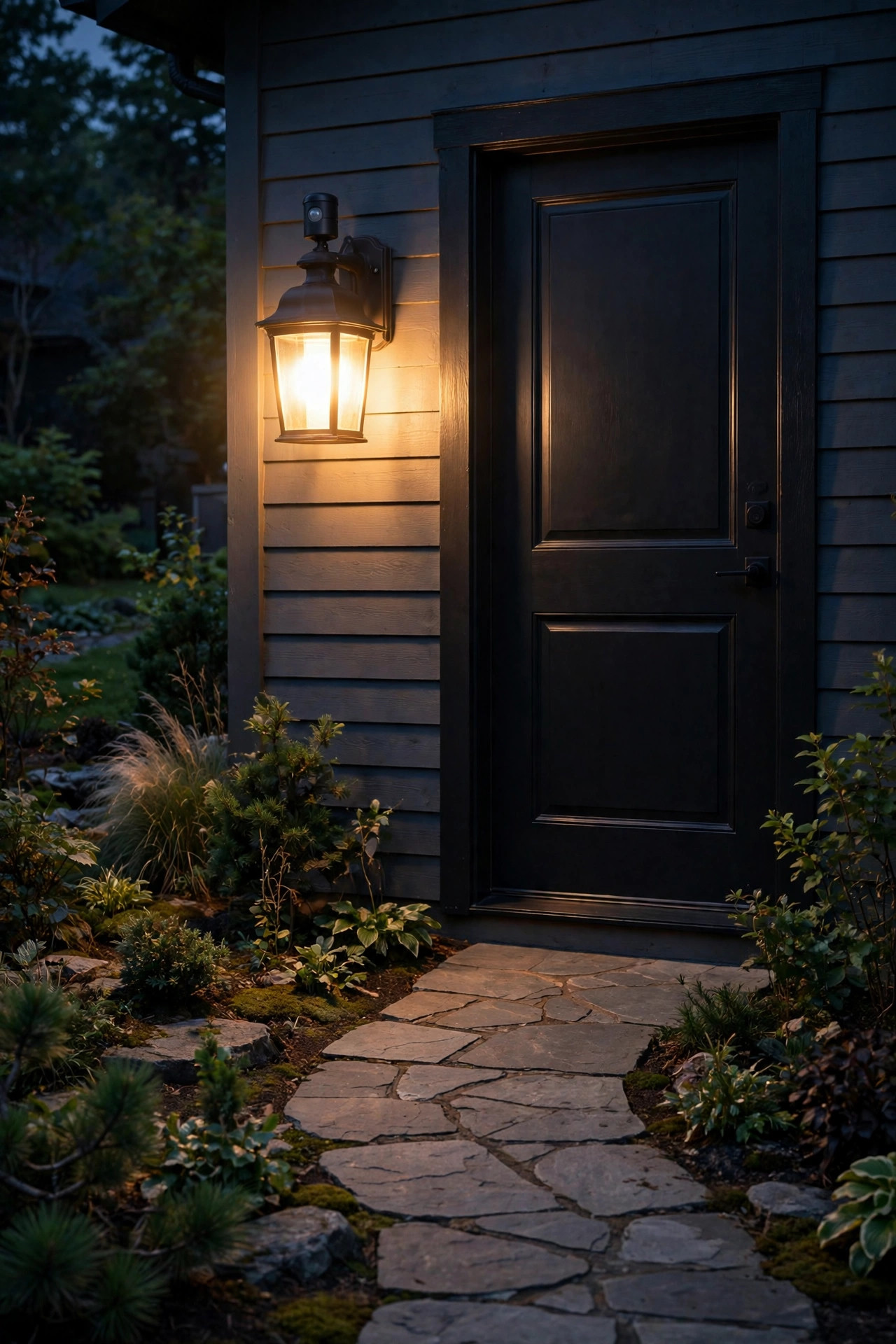
There's a small delight in a light that turns on *for you*. Motion-sensor lantern sconces beside a black door stay dark and handsome all day, then bloom to full brightness as you come up the walk with grocery bags. That sudden glow against the black door is genuinely dramatic — and it's the most practical security light on this list, since a dark entry that lights up on approach is exactly what you want at 11 p.m. Look for a sensor range of 25 to 40 feet with an adjustable field (cheap fixed sensors trigger on every passing car), plus a dual-brightness mode: many lanterns idle at 20 percent glow for ambiance and jump to full when triggered, which I consider the best of both worlds. Set the on-time to 1 to 3 minutes so it's not snapping off while you find your keys. Position sensors so they cover the walkway approach, not the street, and remember that heat sources and reflective black paint in summer sun can occasionally false-trigger older PIR sensors. Modern microwave sensors are steadier if your porch bakes in afternoon sun.
Suggested budget range: $70 – $190.
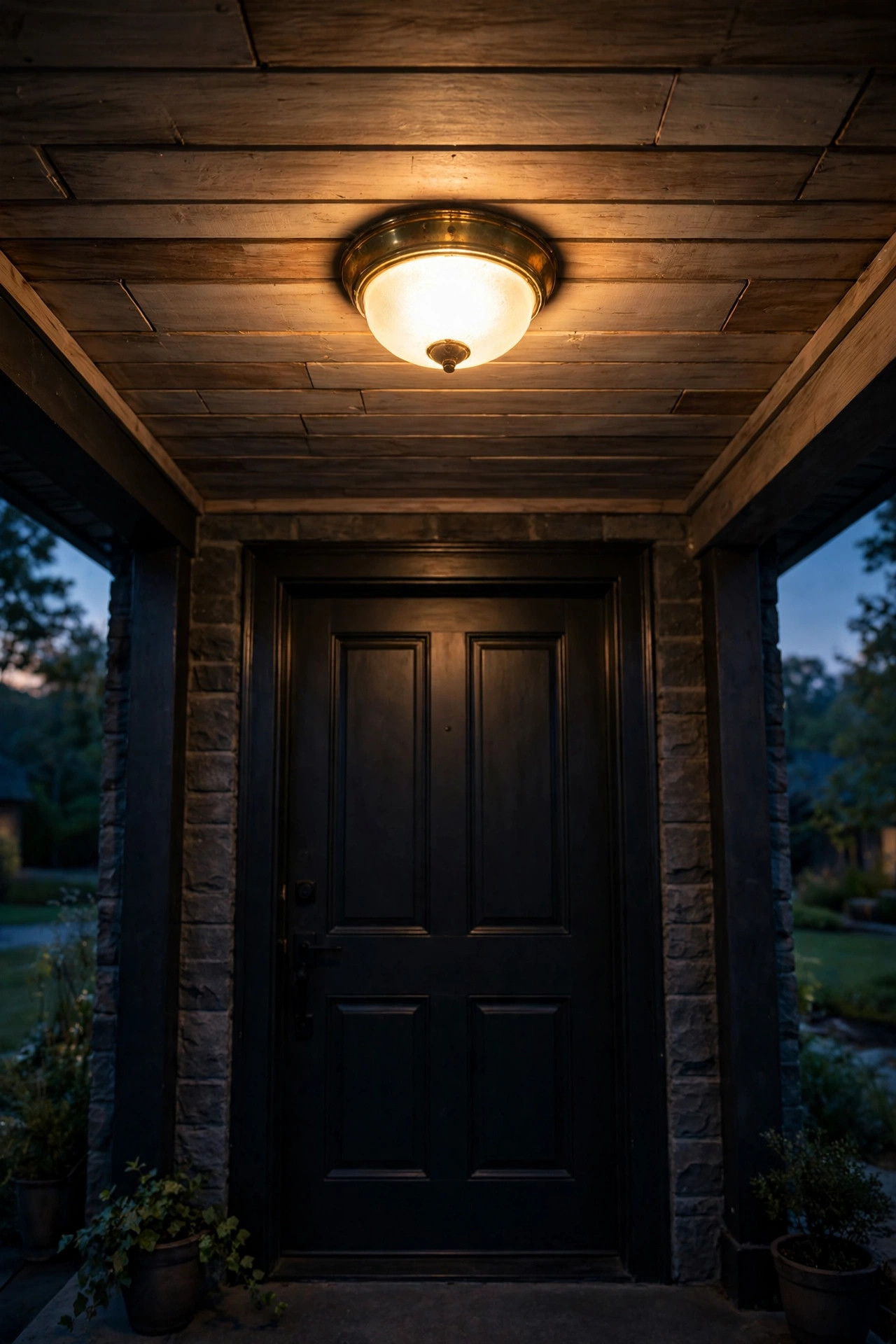
20. A Brass Flush-Mount for Low Porch Ceilings
Not every porch can take a pendant — ceilings under 8 feet need a flush-mount, and against a black door the right flush-mount in aged brass is quietly luxurious. The fixture hugs the ceiling, so all you see from the street is a warm glowing disc floating above the dark door, reading almost like a full moon over the entry. Choose a design with a frosted or opal glass diffuser 12 to 15 inches wide; bare-bulb flush mounts at low heights glare straight into taller guests' eyes. Output of 800 to 1,200 lumens lights a small porch honestly, and a dimmable LED version lets you soften it for sit-on-the-porch evenings. Brass isn't the only answer — a white flush-mount disappears into a white porch ceiling for a clean modern look, leaving only the light itself visible against the black door, which is a genuinely elegant trick. Installation is the simplest of any hardwired idea here since you're usually swapping one ceiling fixture for another on the existing box. Just confirm the ceiling box is rated for the fixture's weight — most flush-mounts are light, but vintage-style brass can surprise you.
Suggested budget range: $50 – $175.
21. The Layered Trio: Sconces, Overhead, and Path Together
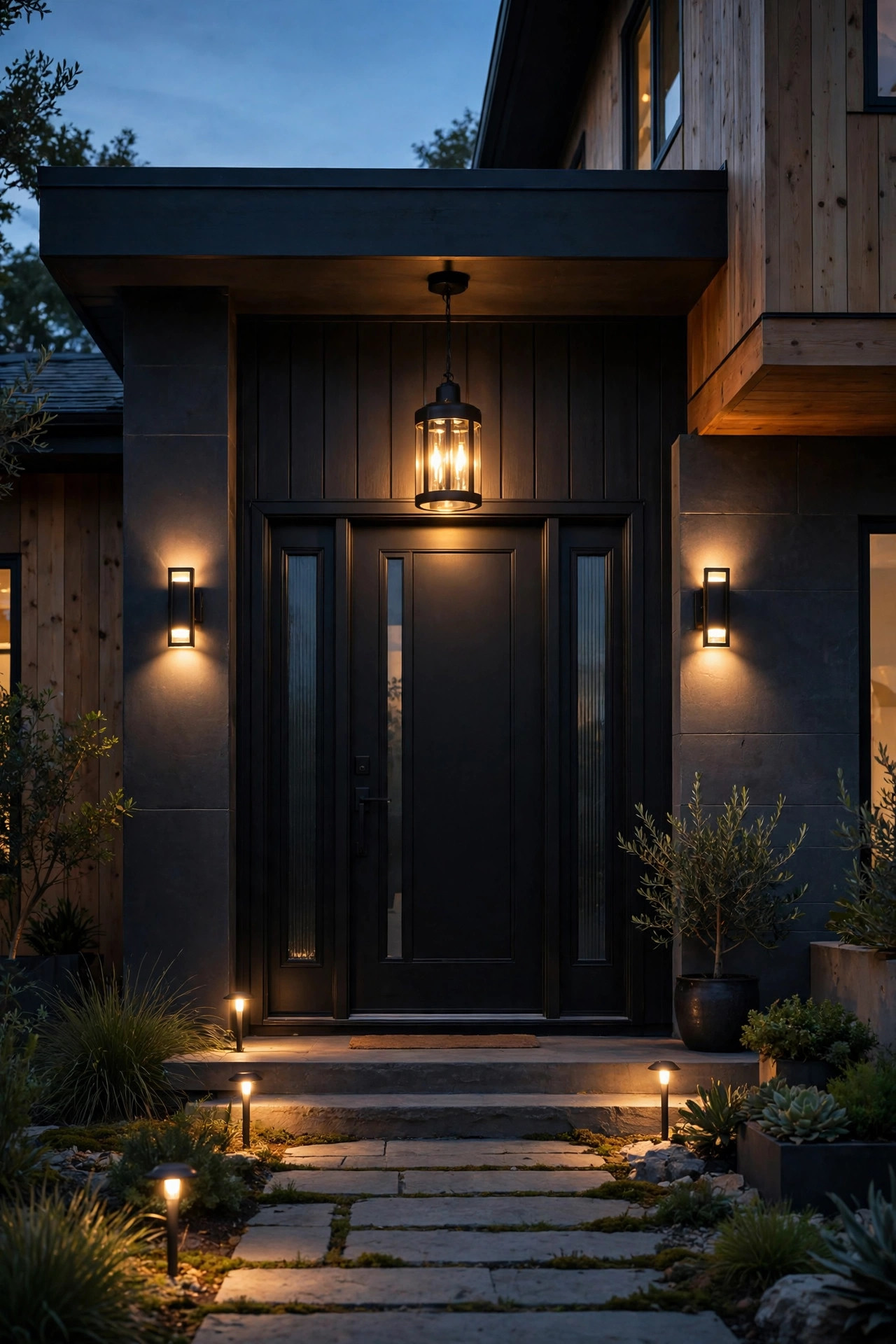
After 20 individual ideas, here's the one I'd actually install first on my own black door: three modest layers working together, because black front door lighting ideas succeed or fail as a *system*. Layer one, a pair of warm-finished sconces at the door for faces and the lock. Layer two, one overhead source — pendant, flush-mount, or gooseneck — to wash the door's full height. Layer three, path or step lights to pull the glow out into the yard. No single layer needs to be expensive or bright; together they create depth that one hero fixture never can, because the eye reads the entry in stages — path, porch, door — instead of one flat bright rectangle. Put all three layers on one timer or a smart plug schedule so the whole composition arrives at dusk together, and keep every bulb at 2700K so the layers blend seamlessly. If budget forces you to phase it in, start with the sconces, add the overhead next, and let the path lights be the finishing touch. This is the exact layering philosophy behind everything on this site, and it turns a door that used to disappear at night into the best-looking entry on the street.
Suggested budget range: $180 – $450.
Frequently Asked Questions
What color fixture looks best on a black front door?
Warm metals win most often: aged or brushed brass and copper both contrast clearly against black paint and glow warm at night. For modern homes, polished chrome or brushed nickel gives a crisp reflective pop, and white or cream fixtures make the boldest graphic statement. Matte black fixtures can work beautifully too, but only when the bulb or glass provides the contrast — clear glass with a visible filament bulb is the safest version of that look.
What color temperature should lights by a black door be?
Stick with 2700K warm white for nearly every fixture at a black door. Black paint swallows light, and cool 4000K+ bulbs make the little light that remains look blue and unwelcoming. A consistent 2700K across sconces, overhead, and path lights makes the entry read as one warm composition. The one exception is a modern chrome scheme, where 3000K can look intentional — but never mix temperatures within the same view.
How bright should front door lights be?
For a sconce pair, aim for 450 to 800 lumens per fixture; a single overhead fixture should deliver 800 to 1,200 lumens. Black doors absorb more light than pale ones, so choose the upper half of those ranges if your porch is large or your siding is dark too. If the total entry glow still feels weak, add a layer (path, step, or uplights) rather than cranking one fixture brighter — glare is worse than dimness.
Can I install these lights myself, or do I need an electrician?
Swapping an existing sconce or ceiling fixture for a new one is a comfortable DIY job for most homeowners: kill the breaker, match the wires, and confirm the new fixture is wet-location rated if it's exposed to rain. Adding a *new* fixture location, running low-voltage cable for uplights, or wiring step lights into masonry is where an electrician or landscape-lighting pro earns their fee. Solar and battery options — path lights, the lit wreath — need no wiring at all.
Conclusion
A black door doesn't fight light; it just asks light to show up with contrast. Give it a warm metal finish, a glowing filament, a wash from above, or a path of light leading home — ideally two or three of those layers together — and the door that disappeared at sunset becomes the entry everyone remembers. Start with the black front door lighting ideas that match your home's style, keep every bulb at 2700K, and size your fixtures a notch bigger than feels safe. Then browse the rest of my lighting ideas here on the site for the porch, path, and garden layers that finish the picture.