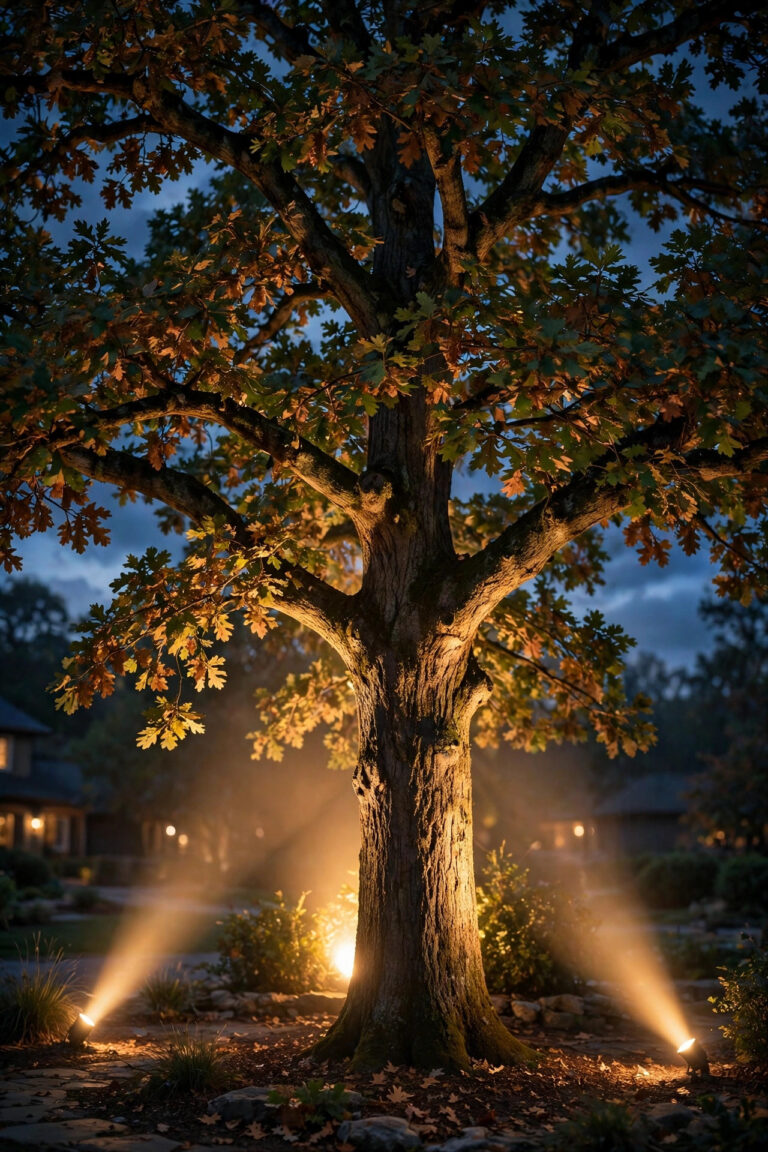
If you ask me what changed my yard more than any other single purchase, it's lanterns — specifically the solar kind that ask nothing of me. No outlets, no extension cords snaking across the lawn, no electrician. The best solar lantern ideas work because they follow the same layering rule I use everywhere outdoors: a little glow at eye level, a little at knee height to mark the way, and one or two statement pieces where you actually sit. In this post I'm sharing 17 ways I use solar lanterns across the garden, the paths, and the porch — hanging, staked, floating, and grouped — with the honest details nobody puts in the product photos: how much sun each spot really needs, which styles survive a storm season, and what each one actually costs. Whether your yard is a half-acre or a stoop with two planters, there's a lantern here that will make your evenings feel softer.
1. Shepherd's-Hook Lanterns Along the Garden Path
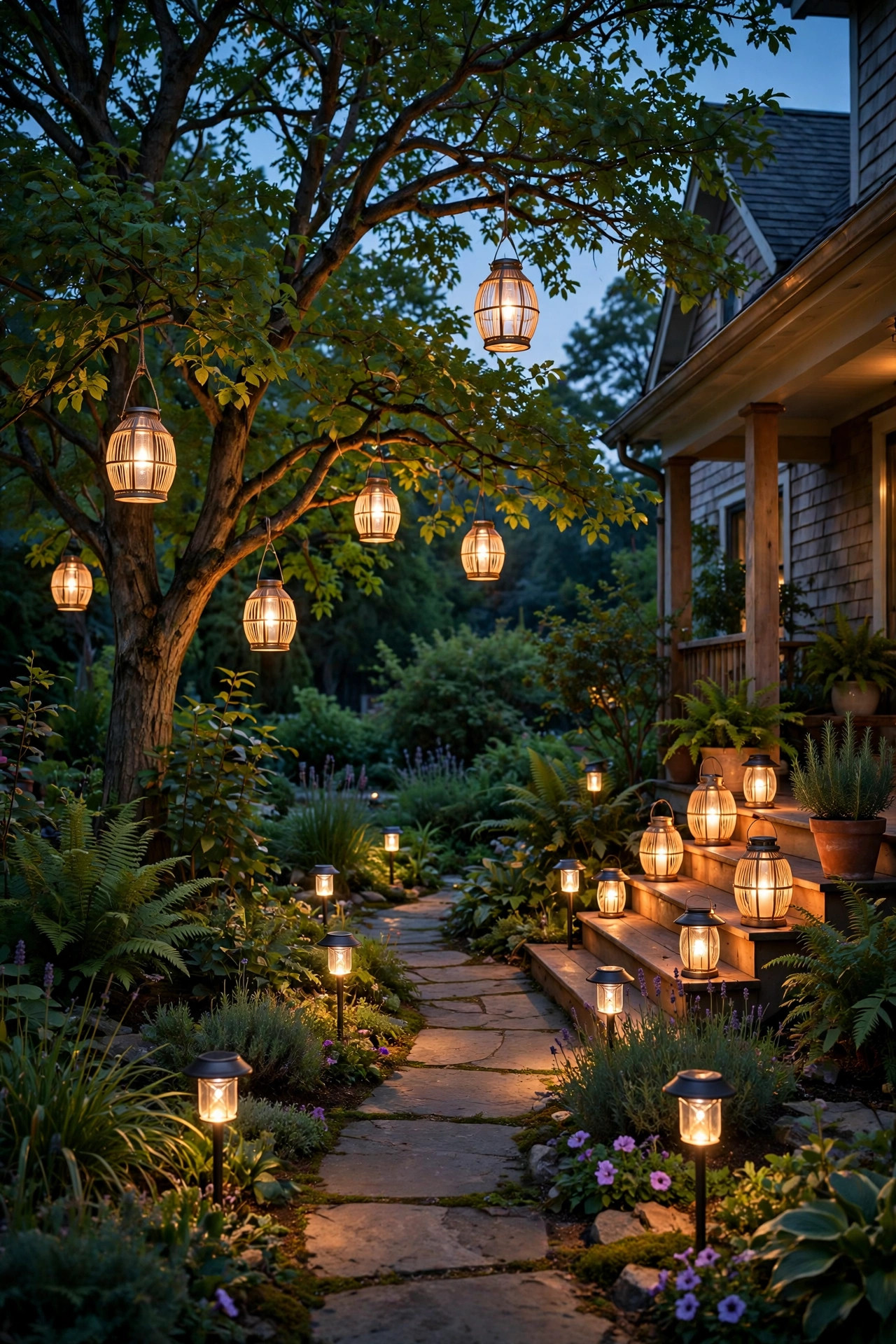
This is the look that started my whole lantern habit. Push 36- to 48-inch shepherd's hooks into the soil every 6 to 8 feet along your main path, alternating sides so the light zigzags instead of marching in a stiff line, and hang a small metal lantern from each one. The lanterns sway almost imperceptibly in the evening breeze, which makes the light feel alive in a way fixed fixtures never do. Choose lanterns with the solar panel built into the cap and warm-white LEDs around 2700K — the cool blue-white ones read "parking lot," not "garden party." Hooks go in easiest after rain, and in hard clay I'll pre-start the hole with a screwdriver. One honest warning: in a deeply shaded yard, hang these where the panel catches at least 5 to 6 hours of direct sun, or move them to the sunny end of the path and let stake lights handle the shade.
Suggested budget range: $45 – $110.
2. Mason-Jar Lanterns on the Porch Table
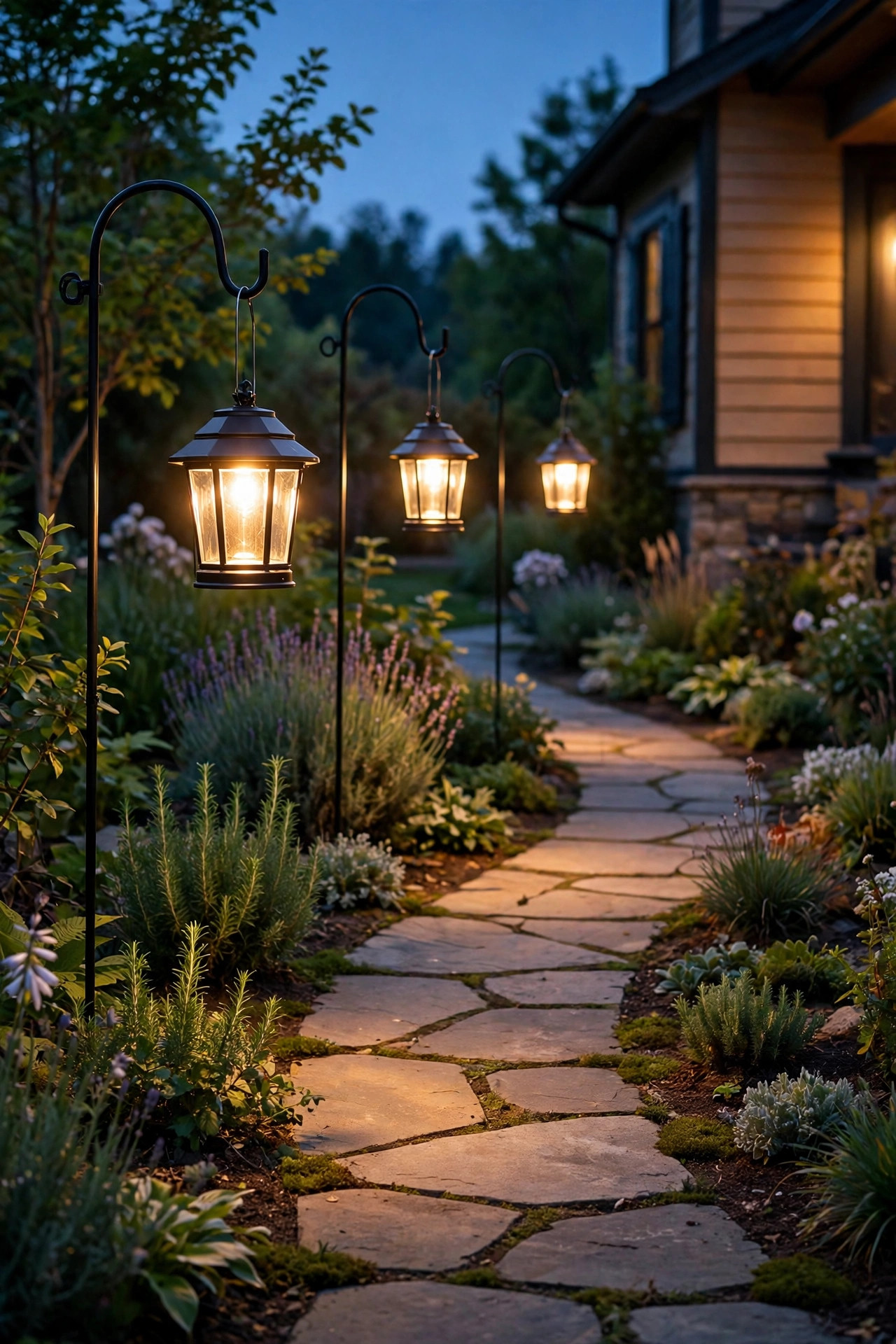
Some evenings call for light you can carry to wherever the conversation lands, and mason-jar solar lanterns are exactly that. The lid holds a small solar panel and a short string of copper-wire fairy lights coiled inside the glass, so the whole jar glows like it's full of fireflies. I keep three on the porch table — one at each end and one in the middle with the napkins — and they give enough soft light to eat by without attracting every moth in the county. They're wonderful for renters, too: zero installation, and they move with you. Set them on a sunny windowsill or railing during the day to charge; a full charge runs mine 8 to 10 hours. If the lids ever dim, the rechargeable batteries are standard AA size and swap in seconds. For a dinner party, tuck a sprig of rosemary or a few garden clippings around the base of each jar and it looks styled, not improvised.
Suggested budget range: $20 – $45.

3. Moroccan-Style Punched-Metal Lanterns
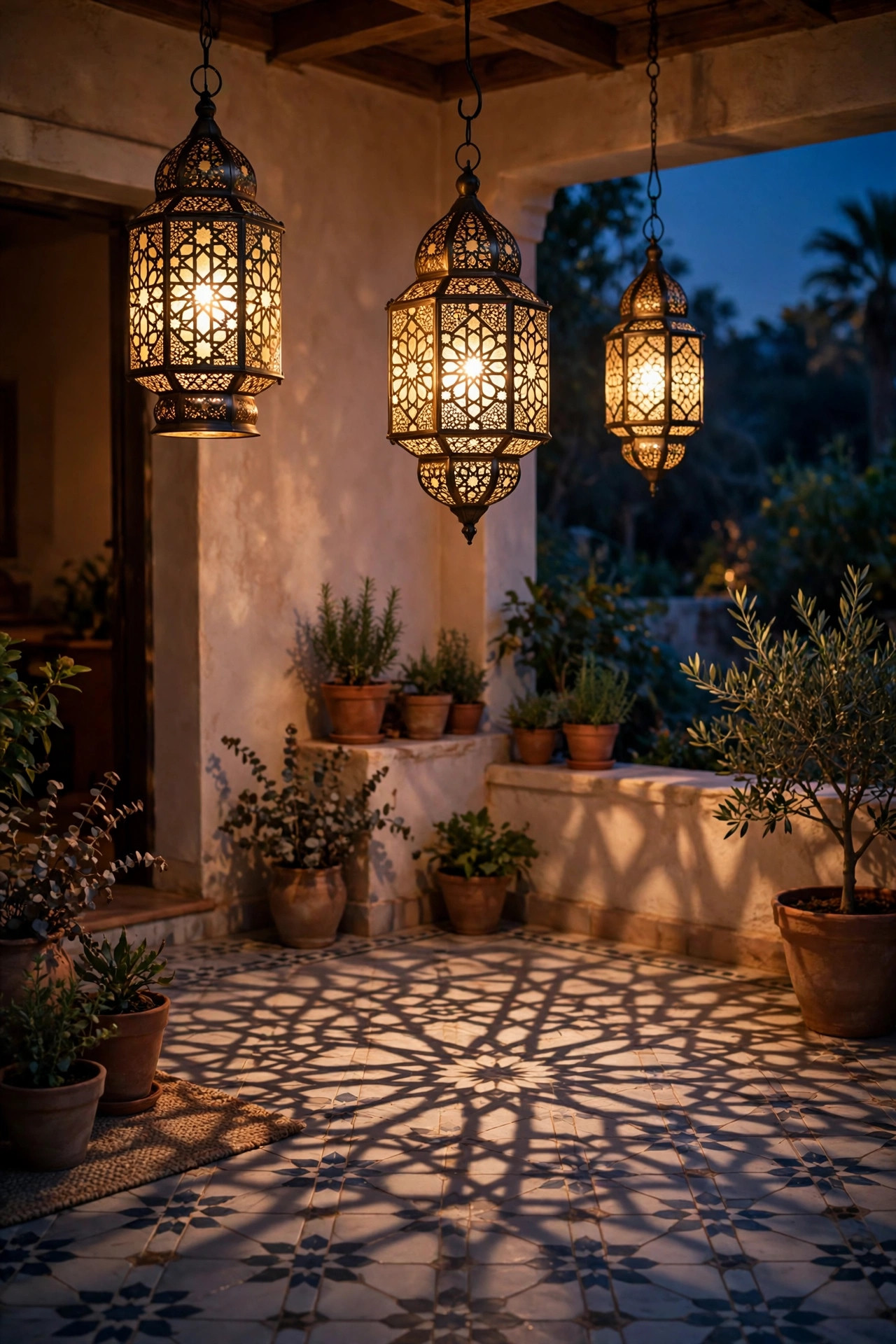
When you want pattern, not just glow, pierced metal lanterns are the answer. The tiny punched holes throw lacy shadows across porch floors, deck boards, and garden soil — it looks like lace made of light, and guests always ask about it. Bronze, black, and copper finishes are the most common; I lean toward black for a modern porch and aged bronze against brick. Because the light escapes through dozens of small openings, these read dimmer than clear-glass lanterns at the same wattage, so I treat them as atmosphere, not task lighting: one flanking the front door, a pair on the steps, a cluster under the pergola. Keep the patterns in scale with the space — a 10- to 12-inch lantern suits a porch, while the little 6-inch versions disappear on a big patio. Wipe the panels monthly; pollen film on the solar cap is the silent killer of runtime, and these intricate tops collect more than most.
Suggested budget range: $30 – $85.
4. Flickering Flame-Effect Lanterns
Real candlelight is lovely until the wind picks up or someone knocks a glass over. Flame-effect solar lanterns fake it beautifully — a cluster of amber LEDs dances behind frosted glass, and from six feet away nearly everyone is fooled. I use them where an open flame would make me nervous: on wooden porch railings, beside dry ornamental grasses, and on the steps where kids and dogs pass all evening. Look for models with a true flicker pattern rather than a simple pulse, and a warm 1800–2200K color — too orange looks like a traffic cone. Mounting options are half the fun here: many come with hanging hooks, ground stakes, and table feet in one box, so a set of four can migrate from the path in spring to the porch rail in fall. Battery life is the trade-off; the dancing effect draws more power, so expect 6 to 8 hours rather than a full dusk-to-dawn run.
Suggested budget range: $35 – $75.
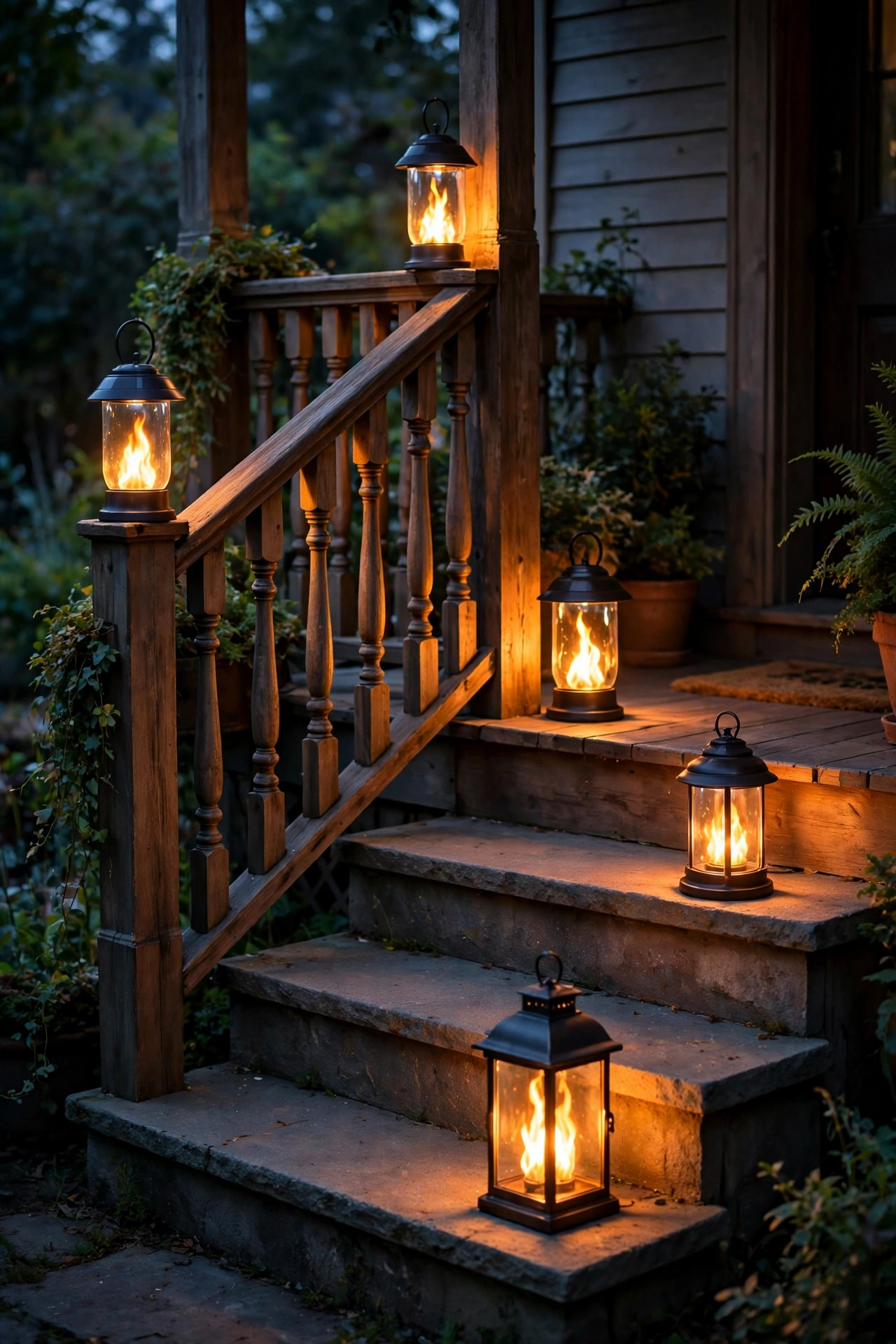
5. Stake Lanterns Lining a Front Walk
For pure wayfinding, nothing beats a row of stake lanterns guiding guests from the driveway to your door. Push them 18 to 24 inches off the walk's edge — close enough to pool light on the pavement, far enough that the mower and snow shovel miss them — and space them 4 to 6 feet apart on alternating sides. Taller stakes (18 to 24 inches) cast wider pools and look more like little lamp posts; short ones all but disappear into the mulch by day. My strong preference is metal stakes over plastic, which turns brittle and snaps by its second winter. If you're comparing styles for a whole front walk, my solar path lights guide breaks down brightness and spacing in more detail. Choose warm white, keep the style consistent along the whole run, and resist mixing heights — one clean rhythm is what makes it look designed instead of collected.
Suggested budget range: $30 – $80.
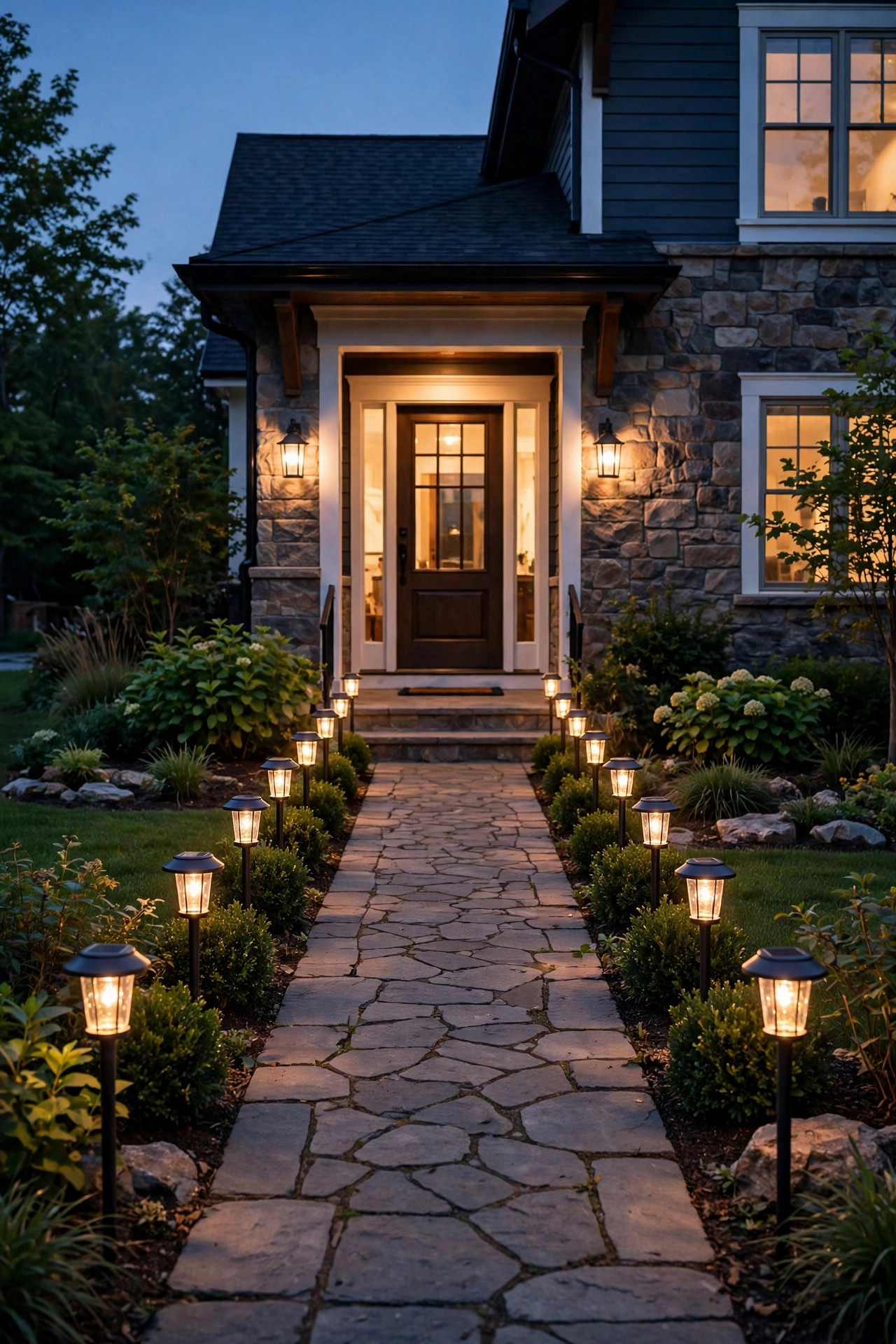
6. Oversized Floor Lanterns Flanking the Front Door
Every porch needs one confident gesture, and a pair of oversized solar lanterns — 18 to 24 inches tall — standing sentinel by the front door is mine. They frame the entry like punctuation, and because they're solar you can place them on the step or landing where there's no outlet and no room for sconce wiring. Fill the base with a little gravel or a brick if your porch catches wind; a tall, light lantern will walk in a storm. I style them simply: the lantern itself is the statement, so I skip the candles-and-greenery stuffing except in fall, when a few mini pumpkins around the base look genuinely charming. Pick lanterns with glass — not plastic — panes at this size; large plastic panels yellow and haze within a couple of seasons of sun. These are the priciest lanterns on my list, but per inch of presence they're the best value on the porch.
Suggested budget range: $60 – $150.

7. Solar Lantern String Lights Overhead
When the porch or patio needs a ceiling of light, solar lantern string lights do it without a single outlet. Each bulb hangs inside a miniature lantern shade — paper-look globes, tiny metal cages, or rattan-style wraps — along a 20- to 25-foot cord, with the solar panel staked or clipped where it gets full sun. Drape them in gentle swags between porch posts, along a pergola beam, or in a zigzag over a small patio; the swags should dip no lower than about 7 feet so nobody's head finds them. I devoted a whole roundup to solar string light ideas because the styling options multiply fast. One practical note: position the panel first and let the string follow it, not the other way around. A string hung perfectly under a roof overhang, fed by a panel in permanent shade, is the number-one solar disappointment I see.
Suggested budget range: $25 – $60.

8. Hanging Lanterns in the Trees
A lantern swinging gently from a low tree branch might be the most romantic light in a garden, and solar makes it a ten-minute project. Use an S-hook or a length of weatherproof cord over a sturdy branch 8 to 12 feet up, and hang lanterns singly at focal points — over a bench, beside a garden gate — or in an odd-numbered cluster of three at staggered heights. Ripened rule of thumb: if you can reach it on tiptoe, it's too low and will bonk heads; aim for the bottom of the lantern at least 6½ feet off the ground over paths, higher over seating where nobody walks beneath. Lightweight lanterns with metal caps charge fine through dappled canopy, but under a dense maple mine get dim by July, so I reserve the tree spots for the lanterns with separate, corded panels I can stake out in a sunny gap. Check the hooks after storms; a swinging lantern wears through cord faster than you'd think.
Suggested budget range: $30 – $70.

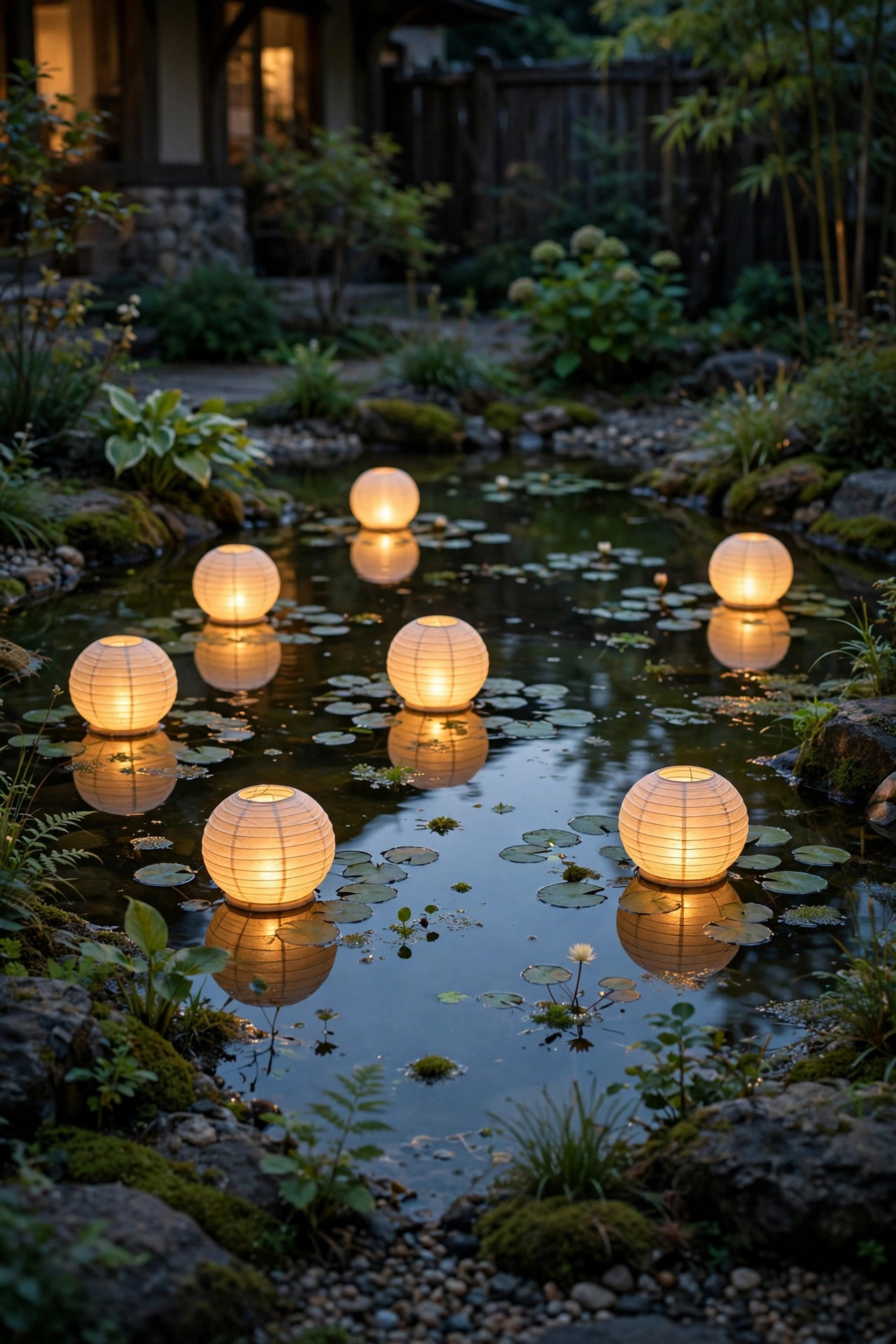
9. Floating Lanterns for a Pond or Pool
Water doubles every lumen, which is why a few floating solar lanterns turn a plain pond or pool into the best seat in the yard. These are sealed, waterproof orbs, cubes, or lotus shapes that charge by day and glow on the surface all evening, drifting slowly with the current. In a pond, anchor them loosely with a short line and a small weight so they gather in a photogenic cluster instead of beaching in the reeds. In a pool, they read as pure resort — and they keep swimmers oriented without the glare of the main pool light. Color-changing versions are fun for parties, but warm white is the setting mine live on. One caution: "waterproof" ratings vary wildly. Look for IP68 if the lantern will live in the water full-time, and bring them in before a freeze — ice will crack seals that summer water never bothered. Rinse off algae film weekly so the panels keep charging.
Suggested budget range: $25 – $65.
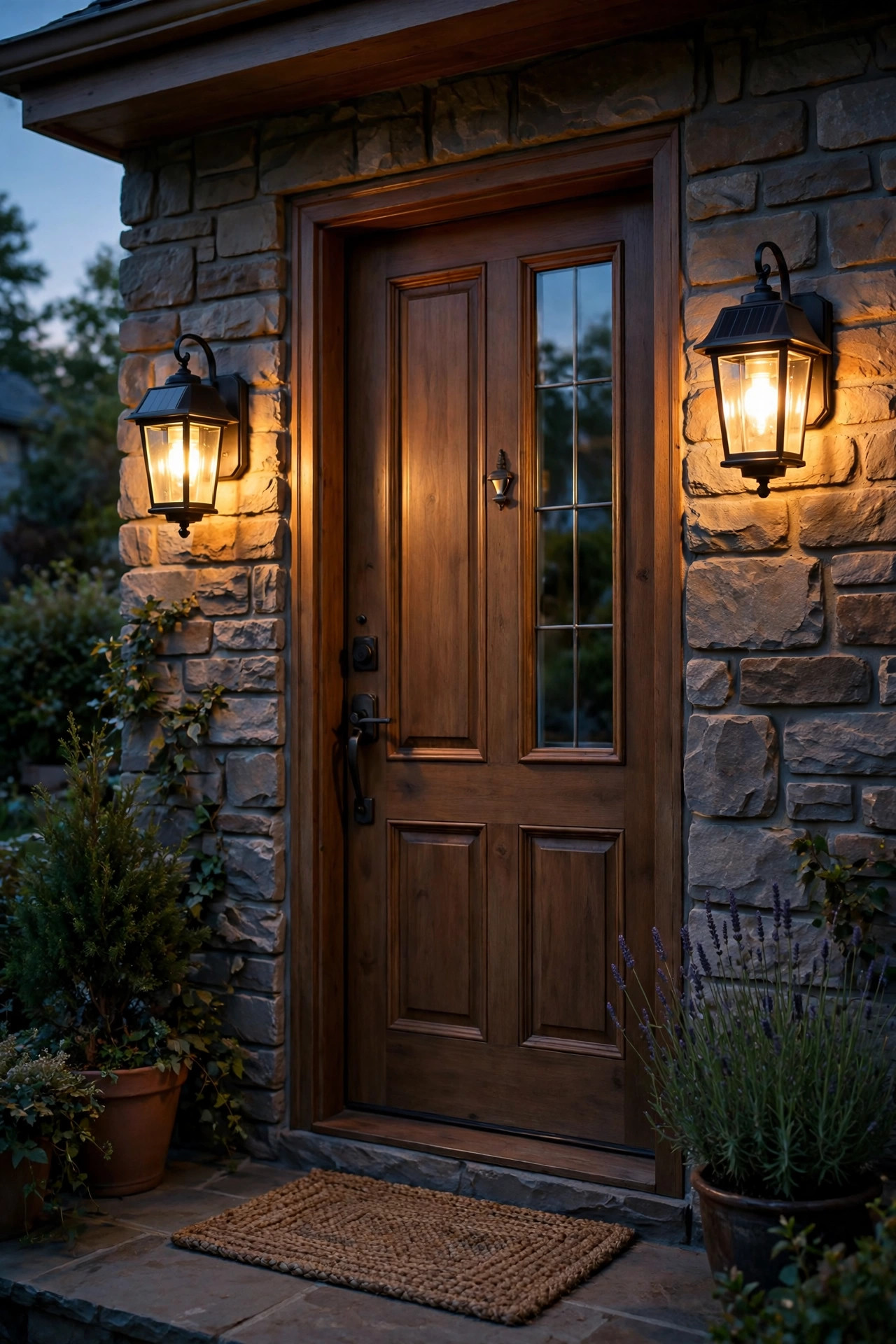
10. Solar Lantern Wall Sconces by the Door
A lantern that mounts like a sconce gives you the classic carriage-light look with none of the wiring drama. These fix to the wall beside a front door, garage, or gate post with two screws, panel angled up to catch the sky. They're my go-to for houses where the porch has no ceiling box and adding one means an electrician's invoice. Style-wise, go bigger than you think: a sconce beside a standard door wants to be at least 10 to 12 inches tall to hold its own against the door's scale, mounted with its center roughly 66 inches off the ground. Brightness is modest — treat them as a welcoming glow and a house-number helper rather than security lighting, and pair them with a motion light elsewhere if that's a concern. South- and west-facing walls charge best; on a north-facing entry, pick a model with a detachable panel on a cord so the panel can live around the sunny corner.
Suggested budget range: $35 – $90.
11. Crackle-Glass Lanterns Tucked Into Flower Beds
Crackle glass does something magical to LED light — it shatters one bulb into a hundred tiny sparkles, like sunlight on water. I push short stake lanterns with crackle-glass globes down into the flower beds themselves, nestled among hostas, daylilies, and ornamental grasses, so the light seems to rise out of the planting. Place them a third of the way into the bed from the front edge, never right at the border where they read as path lights, and cluster two or three within a few feet rather than spacing them evenly — gardens are clumpy, and the lighting should be too. Heights from 12 to 20 inches keep the globes just below the foliage line in early summer; by August the taller perennials will half-hide them, which honestly looks even better. These charge surprisingly well in beds because the globes sit above most shade. If you're planning a whole bed-lighting scheme, the garden lighting ideas roundup is where I'd start.
Suggested budget range: $28 – $65.

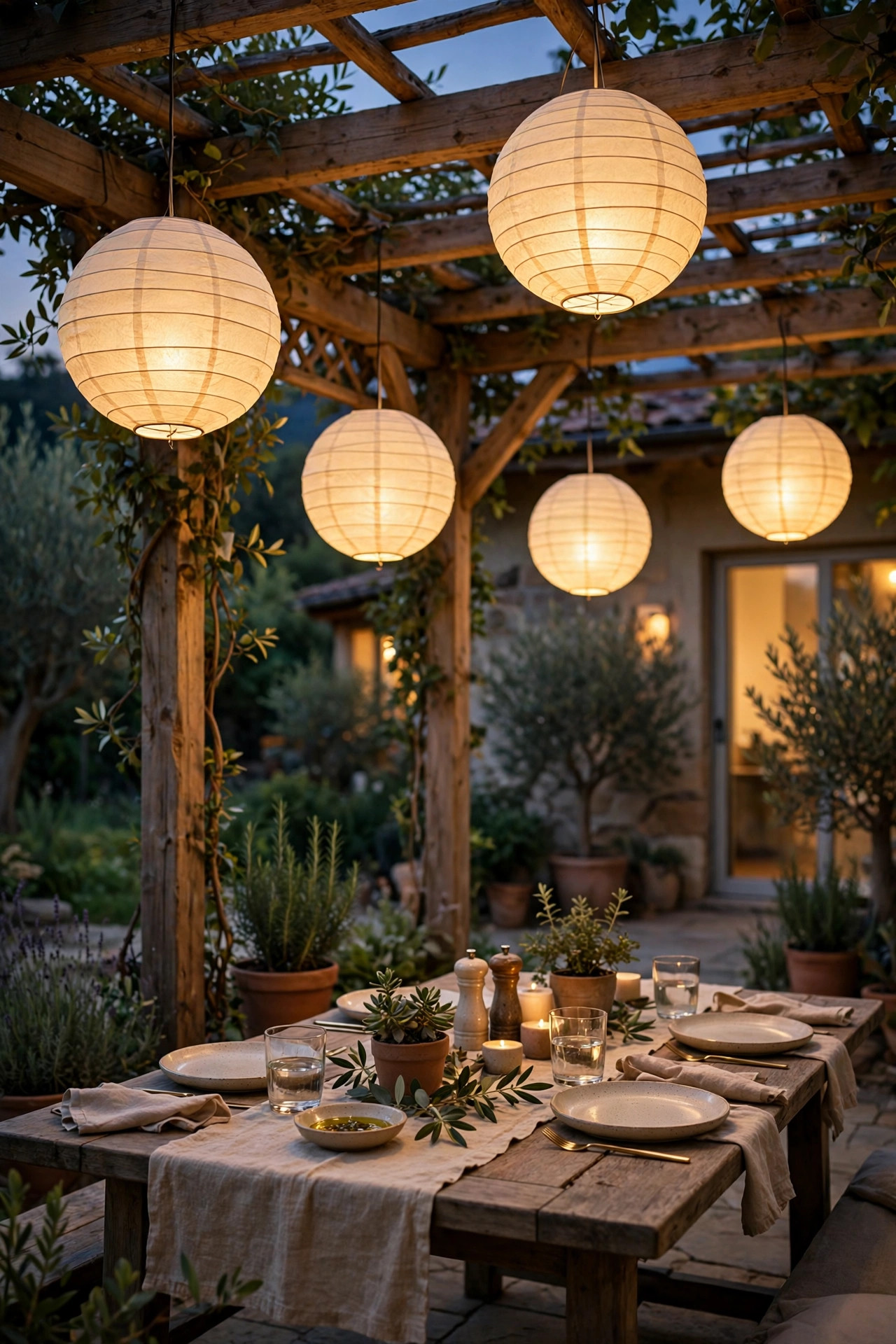
12. Paper-Look Lanterns for Parties and Pergolas
Real paper lanterns are a one-rainstorm romance, but the weatherproof versions — spun nylon or Tyvek-style fabric over a wire frame, with a solar bulb inside — give you the same soft, round, festival glow all season long. I string them under the pergola for summer dinners and hang singles from the porch hooks when guests come. White and cream read elegant; the pastel sets are birthday-party cheerful, and there's no shame in either. Because they're feather-light, they move in any breeze, so hang them where the sway is a feature, not against a wall they'll thump. Solar paper-look lanterns are usually sold as strings with one shared panel: mount that panel on top of the pergola or a sunny post, since a shaded panel dims every lantern on the run. Take them down for winter — the fabric survives rain bravely but not ice and snow load. At this price, I treat a fresh set every couple of seasons as a fair trade.
Suggested budget range: $22 – $50.
13. Vintage Edison-Style Lanterns
If your house leans farmhouse, cottage, or anything with a wraparound porch, Edison-style solar lanterns are the ones that look like they belong: a visible filament-style LED bulb inside clear glass, often with a wire guard or rope handle. The exposed bulb throws light in every direction, so these are genuinely useful on a table or hung by a seating area — not just decorative. The filament glow runs warm, around 2200–2700K, which flatters wood siding and brick beautifully. Two placement notes from my own porch: the clear glass shows dust and pollen, so give them a quick wipe when you water the plants, and the unshaded bulb can glare at eye level when hung low, so keep them above 6 feet or set them on surfaces instead. Pair one with galvanized planters and a braided rug and the whole porch reads styled. They also make the best housewarming gift on this list, just saying.
Suggested budget range: $30 – $70.

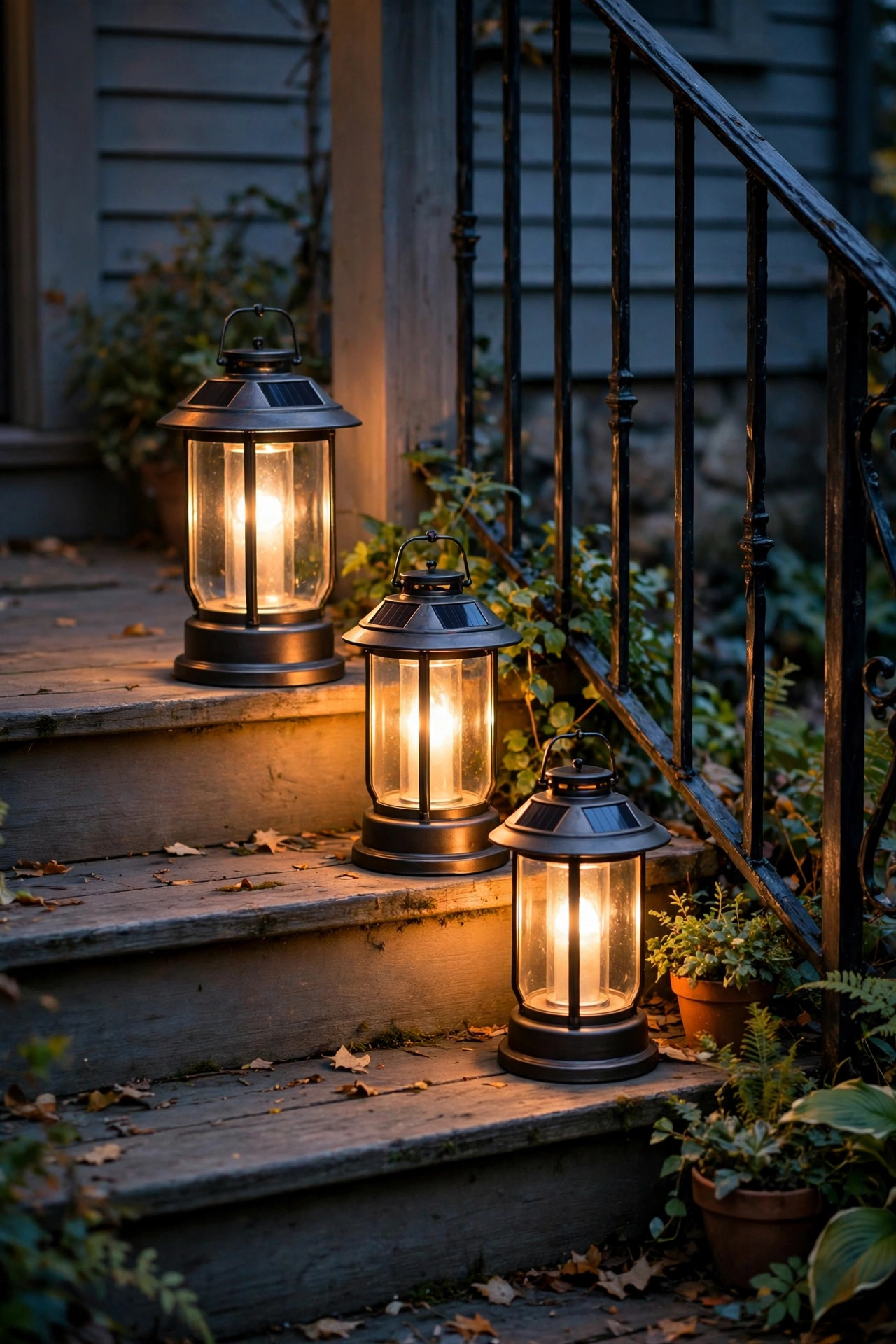
14. Lanterns Grouped in Odd Numbers on Porch Steps
Designers will tell you groupings of three and five look intentional, and porch steps are where I prove it every fall. Take lanterns in the same finish but different heights — say 8, 12, and 16 inches — and cluster them on one side of the steps, leaving the walking side clear. The staggered heights echo the steps themselves, and the pooled light marks each tread better than a single fixture does. This is also the perfect home for lanterns you've collected over the years that don't match anything else; held together by one finish color or one material, a mismatched trio reads as curated. Safety first, always: keep the cluster tight to the railing side, never where a foot lands in the dark, and choose LED-only inserts — no real candles on steps, ever. In summer I tuck a small potted herb beside them; in October, pumpkins join in; by December, evergreen clippings do the job.
Suggested budget range: $40 – $95.
15. Color-Changing Lanterns for Holidays and Kids
Most nights I am a warm-white purist, but I make an exception for color-changing lanterns because they work triple shifts: soft amber for everyday, orange for Halloween week, red and green in December, pastels at Easter — one set of lanterns, a whole year of holidays, changed with a remote from the porch swing. They're also, hands down, the light my grandkids request, and a stake lantern that glows purple along the path to the garden gate makes an ordinary Tuesday feel like an event. Buy for the white mode first: check that the warm-white setting is genuinely warm and bright enough to use nightly, since that's where they'll live 350 days a year. The color modes sip power on some models and gulp it on others, so party nights may end earlier than dusk-to-dawn white. Keep the remote somewhere sensible — mine lives in the porch-side drawer, because a lost remote turns a smart lantern stubbornly blue.
Suggested budget range: $30 – $70.

16. DIY Punched-Tin Lanterns With Solar Inserts
The most charming lanterns in my garden cost almost nothing: large tin cans, punched with a hammer and nail in star and dot patterns, each holding a solar stake-light top or a small solar mason-jar lid insert. Freeze the can full of water before punching — the ice keeps the tin from denting — and work over a folded towel. Once the pattern's punched, a coat of matte black or copper spray paint (outdoor-rated) makes them look like the pierced-metal lanterns in idea 3 at a tenth of the price. I line the porch steps with them for parties and hand them out as favors. Solar inserts vary in quality, so buy a couple of spares; at a dollar or two each they're the cheapest insurance in outdoor lighting. Rust is the honest trade-off: a can lantern lasts me two or three seasons before the bottom gives out, and I consider that a fair life for something that began as soup.
Suggested budget range: $10 – $30.

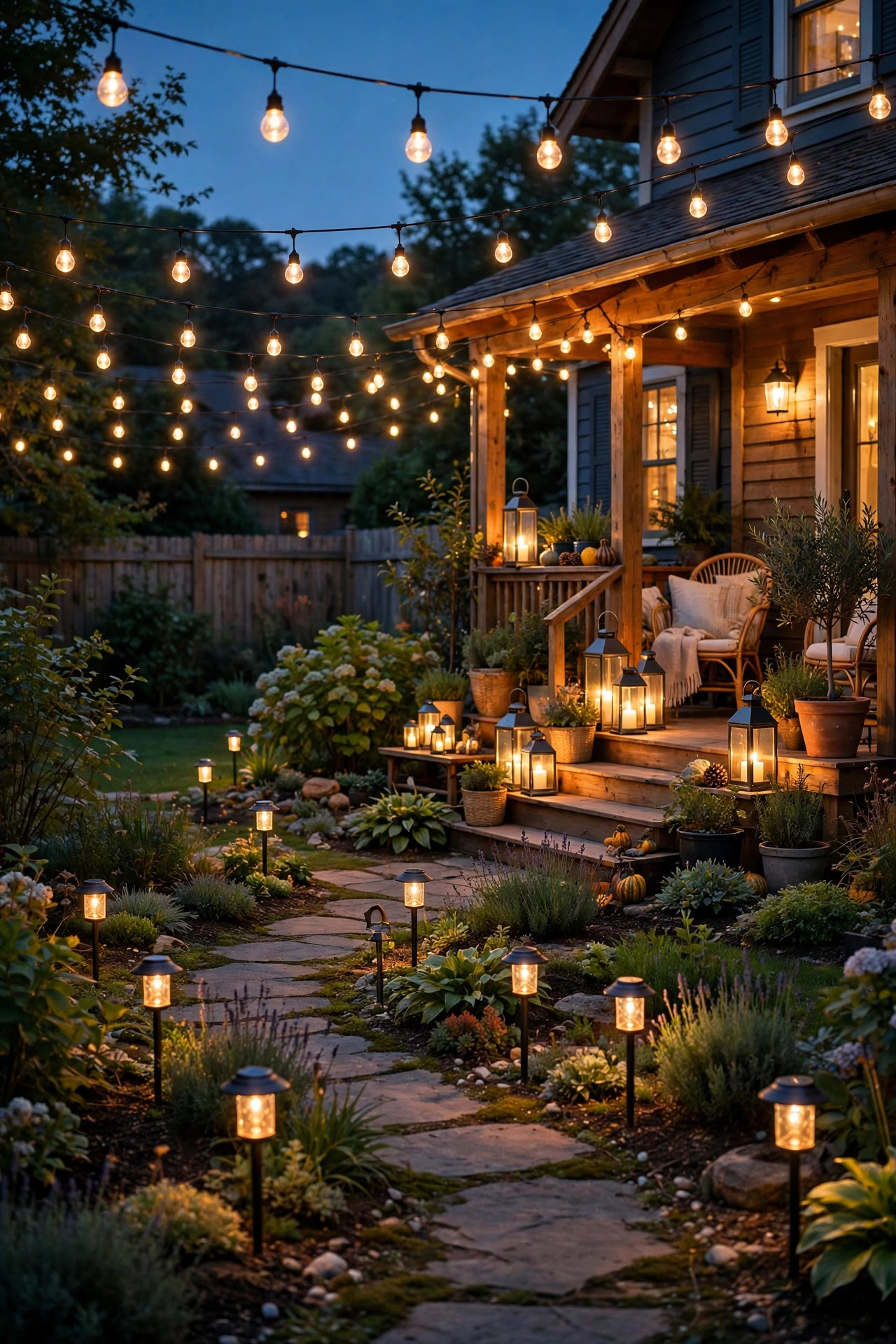
17. A Layered Lantern Scene: The Whole-Yard Formula
Here's how it all comes together, because individual lanterns are easy — it's the mix that makes a yard feel finished. My formula: one layer at ground level for the way (stake lanterns along the path), one layer at table and step height for welcome (grouped lanterns, mason jars, a pair of oversized floor lanterns at the door), and one layer overhead for magic (string lanterns, tree hangers, paper-look rounds under the pergola). Pick two finishes maximum — mine are matte black and aged bronze — and one light color, warm white, so the whole property reads as one idea. Then walk your own yard at dusk and look for the dark gaps: there's always a corner by the gate or the far end of the bed that needs one lantern more. Add that one, and stop. The restraint is what makes it look designed. Every lantern on this list charges itself, costs nothing to run, and can move the day you change your mind — which, in my experience, is exactly why solar lantern ideas are the easiest yes in outdoor lighting.
Suggested budget range: $120 – $300.
Frequently Asked Questions
How long do solar lanterns stay lit at night?
On a full day's charge — 6 to 8 hours of direct sun on the panel — most solar lanterns run 8 to 10 hours, easily dusk to dawn in summer. Flame-effect and color-changing modes draw more power and typically last 6 to 8 hours. In winter, with shorter, weaker sun, expect half that unless the lantern sits in a genuinely sunny spot; models with replaceable, higher-capacity batteries do noticeably better.
Do solar lanterns work in shade?
They work, but dimmer and for fewer hours. A panel under dense tree canopy or on a north-facing porch may collect only a fraction of a full charge. For shaded spots, choose lanterns with a separate solar panel on a cord (so the panel can sit in a sunny gap while the lantern stays in the shade), or rotate two lanterns — one charging in the sun while the other glows in the shade.
Are solar lanterns waterproof?
Most are weather-resistant (IP44 or higher), meaning they handle rain splash and dew fine and can live outdoors through the seasons. Floating lanterns should be IP67 or IP68. What shortens any solar lantern's life is standing water around the panel seal and freeze-thaw cycles, so bring fabric and paper-look styles in for winter and store the rest somewhere dry if your winters are harsh.
How do I make my solar lanterns brighter?
Start with the panel: wipe dust and pollen off with a damp cloth, reposition it for more direct sun, and make sure nothing new — a grown shrub, a moved umbrella — is shading it. If the lantern is a few seasons old, replace the rechargeable battery; tired batteries are the most common cause of dim light. A lantern that charges fully and still glows weakly has a degraded LED or battery, and replacement is usually cheaper than repair.
Conclusion
Of all the solar lantern ideas in this post, the right starting point is simply the dark spot that bothers you most — the unlit path, the gloomy steps, the porch table where dinner fades at dusk. Fix that one spot, live with it a week, and let the layering formula do the rest. Lanterns ask for no wiring, no permits, and no commitment: if a placement doesn't sing, you pick it up and move it. That freedom is why my garden glows the way it does. Browse the rest of my outdoor lighting ideas here on the site for the wired and low-voltage layers that pair beautifully with these — and then go hang a lantern somewhere that makes you smile.