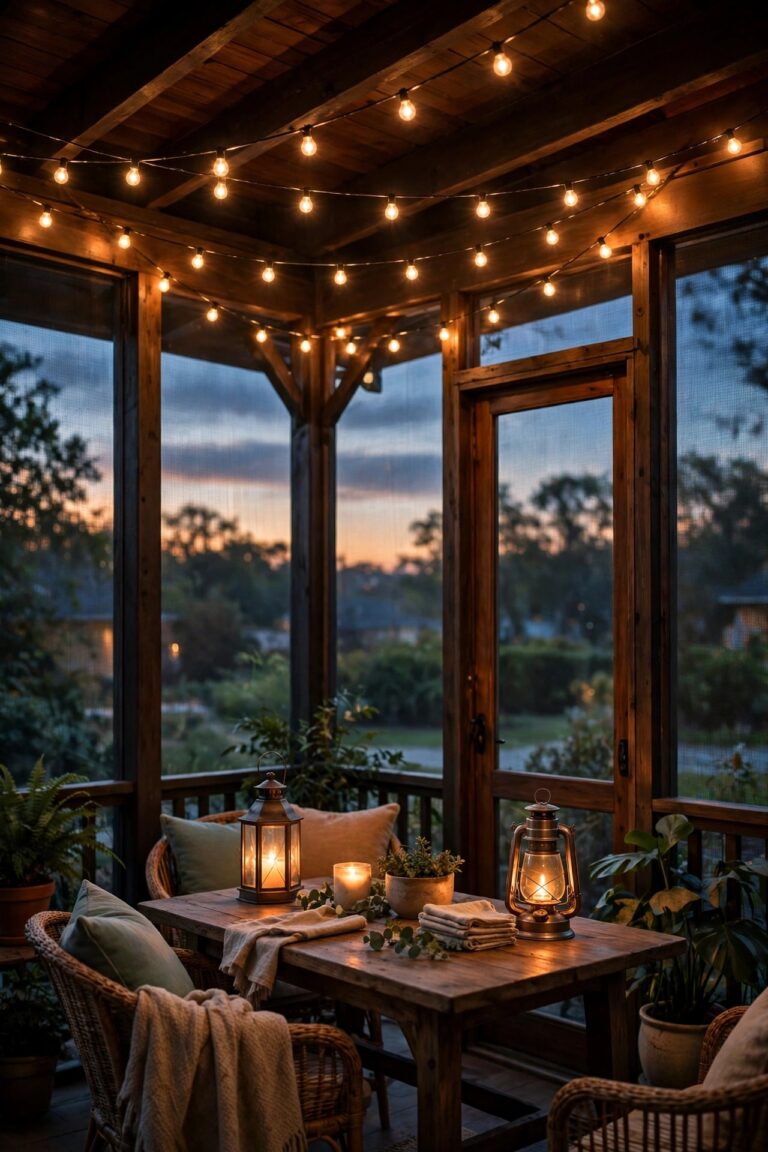
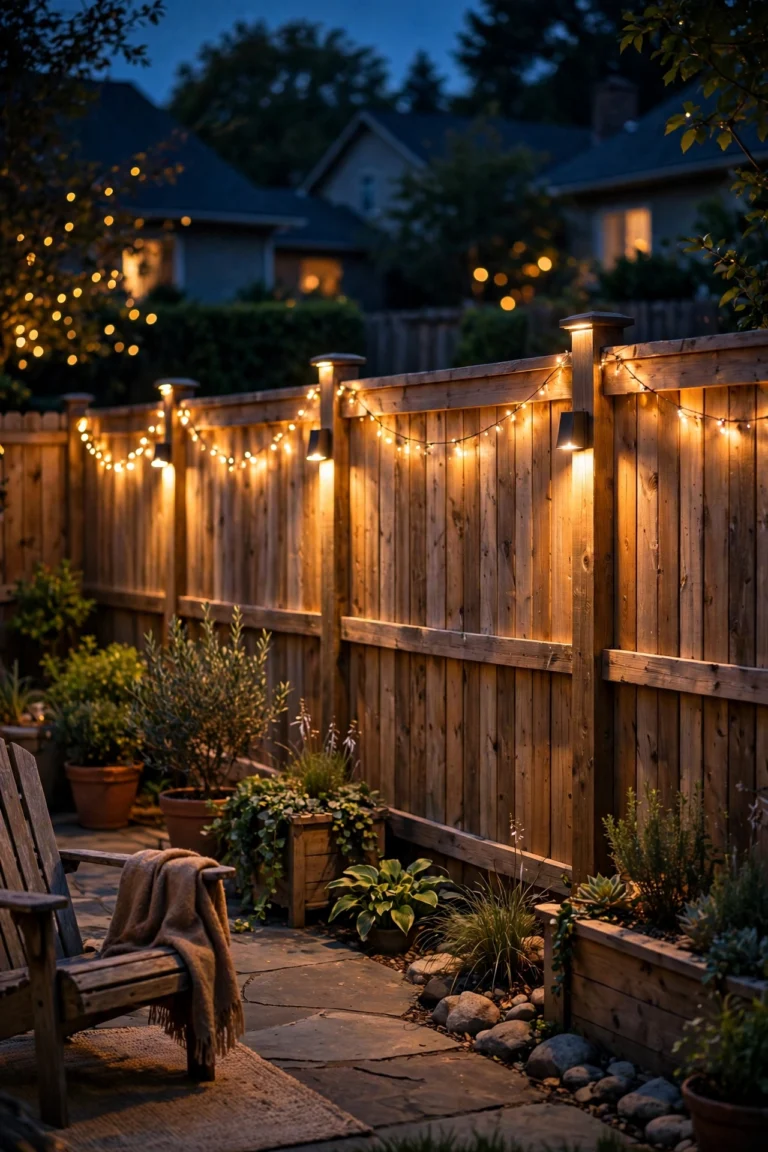
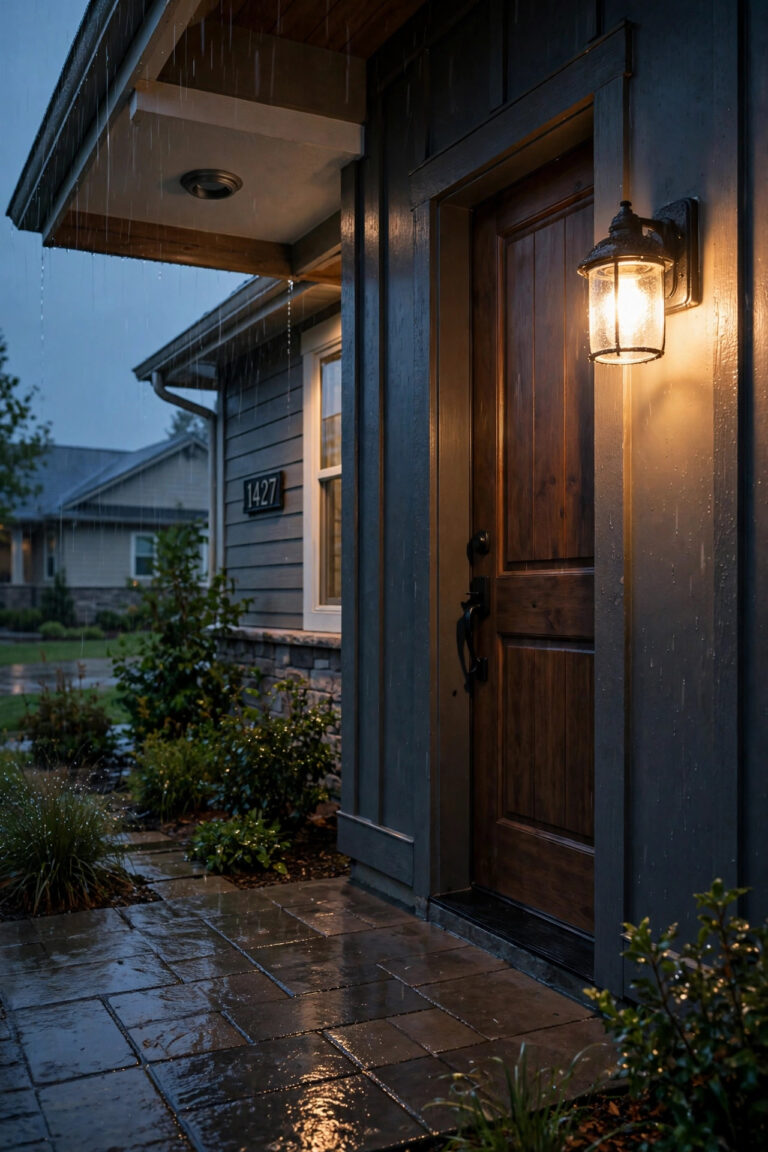
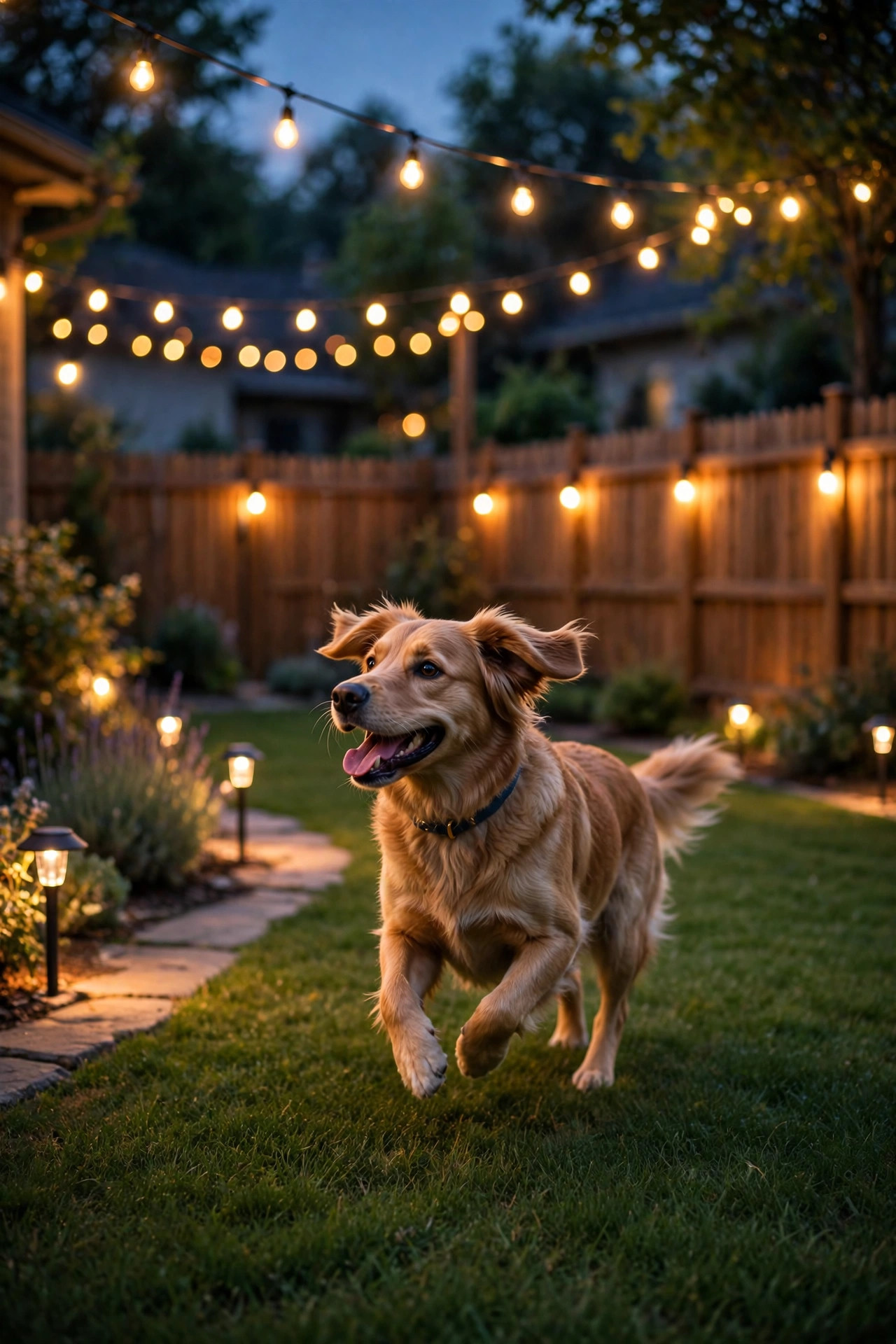
Our dog has two great loves: dinner, and the 10 p.m. zoomies. For years, those nightly laps happened in near darkness — I'd stand at the back door with a flashlight app, watching one happy blur tear around a yard I couldn't quite see. Adding light changed everything, but a dog's yard follows different rules than a regular backyard. Cables get dug up. Solar stakes get carried off like trophies. Anything at nose height gets investigated, chewed or knocked sideways. That's why good dog friendly backyard lighting is less about brightness and more about smart placement: fixtures up high or flush with the ground, wires buried deep, housings too sturdy to chew, and a warm glow that never dazzles anyone — two-legged or four. My philosophy stays the same as always: layer low, warm light at several heights instead of blasting one harsh floodlight. Below are the 17 setups that survived two enthusiastic dogs in our yard, from chew-proof path lights to a softly lit potty corner, with honest budgets attached to each one. Pick two or three, watch how your dog moves at dusk, and build from there.
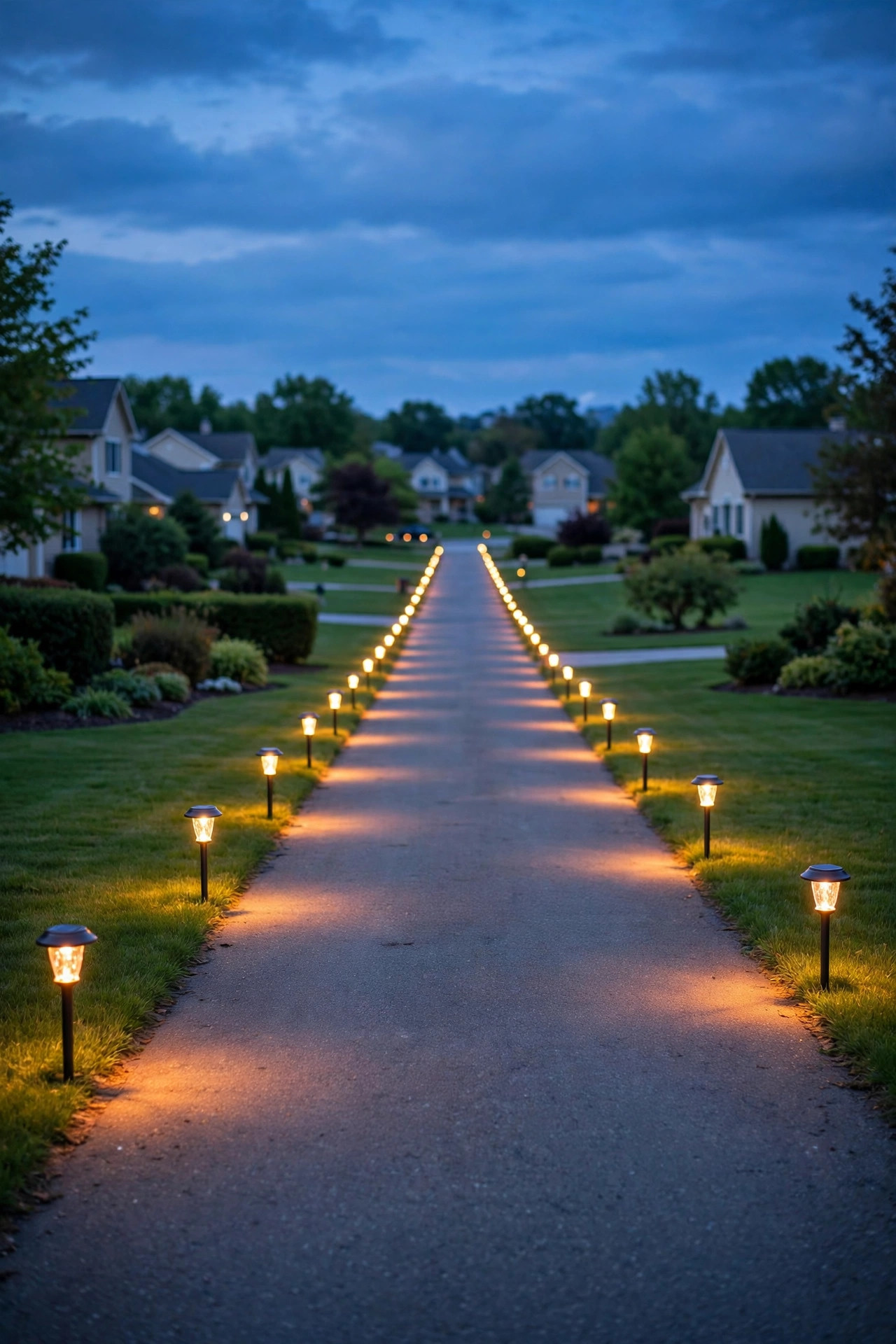
1. Low-Voltage Path Lights: The Backbone of Dog Friendly Backyard Lighting
If you only do one project, make it this one. Low-voltage path lights along your main route — door to lawn, lawn to gate — give you a lit spine the whole yard can build on, and 12-volt power is inherently safer than line voltage if a curious pup ever does reach a wire. The dog-proofing is all in the installation. Choose metal fixtures, not brittle plastic, with stakes at least 8 inches long so a shoulder-check during play doesn't uproot them. Space lights 6 to 8 feet apart on alternating sides of the path so the route reads clearly without a runway glare. Then bury the cable properly: I run mine a full 6 inches down and slip it through inexpensive conduit anywhere it crosses open lawn or a known digging zone, because shallow cable is basically a buried toy to a determined terrier. I wrote up my whole trench-and-conduit routine in my guide to burying landscape lighting cable, and it's worth the extra twenty minutes. Aim for 2700K LEDs at 100 to 200 lumens per fixture — enough for you to spot hazards and, ahem, landmines, without lighting up the whole neighborhood.
Suggested budget range: $200 – $450.

2. Solar Stake Lights a Digging Dog Can't Unplug
Solar stakes are the fastest win in a dog yard because there's simply no wire to chew, dig up or drag across the lawn. Push them along garden edges, around the patio and beside the back steps, and the yard gains a soft outline by the second evening. My dog-proofing rules: pick stakes with metal shafts rather than thin plastic spikes, panels that sit flush so they don't become chew targets, and battery compartments that screw shut — a determined nose can pop a friction-fit lid, and rechargeable batteries are genuinely dangerous if punctured. Push each stake in firmly until only the light head shows; a wobbly stake reads as a toy. Warm-white models around 2700K to 3000K match wired lighting far better than the icy blue bargain-bin kind, and expect a modest 10 to 40 lumens apiece — these are markers, not floodlights. After storms, walk the line and re-seat any that shifted. Honestly, for renters or anyone not ready to trench cable, a dozen good solar stakes deliver 80 percent of the effect for almost none of the commitment.
Suggested budget range: $40 – $120.
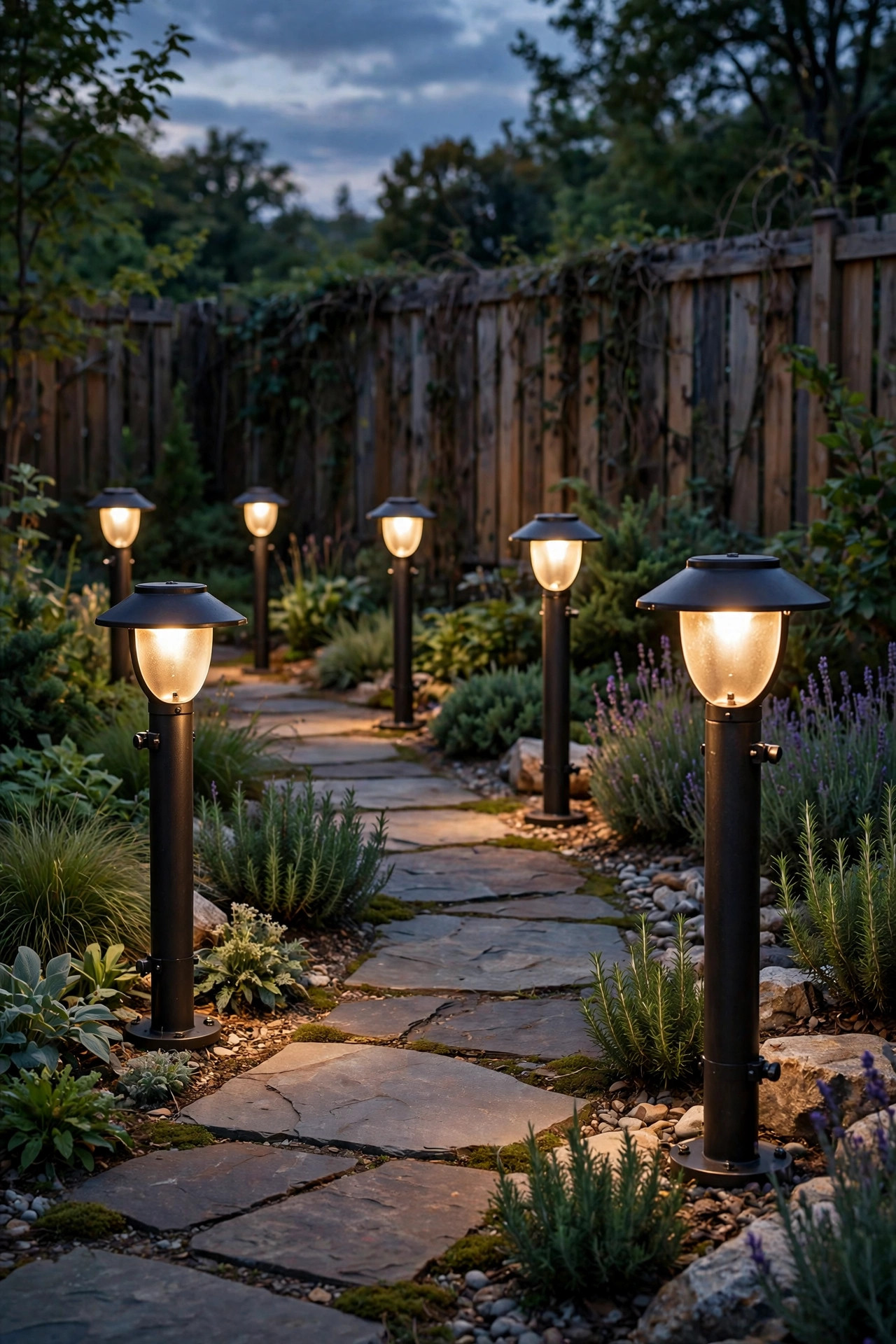
3. Motion-Sensor Lights for Midnight Potty Breaks
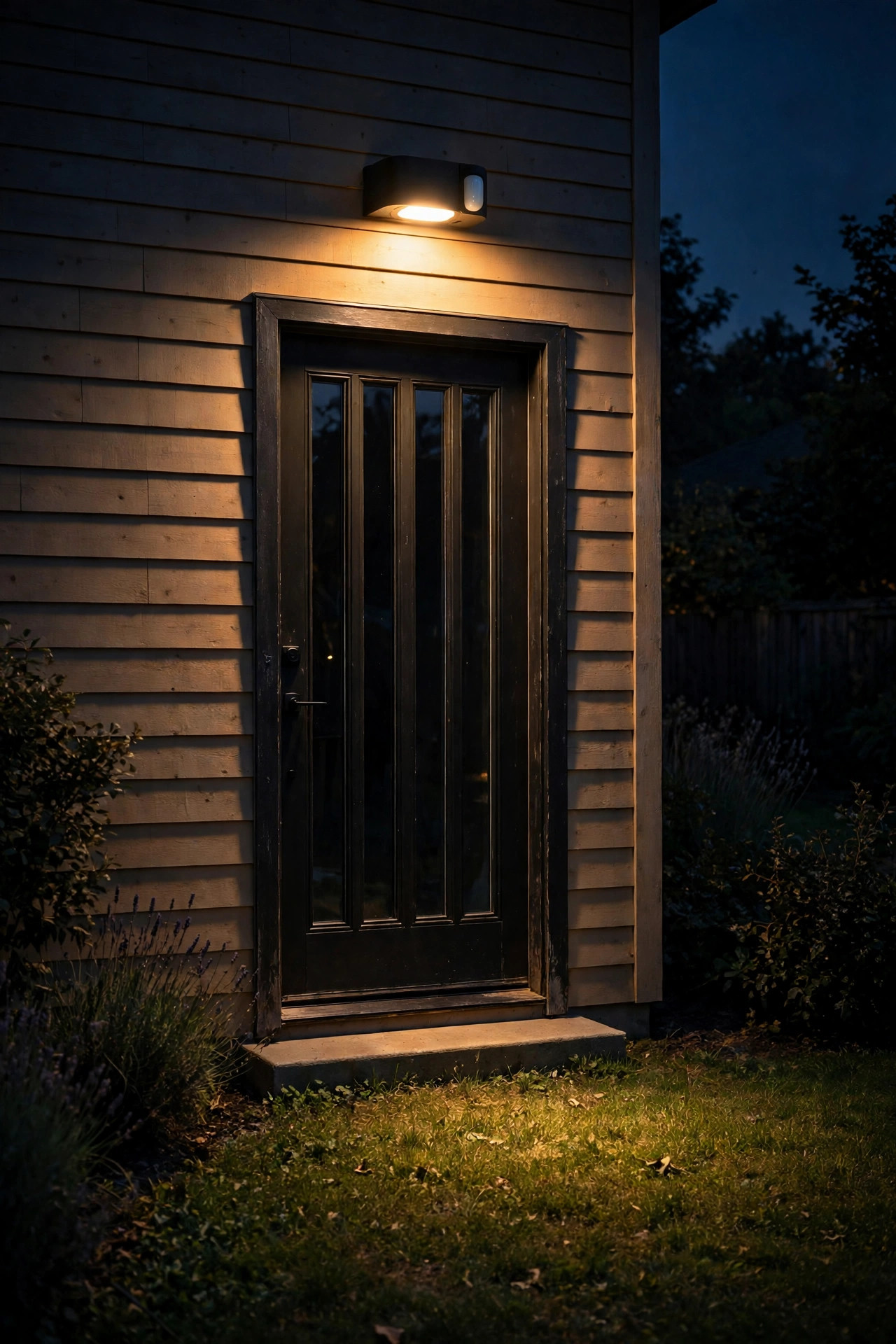
Every dog owner knows the 2 a.m. routine: the whine, the fumble for shoes, the dark yard. A motion-sensor light over the back door and a second one covering the potty area end the fumbling for good. The trick is tuning. Set the sensitivity so your dog triggers it but a wandering cat at the fence line doesn't, aim the head down at about 45 degrees so it lights the ground rather than blasting the windows, and keep the duration short — 60 to 90 seconds is plenty for a business trip. Choose warm 2700K output at moderate brightness; a sudden 3,000-lumen white blast startles nervous dogs and fully wakes the humans it was meant to help. Solar motion lights with the panel on a short lead work beautifully on fences and sheds where there's no outlet, and wired versions tie happily into an existing porch fixture. In my experience, dogs learn the pattern within two nights and start aiming for the lit patch on their own. It's the single most-used light in our yard, and it cost less than a bag of the good dog food.
Suggested budget range: $35 – $110.
4. Solar Fence Cap Lights, Safely Out of Chewing Range
Post cap lights might be the most dog-proof fixtures ever made, for one simple reason: they live five feet above the action. Solar caps that sit on top of fence posts throw a gentle downward glow that outlines the whole yard, marks the boundary your dog patrols, and never once enters the chewing, digging or collision zone. They also charge all day in full sun up there, so they tend to outlast ground-level solar that gets shaded by shrubs — and by dogs standing over them. Space them on every post for a formal look or every other post for a softer rhythm; most yards need six to twelve. Look for caps sized to your posts (4×4 and 6×6 are the common sizes), warm-white LEDs, and housings with real gaskets so rain stays out of the battery compartment. I rounded up more styles in my fence lighting ideas post if you want to mix caps with sconces and stringers. From the back door at night, a ring of fence caps makes the yard feel finished and lets you see your dog's whole patrol route at a glance.
Suggested budget range: $80 – $220.

5. Flush In-Ground Well Lights for the Zoomie Lawn
Some yards have a designated racetrack — ours is a wide oval worn into the lawn by a thousand joyful laps. Any fixture standing on that turf is a collision waiting to happen, which is why flush in-ground well lights are my favorite trick for open play space. These fixtures sit in a buried sleeve with the lens level with the grass, so dogs run straight over them and the mower glides past too. Use them to uplight a tree at the far end of the lawn, wash the fence line, or mark the corners of the play area so you can follow the action after dark. Non-negotiables: an IP67 or IP68 rating, a tempered glass or heavy polycarbonate lens rated for foot traffic, and a fixture body in brass or heavy composite that won't crack under a paw at full gallop. Cool-to-the-touch LED modules matter here — a lens your dog can stand on should never get hot. Keep beams narrow and aimed at targets, never straight up into running eyes. The effect at dusk is pure theater: a glowing stage with one very happy performer.
Suggested budget range: $180 – $420.

6. String Lights Hung High Above the Action
String lights and dogs get along beautifully — as long as the strands live well above the chaos. I hang commercial-grade stringers at 9 to 10 feet over the patio and along the fence, a full body-length above even a big dog's most ambitious vertical leap, and I anchor them to the house, a tree or proper poles rather than anything a dog could topple. Skip the lightweight indoor-style strands; outdoor stringers with heavy-gauge wire and suspended sockets shrug off wind, weather and the occasional volleyball. Guide wire takes the sag strain off the sockets and keeps the catenary graceful. Shatterproof LED bulbs are the one upgrade I insist on in a dog yard — if a strand ever does come down, you don't want glass filaments in the grass where paws land. Keep the starter plug and any connections inside a weatherproof box mounted on the wall, out of sniffing range. The payoff is the prettiest light on this list: a warm canopy for the humans, a softly lit stage below for the dog, and not a single tempting cord within reach.
Suggested budget range: $90 – $260.

7. Sturdy Short Bollards Along the Main Route
Bollards are the workhorses nobody notices until they're gone — short, solid posts of light that mark paths, patio edges and the turn toward the gate. In a dog yard, their superpower is durability: a good bollard is a single heavy extrusion of powder-coated aluminum or steel that a 70-pound dog can bounce off without denting, bending or even noticing. Choose models 14 to 22 inches tall with shielded or louvered optics that throw light down and out at the ground instead of sideways into eyes — canine or human. That downward throw is exactly what you want at dog height, because a bare bulb at 18 inches sits right in a dog's sightline. Bolt-down bases beat push-in stakes anywhere dogs play rough; on lawn edges, set them in a small concrete footing so they stay plumb through years of zoomies. Space them 6 to 8 feet apart and wire them on the same zone as your path lights so the whole route home lights as one. Mine have survived five years, two puppies and one memorable squirrel incident, and they still look brand new.
Suggested budget range: $220 – $520.
8. Warm, Low-Glare Dog Friendly Backyard Lighting for Nervous Pups
Not every dog loves a bright yard. Our neighbor's rescue spent her first month flinching at their new floodlight, and honestly, I understood — a hard white blast turns a familiar garden into a wall of glare and deep, scary shadows. If your dog is shy, senior or losing vision, design for softness. Choose warm 2700K light everywhere, because dogs see best in the blue-yellow range and harsh blue-white sources read as glare to them too. Keep brightness low and even: many small sources at 50 to 200 lumens beat one big one, because pools of gentle light with no black holes between them let an anxious dog read the whole yard at once. Shield every bulb — frosted lenses, louvered fixtures, downlights — so no bare LED ever sits at dog eye level. Avoid sudden on-off changes; lights on a dusk sensor that fade into the evening feel far calmer than a timer's hard click. Walk the yard at dog height before you finalize anything. If you can see a bulb, your dog sees it ten times worse.
Suggested budget range: $120 – $300.

9. Recessed Deck Step Lights That Can't Be Knocked Over
Deck steps are where nighttime dog traffic gets clumsy — an excited pup barreling up in the dark, or an older dog picking her way down for the last outing. Recessed step lights mount flush into the riser or the skirt board, so there's literally nothing protruding to catch a paw, snag a leash or get kicked loose. Each tread gets a soft wash of light from a 1 to 2 watt LED, and because the fixtures point down, nobody climbing or descending gets glare in their eyes. Louvered and eyelid styles are my favorites for exactly that reason. Wire them to the same circuit as the deck lighting and put the whole zone on a timer or dusk sensor, because the nights you forget are the nights someone misses a step. Retrofitting an existing deck is a half-day job: the fixtures are small, the cable runs under the deck where no dog can reach it, and a low-voltage transformer keeps everything in the safe voltage range. Clean, invisible by day, and the most appreciated lights in our yard by every senior dog who visits.
Suggested budget range: $140 – $340.

10. Lanterns on Shepherd's Hooks, Up and Out of the Way
Shepherd's hooks are my favorite low-commitment dog-yard lighting because they lift the light source 4 to 5 feet in the air — above tails, above leashes, above interest. Hook a solar lantern or a battery lantern with a warm LED candle over a flower bed, the corner of the patio or the bend in a path, and you get that cottage-garden glow with zero wiring and zero chewable parts at dog level. Choose hooks with double-pronged ground anchors and push them in deep; a single-spike hook in soft soil will lean after one enthusiastic digging session nearby. The lanterns themselves should have enclosed LED modules rather than real flame — an open flame anywhere near fur and wagging tails is a hard no in our house — and metal or heavy resin bodies that can survive being knocked off their hook once a season. Because they're portable, I move mine around constantly: flanking the steps in winter, ringing the vegetable garden in summer. It's the cheapest layer of light I own and somehow the one guests always ask about.
Suggested budget range: $60 – $180.

11. Solar Spotlights Tucked Into Beds Dogs Avoid
Every yard has a corner the dog ignores — in ours it's the lavender and ornamental grass bed along the back fence, planted thick and (through no training genius of mine) deeply uninteresting to her. That's prime real estate for solar spotlights. Tucked low among the plants, an adjustable solar spot can uplight a tree, graze a fence or pick out a birdbath, and the dog will never brush past it because she never goes there. The fixtures themselves stay hidden, the panels angle up through the foliage to catch daytime sun, and the effect after dark is all light and no hardware. If your dog does patrol every bed, flip the arrangement: mount the spotlight on the fence or a tree trunk at 3 to 4 feet and aim down or across. Keep stakes pushed fully home, and choose models with the panel built in rather than on a cord — a dangling panel wire is the one chewable part of an otherwise dog-safe setup. Two or three spots aimed at your best trees will make the whole yard look designed.
Suggested budget range: $50 – $150.

12. A Softly Lit Potty Corner
Nobody puts the potty corner in the pretty pictures, but it's the most-visited square of yard in a dog's life — often in the dark, often in the rain, always on short notice. Lighting it properly changed our nights. The goal is modest, steady light: one shielded fixture, warm and low, that lets you verify the mission is accomplished and spot anything that needs picking up in the morning. A small solar wall light on the fence, a single path light at the corner, or a low bollard a few feet away all work. What you don't want is a motion light that blasts on and off — shy dogs will start avoiding a corner that ambushes them with brightness, and some will hold it rather than go. Steady dusk-to-dawn light at low level feels safe and predictable, which is exactly the mood you're going for. Keep the fixture outside the actual corner, aimed across it, so no hardware lives in the splash zone, and hose-down-friendly IP65 ratings make seasonal cleanup painless.
Suggested budget range: $40 – $130.

13. Flicker-Free LEDs That Won't Strobe Your Dog
Here's a detail most lighting advice skips: dogs perceive flicker at much higher frequencies than we do. A cheap LED that looks steady to you can pulse like a strobe to your dog, and some dogs respond with anxiety, avoidance or that fixed stare at nothing you can see. Bargain bulbs and lights dimmed by incompatible dimmers are the usual culprits. The fix is quality, not cost: choose LED fixtures and bulbs with proper drivers — they cost a few dollars more and run cool, steady and silent. If a light hums, buzzes or visibly shimmers on a phone camera's slow-motion mode, it fails the dog test and goes back. This matters most for the lights your dog lives under longest: the porch light by the door she waits at, the path lights along her route, the deck lights over her favorite outdoor bed. Pair flicker-free fixtures with smooth, compatible dimming if you dim at all, and keep dimmers at 30 percent or above, where cheap drivers misbehave least. Steady light is calm light, and calm is the whole design brief.
Suggested budget range: $100 – $280.

14. Timer Routines That Match Your Dog's Schedule
Dogs are creatures of routine, and lighting that follows the routine makes the yard feel safe before you even open the door. I run our main zones on an astronomical timer: paths and the potty corner fade on at dusk, the play lawn lights join for the after-dinner session, and everything steps down at 11 p.m. except one low light by the door for the last outing. If your dog's big exercise window is early morning, flip the schedule — a 5:30 a.m. pre-dawn run for the yard beats standing in a dark garden in your slippers. Smart plugs and app-controlled transformers make this effortless to adjust when the seasons shift your dog's schedule, and a simple photocell handles the dusk trigger so you never reprogram for sunset drift. Keep one rule sacred: the route from door to potty spot should never be dark during your dog's normal hours, even in the late-night reduced mode. Predictable light at predictable times is a small thing that reads as enormous security to a dog.
Suggested budget range: $45 – $160.

15. Splash-Zone Lighting Around the Water Bowl and Kiddie Pool
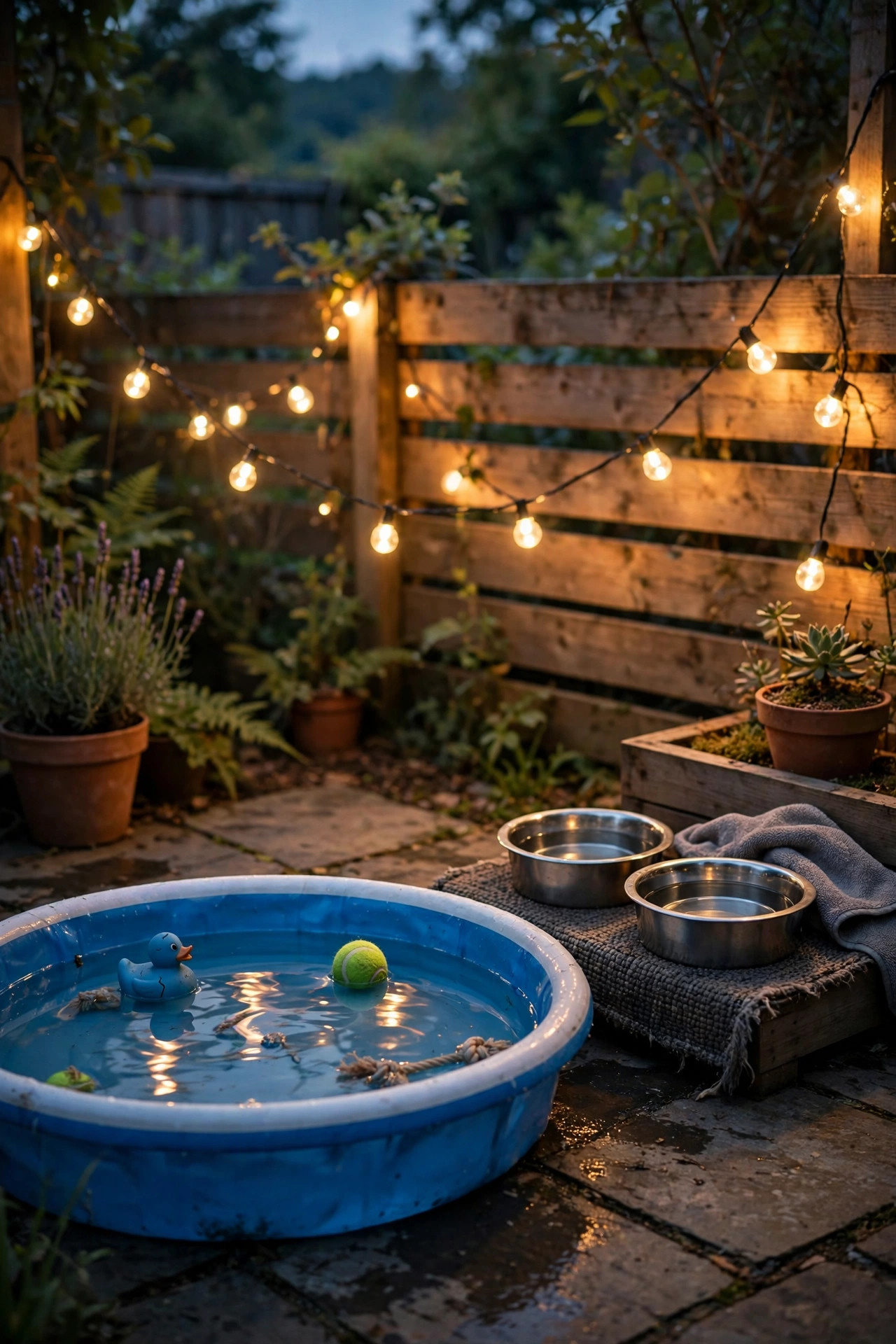
Summer in our yard means a kiddie pool, a very wet dog, and a water bowl that migrates. The area around all that splashing deserves its own lighting plan, because wet zones are where fixtures go to die and where evening footing gets slippery for everyone. Rule one: everything within splash range gets an IP65 rating at minimum, and anything that could sit in standing water goes IP68 — check the rating, don't assume it. Rule two: keep fixtures out of the shake zone. A dog exiting a pool shakes off roughly a gallon in every direction, so mount lights on the fence or a post a few feet back and aim across the wet area instead of placing stakes inside it. A low solar deck light on the pool's storage hook, a shielded sconce over the bowl station, and one path light marking the route back to the door cover it. Battery and solar options shine here, pun intended: no cords near water, nothing plugged in where paws splash, and cleanup is a hose-down away.
Suggested budget range: $55 – $170.
16. Gate and Dog Door Lighting for Safe Ins and Outs
The gate is the highest-stakes spot in a dog yard: the place escapes happen, deliveries arrive, and latches get fumbled in the dark. I light ours like a front door — a warm sconce or solar wall light beside the latch at about 6 feet, aimed down so you can see hardware, hinges and the dog waiting on the other side without glare in anyone's eyes. If your dog uses a dog door, give it the same treatment: a small steady light outside the flap means a senior dog can find home in the dark and you can see at a glance whether the flap is clear. Motion activation works at the gate if your dog doesn't pass it constantly — in our yard she patrols it twenty times a night, so steady low light won. While you're planning zones, my notes on solar vs wired landscape lighting will help you decide which of these spots deserves hardwired power. A lit gate is a closed gate, every single time.
Suggested budget range: $60 – $190.

17. A Glowing Dog Run With Ground-Level Markers
If your yard has a dog run or a long side strip where the fetch games happen, treat it like the runway it is. Low ground-level markers — solar disk lights or short stake lights sunk almost flush along both edges — outline the corridor so the dog reads her lane, you can watch the whole game from the patio, and nobody trips over a ball left mid-field. Disks that sit nearly flush with the soil are the dog-proof champions here: nothing to grab, nothing to snap, and a paw or a mower passes straight over. Run them every 5 to 6 feet, alternate sides if the strip is narrow, and put one brighter fixture at the far end as a target — dogs run toward light, and a glowing end zone makes recall games at dusk genuinely easy. Keep every light in the run warm and low; this is a working space, not a showcase, and glare off a wet nose-height lens helps nobody. Our evening fetch sessions doubled in length the week I installed these, because we could finally all see the game.
Suggested budget range: $70 – $200.

Frequently Asked Questions
What color temperature is best for dogs at night?
Warm white, around 2700K, is my recommendation for every fixture in a dog yard. Dogs see the world mainly in blues and yellows, and warm light gives them good contrast without the glare that harsh blue-white sources create at their eye level. It also looks better to human eyes and keeps the yard feeling cozy rather than clinical. Whatever you choose, keep it consistent across zones — a patchwork of color temperatures looks messy and can make depth harder for an older dog to judge.
Are solar lights safe around dogs that chew?
They can be, with the right picks. Choose solar lights with metal stakes and housings, panels mounted flush, and battery compartments secured with screws rather than snap lids. The real hazard is a punctured rechargeable battery, so any light positioned where a determined chewer can reach it should be sturdy enough to survive being mouthed. When in doubt, move the light: behind edging, inside a bed, up on the fence. Supervise a young puppy's first evenings with any new ground-level fixture.
How deep should I bury landscape lighting cable in a yard with a digging dog?
Six inches is the working standard for low-voltage cable, and in active digging zones I add conduit on top of that depth — literally, the cable runs inside inexpensive plastic conduit wherever it crosses open lawn or a favorite excavation site. Bury the runs along edges and under edging where dogs dig least, and always call 811 before trenching so you know where the buried utilities are. A cable your dog can't reach is a cable you'll never have to repair.
Will motion-sensor lights scare my dog?
Most dogs adapt within a night or two, especially if the light is warm and moderate rather than a bright white flood. Start with the sensitivity low and the lamp aimed at the ground so the change feels gentle, and let your dog trigger it during calm evening time before relying on it at 2 a.m. Very nervous dogs do better with steady dusk-to-dawn light in the areas they use most, reserving motion activation for the gate and driveway where the dog passes only briefly.
Conclusion
A dog yard asks more of its lighting than any other backyard: fixtures that can't be chewed, dug up or knocked flat, light that's warm and steady instead of glaring, and a route that's lit every single night without you thinking about it. Get those bones right and the pretty part takes care of itself. Start with the path lights and the potty corner, add the layers your dog's habits point to, and browse the rest of my outdoor lighting ideas here whenever you're ready for the next project — your dog friendly backyard lighting plan will grow one happy, glowing evening at a time.