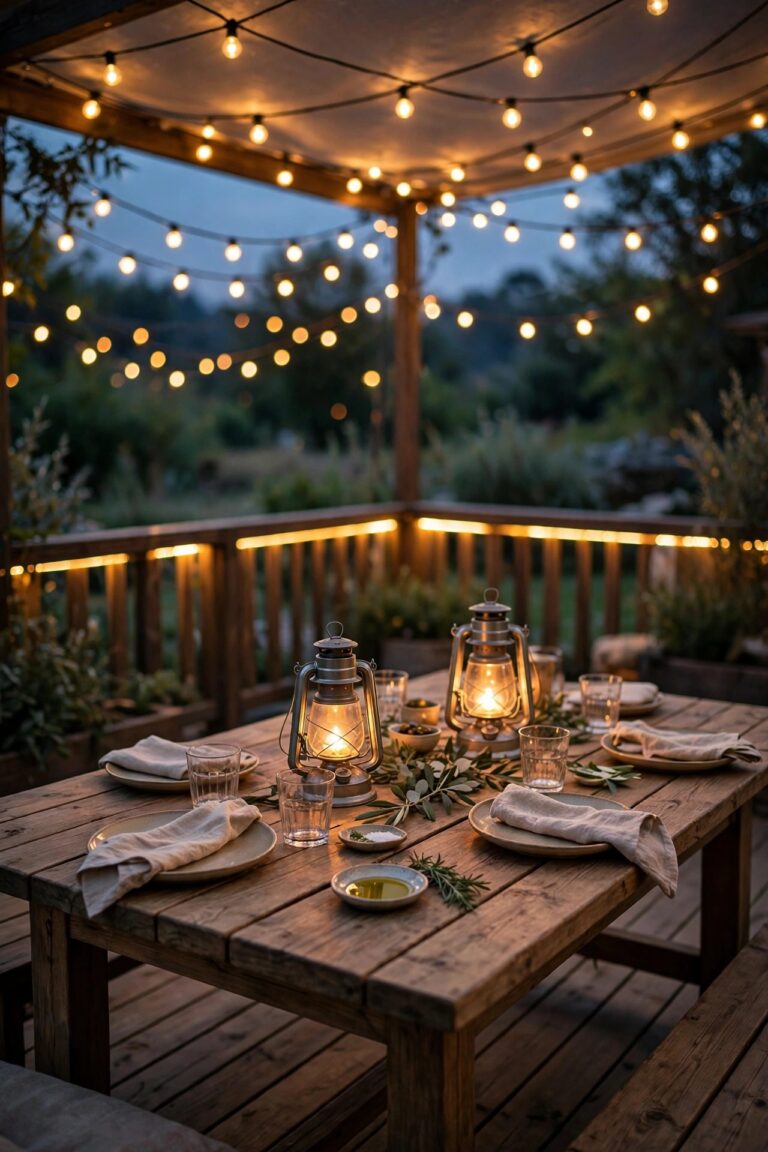
There is nothing quite like a big game under the open sky: the grill smoking, the coolers iced down, and your whole crew gathered around a screen in the backyard. What makes or breaks the night, honestly, is the light. Too dark and nobody can find the queso; too bright and the picture washes out into a gray blur. The game day backyard lighting ideas in this post are the exact playbook I use when we host watch parties at our house, built on the same layering I swear by everywhere else: a soft ambient base, focused task light where the food and drinks live, and a few playful accents that show a little team spirit. Every zone gets dialed in on its own, so the screen stays crisp, the snack table stays easy to navigate, and the yard still feels festive at the final whistle. Most of these setups use fixtures you probably already own, plus a smart plug or two. Here are my 15 favorites, from kickoff prep to the postgame glow.
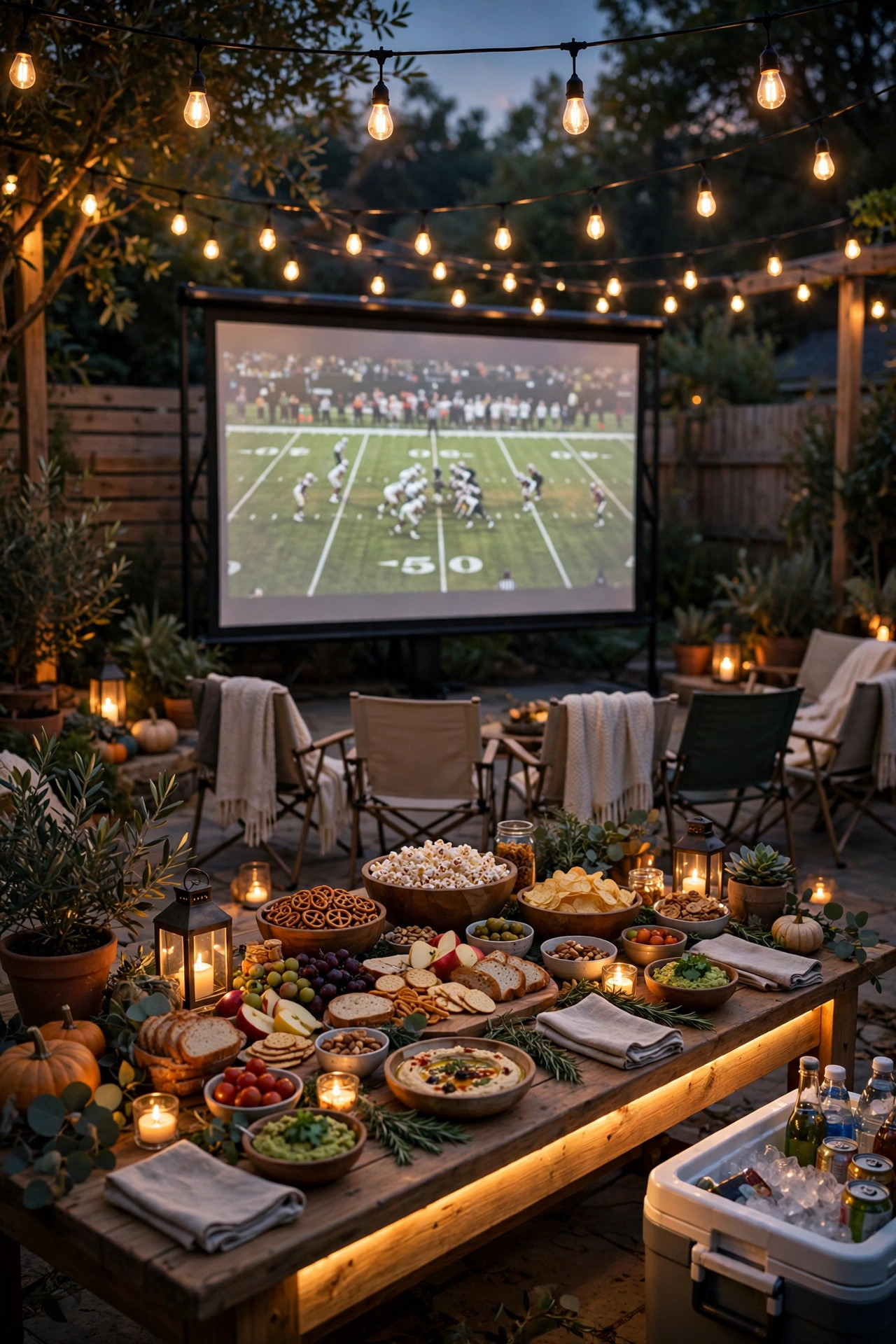
1. Game Day Backyard Lighting Ideas: Start With Three Zones
Before you hang a single bulb, sketch the yard into three zones: the screen wall, the seating bowl, and the snack-and-grill station. Each one wants completely different light. The screen zone needs near darkness within about 6 feet of the picture. The seating zone wants a low, warm glow around 2700K so faces look friendly and nobody squints. The food zone can run brighter and cooler, because that is where people actually need to see what they are scooping. In my experience, most failed watch parties trace back to one-size-fits-all lighting: a single bright floodlight trying to do all three jobs and doing none of them well. Walk the yard at dusk with a notepad, mark where each zone starts and ends, and note the outlets near each one. That little map decides every fixture choice that follows, and it keeps you from buying doubles. Treat the zones as separate rooms that happen to share a lawn, and the whole setup suddenly gets easy.
Suggested budget range: $0 – $25.
2. Put Overhead String Lights on a Dimmer
Bistro string lights are the backbone of every watch party I host, but the dimmer is the real hero. At full brightness during pregame they make the yard feel like a festival; once the game starts, I drop them to about 30 percent so they read as a warm ceiling instead of competition for the screen. Run two or three swags across the seating zone, roughly 8 to 9 feet up, anchored to the house and a couple of sturdy poles. Choose shatterproof LED filament bulbs rated for outdoor use, and plug the whole run into an outdoor-rated plug-in dimmer or a smart plug with dimming control. Keep every strand at least a few feet in front of or behind the screen, never directly above it, because overhead reflections land right in the picture. One caution from experience: cheap dimmers can make LED bulbs flicker or buzz, so test the pairing before guests arrive, not during the coin toss.
Suggested budget range: $40 – $120.
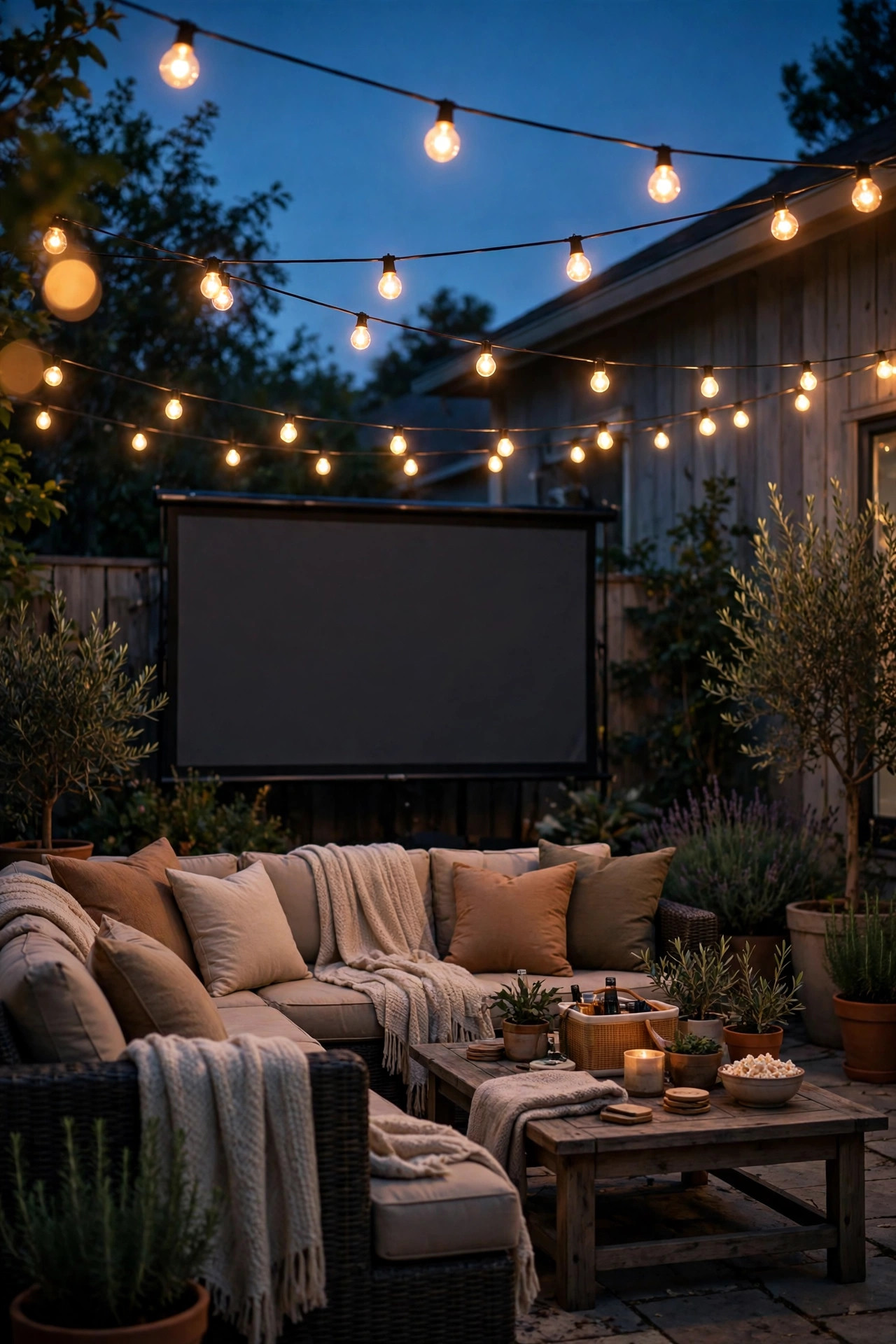
3. Build a Dark Zone Around the Screen
A television or projector only looks as good as the darkness around it. I keep a deliberate dark zone: no fixtures within about 6 feet of the screen, and nothing bright in the sightline behind it where your eyes catch glare every time you look up. If a porch light or neighbor floodlight spills onto the picture, a simple outdoor curtain panel or a tall planter row can block the worst of it. For projector setups, this matters double, because even moonlight-bright ambient light flattens the image. Aim every nearby fixture away from the screen and downward, and choose shielded shades over bare bulbs in that part of the yard. Honestly, the cheapest upgrade in this whole post is flipping off the one light you forgot about. Walk the seating area before kickoff, sit in the worst seat, and hunt for anything glowing in your peripheral vision. If you can see a bulb, the screen will look washed out. Fix the angle, not the brightness.
Suggested budget range: $0 – $60.

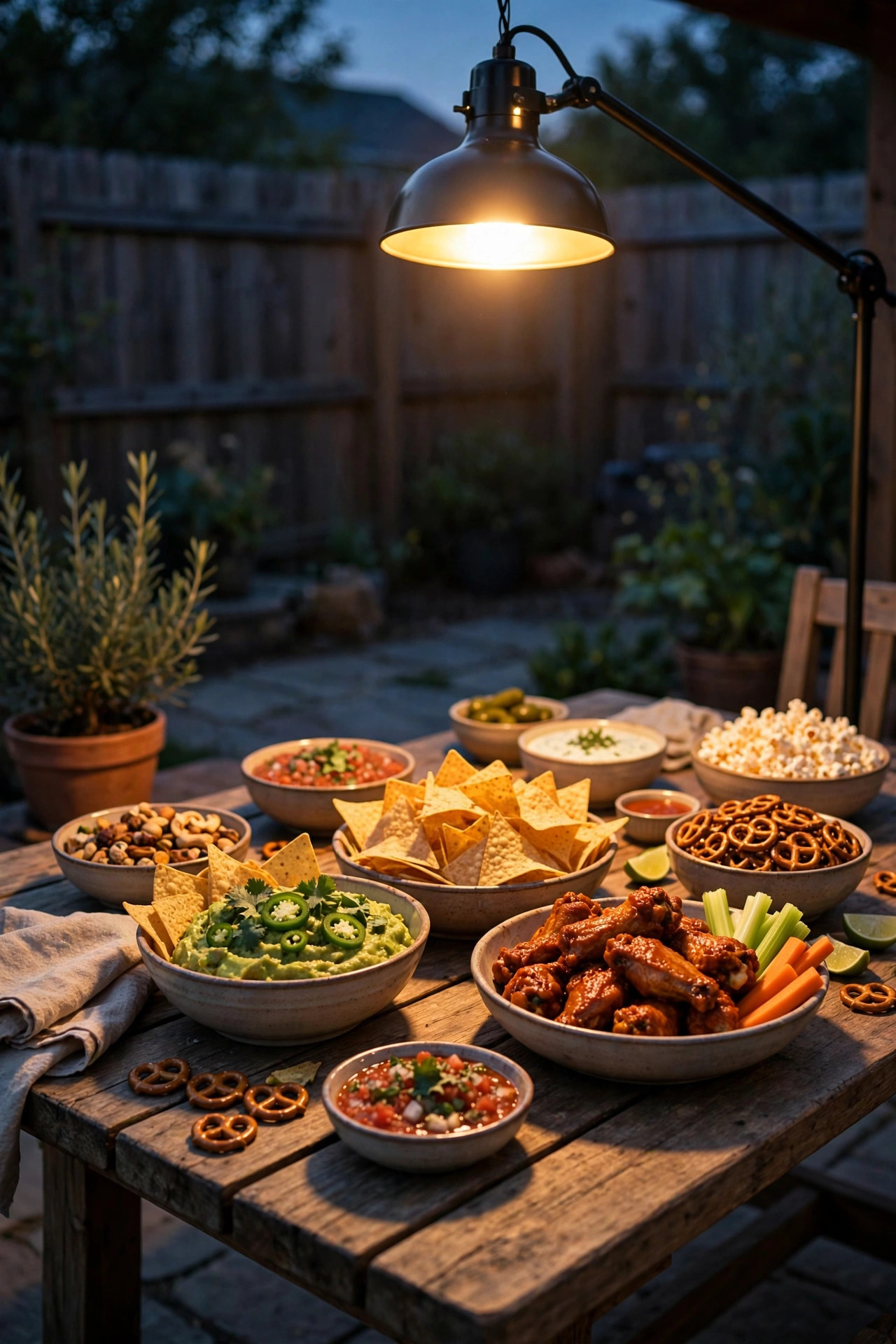
4. Light the Snack Table Like a Concession Stand
The snack table is the one place at a watch party where bright light is not just allowed, it is the whole point. Nobody should have to guess whether that bowl is salsa or bean dip. I clip two battery lanterns or a short plug-in strip under the edge of a serving shelf so the food glows from above without bulbs glaring into eyes. Aim for noticeably brighter light here than anywhere else in the yard, and keep the color around 3000K so chips, wings, and veggies still look appetizing. A small rechargeable lantern at each end of the table also saves the night when a cord trips. Set the table just outside the seating bowl, close enough for halftime traffic but far enough that a crowd around the queso never blocks the screen. Label-free tip from my house: put the messy, drippy foods under the brightest spot, because that is where spills get spotted and wiped before they spread.
Suggested budget range: $25 – $80.
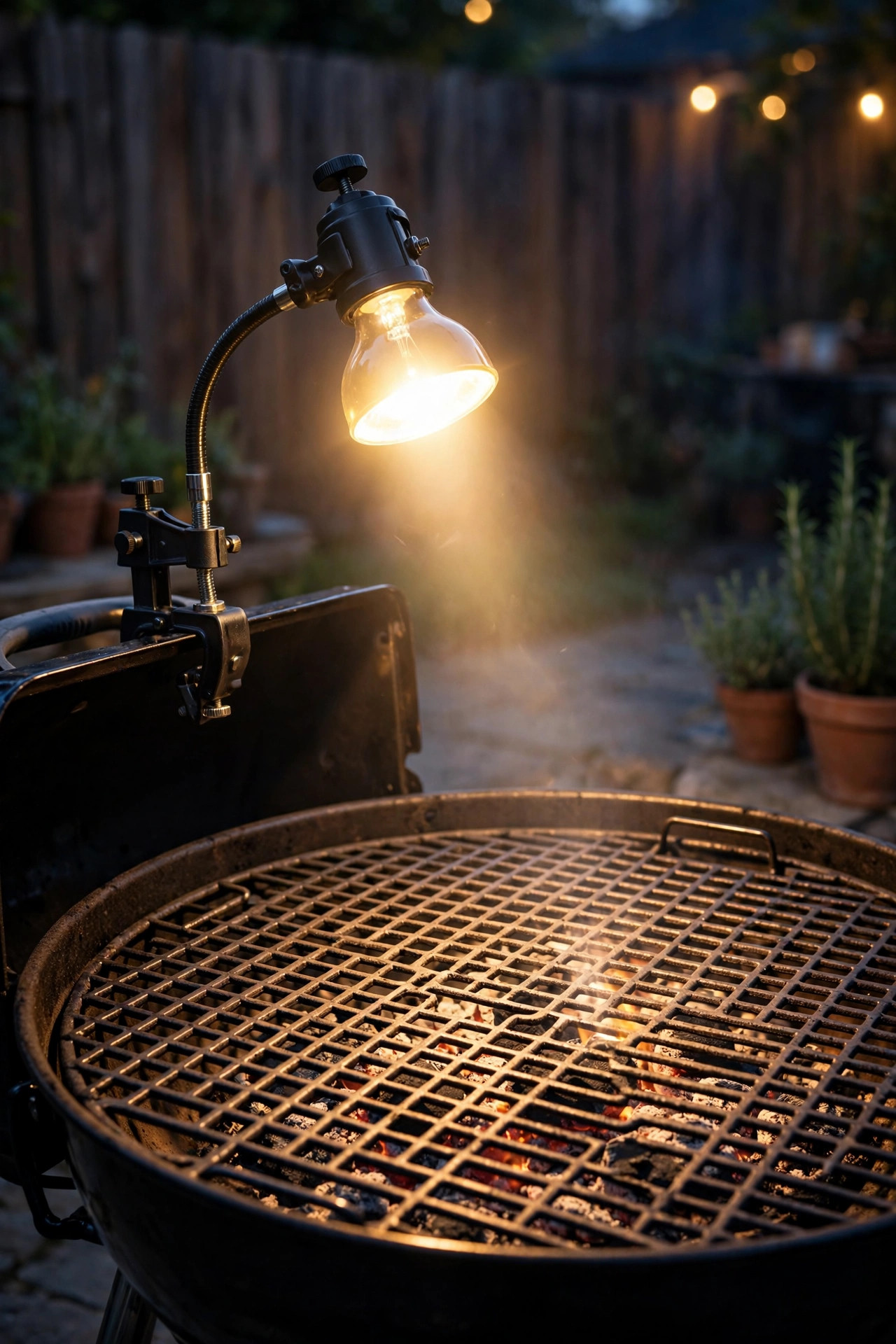
5. Give the Grill Its Own Task Light
Whoever runs the grill during a night game is working in the worst light in the yard: back to the party, face in the smoke, guessing at doneness by flashlight. Fix it with a dedicated task light. A clamp-on grill light with a flexible neck, or a small magnetic work light on the side shelf, puts bright, focused light right on the grates where it belongs. Look for a heat-resistant fixture and keep cords well clear of the firebox. I also add a low step light on the path between the grill and the kitchen door, because that route gets walked a dozen times a night, usually with full hands. Bright white light around 4000K is fine here; this is a work zone, not a lounge. Just angle it down and away from the seating so the cook gets a spotlight and the fans keep their ambiance. LED only near the grill, always, since hot fixtures and flare-ups do not mix.
Suggested budget range: $20 – $70.
6. Show Team Colors With Color-Changing Smart Bulbs
A little team spirit goes a long way, and color-changing smart bulbs are the easiest way to wear your colors without a single banner. I swap two or three bulbs in the accent fixtures, maybe the porch sconce and a pair of lanterns, and set them to our team colors for the pregame and postgame. During the game itself I dial them back to warm white or a very dim version of the color, because saturated red or blue light bouncing around can tint the picture and tire your eyes. Rope light in a team color along the fence line is another fun, low-glare option since it glows rather than beams. Stick to two fixtures, three at most; a whole yard pulsing purple reads more nightclub than watch party. Set the colors from your phone before guests arrive and save the scene, so switching between party mode and game mode takes one tap instead of a lap around the yard with a remote.
Suggested budget range: $30 – $90.

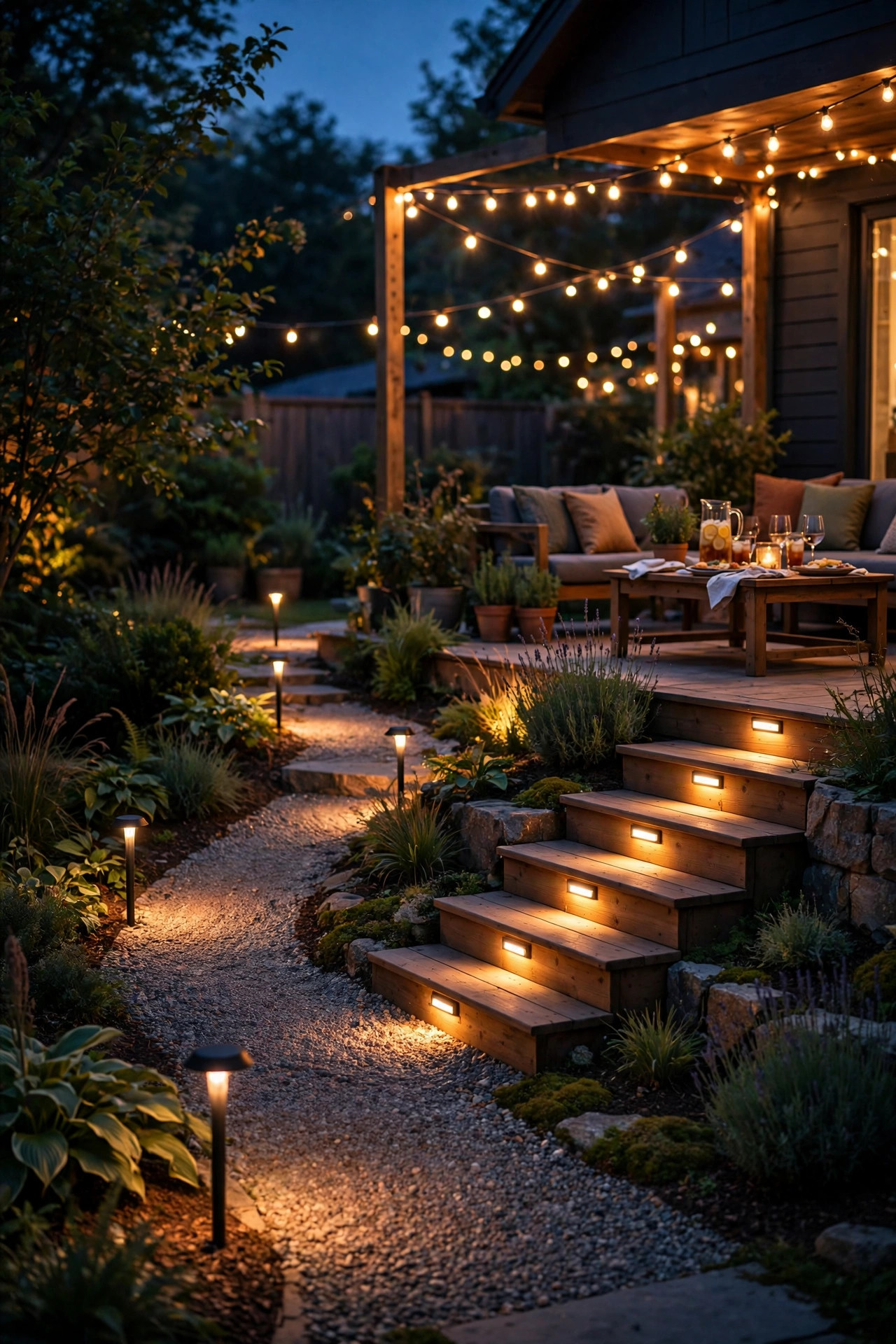
7. Mark Steps and Path Edges for Halftime Traffic
Halftime sends fifteen people toward the kitchen and the cooler at once, in the dark, half of them looking at their phones. That is exactly when somebody misses a step. Low path lights along the main walking routes, spaced about 6 to 8 feet apart and aimed at the ground, keep the traffic flowing without lighting up the whole yard. Recessed step lights or a short LED strip under each tread make deck stairs readable at a glance. Keep these fixtures low and shielded; their job is to outline the route, not to compete with the screen, so skip anything that throws light upward. Solar stakes work fine on the lawn edges if they get decent sun during the day, but for stairs I trust wired or battery lights with a dusk-to-dawn sensor so they never forget to show up. Test the route yourself at halftime brightness, carrying a plate, because that is the real-world version of this test.
Suggested budget range: $35 – $110.
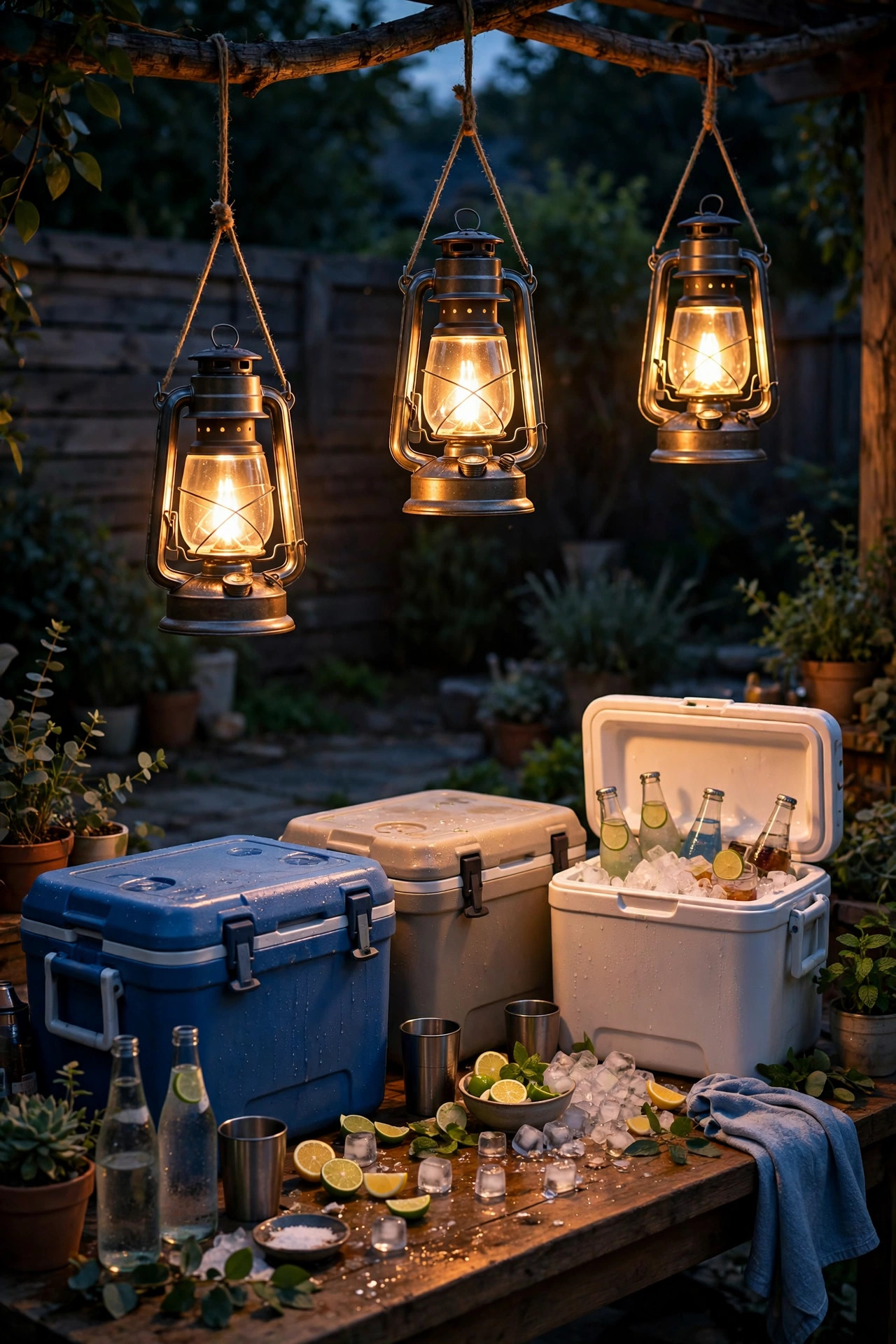
8. Give the Cooler and Drink Station a Lantern Glow
The drink station is the second-busiest spot at any watch party, and it usually sits in whatever dark corner was left over. A pair of flameless candle lanterns or one battery lantern hung above the coolers turns it into a destination instead of a scavenger hunt. Warm light around 2700K keeps it inviting, and battery power means you can park the station anywhere, even out on the lawn by the seating. If your coolers live on the deck, a short string of mini lights along the railing behind them does the same job with a little sparkle. One practical note: put a small light inside the lid zone, or choose a lantern tall enough to shine down into the ice, because digging for the last soda in the dark gets old by the second quarter. Keep glass bottles out of the lighting plan entirely; flameless and LED options only, so a tipped lantern is a shrug, not a cleanup.
Suggested budget range: $20 – $60.
9. Anchor the Seating With One Pendant or Big Lantern
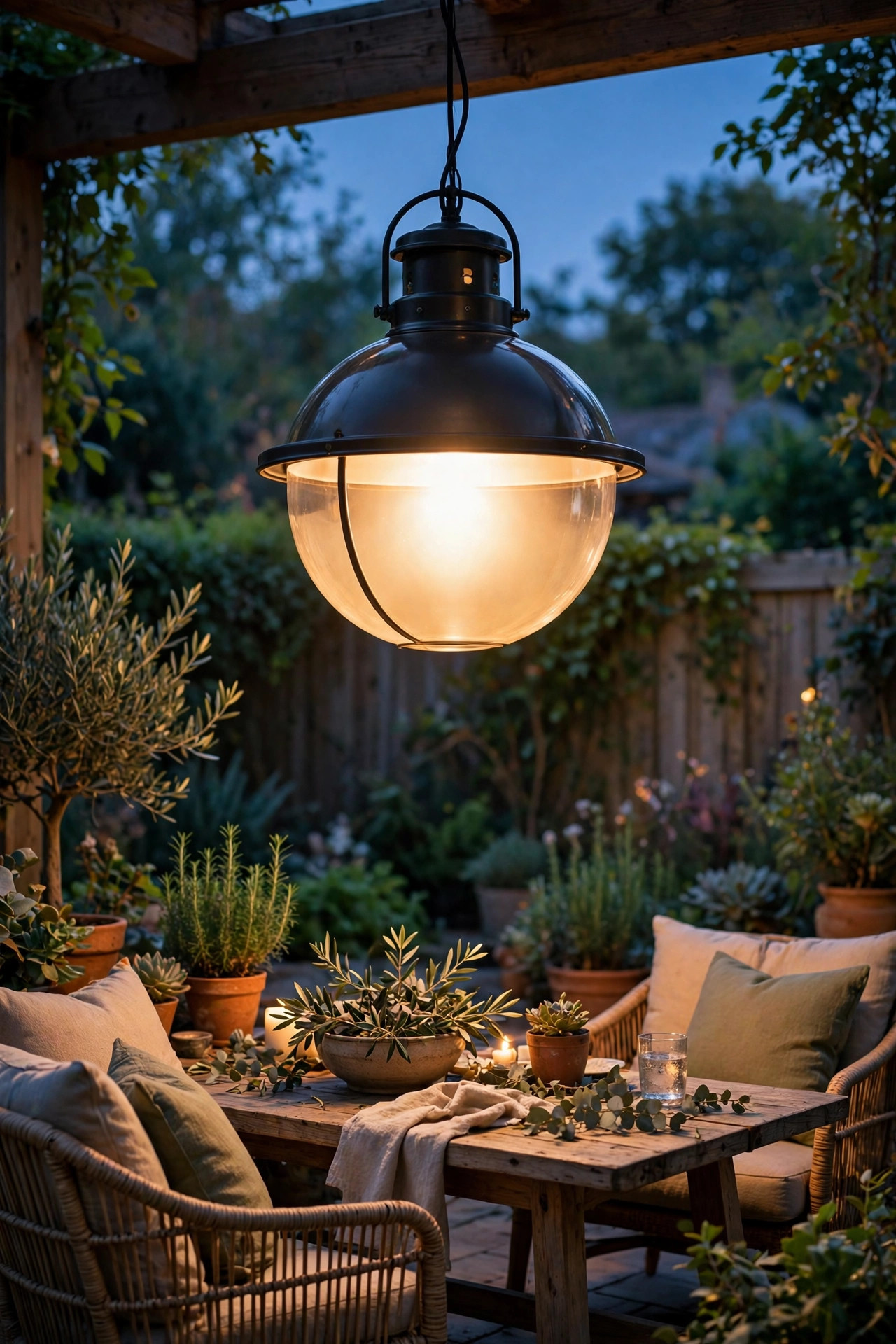
Every seating group needs one anchor light: a pendant over a patio table, a big lantern on a side table, or a plug-in hanging lantern from the pergola beam. This is the light that makes the seating bowl feel like a room. Hang it high enough to stay out of sightlines to the screen, roughly 6 and a half to 7 feet at its lowest point over a table, and choose a warm dimmable bulb so it can drop low during the game and rise again at halftime. The anchor also gives guests a visual home base when they come back outside with a fresh plate. If you host movie nights too, the same fixture does double duty in my backyard movie night lighting setup, just dimmed even lower. One anchor per seating cluster is plenty; two competing pendants over one group makes faces look like a press conference. Cozy wins.
Suggested budget range: $30 – $100.
10. Wash the Fence With Soft Uplighting
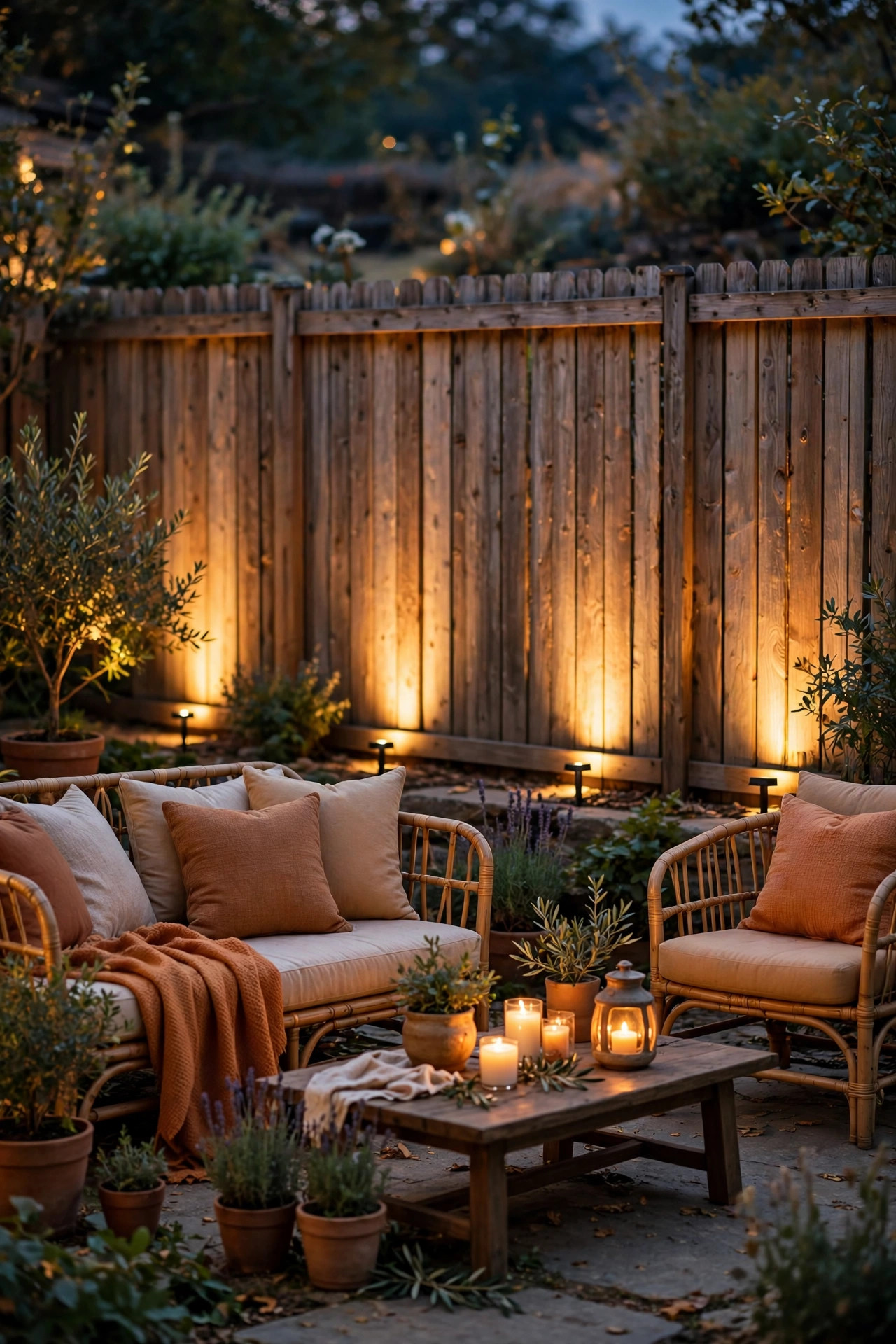
The back fence is the biggest blank surface at a watch party, and a gentle wash of light on it gives the whole yard depth. Two or three low-voltage uplights aimed at the fence boards from the planting beds create a soft backdrop that reads as glow, not glare, because the light source itself hides below eye level. Space them 8 to 10 feet apart and tilt the beams so they graze the wood rather than blasting it. This trick makes a small yard feel noticeably bigger after dark, and it frames the screen wall instead of competing with it, as long as you keep the fixtures on the side and rear fences rather than the one behind the picture. Solar spotlights can handle this job in a sunny yard, though wired low-voltage runs give you steadier brightness for a long night game. Keep the color matched to the rest of the yard, warm white around 2700K to 3000K, so the backdrop melts into the scene.
Suggested budget range: $45 – $130.
11. Add Flame-Effect Torches for Tailgate Energy
Something about flickering flames just says game day. Solar flame-effect torches staked around the seating bowl and along the fence bring that tailgate energy with none of the fire risk, which matters when the yard is full of folding chairs, blankets, and people walking backward while watching a replay. The flicker reads as movement at the edge of your vision, so place them at the perimeter rather than near the screen, where the motion can pull your eyes off the play. A pair flanking the gate or the steps into the yard makes a great entrance. Because they are solar, there are no cords to trip over, and they switch themselves on at dusk. Mix heights if you can: standard torches at about 3 feet and a couple of taller ones behind seating for depth. Real tiki torches with open flame have no place in a crowded watch party, in my book. The LED versions fool everyone after the first beer anyway.
Suggested budget range: $30 – $85.

12. Light the Cornhole and Lawn Games Corner
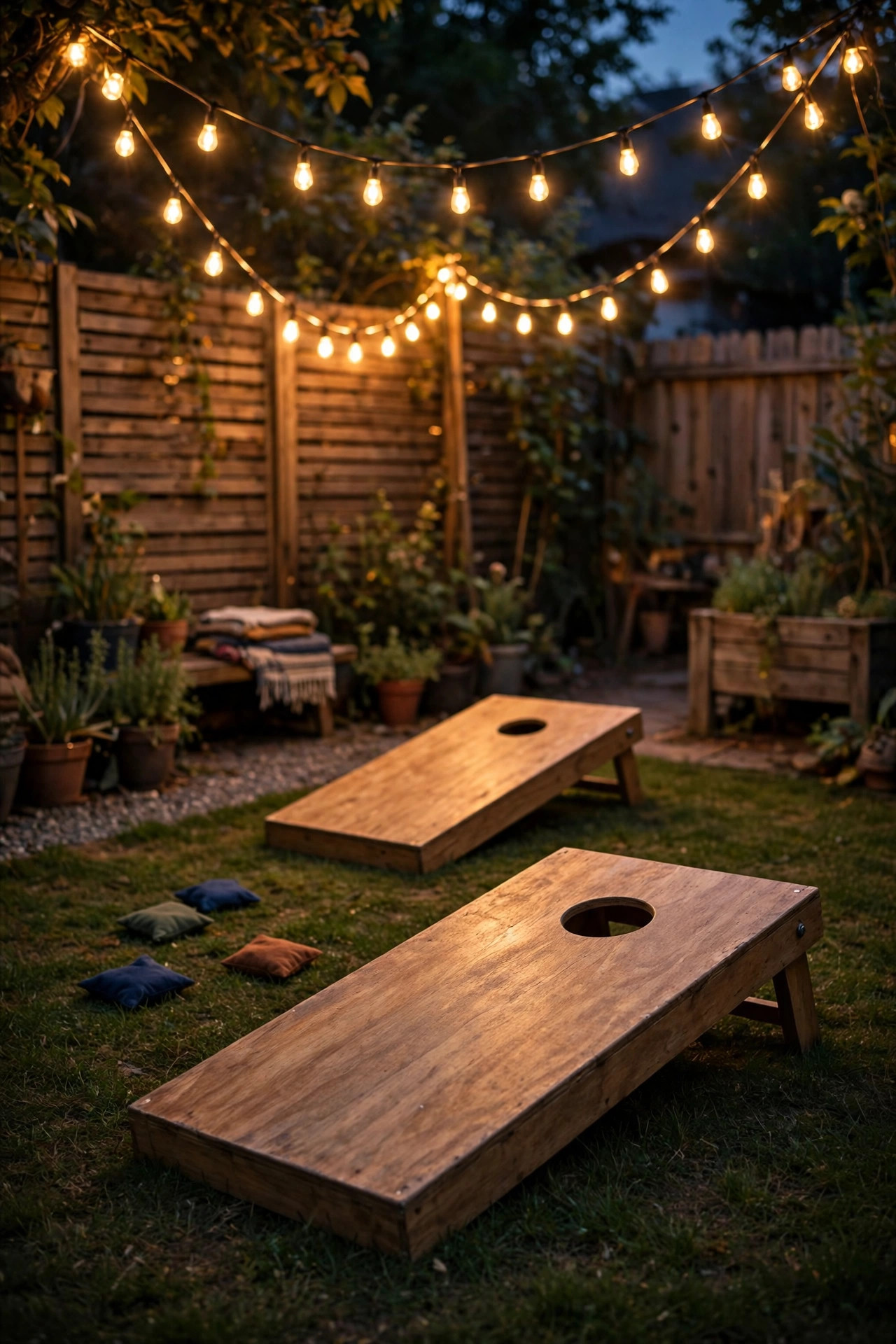
Not everyone watches every snap. A games corner with cornhole boards, a ring toss, or giant dice keeps the casual fans happy, and it needs its own pool of light so it never borrows glare from the screen zone. A single string light swag overhead or one bright lantern on a shepherd hook gives enough light to play by; aim for honest brightness here, since nobody can sink a bag they cannot see. Position the games on the opposite side of the yard from the screen, and angle the light down at the boards so the players are not staring into a bulb. Battery and solar fixtures shine in this role because the corner usually sits far from an outlet. When the game gets tense in the fourth quarter, the corner naturally empties and you can switch that light off entirely, returning the yard to full cinema mode. Until then, it earns its keep every single commercial break.
Suggested budget range: $25 – $75.
13. Set Scenes and Timers So the Yard Runs Itself
The best hosting trick I know is never touching a switch after kickoff. A couple of smart plugs and one saved scene in your app can run the whole evening: pregame scene at full festive brightness, game scene with strings dimmed and accents low, and a halftime scene that brings the snack and path lights up for the rush. Schedule the dusk-to-dawn fixtures to wake up on their own, and set the path lights to stay on until an hour after the game typically ends. This is the same automation I lean on for my general outdoor party lighting ideas, just with extra scenes for kickoff and the final whistle. Keep one manual override within reach of your seat, because overtime happens and nobody wants to debug an app during a two-minute drill. Label the plugs with tape when you set them up in daylight. Future you, standing in the dark with a plate of nachos, will be grateful.
Suggested budget range: $25 – $70.

14. Keep Bugs Off the Food With Smart Amber Placement
Bugs love a watch party as much as your friends do, and they love bright white light even more. You cannot light the yard without inviting a few, but placement does most of the work. Put one amber or yellow-toned light, which insects are far less drawn to, at a decoy spot well away from the food and seating, ideally 20 feet or more, so the crowd of moths gathers over there instead. Then keep the snack table light warm and shielded, shining down on the food rather than out into the yard where it advertises itself. Citronella candles help at the seating edges, but keep real flame away from paper goods and never rely on candles as your only light source. A small fan near the food table quietly earns MVP status too, since mosquitoes are weak fliers. Between the decoy light, the fan, and covered dishes, our last three watch parties stayed remarkably bite-free without a single harsh bug zapper cracking over the commentary.
Suggested budget range: $15 – $55.

15. Layer It All: My Full Game Day Backyard Lighting Ideas Lineup
Here is how the whole playbook stacks on a real Saturday at our house. The string lights hum along at 30 percent over the seating. One pendant anchors the main chairs. The fence glows softly behind everyone, the torches flicker at the edges, and the screen sits in its own pocket of darkness, crisp as a picture window. The snack table and grill run bright and practical, the path lights trace the halftime routes, and two lanterns keep the coolers friendly. Nothing in the yard is brighter than it needs to be, and every light has exactly one job. That is the layering habit I use everywhere, from ordinary Tuesday patio dinners to the fire pit nights in my fire pit area lighting notes. Start with the zones, add one layer at a time, and test from the worst seat in the yard. Do that, and your watch parties will look as good as the game itself, win or lose.
Suggested budget range: $150 – $400.

Frequently Asked Questions
How bright should the lighting be around an outdoor TV?
Keep the seating area dim, roughly the level of a living room lamp on low, and keep all fixtures out of the sightline to the screen. Brightness matters less than placement: a modest bulb you can see directly will wash out the picture more than a stronger light hidden behind shade or aimed at the ground. If guests are squinting or the blacks on screen look gray, something nearby is too bright or badly angled.
Will string lights ruin the picture on a projector screen?
They can if they hang near or above the screen, because projectors have far less brightness to spare than TVs. Hang strings over the seating only, dim them to around 30 percent, and keep the first several feet around the screen completely dark. A dimmer or smart plug makes the adjustment instant when the game starts.
What color temperature works best for a watch party?
Warm white, 2700K to 3000K, flatters faces, food, and team colors without looking like a parking lot. The exceptions are the work zones: the grill and prep areas can run closer to 4000K for honest task light. Just keep those brighter, cooler fixtures aimed down and away from the seating so the two moods never fight.
Can solar lights handle a whole game day setup?
Solar works well for accents, path markers, flame torches, and fence washes, especially after a sunny day. For the core of the party, strings, the screen area plan, and food lighting, I still trust plug-in or low-voltage fixtures for steady, dimmable output through a long night game. A hybrid setup, solar accents plus wired anchors, is the sweet spot for most yards.
Conclusion
Great game day backyard lighting ideas all come down to one habit: give every zone its own light and every light its own job. Dim the strings, protect the screen, feed people under honest task light, and let the fence and torches supply the glow. Set it up once with scenes and timers, and the yard will run itself from kickoff to the final whistle while you actually watch the game. If you are building your setup from scratch, start with the three-zone plan and the dimmer, then add a layer each week of the season. For more ways to make the whole yard work after dark, browse the rest of my lighting ideas here and steal whatever fits your next gathering.