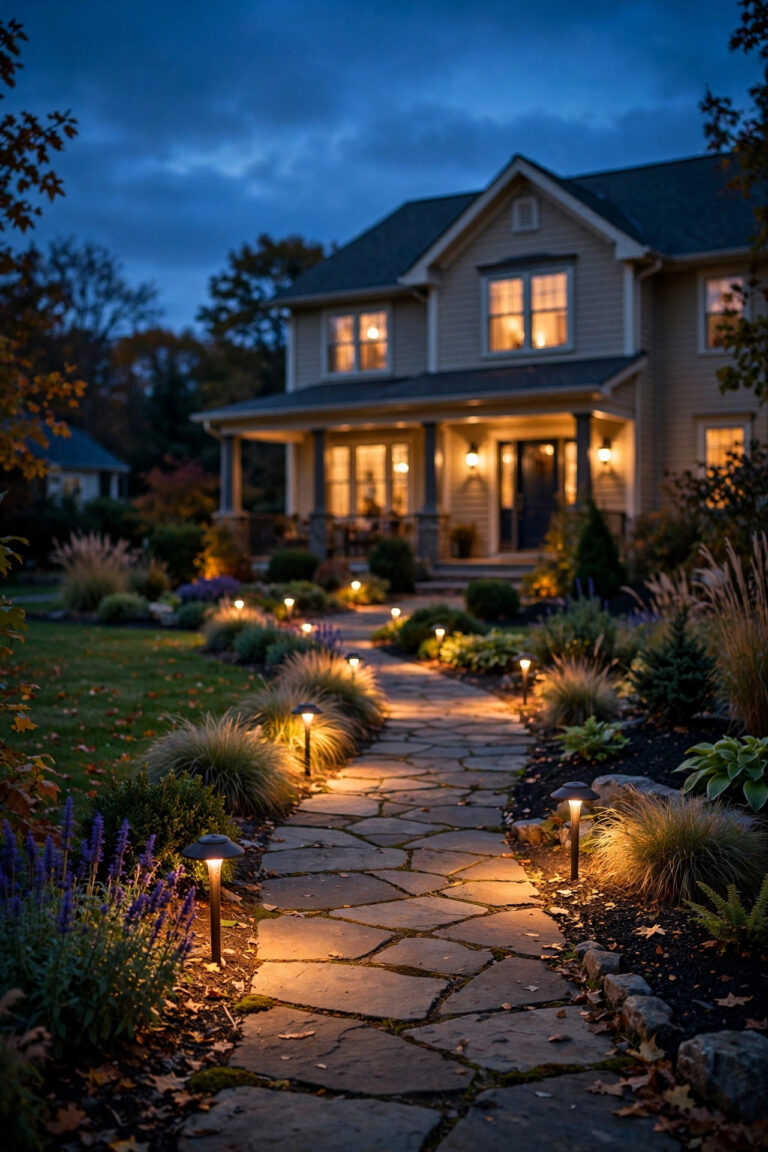
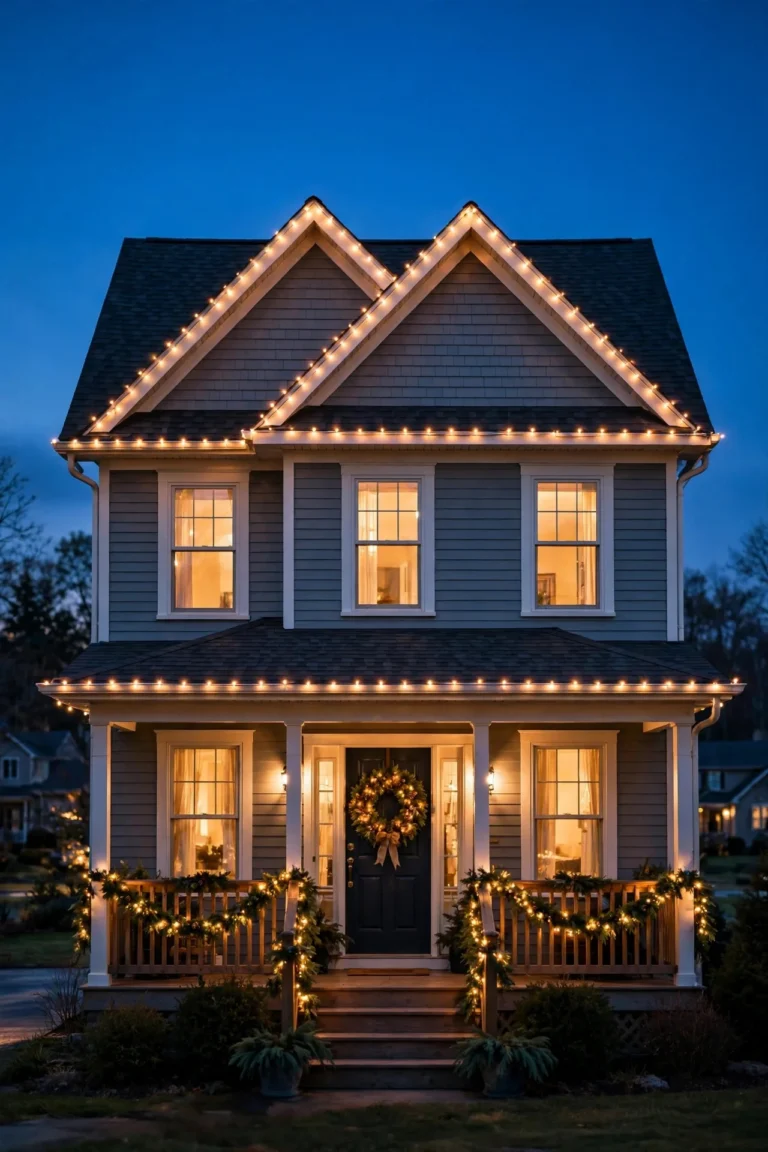
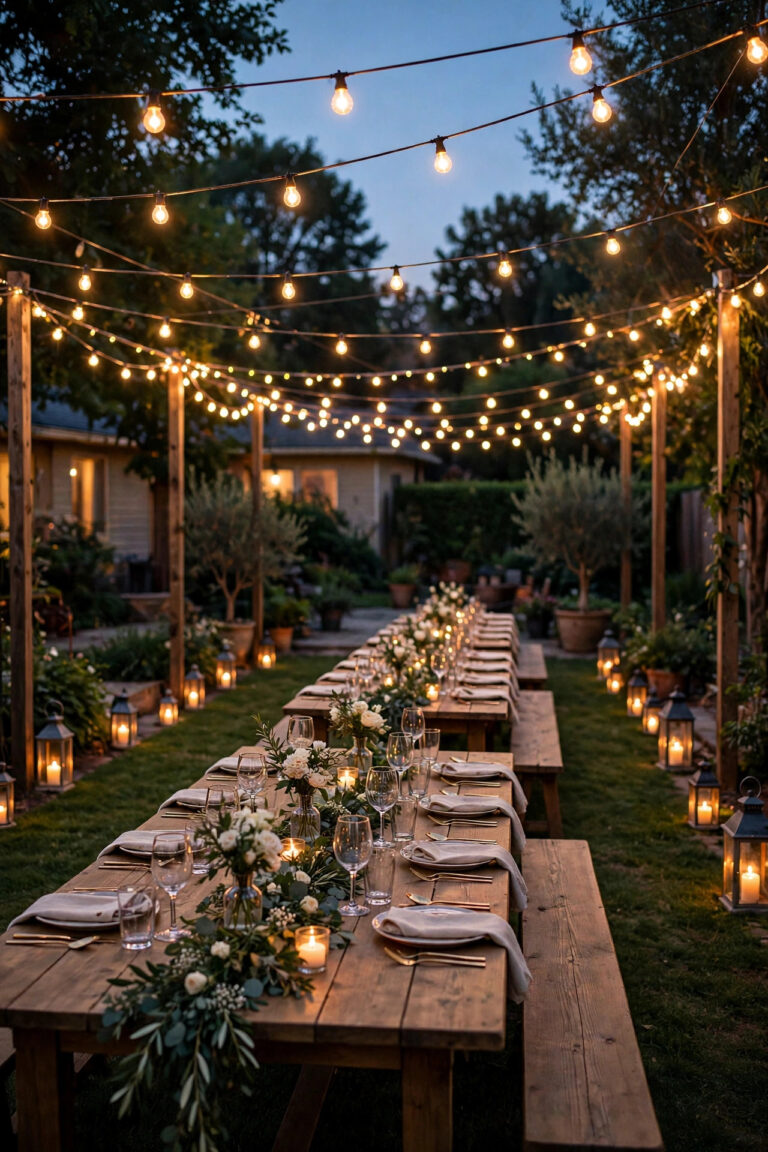
Every fall, when the first electric bill after a summer of long evenings lands in my mailbox, I ask myself the same question: the yard looks wonderful, but what is all that glow actually costing me? So I sat down with a notebook and did the math, fixture by fixture. These energy saving outdoor lighting ideas are the exact moves I made at my own house afterward. Nothing here asks you to live with a dim, sad yard. I still light in layers — a guidance layer for paths and steps, a welcome layer at the doors, and an accent layer for the pretty parts. I just refuse to pay for watts nobody sees. Every idea below carries its saving in plain numbers, figured at roughly 17 cents per kilowatt-hour, close to the national average. Swap in your own rate from your bill and the ranking stays exactly the same. Start at the top; the first three ideas paid for themselves before the season turned.
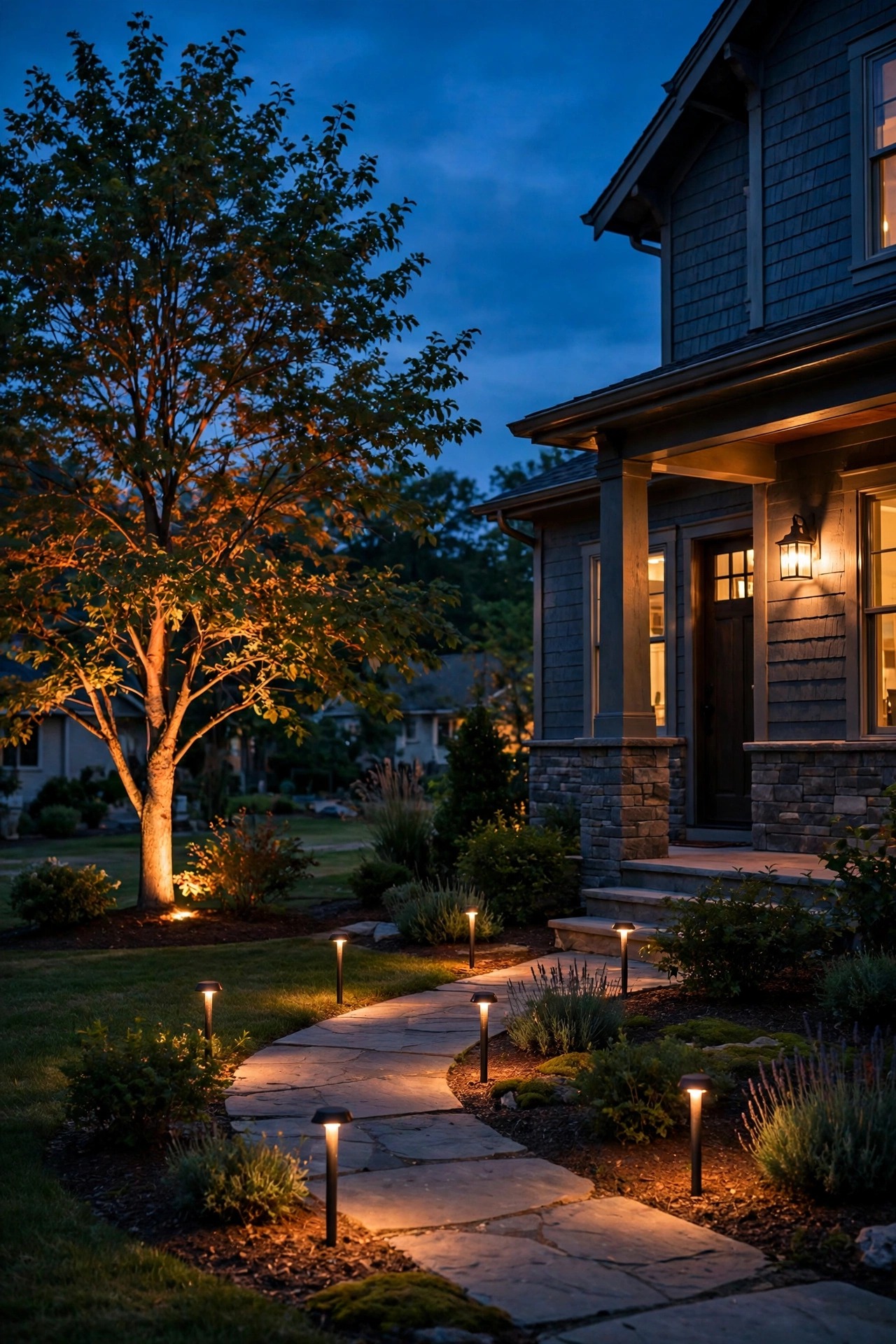
1. Swap Every Outdoor Bulb to LED — Energy Saving Outdoor Lighting Ideas Start Here
If you only do one thing on this list, make it this one. A classic 60-watt incandescent porch bulb and a 9-watt LED both give you the same friendly 800 lumens, but the old bulb costs about $22 a year to run six hours a night while the LED costs about $3.35. That is roughly $19 saved per bulb, per year, for the exact same glow. Multiply that by the two coach lights flanking my garage, the porch sconce, and the back door lantern, and the swap paid back about $75 a year at my house. For visible bulbs in lantern-style fixtures, choose LED filament styles so you keep that warm candle look, and check for an enclosed-fixture rating before screwing one into a sealed sconce. Stick to 2700K so the light stays golden instead of clinic-white. I ran the full side-by-side numbers in my breakdown of LED outdoor lighting savings, and honestly, this is the rare upgrade where the cheaper-to-run option also lasts ten times longer.
Suggested budget range: $10 – $40.

2. Add a Photocell So Porch Lights Never Burn at Noon
Here is the most embarrassing line on my audit: a porch light that burned around the clock for weeks because someone flipped the switch and forgot. Even an efficient 9-watt LED costs about $13.40 a year running 24/7, versus about $6.70 on a honest dusk-to-dawn schedule — and if the forgotten bulb is an old 60-watt, you are looking at nearly $90 a year spent lighting up the noon sun. A photocell fixes the human, not the bulb. Screw-in sensor sockets and bulbs with the sensor built in switch on at dusk and off at dawn all by themselves, so half the waste simply disappears. They work best on fixtures that get a little daylight on the sensor, so avoid tucking one deep inside a fully shaded, covered porch without testing it for a night or two. My step-by-step for how to add a photocell or timer to a porch light walks through the five-minute version. Set it, forget it, and let the sun punch the clock.
Suggested budget range: $8 – $25.

3. Put Security Floods on Motion Sensors, Not Dusk-to-Dawn
A security light does its real work for maybe twenty minutes a night. The other eleven and a half hours, a dusk-to-dawn flood is just guarding an empty driveway at full price. A typical 30-watt LED flood burning all night uses about 131 kilowatt-hours a year, roughly $22. The same flood on a motion sensor, triggering in short bursts that add up to about 25 minutes a night, costs under $1 a year. That is about $21 saved per flood, and I have three. Set the on-time to one to five minutes, aim the sensor head slightly downward so it reads your walkway instead of the street, and dial the sensitivity back until passing cars stop setting it off. One honest note: motion floods are for security corners and driveways, not for the fixtures that make your entry feel welcoming. Those should glow steady and low. Bright-when-needed, dark-when-not is the whole trick, and the surprise flash arguably scares off more raccoons — and teenagers — than a steady light ever did.
Suggested budget range: $25 – $70.

4. Set a Lights-Out Curfew With a Simple Timer
Dusk-to-dawn sounds romantic until you count the hours: in summer that can mean twelve hours of runtime, half of it after everyone is asleep. My landscape lights now keep a curfew. An astronomical timer turns them on at sunset — it recalculates the sunset time all year, so there is no reprogramming — and everything goes dark at 11 p.m., when the audience has gone to bed. On my low-voltage set, which draws about 60 watts total, trimming seven hours a night saves roughly 153 kilowatt-hours a year, about $26, and it nearly doubles the working life of every bulb and the transformer. If your evenings run late on weekends, most timers have a simple override or a weekend schedule, so Friday movie night on the patio still gets its glow. The accent layer is pure pleasure lighting; nobody needs a lit-up oak tree at 3 a.m. Give the yard a bedtime and the bill notices within one cycle.
Suggested budget range: $15 – $45.

5. Retire the Old Halogen Floodlight for Good
Somewhere in America tonight, a 500-watt halogen floodlight is roasting a garage door. It feels powerful, but it is the thirstiest fixture most homes own. Run one just three hours a night and it eats about 547 kilowatt-hours a year — roughly $93. A modern 50-watt LED flood throws the same useful wash of light for about $9 a year on the same schedule, saving you around $84 annually from a single fixture swap. The LED also runs cool, which matters when a fixture sits near vinyl siding, dry mulch, or low eaves; halogens get hot enough that I never trusted mine near the cedar fence. When you shop, match lumens rather than watts — you want roughly 4,000 to 5,000 lumens for a driveway workhorse — and pick an IP65 rating or better so weather stays outside the housing. This was the single biggest dollar line on my whole audit, and the new light honestly looks better: crisper shadows, no orange glare, and no more climbing a ladder twice a year to replace a cooked bulb.
Suggested budget range: $35 – $90.

6. Put String Lights on a Smart Plug Schedule
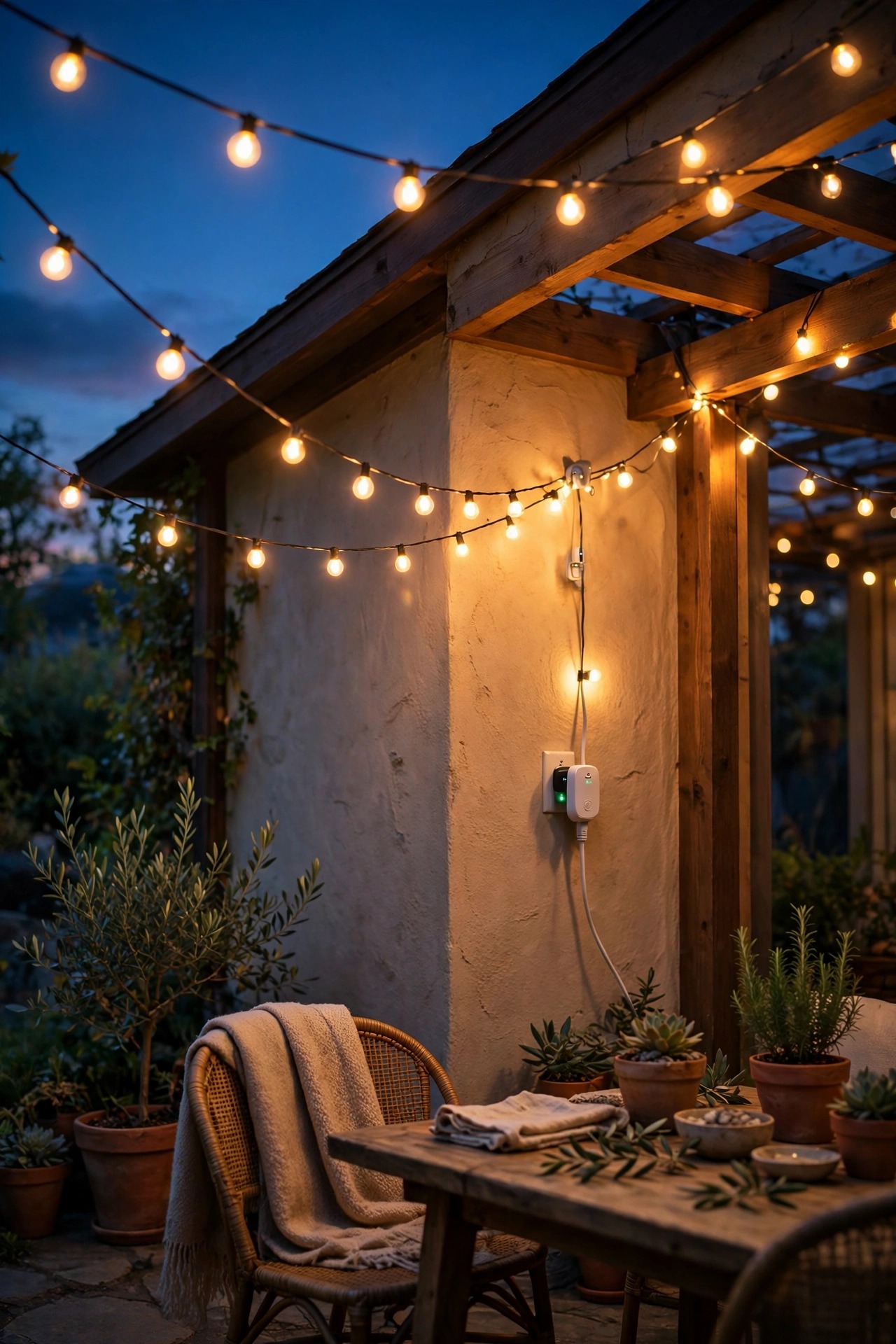
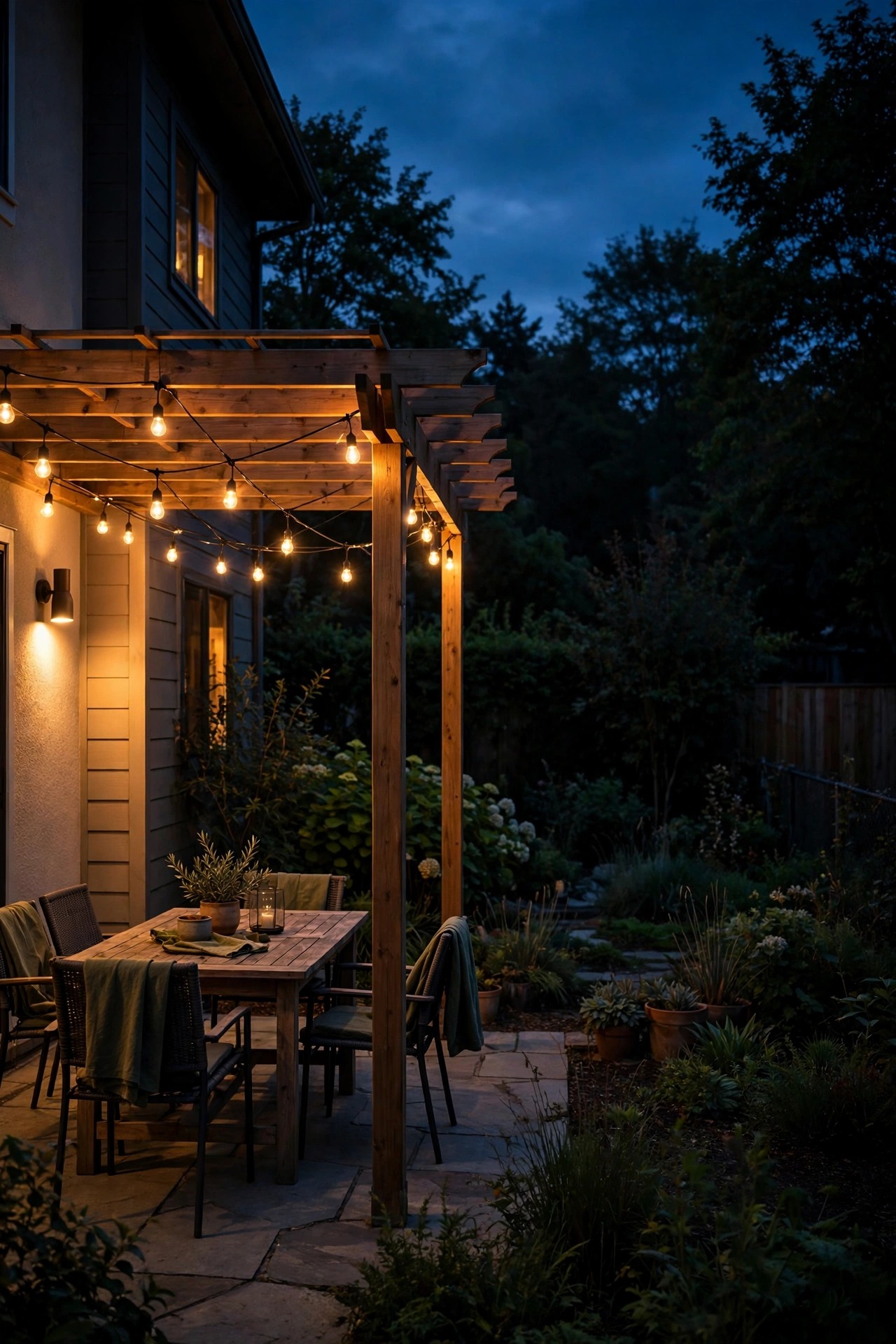
Cafe string lights are the soul of my patio, and they were also quietly freeloading. An older incandescent strand can draw around 60 watts; the LED strand that replaced mine draws about 6 watts and looks warmer doing it. That swap alone saves roughly $13 a year at four hours a night. The bigger saving is the schedule. On a smart plug, the strings come on at dusk, go off at 11, and never — not once — burn through a whole forgotten weekend because someone left the switch on after a party. Choose a plug rated for outdoor use, plug it into a GFCI outlet, and keep the connection up under the eave or in a weatherproof cover box so rain stays out of the socket. I compared the options worth buying in my roundup of the best outdoor smart plugs and timers, including the simple dial timers that need no app at all. Pretty and punctual beats pretty and always-on, every single month.
Suggested budget range: $15 – $45.
7. Go Solar Where the Sun Actually Reaches
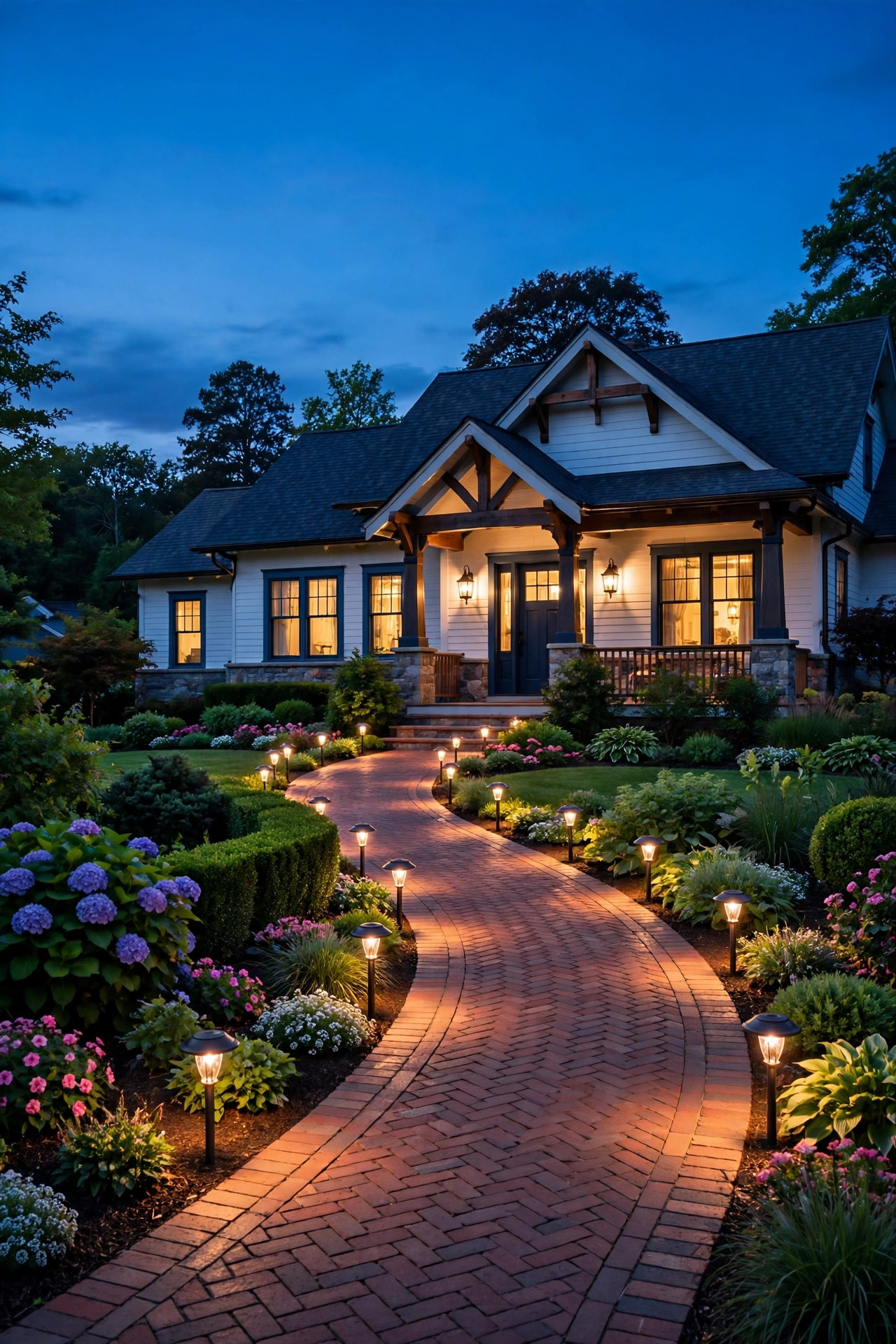
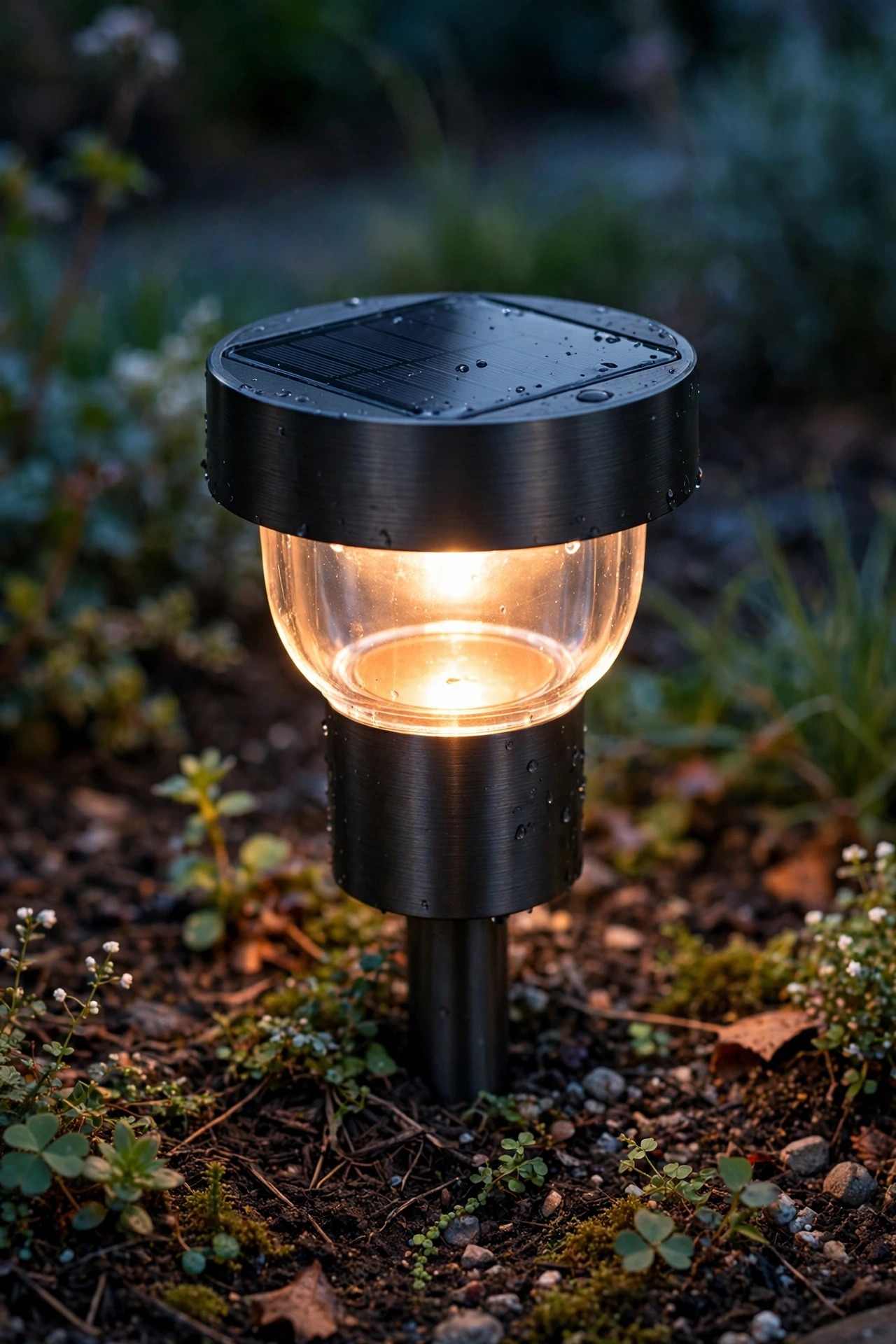
Solar path lights run on a budget of exactly zero dollars, and for the guidance layer that is hard to argue with. Ten wired LED path lights at 4 watts each, burning dusk to dawn, use about 175 kilowatt-hours a year — roughly $30. The solar versions doing the same job along my front walk cost nothing to run, ever. The honest fine print: a solar light is only as good as the sun it drinks, so this idea belongs in open, sunny runs — the front walk, the driveway edge, the garden border that gets six or more hours of direct light. Plant them where shrubs will not shade the little panels by midsummer, and wipe the panels when you deadhead the roses so they keep charging fully. In deep shade or for security duty, solar still disappoints me by December, and I say so to anyone who asks. But for marking a path with a warm dotted line of light, solar is the one place where the free option is also the easy option: push the stake in, and the meter never knows.
Suggested budget range: $25 – $80.
8. Downsize Decorative Bulbs to Accent-Level Watts
Accent lighting has one job: a soft pool of light that says look here. It does not need horsepower, yet half the yards on my street are running 20-watt halogen accent bulbs where a 4-watt LED would look better. I swapped eight of them around my beds and entry columns. Each swap cut 16 watts, so the set saves about 128 watts; across six hours a night that is roughly 280 kilowatt-hours a year, or about $48, returned for bulbs that cost a few dollars each. The trick is shopping by beam angle and lumens instead of watts. A narrow 30-degree beam at 250 lumens grazes a stone wall beautifully, while a fat flood bulb at the same wattage just splashes. Keep the color temperature matched at 2700K across the layer so old and new fixtures blend, and never mix a daylight bulb into a warm scene — your eye reads it as a mistake instantly. Decorative layers should whisper. Once the wattage whispers too, the saving shows up every single month without anyone noticing a thing missing.
Suggested budget range: $12 – $35.

9. Rebuild the Landscape Run Around Low-Voltage LED
If your landscape lighting dates from the halogen era, the whole system — not one bulb — is the opportunity. A typical older setup on my street totals around 300 watts across its fixtures. The LED equivalent, same fixtures in the same spots doing the same job, lands near 45 watts. At six hours a night that difference is about 558 kilowatt-hours a year, roughly $95, which is real money for a weekend of work. Start with drop-in LED replacements if your wiring and transformer are healthy; it is the cheapest version of this idea. If you are rebuilding, size the transformer to your actual load with a little headroom — the pros aim to run one at about 80 percent of its rating — instead of the giant humming box the old halogen count demanded. Low-voltage cable, a dry location for connections, and waterproof wire nuts keep the system safe and serviceable for years. Do the paths and the entry first, live with it for a month, then extend. Your electric bill will read like a before-and-after photo.
Suggested budget range: $150 – $450.

10. Zone the Yard So Empty Areas Stay Dark
Here is a question worth asking at 9 p.m.: who is this light for, right now? My side-yard floods used to burn every night for an audience of nobody — 80 watts of light washing an empty strip of grass between my house and the fence. Zoning fixed it. The yard now runs in three zones, each on its own switch or smart plug: the front (welcome and curb appeal), the back patio (where we actually live), and the utility side (driveway edge, gates, trash run), which only lights when someone is genuinely out there. Keeping that side zone dark on ordinary nights saves about 80 watts across five evening hours — roughly 146 kilowatt-hours, about $25 a year — and the front and back actually look richer by contrast. Zoning is just the layering philosophy applied to your switches: light follows life around the house. When guests come, one tap brings the whole property up like a stage. The rest of the time, empty rooms — indoors or out — should sit dark and free.
Suggested budget range: $20 – $60.
11. Kill the Transformer Standby Draw
This is the sneakiest line on the audit because it buys you literally nothing. A landscape transformer sips power around the clock — typically 3 to 7 watts — even during the hours its timer has the lights off, because the clock and controls never sleep. At a middling 5 watts, that sip adds up to about 44 kilowatt-hours a year, roughly $7.45, spent lighting absolutely nothing. Seven dollars will not change your life, but it is the purest waste on the whole list, and it runs 8,760 hours a year whether you are home or on vacation. The fix is to cut the transformer off completely during dead hours: a smart plug or a plug-in timer ahead of it, set to power down after the lights-out curfew and wake up before dusk. Astronomical models handle the seasonal drift for you. Just leave a little warm-up margin before sunset so the system is awake when the photocell calls. Audit every always-plugged device outside while you are at it; the pond pump timer and the holiday inflatable may be sipping too.
Suggested budget range: $12 – $30.

12. Use Fewer Path Lights, Aimed Better
The runway look — a stake light every three feet marching down both sides of the walk — is not just a style mistake. It is a meter mistake. Every fixture you delete is a fixture that never draws a watt again. Along my 40-foot front path, I went from twelve stakes to eight by spacing them six to eight feet apart, alternating sides so the pools of light overlap in a gentle zigzag. Removing four 4-watt fixtures saves about 16 watts across the whole night, roughly 70 kilowatt-hours or about $12 a year, and the walk honestly looks better: your eye travels, the planting beds keep some shadow, and the house looks like a home instead of a landing strip. Aim each light down at the tread or the path surface, never up into faces, and set fixtures back a few inches from the edge so mower wheels and snow shovels spare them. Fewer, lower, aimed — that trio fixes most path lighting, and it is the only idea on this list that can come with a negative price tag if you sell the spares at a yard sale.
Suggested budget range: $0 – $30.

13. Dim the Patio Instead of Blasting It
Full brightness is for tasks; evenings are for glow. The four 9-watt sconces around my patio spend most of their lives dimmed to about 40 percent, which pulls their draw down by a little over half and saves roughly $6 a year across a five-hour evening. I will be honest: that is the smallest saving on this list, and I keep the idea anyway, because dimming is the one move that cuts the bill and improves the night at the same time. Dimmed light kills the glare that makes people squint over dinner, flatters everyone at the table, and lets the string lights and lanterns do the sparkling. You need dimmable bulbs and a dimmer rated to drive them — mixing non-dimmable bulbs with a dimmer is how you get buzzing and flicker, so check both boxes before you buy. Run full brightness for grilling and cleanup, then settle everything down for dessert. Think of it as volume control for light: the music is the same song, just set for conversation instead of a concert.
Suggested budget range: $20 – $60.

14. Switch Holiday Strings to LED and Put Them on a Timer
Holiday lighting is seasonal, but the wattage is not shy. One old incandescent C9 roofline string can draw about 175 watts; the LED version of the same string sips around 12 watts and looks identical from the street. Across a 45-night season at five hours a night, each swapped string saves roughly $6.25, so a four-string roofline keeps about $25 in your pocket every December — and the timer keeps the display from glowing bravely into mid-January because someone forgot the plug behind the shrub. Set the timer to come on at dusk and quit at 11; your neighbors will love you, and so will the electric meter. LED holiday bulbs also run cool to the touch, which I appreciate around dry wreaths and garland, and a broken-bulb outage no longer takes down half the string. Buy one extra string of the same batch for color-matched spares, store them off-season in a labeled bin, and next year setup day gets a whole lot shorter.
Suggested budget range: $15 – $40.

15. Clean Lenses and Solar Panels Before Buying More Light
When a light looks tired, most people buy another light. I reach for a bucket first. Dust film, pollen, sprinkler scale, and spider architecture can dull a fixture noticeably over a single season, and a solar panel wearing that same film charges like it is a cloudy day, every day. Before you spend a dime, wipe every lens and panel on the property with a soft cloth and mild soapy water, rinse, and look again that night. Twice now, a path light I was about to replace came back at full brightness after two minutes of cleaning — two fixtures I did not buy, and about $6 a year in draw I never added, since each avoided 4-watt light would have cost roughly that to run dusk to dawn. The same visit is the moment to trim the shrub that has grown over a solar panel and to straighten the stake the mower nudged. Put it on the spring and fall garden lists, right next to cleaning the gutters. Restored light is the cheapest light there is: free to buy, free to run, already installed.
Suggested budget range: $0 – $10.
16. Choose Fixtures That Idle Dim and Brighten on Motion
My favorite newer fixtures cheat in the best way: they idle at a low, welcoming glow — around 3 watts — and only step up to full brightness, about 15 watts, when the sensor sees someone coming. Compare that with a standard sconce holding full brightness from dusk to dawn. The idle-dim fixture saves roughly 12 watts across most of the night, which works out to about 50 kilowatt-hours, or around $8.50 per fixture per year, and the entry never looks dark or abandoned. It is the perfect compromise for the welcome layer, where idea 3's motion-only darkness feels too stark but full power all night is pure waste. Look for a fixture with adjustable idle level and on-time so you can tune it to your porch, and mount it where the sensor has a clear view of the approach — not behind a hanging fern. Two of these flank my front door now, and guests get a little brightening welcome as they arrive, which feels like hospitality and reads on the bill like thrift.
Suggested budget range: $40 – $110.

17. Do the One-Night Watt Audit — the Energy Saving Outdoor Lighting Ideas Finale
Every idea above started with one evening walk, and yours should too, because the biggest saver in your yard is probably a light you forgot exists. Wait for full dark, grab your phone, and walk the property slowly. List every fixture you find, the bulb type and wattage in it, and how many hours it truly runs. Then do the one piece of math that runs this whole list: watts times hours times 365, divided by 1,000, times your rate per kilowatt-hour. Most readers who try this find 100 or more forgotten watts — the garage flood on a manual switch, the side-door bulb burning since the cookout, the halogen in the garden shed socket. Found watts like that are usually worth $40 to $75 a year, and the audit itself costs nothing but twenty minutes. Rank your list by dollars, do the top three fixes this weekend, and keep the notebook page; next fall, walk it again and watch the number shrink. This is the habit that keeps every other idea on this list honest.
Suggested budget range: $0 – $15.

Frequently Asked Questions
Do LED outdoor bulbs really save enough to matter?
One bulb, honestly, is coffee money — about $19 a year against an old 60-watt incandescent. But nobody has one outdoor bulb. A typical set of porch, garage, and back-door fixtures adds up to $60 to $90 a year in savings, the bulbs last for years instead of months, and every other idea on this list multiplies the effect because timers and sensors save the most when the fixtures underneath them are already efficient.
What color temperature should energy-saving outdoor bulbs be?
Choose 2700K to 3000K, the warm-white range. Daylight bulbs around 5000K are sometimes marketed as brighter or more efficient, but outdoors they read harsh and blue against siding, stone, and skin, and the real-world efficiency difference is tiny. Warm light is the glow this whole site is built around, and modern LEDs deliver it at the same low wattage, so you never have to trade coziness for savings.
Are solar lights always cheaper to run than wired LED?
To run, yes — solar costs zero dollars on the bill. But cheap and right are different questions. Solar wins for path marking and accents in sunny spots. Wired low-voltage LED costs pennies a night and wins anywhere you need dependable brightness: security corners, steps, shaded yards, and December, when solar runtimes shrink. My own yard uses both, each where it is strongest.
How much can a typical yard actually save in a year?
A halogen-era yard that works through the top half of this list can realistically save $150 to $250 a year. A yard that is already all LED usually finds $40 to $80 in timers, curfews, standby draw, and forgotten fixtures. Add the bulbs you stop replacing — a halogen accent bulb might last one season where an LED lasts a decade — and the true saving is comfortably higher than the electric math alone.
Conclusion
The lesson of my notebook is a happy one: the glow was never the expensive part. The expense was hours and watts nobody was using — lights burning at noon, floods guarding empty driveways, a transformer sipping all night. These energy saving outdoor lighting ideas simply stop paying for that waste, layer by layer, while the yard keeps every bit of its warmth. Start with the LED swap and the audit this weekend, and let the savings fund the fun projects. When you are ready for the next one, browse the rest of the lighting ideas here and pick the spot in your yard that deserves a little more light — efficient light, this time, on purpose.