The last time I replaced the porch light beside my front door, I stood in the store aisle holding two sconces that looked nearly identical. Same black finish, same seeded glass, similar price. The only real difference was invisible: one had a socket waiting for a bulb I would choose, and the other had its light source built in for life. That quiet difference — integrated LED vs replaceable bulb fixtures — decides almost everything about how the fixture ages, what it costs you over the years, and whether a failure means a five-minute fix or a whole new fixture. This guide walks through integrated led vs replaceable bulb fixtures the way I wish someone had explained it to me in that aisle: what each type really is, how long each honestly lasts, what breaks, what you can repair, what fifteen years of ownership actually costs, and a clear decision rule for which one belongs on your house.
The Short Answer
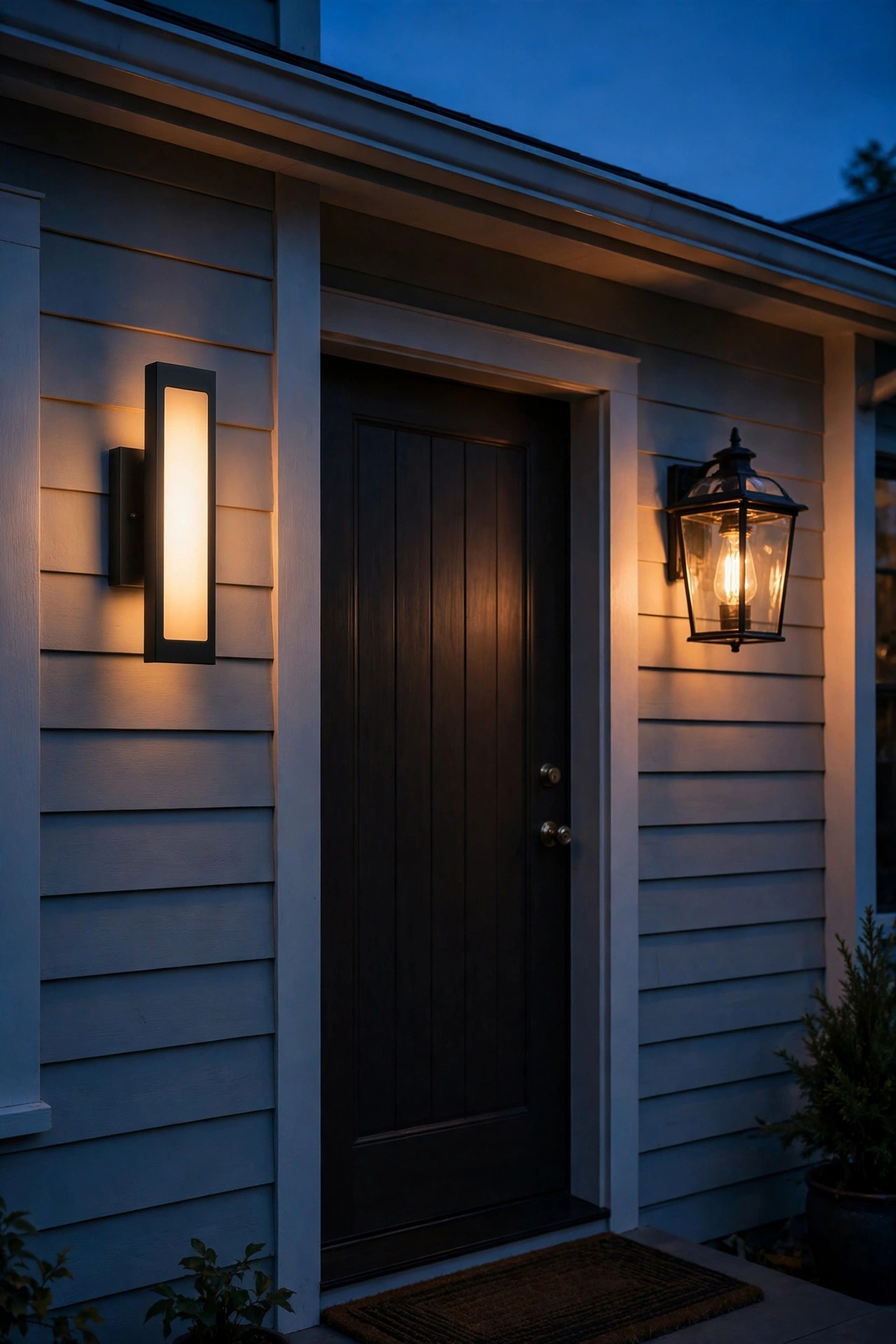
Integrated LED fixtures bake the light source into the fixture, so they are slimmer, better sealed against weather, and maintenance-free until something fails — at which point the whole fixture usually gets replaced. Bulb fixtures keep a standard socket, so the housing can serve for decades while bulbs come and go for a few dollars each, and you can change brightness, color temperature, or add smart features anytime. Neither is the wrong answer. Integrated wins in wet, exposed, hard-to-reach spots. Replaceable bulbs win anywhere you love the fixture itself or like changing the light.
Integrated LED vs Replaceable Bulb Fixtures: What Each Type Actually Is
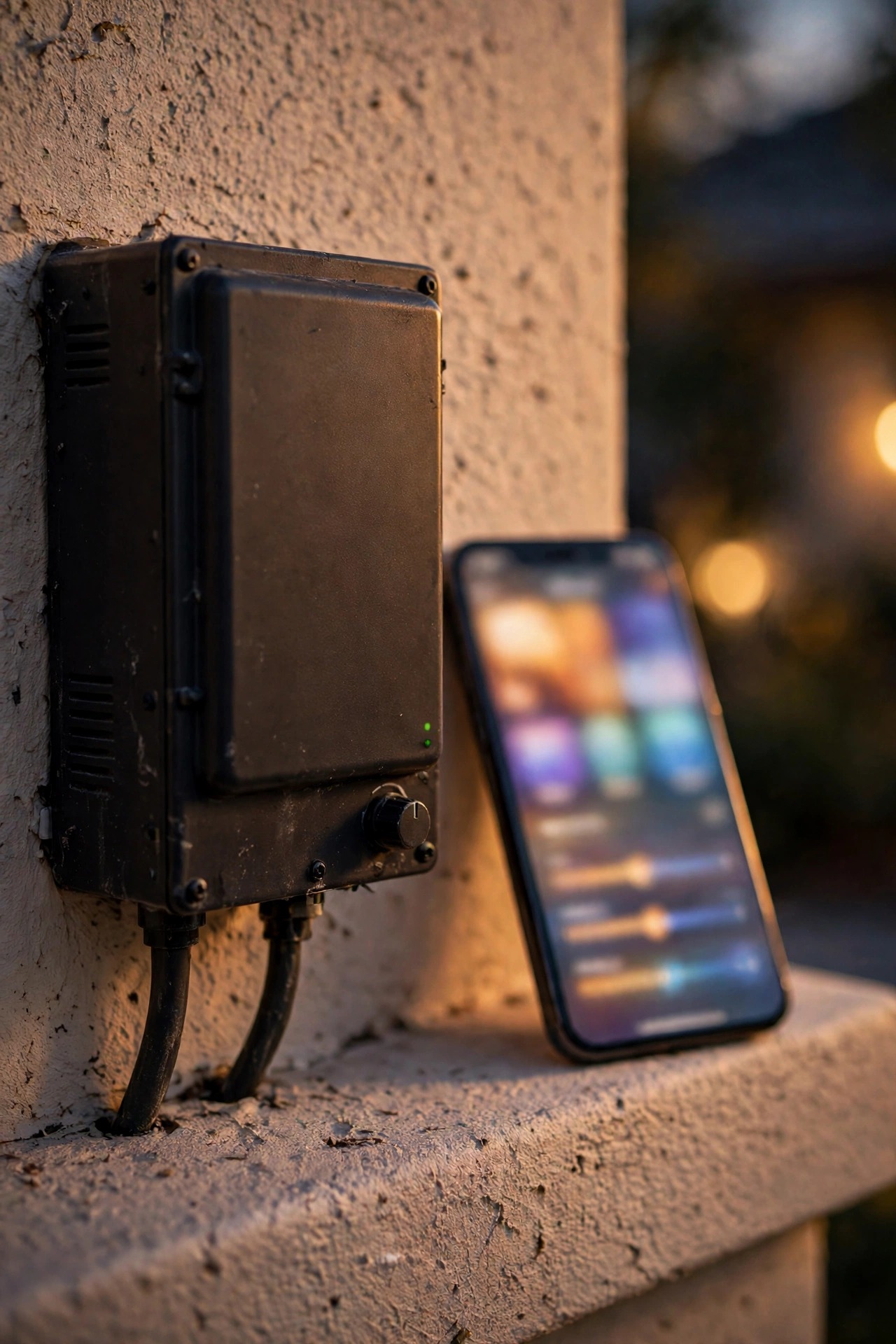
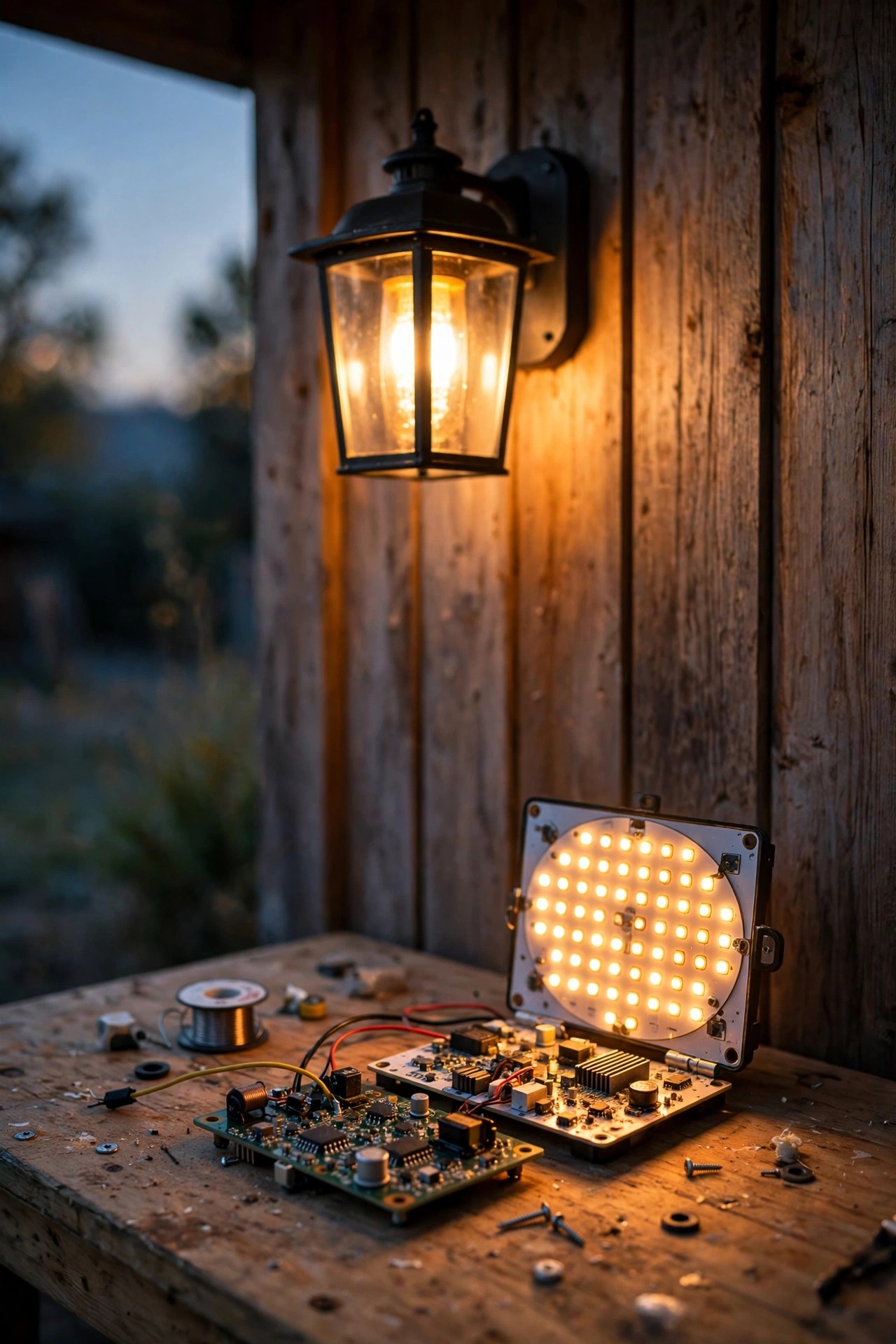
An integrated LED fixture has its light-emitting diodes soldered onto a board inside the housing, wired to a small power supply called a driver. There is no socket and nothing to unscrew. The lens, the board, and the housing are designed as one unit, which is why these fixtures can be so slim — some are barely two inches deep — and why the light often looks so even and deliberate.
A replaceable-bulb fixture is the design our grandparents knew: a housing with a standard screw socket, most often the medium E26 base outdoors, and the bulb is a separate purchase and a separate decision. The fixture is essentially a weatherproof shell and a piece of decor; the bulb does the lighting and can be swapped in seconds.
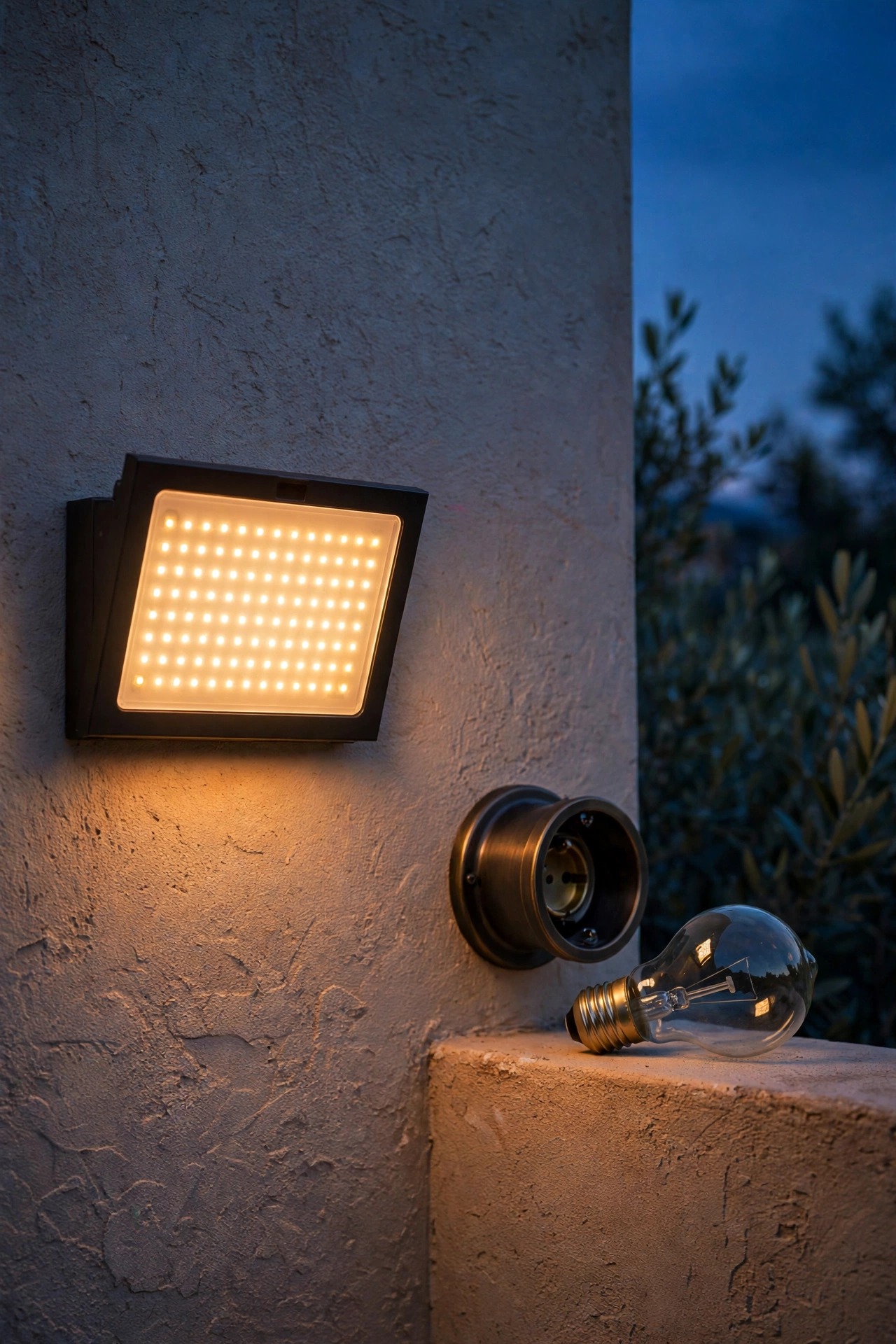
Here is the test I use in the store: open the fixture or peek inside. If you see a socket, it is a bulb fixture. If you see a flat panel of tiny yellow dots behind a diffuser, it is integrated. Plenty of fixtures disguise the answer, so check the box for the words "integrated LED" or "bulb not included." Everything else in this guide flows from that one distinction. One wrinkle worth knowing before we go further: plenty of fixtures now split the difference by pairing a socketed housing with an LED bulb included in the box. That is convenient, but do not let the packaging fool you — once that included bulb fades, it is simply a standard replaceable bulb, and the fixture belongs squarely in the socket camp.
Rated Lifespan, Honestly: LED Hours vs Driver Failure
Both fixture types will be sold to you with a big lifespan number, and both numbers deserve a raised eyebrow. LED diodes are commonly rated at 25,000 to 50,000 hours, which is an L70 figure: the point where the light has faded to 70 percent of its original brightness, not the point where it dies. Run a porch light five hours a night and 50,000 hours works out to about 27 years of evenings. Sounds wonderful.
In practice, the diodes are rarely what fails. The driver — the little power supply converting house current into what the diodes need — is the weak link, and heat is what shortens its life. A sealed fixture baking on a sun-struck south wall can cook its driver years before the diodes fade. When an integrated fixture "dies young," it is usually the driver, and because the driver is buried inside a sealed unit, the whole fixture is done.
A bulb fixture flips the weak point to a part you can change. The LED bulb carries its own tiny driver, and when it gives up, you unscrew it and lose a few dollars instead of a fixture. The housing itself — especially cast aluminum or brass — can genuinely serve 20 to 30 years. So the honest summary: integrated lifespan is one long, uncertain stretch; bulb-fixture lifespan is a durable shell plus a consumable you replace on your schedule.
The 15-Year Picture: One Long Life vs a Shell and Consumables
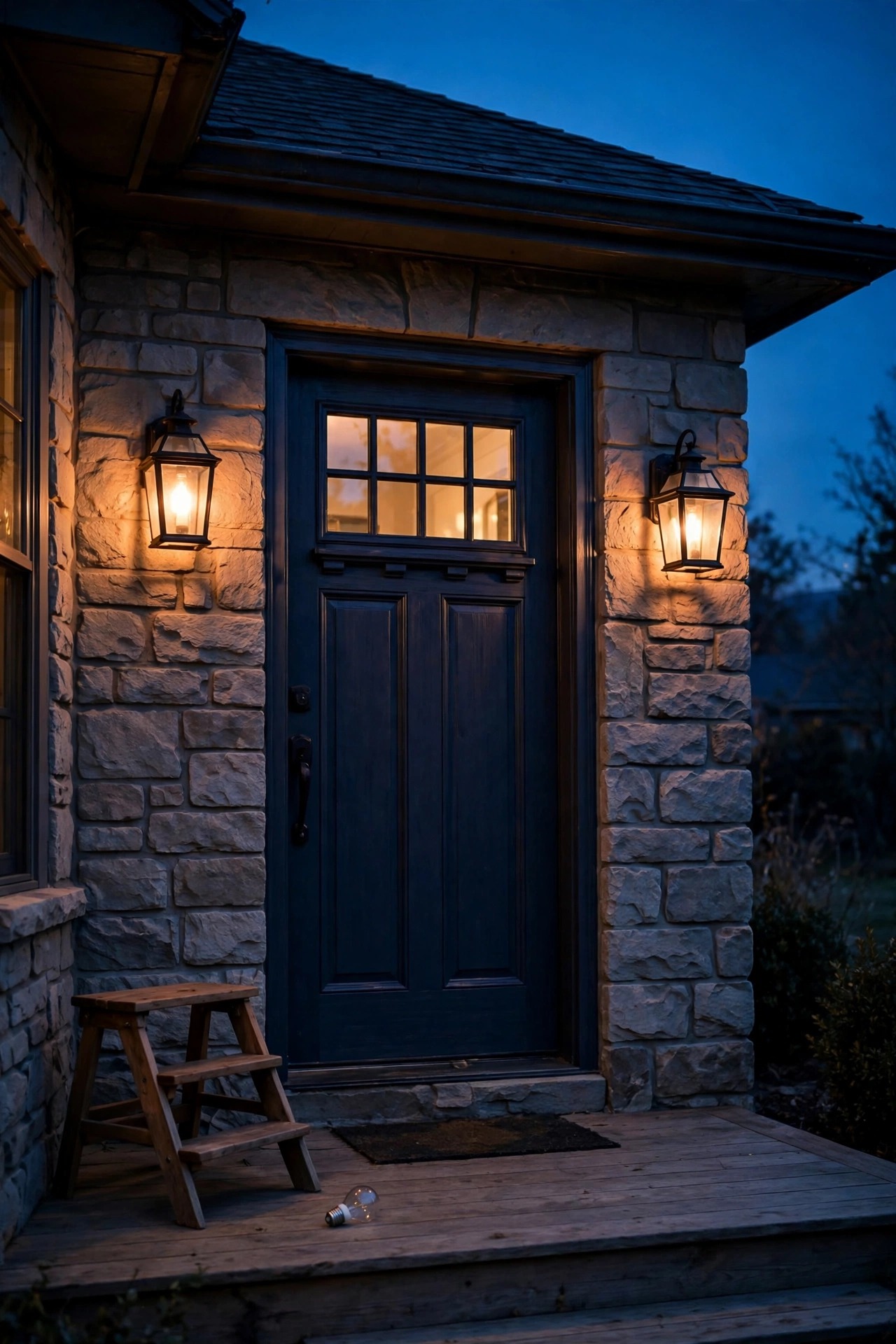
Fifteen years is about the right window for judging a porch fixture, because it is longer than most of us keep a car and roughly how long a good exterior fixture should earn its keep. Picture two identical porches, one lit by an integrated sconce and one by a bulb sconce, both switched on at dusk for about five hours a night.
The integrated porch, in the average case, does nothing at all for a decade or more. Then, somewhere in years eight to fifteen, there is a fair chance one fixture fails outright — driver first, as we covered — and the fix is a complete replacement. If the model has been discontinued, and most are within a few years, you face the decorator's dilemma: replace both fixtures so they match, or live with a mismatched pair flanking your door.
The bulb porch spends those same fifteen years differently. The fixtures themselves just hang there, asking for an occasional wipe of the glass. The bulbs inside will likely be swapped once, maybe twice, across the whole period — sometimes because one failed, but just as often because you wanted warmer light, more brightness, or a smart bulb, and each swap takes a minute on a step stool. Neither porch is a horror story. One concentrates its cost and hassle into a single replacement day; the other spreads tiny, easy maintenance across the years. The true dollar figures for both paths are laid out in the cost section near the end.
Repairability and Parts: What You Can Actually Fix
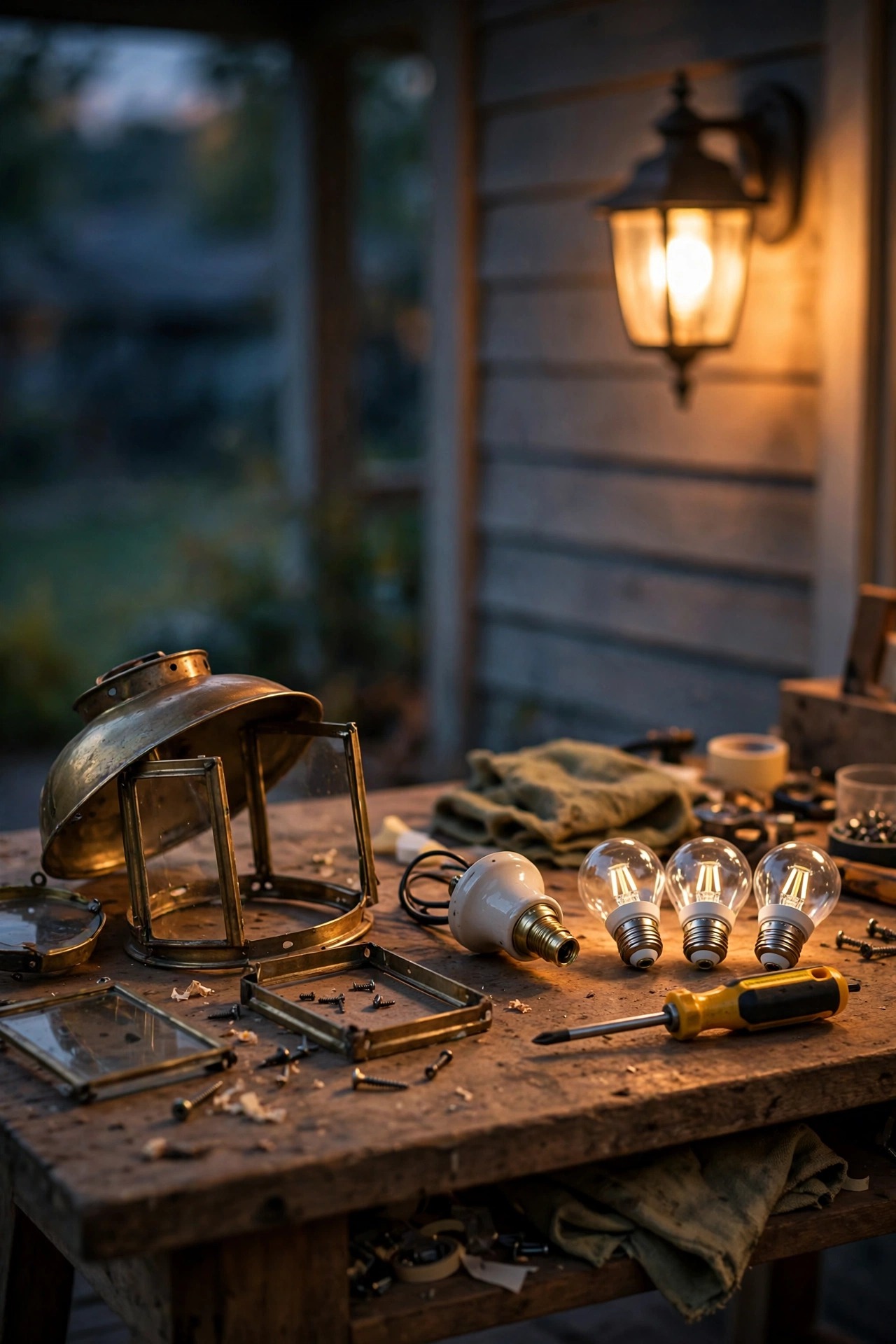
This is the section where the two designs differ most, and it matters if you are the kind of person who fixes things instead of tossing them. A bulb fixture can be repaired at almost every level. Bulb dies? Swap it. Socket corrodes after years of coastal air? A replacement socket is a cheap, standard part. Glass cracks? Many manufacturers sell replacement panels, and a glass shop can cut one for common shapes. Even the wiring and mounting hardware are generic. A handy homeowner with a screwdriver and the breaker off can keep a good bulb fixture alive almost indefinitely.
An integrated fixture offers almost no repair path. A few generous designs use a replaceable light module, but they are the exception, and the module is specific to that model and that maker — once it is discontinued, you are done. The driver is rarely sold separately, and opening a sealed unit usually voids whatever warranty remains. In practice, a failed integrated fixture goes in the trash, electronics and all, which is the part of the bargain that genuinely bothers me.
The fair counterpoint: there is less to repair because there is less to go wrong. No socket to corrode, no bulb working loose in its base, no contact tabs to bend. Integrated fixtures fail rarely and all at once; bulb fixtures fail often and trivially. Decide which failure style suits your temperament.
Light Quality, Color and the Upgrade Path
With an integrated fixture, the light you see in the store is the light you own forever: same brightness, same color temperature, same dimming behavior, for the life of the unit. Good integrated fixtures are genuinely excellent here — the optics are designed around the diodes, so light lands evenly with no hot spots, and many offer selectable color temperature at installation. But if you choose 4000K and later fall for a warmer 2700K look, your only fix is a new fixture.
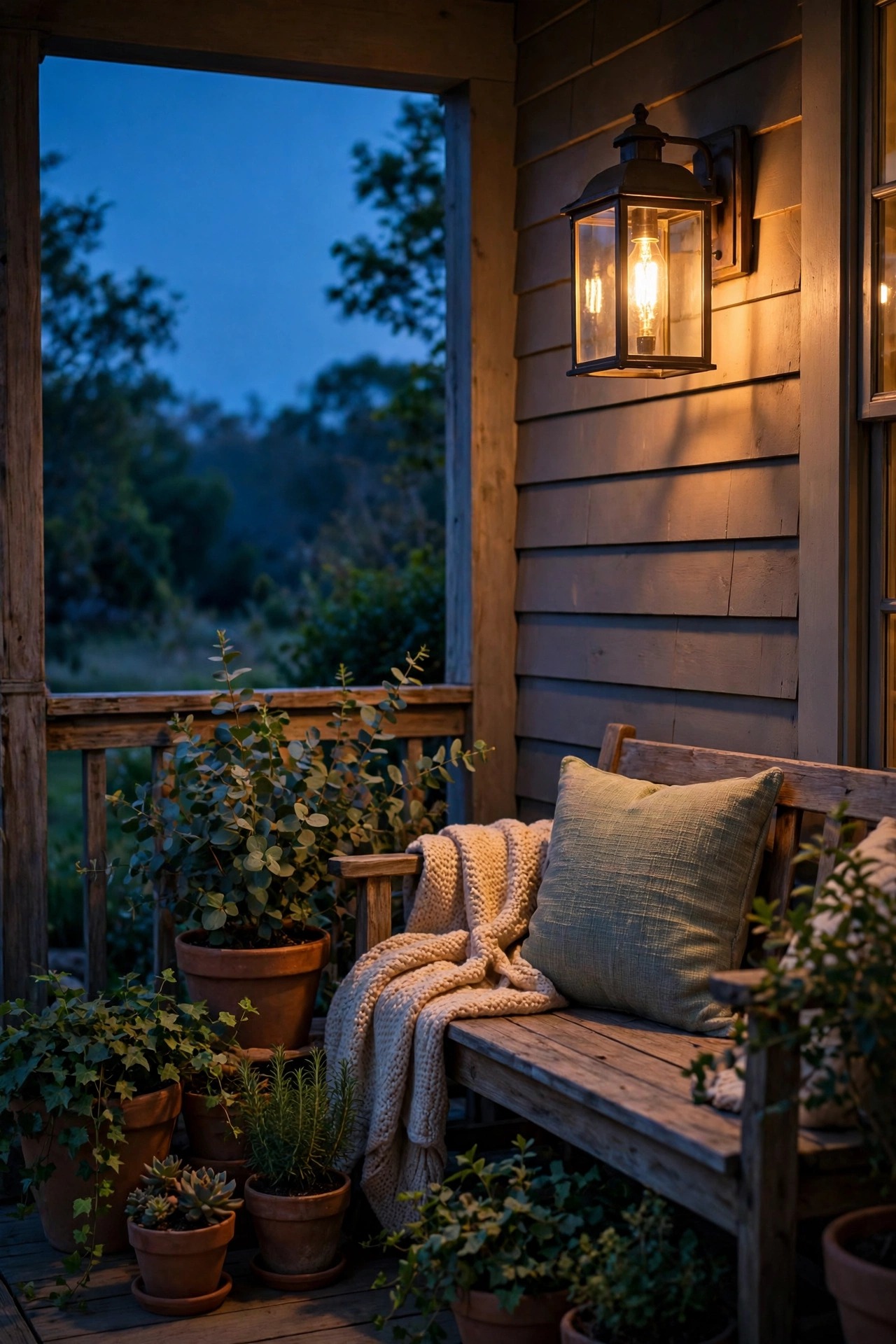
A bulb fixture treats light quality as a renewable decision. Too dim? Move up in lumens. Too blue? Drop to a warmer bulb. Want the porch to turn on at sunset by itself, dim for movie night on the patio, or shift color for the holidays? Screw in a smart bulb and the old fixture learns every new trick. My guide to the best bulbs for porch sconces walks through the lumen and temperature picks I keep coming back to.
There is one honest catch on the bulb side: an LED bulb sealed inside a fully enclosed fixture can run hot and fade early, so check for an "enclosed fixture rated" marking when the glass closes all the way around the bulb. Integrated fixtures, designed as one thermal unit, never have this mismatch problem.
Where Integrated LED Wins: Sealed, Slim and Set-and-Forget
Integrated fixtures earn their keep wherever weather and neglect team up against a light. Because there is no socket opening and no bulb to seat, the whole unit can be gasketed tight, which keeps out the moisture, dust, and determined insects that find their way into open fixtures. If you are choosing lights for a spot that takes direct rain, my notes on wet vs damp location fixtures explain the ratings to look for — and integrated designs dominate the truly wet-rated category.
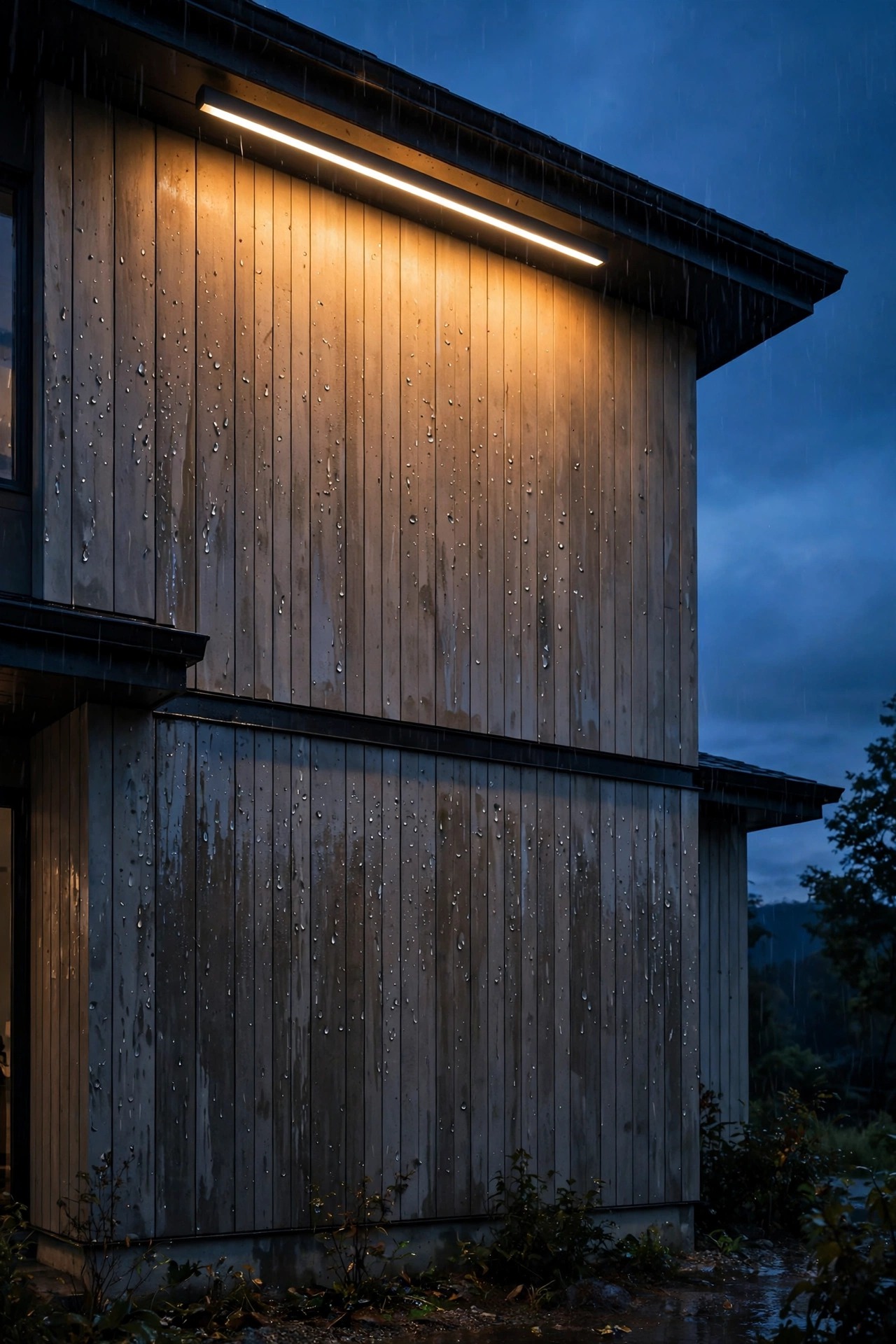
The slim profiles are the other real win. With no bulb to house, integrated fixtures can hug the wall as shallow bars, discs, and up-down cylinders that a socket could never fit inside. Modern and minimalist houses look right with these shapes in a way a lantern never will.
Then there is the set-and-forget factor, which is not laziness, it is logistics. Fixtures mounted high on a two-story wall, over a stairwell, or anywhere a ladder job is miserable are exactly where a decade of zero maintenance earns its price. No bulb to change means no ladder to climb, possibly for the entire time you live in the house. For second homes and rentals you manage from a distance, that reliability has real value too. When a fixture is exposed, hard to reach, or simply not something you ever want to think about again, integrated is the design I reach for.
Integrated LED vs Replaceable Bulb Fixtures in Rentals and Homes You Love
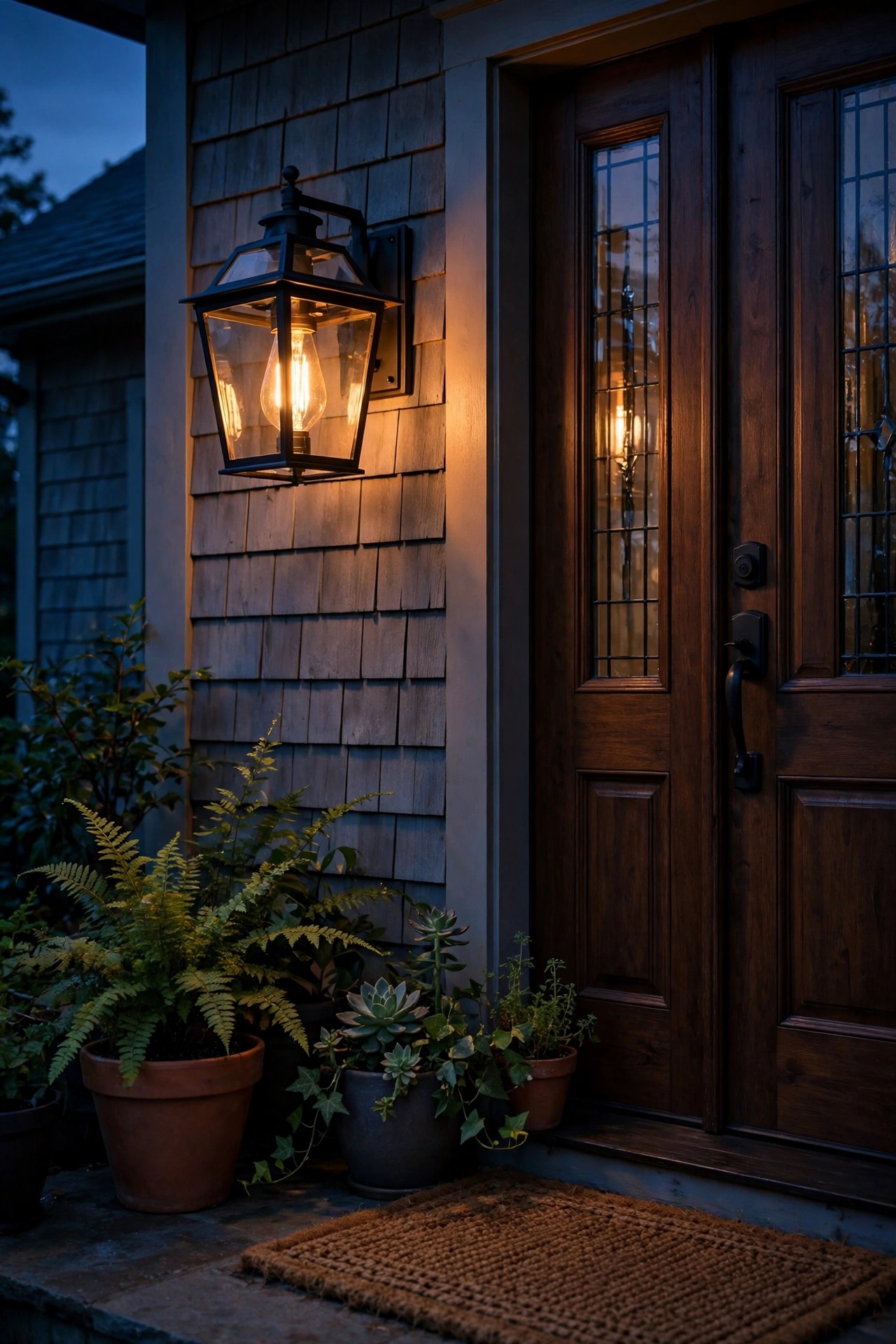
Now the other side, because there are places where a socket is worth more than a seal. Start with the fixture you genuinely love: the heavy cast lantern that matches your craftsman trim, the pair of sconces you saved for, the vintage fixture with real seeded glass. A bulb fixture lets that piece stay on your house for thirty years while the light inside it keeps improving. An integrated lookalike commits you to re-buying the whole look every time the electronics tire.
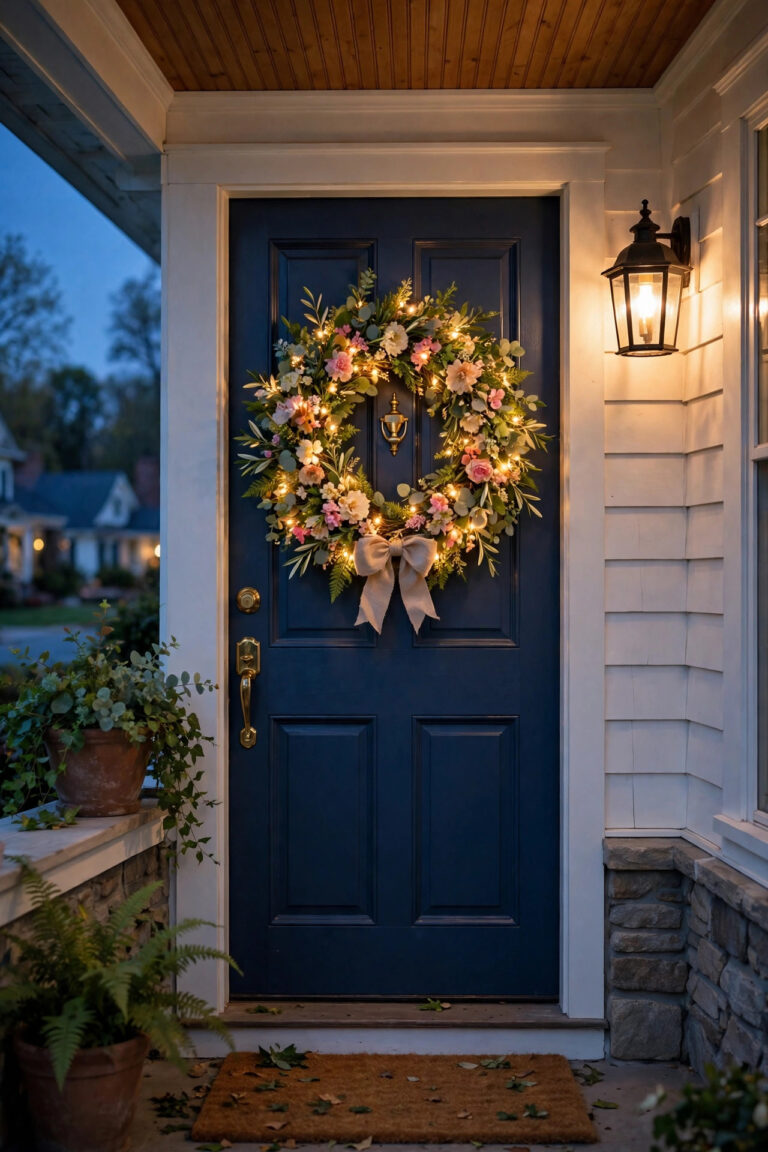
Rentals draw the line even sharper. Landlords and leases often restrict replacing hardwired fixtures at all, and even where it is allowed, tenants reasonably balk at maintaining a fixture whose only service option is total replacement. With bulb fixtures, a renter can install their preferred bulbs — brighter, warmer, smarter — and simply take them along at move-out, leaving the originals behind. If you are lighting a place you do not own, the renter-friendly approach in my notes on renter-friendly porch lighting starts from exactly this keep-the-fixture, swap-the-bulb thinking.
The last replaceable win is sheer flexibility over time. Tastes change, technology improves, and a socket is an open door: filament-look bulbs for a historic porch this year, high-output bulbs when the trees grow and shade the entry, smart bulbs when you are ready. Every upgrade costs a bulb. That open-endedness is why, on a covered porch I can reach with a step stool, I still choose sockets most of the time.
Warranty Fine Print: What the Years on the Box Really Cover
Warranty numbers get waved around for both types, so read them the way I learned to: a warranty promises a remedy, not a lifespan. Integrated fixtures commonly carry three to five years of coverage, with premium lines stretching to ten. Bulb fixtures often carry a long or even lifetime warranty on the finish and housing, while the bulb itself — the part that actually lights — is covered for a year or three by its own maker. Two separate warranties, two separate claims, if anything fails.
The fine print cuts the same way on both sides. Coverage means defects in materials and workmanship, not fading, not storm damage, and not a driver worn out in year six of a five-year term. Keep the receipt and the model number, because you will need both. If an integrated fixture fails under warranty, the remedy is usually a replacement unit of the same or an "equivalent" model — and equivalent may not match its surviving twin beside your door. Labor is never covered, so an electrician visit comes out of your pocket either way.
My practical rule: treat the warranty as a tiebreaker between two fixtures you already like, never as the reason to buy. A five-year warranty on a fixture style that disappears in three is worth less than it looks, while a bulb fixture barely needs its warranty at all, because every likely failure is a cheap bulb you were going to replace yourself anyway.
What It Costs in 2026
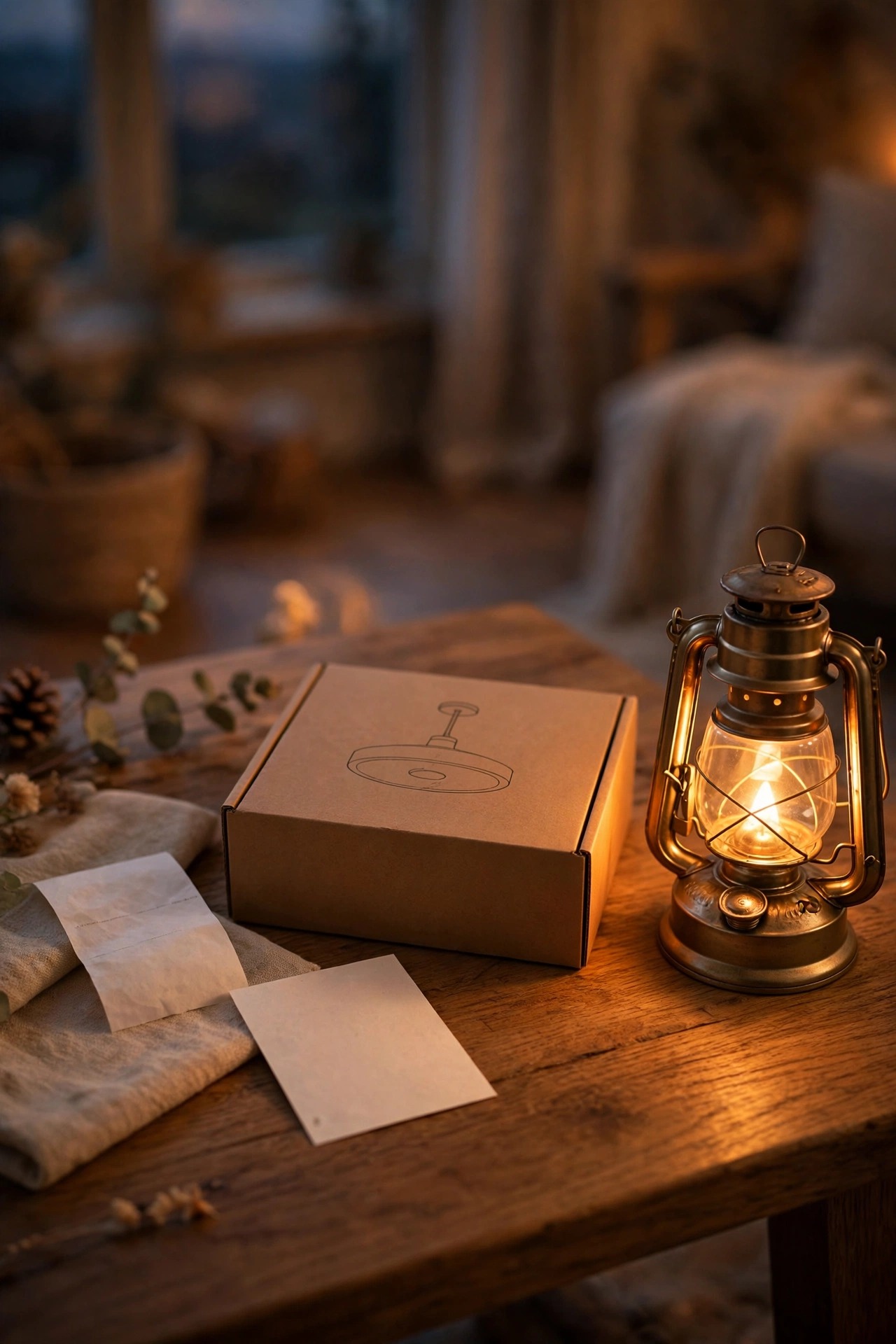
Shelf prices first. A decent integrated LED sconce runs $40 to $180, with slim architectural styles and premium finishes reaching $250 to $300. A comparable bulb sconce runs $30 to $150 for the fixture, plus $3 to $8 for a good LED bulb to put in it, or $12 to $25 if you want that bulb smart. Running costs are a wash — both are LED, and either porch light costs roughly $3 to $6 a year in electricity at five hours a night.
Now the honest 15-year math for a pair of porch sconces, assuming one failure along the way. The integrated pair at $160 has a reasonable chance of needing one fixture replaced around year ten; if the style is gone, replacing the pair keeps them matching, so call it $80 to $160, plus $100 to $200 for an electrician if you do not swap fixtures yourself. Fifteen-year total: roughly $240 to $520. The bulb pair at $120 plus two bulbs at $6 each spends another $12 to $24 on one or two bulb swaps across fifteen years, no electrician, no matching problem. Fifteen-year total: roughly $135 to $150.
The gap is real but not enormous, and it flips if the integrated pair simply never fails — plenty do not. Pay it willingly where sealing and zero maintenance matter; save it where a step stool reaches easily.
Integrated LED vs Replaceable Bulb Fixtures: My Decision Rule by Situation
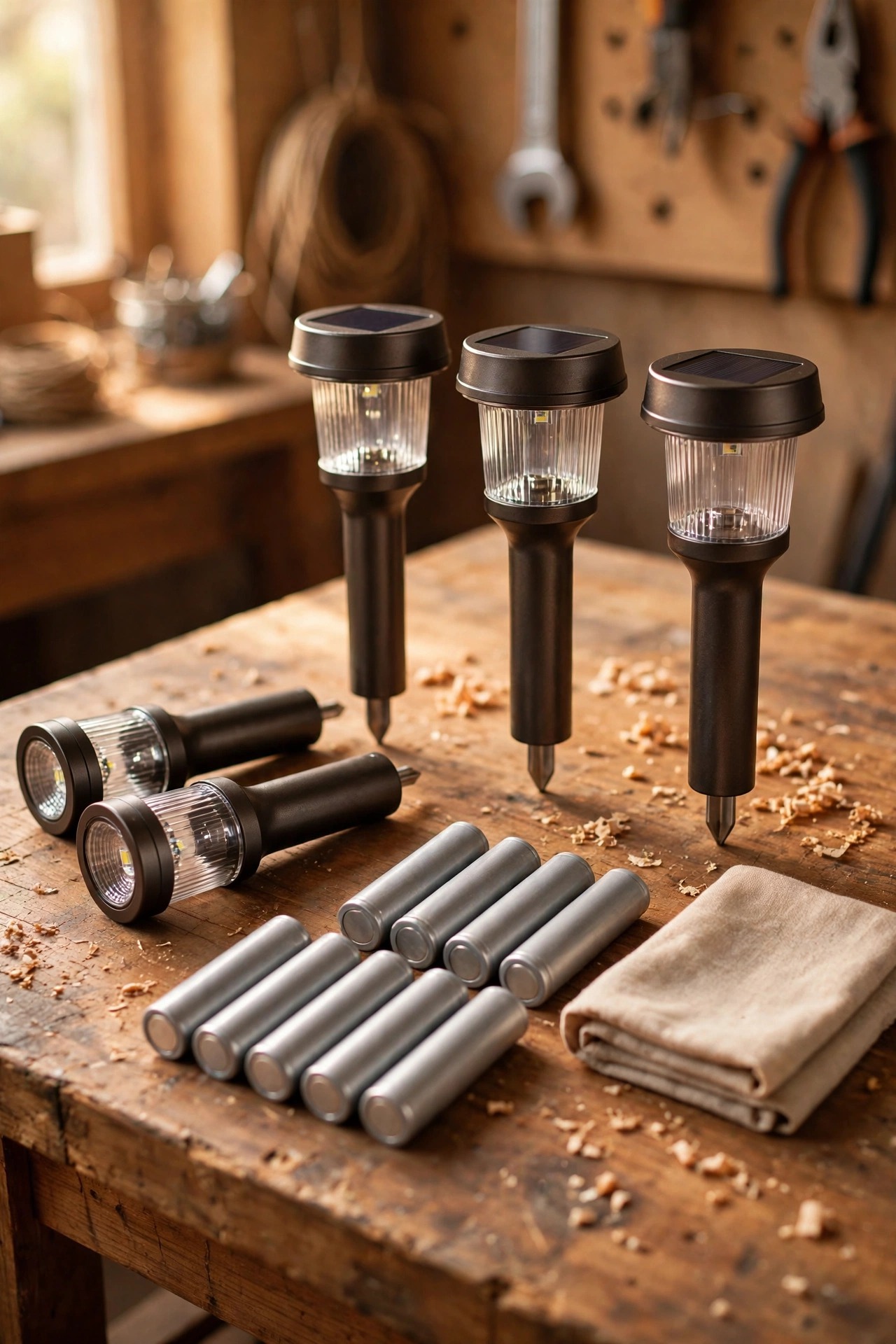
After years of installing both, I have stopped asking which type is better and started asking where the fixture will live. Here is the rule I actually use, situation by situation.
Choose integrated LED when the spot is exposed to direct weather, mounted somewhere a ladder makes you nervous, part of a modern slim design, or a place you will not be able to service easily — a second home, a rental you own, a tall stairwell wall. In those spots, sealing and silence are worth more than repairability.
Choose replaceable-bulb fixtures when the porch is covered and reachable, when the fixture itself is part of your home's character, when you rent and cannot or should not rewire, or when you know your tastes will evolve — color temperature today, smart features tomorrow. A socket keeps every option open for the price of a bulb.
And one blended move worth knowing: put integrated fixtures in the harsh, high, forgotten spots, and bulb fixtures at the doors you use every day. Most houses I help with end up mixed, and that is not indecision — it is matching the tool to the job, which is the whole point of comparing them in the first place.
Frequently Asked Questions
Can you replace the LED in an integrated fixture when it dies?
Almost never, in any practical sense. The diodes are soldered to a board that is specific to that fixture, and the part is rarely sold to homeowners. A few fixtures use a replaceable light module, so it is worth one call to the manufacturer before you give up — but plan on replacing the whole fixture, and keep the model number in case a matching unit is still available.
How long do integrated LED porch lights really last?
In gentle conditions, ten to fifteen years is a fair expectation, and many go longer. The rated 25,000 to 50,000 hours describes the diodes fading gradually, while real-world life usually ends when the driver fails — and heat, sealed housings on sunny walls, and power surges all shorten driver life. A fixture on a shaded, covered porch will almost always outlast the same fixture baking on an exposed south wall.
Are integrated LED fixtures more energy efficient than bulb fixtures?
Barely, and not enough to decide on. Integrated fixtures can squeeze slightly more light from each watt because the optics are designed around the diodes, but a quality LED bulb in a socket fixture lands in nearly the same place. Either way, a porch light run five hours a night costs only a few dollars a year, so buy on lifespan, repairability, and looks instead.
Which type is better for a rental or a home I might sell soon?
For renters, bulb fixtures win easily: you can upgrade the bulbs, take them with you, and leave the landlord's fixtures untouched. If you own a home you may sell within a few years, the calculus flips a little — fresh integrated fixtures look sleek in listing photos and ask nothing of the next owner. Either choice is defensible; just avoid installing a houseful of integrated fixtures whose styles are already being discontinued.
Conclusion
The integrated led vs replaceable bulb fixtures question is really a question about how you want to spend your attention: integrated fixtures ask for none until the day they ask for a whole replacement, while bulb fixtures ask for a minute with a step stool every few years and reward you with total freedom over the light itself. Match the fixture to the spot — sealed and integrated where weather and height are against you, socketed and flexible at the doors you live with daily — and either choice will serve you well for years. Browse the rest of my outdoor lighting guides here on the site for placement, brightness, and styling help once you have picked your side.