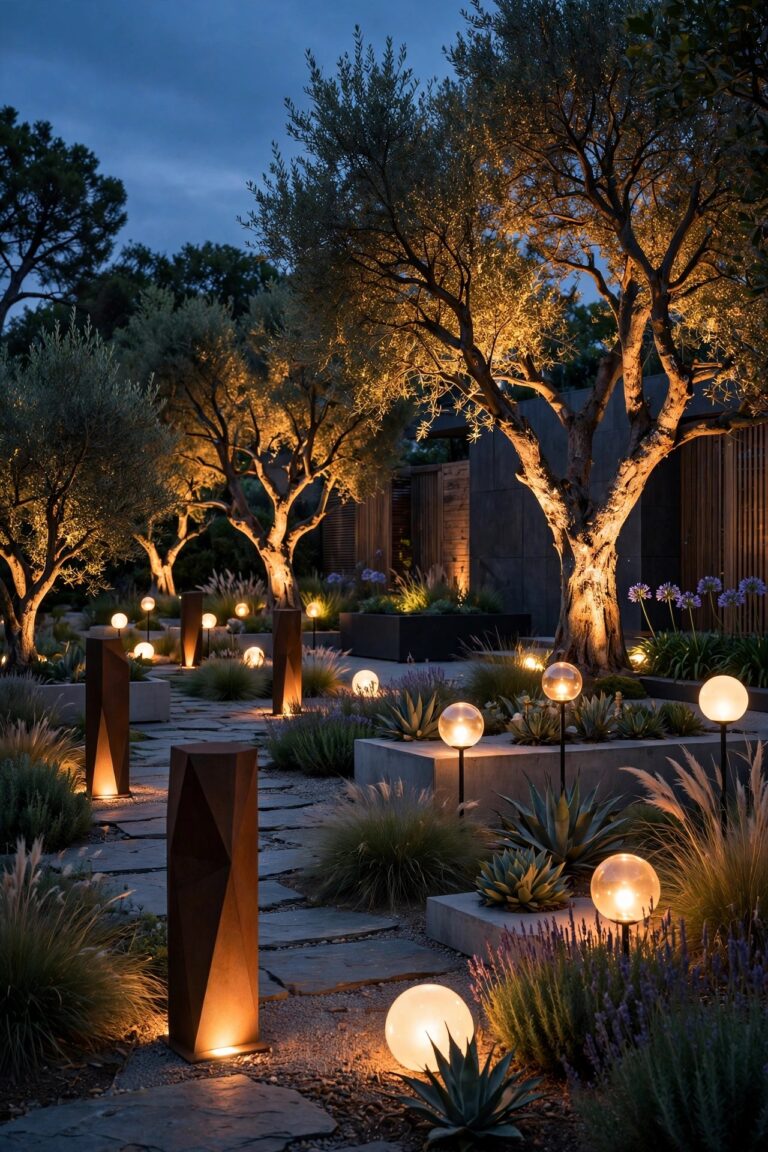
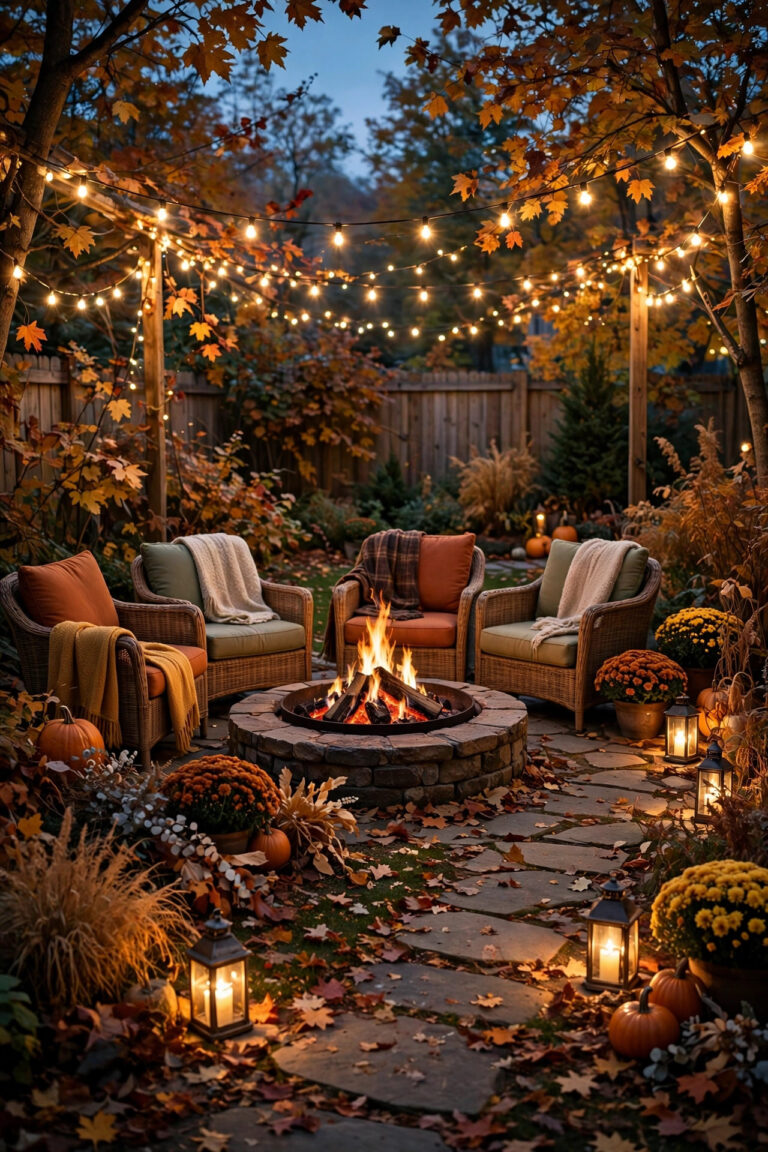
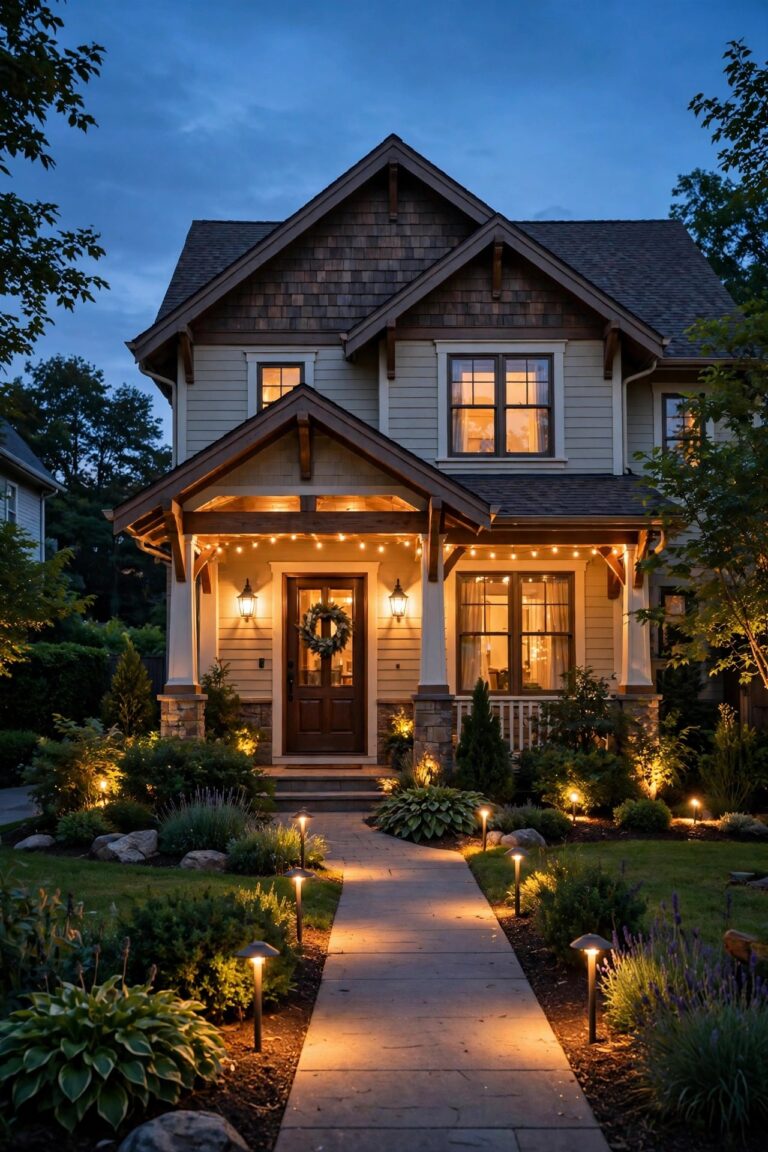
Every yard has one thing worth showing off after dark — a maple with perfect bones, a stone facade, a sculpture you hunted down at an estate sale. The right spotlight turns that single feature into the whole evening view from your porch. After years of testing fixtures in my own beds, I have learned that the best landscape spotlights are rarely the most expensive ones. They are the ones matched to the job: the right beam angle for the target, a housing built for your weather, and output you can aim without blinding anyone. This is where my layering philosophy matters. Spotlights are the accent layer — the exclamation points. They only work because the path lights and soft ambient washes around them stay quiet. In this guide I compare 13 types honestly: what each one does beautifully, where each falls short, and who should buy it. You will find beam-angle and aiming guidance throughout, because honestly, a mid-priced fixture aimed well beats a pricey one stabbing light into a bedroom window every single time.

1. Adjustable Stake Uplights — the Best Landscape Spotlights for Most Trees
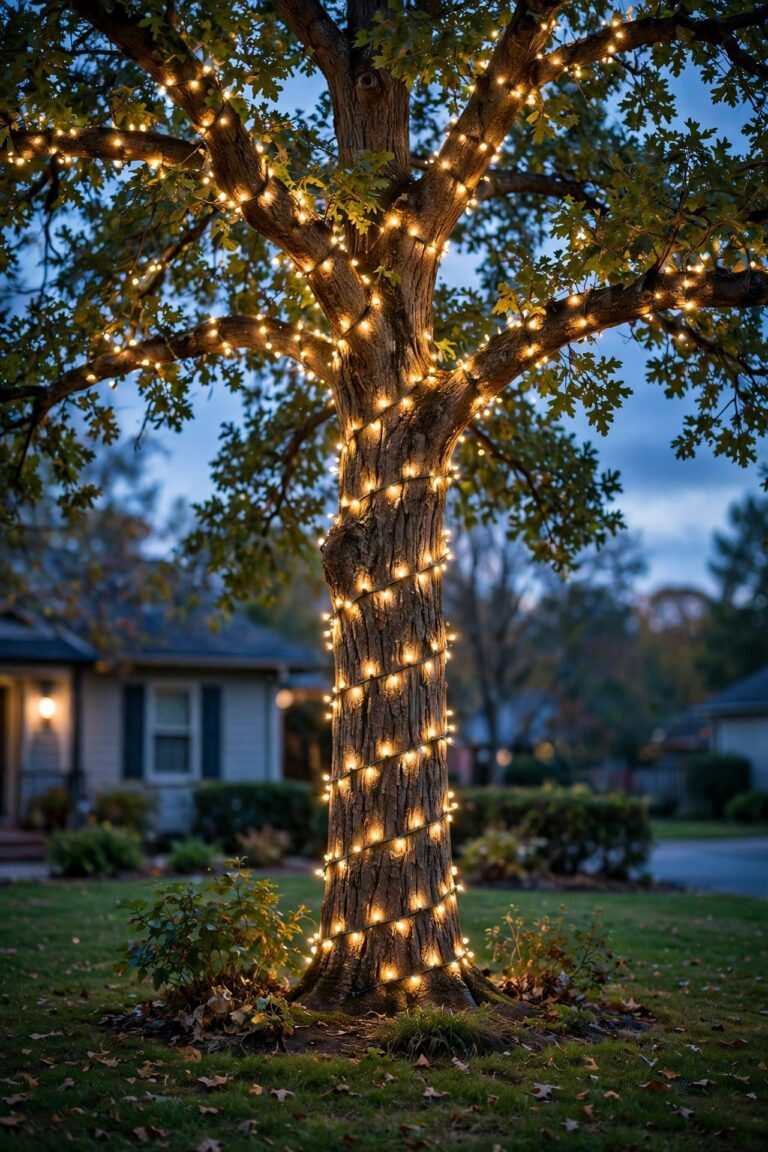
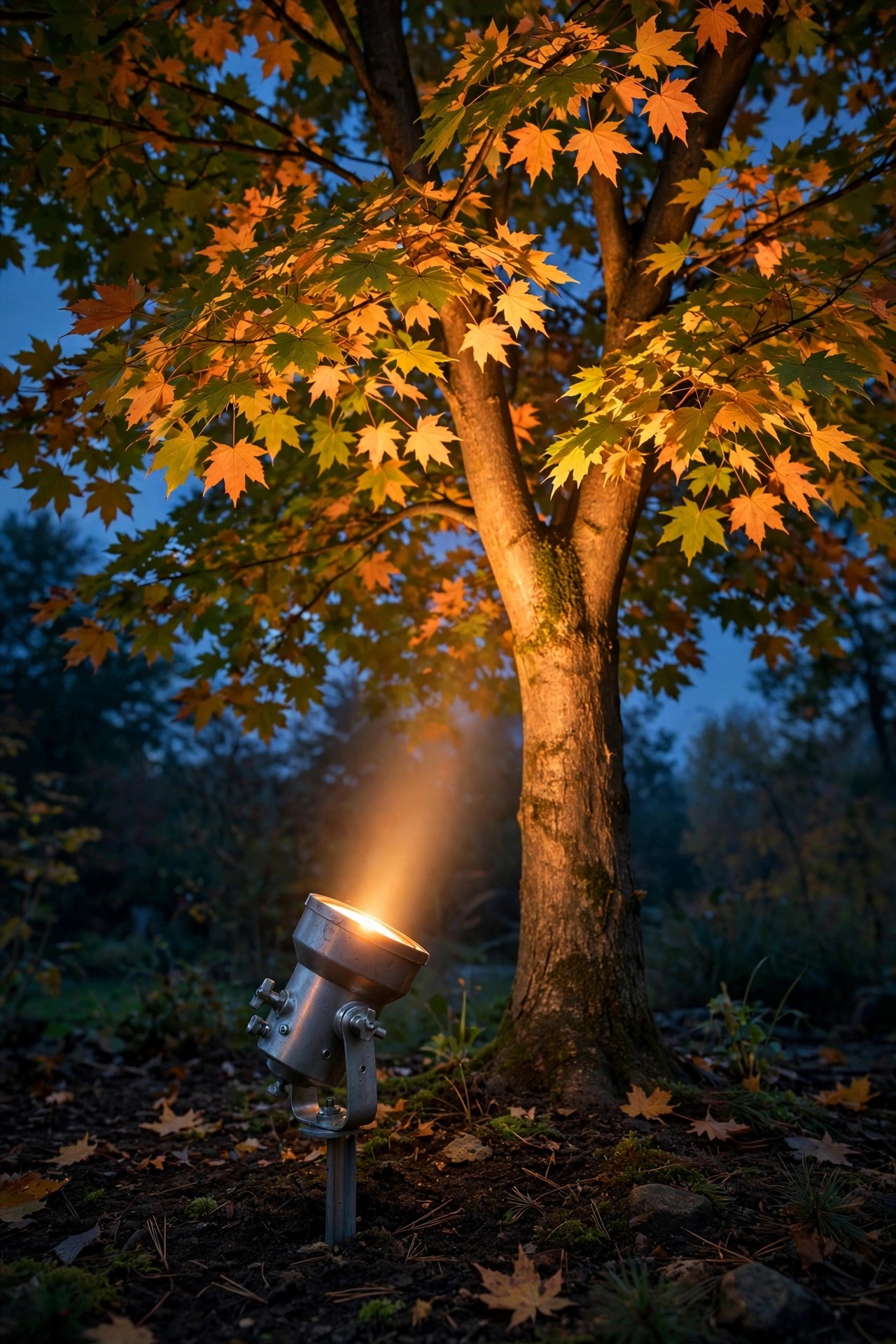
If you buy one type first, make it this one. A metal stake spotlight with a tilting, swiveling head is the workhorse of tree lighting: push it into the soil 12 to 24 inches from the trunk, aim up into the canopy, and adjust the angle as the tree grows. Look for a head that tilts a full 120 degrees or more and locks with a thumb screw, because a fixture that droops by July is just garden litter. A 36- to 60-degree beam washes most small and medium canopies evenly, while a tighter 24-degree beam suits narrow columnar trees. My favorite placement trick is the two-fixture cross: one light at the front-left of the trunk, one lower-powered light behind-right, which models the bark texture instead of flattening it. Output of 300 to 600 lumens handles a 15- to 25-foot tree nicely. The honest limits? Stakes loosen in soft or sandy soil, and cheap plastic stakes snap the first time a mower bumps them — choose cast metal. For the full placement walkthrough, my tree uplighting guide covers distances and angles in detail.
Suggested budget range: $25 – $60.
2. Narrow-Beam Spotlights for Columns, Statues and Tall Accents
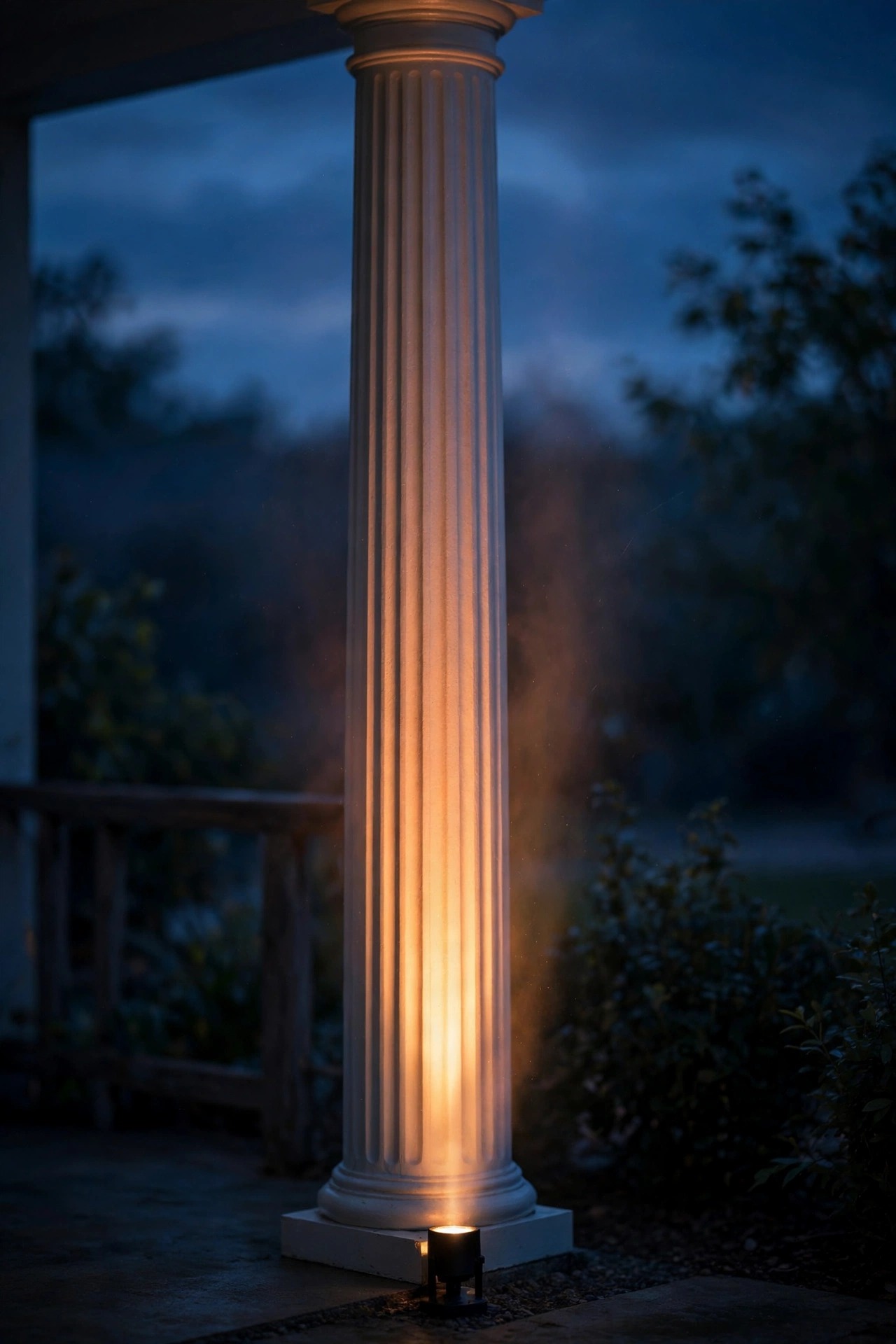
Some targets are skinny: porch columns, obelisks, a tall narrow evergreen, a garden statue on a pedestal. A wide beam wastes half its light on the lawn beside them, so this is where a narrow 10- to 20-degree beam earns its keep. The tight cone climbs a two-story column without spilling onto the siding, and it grazes across carved stone or a statue's surface so shadows carve out the detail — that grazing angle, light skimming a surface from the side, is what makes texture dramatic instead of flat. Position the fixture close, 6 to 18 inches from the base, aimed nearly straight up. Because the beam is concentrated, you need fewer lumens than you think: 150 to 350 is plenty, and too much creates a harsh white stripe with blown-out edges. The limits are real. Narrow beams are unforgiving — a few degrees off and the column looks lopsided at night — and they do nothing for wide targets. Renters and perfectionists, take heart: these are usually small, affordable fixtures, so experimenting costs little.
Suggested budget range: $30 – $70.
3. Wide-Beam Wash Lights for Facades and Architecture
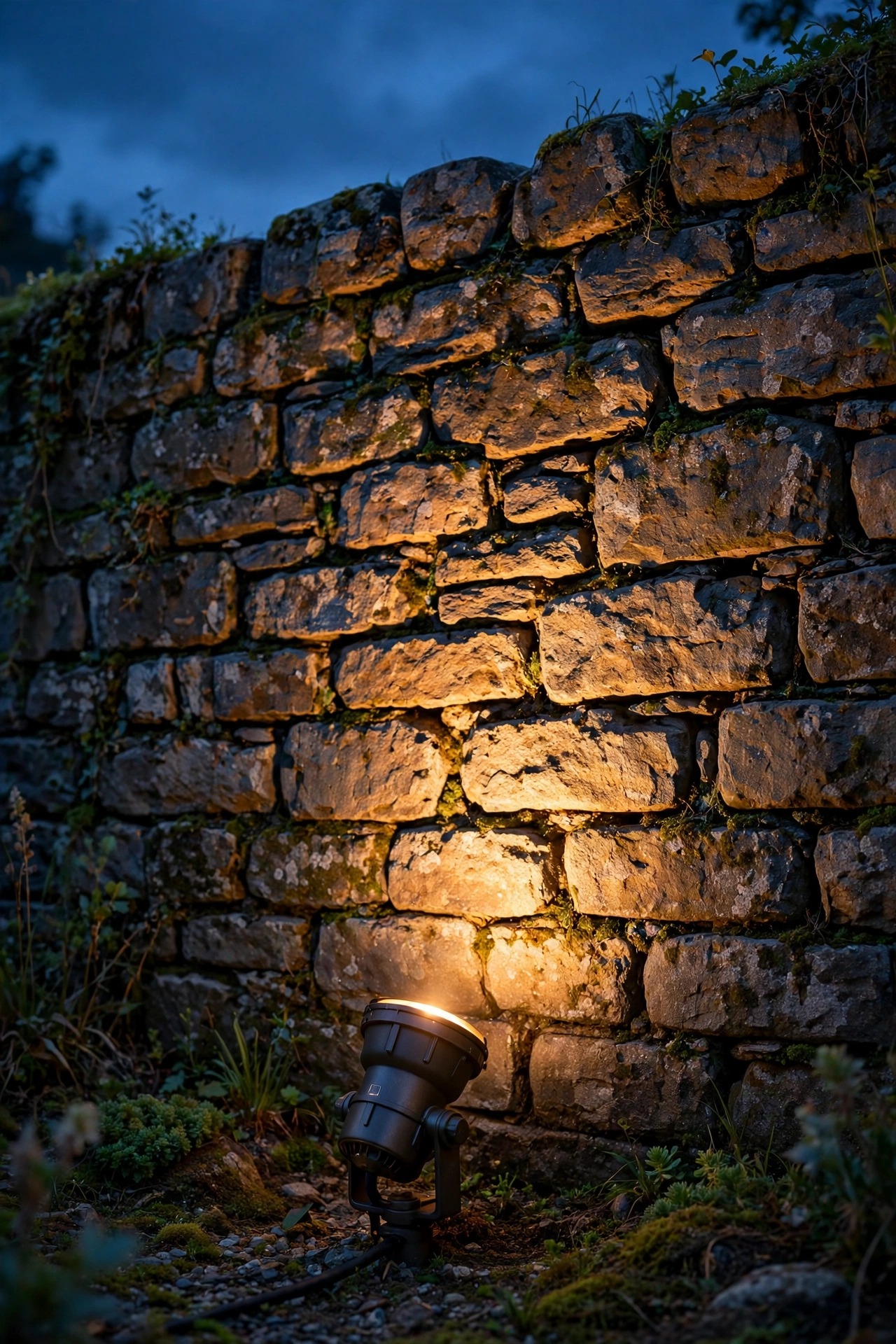
Lighting a whole wall is the opposite problem from lighting a column. You want a broad, even sheet of light — a 60- to 120-degree flood beam — set far enough back that the brightness fades gently instead of pooling in a hot circle at the foundation. As a rule of thumb, place wash fixtures 3 to 5 feet out from the wall for a two-story facade, and space them 8 to 12 feet apart so the cones overlap softly. Aim matters enormously here: tilt heads slightly away from windows, and never point a wash light straight at a bedroom or a neighbor's glass. Shielded or hooded models, and fixtures with glare guards, keep the light on the brick where it belongs. Stone, stucco and brick reward a wash because the texture throws tiny shadows everywhere; smooth vinyl siding can look flat and a little institutional under the same treatment, so test one fixture before buying six. Outputs of 500 to 900 lumens per fixture suit most homes. The honest downside: wide washes use more power and light more sky if aimed carelessly, so keep angles low and tight to the wall.
Suggested budget range: $35 – $80.

4. In-Ground Well Lights for a Clean, Fixture-Free Look
Well lights bury the fixture in a sleeve at grade so all you see at night is the light itself — no visible housing to trip over, mow around, or clash with a minimalist landscape. They are the elegant choice for uplighting trees in a lawn, grazing a stone wall, or marking a sculpture in an open bed, and because the lens sits flush, they survive foot traffic and mower passes that would destroy a stake light. That buried life is also their weakness. Drainage is everything: set the sleeve in a gravel pocket, choose models with sealed tempered-glass lenses rated IP67 or better, and expect to wipe leaves and mulch off the lens a few times a season. Cheap well lights fill with water and die within a year, so this is a category where mid-range money is well spent. Beam angles are usually fixed by an internal reflector (24 to 45 degrees is typical), so plan the target before you dig. If you want the installation details, my guide to in-ground well lights walks through drainage and wiring step by step.
Suggested budget range: $40 – $90.

5. Solar Spotlights — the Honest No-Wire Option
Solar spotlights are the easiest yes in this whole list: no trench, no transformer, no electrician, just stake it where the panel sees sun. Modern versions with separate or tilting panels genuinely work for small trees, shrubs, flags and garden art, giving 6 to 10 hours of modest accent light after a full sunny day. Now the honest limits, because this category oversells itself. A solar fixture typically delivers 50 to 200 real lumens — enough to kiss a Japanese maple with light, nowhere near enough to crown a 30-foot oak. Winter, shade and cloudy stretches cut runtime hard, and the integrated battery usually fades after two to three seasons, at which point many owners simply replace the whole unit. Treat solar as accent punctuation, not your main tree-lighting plan, and choose models with replaceable batteries when you can. Placement is a solar-specific skill, too: the panel needs 6-plus hours of direct sun even if the light head sits in shade. My roundup of solar spotlight ideas shows the placements that actually charge well.
Suggested budget range: $15 – $40.

6. Color-Changing Spotlights for Art, Holidays and Drama
A spotlight with color control — usually a remote- or app-driven RGB LED — is pure theater, and used with restraint it is wonderful. One or two saturated accents make garden art pop: a deep amber on a rusted metal sculpture, a soft teal behind a fountain, red and green washes for December, orange for October. The trick I always recommend is treating color as a spice, not the main course. Keep your trees and architecture in warm white, and let a single colored fixture do the talking; a yard where everything cycles through rainbow mode reads as a carnival, not a garden. Check that the fixture offers a true warm-white setting (2700–3000K) so it can rejoin the grown-up lighting scheme on ordinary nights, and confirm colors hold their setting after a power flicker — the cheap ones reset to a flashing demo mode, which gets old fast. Brightness in color modes is lower than in white, another reason these suit art and accents rather than primary tree lighting.
Suggested budget range: $30 – $75.

7. Low-Voltage Workhorses With Swappable Bulbs
This is the category professionals quietly buy for themselves: a sturdy metal fixture body, usually cast aluminum, that takes a standard replaceable LED bulb — most often an MR16 or PAR36 lamp. Why does swappability matter? Because it future-proofs everything. Want to change a tree light from a 24-degree beam to a 60-degree wash, or from 3000K to a softer 2700K? Swap a bulb in two minutes instead of replacing the fixture. When an LED eventually dims after a decade, you replace a bulb, not a buried housing and its wiring. The fixture bodies are simple and repairable, with real gaskets and glass lenses rather than glued seams. Limits: you must budget for the bulbs separately, the system needs a transformer like any low-voltage run, and bargain bodies with painted finishes can corrode at the socket in coastal air — brass or powder-coated cast metal avoids that. For a big property with many trees, the math wins easily: buy good bodies once, tune the bulbs forever.
Suggested budget range: $20 – $50.
8. Sealed Integrated-LED Spotlights for Zero Maintenance
Integrated fixtures build the LED directly into the housing and seal the whole unit against weather, which makes them the set-and-forget champion of this list. With no bulb socket, there is one less entry point for water, ants and corrosion, and quality models honestly run 30,000 to 50,000 hours — a decade or more of nightly use — without you touching them. The optics tend to be excellent too, because the lens is designed around one fixed LED array, giving clean beam edges with no hot spot in the middle. Here is the honest trade: when the LED finally dies or a driver fails, the entire fixture is replaced, wiring and all. That makes integrated spotlights a better bet where access is easy (beds, facades) than buried in a well sleeve under a patio. Output and beam are fixed at purchase, so choose carefully — most lines offer the same body in 15-, 36- and 60-degree versions. For homeowners who want beautiful light and zero ladder or toolbox time, this is the pick.
Suggested budget range: $35 – $85.

9. Solid Brass and Heavy-Duty Premium Spotlights
Brass spotlights are the buy-it-for-life tier. A solid cast-brass housing shrugs off sprinkler water, fertilizer, salt air and accidental shovel strikes that crack aluminum, and instead of peeling it develops a rich bronze patina that disappears beautifully into mulch and stone. The internals match the shell: thick glass lenses, high-grade silicone gaskets, and heavy stakes or mounting bases that hold an aim for years. Weight is the tell — a real brass uplight feels like a small dumbbell, and that mass is exactly what you are paying for. Who should spend here? Coastal homeowners, anyone lighting a forever home, and anyone whose fixtures live in irrigated beds where corrosion eats lesser metals by year three. The limits are price and theft-appeal in wide-open front yards, plus the patina itself: if you love a shiny black finish forever, brass will disappoint you as it mellows. In my experience, though, the cost-per-year math favors brass almost embarrassingly once a cheaper fixture has been replaced twice.
Suggested budget range: $80 – $180.

10. Submersible-Rated Spotlights for Ponds, Fountains and Water Features
Water changes everything about lighting, and a fixture that lives beside or beneath it needs a genuine submersible rating — IP68 — not just a rain-resistant label. Built for ponds, fountain basins and waterfall pools, these sealed spotlights throw warm light up through moving water, so the surface shimmers and the falls sparkle instead of sitting black and dead after dark. Position them to graze across falling water rather than pointing straight up through it, and keep the beam off any spot where swimmers or grandkids on the patio edge will catch it directly in the eyes. Most run on low voltage for safety around water, and any circuit near a pond should be GFCI-protected — non-negotiable, in my book. Honest maintenance notes: algae film dulls lenses within weeks in warm water, so plan on a monthly wipe, and budget for models with stainless or brass housings if your water is treated or brackish. For a dry yard this category is overkill, but no other fixture on this list can make a water feature glow from inside.
Suggested budget range: $45 – $120.

11. Tree-Mounted Downlights for the Moonlight Effect
Every spotlight so far points up — this one points down, and it might be the most beautiful effect on the list. A small shielded fixture mounted 15 to 25 feet up in a mature tree casts dappled light downward through the branches, imitating moonlight filtering through leaves. The ground gets soft, shifting pools of light that make patios feel enchanted and paths feel safe without any visible glare source. It is also practical: downlighting from a canopy covers a wide area evenly, so one or two fixtures do the work of six ground lights near a seating area. The challenges are installation and growth. Mounting needs a ladder or an arborist, wiring must include slack loops so the expanding trunk does not strangle the cable, and stainless tree-mount hardware should be checked every few years. Choose a downward fixture with a long glare shield and moderate output — 200 to 400 lumens reads as moonlight; anything hotter looks like a security light fell into your tree. For big heritage trees where ground uplights struggle to reach, this is the connoisseur move.
Suggested budget range: $50 – $110.

12. Smart-Controlled Spotlights for Schedules and Scenes
The fixture itself here is a good-quality spotlight; the pick is the control. Smart-controlled spotlights — app-, timer- or hub-driven — let your accent lighting join scenes: trees up at dusk, dimmed to 40 percent after ten, off at midnight, with a holiday mode and a vacation schedule that makes the house look lived-in. Dimming is the sleeper feature nobody expects to love. Most yards are over-lit, and dropping uplights to half brightness after the dinner hour saves energy, spares the neighbors, and honestly looks richer and more natural. Astronomical timers deserve a mention too, since they track sunset automatically all year — no reprogramming in June and December. Honest limits: outdoor fixtures sit at the edge of your home network's reach, so a spotlight at the far fence may drop its connection unless the system uses a hub or mesh protocol, and every smart layer adds an app and an account to your life. My recommendation is boring but wise: smart control for the whole low-voltage run at the transformer, rather than a dozen individually smart fixtures.
Suggested budget range: $40 – $100.

13. Budget Multipack Sets — Best Landscape Spotlights When You Need a Whole Yard of Them
Sometimes the right answer is eight decent lights tonight instead of two perfect lights someday, and multipack sets — typically six to twelve matched spotlights in one box — exist for exactly that moment. They are how young trees along a new fence line, a long foundation bed, or a rental property get real accent lighting on a real budget. The good sets share one housing across the pack, include stakes and connectors, and use replaceable bulbs or standard fittings so one failure does not orphan the whole run. Here is how to buy them without regret: check that the fixtures are metal rather than all plastic, confirm the per-fixture output in lumens (150 to 300 each is honest for this tier), and read the beam angle — bargain packs often ship one fixed narrow beam. Set expectations kindly. Finishes will fade faster, a fixture or two may fail in year two, and the light quality will not match brass. But as a layered plan — multipack now for coverage, upgrade the hero tree to a premium fixture later — this is the smartest money on the list.
Suggested budget range: $60 – $120.
Frequently Asked Questions
How many lumens do I need to light a tree?
Work by tree size. A small ornamental tree under 15 feet glows nicely with 150 to 300 lumens from one fixture. A medium tree of 15 to 30 feet wants 300 to 600 lumens, ideally split across two fixtures for dimension. Large canopy trees over 30 feet may need two or three fixtures totaling 900 lumens or more. Dark bark and dense foliage absorb light, so aim for the top of each range there.
What beam angle is best for uplighting?
Match the beam to the target's width. Narrow beams of 10 to 24 degrees suit columns, statues and columnar trees. A medium 36-degree beam is the all-purpose choice for most trees and shrubs. Wide beams of 60 degrees and up wash walls and broad facades. When in doubt, choose the wider option — a soft wash looks intentional, while a too-tight beam leaves a harsh bright stripe with dark edges.
Are solar spotlights bright enough for a tall tree?
Honestly, no — not for the canopy. Solar fixtures deliver roughly 50 to 200 lumens, which accents the trunk and lower branches of a small tree beautifully but cannot crown a 30- or 40-foot oak. For tall trees, choose wired low-voltage fixtures with real output, and let solar handle shrubs, garden art and other small accents where it genuinely shines.
Can I leave spotlights out in the rain and snow?
Yes, if the rating is right. Look for IP65 or better for above-ground fixtures, which seals out rain and sprinkler spray, and IP67 or IP68 for in-ground or water-adjacent use. Bury connections in waterproof wire nuts or gel-filled connectors, keep transformers off the ground, and plug the system into a GFCI outlet. A quick lens wipe each season keeps output bright.
Conclusion
If this guide has one lesson, it is that the best landscape spotlights are chosen by target, not by price tag: narrow beams for columns, washes for walls, stakes for trees, and color and smart control as seasoning rather than the meal. Start with your yard's hero feature, aim carefully, keep the beams out of windows — yours and the neighbors' — and let the other layers of your lighting stay quiet so the accent can sing. Ready for more? Browse the rest of my outdoor lighting ideas here on the site and build your layers one glow at a time.