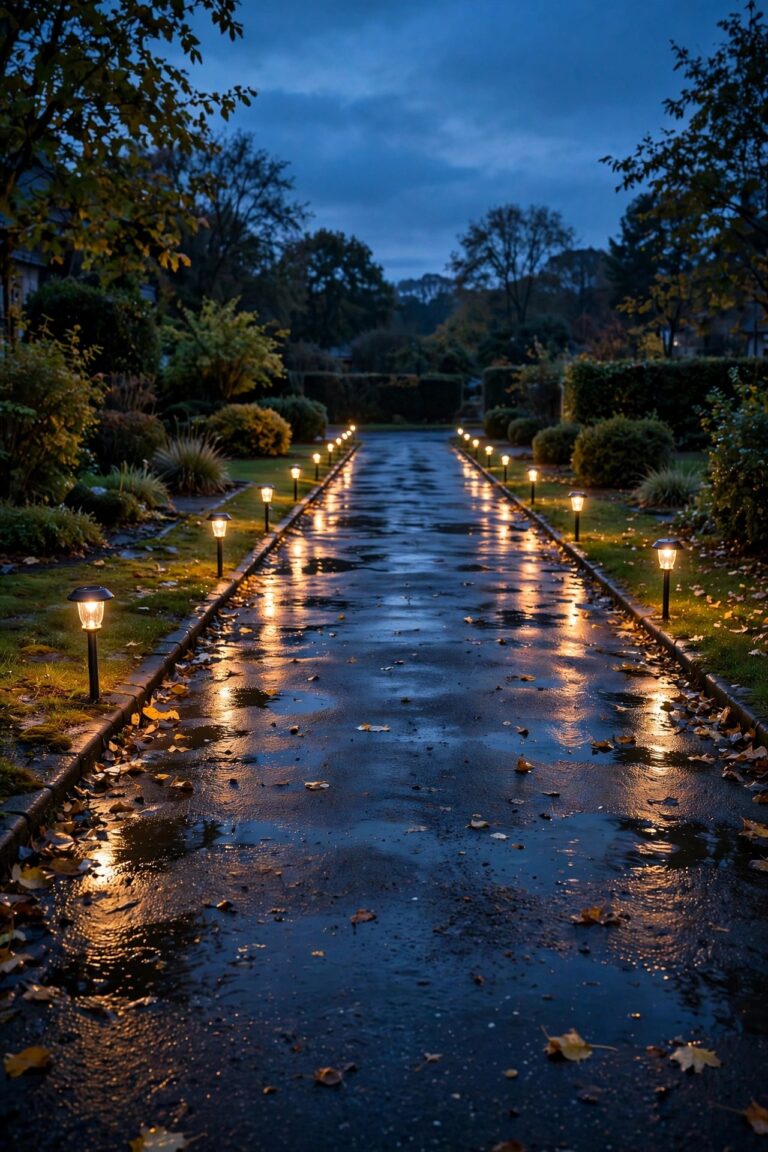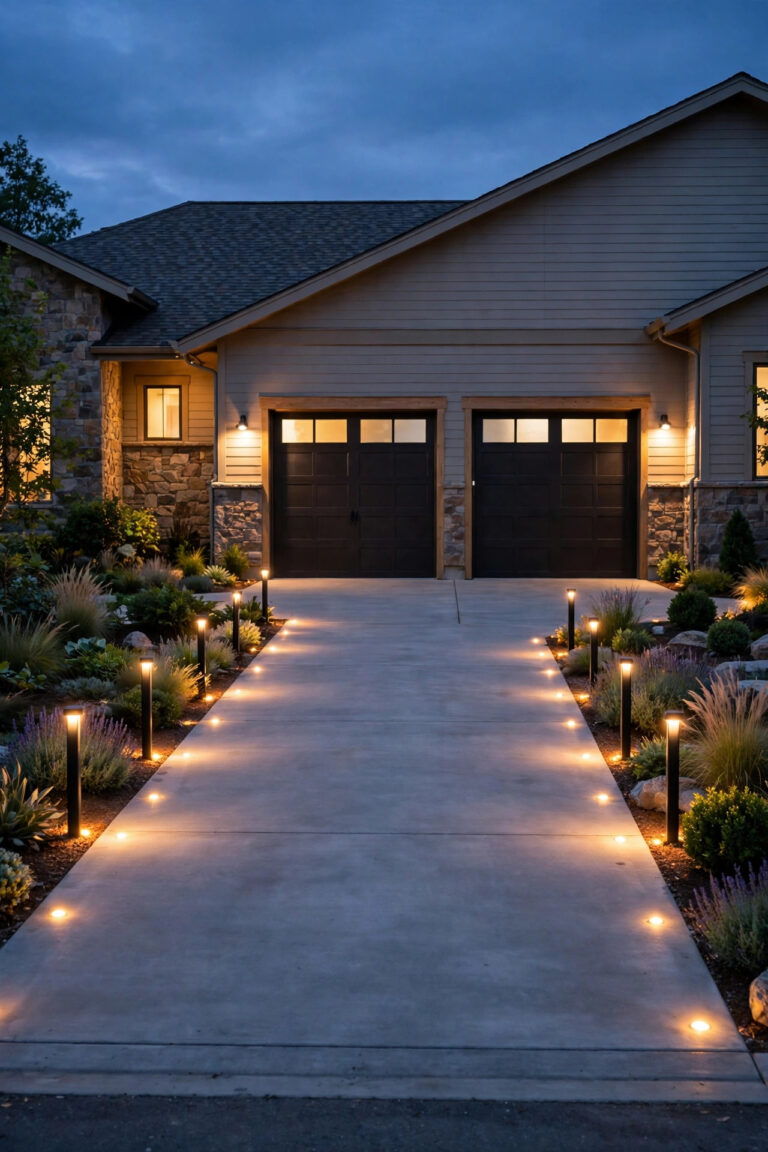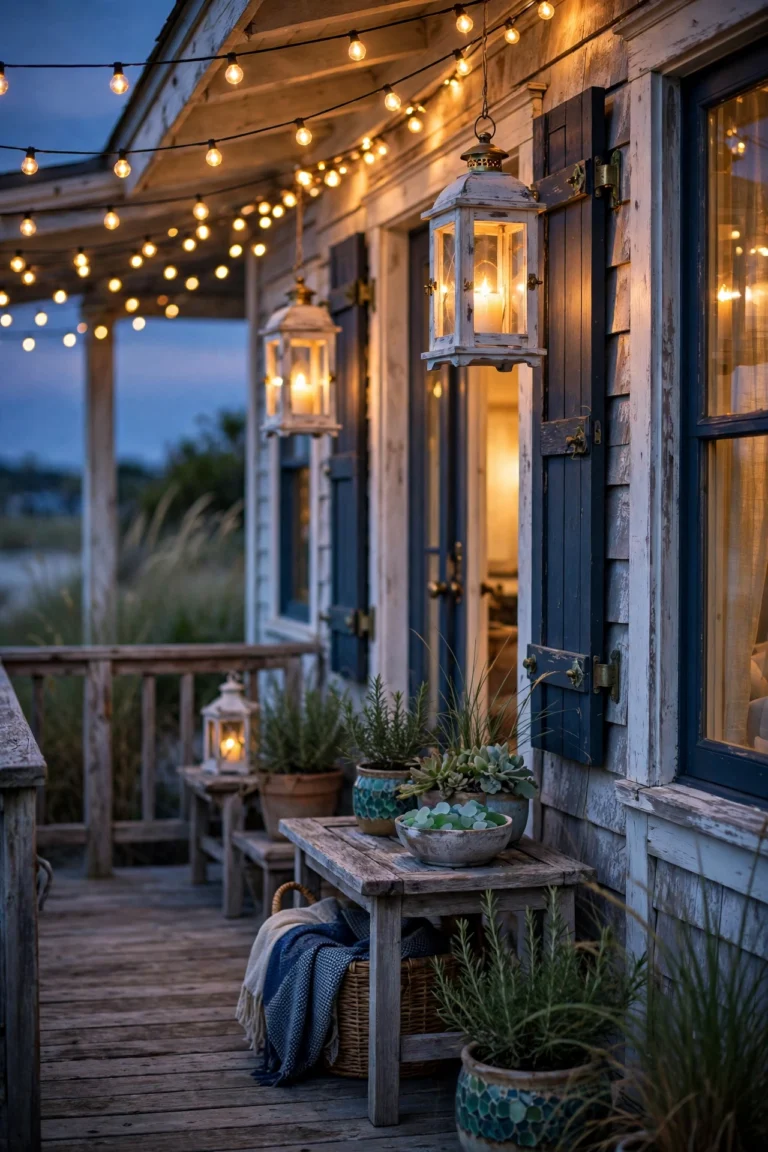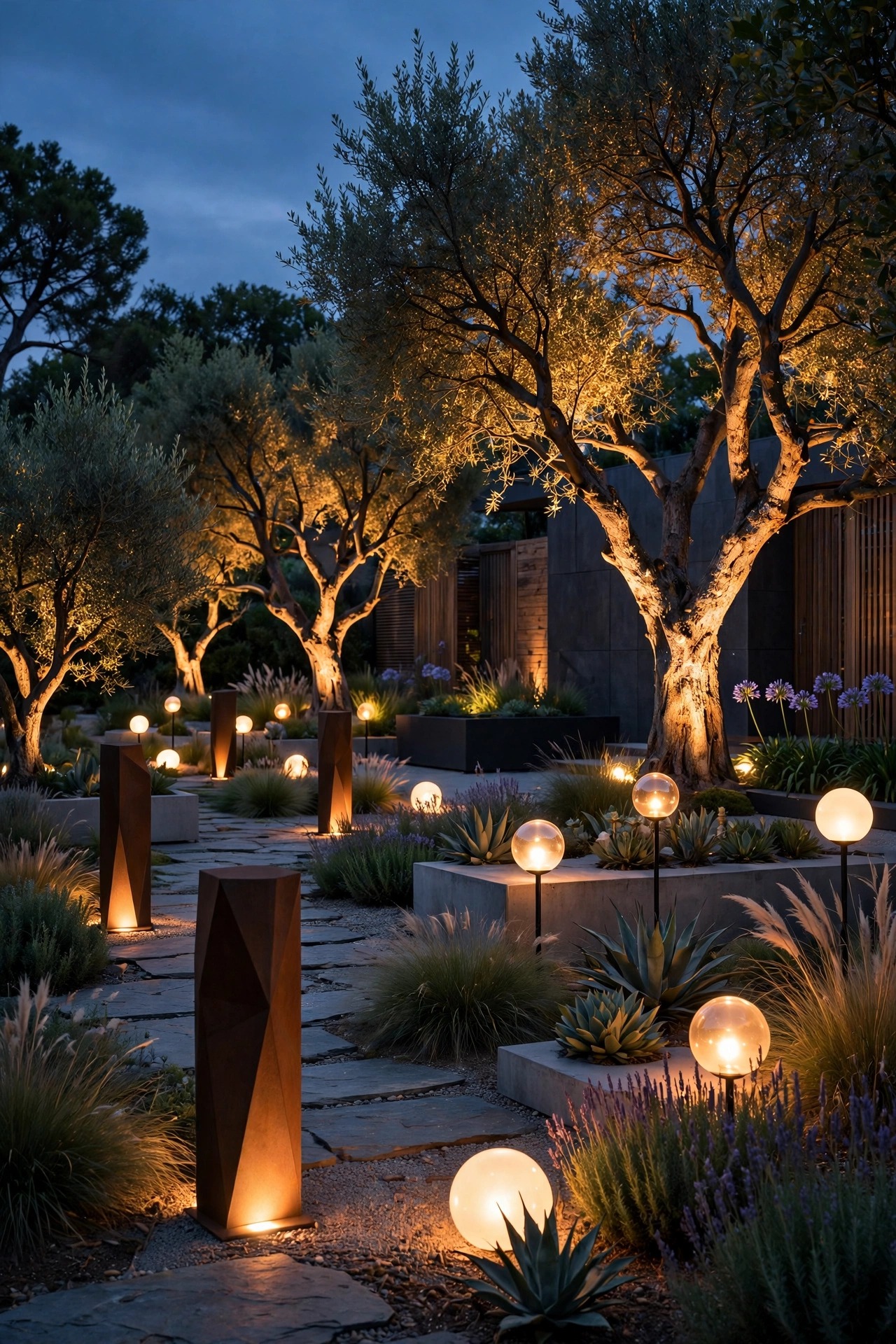
A modern garden after dark should feel like an outdoor gallery, and the secret is treating light as sculpture instead of hardware. The best modern garden lighting ideas start with restraint: clean lines, hidden fixtures, and pools of warm light placed where the eye should land. I layer every garden the same way, with low guidance light along paths, eye-level glow that makes planting beds feel dimensional, and one or two sculptural accents that carry the whole scene. That layering philosophy keeps a minimalist garden from looking flat and keeps a lush one from turning into a landing strip. I learned most of these tricks in my own backyard, one fixture and one honest mistake at a time, over many seasons of tweaking and re-aiming. In this post I am sharing the 17 ideas I reach for most, from glowing orbs and cube bollards to moonlighting and smart zones, each with honest budget ranges so you can plan a garden that glows like art without overspending.
1. Start With a Layered Plan for Modern Garden Lighting Ideas That Sculpt With Light
Every striking modern garden I have lit began on paper, not at the store. Sketch your beds, paths, and focal points, then assign each one a job: guidance, glow, or sculpture. Guidance light stays low and quiet, washing paths in soft pools every 6 to 8 feet. Glow light sits at bed level, grazing ornamental grasses and shrubs so planting reads as texture instead of black shapes. Sculpture light is the exclamation point, an uplight under a multi-stem tree or a wash across a sculptural planter. In my experience, three layers at different heights create depth that a single row of path lights never will. Keep fixtures in one finish family, usually matte black or dark bronze, so the hardware disappears and only the light feels designed. Walk the sketch at dusk with a flashlight before you buy anything; ten minutes of testing saves a weekend of returns.
Suggested budget range: $40 – $120.
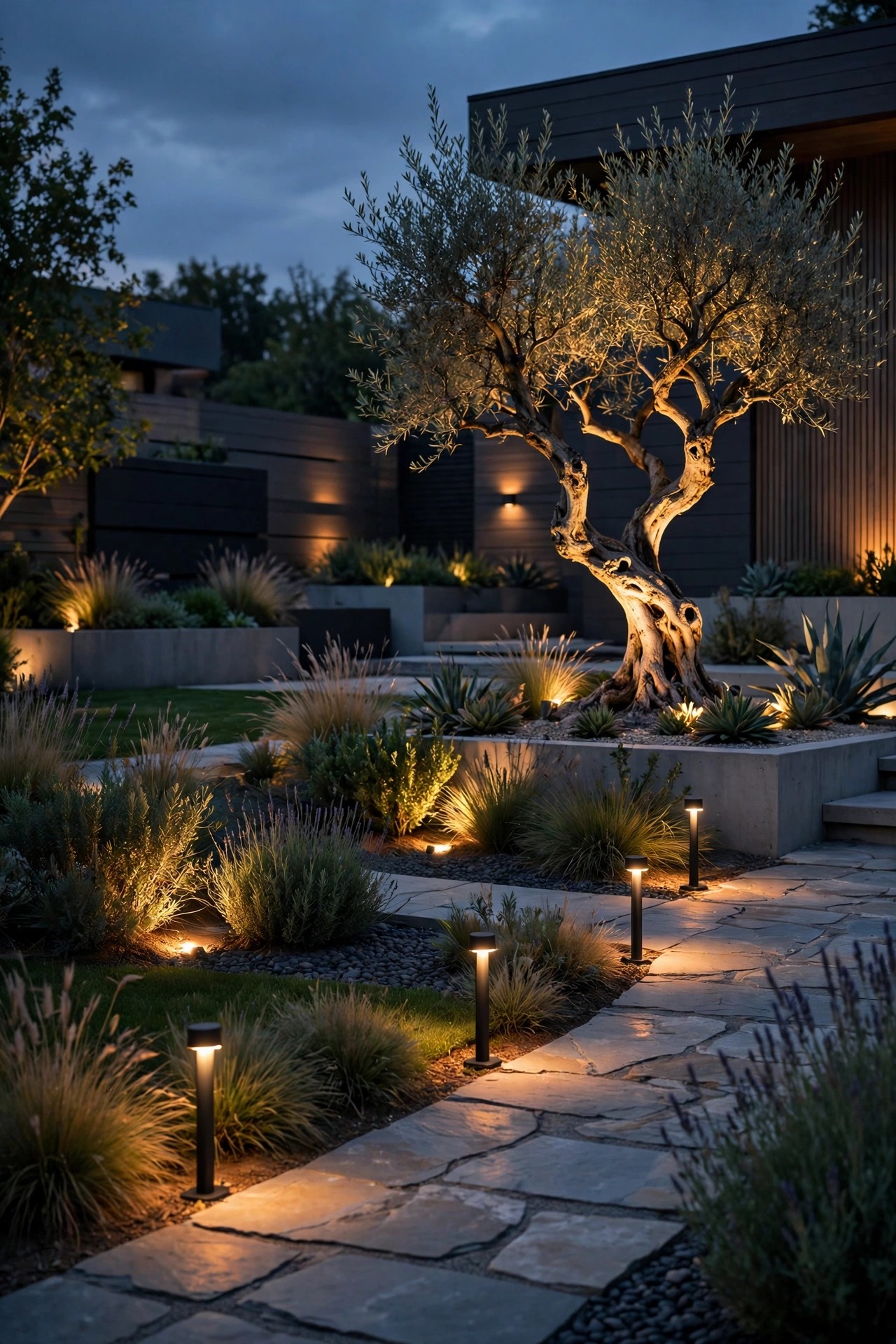
2. Float Glowing Orbs Across the Beds
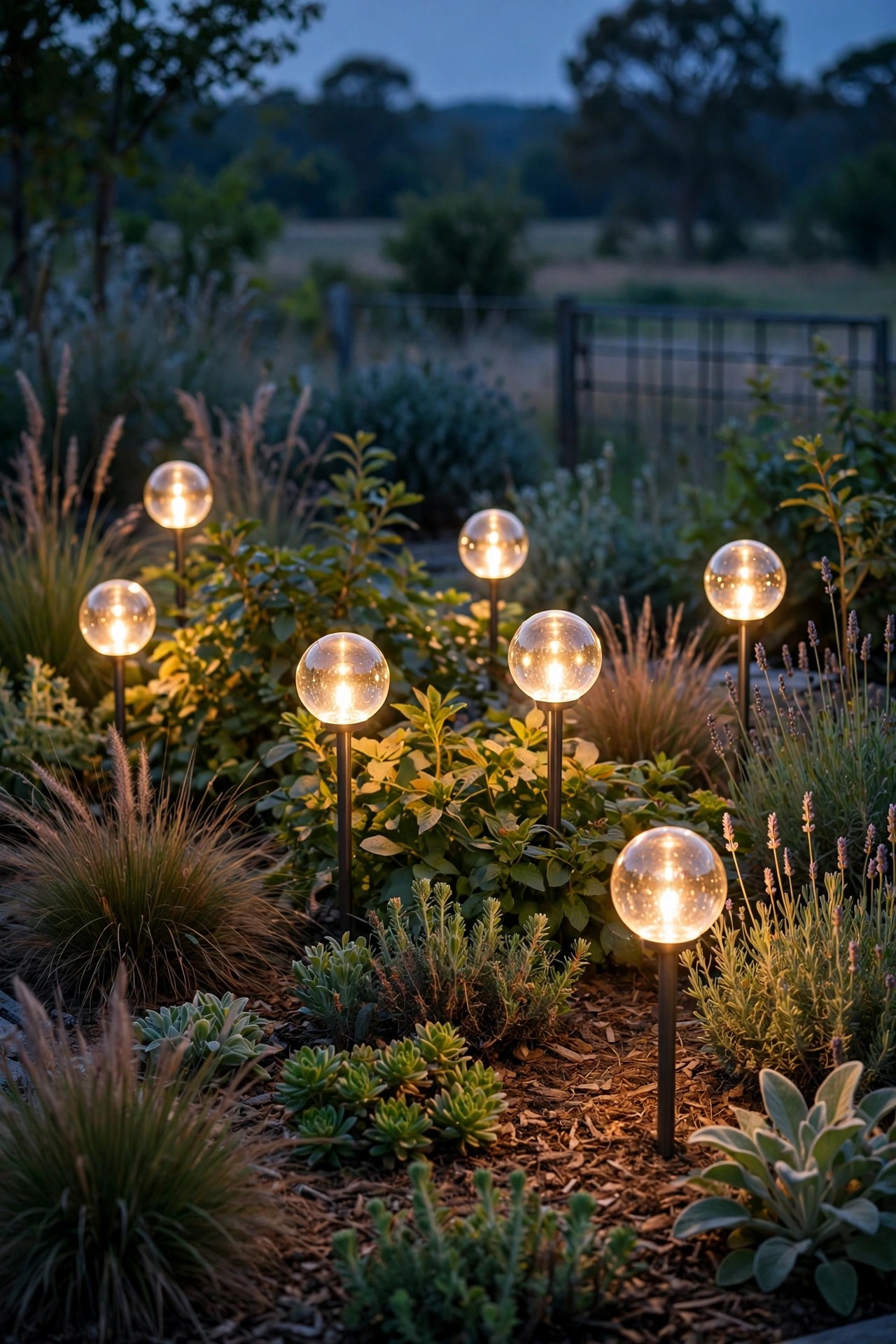
Glowing orbs are the fastest way to give a garden that sculptural, gallery feel. I scatter frosted globes in odd-numbered groups of three or five, nestled into groundcover or gravel where they look like moons that settled into the planting. Solar versions charge all day and glow for 6 to 8 hours, while low-voltage wired orbs give you steadier brightness and dimming control. Sizes from 8 to 16 inches work best; mix two sizes per group so the arrangement feels collected rather than matched. Keep the color temperature warm, around 2700K, because cool white orbs read as plastic no matter how pretty the shape is. Set solar orbs where they get at least 6 hours of direct sun, and wipe the panels monthly so dust does not dim the charge. In winter I pull the smallest ones indoors and let the largest wired orbs carry the scene.
Suggested budget range: $45 – $180.
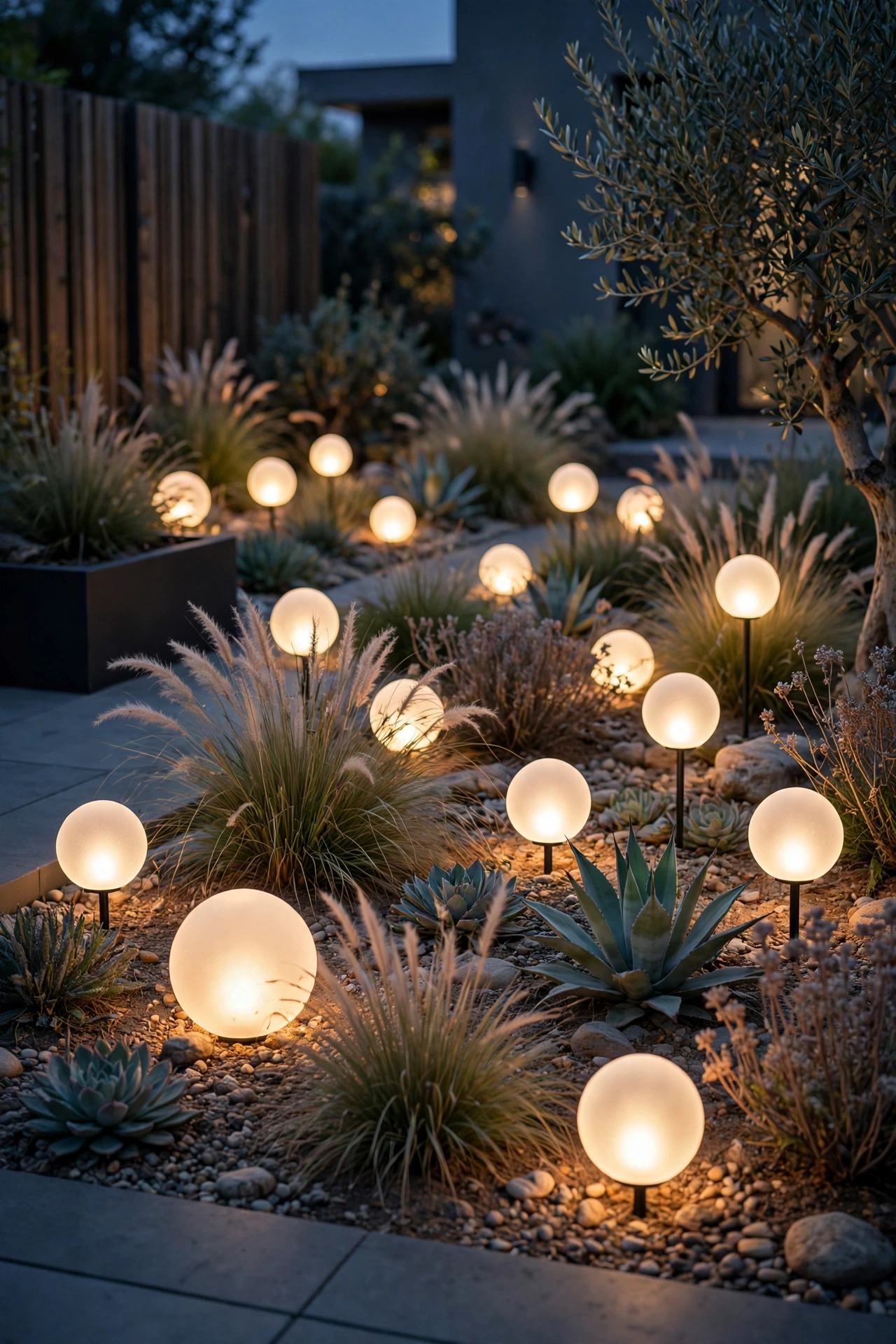
3. Line Paths With Sculptural Cube Bollards
A path lined with slim cube or cylinder bollards instantly reads modern, because the fixture itself becomes part of the design. Choose bollards 14 to 24 inches tall with a shielded light source that throws light downward onto the gravel or pavers, never outward into your eyes. Space them 5 to 7 feet apart on alternating sides of the path for a relaxed rhythm, or in matched pairs for a formal axis. Low-voltage wired bollards are my pick for main paths since they stay consistent all night; solar bollards work for secondary trails. If you want more detail on shapes and heights, my guide to modern path light ideas walks through the options I tested. Keep mulch and creeping plants trimmed back 6 inches so the light pool stays clean and the fixtures stay visible as sculpture during the day.
Suggested budget range: $120 – $420.
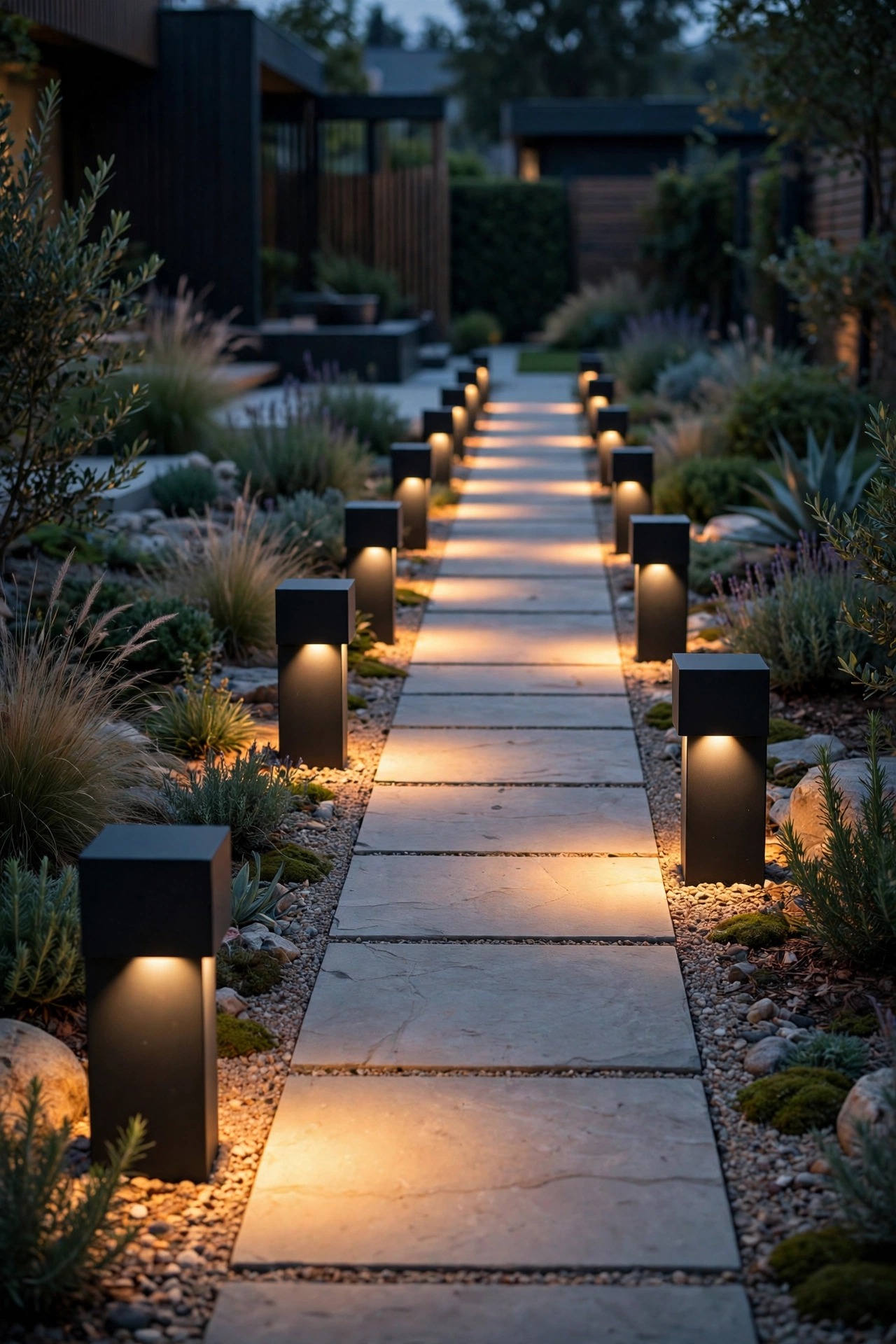
4. Hide Uplights in the Beds for Pure Glow
The most sculptural gardens hide the source completely. I tuck compact well lights and bullet uplights deep into the planting, angled up at 30 to 45 degrees so shrubs, ornamental grasses, and small trees glow from inside their own foliage. All you see is luminous texture, which is the whole modern trick: light without visible hardware. Use narrow 15 to 30 degree beams on specimen plants and wider floods on loose grasses. A glare shield or honeycomb louver keeps the beam polite when you view the bed from a patio chair. Bury low-voltage cable 6 inches deep along bed edges and leave a service loop at each fixture so you can nudge angles as plants grow. Honestly, plan to re-aim these twice a year; gardens move, and a five-minute adjustment keeps the sculpture sharp instead of lopsided.
Suggested budget range: $90 – $300.

5. Moonlight From the Tree Canopy
Moonlighting is my favorite sculptural move because it paints the ground with dappled shadows that shift in the breeze. A downlight mounted 15 to 25 feet up in a mature tree, fitted with a soft 60 degree beam, casts gentle pools across lawns, patios, and bed edges that feel like real moonlight. Use a warm 2700K LED even though actual moonlight is cool; warm reads cozier and matches the rest of your layers. Keep brightness modest, roughly 200 to 400 lumens, since moonlighting should whisper rather than flood. Hire an arborist or experienced installer for the climb and use tree-friendly straps instead of screws where possible. Run the cable down the back side of the trunk in a dark sleeve so it vanishes. One well-placed moonlight can replace four path lights and gives the whole garden a calm, expensive calm-after-dark mood.
Suggested budget range: $180 – $450.
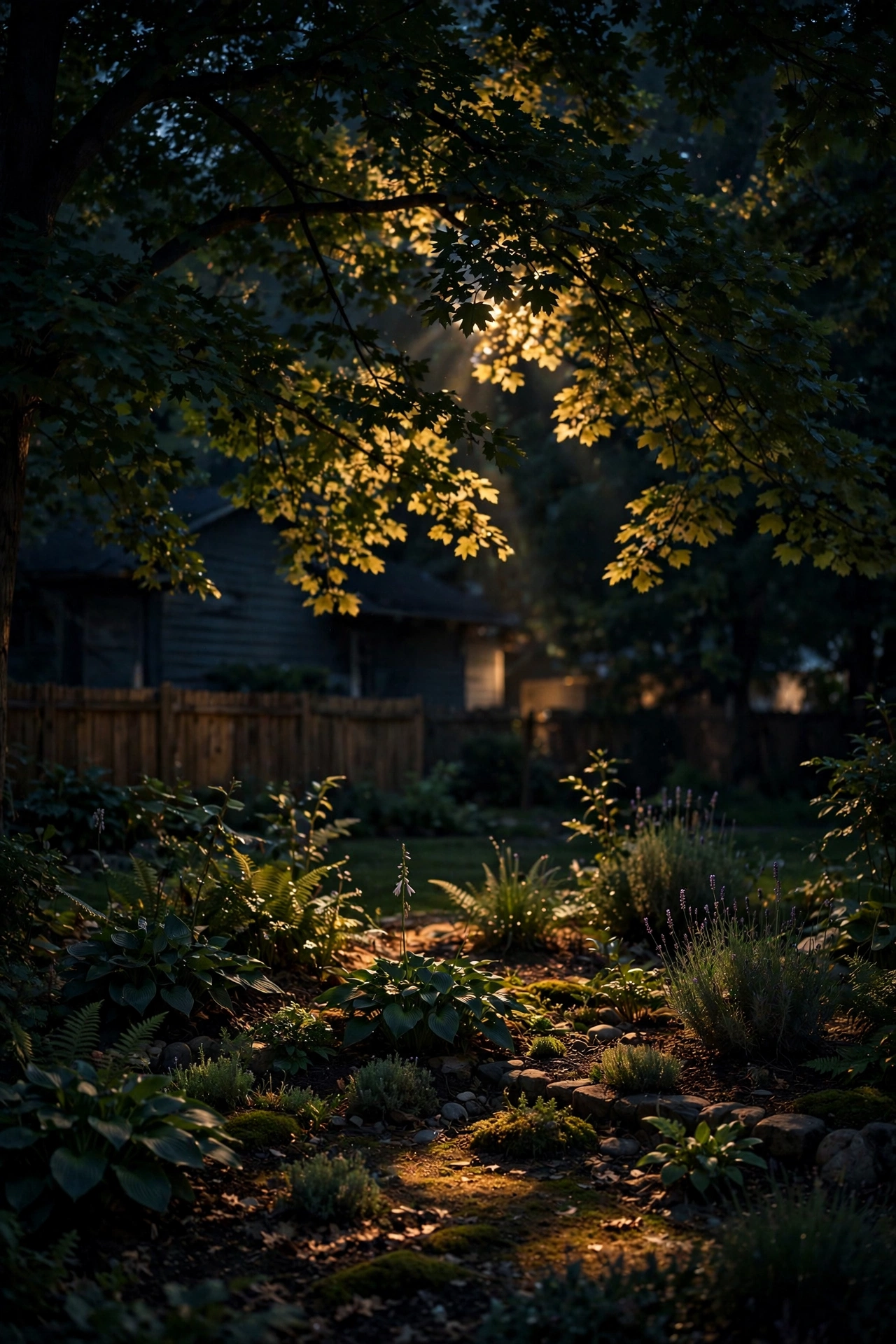
6. Make One Fixture the Sculpture
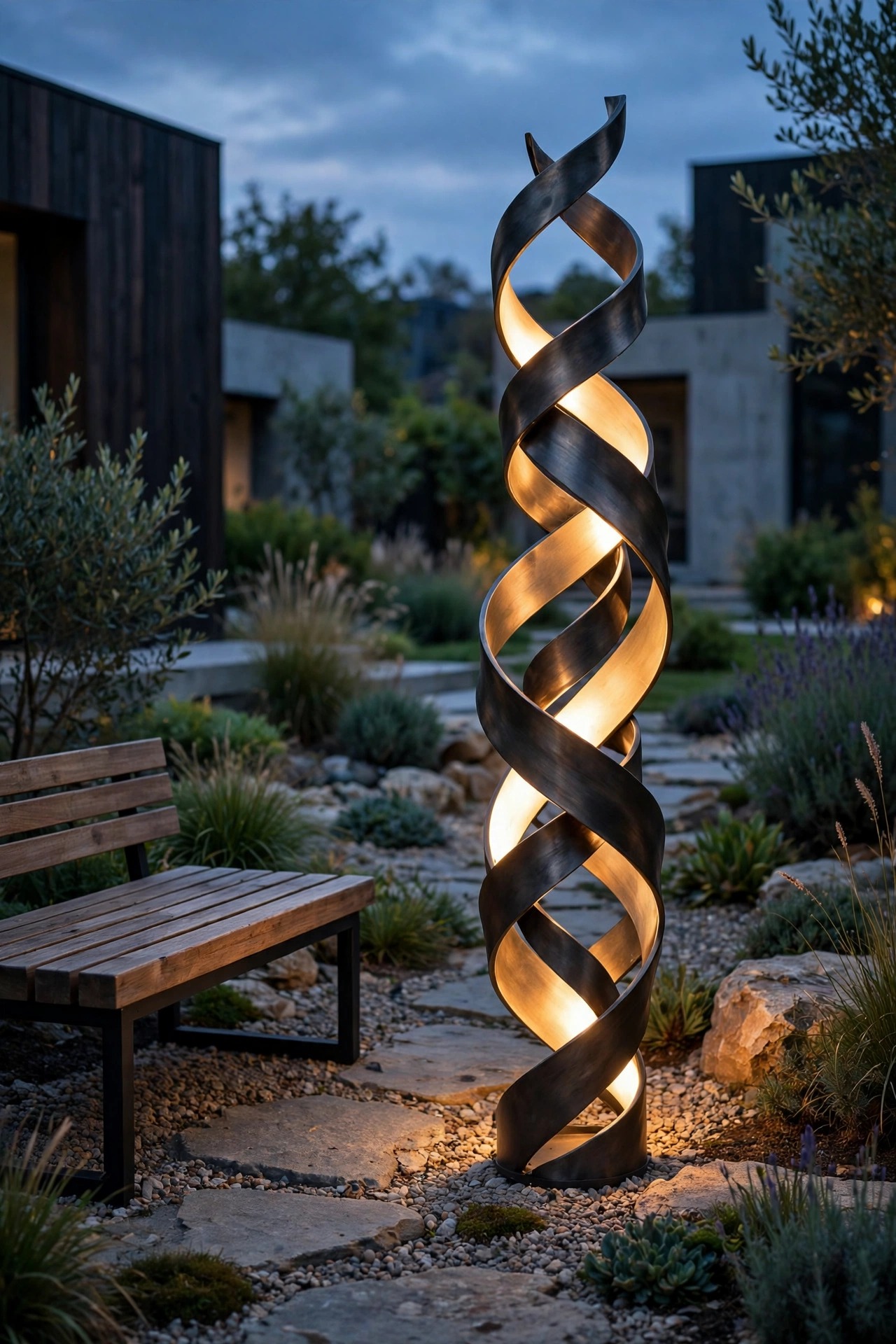
Every modern garden deserves one fixture that is art first and light second: a twisted metal spike light, a ring on a stem, a faceted lantern form, something you would admire at noon. Place it where sightlines converge, at the end of a path, beside a bench, or centered in a gravel court, and give it breathing room so the silhouette stays readable. I light mine on its own circuit or smart plug so it can glow solo after the rest of the garden dims down. Choose weather-rated metal with an IP65 rating or better, and anchor it firmly; statement pieces catch wind. If sculpture in the garden is your weakness too, my post on garden statue lighting ideas covers washing and grazing techniques that pair beautifully with a hero fixture. One hero per view is the rule; two competing pieces cancel each other out.
Suggested budget range: $85 – $350.
7. Trace Bed Edges With Linear LED Strip
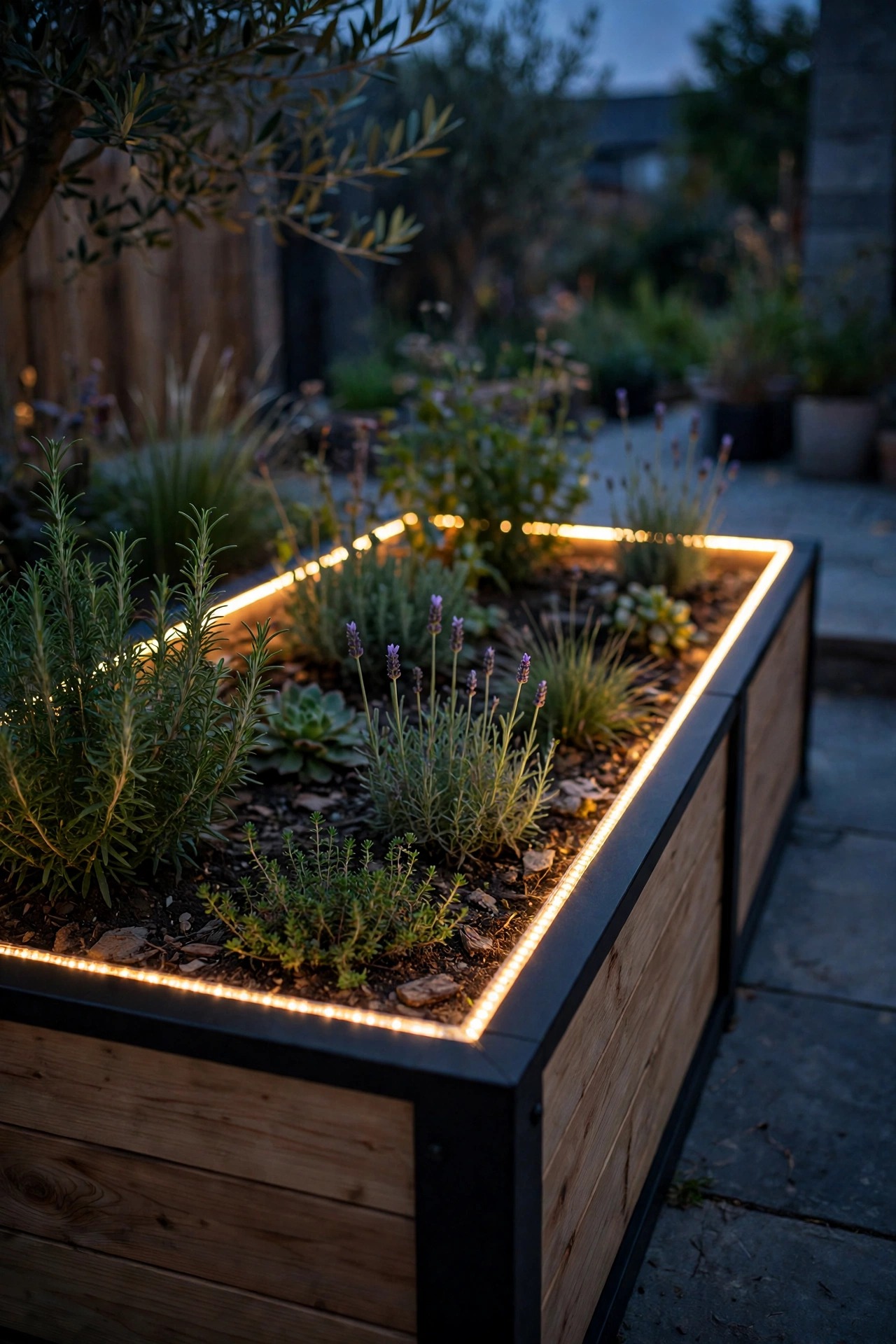
A hidden line of light along a bed edge or retaining wall gives a garden crisp architectural geometry. I mount outdoor LED strip in an aluminum channel under a wall cap or along the toe of a raised bed, so all you see is a clean ribbon of glow defining the shape. Use IP67 or IP68 rated strip for ground-level runs, and keep the color temperature matched to your other fixtures at 2700K. The channel matters: it diffuses the diodes into one smooth line and protects the strip from trimmers and weather. Plan a low-voltage driver location that stays dry and accessible, and keep runs under about 16 feet per feed to avoid voltage drop dimming the far end. This is the idea guests photograph most in my garden, because the floating edge makes even simple planting look deliberate and designed.
Suggested budget range: $70 – $220.
8. Add Solar Orb Stakes Where Wiring Cannot Reach
Deep beds and far corners often sit beyond easy cable runs, and that is where solar orb stakes earn their place. The newer designs pair a frosted globe with a slim black stake, so by day they read as minimalist sculpture and by night they float a soft ball of light above the foliage. Push them 8 to 10 inches into the soil in clusters of three at staggered heights if the stakes allow. Honestly, solar output varies, so buy one, live with it for a week, and check that it still glows at 10 p.m. before ordering a dozen. Panels need direct sun, so avoid tucking them under dense canopy. In shady beds I use them as daytime sculpture only and let wired uplights do the night work. Wipe panels with a damp cloth each month; pollen film quietly steals brightness.
Suggested budget range: $35 – $110.
9. Graze Walls and Fences With Slim Downlights
A plain fence or garden wall is a blank canvas, and grazing light turns it into sculpture. Mount slim downlights high on the wall, or place narrow-beam uplights at its base, so the beam skims the surface and reveals every bit of texture in board, stone, or stucco. Keep fixtures 6 to 12 inches off the wall for a tight graze, or pull them 2 feet back for a softer wash. On fences I space graze lights to echo the planting rhythm, one per panel or one per specimen shrub. This borrowed backdrop makes beds in front of the wall pop as silhouettes, which is a very modern, very forgiving look for young gardens that are still filling in. Use shielded fixtures, aim carefully, and test from your seating area; a graze that glares at the patio is worse than no graze at all.
Suggested budget range: $95 – $280.

10. Light the Water Feature From Inside
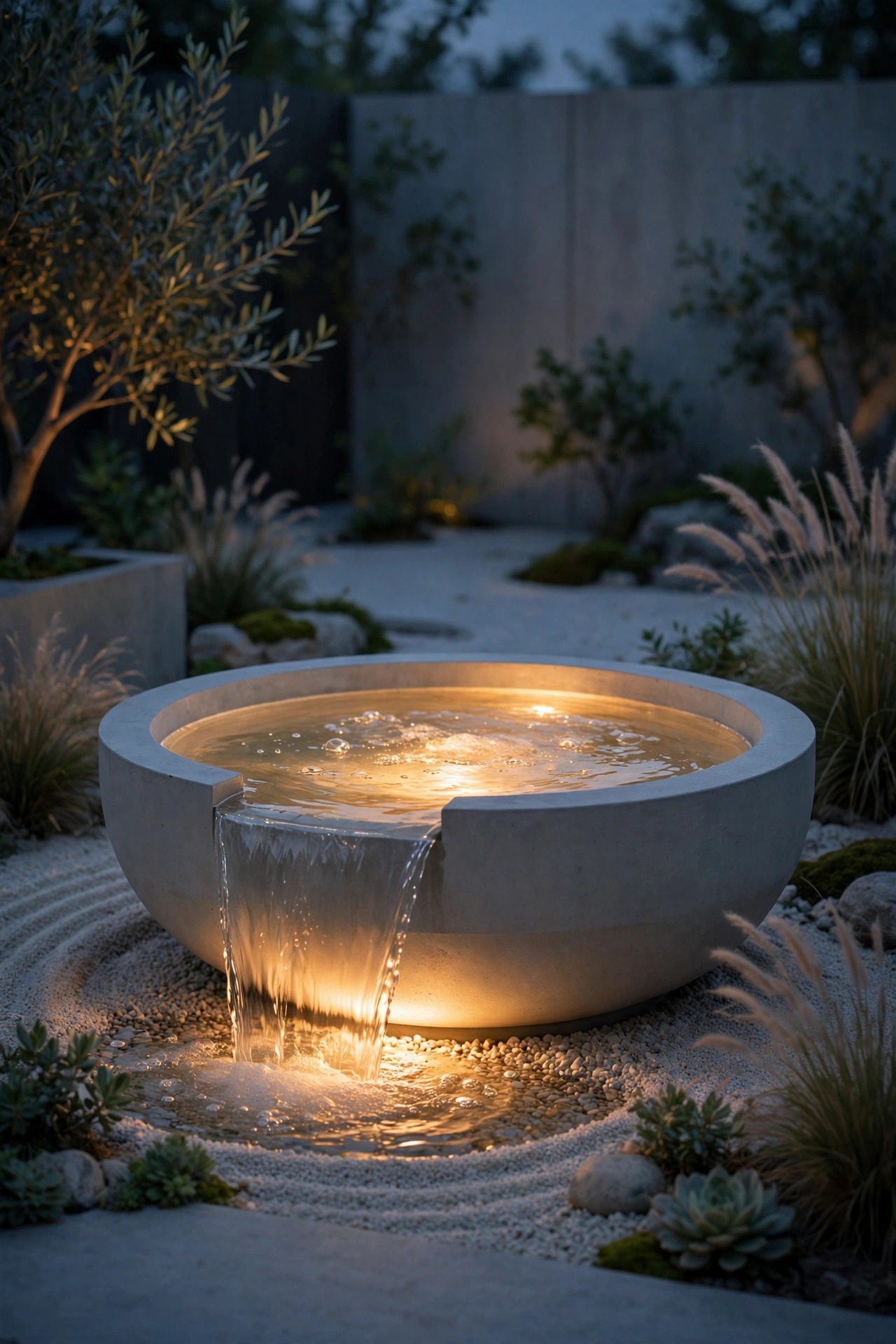
Water doubles every lumen you give it, so a small submersible light turns a modern bowl fountain, rill, or reflecting pool into liquid sculpture. I use one warm IP68 submersible puck aimed up through moving water for sparkle, or a soft wash beneath still water for a lantern effect. Keep the fixture low and hidden under a lip or stone so the source stays invisible. Always plug water-feature lighting into a GFCI-protected outlet, and choose low-voltage equipment anywhere hands or pets might reach the water. Clean lenses monthly; algae film dims output faster than any other grime in the garden. If your feature sits near seating, dim is better, since bright underwater light can feel aquarium-harsh. My favorite pairing is a glowing water bowl beside the hero fixture from idea 6, two sculptures in conversation across the gravel.
Suggested budget range: $40 – $160.
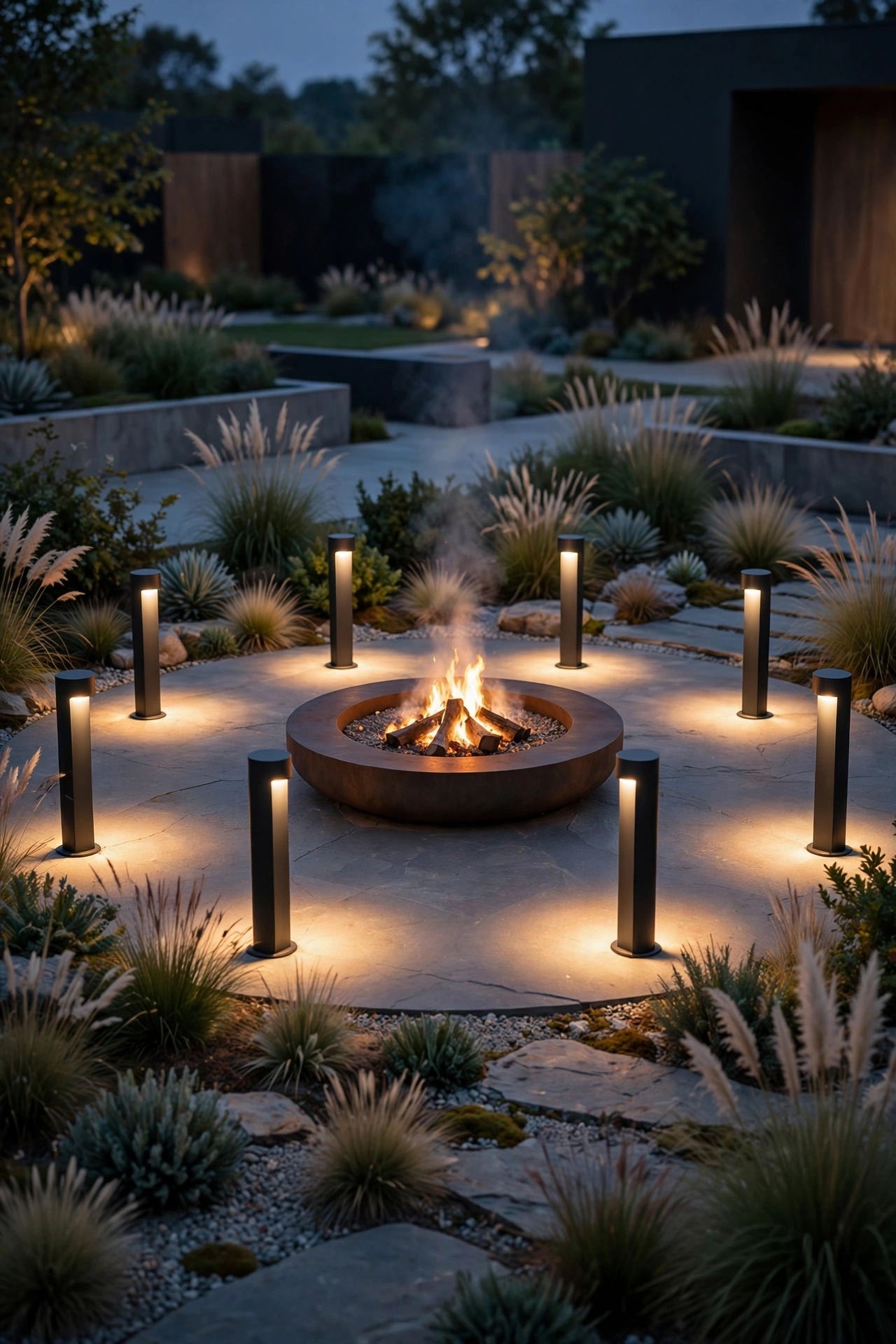
11. Ring the Fire Feature With Low Bollards
A fire pit or linear fire table already glows, but low bollards around the seating ring add the safety light and structure the flames cannot. I place three or four short bollards, 12 to 18 inches tall, at the gaps between chairs, aimed down so guests can find footing and drinks without glare. Keep every fixture and cable well outside the heat zone the manufacturer specifies, and never run low-voltage cable under a fire bowl. LED-only is the rule anywhere near open flame or hot metal. On gas features, a separate switch for the bollards lets you kill the electric light and go full firelight mood once everyone is seated. The geometry of a bollard ring also photographs beautifully: a calm circle of light pools holding the wild flame in the middle. Choose dark finishes that disappear against mulch and gravel.
Suggested budget range: $110 – $320.
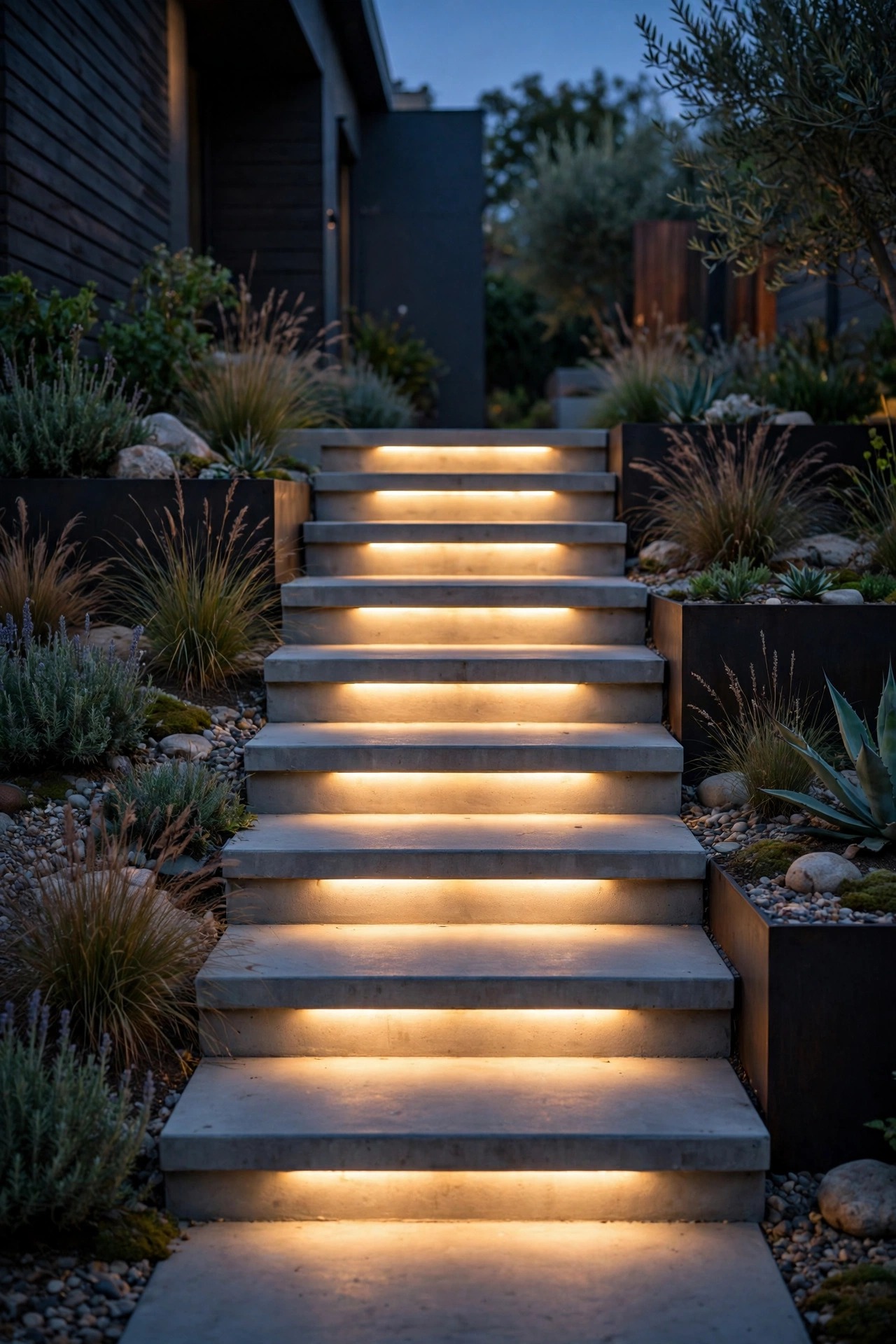
12. Wash the Steps With Recessed Riser Lights
Modern gardens love level changes, and every step deserves its own quiet wash of light. Recessed riser lights tuck into the face of each step or into the side wall beside it, throwing a soft fan across the tread with zero visible bulk. Space one per step on wide stairs, or one every other step on narrow garden stairs, and keep them shielded so the beam never hits eye level. Hardwired low-voltage versions are the reliable choice here; solar step lights often fade before the evening ends. Match the finish to your other hardware and keep the color temperature at 2700K so the staircase feels like part of the garden rather than an airport runway. Wire steps on the same zone as your path lights so the whole route lights as one gesture when the timer clicks on at dusk.
Suggested budget range: $80 – $260.
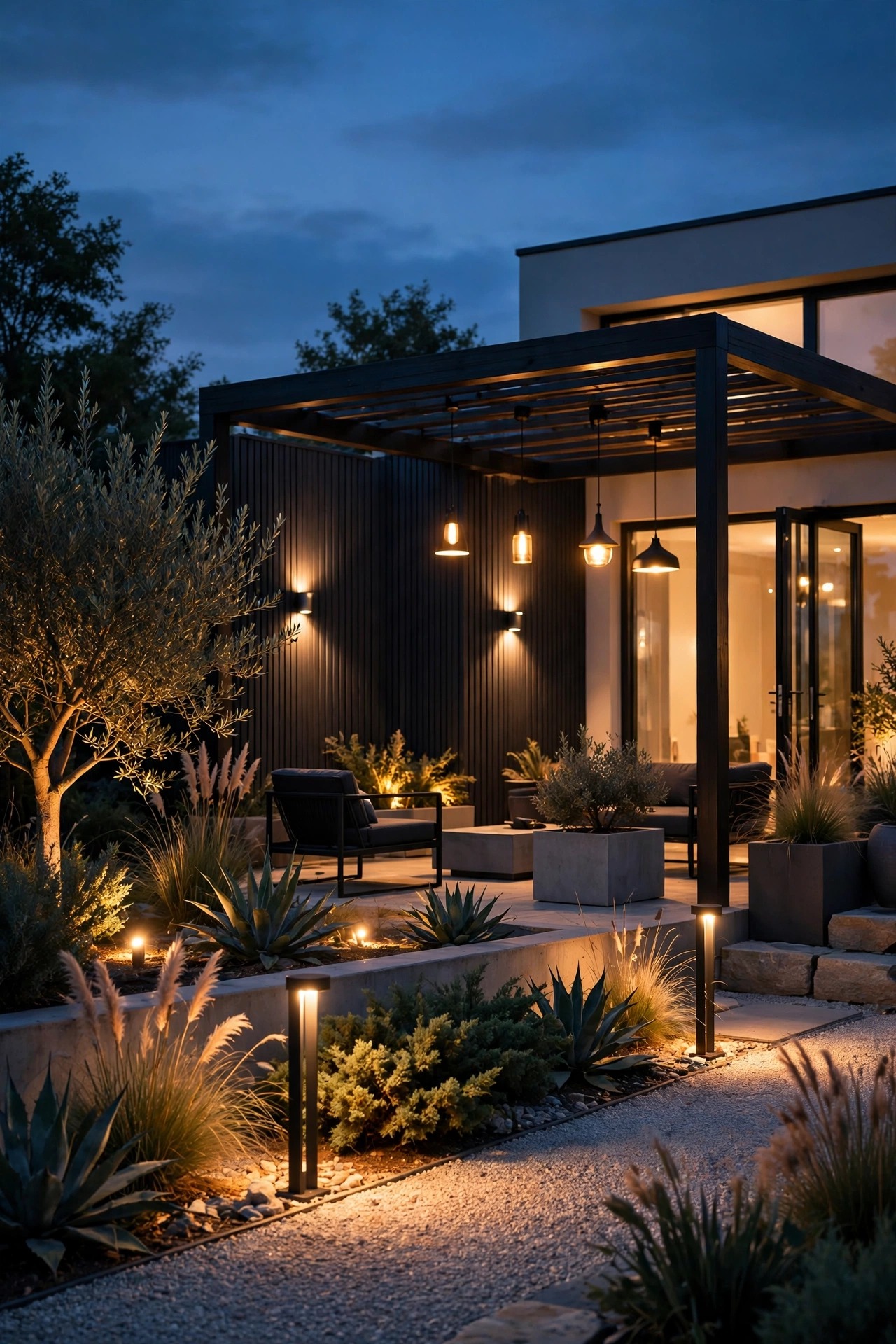
13. Commit to One Warm Temperature Everywhere
Nothing breaks the sculptural spell faster than mixed color temperatures, a warm orb beside a blue-white path light beside a yellow porch bulb. I standardize every garden fixture at 2700K, and I check the box or listing before buying, because bulbs labeled soft white can still vary by brand. Test a new fixture beside an existing one at night before installing the whole set. If you inherit a garden with mixed temperatures, swap the most visible offenders first, usually the path lights, and move the odd ones to the side yard. Smart bulbs make this easier in lanterns and pendants since you can dial them to match. Keep a small stock of matching spare bulbs and one spare fixture per style; manufacturers discontinue finishes constantly, and a mismatched replacement in year three will nag at you every single evening.
Suggested budget range: $25 – $90.
14. Zone It Smart So the Sculpture Can Change
Smart controls turn a static garden into a scene you can direct. I split my garden into three zones on a smart low-voltage transformer or smart plugs: path and step safety light, bed glow, and sculpture accents. Safety runs dusk to midnight at full brightness, bed glow dims to 50 percent late, and the sculpture zone stays on longest because it is the view from my kitchen window. Astronomical timers adjust automatically with the seasons, so the garden is never glowing at 5 p.m. in June. Set schedules once and let them run; manual switching is where good lighting plans go to die. If you add smart bulbs in any fixture, disable their individual timers so the transformer stays in charge. A simple app scene called Evening is honestly all most of us need, one tap and the whole gallery opens.
Suggested budget range: $60 – $240.
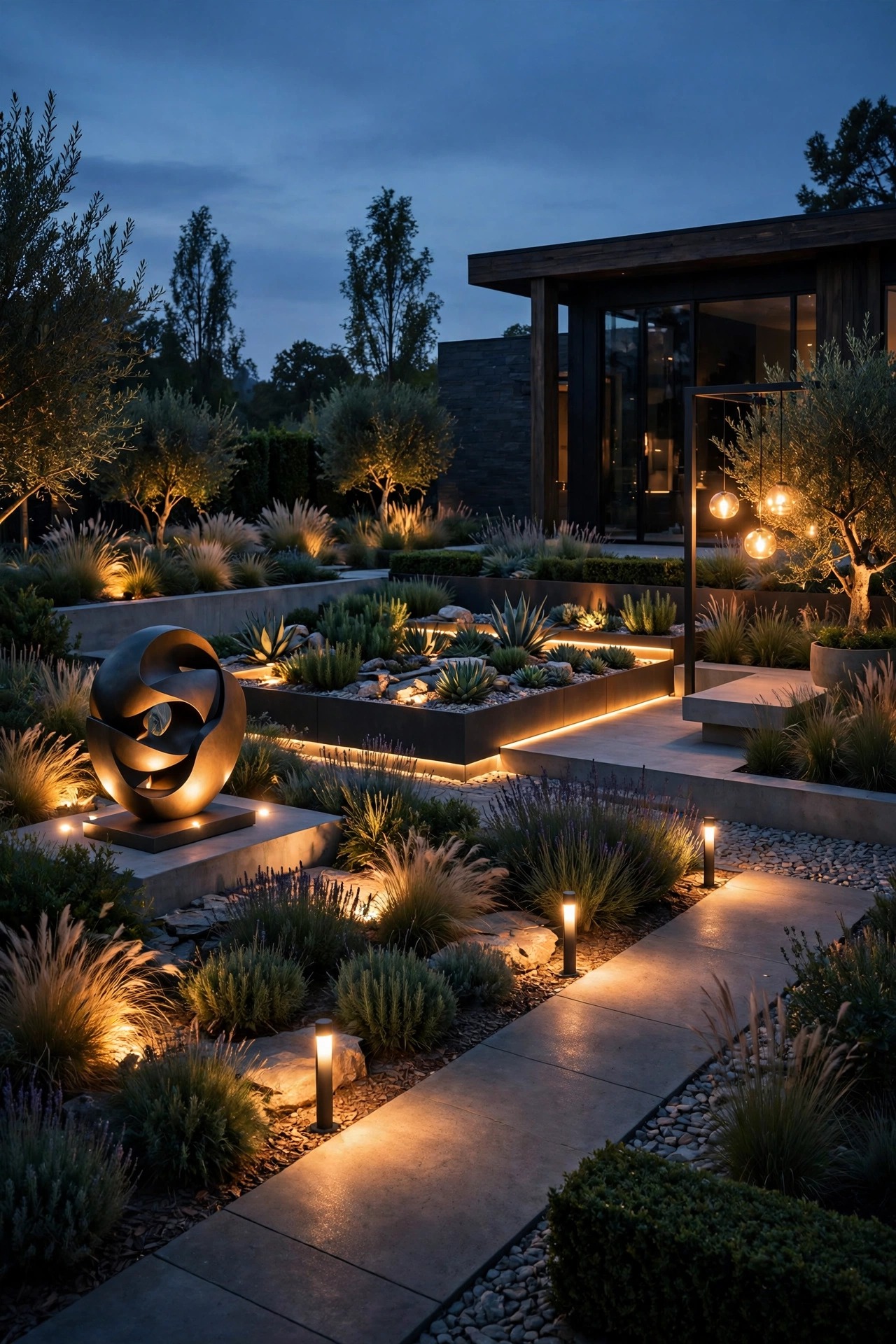
15. Spotlight Planters Like Gallery Pedestals
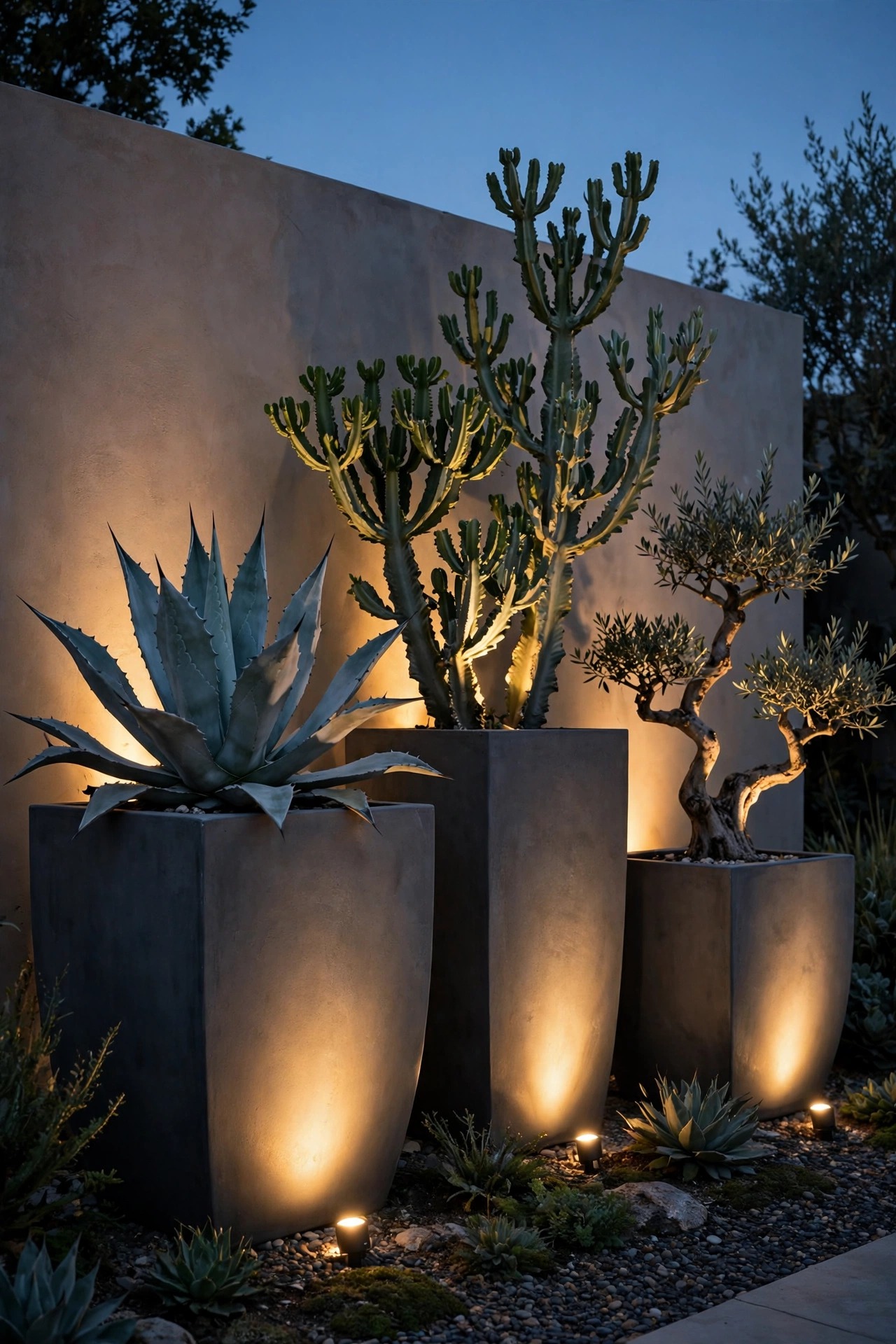
Oversized planters are modern garden furniture, and a small spotlight treats each one like a pedestal in a gallery. I aim a narrow beam up through architectural plants, agave, olive, or a sculptural grass, from a spike set 12 to 18 inches in front of the pot. The plant throws dramatic shadows on the wall behind it, which doubles the art for free. Keep the pot itself in shadow at the base so the foliage floats. For a row of matching planters, repeat the same fixture and angle exactly; rhythm is what makes it feel designed. My roundup of garden focal point spotlight ideas has more angles and beam widths if you want to experiment. Rotate spotlight duty seasonally, since the plant that deserves the beam in June may not be the star in October. A dimmer on this zone helps too, because a planter spotlight that sings at full power in early summer can easily overpower the quieter scene by fall.
Suggested budget range: $55 – $170.
16. Soften the Geometry With One Strand of Warm Fairy Light
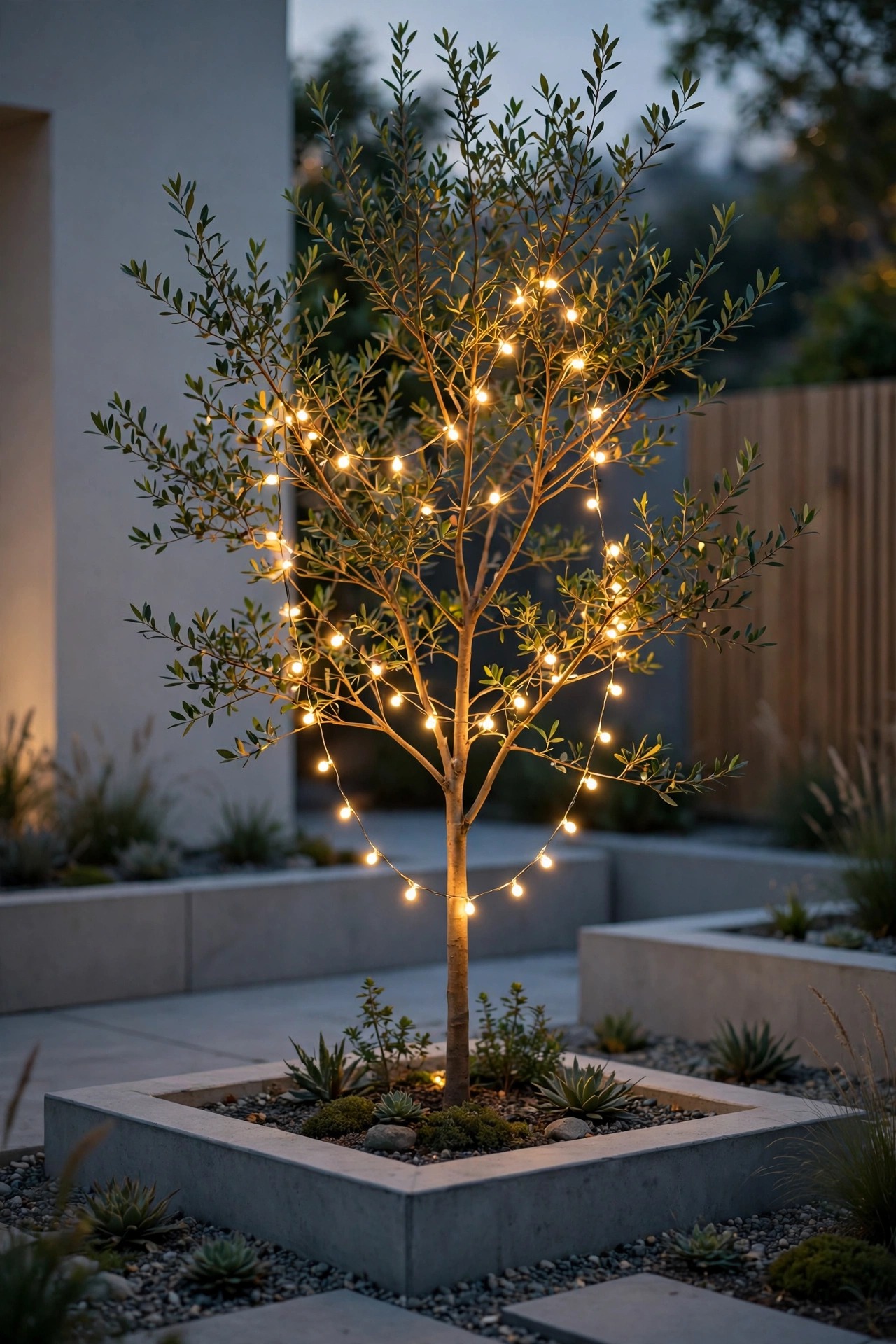
A strictly modern garden can feel a little stern, and one loose strand of warm fairy light is my favorite antidote. I drape a single copper-wire strand through one small tree or along a pergola edge, keeping it casual against all those clean lines. One strand, not five; restraint is what keeps it chic instead of festive. Choose warm white micro LEDs on dark wire so the strand disappears by day, and power it with a timer set for the same hours as your sculpture zone. Keep real flame and hot fixtures away, and use LED-only strands near fabric cushions or dry grasses, as with any garden lighting. Battery strands work for a weekend look, but for a permanent installation I prefer a low-voltage or plug-in strand on a smart plug. The contrast of one soft, twinkling element makes the sculptural pieces look even more intentional.
Suggested budget range: $15 – $45.
17. Walk It at Dusk and Edit Your Modern Garden Lighting Ideas
The last step is the one most people skip, and it is the step that makes a garden look professionally lit. Once everything is installed, walk the whole garden at dusk with your phone flashlight off and look with fresh eyes. Stand where guests stand: the gate, the patio chairs, the kitchen window. You will spot a glare bomb from one uplight, a bollard hidden behind a grown shrub, a dark gap on the steps. Adjust angles, raise one fixture on a taller stake, dim the sculpture zone a notch. I do this walk every spring and fall, because plants grow and seasons change the sightlines. Take a phone photo from each viewpoint; the camera exaggerates glare and imbalance in a way your eyes forgive. Edit ruthlessly. Removing one wrong fixture improves a modern garden more than adding three right ones, honestly.
Suggested budget range: $0 – $60.
Frequently Asked Questions
What color temperature looks best for modern garden lighting?
Warm white at 2700K is my standard for every fixture in a modern garden. It flatters foliage, stone, and skin tones, and it keeps sculptural pieces feeling like art instead of office lighting. Avoid mixing temperatures, since even a small mismatch between two fixtures breaks the designed look at night.
Are solar lights bright enough for a modern garden?
Solar orbs and stakes work well as accents and sculpture, but most cannot match wired low-voltage fixtures for consistent brightness all night. I use solar where wiring is impractical and keep paths, steps, and hero pieces on a wired system. If a solar light still glows at 10 p.m. in your yard, it is a keeper.
How many lights does a modern garden actually need?
Fewer than you think. A small garden often looks best with 10 to 14 fixtures total across paths, beds, and one or two accents. Start with the layers, live with them for a few weeks, and add only where you find a true dark gap during your dusk walk.
How much does modern garden lighting cost in 2026?
A focused DIY refresh with orbs, bollards, and a few uplights typically lands between $300 and $900 in 2026. Larger wired systems with moonlighting and smart zoning run $1,500 to $4,000 installed. Phasing the project by layer keeps the budget manageable and the design coherent.
Conclusion
The gardens that stop me on evening walks all share the same secret: the light itself is the sculpture. Choose a few modern garden lighting ideas from this list, layer them at different heights, match every fixture to one warm temperature, and let hidden hardware do the work while the glow takes the credit. Start with the path and one hero piece, live with it, then add bed glow and water or fire accents as the budget allows. Browse the rest of my garden lighting ideas here on the site for more ways to shape your own after-dark gallery, and I will see you out there at dusk with a mug of something warm.