The first truly chilly evening of the year is my favorite night to be outside. The air smells like woodsmoke, the mosquitoes have finally given up, and all I want is a bonfire, a blanket, and light that makes the whole yard feel like a hug. That is exactly what the best fall backyard lighting ideas do: they work with the fire instead of competing with it. In my experience, autumn light should always glow warmer and sit lower than summer light, because the fire pit is already your brightest light source and your ceiling of darkness comes earlier every week. I layer everything in three heights — a soft canopy overhead, warm light at sitting height, and a gentle ground layer so nobody trips carrying a mug of cider across the lawn. Below are the 19 setups I rotate through every bonfire season, from the string light canopy over our seating circle to the little lantern that marks the firewood stack, each with honest budget ranges.
1. Layer Your Fall Backyard Lighting Ideas in Three Heights
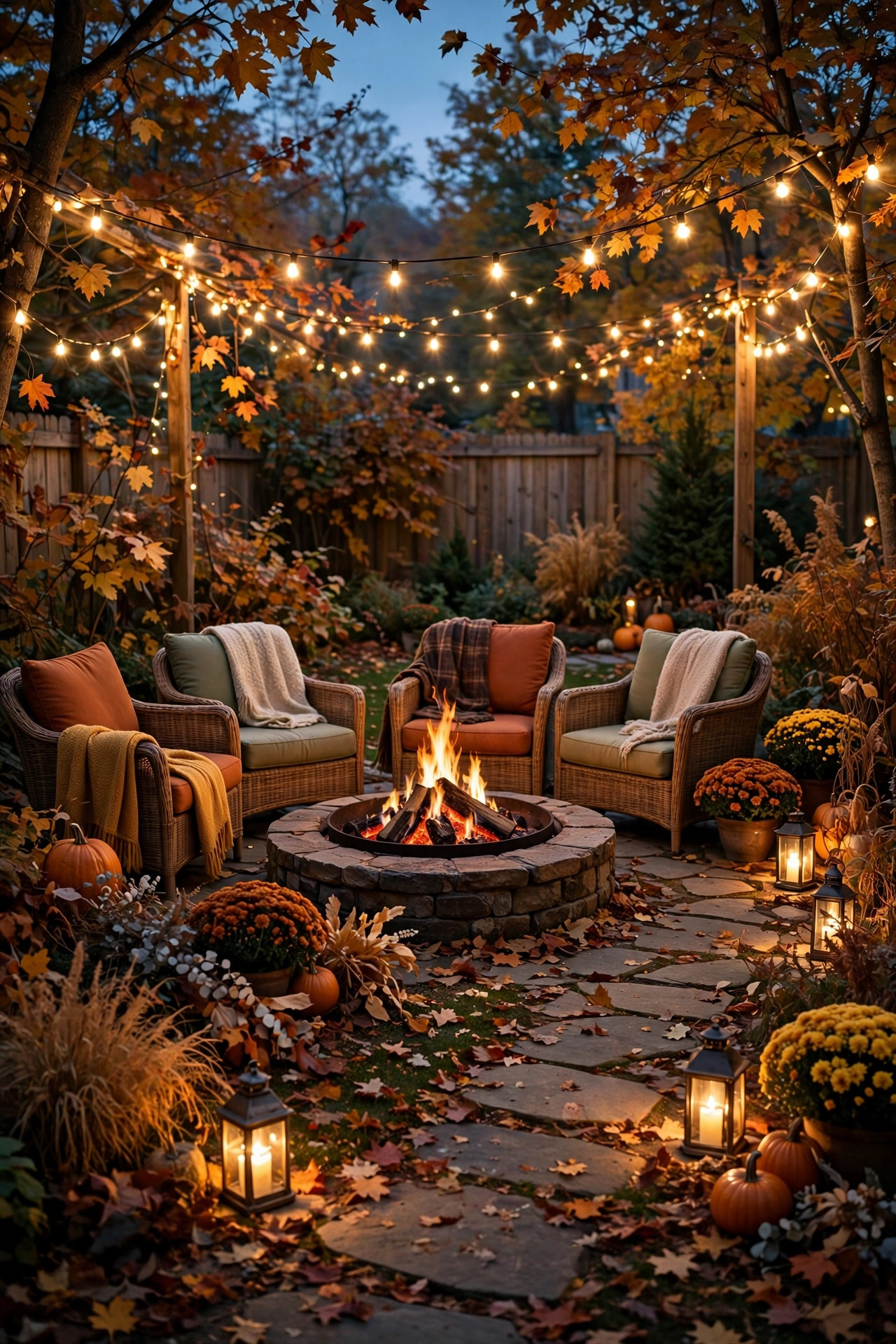
Before I hang a single bulb, I sketch the yard in three layers, and honestly, this one habit is why our bonfire nights feel designed instead of accidental. Layer one is overhead: a canopy of string lights or a softly lit tree crown that gives the space a ceiling. Layer two is eye level, roughly three to five feet up — lanterns on the seating wall, sconces on the fence, candlelight on the snack table — because that is the height where faces sit around a fire. Layer three is the ground: path lights, step lights, and low stakes that keep feet safe without shining in anyone's eyes. The fire itself counts as a fourth, living layer, so I deliberately keep everything else dimmer than the flames. I also stick to one color temperature, 2700K warm white, across every fixture so the layers blend instead of clashing. Walk your yard at dusk with a notepad, mark where each layer is missing, and shop only for the gaps. You will spend less and love the result more.
Suggested budget range: $40 – $120.
2. Swag a Café String Light Canopy Over the Seating Circle
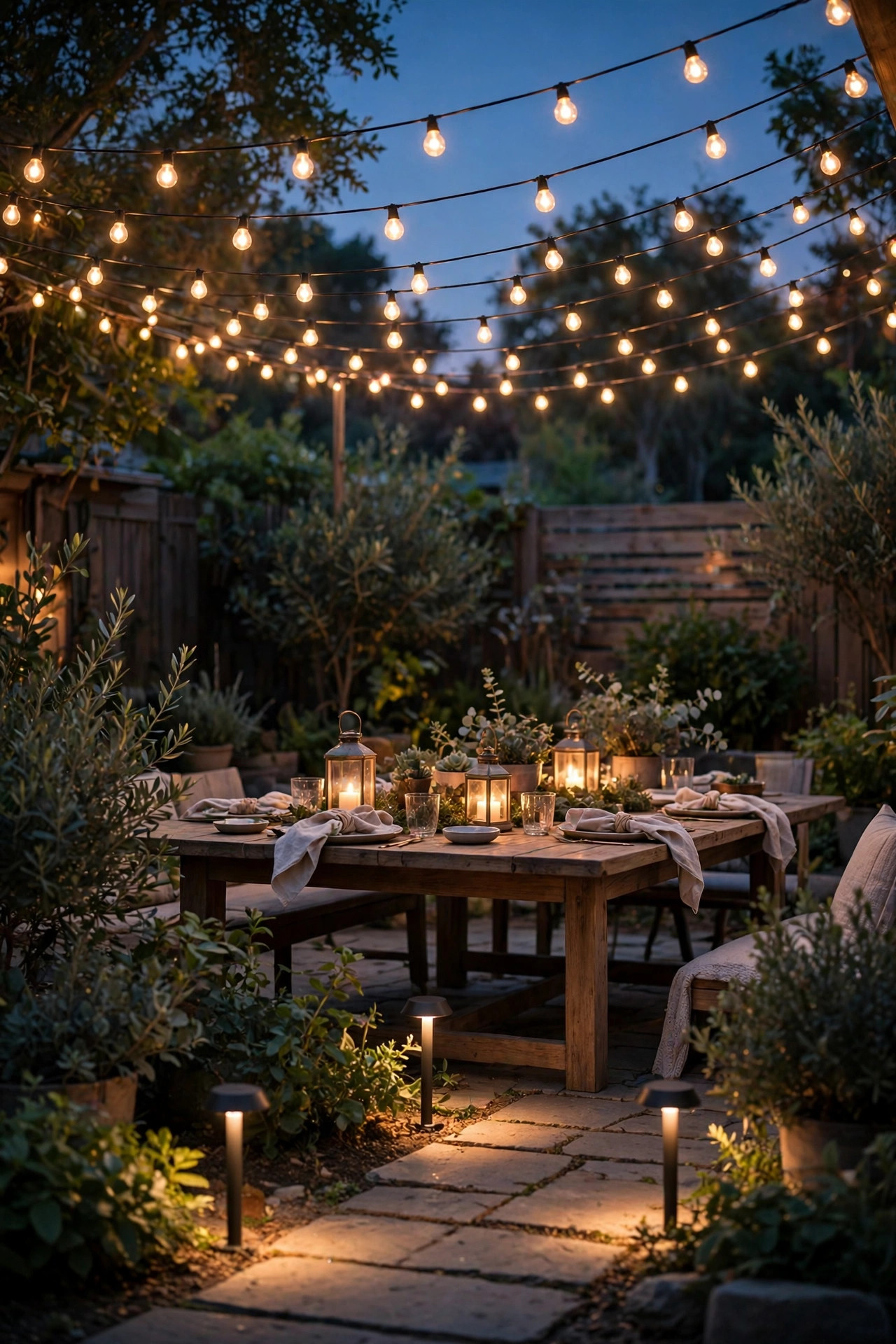
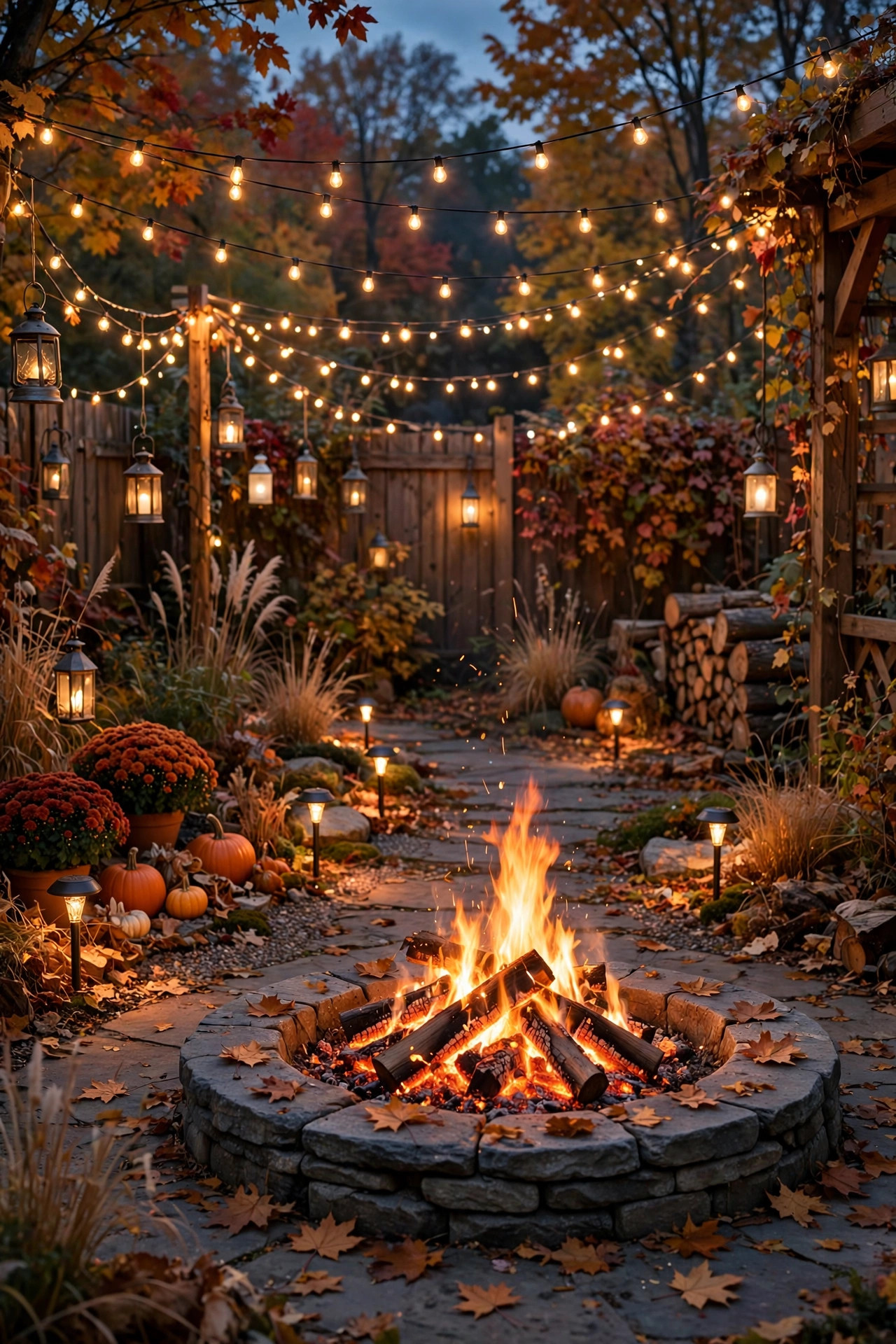
Nothing says bonfire season like café string lights sagging in gentle swags above the chairs. I run two or three strands from the house eave and a tall pole at the far side of the fire pit, crossing about nine to ten feet over the seating so the bulbs clear raised marshmallow sticks and tall guests. Commercial-grade strands with suspended sockets handle autumn wind and rain far better than the thin patio sets, and I always choose shatterproof LED filament bulbs in 2200K to 2700K for that candlelit amber tone. Space the swags so bulbs land every 18 to 24 inches of drape, and put the whole run on a dimmer — full brightness for setup, forty percent once the fire is going. If your yard has no anchor points, my guide to backyard string light ideas walks through poles and tree anchors step by step. One safety note I never skip: keep strands at least ten feet horizontally from the fire pit, because rising heat and drifting sparks are hard on cords and sockets.
Suggested budget range: $45 – $130.

3. Ring the Fire Pit with Low Lanterns, Not Bright Lights
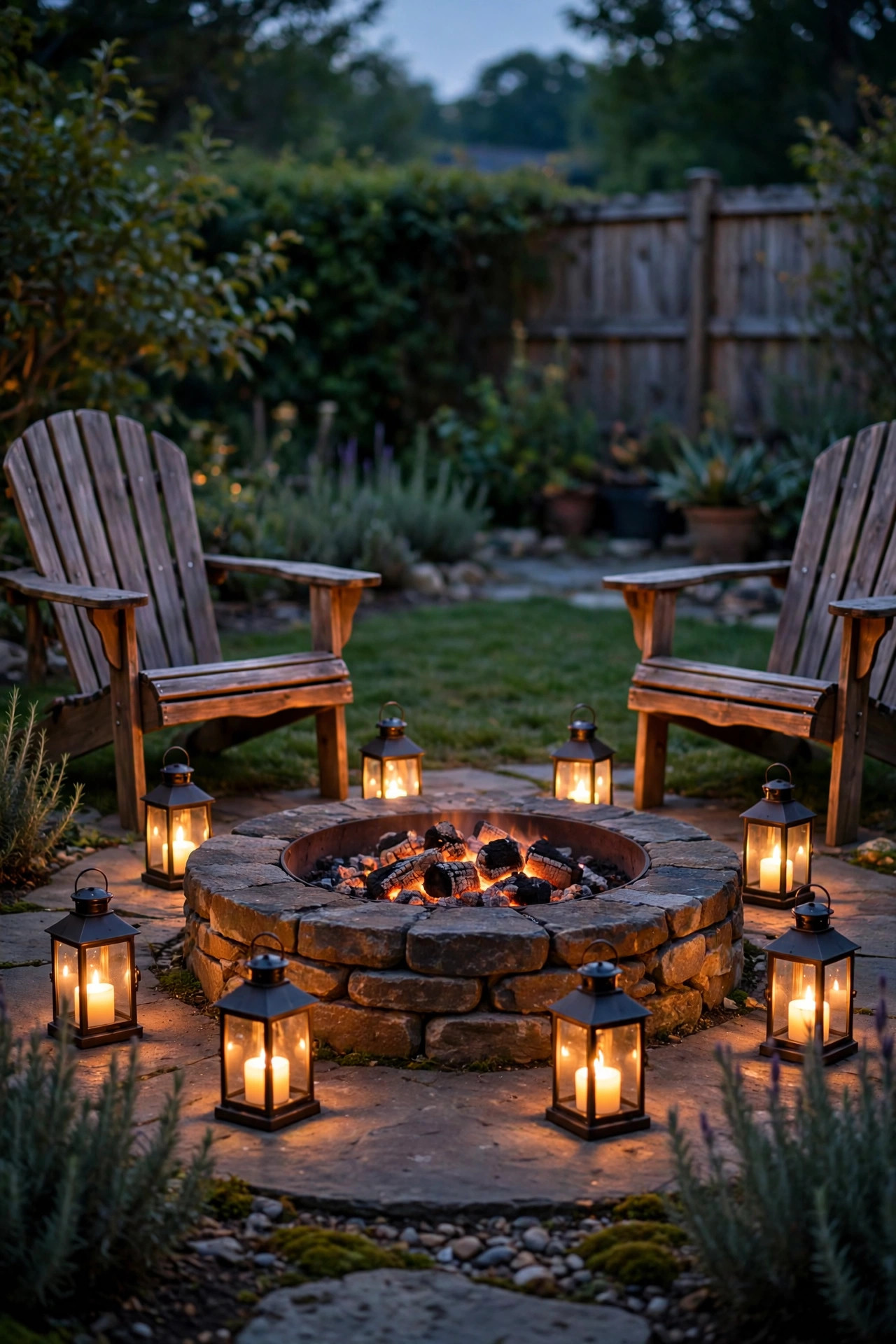
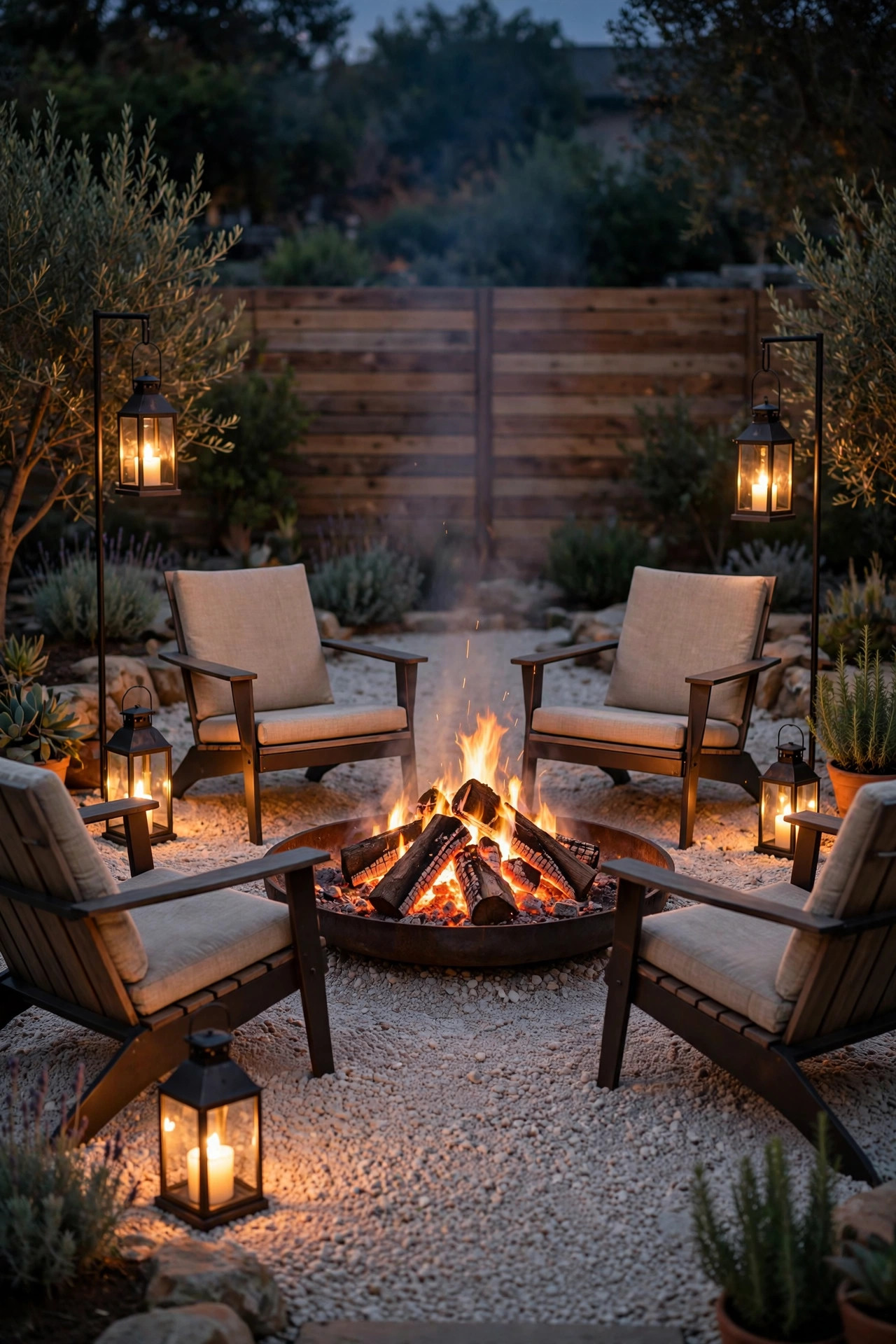
The ring of seating around a fire pit needs definition, not illumination, so I place one low lantern behind every other chair, right at ground level. The flames light faces from the front while the lanterns outline the circle from behind, and the effect is honestly magical in photos. I use metal lanterns with flameless LED candles on a timer — real candles gutter out in October wind, and open flames that close to blankets and dry leaves make me nervous. Look for candles with a realistic flicker and a five-hour timer so they switch on at dusk and off after everyone heads inside. Keep the lanterns at least two feet back from chair legs so nobody kicks one over in the dark, and choose black or oil-rubbed finishes that disappear against the night. For more ways to style the seating zone itself, I keep coming back to these fire pit seating lighting ideas. A ring of six to eight lanterns is plenty; more starts to look like an airport runway.
Suggested budget range: $35 – $90.
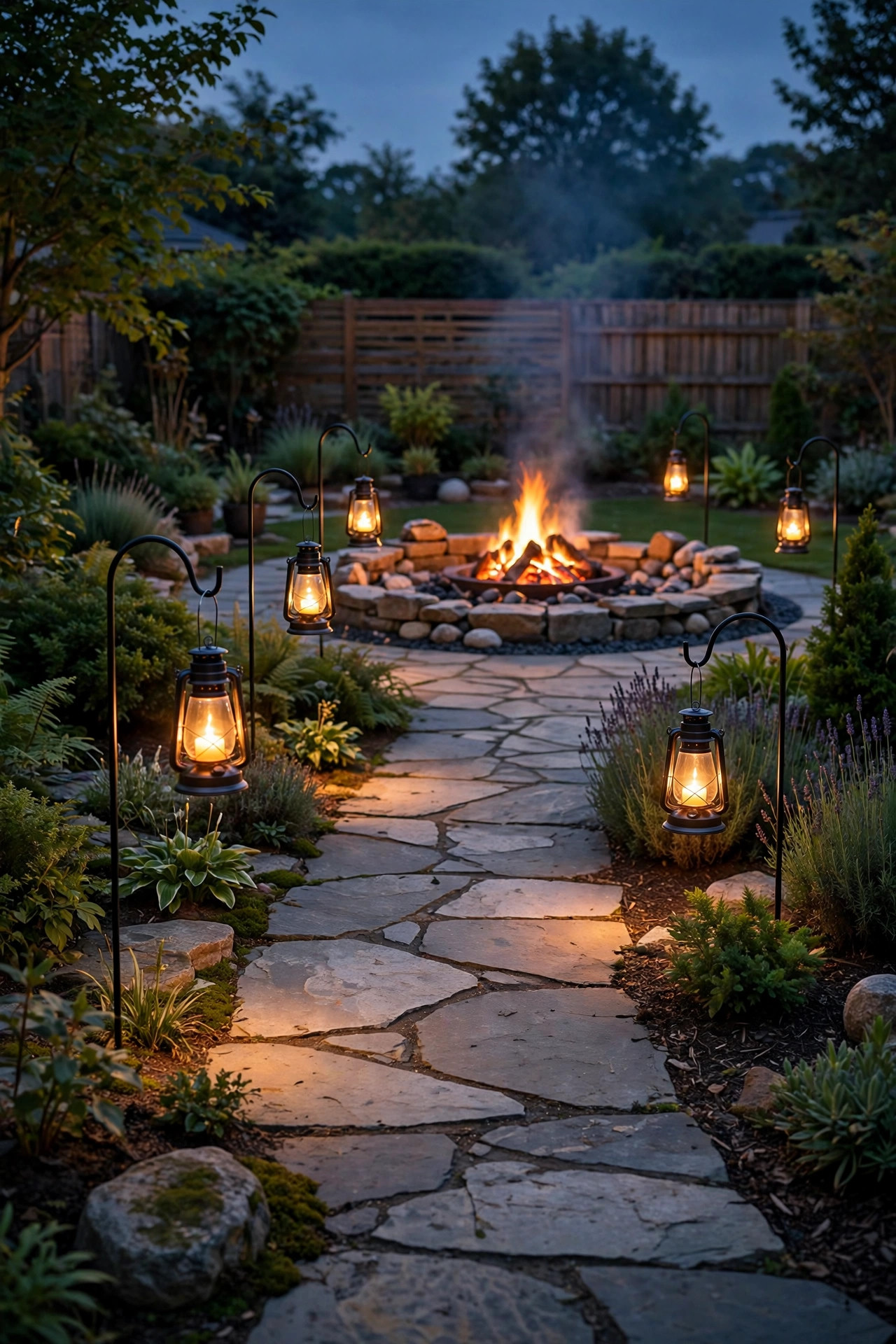
4. Light the Walk from House to Fire with Shepherd's Hook Lanterns
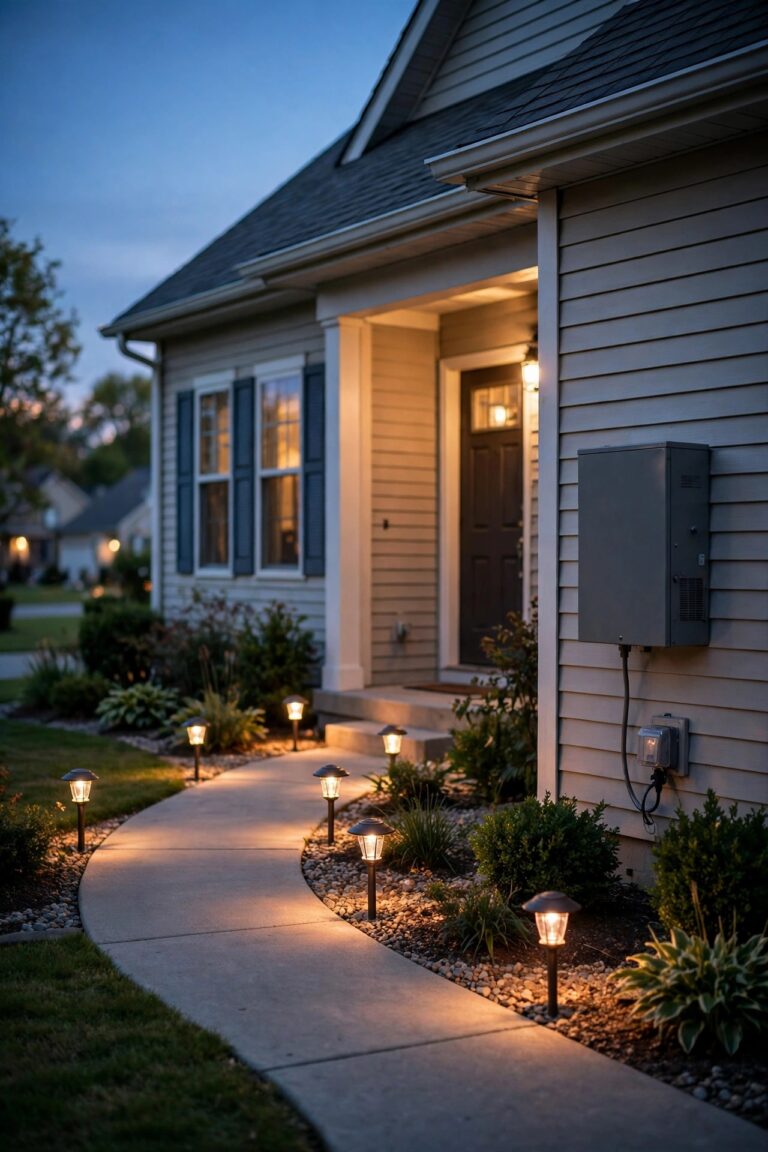
Every bonfire night involves a dozen trips back to the kitchen, so the route between the back door and the fire pit deserves real attention. I hang small lanterns from shepherd's hooks, spaced eight to ten feet apart and alternating sides of the path, which reads as intentional rather than runway-like. Hooks between 36 and 48 inches tall keep the light pools overlapping softly at ground level. Solar lanterns work beautifully here in September, but by late October the short days starve them, so I switch to battery lanterns with rechargeable cells for the deep-fall weeks. Push the hooks a full foot into firm soil — frost-heaved, leaning hooks are the number one giveaway of a rushed install. For a deeper dive on autumn path styling, my roundup of fall pathway lighting ideas covers stone, gravel, and lawn routes. Keep the lanterns a boot-width off the walking line so they light the path without becoming tripping hazards themselves.
Suggested budget range: $40 – $110.
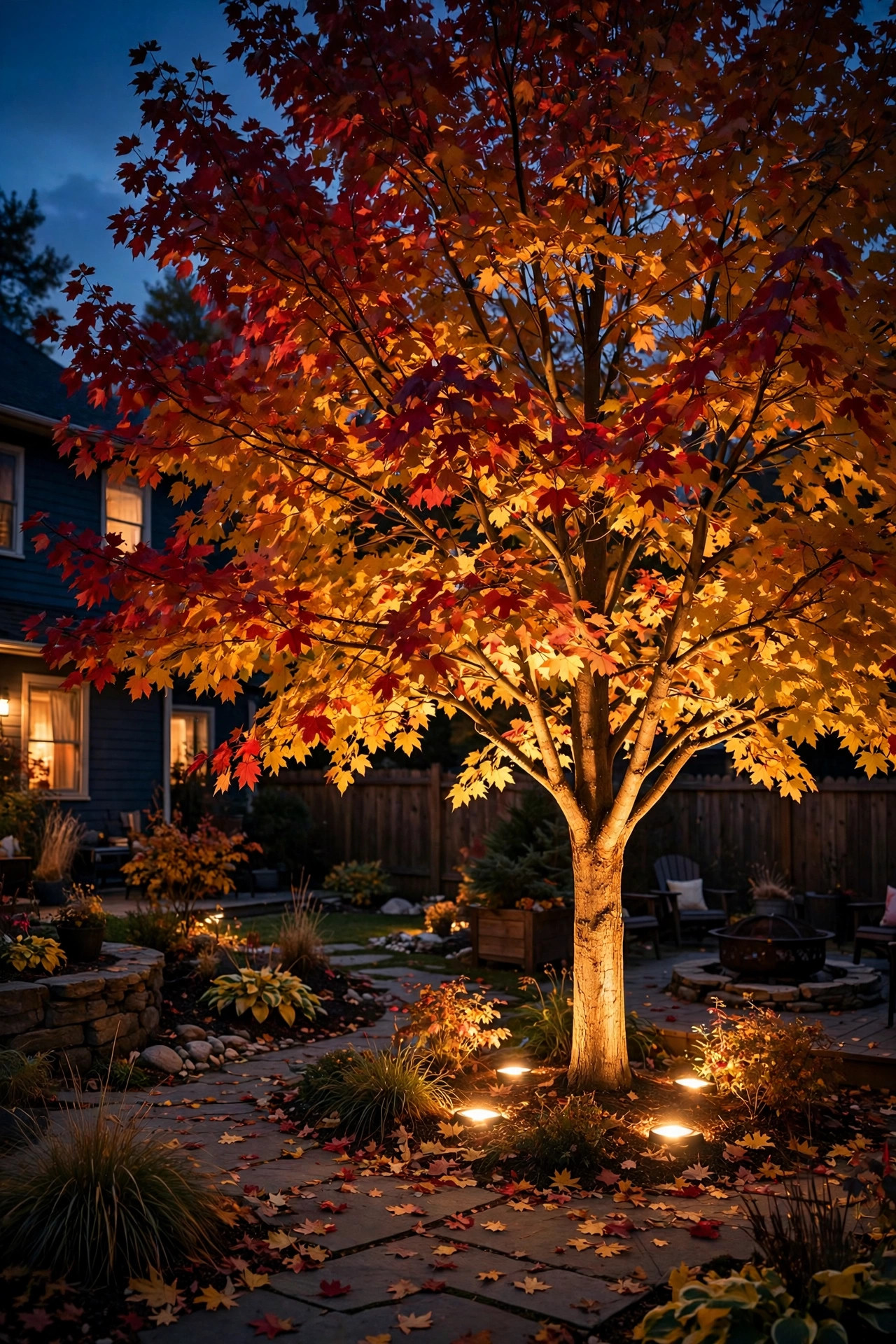
5. Uplight the Fall Foliage While It Lasts
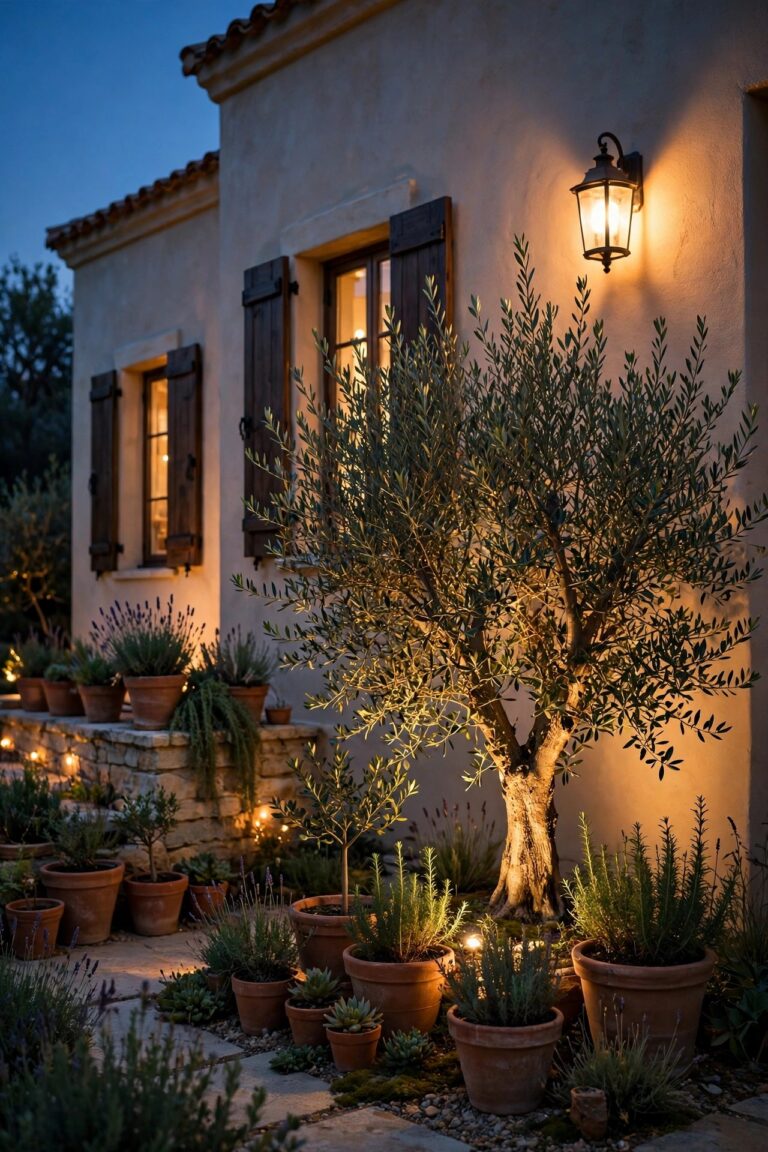
For about three glorious weeks, a maple or oak in fall color is the best light fixture in the yard — you just have to switch it on. I place one warm white uplight at the base of each showpiece tree, angled up into the canopy from about two feet out, and the reds and golds absolutely radiate against the night sky. A narrow 30- to 45-degree beam keeps the light in the branches instead of spilling into the sky, and 2700K reads warmer against orange leaves than daylight-toned fixtures. Low-voltage spotlights in the 300- to 500-lumen range are plenty; anything stronger flattens the color. Stake fixtures firmly and re-aim after the first windy storm, because autumn gales love to nudge them. Once the leaves drop, I do not pack these away — I re-aim the same lights at the bare branch structure, which looks sculptural all winter. This is the hardest-working light in my fall yard, and the one guests ask about most.
Suggested budget range: $30 – $85.
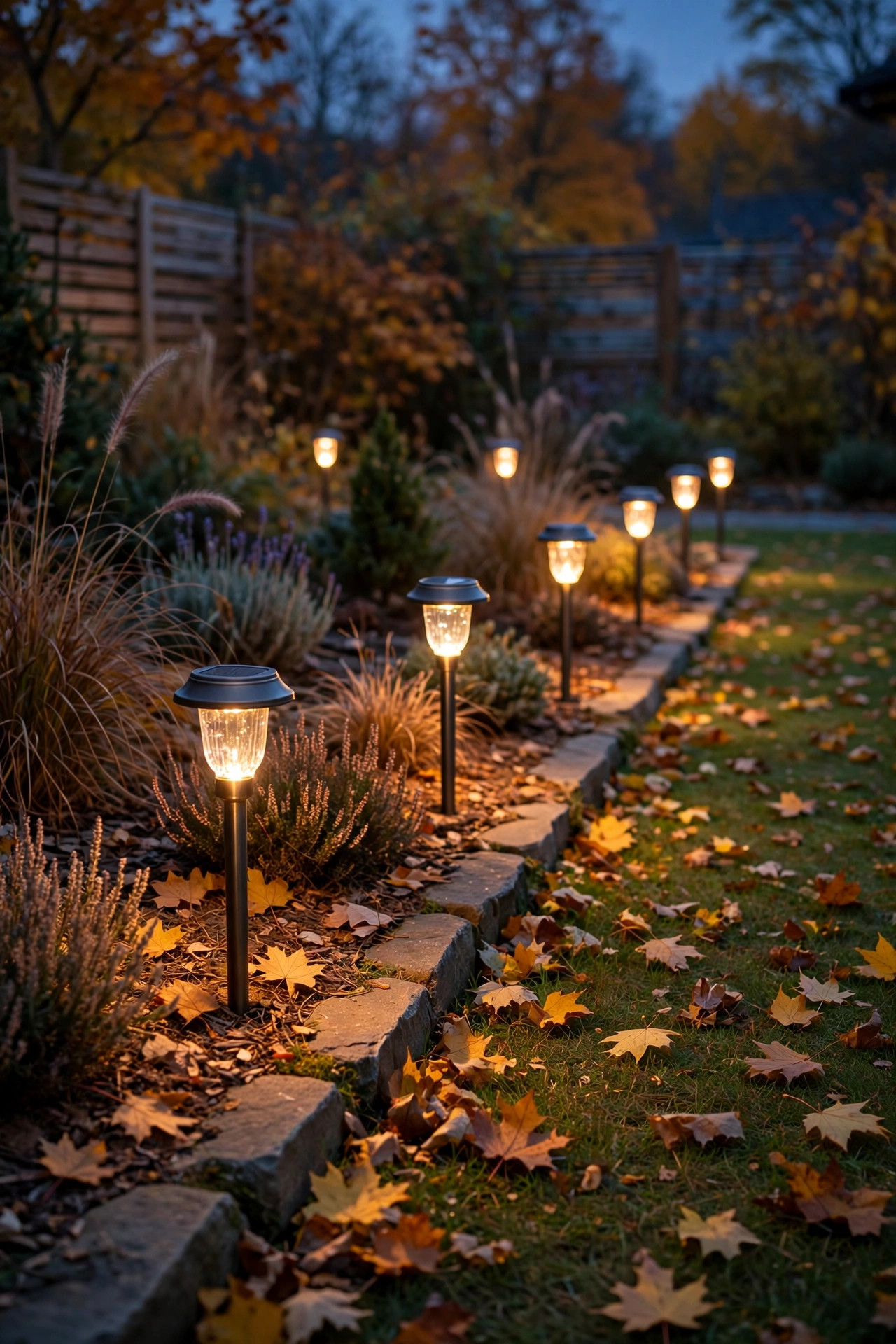
6. Stake Solar Lights Along the Lawn Edge for a Soft Perimeter
Bonfire guests wander — to the cooler, to the woodpile, to look at the stars — so I like a faint perimeter that tells everyone where the yard ends without fencing them in visually. Solar stake lights spaced ten to twelve feet apart along the planting beds do this beautifully. Choose warm white over cool white every time, and look for stakes rated at 2700K to 3000K with at least eight hours of runtime. I set them just inside the bed line so mower wheels and wandering boots miss them. Be honest with yourself about November sun, though: in the darkest weeks, solar stakes may only glow for three or four hours, which still covers most of a bonfire evening if they charged on a bright afternoon. I pull ours for a sunny windowsill charge before big gatherings. Modest, cheap, and surprisingly effective, this is the layer that makes a big dark yard feel held rather than endless.
Suggested budget range: $25 – $60.
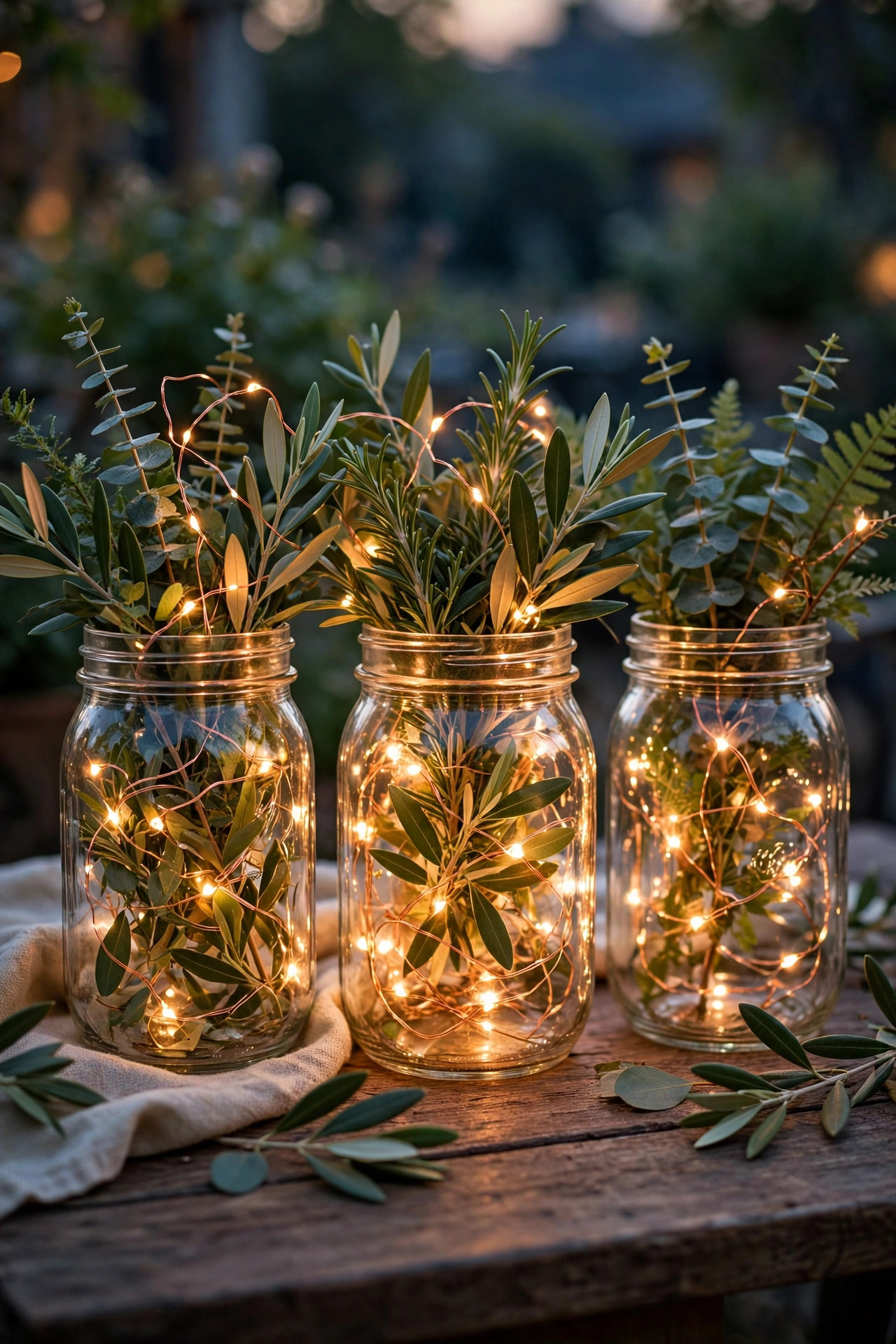
7. Fill Mason Jars with Copper-Wire Fairy Lights for the Snack Table
The s'mores station and cider table need light you can see your toppings by, but a harsh lantern blinds everyone whose eyes have adjusted to firelight. My answer is mason jars — or any clear glass jar — each holding a coil of copper-wire fairy lights. The wire disappears, the jar glows like bottled fireflies, and the light is soft enough to keep the mood while bright enough to find the graham crackers. One 10-foot battery strand per quart jar is about right, and I tuck the battery pack under the table or behind a pumpkin so the illusion stays clean. Group jars in odd numbers, three or five, at different heights on crates or a cake stand for a styled look. Battery fairy lights are safe around food, kids, and paper napkins in a way candles never are. I make a fresh set every October; the jars live in the garage the rest of the year and the strands cost almost nothing to replace.
Suggested budget range: $15 – $40.
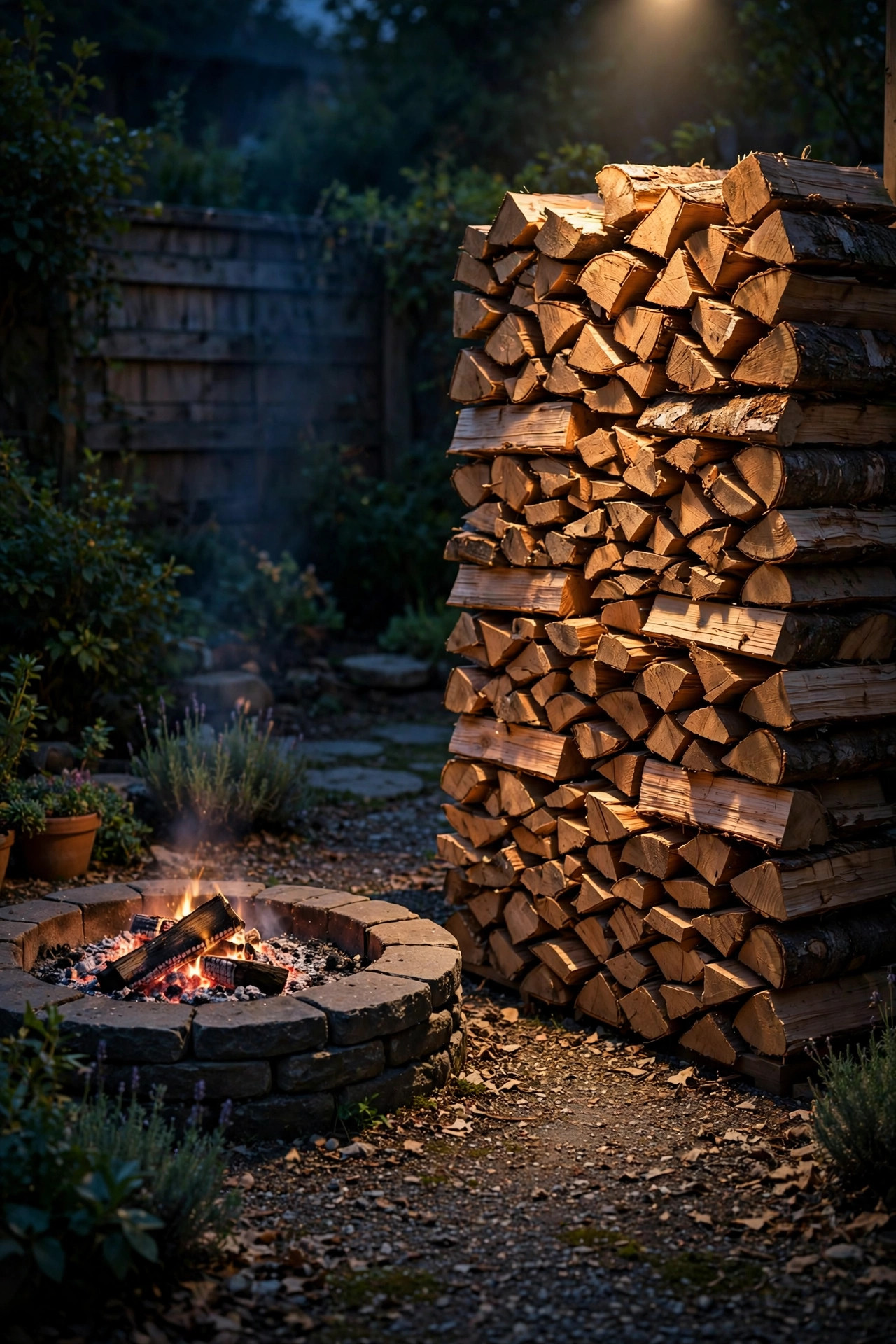
8. Spotlight the Firewood Stack So Nobody Fumbles for Logs
Here is an unglamorous idea that saves every bonfire night: light the woodpile. Somebody always has to fetch logs in the dark, and a phone flashlight in one hand and an armload of splits in the other is how ankles get rolled. I mount a single motion-sensor light or a small solar spotlight aimed at the stack from about six feet away, bright enough to pick dry logs and spot the kindling bin. Motion activation is perfect here — the light is only on for the sixty seconds someone actually needs it, so it never competes with the fire. Aim it downward at the wood, not outward at the yard, so it does not blind the person approaching. If your stack sits under a lean-to, a battery puck light under the roof works just as well. It takes ten minutes to install and your future self, arms full of oak at 9 p.m., will be so grateful.
Suggested budget range: $15 – $45.
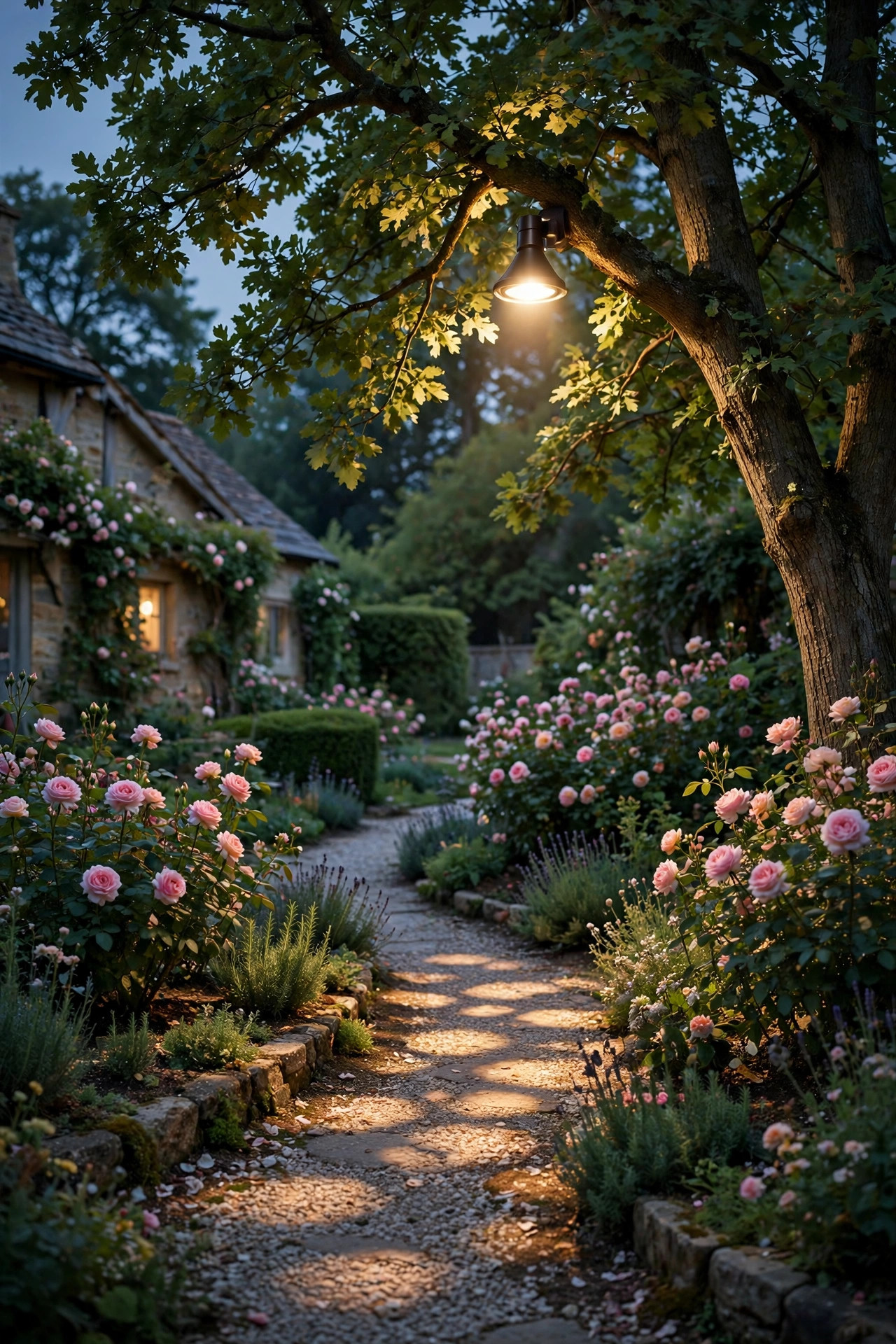
9. Moonlight from a High Branch for a Gentle Base Glow
Moonlighting is the technique designers use when they want a yard to feel lit by the moon itself, and bonfire season is its moment. I mount one shielded downlight 15 to 20 feet up in our big oak, aimed straight down through the branches so the light filters into dappled pools on the lawn. The effect is a soft base glow over the whole gathering area — bright enough to see your chair and your drink, dim enough that the fire still stars. Use a fixture with a glare shield and a 2700K lamp in the 200- to 400-lumen range; cooler 4000K looks more moonlike but fights the firelight, so I stay warm. This is the one install I hire out, because twenty feet up a ladder with a drill is where my DIY confidence ends, and an arborist or lighting pro will mount it safely in an hour. Once it is up, it needs nothing but an occasional lens wipe.
Suggested budget range: $120 – $300.
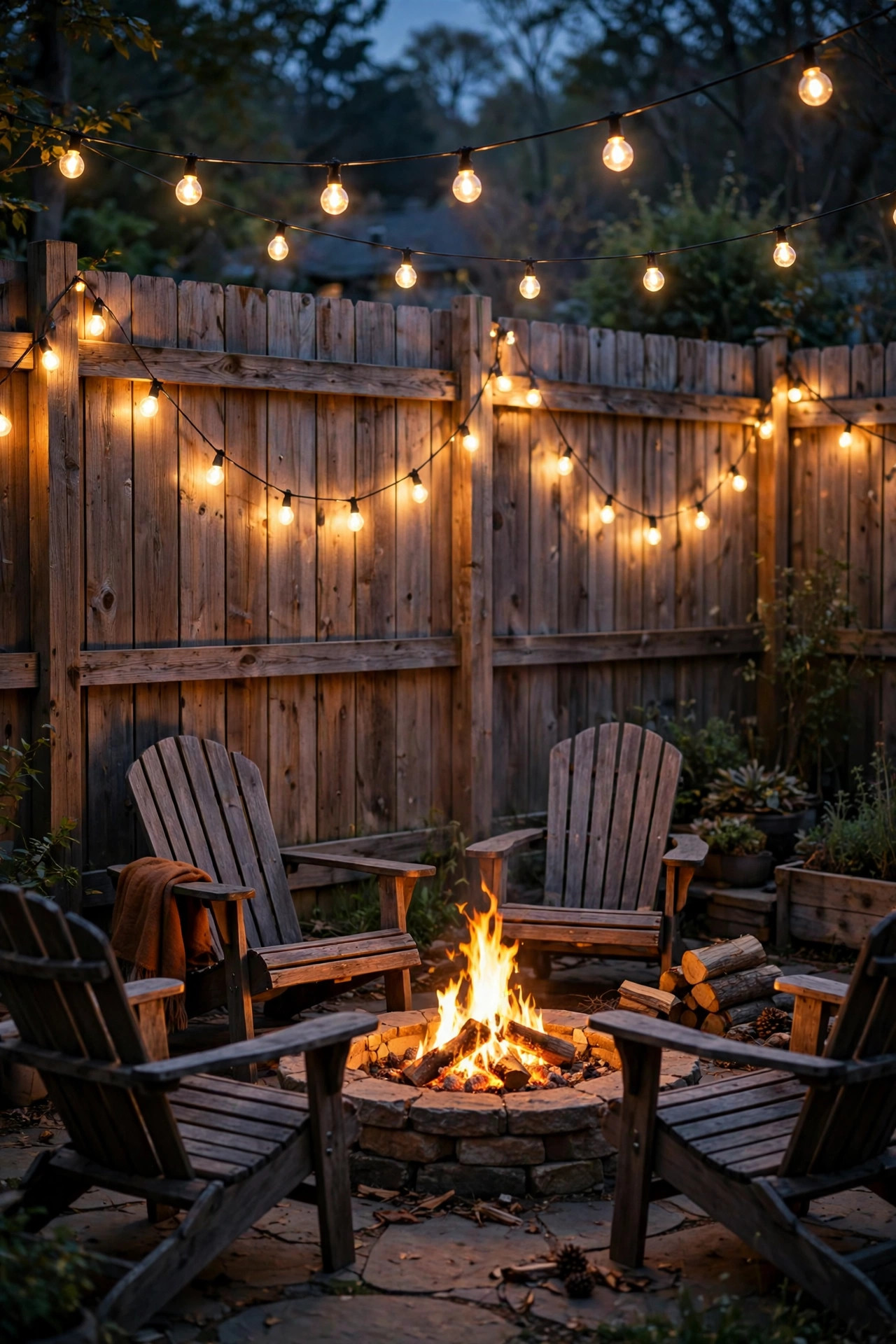
10. Swag String Lights Along the Fence for a Warm Backdrop
When guests face the fire, whatever sits behind the far chairs becomes the backdrop of the whole evening, and at our house that is the fence. I swag a single strand of globe string lights along the back fence, dipping every six to eight feet, and it turns a plain board fence into a bokeh wall in every photo. Globe bulbs read softer than exposed filament at this distance, and I keep this run on its own dimmer so it can sit at thirty percent — a backdrop should whisper, not shout. Cup hooks screwed into the fence every few feet make takedown a five-minute job in January. Keep the strand clear of any gate swing and at least ten feet from the fire pit itself. If your fence line is long, one strand centered behind the seating beats two strands stretching into the dark corners. This layer photographs so well that our fall party invitations basically design themselves now.
Suggested budget range: $35 – $95.
11. Choose Amber Bulbs Near Seating to Keep Bugs Away
October bugs are fewer than July bugs, but the ones that remain make a beeline for bright white light — and for your cider. I swap the fixtures nearest the seating circle to amber or warm bug-light bulbs in the fall. Amber wavelengths around 2000K to 2200K are far less attractive to flying insects, and honestly the deeper golden tone flatters firelight better anyway. I use them in the porch sconce by the back door, the lantern over the snack table, and any fixture within about fifteen feet of the chairs. Keep the brighter, whiter task light — if you need one — far from seating, over the grill or the woodpile, so bugs gather there instead of around your guests. This is not a force field; a determined moth will still visit. But combined with the smoke from the fire, which bugs also dislike, our fall evenings are noticeably calmer than our summer ones ever were.
Suggested budget range: $12 – $35.

12. Add Step and Deck Edge Lights Before the First Frosty Night
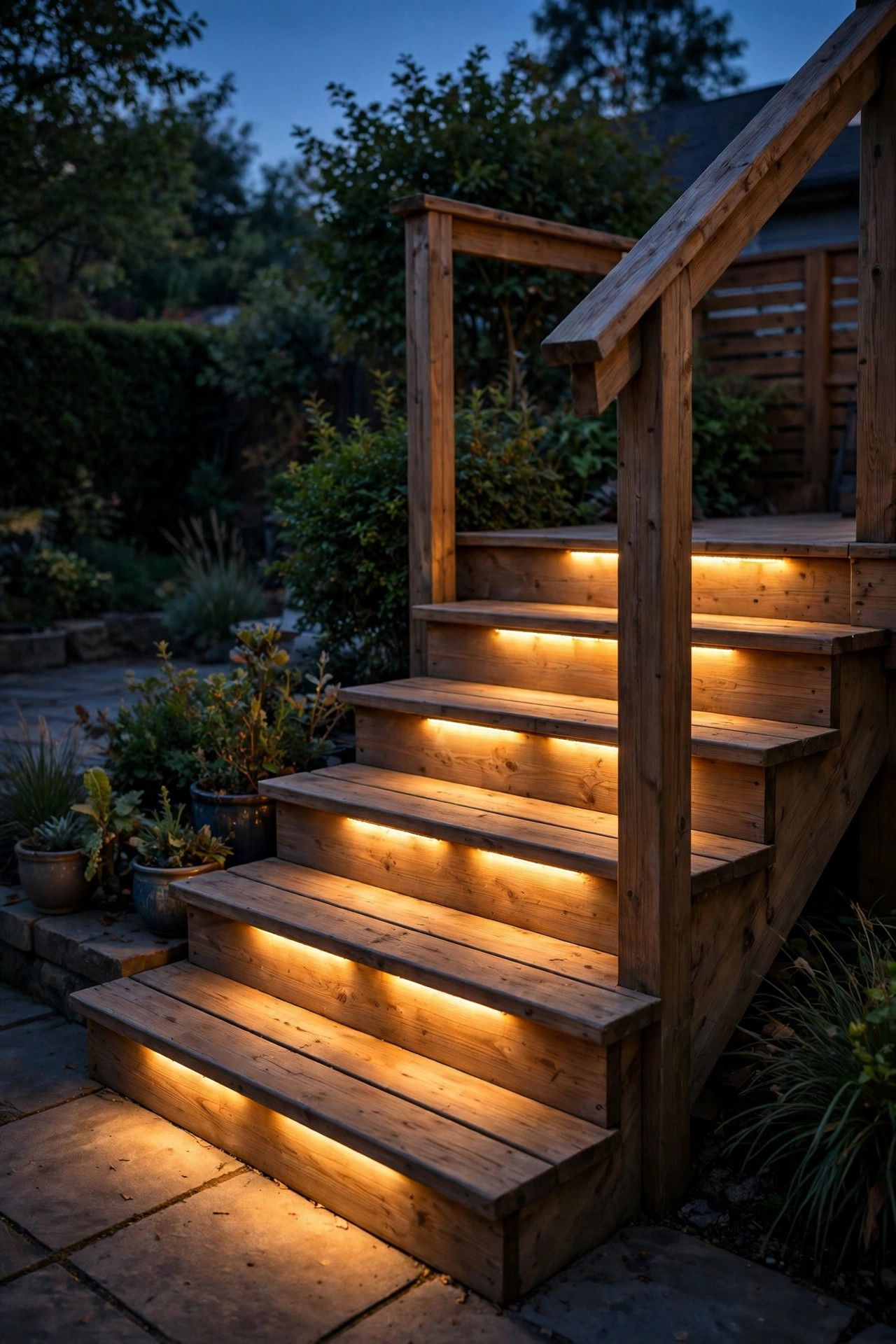
The walk from fire to back door usually crosses a deck or a couple of steps, and in the dark, after a hot cider or two, that is where bonfire nights go wrong. I installed recessed step lights on our two deck steps and small post-cap lights at the deck corners, all on the same low-voltage run. The rule I follow: every change in level gets its own pool of light, aimed down at the tread, never out at eye level. Fixtures in the 100- to 200-lumen range are plenty — you are marking edges, not landing planes. If your deck has a railing, LED strip under the handrail casts a beautiful shadow-free wash on the steps below and installs with clips in an afternoon. Do this project on a mild fall weekend, because frozen ground and stiff fingers make December installs miserable. It is the least decorative idea on this list and the one I would never give up.
Suggested budget range: $50 – $160.
13. Build a Lantern-Lit Cider and S'mores Station
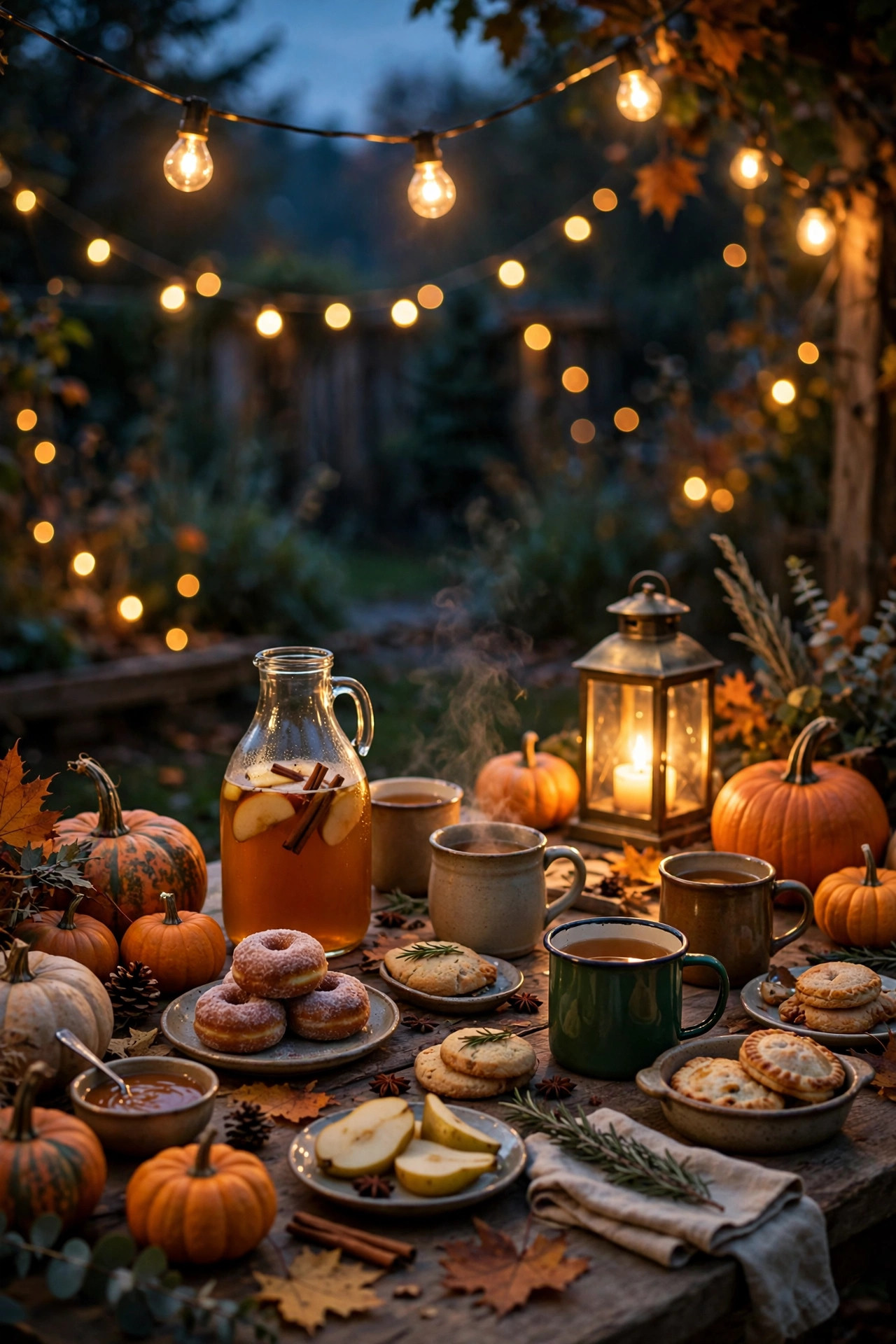
A dedicated drink-and-dessert station keeps traffic flowing and gives you one more pretty pool of light in the yard. I set a folding table or old dresser a few steps from the fire — close enough to feel included, far enough that sparks and smoke stay out of the cocoa. Over it, I hang two battery lanterns from a small tabletop hook stand, or string a short fairy light run along the table edge. Warm light at about counter height lets everyone read the cider labels and find the cinnamon sticks. Flameless candles in hurricane glass add flicker without a single real flame near paper cups and napkins. I add one lantern on the ground under the table too, which sounds odd until you have hunted for a dropped marshmallow fork in the grass. Style it with a plaid throw and a few pumpkins and it becomes a photo spot in its own right.
Suggested budget range: $30 – $80.
14. Wrap Bare Branches with Copper-Wire Lights as the Leaves Fall
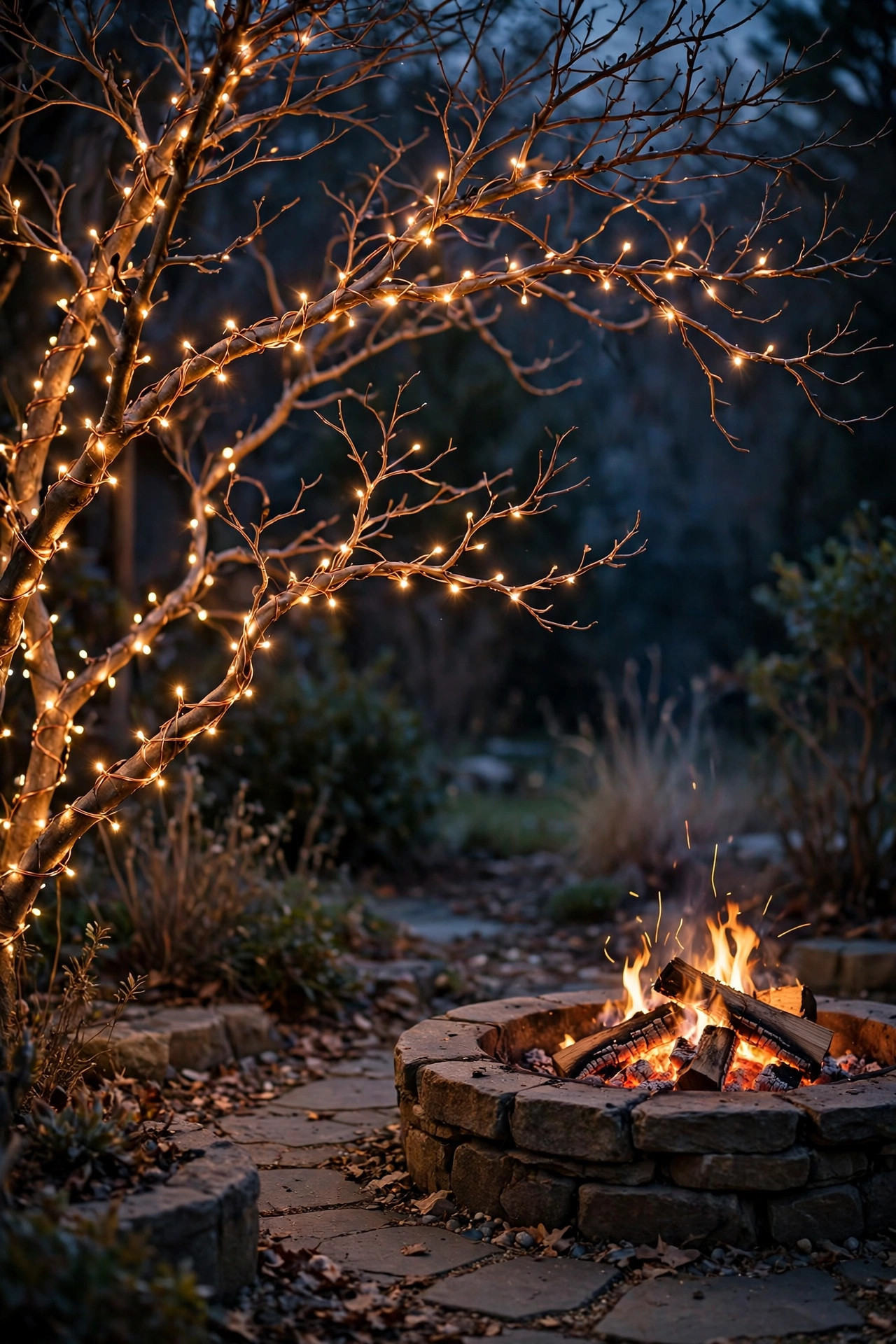
Late fall has its own beauty, and once the leaves drop I lean into it by wrapping the sculptural branches of our small ornamental trees with copper-wire fairy lights. The wire nearly vanishes, so each branch becomes a line of floating sparkles — it looks like the tree is outlined in starlight. One 33-foot strand wraps a small tree generously; work from the trunk outward and keep the spacing looser toward the branch tips for a natural taper. Solar versions with the panel staked in a sunny patch work fine through November, but battery packs give you a timer, which I prefer for a display I want on from 6 to 11 nightly. Take these down before spring buds swell, because wire left through a growing season can bite into bark. Through the bare-branch months, though, a wrapped tree beside the fire pit is the single most complimented thing in my yard.
Suggested budget range: $15 – $45.
15. Put Everything on Timers So the Yard Is Lit Before Guests Arrive
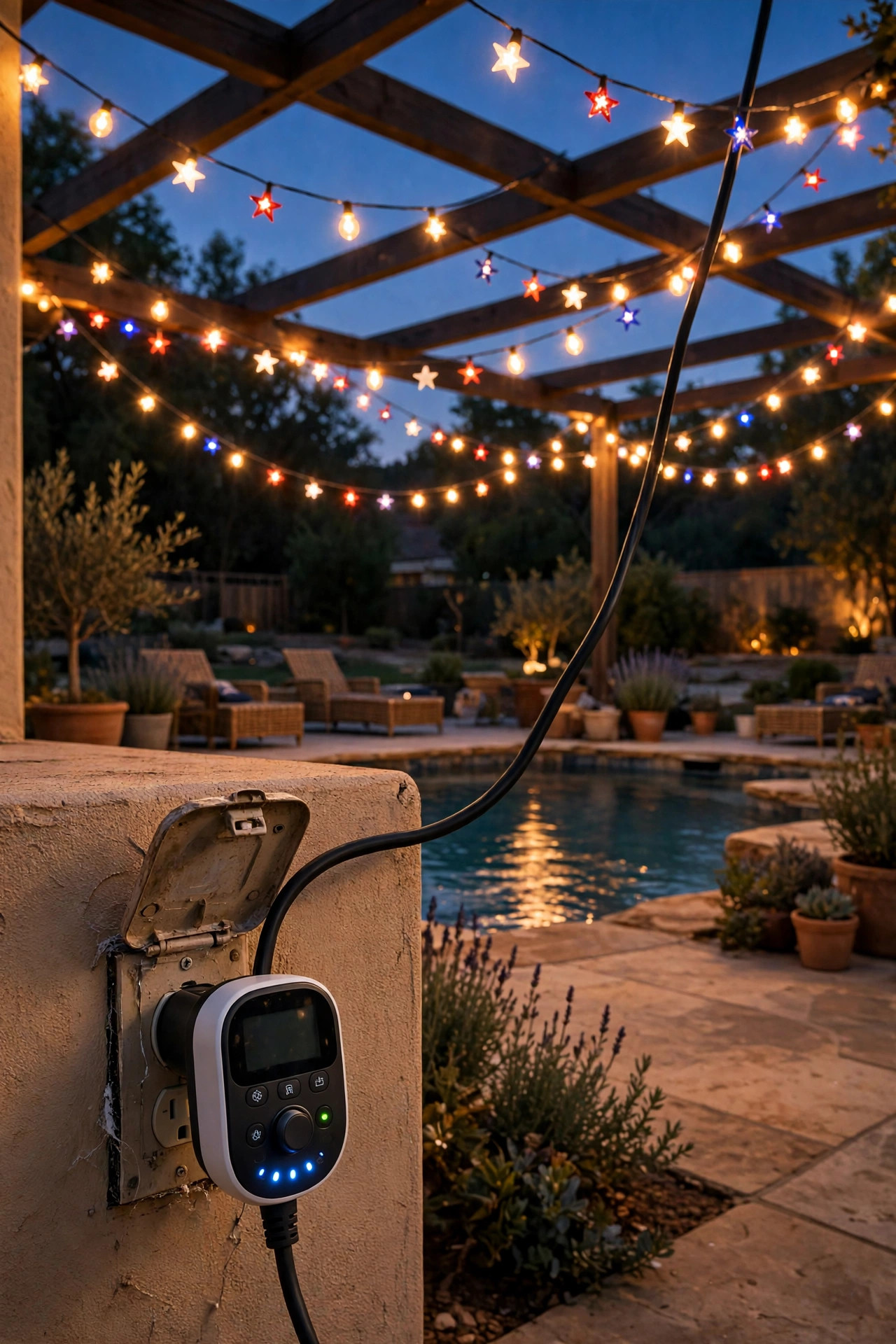
The best bonfire nights feel effortless, and timers are how I fake it. Every layer that can be automated is: the string lights and fence swag on a smart plug set for sunset, the lantern candles on their built-in five-hour timers, the path lanterns on a photocell. When guests pull in, the yard is already glowing and I am holding a drink instead of crawling behind the deck box with a flashlight. An astronomical timer or smart plug that tracks your local sunset is worth the small premium in fall, because dusk moves earlier by more than an hour between September and November and a fixed 7 p.m. schedule stops working by Halloween. Set everything to switch off around 11 p.m. or midnight; the fire can carry the last hour on its own, and your neighbors will appreciate the darkness. My total automation spend was less than one nice lantern.
Suggested budget range: $20 – $60.
16. Mark the Driveway-to-Yard Route for Arriving Guests
Guests arriving after dark often enter through a side gate they have never used, in a yard they cannot see. I light that whole journey with three or four low bollards or sturdy stake lights from the driveway, through the gate, and to the fire pit circle. Keep them on the same side of the path the whole way — switching sides reads as random — and space them 10 to 14 feet apart, closer at the gate latch and any turn. This is one place I use slightly brighter fixtures, around 200 lumens, because newcomers do not know the terrain yet. A lantern hung right at the gate makes the entry obvious from the street and looks welcoming in the best way. Solar works here if the route gets afternoon sun; otherwise a low-voltage run along the fence is a one-weekend project. Your guests will simply feel looked after, which is the whole point.
Suggested budget range: $45 – $120.

17. Use Flame-Effect Bulbs in the Porch Sconces
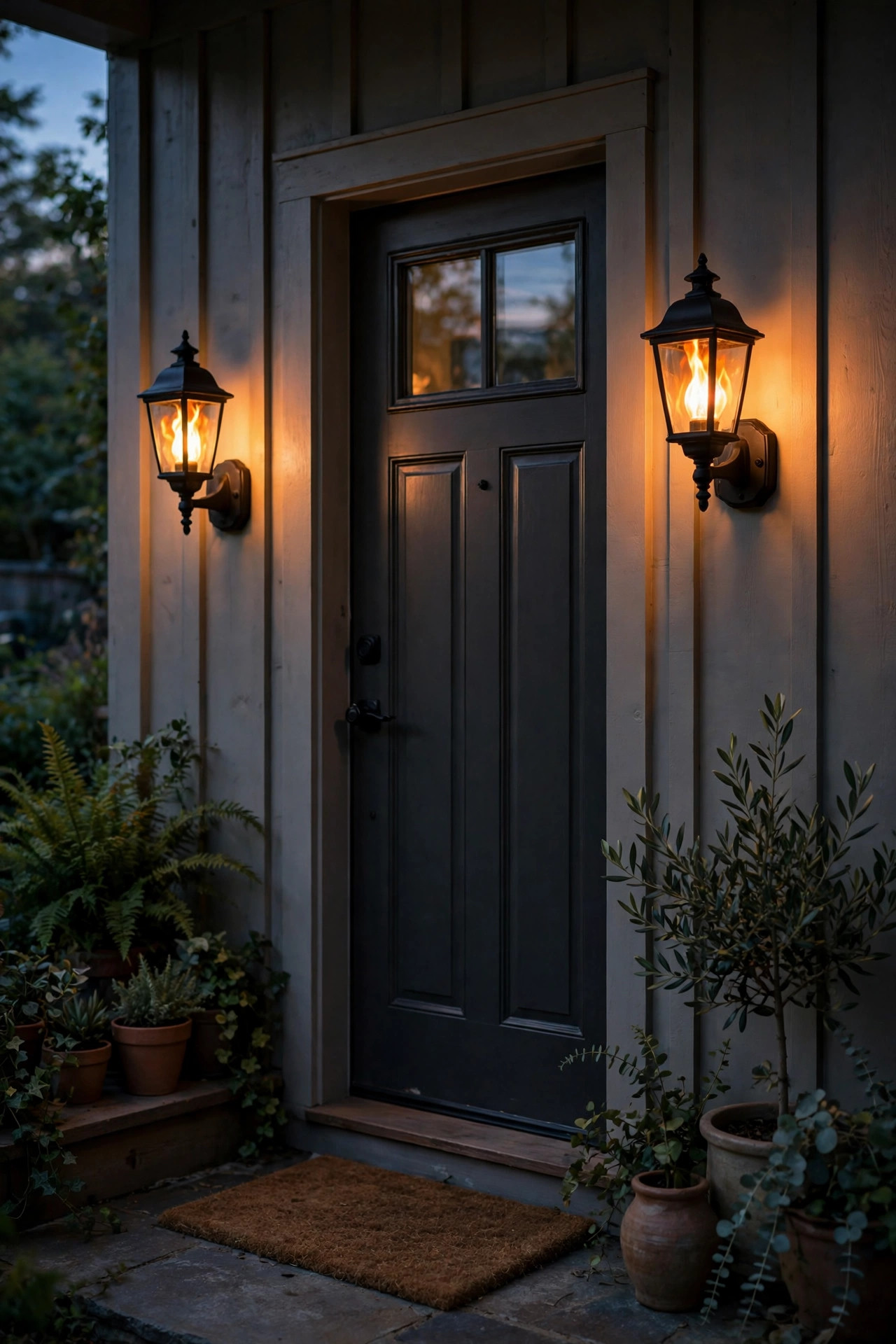
Our back porch sconces burn all evening as the anchor between house and yard, and in fall I swap in flame-effect LED bulbs. These flicker with a rising orange flame animation that echoes the bonfire, and from twenty feet away the resemblance is honestly convincing. They are pure ambience — the light output is low, roughly equivalent to a candle or two — so pair them with the step lights from idea 12 rather than relying on them for safety. Make sure your sconce shades point the flame upward and that the bulb fits the socket orientation, since most flame bulbs need to burn base-down to look right (some models have a gravity sensor and work either way). Keep the regular warm bulbs in a labeled bag in the garage and the swap takes two minutes each September. It is a tiny change that makes the whole house feel like it dressed up for the season.
Suggested budget range: $12 – $30.
18. Float a Few Lights at the Fire Pit's Edge with Reflective Accents
This is my favorite styling trick for making a modest fire pit look like a magazine spread: give the light something to bounce off. A ring of pale gravel, light-colored stone pavers, or even a galvanized metal tray under the lanterns doubles their glow through reflection. I also tuck two small uplights behind the seating wall or a low hedge, aimed back at the chairs, so the circle gets a halo edge instead of a hard black boundary. Metal accents help too — a copper drink tub, brass lantern tops, the steel fire ring itself all catch and throw the firelight around. Keep reflective surfaces matte rather than mirror-shiny, because the goal is a soft doubling of light, not glare. If your seating sits on a light-toned rug or pale deck boards, you are already halfway there. It costs almost nothing and makes every other light on this list work a little harder.
Suggested budget range: $20 – $70.
19. Pull It All Together: My Go-To Fall Backyard Lighting Ideas in One Bonfire Night
Here is how the whole system runs on a real Saturday. At sunset the timers wake up: the café canopy and fence swag fade on at half brightness, the path lanterns start their overlapping pools, and the foliage uplight turns our maple into a torch of red and gold. Around the pit, the lantern ring flickers on behind the chairs while the fire catches. I bump the canopy down to forty percent once everyone is seated, because the fire owns the room now and the other layers just support it. The cider station glows at the edge of the circle, the woodpile light waits dark until someone walks up, and the step lights guard the deck like they always do. Of all my fall backyard lighting ideas, this choreography is the one that matters — no single fixture makes the night, the sequence does. Start with three layers this weekend and add one idea each fall; by next October your yard will run itself.
Suggested budget range: $75 – $250.
Frequently Asked Questions
What color temperature is best for fall backyard lighting?
Warm white, every time. I keep everything between 2200K and 2700K in the fall, because those tones flatter firelight, fall foliage, and faces. Bulbs at 3000K are acceptable for step and safety lights, but anything cooler reads blue and clinical next to a bonfire. The simplest discipline is to buy one temperature and stick to it across every fixture, string, and candle in the yard.
Are solar lights strong enough for fall and winter evenings?
Mostly, with honest expectations. In September a good solar stake charges fully and runs eight hours, but by November short days and low sun can cut that to three or four hours. That still covers a typical bonfire evening. For anything critical — steps, gates, the main path — I use low-voltage wired or battery lights and let solar handle the decorative layers.
How do I keep string lights safe around a bonfire?
Distance and LED bulbs are the whole answer. Keep strands at least ten feet horizontally from the fire pit, never run cords over or beside the fire, and use LED bulbs, which stay cool, instead of incandescent glass that gets hot and shatters. Plug everything into a GFCI-protected outdoor outlet, inspect cords each season for nicks, and take strands down in high wind.
How much does it cost to light a backyard for bonfire season?
A starter three-layer setup — one string light canopy, a lantern ring, and path lights — runs about $110 to $320 all in. Most of the ideas in this post land between $15 and $160 each, and you do not need all nineteen. Add one or two layers each fall and the yard builds up beautifully over a few seasons without a painful single-year spend.
Conclusion
Bonfire season asks very little of your lighting: warmth, layers, and nothing that outshines the fire. Pick three of these fall backyard lighting ideas to start — the canopy, the lantern ring, and a lit path home — and you will feel the difference the very first night. Then wander the rest of the site for more seasonal inspiration, and I will see you out there, wrapped in a blanket, cider in hand.