There is a stretch of weeks around midsummer when the sun does not fully set until after nine, the garden is at its absolute peak, and dinner outside can stretch to ten without anyone reaching for a sweater. It is my favorite season in the yard, and honestly? It almost lights itself — almost. These midsummer garden lighting ideas are how I stretch those long twilights even further, so the garden keeps glowing long after the fireflies clock in.
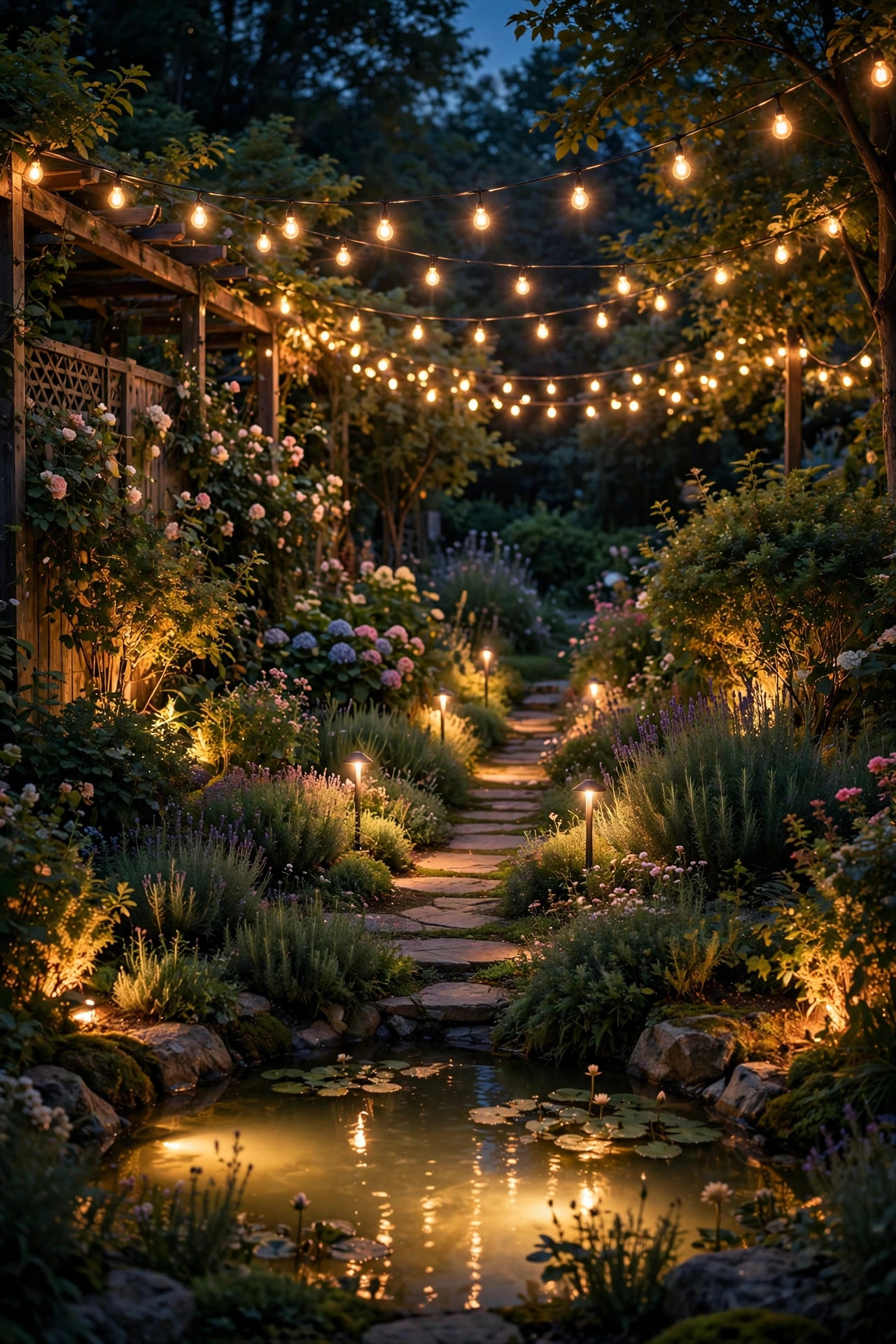
My approach never changes: layer the light. A soft overhead layer for atmosphere, warm pools at sitting height for conversation, and gentle ground-level guidance so nobody trips on a hose at dusk. Midsummer adds its own gifts — solar panels charge for fourteen hours or more, and dusk itself does half your design work. Work through the ideas below and pick the layers that fit your garden. Start with three or four favorites this weekend, and you will feel the difference on the very first night.
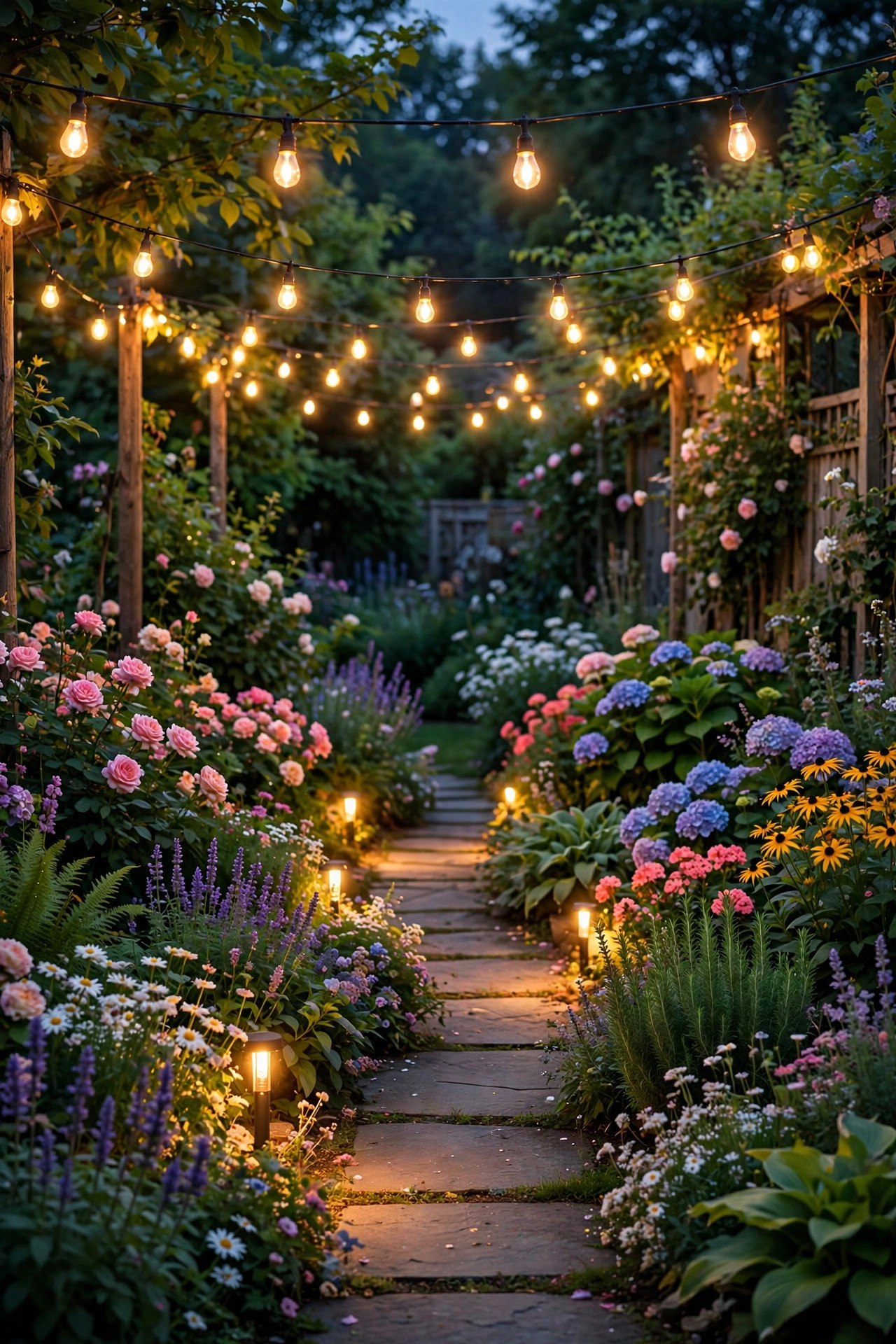
1. Start With a Layered Plan for Your Midsummer Garden Lighting Ideas
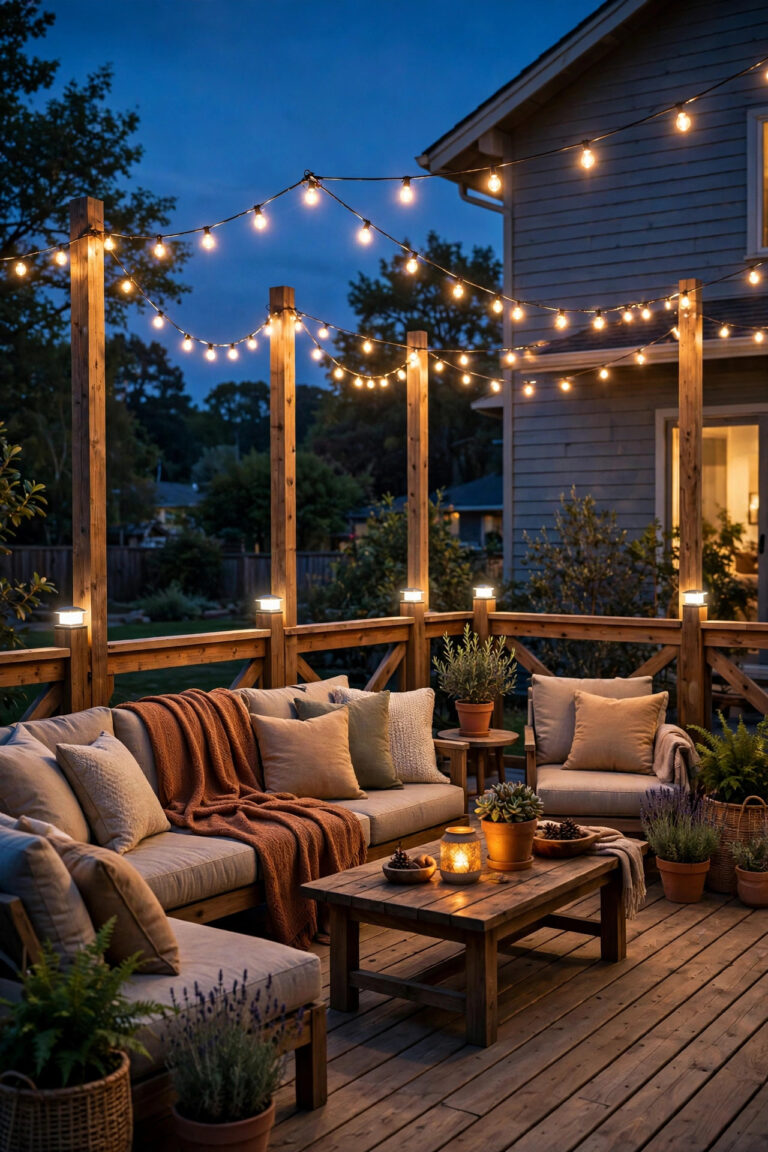
Before you buy a single fixture, walk your garden at about nine in the evening, when midsummer twilight is doing its slow fade. Divide everything you see into three layers. Overhead light is your canopy: string lights, a fairy-lit tree, anything that gives the garden a soft ceiling. Eye-level light is the conversation layer — lanterns, sconces, candlelight on the table. Ground light is the safety and structure layer: path lights, uplights, and markers that trace beds and edges.
In my experience, midsummer rewards restraint at ground level, because twilight lingers so long that you need less raw brightness than in spring or fall. Sketch your garden roughly to scale, mark seating, paths, and your three best focal points — a specimen shrub, a birdbath, the rose arch — and assign each layer before you spend a dollar. I put about half my fixtures at ground level, a third at eye level, and the rest overhead, and I always leave one corner deliberately dark for stargazing and fireflies. Everything in this list slots into one of those layers, so you can build gradually without the yard ever looking half-finished.
Suggested budget range: $25 – $75.

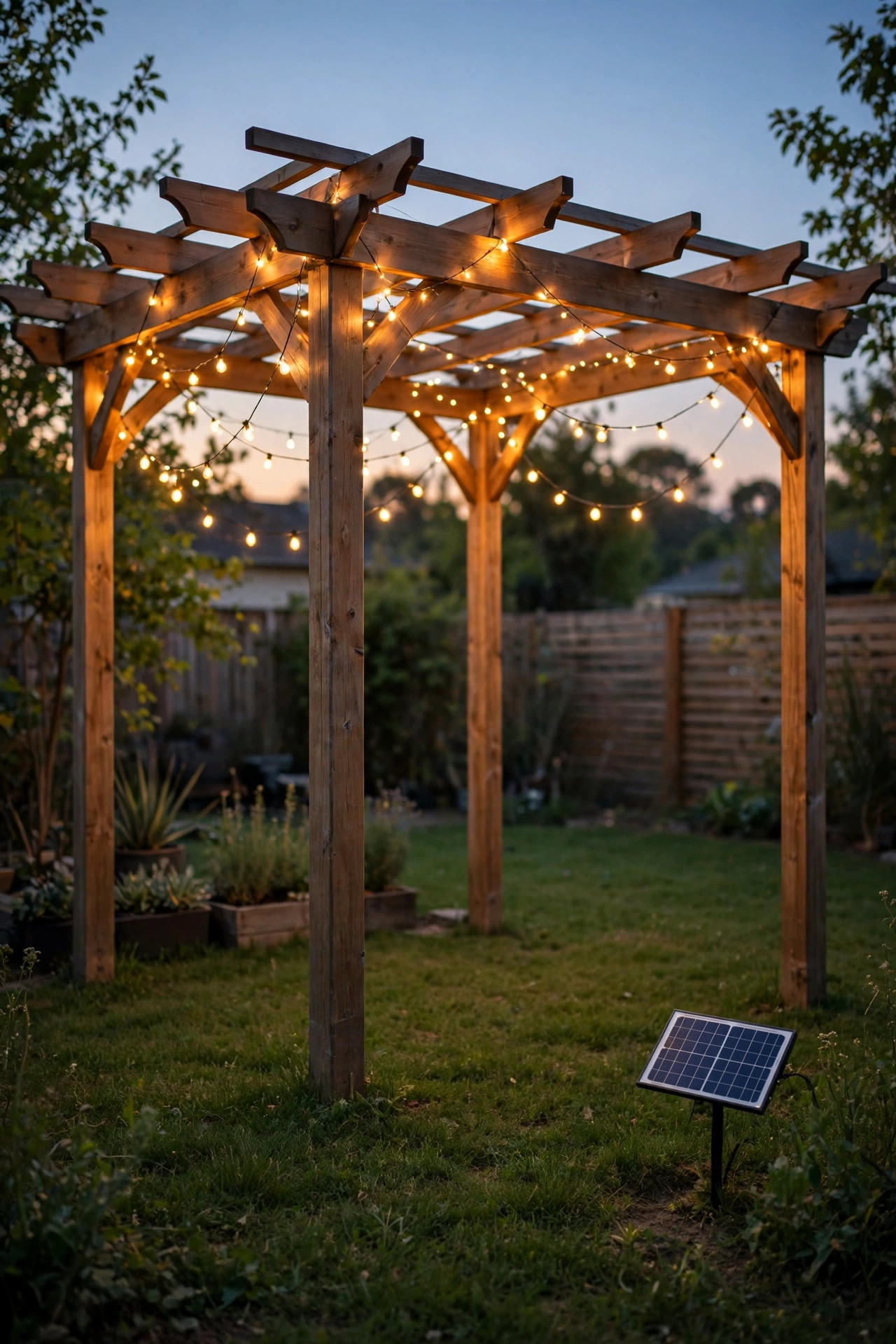
2. Let Peak Sunshine Power Your Solar String Lights
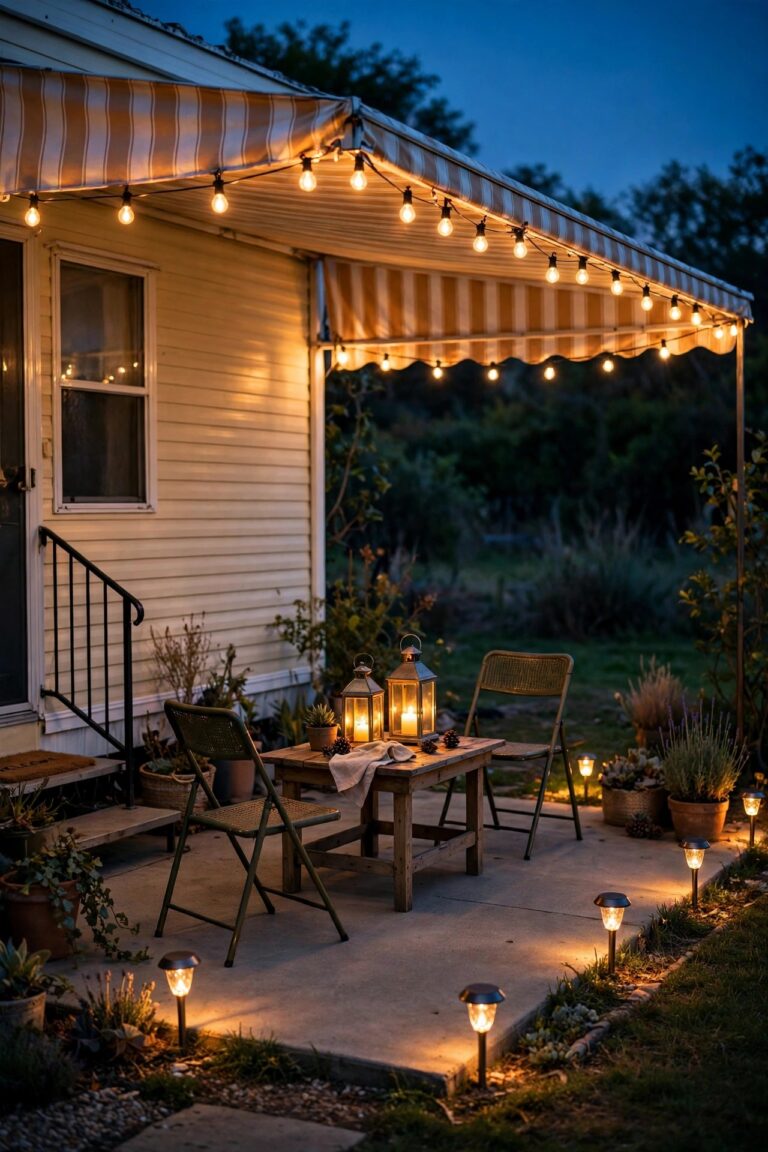
Midsummer is when solar lighting finally keeps its promises. With fourteen-plus hours of daylight, even modest panels charge fully, and a good set of solar string lights will run from dusk at nine until two or three in the morning — long past any reasonable bedtime. This is the season to lean on them instead of running extension cords across the lawn.
Choose strands with a separate, detachable solar panel on a stake, not a tiny panel built into the first bulb. You can angle that panel due south in full sun while the strand itself drapes through a shaded pergola or tree. Space your swags about 8 to 10 feet between anchor points so they hang in gentle scallops, and keep bulbs at 2700K warm white. I run mine along the fence behind the perennial border, and the glow through the flowers is honestly prettier than any single expensive fixture. If you want my full breakdown of panel placement and strand lengths, my roundup of solar string light ideas covers the sets that have survived three summers in my yard.
Suggested budget range: $35 – $90.
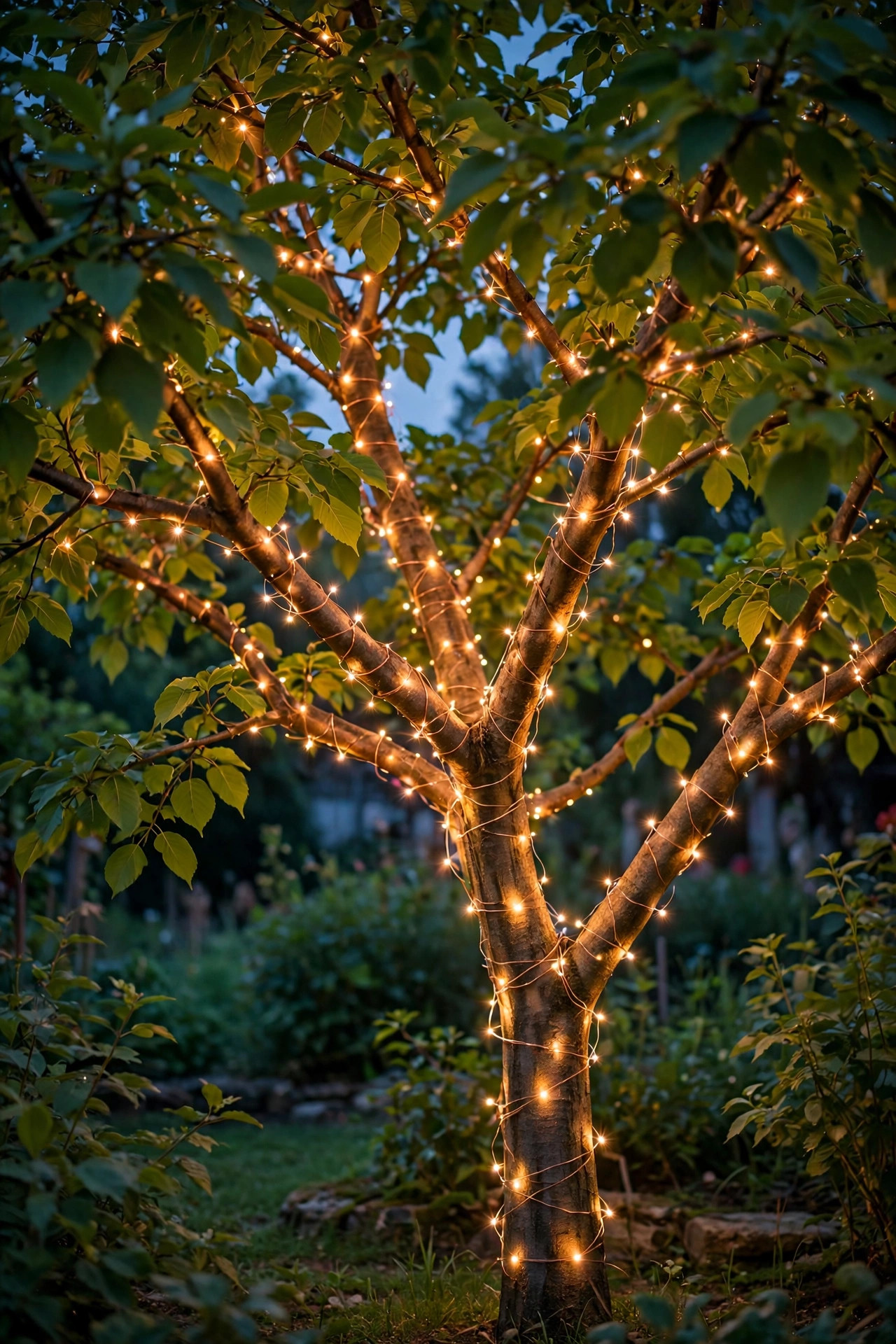
3. Wrap Your Trees in Copper-Wire Fairy Lights
A single tree wrapped in copper-wire fairy lights becomes the garden's chandelier, and midsummer is the kindest time to install them — warm evenings, no rushing against an early sunset. Copper-wire strands are nearly invisible by day and give you that firefly sparkle by night, and because the wire is flexible you can spiral it right out along individual branches instead of just hugging the trunk.
Work from the base upward, wrapping the trunk at roughly 6-inch spacing, then follow two or three main limbs out as far as you can safely reach from a sturdy ladder. Solar-powered fairy strands are perfect here since the tree canopy usually shades the panel — mount it on a stake at the tree's sunny drip line instead. Expect 100 to 200 lights for a small ornamental tree, 300 or more for a mature shade tree. One firm rule from experience: take the wraps off, or at least loosen them, every year. Trees grow, wire girdles, and a strand that was loose in June can bite into bark by the following spring. Check them each midsummer when you are out enjoying them anyway.
Suggested budget range: $20 – $60.
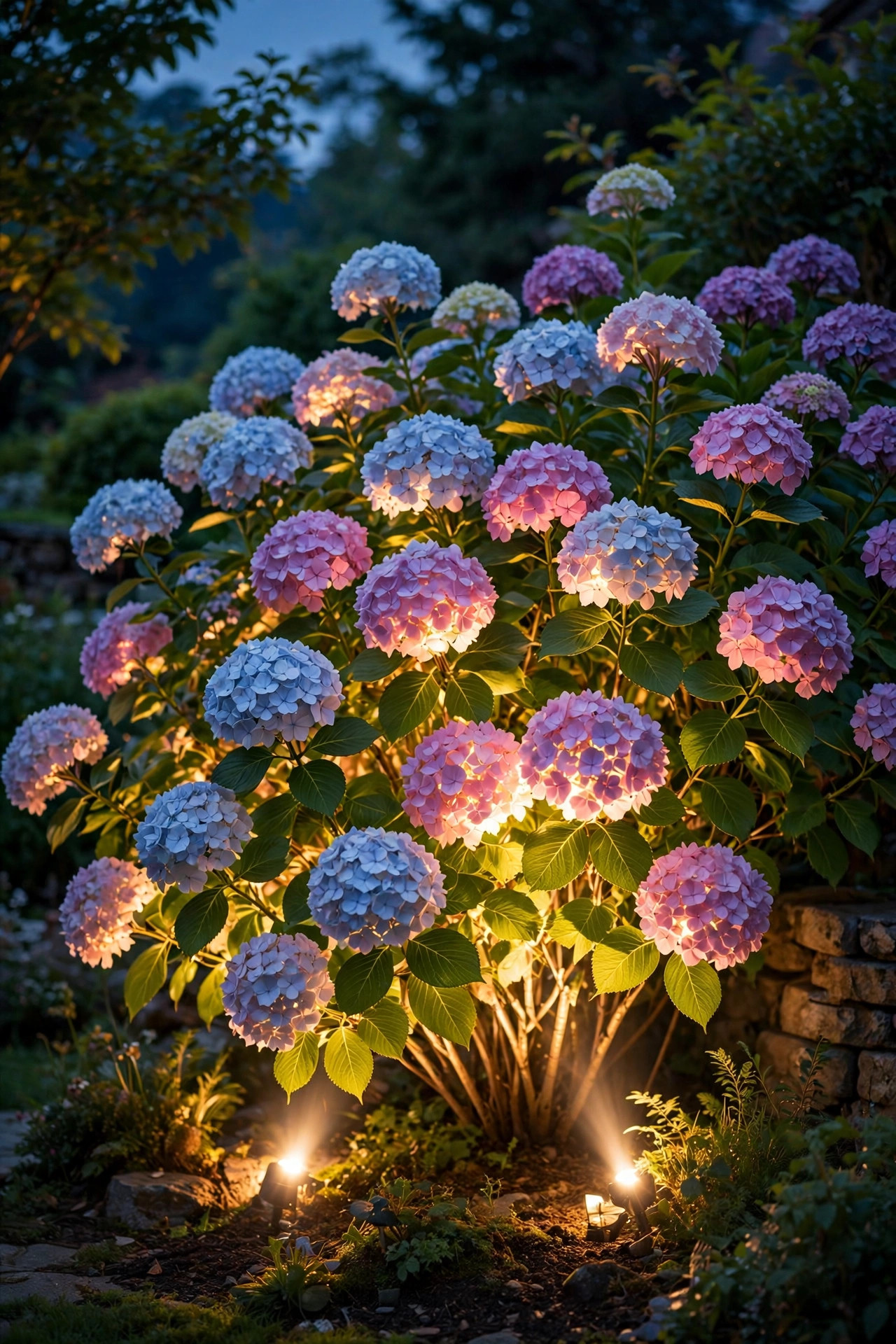
4. Uplight Your Flowering Shrubs and Garden Focal Points
By midsummer your hydrangeas, roses, and ornamental grasses are in full glory, and a small spotlight at the base of each one turns the whole border into a stage set after dark. Uplighting is the cheapest drama in garden lighting: one low-voltage or solar spotlight per focal plant, aimed up through the foliage so leaves and blooms cast soft shadows.
Place the fixture 12 to 18 inches from the base, angled at about 30 degrees, and keep the beam narrow — 30 to 45 degrees — so light stays in the plant instead of spilling into the sky. I light every third shrub in a border rather than every one; the rhythm of lit and unlit reads as intentional, and it leaves dark pockets where the garden still feels like night. Warm 2700K light flatters pink and white blooms, while grasses look best grazed from slightly behind. This layering of focal points is the same principle I use across my whole yard, and my collection of garden lighting ideas shows how the technique scales from a single bed to a full landscape.
Suggested budget range: $40 – $120.
5. Line Your Paths With Low Solar Stakes
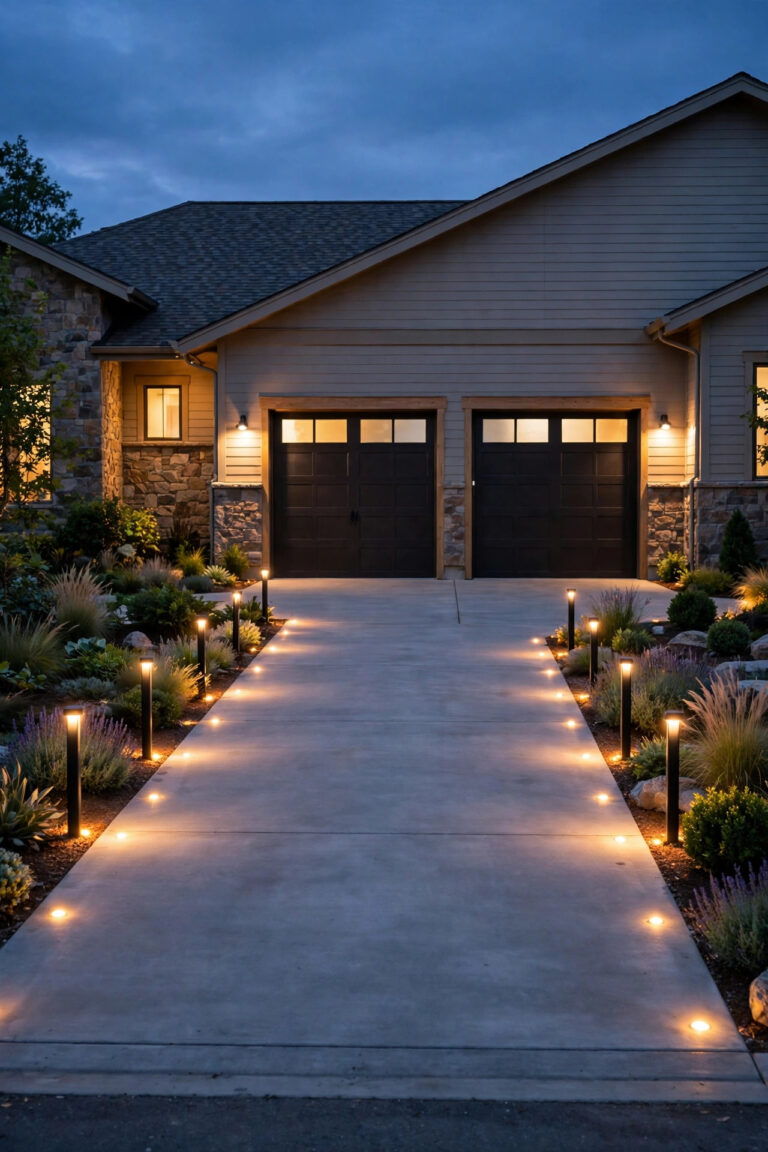
Midsummer paths get used late — watering rounds at dusk, barefoot trips to the compost bin, guests wandering with a drink in hand. A line of low solar stake lights makes those routes effortless without flooding the garden in light. Stakes are the one fixture where midsummer's long days really show off: fully charged by suppertime, still glowing at midnight.
Set them 6 to 8 feet apart, staggered on alternating sides of the path rather than in runway rows, and push them into the soil at bed edges where mulch keeps them upright. Choose fixtures that throw light downward in a defined pool — mushroom or louvered styles — instead of bare bulbs that glare at ankle height. In my experience the cheap stakes with tiny panels fade by ten even in June, so buy ones with panels at least the size of your palm and replaceable batteries. Keep stakes a few inches back from mower lines and edging, because July is also peak season for clipping a fixture with the string trimmer. Ask me how I know.
Suggested budget range: $30 – $80.

6. Fake the Moonlight With a High Downlight
Moonlighting is the most natural-looking trick in the book: mount a single shielded downlight high in a tree — 15 to 20 feet up — and let it filter through the branches, dappling the ground with soft pools exactly the way a full moon does. In midsummer, when real moonlight competes with that never-quite-dark sky, this fills in the effect on cloudy nights and new-moon weekends.
Use a fixture with a long glare shield and a cool-neutral bulb around 3000K to 4000K; slightly cooler than your other lighting, which is what sells the moonlight illusion. Aim it straight down through open branch structure, and keep the wattage low — you want dapples, not a spotlight. Low-voltage systems handle this best, with cable run up the trunk and stapled discreetly on the back side. This is the one installation I genuinely recommend hiring out if heights make you nervous; an arborist or lighting installer will mount it in an hour. The payoff is a patio or lawn that feels moonlit every single night of the longest month, whether or not the moon cooperates.
Suggested budget range: $120 – $300.

7. Drop Submersible Lights Into the Pond or Fountain
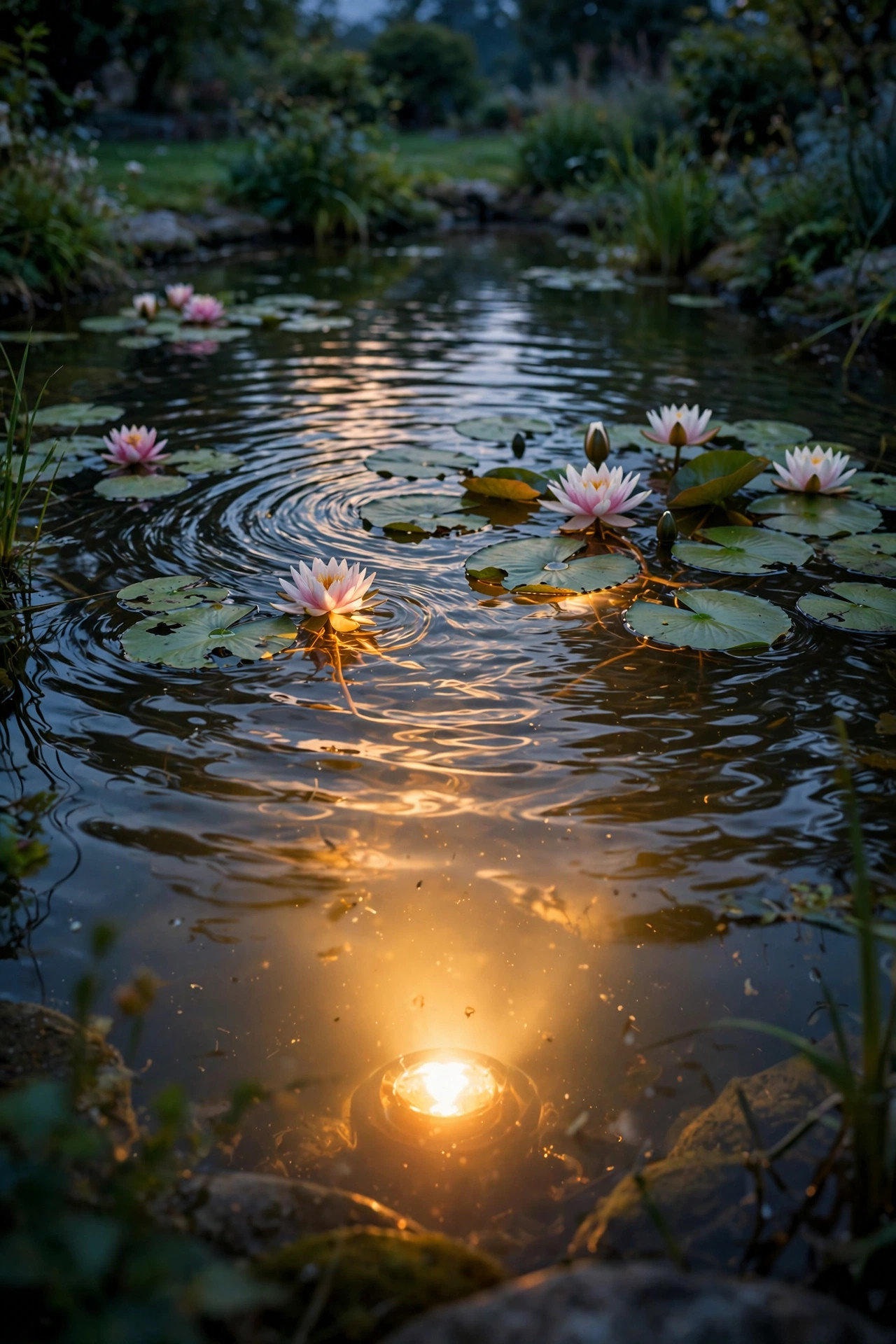
Water doubles every lumen you give it. A single submersible LED puck in a pond, fountain, or even a large glazed water bowl throws rippling reflections across nearby foliage and makes the whole garden feel cooler on a hot night — which, in the middle of July, is exactly the mood you want.
Only use fixtures genuinely rated for submersion, IP68, and low-voltage; never anything line-voltage near water, full stop. For solar submersibles, midsummer is again your friend, since the long day charges them fully even in partial shade. Anchor the light slightly off-center and aim it at the fountain's falling water or a favorite water lily cluster rather than straight up. Warm white reads elegant; the slow color-changing modes are fun for a party but I keep mine locked on warm. Clean the lens monthly in summer — algae film builds fast in warm water and can halve your brightness by August. One puck is usually plenty for a water feature under 6 feet across. Add a second only for wide ponds, placed at opposite ends for balanced reflections.
Suggested budget range: $25 – $70.
8. Hang Lanterns on Shepherd's Hooks Over Seating
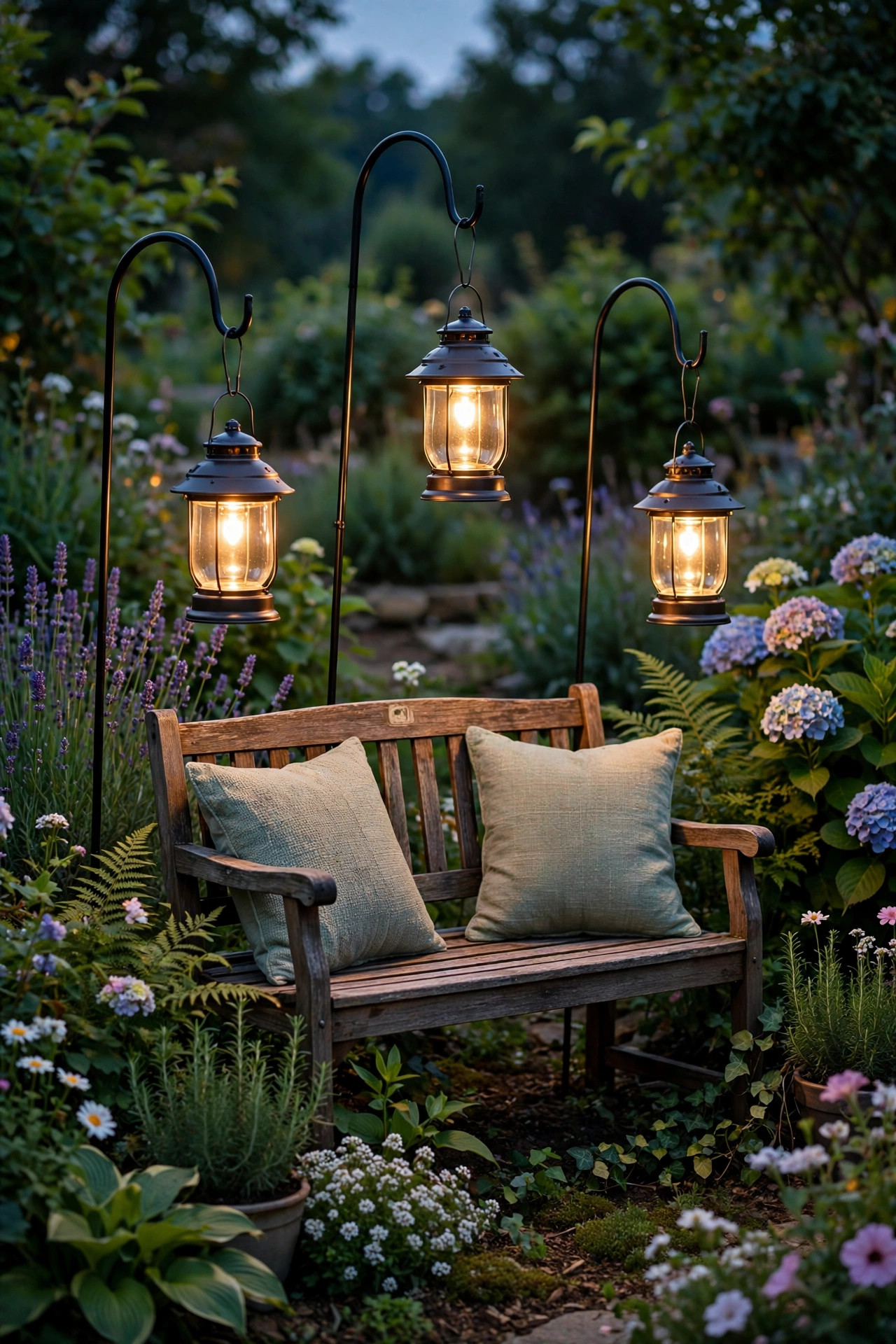
Shepherd's hooks are the renter-friendly, no-tools secret of my midsummer garden. Press a 4- to 5-foot hook into the soil beside a bench, a hammock, or the outdoor dining chairs, hang a solar or battery lantern from it, and you have instant eye-level light exactly where people sit — with zero wiring and zero commitment. Move them in five minutes when the party layout changes.
Solar lanterns make the most sense here in midsummer because the hooks usually stand in open sun all day. Look for lanterns with a warm 2700K glow and a real glass or quality resin lens; frosted finishes hide the diode and feel like candlelight. I cluster hooks in odd numbers — a taller hook and a shorter one flanking a bench reads designed rather than random. For dining areas, two hooks with matching lanterns frame the table beautifully without anything hanging over the food. Watch head clearance on paths: hooks near walkways should hold lanterns at least 6 feet up or sit fully inside the bed, out of the traffic line.
Suggested budget range: $35 – $95.
9. Switch to Amber Bulbs Where You Sit and Eat
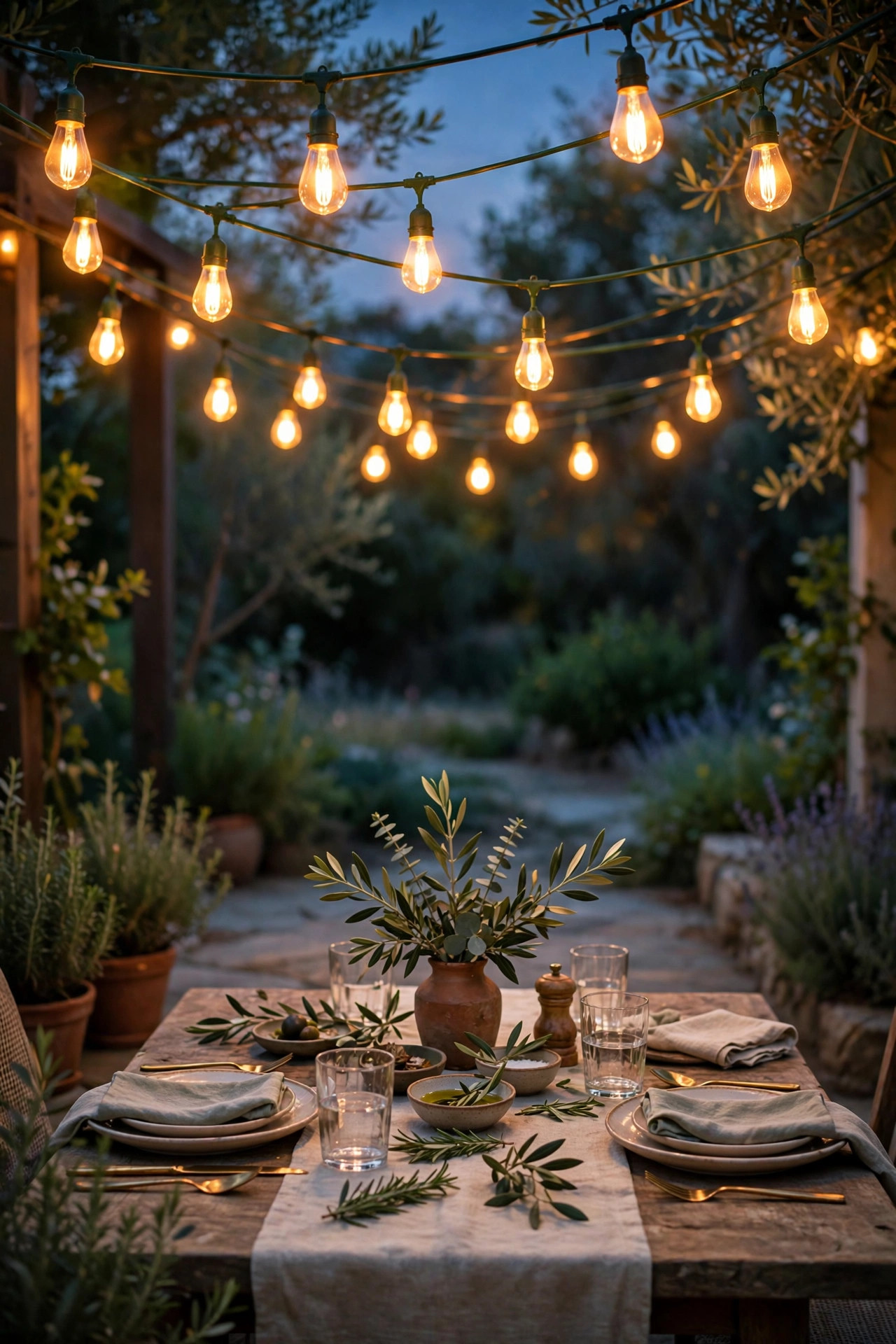
Let us talk about the one real downside of midsummer nights: the bugs are at their peak too, and standard white bulbs are moth magnets. This is why nearly every light within 10 feet of my seating and dining areas burns amber. Insects are far less drawn to warm amber wavelengths, so a 2000K to 2200K amber bulb over the table means noticeably fewer uninvited guests dive-bombing the potato salad.
You have three easy routes: amber LED replacement bulbs in your existing fixtures, amber-tinted café strands for the pergola, or simple amber gel sleeves over clear bulbs. Keep your brighter, whiter task lighting — the grill station, the steps — a good 15 to 20 feet away from where people sit, so the bug crowd gathers over there instead of over dinner. Honestly, the amber glow also just looks expensive: everything and everyone looks warmer in it. I still keep a citronella candle or two on the table for the mosquitoes that ignore lighting rules entirely, but the amber switch alone cut our swatting by more than half.
Suggested budget range: $15 – $50.
10. Dress the Dining Area With Café Lights and Paper Lanterns
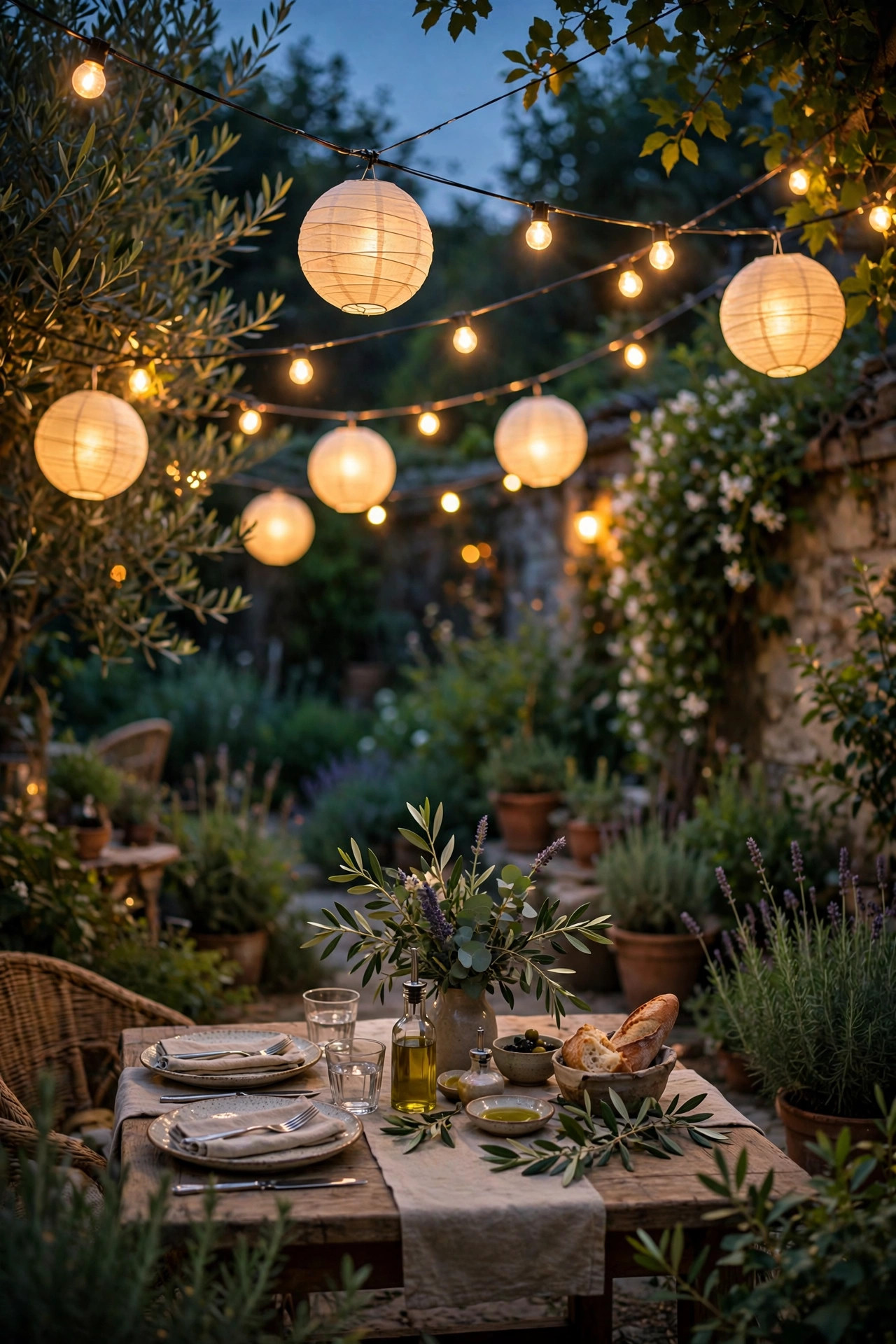
Midsummer is peak outdoor-dining season, and the eating area deserves its own overhead moment. A grid or zigzag of café string lights about 8 feet over the table gives you that bistro canopy, and threading a few paper lanterns along the strands adds the soft, festive volume that bare bulbs alone cannot. This is the corner of the garden where guests always end up lingering until midnight.
Use LED bulbs only inside and around paper lanterns — they stay cool where old incandescents genuinely were a fire risk. Commercial-grade strands with suspended sockets handle the lantern weight best; clip each lantern to the cord rather than hanging it from a bulb. A dimmer on the system is worth every penny: full brightness for serving and clearing, forty percent for dessert and conversation. If your summer entertaining happens on a patio rather than in the garden, my guide to summer patio lighting ideas shows this same canopy approach adapted for hard surfaces and pergolas.
Suggested budget range: $55 – $160.
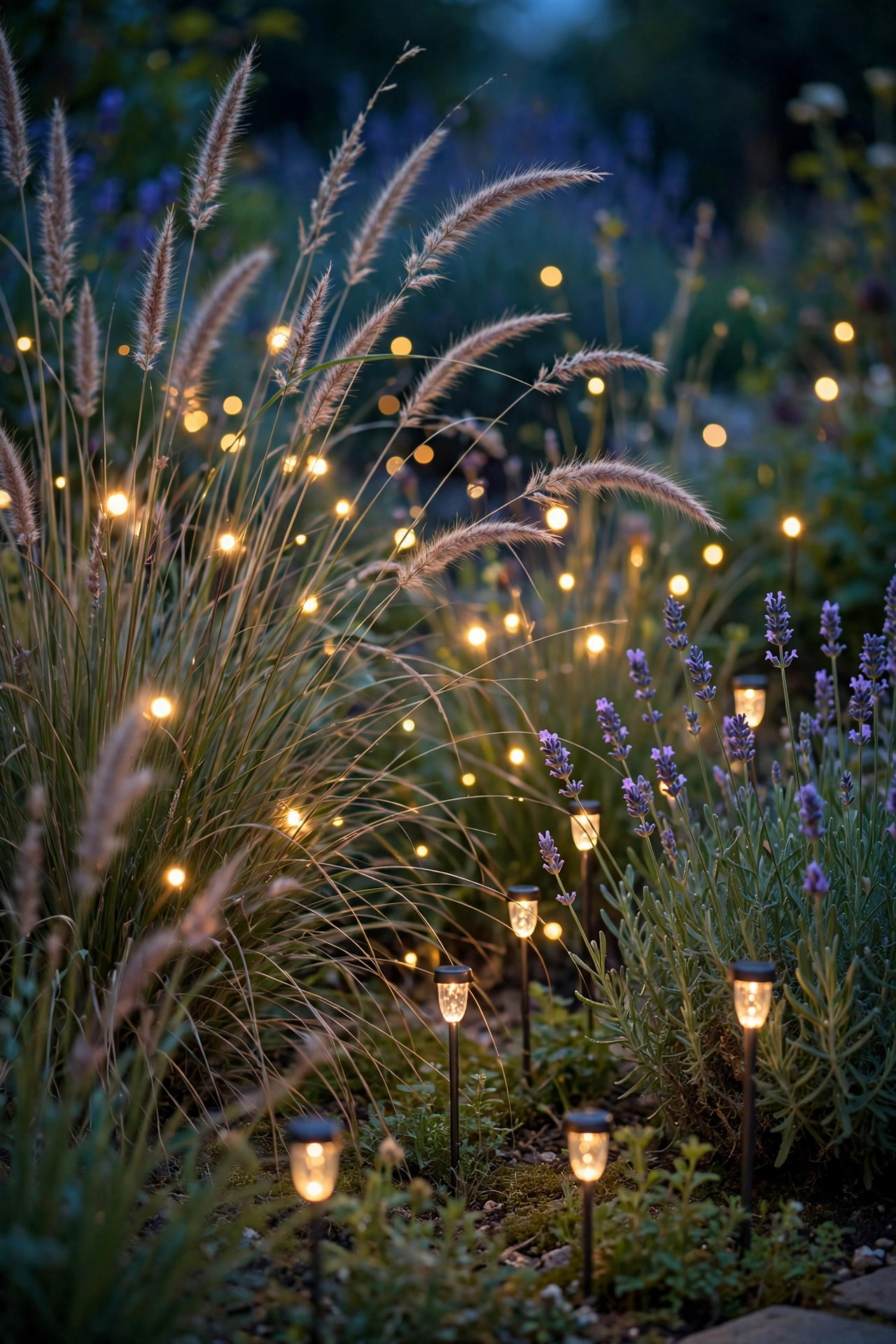
11. Scatter Firefly Lights Through the Planting Beds
Firefly lights — solar stakes topped with a cluster of tiny warm LEDs on flexible wires — mimic the real thing so charmingly that my actual fireflies should feel flattered. You bend the wires into a loose spray, stake the little solar panel in a sunny gap, and after dark the bed sparkles with slow, drifting points of light, as if the garden came pre-loaded with its own show.
They work best tucked into mid-height planting: ornamental grasses, lavender, catmint, and fern beds where the wires can weave through foliage and half-hide. One stake covers roughly a 3-foot circle, so a typical border takes three to five stakes for a convincing swarm. In midsummer they charge so thoroughly that mine are still twinkling at one in the morning. A styling tip from my own beds: keep firefly stakes in the beds only, never along path edges, where steady guidance light does the safety job better. Sparkle is atmosphere, not illumination — and that distinction is exactly what makes the effect feel magical instead of messy.
Suggested budget range: $25 – $65.
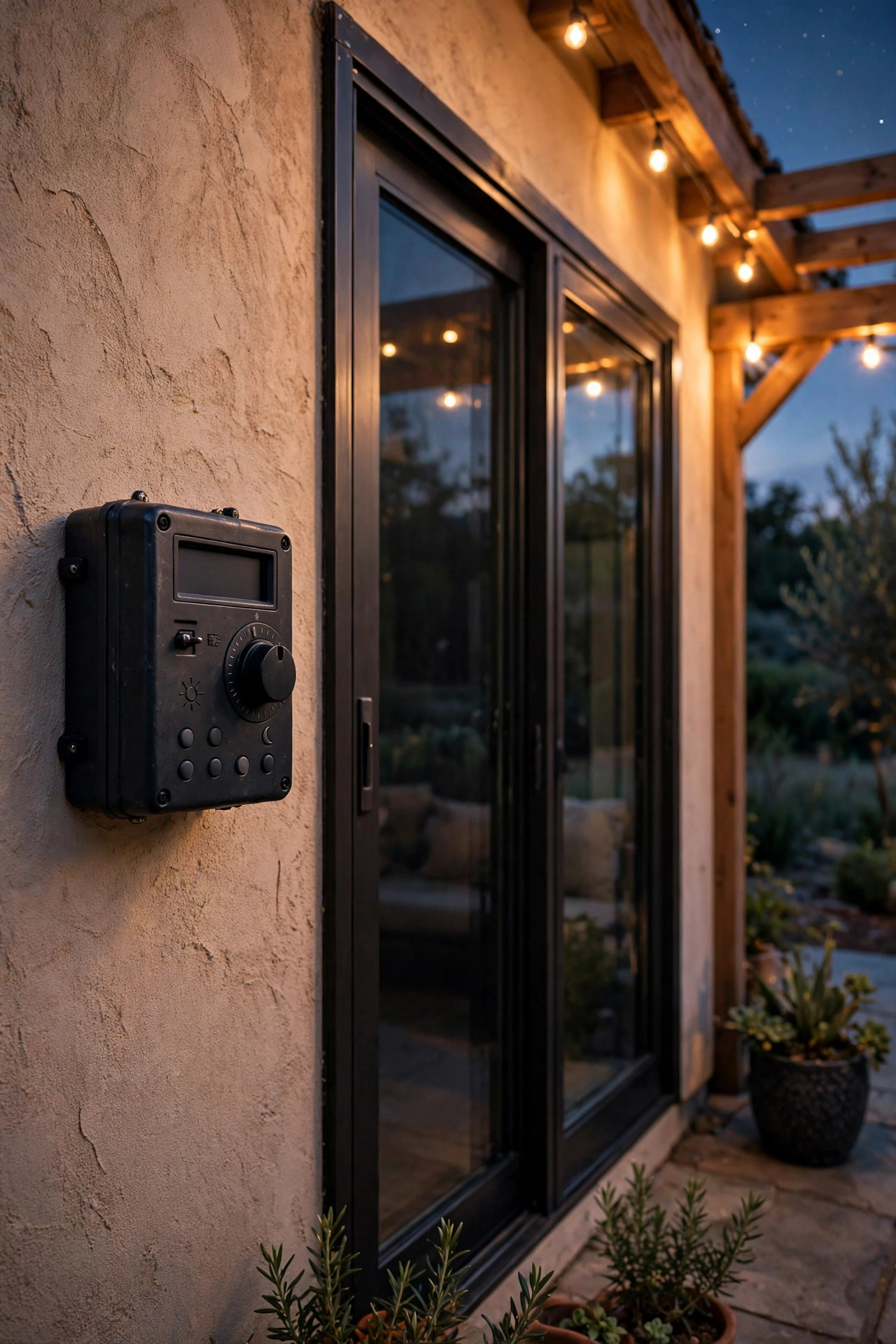
12. Set Timers for a Nine O'Clock Sunset
Every automation schedule you set in spring is wrong by midsummer. Sunset drifts past nine, solar stakes wake up later than you expect, and plug-in lights on a 7 p.m. timer burn pointlessly through two hours of daylight. July is when I reprogram everything: plug-in systems get an astronomical timer that tracks actual sunset for my zip code, so the garden lights itself at dusk all season without another thought.
Set the off-time by how you actually live. Mine run until midnight on weeknights and 1 a.m. on weekends, because midsummer evenings are the whole point. Solar fixtures take care of themselves, but check their little photocells once — a shrub that was knee-high in April can shade a panel by July and quietly cut your runtime in half. Trim or relocate as needed. I also put the dining canopy on its own smart plug so I can dim or kill it from my phone without leaving my chair. Small luxury, enormous smugness. Timers are unglamorous, but they are the difference between a garden that glows every night and one that only glows when you remember.
Suggested budget range: $20 – $60.
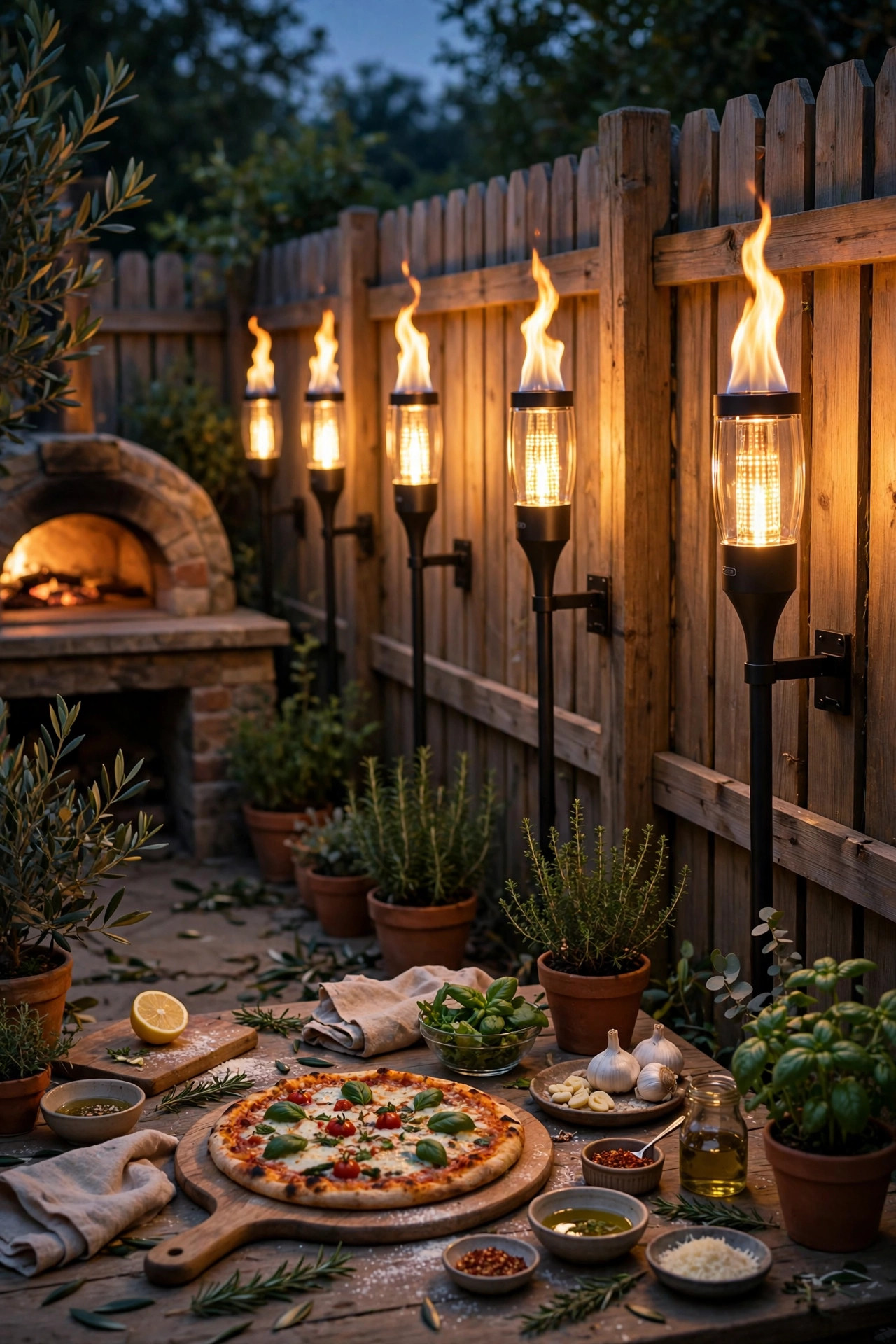
13. Ring the Fire Pit With Flame-Effect Torches
On the nights when a real fire feels like too much heat — and midsummer serves plenty of those — flame-effect torches give you the flicker without the sweat. Solar tiki-style torches with dancing-flame LEDs stake straight into the beds or the lawn edge, charge all day in the peak sun, and flicker convincingly from across the garden. Ring a seating circle with four to six of them and the eye reads firelight, even with the pit stone cold.
Space torches 4 to 6 feet apart for a defined ring, or pair them at a garden gate or path entrance like ceremonial markers. Because they are LED, they are safe near dry July mulch and paper party decor in a way real tiki torches with open flame and oil never are — no refills, no smoke, no scorched hosta leaves. Keep the real citronella torches, if you use them, at the perimeter and well clear of foliage and fabrics, and never leave any open flame unattended. Solar charging tip: wipe the little panels weekly. Pollen and summer dust film them fast, and a clean panel is the difference between flicker-until-midnight and flicker-until-ten.
Suggested budget range: $40 – $110.
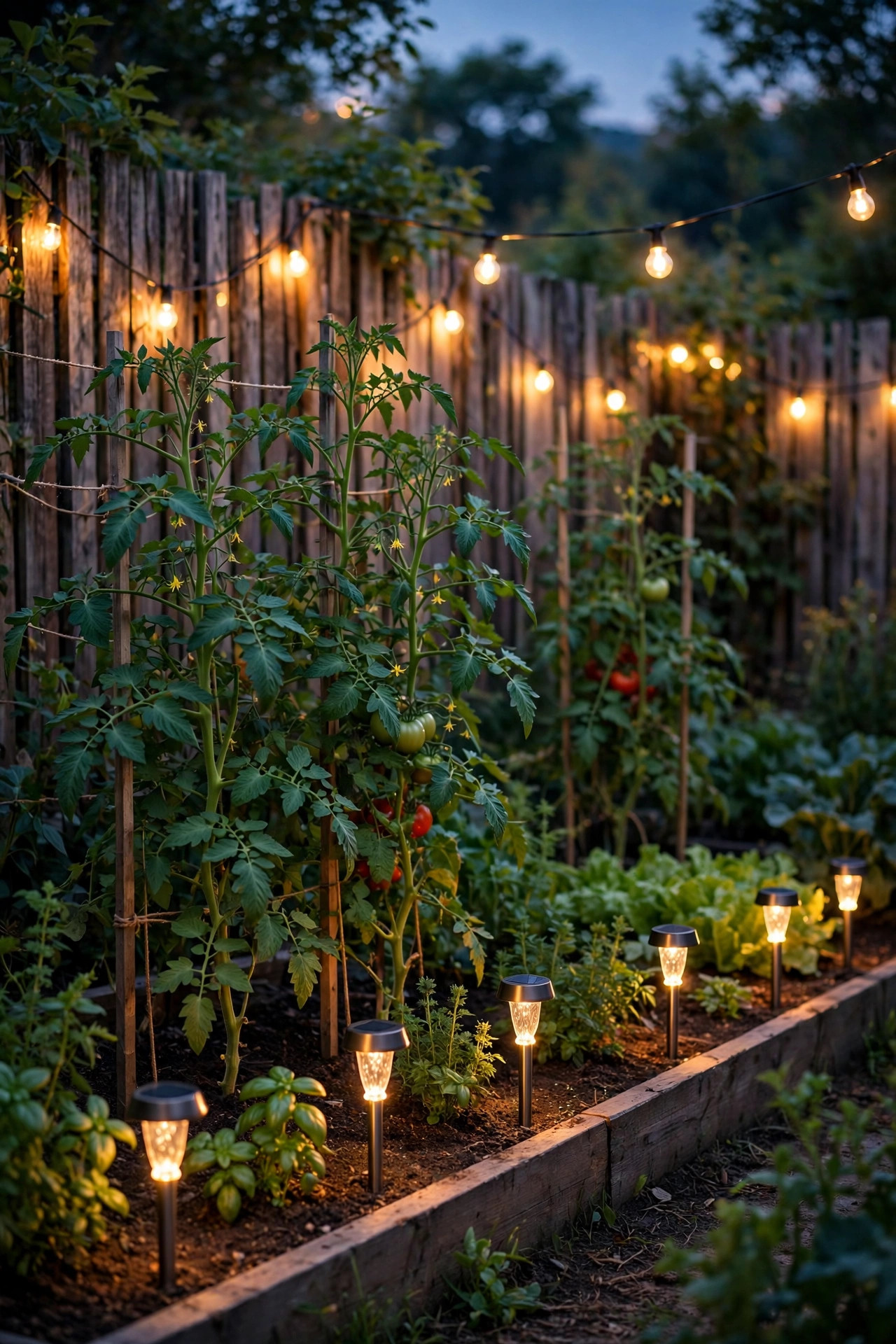
14. Give the Vegetable Garden Its Own Evening Glow
The kitchen garden works the hardest in midsummer, and it deserves better than being the dark corner you visit with a phone flashlight. A simple row of solar stakes along the main bed path, or a strand of café lights on the fence behind the tomatoes, turns the evening harvest round — basil for dinner, a check on the zucchini — into one of the nicest rituals of the day.
Keep the light practical: stakes every 6 feet along the picking path, and one slightly brighter fixture near the compost bin and tool storage so cleanup is not a guessing game. Solar is the obvious choice here since most vegetable plots sit in full sun by design, and there is no trench-digging through your beds for cable. Avoid bright uplighting in the veg patch; plants do not need a light show, and a dark rest period is better for the garden and for the beneficial insects working the night shift. Warm, low, and useful is the whole brief. You will be amazed how much more produce you actually pick when harvesting at dusk is pleasant instead of a chore.
Suggested budget range: $30 – $85.
15. Bring It All Together: My Full Midsummer Garden Lighting Ideas Routine
Here is the whole routine, start to finish, the way I actually switch on my garden in late June. At about eight, the solar layers arm themselves as the light fades: path stakes along the routes, firefly stakes warming up in the beds, fairy lights waking in the tree. Just after nine, the astronomical timer brings the low-voltage uplights and the moonlighting downlight on as true dusk lands. The dining canopy goes on when we sit down to eat — amber bulbs, dimmed low — and the pond puck stays on all evening because the ripples are half the show.
Notice what is not there: no floodlights, no cool-white glare, nothing brighter than the moment calls for. Midsummer gives you the longest twilight of the year, so the lights are supporting actors, never the headline. Build one layer at a time in this order — path safety first, focal uplights second, sparkle last — and taste-test each addition for a few evenings before adding more. That patient layering is the entire secret behind every garden that stops you mid-walk at dusk. Your longest evenings deserve nothing less.
Suggested budget range: $150 – $450.
Frequently Asked Questions
What color temperature looks best for garden lighting in summer?
Warm white, 2700K, flatters summer foliage and flowers best and keeps the mood relaxed. Slightly cooler light, 3000K to 4000K, works for a moonlighting downlight because it mimics real moonlight. Amber bulbs around 2000K to 2200K are the smart pick near seating, since insects are far less attracted to them.
Do solar garden lights really work on long summer evenings?
Midsummer is their best season. Panels receive fourteen or more hours of daylight, so quality solar fixtures routinely run from dusk until well past midnight. The keys are a panel sized generously, full-sun placement, and clean panels — pollen and dust can quietly cut charging efficiency during peak summer.
How can I keep bugs away from my garden lights?
Switch bulbs near seating to amber, position brighter white lights 15 to 20 feet away from dining areas so insects gather there instead, and keep lights dimmed as low as the task allows. Lighting changes reduce the crowd dramatically, though a citronella candle on the table still earns its place for mosquitoes.
Are garden lights safe to leave out in summer thunderstorms?
Yes, provided fixtures are outdoor-rated (IP65 or better for exposed spots, IP68 for submersible use) and plug-in systems run on a GFCI outlet. Low-voltage and solar systems are inherently safer in wet weather. After a severe storm, a quick check for pooled water, tilted stakes, and debris on lenses keeps everything running well.
Conclusion
The longest evenings of the year are a gift with an expiration date, and the right midsummer garden lighting ideas make sure you actually spend them outside. Remember the layering principle — soft canopy above, warm pools where people gather, gentle guidance at the ground — and let solar power and late sunsets do the heavy lifting. Start with your paths, add one glowing focal point, and let the sparkle come last. Then pour something cold, step out at dusk, and browse the rest of our lighting ideas for your next layer.