There is a specific evening in September when you step onto the patio with a mug of something warm and realize the light has changed. The sun drops earlier, the air has a little bite, and suddenly that bright summer setup feels all wrong. That is exactly when I start hunting for early fall patio lighting ideas, because the first cool nights are honestly my favorite patio season of the whole year. The trick is layering: a soft canopy of light overhead, a warm glow at eye level, and gentle pools of light low to the ground so every step feels safe. Early fall asks for warmer color temperatures, cozier textures, and lights that come on earlier and stay on while you linger under a blanket. In this post I am sharing the 17 ideas I rotate through every year, from five-minute bulb swaps to a weekend fire pit project, each with a realistic budget so you can pick your comfort level and get glowing before the leaves even finish turning.

1. Swap to Warm-White Café String Lights (My Go-To Early Fall Patio Lighting Ideas Starter)
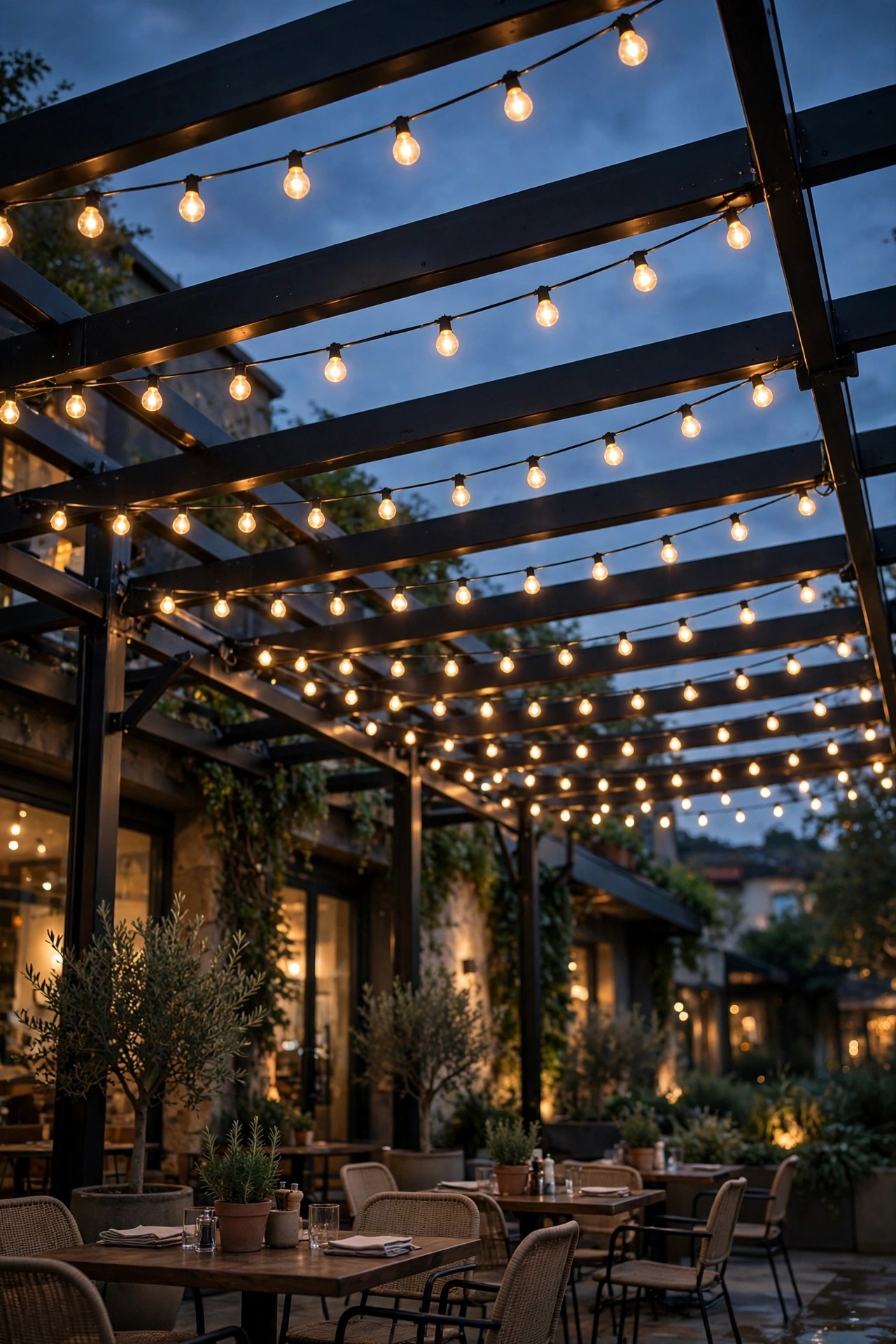
The single fastest transformation I make every September is swapping my summer string lights for warm-white café strands in the 2700K range. That amber-leaning glow reads like candlelight against early fall dusk, while cooler 4000K bulbs suddenly feel like a parking lot once the air turns crisp. I run two or three strands in a gentle zigzag about 8 to 9 feet overhead, which keeps the light above eye level but close enough to feel like a ceiling. Space your anchor points 10 to 12 feet apart and let each span sag about a foot in the middle for that relaxed bistro drape. Shatterproof LED filament-style bulbs are my pick because they survive the first windy cold front and sip electricity, roughly a watt apiece. If your strands are plug-in, put them on an outdoor-rated timer so they click on at dusk without you thinking about it. Honestly, this one change makes the whole patio feel like a different room, and everything else on this list layers beautifully underneath it.
Suggested budget range: $25 – $60.
2. Cluster Lanterns at Three Heights
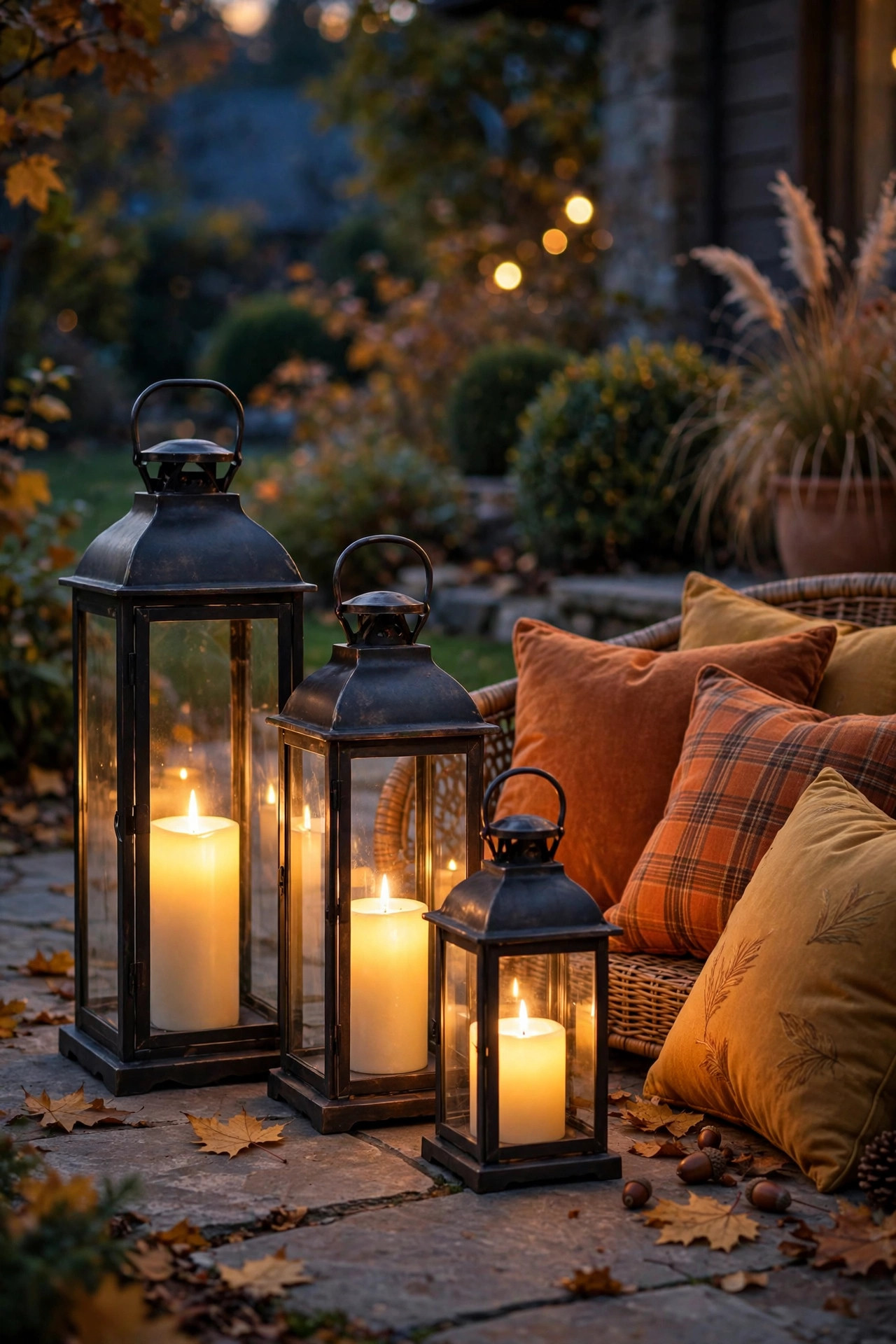
Lanterns are my early fall workhorse because they put light exactly where people gather and they look good doing it. I group them in threes: one tall floor lantern near a chair leg, a medium one on a side table, and a small one down on the deck boards, which creates that layered triangle of glow your eye loves. Fill them with flameless LED candles on timers rather than real wax near cushions and dry leaves; the flicker setting on modern ones is genuinely convincing. Metal lanterns in matte black or aged copper suit fall best, and I tuck a few faux leaves or a mini pumpkin at the base to finish the vignette. Keep lantern glass clean, since a dusty pane can cut the light noticeably. If your patio is uncovered, choose lanterns rated for outdoor use or bring the fancy indoor ones in when rain threatens. A cluster by the door also gives guests a warm landmark when they step outside with drinks in hand.
Suggested budget range: $30 – $80.
3. Let a Fire Feature Be Your Second Light Source
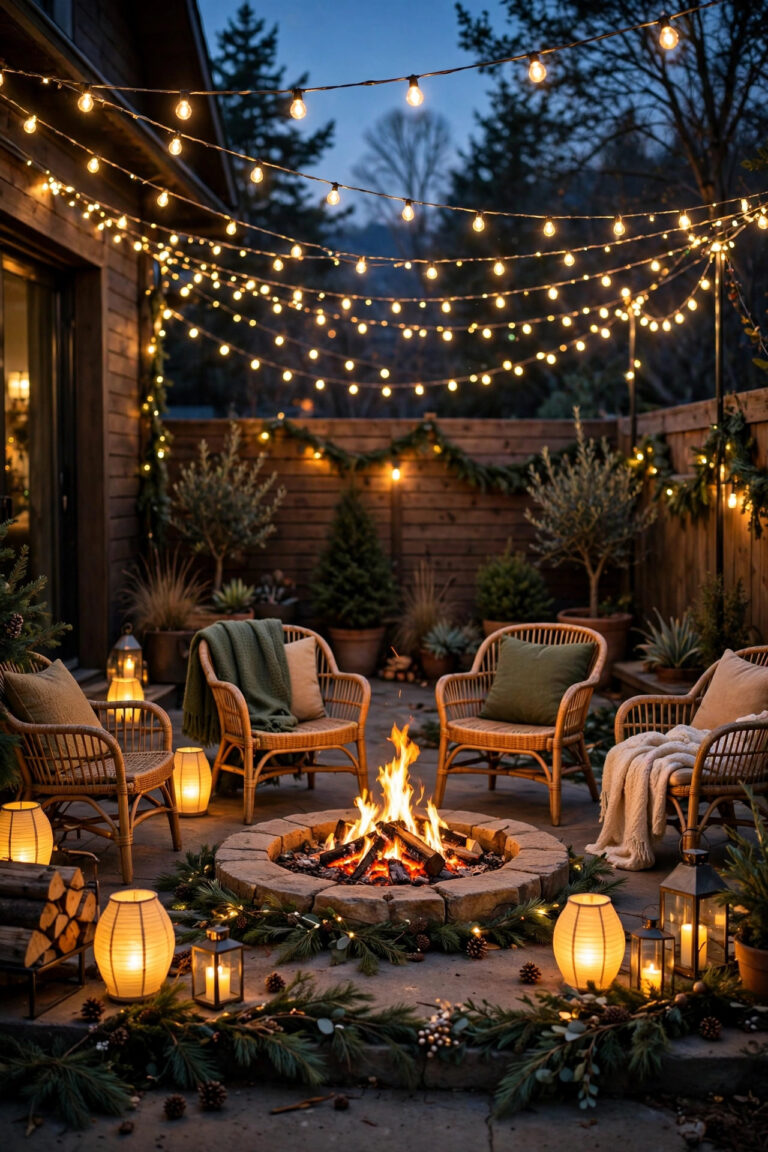
Nothing sells the first cool night like real flame, and a fire feature does double duty as your warmest, most flattering light source. My tabletop fire bowl sits right in the middle of the seating area where its glow lands on faces, and it throws enough light that I can run the overhead strings a notch dimmer. If you have room, a small wood-burning pit set 10 to 15 feet from seating gives that campfire halo; my guide to fire pit seating lighting ideas covers placement distances in detail. Tabletop gel-fuel or propane bowls are the renter-friendly option and light in seconds. Keep a 3-foot clearance from cushions, blankets, and overhanging branches, and never leave flame unattended even on a calm night. The flicker also animates everything around it, making plain walls and fences look textured and alive. On the chilliest evenings this becomes the spot nobody wants to leave, so arrange chairs in a loose semicircle and let the fire be the anchor of the whole layout.
Suggested budget range: $40 – $200.

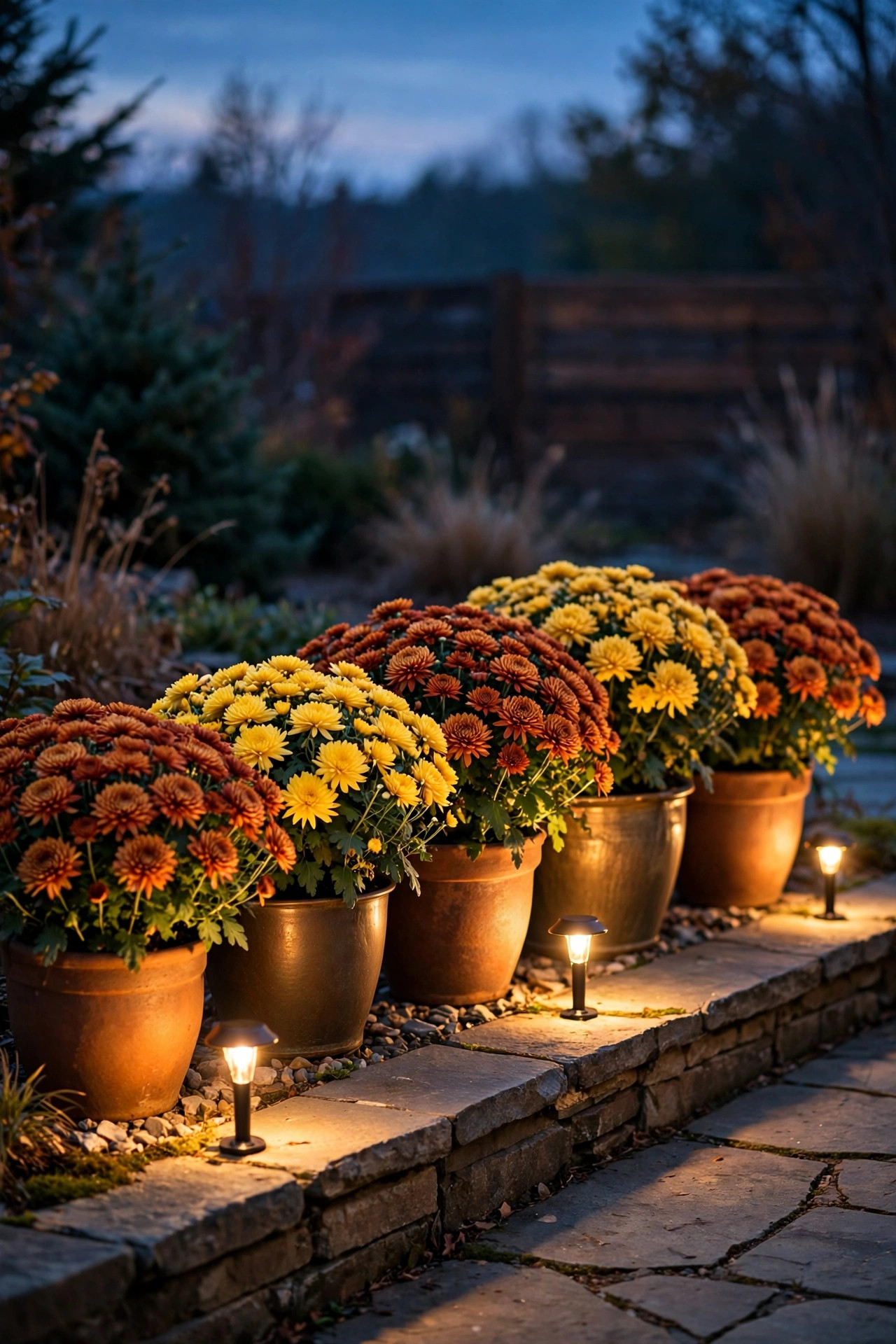
4. Uplight Your Mums and Fall Planters
Every September I load the patio edges with mums, ornamental kale, and a few heirloom pumpkins, and then I light them from below like little stage stars. A low-voltage spotlight staked 12 to 18 inches in front of each big planter, angled up at about 30 degrees, makes the blooms look twice as full after dark. Warm 2700K lamps keep russet and gold petals true; cool light turns them muddy. Solar stake spotlights work fine this early in the season because the days are still long enough to charge them, though wired low-voltage gives you a stronger, steadier beam. I aim for one lit planter every 6 to 8 feet along the patio edge so the border reads as a soft rhythm instead of random bright spots. Tuck the fixtures behind foliage during the day so the hardware disappears. This trick also flatters ornamental grasses, whose plumes catch the light and sway like candle flames when a breeze comes through on those first cool nights.
Suggested budget range: $20 – $70.
5. Line the Patio Edge With Low Path Lights
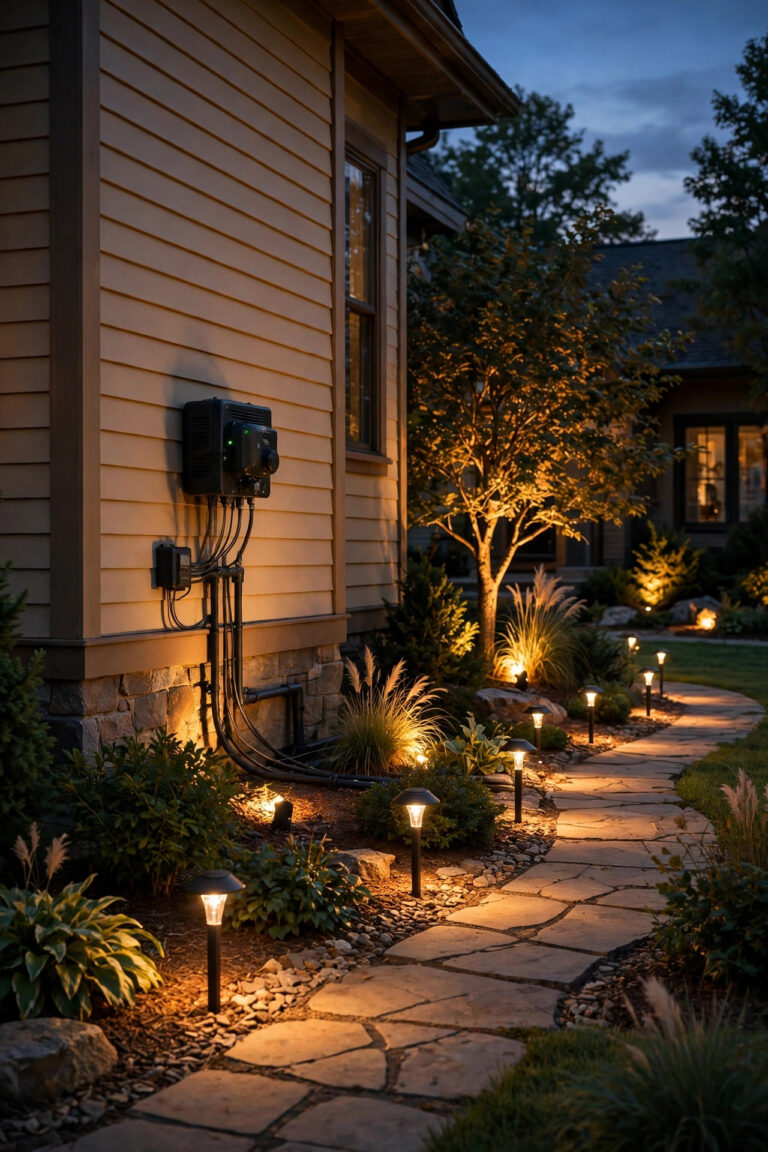
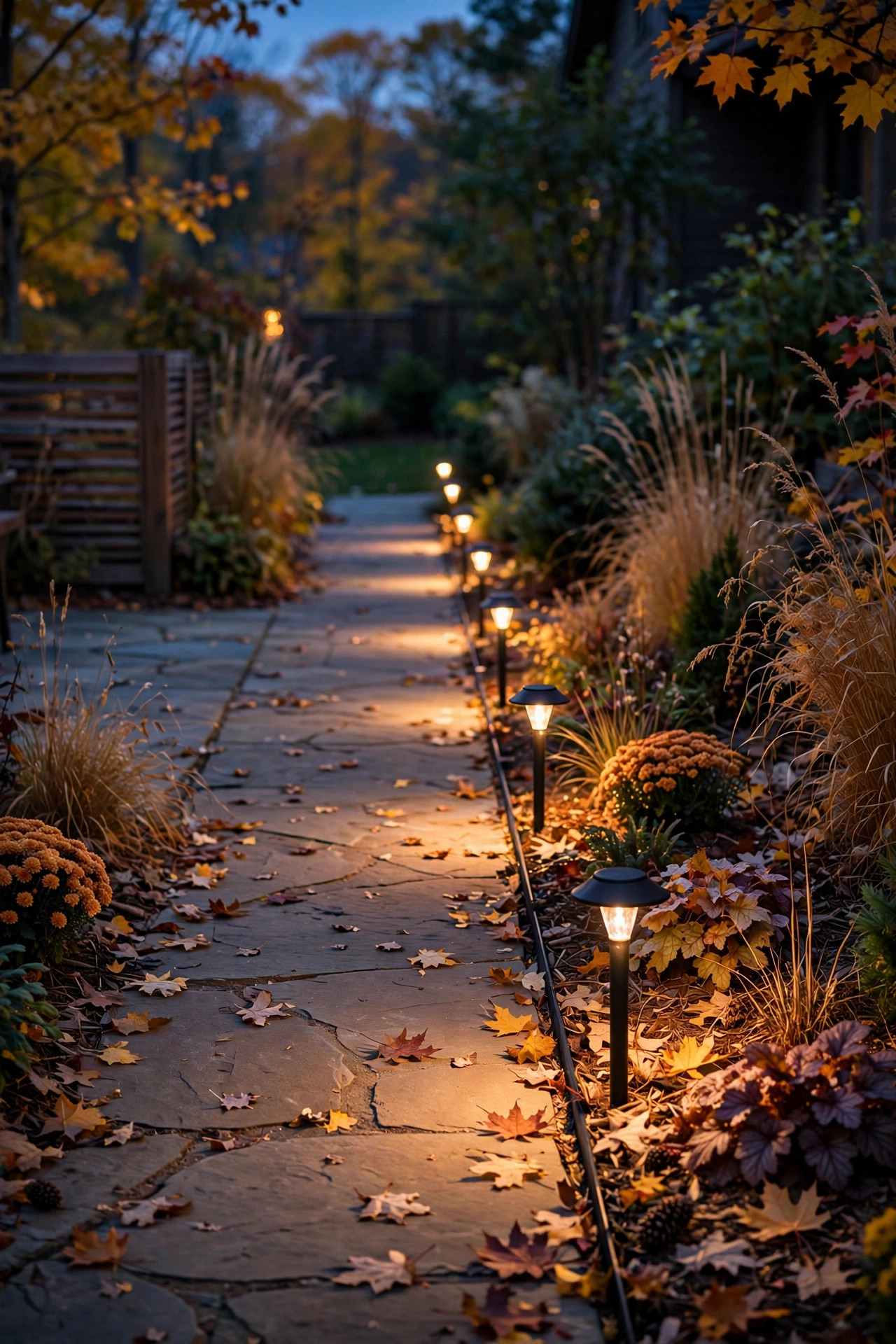
Because the sun sets earlier every week in fall, the walk from patio to yard gets dark fast, and that is when ankles meet planter edges. A row of low path lights solves it while adding structure. I place them just outside the patio border, spaced 5 to 6 feet apart, alternating sides of the walkway so the light pools overlap without looking like an airport runway. Bollard or mushroom styles that throw light downward are best; exposed bulbs at eye level create glare when you are seated. Solar versions are fine for the first cool nights, but I prefer a low-voltage wired run for consistent brightness past 9 p.m. Keep the color temperature matched to your string lights so the whole scene reads as one warm family. Short fixtures, around 12 to 14 inches tall, disappear among fall plantings during the day. Guests will unconsciously follow the light line, which quietly keeps foot traffic off your flower beds too.
Suggested budget range: $35 – $90.
6. Hang a Pendant Over the Dining Table
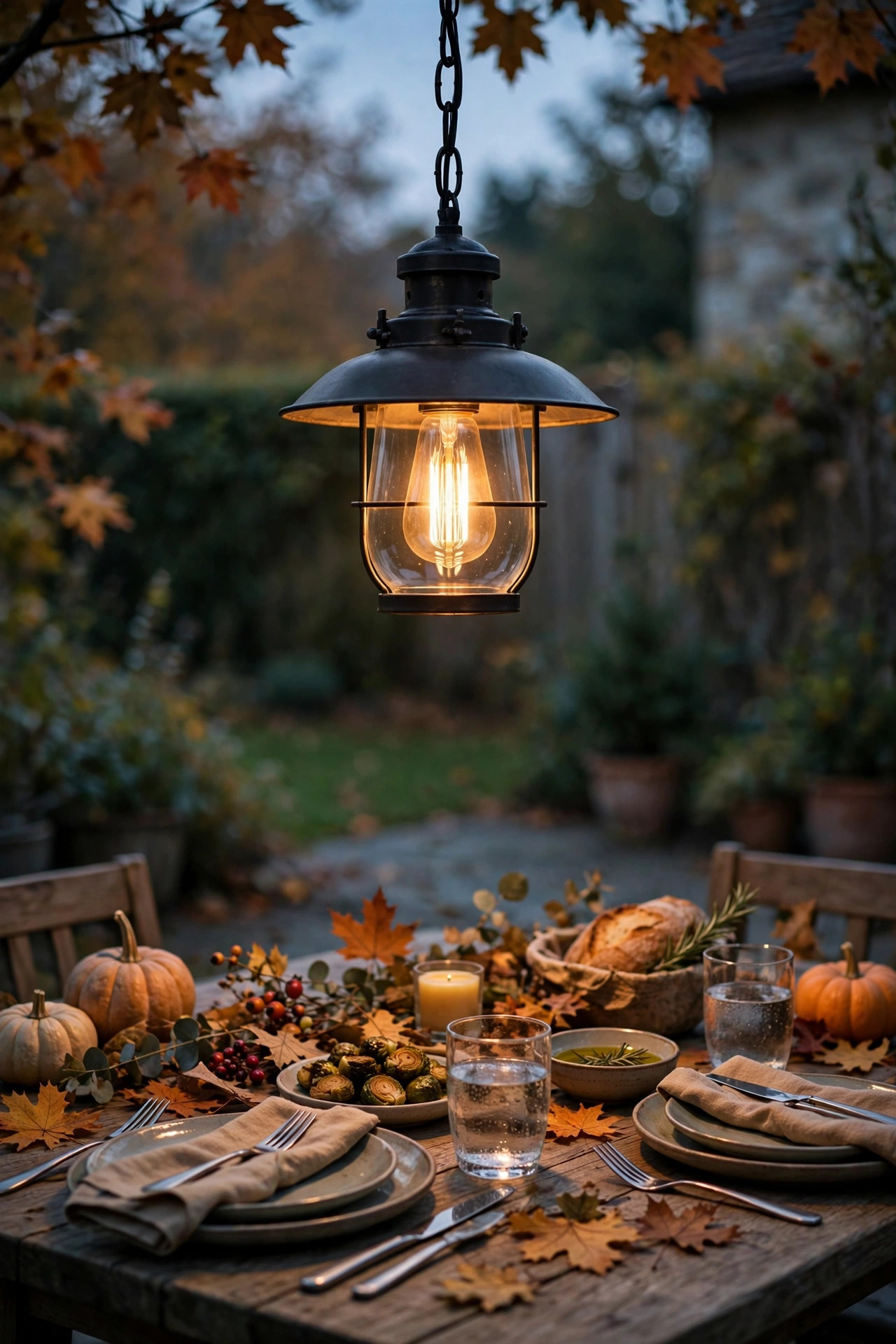
Fall is soup-and-sweater dining season at my house, and a pendant over the outdoor table makes those dinners feel intentional instead of improvised. I hang a weather-rated pendant or a converted lantern fixture so the bottom sits about 30 to 34 inches above the tabletop, low enough to pool light on the food and faces without blocking views across the table. An LED filament bulb in the 2700K range on a dimmer is the whole secret; full brightness for serving, then dial it down for lingering over cider. If you have no overhead structure, a cantilever arc lamp rated for outdoor use does the same job. Keep cords dressed along the pergola beam with outdoor clips, never draped where heads pass. A woven or metal shade with an open bottom throws the most useful downward light. Honestly, one good pendant makes people sit down earlier and stay later, which is the entire point of fall patio season.
Suggested budget range: $45 – $150.
7. Weave Fairy Lights Into a Fall Garland
This is the prettiest ten minutes I spend each September. I take a faux fall garland of maple leaves and mini pumpkins, drape it along the railing or across the mantel of my outdoor fireplace, and weave a copper-wire fairy light strand through it. The tiny warm points of light hide in the leaves by day and sparkle through them at night, giving you glow without visible hardware. Battery packs with built-in 6-hour timers are ideal here; set them once and the garland lights itself every evening. Copper wire bends and stays put, so no clips are needed, and one 33-foot strand usually covers a 6-foot garland with generous weaving. Keep battery packs tucked out of direct rain, and remember LED fairy lights stay cool, so they are safe nestled against faux foliage. Real dried arrangements are fine too, but LEDs only, never anything that warms up. It photographs beautifully, which matters when the first cool night turns into an impromptu gathering.
Suggested budget range: $15 – $40.

8. Add Candle-Style Wall Sconces by the Door
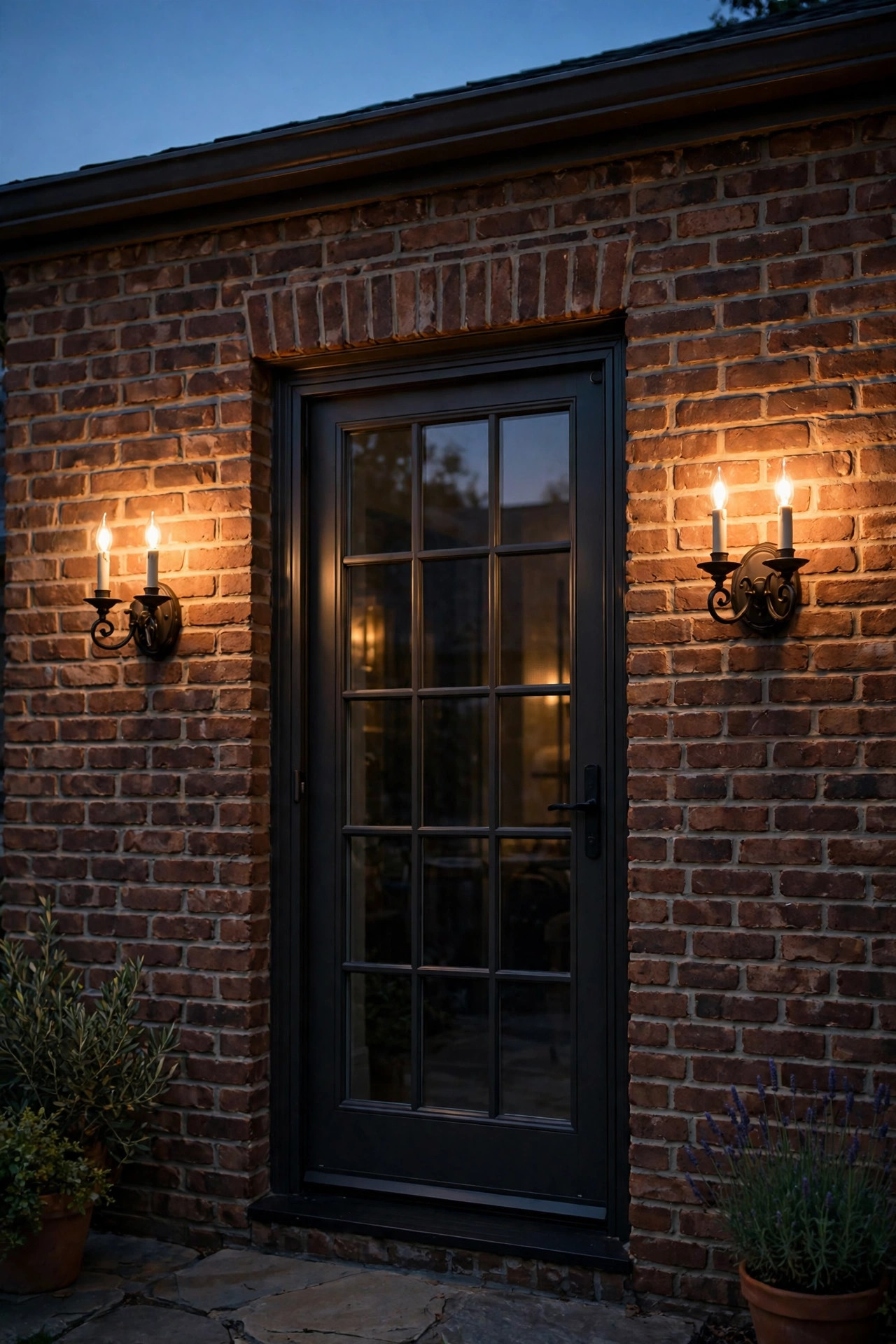
The wall beside your patio door works hard in fall: it is where people arrive, set down drinks, and fumble for the handle in the dark. A pair of candle-style sconces flanking the door gives that spot a warm, welcoming face. I choose fixtures with frosted or seeded glass and LED candle bulbs around 2700K, mounted roughly 66 inches from the deck to the center of the fixture, which lands the glow right at face height. A photocell or smart bulb means they wake up on their own as dusk slides earlier each week. If your wall is brick or stone, the light grazing across that texture on a cool night is genuinely gorgeous. Keep the pair matched in brightness so the doorway looks balanced, and wipe the glass monthly since fall brings dusty, pollen-heavy air. Renters can fake it with two large wall-mounted lantern hooks and flameless pillar candles. It is a small footprint project with an outsized payoff in how finished the patio feels.
Suggested budget range: $40 – $120.
9. Use String Light Poles Where There Is No Structure
Open patios with no pergola or nearby trees used to stop my string light plans cold, until I discovered sturdy string light poles. These 9 to 10 foot poles plant into the ground or bolt to deck boards and give you anchor points anywhere. My full walkthrough of patio string light pole ideas shows the spacing I use, but the short version is: set poles 10 to 12 feet apart, bury or bucket-mount them deep enough that a loaded strand cannot lean them, and always run a steel guide wire if your strands are heavy glass-bulb style. In fall I plant the pole bases inside big planters filled with mums, which hides the hardware and adds color at ground level. Poles also make seasonal changeovers easy, since the canopy comes down in minutes for a storm or the first frost. Powder-coated black poles disappear visually after dark, so all guests see is floating light. It is the project I recommend most to friends with plain concrete slab patios.
Suggested budget range: $50 – $130.

10. Build a Pumpkin-and-Lantern Luminaria Line
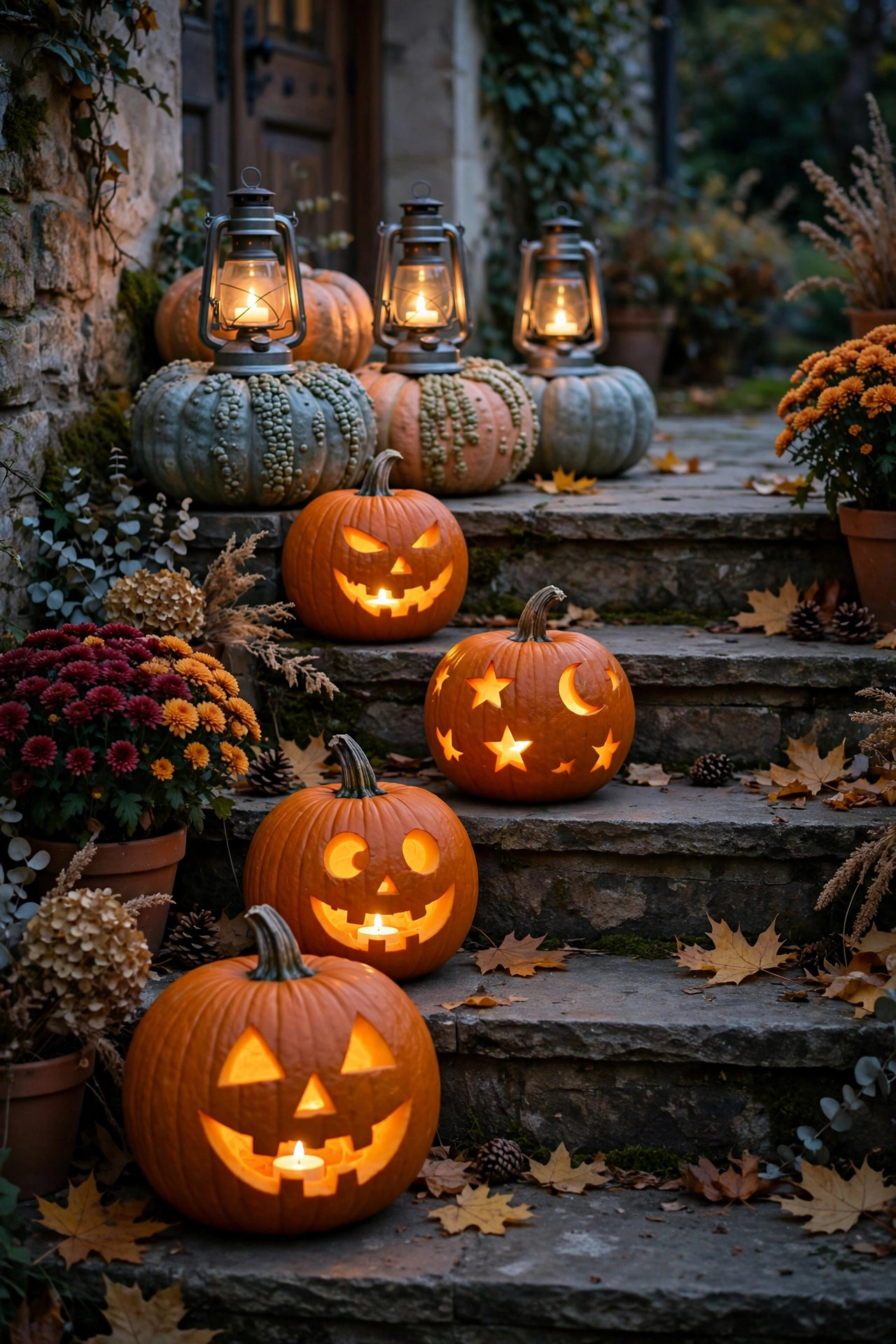
Come October I lean in and line the steps and patio corners with luminarias made from real pumpkins fitted with LED tea lights. Carve simple shapes, stars, moons, or classic jack-o'-lantern grins, and let the warm LED glow do the rest; LED only, because real candles inside pumpkins near dry leaves and costumes is a risk I never take. Uncarved pumpkins work too as pedestals: set a small lantern on top of a flat-topped heirloom pumpkin for instant height variety. A line of five to seven along a step edge reads as deliberate design and doubles as safety lighting on the stairs. Refresh carved pumpkins every week or so as they soften, and move the whole display to the compost before the first hard freeze turns them slushy. Kids adore this corner of the patio, and honestly so do the adults. Mix in a few white and green heirloom varieties so it feels like fall harvest rather than full Halloween, and the look carries from September straight through Thanksgiving week.
Suggested budget range: $15 – $45.
11. Swap In Amber-Toned Bulbs for Instant Warmth
If your existing fixtures feel harsh in fall, do not replace the fixtures, replace the color. Amber-toned LED bulbs, the ones sold around 2200K, mimic gaslight and instantly make brick, wood, and fall foliage look richer. I swap them into my sconces and porch fixture for September through November, then store them in a labeled box for the rest of the year. The lower color temperature is also gentler on the eyes during long evenings and far less attractive to lingering late-season bugs than blue-rich white light. One caution: amber light renders colors softly, so keep your task spots, like the grill area, in a clearer 2700K so you can actually judge when the chicken is done. Matching every bulb in a seating zone to the same temperature is the difference between cozy and chaotic. This is the cheapest idea on the list and the one my neighbors ask about most, usually while standing in my much-warmer-looking light.
Suggested budget range: $10 – $30.

12. Float Light Under Benches and Low Walls
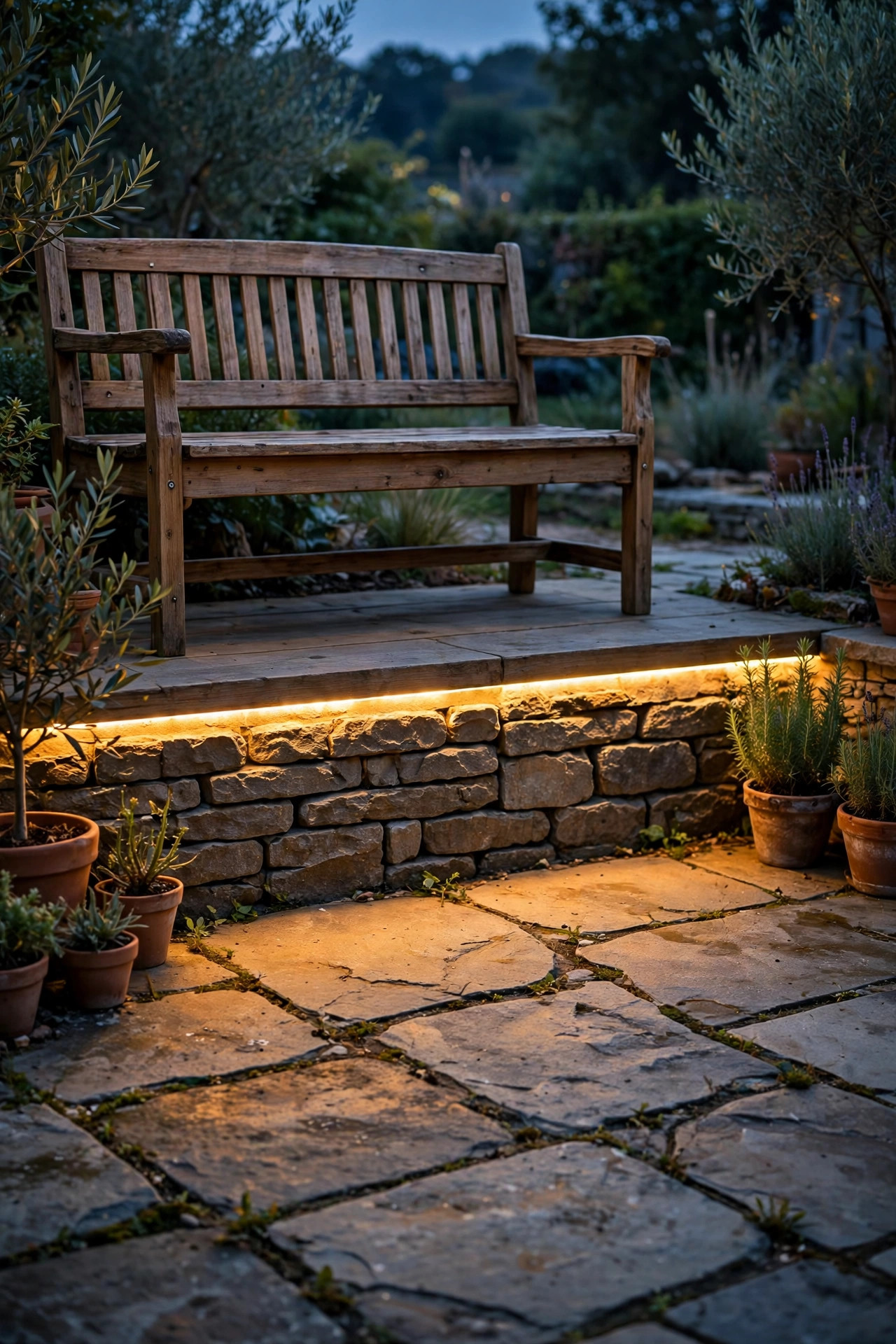
The most magical fall patios I have visited all share one trick: light that seems to come from nowhere, low to the ground. Outdoor LED strip lights tucked under a bench seat, a low retaining wall cap, or the edge of a raised deck wash the ground with a soft halo that makes the whole structure appear to float. Use strips rated IP65 or better, mount them facing downward so you never see the diodes, and run the low-voltage wire along the back where feet cannot catch it. The effect is subtle but powerful on the first cool nights because it defines the patio edges, so guests can move around safely without any visible fixture glaring at them. Warm 2700K strips keep it cohesive with your string lights. A 16-foot reel usually handles a bench and a wall section with some left for under the outdoor bar. Add a dimmer and you can take it from wayfinding brightness down to a barely-there ember glow.
Suggested budget range: $25 – $70.
13. Spotlight One Fall Focal Point
Every good patio needs a star, and in fall mine is a Japanese maple that turns fire-red by mid-October. One well-aimed spotlight makes it the backdrop of every evening. If you lack a showpiece tree, build the moment instead: a stacked pumpkin tower, a hay bale with lanterns, or a big planter of ornamental cabbage all take light beautifully. Place a single narrow-beam spotlight 2 to 3 feet in front of the subject, angled up through the branches or across the arrangement so shadows add drama. Resist lighting everything; one strong focal point with darkness around it looks designed, while five equal spotlights look like a garden center. A warm bulb flatters red and orange foliage, and I keep the beam off any seating sightline so nobody stares into it. This is also the backdrop every guest will choose for photos, so position it where a group can stand in front without trampling the beds.
Suggested budget range: $20 – $60.

14. Put Steps and Edges on the Record With Recessed Lights
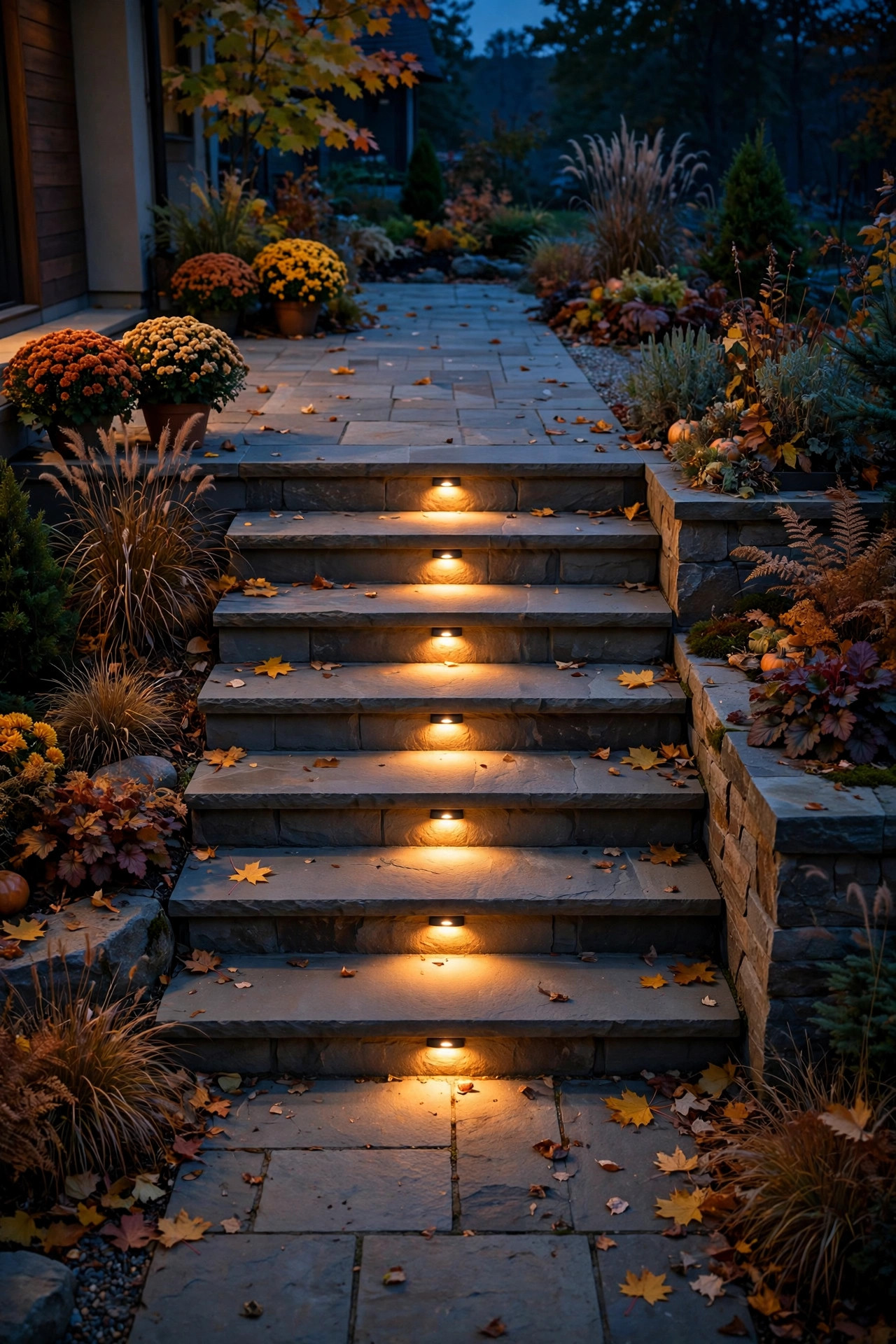
Earlier sunsets mean the patio steps you navigated by daylight all summer are suddenly in shadow by dinner. Small recessed step lights, or solar marker lights staked at each tread edge, fix the safety gap and look sharp doing it. I mark every level change: the step down from the door, the patio-to-lawn edge, and the turn toward the grill. Solar markers are the zero-wiring option and charge fine on September days, though I swap in a couple of hardwired low-voltage fixtures at the busiest step for reliability. Keep them warm-toned and shielded so they read as gentle dots of light rather than headlights. Fall adds a second hazard, wet leaves, which are slippery enough without poor lighting on top. Brushing leaves off the steps becomes a two-minute dusk ritual at my house, right when the lights click on. It is the least glamorous idea here and the one your ankles will thank you for in November.
Suggested budget range: $25 – $85.
15. Set Timers and Smart Plugs for the Shifting Sunset
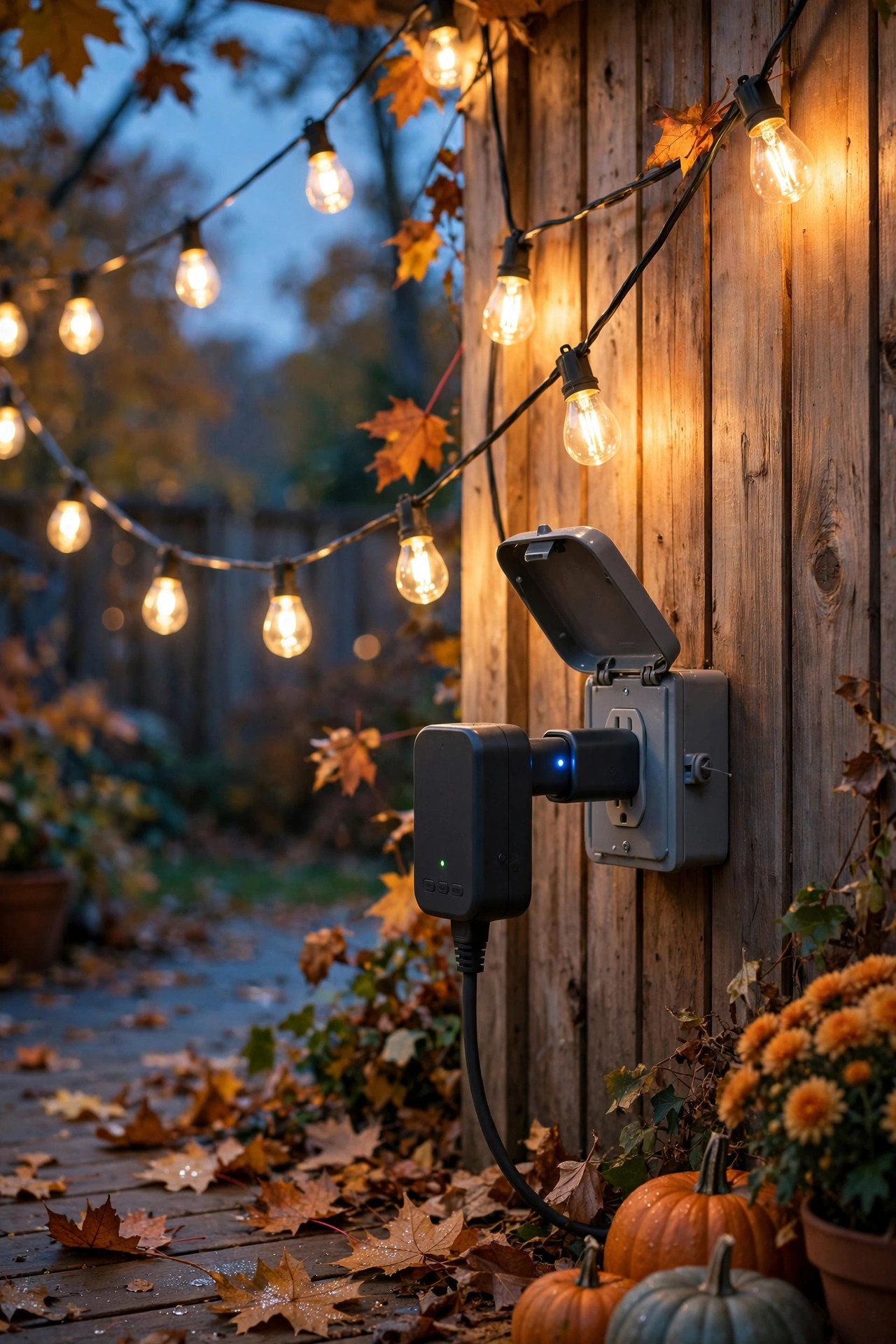
The sunset moves earlier by a minute or two every day in fall, and a fixed 7 p.m. timer that worked in August leaves you in the dark by October. An astronomical timer or smart plug solves this by tracking dusk itself. I run my string lights, sconces, and lanterns on one schedule: on at sunset, off at 10:30 p.m. on weeknights and midnight on weekends. Smart plugs rated for outdoor use handle the string lights, and grouping them in an app means one tap overrides everything for a party. Dimmers on a schedule are my secret luxury, full brightness while we cook and settle in, then an automatic fade to 60 percent for the cozy hours. This set-and-forget layer is also what makes the patio feel alive when you pull into the driveway, which is a small daily joy. If you travel in fall, the same schedule keeps the house looking happily occupied. Five devices, twenty minutes of setup, a whole season of never thinking about it.
Suggested budget range: $15 – $60.
16. Layer a Ceiling Fixture or Fan Light on Covered Patios
If your patio has a roof, you have a lighting superpower the open-air folks envy: a true overhead fixture. A ceiling light or fan light centered over the seating area gives you a strong base layer that makes every other accent look better. I keep mine on a separate dimmer from the string lights so I can choose between bright and practical, like board-game light, or low and atmospheric. Choose damp-rated or wet-rated fixtures depending on how exposed the ceiling edges are, and a warm 2700K bulb always. My notes on covered patio lighting ideas walk through fixture sizing, but the rule of thumb is one fixture per 100 square feet of covered space. In fall the fan still earns its keep on low, pushing warm air from a nearby heater or fire feature across the seating instead of letting it rise. Clean the blades and shade before the season starts; summer dust shows mercilessly once evenings get longer.
Suggested budget range: $60 – $200.
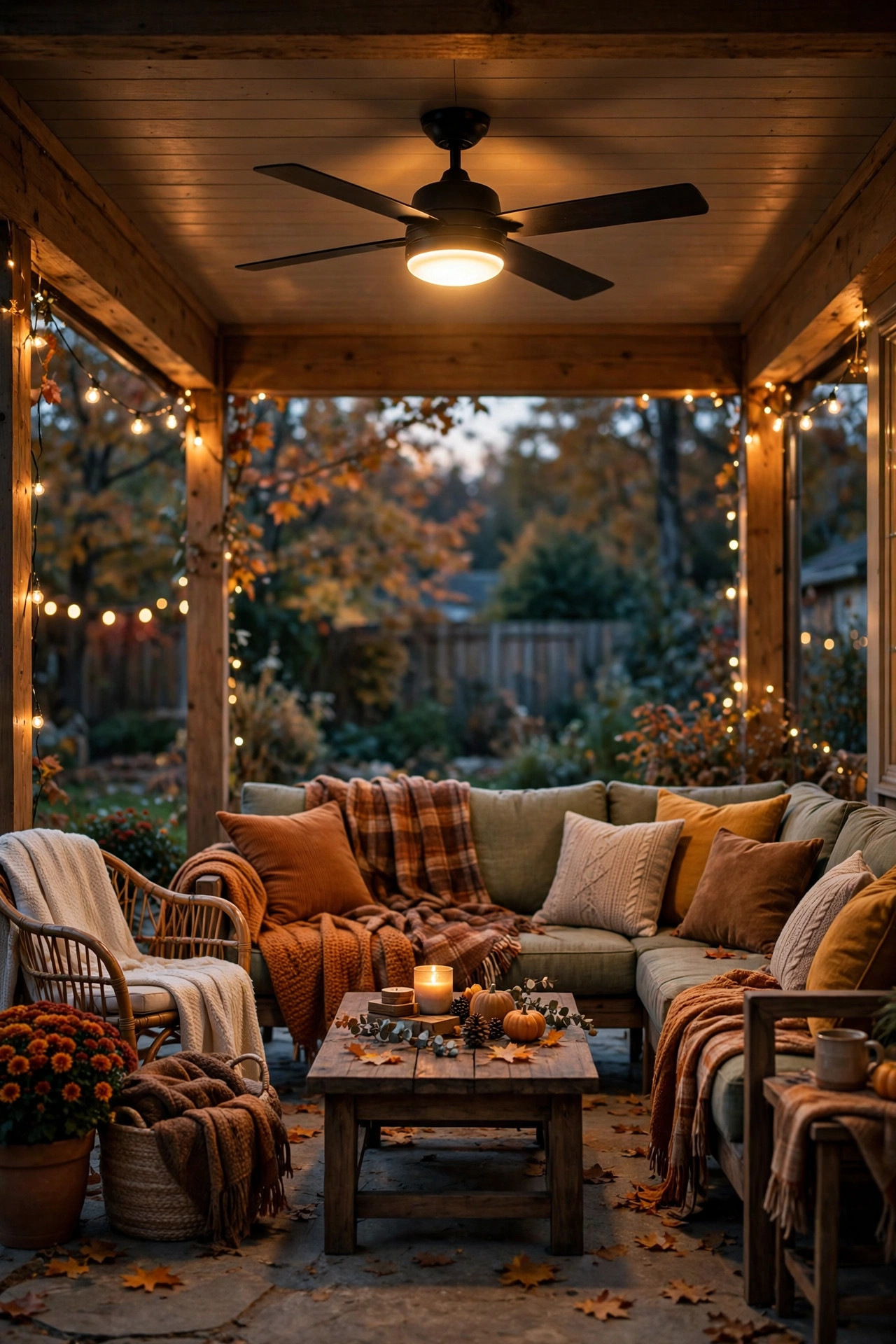
17. Pull It All Together With the Three-Layer Rule (Early Fall Patio Lighting Ideas That Always Work)
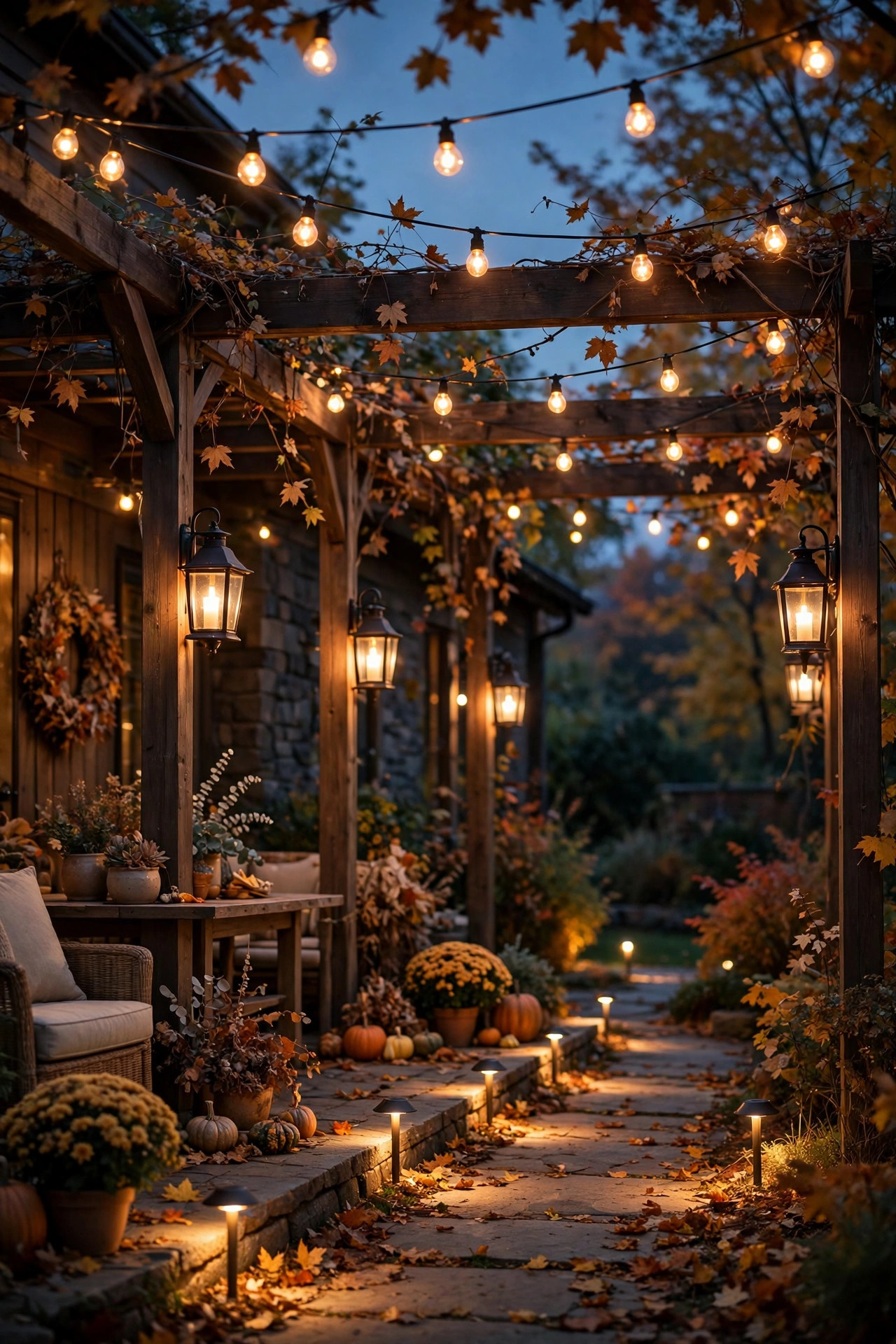
When friends ask why my patio feels so good in October, this is the recipe I give them, and it is the heart of all my early fall patio lighting ideas: light in three layers, always. Layer one is overhead, your string lights, pendant, or ceiling fixture, giving general glow. Layer two is eye level, lanterns, sconces, and the fire feature, putting warmth on faces and tabletops. Layer three is low, path lights, step lights, and under-bench strips, guiding feet and grounding the scene. Every layer runs warm, 2200K to 2700K, and at least one layer sits on a dimmer or timer. Walk your patio at dusk and squint: anywhere that reads flat black gets a small light, and anywhere that glares gets shielded or dimmed. You do not need all 17 ideas; pick one from each layer and you are 90 percent there. Add a plaid blanket and something warm in a mug, and the first cool nights become the season you plan your evenings around.
Suggested budget range: $75 – $250.
Frequently Asked Questions
What color temperature is best for fall patio lighting?
Warm wins in fall. I keep everything between 2200K and 2700K, because amber-leaning light flatters brick, wood, foliage, and skin tones on cool evenings. Anything 4000K or above reads blue and clinical once the leaves turn. Match the temperature across each zone so the patio feels like one designed space.
How do I keep patio lights safe around dry leaves and blankets?
Choose LED bulbs everywhere, since they stay cool to the touch, and use flameless candles instead of real flames near cushions, garlands, and leaf piles. Plug everything into GFCI-protected outdoor outlets, keep cords off walkways, and rake dry leaves away from fixtures weekly. Fixtures should carry a damp or wet location rating for uncovered patios.
Can solar lights still work as the days get shorter?
Yes, through the first cool nights, because early fall days still deliver enough sun to charge them for an evening of light. Expect shorter runtimes by late October, especially in northern states or shaded yards. For must-stay-lit spots like steps, I switch to low-voltage wired fixtures and keep solar for accents.
When should I put up my fall patio lighting?
I start the weekend after Labor Day. The sunset shifts fast in September, and having the layers in place early means you catch every mild evening instead of scrambling in October. Most of these ideas install in under an hour, and timers handle the earlier dusk automatically as the season deepens.
Conclusion
The first cool nights ask only one thing of your patio: warmer, lower, layered light. Start with one idea from each layer, overhead, eye level, and ground, and your early fall patio lighting ideas will carry you from September cider straight through the last bonfire of November. Browse the rest of the site for more seasonal setups, then come back and tell me which layer changed your patio the most.