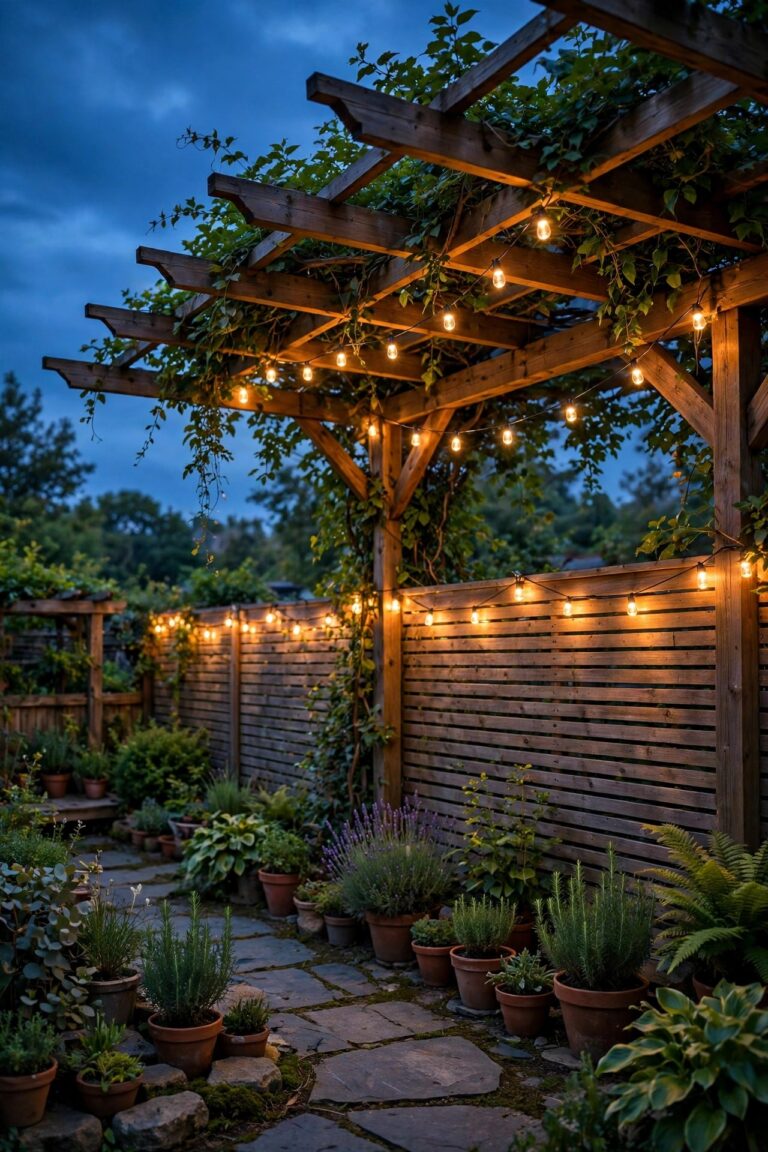
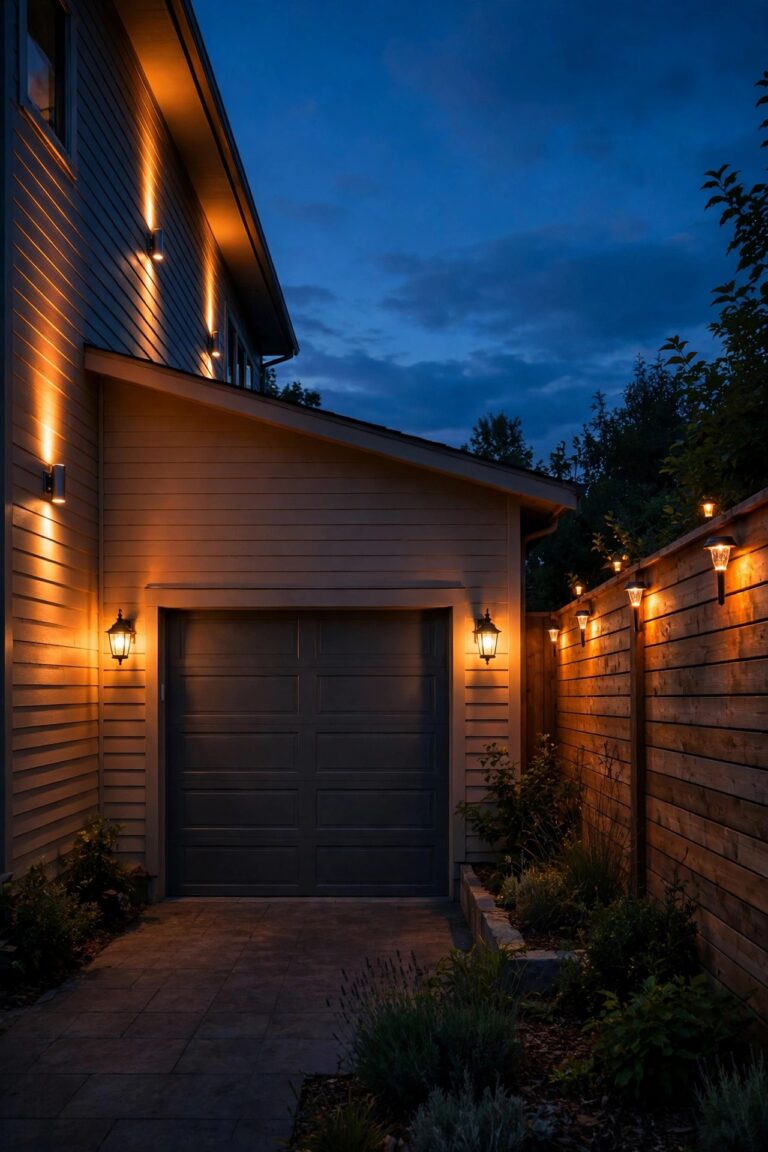
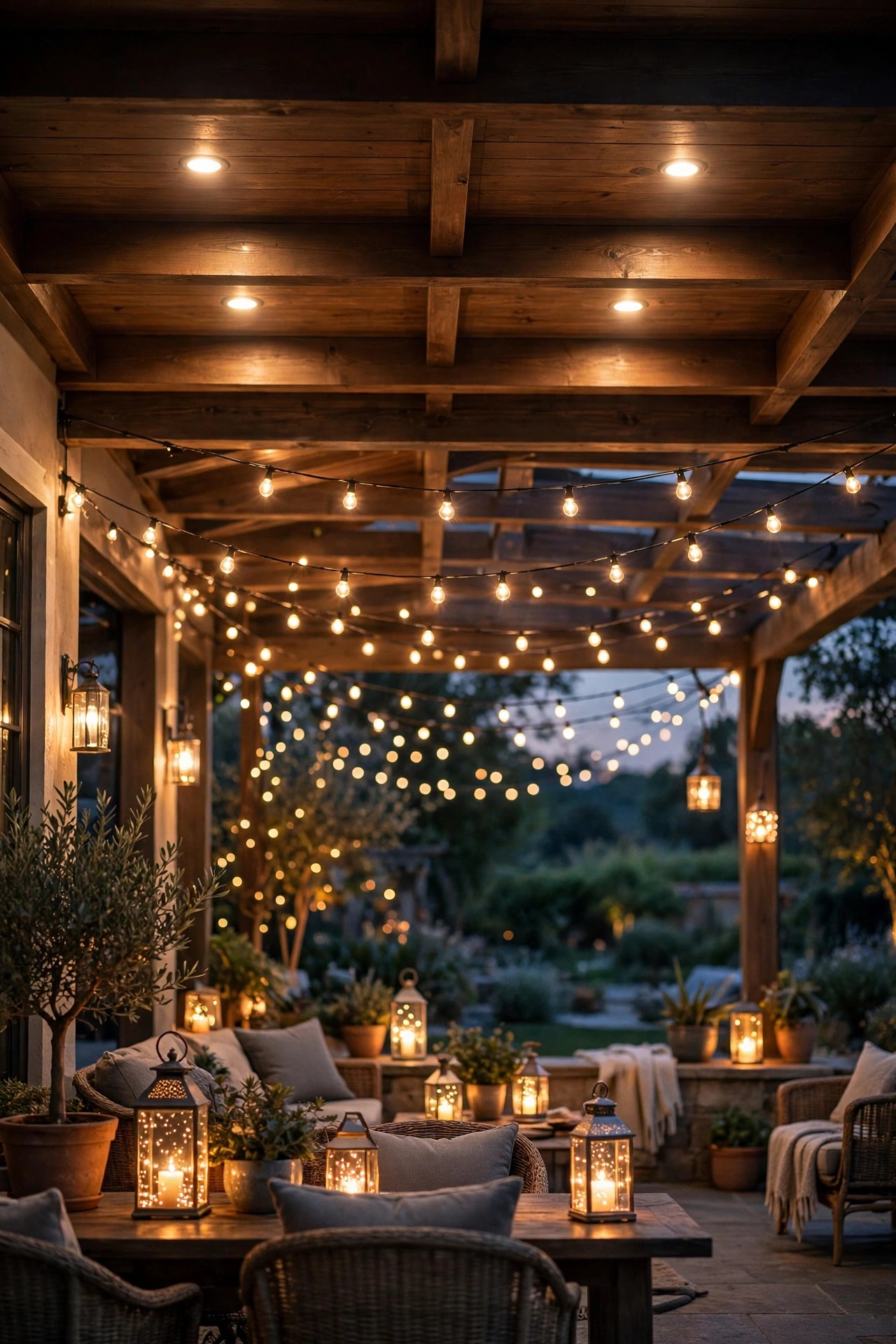
There's a special kind of smug satisfaction in sitting on your patio with a cup of coffee while rain drums on the roof overhead and everyone else's yard sits dark and soggy. A covered patio is the hardest-working room in the house — if the lighting keeps up. In my experience, the best covered patio lighting ideas treat that roof as a gift: it protects your fixtures, lets you hang things you'd never dare in the open yard, and turns one ceiling junction box into a whole evening's worth of glow. The secret, as always, is layering. You want one dependable overhead light for everyday tasks, a softer middle layer for dining and conversation, and a little sparkle at eye level so faces look warm instead of washed out. Because the space is sheltered, you can mix damp-rated ceiling fixtures, plug-in string lights, and battery lanterns without worrying a storm will ruin them by Friday. Below are 19 ideas, from a $25 weekend tweak to a proper Saturday project, each with honest budget ranges and the placement details that actually matter — bulb temperature, spacing, dimmers, and which fixtures need a damp-location rating to live safely under your roof.
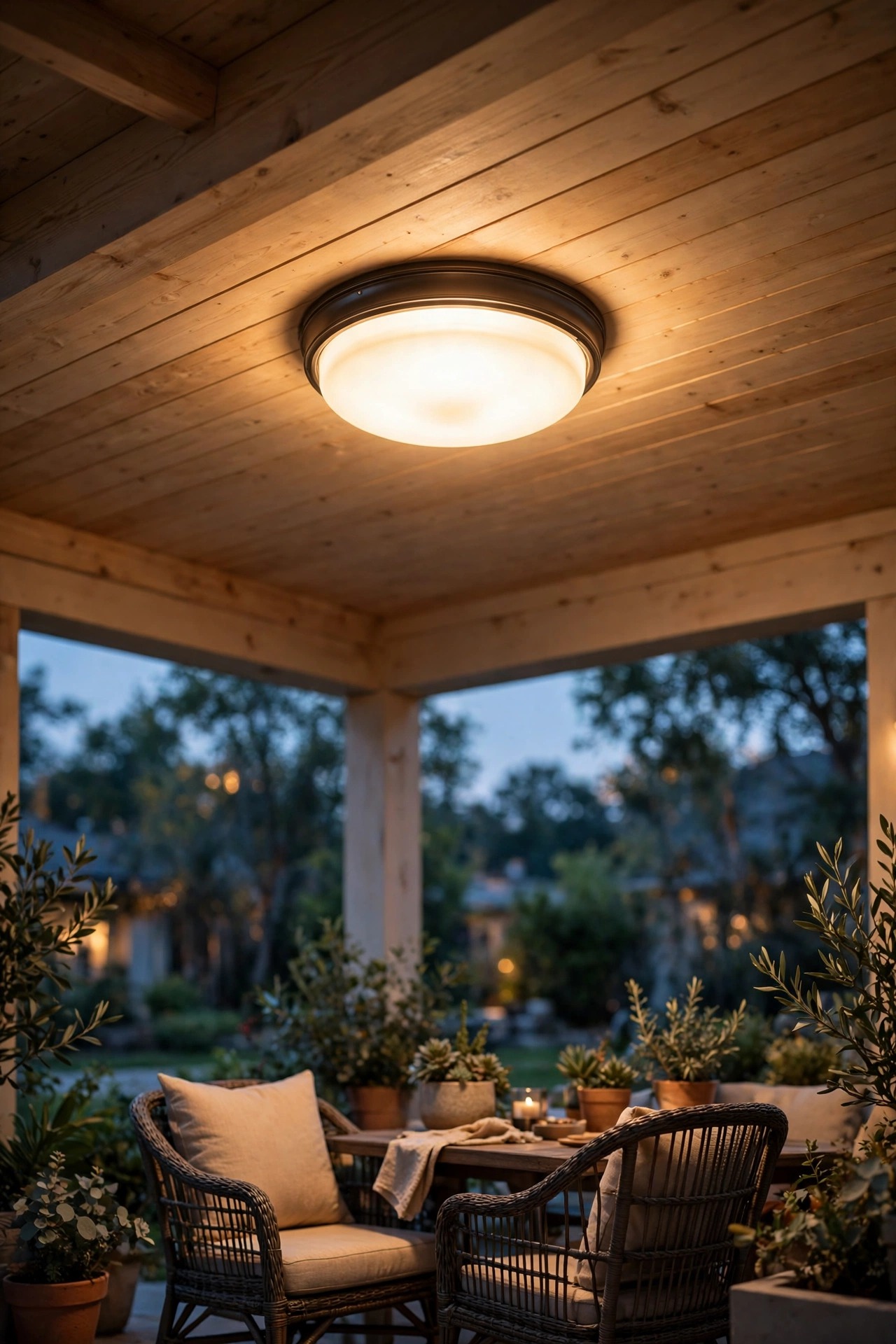
1. A Flush-Mount Ceiling Fixture as Your Everyday Anchor
Almost every covered patio starts with one ceiling junction box, usually wearing a sad little builder-grade dome. Swapping it for a damp-rated flush-mount LED fixture is the single smartest upgrade on this list. Look for an integrated LED or a fixture that takes standard bulbs, in 2700K warm white — daylight-blue bulbs make a patio feel like a parking garage, honestly. Aim for 800 to 1,600 lumens depending on patio size; a 12-by-14-foot space is happy around 1,200. If your ceiling is taller than 8 feet, a semi-flush mount drops the light a little closer to the action. Frosted or opal glass diffuses the light so you're not staring at bare diodes, and a simple black or bronze finish works with almost any house style. Here's the part people skip: put it on a dimmer switch from day one. Full brightness is for grilling and board games with the kids; dinner with friends wants about half that. Because the fixture lives under a roof but still breathes outdoor air and humidity, "damp location" rating is non-negotiable — indoor-only fixtures corrode and can become a genuine safety issue.
Suggested budget range: $60 – $180.
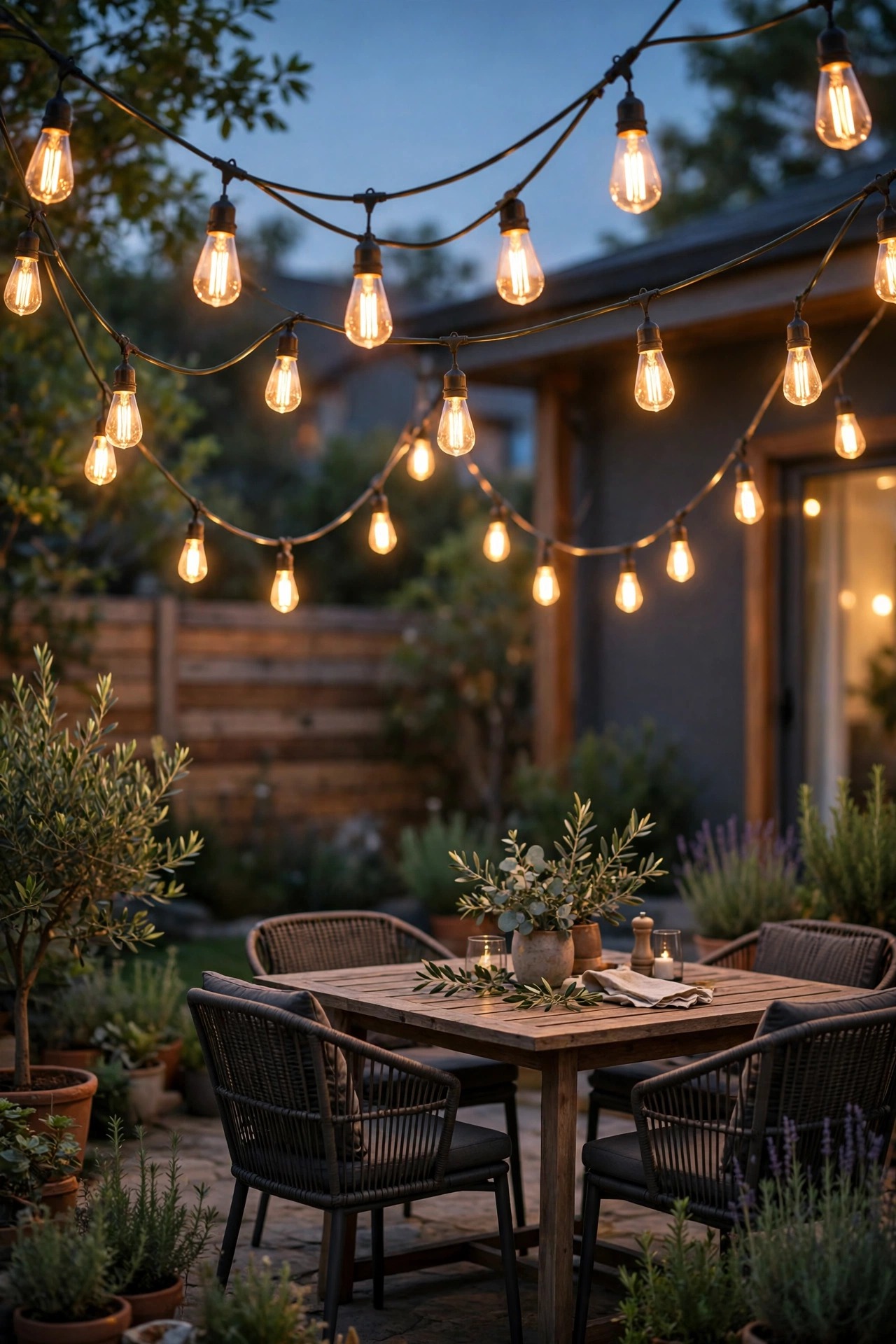
2. Covered Patio Lighting Ideas Using Bistro String Lights
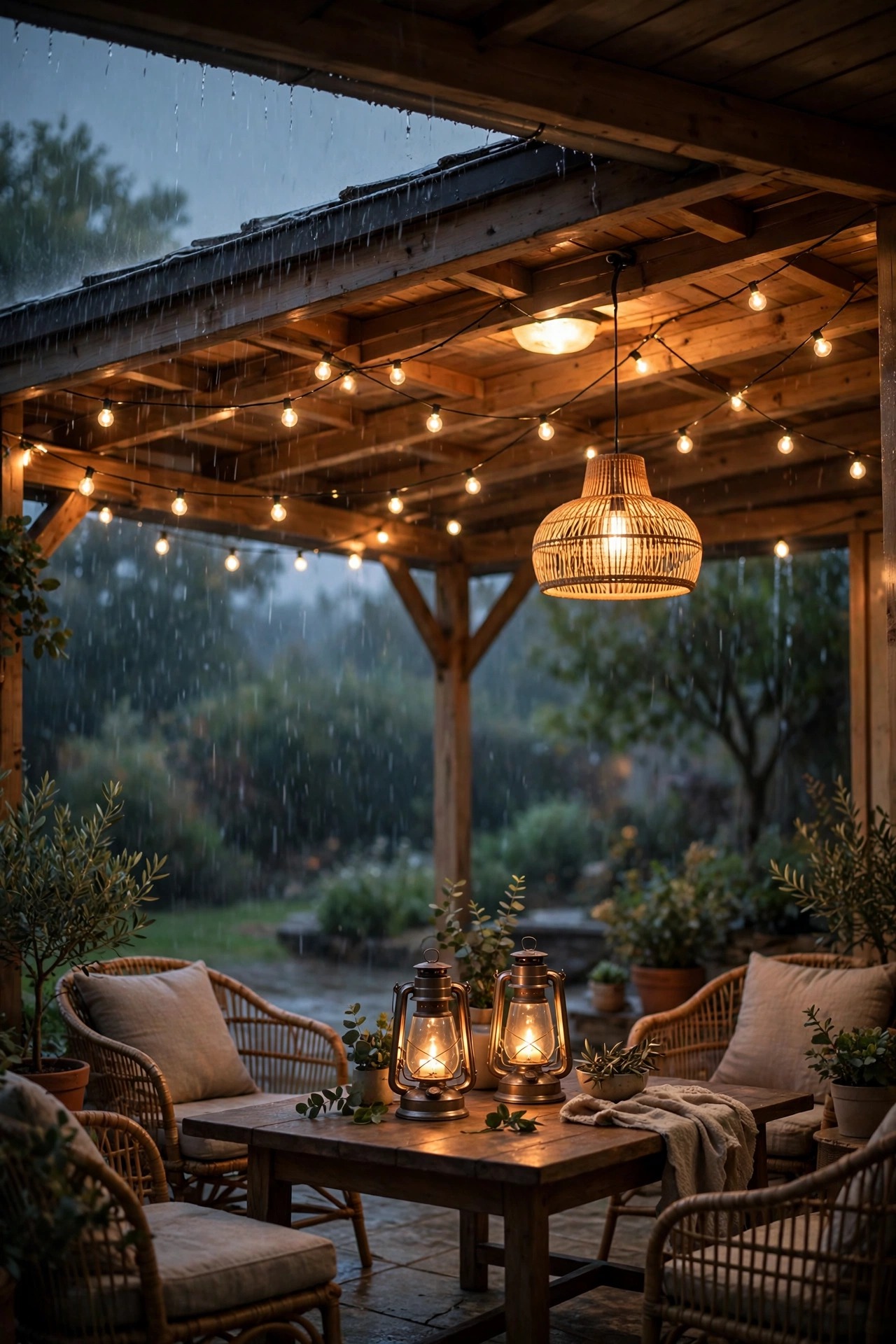
If the ceiling fixture is the anchor, string lights are the personality. Commercial-grade bistro strands are my go-to because the sockets are sealed, the bulbs are shatterproof LED, and the cords handle weather without cracking. Under a patio roof you have a huge advantage: beams and rafters give you perfect anchor points, so you can swag the strands in gentle catenary curves, about 6 to 10 inches of dip per 10 feet of run. Zigzag them across the ceiling for full coverage, or run two parallel lines over a dining table to frame the zone. Keep bulbs at least a foot below roofing material — LED bulbs barely get warm, but clearance keeps everyone honest — and use a guide cable on runs longer than 20 feet so the sockets aren't carrying the weight. My favorite setup puts the whole strand on a plug-in dimmer so it becomes your middle layer: bright for appetizers, low and golden for dessert. If you want more hanging styles and spacing tricks, I keep a whole list of bistro string light ideas with photos from readers' yards.
Suggested budget range: $35 – $120.
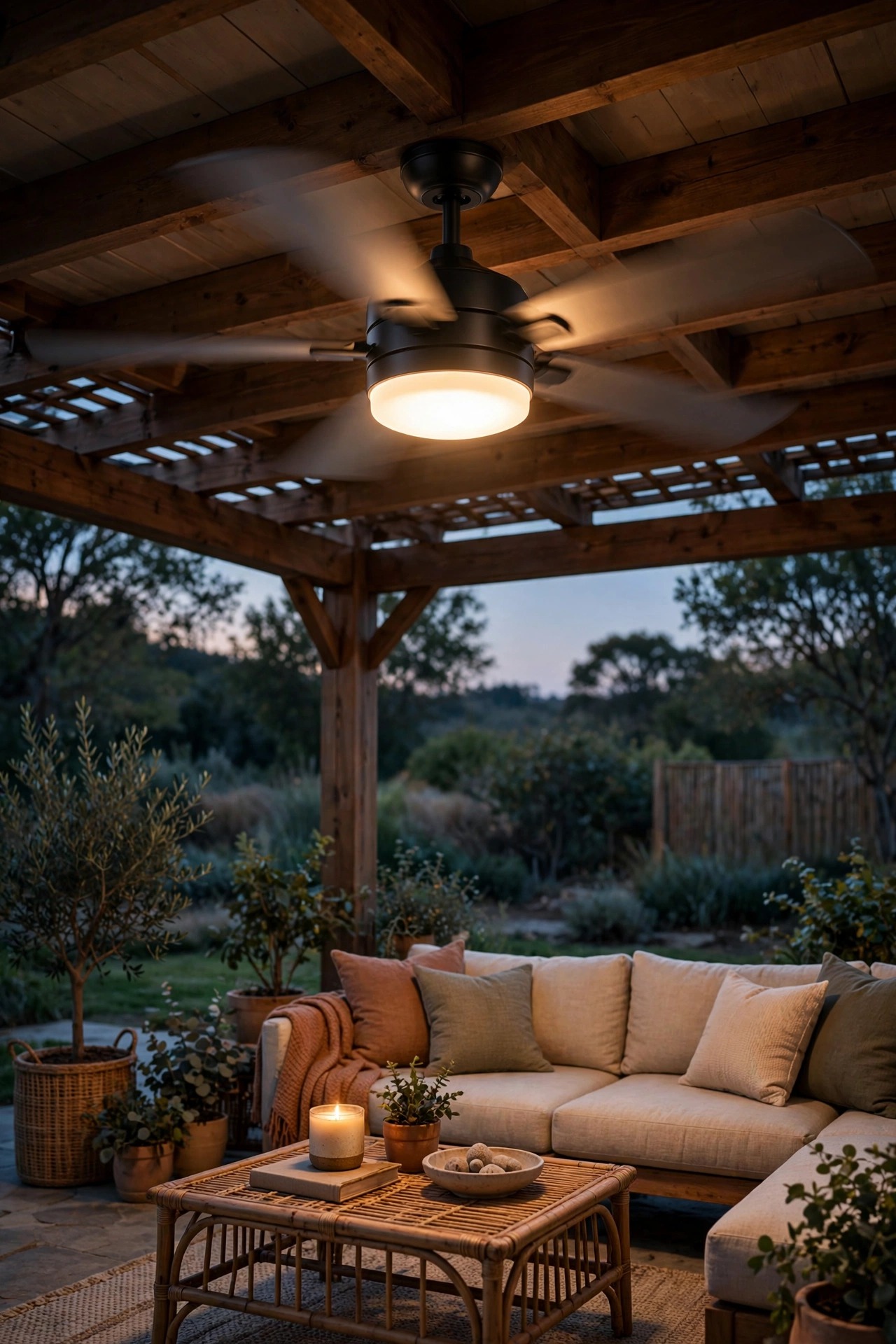
3. A Ceiling Fan With a Light Kit for Breeze and Glow
A covered patio in July is lovely; a covered patio in July with moving air is heaven. A damp-rated ceiling fan with an integrated light kit does double duty, and the gentle breeze genuinely does discourage mosquitoes, which can't fly well in it. Match the blade span to your space: 44 inches for a small 10-by-10 patio, 52 inches for anything up to about 225 square feet, and 60 inches for big great-room-style covers. The fan must be rated for damp locations — that rating covers the motor housing and blades against humidity warp. Choose one with a remote so you can run the light and fan independently, and ideally put the light on a dimmer-compatible setting. One honest warning: a fan light alone is usually a bit glaring as your only source, because the bulbs sit in one central cluster. Treat it as your overhead anchor and layer softer light around the edges, exactly like the other ideas here. Also check head clearance — you want at least 7 feet from floor to blades, more if tall family members pace underneath.
Suggested budget range: $150 – $450.
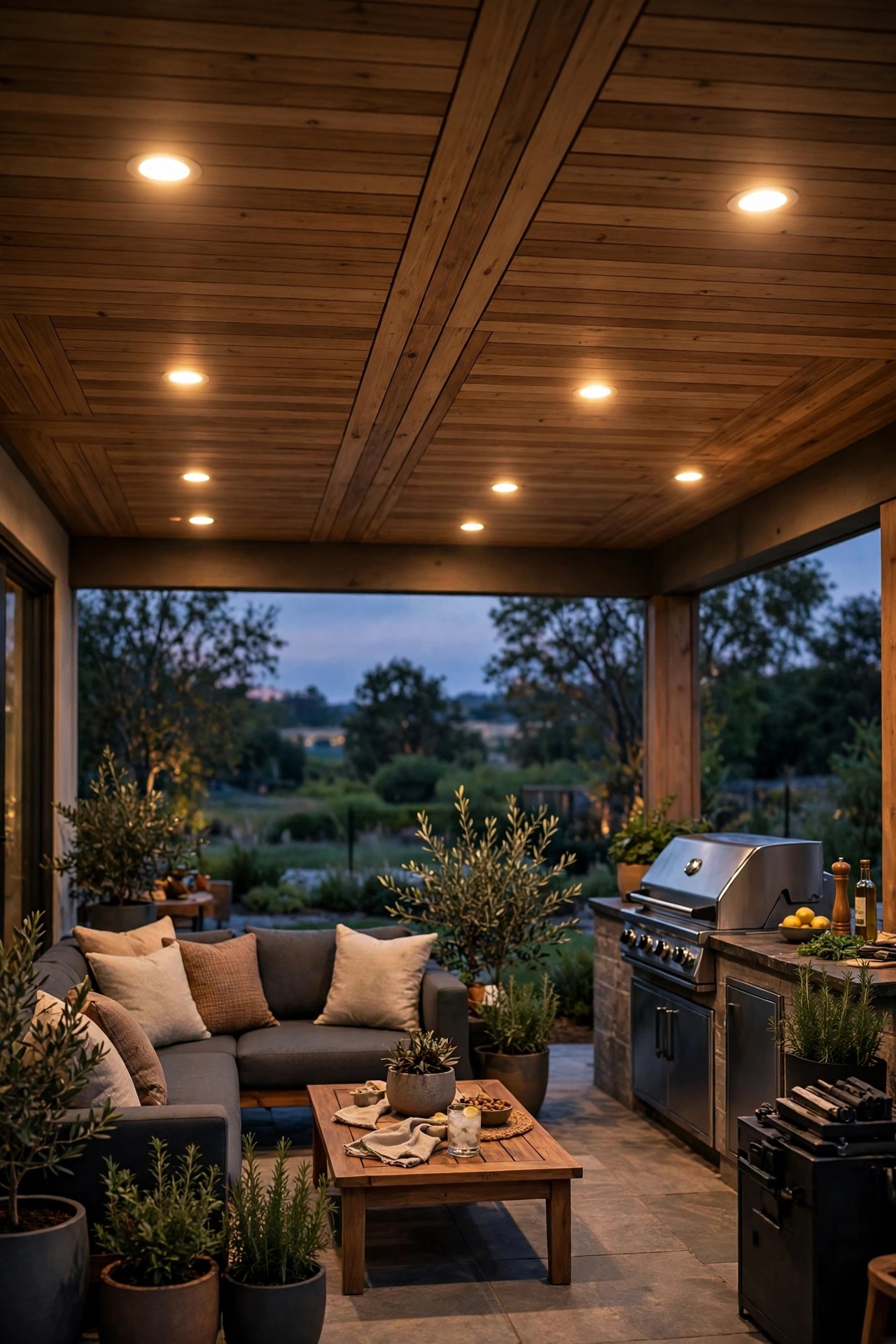
4. Recessed Can Lights for a Clean, Built-In Look
If you're building a new patio cover or your ceiling is accessible from above, recessed lights give the most polished result of all. Modern 4-inch LED retrofit modules are damp-rated, dim beautifully, and sip electricity. The trick is placement: resist the urge to space them in a perfect grid like a kitchen. Instead, put them over zones — a pair over the grill station, a pair over seating, one near the door. Roughly 4 to 5 feet apart is a good rhythm, and gimbal trims that tilt let you wash a fireplace wall or artwork instead of the floor. Because this is hardwired work on an outdoor circuit, everything should run through GFCI protection, and if you're not comfortable in the ceiling, an electrician can usually finish a four-light install in half a day. Recessed lights are bright and shadowless, which is wonderful for tasks and terrible for romance, so pair them with dimmers and let the warmer layers do the evening work. Retrofit modules with selectable color temperature let you land exactly on 2700K.
Suggested budget range: $200 – $600.
5. Pendant Lights Over the Dining Table
A pair or trio of pendants over an outdoor dining table makes the whole patio feel like a restaurant you'd actually pay for. Hang them so the bottom of the shade sits 30 to 36 inches above the tabletop — low enough to feel intimate, high enough that nobody bonks a forehead standing up. Under a solid roof, damp-rated pendants are fine; metal shades in black or aged copper shed the look beautifully, and an open-bottom design throws useful light straight onto plates. Use 2700K LED bulbs around 450 to 800 lumens each and always, always put them on a dimmer. Two pendants suit a 6-foot table; go to three for 8 feet or longer, spaced evenly with about 24 to 30 inches between shades. Plug-in swag pendants are the renter-friendly version — a ceiling hook and a cord cover get you 90 percent of the look with zero wiring. Just make sure any plug-in version is rated for outdoor use and plugged into a GFCI outlet with an in-use cover.
Suggested budget range: $75 – $300.

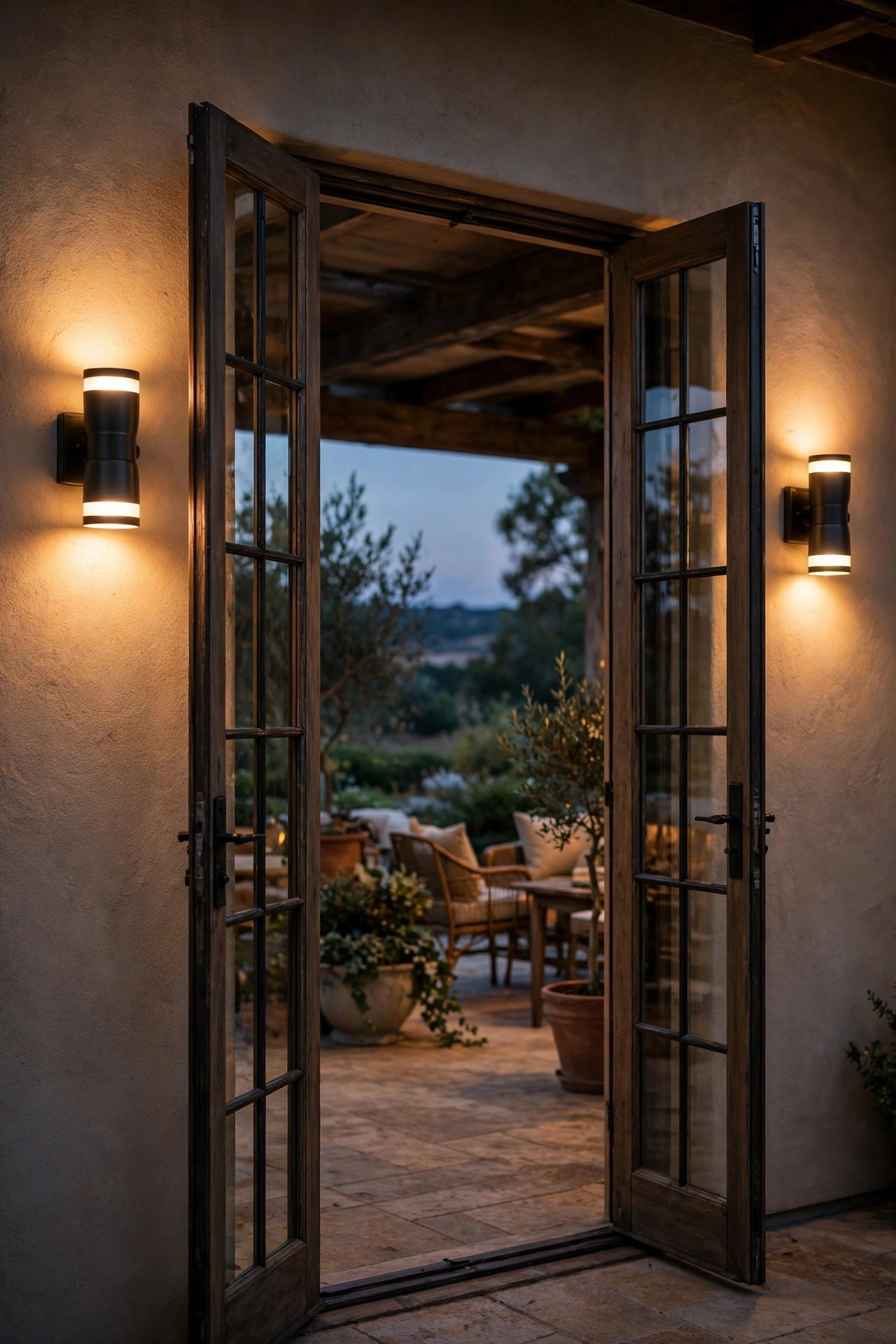
6. Wall Sconces Flanking the Door
The wall between your house and patio is prime real estate, and a pair of sconces flanking the sliding door or French doors gives you light exactly where you step in and out. Mount them 60 to 66 inches from the floor to the center of the fixture, which puts the glow at face height without shining straight into eyes. Up-down sconces are my favorite style here: they wash the wall with soft light in both directions and keep direct glare to a minimum. Output of 450 to 800 lumens per sconce is plenty — these are a middle layer, not stadium lights. Hardwired sconces look cleanest and can share the door's porch circuit, but plug-in versions with a painted cord channel work well too. Choose a finish that echoes your door hardware so the wall reads as one intentional composition. Damp-location rating applies here as everywhere under the roof. If your patio door wall is long, a third sconce near the grill end balances the composition and gives the cook some love.
Suggested budget range: $50 – $220.
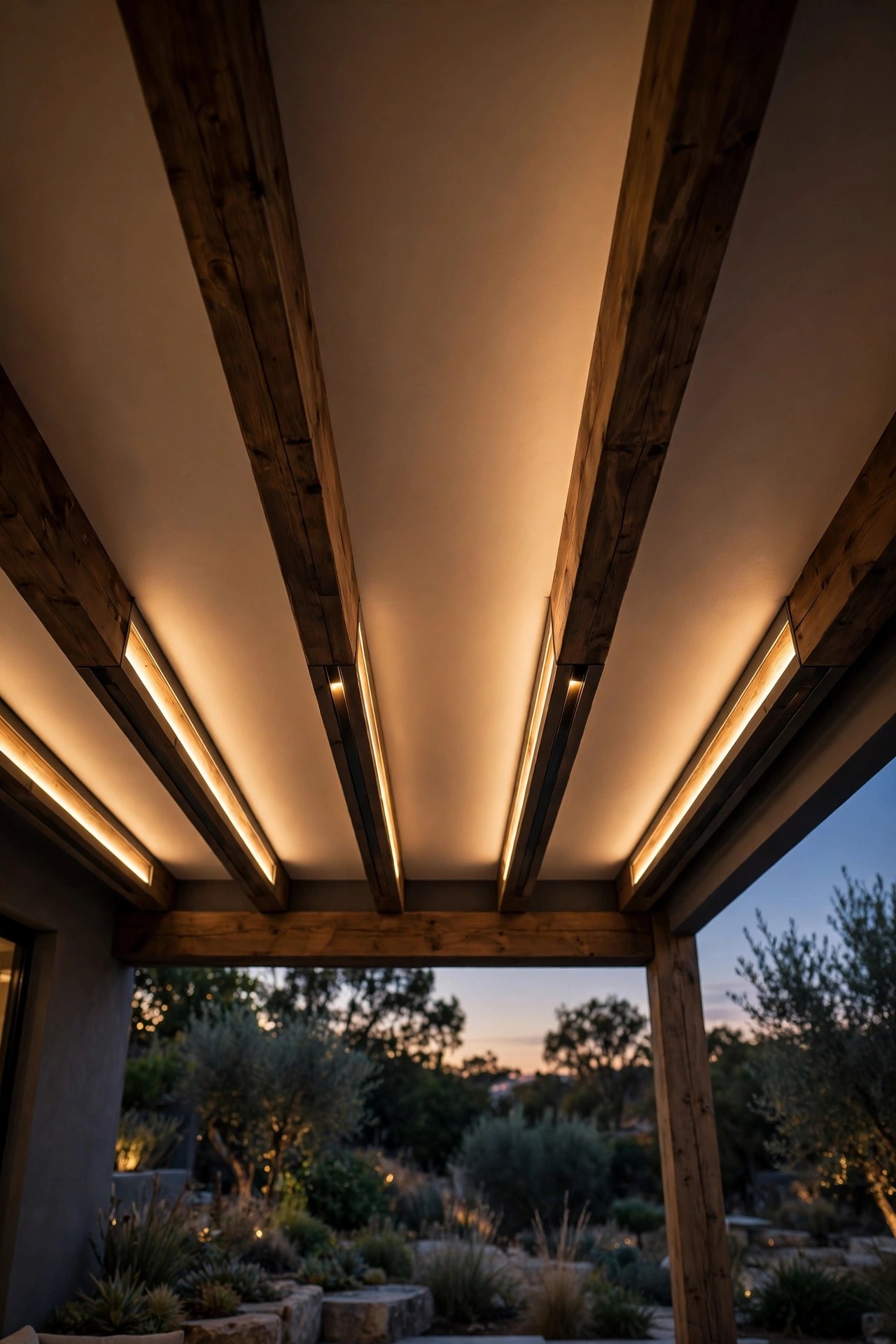
7. LED Strip Lights Tucked Along the Beams
This is the trick I steal from every fancy restaurant patio: hide the light source, keep the glow. Peel-and-stick LED strip lights tucked into an aluminum channel along the underside of your beams bounce soft, even light off the ceiling so the whole space lights up without a visible bulb anywhere. The aluminum channel matters — it diffuses the individual diodes into a smooth line and protects the strip from humidity. Choose an IP65-rated strip in 2700K, and hide the power supply (the driver) inside a beam pocket or behind a post. In my experience this is the single best light for watching a game on an outdoor TV, because there's zero glare on the screen. It's also wonderfully cheap to run: a 16-foot strip uses about as much power as one old incandescent bulb. Secure the channel with screws or clips every 12 inches rather than trusting adhesive alone through summer heat. Keep the run on a dimmer or a smart plug with a schedule, and it doubles as your "welcome home" light at dusk.
Suggested budget range: $40 – $130.
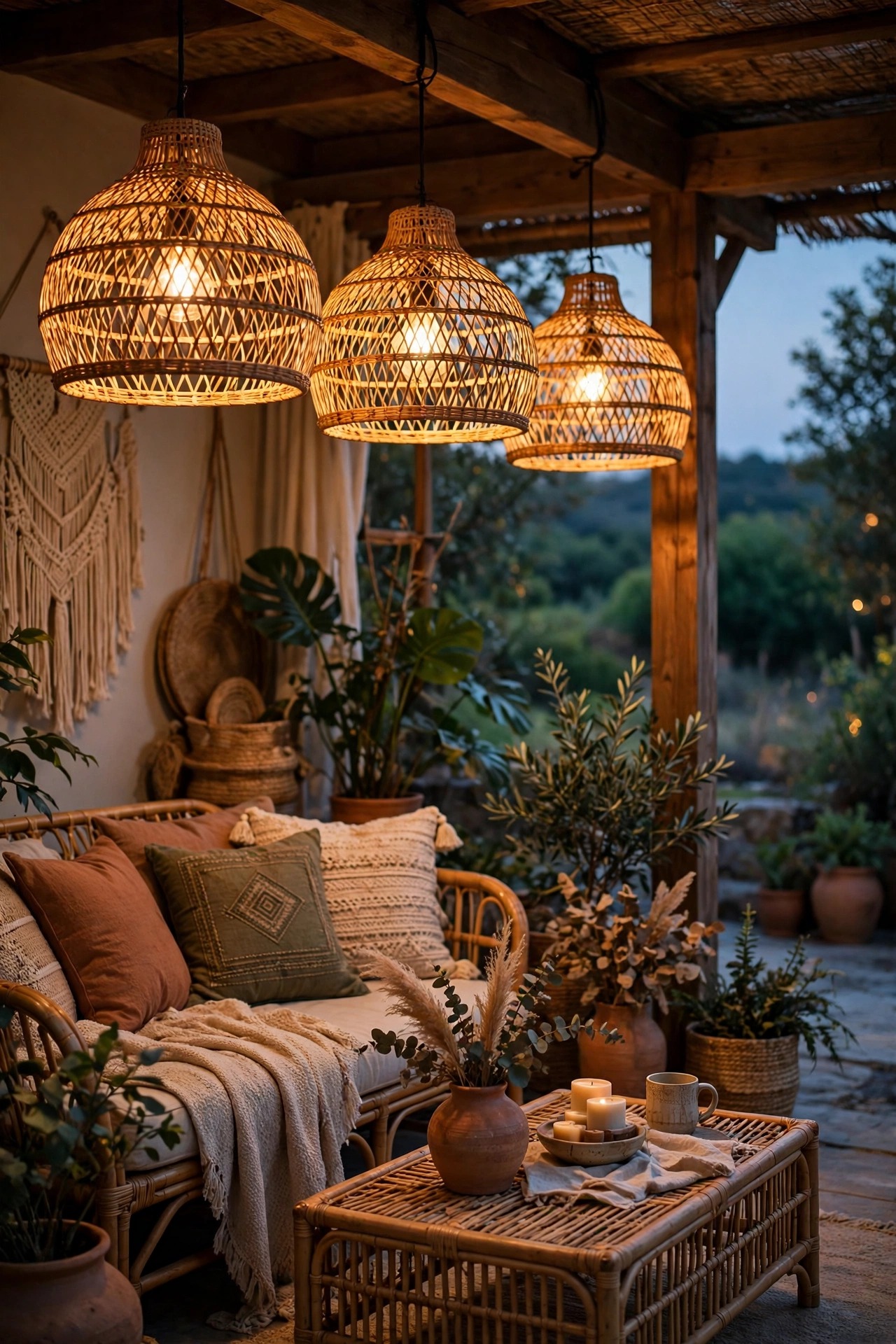
8. Rattan and Woven Pendants for Soft, Boho Warmth
Sometimes you want the light itself to feel like a vacation. Oversized rattan, seagrass, and bamboo pendants filter light through their weave and throw the prettiest patterned shadows across the ceiling. Under a solid patio roof they're protected from direct rain, but humidity is real, so treat natural shades as a seasonal pleasure — bring them in for the wettest winter months if your climate is harsh, or choose resin-wicker lookalikes that shrug off moisture completely. One non-negotiable safety rule: LED bulbs only in woven shades. Old incandescent bulbs get hot enough to scorch natural fibers, and honestly the warm LED filament styles look better through rattan anyway. A single large pendant (24 inches or wider) anchors a lounge corner; a row of three smaller ones marches nicely over a long table. Keep total wattage-equivalent modest — the shade eats some light — and back them up with your other layers. The look pairs beautifully with linen cushions, a jute rug rated for outdoors, and exactly zero effort on your part after hanging day.
Suggested budget range: $45 – $160.
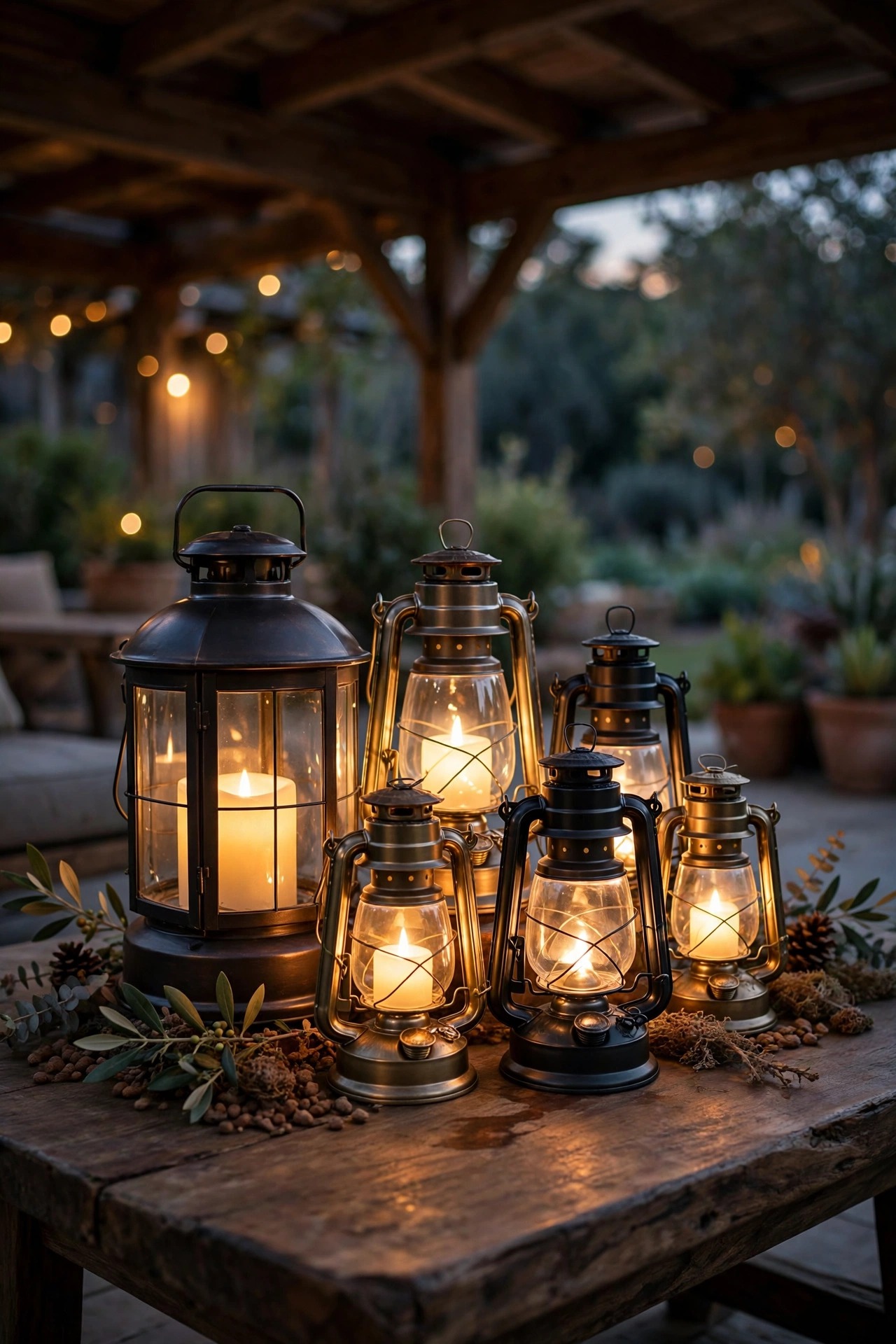
9. Battery Lanterns Clustered on the Table
Not every glow needs an outlet. A cluster of battery-powered lanterns with flameless LED candles is the fastest five-minute makeover on this list, and it's the layer that saves you on the night the power flickers during a storm. Group lanterns in odd numbers — three is magic — at mixed heights on a tray so you can carry the whole arrangement in one trip. Look for candles with a built-in timer; the 6-hours-on setting means they light themselves every evening at dusk like tiny reliable employees. Mix materials: a couple of black metal hurricane lanterns, one glass, one wooden. The battery candles with a realistic flicker and a warm 2200K-ish tone read as genuine flame from two feet away. Because they're fully portable, they migrate to the steps, the side table, or the middle of the yard for s'mores night. If lantern styling is your weakness like it is mine, there are dozens more shapes in these hanging lantern ideas to mix in.
Suggested budget range: $25 – $90.
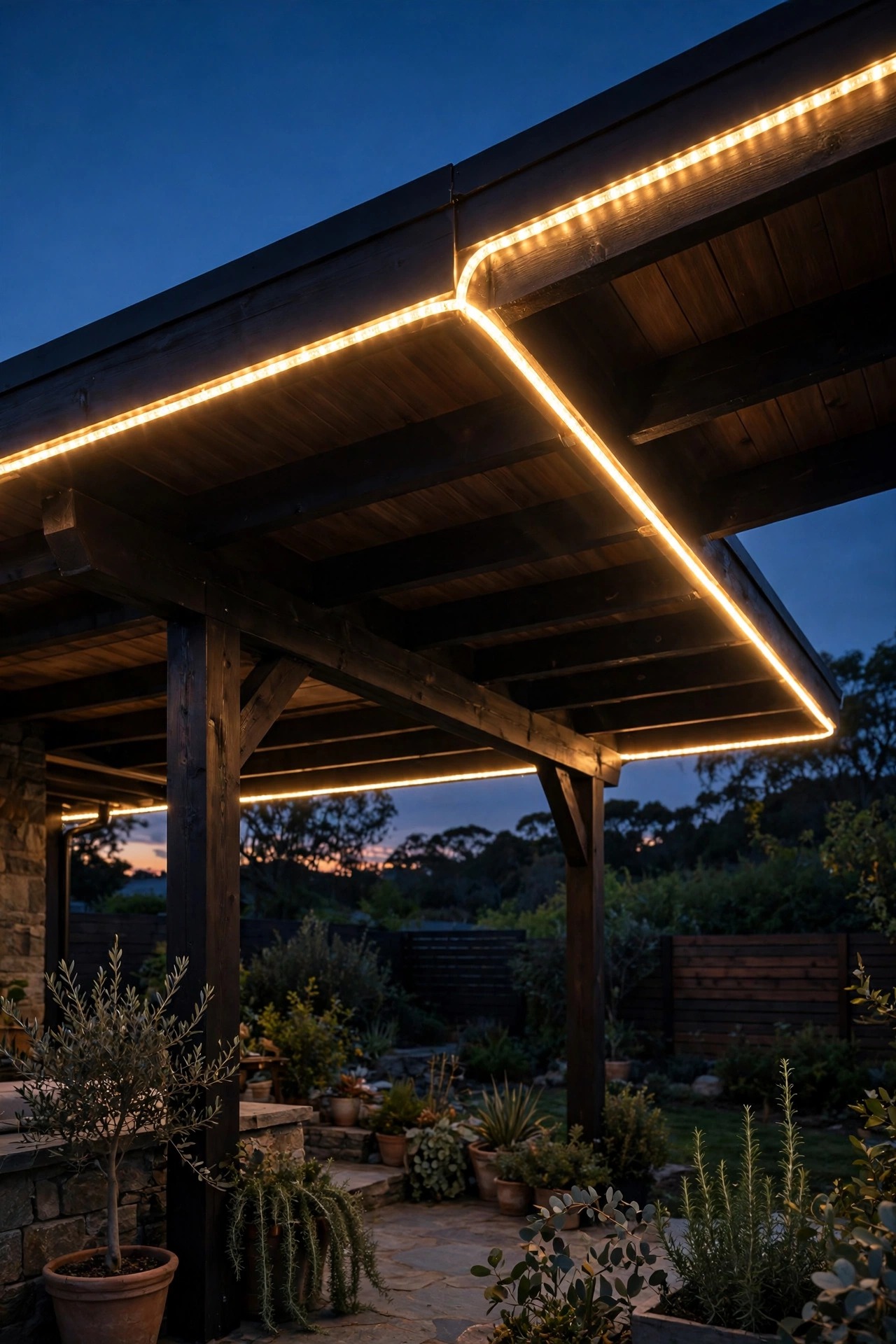
10. Rope Light Along the Patio Edge
Rope light is the unsung hero of defining space. Run a warm-white LED rope along the underside of the roofline edge, the top of a railing, or the base of the patio where it meets the steps, and suddenly the patio reads as a finished room with walls made of light. LED rope stays cool, handles humidity happily, and mounts with simple clips every 12 to 18 inches — please use the clips, because sagging rope light looks like a forgotten holiday. Check the package for the maximum connectable length (often around 150 feet for LED) and never coil the excess while it's plugged in, since trapped heat shortens its life. My favorite placement is along the open edge of the roof where rain sheets off: on a stormy night the curtain of rain beyond the light line looks genuinely magical from a dry chair. Put it on a timer plug so the edge glows from dusk to bedtime without you thinking about it. Choose 2700K to match your other layers — mismatched color temperatures are the number-one reason a patio looks "off."
Suggested budget range: $30 – $100.
11. Dimmers and Smart Bulbs for Two Patios in One
Here's the honest truth about patio lighting: the right brightness at 6 p.m. is wrong at 9 p.m. A dimmer is what turns one patio into two. The cheapest path is a plug-in dimmer for your string lights and rope lights; the polished path is a smart dimmer switch for the ceiling fixture plus warm-dim bulbs that get more golden as they lower, mimicking candlelight. Smart bulbs in the sconces and pendants let you build scenes — "Grill Night" at full warm brightness, "Movie" with everything at 20 percent, "Party" with a little extra sparkle. Keep one ordinary manual switch in the mix so guests and grandparents aren't stranded in the dark negotiating with an app. Set an automation to bring the patio up to 40 percent at sunset and you'll walk out after dinner to a space that's already glowing. Small detail that matters: make sure your dimmer is rated for LED loads, because old incandescent dimmers can make LED bulbs buzz or flicker at low settings.
Suggested budget range: $20 – $110.
12. Covered Patio Lighting Ideas With Solar Lanterns as Backup Glow
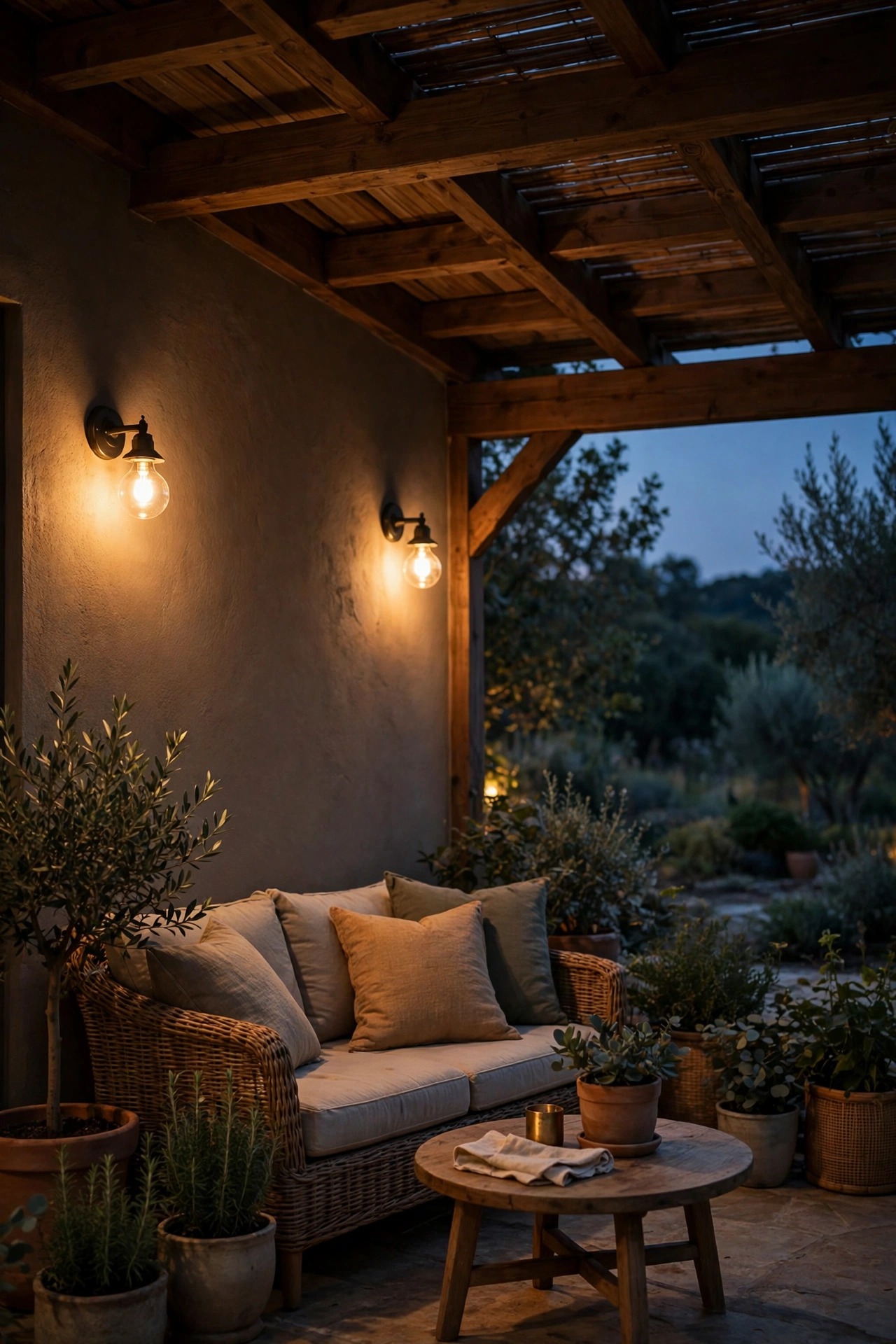
Solar under a roof sounds like a contradiction, and it is — if you leave the lanterns there to charge. The trick is to treat solar lanterns as portable accents, not fixtures. Park them on a sunny railing or step during the day, then hang them from the patio beams or set them on tables at dusk. Solar string lights work the same way: mount the little panel at the sunny edge of the roof where it catches full sun, and run the strand underneath where you actually want the light. This hybrid routine is perfect for renters and for patios with exactly one outlet that's already busy. It's also your insurance policy: when a summer thunderstorm knocks out the power, your patio keeps glowing like nothing happened, which feels wonderful. Quality varies wildly with solar, so buy lanterns with replaceable batteries and real on-off switches. Expect a softer, shorter glow than wired light — four to eight hours is typical — and think of them as the sparkle layer, never the main course.
Suggested budget range: $30 – $85.
13. A Curtain of Fairy Lights on the Open Side
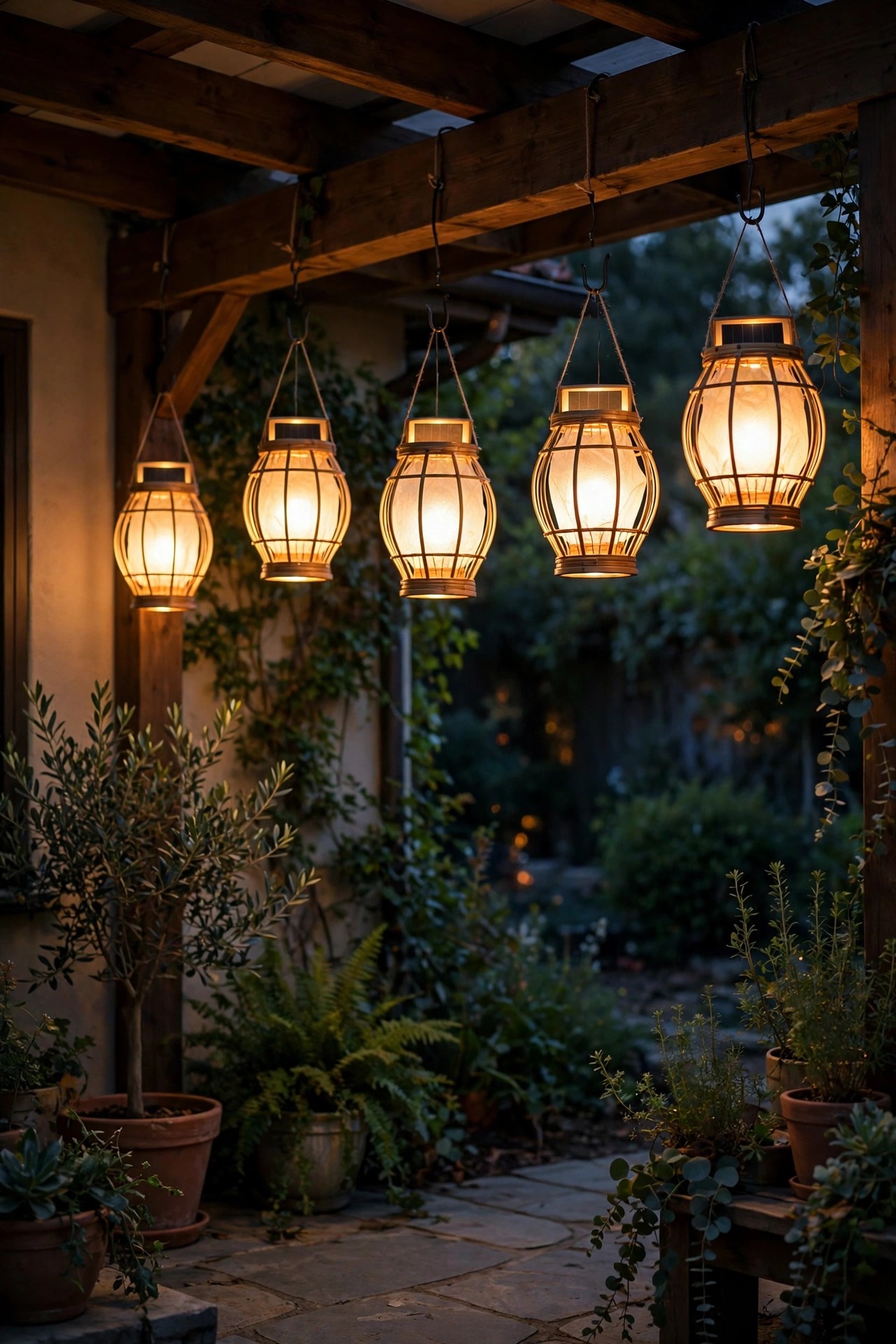
Every covered patio has one open side that faces the yard, and a curtain of copper-wire fairy lights turns that opening into a sparkling scrim. Curtain strands — vertical drops hanging from one horizontal line — are made for this: hook them along the roof edge or a tension wire and let them fall 6 to 8 feet. On rainy evenings the drops catch the light through the falling water beyond, and from inside it looks like dining inside a snow globe, minus the snow. Choose warm white, an outdoor-rated plug or battery pack, and a strand with a gentle twinkle mode for holidays. Installation is pure hooks and patience; small screw-in cup hooks every couple of feet keep the top line tidy. Fairy lights are delicate, so think of them as jewelry rather than infrastructure — they won't light a grill or a book, and they don't need to. One caution: keep battery packs and connections sheltered under the roof edge, since those little boxes are the least weatherproof part of the whole system.
Suggested budget range: $20 – $60.
14. An Outdoor Chandelier Over the Conversation Zone
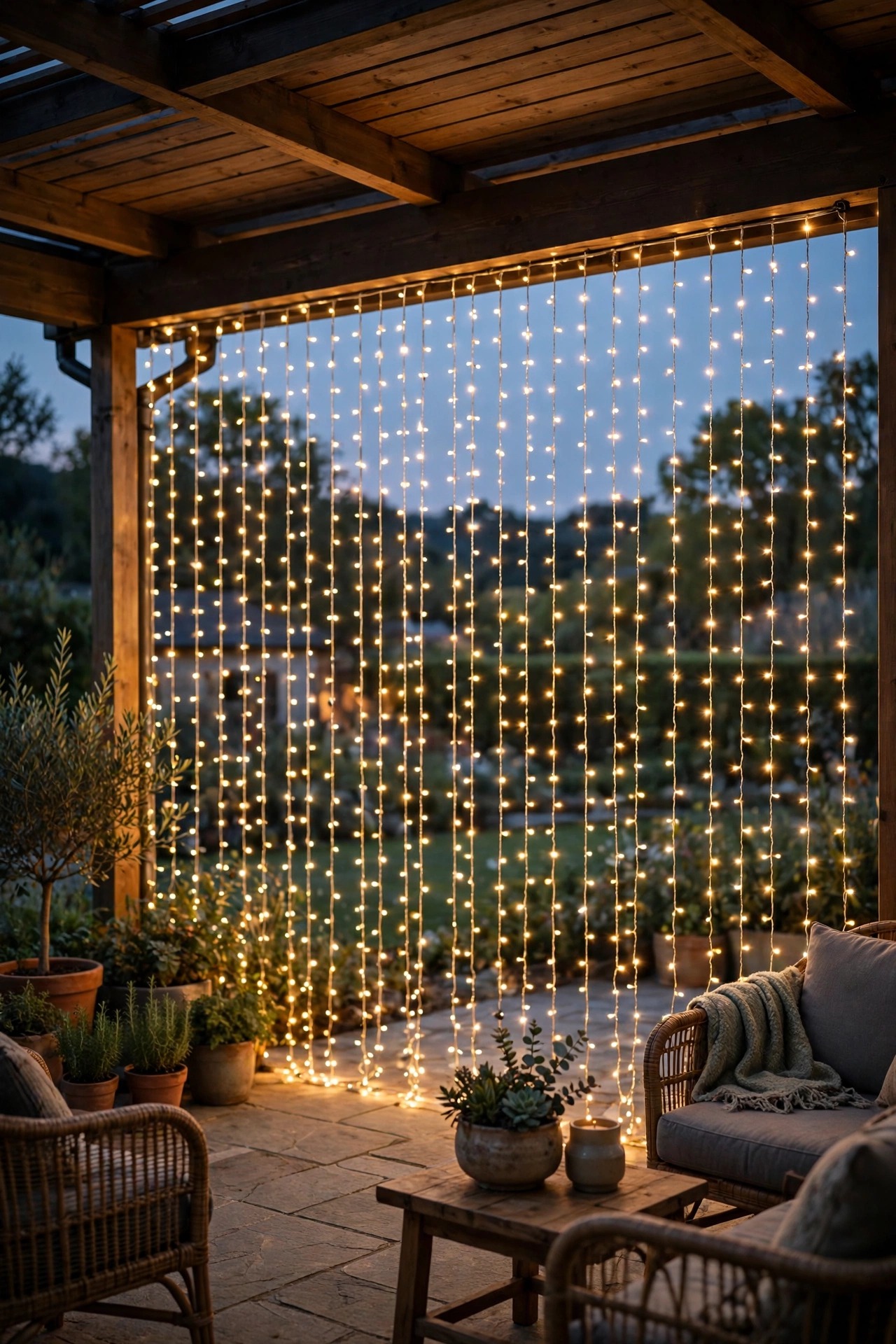
If pendants are a neat sentence, a chandelier is the whole poem. A damp-rated outdoor chandelier over a seating group instantly signals "this is a room," and candle-style LED bulbs give you the flicker-free version of old-world charm. Size it like an indoor fixture: add the length and width of the zone in feet, and that sum in inches is a good diameter starting point — a 10-by-12 seating area wants roughly a 22-inch chandelier. Keep at least 7 feet of clearance beneath it, more over walkways. Hardwired versions belong on the ceiling box with a dimmer; plug-in swag chandeliers hang from a sturdy hook and are the renter's best friend. Finishes in matte black, oil-rubbed bronze, or weathered wood-and-iron hold up best visually. It's a statement piece, so let the rest of the lighting step back a little when it's on. And yes, it survives the seasons fine under a roof — just dust the candles during your spring patio refresh.
Suggested budget range: $120 – $400.
15. Uplight a Corner With an Outdoor Floor Lamp
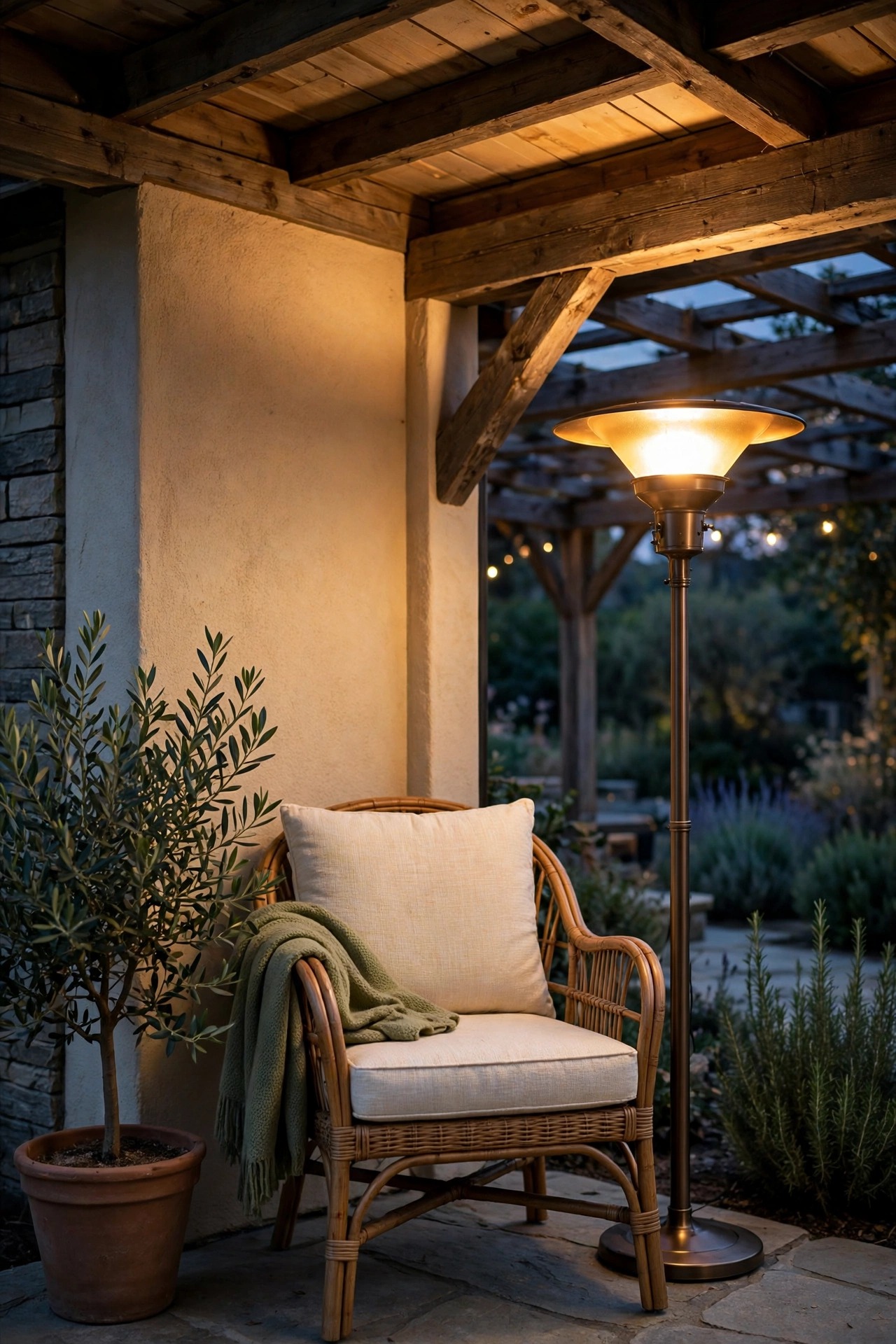
Corners are where patio light goes to die, which is why outdoor floor lamps exist. A torchiere-style lamp — the kind that throws light upward — bounces a soft wash off your patio ceiling and quietly erases the darkest corner without a single visible bulb. Choose a lamp specifically rated for outdoor use with a weighted or sand-fillable base; patios get breezy even under a roof, and a tipped lamp is a sad lamp. Arc floor lamps are the other great option, leaning out over a reading chair like the patio version of a library light. Plug into a GFCI outlet and route the cord along the wall with cord clips so nobody trips carrying a tray of drinks. Pair the lamp with a big potted plant and the corner becomes a vignette instead of a void. Output around 800 to 1,200 lumens on a dimmer (or a three-way bulb) covers reading through ambiance. Honestly, this is the fastest way to make a builder-basic patio look designed.
Suggested budget range: $70 – $200.
16. Step Lights Where the Patio Meets the Yard
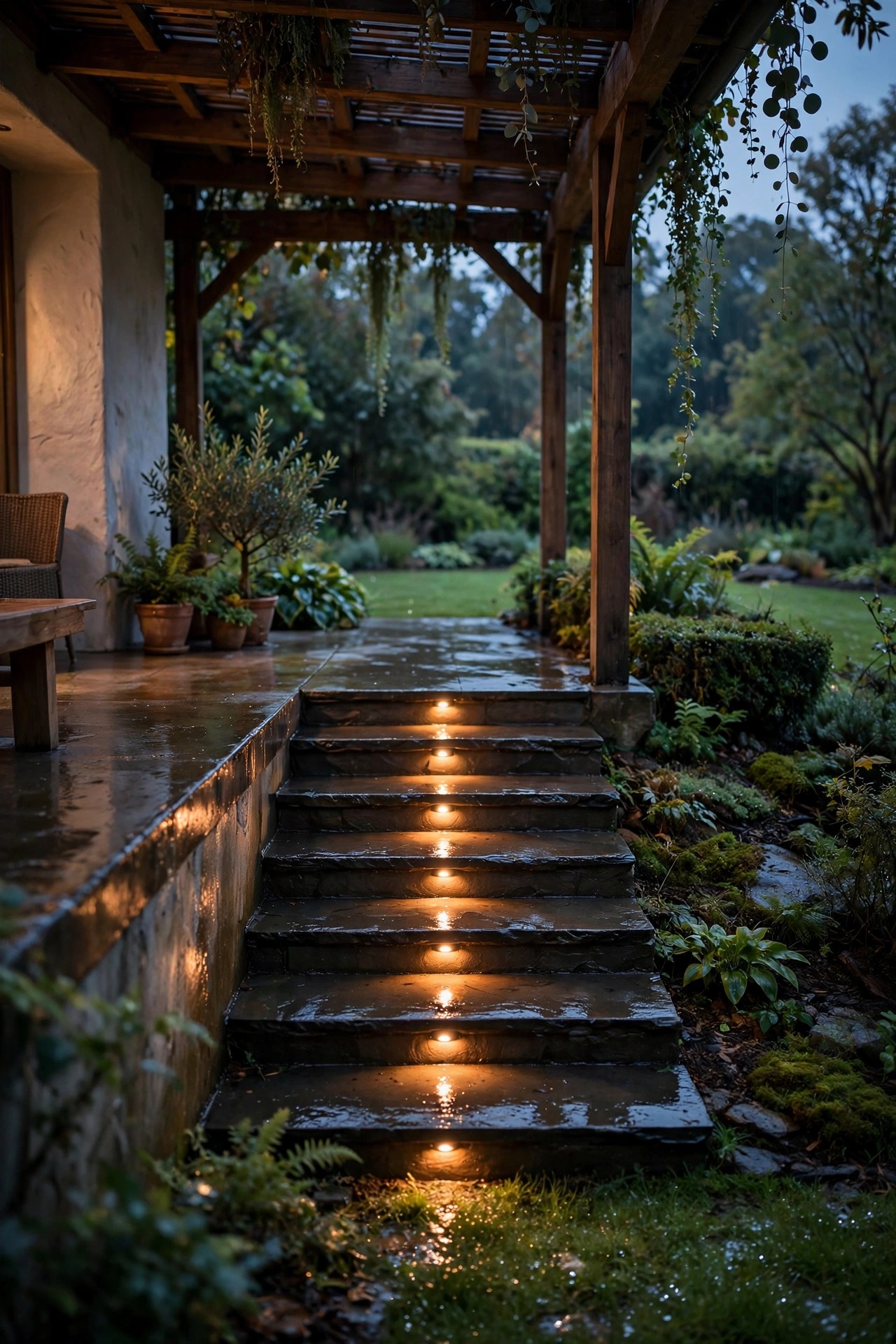
Rain-or-shine evenings end with somebody carrying leftovers across a wet step in the dark — so let's light the steps. Small recessed step lights mounted in the riser or the wall beside the stairs are the permanent solution; solar cap lights on posts and stick-on motion lights are the weekend version. Wet surfaces double the slip risk, and a modest 50 to 100 lumens per step is enough to read the edge without turning your patio into a runway. Space one light per step on alternating sides for wide stairs, or one every other step on narrow ones. Motion-activated versions near the yard door are wonderful for letting the dog out at midnight. All of this wiring is low-stakes: low-voltage step lights can tap into a landscape transformer if you have one nearby. Whatever you choose, aim the light down at the tread, never out into faces. This is the least glamorous idea on the list and the one your future self will thank you for every single rainy night.
Suggested budget range: $35 – $150.
17. Color-Changing Bulbs for Game Day and Holidays
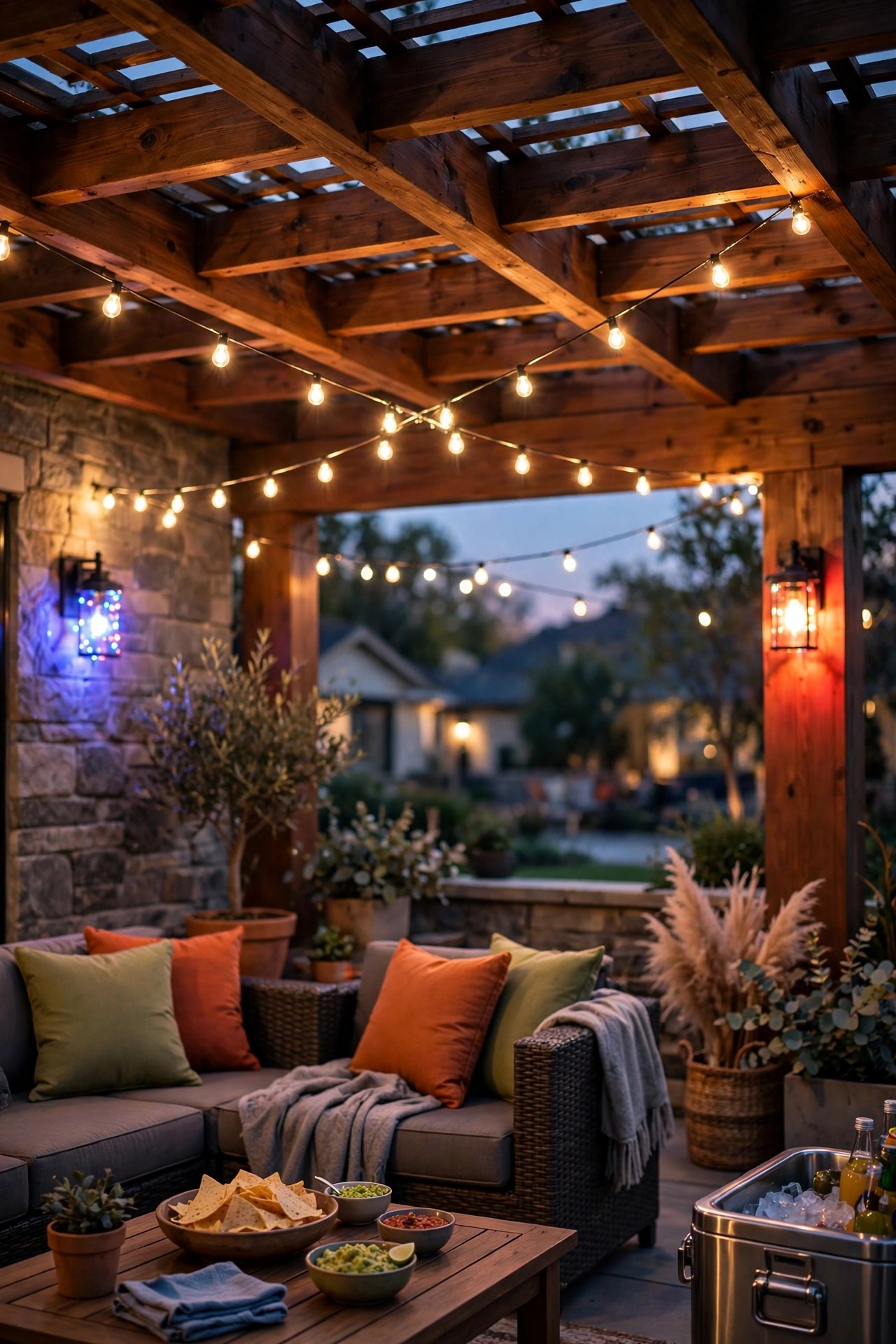
You don't need them every night — you need them on the right nights. A few color-changing smart bulbs in your sconces or pendants turn the patio into team colors on game day, orange and purple for Halloween, and red-white-and-blue for the Fourth, then go right back to being civilized 2700K bulbs on Tuesday. Buy bulbs rated for enclosed or outdoor fixtures if they'll live in sconces, and check that your Wi-Fi reaches the patio; a bulb that can't hear the router is just an expensive regular bulb. Set your everyday default scene first — warm white at a comfortable level — and save the colors as named scenes so switching takes two taps. Keep the color play to accent fixtures and let one neutral layer stay on for actually seeing the snacks. Kids think this is magic, adults pretend not to, and everyone ends up requesting it. It's a small spend for a feature you'll use a dozen times a year.
Suggested budget range: $25 – $80.
18. A Motion-Sensor Light by the Grill and the Gate
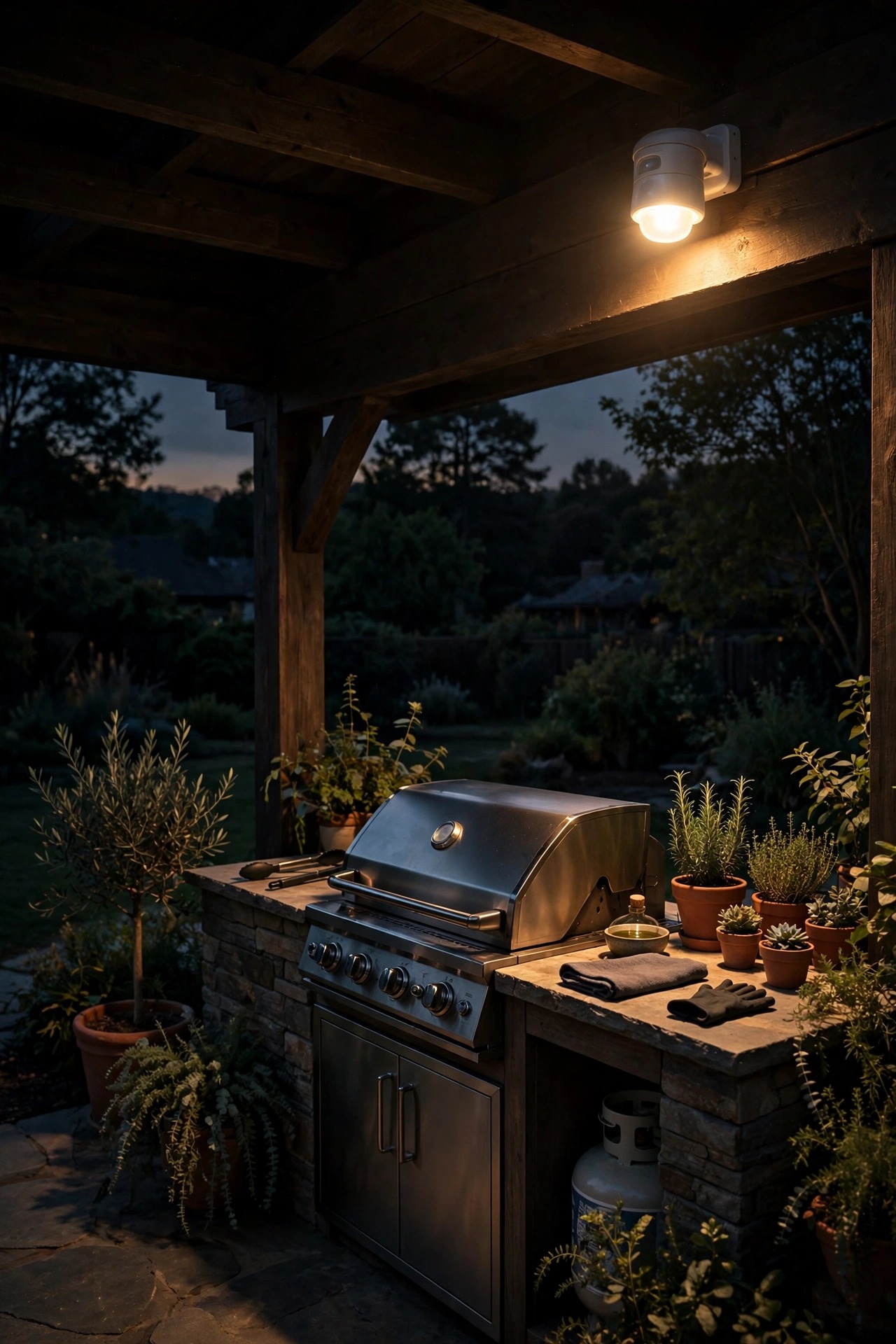
Every patio needs one purely practical light, and this is it. A compact motion-sensor fixture near the grill or the side gate gives the cook a clear view of the chicken and gives late trash runs a safe path. Dual-head LED units let you aim one head at the grill grate and one at the walkway. Set the sensitivity thoughtfully: rain and swaying plants will trigger a maxed-out sensor all night, so start at medium and walk-test it. A detection range of 20 to 30 feet covers most patios, and a 1-to-5-minute on-time is the sweet spot. Choose a model with a dusk-to-dawn override so you can lock it on during a party and let it guard the yard the rest of the time. Mount it 7 to 9 feet up where it sees over furniture but stays out of direct roof drip lines. It won't win beauty contests, but it's the light you'll use most on ordinary Tuesdays.
Suggested budget range: $30 – $90.
19. Zone It All: Three Layers on Three Controls
Here's the idea that makes the other eighteen work as a system instead of a shopping list. Divide your patio lighting into three zones and give each its own switch, dimmer, or smart plug. Zone one is overhead: the ceiling fixture, fan light, or cans, for tasks and cleaning up. Zone two is the middle: string lights, sconces, and pendants — the social layer that runs most evenings. Zone three is sparkle: lanterns, fairy curtain, rope light, the pretty stuff at eye level. Wire or program them separately and you can run any combination — full bright for a birthday setup, zones two and three only for a quiet drink, zone three alone for a late movie. A simple routine helps: put the middle layer on a smart plug scheduled for sunset to 11 p.m., and the patio lights itself like a good host. When you plan a new purchase, ask which zone it belongs to; if a zone is already full, your money goes further elsewhere. This is the whole layering philosophy in one habit, and it's why some patios just feel right.
Suggested budget range: $40 – $150.
Frequently Asked Questions
What type of lighting works best on a covered patio?
Layered lighting works best: a damp-rated overhead fixture for tasks, a warm middle layer like string lights or sconces for dining, and small accents like lanterns at eye level. Keep everything at 2700K so the layers blend, and put at least the main layers on dimmers so brightness can follow the mood of the evening.
Can I use regular indoor lights on a covered patio?
I really don't recommend it. Even under a solid roof, outdoor air brings humidity and condensation that indoor fixtures aren't built for, and it voids most warranties. Choose fixtures rated for damp locations at minimum, use outdoor-rated cords and bulbs, and plug everything into GFCI-protected outlets.
How many lumens do I need for a covered patio?
For a typical 200-square-foot covered patio, plan on roughly 1,500 to 3,000 lumens total spread across your layers — not from one blazing fixture. Dining and grilling zones want the brighter end near the table and grill, while lounge corners feel best dim and warm. Dimmers let you overshoot a little and dial back.
Are string lights safe under a patio roof?
Yes, when you use outdoor-rated, commercial-grade strands with LED bulbs, which stay cool to the touch. Keep bulbs about a foot away from roofing material and fabric, support long runs with a guide cable, and plug into a GFCI outlet with an in-use weatherproof cover. Avoid old incandescent strands near anything flammable.
Conclusion
A roof over your patio is an invitation to light it like a room — one that happens to have the best ceiling in the house: the evening sky. Start with a dependable overhead anchor, add the warm middle layer you'll actually live under, and finish with a little sparkle. Pick two or three of these covered patio lighting ideas this weekend, put them on dimmers, and the next rainy evening becomes the best seat in the house instead of a reason to go inside. For even more ways to build on the look, browse my full collection of patio lighting ideas and keep layering from there.