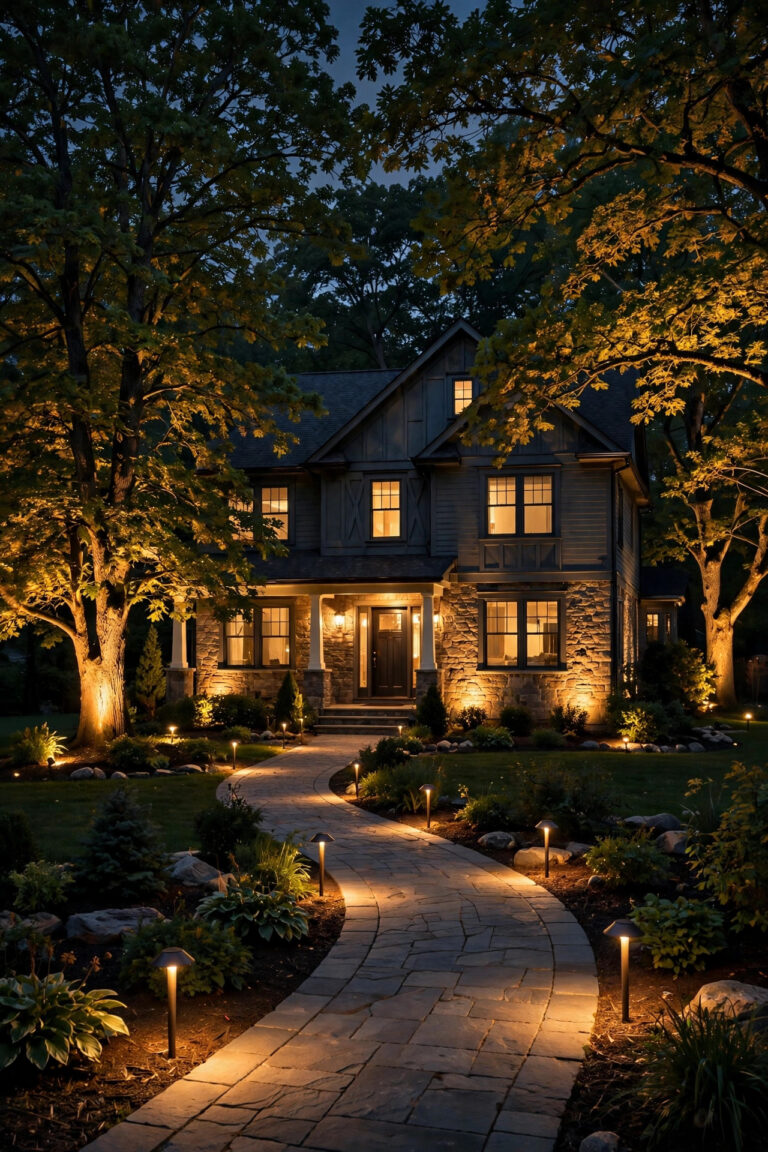
A rooftop pergola is the best seat in the city, but most rooftop pergola lighting ideas fail for one simple reason: a roof is not a backyard. Wind up there is stronger, outlets are scarcer, and you cannot just drill into the surface under your feet without risking the waterproof membrane. I learned all of that the entertaining way, watching a strand of lights shimmy in a midnight gust. The good news is that a rooftop responds beautifully to the same layering I use everywhere: a soft canopy glow overhead, warm light at sitting height, and low guidance light so nobody trips over a planter on the way to refill a drink. In this post I will walk you through 19 ideas built for pergolas and shade sails specifically, all wind-aware, all renter-of-the-roof friendly, and all in one warm color family so your little sky garden feels calm instead of chaotic. Pick three layers to start and add the rest over the season.
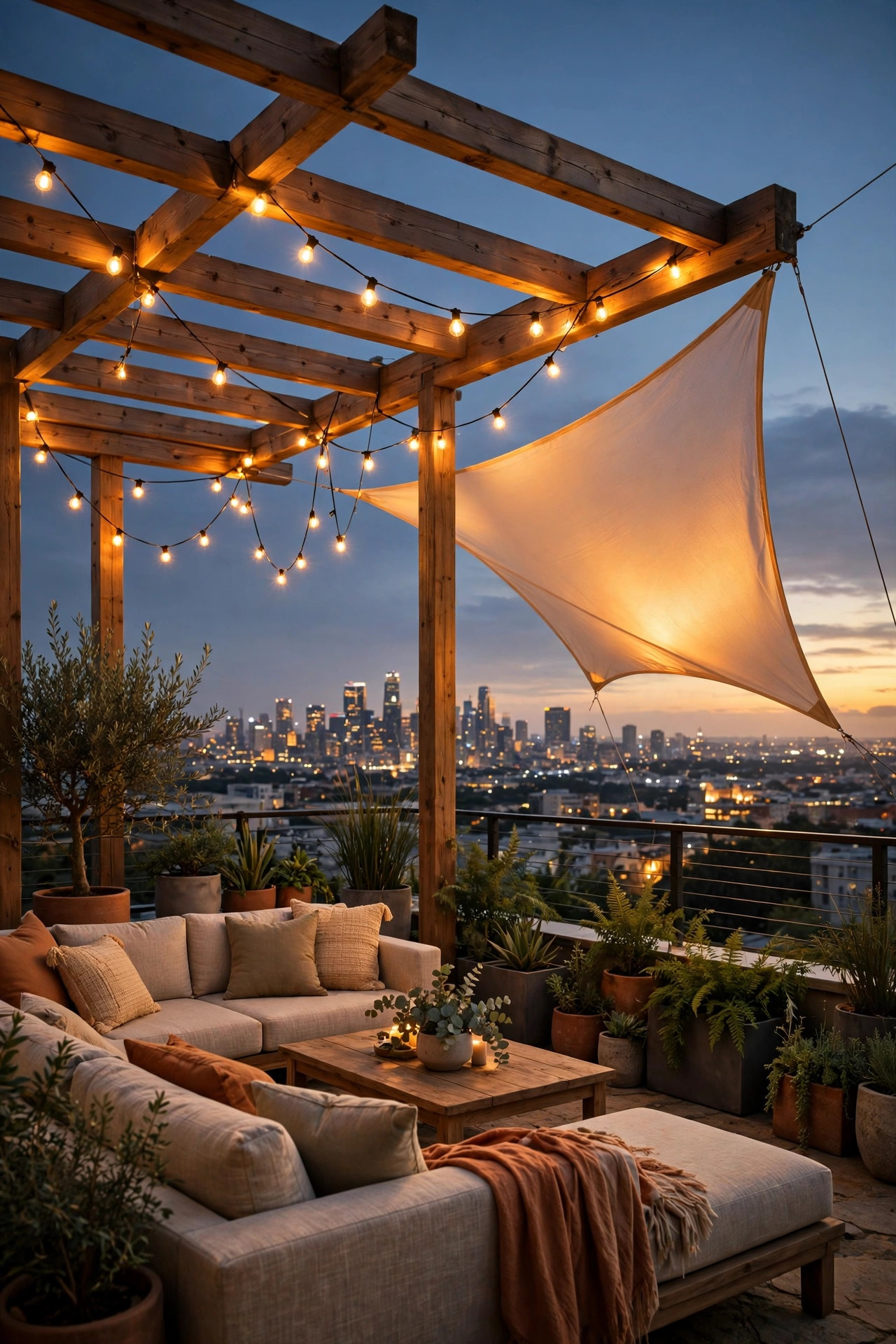
1. Layer Your Rooftop Pergola Lighting Ideas in Three Heights
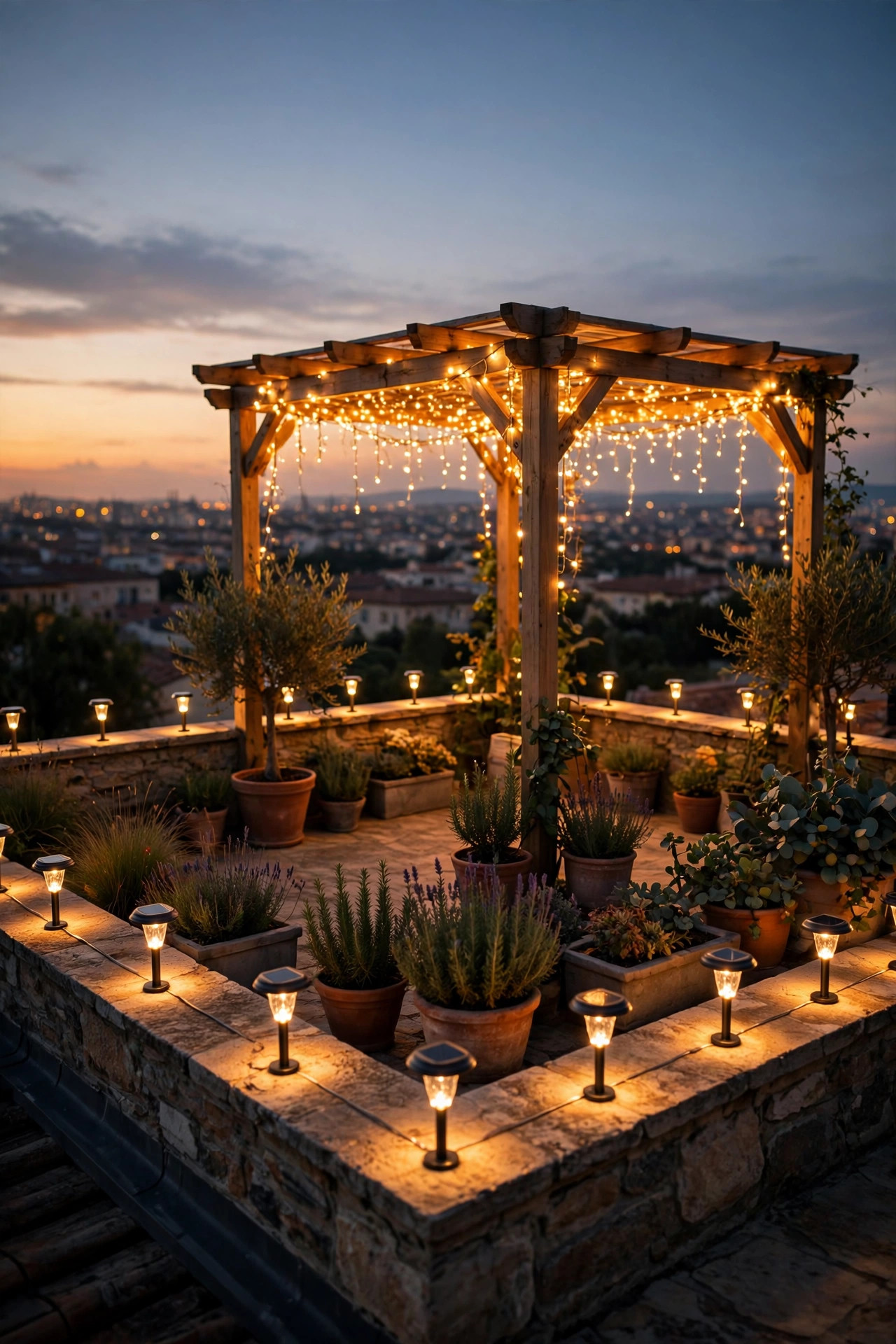
Every rooftop that feels magical at night is running the same quiet formula: light overhead, light at face level, and light down low. Overhead, string lights or a glowing shade sail give you the canopy. At face level, lanterns and wall-washers keep faces warm and readable. Down low, small markers trace the edges of planters, steps, and the hatch so the space feels safe. On a roof this matters even more than in a yard, because there are hard edges everywhere and the wind loves to remind you how high up you are. Before you buy a single bulb, sketch your pergola and mark one fixture for each height. My rule is three to five sources total for a small roof, more only if they are dim. One bright floodlight is the fastest way to make a rooftop feel like a parking deck, so resist it. Layers also give you scenes: full glow for a dinner party, low-only for a quiet glass of wine under the stars. Start with the plan, and every idea after this one slots neatly into it.
Suggested budget range: $40 – $120.

2. Zigzag Café String Lights Under the Beams
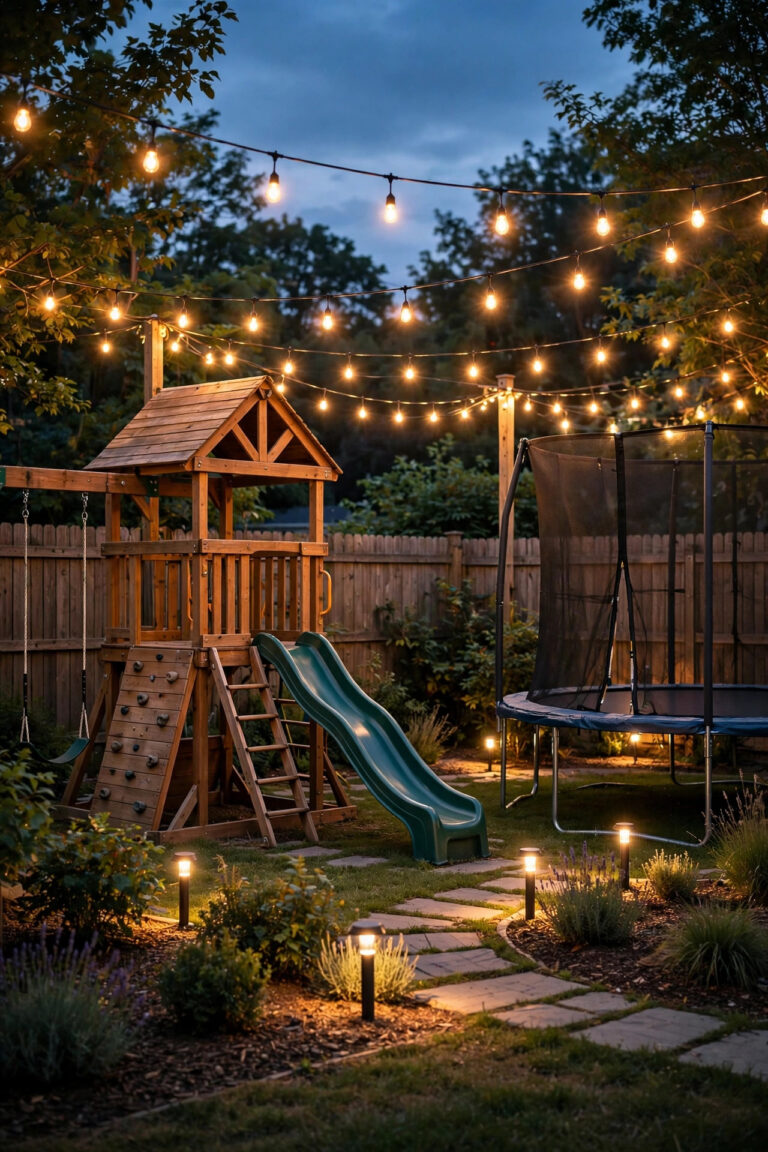
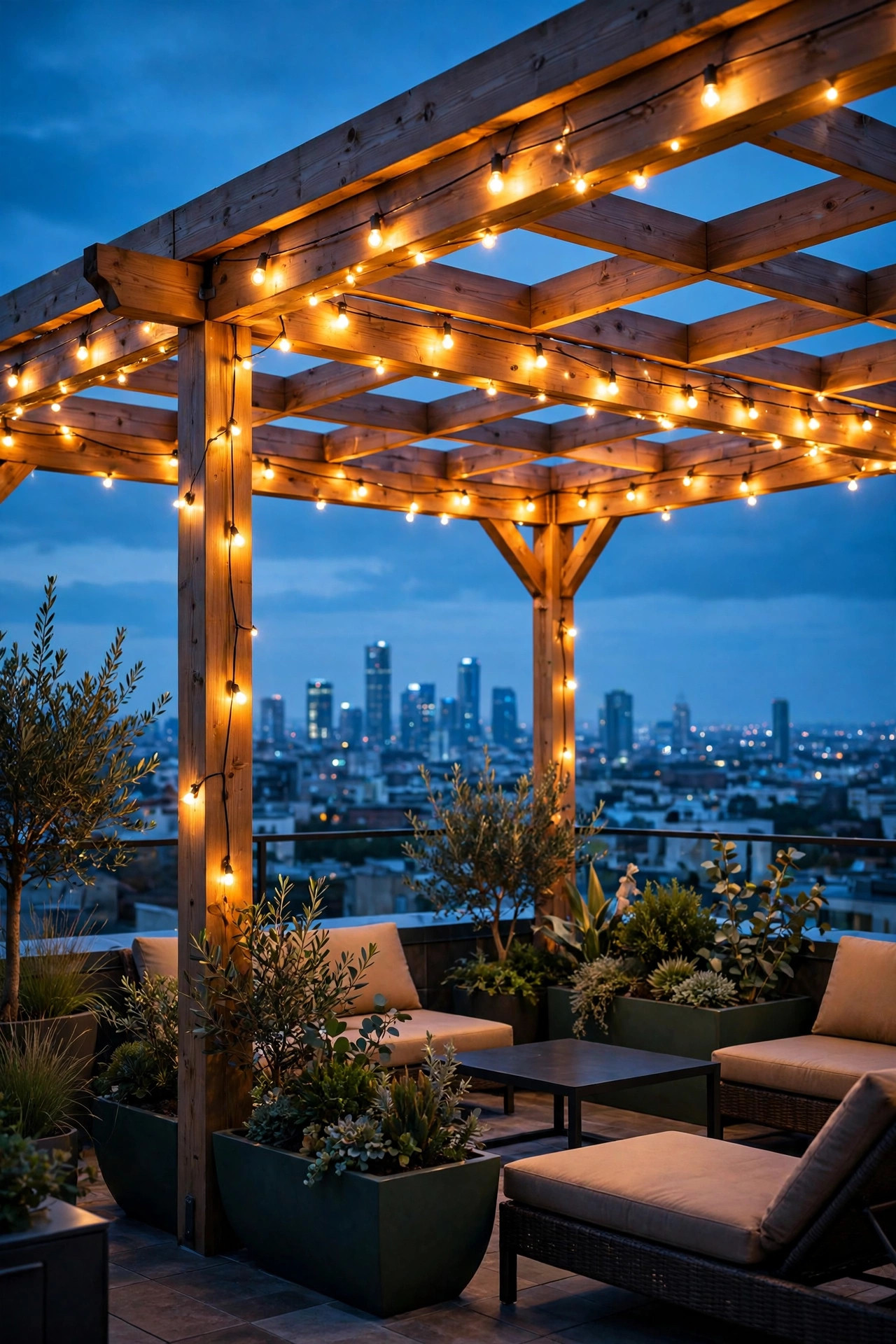
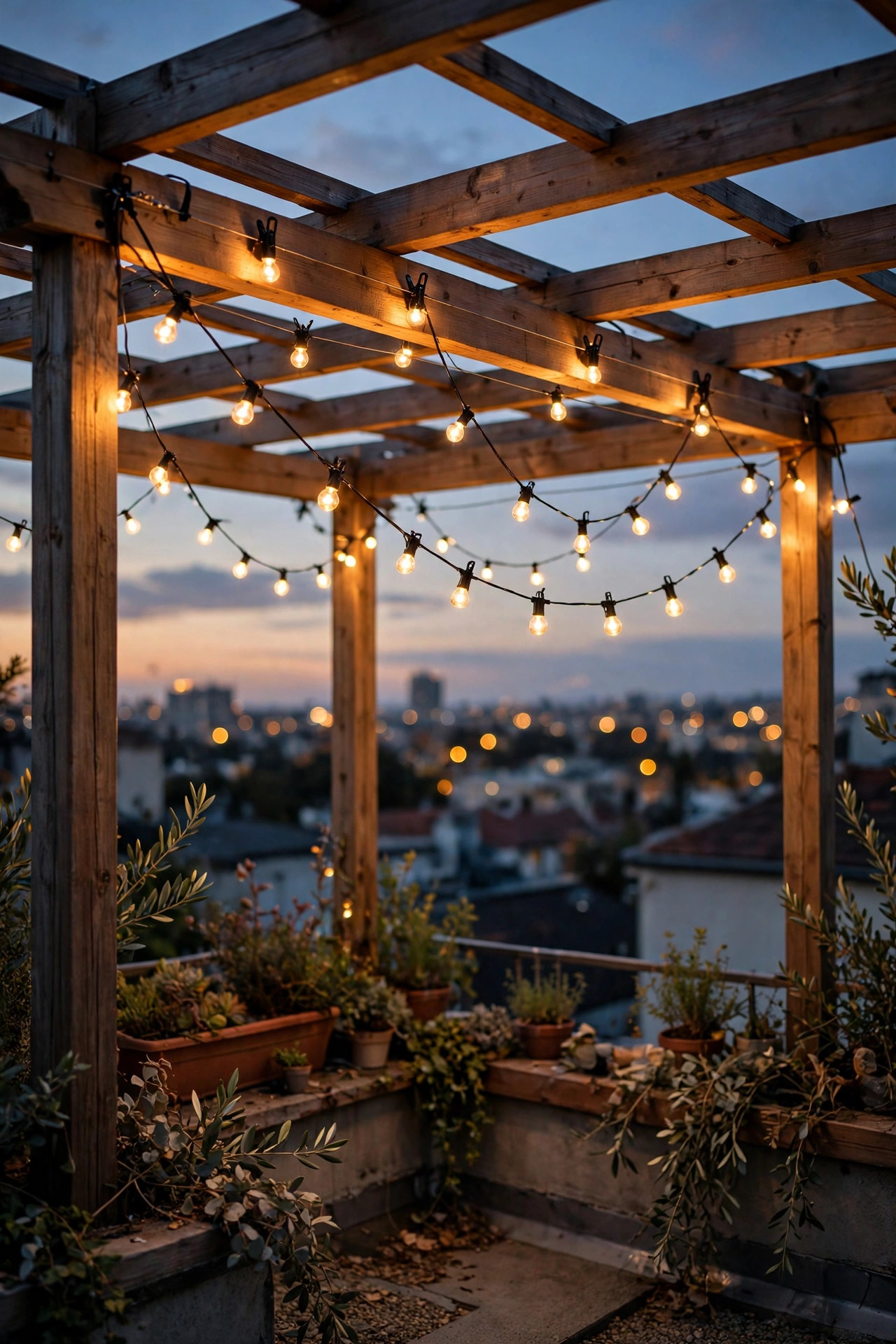
The classic pergola move works just as well forty feet up: heavy-duty café string lights zigzagged between the beams so the whole canopy glows. Choose commercial-grade strands with shatterproof LED filament bulbs, because glass bulbs and rooftop gusts are a bad romance. Keep the swag gentle, about 6 to 10 inches of dip between attachment points, so wind moves the strand as one soft curve instead of whipping single bulbs. Clip every socket run to the beam with stainless screw hooks or cable ties rated for outdoor use, and add a thin steel guide wire if your span is longer than 15 feet. Warm white 2700K bulbs are the sweet spot against a blue evening sky. For more patterns and spacing tricks, my guide to pergola lighting ideas covers the backyard versions of this same layout. On a roof, run the plug end down to a GFCI outlet and never let a connector hang where rain can pool inside it.
Suggested budget range: $35 – $90.

3. Tuck LED Strip Lights Under the Rafters
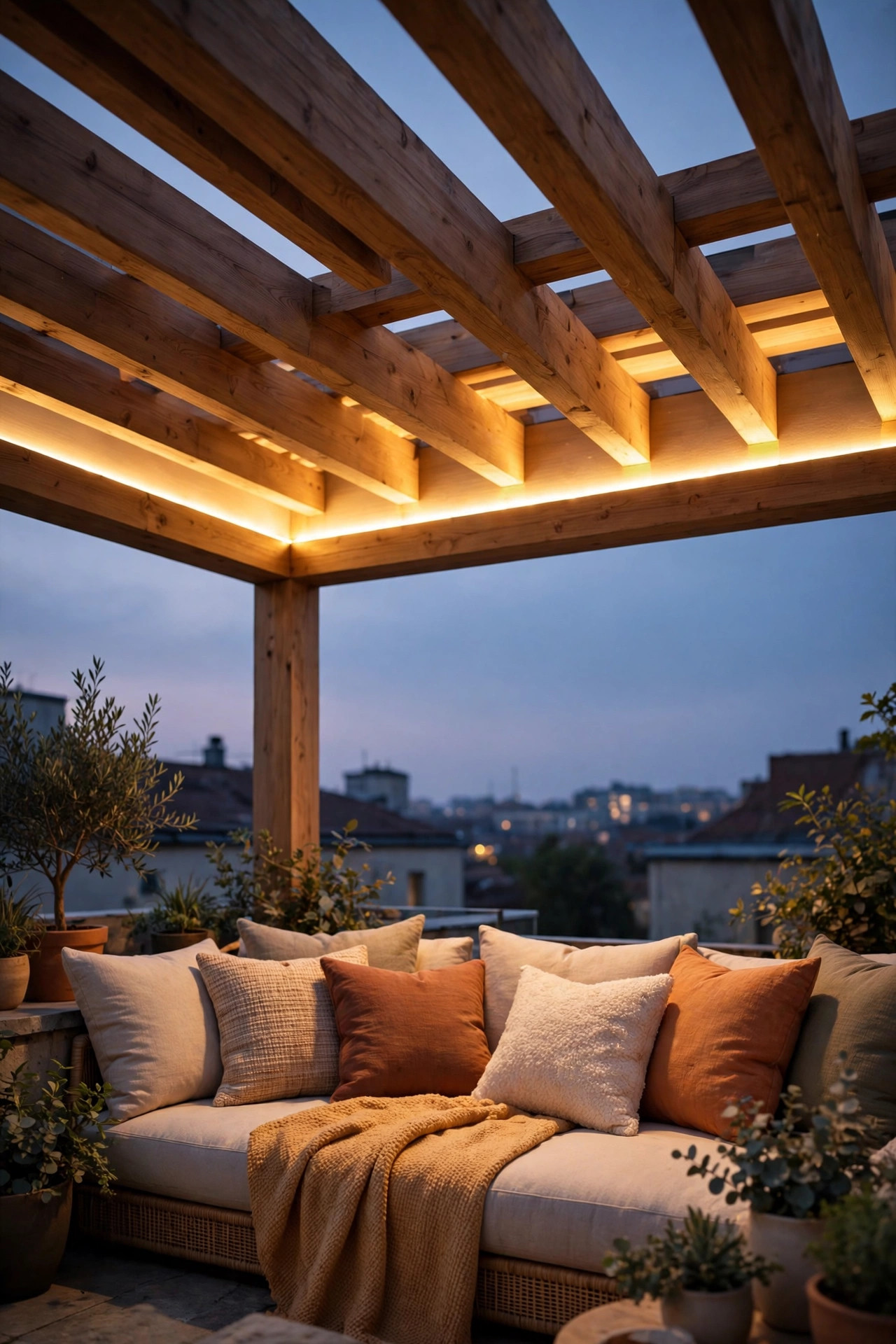
If string lights feel too festive for your building, LED strip lights hidden under the rafters give the pergola a calm, architectural wash. Mount aluminum channel with a frosted diffuser on the underside of each beam so you see the glow, never the individual diodes. The light bounces off the deck and the underside of a shade sail, which makes the whole structure feel like it is floating. Use outdoor-rated, fully encapsulated strip, and put the transformer in a weatherproof box tucked behind a planter. Strips are also the kindest option for neighbors, because the light aims down and stays inside your footprint instead of spraying across the skyline. Dim them to about half for conversation; full brightness is for grilling and cleanup. One caution from experience: adhesive alone will not survive a hot roof summer, so screw the channel clips every 12 inches. It takes an extra twenty minutes and saves you from re-sticking strips in August heat.
Suggested budget range: $45 – $130.
4. Go Solar Where the Roof Has No Outlet
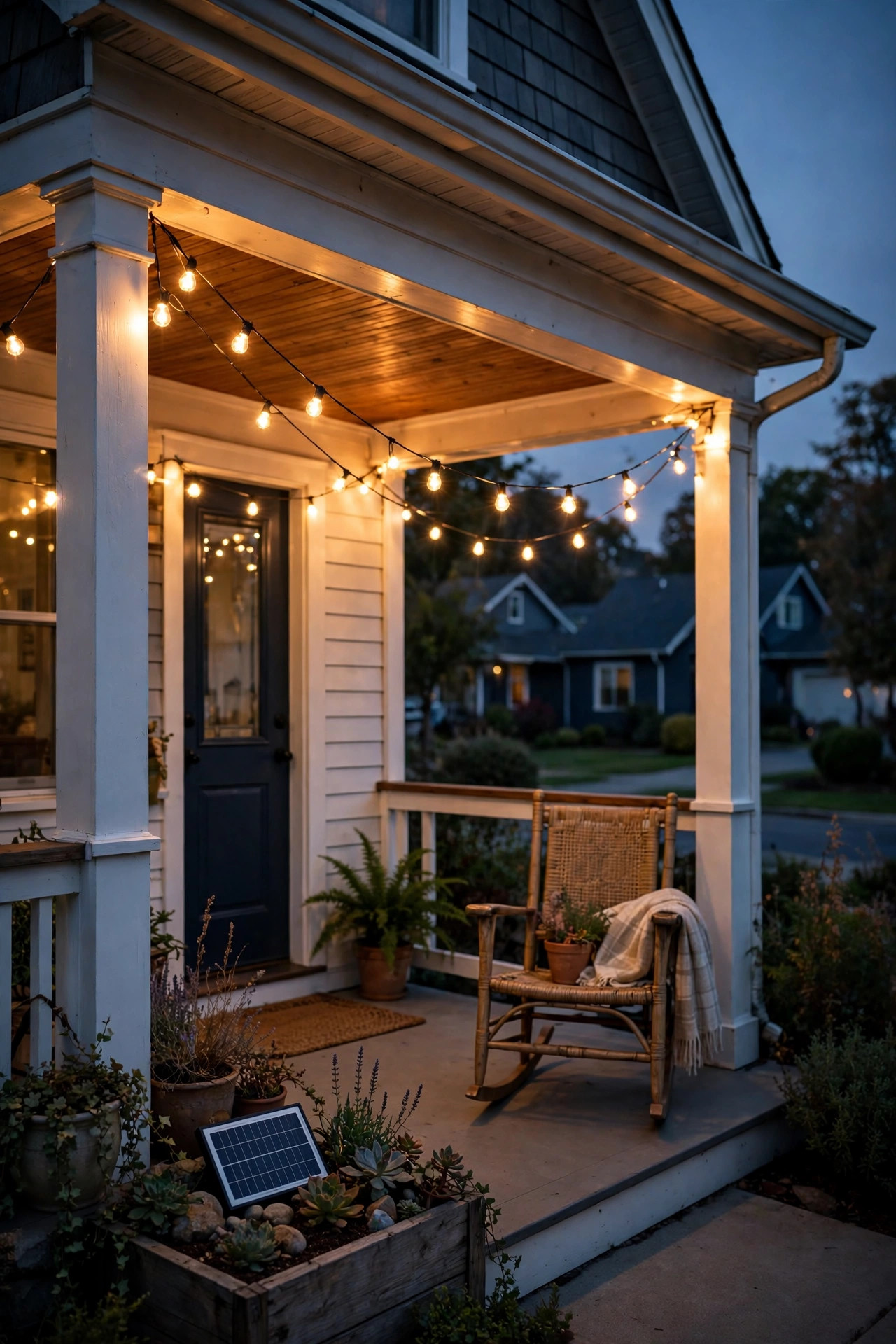
Plenty of rooftops have exactly one outlet, and it is always in the wrong corner. Solar string lights solve the geometry problem completely: the panel stakes into the biggest planter you own, angled toward the afternoon sun, and the strand runs wherever you want it. Modern solar strands hold a solid six to eight hours after a clear day, which covers dinner and drinks with room to spare. Look for replaceable batteries and an IP65 rating, and expect a softer glow than plug-in café bulbs; that softness honestly suits a roof, where you are competing with city glare anyway. My roundup of solar string light ideas compares panel sizes if you want the deeper math. Wipe the panel monthly, because rooftop dust and pollen films quietly steal your runtime. In winter, bring the strand in or accept shorter evenings; the battery will thank you for the rest. A strand with a separate panel on a long lead is worth the small upgrade, since the panel can chase the sun while the lights stay exactly where you hung them.
Suggested budget range: $25 – $70.
5. Clip Fairy Lights Along the Shade Sail Edge
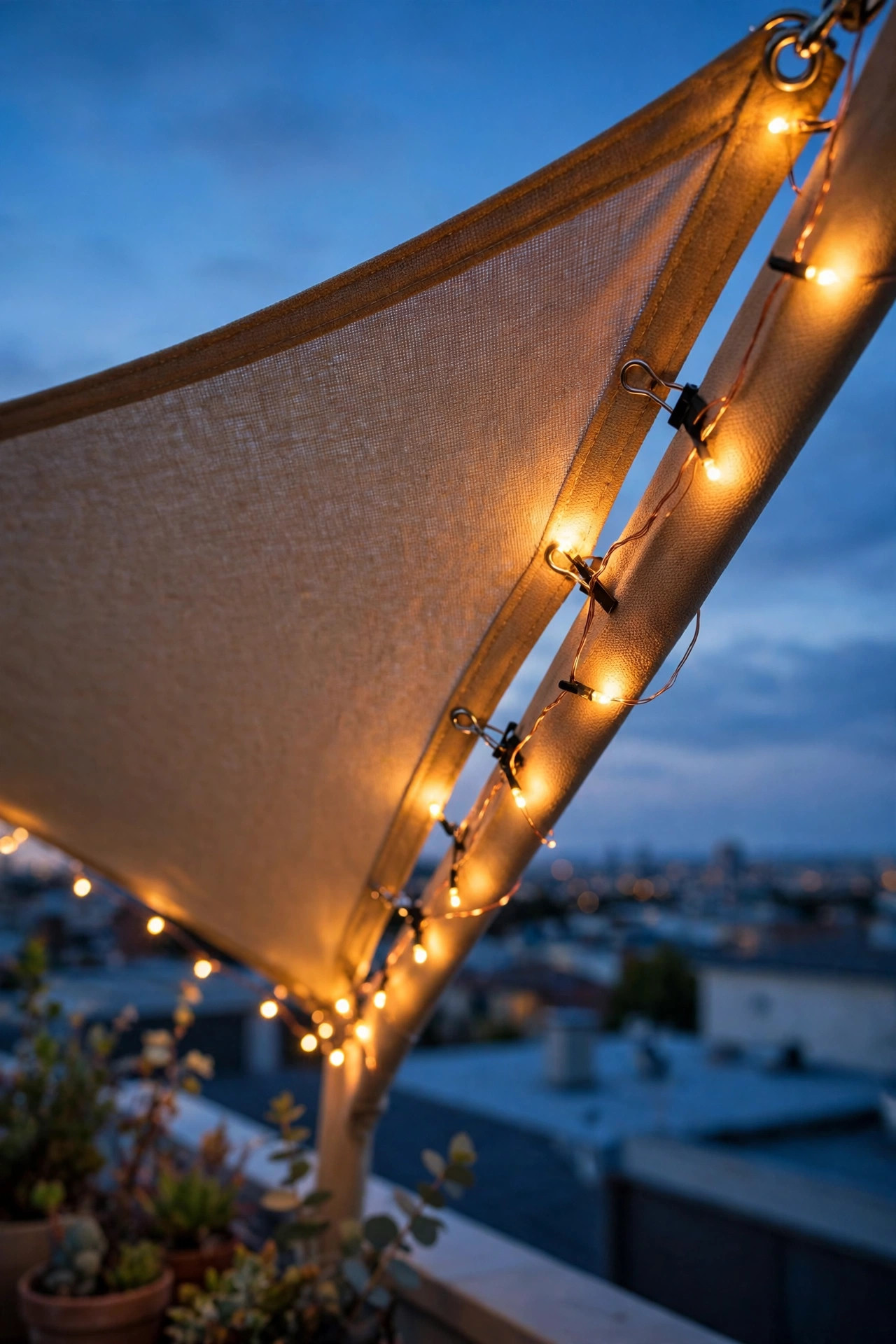
A shade sail is a giant blank canvas after sunset, and its edges are the perfect track for copper-wire fairy lights. Weave the wire through the sail grommets or clip it along the hem with small stainless clips, and the whole triangle gets a delicate outline that reads from the street like a paper lantern. Two safety notes I never skip: fairy lights near fabric must be LED only, since they stay cool to the touch, and battery packs should live in a sealed pouch clipped under the pergola beam, out of the rain path. Choose warm white wire lights, not multicolor, unless it is a holiday. The effect is subtle up close and gorgeous from a distance, especially paired with the dimmer layers below. Because sails come down in storms on many roofs, the clip-on approach matters: the lights strip off in five minutes when the forecast turns. That easy-off design is the difference between decor you love and decor you curse in November.
Suggested budget range: $12 – $35.
6. Cap the Pergola Posts With Solar Lights
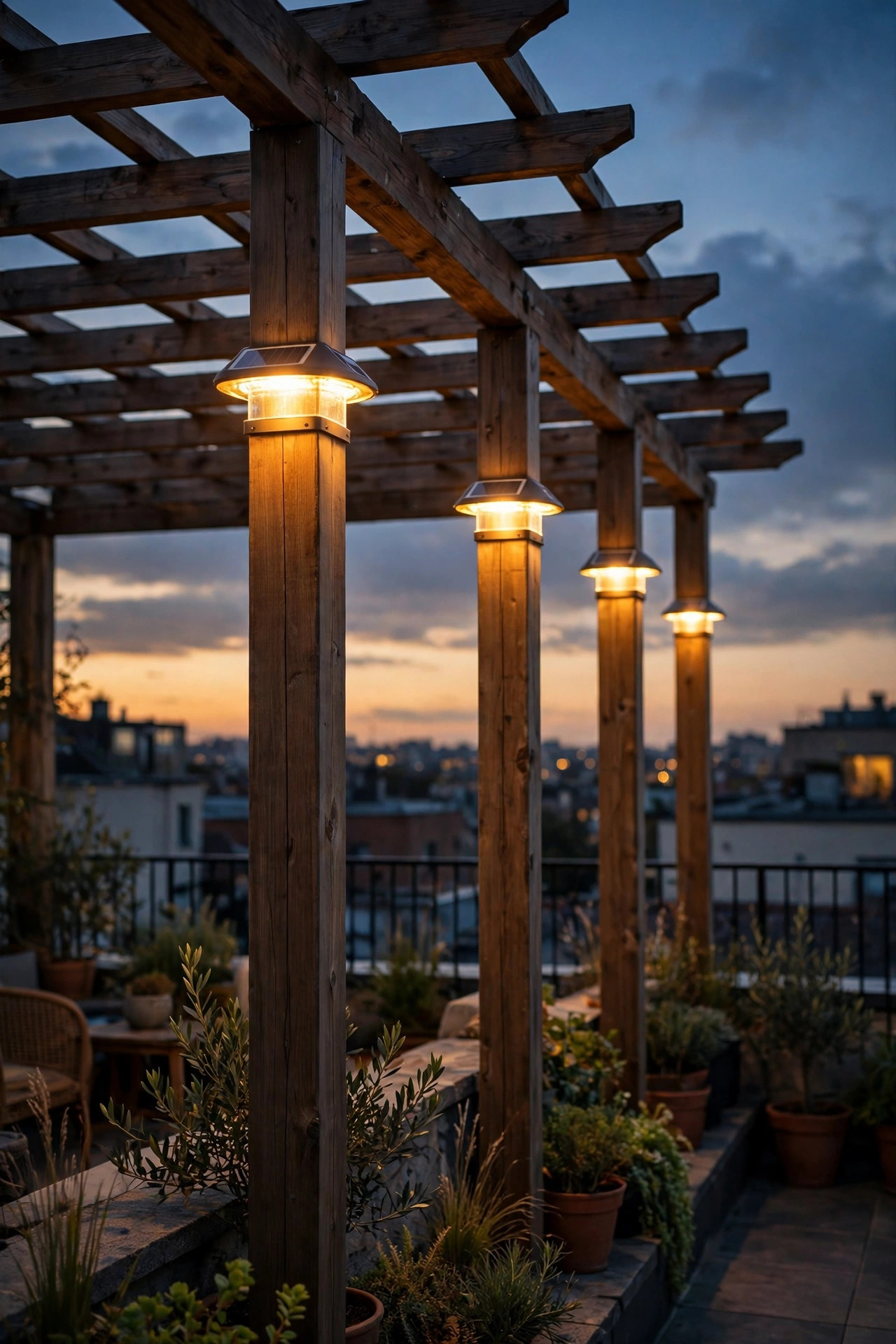
Pergola posts are natural lantern stands. Solar post cap lights slip over 4×4 or 6×6 posts and wash a soft pool down each corner, which quietly outlines the whole structure before you add anything else. On a roof they earn their keep twice, because the corner glow tells guests exactly where the pergola footprint ends and the open deck begins. Choose caps with warm 2700K output and a real on-off switch so you can silence them on stargazing nights. If your pergola is metal, the same idea works with clamp-on solar spotlights aimed down the post legs. Keep the caps modest in brightness; four gentle corners beat four tiny searchlights. Dust the little panels when you water the planters, since a dusty panel is the number one reason caps fade by midnight. Honestly, this is the lowest-effort layer in the whole post, and the one visitors always assume was built in.
Suggested budget range: $30 – $80.
7. Hang a Curtain Light Wall on the Windward Side
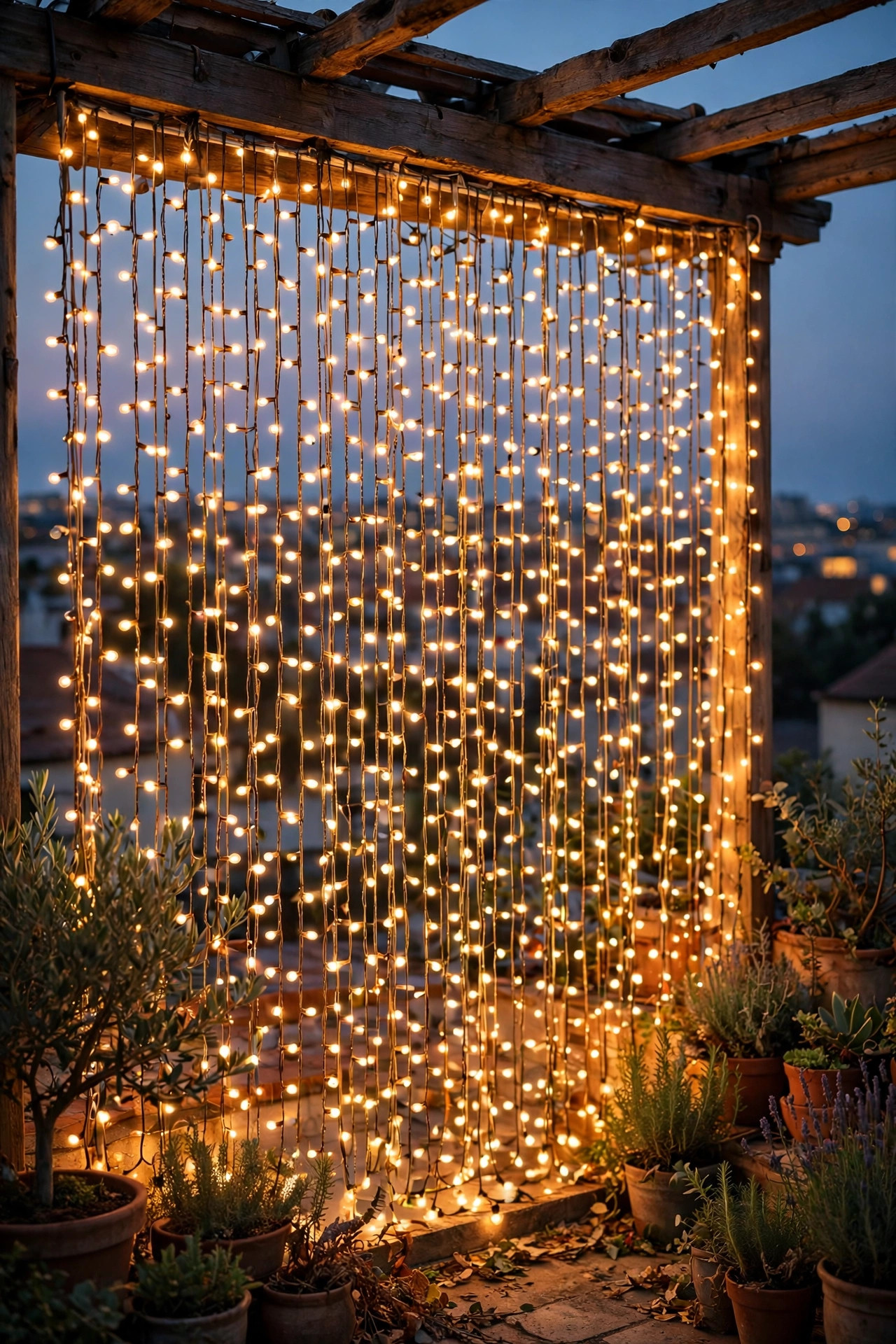
Every rooftop has a windward side and, usually, a neighbor sightline to soften. A curtain of string lights hung from the pergola edge on that side solves both: it reads as a glowing privacy screen, breaks the breeze visually, and gives the space a room-like wall. Hang the curtain from a tension cable between the two corner posts so nothing screws into the building parapet. Choose outdoor curtain strands with a steady warm setting rather than twinkle modes, which can look frantic against a city backdrop. Keep the bottom of the curtain clipped to a weighted planter rail so gusts swing it gently instead of tangling it into the seating. From inside, the curtain turns the skyline into bokeh, which is a fancy way of saying the city becomes your wallpaper. Guests always drift toward it. If your building has rules about visible attachments, this one removes in minutes, a theme you will notice across these ideas.
Suggested budget range: $30 – $75.
8. Choose Flameless Lanterns Over Real Flame
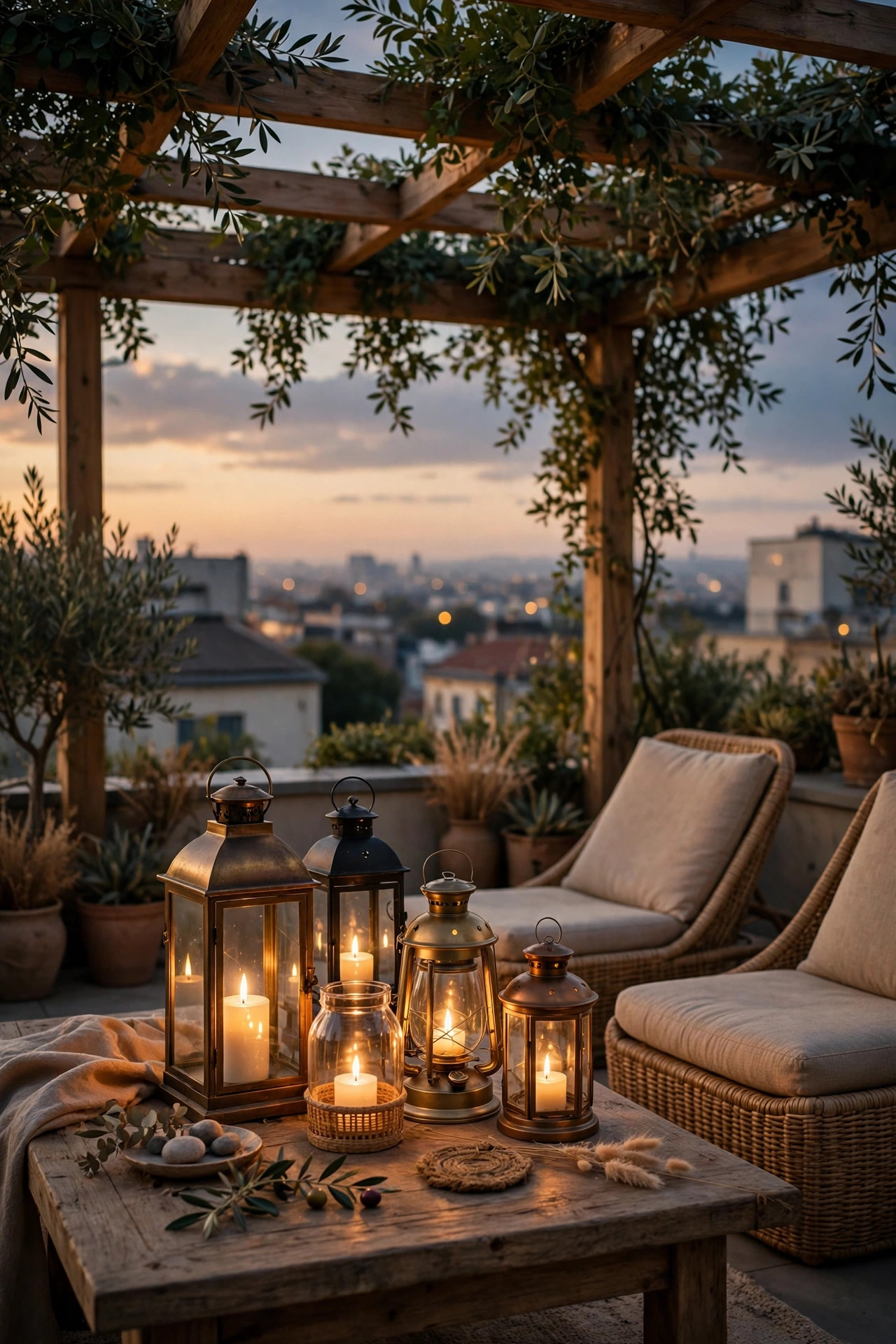
I love candlelight, but a rooftop is where real flame goes to misbehave. Wind funnels between buildings, gusts arrive sideways, and one tipped candle near a shade sail is a story nobody wants. Flameless lanterns with realistic flicker give you the same golden wobble with zero drama, and they stay lit through weather that would drown a tea light in seconds. Group them in threes on the table and at the pergola corners, mixing heights for that collected look. Look for lanterns with timers, so they click on at dusk without you climbing up early to set the scene. Keep a couple of battery pillar candles in hurricane glass for the dining table itself. The rule I give everyone: on a roof, flame belongs in a contained fire feature with a spark screen and a building-approved setup, or it does not belong at all. Lanterns everywhere else, no guilt. Mine have ridden out three storm seasons now, and not once have I missed hunting for matches with cold fingers.
Suggested budget range: $20 – $60.
9. Uplight the Planters and Rooftop Greenery
Rooftops live or die by their planters, and a small uplight in each big pot turns greenery into sculpture after dark. Tuck one low-voltage or solar spotlight at the base of your tallest grasses, olive trees, or bamboo screens, aimed up through the leaves. The moving shadows on the pergola roof are half the magic, and on a breezy night the whole ceiling dances. Keep the fixtures small and the beams narrow; you want a whisper of light in the foliage, not a stadium effect. Solar uplights work if the pot gets real sun, but low-voltage wired spots are steadier for shaded corners, and the cable can run under deck tiles where nobody sees it. Two to four uplights is plenty for most roofs. This layer also does quiet security work, washing the planting edges so the perimeter reads clearly without a single harsh fixture. Aim one fixture toward the pergola post beside the planter, too, and the greenery and the structure start talking to each other.
Suggested budget range: $25 – $90.
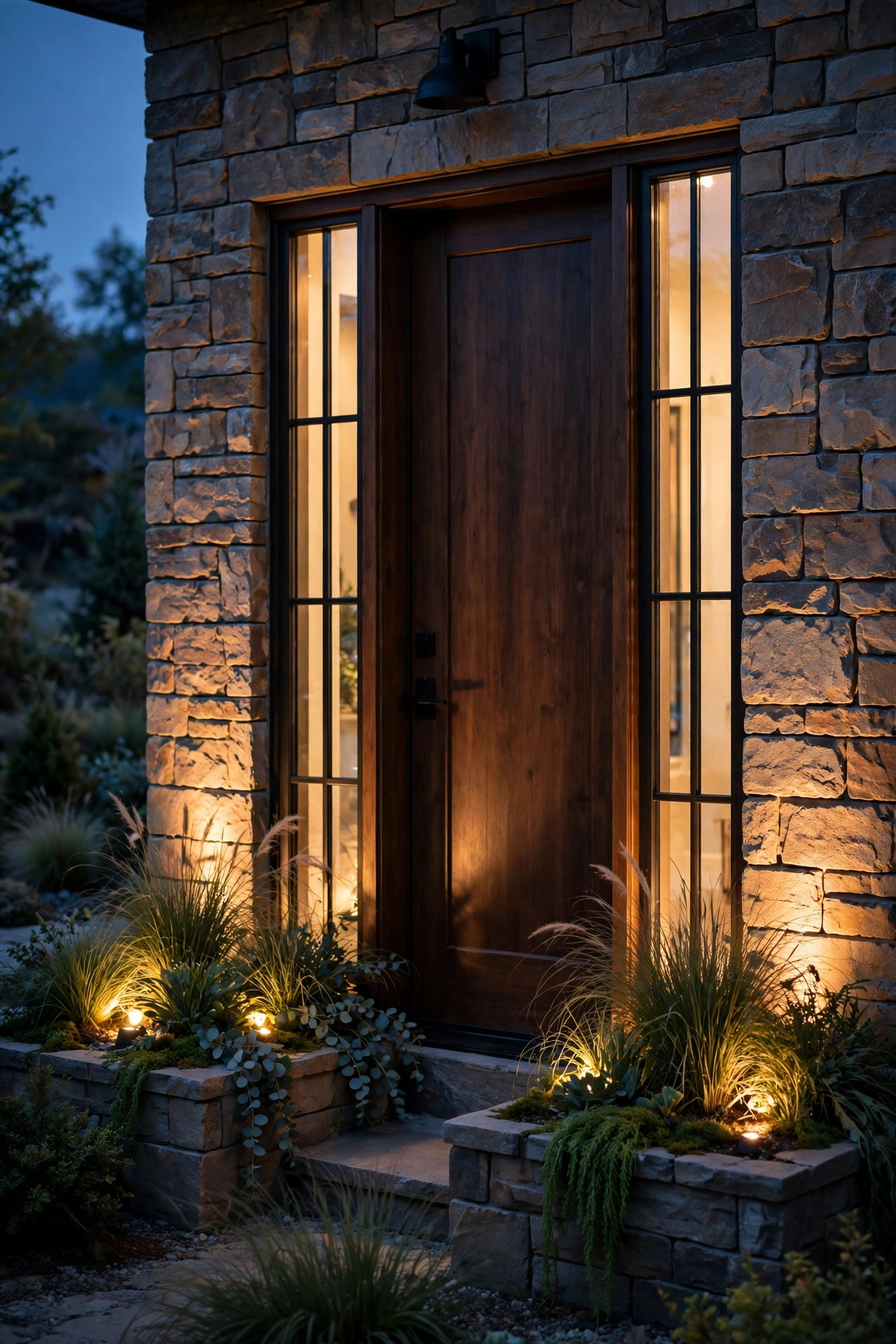
10. Add Battery Puck Lights to Shelves and the Bar Cart
The hardest-working light on my roof is a two-inch battery puck stuck under the bar shelf. Puck lights with adhesive or magnetic mounts light up the exact spots string lights miss: the serving counter, a storage bench, the little shelf where the speaker lives. They run for weeks on a charge or a set of batteries, and most come with a remote so you can wake one up without crawling behind the planters. Choose warm white, because cool pucks make drinks look like a pharmacy shelf. The same trick works under the pergola top beam over the grill corner, giving you honest task light that disappears when the party starts. Check the adhesive monthly through the first hot season; heat softens pads, and a fallen puck in a planter is hard to spot. Swap in magnetic mounts if yours keep wandering. Small light, exactly where your hands are, is the layer guests never notice and always benefit from.
Suggested budget range: $15 – $40.

11. Aim the Dining Table Light Down, Not Out
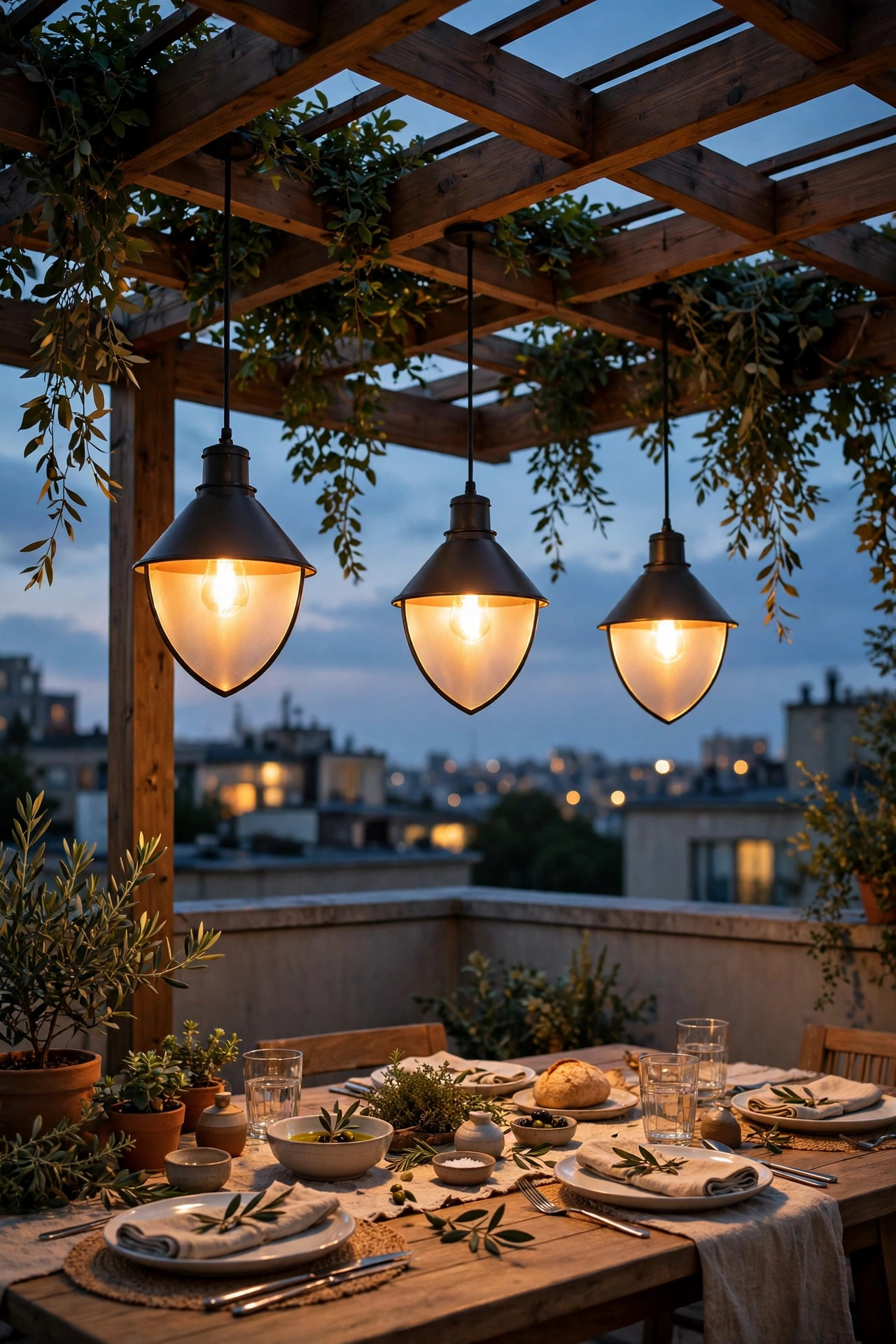
Dinner on a roof deserves real task light, but it should land on the plates, not in the neighbors windows. The trick is downward fixtures mounted on the pergola crossbeams directly over the table: small shielded pendants or short downlight cans with wide frosted lenses. Because the source hides above eye level, faces stay soft while the food gets honest light. Two pendants over a six-foot table, hung about 30 inches above the surface, is my starting formula. Put them on their own dimmer or smart plug so they can drop to candle level once plates clear. This is also the most neighbor-friendly of all rooftop pergola lighting ideas, since every lumen points at your deck and none of it escapes sideways. If pendants feel too permanent, a battery lantern hung from a beam hook over the table does the same job and stores indoors all winter. Guests lean in over a well-lit table and linger longer, and nobody has to hold a phone flashlight over the menu.
Suggested budget range: $50 – $160.
12. Light the Hatch and Stairs Like You Mean It
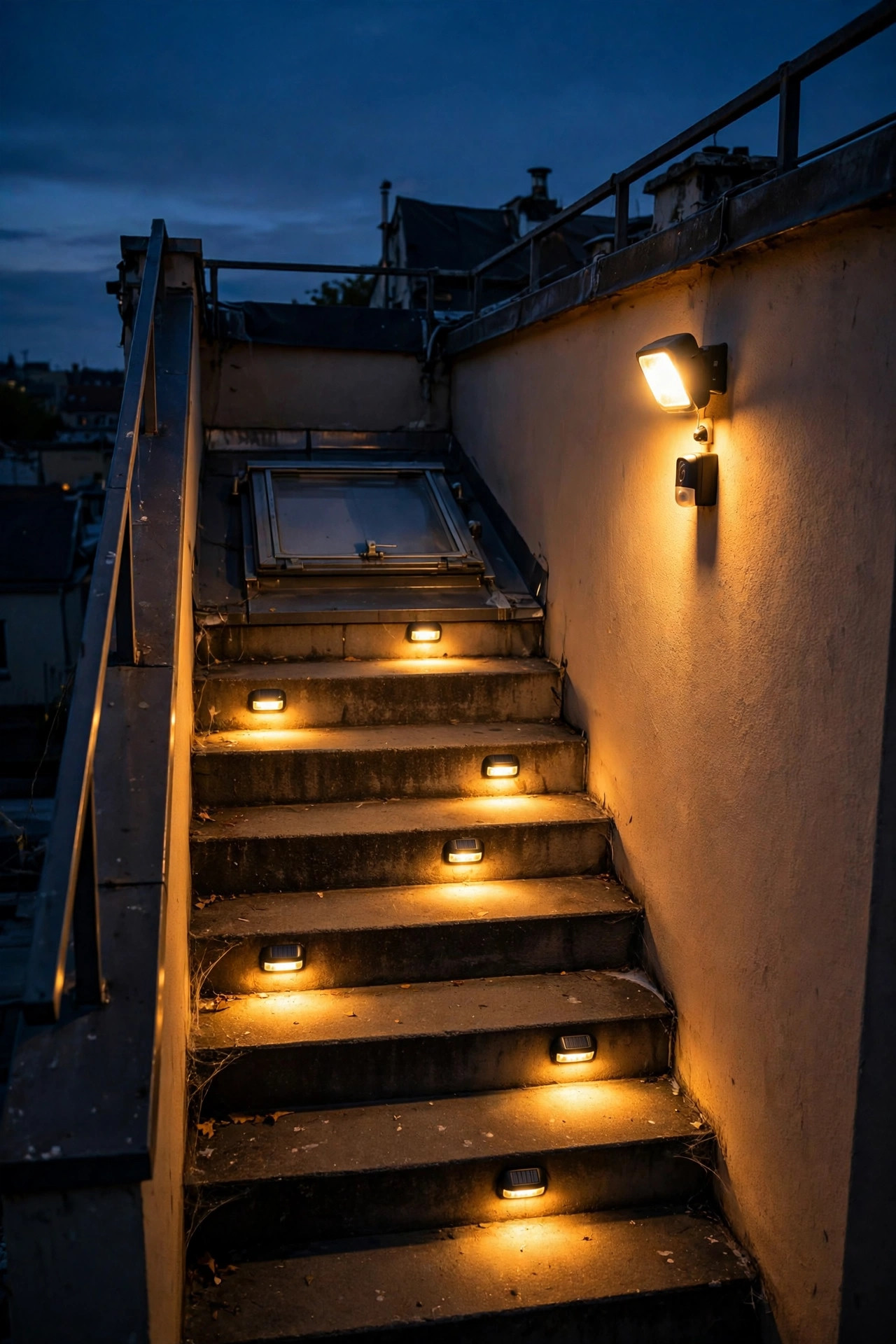
The least glamorous light on the roof is the one that prevents the worst evening: the trip back down. Rooftop access usually means a hatch, a bulkhead door, or a short stair run, and every one of those edges deserves its own small light. Solar step lights on each tread, a motion-sensor fixture by the hatch handle, and one low marker where the deck changes level cover the whole route. Motion sensors are perfect here because your hands are usually carrying a tray. Keep this path on its own circuit or solar setup so it works even when the party layers are off. I also add a small light inside the pergola corner nearest the door, purely so the route reads as a lit path instead of a dark guess. Check these fixtures every spring; stair lights live hard lives. Safety light is not the fun purchase, but it is the one that lets every other idea stay fun.
Suggested budget range: $30 – $85.
13. Hold One Warm Temperature Against the City Glare
A city roof already glows blue and white from a thousand windows and streetlights. Your pergola should answer in one warm voice. Pick 2700K for everything: strings, strips, lanterns, pucks, and caps, and buy spares from the same batch so replacements match. Mixed temperatures are the sneakiest flaw in rooftop pergola lighting ideas, because a single cool-white strand makes every warm fixture around it look orange and tired. Warm light also flatters skin at close range, which matters when everyone is sitting four feet apart. Test new fixtures at home before they go up; budget LEDs labeled warm sometimes lean yellow-green. If you inherit one mismatched fixture, demote it to the hatch or storage corner where nobody studies it. Consistency reads as intention, and intention is what separates a styled rooftop from a collection of lights that happened to meet up there. Write the temperature on the inside of your storage bin lid; future you will be grateful when a strand dies in July and needs an exact match.
Suggested budget range: $20 – $60.
14. Windproof Every Fixture Like a Sailor
Wind at roof height is not a breeze; it is a crew member with opinions. Assume anything unsecured will travel, and rig accordingly. String lights get guide wires and clips at every beam crossing, not just the ends. Lanterns sit in weighted bases or hang from short hooks that cannot swing into glass. Shade sails get their fairy lights clipped every 18 inches so the wire cannot flap and fatigue. Freestanding pieces need the same thinking; if you are still choosing a structure, my notes on freestanding pergola lighting ideas show bases that stay put without a single screw. Keep spare clips, ties, and carabiners in a small deck box, because the time to fix a strand is the calm evening, not the gusty one. After the first big storm, walk the roof and re-tension everything once. Fixtures settle, knots relax, and one calm inspection saves a season of midnight clattering.
Suggested budget range: $15 – $45.
15. Put It All on Timers So You Never Climb Up to Switch Off
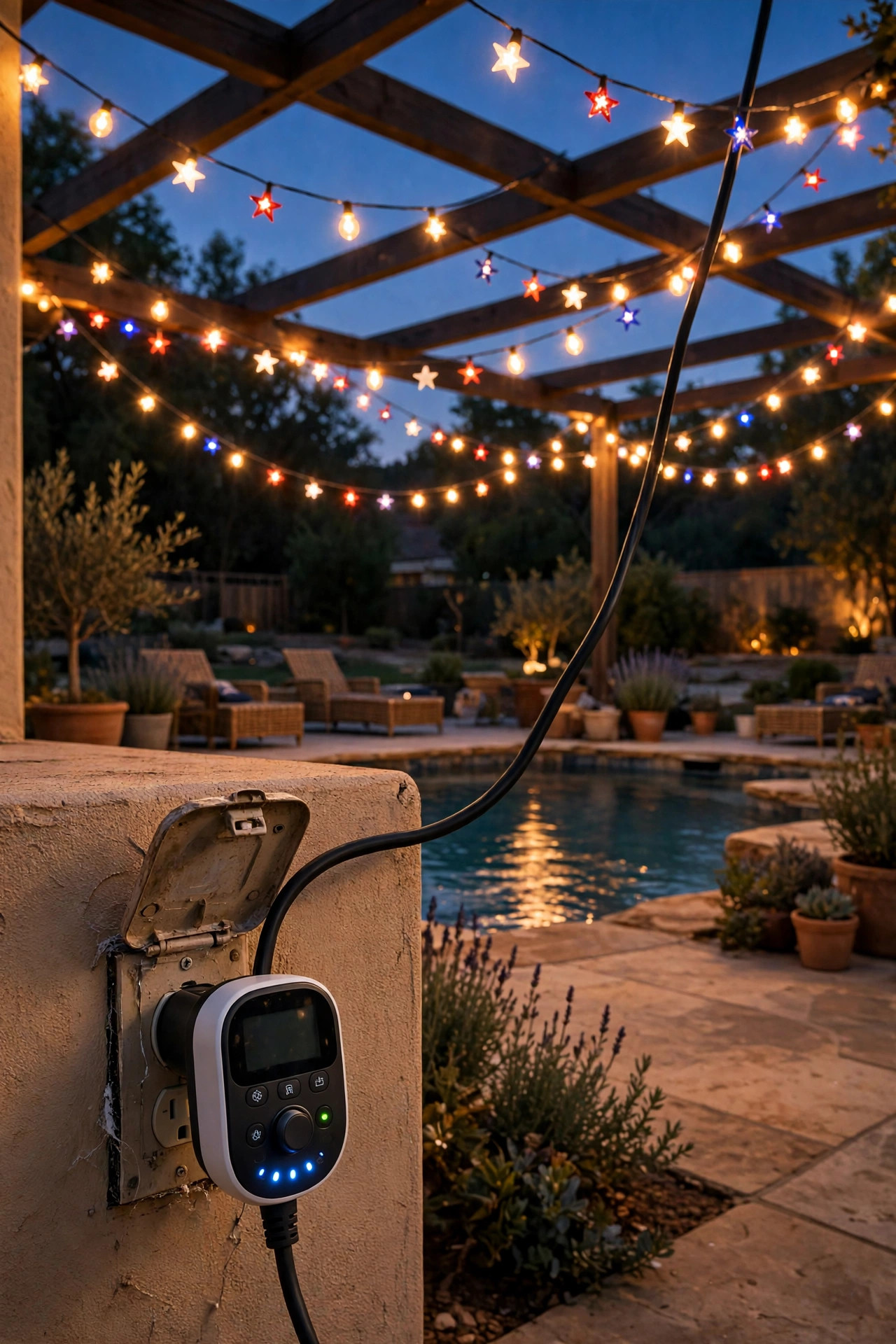
The best rooftop routine is the one that happens without you. An outdoor smart plug or an astronomical timer on the pergola circuit brings the strings and strips up at dusk and puts them to bed at your building-friendly hour, no roof trip required. Solar layers handle themselves, and timer-equipped lanterns cover the rest. Set the schedule a touch earlier than you think; a roof that glows as the sky fades looks intentional, while lights popping on in full dark look like an alarm. If your building or HOA has a lights-out courtesy time, program it and relax. I run mine to 11 p.m. on weeknights and midnight on weekends, with the low path lights exempted so late arrivals still see the hatch. One plug, one app, total peace. Automation is also your storm insurance: lights already off cannot be left burning through a downpour because someone forgot. Mine have not missed a dusk since spring, and the whole roof simply feels alive the moment I step out of the hatch.
Suggested budget range: $18 – $50.
16. Moonlight Down From the Top Beam
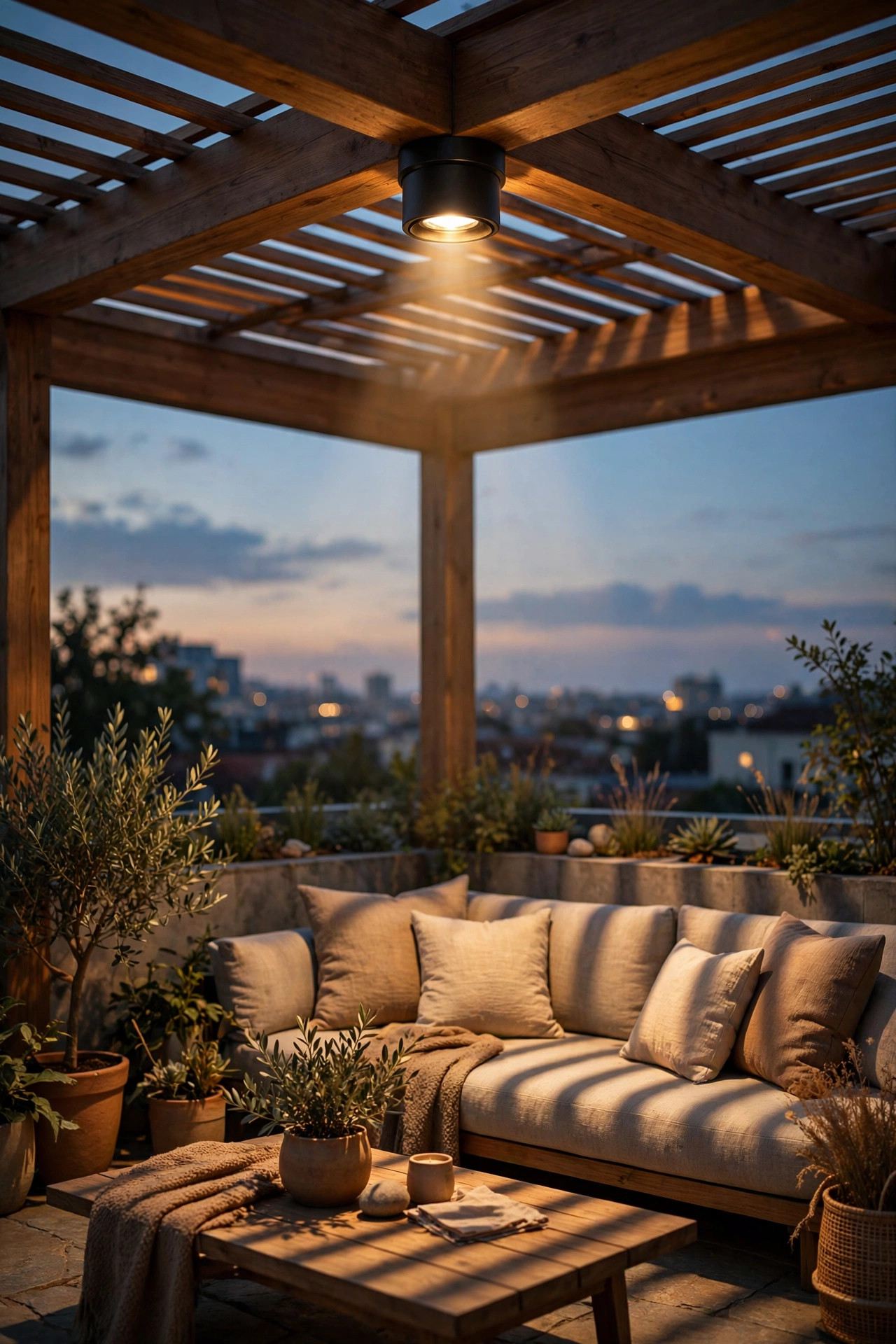
Borrow the oldest trick in landscape lighting and raise it twenty feet: a single shielded downlight mounted high on the pergola, aimed straight down through the beams. The rafters break the beam into soft bars of light and shadow across the deck, the same dappled effect moonlight makes through branches. It is subtle, elegant, and surprisingly practical for reading a menu or finding a dropped earring. Use a narrow-beam fixture with a frosted lens and keep the output modest; you are painting shadow patterns, not landing planes. This works beautifully over lounge seating, where a gentle top light flatters everything and leaves faces partly in shadow, exactly like candlelight. If your pergola has a solid or sail roof, mount the fixture on the tallest corner post instead and angle it across the seating. One fixture, zero fuss, and it layers under the string lights without competing with them. It is the layer I switch on when the strings feel like too much party and the evening wants to slow down.
Suggested budget range: $35 – $95.
17. Wash the Shade Sail From Beneath
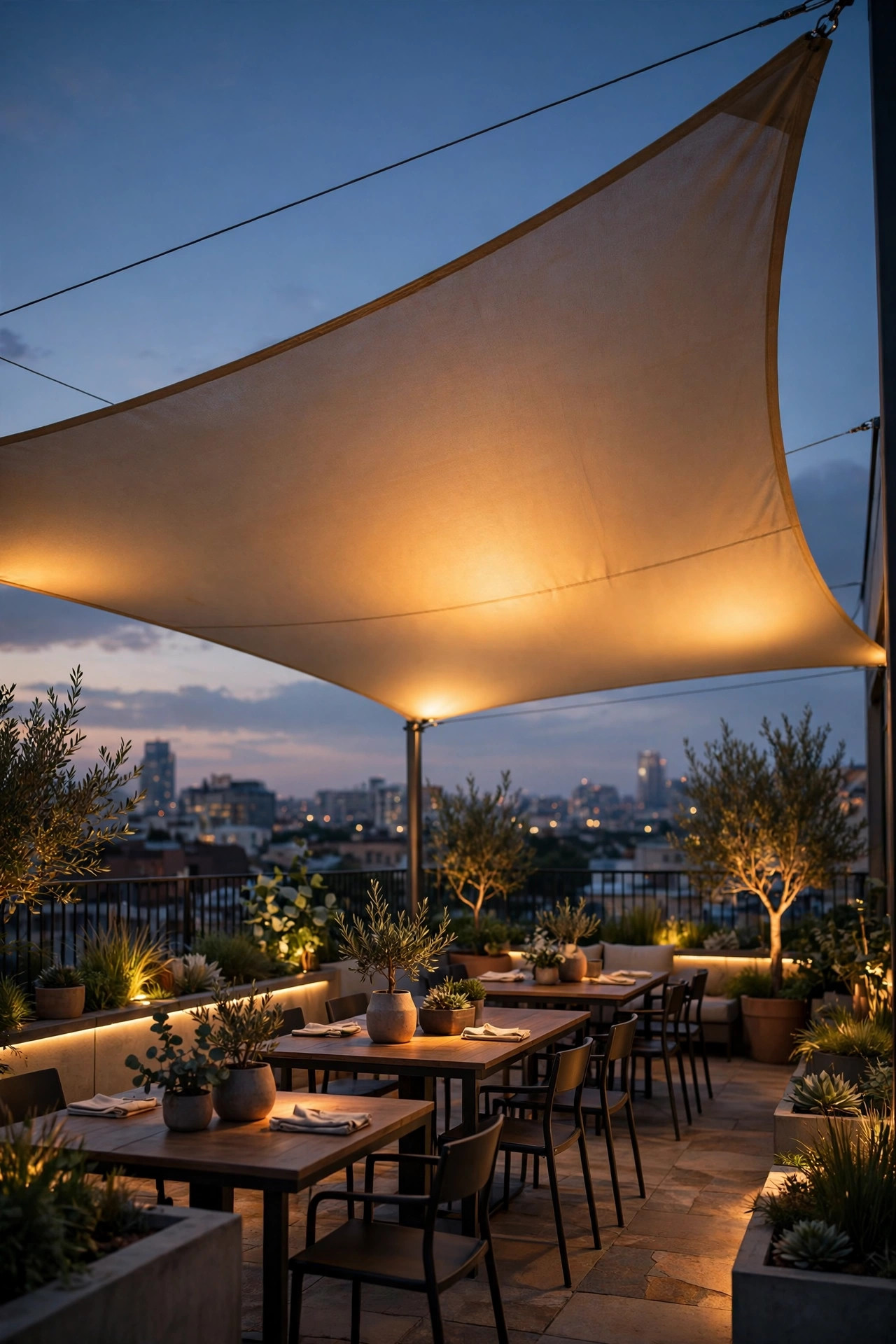
A shade sail glows like a lantern when you wash it from below, and it might be the prettiest effect on this whole list. Place one or two low uplights on the deck or in planters, aimed at the center of the sail from underneath. The fabric diffuses the light and throws a wide, soft radiance back down over the seating, with no visible fixture and no glare in anyones eyes. Warm white keeps it golden; this is not the place for color-changing party modes. Keep real distance between the fixture and the fabric, use LED only so nothing gets hot, and check the sail material rating if you plan to leave the setup running nightly. The effect doubles as your ambient layer, which means the strings can run dimmer and the lanterns become accents. On cloudy nights the sail holds the glow close and the roof feels like a private tent above the city. It photographs beautifully, too.
Suggested budget range: $30 – $85.
18. Trace the Parapet Edge to Define the Rooftop
A roof feels finished when its boundary is readable at a glance. A simple line of low light along the parapet or railing does that: solar stake lights in the perimeter planters, a rope light clipped under the rail cap, or small deck markers spaced every 6 to 8 feet. This edge layer is purely about shape and safety. It tells guests where the roof ends on a dark night and gives the whole space that designed outline you see in magazine photos. Keep it dim and continuous rather than bright and spotty. If your parapet planters hold the greenery, one small solar light per planter keeps the rhythm even and the wiring at zero. Buildings sometimes restrict anything visible from the street, so keep this layer low and warm, and it rarely draws a second look. Think of it as the frame around the picture your pergola is painting.
Suggested budget range: $25 – $70.
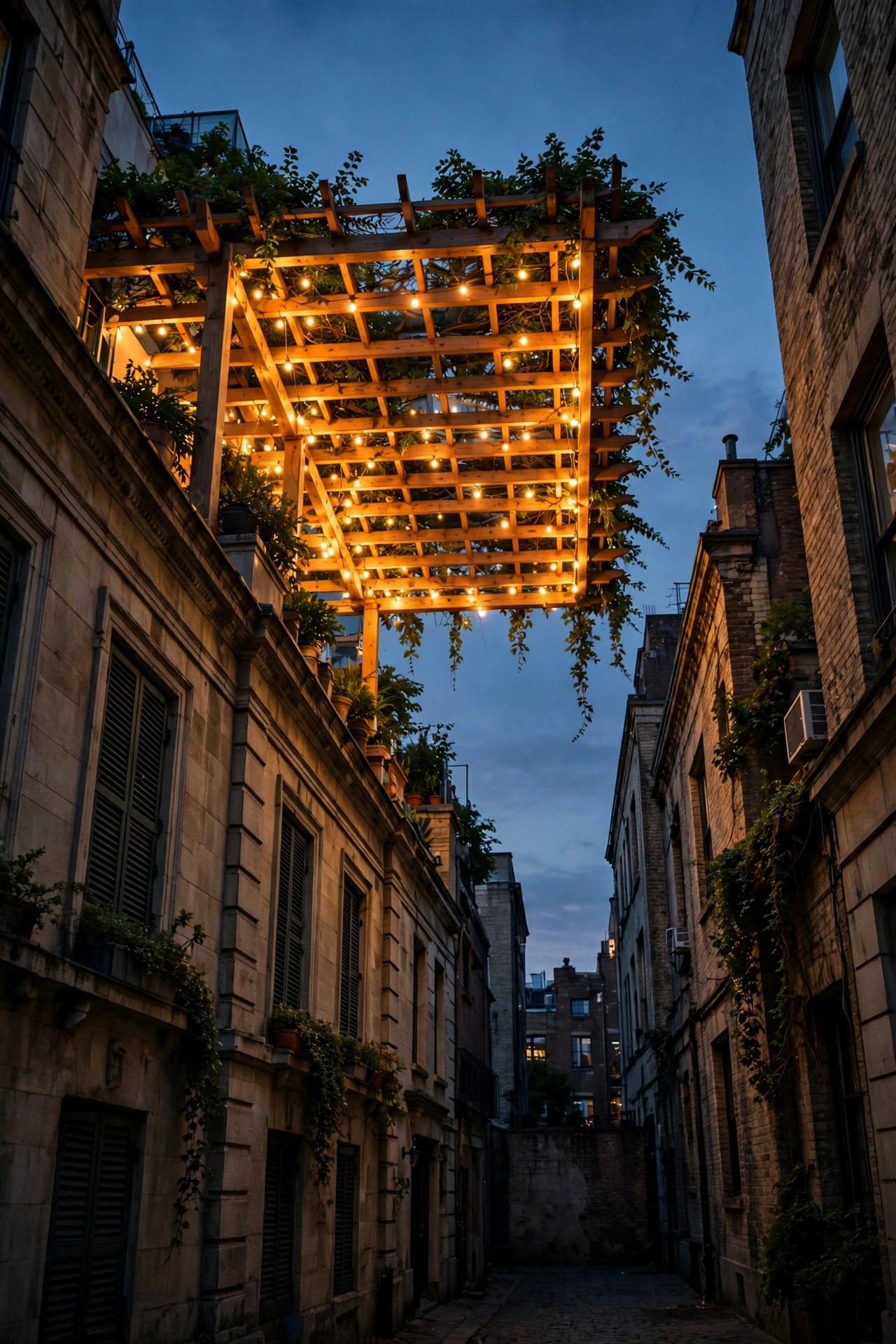
19. Finish With a Street-Level Check of Your Rooftop Pergola Lighting Ideas
The last step happens downstairs. Once your layers are in, walk to the street or a neighbors vantage point and look up at your own roof. This is the view that decides whether your rooftop pergola lighting ideas read as a warm little haven or as a runway. You are checking three things: no bare bulb glaring straight out, no single fixture wildly brighter than the rest, and a glow that stays inside your parapet line. Adjust angles on the spot; a two-degree tilt on an uplight changes everything from below. This check is also simple good manners, since rooftops share their light with everyone around them. Take a photo for reference, because next season you will tweak something and wonder what the good version looked like. Then go back up, pour something cold, and enjoy the fact that your roof now has a lighting plan instead of a pile of good intentions.
Suggested budget range: $0 – $20.
Frequently Asked Questions
What is the best color temperature for rooftop pergola lighting?
Warm white at 2700K is my recommendation for every fixture on the roof. It flatters faces and food, contrasts beautifully with the cool blue glow of a city at night, and keeps the space feeling calm. Buy all your bulbs and strands in the same temperature, and keep spares from the same batch, since one cool-white fixture can make the whole setup look mismatched.
Can I light a rooftop pergola without an outdoor outlet?
Yes, and many roofs have to. Solar string lights, solar post caps, battery lanterns, and rechargeable puck lights can carry an entire pergola with no wiring at all. The trade is brightness and winter runtime, so give panels the sunniest planter you have, wipe them monthly, and keep one plug-in layer if any outlet exists, purely as the reliable backbone.
How do I keep rooftop lights from bothering the neighbors?
Aim everything down or inward, choose shielded fixtures, and keep light inside your parapet line. Downward pendants over the table, strips under the rafters, and a washed shade sail all glow without spraying light sideways. Timers that end the show at a courteous hour help too. A quick look from the street tells you honestly whether your roof glows or glares.
Are string lights safe on a windy rooftop?
They are, if you rig them like you mean it. Use commercial-grade shatterproof LED strands, support long spans with a guide wire, and clip the strand at every beam crossing so wind moves the whole run gently instead of whipping individual bulbs. Never use real flame near shade sails, and choose LED only around fabric. After the first big storm, re-tension everything once.
Conclusion
A rooftop asks more of its lighting than any backyard ever will, but it also gives back more: sky, skyline, and a room that floats above the city. Start with the three layers, hold one warm temperature, rig everything for wind, and let timers do the remembering. Those rooftop pergola lighting ideas will turn a bare pergola and a plain shade sail into the place everyone asks to visit. Browse more pergola and deck inspiration here on the site, pick your first three fixtures this week, and I will see you up on the roof at dusk.