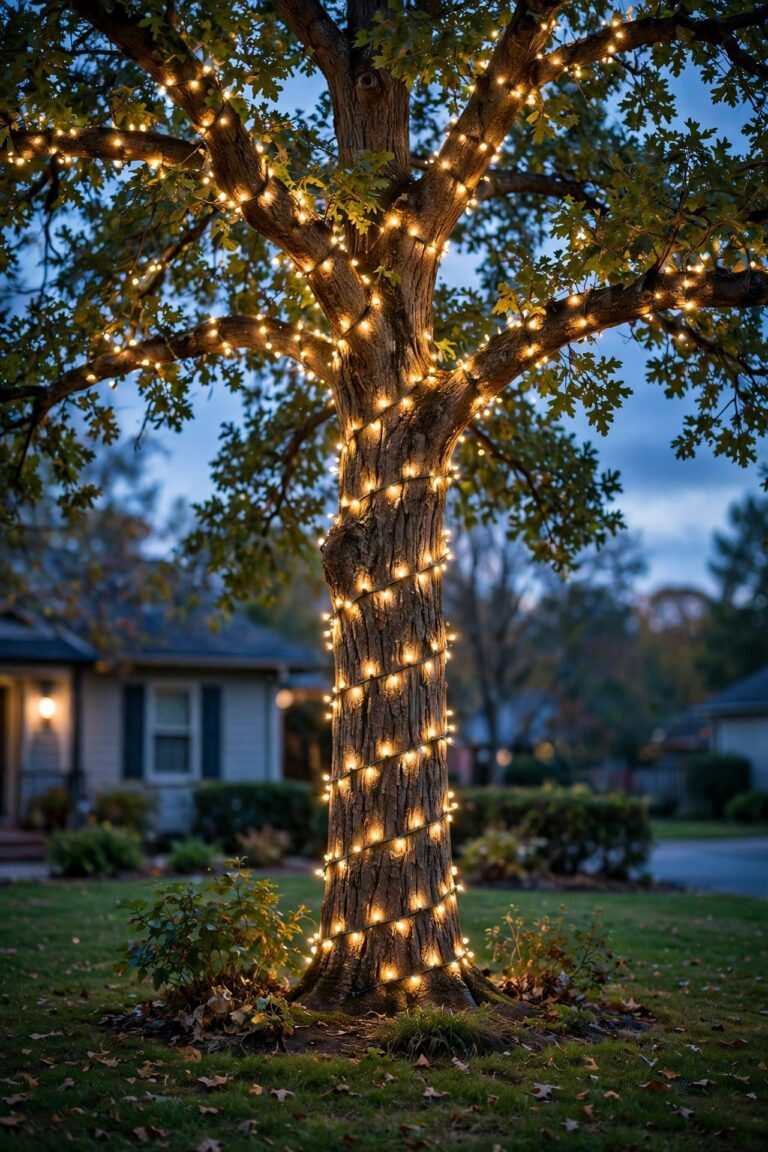
It's the question I hear most from neighbors standing in my driveway at dusk: "I want to add a few more lights — how many lights per transformer can I actually run before something complains?" I love the question because the answer isn't a guess or a gut feeling. It's one subtraction problem, and it takes about two minutes once you know your numbers. The trap is that nobody shops for a transformer thinking about math — we shop by how many fixtures we want, and fixtures are the wrong unit entirely. Transformers don't count lights; they count watts. A transformer that happily runs forty LED path lights can choke on ten old halogens, and the difference matters for your wallet and your wiring. In this guide I'll show you the 80% rule I plan every system around, what each fixture type really draws, two fully worked yard examples with real numbers, the per-run limit that catches people off guard, and what to do — and what it costs — when your plans outgrow the box on your wall.

The Short Answer
Divide your transformer's wattage by five and keep only 80% of it: that's your fixture budget. A 300-watt transformer gives you 240 usable watts, which runs roughly 48 modern LED fixtures at 5 watts each — or only about 7 old 35-watt halogens. Two limits decide everything: total wattage stays under 80% of the rating, and each individual cable run stays under about 100 watts and 100 feet. Respect both, and the honest answer for most yards is "more lights than you probably need."
Why It's Watts, Not Light Count, That Matters
Picture two yards, both with twenty fixtures. Yard one runs slim LED path lights drawing 4 watts apiece — 80 watts total, a light snack for a modest transformer. Yard two still runs halogen spotlights at 35 watts each — 700 watts, enough to overwhelm all but the biggest residential units. Same fixture count, wildly different electrical reality. That's why "how many lights" is really shorthand for "how many watts," and why any answer that doesn't ask what kind of bulbs you own is worthless. Electricity is a budget, and every fixture spends from it the moment the timer clicks on. LEDs changed this whole conversation: a quality LED produces the same beam as a halogen while sipping a fifth of the power, which is why systems designed in the halogen era often have enormous hidden headroom today. In my experience, most homeowners who think they've "maxed out" their transformer are actually running at half capacity or less — they just never added it up. So before we touch a formula, promise me this: from here on, we count watts. The fixture count falls out of the math at the end, and it's usually a happier number than you'd expect.

The 80% Rule: Your Transformer's Real Budget
Every transformer has a nameplate rating — 150, 200, 300, 450, 600 watts are the common residential sizes — and the first thing to learn is that you should never plan to use all of it. I always recommend loading a transformer to no more than 80% of its rating. Run one at full tilt for six hours a night, all summer, and it lives a hot, short life; the breaker starts tripping on humid evenings and the unit hums like it's angry. The 20% cushion also absorbs the brief surge when a whole yard of lamps strikes on at once, and it leaves you a little room for that one extra fixture you'll inevitably fall for at the garden center. Here's the translation table I keep taped inside my own garage cabinet:
| Transformer rating | Usable budget (80%) | Approx. LED lights at 5W each |
|---|---|---|
| 150W | 120W | 24 |
| 200W | 160W | 32 |
| 300W | 240W | 48 |
| 450W | 360W | 72 |
| 600W | 480W | 96 |
| 900W | 720W | 144 |
That last column is the headline number everyone wants, but hold it loosely — it assumes every fixture averages 5 watts and that your cable runs cooperate, which we'll get to. Think of the budget column as the law and the light count as an estimate. If your transformer is a multi-tap model with 12V through 15V terminals, the rating is still a single total budget shared across all taps and all runs; the taps change voltage, not capacity. Two runs leaving the box don't double your watts — they split them.
How Many Lights Per Transformer: The Two-Minute Formula
Here is the entire method, and it genuinely fits on an index card. Step one: find your usable budget from the table above (rating × 0.8). Step two: add up the wattage of everything already connected — that's your existing load. Step three: subtract. Budget minus load equals headroom, and headroom divided by the wattage of the fixtures you want to add equals how many you can add. Watch it work with round numbers: a 300W transformer, an existing load of 100 watts, and a plan for 5-watt path lights. Budget 240, minus 100, leaves 140 watts of headroom; 140 ÷ 5 = 28 more lights on paper. On paper — because I then apply my own sanity discount and plan for about two-thirds of that, call it 18, keeping runs short and leaving slack for a future idea. Why the discount? Because paper math ignores cable length, and cable length is where good plans go to dim. The formula tells you what the transformer can feed; the next sections tell you what the wires can deliver. Run both checks and you'll never stand in a dark yard wondering which purchase to return. Keep that index card somewhere safe, too — we'll reach for it twice more before this guide is done.
What Each Fixture Really Draws
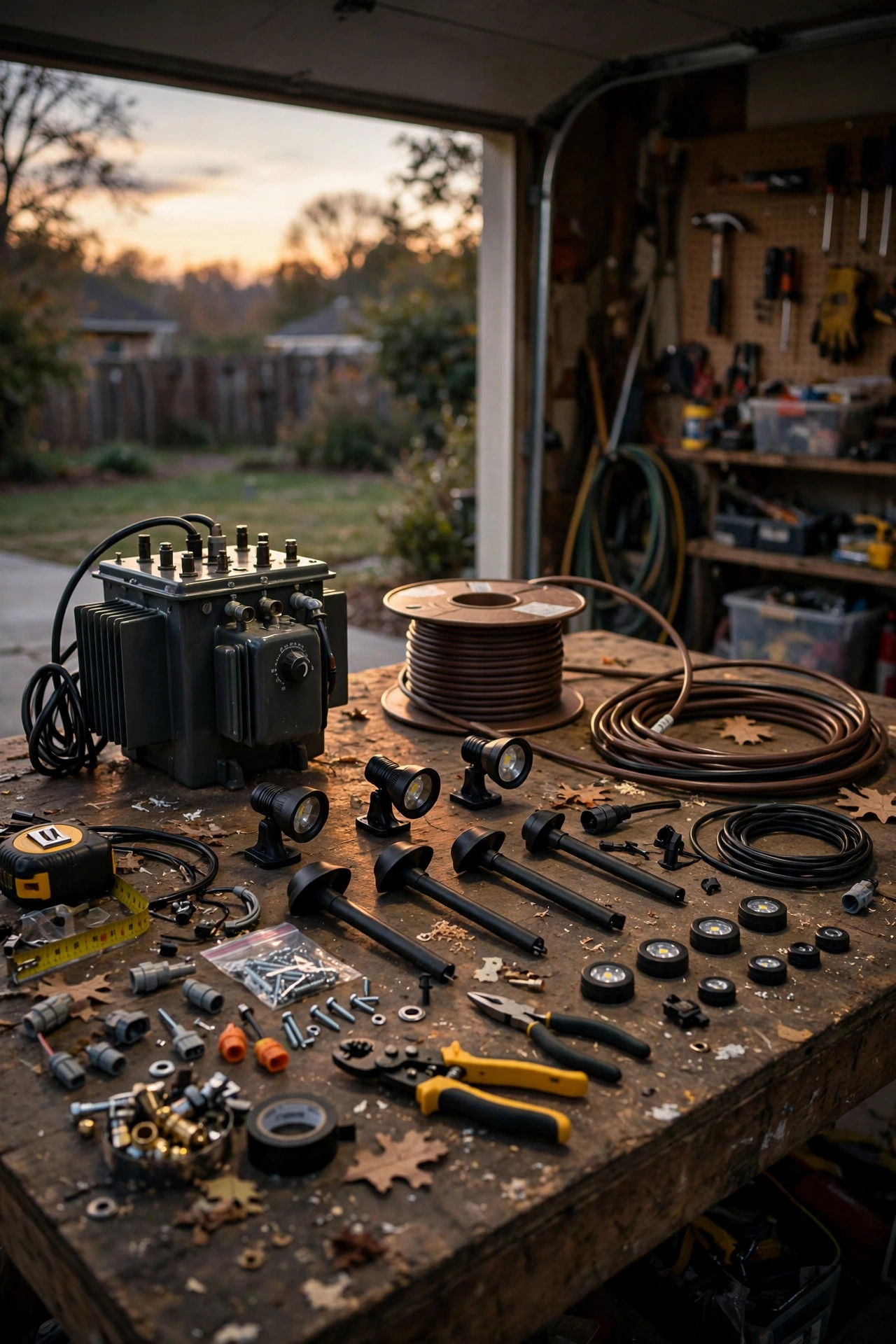
The formula is only as honest as the wattages you feed it, so let's ground them. Fixture wattage is printed on the lamp or stamped inside the housing; when a bulb is unlabeled, these are the typical draws I plan around:
| Fixture type | Typical LED draw | Old halogen equivalent |
|---|---|---|
| Path / area light | 3–5W | 10–20W |
| Spotlight / flood | 5–9W | 20–35W (MR16) |
| Well / in-ground light | 7–12W | 35–50W |
| Deck / step light | 1–3W | 5–10W |
| String-light socket (LED filament) | 1–2W | 5–11W |
Two lessons hide in that table. First, the spread inside a single category is real: one maker's "spotlight" sips 5 watts while another's drinks 9, which is why I read labels instead of trusting category averages when a system runs close to its budget. Second, look at the right-hand column and you'll see why your parents' generation needed monster transformers — a dozen halogen spots could eat 400 watts before the path lights even joined. If your yard still has any halogens in it, they are almost certainly your capacity problem, and converting them is the cheapest "transformer upgrade" that exists. More on that in the second worked example below.
Worked Example: A 300-Watt Yard, Counted Honestly
Let me walk you through a real-shaped audit — my friend Dana's front yard, which we counted together last October with a flashlight and a phone note. Her transformer: a 300W multi-tap, so a 240-watt working budget. Her fixtures: fourteen LED path lights at 4 watts each (56W), nine LED spotlights at 7 watts washing the facade and two young maples (63W), and four LED well lights at 9 watts uplighting the porch columns (36W). Total existing load: 56 + 63 + 36 = 155 watts. Dana was convinced her transformer was "full" because twenty-seven fixtures felt like a lot — honestly, it does look like a lot from the street. The math said otherwise: 240 − 155 = 85 watts of headroom, enough for seventeen more 5-watt fixtures by the formula, or a comfortable ten to twelve after my sanity discount. She spent it on six path lights for the side walkway and four spots for the back beds, landing at 205 watts — 85% of her budget, zero drama, and every light burning at the same warm brightness. The lesson I want you to steal: "feels full" is not a measurement. Count the watts and let the subtraction surprise you.

Worked Example: When Halogens Blow the Budget
Now the cautionary tale — the yard two doors down, built in the halogen era and "upgraded" one fixture at a time for a decade. Transformer: 200 watts, so a 160-watt working budget. The load nobody had ever added up: eight MR16 halogen spotlights at 35 watts each. Eight times thirty-five is 280 watts — the spotlights alone were running at 175% of the safe budget before you counted a single path light, and sure enough, the transformer tripped its breaker most damp nights and the end-of-run lights glowed a sad orange. Notice the fixture count, though: eight. Eight lights "should" be nothing, and with LEDs they would be. The fix cost less than a new transformer: swapping those eight halogen lamps for 7-watt LED MR16s dropped the spotlight load from 280 watts to 56, freeing 104 watts of headroom against the budget and ending the tripping in one afternoon. Total spend was under a hundred dollars in lamps. This is why I always ask about bulb type before transformer size — in my experience, a solid third of "I need a bigger transformer" conversations are actually "I need to retire my halogens" conversations wearing a disguise. Her lights had been telling the truth for years; nobody had ever done the addition.

The Per-Run Limit Nobody Mentions
Here's the catch that bites even people who ace the budget math: the transformer budget is a *total*, but your lights are fed by individual cable runs, and each run has its own limits. As a planning rule, keep any single run under roughly 100 feet of cable and around 80–100 watts of load on standard 12-gauge wire. Push past that and voltage drop moves in — the fixtures near the transformer burn bright and white while the far ones fade amber and dim, even though the transformer's total budget says everything is fine. I explain the physics and the fixes in my guide to landscape lighting voltage drop, and the wire sizing itself in my landscape lighting wire gauge guide, but the planning takeaway is simple: a 300W transformer feeding one 95-watt run is a happy system, while the same transformer feeding one 240-watt mega-run is a gradient of disappointment. Most midsize and large transformers have terminals for two or more runs for exactly this reason. When you plan additions, budget per run, not just per transformer — spread new fixtures across runs, or start a fresh run for a new zone, and the total-capacity number from the formula becomes trustworthy instead of theoretical.
Count Your Current Load in Ten Minutes, Step by Step
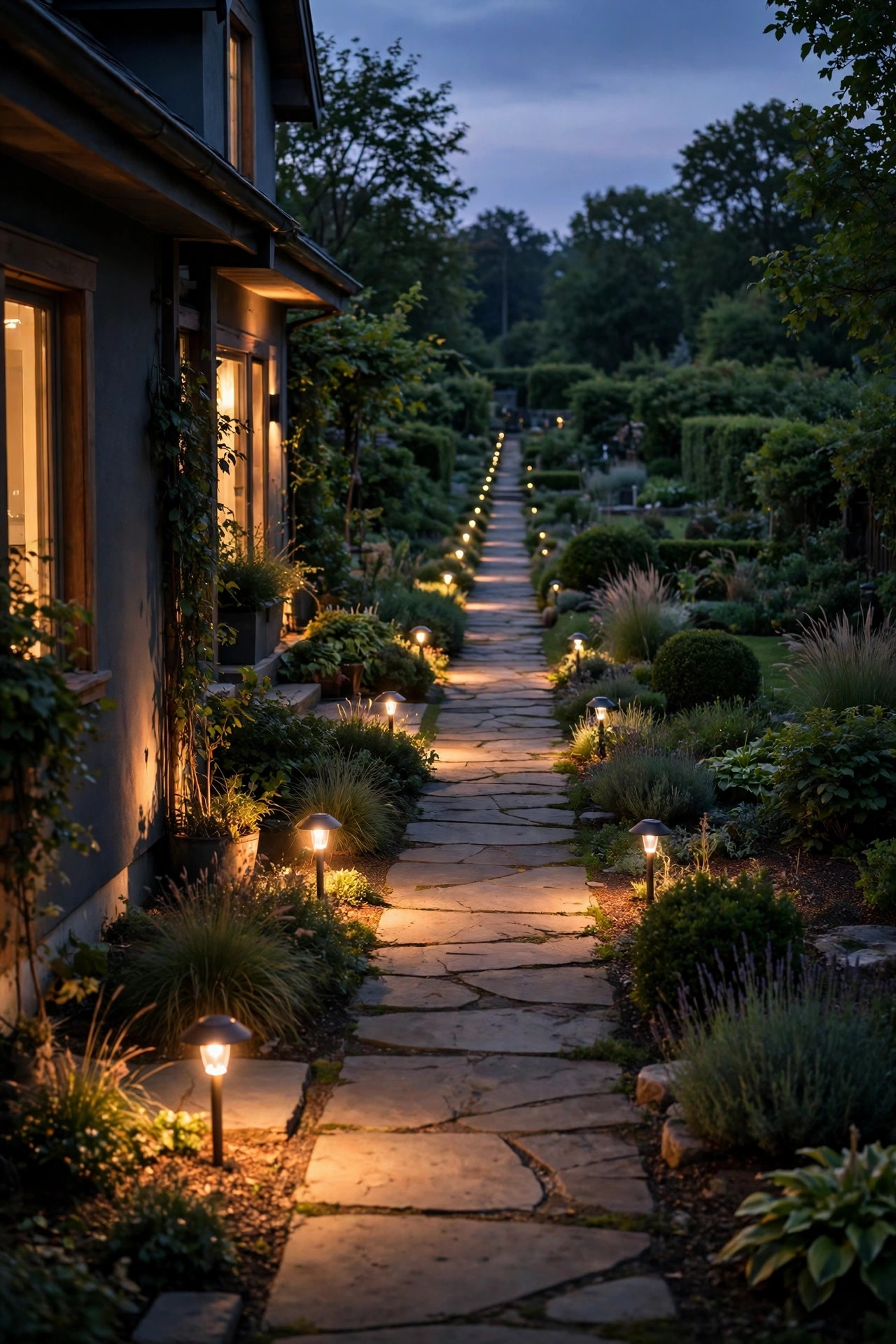
Everything above depends on one number — your existing load — and getting it is a pleasant dusk chore, not a project. First, photograph your transformer's label so the rating and tap layout are on your phone. Second, walk the yard with a notepad and tally fixtures by type and by which run feeds them, checking lamp labels as you go; use my typical-draw table for anything unlabeled. Third, add each run separately, then add the runs together — you need both numbers, the per-run totals for the distance check and the grand total for the budget check. Fourth, do the subtraction: 80% of your rating minus your total load equals your headroom. Fifth, walk one more time at full dark and eyeball the far ends of each run; uneven brightness tells you a run is already straining, whatever the paper says. Ten minutes, give or take the time you spend admiring your own yard. Write the numbers down somewhere durable — I keep mine on the inside of the garage cabinet door, right under that 80% table — because future-you, standing in the lighting aisle next spring, will be very glad past-you did the counting. Honestly, it's the cheapest ten minutes in all of landscape lighting.
How Many Lights Per Transformer When You Outgrow One?
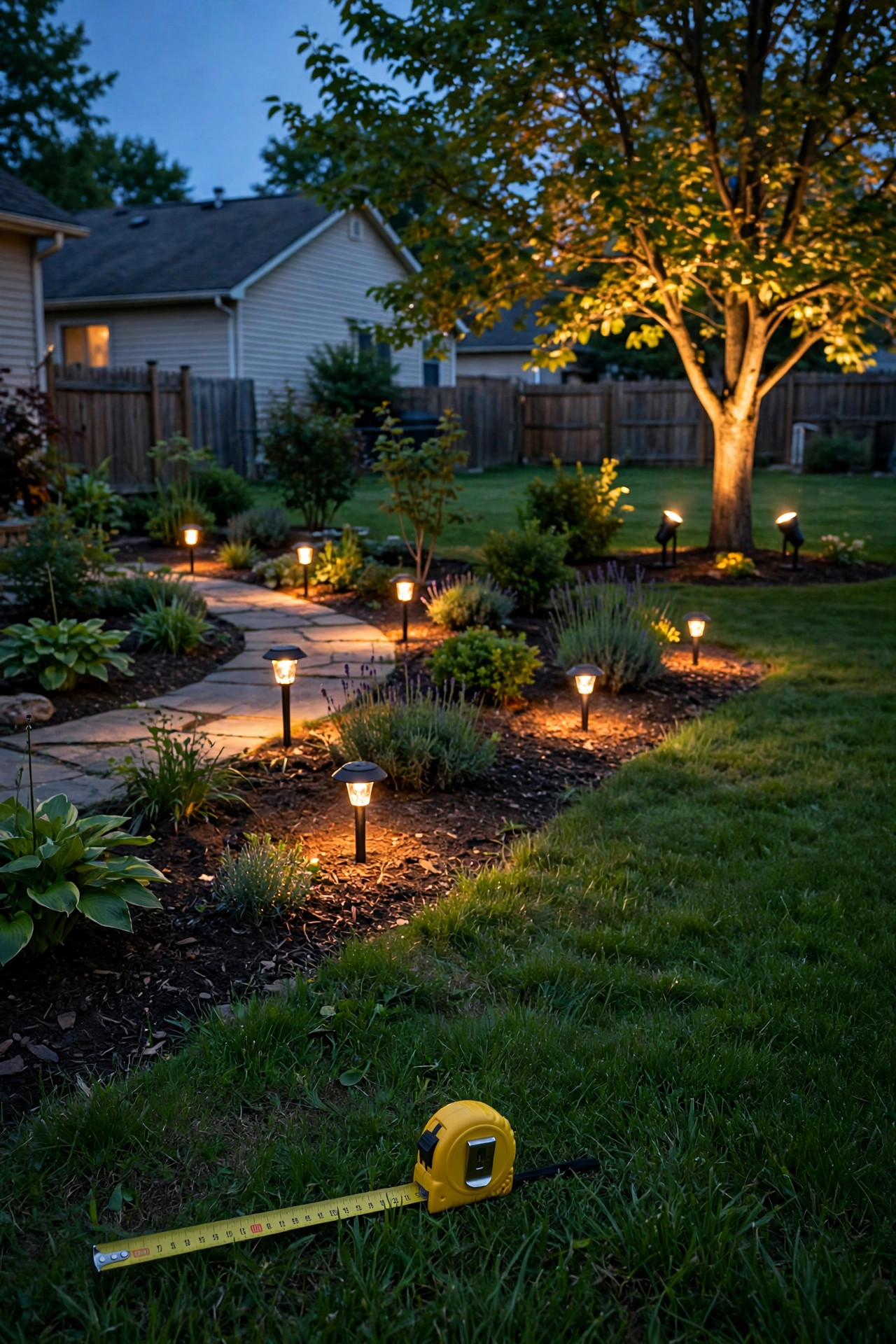
So the math came back tight. You have four honest options, and I reach for them in this order. First, convert any remaining halogens to LED — as the second example showed, this can free more capacity than a hardware upgrade, for the price of a few lamps. Second, split the load: start a new run for the far zone, or move fixtures from a straining run to an idle terminal, which fixes per-run problems without touching total capacity. Third, add a second, smaller transformer dedicated to a new zone — a back patio, say — which keeps runs short and gives you independent timers; my guide to adding lights to an existing landscape lighting system walks through that expansion step by step. Fourth, and only fourth, replace the transformer with a larger one. Size the new unit to your *planned* total load divided by 0.8 — a yard heading for 300 watts of fixtures wants a 450W transformer (360W budget), not a 300W run at the ragged edge. What I never recommend: quietly overloading the old unit and hoping. Transformers don't send warning letters; they trip, hum, and die in July. Each step up that ladder costs more than the one before it, so climb it slowly and stop at the first rung that solves your actual problem.

What a Bigger Transformer Costs in 2026
If you do land on option four, here's the honest price landscape this year. Plain magnetic transformers run roughly $50–$90 for 150W, $90–$160 for 300W, and $160–$300 for 600W. Multi-tap models — the ones with 12V through 15V terminals that help fight voltage drop on long runs — add about $30–$70 over the plain version and are worth it in any yard with a run past 75 feet. Smart transformers with app control, astronomical timers, and zone dimming run $200–$450 depending on size. Swapping a transformer is a genuine DIY job (it's all low-voltage on the output side; the unit plugs into an outdoor GFCI outlet), so labor is often $0 — but if you'd rather a pro handle it, expect $150–$300 for the swap visit. Running costs stay friendly: a fully loaded 240-watt system burning six hours a night uses about 1.44 kWh daily, roughly $0.24 a day or $85–$90 a year at average US rates — and most LED yards run far below full load. Budget-wise, the transformer is rarely the expensive part of an expansion; the fixtures are. That's one more reason to exhaust the free capacity hiding in your current system first. Prices drift from year to year, but the ratios between sizes have stayed steady for a long while now.

5 Mistakes That Wreck the Math
Counting fixtures instead of watts. Twenty lights can mean 80 watts or 700; plan in watts or don't plan at all. Loading to 100% of the rating. The nameplate is a ceiling, not a target — the 80% rule exists because transformers run nightly for years, and heat is cumulative. Forgetting hidden loads. Deck step lights spliced into the system, the spotlight behind the shed, the lamp-post conversion — uncounted fixtures are how "safe" budgets quietly blow. Ignoring the per-run limit. A legal total spread badly across one long run still gives you dim, amber far lights; budget each run separately. Trusting category averages near the edge. If your math lands within 20 watts of the budget, stop estimating and read actual lamp labels — one "5-watt" path light that truly draws 8 will not ruin a system, but ten of them will ruin your evening. Every one of these mistakes is free to avoid; the only tool required is the ten-minute audit, done before the shopping trip instead of after the breaker trip. I'd add a sixth, honorary mistake: doing the math once and never writing it down, so next spring's additions get guessed at all over again from scratch. The audit only protects you if the numbers survive the season — tape them inside the garage cabinet like I do.
Safety and Electrical Basics
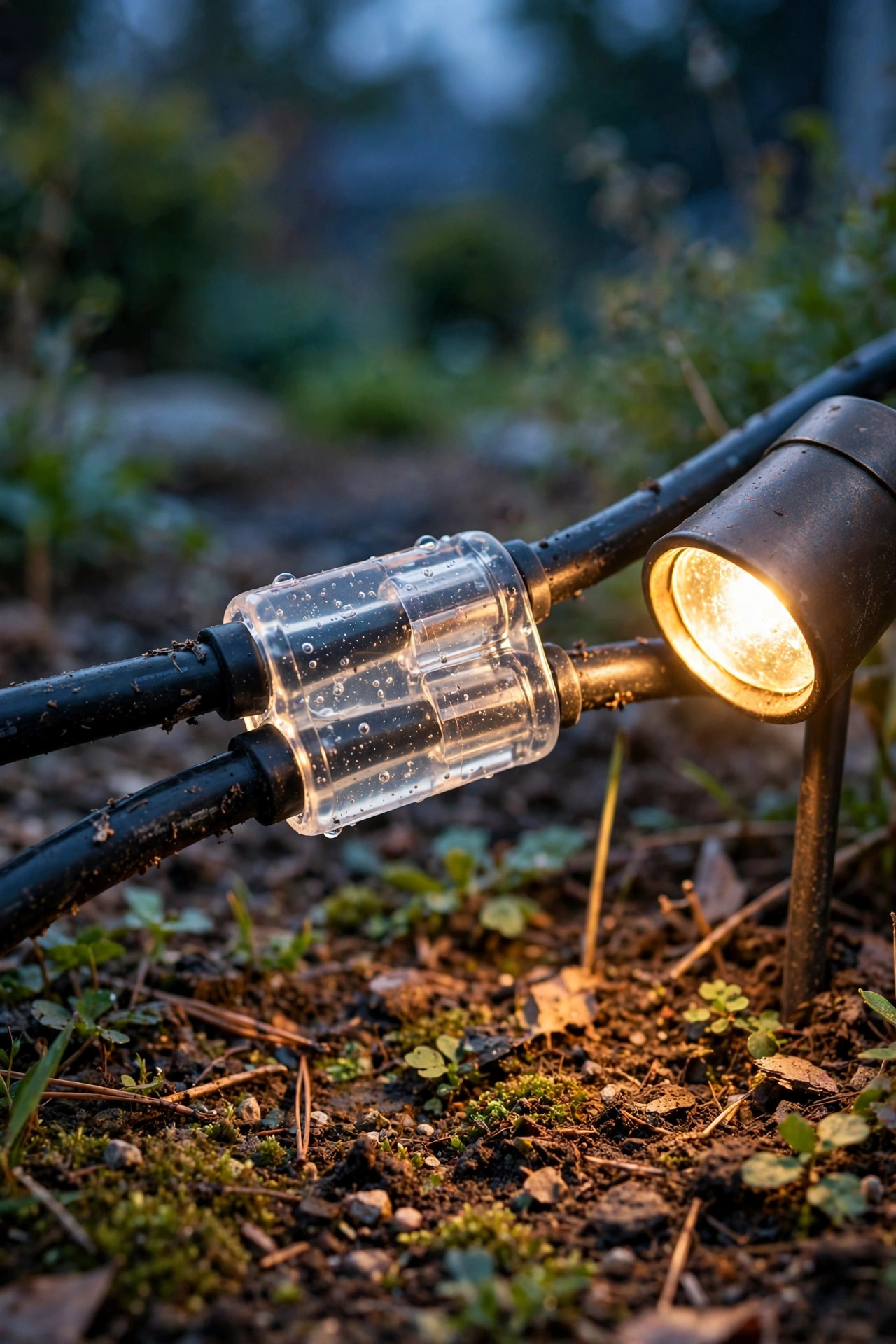
Low-voltage lighting is the friendliest electrical DIY there is — 12 volts won't give you the respect-your-elders fear that line voltage should — but a few basics keep it that way. The transformer itself plugs into a GFCI-protected outdoor outlet, and that protection is non-negotiable; if your exterior outlet isn't GFCI, that's your first upgrade, before any lights. Never exceed a tap's purpose: multi-tap terminals raise voltage to compensate for long runs, so connect short runs to the 12V tap or you'll over-volt the near fixtures and shorten their lives. Keep connections in waterproof, gel-filled connectors rated for direct burial — twisted-and-taped splices are the number-one cause of the flickering "mystery fault" I get called about. Switch the transformer off (or unplug it) before cutting or splicing cable; 12 volts is gentle, but a shorted cable run can still heat up and damage the unit. And respect the rating plate as a hard limit, not a suggestion: an overloaded transformer doesn't fail safe and quiet, it fails hot. Do the math, stay under 80%, and this stays the safest, most forgiving system in your whole yard. One last housekeeping habit: keep the transformer's vents clear of mulch, soil, and leaf litter, because a buried, suffocating unit runs hot even when its electrical load is perfectly legal.
Frequently Asked Questions
Can I run 50 lights on a 300-watt transformer?
Almost certainly yes, if they're LEDs. Fifty modern fixtures averaging 4–5 watts total 200–250 watts against a 240-watt usable budget — right at the line, so read actual lamp labels and keep the true total under 240. The real constraint will be your cable runs: spread those fifty across at least two or three runs of under 100 watts each, and brightness stays even from the first light to the last.
What happens if I go over my transformer's wattage rating?
The system tells on you, politely at first: the transformer runs hot, hums louder, and its internal breaker starts tripping mid-evening, then resetting as it cools — so the yard "mysteriously" goes dark and comes back. Sustained overload shortens the transformer's life and can leave far fixtures dim and amber from voltage sag. Pull a few fixtures or convert halogens to LED until you're back under 80% and the drama stops.
Does cable length change how many lights I can add?
It changes where you can add them. Total capacity is a wattage budget, but each run should stay under about 100 feet and 80–100 watts on 12-gauge cable, or voltage drop dims the far end. A yard can have 100 watts of transformer headroom and still have "no room" at the end of one long run — the fix is a second run or a higher tap, not a bigger transformer.
Should I buy a bigger transformer or add a second one?
Add a second one when the new lights form their own zone — a back patio, a side garden — because short runs stay bright and independent timers are a genuine luxury. Replace with a bigger unit when one central location feeds everything and your planned load outgrows the old budget. Either way, size for the load you're planning: total fixture watts divided by 0.8, rounded up to the next transformer size.
Conclusion
If you take one thing from this guide, let it be the napkin math: transformer rating times 0.8, minus the watts you already run, divided by the watts of what you want to add. That's how many lights per transformer your yard can honestly handle — and for most LED-era yards, the answer is a pleasant surprise hiding behind a "full" feeling that was never measured. Count your load tonight, respect the per-run limits, and spend the headroom on the corners of your yard that go dark at dusk. Then browse the rest of my lighting guides and ideas here for what to do with all that newfound capacity — your transformer has been ready for this conversation for years.