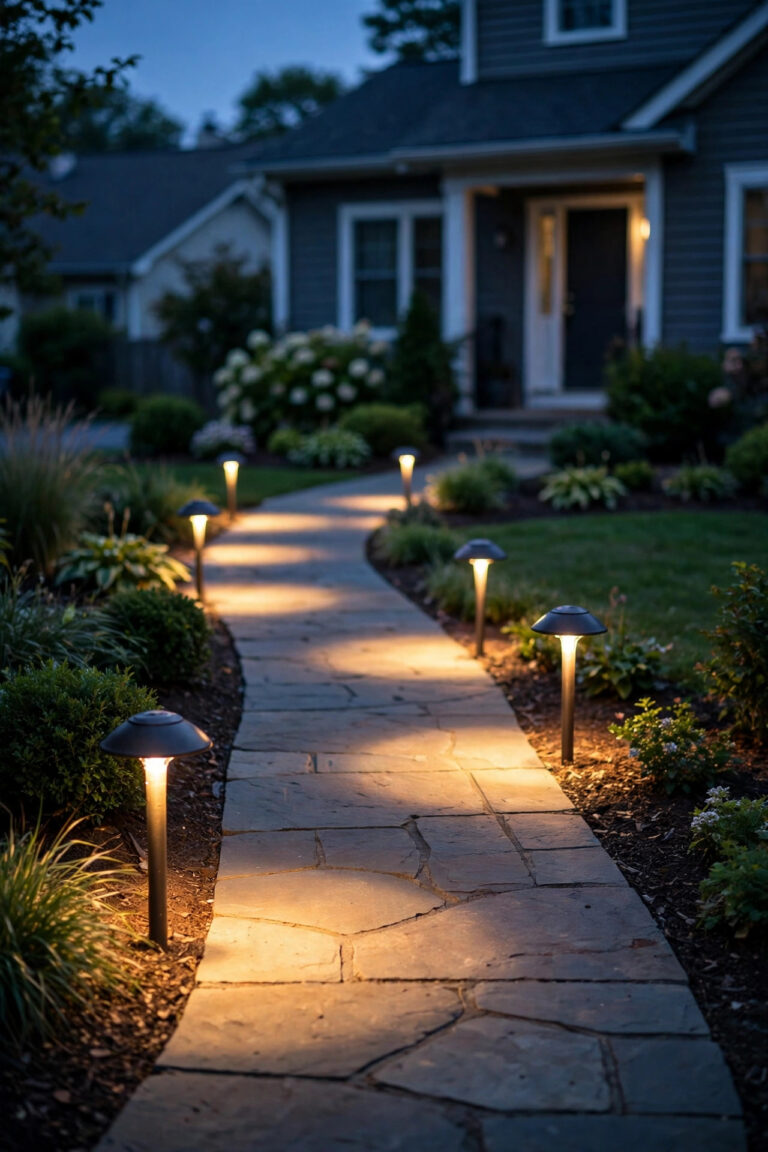
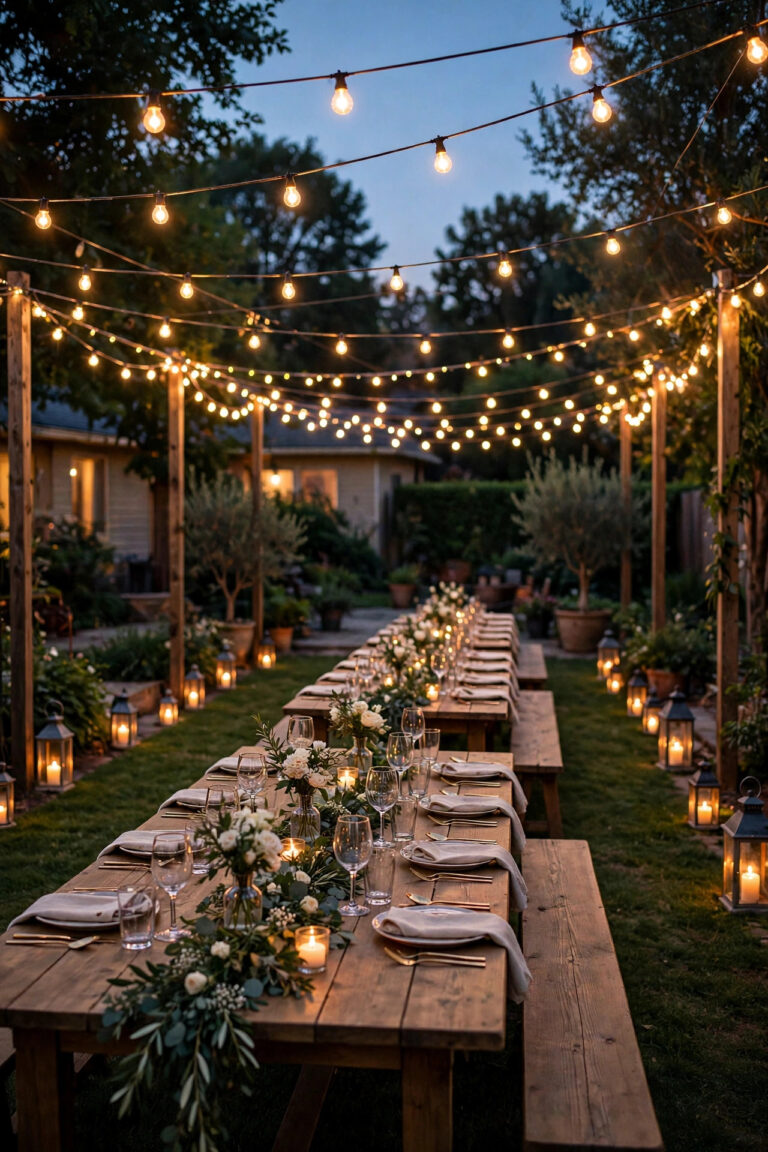
My garden used to go dark the moment I forgot to flip a switch — which, honestly, was most nights. Then I stopped relying on memory and started relying on automation, and everything changed. These smart garden lighting ideas are built around one simple promise: the lights turn on, dim, shift, and switch off entirely on their own, following the sun and the way we actually live in the yard. I still layer my lighting the way I always have — low lights to guide, eye-level lights to welcome, and accent lights to show off the trees and beds — but now every layer runs on timers, sensors, and scenes I set once and forgot about. Some ideas need nothing more than a smart plug and ten minutes. Others turn a low-voltage transformer into the brains of the whole garden. Start with the plan, then automate one layer at a time, and let the yard handle the rest.
1. Lay Out Your Smart Garden Lighting Ideas in Three Layers
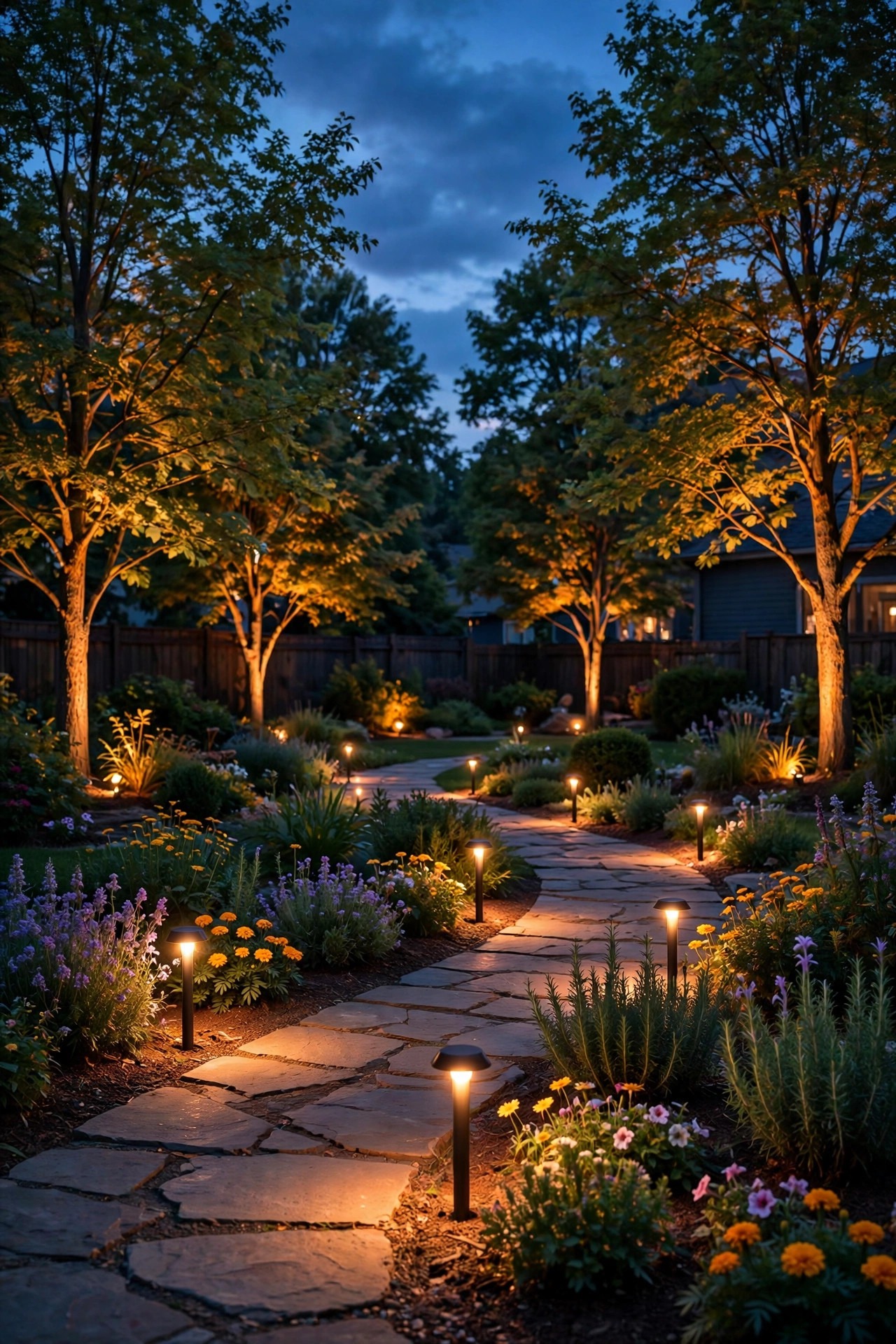
Every automated garden that actually works starts on paper, not in an app. I sketch my yard in three layers — guidance low (paths and steps), welcome at eye level (seating and gates), and accent high (trees, arches, a favorite shrub) — and then I assign each layer its own zone. Zones are the whole trick: a zone is just a group of lights that share one schedule and one dimmer setting, so the path can glow at full brightness until midnight while the tree uplights fade out at ten. Decide which lights share a transformer or a smart plug, because that grouping becomes your zone map in the app. In my experience, three to five zones cover even a big garden. Write down what each zone should do on a weeknight versus a weekend, because you will program exactly that. Keep every bulb at 2700K from the start so the automation never mixes temperatures. This one sheet of paper turns a drawer of random smart gadgets into a system — and it costs nothing but twenty quiet minutes with a pencil.
Suggested budget range: $0 – $50.
2. Put Path Lights on an Astronomical Timer
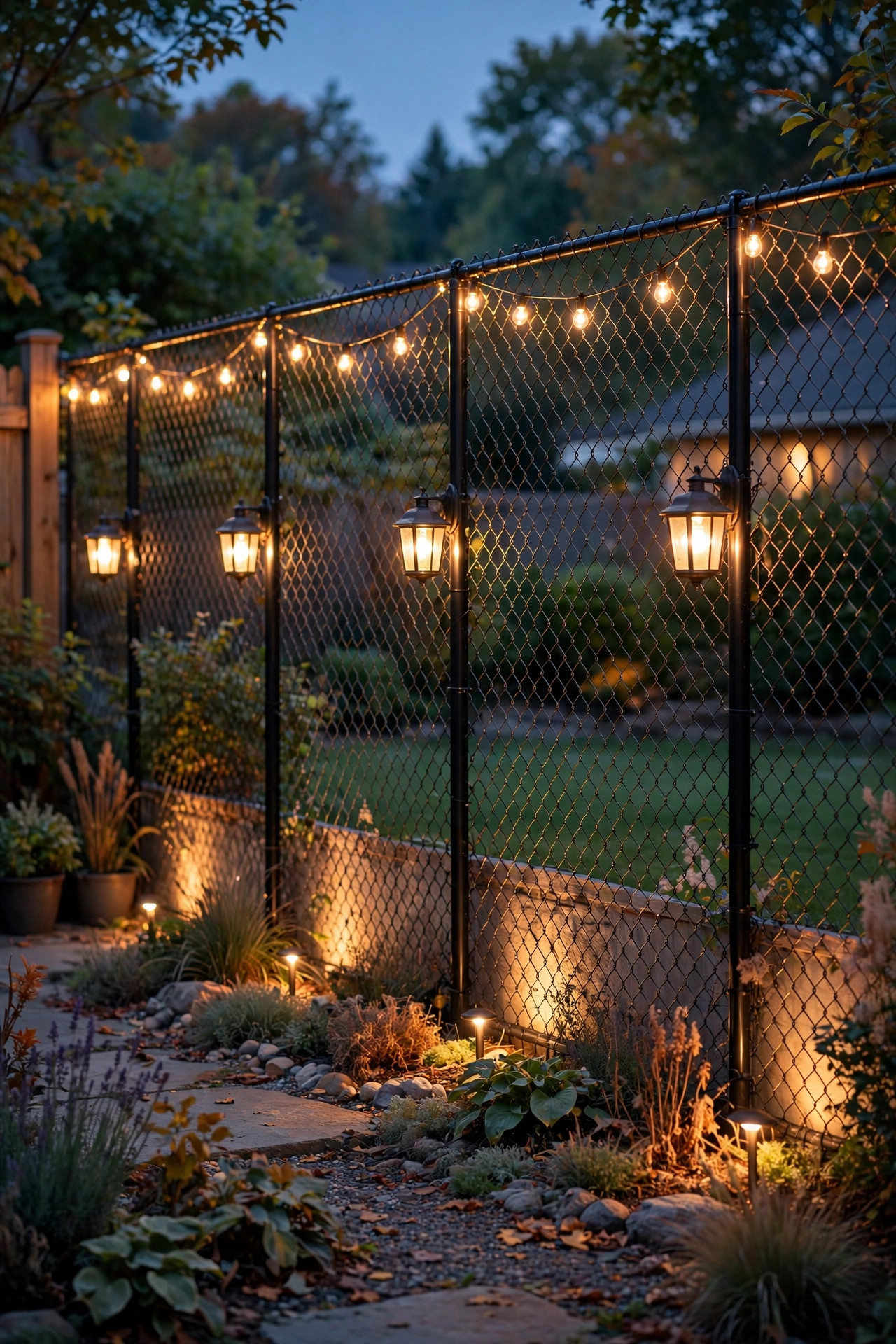
A plain timer turns lights on at 7 p.m. in December and in June alike, which means half the year they blaze in broad daylight or start an hour late. An astronomical timer fixes that: you tell it your location once, and it calculates sunset and sunrise for every single day of the year, adjusting itself as the seasons slide. I set my path lights to come on fifteen minutes before sunset and switch off at 11 p.m. — the yard is always lit exactly when darkness actually arrives. Many smart transformers and outdoor smart plugs have this feature built in under names like "sunset to sunrise" or "astro mode," so check before you buy extra hardware. If your path runs on a standard low-voltage transformer with a mechanical timer, swapping in an astronomical timer module is a twenty-minute job with the power off at the breaker. This is the single automation I recommend to everyone first, because paths are pure safety: nobody should ever have to guess where the stepping stones are.
Suggested budget range: $25 – $90.

3. Let Motion Sensors Guard the Dark Corners
Every garden has corners that do not deserve all-night light — the side gate, the shed path, the run behind the garage — but absolutely deserve light the second someone steps into them. That is motion-sensor territory. I mount sensor spotlights about eight feet up, angled down so the beam pools on the ground instead of blasting across the fence, and I set the trigger distance to twelve to fifteen feet so passing raccoons do not throw a nightly light show. A two-to-five-minute run time after the last movement is the sweet spot: long enough to unlock a gate with full hands, short enough to forget it exists. Solar sensor lights work beautifully for spots with no wiring, as long as the little panel sees real sun. My full motion sensor outdoor lights guide covers placement angles in detail. Keep these lights on their own zone, separate from your pretty scenes — security light that joins a dinner-party scene just ruins both jobs.
Suggested budget range: $30 – $150.

4. Smart Plugs Turn Ordinary String Lights Clever
You do not need smart string lights. You need ordinary string lights and one outdoor-rated smart plug, and suddenly the strands you already own take schedules, dimming scenes, and voice commands like they were born to it. The plug lives between the outlet and the strand: plug it in, pair it with your home Wi-Fi, and the café lights over the patio now fade on at sunset and off at bedtime without you touching anything. Two rules from my own mistakes. First, the plug must be outdoor-rated with a weatherproof housing, and it should hang socket-down from a covered GFCI outlet so rain runs away from the connection. Second, if you want dimming, the bulbs themselves must be dimmable — the plug can only switch power, and a smart dimmer plug costs a little more. I keep a shortlist of what to look for in my best outdoor smart plugs and timers roundup. One plug per strand zone, labeled in the app with a name you will actually remember.
Suggested budget range: $15 – $60.

5. Dusk-to-Dawn Photocell Stakes for the Planting Beds
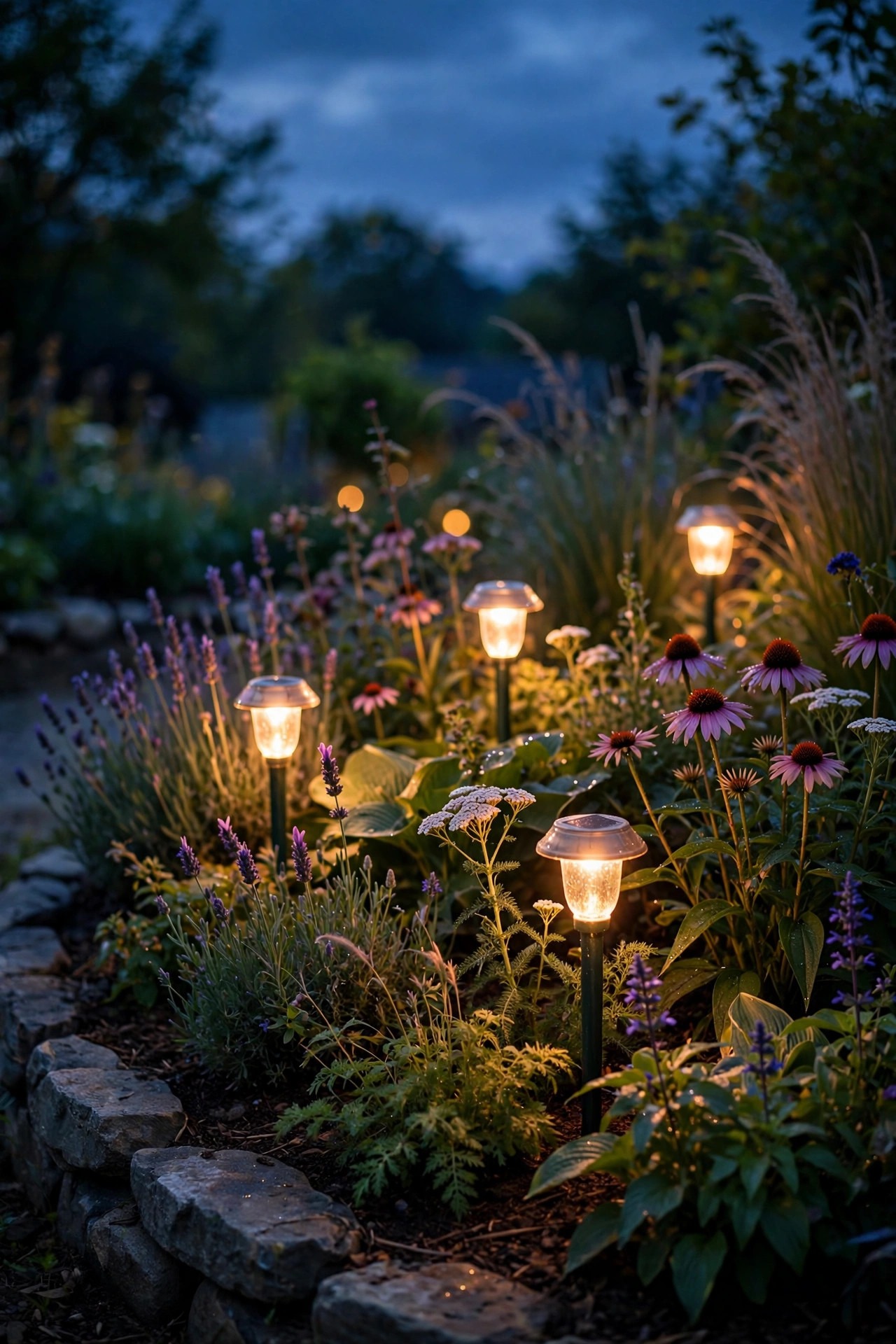
The humble photocell is the oldest automation in the garden, and for planting beds it is still one of the best. A photocell stake watches the light level and switches itself on when dusk falls and off when morning comes — no app, no Wi-Fi, no programming, and nothing to reset after a power outage. I push them into the beds among the perennials where their little uplight washes the foliage from inside the planting, which looks far more magical than lighting a bed from outside it. Space them four to six feet apart and stagger the heights of the plants around them so the glow layers. The catch is placement: a photocell parked in the shadow of a dense shrub will think it is midnight at noon, and one placed where a porch light hits it may never turn on at all. Test a spot for two nights before you bury the cable or settle the stake. Where a bed sits under a streetlight, skip the photocell and put that zone on the astronomical timer instead.
Suggested budget range: $40 – $140.
6. Make a Smart Transformer the Brains of the Beds
If your garden runs on low-voltage landscape lighting, a smart transformer is the upgrade that automates everything at once. It replaces the dumb box on the wall with one that connects to your phone, splits your lighting into two to four independently controlled zones, and runs each zone on its own astronomical schedule and dimming level. The beds can glow at eighty percent until ten, the trees can hold at full drama until eleven, and the path can stay on low all night — all from one box. Sizing matters: add up the wattage of every fixture on the run and choose a transformer with at least twenty percent headroom, so a 180-watt load wants a 300-watt unit, not a 200. Run 12-gauge cable on long runs to fight voltage drop, and keep the transformer within decent range of your router or add an outdoor Wi-Fi extender. My broader smart outdoor lighting guide compares control options if you are weighing this against smart bulbs and plugs.
Suggested budget range: $150 – $450.

7. Voice-Controlled Zones for Hands-Free Evenings
Once your zones exist, naming them is what makes voice control feel like magic instead of a party trick. I keep names short, distinct, and impossible to mishear: "garden path," "big tree," "patio strings," "the beds." Then a single sentence — lights low on the beds, strings on — sets the whole evening without me putting down a dripping watering can or a plate of burgers. Voice control earns its keep most in the in-between moments: hands full of harvest, a toddler asleep on your shoulder, guests arriving while you are mid-task inside. A small smart speaker on the covered patio means you do not even need your phone outside. One caution from experience: put voice control on top of your schedules, never instead of them. The sunset timer should still fire on the nights you say nothing at all, and guests should still find a lit path whether or not anyone remembered to ask for it. Automation first, voice as the delightful override.
Suggested budget range: $30 – $120.

8. Scenes That Shift From Dinner Party to Movie Night
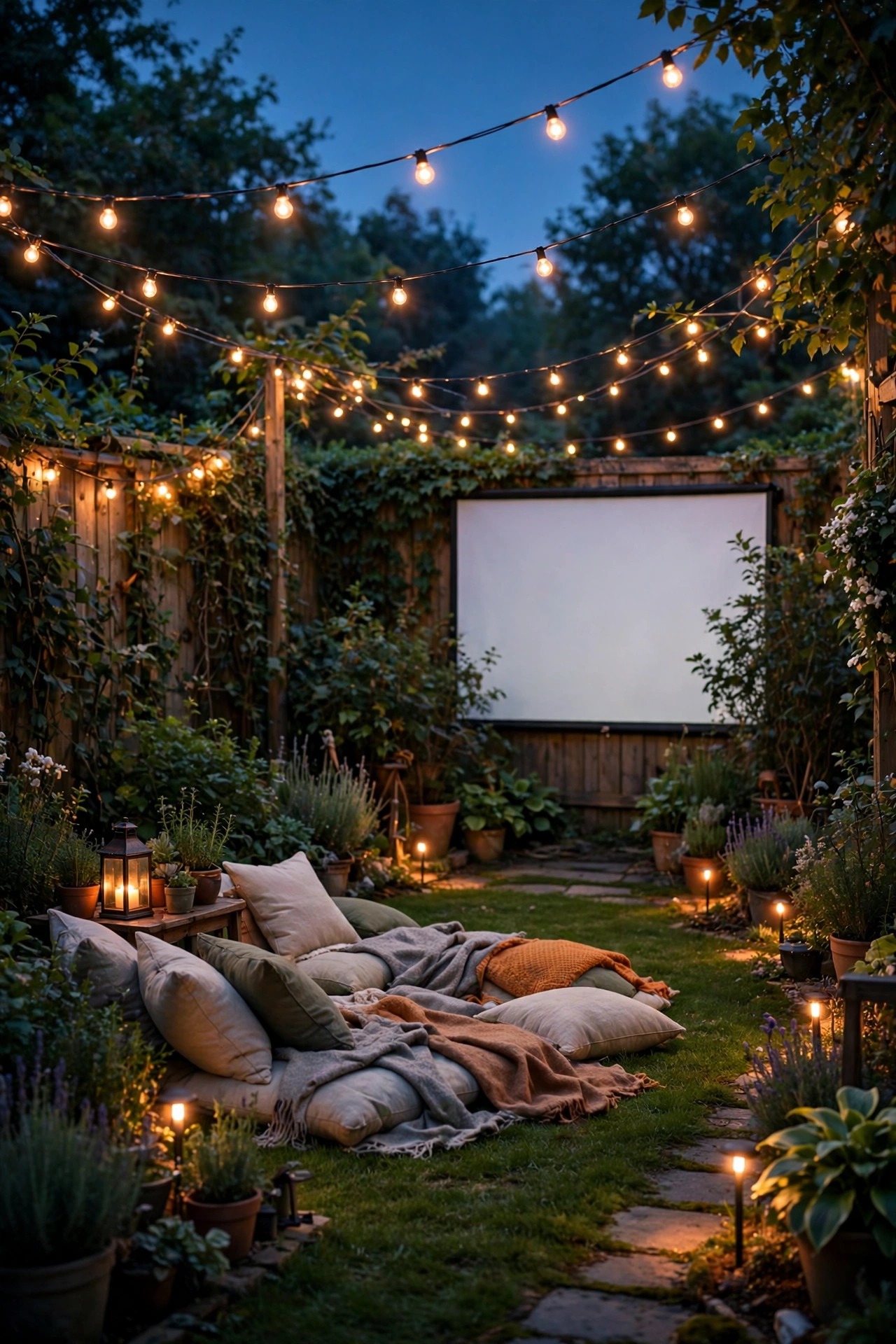
A scene is a saved snapshot — this zone at this brightness, that zone off — recalled with one tap. I keep three garden scenes and use them constantly. "Dinner" runs the strings at sixty percent, the beds at forty, and the tree uplight on low, enough glow to see faces and plates without glare. "Movie" kills the strings to a whisper, drops the beds to fifteen percent, and leaves the path at thirty so nobody trips on a snack run. "Full Glow" is everything at ninety for cleanup, games, and finding the earring someone dropped in the lawn. Build scenes at dusk, standing in the garden, adjusting one zone at a time — never from the couch at noon, because brightness lies in daylight. Save each scene the moment it feels right. Most apps let you attach scenes to schedules too, so the yard can slide from Dinner into a late-night wind-down on its own at ten sharp, hosts and guests none the wiser.
Suggested budget range: $0 – $80.
9. Color-Changing Bulbs for Holidays, Warm White the Rest of the Year
Color-changing smart bulbs in two or three key fixtures — the porch-adjacent lantern, a pair of uplights on the hero tree — let the garden dress itself for every holiday on a schedule, then go right back to being a tasteful warm-white garden the other 340 nights. I program the calendar in January: soft amber for fall evenings, red and green accents in December, pastels for spring gatherings, orange for the last week of October, and always back to 2700K the morning after. That last step is the one people forget, and it is the whole point of automating it. Keep the color playful but placed: colored light belongs on accent fixtures, never on paths or steps, where white light is a safety feature, and never in the beds at full saturation, which makes foliage look like a fish tank. Limit yourself to two colors at a time and the effect reads festive instead of chaotic. The bulbs cost the same as good dimmable smart bulbs, so the party trick is essentially free.
Suggested budget range: $25 – $110.

10. Solar Stakes That Charge All Day and Glow All Night
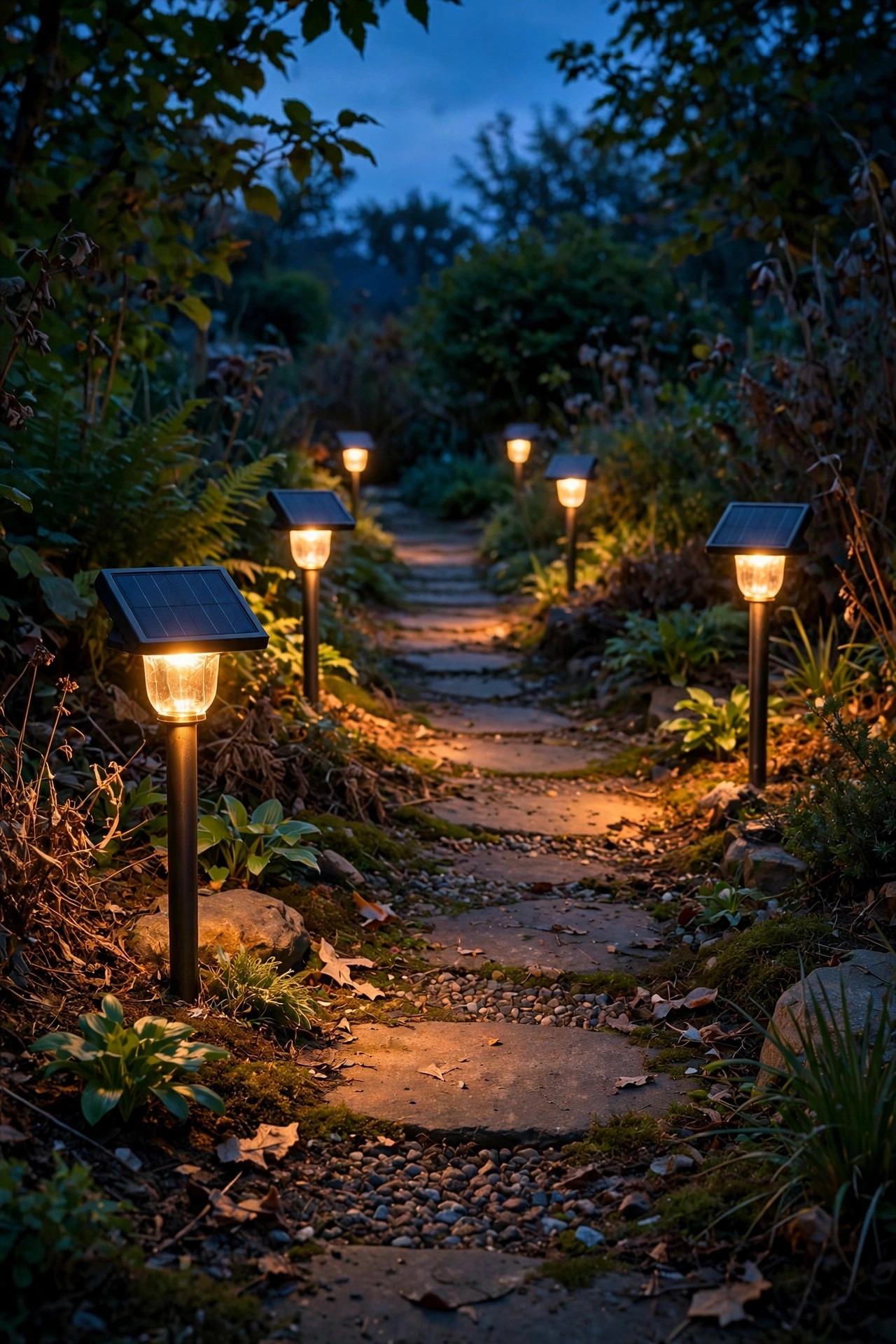
Solar lighting is automation in its purest form: the sun is the schedule. Modern solar path stakes and spotlights sip daylight all afternoon, then switch themselves on at dusk and run six to ten hours on the charge — longer in summer, shorter in December, which honestly matches how we use the garden anyway. The secret to solar that does not disappoint is panel placement: the little panel needs five to six hours of direct sun, so a stake that lights a shady north bed should have a separated panel you can spike into a sunny patch a few feet away. I use solar for the far beds and the bits of path far from any outlet, and wired smart lights anywhere brightness truly matters. Expect a softer glow than low-voltage — think guidance and sparkle, not floodlighting — and replace the rechargeable batteries every couple of years to keep the run time honest. Snow and fallen leaves over a panel will quietly cancel the whole show, so a monthly wipe is the only maintenance on the list.
Suggested budget range: $35 – $160.
11. Arrival Automations That Light the Way Home
There is a particular pleasure in a garden that notices you have come home. Location-based automation uses your phone as the trigger: when you cross an invisible boundary a few streets away, the path brightens to full, the gate light comes on, and the tree uplights wake up, so the yard is glowing before you turn into the driveway. I set the trigger distance generously — about a quarter mile — because the lights deserve a minute to be beautiful before I see them. Guest mode matters too: tie the same welcome scene to the motion sensor at the gate, so visitors get the lit path even though their phones are not enrolled. Set a hard off-time as well, because an arrival scene that never ends is just lights left on. Mine hands control back to the normal evening schedule thirty minutes after it fires. And keep the porch light on its plain sunset schedule regardless — phones die, apps log out, and the house should never sit dark because a battery did.
Suggested budget range: $0 – $70.

12. Weather-Aware Schedules That Skip the Stormy Nights
Some apps and automation platforms can read the local forecast, and tying your garden scenes to the weather is the automation I show off most. Rain coming? The dinner scene cancels itself, the strings stay dark, and only the path and motion lights run — why light a party nobody is having. A clear, mild Friday, on the other hand, can trigger the weekend scene an hour earlier and hold it an hour later. Wind rules are practical as well as pretty: gusts over a set speed kill the accent lights near the loose patio furniture, long before anything rattles. You build these as simple if-this-then-that rules, one per scene, and then you mostly forget they exist until a friend asks why your garden always seems perfectly lit for the evening you are actually having. Start with just the rain rule — it saves the most electricity and feels the smartest — and add the rest only if you catch yourself wishing for them. Restraint keeps a smart garden calm instead of fussy.
Suggested budget range: $0 – $60.

13. Vacation Mode That Makes the Garden Look Lived-In
A garden that runs the exact same schedule every night advertises an empty house almost as clearly as a dark one. Vacation mode fixes that by randomizing: the path and beds come on somewhere in a forty-minute window around sunset, scenes rotate between Dinner and Full Glow across the week, and one night in three the tree lights skip entirely, the way they do when real life intervenes. I also drop the motion-sensor run time shorter and let a neighbor know the pattern looks odd on purpose. Most lighting apps build this in as an away or vacation setting — switch it on, and do not touch anything else, because a vacation mode you must babysit is just a schedule with extra steps. Test it for two nights before a real trip so you trust it at the airport. And pair it with the inside lights on their own randomized timers; a glowing garden around a pitch-black house tells its own story, and it is not the one you want told.
Suggested budget range: $0 – $50.

14. Save One Warm 2700K Scene as Your Every-Night Default
All this cleverness needs an anchor, and mine is a single saved scene called, unglamorously, "Every Night." Every bulb in the garden at 2700K, paths at seventy percent, beds at fifty, tree accents at sixty, strings at forty — warm, calm, and completely predictable. I build it deliberately and then aim every schedule at it: sunset fires Every Night, the arrival automation hands back to Every Night, and vacation mode randomizes around Every Night rather than inventing new looks. One default scene is how a smart garden avoids drifting into a patchwork of temperatures and brightnesses over the months, which is the fate of every yard automated one impulse at a time. If a fixture gets replaced, I match it into the default scene before anything else. Guests never notice this discipline, and that is the compliment — the garden just always looks right. When you change anything, change the default scene itself, in the garden, at dusk, and let every automation inherit the improvement at once.
Suggested budget range: $0 – $40.

15. Finish With a Dusk Walk-Through of Your Smart Garden Lighting Ideas
When everything is programmed, take the walk. The final step of every set of smart garden lighting ideas I install is a slow lap at dusk with the app in my pocket and a genuine attempt to see the yard as a guest would. Start at the street: does the arrival scene fire, does the path read clearly, does any bulb glare straight into your eyes? Squint at the dinner scene from a seated chair, because brightness that flatters standing people can blind sitting ones. Check the motion corners by walking them at a normal pace, not by waving at the sensor. Then sit down, put the phone away, and let the schedules hand the yard from scene to scene while you do nothing at all — that quiet hand-off is the real deliverable. Note the two or three fixes, adjust them the next evening, and then stop tinkering. A garden that runs itself should also run its owner a little less, and that includes you.
Suggested budget range: $0 – $30.
Frequently Asked Questions
What is the easiest way to make garden lights turn on by themselves?
Start with one astronomical timer or a single outdoor smart plug. The timer replaces guesswork with a true sunset schedule, and a smart plug automates any strand or fixture that plugs into an outlet. Either one takes under half an hour to install, costs under sixty dollars, and covers the lights you use most. Add zones and scenes later, one layer at a time — most gardens feel fully automated after just these first two steps.
Do smart garden lights still work if the Wi-Fi goes down?
Mostly, yes. Schedules stored on the device itself — in a smart transformer, a timer, or a plug with onboard memory — keep running without internet. What you lose during an outage is app control, voice commands, and weather or location triggers. Photocell and solar lights do not care about Wi-Fi at all. This is exactly why I keep the path lights on a device-based sunset timer rather than a cloud routine: the safety layer should never depend on the router.
How much does it cost to automate a whole garden?
A typical suburban garden lands between $150 and $600 all-in: a smart transformer or a handful of smart plugs, a few sensor lights for the dark corners, and bulbs where you want dimming or color. You can start for under $50 with one plug and one timer and spread the rest across seasons, because every piece keeps working as the system grows. Running costs are tiny — LED garden lighting on nightly schedules usually adds only a few dollars a month.
Are solar smart lights bright enough for paths?
For guidance, yes; for true task lighting, not quite. A good solar stake marks the edge of a path clearly and looks lovely doing it, but it will not match the brightness or all-night reliability of a wired low-voltage fixture, especially in winter or shade. My honest split: solar for bed accents, far corners, and sparkle; wired smart lights for the main path, steps, and anywhere a guest could misstep. Match the technology to the job and both will delight you.
Conclusion
A garden that lights itself is not about gadgets — it is about coming home to a yard that is already glowing, eating dinner under lights that dim on cue, and never once hunting for a switch in the dark. Layer first, automate second, and keep one warm default scene at the center of it all, and these smart garden lighting ideas will quietly run your evenings for years. Start with the timer and one smart plug this weekend, then browse the rest of the lighting ideas here on the site as you plan the next layer — the garden will be ready when you are.