There is a special kind of frustration in standing on your own porch at dusk and realizing it looks tired. The fixture is fine, the door color is fine, but the light feels flat, a little yellowed, and honestly a bit sad. Here is the good news I have learned after years of fiddling with my own entry: you do not need an electrician, a ladder marathon, or a big budget to fix it. The whole idea behind porch lighting under $50 is that small, smart swaps do the heavy lifting. A warmer bulb, a cleaner globe, a lantern glowing on the steps — each one is cheap on its own, but layered together they make the whole porch feel intentional. In this list I am sharing the 13 small buys I reach for first, the ones that change how an entry looks and feels in a single afternoon. Every single item costs less than fifty dollars on its own, most need zero tools, and none of them require touching a single wire. Pick two or three to start, and I promise you will see the difference tonight.
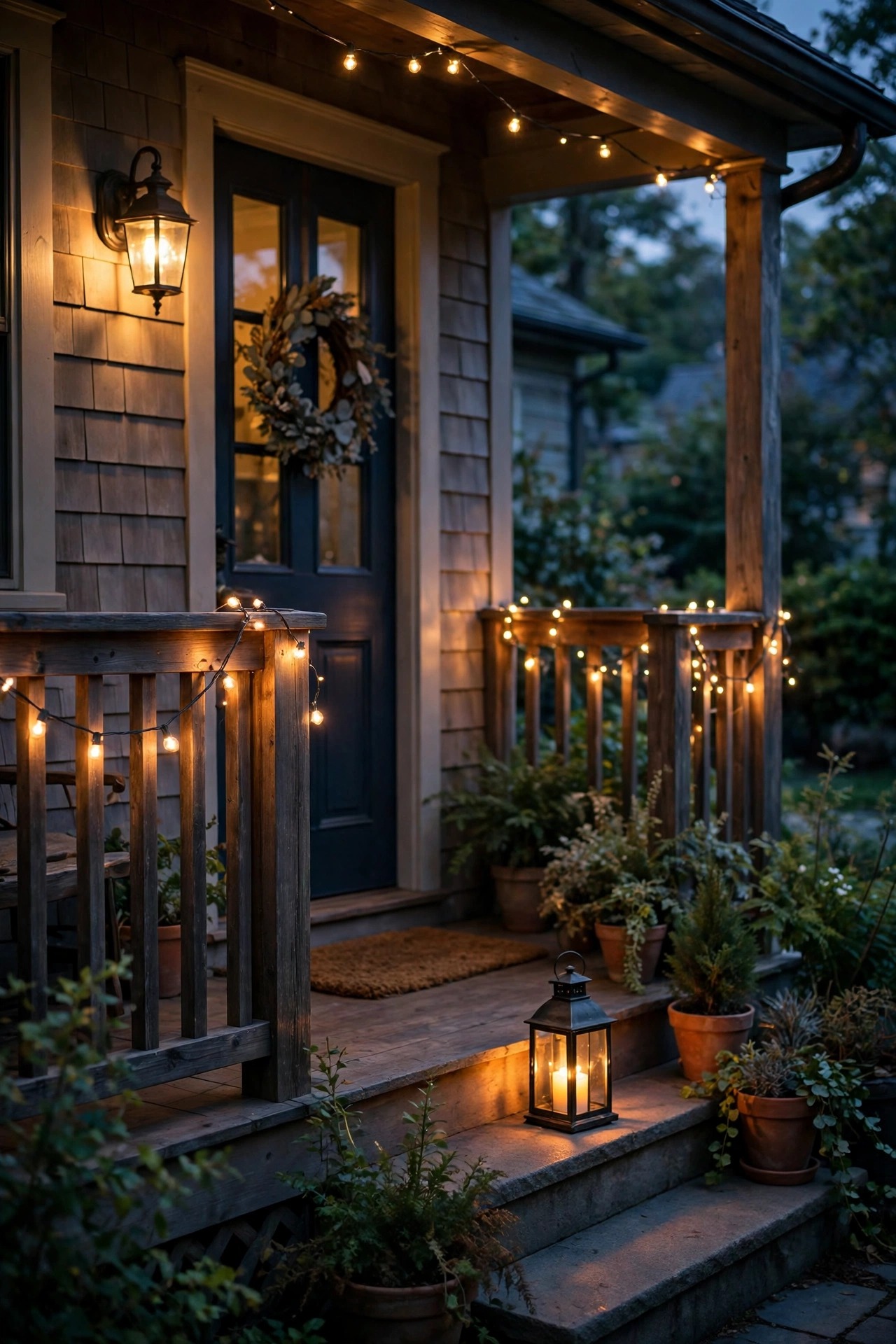
1. Swap In a Pair of Warm LED Filament Bulbs
If you change only one thing, change the bulbs. Most porches I see are still running a single harsh daylight bulb that makes brick look gray and skin tones look tired. A pair of LED filament bulbs in the 2700K range gives you that amber, candlelit warmth that makes an entry feel welcoming the second it clicks on. Look for bulbs rated for enclosed fixtures if your sconce has a closed shade, and choose a damp-rated pair so porch humidity is never an issue. The visible filament style matters more than people expect — through clear or seeded glass it reads as intentional decor, not just a light source. In my experience, matching both bulbs in the pair from the same pack keeps the glow even on either side of the door. If you want a deeper dive before you buy, my guide to the best bulbs for porch sconces walks through wattage equivalents and glass pairings. This swap takes about four minutes, needs no tools beyond a step stool, and honestly changes the entire mood of the porch for the price of a pizza.
Suggested budget range: $8 – $14.

2. Replace the Yellowed Glass Shade or Globe
Here is a secret most people walk right past: the fixture is often fine, but the glass has yellowed, fogged, or gone cloudy with years of bug residue and weather. A fresh replacement globe or shade snaps the whole fixture back to life, and the light suddenly looks twice as bright because it is no longer fighting through a film of grime. Measure the fitter opening before you order — most porch fixtures use a standard neck size around 2 to 3 inches — and bring the old shade to the store if you can. Clear glass shows off a pretty filament bulb and throws the most light, while seeded or frosted glass softens glare and hides a plain bulb beautifully. I always reach for frosted on north-facing porches where the bulb sits at eye level. Installation is usually three thumb screws and five minutes, with the power switched off at the breaker for safety. While the glass is off, wipe the fixture base with a damp cloth and check the socket for corrosion. It is the cheapest way I know to make a fifteen-year-old fixture look like you installed it last weekend.
Suggested budget range: $10 – $22.
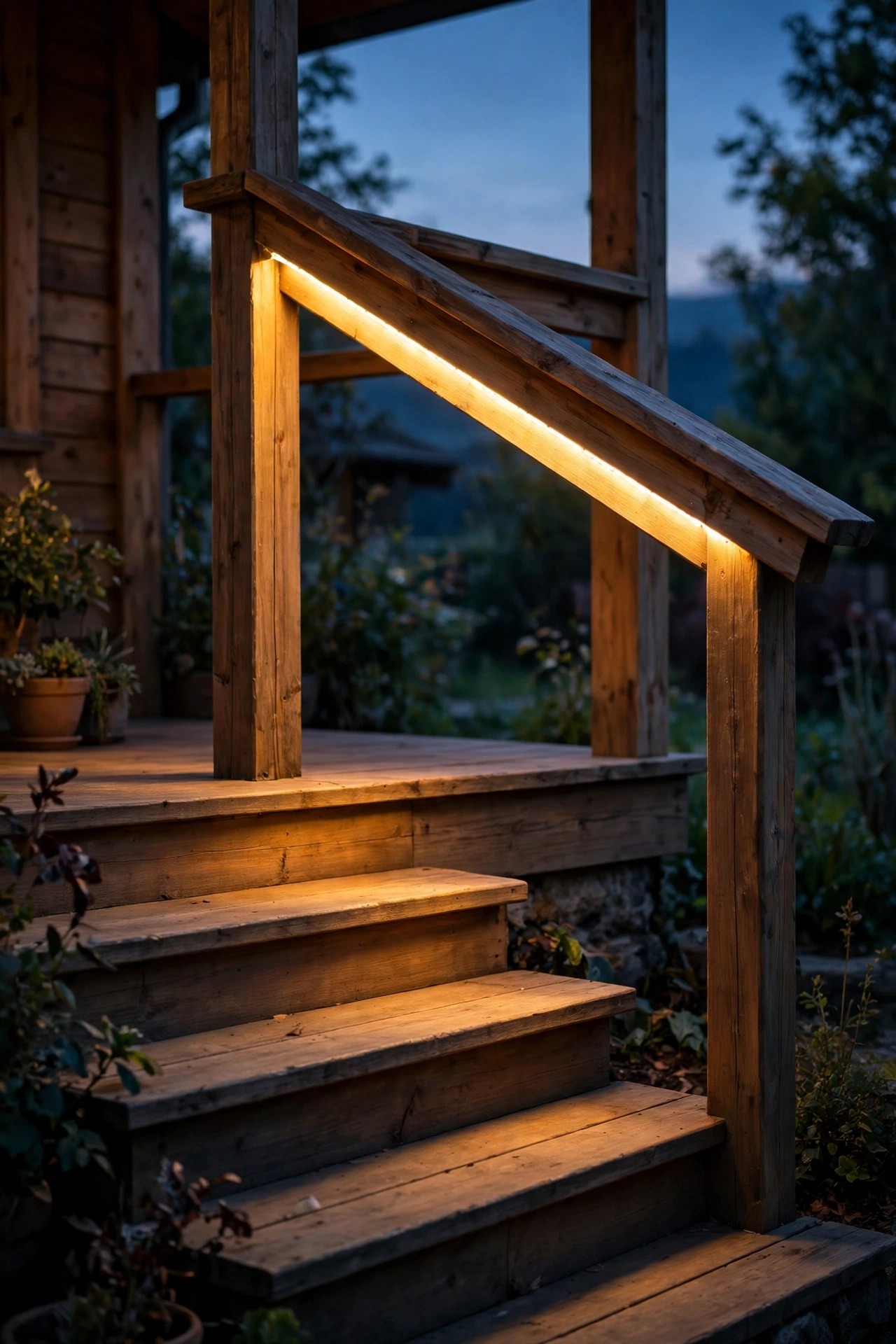
3. Run a Peel-and-Stick LED Strip Under the Porch Rail
This is the buy that makes neighbors slow down on their evening walk. A peel-and-stick LED strip tucked under the porch handrail throws a soft ribbon of light across the steps and floor without a single visible fixture. Choose an outdoor-rated strip with an IP65 rating or better, warm white in the 2700K to 3000K range, and a plug-in power supply you can run to your porch outlet. Measure the rail first, cut the strip only on the marked scissor lines, and press it firmly onto a clean, dry underside — I wipe the wood with rubbing alcohol first so the adhesive actually holds through summer heat. The glow points down, so there is no glare in your eyes when you sit out with coffee, just a gentle wash that makes the whole porch feel layered and finished. Most strips come with a small remote for dimming, which I love for late evenings. Route the cord along the back of a post and secure it with outdoor cable clips so nothing dangles. On my own porch this single strip made the seating area feel twice as big after dark.
Suggested budget range: $12 – $25.
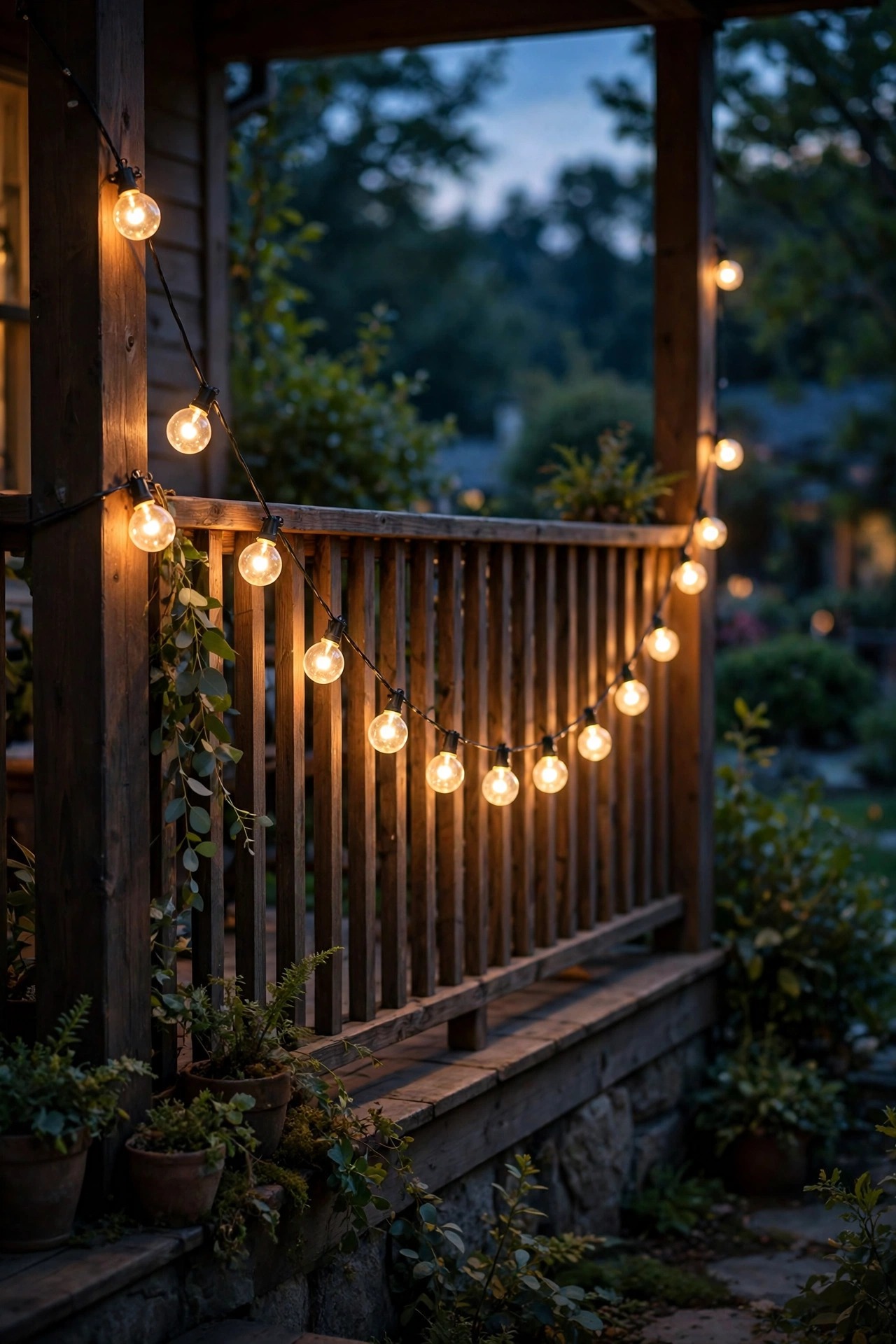
4. Clip String Lights Along the Rail or Eave
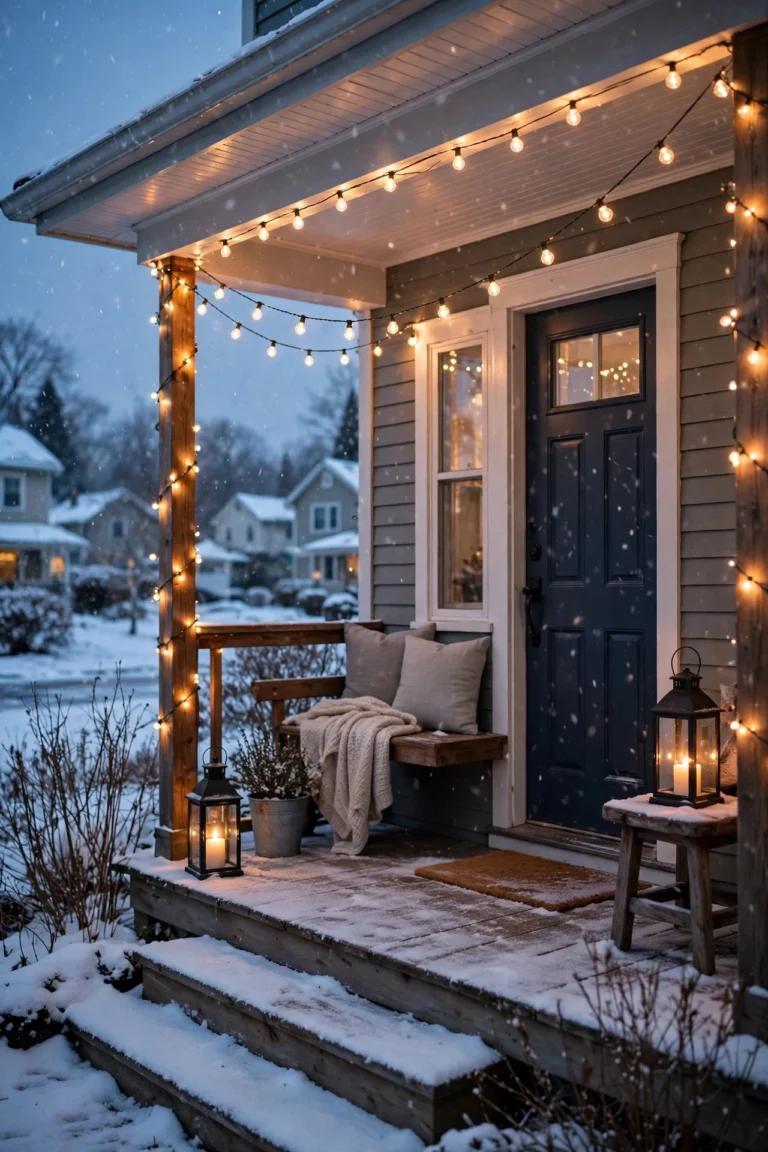
Nothing says sit a while like string lights, and the clip-on style is the renter-friendly, ladder-free way to get them. Outdoor string lights with built-in clips grip a railing, gutter edge, or eave trim in minutes, and the soft globe or Edison-style bulbs give you that cafe glow people pay good money for at restaurants. For a porch, one 25-foot strand is usually plenty; drape it in a gentle swag rather than pulling it drum-tight, because a relaxed curve looks intentional and a tight line looks strained. Shatterproof plastic bulbs are the smart pick anywhere kids, dogs, or summer storms are in the picture. I always plug mine into the porch outlet and let a timer handle the schedule — more on that below. Keep the strand at least a few inches from anything flammable, LED only, and check that the set is rated for outdoor use before it goes up. From the street, a swag of warm string lights makes even a plain porch look like the coziest house on the block, and unclipping them for winter storage takes five minutes.
Suggested budget range: $15 – $30.
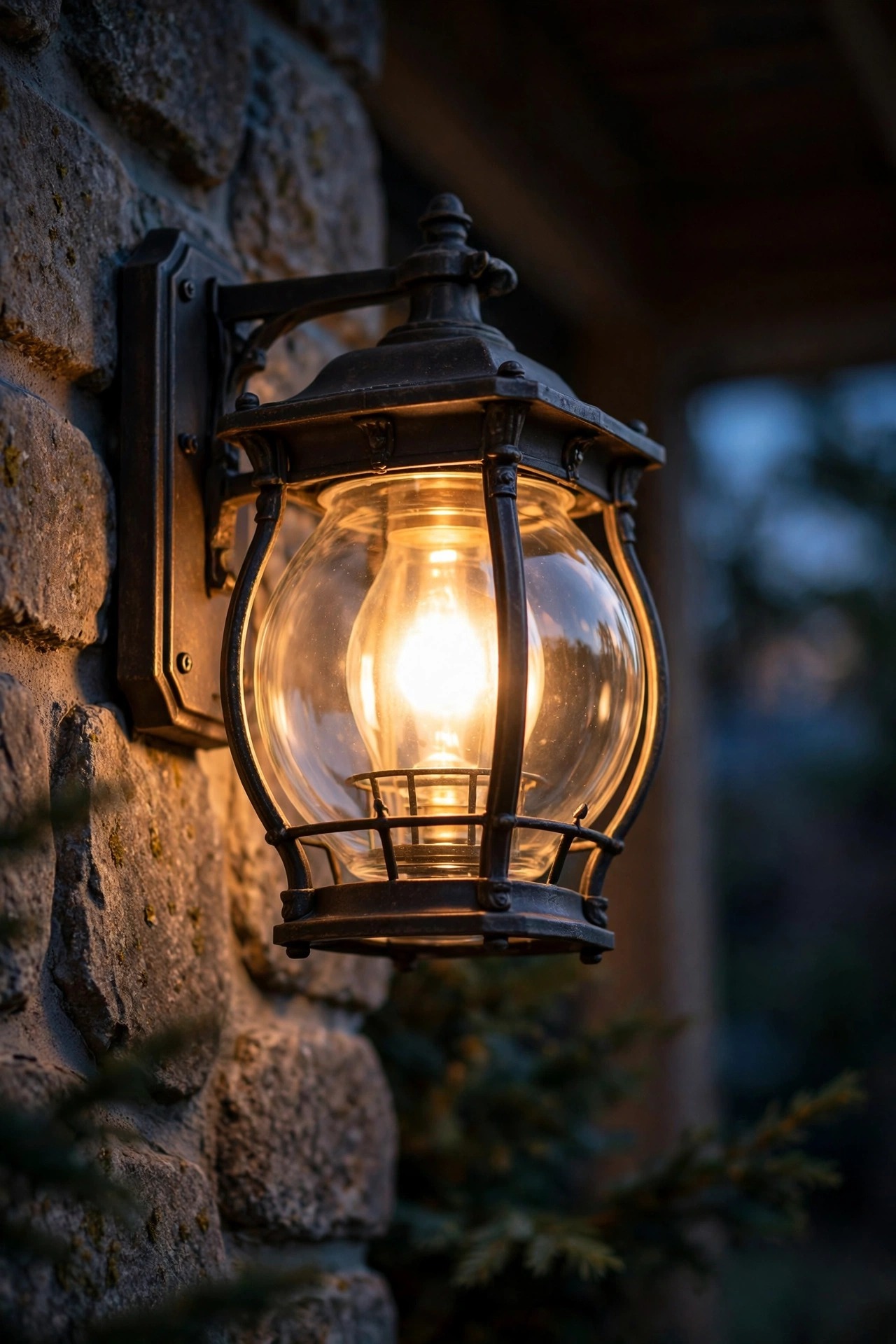
5. Refresh the Fixture With Spray Paint and a Fresh Bulb — Porch Lighting Under $50 at Its Best
Before you price a new fixture, look hard at the one you have. Peeling black paint and a foggy bulb make any fixture look cheap, but a can of outdoor spray paint and one fresh bulb can make it look custom. Kill the power at the breaker, remove the fixture or mask the wall and glass with painter's tape and paper, then clean the metal with a degreaser and let it dry fully. Two light coats of matte black, oil-rubbed bronze, or a deep green beat one heavy coat every time — heavy coats drip and bubble in the sun. Let it cure the full time on the can before you rehang it; patience here is the difference between a refresh and a redo. Then finish with a new warm LED bulb so the light itself looks as fresh as the finish. I did this to a builder-grade lantern that I had hated for years, and honestly? It became my favorite thing on the porch. This is the single highest-impact project on this whole list, and it leaves you money left over for coffee.
Suggested budget range: $12 – $20.

6. Let a Dusk-to-Dawn Photocell Bulb Run the Show
If your porch light only works when you remember to flip the switch, this little bulb fixes your life. A dusk-to-dawn bulb has a tiny light sensor built right into its base, so it clicks on at sunset and off at sunrise all by itself — no wiring, no smart hub, no app. Just screw it in like any other bulb and leave the switch on. Choose one in the 2700K range at about 800 lumens for a welcoming glow that is bright enough to find your keys but soft enough for evening sitting. One caution from my own trial and error: if your fixture has a glass shade, make sure the sensor can still see daylight, or the bulb may flicker or stay on all day. Open or clear-glass fixtures work best. The energy math is lovely too — an LED sipping 9 watts for twelve hours costs pennies a month. I put one in the fixture by our side gate as well, and coming home to a lit entry every single night, without thinking about it once, still feels like a small luxury.
Suggested budget range: $7 – $13.
7. Add a Plug-In Timer So the Porch Runs Itself
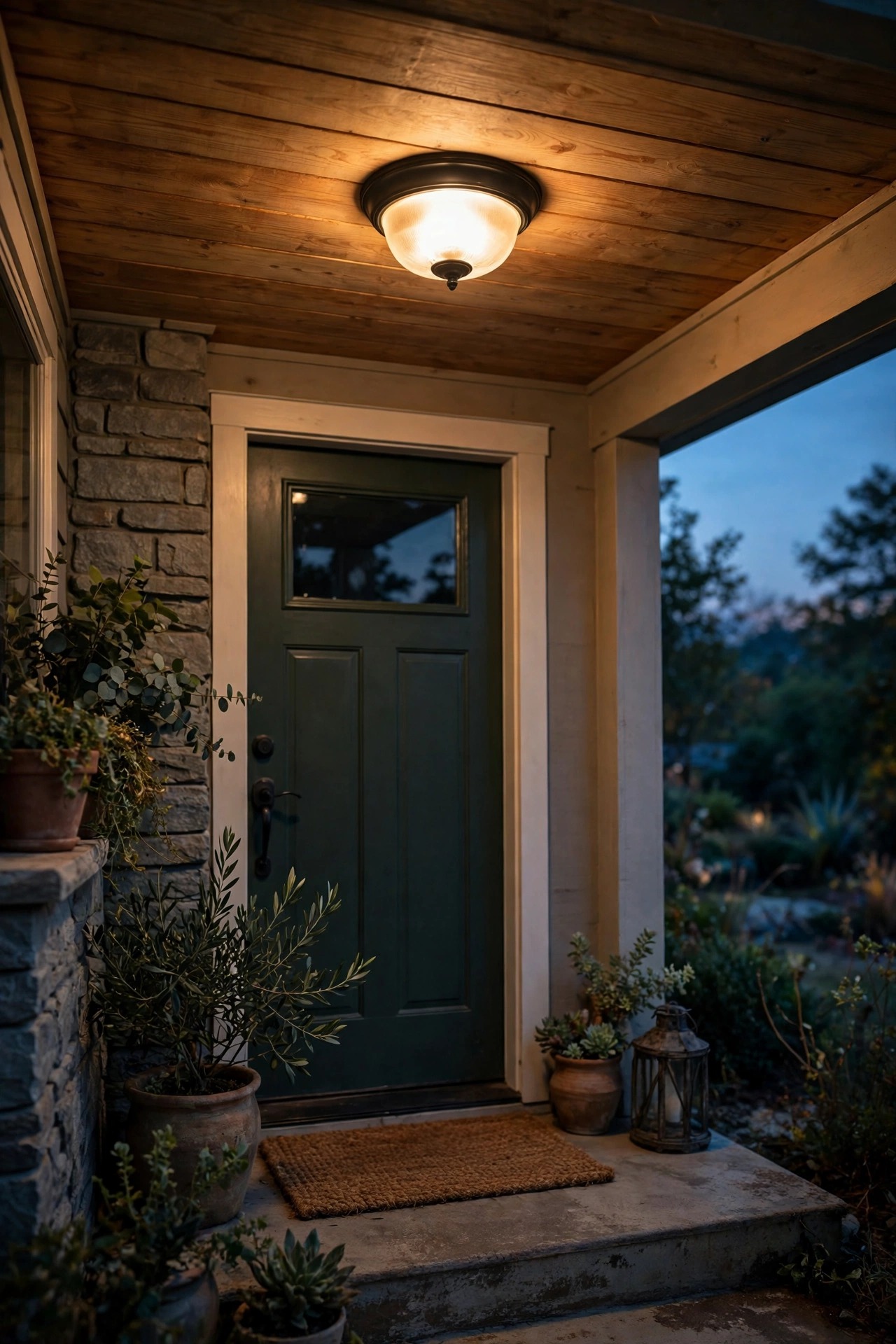
String lights and plug-in lanterns are only charming if they are actually on when you get home. A simple plug-in timer — mechanical dial or digital, both work — turns your plug-in porch lights on at dusk and off at bedtime without you lifting a finger. I set mine for on at 6 p.m. and off at 11 p.m. in summer, then shift it earlier as the evenings stretch in fall. Outdoor-rated timers have a weatherproof cover and a grounded plug; indoor timers do not belong outside, so check the rating on the box. If your lights are hardwired rather than plug-in, my walkthrough on how to add a photocell or timer to a porch light covers the swap step by step. A timer also quietly saves money and bulb life, because nothing burns at 2 a.m. for an empty street. And when you travel, a porch that lights itself on schedule is the cheapest home-security upgrade there is. Set it once in September and forget it exists — that is exactly the point.
Suggested budget range: $10 – $18.
8. Set a Solar Lantern on the Steps
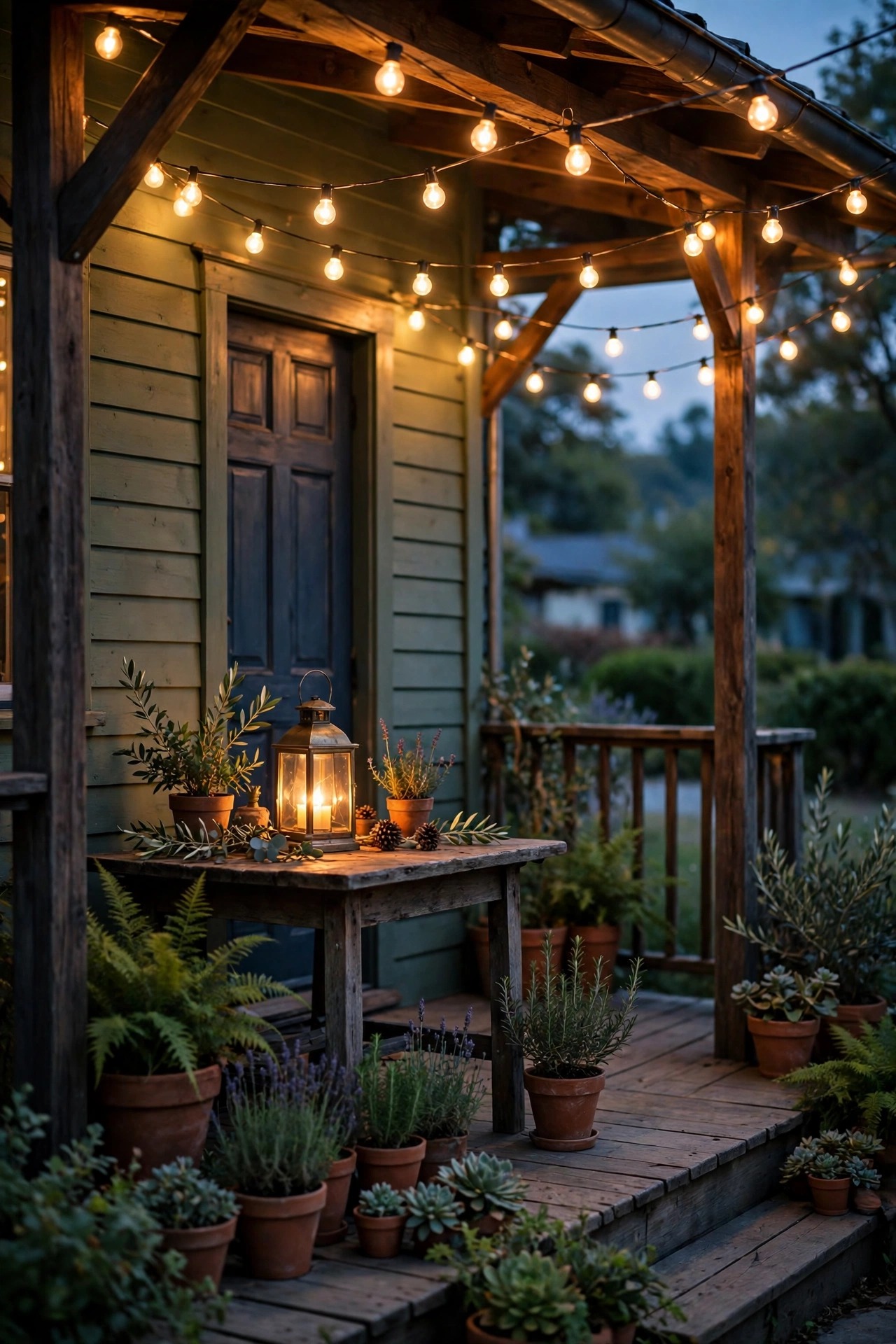
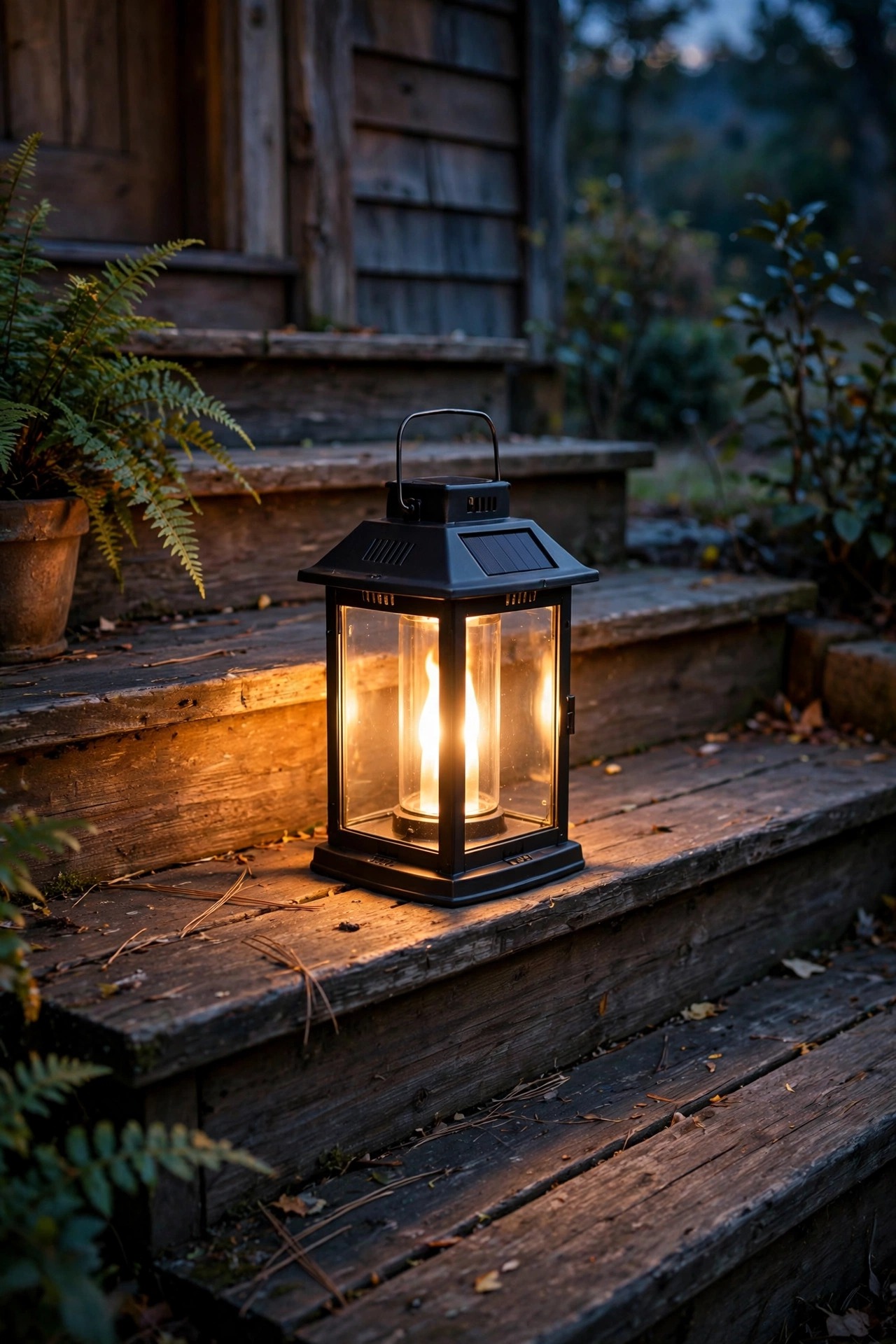
A lantern glowing on the porch steps does something a wall fixture cannot — it puts light down low, right where feet land, and it makes the whole entry feel styled instead of just lit. A solar lantern charges on the top step all day and flickers on at dusk with no outlet, no cord, and no battery swaps. Look for one with a metal frame and real glass if you can; it will shrug off weather far better than thin plastic, and the warm 2700K-style glow looks like candlelight from the street. Place it where it gets at least six hours of direct sun — a shaded corner will leave you with a dim, sad lantern by nine o'clock. I like an odd-number grouping when budget allows, but one lantern beside the door-side step already changes the picture. Bring it under cover during the worst winter storms and wipe the little solar panel monthly; a dusty panel is the number one reason these underperform. Guests notice this one every time. It reads as decor during the day and as a warm welcome after dark.
Suggested budget range: $14 – $28.
9. Line the Stairs With Solar Step Lights
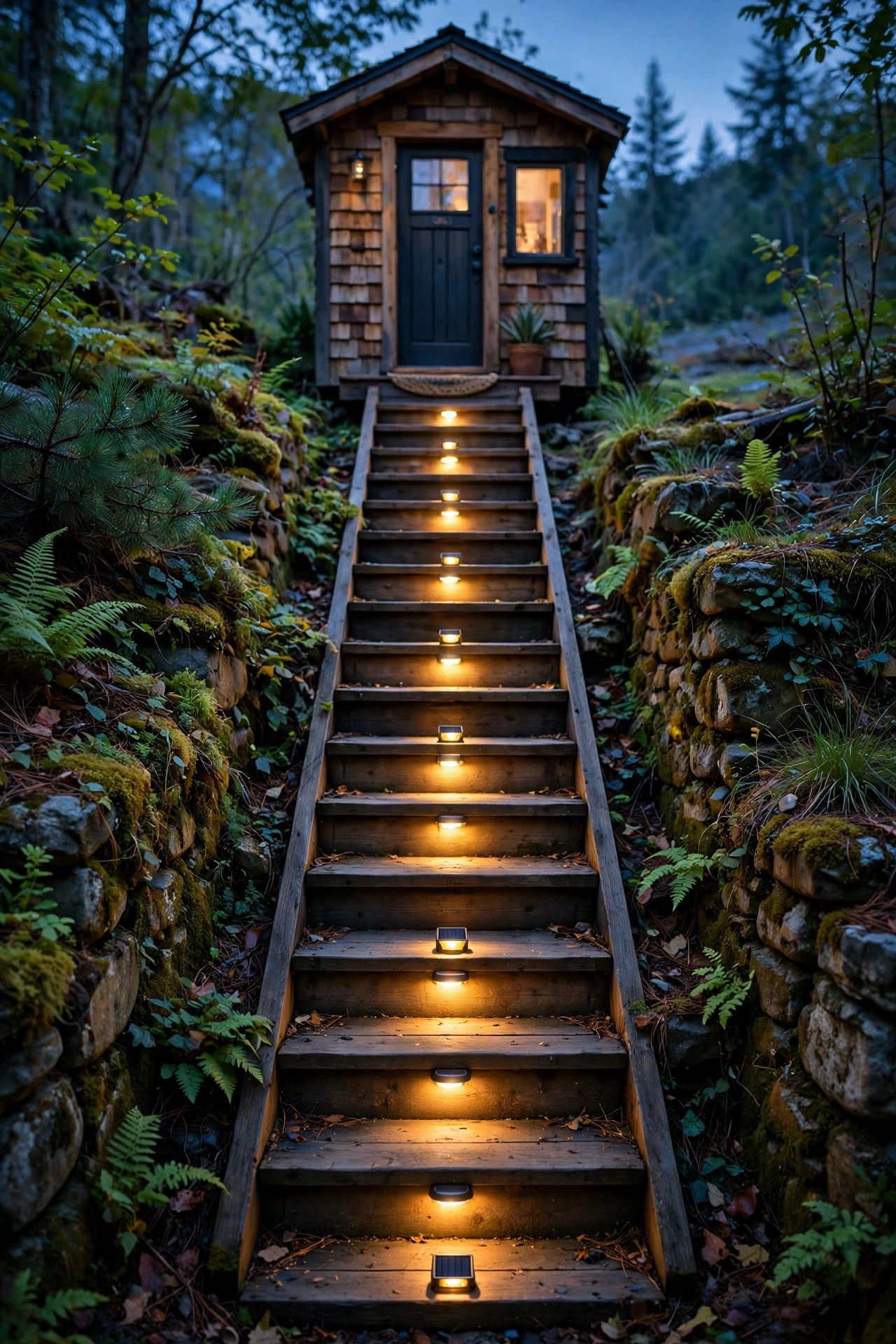
Porch stairs are where guests trip, delivery drivers hesitate, and I have personally missed a step while carrying groceries in the dark. A set of solar step lights fixes the safety problem and looks genuinely pretty doing it — each little light mounts on the stair riser or sits along the tread edge, washing the step below it in a soft pool of light. Most sets come in fours or sixes with screws and adhesive pads; on wooden steps I use the screws, because adhesive lets go in August heat. Space one light per step, or every other step on a wide staircase, and keep them consistent — a marching rhythm of light reads as designed. Give the panels a full day of sun before you judge brightness, and remember that steps under a deep porch roof may charge poorly; in that case, mount them on the outer stringer where the sun actually reaches. For more layouts and brightness comparisons, browse my favorite solar step light ideas before you order. Safe stairs plus a prettier entry, for less than a takeout dinner.
Suggested budget range: $13 – $24.
10. Glow Up a Corner With a Lantern and Flameless Candle
Every porch has that one dead corner — beside the door, under the mailbox — that swallows light and looks forgotten. A lantern with a flameless candle fills it with a warm, flickering glow and asks nothing of you: no outlet, no matches, and no fire risk near the welcome mat or dried wreaths. The good flameless candles have a realistic wax body, a gentle flicker setting, and a built-in timer that runs five hours on, nineteen off, so it lights itself every evening like clockwork. Set the lantern on a small plant stand or an overturned crate to give it presence, and let the candlelight do what overhead light cannot — it makes the porch feel like a room. Battery life is generous, usually a full season on one set, and the candle stays cool to the touch around curious kids and pets. I move mine around constantly: by the rocking chair in summer, beside the door with a small pumpkin in fall. It is the coziest twelve-ish dollars on this list, and the one guests ask about most.
Suggested budget range: $11 – $20.

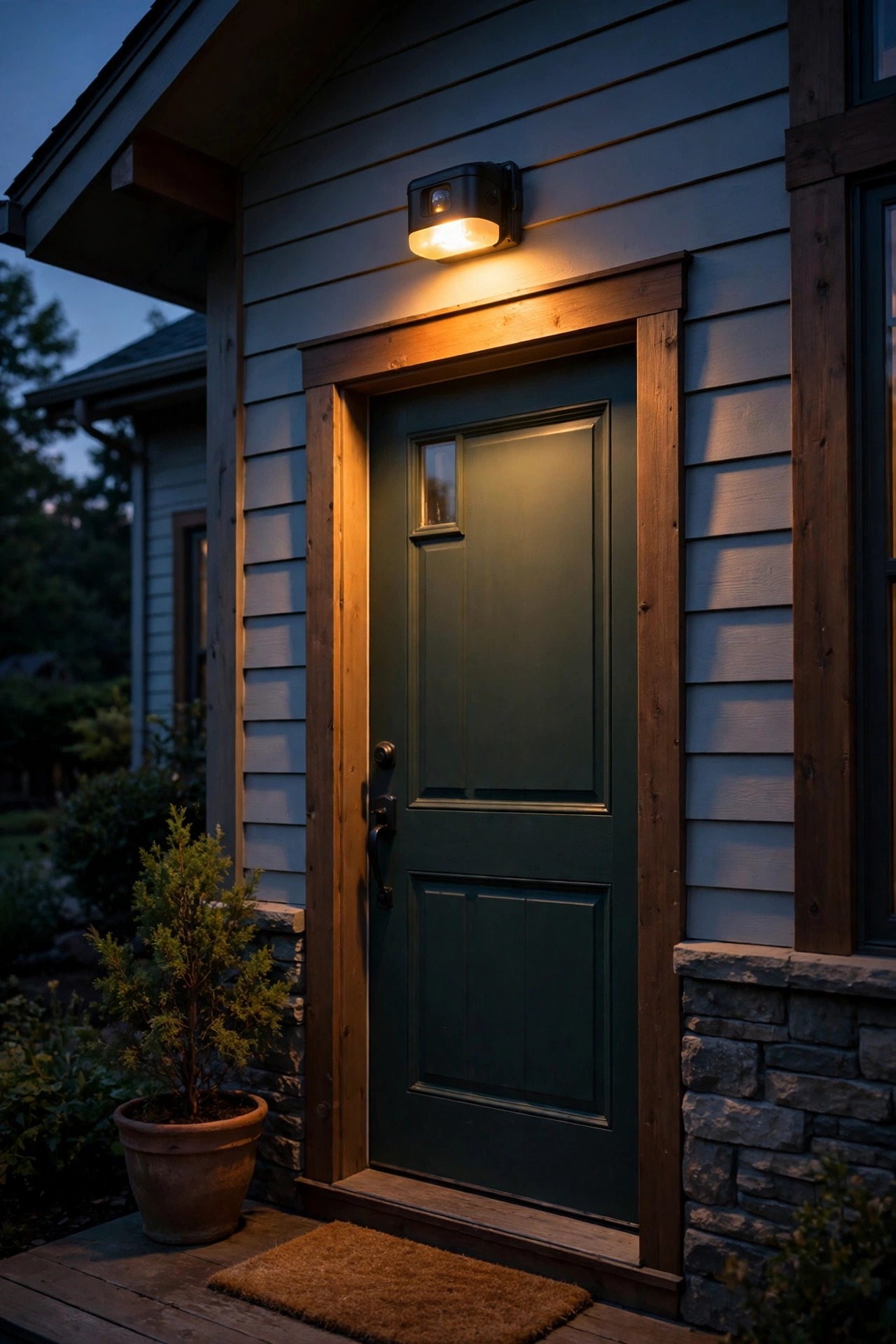
11. Mount a Battery Motion Light for Porch Lighting Under $50
The side door, the dark end of a wrap-around porch, the steps around back — some spots have no fixture and no outlet, and that is exactly where a battery-powered motion light earns its keep. Modern versions are small, weather-sealed, and bright, with an adjustable sensor that wakes the light when someone approaches and rests it twenty seconds later. Four AA or D batteries typically last a season or more because the light only runs in short bursts. Mount it with the included screws above the door or under the eave at about seven feet, angled down so the sensor sees the path, not the street — a light that fires for every passing car trains everyone to ignore it. I use one over our side gate, and the difference between fumbling for a keyhole and simply walking up lit is enormous. Choose a warm-white model if you can find it, so the burst of light matches the rest of your porch instead of glaring blue-white. No electrician, no wiring, ten minutes with a screwdriver, and the darkest corner of your porch is suddenly the safest.
Suggested budget range: $13 – $22.
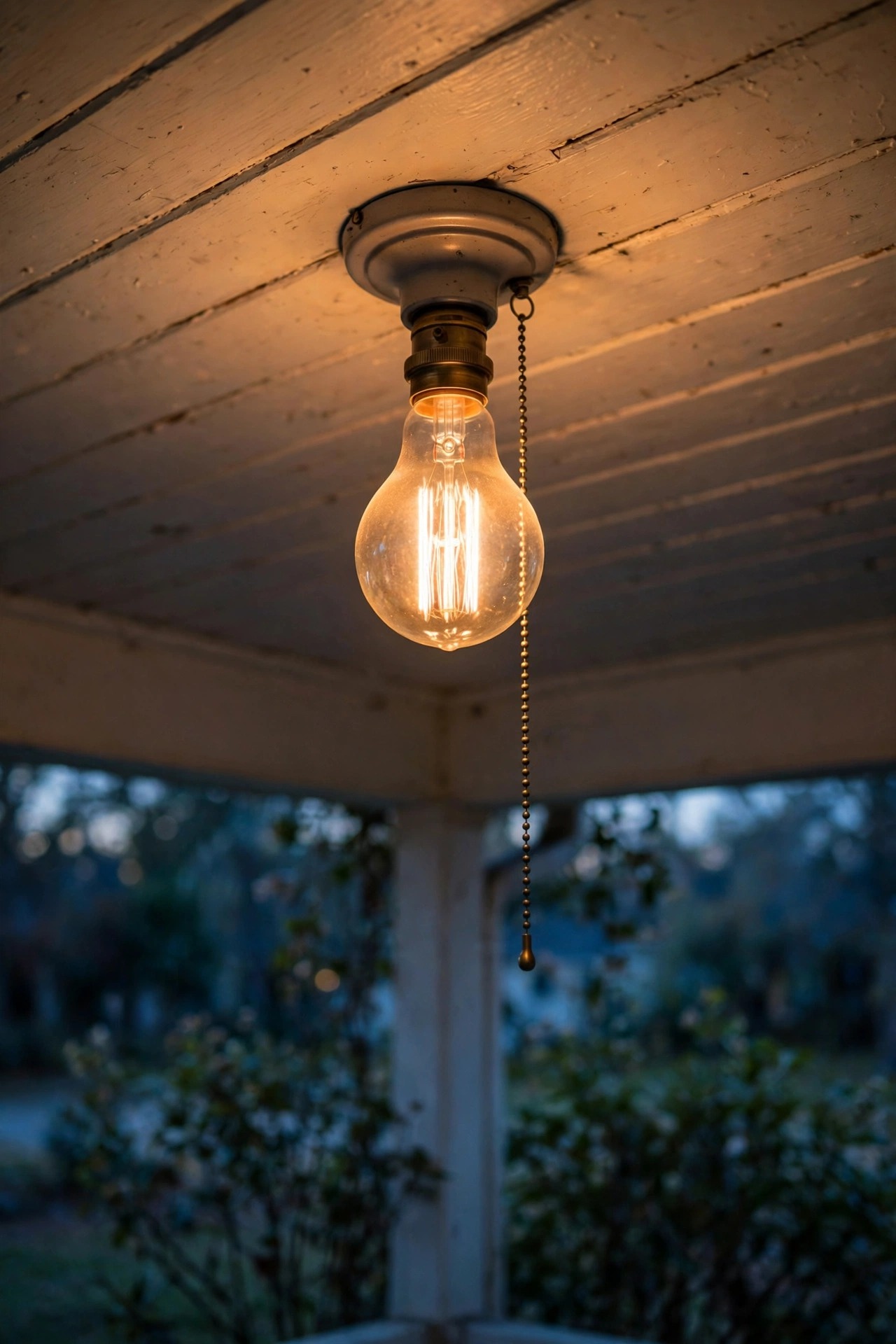
12. Fix a Dead Socket With a Pull-Chain Adapter and Bulb
Plenty of older porches have a bare ceiling socket that died years ago, or a fixture whose switch gave up, and everyone just lives with the dark. A screw-in pull-chain socket adapter brings it back for the price of lunch: it threads into the existing socket, adds a simple chain switch, and holds a standard bulb. Pair it with a warm LED and suddenly that forgotten ceiling light is your porch's main glow again. Fit a simple paper or glass shade over it if glare bothers you — many adapters accept a shade ring. Do switch the breaker off before you start, work with dry hands, and never use an adapter in a socket that is cracked or scorched; that one is a job for an electrician, full stop. The chain itself is a small pleasure, honestly — a gentle tug at the door beats fumbling for a wall switch with grocery bags on both arms. Renters, take note: this is fully reversible in two minutes when you move out. It is the least glamorous buy on this list and quite possibly the most satisfying.
Suggested budget range: $9 – $16.
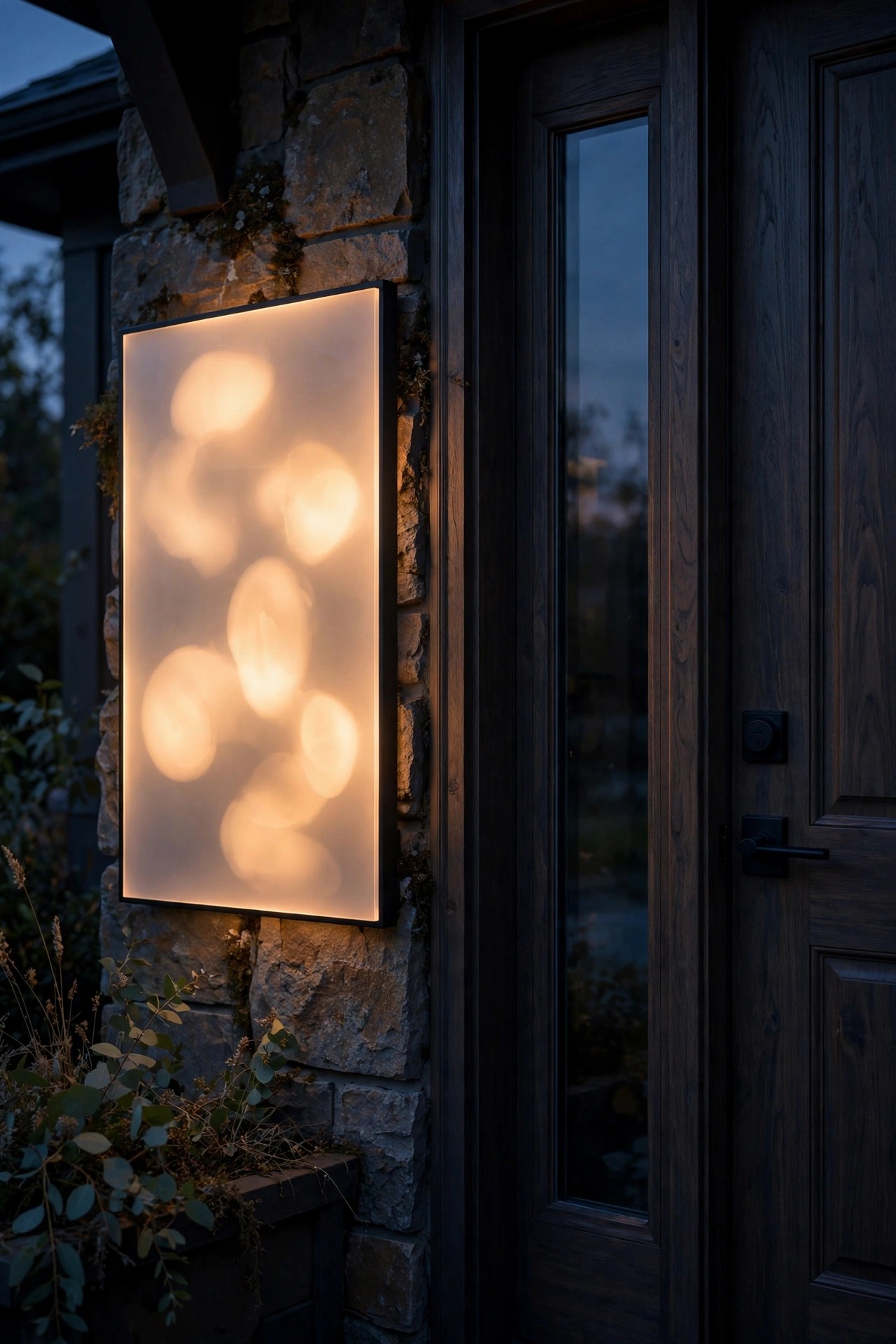
13. Finish With a Lighted House Number Plaque
The last buy is the one your delivery driver will thank you for. A lighted house number plaque — or a solar number stake planted by the walk — makes your address glow softly after dark, so guests, drivers, and first responders find you fast. Solar versions charge by day and light the numbers automatically at dusk; some use a backlit panel, others a small spotlight aimed at the plaque. Whichever style you choose, mount it where headlights and streetlight actually fall, near the door or at the curb, and keep shrubs trimmed so the numbers stay visible. Contrast matters more than brightness: dark numbers on a lit background read clearly from a moving car. Most sets include number stickers or tiles for every digit, so check the box before you buy if your address has repeated numbers. It is a small, practical glow-up, but it changes how your whole house reads from the street at night — finished, cared for, and easy to find. After thirteen little buys, that is a lovely note to end on.
Suggested budget range: $16 – $30.
Frequently Asked Questions
How many of these small buys should I start with?
Start with two or three that fix your biggest complaint. If the porch feels harsh, begin with the filament bulbs and a timer; if it feels dark, add the step and motion lights first. Layering a few pieces at a time lets you see what each one does, and you can always add another weekend project later.
Can I really refresh a whole porch for under $50 total?
Yes, if you pick the high-impact basics: a pair of warm LED bulbs, a photocell bulb or timer, and one can of spray paint land right around fifty dollars together. The bigger list here is a menu, not a shopping cart — each item is under fifty on its own, and most porches only need three or four of them to feel transformed.
Are solar porch lights bright enough to matter?
For steps, paths, and accents, absolutely — modern solar step lights and lanterns give a clear, pretty glow that is plenty for finding your footing. For the main light over your door, a wired or battery option is still brighter and more reliable, which is why I like a mix: solar for the pretty layers, wired or battery where safety is on the line.
Do I need an electrician for any of these projects?
No — that is the beauty of this list. Every buy here is a swap, a screw-in, a stick-on, or a plug-in, with the power switched off at the breaker whenever you touch a fixture. The only exception is a socket or fixture that is cracked, scorched, or sparking; stop there and call a licensed electrician.
Conclusion
A porch does not need a renovation to feel loved — it needs a few small, thoughtful layers of light. Swap the bulb, rescue the fixture with paint, let a timer or photocell handle the schedule, and tuck warm little glows along the steps and corners, and the entry you walk into every night starts to feel like the welcome you always meant it to be. That is the whole magic of porch lighting under $50: none of these buys is impressive alone, but together they are greater than the sum of their price tags. Start with the two that bother you most, and when you are ready for bigger projects, browse the rest of my porch and outdoor lighting ideas here on the site for the next layer.