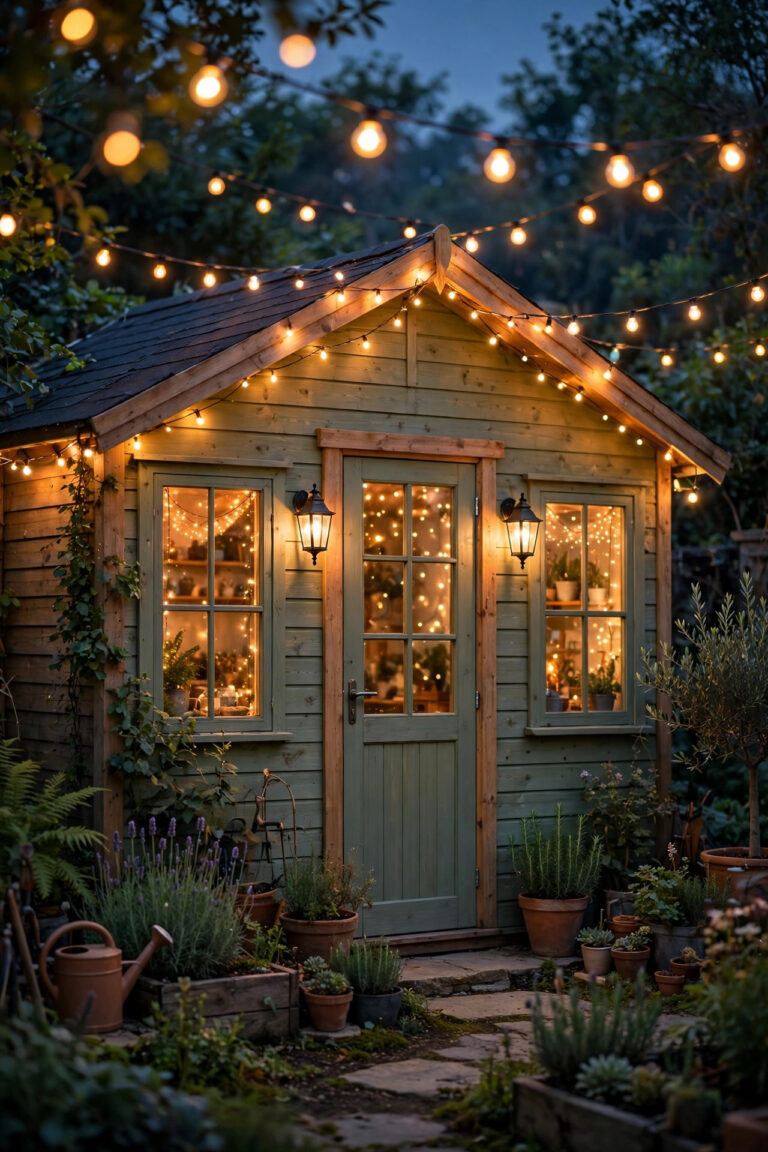
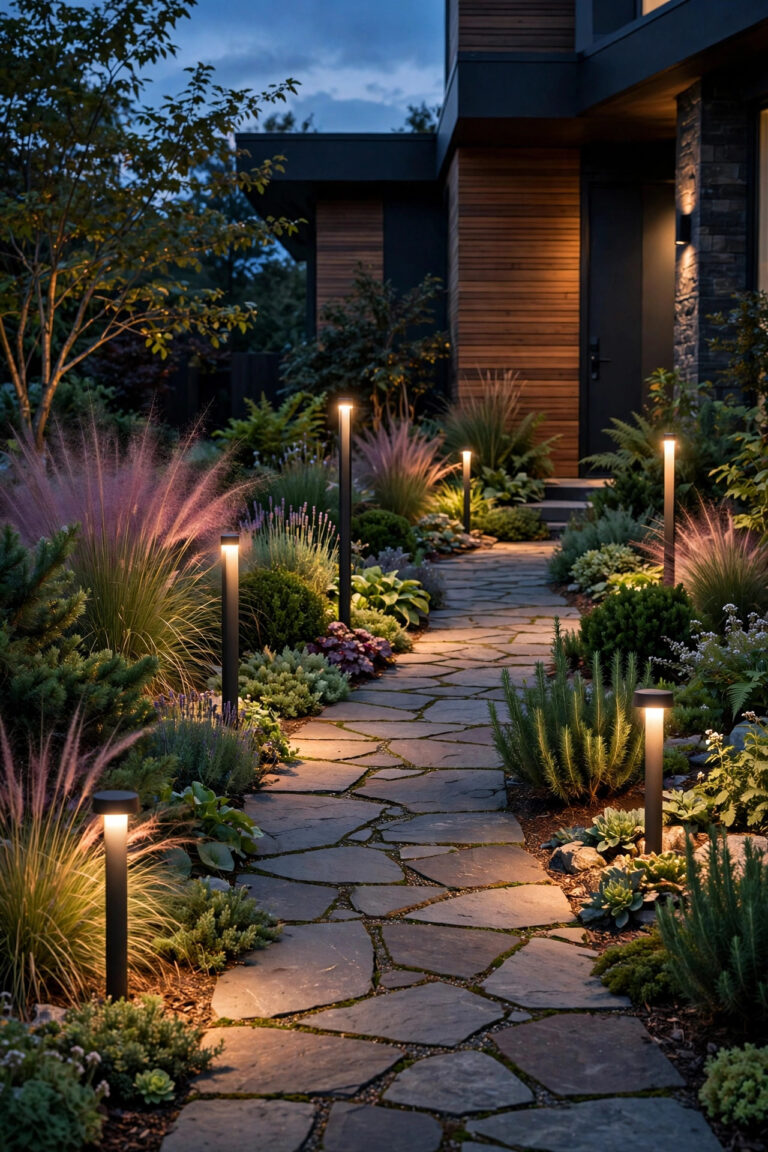
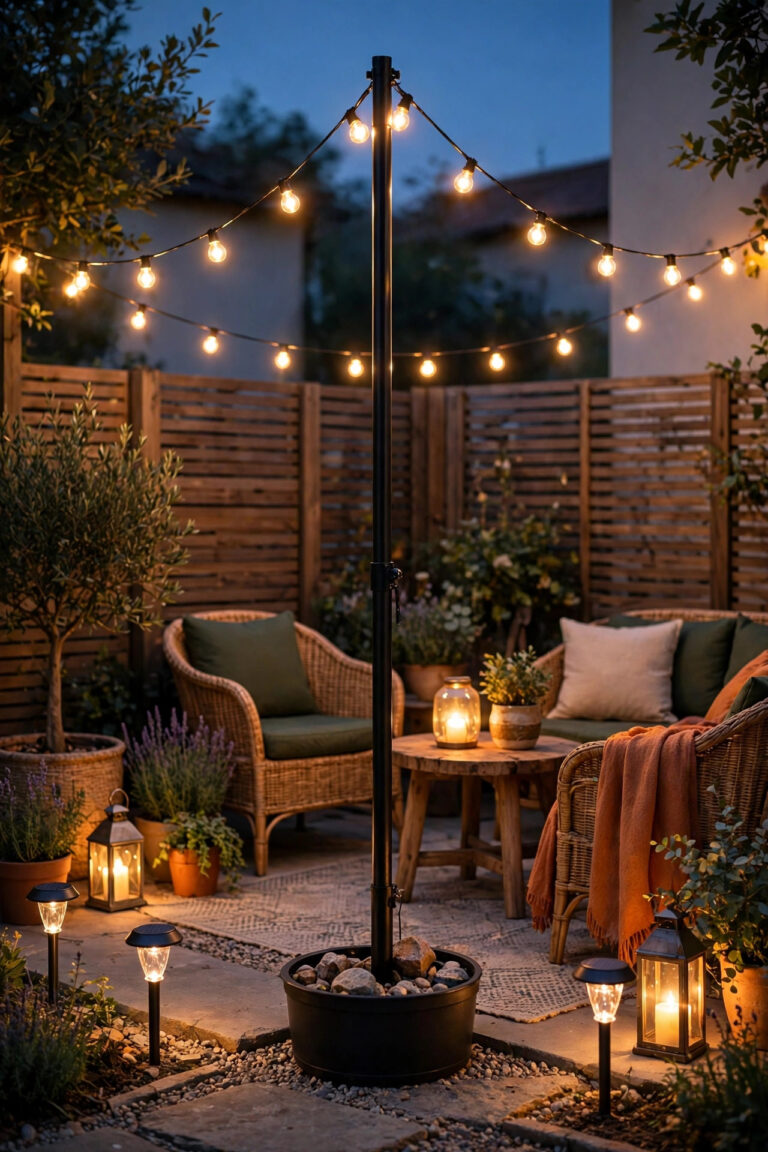
My deck used to have exactly two lighting moods: a blazing porch light that made everyone squint, and total darkness. Then I started swapping in smart deck lighting ideas one fixture at a time — a dimmable strip under the handrail here, app-controlled string lights there — and the whole space changed personality. Now the deck wakes up on its own at sunset, the stairs glow just enough to guide bare feet, and movie night is one tap that drops everything to a warm whisper. The secret is the same layering I use everywhere outdoors: low guidance light so nobody trips, eye-level welcome light where people gather, and a soft accent layer that makes the space look finished. Smart controls simply let you conduct those layers from your phone instead of marching around with a handful of remotes. In this list I will walk you through 17 ways to build that app-controlled ambience, from a $25 smart plug that upgrades the lights you already own to zoned scenes that run themselves all season. Pick two or three to start — the rest practically install themselves once you see the glow.
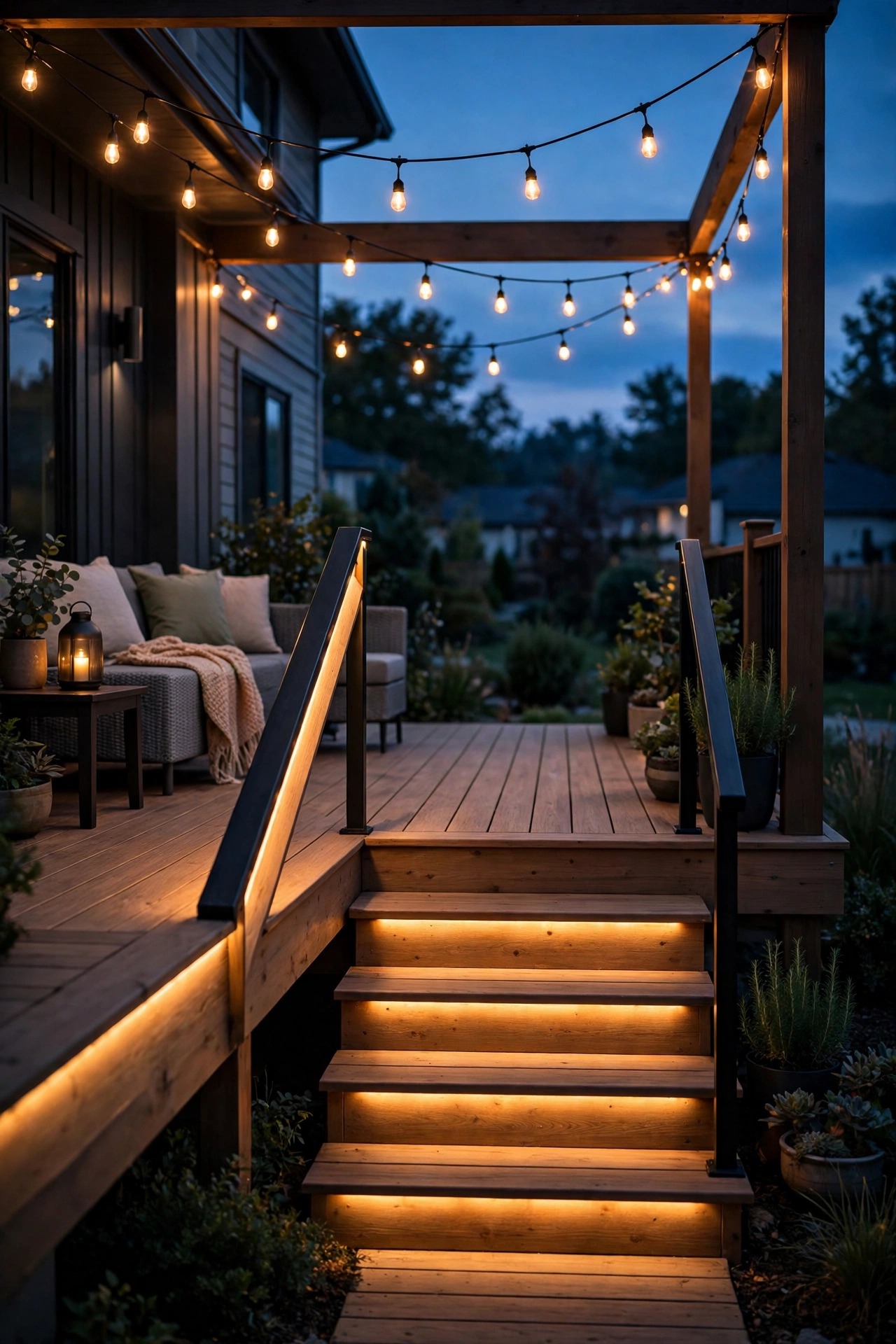
1. Start With a Plan: Layer Your Smart Deck Lighting Ideas in Zones
Every good-looking deck I have ever lit — mine included — runs on the same three layers. Guidance light sits low: stair treads, step edges, and the path to the yard. Welcome light lives at eye level where people actually gather: sconces by the door, string lights over the table, lanterns on the rail. Accent light does the showing off, washing a privacy screen or grazing the planters. Before you buy a single smart bulb, sketch your deck, mark which layer each existing fixture belongs to, and decide which ones you want on the app. Grouping by zone matters more than any single product: one group for the dining corner, one for the steps, one for the lounge end, so a single tap reshapes the whole mood. I also recommend choosing one control family and sticking with it — bulbs, plugs, and switches that all answer to the same phone app — because three different apps is how smart decks turn dumb fast. My broader smart outdoor lighting guide walks through the hub-versus-Wi-Fi question if you are starting from zero. Plan the zones on paper first; the shopping list practically writes itself afterward.
Suggested budget range: $40 – $150.
2. Hide a Smart LED Strip Under the Handrail
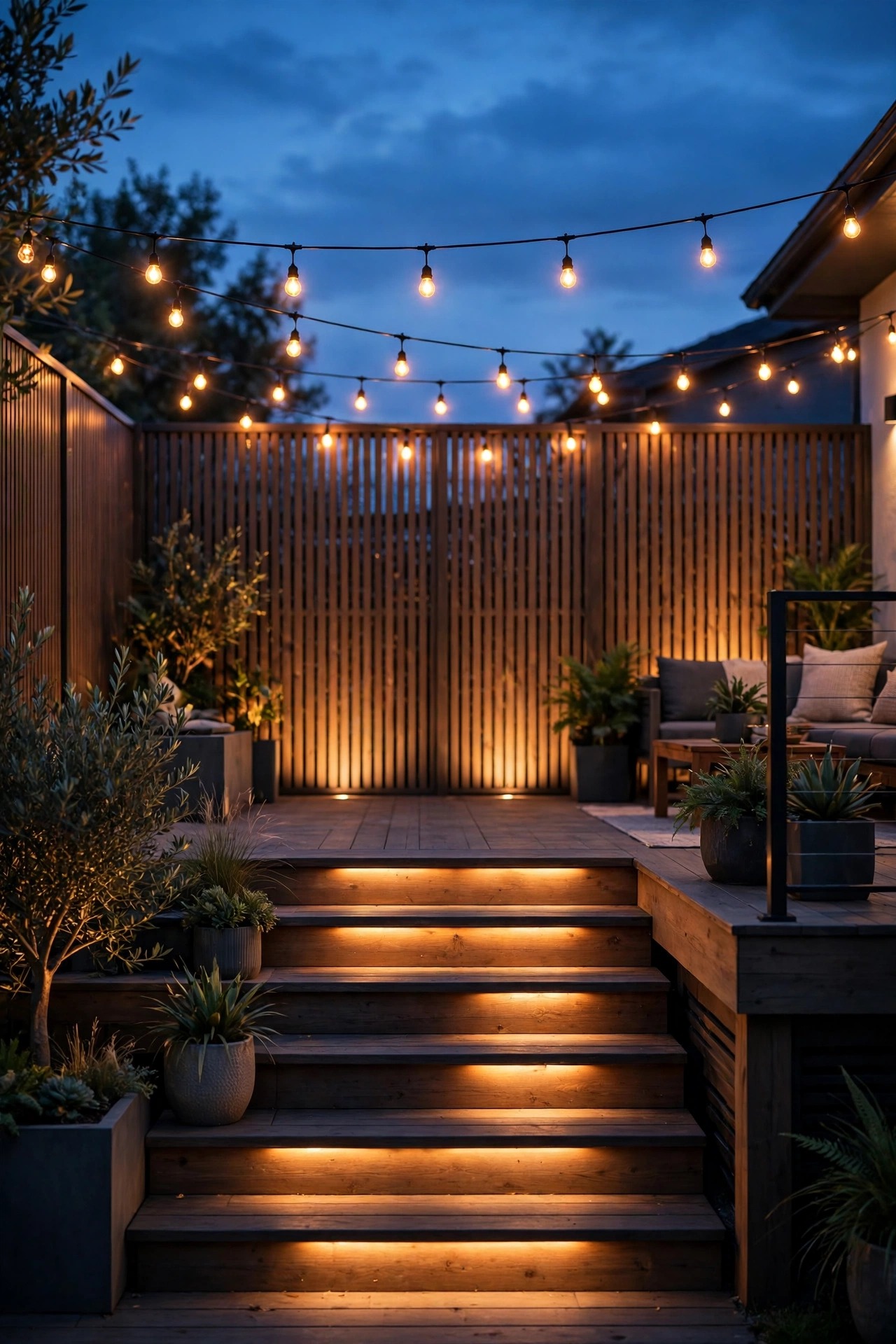
If I could keep only one smart upgrade on my deck, it would be this one. A weatherproof LED strip tucked into the underside of the top handrail throws a continuous ribbon of light down the balusters, and because the strip itself is hidden, guests see the glow and never the hardware. On the app it becomes your master dimmer: 100 percent for grilling and cleanup, 40 percent for dinner, a candle-warm 15 percent for late-night conversation. Measure your rail runs before ordering, buy a strip rated for outdoor wet locations, and use the little mounting clips every 12 to 18 inches instead of trusting adhesive alone through a summer of heat. Corners turn cleanly with connector clips, and one strip can usually snake around an L-shaped rail without a second power supply. Keep the color temperature at a warm 2700K so the wood tones look rich rather than orange. Power comes from the nearest outdoor outlet; route the low-voltage lead down a post so nothing dangles where feet or chair legs can catch it. It is an afternoon project that makes the whole deck look custom-built.
Suggested budget range: $60 – $180.
3. Recess Smart Lights Into the Floorboards
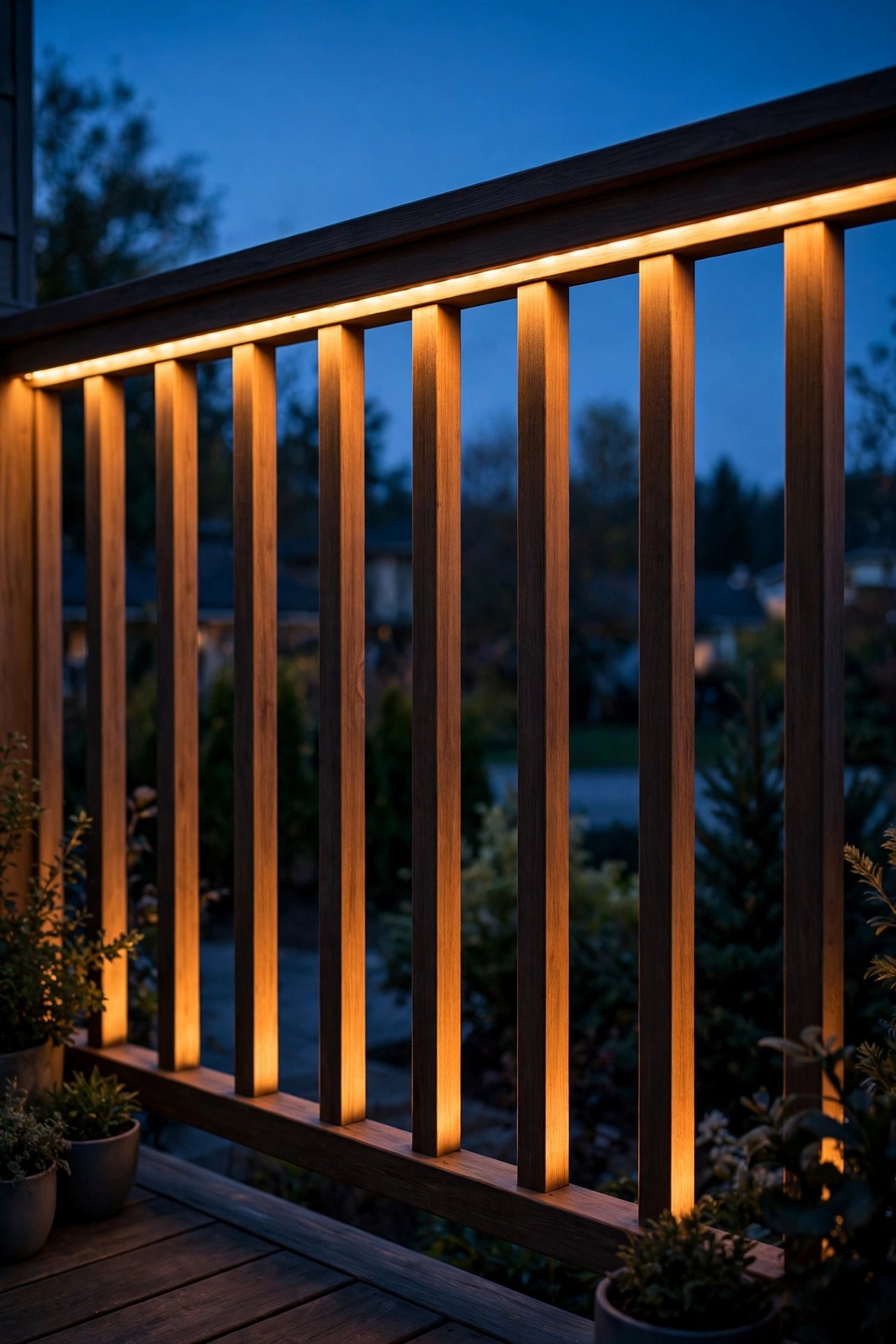
Recessed deck lights sit flush in the floorboards — small round pucks about the size of a poker chip — and pool soft light exactly where people walk. Smart versions dim and schedule from the app, which fixes the one complaint everyone has about the classic wired kind: they are either blazing or off, with nothing in between. Space them 4 to 6 feet apart along walking routes and about 18 inches out from the steps, the grill, and any change in deck level. Installation is a hole-saw job: drill, drop the puck in, and daisy-chain the low-voltage cable beneath the deck where it stays dry and invisible. Choose pucks with a proper outdoor wet-location rating and replaceable bulbs or sealed LED modules rated for foot traffic — you will step on these, and so will a dropped cooler. I run mine on a sunset schedule at 60 percent brightness, which is plenty to read the deck boards underfoot without lighting up the yard like a runway. Keep one or two spares from the same batch in a drawer; matching color temperature years later is harder than it sounds.
Suggested budget range: $90 – $300.
4. Top the Posts With Smart Cap Lights You Can Dim
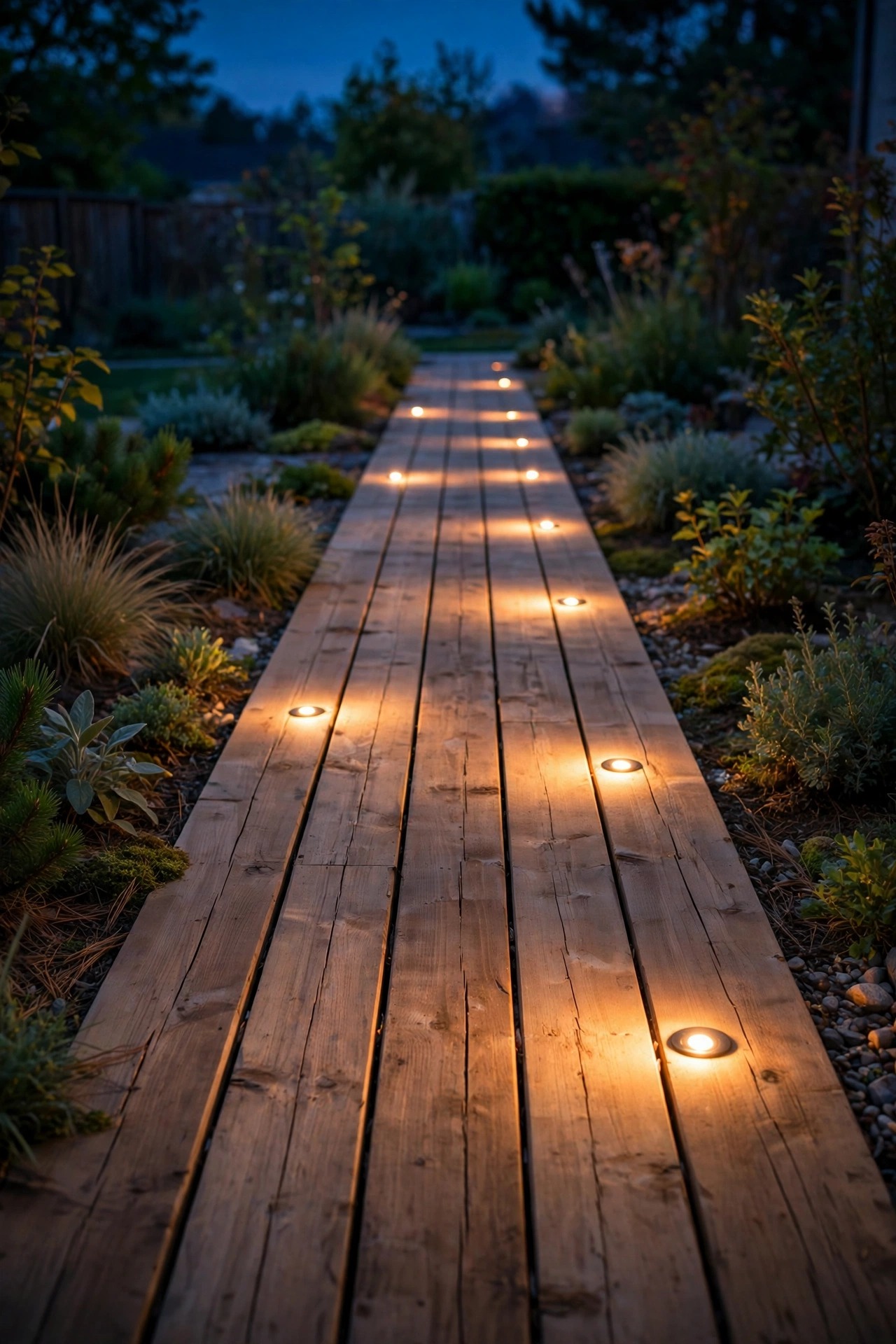
Post cap lights are the jewelry of a deck railing, and smart versions finally let you tune them instead of just switching them on. A cap on every post gives you a dotted line of warm light that defines the deck edge beautifully from the yard — honestly, it is the view from the lawn that sells this one. Look for caps sized to your posts (4×4 and 6×6 are the common fits), with a warm 2700K output and an app or remote dimmer rather than a fixed-brightness solar cell if you want true control. Wired low-voltage caps on a smart transformer will out-brighten and outlast solar caps, and they all dim together as one zone, which looks far more deliberate. If you go solar, pick caps with replaceable batteries and park the dimming feature for the wired run later. Either way, add the caps to your sunset routine so the railing outline appears like clockwork. One caution from my own deck: measure the actual post tops before ordering, because nominal lumber sizes lie, and a cap that rocks in the wind will drive you quietly insane.
Suggested budget range: $80 – $260.

5. Swag App-Controlled String Lights Over the Lounge End
String lights are the fastest ambience in the outdoor world, and the smart versions add the two things the classic strands always lacked: real dimming and a schedule that never forgets. Hang commercial-grade strands in gentle swags over the seating end of the deck — anchor to the house, a pergola corner, or a pair of sturdy poles set in planters — and keep the lowest dip at least 7 feet above the boards so tall guests and raised glasses clear it. On the app, a single slider takes the whole canopy from party-bright to firefly-soft, and a sunset-to-11 p.m. routine means they simply appear every evening and shut themselves off after the last guest leaves. Choose shatterproof LED bulbs with a warm 2700K filament look; they shrug off the inevitable bump from a volleyball or a carried patio umbrella. Socket-down hanging keeps rain out of the works, and LED only is my hard rule anywhere near fabric cushions and grill heat. Two shorter strands on separate smart plugs beat one giant strand, because you can light the dining end and the lounge end as their own little scenes.
Suggested budget range: $50 – $160.
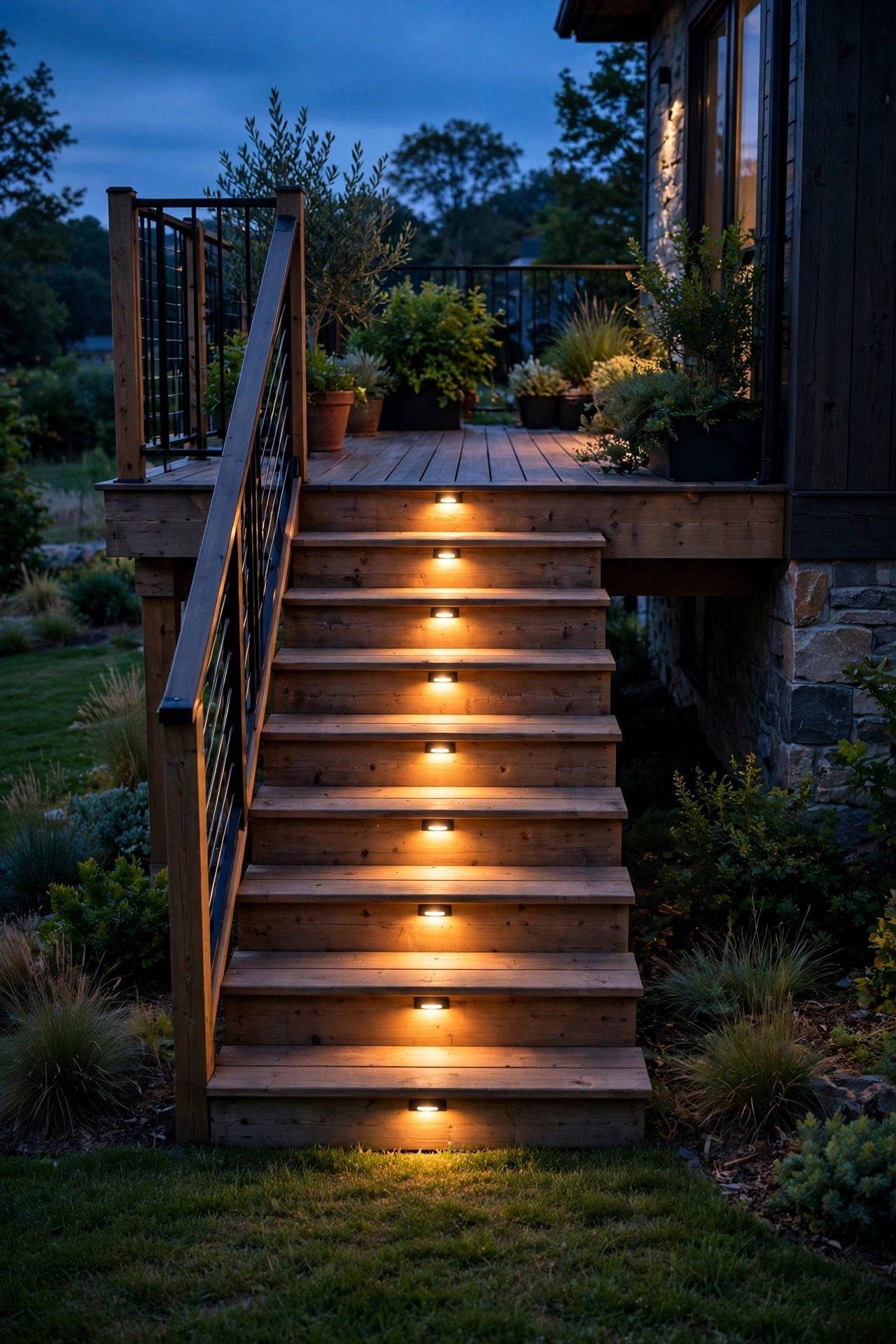
6. Let Smart Stair Lights Brighten as You Approach
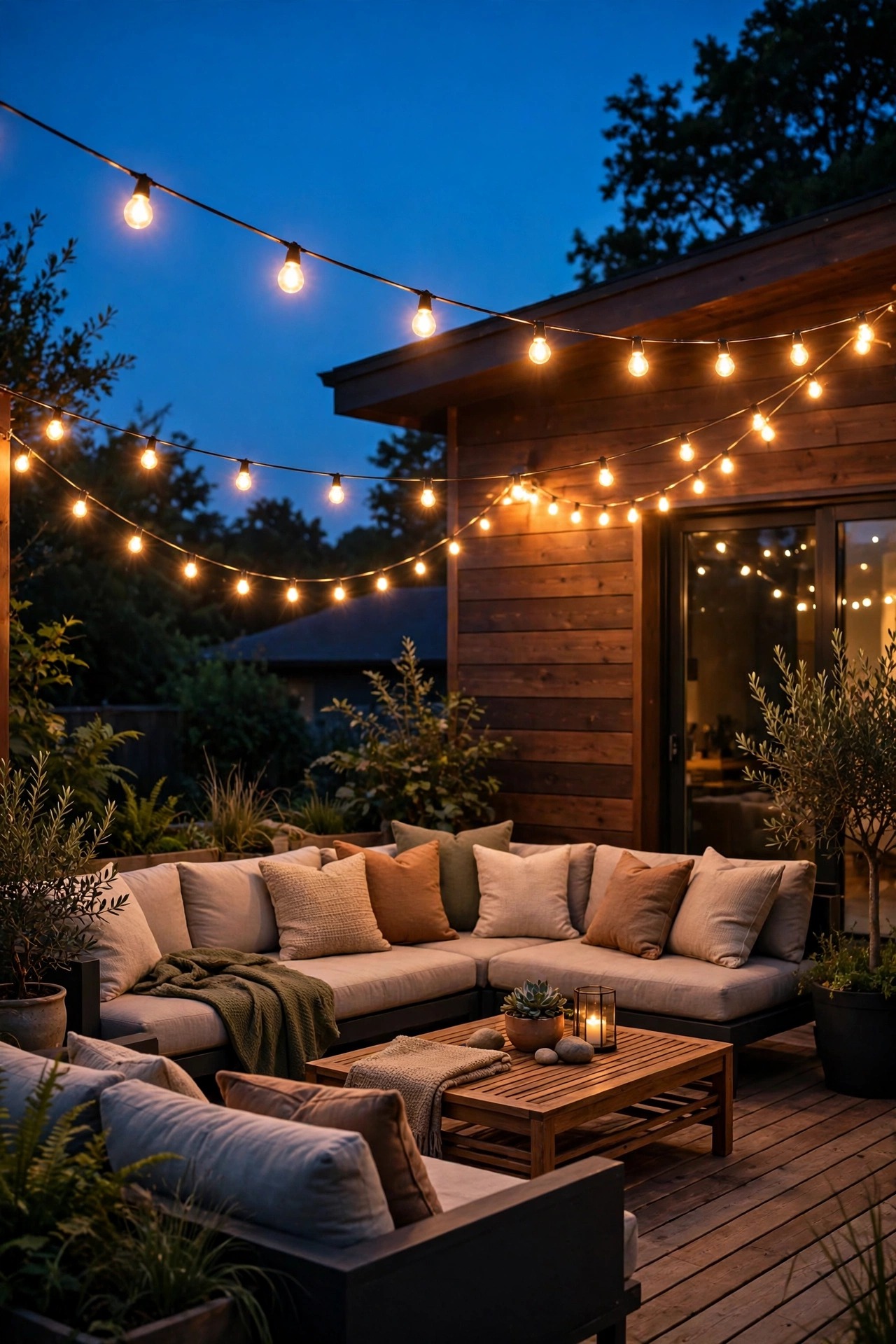
Deck stairs are where guests hesitate, where kids miss a tread, and where I once carried a tray of drinks entirely by faith. Smart stair lights solve it elegantly: small fixtures recessed into each riser or mounted on the stringer that idle at a soft 20 percent glow and rise to full brightness when their motion sensor sees you coming. That idle glow matters — it outlines the staircase all evening so the steps always read as steps, and the brightening feels like the deck is paying attention. Place one fixture per tread on wide stairs, or center one every step on narrow runs, always throwing light downward onto the tread rather than into eyes. Match the color temperature to the rest of your deck lighting, because a blue-white stair light among warm fixtures looks like a parking garage. If you are planning a bigger stair refresh, my deck stair light ideas cover placement patterns in more detail. Hire out the wiring if your stairs are closed-riser and you are not comfortable fishing cable — the fixtures are cheap, but your patience is worth something too.
Suggested budget range: $70 – $220.
7. Turn the Lights You Already Own Smart With One Plug
Here is the cheapest trick in this entire list, and the one I recommend to every friend before they buy anything new: an outdoor-rated smart plug. Whatever plugs in — string lights, a lantern, the little fountain pump with its accent light — becomes app-controlled, dimmable in some models, scheduled, and voice-ready the moment it runs through that plug. Look for a plug rated for outdoor wet locations with a proper weatherproof cover, and check its amp rating against whatever you are plugging in; a space heater is not a string light, and the plug will have opinions. I keep two on my deck: one runs the string lights, one runs a pair of rail lanterns, and both live in the same sunset routine. The roundup of best outdoor smart plugs and timers compares the features worth paying for, like energy monitoring and dual outlets. Keep the plug itself tucked under the deck edge or behind a planter where rain cannot pool on it, even if it is rated for weather. Twenty-five dollars, five minutes, and your oldest fixtures join the smart era.
Suggested budget range: $25 – $70.

8. Set Voice-Controlled Scenes for Dinner and Movie Night
The app is for setting up; your voice is for the evening itself. Once your deck lights live in the app, group them into named scenes and let a smart speaker do the conducting: one command drops the string lights to 30 percent and kills the bright sconce for movie night, another brings everything to a warm 70 percent dinner glow that flatters faces and food alike. Name scenes the way you actually talk — short, distinct words you will remember with a drink in your hand and guests mid-sentence. My three workhorses are the sunset welcome that fires automatically, a dinner scene, and a late-night scene that leaves only the stair lights and the rail strip at a whisper. Keep brightness levels honest when you program them: I test each scene sitting in the actual chairs after dark, because a scene tuned from the kitchen doorway always ends up too bright. If your household mixes phone platforms, choose lights and plugs the whole family can control from their own devices so nobody becomes the sole keeper of the deck lighting. Hands busy with a platter is exactly when voice control earns its keep.
Suggested budget range: $0 – $120.

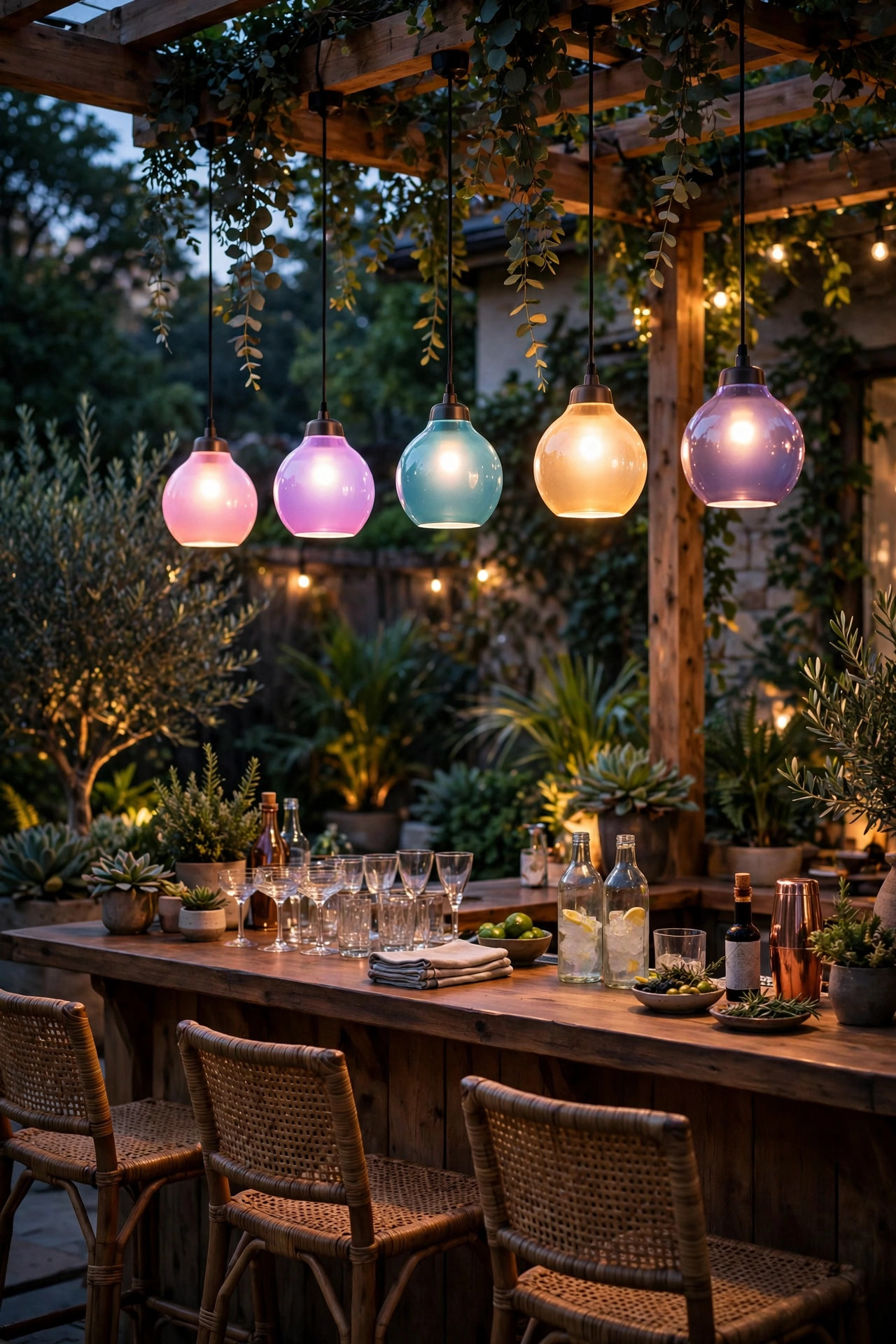
9. Splash Color-Changing Bulbs Into the Party Zones Only
Color-changing smart bulbs are pure fun — and pure chaos when they take over the whole deck. My rule is to confine them to one deliberate party zone: the sconces flanking the lounge end, or a pair of lantern bulbs over the bar cart. There they can glow team colors on game day, a soft amber-red for a Halloween hangout, or pastel washes for a birthday, while the rest of the deck stays calm in warm white. In the app, save your favorite two or three color scenes so the party look is one tap rather than ten minutes of fiddling with a color wheel while guests hold warm drinks. The rest of the week, those same bulbs simply run at 2700K like everyone else, which is the real beauty of smart color — it is a costume, not a commitment. Choose bulbs rated for enclosed fixtures if your sconces have shades or globes, since smart bulbs run warmer than plain LEDs and cook themselves in sealed housings. Two bulbs is charm; twelve is a carnival. Restraint, as always, is what makes it look designed.
Suggested budget range: $40 – $140.
10. Guide Midnight Trips With Motion-Sensor Path Lights
Some deck lights are not for the party at all — they are for the 1 a.m. trip to let the dog out. A couple of motion-sensor lights aimed at the route from the door to the steps (and maybe toward the grill or the trash gate) come on only when someone is actually walking it, then fade back off a minute later. Smart versions let you set the sensitivity and the timeout in the app, which fixes the classic motion-light annoyances: triggering on every moth, or blasting on at full security-flood brightness. I set mine to 50 percent and a two-minute hold, which is plenty to navigate by without waking the house. Mount sensors about 6 to 7 feet up, angled slightly down, and keep them out of direct alignment with heat sources like a dryer vent, which can cause ghost triggers on humid nights. Battery models make placement painless for a season, but hardwired or solar-with-a-good-panel versions save you the ladder trips. This is guidance lighting at its most honest: invisible until the second you need it, gone the moment you do not.
Suggested budget range: $45 – $130.

11. Build a Sunset-to-Bedtime Schedule That Runs Itself
The real magic of smart deck lighting is not the party tricks — it is the evening you do nothing at all. A good schedule turns the deck on at sunset (most apps calculate this daily, so it drifts correctly with the seasons), settles it to a softer level after dinner, and shuts the accent layers off at bedtime while leaving the stair lights on their motion idle. Weekends can run later than weeknights, and a vacation mode that varies the times slightly makes the house look lived-in while you travel. I always recommend building the schedule in two layers: the lights that serve safety and welcome run every night without exception, while the decorative extras — color scenes, the fountain light, extra stringers — join only when you ask. Test the routine for a full week before a big gathering, and adjust the fade durations; a slow three-second fade feels luxurious, while an instant snap-on feels like a warehouse. One honest note: schedules live in the app or hub, so if your Wi-Fi drops, most decent setups keep following the last saved routine. Set it once, then go enjoy your own deck like a guest.
Suggested budget range: $30 – $90.

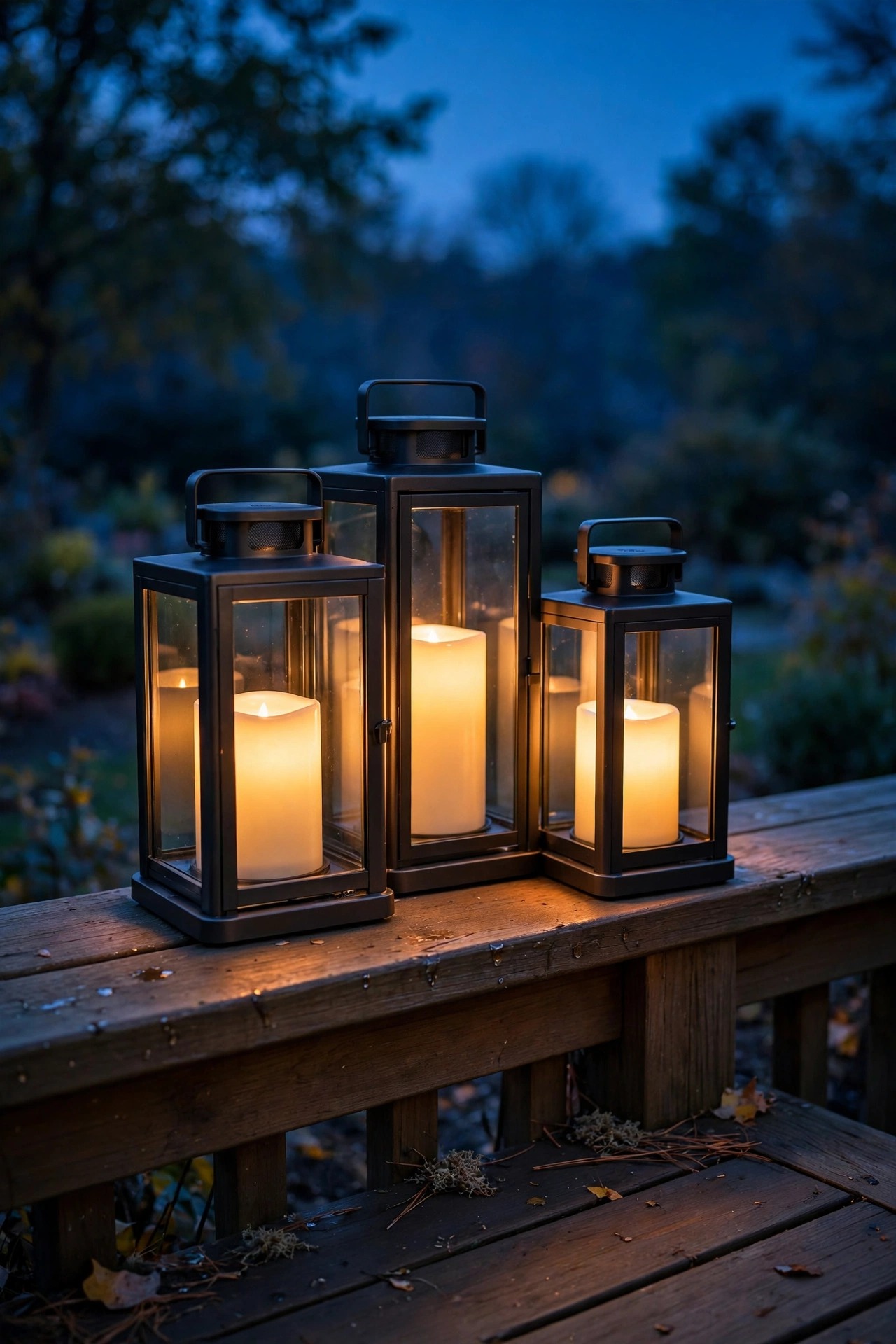
12. Cluster Smart Lanterns and Flameless Candles on the Rail
Not every smart light needs a wire or a socket. Rechargeable lanterns with app or remote timers have gotten genuinely good — the flameless candle versions flicker convincingly, survive a breeze that would kill real flames, and can be set to glow for the same four evening hours every night without you touching a thing. I cluster three at different heights on the wide corner of my railing and one more on the side table, and they do the intimate, close-range work that overhead light cannot: faces look softer, drinks sparkle, and the far end of the deck feels like a room instead of a platform. Grouping matters — a single lantern alone reads as an afterthought, while a trio reads as a decision. Choose lanterns with a warm 2200K to 2700K candle tone and a real outdoor rating, and bring the rechargeable ones in for a charge every few weeks rather than waiting for them to die mid-dinner. LED flameless candles are also the only flame look I allow anywhere near cushions, throws, and wooden rails. Pretty, safe, and zero installation — some nights that is the whole wish list.
Suggested budget range: $35 – $110.
13. Uplight the Privacy Screen With In-Ground Well Lights
A tall privacy screen or fence at the deck edge is a blank wall after dark — or, with two in-ground well lights at its base, the backdrop that makes the whole deck feel like a boutique hotel courtyard. Aim narrow-beam well lights straight up the screen slats so the light grazes the wood grain and throws long, soft shadows; the texture does the decorating. On a smart transformer or smart plug circuit, this accent zone joins your scenes: full for dinner backdrop, low for movie night so it never competes with the screen you are actually watching. Bury the fixtures flush so mower wheels and bare feet pass over safely, keep them a few inches out from the screen base, and choose sealed units rated for ground contact and standing water. Two fixtures cover about 8 feet of screen convincingly; add a third for longer runs rather than cranking the brightness. If your screen has a climbing plant or a row of tall planters in front of it, even better — the silhouettes layer beautifully. This is accent lighting doing exactly its one job: making the background gorgeous.
Suggested budget range: $80 – $240.

14. Cool the Covered Deck With a Smart Fan-and-Light Combo
If your deck has a roof or pergola with real structure, a smart ceiling fan with an integrated light is two upgrades in one housing. The light layer joins your app scenes like any other fixture — warm, dimmable, scheduled — while the fan speed answers to the same voice commands, which feels faintly luxurious on a still August night. Size the fan to the space (a 52-inch model handles most covered seating areas) and mount it so the blades sit at least 7 feet above the boards, higher if your crowd is tall. Choose a model rated for damp or wet locations depending on how much weather your roof actually keeps out, and put the light on its own dimmer channel in the app so a bright cleanup light and a soft dinner glow are both one tap away. This is the one project in the list where I suggest hiring an electrician unless you are genuinely comfortable with ceiling boxes and fan-rated bracing — a wobbling fan over a dinner table ruins two kinds of ambience at once. Breeze plus tuned light is the covered deck at its absolute best.
Suggested budget range: $180 – $450.

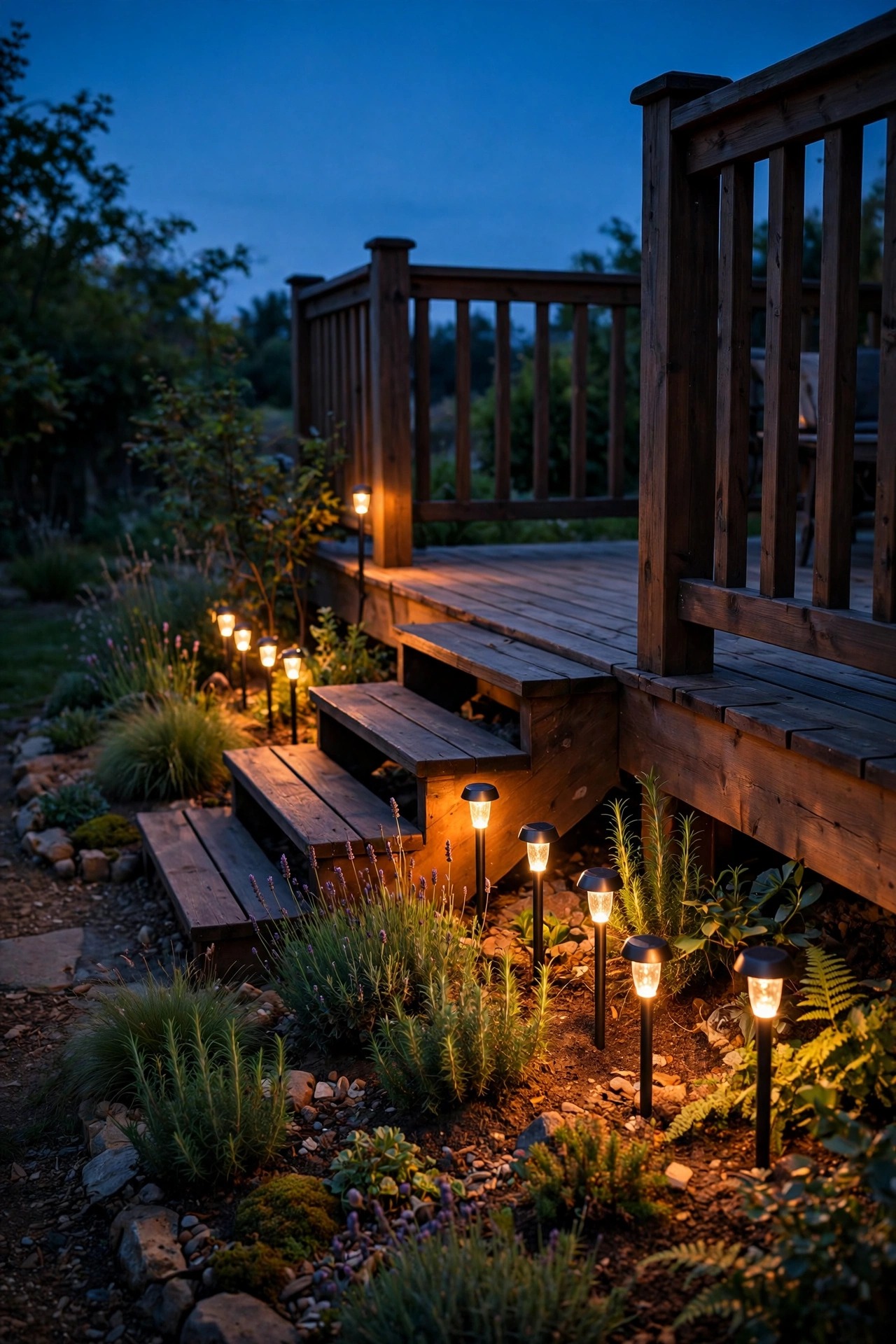
15. Stake Solar Smart Lights Along the Steps and Garden Edge
The deck edge that meets the garden is often the darkest seam in the yard, and it is exactly where running wire feels like overkill. Solar stake lights with app control — the newer ones pair over Bluetooth or a small solar hub — let you schedule and dim lights that no electrician will ever meet. Push them into the beds flanking the deck steps and along the first few feet of garden path, and they stitch the deck and yard into one lit picture. Be honest about placement: these need real sun, roughly six hours of it, so a stake under a dense shrub is a stake that quits at 9 p.m. I use them as the supporting cast, never the star — the wired layers carry the evening, and the solar stakes fill the edges. In the app, set them to a modest brightness and an early off-time, which stretches a small battery through the night instead of fading sadly at midnight. Keep the panels wiped clean; a dusty panel in July performs like a shaded one.
Suggested budget range: $40 – $120.
16. Group the Grill Zone Bright and the Lounge Zone Low
Here is where the zones from section one pay their rent. A deck is really two or three rooms sharing one floor, and they do not want the same light. The grill zone wants honest task light — brighter, a touch cooler in feel (still keep the bulbs 2700K, just run them higher), aimed at the cooktop and the side shelf so you can read a steak's color. The dining zone wants warm and mid-level, flattering rather than forensic. The lounge zone wants the lights low and indirect, mostly the rail strip and lanterns. In the app, build one group per zone, then save two whole-deck scenes on top: "Cooking" brings the grill zone up and everything else to medium; "After Dinner" drops the grill, softens the table, and lets the lounge glow. Naming zones by what happens there — not by fixture type — is the trick that makes the app make sense to everyone in the house. Guests will never see the system; they will just notice the deck always seems to match the moment.
Suggested budget range: $60 – $200.

17. Finish With a Dusk Walk-Through of Your Smart Deck Lighting Ideas
The last step is a pleasure, and I never skip it: once everything is in, take a slow walk with your phone at dusk and tune the whole system from the chairs, not the doorway. Sit where guests sit. Fire each scene and squint. Any bare bulb glaring at eye level gets dimmed, shaded, or re-aimed; any corner that goes cave-dark gets one layer added, usually the cheapest one — a lantern, a stake, a few feet of strip. Check the approach from the yard too, because the view of these smart deck lighting ideas from the lawn is the one your neighbors and your own arriving guests actually get. Walk the stairs at night speed and confirm the motion lights wake before your foot lands, not after. Then set the final schedule, name the scenes something the whole household will remember, and write the Wi-Fi password somewhere a future you will find it, because reconnecting a hub in the dark is nobody's favorite evening. I repeat this walk twice a year, in spring and fall, with a drink in hand. It takes ten minutes, and it keeps a beautiful deck tuned instead of slowly drifting out of balance.
Suggested budget range: $0 – $50.
Frequently Asked Questions
What color temperature looks best for smart deck lighting?
Warm white at 2700K is the sweet spot for decks — it flatters wood, skin tones, and food, and it matches the glow of string lights and candles. Use 2200K accent bulbs where you want an extra candle-like amber feel, and avoid anything 4000K or higher outdoors; blue-white light reads as commercial and security-grade, which fights the relaxed mood a deck is for. The most important rule is consistency: every layer at the same temperature looks deliberate, while mixed temperatures look accidental however smart the controls are.
Do smart deck lights need strong Wi-Fi outside?
They need a usable signal at the farthest fixture, not a perfect one. Most smart bulbs and plugs sip data and work fine on a weak-but-steady connection. If your deck sits far from the router, an outdoor-rated access point or a mesh node near the back of the house usually fixes dropouts. Hub-based systems are another good answer for big yards, since the hub talks to the router once and the lights relay among themselves. Test the signal with your phone standing at the far rail before you buy a cartful of bulbs.
Can I make my existing deck lights smart without replacing them?
Usually, yes — that is what smart plugs and smart switches are for. Anything that plugs in, like string lights or lanterns, becomes app-controlled through one outdoor smart plug. Hardwired fixtures on a wall switch can often be controlled by swapping the switch itself for a smart dimmer, which keeps dumb bulbs working happily. The honest exception is fixtures with built-in, non-replaceable LEDs and no switch access; those sometimes need a smart transformer on the low-voltage line, which is still cheaper than replacing the fixtures.
How much does it cost to make a whole deck smart?
A starter setup — a couple of smart plugs, a string light strand, and a few bulbs — runs about $100 to $250 and covers most of the effect. A full zoned deck with recessed lights, smart post caps, stair lights, and a fan-light combo typically lands between $800 and $2,000 in gear, plus electrician time if you hire out the hardwired pieces. The good news is that smart lighting phases beautifully: start with the plug and the scenes, live with it for a season, and add layers as the budget allows.
Conclusion
A smart deck is not really about the gadgets — it is about a deck that seems to know what the evening needs. Guidance light underfoot, a welcome at eye level, an accent on the screen behind it all, and every one of these smart deck lighting ideas answering to a single tap or a simple schedule. Start with the plan, add the smart plug and one scene, and let the compliments from the lawn talk you into the next layer. For more ways to light the rest of your outdoor spaces, browse the other deck and patio ideas here on the site — your backyard is about to get ideas of its own.