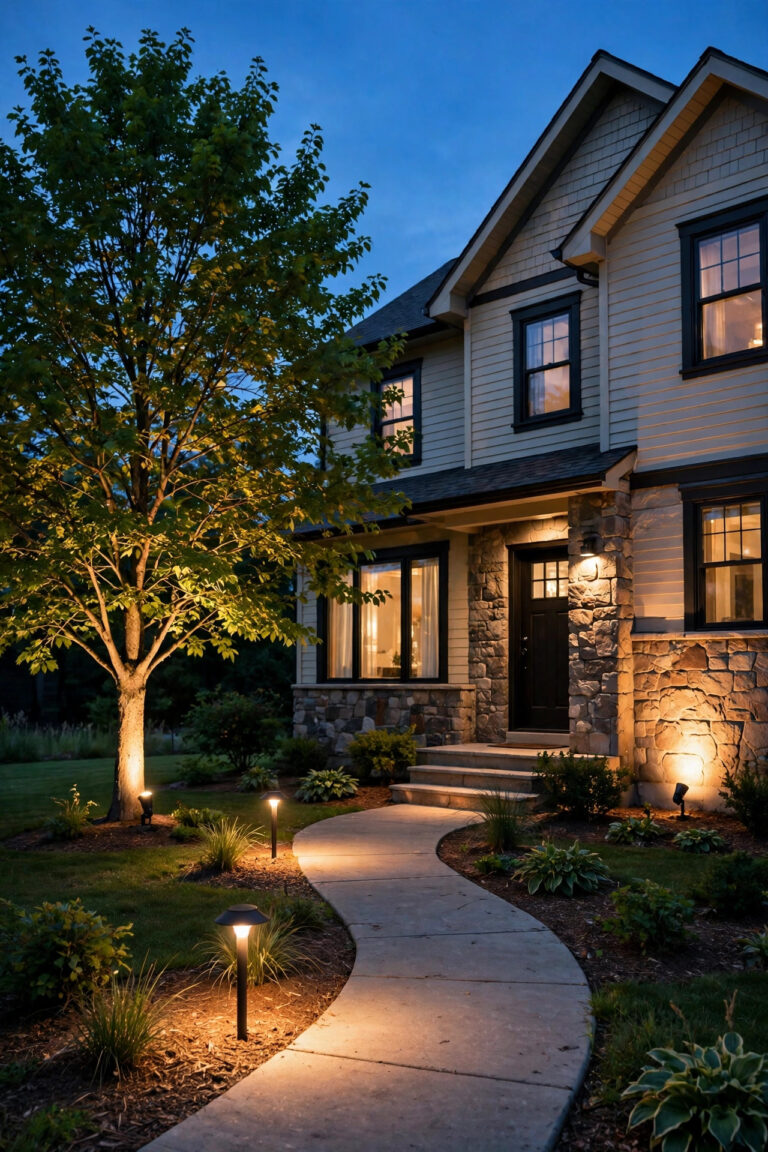
Every spring I stand in the same spot in my front yard, coffee in hand, staring at the big oak and arguing with myself. Do I finally bury proper well lights at its base, or keep nudging the stake lights back upright after another winter of frost heave? If you are weighing in-ground vs stake landscape lights for your own yard, that little standoff is the whole decision in miniature: permanence and polish on one side, flexibility and forgiveness on the other. I have installed both kinds, replaced both kinds, and honestly cursed at both kinds, so this guide skips the sales talk. We will compare the look in daylight and at dusk, the mowing reality, the drainage problem nobody warns you about, installation effort, and how each one throws light at trees and walls. By the end you will know exactly which fixture belongs in each zone of your yard, and where mixing the two beats picking a winner.

The Short Answer
Choose stake lights for beds, borders and anywhere your planting changes year to year: they install in minutes, aim easily, and move when a shrub outgrows its spot. Choose in-ground well lights for open lawn, driveway edges and permanent features like mature trees and stone walls, where a fixture has to disappear by day and survive mower wheels. Most yards, mine included, end up happiest with both: wells doing the dramatic uplighting, stakes handling the flexible accent work. Whichever you pick, match the color temperature across the whole yard and buy the best housing your budget allows, because the fixture body is what fails first.
What Each Fixture Actually Is
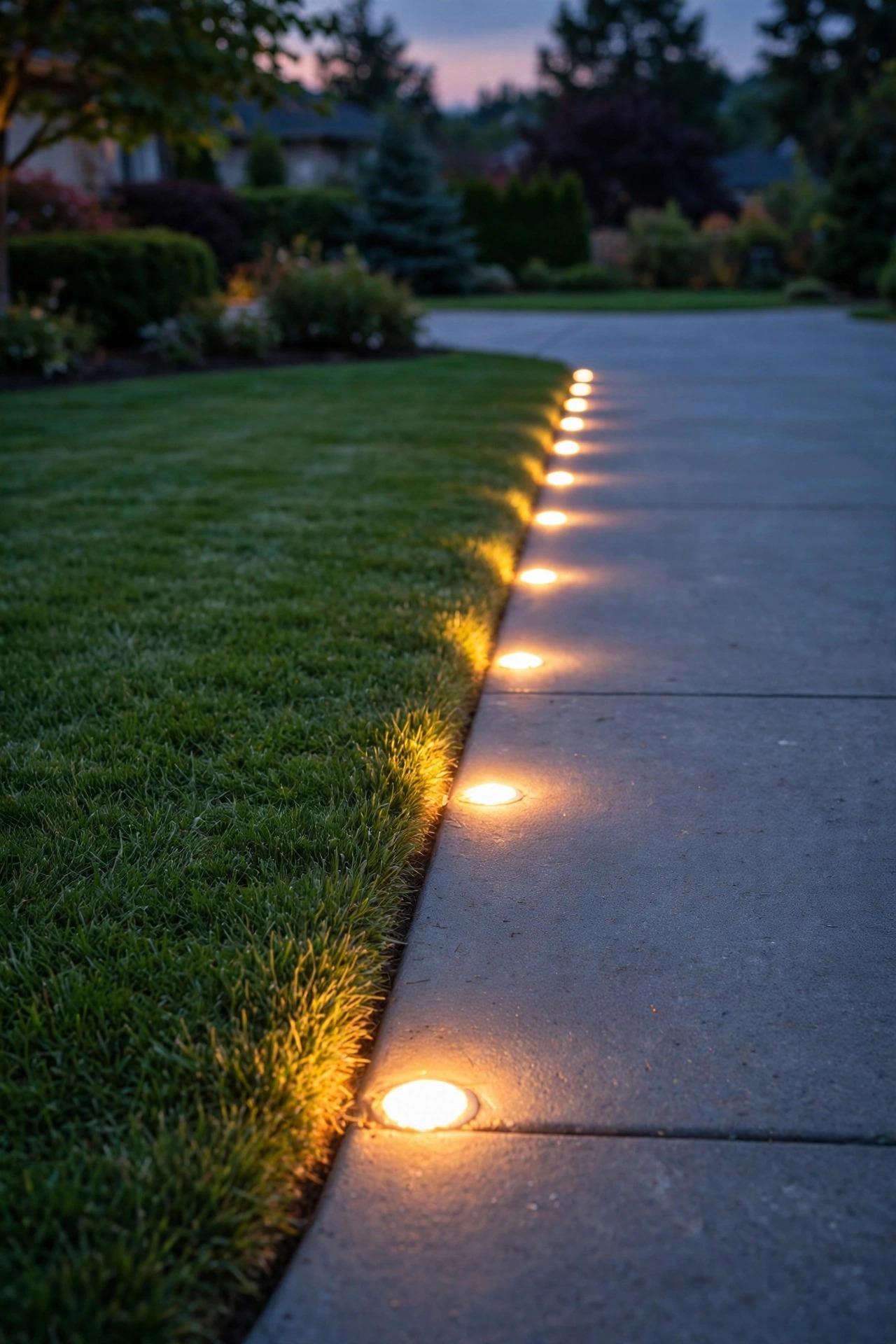
An in-ground well light is a sealed fixture that lives in a housing buried below the soil surface, with only its lens sitting flush at grade. You see a flat glass or metal-trimmed disc in the lawn or mulch, nothing more. Most fire their beam straight up, though better models tilt the lamp inside the housing by 15 to 25 degrees. The good ones are low-voltage, fully potted or gasketed, and rated IP67 or IP68 because, as we will get to, they live wet. If you want to browse shapes and finishes, my collection of in-ground well lights shows the main styles.
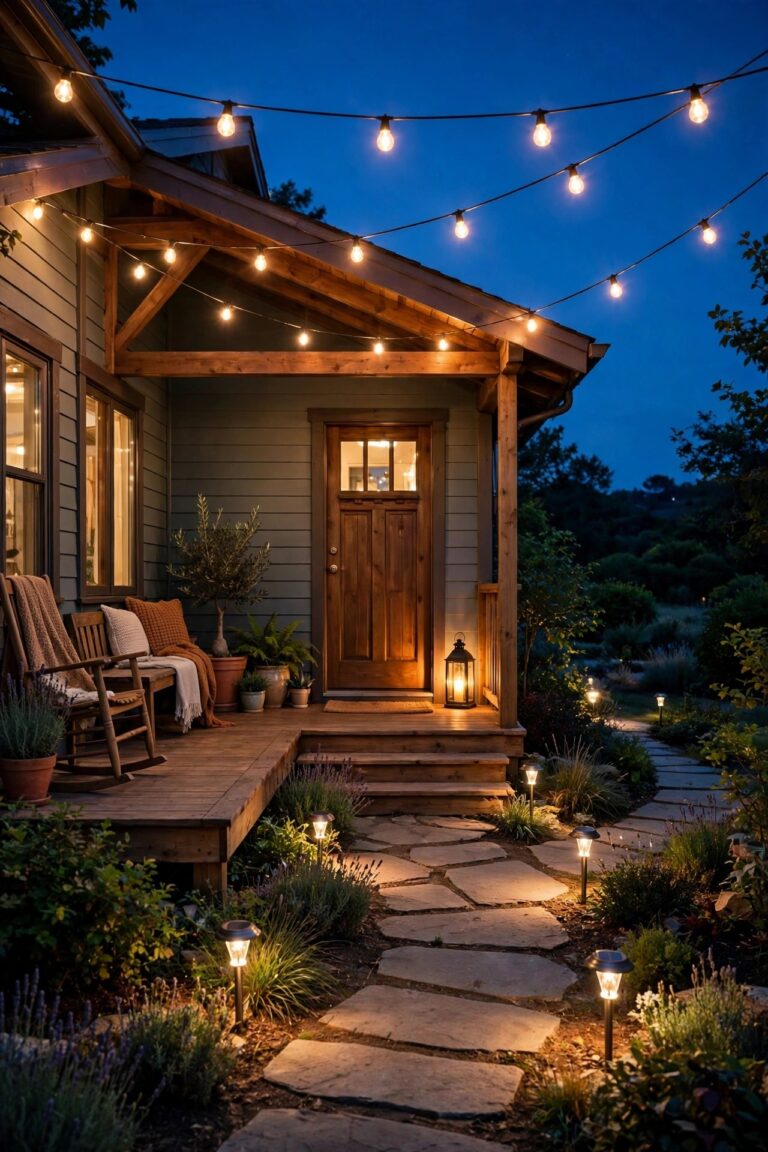
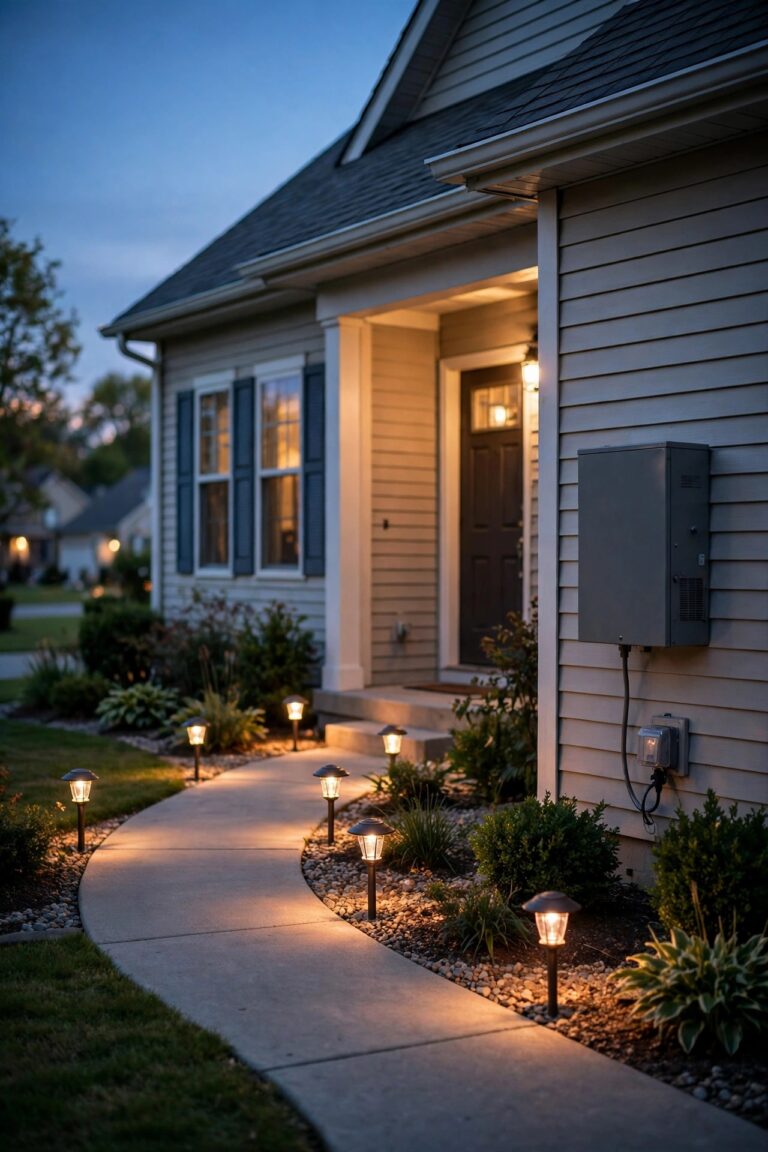
A stake light is the fixture most of us start with: a lamp head on a short stem, usually 6 to 18 inches tall, pushed into the soil on a spike. Path lights, spotlights and decorative lantern styles all come in stake form, in low-voltage wired and solar versions. The head typically tilts and rotates, so the fixture you buy is really a little adjustable lighting instrument. Same transformer, same cable, completely different personality from its buried cousin.
There is also a size difference worth knowing. A well light's visible lens is only 3 to 5 inches across, basically a coaster sitting in the grass. A stake head can be as wide as your hand, with a stem and shade you clearly see. The buried fixture reads as pure light with no visible maker; the staked one reads as an object that makes light.

In-Ground vs Stake Landscape Lights: The Look in Your Yard
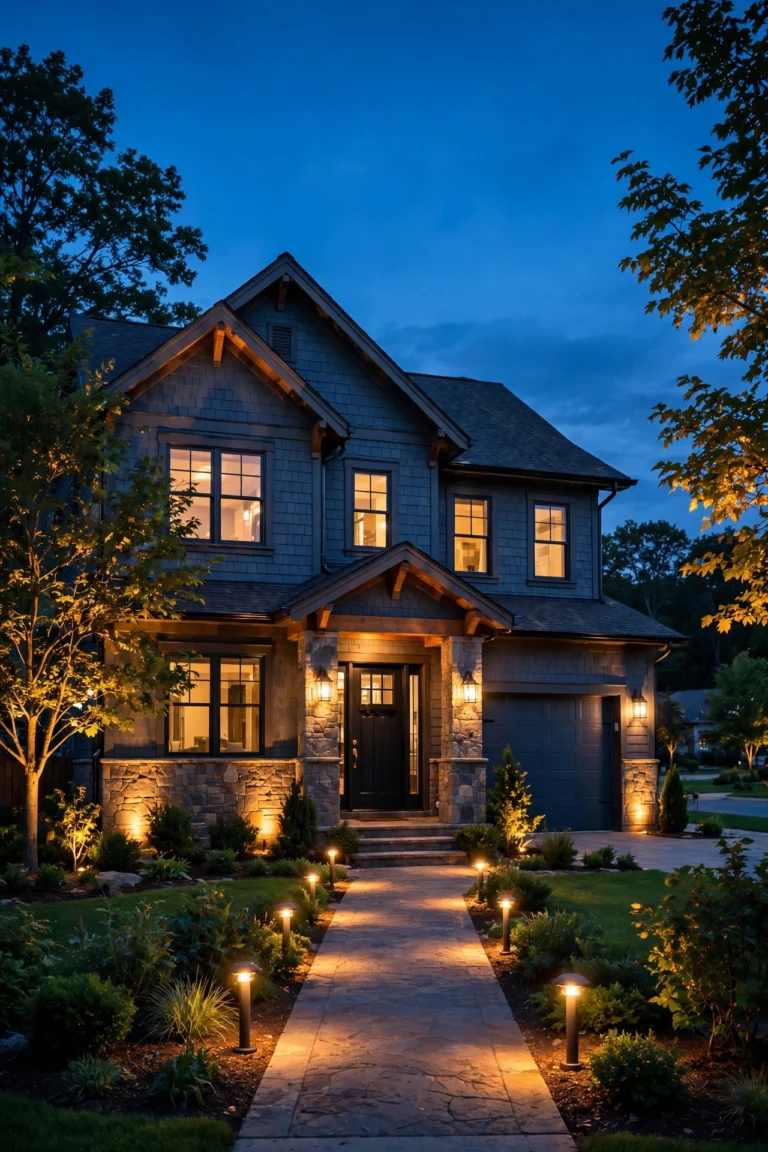
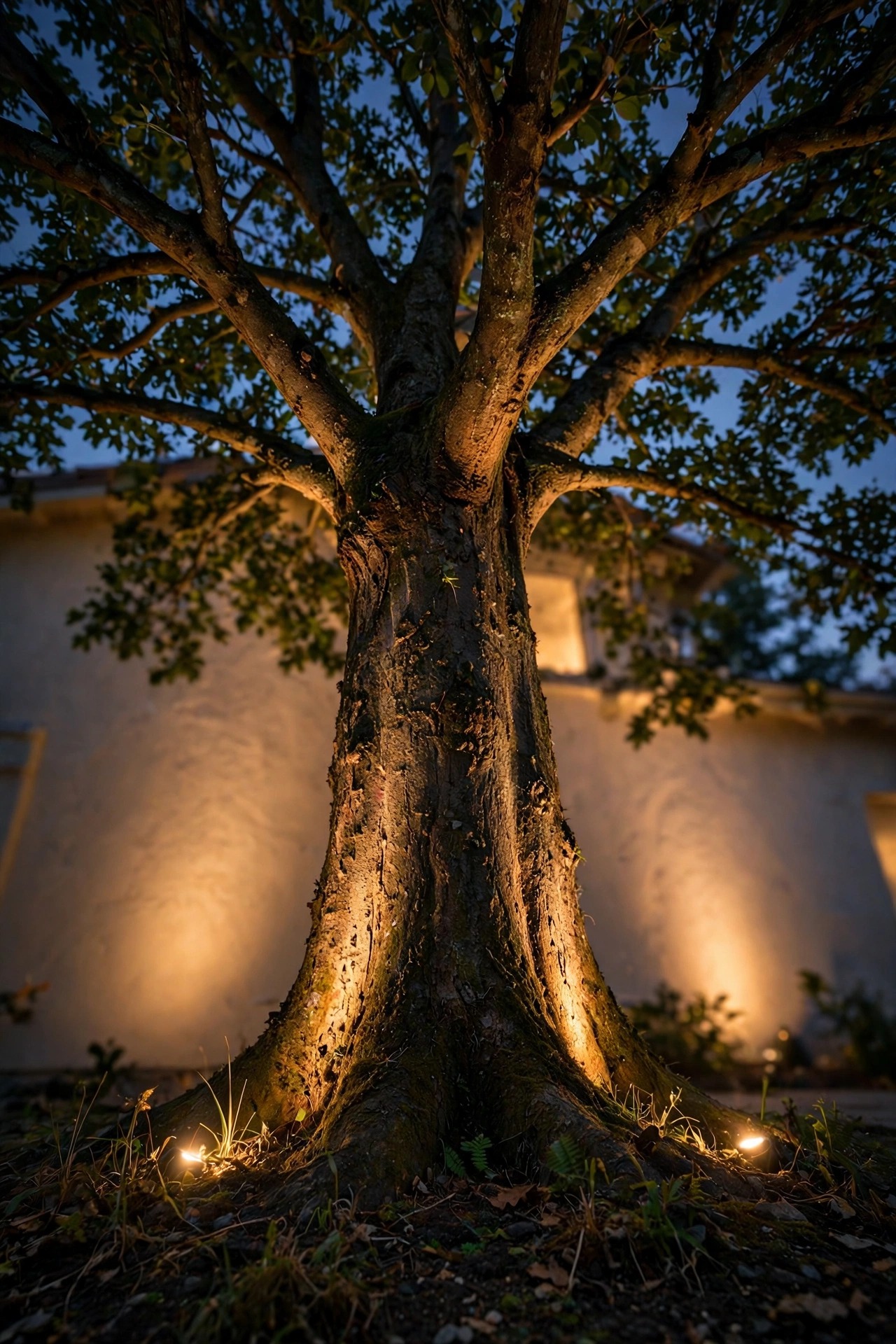
The single biggest difference between the two styles is what your yard looks like at noon. A well light is essentially invisible in daylight. Guests walk right over the little lens discs in my lawn without noticing them, and then at dusk the light seems to rise out of the ground itself, grazing up the oak bark with no visible source. It is the most architectural, grown-up look landscape lighting offers, and it never competes with the plants.
A stake light is honest hardware. In daylight you see stems and heads standing in the beds, which can be part of the charm — a row of lantern-topped stakes has real cottage appeal — or can read as clutter in a clean, modern planting. There is also a seasonal catch: a 10-inch stake that looked perfectly scaled in April can be swallowed whole by a happy hydrangea in July, taking its light with it. Wells never get swallowed. Their lens can get mulched over if you are careless in spring, but a two-minute scrape fixes that, and the light itself stays exactly where you designed it.
I notice the difference in photographs too. Wells let the garden star in every picture you take at dusk, while a row of visible fixture heads pulls the eye before the planting does, especially in a yard you worked hard to make look natural.

Mowing, Foot Traffic and Drive-Over Duty
Here is where permanence starts paying rent. A flush well light sits at grade, so the mower rolls straight over it and the string trimmer cannot hurt it. Drive-over rated models — look for cast metal or heavy composite housings with a stated load rating — handle car tires along driveway edges and parking aprons happily. One honest warning: place them where tires roll straight, not where wheels turn and scrub sideways across the lens, because that twisting force is what cracks housings and shifts them in their sockets.
Stake lights live a harder life anywhere near traffic. Mower decks clip them, trimmer line chews the stems, snow shovels find them in February, and frost heave leans a few more degrees every winter until your soldier-straight row looks tipsy. None of this is fatal — straightening stakes is a five-minute spring ritual for me — but it is a ritual forever. My rule: stakes live inside bed lines and behind edging, never out in open lawn where wheels and blades roam. In snow country the buried lights have their own quirk: a deep snowfall covers the lenses and the uplight simply vanishes until the melt, while tall stakes keep marking the driveway. Neither is perfect; you pick your inconvenience.
Water, Drainage and IP Ratings
Let me be blunt: an in-ground fixture spends its life sitting in the wettest pocket of your yard. Rain runs downhill into the little well you dug, mulch holds moisture against the lens, and irrigation overspray soaks it all summer. Water management is not a detail with these fixtures; it is the entire lifespan question. Buy IP67 at minimum and IP68 if you can, and strongly prefer sealed LED modules over replaceable lamps, because a lamp housing that breathes will eventually breathe in moisture and corrode its socket.
Then give the water somewhere to go. Every well I install sits on 6 to 8 inches of coarse gravel, with more gravel packed around the housing, so the fixture drains instead of bathing. In heavy clay this gravel bed is the difference between a ten-year fixture and a two-year one. Stake lights dodge most of this by keeping their heads up in the air. Their weak point is lower: the wire connections at soil level and the spot where the stem meets the dirt, which corrodes first on cheap plated metal. Gel-filled waterproof connectors and solid brass or composite stems are worth it. Neither fixture fears rain; both fear sitting in it.

Installation: Digging Wells vs Pushing Stakes
Installing stake lights is the friendliest project in outdoor lighting. Loosen the soil, push the spike in, connect the low-voltage cable (or nothing at all for solar), and come back at dusk to aim. Six fixtures genuinely take under an hour, which is why I always tell beginners to start here.
Wells ask for a real Saturday. Each fixture needs a hole roughly 10 to 14 inches deep, a gravel drainage bed, the housing set level with your finished grade — which means thinking ahead about mulch depth and soil settling — and the cable trenched to it. Six wells took me a full day the first time, including the do-over on the one I set a half-inch proud of the lawn, which the mower found immediately. Two safety notes that apply to both: call 811 before any digging so buried utilities get marked, and keep line-voltage well installations to a licensed electrician, since buried 120-volt work is permit territory in most towns. Low-voltage systems are the DIY-friendly route for either fixture style, and both run happily off the same transformer.
Renters, take note of the asymmetry. Stakes leave nothing behind but a small hole in the mulch when you move out. A buried well is effectively a permanent alteration to the yard, which is worth a conversation with a landlord before the first shovel of dirt.
Repositioning as Plants Grow
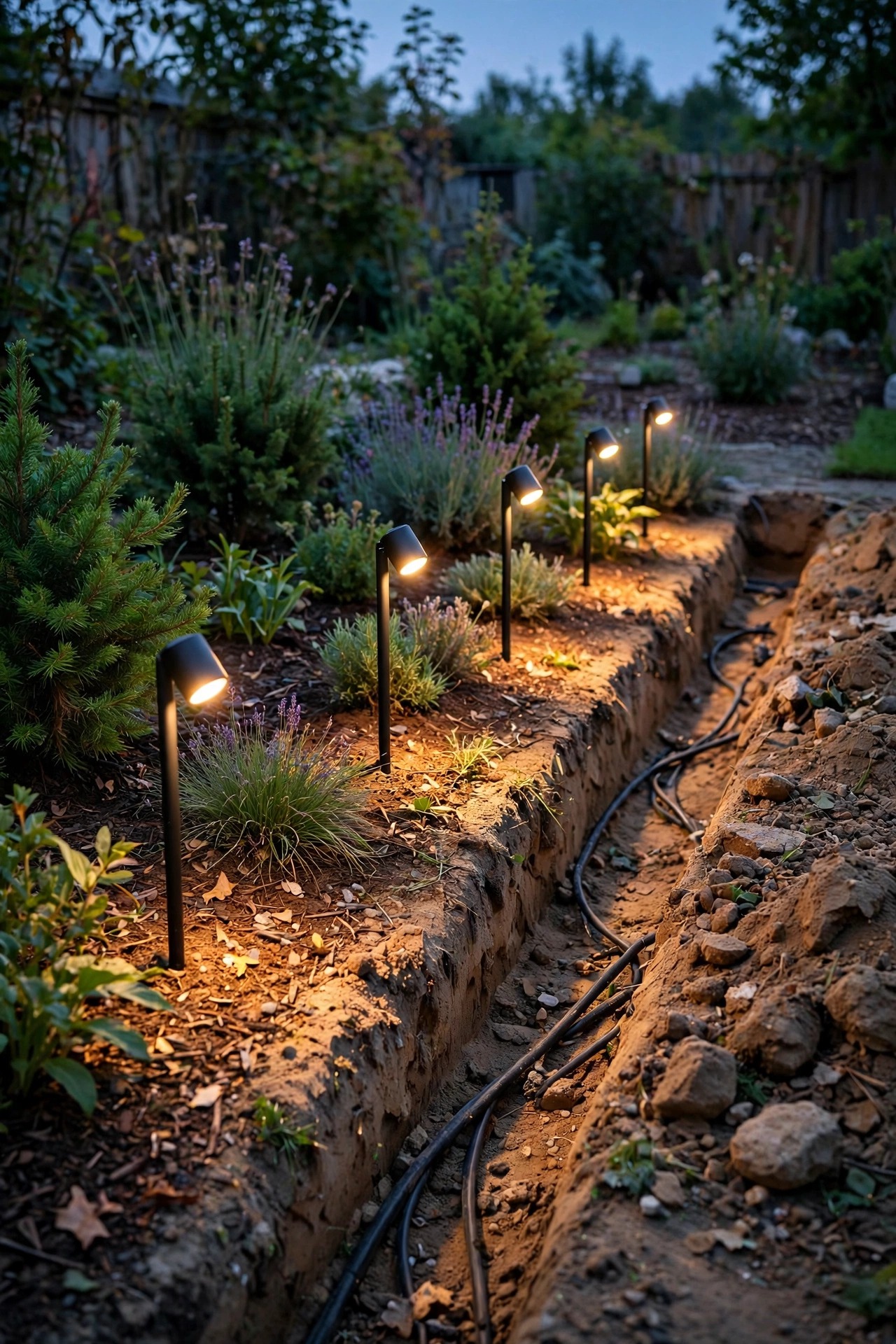
Gardens refuse to hold still, and this is the stake light's superpower. When a shrub doubles in size — and it will — you pull the stake, walk it two feet over, push it back in, and re-aim. Gardeners who redesign beds every few seasons, test new perennials, or light young trees that are still filling out should weight this heavily. Solar stakes are the most mobile lights in existence: no cable at all, just a new sunny spot.
Moving a well light is a small construction project: dig it out, dig a new well with its gravel bed, extend or re-run the cable, and patch the old hole. Doable, but nobody does it twice for fun. So treat well placement as permanent and spend them on features that are not moving — a mature tree, the house itself, a stone wall, a driveway edge. My favorite trick for new yards: live with inexpensive stakes for one full season, notice exactly where the light earns its keep, then bury wells only at those proven spots and keep the stakes working everywhere else.
The same freedom helps at the design stage. I have never once placed a stake perfectly on the first try, and I have never needed to, because dusk tells you the truth about a position within ten seconds and your hands can fix it in ten more.

Aim and Angle: Uplighting Trees and Washing Walls
Because a well light points up, placement is its aim. Set one 12 to 24 inches out from a tree trunk with a narrow 15 to 30 degree beam and you get that dramatic bark-grazing column; pull it back and widen the beam for a full canopy wash. For walls, 6 to 12 inches out grazes stone and brick texture beautifully — my tree uplighting guide walks through the distances in detail. The discipline wells demand is glare control: never aim one where people walking or sitting will stare down the beam, which is why they do not belong right beside steps or path edges.
Stake spotlights forgive sloppy aim because you fix it after dark with one hand. Tilt, rotate, walk back, squint, adjust again. They also cross-light trees from two sides more easily and can be tucked behind a shrub so only the light shows. Comparing uplighting vs downlighting effects is easier with stakes, because you can simulate a new angle in seconds. Whichever style does the aiming, hold the whole scene to 2700–3000K so buried and staked fixtures read as one design.
Height is one more dial wells do not give you. A stake head raised 12 inches above a bed throws a wider, softer pool than the same lamp sitting at 6 inches, so you can tune the spread of a stake light without buying a different fixture.
What It Costs in 2026
All the numbers live here, because this is the title's third promise. On fixtures alone, decent low-voltage stake spotlights and path lights run $15 to $45 each, with solid brass versions at $60 to $120; basic solar stakes are $8 to $25 each and light like it. Low-voltage well lights run $35 to $90 each for sealed LED models, and drive-over rated cast housings reach $75 to $150 each.
Both styles share the same system costs if they are wired: a transformer with headroom for future fixtures at $120 to $250, 12-gauge cable around $0.60 to $1.00 per foot, and gel connectors at a few dollars each. For a real-world comparison, lighting two trees and a front bed with eight fixtures cost me roughly $250 to $500 in parts with stakes, versus $500 to $950 with wells once gravel, extra cable and longer housings were in. Hiring a pro roughly doubles either figure. Running costs are nearly identical and tiny: eight 5-watt LEDs burning five hours a night use about 73 kilowatt-hours a year, around $12 to $15 at 17 cents per kilowatt-hour. Where wells cost more over time is replacement — a failed sealed module is a whole $35 to $90 fixture, while a stake head swap is cheaper and takes two minutes.

5 Mistakes That Ruin the Effect
After two decades of my own errors and reader emails, these are the five I see constantly:
1. Skipping the gravel bed. A well light dropped into bare clay sits in a puddle of its own making, and the seal fails years early.
2. Parking stakes in the mower line. If the mower or trimmer can reach it, it will, weekly, until the stem snaps.
3. Aiming wells across walkways. A beam you stare into from a path or patio chair is glare, not drama. Move wells to the far side of the feature.
4. Mixing color temperatures and beam spreads. A 2700K well and a 4000K stake on the same tree looks like a mistake, because it is.
5. Setting wells at grade before the soil settles. New beds sink an inch or more; your flush lens ends up in a dirt crater that collects water and mulch.
Notice the pattern: every one of these is a five-minute decision made before installation and a five-hour problem after it. Slow down at the planning stage. Walk the yard at dusk with a flashlight, mark the positions with little landscape flags, and live with the flags for a couple of evenings before a single hole gets dug. Future you — straightening nothing, re-digging nothing, and enjoying the exact glow you pictured — says thanks.
In-Ground vs Stake Landscape Lights by Zone: My Verdict
After all of the above, here is how I actually assign the two styles across a yard, zone by zone. Open lawn you mow: wells, because nothing sticks up to hit. Driveway and parking edges: drive-over rated wells only — a stake there is a countdown to a tire or a plow. Mature trees, columns and stone walls, the permanent architecture of the yard: wells, placed once and done forever. Flower beds and borders that evolve every season: stakes, no contest, because you will move them and you know it. Steps and path edges where people walk: neither aimed at faces — low stake path lights with shielded, downward light, set inside the bed line. Renters and experimenters: solar stakes, which leave no trenches and no regrets. The pattern underneath every row of that list is the same: bury light where the yard is finished, stake it where the yard is still becoming.
And when the budget forces a choice on a big project, phase it rather than compromising. Wells this year for the trees and the front wall, stakes everywhere else, then swap the highest-impact stakes for wells next season once the design has proven itself through four seasons of growth and weather. Phasing is not settling; honestly, it is how most professional-looking yards actually get built.

Frequently Asked Questions
Can I mow or drive over in-ground well lights?
Yes, with the right fixture. A well light installed truly flush at grade takes a mower pass without drama, and models with a drive-over rating on a cast metal or heavy composite housing handle car tires along a driveway edge. What they dislike is sideways scrubbing from turning wheels, so keep them out of turning zones. Ordinary stake lights should never sit in a mower path at all — the first pass usually just bends them, and the season does the rest.
Do in-ground lights fill up with water?
Only the badly installed ones. A sealed IP67 or IP68 fixture sitting on a gravel drainage bed sheds water instead of storing it. The classic failure is a housing dropped into bare clay with no drainage: rain fills the little sump around it, the gasket sits submerged for weeks, and moisture wins. A bit of condensation under a lens after a cold night is cosmetic and normal; standing water inside the housing means the drainage, not the fixture, failed first.
How long do in-ground and stake lights last?
The LED light sources are comparable, roughly 30,000 to 50,000 hours for both. Housings decide the real story: brass and composite fixtures of either style can serve for decades, while thin plastic stakes commonly look tired after two to four seasons of sun and trimmer abuse. Solar stake lights are the shortest-lived of the group because their batteries fade in one to three years. A sealed well light usually ends as a whole-fixture replacement after seven to twelve years, which is the honest trade for its clean look.
Can I mix in-ground and stake lights in the same yard?
Please do — it is what most good-looking yards actually run. Wells handle the permanent drama: tree uplighting, wall grazing, driveway edges. Stakes handle beds, borders and any spot still evolving. Run them off the same low-voltage system if you like, and keep every fixture in the 2700 to 3000K range so the two styles blend into one scene instead of looking like two separate projects bolted together.
Conclusion
Here is the honest bottom line from my own front yard: the in-ground vs stake landscape lights question is not really a contest, because the two fixtures answer different problems. Wells give you invisible-by-day polish and survive mowers, tires and time, as long as you respect drainage and treat the placement as permanent. Stakes give you freedom — to aim, to move, to change your mind as the garden grows. Pick per zone, match your color temperature, and the yard looks designed rather than decorated. If this comparison helped, browse the rest of my outdoor lighting guides for the transformers, spacing rules and seasonal ideas that pull a whole yard together.