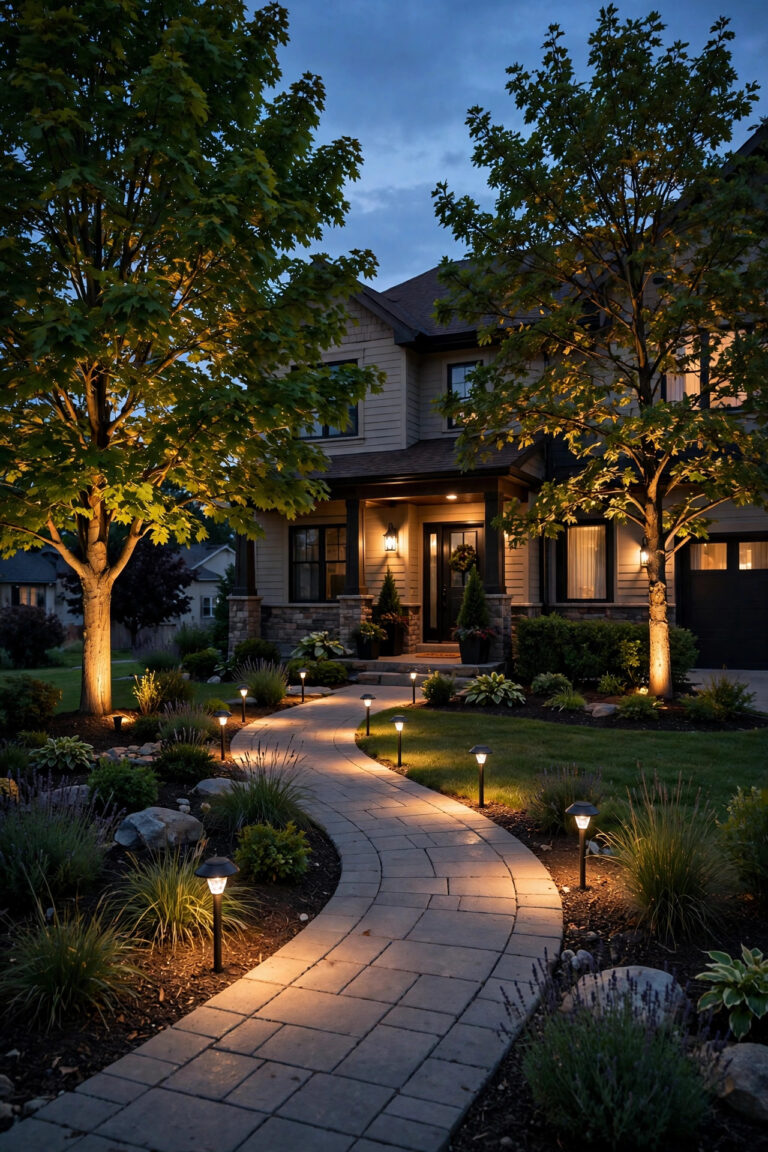
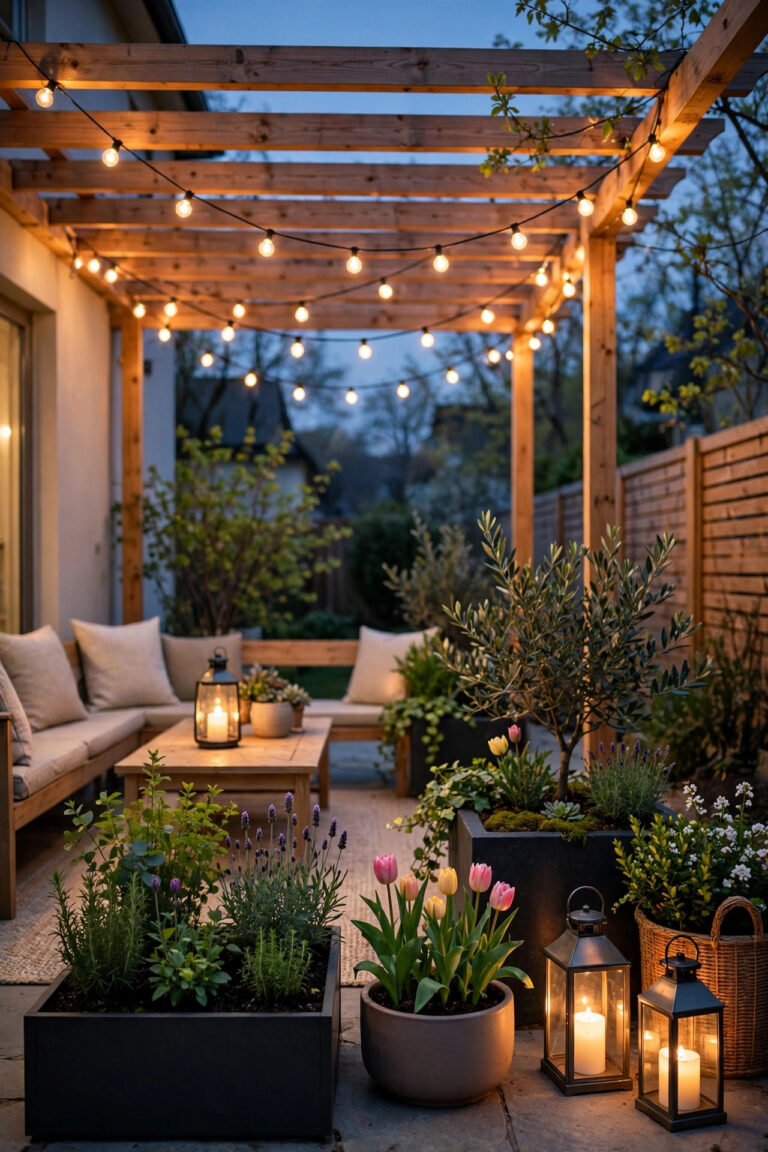
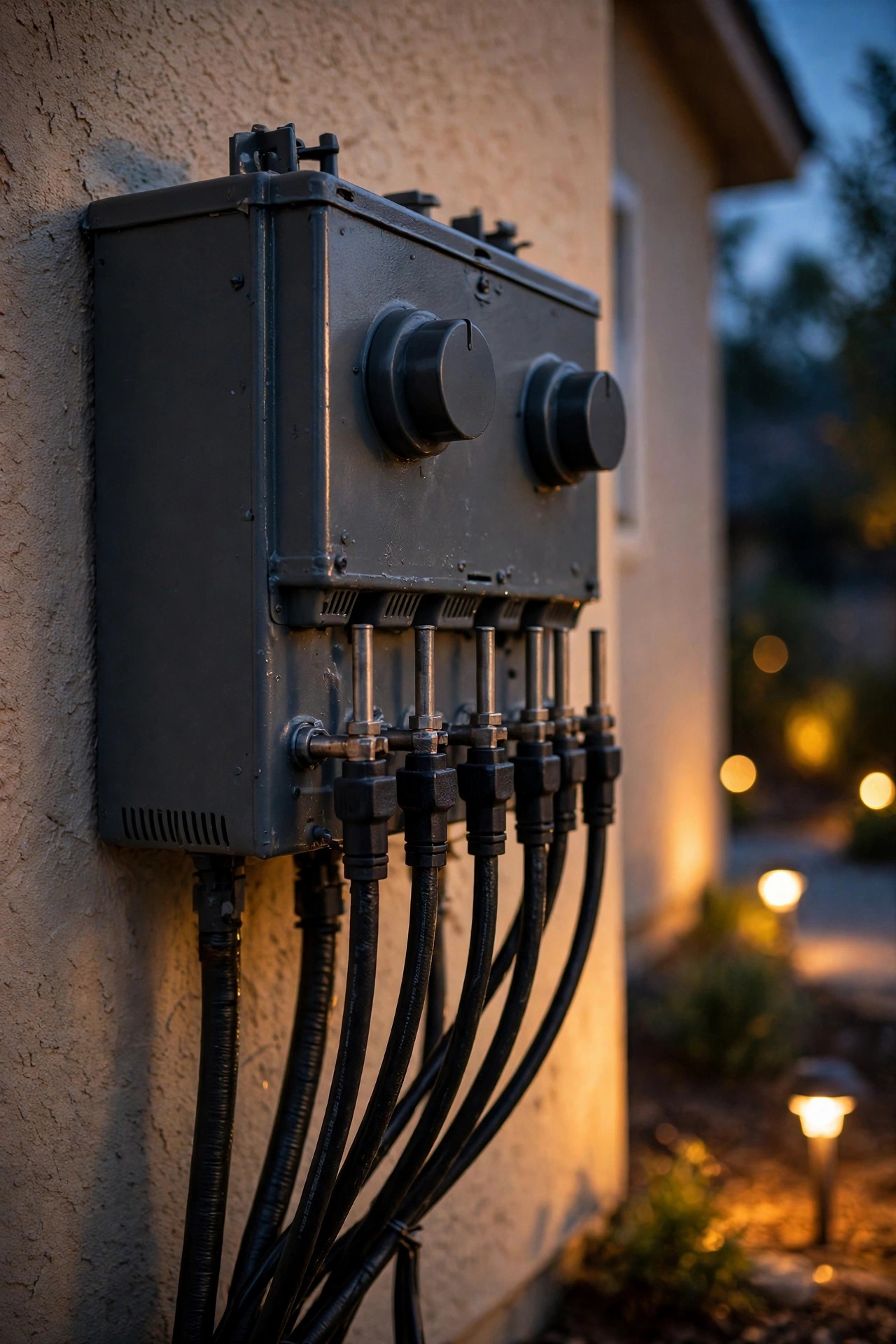
Every low-voltage light in my yard — the path lights along the front walk, the uplights washing the big oak, the little spots tucked beside the porch steps — traces back to one gray metal box humming quietly on the side of the house. That box is the transformer, and it is the hardest-working, least-glamorous part of the whole system. When I finally swapped my old dial-timer unit for a smart landscape lighting transformer, honestly, it changed how the entire yard feels at night. No more lights blazing at noon after a power blip. No more crouching by the siding in my slippers to fix the timer after the time change. Everything runs from my phone now, split into zones, on a schedule that follows the sunset all by itself. If you have ever wondered what that box actually does, what makes the smart version different, and whether your yard is big enough to justify one, this guide is for you. I will walk through how transformers work, the features that genuinely matter, how to size one correctly, what they cost in 2026, and who can honestly skip the upgrade.
The Short Answer
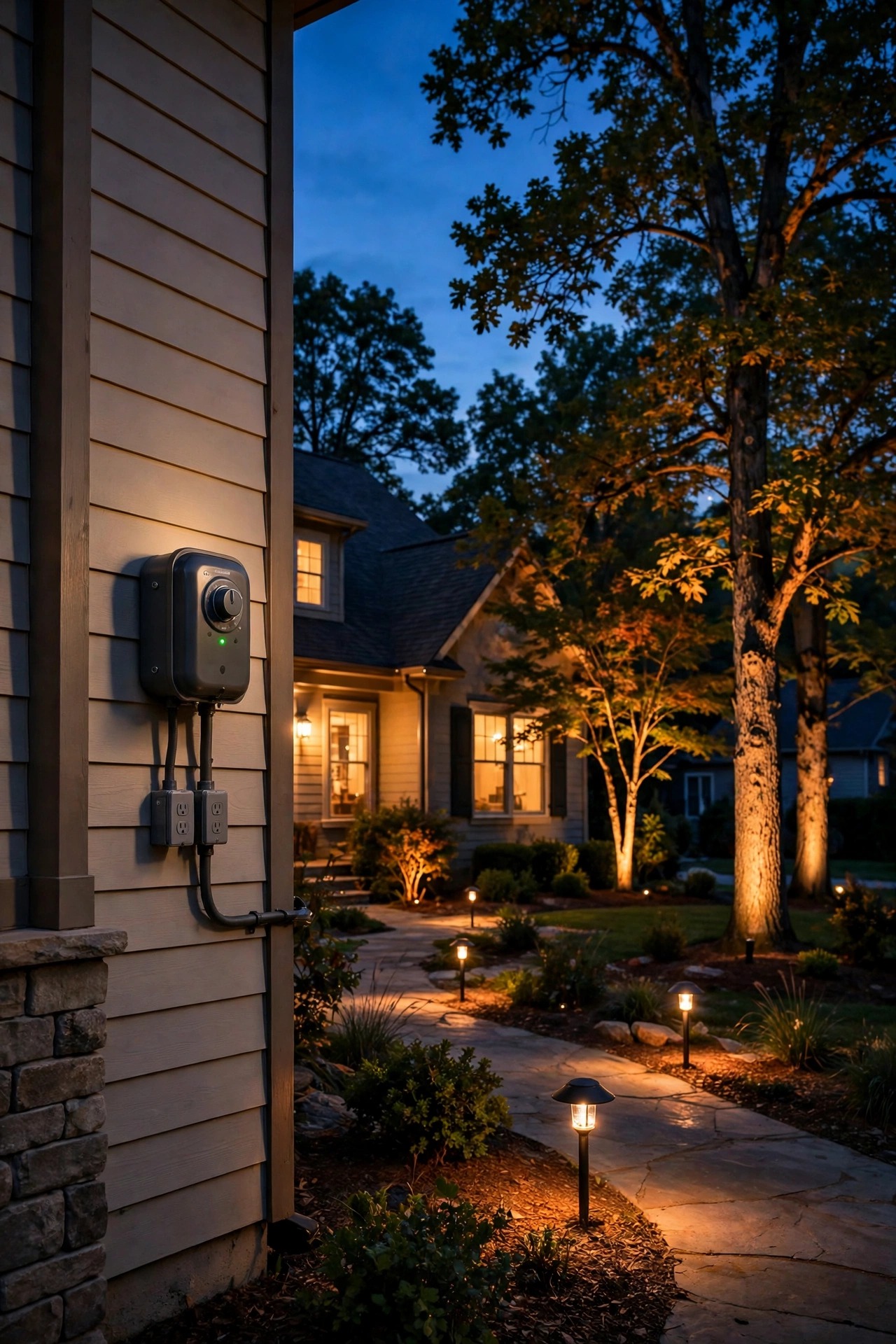
A smart landscape lighting transformer does two jobs at once. It steps your household 120-volt power down to the safe 12 volts your landscape lights run on, and it acts as the brain of the whole system: app control, separate zones for different areas, and schedules that adjust themselves with the sunset. If you have a dozen or more fixtures spread across a front and back yard, it is one of the most satisfying upgrades you can make. If you run four path lights off one small box, a basic timer model honestly does the job for far less. The sections below will help you figure out which camp you are in.
What a Smart Landscape Lighting Transformer Actually Does
Start with the basics, because everything else builds on this. The outlets in your home deliver 120 volts of alternating current, and that is far too much juice for landscape fixtures. Those fixtures are designed for low voltage, usually 12 volts, so the transformer sits between the outlet and your lights and steps the power down to a safe, gentle level. Every fixture in your yard connects back to this one box through low-voltage cable, and the box feeds them all.
Because the output is only 12 volts, the whole system is forgiving in ways line-voltage wiring is not. The cable can be buried just a few inches deep without conduit, a nicked wire is an annoyance rather than an emergency, and the setup is safe to work around kids and pets. That safety is exactly why low-voltage became the residential standard.
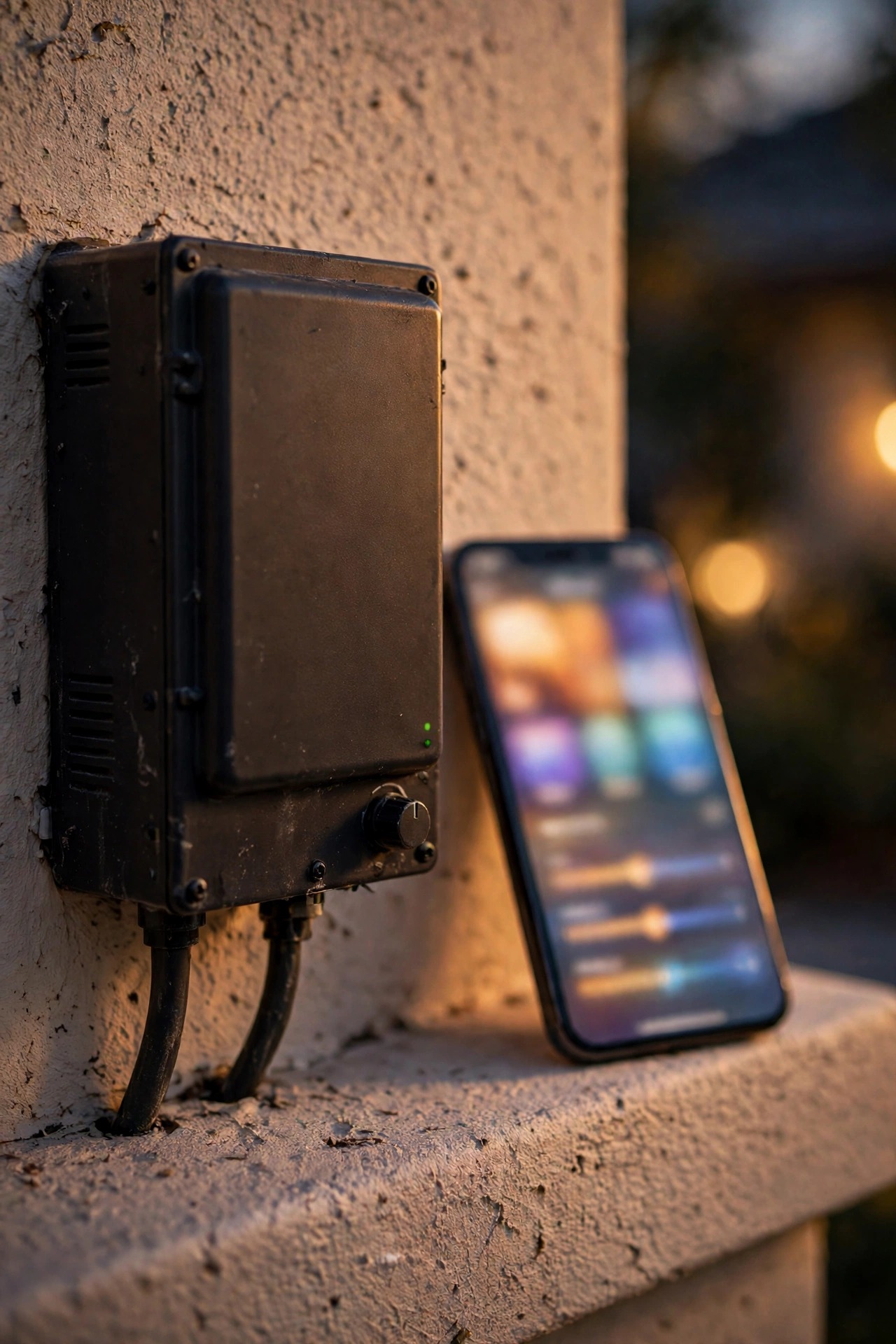
A smart landscape lighting transformer does all of that core work — stepping down power, feeding multiple cable runs from its taps, and protecting the system with a built-in breaker that trips instead of frying your fixtures. The smart part is layered on top: instead of a mechanical dial and a plug-in timer, you get a connected controller that thinks in zones, scenes, and sunsets. Think of the transformer as the heart and the smart controller as the brain, sharing one sturdy metal body. If your lights ever misbehave, this box is always where the troubleshooting starts.

What Makes a Smart Landscape Lighting Transformer Different
A basic transformer knows two tricks: on and off, usually triggered by a timer dial or a little photocell that senses darkness. A smart landscape lighting transformer replaces that dial with Wi-Fi and a phone app, and that one change unlocks almost everything else.
The biggest upgrade is zones. Most smart units offer two to four independently controlled circuits, so your front path lights, your backyard accents, and your patio fixtures can each follow their own schedule and brightness instead of marching in lockstep. Next comes the astronomical timer: the unit knows your location, so it calculates sunset and sunrise for every day of the year and shifts your schedule automatically. No more lights coming on at 4:30 in the afternoon in June or resetting anything when the clocks change.
Many smart models also dim compatible LED fixtures per zone, which is wonderful for toning down uplights after dinner. You will typically get a few thoughtful extras, too: a vacation mode that varies the pattern while you travel, alerts if a zone overloads, and control through a voice assistant or smart speaker when your hands are full.
Compare that with the common workaround — a smart plug stuck in front of an old transformer. That gives you app-controlled on and off for the entire system at once: one zone, no dimming, no per-area schedules. It is a fine budget trick, and I recommend it for small setups below, but it is not the same thing as a true smart transformer.
App Control, Zones, and Schedules That Run Themselves
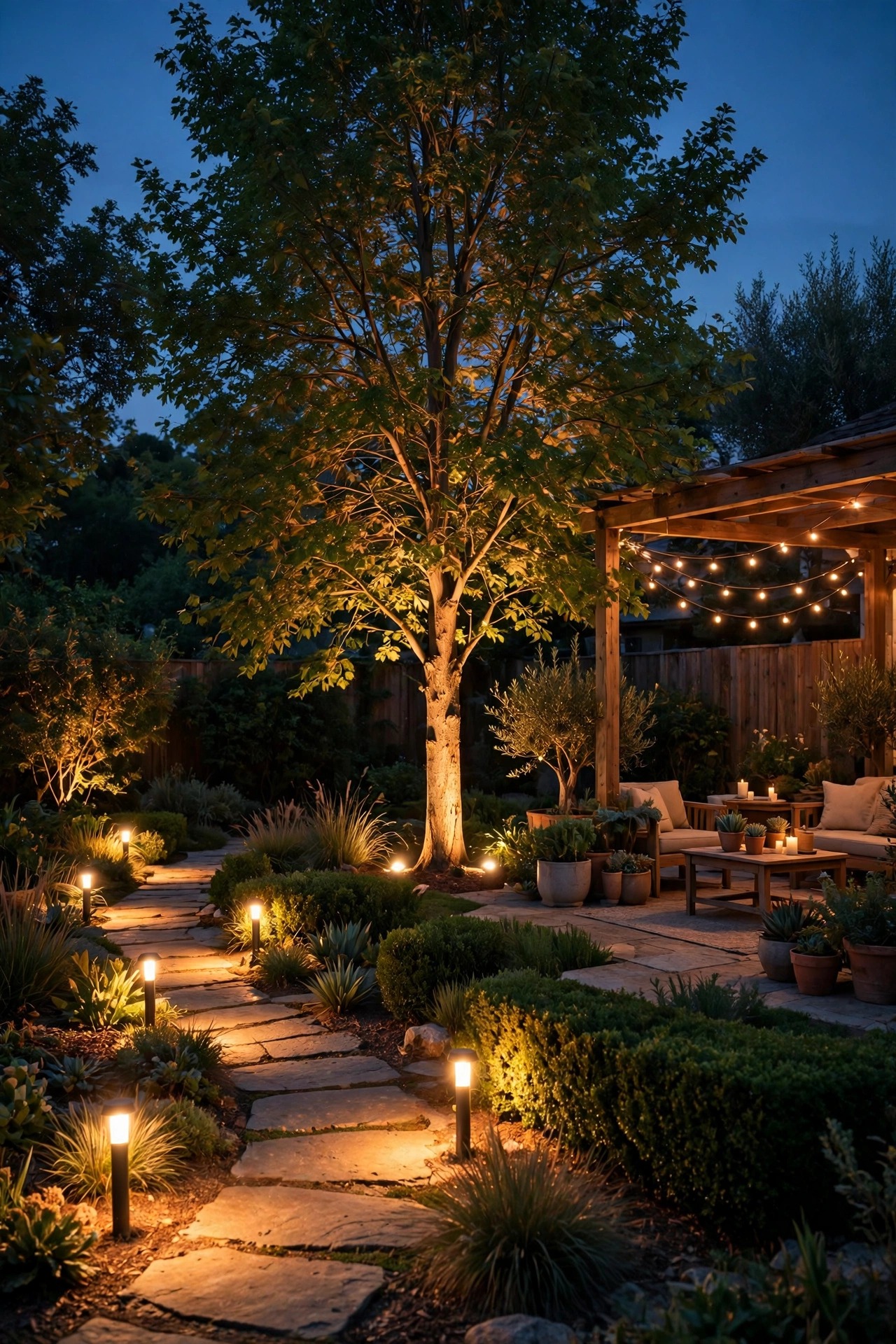
Let me show you how this plays out in a real yard, because zones only sound abstract until you live with them. In my setup, zone one is the front path and porch steps, set to come on at sunset and go off at midnight — that is the safety layer, and I never think about it. Zone two is the accent layer: the oak uplights and the wash on the front of the house. Those run from sunset until about 11 p.m., then shut down out of respect for the neighbors and the night sky. Zone three is the patio, and it has no schedule at all. When we have people over, I tap it on from the app and dim the string lights over the table without getting up.
The astronomical scheduling is the quiet hero here. Sunset is around 5 p.m. in December and closer to 8:30 in June where I live, and the system tracks that drift daily without a single adjustment from me. My old photocell, by contrast, got confused by stormy afternoons and porch shadows.
There is another benefit I did not expect: fine-tuning at dusk. I can stand in the yard with my phone, walk the property, and nudge brightness or timing for each zone while I am actually looking at the effect. Pairing a zone with a sensor works beautifully too — if that idea appeals to you, my guide to motion sensor outdoor lights covers the options. Setup took me about twenty minutes, and I have barely opened the app since, which is exactly the point.
Sizing Your Transformer: Watts, Taps, and Voltage Drop
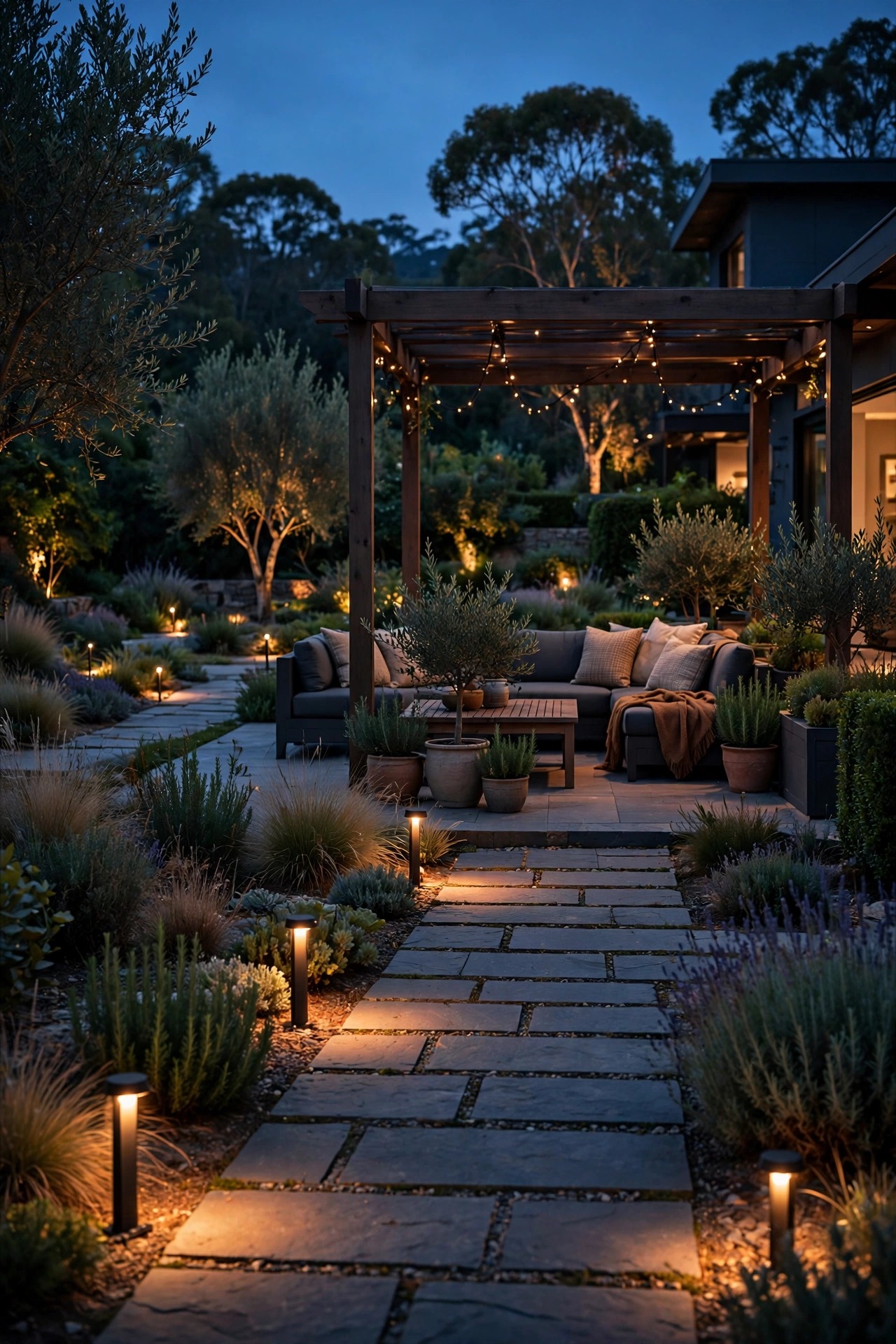
Sizing is simple arithmetic, and getting it right matters more than any smart feature. Add up the wattage of every fixture you plan to connect. Modern LEDs sip power: path lights typically draw 2 to 4 watts, and accent spots usually land between 4 and 8 watts, so a twenty-fixture yard might total only about 100 watts.
Then follow the headroom rule I always recommend: load your transformer to no more than 70 to 80 percent of its rating. A yard totaling 150 watts calls for at least a 200-watt unit, and if you suspect you will add fixtures later — and in my experience, everyone does — step up to a 300-watt model now. Common capacities run 100, 200, 300, and 600 watts, and running a unit near its ceiling makes it hot, shortens its life, and leaves no room to grow.
The second half of sizing is voltage drop. Electricity loses a little strength as it travels, so the last fixture on a long run can glow noticeably dimmer than the first. Multi-tap transformers fight this with output terminals at 12, 13, 14, and 15 volts: wire long runs to a higher tap and the far fixtures get compensated. Thick cable helps too — I use 12-gauge for long main runs and lighter 14- or 16-gauge only for short branches. A cheap multimeter tells the truth: measure at the last fixture and aim for roughly 10.5 to 12 volts. Finally, split big yards into several home runs back to the transformer instead of one endless daisy chain, and both brightness and reliability improve.
Who Needs a Smart Transformer (and Who Does Not)
Here is my honest sorting. The upgrade is genuinely worth it if you have fifteen or more fixtures, if your lighting spans a front yard and a back yard with different habits, if you travel and like the lived-in look of randomized evening lights, or if you simply hate resetting timer dials twice a year. Entertainers get a lot from it too — flipping the patio zone on from the kitchen while your hands are covered in marinade never gets old.
You can skip it, without a shred of guilt, if your system is small and simple: a handful of fixtures on a single run, all on the same schedule, in a yard you see every evening anyway. A basic transformer with a photocell does that job reliably for years.
There is also a sensible middle path. Keep your existing basic transformer and put an outdoor-rated smart plug between it and the outlet, and you get app scheduling for the whole system at once — I rounded up the best options in my guide to outdoor smart plugs and timers. Just respect the limits: one zone only, no dimming, and the plug rating must exceed what the transformer draws. If your home already leans on smart switches elsewhere, my comparison of smart switch vs smart bulb control outdoors explains where each approach shines. A true smart transformer only earns its premium when zones and dimming are things you will actually use.

Installation and Safety Basics
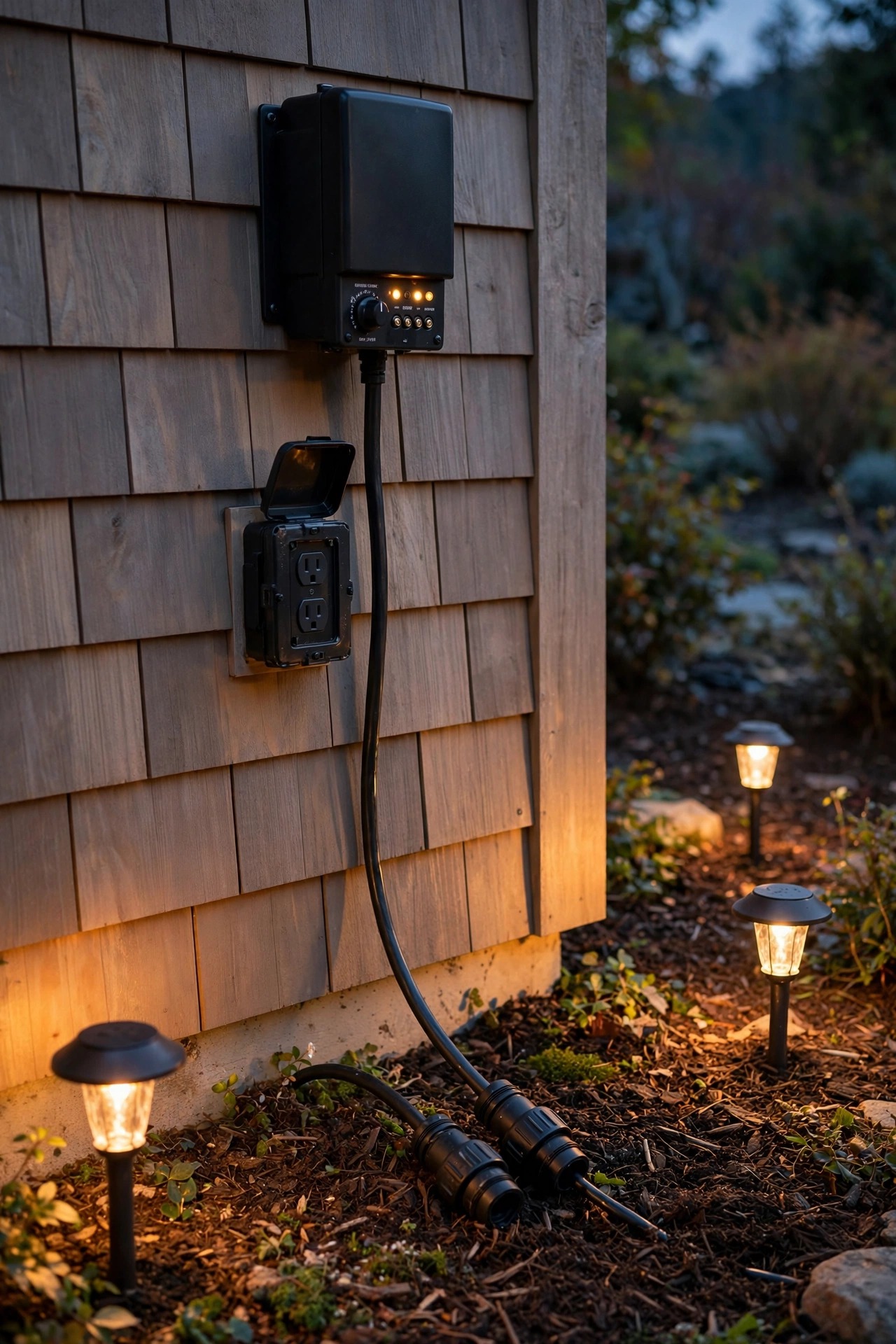
The good news: a smart landscape lighting transformer is a plug-in appliance, so installation is mostly mounting and cable work. Choose a spot on a wall or sturdy post near an outdoor outlet, at least a foot above the ground — check your manual for the exact clearance — with the vents unobstructed and the unit sheltered from direct sprinkler spray.
Non-negotiable number one: that outlet must be GFCI-protected, with a weatherproof in-use cover that keeps rain out while the cord is plugged in. If you do not have a suitable outdoor outlet, having one added is electrician work, full stop. The transformer itself never gets hardwired by a homeowner in my book.
Bury the low-voltage cable about 6 inches deep — deep enough to survive aerators and edging tools — and use waterproof, gel-filled connectors at every splice, because plain wire nuts corrode underground and cause the classic mystery outage. Keep total fixture wattage under the rating, leave the unit room to breathe rather than boxing it into an enclosed space, and keep it reachable: you will occasionally want the reset button after a storm trips the breaker.
Low voltage is forgiving, but treat it with respect anyway. Work with the unit unplugged, keep connections dry and tight, and remember that LED fixtures are the only kind to nestle near mulch, leaves, or anything flammable. Twenty careful minutes up front saves every headache I have ever had with a system like this.
What It Costs in 2026
Here is the honest math, all in one place. A basic transformer with a timer or photocell runs $50 to $120 depending on capacity. A smart landscape lighting transformer costs more: compact 100- to 200-watt models land around $120 to $200, mid-size 300-watt units with multiple zones run $200 to $350, and large 600-watt pro-style models reach $350 to $600.
Running costs are almost an afterthought with LEDs. A 120-watt system running five hours a night uses about 0.6 kilowatt-hours, which at 15 cents per kilowatt-hour is roughly 9 cents a night — about $33 a year. The smart brain sips 1 to 3 watts on standby, adding a dollar or two annually. Cost per zone is a fair way to judge value: a $300 unit controlling four zones and thirty fixtures is effectively $10 of brains per fixture, which feels very different from $300 in the abstract.
Installation money is minimal if your outlet situation is already good, since swapping a plug-in unit is a DIY job. Budget $150 to $300 for an electrician only if you need a new outdoor GFCI outlet installed. One last thought: because one transformer serves the entire system, spreading its cost across every fixture it runs is the honest way to decide whether the smart premium makes sense for your yard.

Frequently Asked Questions
Can I make my existing transformer smart without replacing it?
Yes, within limits. An outdoor-rated smart plug between the outlet and your current transformer gives you app control and scheduling for the whole system at once. What you will not get is separate zones, per-zone dimming, or an astronomical clock built into the unit itself. For a small, single-run system, honestly, the plug trick covers most of what people actually want.
How many lights can one smart transformer run?
It is about watts, not fixture count. Total the wattage printed on every fixture, then keep that sum at or under 70 to 80 percent of the transformer rating. A 300-watt unit comfortably handles around 210 to 240 watts of fixtures, which might be twenty-five path lights or a mixed yard of paths, spots, and uplights. When in doubt, size up.
What happens to my schedules if the Wi-Fi goes down?
Your lights keep working. Schedules are stored in the transformer itself, so the system runs its program happily with no connection at all — you simply lose app control and voice commands until the network returns. The lights follow the last saved schedule, which is a far better failure mode than a yard that goes dark because a router rebooted.
Is a low-voltage system safe to install myself?
The low-voltage side, yes — 12 volts is safe to handle, and burying cable a few inches deep is weekend work. The firm line is the outlet: the transformer must plug into a GFCI-protected outdoor outlet, and installing a new one means hiring an electrician. Keep connections waterproof, never overload the unit, and you are well within safe DIY territory.
Conclusion
A smart landscape lighting transformer will not rescue a bad lighting design, but paired with a thoughtful layout it removes nearly all the friction from owning one — no dial resetting, no mismatched zones, no lights burning at noon. Size it with headroom, split your yard into zones that match how you actually live, set the astronomical schedules once, and then let the box do its quiet work. If your system is tiny and simple, the basic models and smart plugs I linked above will serve you just as happily. Either way, browse the rest of my outdoor lighting ideas here on the site, and I will see you out in the yard at dusk.