There is a moment just after sunset when a porch either comes alive or goes flat, and in my experience the difference is almost always lanterns. A single overhead bulb washes everything out, while a cluster of lanterns at different heights pools warm light exactly where people sit, walk, and set down a drink. That layering trick — low glow at the steps, mid-height light on the table, one tall lantern anchoring the corner — is the philosophy behind every outdoor space I put together. If you are shopping for the best outdoor lanterns this season, here is the honest truth: no single style wins everywhere. Solar stakes fade in a shady yard, real candles gutter in the wind, and the prettiest pierced-metal designs throw patterns instead of usable light. So instead of one overall ranking, I have split this guide into 13 types, with what each one does well, where it falls short, and who should actually buy it. By the end you will know which lanterns belong on your porch, along your path, and in the middle of your patio table.
1. Classic Metal-and-Glass Porch Lanterns — the Best Outdoor Lanterns for a Front Entry
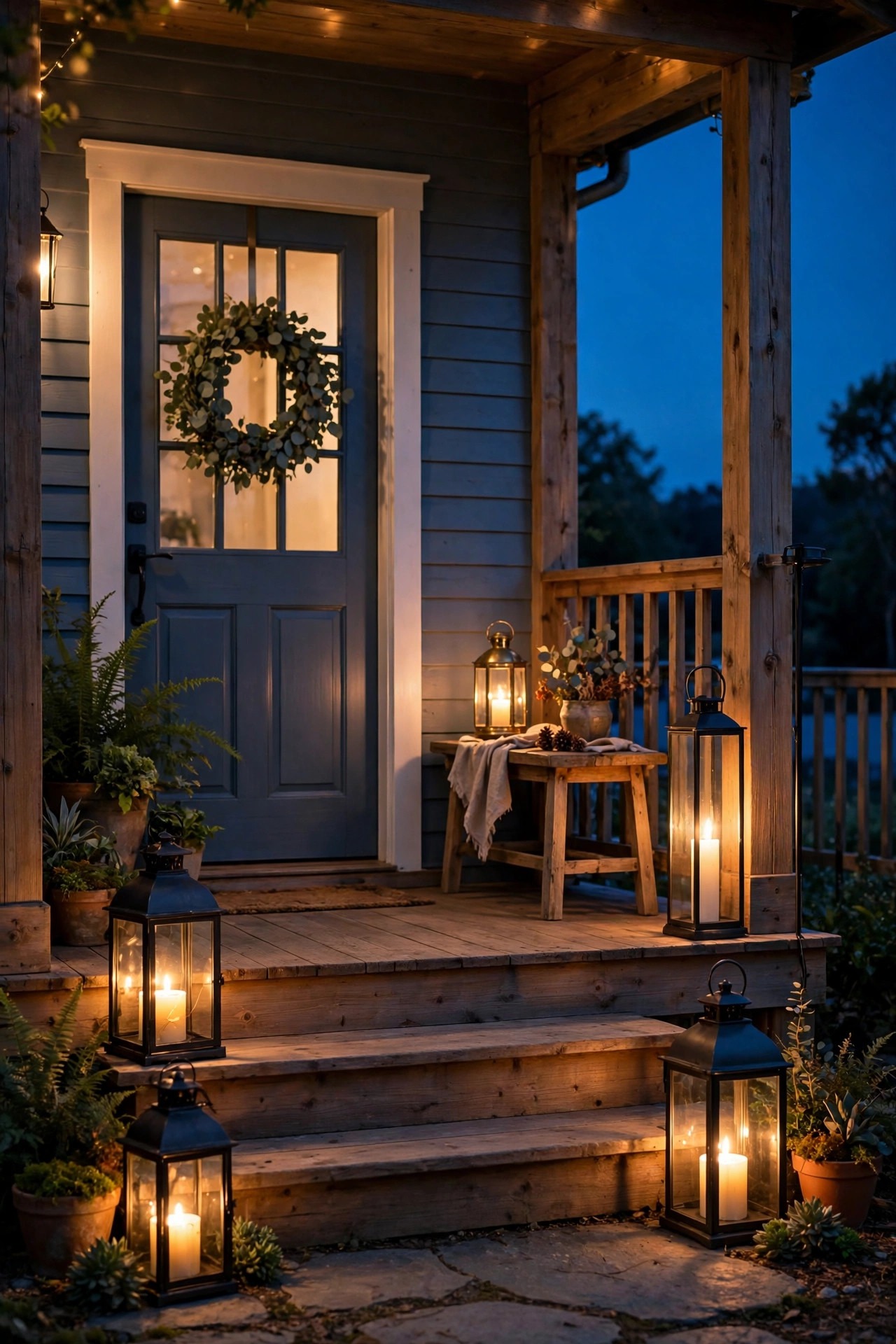
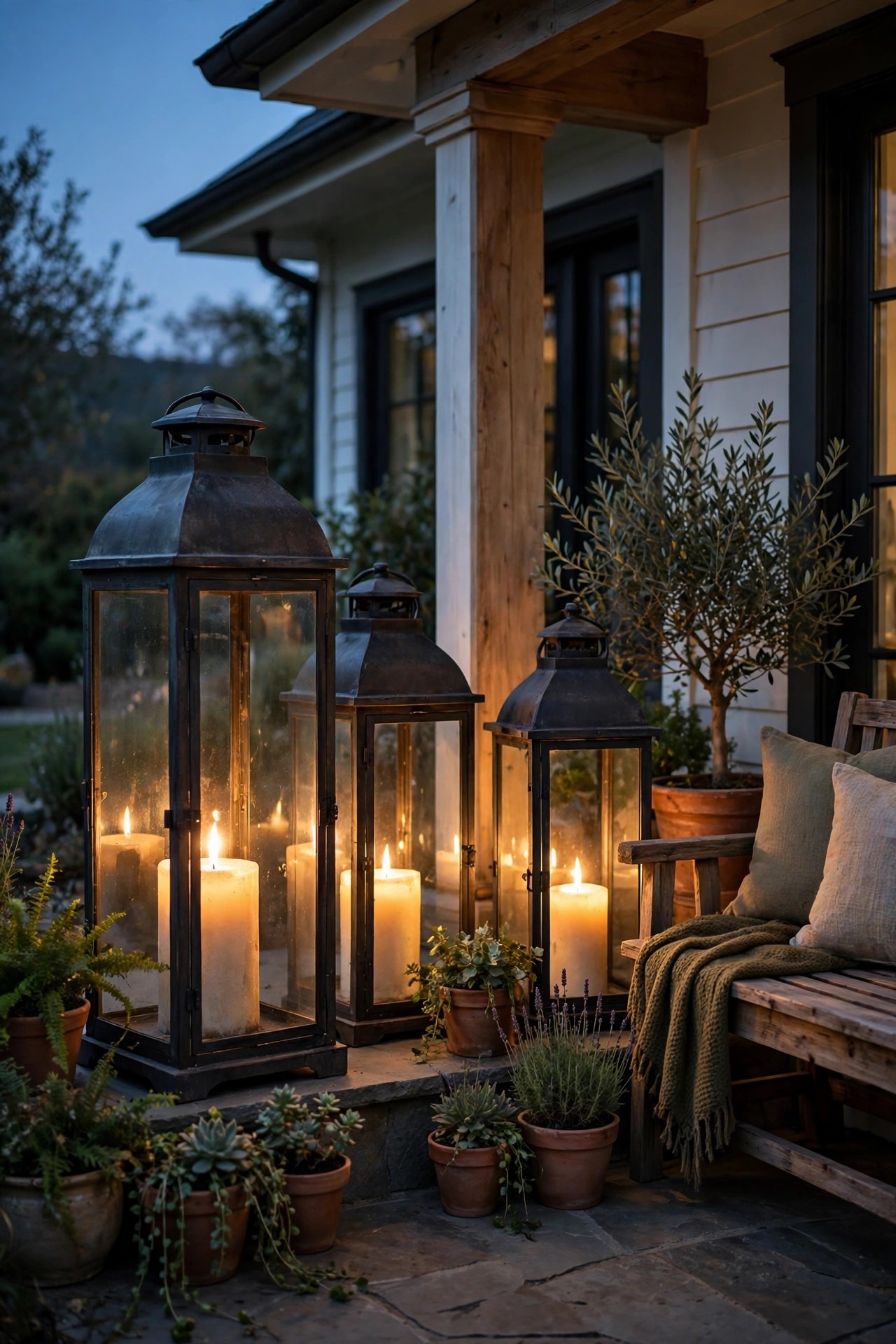
If your porch only gets one lantern style, make it this one. The classic metal-and-glass lantern — a powder-coated steel or aluminum frame with real glass panes and a pillar candle or LED insert inside — is the workhorse of front entries. I set them in pairs flanking the front steps or grouped in threes on the porch floor, mixing heights between about 12 and 24 inches so the light feels collected rather than matched. Real glass is the selling point: it gives a clear, sparkly glow that plastic panels honestly cannot copy, and the frames shrug off rain for years. The trade-offs are weight and fragility. Glass lanterns are heavy to haul in and out, one dropped pane is a real hazard, and if you burn real candles you will be wiping soot off the glass every few weeks. My usual recommendation is a chunky LED pillar candle on a timer inside — you get the flicker, the 5-hour nightly schedule, and none of the wax on your porch boards. Best for traditional and transitional homes that want an entry that looks finished year-round, not just in one season.
Suggested budget range: $25 – $60.

2. Hanging Pendant Lanterns for Pergolas and Porch Ceilings
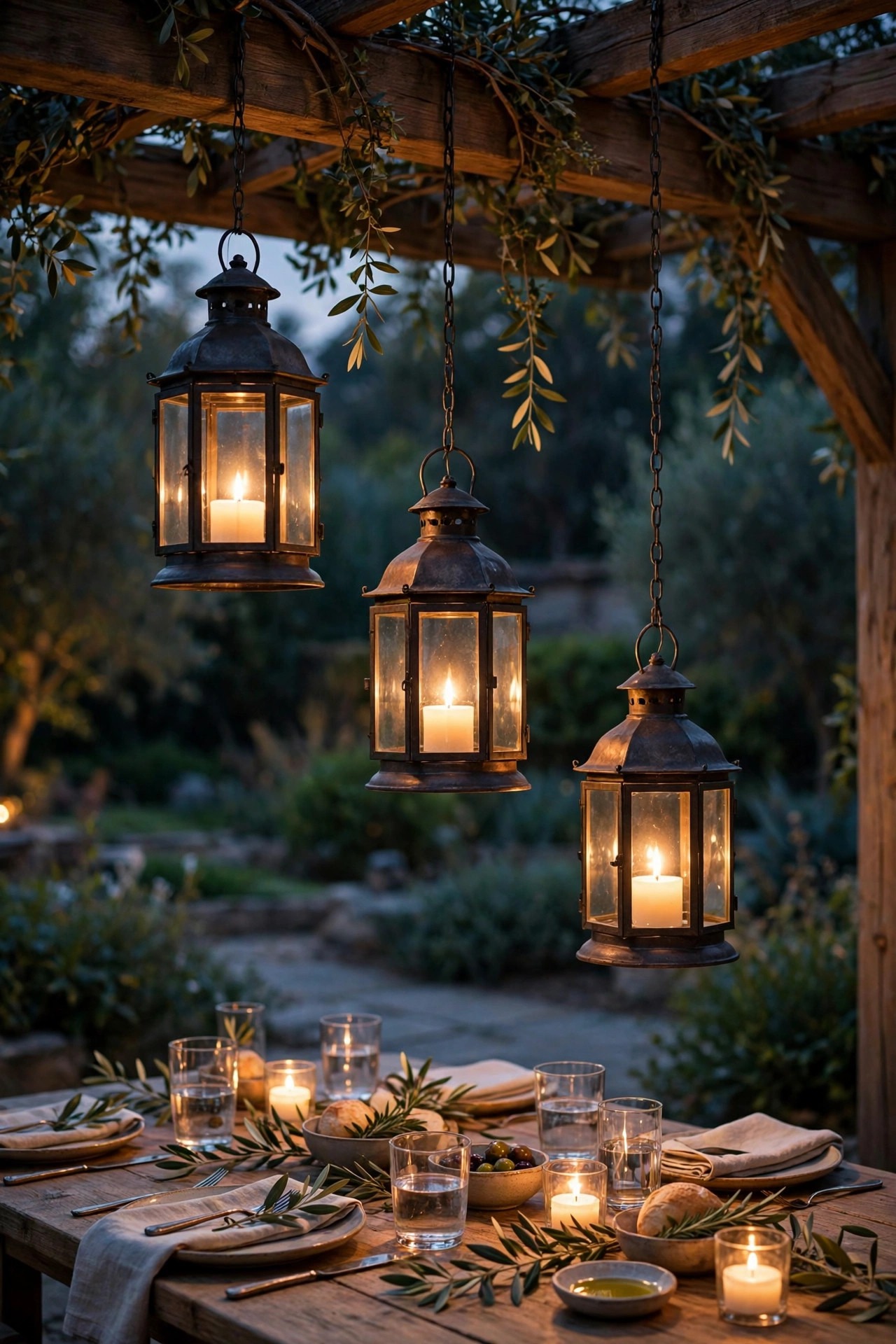
Hanging lanterns pull light up to eye level, which is exactly where a dinner party or a porch-swing conversation needs it. I hang them from pergola beams, porch ceilings, and sturdy shepherd's hooks, keeping the bottom of the lantern around 6.5 to 7 feet above a walkway so nobody ducks, and lower — about 30 inches above the tabletop — over a dining table. Most come with adjustable chains or cords, so measure your drop before you buy and check the weight rating of your hook or beam. Solar and battery versions are the renter-friendly route since they skip the electrician entirely; hardwired pendants give the strongest, most reliable light but lock you into one spot. Wind is the honest downside: a lightweight lantern on a long chain will sway and occasionally clink against a post on breezy nights, so choose heavier frames or shorter drops in exposed yards. Watch the ceiling material too — only hang from joists or rated hooks, never from vinyl soffit alone. For more placement ideas, my guide to hanging lantern ideas for outdoor spaces covers heights and hook options in detail. Best for covered porches, pergolas, and gazebos where the structure already exists to hang from.
Suggested budget range: $30 – $80.
3. Solar Stake Lanterns for Paths and Garden Edges
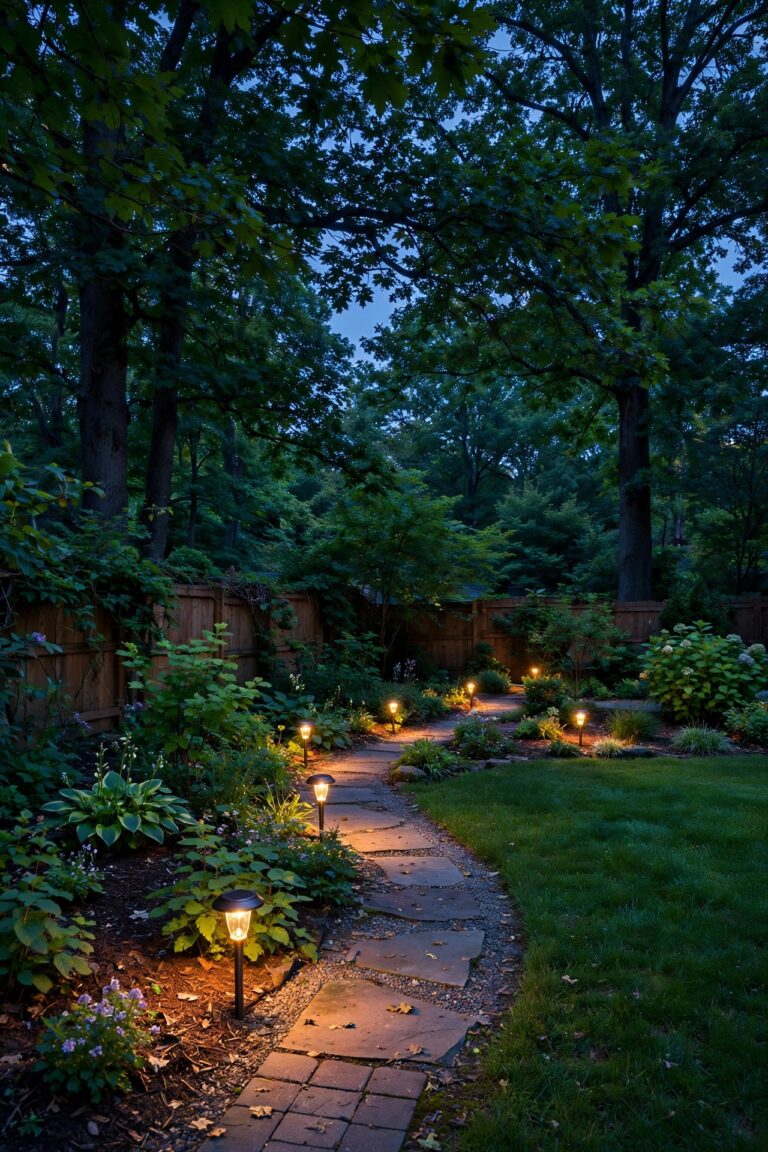
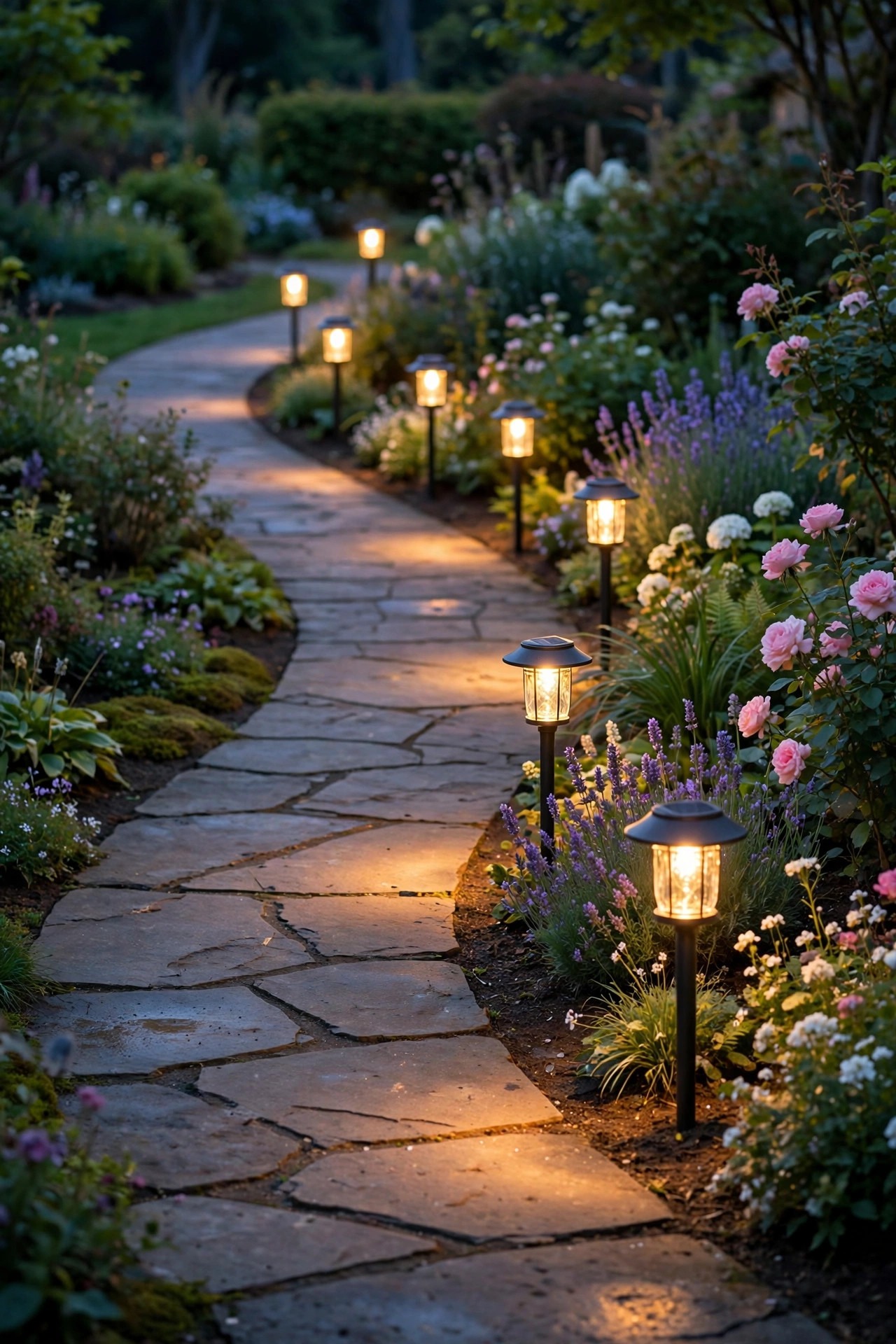
Solar stake lanterns are the easiest yes in outdoor lighting: push the stake in, and by dark your path has a dotted line of light. I space them 6 to 8 feet apart along a walkway or flower bed edge — closer spacing looks dotted and carnival-like, wider reads elegant. Here is the honesty part nobody puts on the box. The little solar panel needs roughly 6 hours of direct sun to charge fully, so a lantern under a maple or on the north side of the house may only glow for 2 to 4 hours, and dimmer than its sunny twin. In my own yard the same set runs until midnight in June and gives up by 9 p.m. in December. Look for models with replaceable rechargeable batteries, because the battery usually dies a full year before the lantern does, and panels you can wipe clean — a dusty film of pollen quietly steals a third of your charge. I have gathered more of my favorite placements in these solar lantern ideas if you want to see them along beds and borders. Best for sunny paths, low-maintenance gardeners, and anyone who wants light with zero wiring and zero electricity bill.
Suggested budget range: $20 – $45.
4. Battery LED Table Lanterns With a Candle Flicker
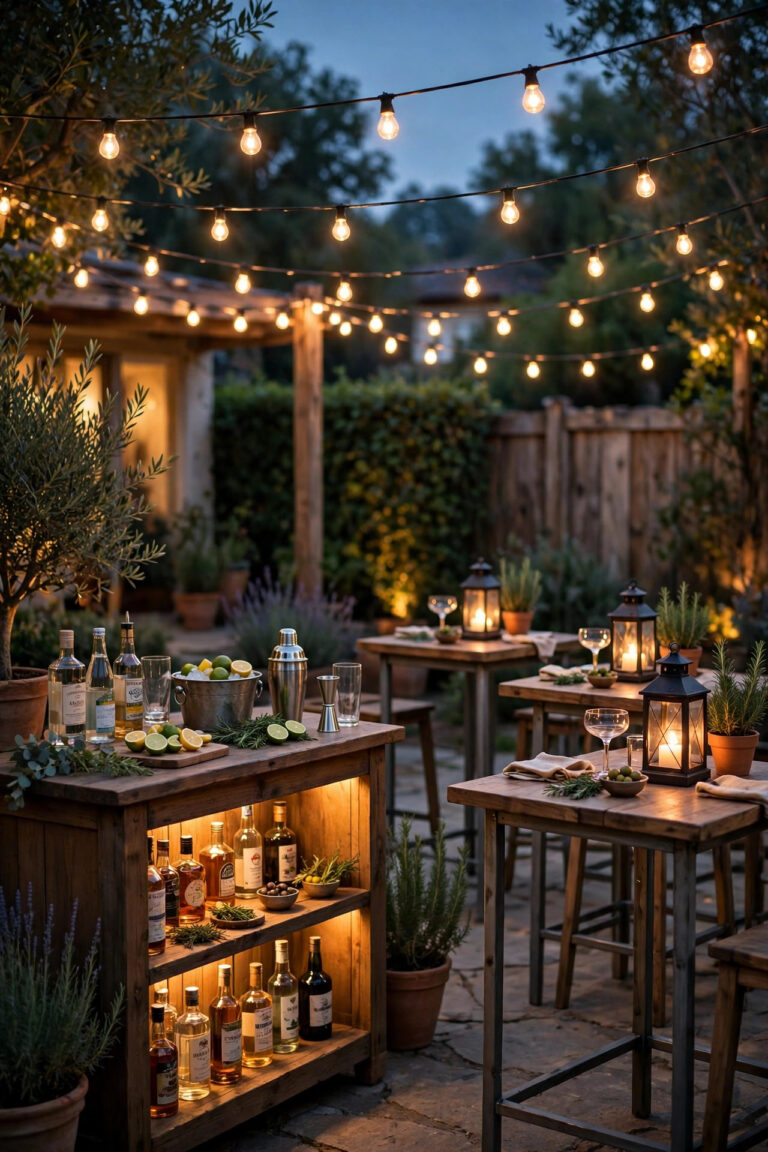
A dining table outside needs light at seated eye level, and a small battery lantern with a flickering LED candle is the safest, easiest way to get it. These run on AA or AAA batteries that last weeks of ordinary evenings, they never blow out mid-sentence, and there is no wax dripping onto your table runner or napkins. Let me be straight about real candles on a patio table: they are lovely for about twenty minutes, then the wind picks up, the flame leans, and somebody is relighting or fishing a moth out of the wax. An open flame near paper napkins, dry centerpieces, and kids reaching across the table is a risk I stopped taking years ago. Modern flicker LEDs have gotten genuinely convincing — the good ones vary their rhythm instead of blinking on a loop. Look for a glass or clear chimney so the glow spreads across the table instead of staying trapped, and a base wide enough that a bumped table does not tip it. Best for outdoor dining tables, coffee tables between loungers, and anyone who hosts often and wants the candles "lit" at the push of a button.
Suggested budget range: $15 – $35.

5. Rechargeable Portable Lanterns You Can Carry Anywhere
Rechargeable lanterns are the ones that actually get used, because they go where the evening goes — the table for dinner, the steps when guests leave, the grill when you are checking burgers after dark. They charge from a standard USB cable, and a full charge typically delivers 8 to 30 hours depending on brightness, with the high settings draining things three or four times faster than the low glow. Most have a simple dimmer dial or tap control, which matters more than people expect: full brightness is for tasks, the lowest setting is for atmosphere. My honest notes: the charging port covers are tiny and easy to lose, and a lantern stored dead-flat all winter may never take a full charge again, so I top mine up before putting them away in fall. Weight varies a lot — the compact ones are backpack-light, the big statement versions are not. Buy two and keep one perpetually charged by the back door; you will thank yourself during the first power outage, when these quietly become the most useful lights you own. Best for flexible spaces, campers, and households that want one lantern doing five jobs.
Suggested budget range: $25 – $50.

6. Hurricane Lanterns With the Old Oil-Lamp Look
The hurricane lantern silhouette — tall glass chimney, wire guards, that raised fuel-cap base — is pure nostalgia, and the modern LED versions borrow the shape while ditching everything that made the originals a chore. Because let us be honest about real oil lanterns: they smell of kerosene, they soot their chimneys black, the flame needs trimming and constant watching, and an open reservoir of fuel on a wooden deck railing is something I will never recommend. The LED versions keep the charm and add a brightness dial that sweeps from firefly glow to genuinely useful work light. They are wonderful on a farmhouse porch, a cabin deck, or flanking a fireplace on a covered patio. Glass chimneys on the better models feel authentically thin, which also means they crack if the lantern tips onto concrete — set them on stable surfaces, out of the traffic path. Runtime on a set of batteries or a charge is usually excellent because the single LED is sipping power. I have rounded up more styling variations in these hurricane lantern ideas for outdoors. Best for rustic, farmhouse, and cabin styles, and for anyone who wants vintage looks with modern manners.
Suggested budget range: $18 – $40.

7. Moroccan and Pierced-Metal Lanterns for Pattern and Drama
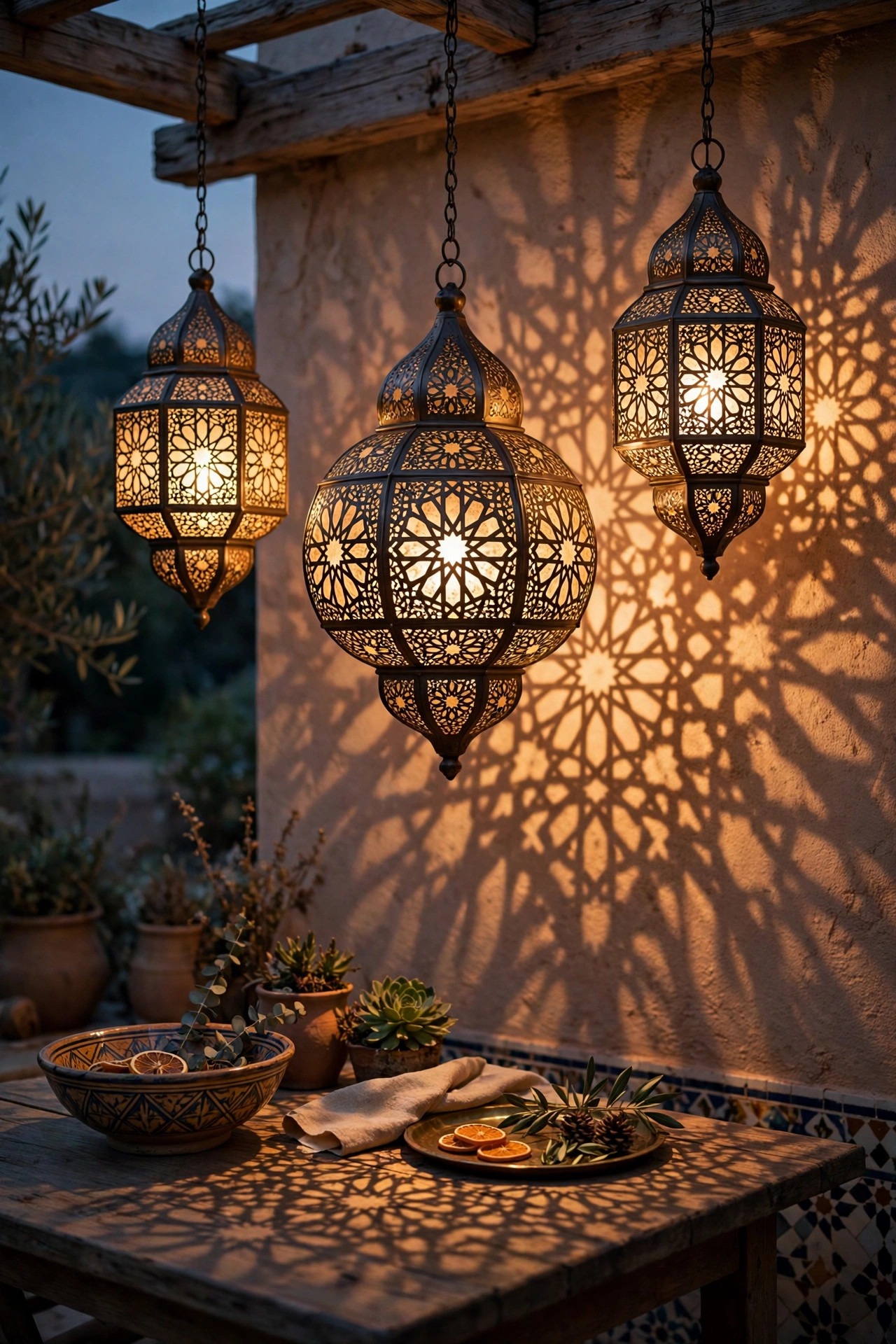
Pierced-metal lanterns are not really about light output — they are about what the light does on its way out. Hundreds of tiny punched holes and cutwork panels throw lace-like patterns across porch walls, ceilings, and tabletops, and at dusk the effect is honestly magical. A pair of these flanking a bench or hanging over a low coffee table turns a plain patio corner into the spot everyone migrates to. Now the limits: a single pierced lantern gives you almost no usable task light, so plan on these as the decorative layer over a base of stakes, string lights, or a brighter lantern nearby. Metal housings get hot around a real candle flame, so LED inserts are the right call, and they protect the finish too. Cheap painted steel versions can rust at the seams after one wet season; look for powder-coated or brass-toned finishes rated for outdoor use, and store them dry in winter if your climate is harsh. Sizes run from 6-inch table pieces to dramatic 2-foot pendants. Best for boho and eclectic patios, Mediterranean-style courtyards, and anyone whose priority is atmosphere over brightness.
Suggested budget range: $20 – $55.
8. Paper-Look Weatherproof Lanterns for a Soft, Floating Glow
That soft paper-globe glow is gorgeous over a patio, but let me save you the heartbreak: actual paper lanterns are party decorations. One rainstorm — honestly, one heavy dew season — and they sag, spot, and tear, so hanging real paper outside full-time is money down the drain. The smart buy is the paper-look version: globes and cylinders made from weatherproof nylon, resin, or coated fabric that mimic the diffused paper effect but survive the season outdoors. They hang beautifully in clusters at varied heights over a seating area, or in a loose line along a pergola edge, and most run on solar caps or battery packs tucked at the top. The light is all ambience — a gentle, shadowless wash rather than a beam — so pair them with a brighter source where people read, grill, or climb steps. White versions yellow slowly in strong sun over a couple of seasons; softer ivory tones hide that aging better. Best for weddings and garden parties that you want to last all summer, boho patios, and renters who need everything lightweight and removable.
Suggested budget range: $15 – $40.

9. Oversized Floor Lanterns That Anchor a Space
Every porch or patio needs one anchor piece, and an oversized floor lantern — 24 to 36 inches tall — is the easiest anchor there is. I place them in the corner by the door, beside the outdoor fireplace, or flanking a bench, and fill them with a chunky LED pillar candle or a cluster of three smaller ones at staggered heights. The scale does the decorating work that a dozen small accessories cannot. Because they are big, they are also reassuringly wind-stable; a 30-inch metal-and-glass lantern is not blowing over in anything short of a storm warning. The honest costs: they are heavy to move for sweeping, the large glass panels are the most expensive part to replace if cracked, and the price per lantern is the highest on this list. Buy them in a finish that matches your door hardware and they read as architecture rather than decor. In winter I bring the candles in and leave the frames out — the empty frames still look sculptural against snow. Best for larger porches, entry statements, and anyone decorating a big empty corner.
Suggested budget range: $40 – $120.
10. Wall-Mount Coach Lanterns for Doors and Garages
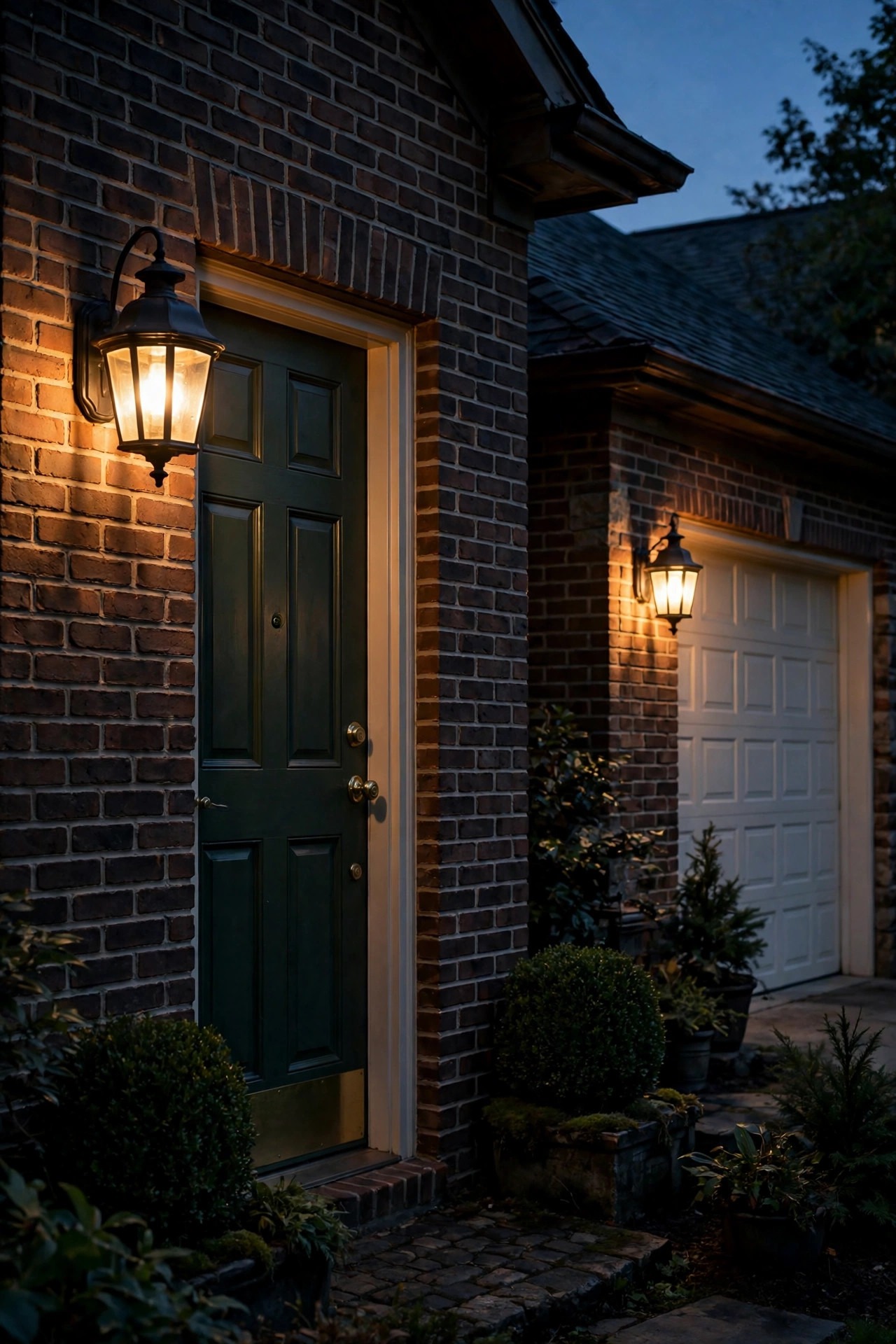
The coach lantern is the most traditional wall light in America — mounted beside the front door, flanking the garage, lighting the way without taking up an inch of floor. Because these are hardwired, placement follows rules: mount the center of the fixture around 66 inches from the floor, and size the lantern at roughly a quarter to a third of your door's height so it does not look like a toy next to a tall entry. A dusk-to-dawn photocell version is my standard recommendation — it comes on by itself every night, which is better security and better curb appeal than a switch you forget. The real cost note: the fixture price is only part of it, because adding a new junction box where none exists means an electrician, and that visit can cost more than the lantern. If you are replacing an existing fixture, it is a genuine one-hour DIY with the breaker off. Seeded or water glass softens bulb glare beautifully compared with clear glass. Best for permanent, polished curb appeal and homeowners done with portable lights.
Suggested budget range: $35 – $90.
11. Camping-Style Multi-Use Lanterns That Earn Their Keep
Camping-style lanterns are the utility players: collapsible bodies, fold-out handles and hooks, brightness from night-light dim to genuinely room-filling, and a build that assumes it will be dropped, rained on, and stuffed in a bin. Some add a USB output that can rescue a dying phone, which is a party trick that becomes very serious during a storm outage. On the patio they are not the prettiest option — the look is functional plastic and exposed LEDs, and I would not style a magazine porch around them. But hung inside a gazebo, carried to the fire pit, or lined up along a driveway when guests park on the grass, they outperform every decorative lantern here. Battery life is their brag: days of evening use per charge or battery set is common at medium settings. Keep one in the kitchen drawer and one with the camping gear and you have quietly solved emergency lighting too. Best for practical households, big backyard gatherings, and anyone who values versatility over looks.
Suggested budget range: $15 – $35.

12. Smart Dimmable Lanterns With Timers and App Control
Smart lanterns wrap the old lantern idea in scheduling: set them to fade on at sunset, dim to a low glow at ten, and switch off at midnight, all from a phone app or a voice assistant. The dimming is the real luxury — lantern light you can tune from dinner-party bright to firefly soft without getting up. Most connect over your home Wi-Fi or a short-range wireless link to your phone, and that is where the honesty comes in: outdoor walls and distance weaken signals, so a lantern at the far end of the yard may drop off the network and miss its schedule. Test the connection where the lantern will actually live before buying a whole set. Always choose models that still work from a physical switch or button when the network sulks — a lantern that is useless without an app will frustrate you exactly once, at the worst moment. Battery smart lanterns trade some brightness for the cordless convenience. Best for tech-comfortable households, vacation-home owners who like lights that behave while they are away, and anyone who loves a set-and-forget routine.
Suggested budget range: $30 – $70.
13. Budget Multipack Lanterns — the Best Outdoor Lanterns When You Need a Dozen
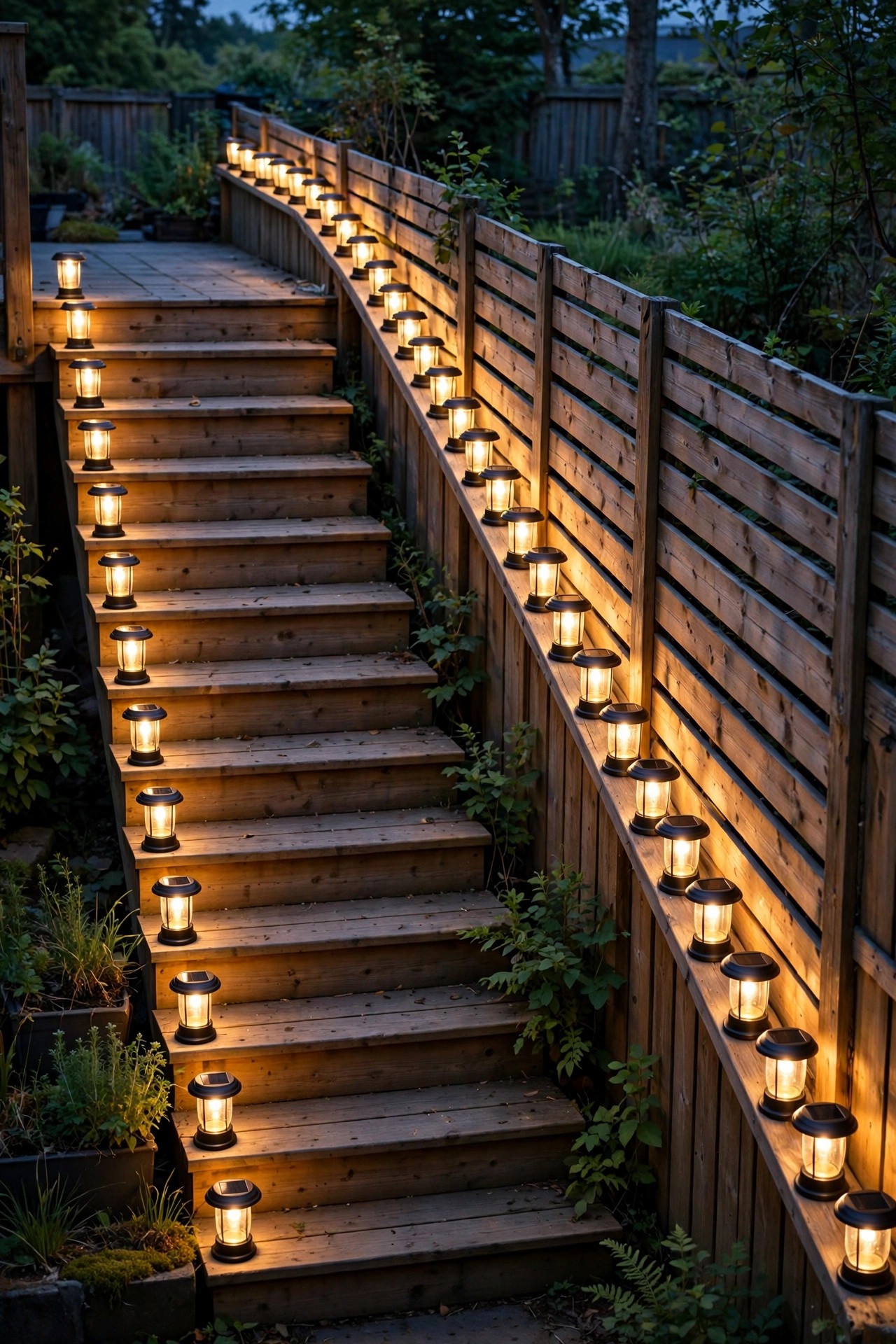
Sometimes the job is not one perfect lantern — it is twenty feet of fence line, a full staircase, and a party on Saturday. That is what budget multipacks are for: sets of 6 to 12 small solar or battery lanterns that work out to just a few dollars each. Used as a repeating rhythm along steps, a deck railing, or a row of table settings, the effect is genuinely more expensive-looking than the price tag. Here is what the low price honestly buys: brightness varies a little from lantern to lantern, battery life is shorter, and in any set of twelve you should expect one dud within the first season. My fix is simple — buy one extra set as spares and swap without resentment. Check whether the batteries are replaceable before you order, because sealed throwaway sets are a false economy and a waste problem. For a one-off event, even that matters less; for a full season, choose the replaceable-battery version every time. In a roundup of the best outdoor lanterns for sheer coverage per dollar, nothing else on this list comes close. Best for events, long fences and stairs, and first apartments working with a real budget.
Suggested budget range: $20 – $40.
Frequently Asked Questions
Are real candles or LED inserts safer in outdoor lanterns?
LED, and it is not close. A real candle is an open flame near napkins, dry leaves, mulch, and wooden railings, and wind can gutter it or push the flame against glass until it cracks. LED pillar candles give you the flicker with a timer, no soot, no wax, and no fire risk — I use real candles only inside heavy glass chimneys, on stable surfaces, while I am sitting right there.
How long do solar lanterns actually stay lit at night?
Plan on 6 to 8 hours from a full charge in summer, and 3 to 5 hours in winter when days are short and weak. A lantern in shade charges poorly and may only manage 2 to 4 dim hours. Placement is everything: if the little panel cannot see direct sun for most of the day, choose a battery or rechargeable type for that spot instead.
What weather rating should an outdoor lantern have?
Look for an IP44 rating at minimum, which means splash-resistant from any direction — fine under a covered porch and okay in open rain for short spells. Lanterns living fully exposed all season do better at IP65. And rating or not, metal lanterns last longer if you store them dry over winter, especially at the coast where salt air eats finishes.
Is glass or plastic better for outdoor lanterns?
Glass wins on looks — clearer, sparklier light, no yellowing — and loses on durability and weight. Quality acrylic or polycarbonate panels are lighter, safer around kids and pool decks, and modern versions look surprisingly close to glass until you tap them. My rule: glass for the porch pieces you admire up close, plastic for anything portable, hanging over hard concrete, or within reach of little hands.
Conclusion
The thread running through all 13 picks is the same layering idea from the top: match each lantern to one job — guiding a path, dressing a table, anchoring a corner, lighting a door — and the whole yard comes together without a single harsh bulb. Start with the spot you use most, buy the best type for that job rather than a matching set of compromises, and add pieces as the season goes on. In my experience the best outdoor lanterns are simply the ones still glowing, reliably and beautifully, long after the novelty of buying them wears off. Browse the lantern placements and lighting ideas throughout the site for more inspiration, and I will see you out on the porch at dusk.