Stand in your backyard at dusk and look at the fence. It is probably the biggest, plainest surface out there — a long blank wall that swallows the last of the light and makes even a pretty garden feel unfinished. That is exactly why I love fence lighting: a row of small glows along the top rail turns that wall into a boundary that feels intentional. And because they run on sunshine, the best solar fence lights ask for no trench, no transformer and no electrician. In my experience the secret is layering, the same as indoors. Post caps give you rhythm — a bead of light marking every post. Downlights wash the panels so the wood grain shows. A motion light guards the gate. Mix those three layers and the fence stops being a wall and starts being a backdrop. Below I have sorted my nine favorite types by how they mount, how bright they honestly are, and how long they will last, including the unglamorous stuff: post sizes, shaded north-facing runs, and batteries you can actually replace.

1. Flat-Top Post Caps — the Best Solar Fence Lights for Standard 4×4 Posts
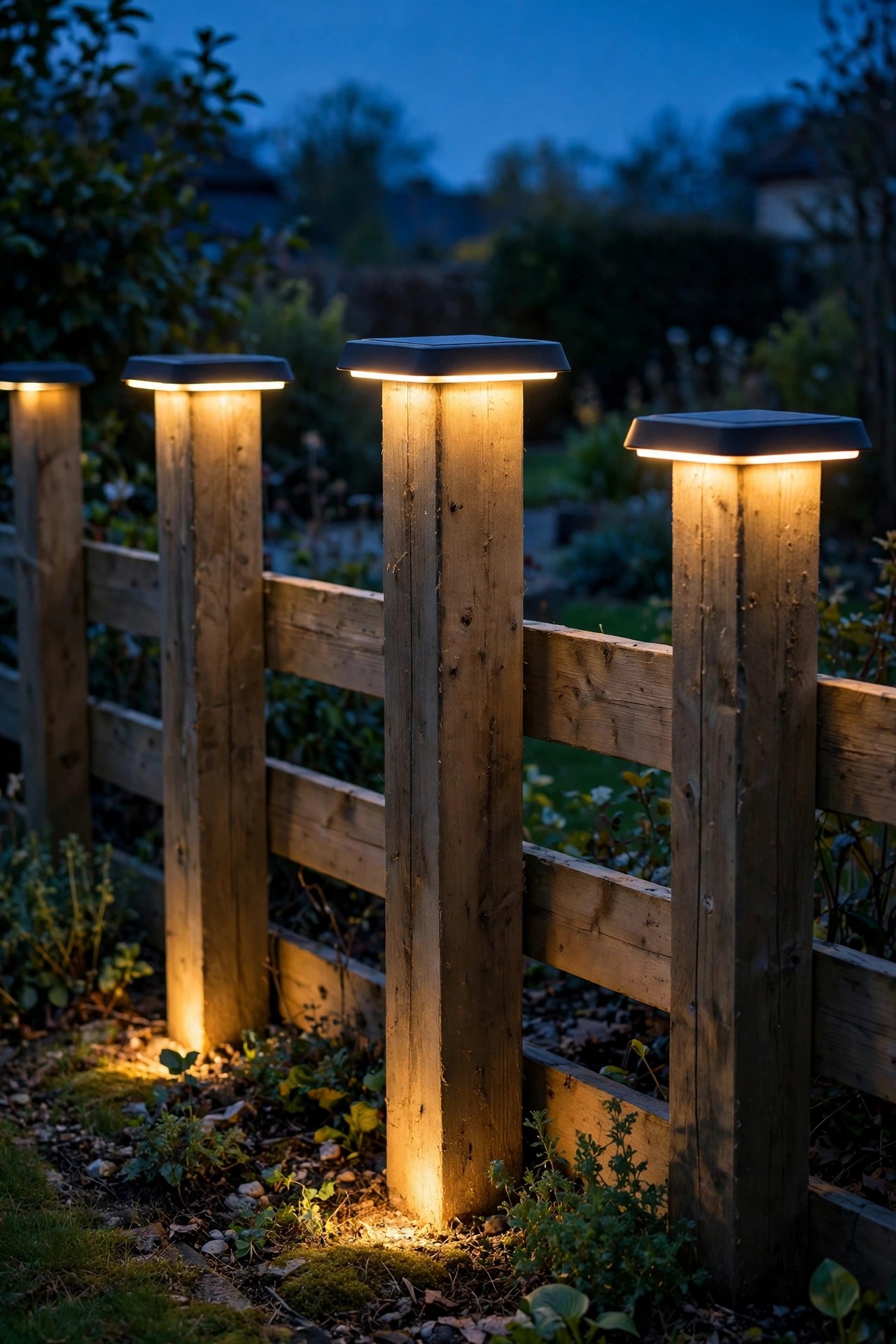
Post-cap lights are where almost everyone starts, and honestly? They are still my default. The cap sits right on top of the post where the old flat or pyramid cap was, so your fence keeps its finished silhouette and gains a soft square of light at every post. The key detail is sizing: a nominal 4×4 post actually measures 3.5 by 3.5 inches, and caps are built to that real measurement, often with a base that adjusts between roughly 3.5 and 4 inches. Measure the inside of the old cap before you order a dozen. Most caps shine downward and outward from under the cap lip, which keeps glare out of your eyes and pools light at the base of each post. Expect a gentle decorative glow — enough to read the fence line from the patio, not enough to find a dropped key. Space them on every post for a formal rhythm, or every other post (about 12–16 feet apart) on long runs to save money. If caps are your plan, my roundup of solar fence post lights compares the main styles side by side. I wipe the small solar panel on top with a damp cloth each spring; pollen film is the number-one reason caps go dim.
Suggested budget range: $30 – $70.
2. Oversized Post Caps for 5×5 and 6×6 Posts
Vinyl fences and beefy cedar posts break the standard-cap rules. A 5×5 vinyl post needs a cap with a true 5-inch interior, and a rough-sawn 6×6 can measure anywhere from 5.5 to a full 6 inches across, so this is the pick where a tape measure saves you a return shipment. Oversized caps usually include adapter bases that shim down a size, which I like — buy the cap that fits your post today and it can follow you to a smaller post later. Because the cap is bigger, the solar panel on top is bigger too, and that is a genuine advantage: more panel area means a fuller charge on short winter days and a slightly brighter, longer-lasting glow. The look is chunkier and more lantern-like, especially in a pyramid or tiered profile, so it suits ranch, farmhouse and craftsman fences better than sleek modern ones. One caution: vinyl posts flex in the wind, so choose caps with screws or a snug friction fit rather than caps that just rest on top. A cap that rattles will walk itself off in the first storm.
Suggested budget range: $45 – $110.

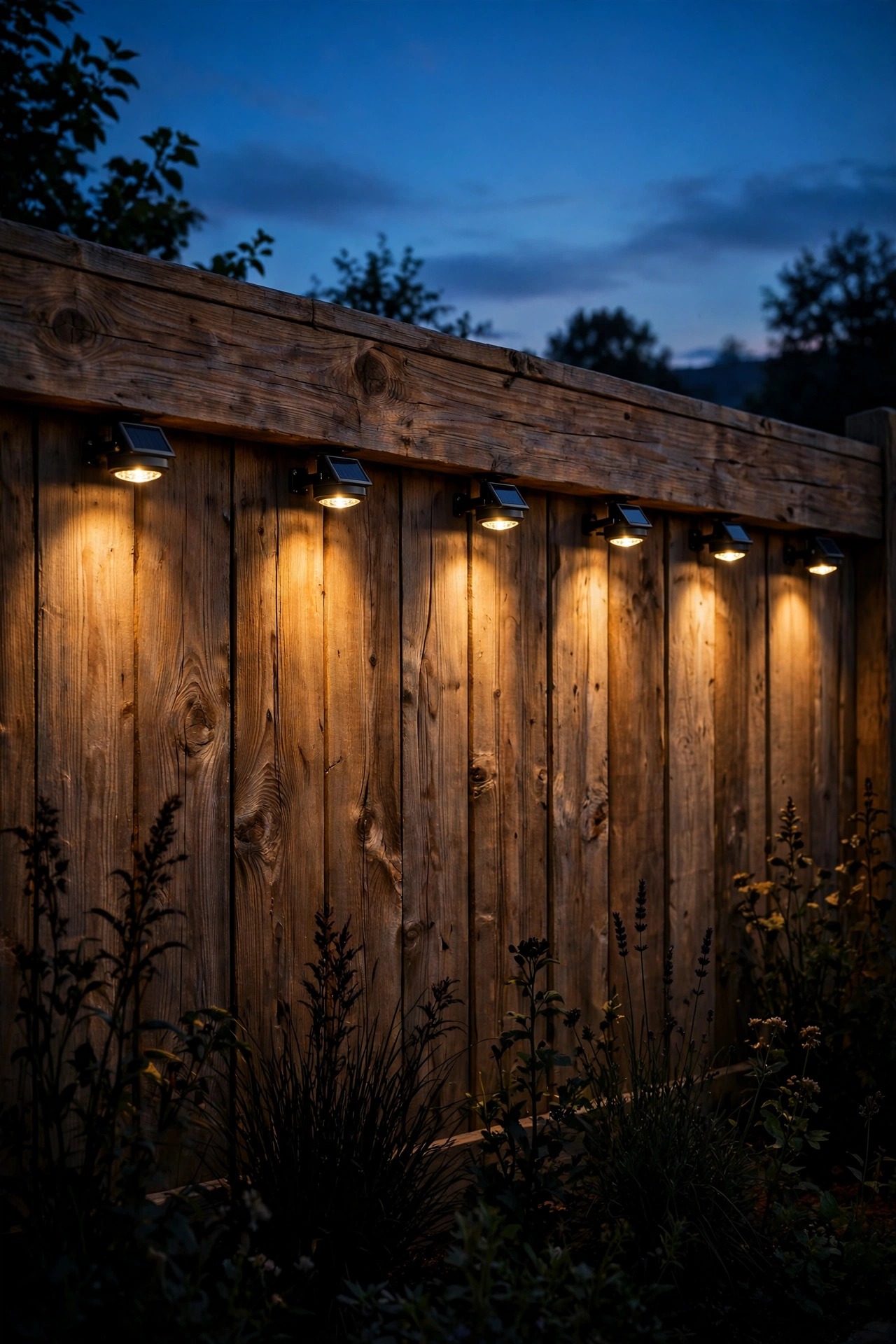
3. Rail-Mount Downlights That Wash the Whole Panel
Rail-mount downlights screw into the top rail or just under it and aim straight down, washing the fence panel in a soft curtain of light. This is the pick I recommend when you want the fence itself to be the feature — the wood grain, the shadow lines between boards, the climbing roses all show up at night. Because the light points down, almost none of it spills into your neighbor's yard or your own eyes, which makes downlights the most neighbor-friendly option on this list. They also read as more designed than caps: from the patio you see pools of light, not the fixtures. Mount one centered on each panel, roughly every 6–8 feet, about 4–6 inches below the top rail. The honest limit is the top-mounted panel: it needs real sun, and a downlight tucked under a tree canopy will fade by 9 p.m. Brightness is modest and decorative — think wayfinding and mood, not security. Stainless or powder-coated brackets outlast the thin painted ones, which rust at the screw holes within two seasons in wet climates.
Suggested budget range: $35 – $80.
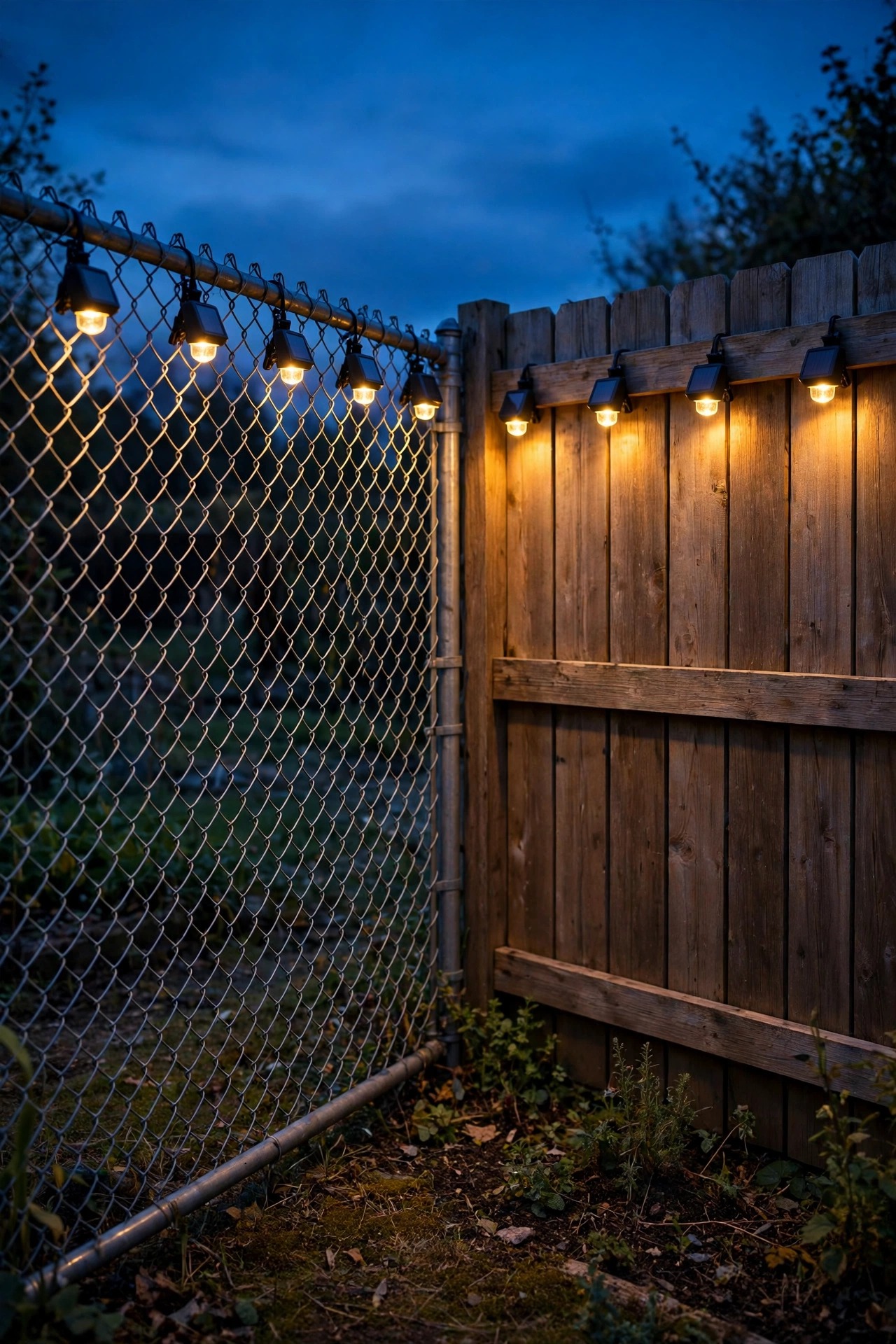
4. Clip-On Panel Lights for a No-Drill Install
Clip-on lights grip the fence panel, rail or chain-link mesh with a spring clip or hook — no screws, no drill, no holes your landlord can object to. That makes them the renter's pick and the experimenter's pick: clip a few along the fence on Friday, live with the spacing over the weekend, and move them Monday if the rhythm feels off. They are wonderful for chain-link fences, where caps and rails do not exist, and for temporary setups like party lighting or a summer dog run. The trade-offs are real, though. A clip is only as strong as its spring, so in windy spots I add a small zip tie through the clip as insurance. Panels are small, so output is a soft marker glow, and the light sits flat against the panel, which means it lights the fence face more than the yard. They also walk away easily, so skip them on street-facing fences. For a first solar fence project on a budget — or any fence you do not own — clip-ons are the lowest-risk way to learn what you like.
Suggested budget range: $20 – $45.
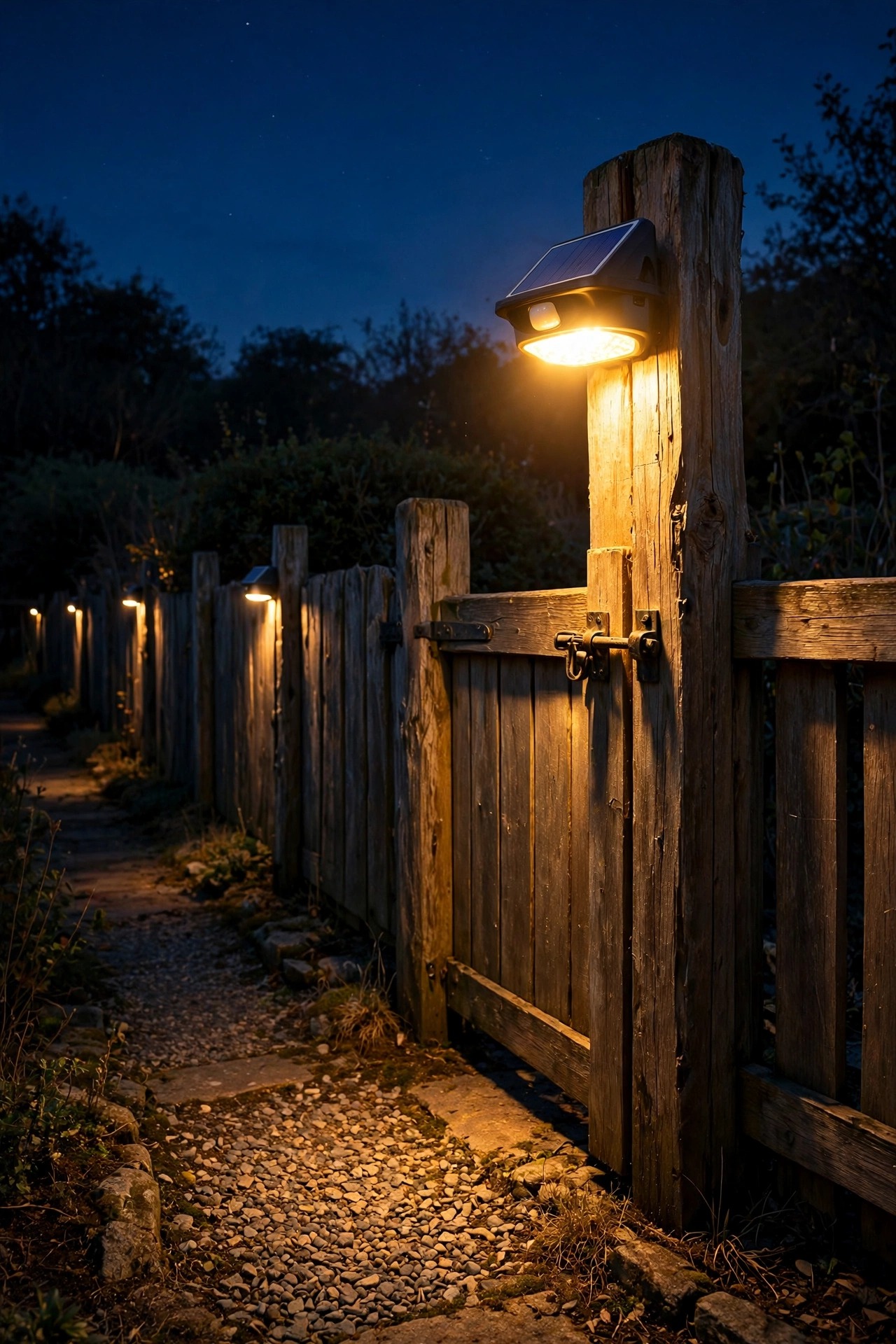
5. Motion-Sensor Lights for Gates and Side Fences
Every fence has two spots that actually need to see: the gate and the dark side yard where the trash bins live. That is motion-sensor territory. These lights idle at a dim glow, or off, and jump to full brightness when something moves within about 10–16 feet, which saves the battery for the moments that matter and startles nobody — it just politely lights your way to the latch. Mount the fixture on the gate post or the panel beside the gate, sensor angled across the path of travel rather than straight at it, so it catches you early. Look for an adjustable timer (10–60 seconds is plenty) and a sensor you can angle down if passing cars keep triggering it from the street. This is usually the brightest type on the list — many reach true task brightness — but the panel still needs sun, so a gate under a dense tree is a poor candidate. I run motion lights at both gates and leave the rest of the fence on gentle dusk-to-dawn types; the contrast makes the whole yard feel safer without a single floodlight.
Suggested budget range: $25 – $60.
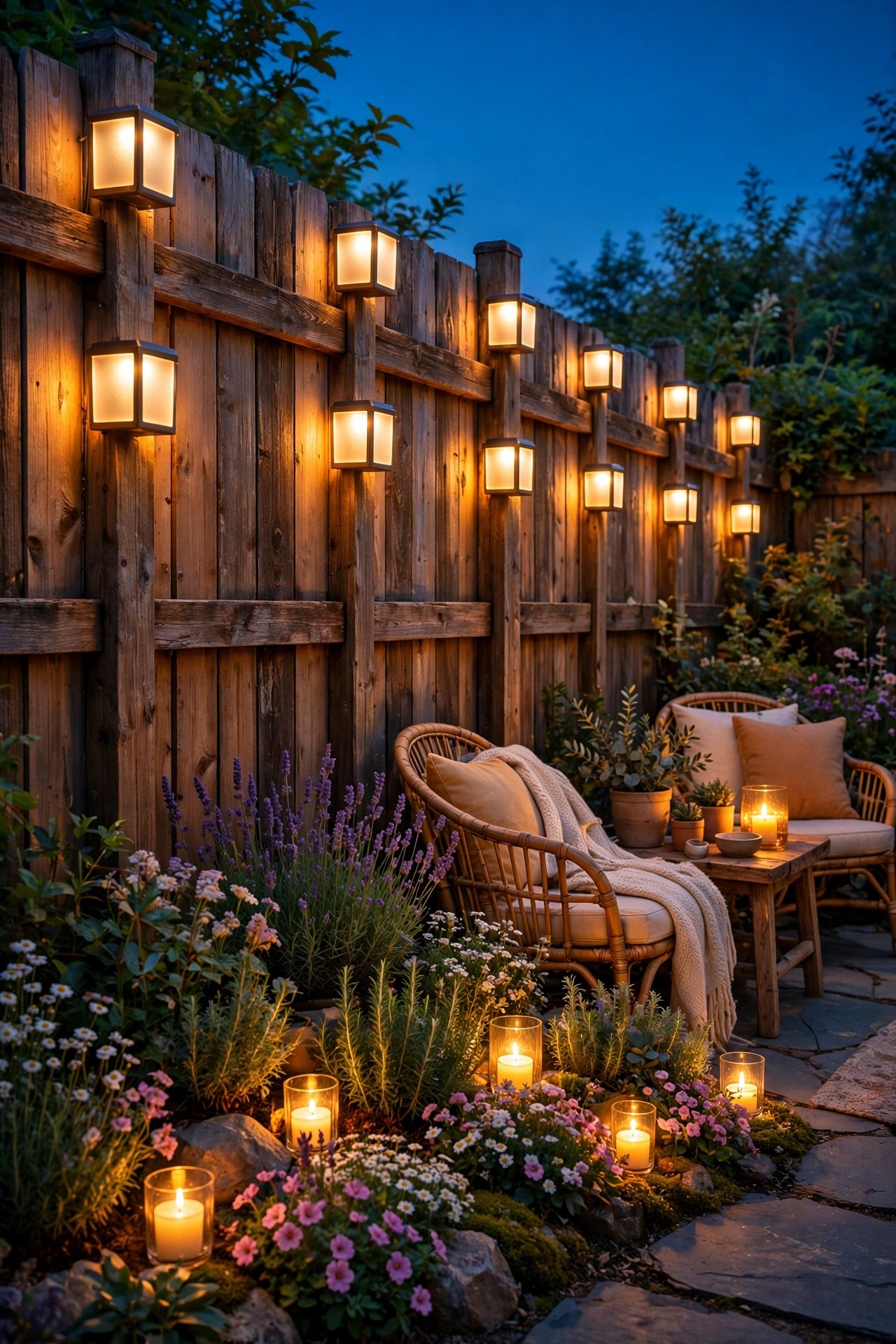
6. Warm Decorative Glow Lights for Ambiance
Some fence lights are jewelry, not tools. Warm decorative picks — soft amber LEDs around 2700K, frosted lenses, sometimes a gentle flicker that mimics a candle — exist to make the yard feel like an evening garden party. This is the type I choose for fences behind seating areas, outdoor dining and flower beds, where a harsh white light would kill the mood instantly. Judge them by color and lens, not lumens: a frosted or textured lens spreads the glow so you never see a bare LED dot, and a warm tone flatters wood, brick and skin alike. Honest limits: you will not read a gate latch by them, and the very warmest amber bulbs can look dim next to brighter neighbors, so keep a whole run in the same color temperature or the fence looks patchy. Battery life is usually excellent because the output is low. If your evenings are about lingering outside with a drink while the fireflies do their thing, this gentle layer is the one that makes the fence feel finished instead of lit.
Suggested budget range: $28 – $65.
7. Bright Task Lights for Latches, Bins and Work Corners
Sometimes you genuinely need to see: the gate latch with grocery bags in both arms, the dog run at 10 p.m., the corner where the mower and bins live. Bright task lights are the workhorses — neutral-white output (around 4000K reads truest for finding things), a wider beam, and enough punch to light the ground a few feet out from the fence. Mount them higher, on posts or panels at 6–7 feet, angled down so the beam lands where your hands and feet are. The honest trade-off is mood: used along a whole fence, task lights make the yard feel like a parking lot, and their bigger appetite drains batteries faster, so runtime on short winter days can shrink to a few hours. My rule is task light only where a task happens — gates, steps off the deck, utility corners — and decorative types everywhere else. Also check the beam pattern before committing: a narrow spotlight leaves bright dots and dark gaps, while a wide flood lens gives the even wash you actually want for working light.
Suggested budget range: $30 – $75.

8. Remote-Panel Lights for Shaded and North-Facing Fences
Here is the problem nobody mentions in the product photos: a fence that runs east–west shades its own south side half the year, and a north-facing fence line may get almost no direct sun at all. A fixed-panel light there charges in dusk-level light and dies by 8 p.m. Remote-panel lights solve it honestly — the fixture mounts on the shady fence while its solar panel sits on a cord, typically 6–10 feet, that you stake or screw somewhere sunny: the top of the post, the sunny side of the rail, a nearby shed roof. Run the cord along the back of the rail and secure it every couple of feet so it does not sag or snag the mower. You get far more placement freedom and a genuinely full charge, at the cost of a fussier install — budget an extra ten minutes per light. This is also the smart pick under trees, where dappled sun moves through the day. If your fence sits in shade and fixed-panel lights have disappointed you before, this type is almost certainly the fix, not a brighter version of the same mistake.
Suggested budget range: $40 – $95.

9. Multipacks With Replaceable Batteries — the Best Solar Fence Lights for Long Runs
A long fence eats lights. At one per post, a 100-foot run can need 10–14 fixtures, and multipacks of 8, 12 or 16 bring the per-light cost down dramatically — often half the single-pack price. My non-negotiable when buying in bulk: the battery must be a standard replaceable cell (usually an AA or AAA nickel-metal hydride rechargeable) behind a screwed or latched cover. The battery is always the first thing to die — typically after 12–24 months — while the LED and panel keep going for years. When one light in the run fades, work through my notes on how to replace solar light batteries before you blame the fixture; a fresh cell costs a few dollars and the whole run is bright again, while sealed lights go to landfill instead. Buying tips: order the whole run at once so every light matches in color and brightness, buy 10–15% extra as spares for the one that will inevitably get clipped by a string trimmer, and charge all of them in full sun for a day before mounting so the first night is not disappointing.
Suggested budget range: $35 – $90.

Frequently Asked Questions
How many solar fence lights do I need?
For the classic beaded look, plan on one light per post — most residential fences have posts every 6–8 feet, so a 60-foot run needs 8–10 lights. On a budget, every other post still reads as a deliberate rhythm. Downlights work best one per panel, and I always add one extra fixture at the gate even if it breaks the spacing.
How long do solar fence lights stay on at night?
After 6–8 hours of decent sun, most types run 8–10 hours in summer, which easily covers dusk to bedtime. In winter, shorter days and a lower sun can cut that to 4–6 hours, which is why bigger panels and fresh batteries matter. Motion-sensor types stretch their charge furthest because they only burn full power in short bursts.
Are solar fence lights waterproof enough to leave out all year?
Look for an IP44 rating at minimum (splash-proof) and IP65 if your fence takes driving rain. Caps shed water by design, but check that the battery cover seals well — that is where moisture sneaks in. In snowy climates I brush panels clear after storms; a snow-covered panel charges nothing no matter how bright the day.
Why did my solar fence lights stop working after a year?
Nine times out of ten it is the battery, not the light. Rechargeable cells wear out after roughly 300–500 charge cycles, and a tired cell takes a partial charge and fades by 9 p.m. Before replacing the fixture, wipe the panel clean, confirm the switch is on, and try a fresh rechargeable battery — most "dead" lights come right back.
Conclusion
However long your fence is, the finishing move is the same: match the type to the job — caps for rhythm, downlights for wash, motion at the gate, task light only where hands need it, and remote panels wherever shade wins. Chosen that way, the best solar fence lights turn the biggest blank surface in your yard into the backdrop that makes every other light out there look better. If you want to see these layers working together across a whole yard, browse my fence line lighting ideas for full layouts before you order a single light.