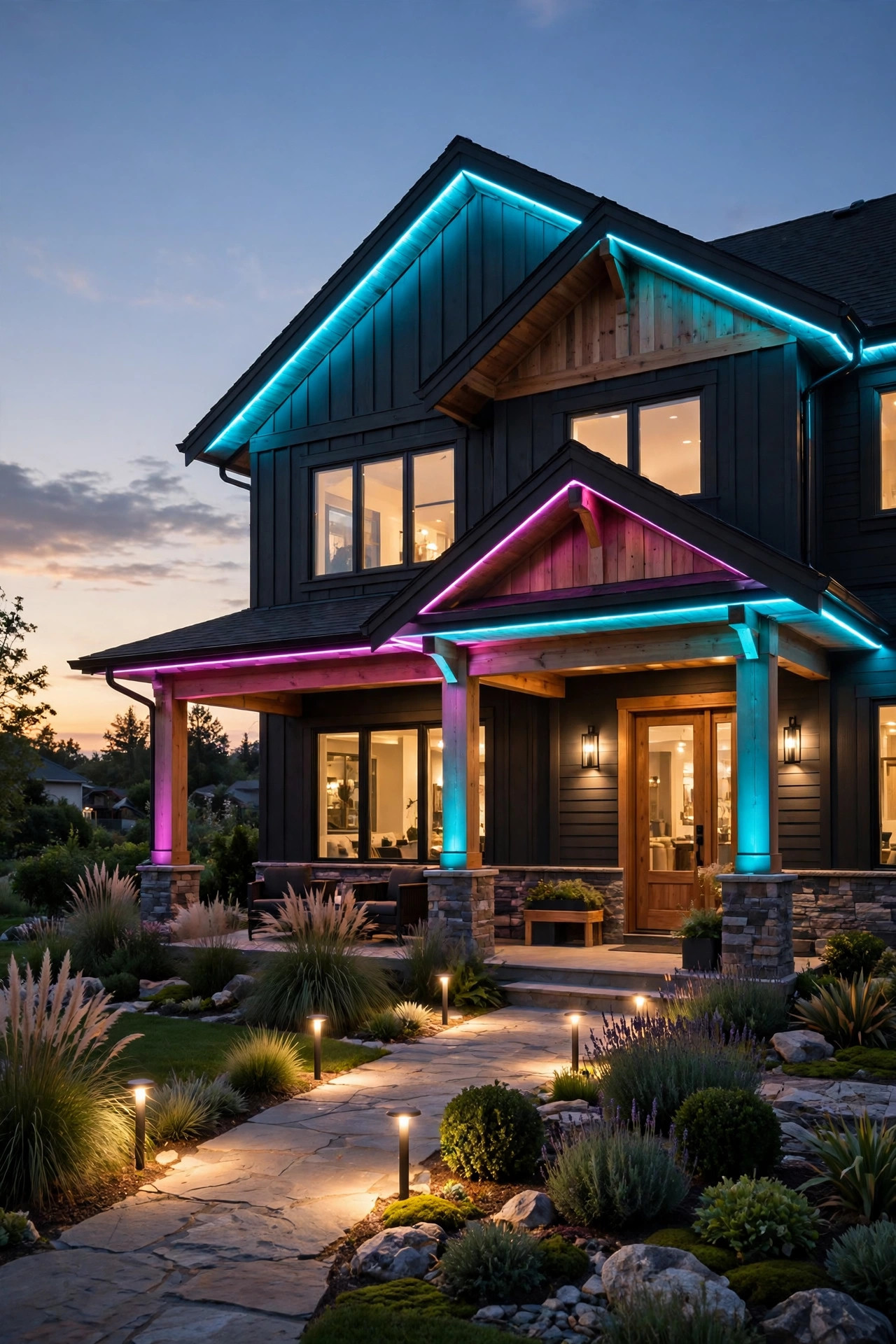
There's a moment, about an hour before kickoff, when my whole backyard changes personality. The porch bulbs turn team colors, the string lights over the patio shift to match, and an ordinary Saturday suddenly feels like an event. That is the magic of rgb outdoor lights: one set of fixtures, endless moods, and no ladders or tangled bins of single-color strands to swap every season. In my experience, color-changing lighting is the hardest-working upgrade I have ever made outside. It handles game days, Halloween, the Fourth of July, Christmas, and quiet Tuesday dinners with equal ease. The trick, honestly, is layering — a wash of color on the house, sparkle in the trees, a gentle glow along the paths — all tied together with scenes you set once and tap to recall. Below are my 19 favorite ways to use RGB bulbs, strips, floods, and solar stakes, with real budget ranges, placement tips, and the little settings tricks that keep colors looking rich instead of garish.
1. Swap Your Porch Bulbs for Color-Changing Smart Bulbs
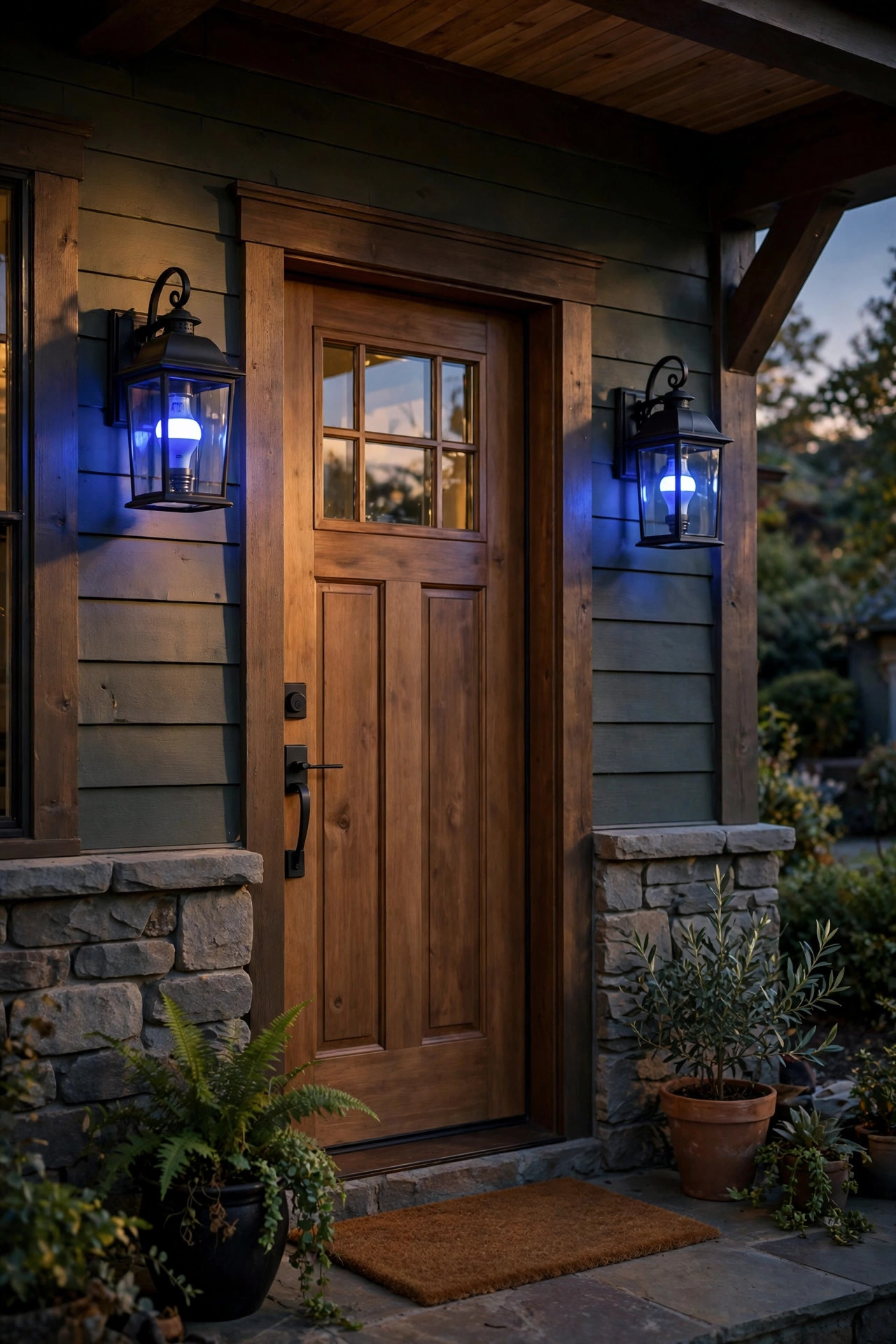
The fastest win in this whole post is also the cheapest: unscrew the bulbs in your existing porch lanterns and carriage lights, and screw in color-changing smart bulbs instead. Standard A19 bulbs fit most fixtures, and most let you slide from warm 2700K white for everyday evenings to any saturated color for celebrations. I keep mine at a cozy warm white ninety percent of the year, then flip the pair flanking my front door to team colors on game day. If your fixtures have enclosed shades, check the bulb is rated for enclosed use, and avoid putting smart bulbs on a dimmer switch — dimmers starve the electronics and cause flicker; control brightness in the app instead. A pair takes five minutes to install and pair. Honestly, this is where I tell every friend to start, because the front entry is what guests and neighbors actually see. Mine have survived three winters of porch duty without a single dropout, which is more than I can say for my first bargain set.
Suggested budget range: $25 – $60.
2. String RGB Lights Across the Patio for Instant Atmosphere
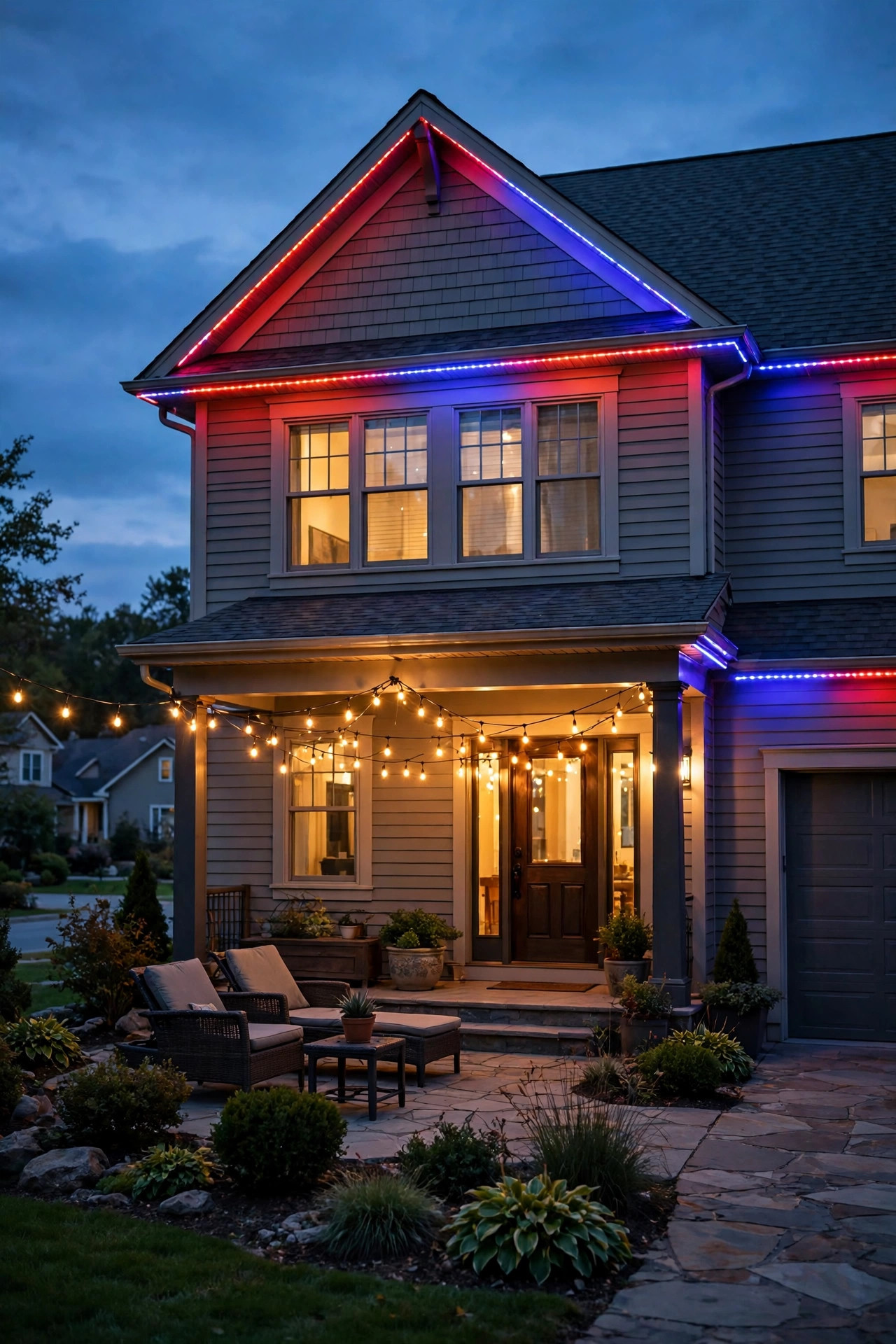
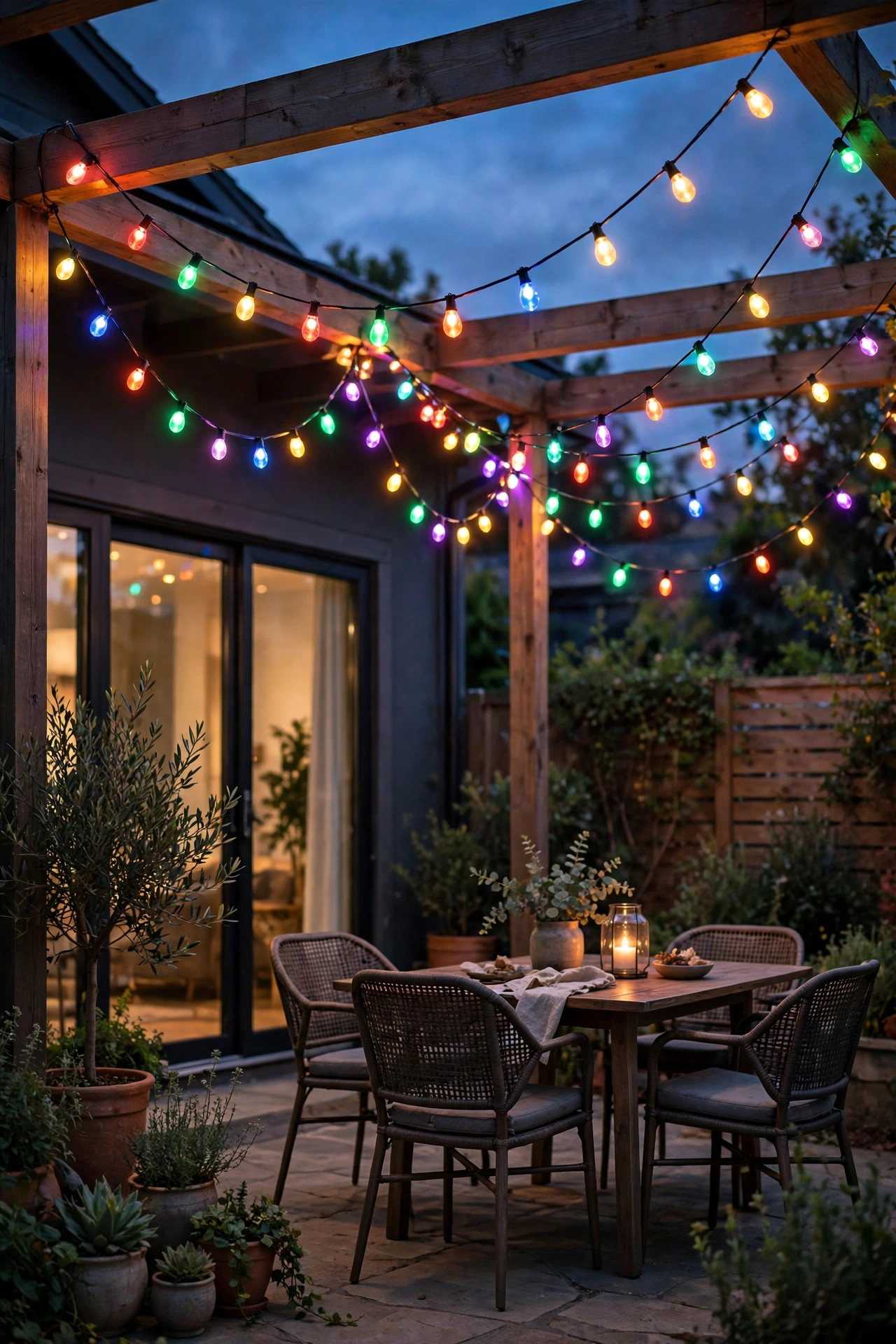
Color-changing string lights turn a plain patio into a party room with no ceiling. Look for outdoor-rated strands with shatterproof bulbs and an IP65 rating or better, and plan on one strand every 8 to 10 feet of canopy for even coverage. I zigzag mine between the house and two poles at the patio edge, keeping swags about 18 inches deep so they drape gracefully without hitting tall guests. For game days I set alternating team colors bulb by bulb if the strand allows individual control; for holidays, a slow fade through red and green feels festive without strobing. One honest note: cheap strands often render disappointing purples and teals, so if rich color matters to you, spend a little more per strand. Anchor with proper guide wire and hooks rather than the strand's own cord, and you'll get years out of them. I also keep one spare strand in the garage, because a mid-party failure is so much easier to forgive when the replacement is twenty feet away.
Suggested budget range: $30 – $90.
3. Flood the Facade With Team Colors on Game Day
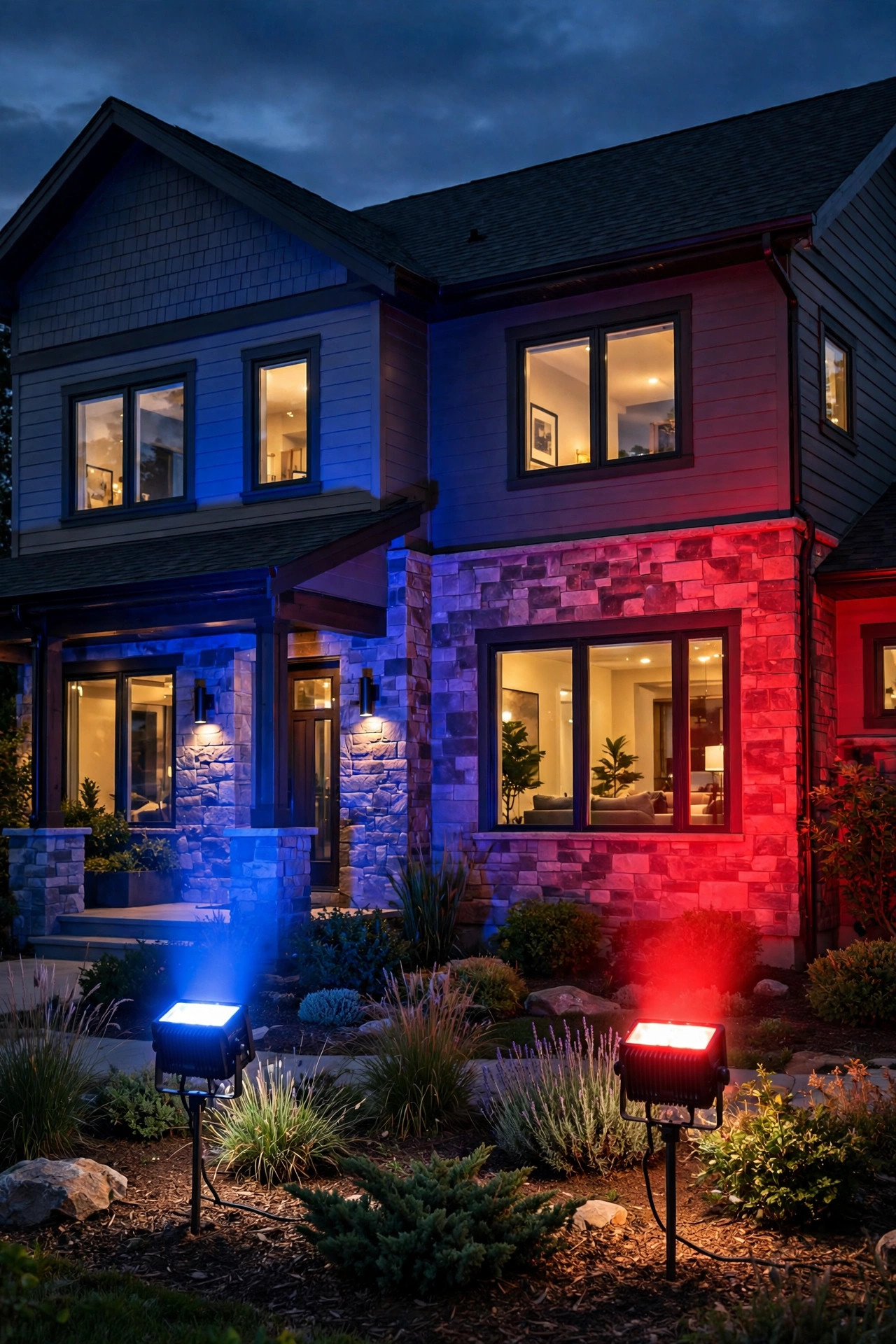
If porch bulbs whisper, RGB floodlights shout — in the best way. Two color-changing flood fixtures staked in the garden beds, aimed up at the facade from about 6 to 8 feet out, can wash your whole front wall in color. On game day my house wears one color on the left flood and the second team color on the right, and the effect from the street is genuinely dramatic. Choose fixtures with a wide beam (60 degrees or more) for an even wash, and set them on a slight angle rather than straight on to avoid a hot spot in the middle. Keep brightness around 70 percent for a rich, saturated look; full blast tends to wash colors pale. Ground-stake floods are renter-friendly and repositionable, which I love, because the perfect angle changes as shrubs grow. Just plug them into a GFCI outlet and you're in business. For a two-story facade, angle the floods from slightly farther out and accept a gentler wash — evenness beats raw brightness every time.
Suggested budget range: $40 – $120.
4. Line the Walkway With Color-Changing Path Lights
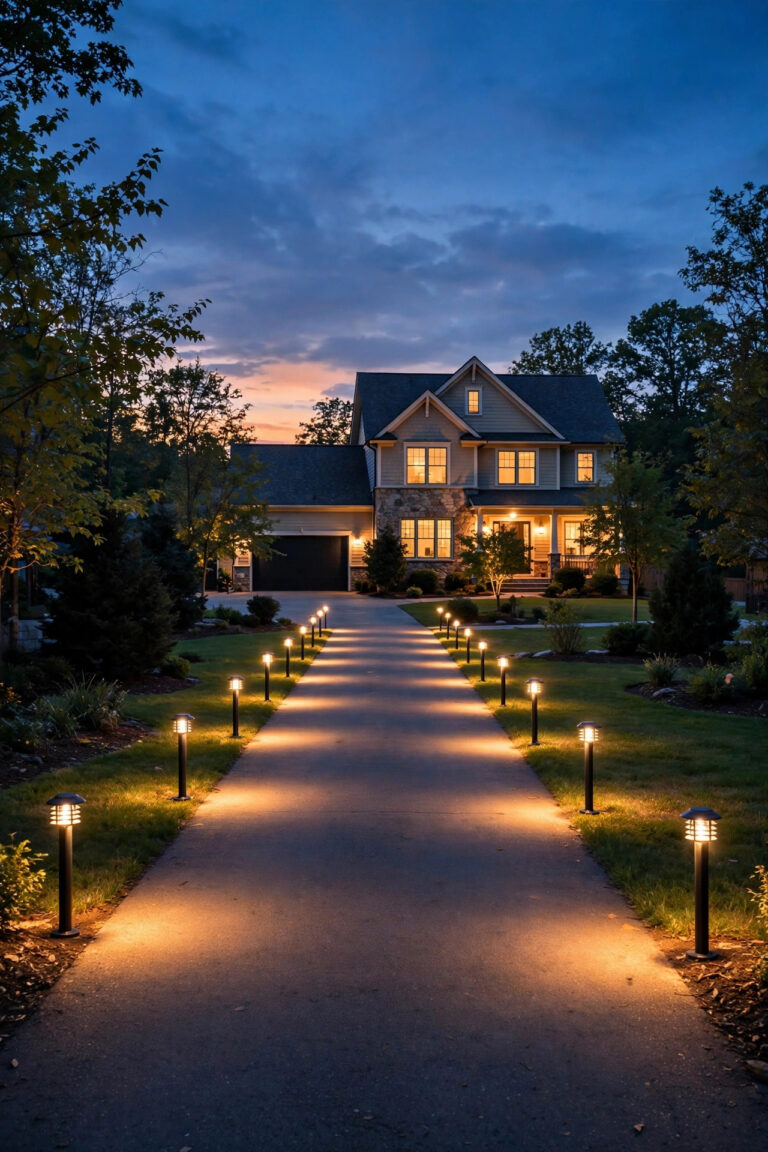
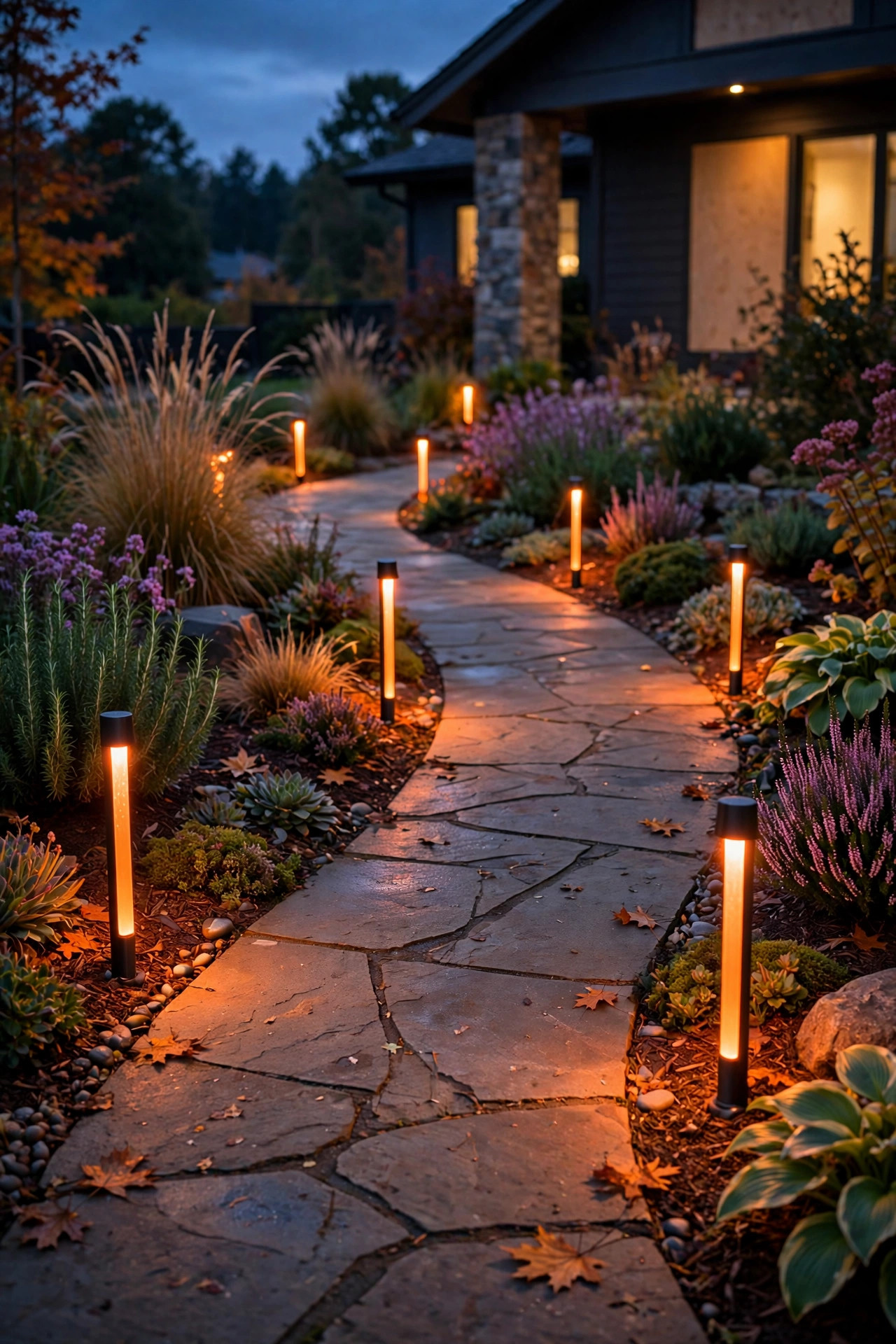
Path lights are the layer most people forget, and they're the one that makes a color scene feel finished rather than floating. Color-changing path lights — solar or low-voltage — let your walkway join the celebration: orange for Halloween week, red and green at Christmas, team colors on Saturdays. Space them 5 to 6 feet apart, staggered on alternating sides of the path rather than in a runway-straight line. I always recommend setting path lights one brightness notch below everything else; they're close to the ground and to guests' eyes, and their job is a gentle guiding glow, not the main show. Solar versions have gotten genuinely good and cost nothing to run, but wired low-voltage sets give you more consistent color and brightness in December's short days. Match the color temperature of their white mode (2700K is my pick) to your porch bulbs so everyday mode looks cohesive. One set of mine lines the front walk and another rings the patio, and tying both to the same scene keeps the whole yard in step.
Suggested budget range: $35 – $80.
5. Uplight Trees and Shrubs in Holiday Colors
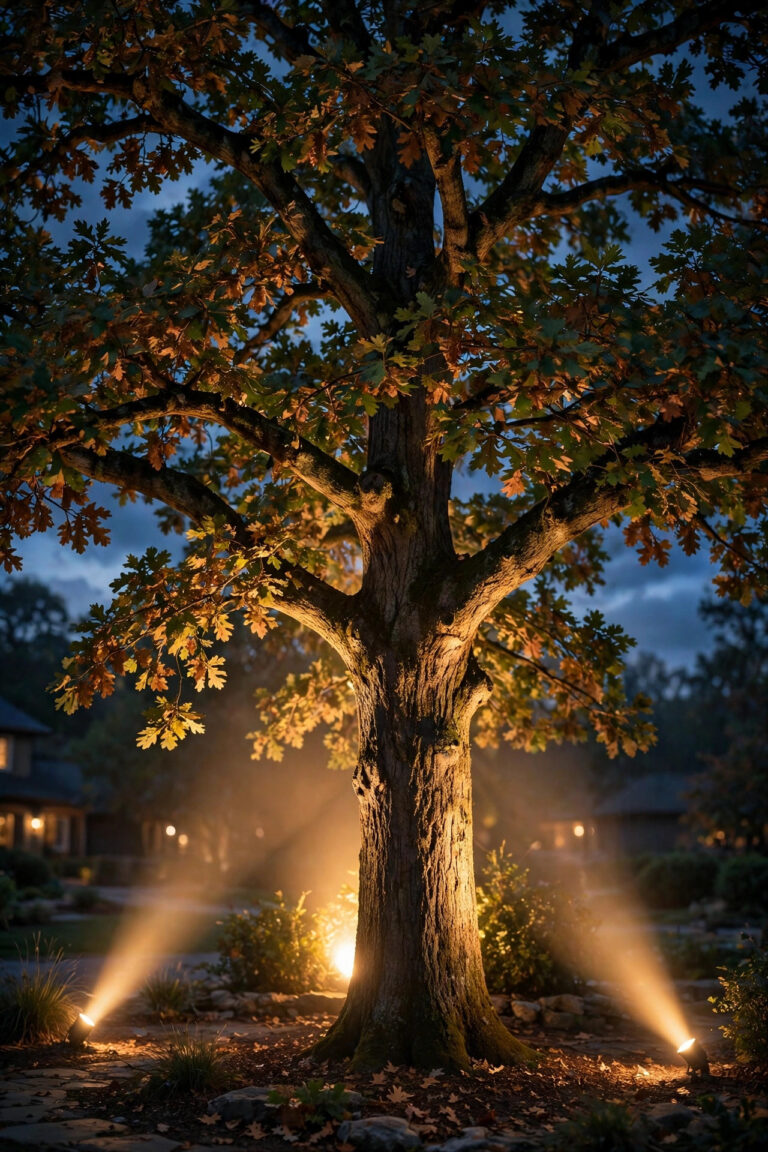
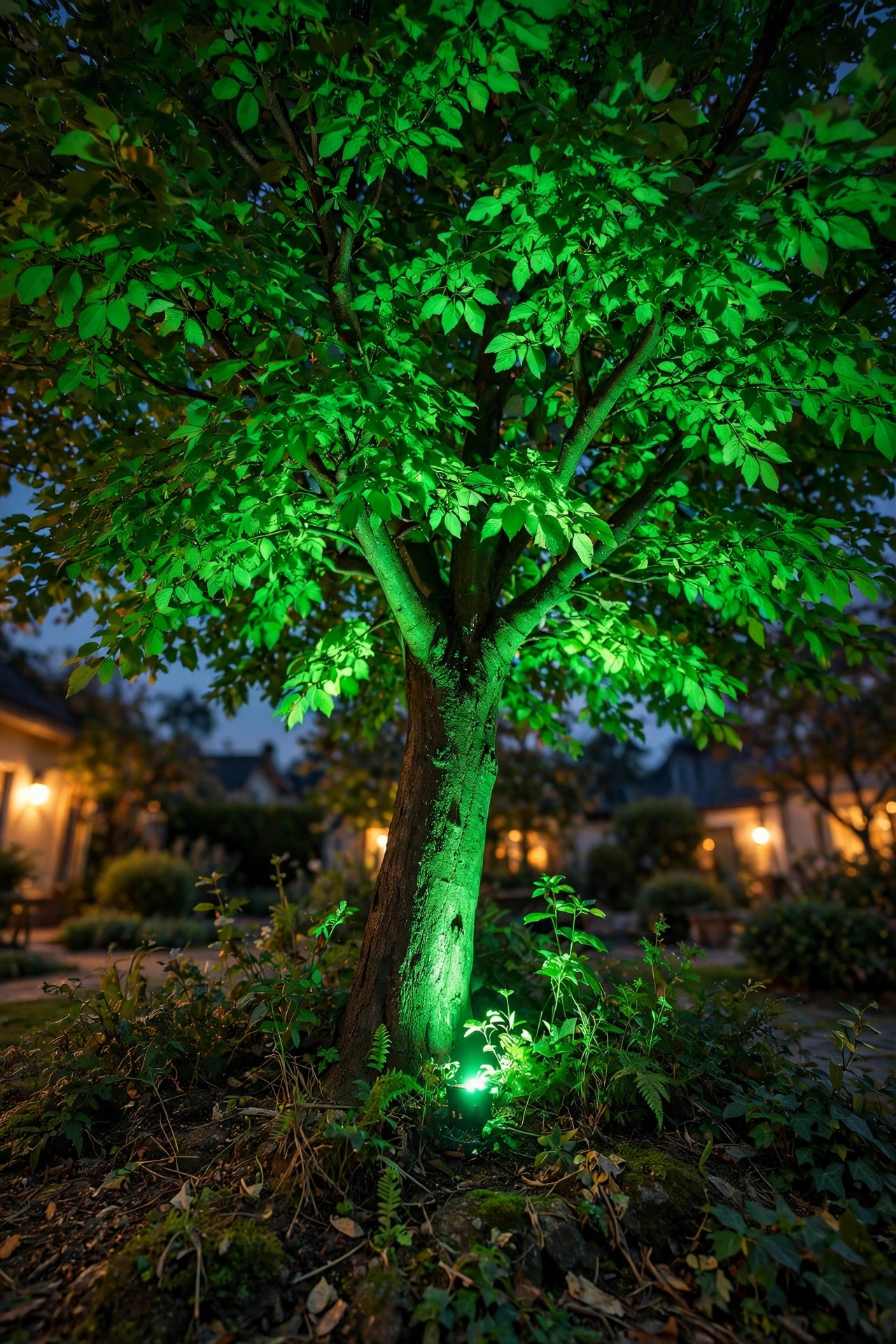
A single RGB spotlight aimed into a tree canopy creates the kind of depth that flat facade lighting never can. Place the fixture 12 to 18 inches from the trunk, tilted up about 30 degrees, and let the branches do the artistry. In fall I run a warm amber that makes our maple look like it's glowing from inside; at Halloween the same tree goes an eerie green, and in December it alternates red and green with the shrubs below. For shrubs, smaller wash lights tucked behind the planting throw color up through the branches and silhouette the leaves beautifully. This is also the kindest layer for wildlife and neighbors, since the light stays in your canopy. If you try only one "wow" layer from this post, honestly, make it this one — a lit tree reads as professional landscaping, and the color control makes it seasonal too. Start with one tree — your biggest, most visible one — and live with it for a week before adding more; restraint is what keeps it elegant.
Suggested budget range: $30 – $100.
6. Add Smart LED Strips Under Deck Rails and Steps
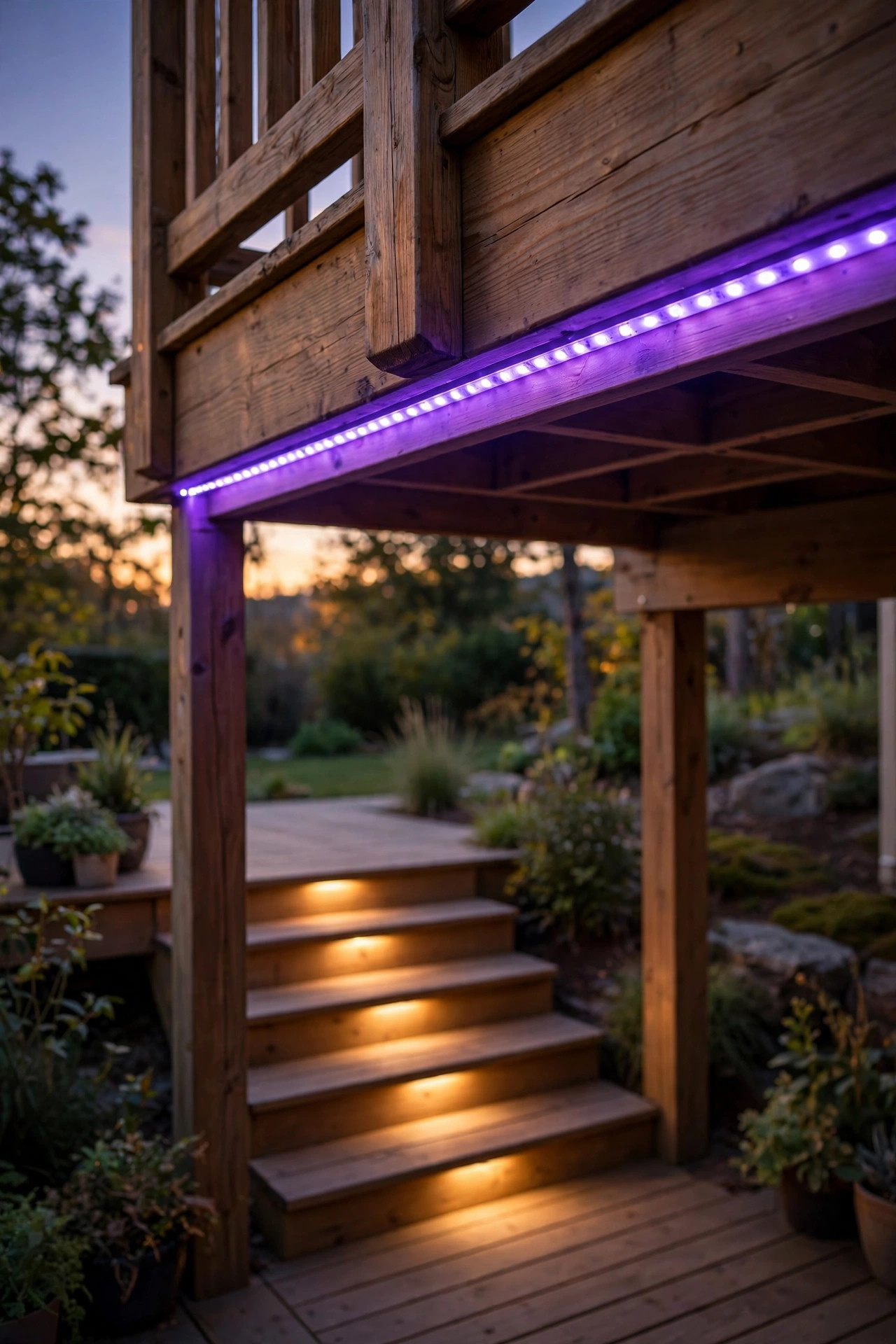
Some of the prettiest color in my yard is light you never see the source of. Outdoor LED strip lights tucked under a deck handrail or beneath step nosings throw a floating ribbon of color that's pure atmosphere. Choose strips with a proper outdoor rating (IP65 minimum, IP67 if they'll see direct rain), and mount them in an aluminum channel with a frosted diffuser — it protects the strip and softens the individual dots into one smooth line. Under-rail strips double as safety lighting on stairs while looking like a design feature. On game days the deck glows team colors; on movie nights I dim it to a deep amber that doesn't fight the screen. Measure carefully and buy one continuous length where you can, since every cut and connector is a potential weak point outdoors. A single 16-foot run transformed our plain deck more than any furniture ever did.
Suggested budget range: $25 – $75.
7. Turn the Roofline Into Year-Round Holiday Lighting
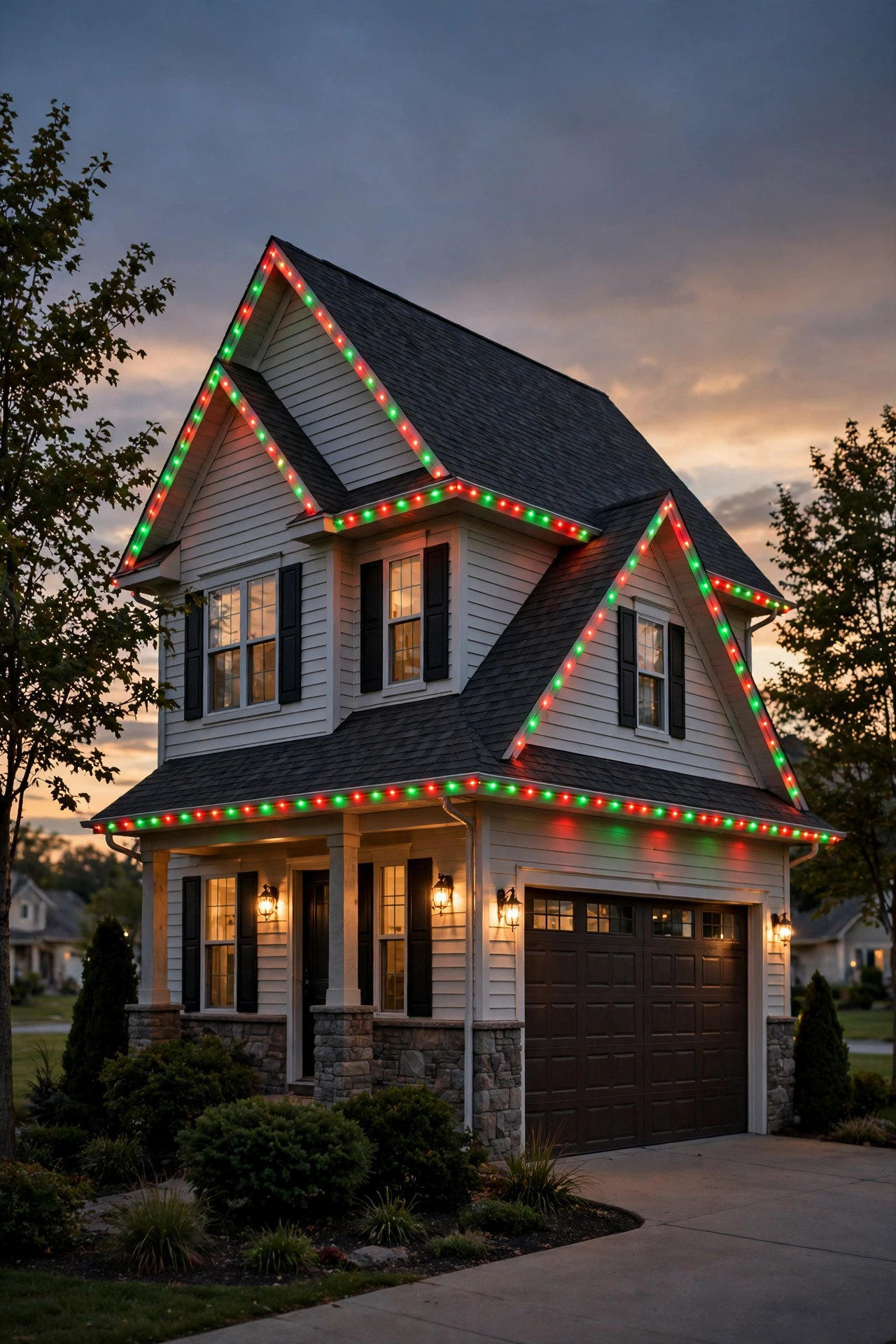
Permanent roofline lighting is the splurge I resisted for years and now recommend to everyone who asks. Slim color-changing fixtures mount in a discreet track under the eaves, nearly invisible by day, and at night they deliver crisp, evenly spaced points of color along every roof peak. No more December ladders in the cold, no more clips and dead sections. The real joy is the calendar: orange and purple for October, pastels for Easter, red-white-and-blue for July, warm white "icicles" for Christmas, and your team's colors on Saturdays — all from fixtures that stay up permanently. Professional installation costs more but includes clean wiring and a tidy finish; DIY track systems exist for confident homeowners. Either way, insist on a warm white mode around 2700K so the house looks elegant, not like a carnival, on ordinary nights. It's the single highest-impact change on this list. Three winters on, our track still looks brand new, and I have not thought about a ladder since the day it went up.
Suggested budget range: $150 – $600.
8. Make the Pool Glow for Night Swim Parties
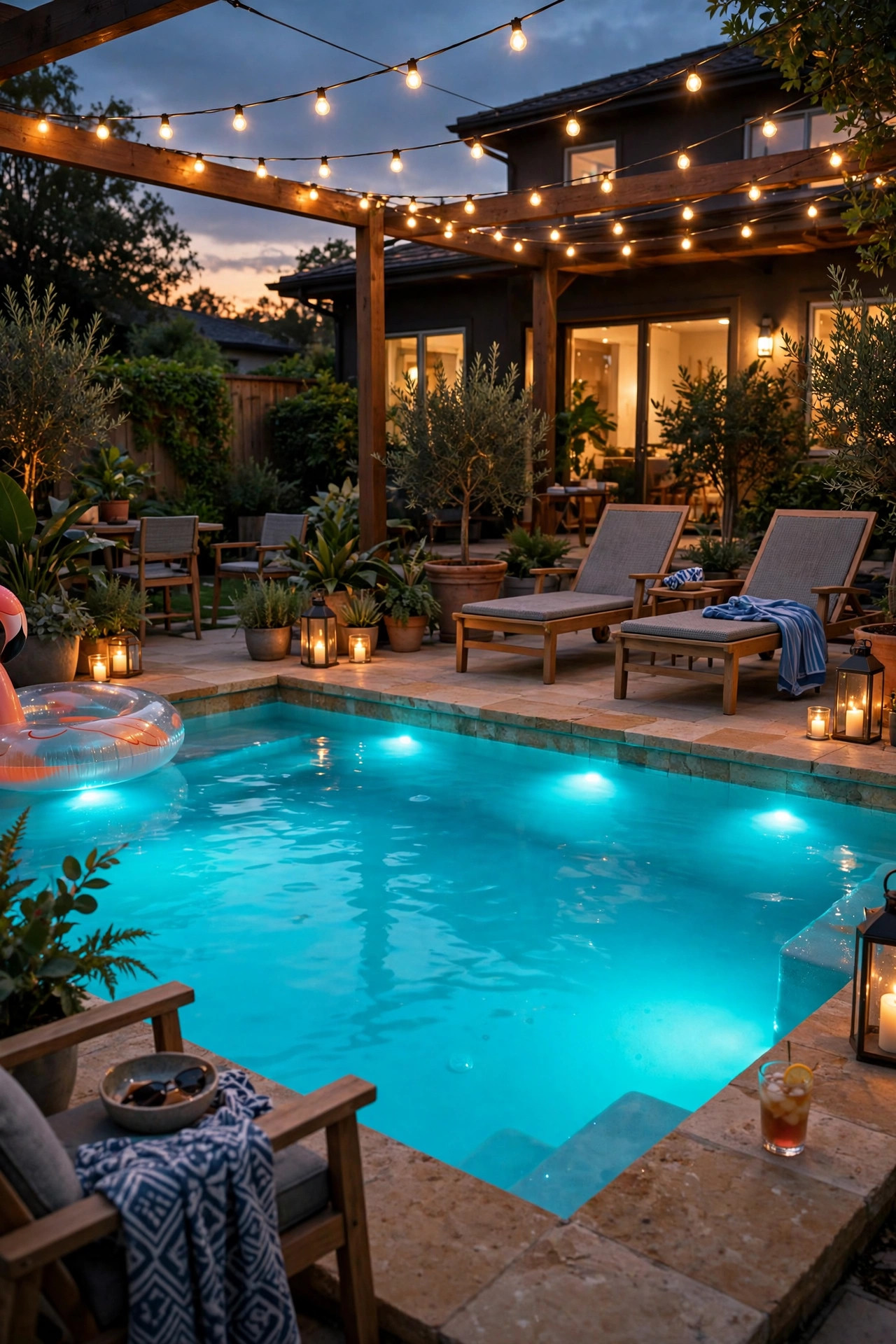
Few things stop a backyard party mid-sentence like a pool that changes color. If your pool has a standard light niche, color-changing LED replacement lamps can turn the whole body of water turquoise, magenta, deep blue, or a slow-rolling rainbow. For above-ground pools and hot tubs, submersible battery-powered RGB lights with suction cups or magnetic backs give you the same trick for far less money — just confirm they're genuinely rated for continuous submersion. My rule for pool color: pick one saturated shade and hold it rather than running the disco cycle, which looks fun for ninety seconds and chaotic after that. Teal is universally flattering and makes even a plain pool feel like a resort. Always follow the manufacturer's guidance on electrical safety, keep transformers and plugs at the required distance from the water, and never use a non-submersible light in the pool, even "just for a photo." For safety, I also keep one plain warm-white deck light on its own switch so swimmers can always find the steps clearly.
Suggested budget range: $80 – $300.
9. Hang RGB Lanterns for a Soft, Portable Glow
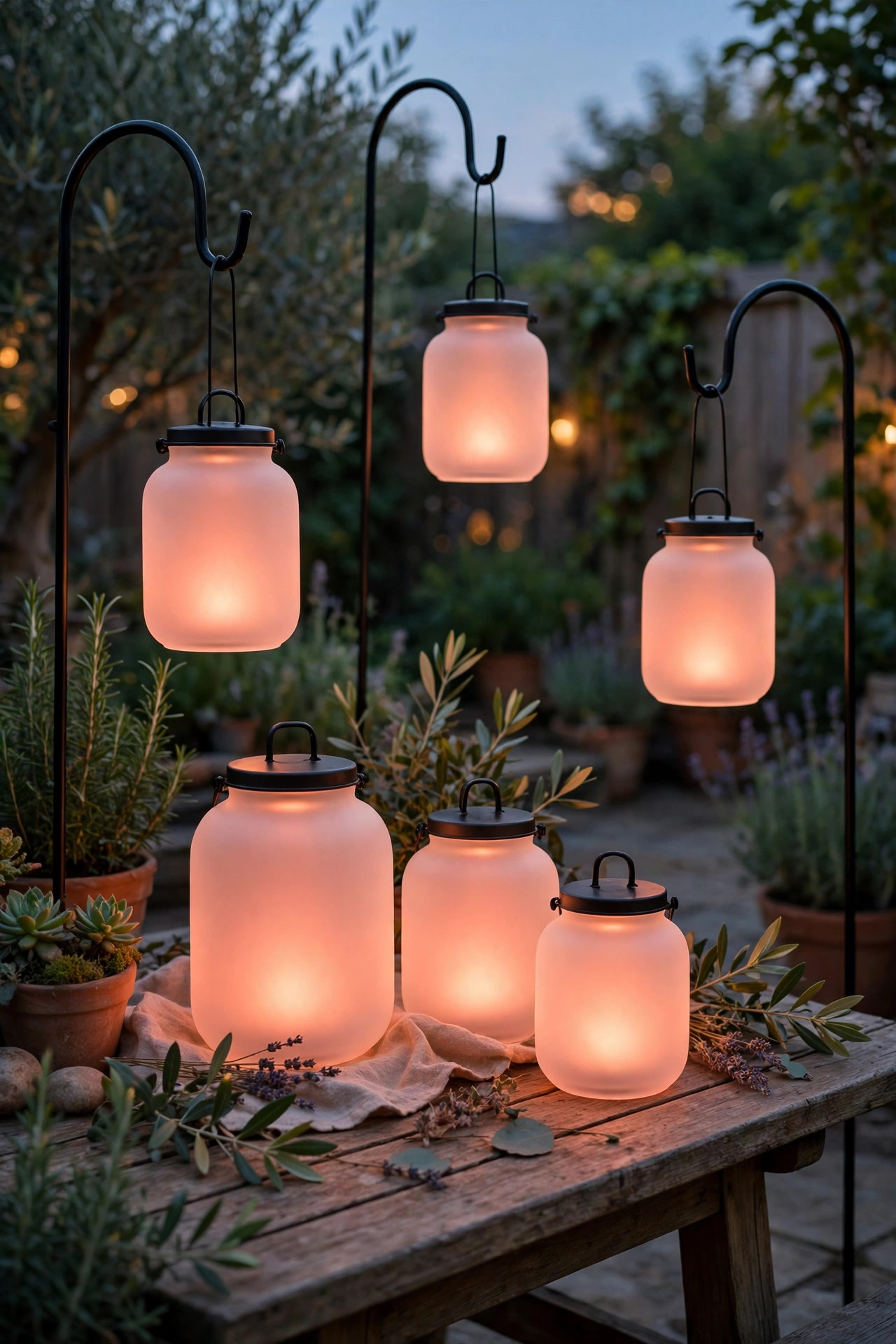
Not every color layer needs wiring. Battery-powered RGB lanterns and orbs are the flexible fill light of my yard — I scatter them on the patio table, hang a few from shepherd's hooks, and float one in the birdbath when I'm feeling fancy. Because they're portable, they're perfect for renters and for testing where color looks best before you commit to fixtures. Group them in odd numbers, threes and fives, and set a whole group to one color through the remote or app so they read as a designed cluster, not random clutter. Frosted finishes diffuse better than clear ones and photograph beautifully. Battery life is the trade-off: expect one long evening per charge at full brightness, longer if you dim to about half, which honestly looks better anyway. I keep a charging shelf by the back door so they're always party-ready. A lantern tucked into a dark corner of the garden does more for depth than another bright fixture ever could.
Suggested budget range: $20 – $60.
10. Go Red, White, and Blue for the Fourth of July
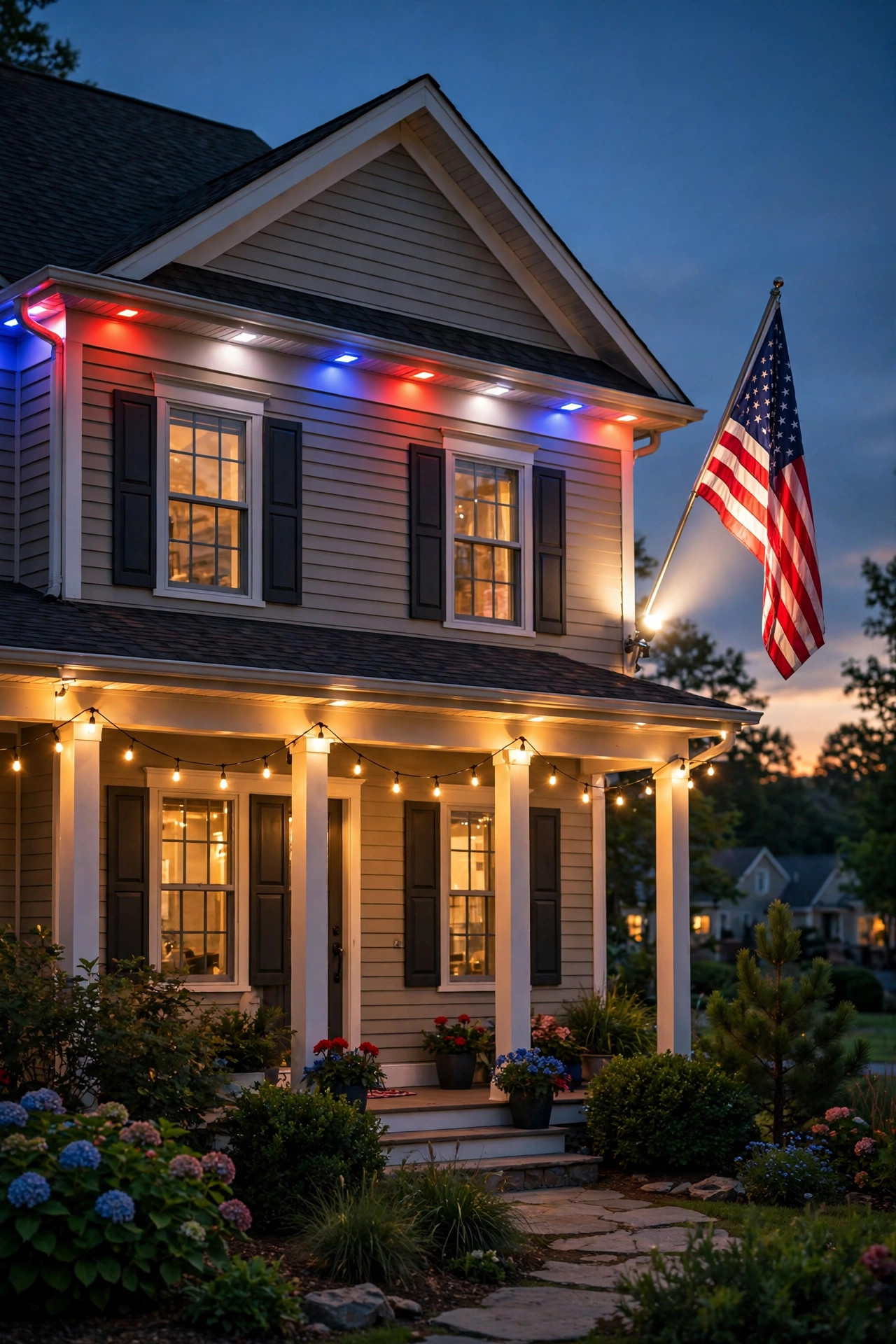
The Fourth is the holiday RGB lighting was invented for, and it's the easiest scene to make look expensive. My formula: floods wash the facade in deep blue, the string lights alternate red and white, and the path lights hold a steady warm white so guests can see their footing. That layering — saturated color up high, practical light down low — is what keeps it patriotic instead of chaotic. Add a spotlight on the flag itself, which etiquette calls for if it's flown after dark; a color-changing spot set to plain warm white does the job beautifully the rest of the year. If your system has a twinkle or sparkle effect, save it for the string lights only, at a slow speed, to mimic distant fireworks without competing with the real ones. Everything comes down with one app scene the next morning — no bins, no untangling. Our street has a friendly unspoken competition, and this simple three-layer look has quietly won it two years running.
Suggested budget range: $15 – $50.
11. Spook the Yard With Orange and Purple for Halloween
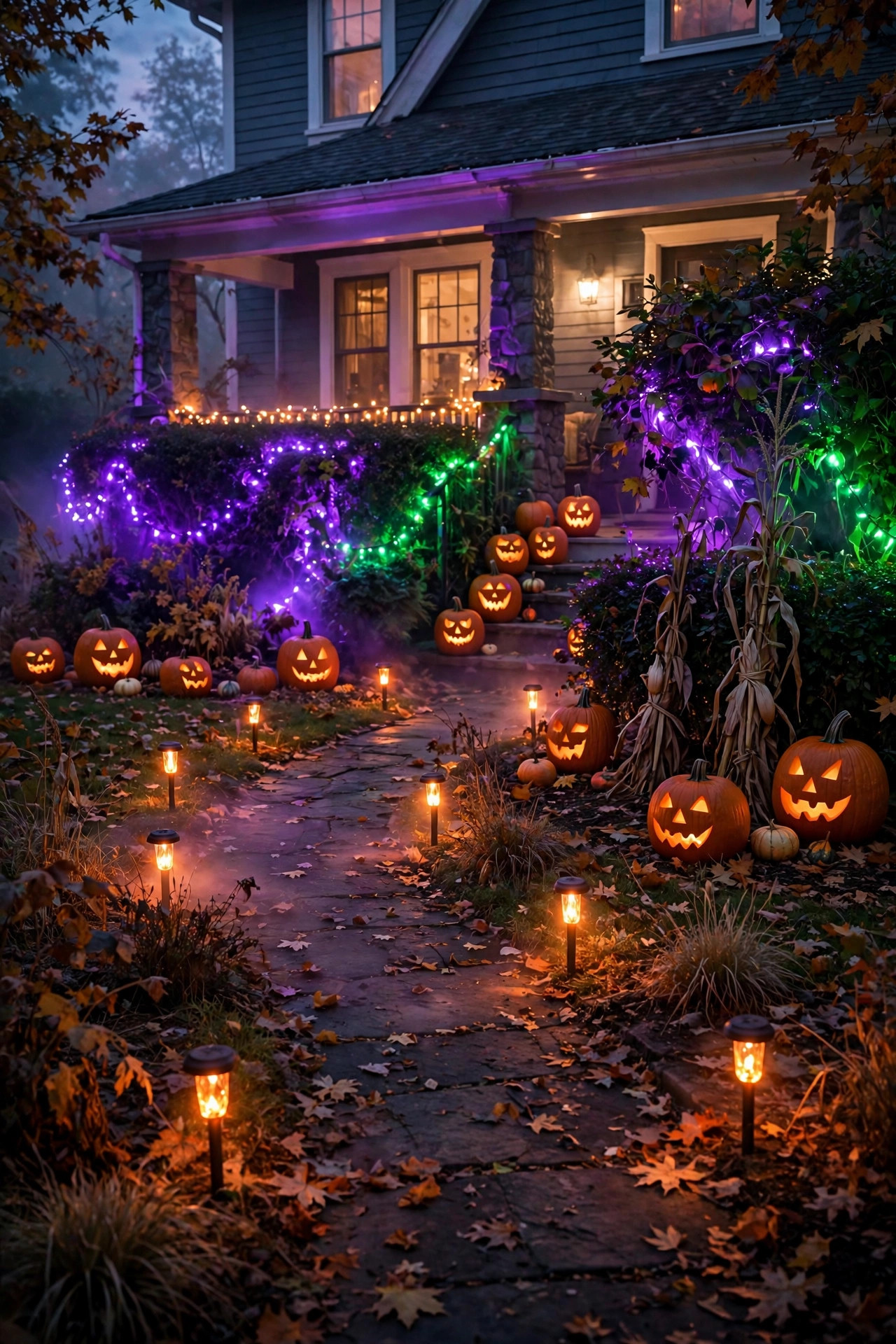
Halloween is where color-changing lights earn their keep, because atmosphere matters more than brightness. I run the floods in deep purple, the tree spotlight in slime green, and the path lights in flickering orange — most RGB systems have a flame or flicker effect, and October is its moment. Turn overall brightness down to about 50 percent; spooky lives in the shadows between the colors. A color-changing bulb in the porch lantern, set to a slow orange pulse, makes the whole entry feel alive when trick-or-treaters approach. If you have a fog machine for the big night, purple and green light through low fog is genuinely cinematic. Keep one warm-white scene saved as your "after hours" setting so the yard returns to calm once the candy bowl is empty. Neighbors with small kids will thank you for the dimmer, I promise. One green uplight under a pale ghost decoration, by the way, will earn you more compliments than everything else combined.
Suggested budget range: $25 – $80.
12. Set a Classic Christmas Scene in Red, Green, and Warm White
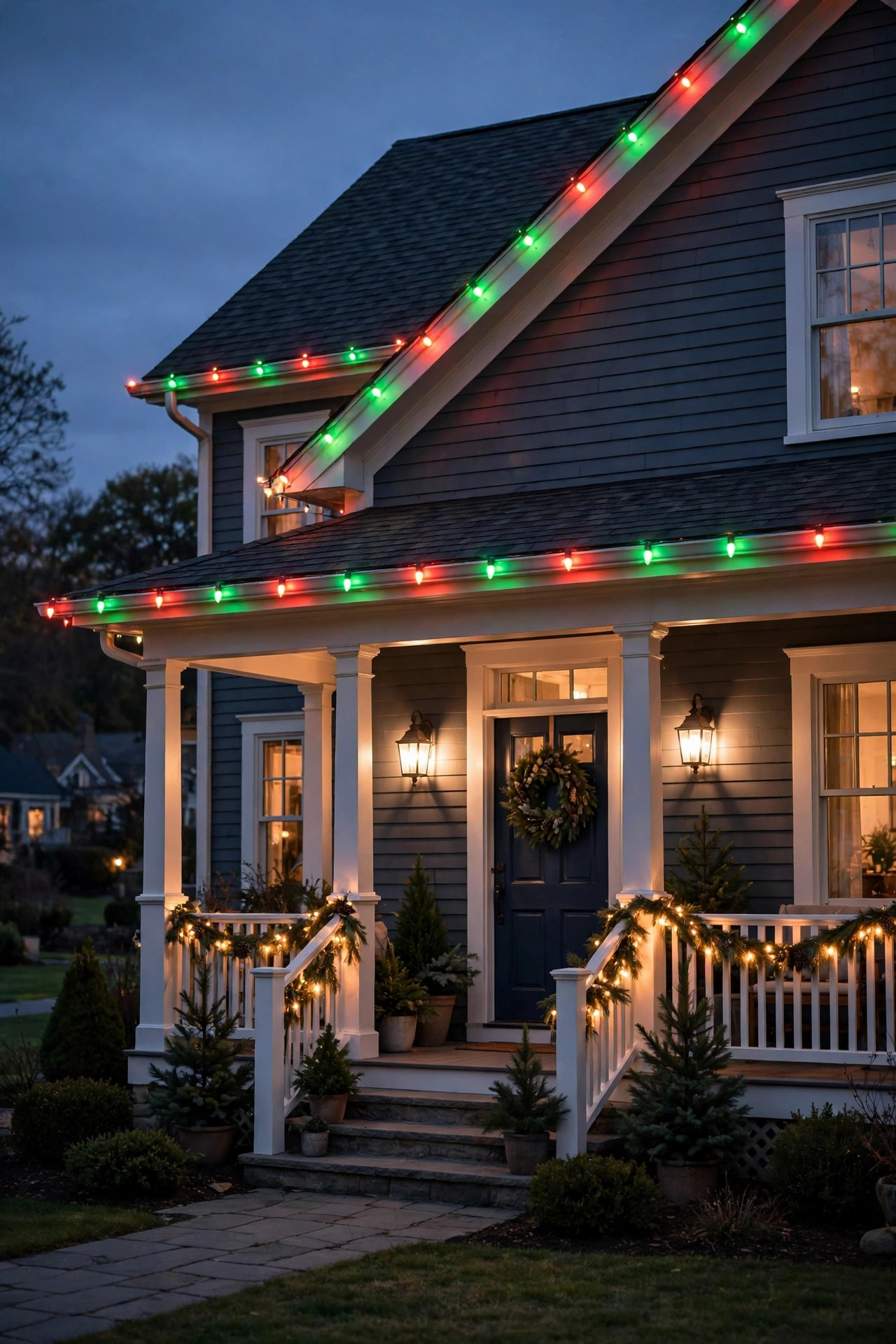
For Christmas I go classic, and RGB lets me do it without owning a single strand of single-color lights. The roofline or string lights carry the red and green, the tree uplight alternates slowly between the two, and — this is the part people skip — the porch and path lights stay warm white. That warm base keeps the scene cozy and traditional instead of tipping into arcade territory. If your lights offer a true warm white channel (RGBW fixtures do), use it; it looks far richer than the bluish white that plain RGB mixing produces. A gentle chase or twinkle on one layer only adds the magic. I set the whole scene on a schedule — on at dusk, off at 11 p.m. — using the approach in our smart outdoor lighting guide, and I don't touch a ladder or a timer dial all season. The scene goes up the weekend after Thanksgiving in about ten minutes, most of which is me standing back admiring it.
Suggested budget range: $15 – $60.
13. Soften Everything With Pastels for Spring Parties
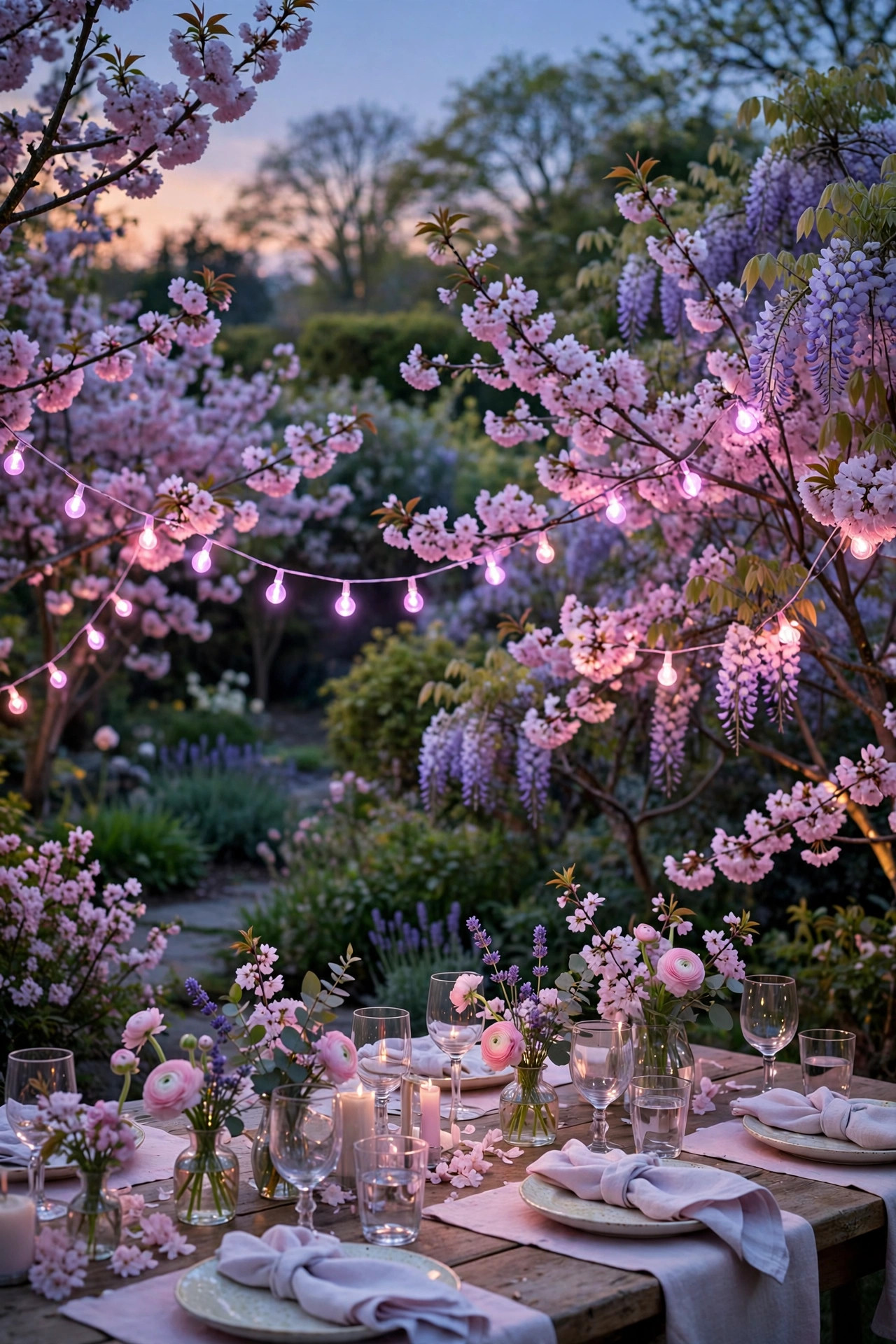
Color-changing lights aren't only for the loud holidays. Some of my favorite evenings here are spring garden parties where every fixture goes pastel — blush pink in the lanterns, soft lavender along the path, the palest mint washing the fence. Pastels are just your saturated colors at lower intensity with white mixed in, so use the app's saturation slider and pull colors toward white until they look like watercolor. This palette flatters flowers, bridesmaid dresses, and Easter eggs equally, and it photographs like a dream in the blue hour just after sunset. Pair it with warm-white string lights left at their natural color — that tension between warm and pastel is what stylists do, and it keeps the scene from looking like a candy store. If you're hosting a baby shower or Mother's Day brunch that runs into evening, this is your scene. It is also the palette I reach for when neighbors are coming over and I want the yard to feel special without shouting about it.
Suggested budget range: $15 – $40.
14. Sync Your RGB Outdoor Lights to Music for Backyard Parties
For birthdays and summer parties, music sync is pure joy: the lights pulse and shift with the beat, and the whole yard feels like it's dancing. Most RGB systems offer this through the app using your phone's microphone, and some fixtures have a built-in mic mode. My honest advice from several parties' worth of testing: use music mode for one layer only — the string lights or the floods — and keep the rest of your scene steady. Everything pulsing at once is overwhelming by the second song. Set a moderate sensitivity so the lights respond to the chorus, not every drum hit, and cap the brightness around 80 percent. This is the layer my kids and their friends request by name, and it pairs beautifully with the casual setups in our outdoor party lighting ideas. When the party winds down, one tap returns everything to a calm amber. Keep a phone charger handy outdoors, though — the microphone mode is the one feature that truly eats a battery.
Suggested budget range: $20 – $70.
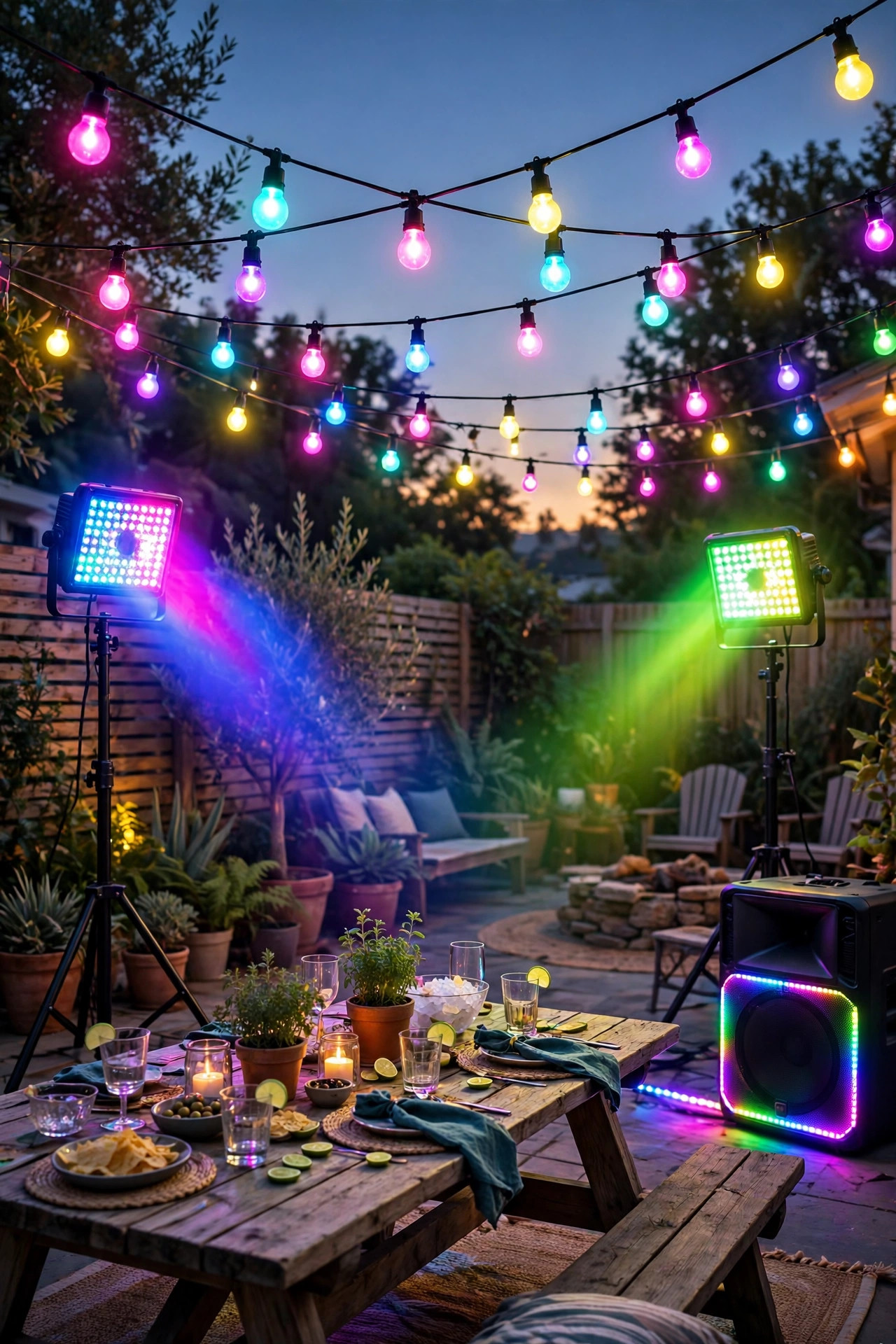
15. Use Smart Plugs to Bring Regular Lights Into the Scene
Here's a budget secret: not everything in your color scene needs to be a color-changing fixture. Outdoor smart plugs let ordinary lights — the warm string lights you already own, a vintage lantern, the inflatable's blower — join the schedule and switch on and off with your scenes. What they can't do is change a regular bulb's color, so I use plugs for the warm-white supporting layers and let the true RGB fixtures carry the color. Look for plugs rated for outdoor use with a weatherproof housing, and mind the wattage rating if you're running multiple strands through one plug. This trick saved me real money: my existing patio strings, bought years ago, now wake up in perfect sync with the new color layers every evening. It's also the easiest way to put holiday inflatables and window candles on the same dusk-to-11 schedule as everything else. Just remember that a plug is a switch, not a dimmer, so anything plugged into it should be happy running at full brightness.
Suggested budget range: $15 – $45.
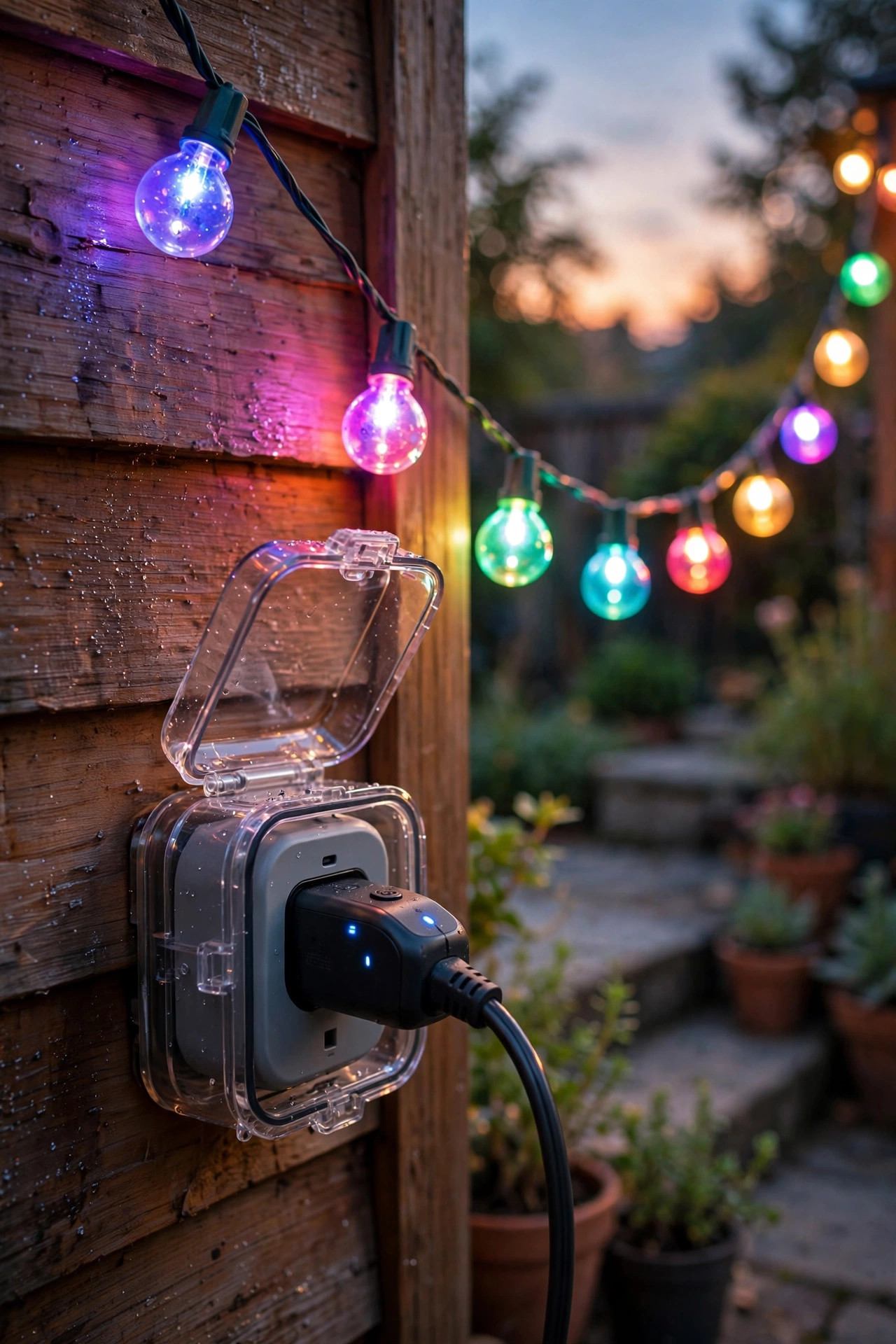
16. Build One-Tap Scenes and Schedules in the App
The difference between people who love their RGB lights and people whose lights sit on one color forever is scenes. Spend twenty minutes once, and save a scene per occasion: Game Day, Halloween, Christmas, July 4th, Pastel Party, and an Everyday Warm for normal nights. In each scene, set every layer's color and brightness deliberately — floods at 70, strings at 80, paths at 50 — rather than accepting everything at full blast. Then put Everyday Warm on an automatic dusk schedule so the house looks good nightly with zero effort, and layer holiday scenes on top manually when the occasion comes. Most apps also offer sunrise/sunset offsets, which I use so lights come on twenty minutes before true dark in winter. This one-time setup is the whole secret to a system that feels like magic instead of homework. I name scenes with the month or occasion right in the title, so future-me never has to guess which one is which.
Suggested budget range: $10 – $30.
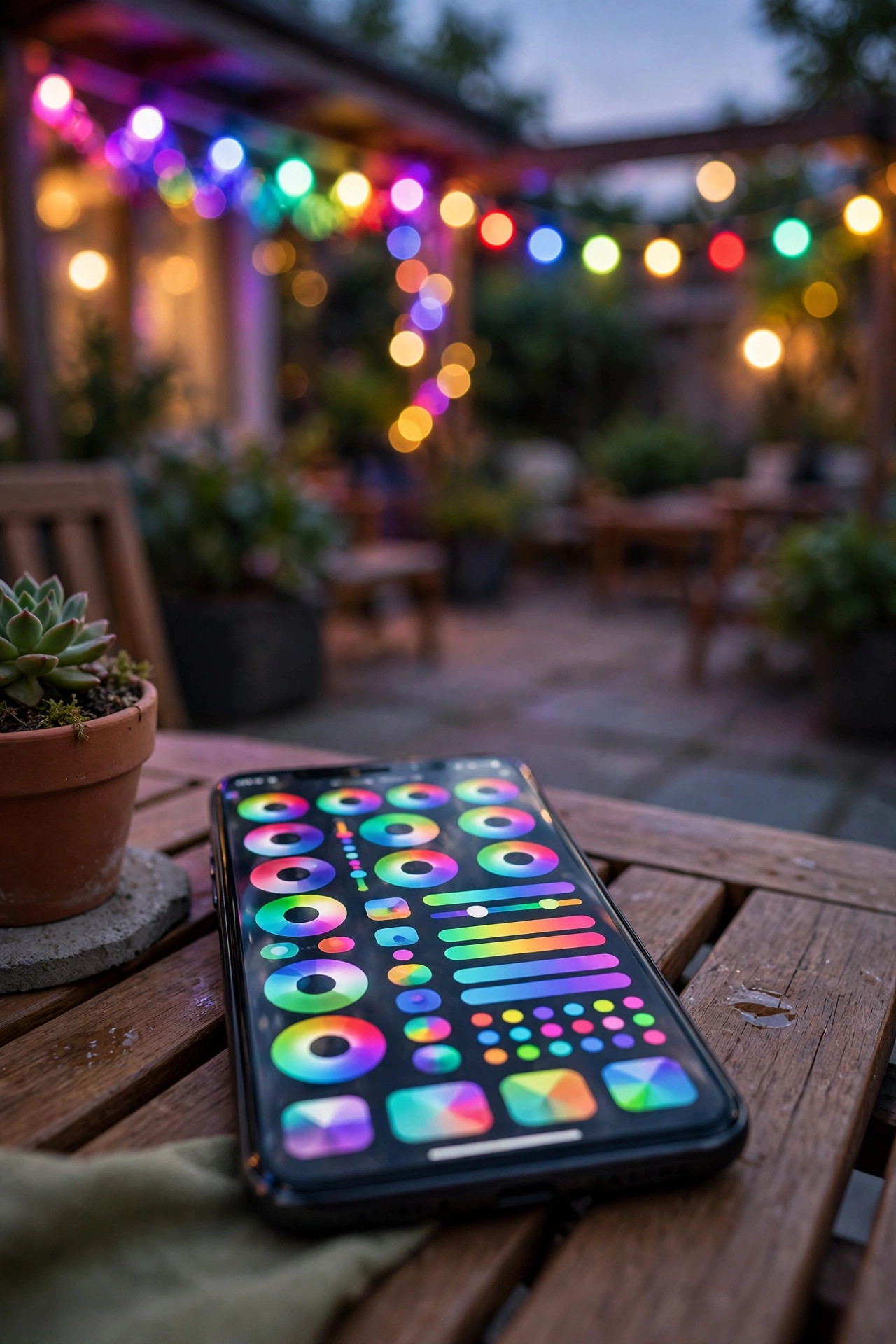
17. Dot Flower Beds With Color-Changing Solar Stakes
Solar color-changing stakes are the playful layer — inexpensive, wire-free, and surprisingly effective tucked into flower beds and along borders. Each little fixture cycles through colors or holds a shade you pick, and a dozen of them scattered through plantings look like fireflies with better color sense. I'll be honest about the trade-offs: solar stakes are dimmer than wired lights and their batteries fade after a season or two, though most have replaceable batteries. Position them where they'll catch full sun by day, and treat them as accents, never as your only path lighting — guests still need a real light to walk by. For holidays they're unbeatable value: orange stakes in the mums in October, red and green in the evergreen beds in December, and a soft rainbow fade for summer nights. At this price, experimenting costs almost nothing. Stake them a little deeper than you think — a season of rain and mulch will work shallow ones loose by spring.
Suggested budget range: $20 – $50.

18. Ring in New Year's Eve With Gold and Champagne Tones
New Year's Eve calls for glamour, and gold is the most flattering color your lights can wear. I set every fixture to a warm champagne gold — on most apps that's a soft amber with the saturation pulled down — then add one accent layer, usually the string lights, on a slow sparkle or twinkle effect. The result looks like the whole house is dressed for a toast. Cool white is the supporting player here: a touch of it in the path lights keeps walkways safe in icy weather and makes the gold read richer by contrast. If your celebration moves between indoors and the patio, match the indoor bulbs to the same gold so the whole home feels like one party. At midnight, a quick all-lights color burst from the app is our family's version of a countdown confetti drop — zero cleanup included. It has become our tradition, and honestly the neighbors now wander out onto their porches to watch our countdown glow.
Suggested budget range: $15 – $50.
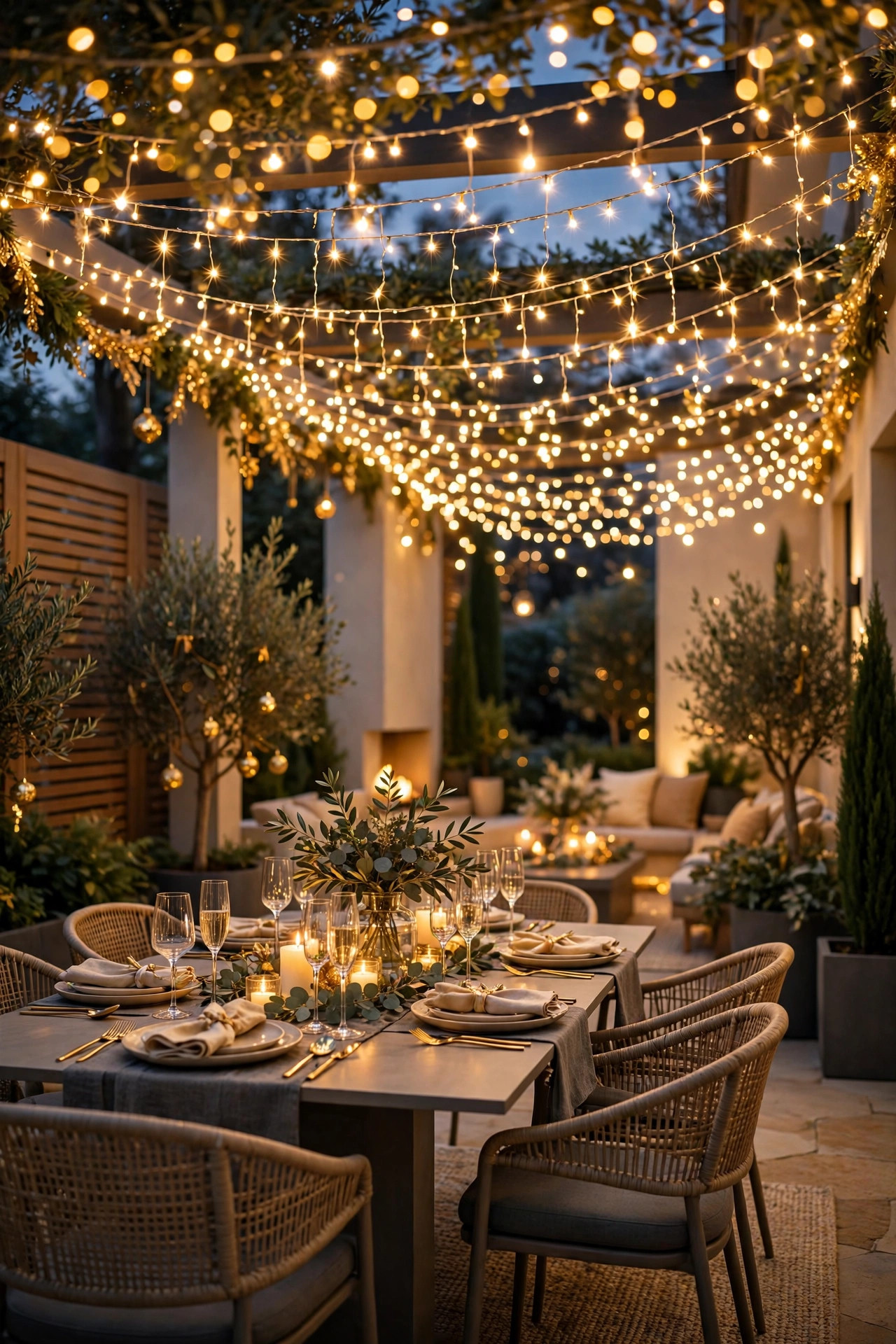
19. My Layering Formula for RGB Outdoor Lights That Never Look Garish
After several seasons of experimenting, here is the formula I come back to for every occasion. Choose one hero color and let it dominate — the floods or the roofline. Pick one supporting color for a second layer, ideally a neighbor on the color wheel or a classic holiday pairing. Then ground everything with warm white: porch, paths, and anywhere guests walk or faces gather, because color on skin looks fun in photos and strange in conversation. Keep effects — twinkle, chase, music sync — to one layer at a time, and dim everything by about a quarter from what looks right on your phone screen; outdoor color always reads stronger at night. Finally, step to the street and look at the whole picture before guests arrive, the way you'd check a room before company. Following this formula, rgb outdoor lights make our home the one neighbors slow down for — in the good way.
Suggested budget range: $100 – $250.
Frequently Asked Questions
Can RGB lights also do a normal warm white for everyday use?
Yes — and this is the question I get most. Every decent color-changing fixture can produce white, and models with a dedicated white channel (often sold as RGBW) make a genuinely warm 2700K that matches traditional bulbs. I run mine as plain warm white most of the year and only bring out the colors for occasions, so the house never looks like a theme park on a random Tuesday.
Are color-changing outdoor lights waterproof?
The fixtures can be, but you have to check the rating on each product rather than assuming. Look for IP65 or higher on anything that will see direct rain; IP44 is splash-resistant and belongs under eaves or covered porches only. Controllers, plugs, and power supplies are usually the weak points, so keep them in weatherproof boxes or under cover even when the lights themselves are fully rated.
Do RGB lights use more electricity than regular LEDs?
Barely. A color-changing bulb uses a watt or two more than a plain LED bulb because of its control electronics, and it sips a tiny amount of standby power to stay connected. A whole evening of a full-yard color scene typically costs a few cents. Timers and schedules — lights off at 11 p.m., for instance — save far more than the electronics use.
Can I mix different RGB lights and control them together?
Within one app or ecosystem, yes — bulbs, strips, and floods from the same system group into scenes easily. Across different systems it gets clunky, since each wants its own app. My practical advice: pick one main system for your fixtures, and use smart plugs to fold your older, non-color lights into the same schedules where the platform allows it.
Conclusion
One set of fixtures, every occasion on the calendar — that's the real promise of rgb outdoor lights. Start small with porch bulbs or path lights, save your scenes as you discover what you love, and build a layer at a time. Whether it's team colors on Saturday, purple shadows on Halloween, or gold on New Year's Eve, your home can dress for the moment in one tap. Browse more of our lighting ideas here on the site, and start planning your first scene — I'd begin with game day.