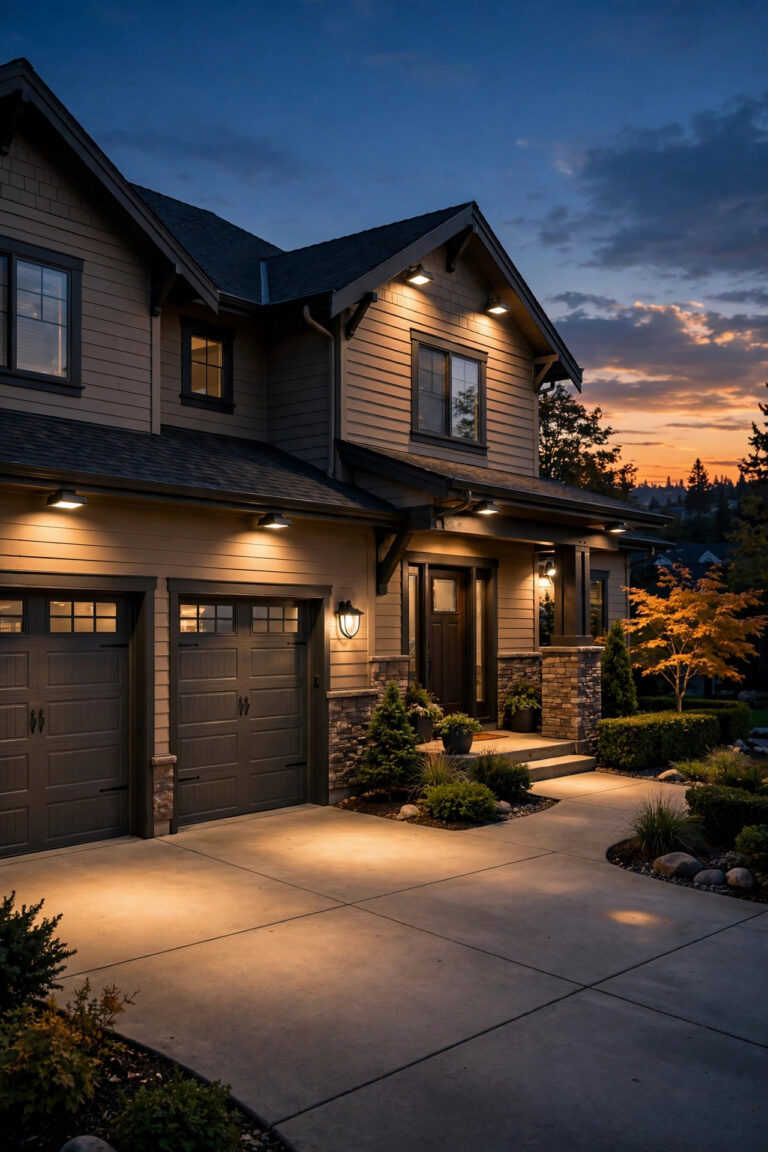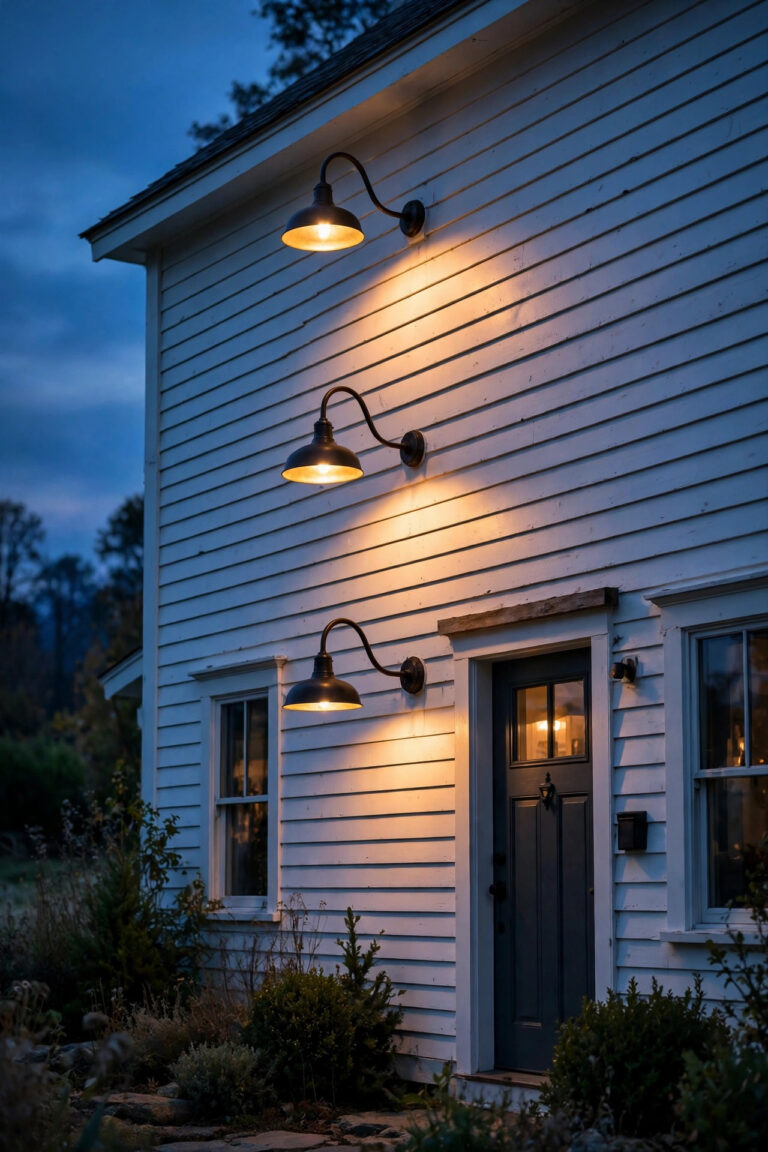
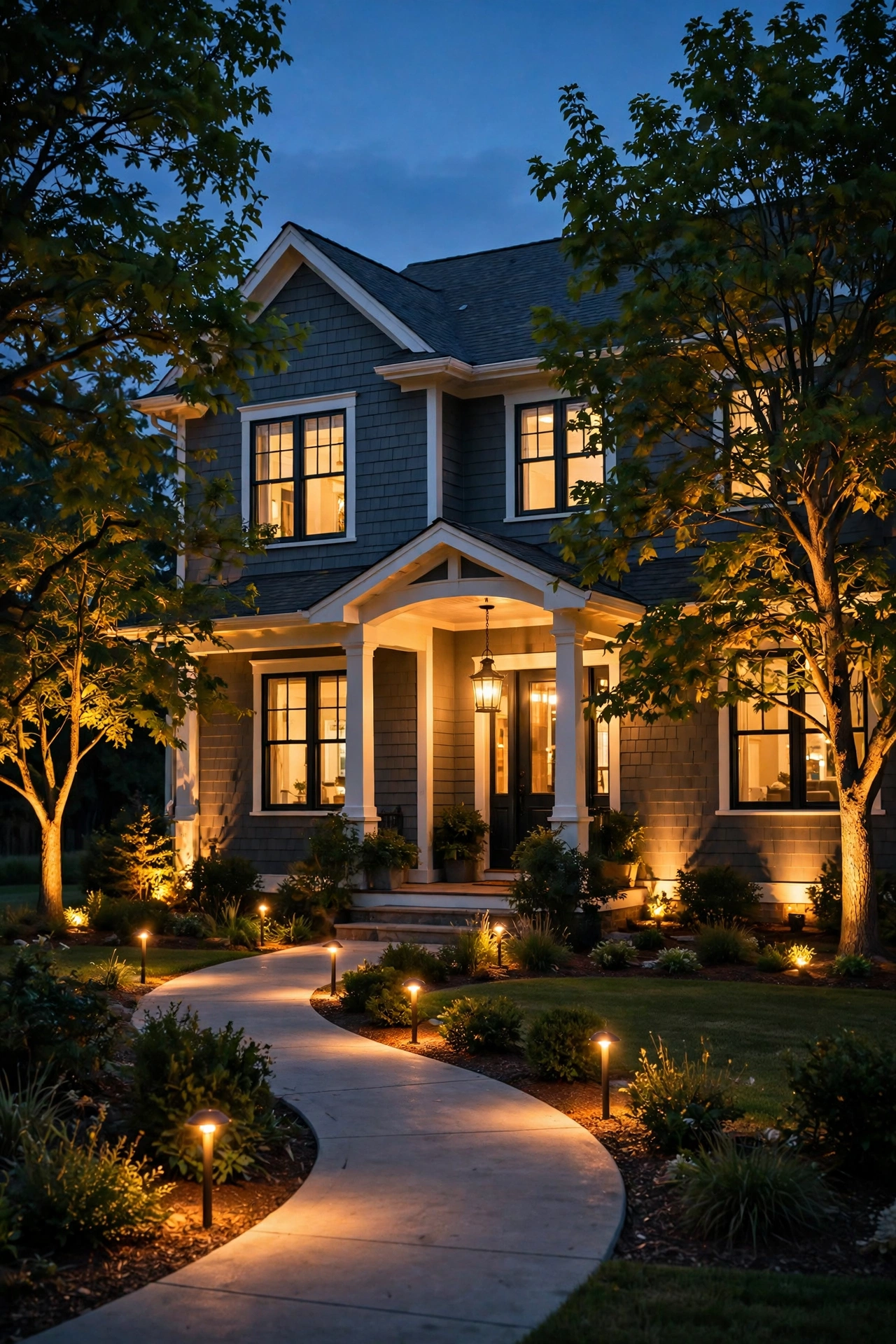
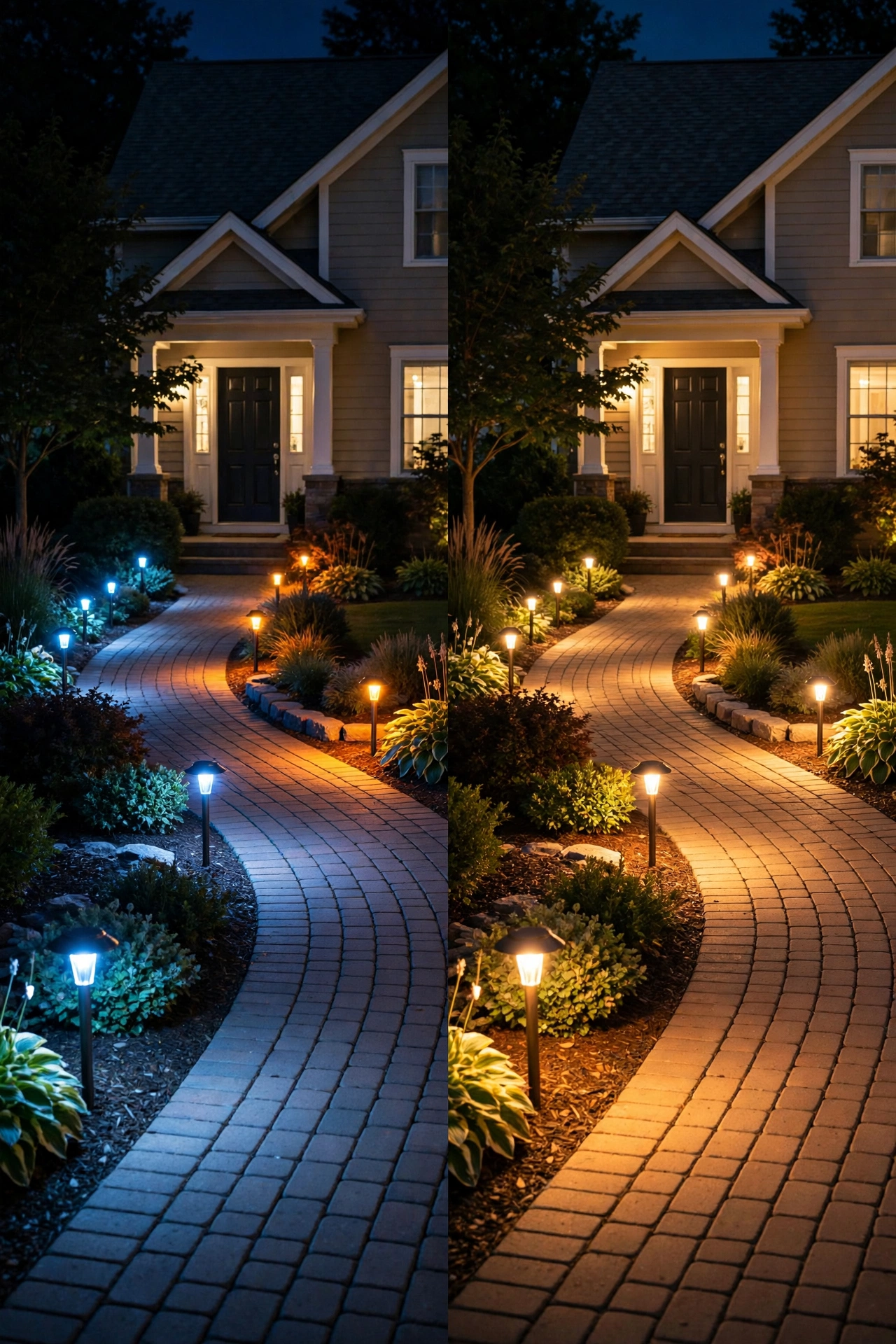
There's a reason some houses glow at dusk like a candlelit cottage and others look like a gas station parking lot, even when both have "nice" fixtures. It's almost never the fixture. It's the outdoor light color temperature — the warmth or coolness of the light itself — and honestly? It matters more than almost any other decision you'll make in your lighting plan. I've seen homeowners spend thousands on gorgeous copper path lights and brass lanterns, then wonder why the whole yard feels cold and uninviting. Nine times out of ten, the culprit was a box of 5000K "daylight" bulbs that turned their cozy brick colonial into a dental office.
Color temperature is measured in Kelvin (K), and for outdoor lighting the whole story lives between about 2200K and 4000K. That narrow band is the difference between "come sit by the fire" and "please move your car." In this guide, I'll walk you through the Kelvin scale in plain English, when to use candlelight-amber versus warm white versus cool white, how to create that dreamy moonlight-through-the-trees effect, how to match temperatures across every fixture so your yard looks intentional, and the mistakes that quietly ruin the whole effect. By the end, you'll be able to read any bulb label like a pro and pick the right temperature for every corner of your home's exterior.
The Short Answer
For most American homes, 2700K warm white is the best outdoor light color temperature — it's the cozy, golden glow that flatters brick, wood, siding, and plants, and it's what nearly all quality landscape fixtures ship with by default. Drop to 2200K amber for fire pits, string lights, and pure ambiance. Step up to 3000K for steps, grill stations, and anywhere you need slightly crisper visibility. Use 4000K cool white only for security floods and driveways where brightness matters more than mood. And keep every visible fixture in a zone matched to the same temperature.
The Kelvin Scale in Plain English
Kelvin is one of those terms that sounds scientific but is really describing something your eyes already know. The lower the number, the warmer and more amber the light — think candle flame. The higher the number, the cooler and bluer it gets — think noon daylight. It comes from the color a piece of metal glows when heated: first deep red, then orange, then white-hot, then blue-white. That's why it's a little counterintuitive at first. Low Kelvin = warm. High Kelvin = cool. Say it once, and it sticks forever.
For outdoor lighting, here's the only range you really need to memorize:
| Kelvin | Mood / Feel | Best Outdoor Uses |
|---|---|---|
| 2200K | Candlelight, deep amber glow | String lights, fire pits, historic homes |
| 2700K | Warm white, cozy and golden | Porches, wall washing, path lights, most landscape lighting |
| 3000K | Neutral-warm, crisp and clean | Steps, grill stations, garage entries |
| 4000K | Cool white, bright and alert | Security floods, driveways, work areas |
| 5000K+ | Daylight, clinical and stark | Almost never outdoors — utility sheds at most |
In my experience, homeowners only ever need three of those temperatures: 2200K for mood, 2700K for almost everything, and 4000K for security. The 3000K slot is a nice middle ground when you want a touch more clarity. Everything above 4000K belongs in a workshop, not on your house. Once you internalize that little table, reading a bulb box becomes second nature — and you'll never again grab "daylight" bulbs for your porch by accident.
2200K: Candlelight and Amber Glow (When to Use It)
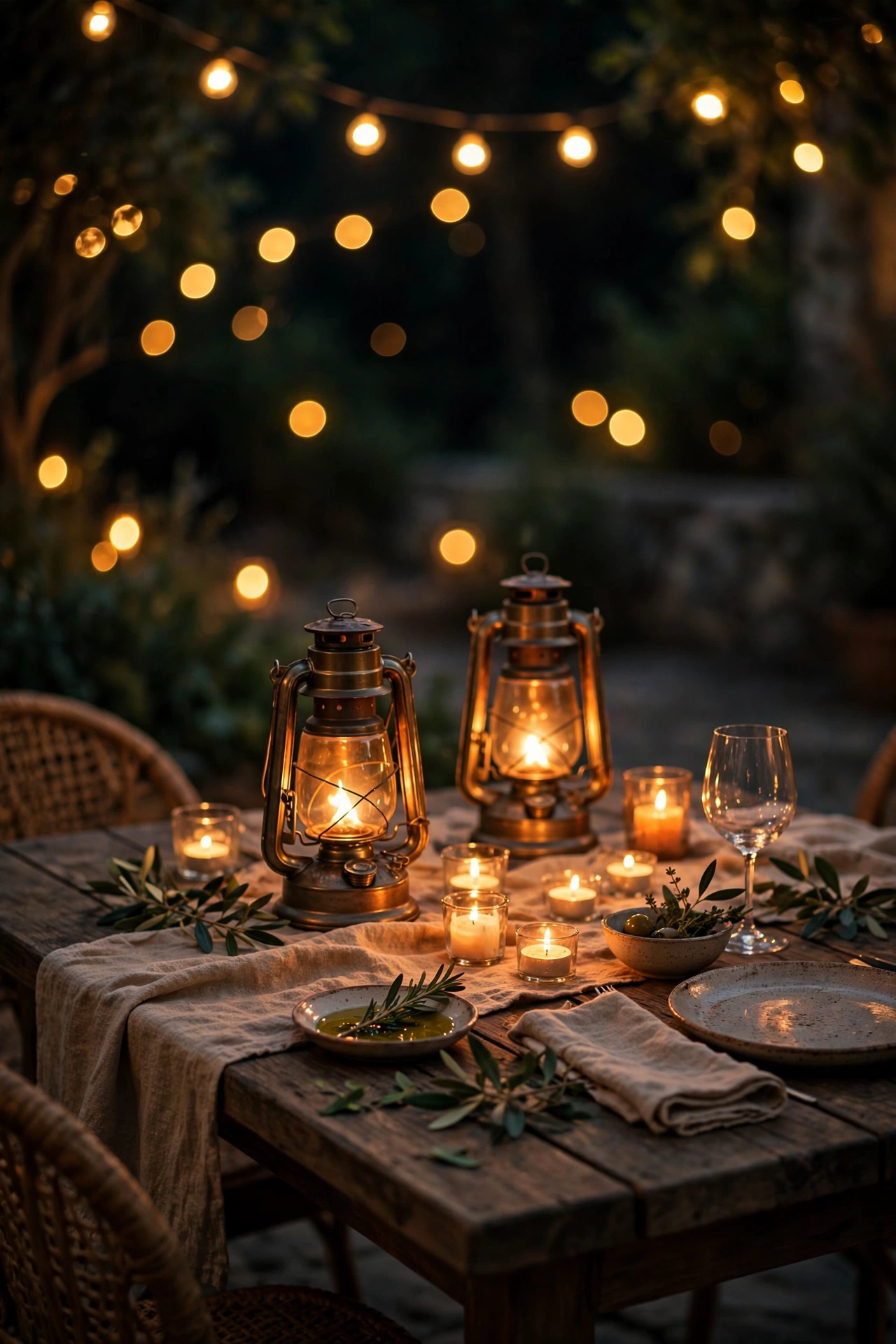
2200K is as warm as outdoor lighting gets without an actual open flame. It throws a deep, honey-amber glow that feels like a campfire distilled into a bulb. This is my favorite temperature for pure atmosphere — it makes everything it touches look romantic and relaxed. I always recommend 2200K for string lights draped over a patio, lanterns clustered around a fire pit, and porch fixtures on homes with a historic or craftsman character where you want that old-gaslight feel.
There's a practical bonus, too: warmer light in the 2200K range attracts noticeably fewer flying insects than cooler, bluer light. If your summer evenings get crashed by moths and beetles the moment the porch light clicks on, switching to amber-toned bulbs is one of the simplest fixes I know. The trade-off is honest, though — 2200K washes out colors. White trim will look cream, gray siding will look taupe, and you won't read comfortably under it. That's fine, because this temperature isn't for seeing. It's for *feeling*. Use it where the goal is ambiance: seating areas, dining patios, pergolas, and anywhere you'd naturally light candles.
2700K Warm White: The Outdoor Sweet Spot for Color Temperature
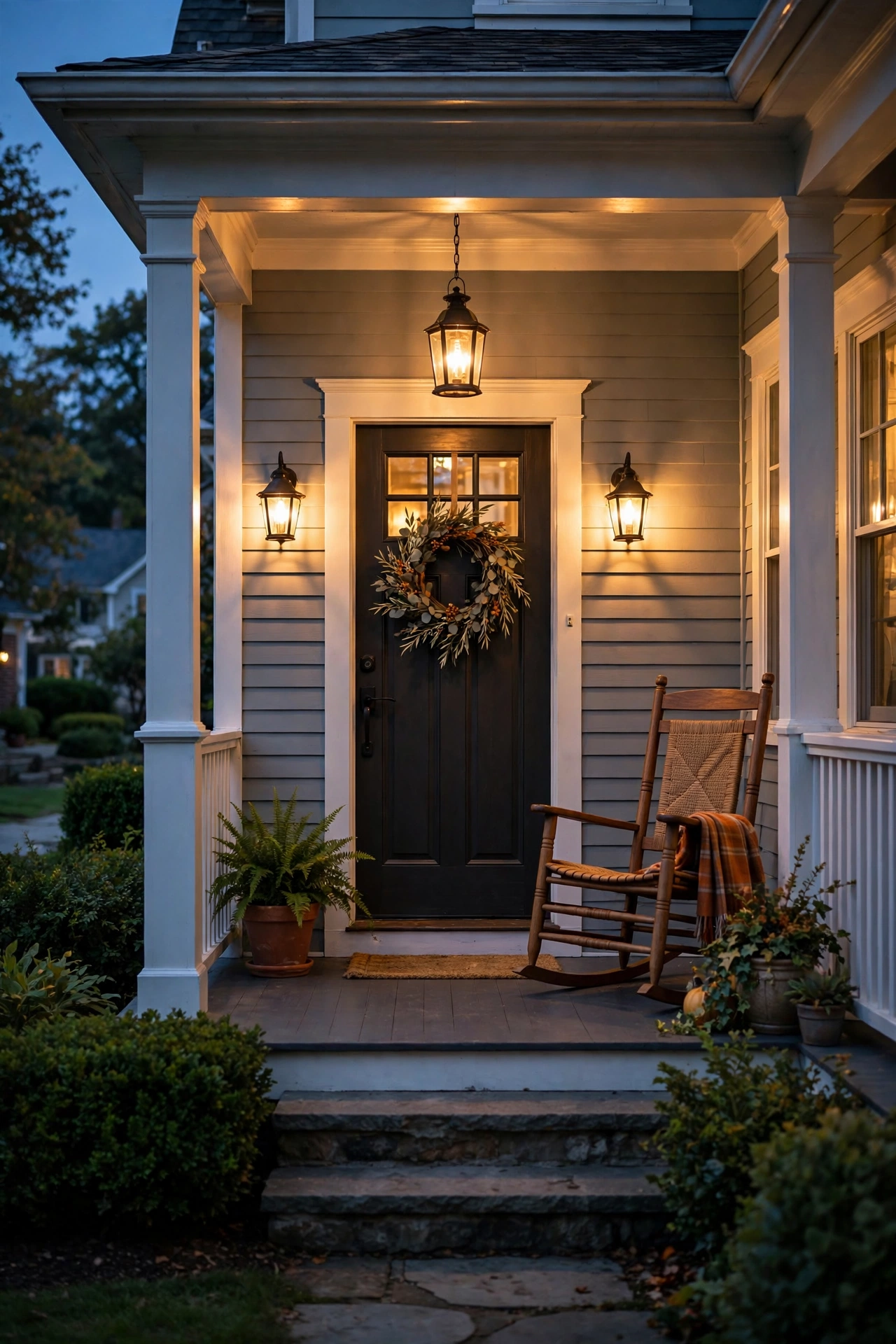
If you take one thing from this guide, let it be this: 2700K is the default outdoor light color temperature for a reason. It sits right where an old incandescent bulb used to live, so it reads as "home" to our brains in a way no other temperature quite manages. It's warm and golden without tipping into orange, and it flatters nearly every exterior material — red brick glows, natural wood looks richer, painted siding looks clean, and green foliage looks lush rather than washed out.
I always recommend starting every lighting plan at 2700K and only deviating where you have a specific reason. Path lights, wall washers, uplights on trees, porch sconces, deck post caps — all of them, 2700K. It's also the temperature that nearly every quality low-voltage landscape fixture ships with, so buying a matched system is easy; you don't have to hunt for it. Skin tones look healthy under 2700K, which matters more than people realize — your porch and patio are social spaces, and nobody looks good in 5000K.
One more thing I've noticed over the years: houses lit at 2700K look expensive. Warm light reads as intentional and designed, the way high-end restaurant patios and boutique hotels do it. Cool white reads as accidental, like someone just screwed in whatever was on sale. If your home currently looks a little stark at night, swapping your bulbs to 2700K is the cheapest facelift in outdoor lighting.
3000K: Crisp Without Being Cold
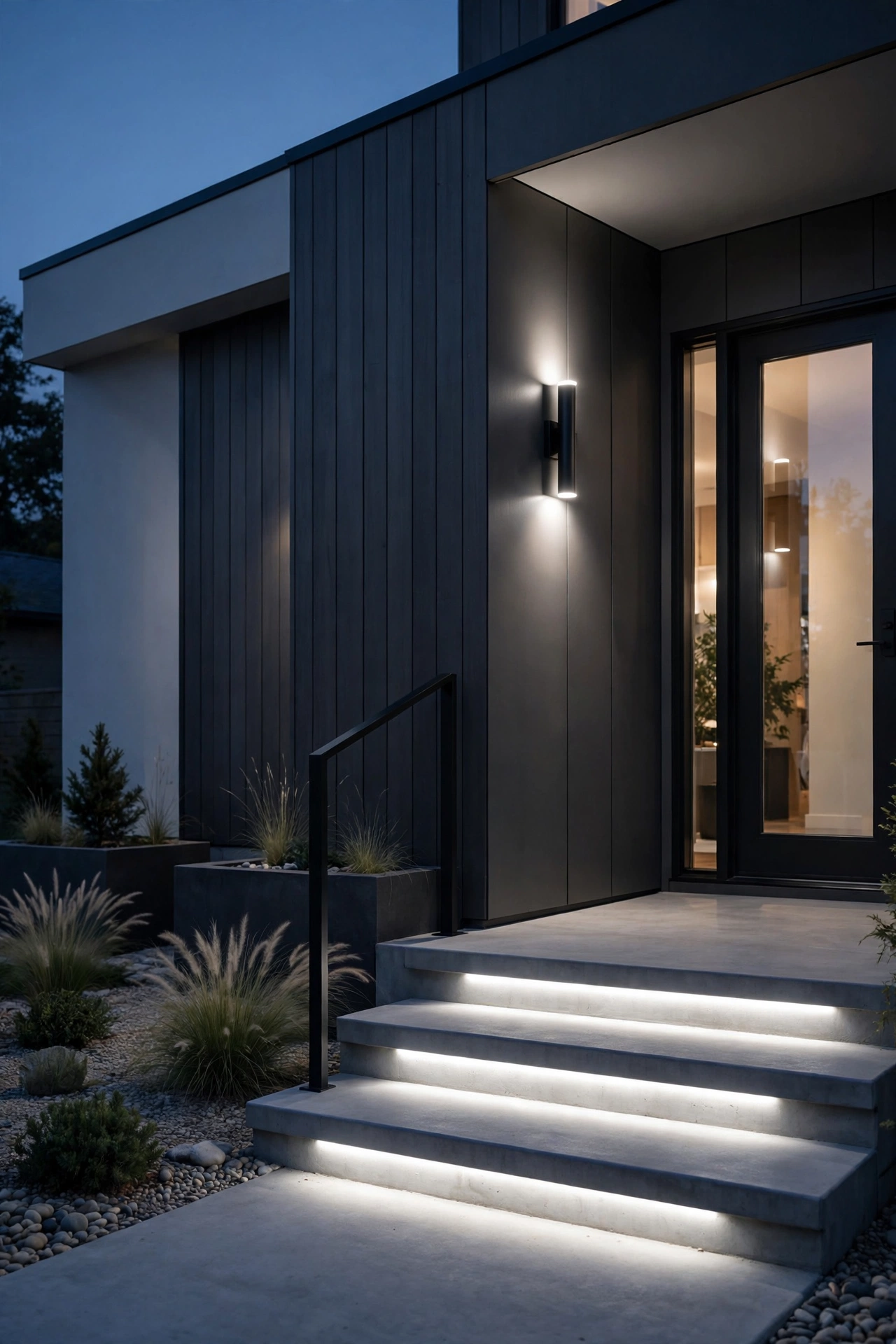
3000K is the diplomat of color temperatures — a touch crisper and more neutral than 2700K, but still firmly on the warm side of the scale. Honestly? Most people couldn't tell 2700K and 3000K apart side by side unless you told them to look. But that slight shift does real work: whites stay whiter, edges look sharper, and faces are a little easier to read. That's why I recommend 3000K for the spots where visibility actually matters — the steps down from the deck, the path to the trash cans, the grill station, the garage entry.
Think of 3000K as your "task lighting" temperature outdoors. Where 2700K is for lingering, 3000K is for doing. I like it over outdoor kitchen counters, above the door you unlock with groceries in your arms, and on house numbers or address plaques where legibility counts. It also pairs well with modern homes — clean-lined contemporary exteriors, gray stucco, black window frames — where a whisper of neutrality feels more current than full golden warmth.
The rule I give clients is simple: default to 2700K, upgrade to 3000K anywhere someone could trip, cook, or fumble with keys. And if you're mixing the two on one property, keep them in separate zones — 2700K on the patio where you relax, 3000K at the grill ten feet away. That separation is exactly the kind of intentional mixing that works beautifully, which I'll get to below.
4000K and Above: Cool White (When It Works, When It Ruins the Mood)
Let's talk honestly about 4000K and up, because this temperature range gets a bad reputation in decor circles — and most of the time, it deserves it. Cool white light outdoors can make a beautiful home look like a convenience store. It flattens texture, turns warm brick vaguely pink-gray, and makes landscaping look bleached. I once visited a client whose entire backyard was lit at 5000K because the box said "daylight" and it sounded like a good thing. From the street, their colonial looked like it was under interrogation.
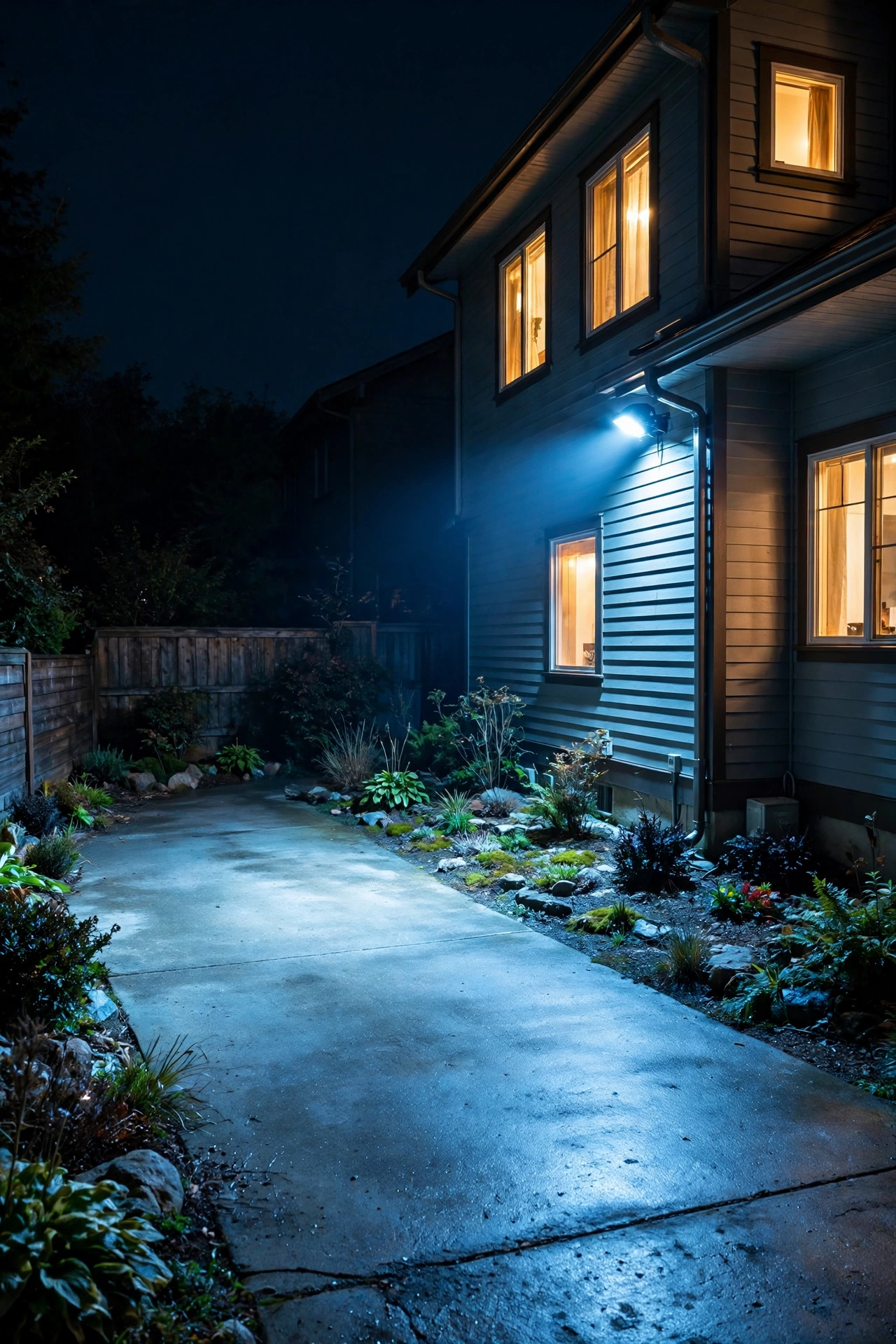
But — and this is important — cool white has legitimate jobs. For security floodlights, 4000K is genuinely better: it renders detail more sharply on camera, reads as brighter to the eye at the same wattage, and sends a clear "this area is watched" signal. Driveways, side gates, and dark corners where you want deterrence rather than charm are all fair game. The key is placement and separation. Keep cool-white security fixtures aimed at the driveway and side yard, pointing *away* from the house, while your warm 2700K lighting handles the facade, porch, and garden. Two different jobs, two different temperatures, two different zones — and from the curb, the house still looks like home.
One caveat: be a good neighbor. Cool-white floods that spill onto a neighbor's bedroom window are one of the most common outdoor lighting complaints there is. Aim them down, shield them, and put them on motion sensors so they're only blazing when something's actually there.
The Moonlight Effect: Cool Downlights Through Trees
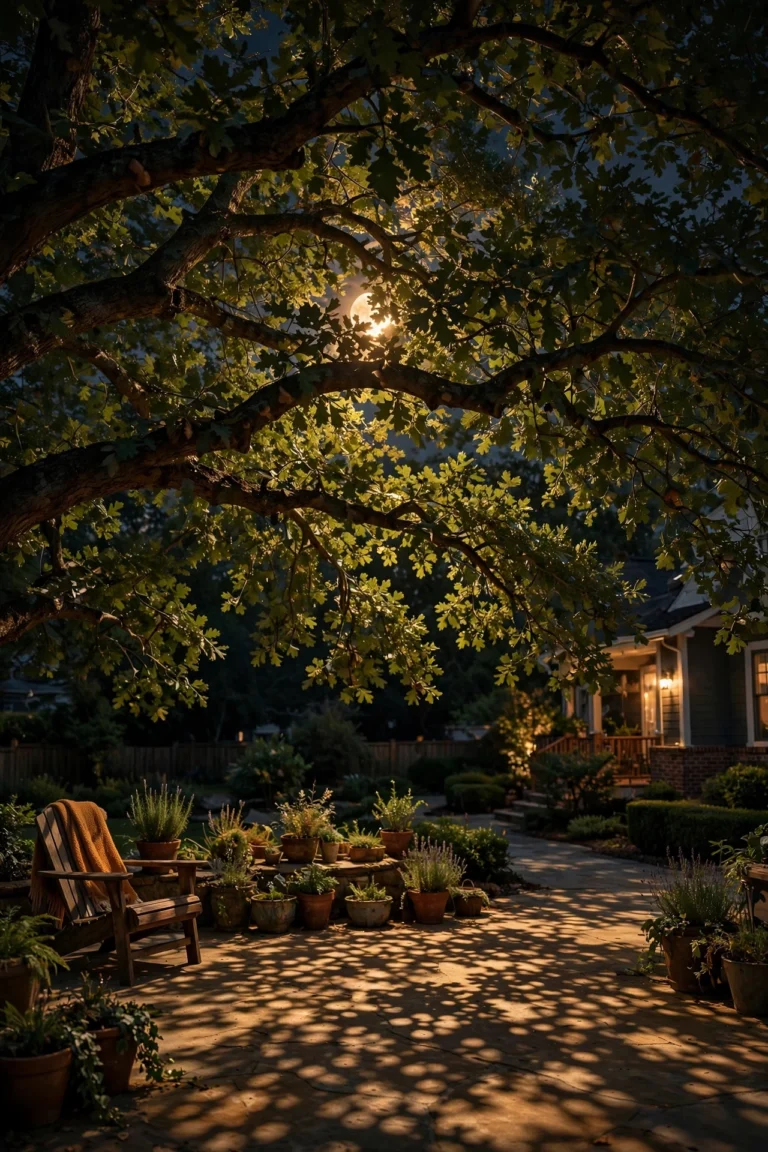
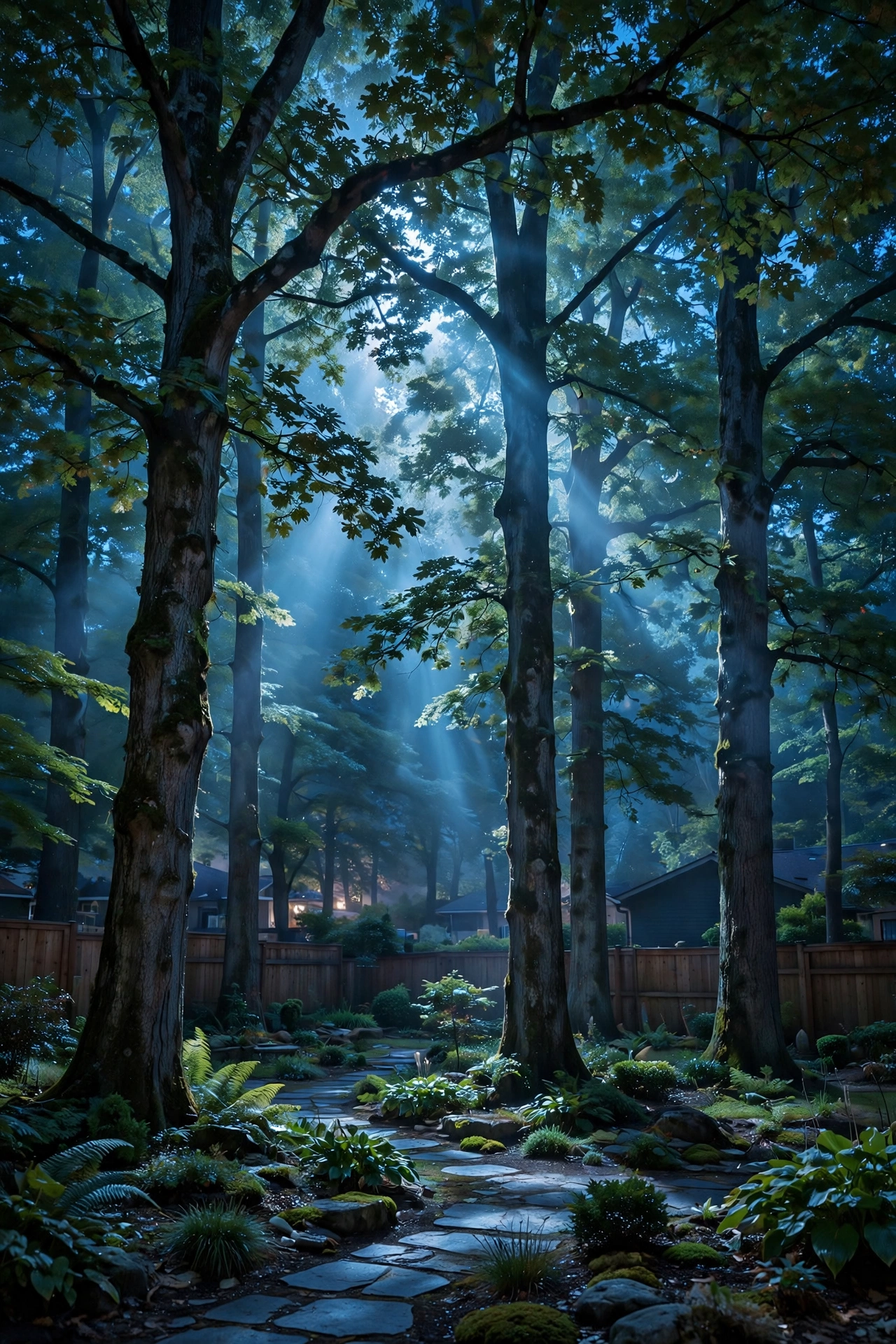
Here's the delightful exception to everything I just said about cool light: moonlighting — mounting downlights high in trees so the light filters through the branches and dapples the ground below, just like moonlight. Real moonlight sits around 4100K, so this is the one residential technique where a cooler temperature is actually the *authentic* choice. Warm downlights in a tree look fine, but they read as "light fixture in a tree." Cooler downlights read as "moonbeam." There's a magic to it that's hard to describe until you've stood under it.
The technique: mount a shielded downlight 20 to 30 feet up in a mature tree, aimed down through the canopy, using 3500K to 4100K. The branches and leaves break the beam into soft, shifting pools of light — and because the source is hidden in the foliage, nobody sees a fixture, just the effect. It works best over patios, lawns, or walkways where you want gentle, even illumination without any visible light source.
Two practical notes. First, this is a "hired" technique for most people — getting a fixture 25 feet up a tree and wired properly is real tree work, and I always recommend a professional for the install. Second, keep moonlighting in its own zone. It's a special effect, and it should feel like one. The rest of your landscape stays at 2700K; the moonbeam is the accent. When it's done right, guests will ask what you did to your yard, and you get to say, with a completely straight face, "I installed the moon."
Matching Outdoor Light Color Temperature Across Your Fixtures
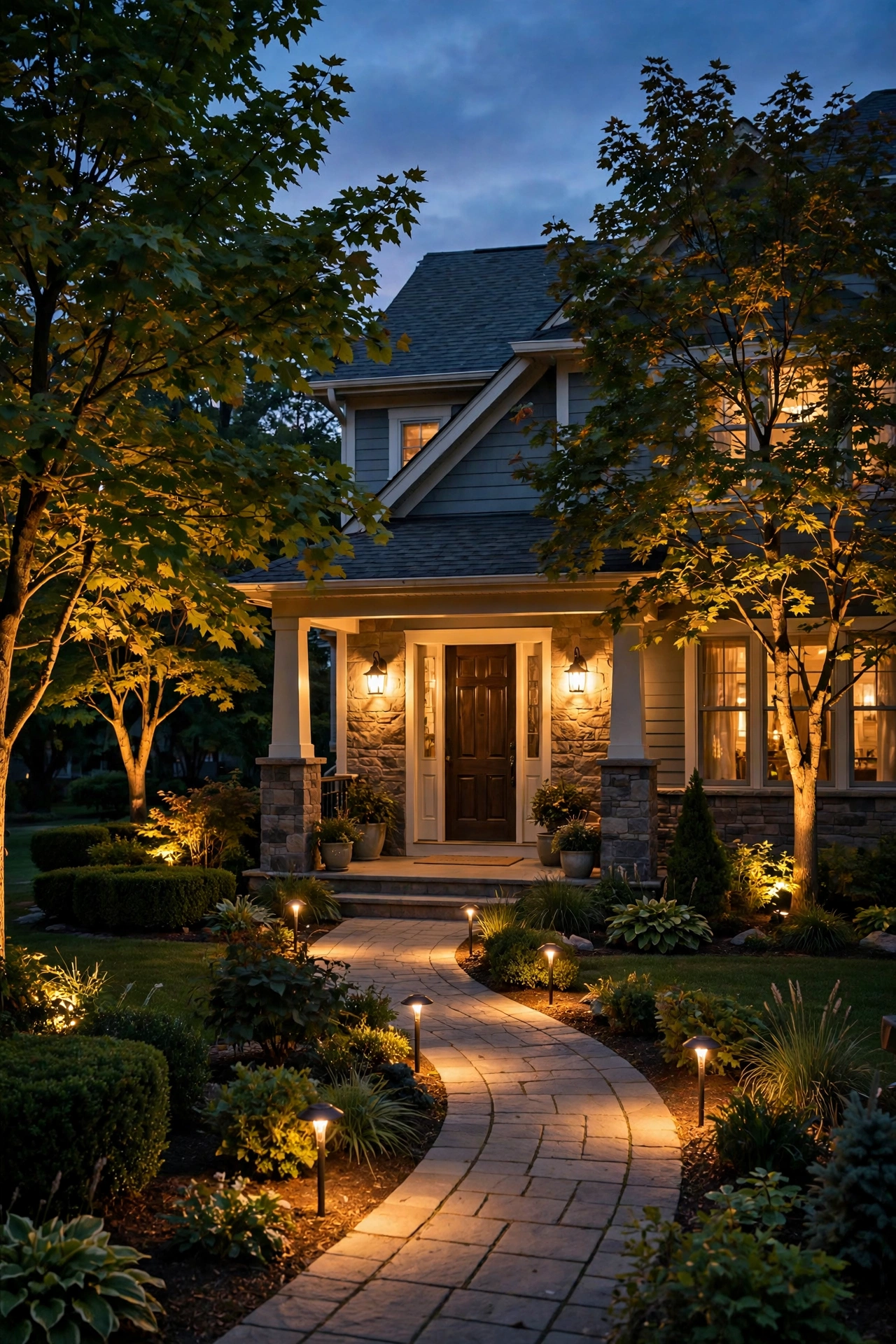
Nothing screams "I bought these on three different clearance runs" like a porch with one amber sconce, one warm-white pendant, and one icy-blue flood all visible from the same spot. Matching your color temperature across fixtures is what separates a *designed* yard from a *collected* yard. The fix is almost embarrassingly simple: pick one temperature per zone and buy everything in that temperature.
Here's my step-by-step approach. First, walk your property at dusk with a notepad and list every fixture that's visible from each vantage point — the porch, the patio, the street. Those clusters are your zones. Second, assign each zone a temperature: 2700K for the house facade and living areas, 2200K for the fire pit corner, 3000K for the steps and grill, 4000K for the security perimeter. Third, when you buy bulbs or fixtures, check the Kelvin on every single box and make sure they match within their zone. A 2700K sconce next to a 3000K sconce on the same porch *will* be noticeable — one looks golden, one looks pale — and it will bother you every time you pull into the driveway.
The sneaky trap is buying from different manufacturers. Two fixtures both labeled 2700K can render slightly differently, especially cheap ones with low color-rendering scores. When it matters — matching sconces flanking a door, a row of path lights — buy them as a matched set or at least from the same product line. And replace bulbs in pairs. One fresh bulb next to one that's been burning for three years will look mismatched even at the same Kelvin, because older LEDs drift warmer as they age.
When Mixing Temperatures Works (and When It Doesn't)
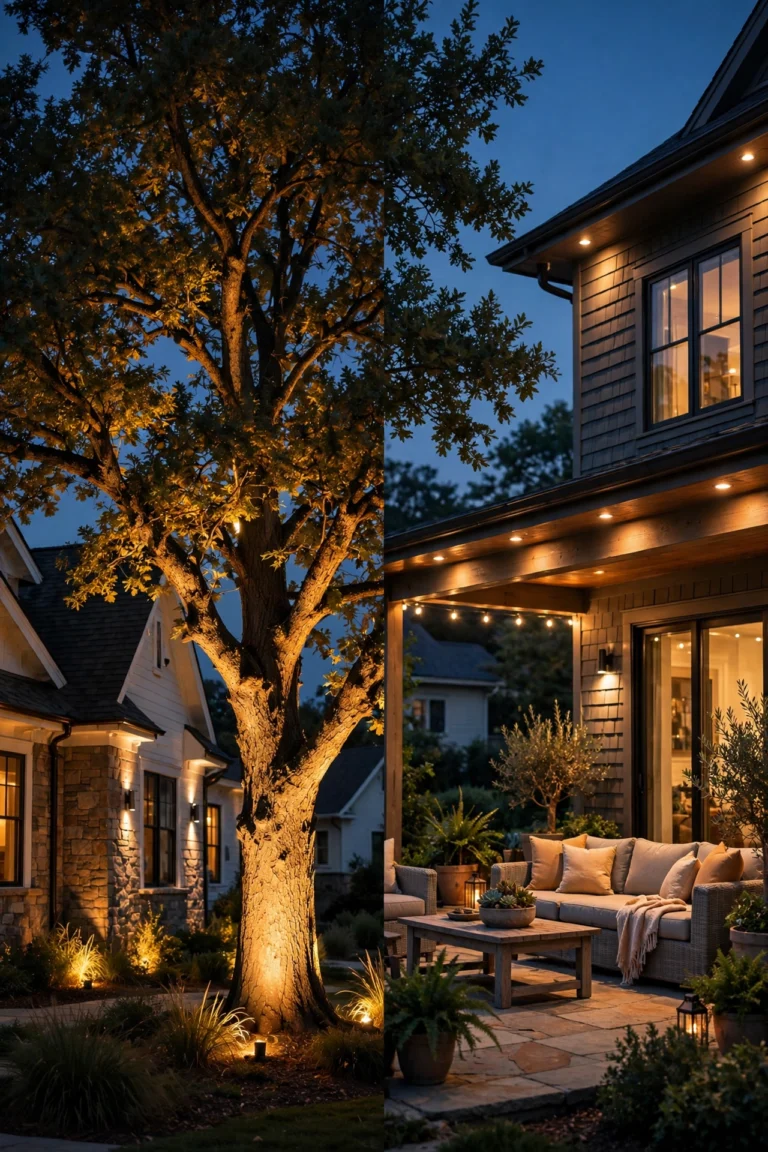
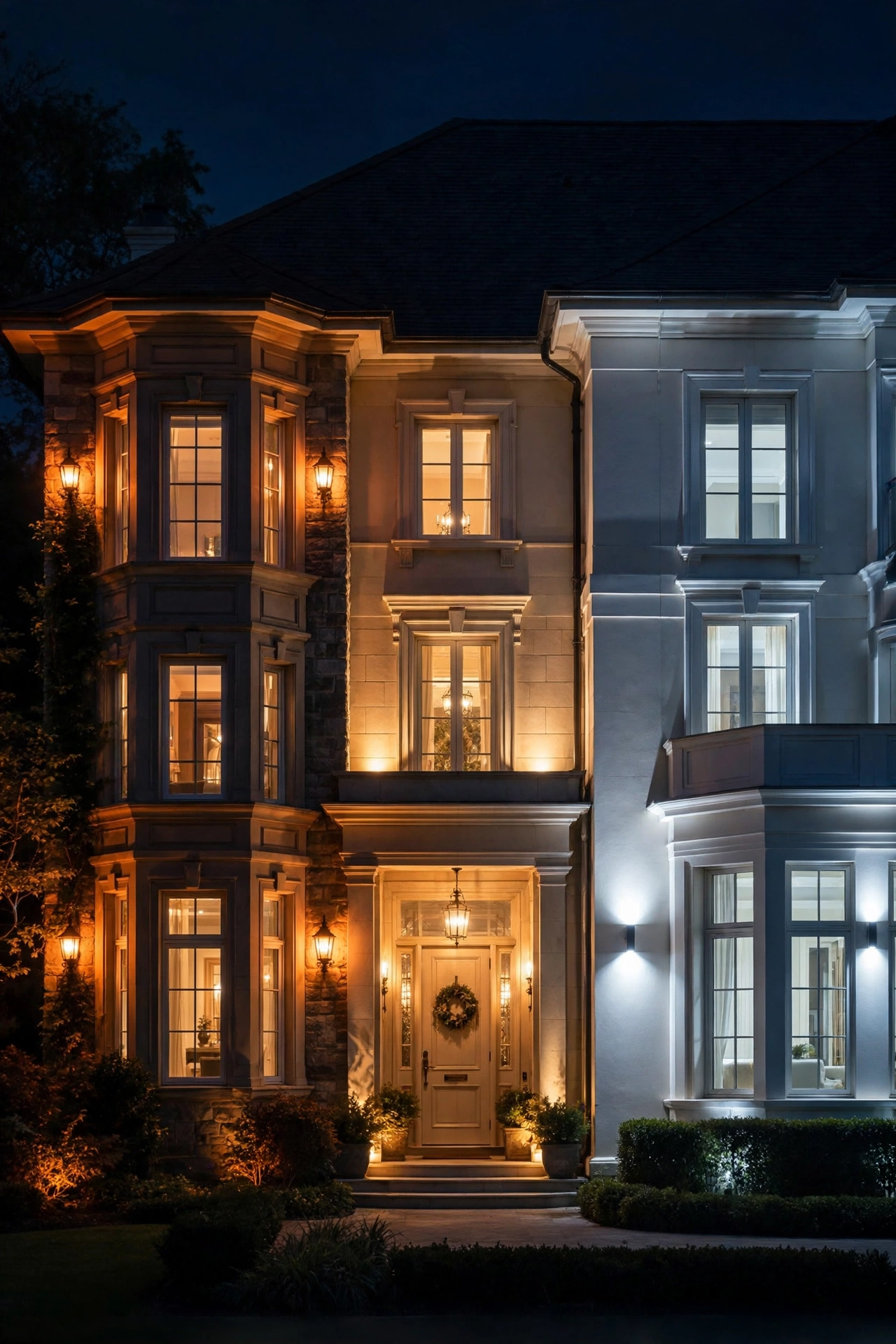
After all that talk about matching, let me confess: mixing color temperatures is one of my favorite advanced tricks — you just have to do it *on purpose*. The difference between a mistake and a technique is intention. Mixing works when each temperature has its own job and its own space. A 2700K patio for lingering, with 3000K task lights at the grill. Warm wall-washing on the brick facade, cool 4000K moonlighting drifting through the oak behind the fence. Candlelit 2200K string lights over the dining table while 2700K path lights guide guests home. Each zone reads clearly, and the contrast actually adds depth — it makes the yard feel layered instead of flat.
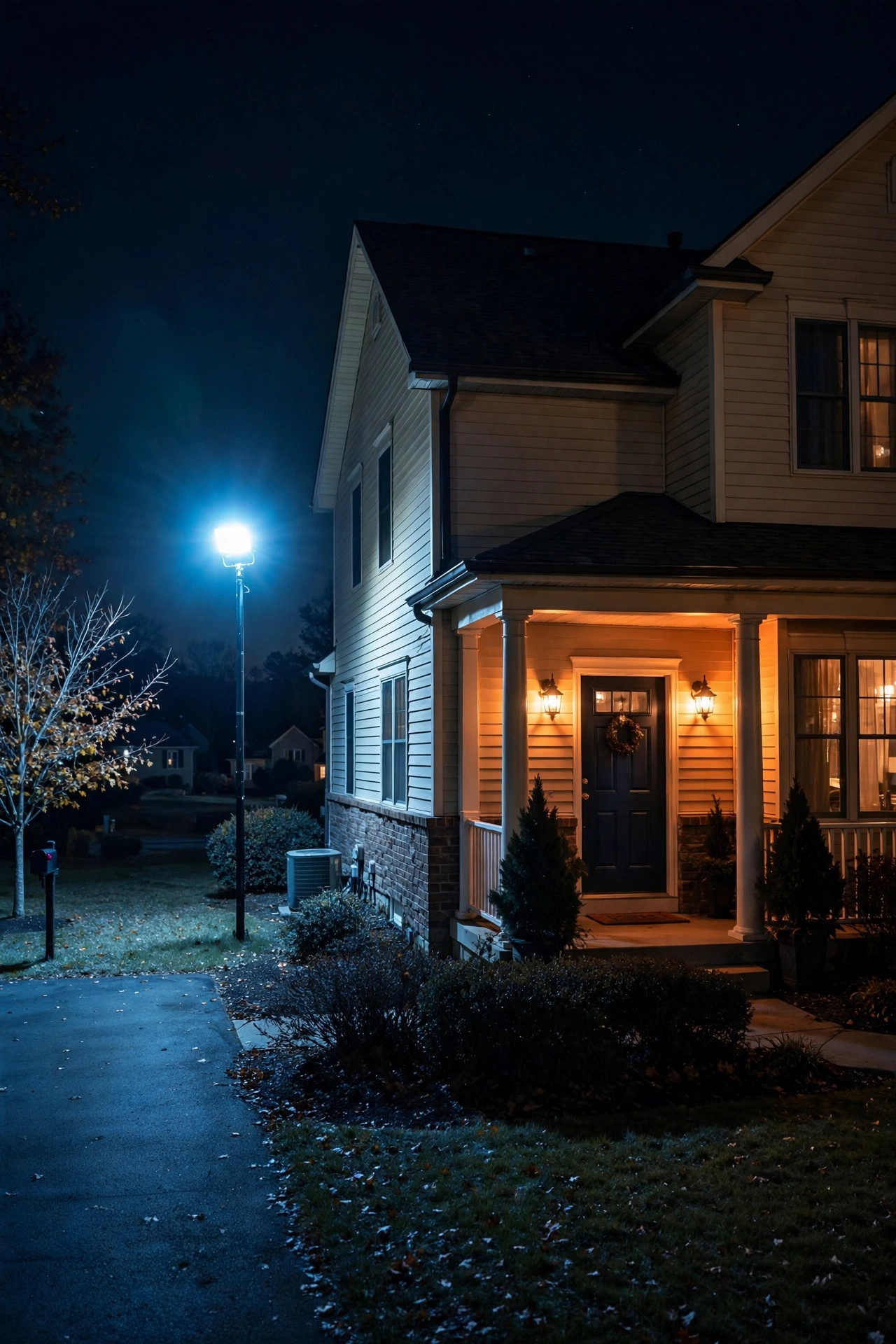
Mixing fails when temperatures collide in the same sightline with no logic. The classic offenses: two different-temperature sconces flanking one door, path lights alternating warm and cool down a walkway, a 4000K flood washing over a 2700K porch so the whole entry looks confused. If someone standing in one spot can see two different temperatures hitting the same surface, that's a collision. The test I use: stand at each vantage point, squint, and ask, "Does every surface I see glow the same warmth?" If yes, you're matched. If you spot the odd one out, swap that bulb.
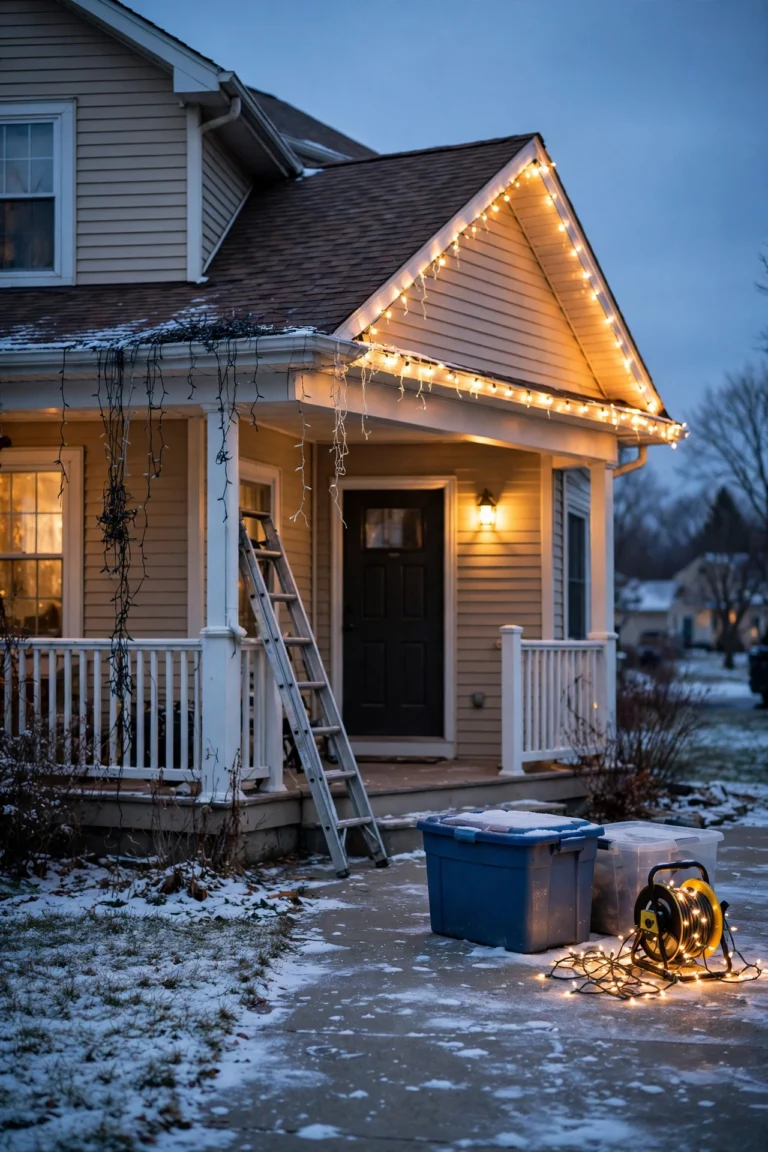
One more spot where mixing is not just okay but smart: holidays. Swap in 2200K amber or colored bulbs for December, then go back to your 2700K baseline in January. Seasonal lighting is meant to be different — that's the whole point.
How Temperature Plays With Brick, Stone, Siding, and Plants
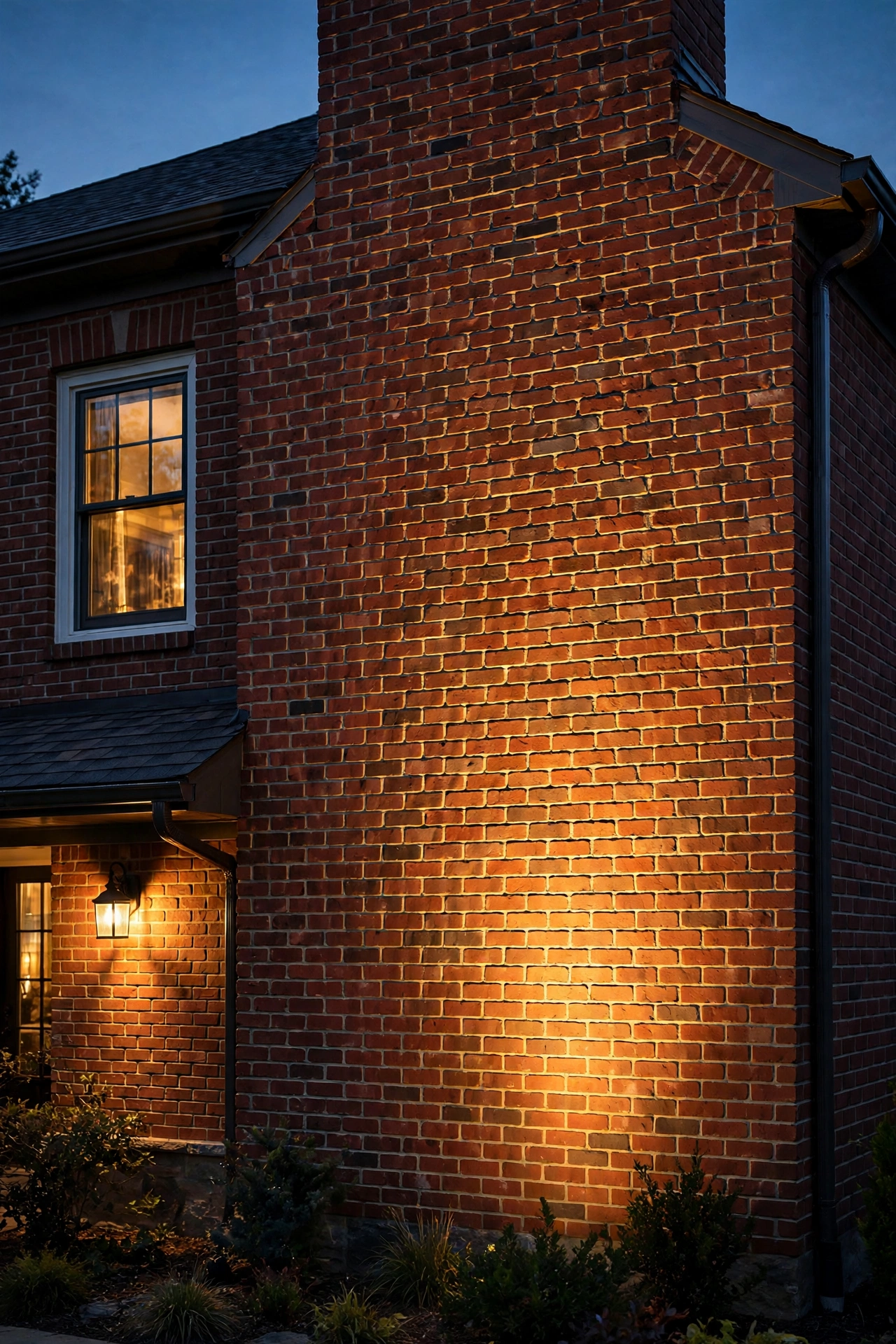
Color temperature doesn't exist in a vacuum — it interacts with every surface it touches, and this is where a little knowledge pays off beautifully. Warm light (2200–2700K) enhances warm materials: red and orange brick glows richer, brown and tan stone looks deeper, natural wood siding takes on that cabin-at-sunset richness. If your home is brick, stone, or wood, warm white is doing you favors every single night. Cool light on those same materials can look off — 4000K on red brick has a way of turning it a strange pinkish-gray that nobody intended.
Flip it for cooler-toned exteriors. Gray stone, modern gray or blue siding, white stucco, and black window frames often look sharper and more intentional under 3000K than 2700K — the slightly neutral light lets the architecture's clean lines speak. White trim under 2700K will read as warm cream (lovely on a farmhouse, wrong on a modern build), so if your home is white or very light, test a 3000K bulb on one fixture before committing to the whole house.
Plants deserve their own note, because landscape lighting lives and dies on foliage. Green leaves under 2700K look lush, deep, and alive — warm light is full of the red wavelengths that make greens read richly. Under 4000K+, foliage can look washed out, almost gray, like a photograph with the saturation turned down. Flowering plants lose their punch too; reds and pinks go muddy under cool light. The one exception is silvery or blue-green plantings — ornamental grasses, blue spruce, dusty miller — which can look striking under the cooler moonlighting effect I described earlier.
My honest advice: before you commit to a temperature for your whole facade, buy one bulb in 2700K and one in 3000K, screw them into your most visible fixtures after dark, and stand on the sidewalk. Ten minutes of testing beats ten years of "something feels off."
Reading the Label: How to Buy the Right Bulbs
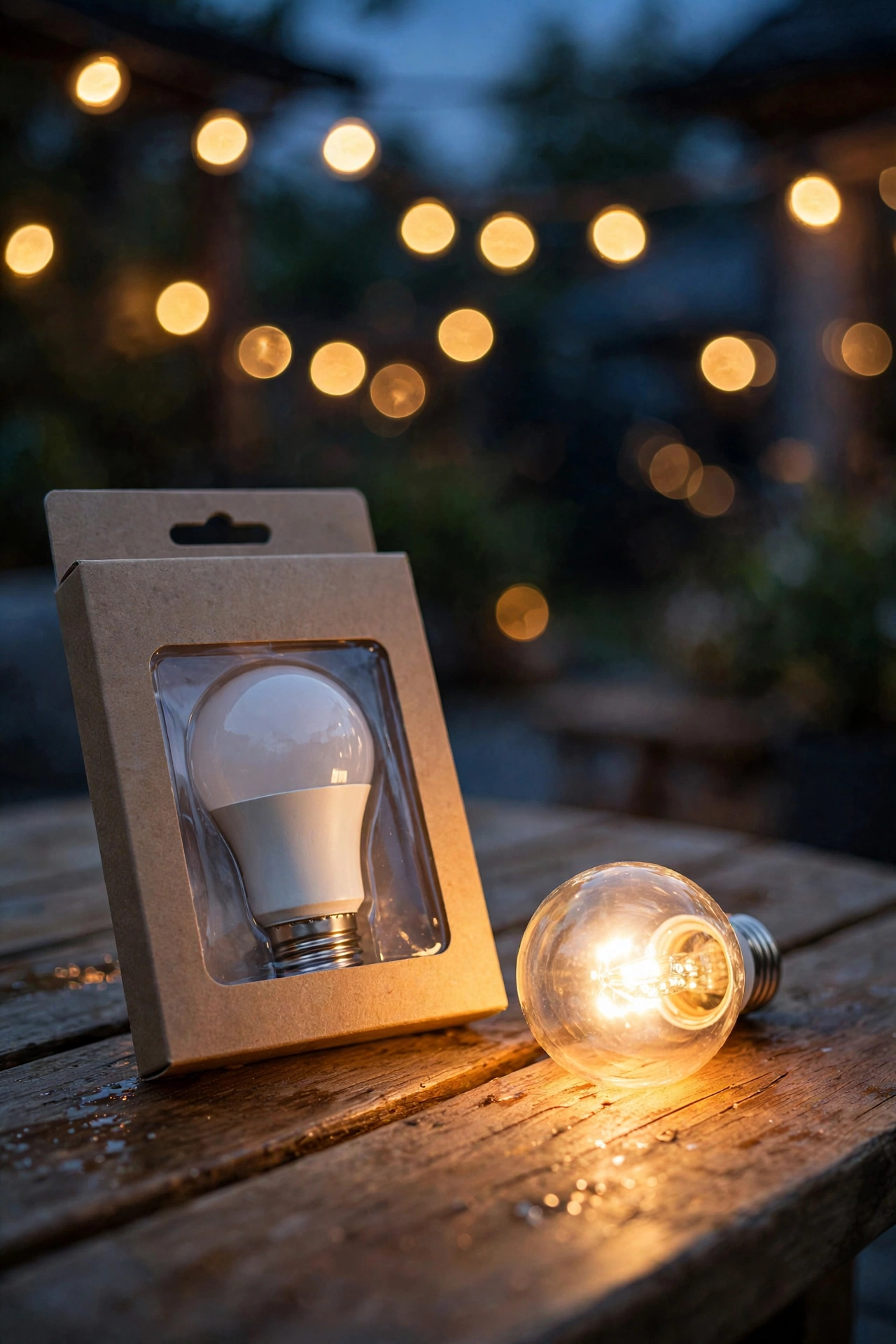
Here's a little secret: most temperature mistakes happen in the store aisle, not in the yard. Bulb boxes are covered in reassuring words — "daylight," "bright white," "soft white" — that mean wildly different things to different manufacturers. Ignore the poetry. Look for the number. Every LED bulb sold in the US carries a Lighting Facts label, and right there on it you'll find the Kelvin rating, usually printed as "2700K" or spelled out as "Warm White 2700K." If the box doesn't show a Kelvin number anywhere, put it back. That's my hard rule.
A few buying tips from years of doing this. First, check the CRI (Color Rendering Index) alongside the Kelvin — 80+ is fine for paths and security, but for your facade and any entertaining space, look for 90+. High-CRI 2700K makes your house look like itself; low-CRI 2700K makes it look like a faded photograph. Second, buy dimmable even if you don't own a dimmer yet. Non-dimmable bulbs can buzz or flicker on dimmer circuits, and dimming is the cheapest way to fine-tune mood later. Third, consider a couple of smart bulbs in your most visible fixtures first — being able to slide between 2200K and 4000K on your phone for a few nights is the fastest way to discover your true preference before you buy twenty identical bulbs.
And watch the wattage trap: LED brightness is measured in lumens, not watts. A 9-watt LED can outshine an old 60-watt incandescent. For path lights, 100–200 lumens is plenty; for porch sconces, 400–800; for floods, 1,500 and up. Match the Kelvin first, then dial in the lumens.
What It Costs in 2026
Good news: color temperature itself barely changes what you'll pay. A 2700K LED bulb and a 4000K LED bulb from the same product line cost essentially the same — the phosphor coating that sets the temperature is pennies in manufacturing. Where you *will* see price differences is in specialty temperatures and features. Standard 2700K or 3000K LED bulbs run $3 to $8 each for common A19 shapes; 2200K amber "vintage" filament styles run $8 to $15 because they're a specialty look; dim-to-warm bulbs (which shift warmer as you dim them, mimicking incandescent) run $12 to $20. PAR38 outdoor floods in any temperature land around $10 to $20 per bulb.
Fixtures are where the real money goes, and again, temperature isn't the cost driver — quality is. Decent low-voltage path lights run $25 to $60 per fixture; quality brass or copper wall sconces run $80 to $250 each; a professional-grade transformer and wiring kit for a full landscape system runs $200 to $500 before fixtures. A professionally designed and installed low-voltage landscape system for an average suburban home typically lands between $2,000 and $5,000, and honestly, the temperature choice is free — it's just a matter of specifying 2700K when you order.
Running costs are almost comically low with LED. A 9-watt LED burning 6 hours a night uses about 20 kilowatt-hours a year — roughly $3 to $4 annually at average US electricity rates. A full 15-fixture landscape system might add $40 to $60 a year to your electric bill. The expensive mistake isn't the temperature you choose; it's choosing cheap fixtures that corrode in two seasons and need replacing. Spend on the housing, save on the bulbs.
6 Mistakes That Ruin the Effect
I've consulted on enough outdoor lighting to have a greatest-hits list of temperature mistakes. Here they are, so you can skip the learning curve.
1. Buying 5000K "daylight" out of habit. It sounds bright and cheerful on the box. On your house, it looks like a hospital. Unless you're lighting a workshop, cap your outdoor temperatures at 4000K — and keep 4000K quarantined to security zones.
2. Mixing temperatures in one sightline. The two-different-sconces-flanking-one-door problem. If two fixtures illuminate the same view, they get the same Kelvin. No exceptions.
3. Letting the facade drift cool. A surprising number of homes end up with 4000K+ wall packs or floods washing the front of the house because "brighter is safer." Your facade is your home's face at night — keep it warm. Push the cool light to the driveway and side yard.
4. Ignoring CRI. Two 2700K bulbs can look completely different if one has a CRI of 80 and the other 95. Cheap low-CRI bulbs make everything look flat and slightly green. For anything you actually look at — facade, porch, patio — spend the extra couple of dollars on 90+ CRI.
5. Forgetting that solar lights have a fixed temperature. Most solar path lights ship at a cool 4000K–6000K with no way to change it. Scatter them through a 2700K landscape and they'll stick out like sore thumbs every night. If you go solar, shop specifically for warm-white 2700K–3000K models — they exist, and they're worth hunting down.
6. Not testing at night. Bulbs look identical in a bright store. They look wildly different on your brick at 9 p.m. Buy one of each candidate, install them after dark, and look from the street before you buy twenty. This ten-minute test prevents more regret than any other step in this guide.
Safety and Electrical Basics
Color temperature is the fun part; electricity is the part that deserves your respect. The good news is that most modern landscape lighting is low-voltage (12 volts), which is genuinely DIY-friendly — it won't shock you the way household current can. But "low voltage" doesn't mean "no rules." Start with outdoor ratings: every fixture, bulb, connector, and cable in your system should be rated for wet locations (look for IP65 or higher on the fixture). Indoor-rated anything has no business outside, no matter how sheltered the porch looks.
For anything hardwired to your home's 120-volt system — new sconce boxes, floodlight circuits, timers — use a GFCI-protected circuit, and if you're not comfortable working inside a breaker panel, hire a licensed electrician. There's no shame in it; a basic sconce install typically runs $150 to $300 per fixture, and it's money well spent. Keep fixtures and bulbs clear of flammable materials — LED-only near dried wreaths, mulch beds, and wooden structures, since LEDs run far cooler than the halogens they replace. And give your transformer breathing room: mount it at least a foot off the ground on a wall or post, keep the vents clear, and never bury it in mulch.
Finally, a dark-sky note that ties back to temperature: warmer light (2700K and below) is kinder to neighbors, wildlife, and the night sky than cool blue-rich light. Shield your fixtures so light goes down, not up; aim floods at the ground, not the sky; and consider timers or motion sensors so lights burn only when needed. Good lighting is as much about the darkness you preserve as the light you add.
Frequently Asked Questions
What is the best color temperature for landscape lighting?
2700K warm white is the best all-around choice for residential landscape lighting. It flatters brick, wood, siding, and foliage; it looks intentional and high-end; and it's the temperature most quality low-voltage fixtures ship with, so building a matched system is easy. Step up to 3000K for task areas like steps and grill stations, and reserve 4000K for security floods only.
Can you mix different color temperatures outside?
Yes — when it's intentional. Mixing works when each temperature has its own zone and job: 2700K on the patio, 3000K at the grill, 4000K moonlighting through the trees, cool white floods on the driveway. Mixing fails when different temperatures collide in the same sightline, like two mismatched sconces flanking one door or alternating warm and cool path lights down a walkway. One zone, one temperature.
Does light color temperature affect bugs?
It does. Cooler, bluer light (4000K and above) attracts significantly more flying insects than warm light, because many night-flying insects navigate by blue and ultraviolet wavelengths. Switching porch and patio fixtures to 2200K–2700K won't eliminate bugs entirely, but most people notice a real difference. Amber 2200K bulbs are the least attractive to insects of all common outdoor options.
What's the difference between 2700K and 3000K outdoors?
Honestly, less than you'd think — most people can't tell them apart without a side-by-side comparison. 2700K is warmer and more golden, the classic cozy glow; 3000K is a touch crisper and more neutral, rendering whites and edges slightly more clearly. Use 2700K as your default for living spaces and facades, and 3000K where visibility matters: steps, entries, grill areas, and address numbers.
Do smart bulbs let you change color temperature?
Many do. Tunable-white smart bulbs let you slide anywhere from about 2200K to 5000K from your phone, which makes them fantastic for testing — live with a few for a week, find your favorite temperature, then buy standard bulbs in that Kelvin for the rest of the house. Just make sure any smart bulb you use outdoors is rated for wet locations and check that it plays nicely with your dimmer switches, since not all combinations behave.
The Warm Glow Verdict
Here's my verdict after years of lighting homes: outdoor light color temperature is the single highest-leverage decision in your exterior lighting plan, and it costs you nothing extra to get right. Default to 2700K warm white for your facade, porch, and landscape. Drop to 2200K amber where you want pure candlelit mood. Step up to 3000K where you need to see clearly. Quarantine 4000K to security duty. Match every fixture within each zone, test bulbs at night before you commit, and buy by the Kelvin number on the label — never by the marketing poetry on the box. Get the temperature right and even modest fixtures look like a designer touched them; get it wrong and no amount of beautiful brass will save the mood. If you're ready to keep going, browse more lighting ideas on the site — your winter landscape lighting plan is a great next project now that you know exactly which warmth to buy.