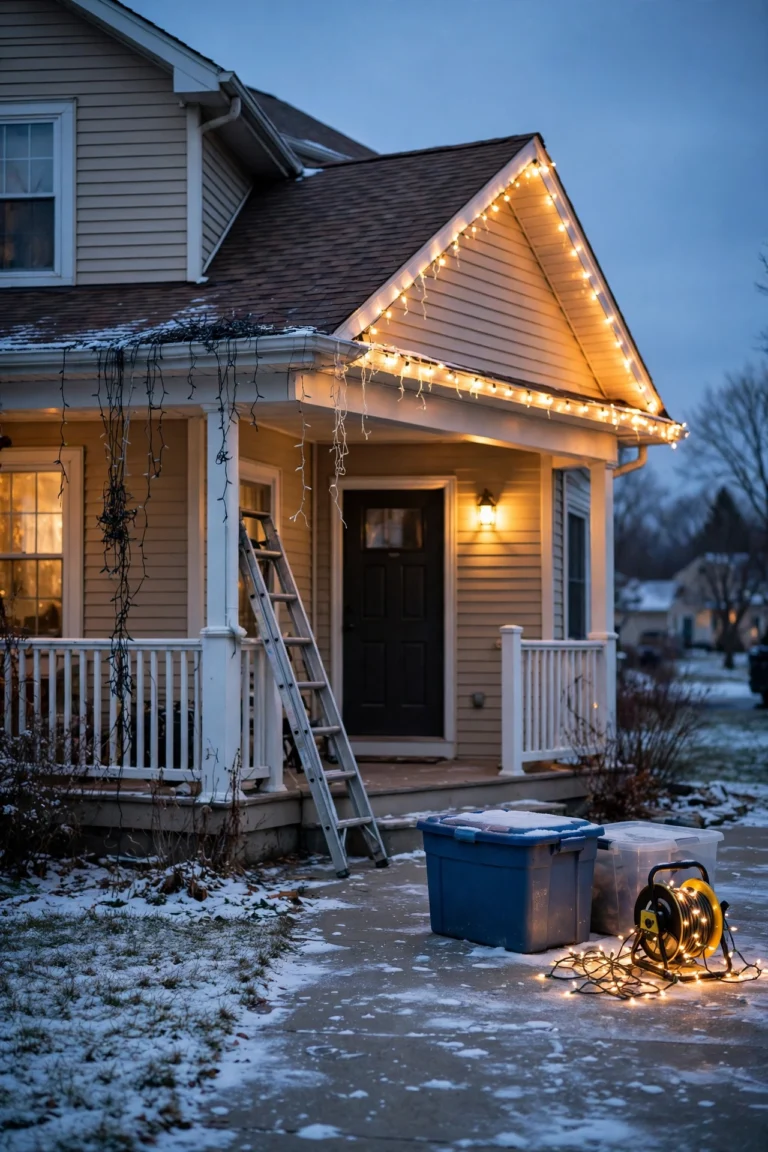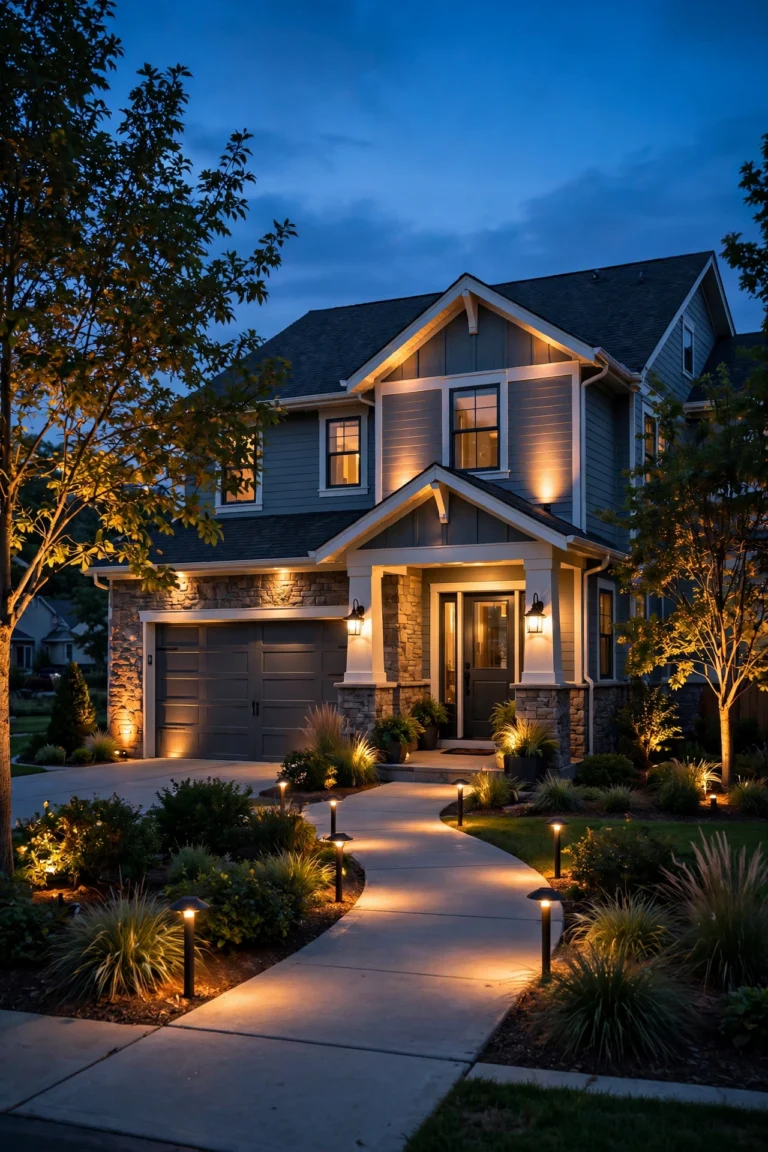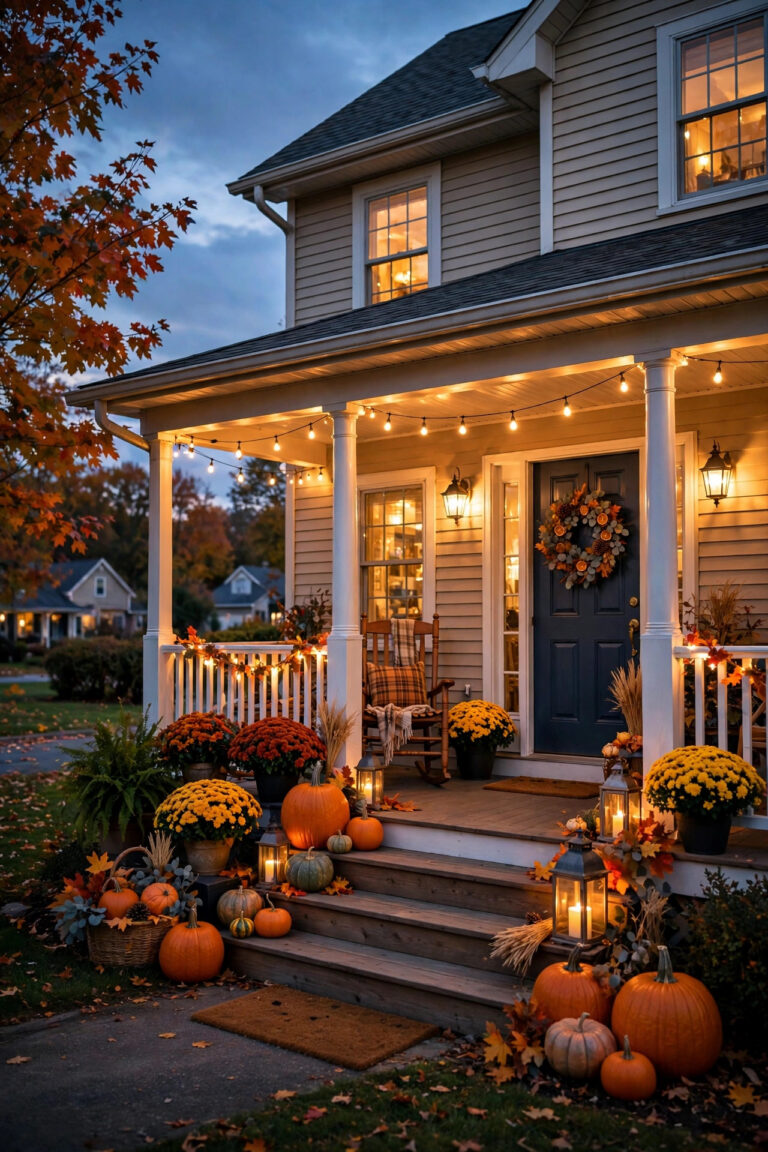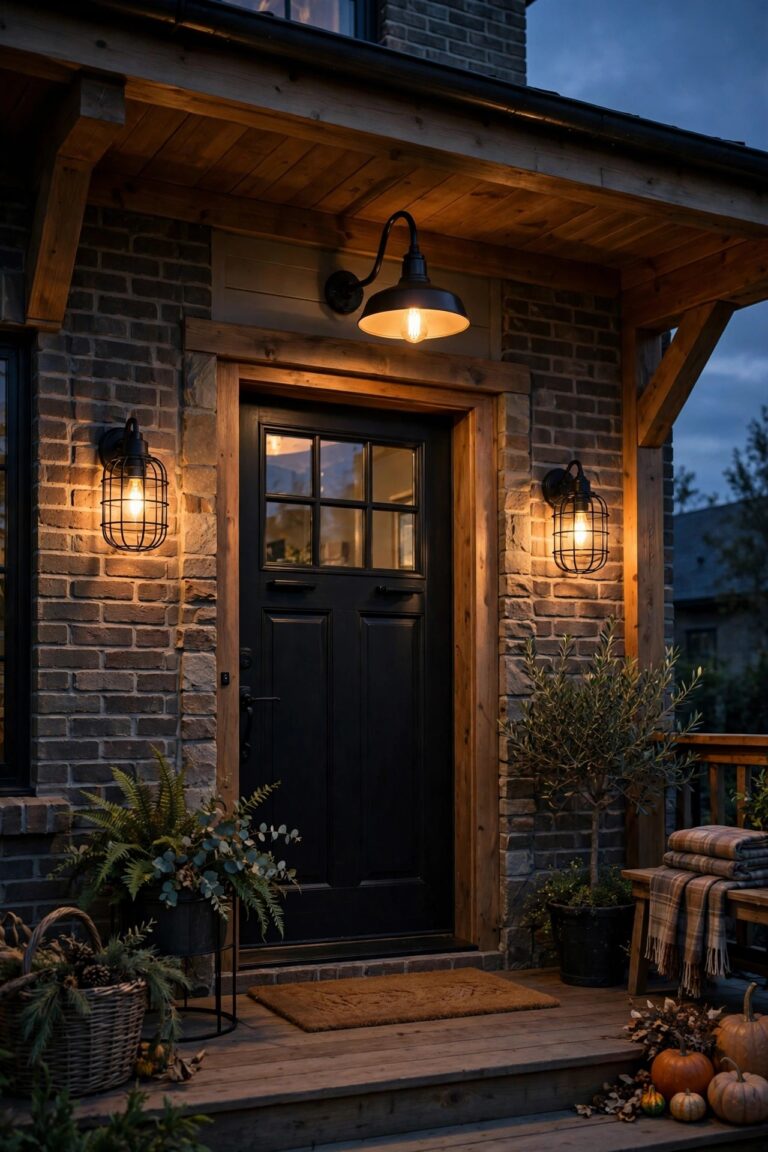
Some porches get redecorated every season, chasing whatever finish is trending, and honestly? They never quite settle in. The porches I love most, the ones I slow down for on my evening walks, are lit the way front porches have been lit for generations: a pair of lanterns by the door, a soft glow over the rocking chairs, one warm light washing the columns. That is the heart of traditional porch lighting ideas: nothing flashy, nothing that will look dated in five years, just gracious light in the right places. In my experience, a classic porch works in three layers — guidance light low along the steps, welcome light at eye level by the door, and a whisper of accent light on the architecture — all in one warm color temperature and finishes that age gracefully. Below are the 17 traditional porch lighting ideas I reach for again and again, from the sconce pair that frames the door to the little discipline tricks that keep a scheme looking timeless instead of tired.
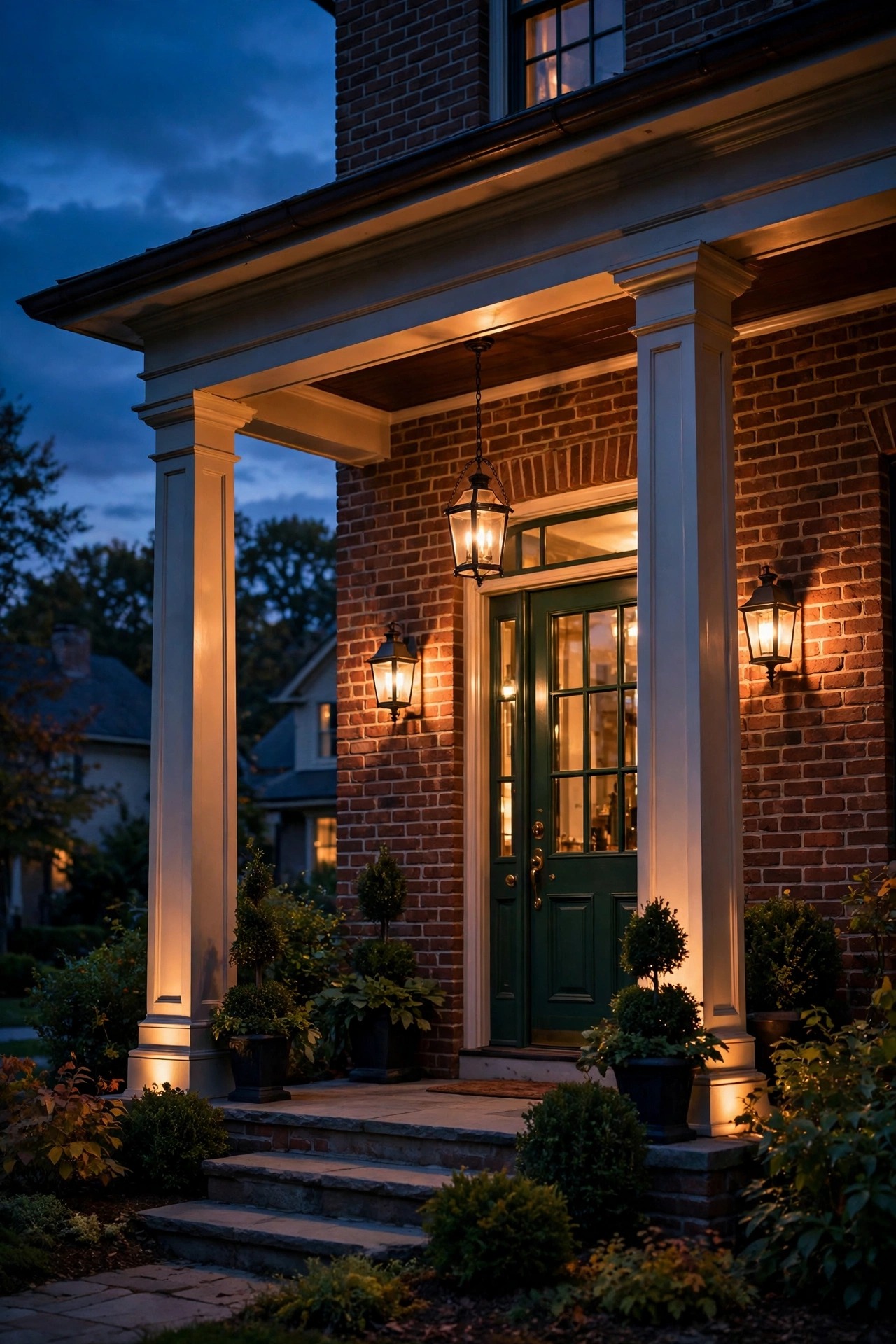
1. Traditional Porch Lighting Ideas Start With Three Layers
Every timeless porch I have ever admired follows the same quiet recipe, so plan it before you buy a single fixture. Layer one is guidance: low, gentle light along the steps and the walk edge, so guests see every tread without thinking about it. Layer two is welcome: eye-level light at the front door and over the seating, roughly 5 to 6 feet up, where faces glow and nobody squints. Layer three is accent: a soft wash on the columns, the shutters, or a beautiful door surround, purely for grace. Sketch your porch on paper and assign each spot to a layer before you shop. Most porches that feel off are heavy on one layer and missing another — all step lights and no door light feels like a runway, while all accent and no guidance is pretty but impractical for anyone carrying in groceries after dark. Keep each layer individually soft and let them add up together; three gentle layers always look richer than one bright fixture doing all the work. Once the plan is drawn, the rest of this list is simply filling it in, one classic piece at a time.
Suggested budget range: $0 – $50.
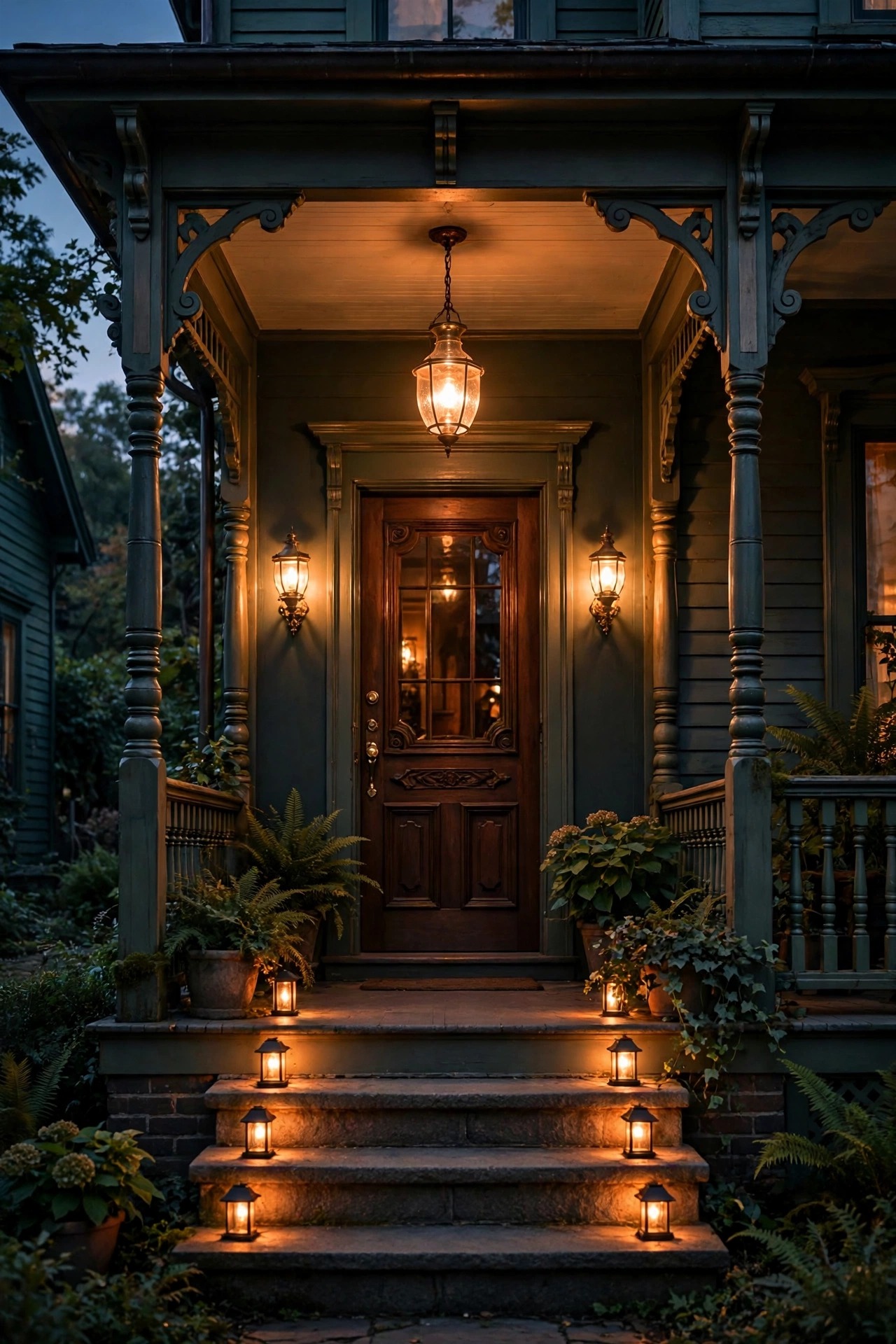
2. A Symmetric Pair of Lantern Sconces at the Front Door
If you only buy two fixtures, make it a matched pair of lantern sconces flanking the front door. Symmetry is the oldest trick in traditional design, and it works every time: two identical lanterns at the same height make an entry look settled, intentional, and calm. Mount them so the center of each fixture sits about 66 inches above the porch floor, right around eye level, and size them generously — a good rule is a fixture height of roughly one quarter of your door height, so a standard 80-inch door wants sconces in the 18 to 22 inch range. Undersized sconces are the most common mistake I see; they read as an afterthought. Choose a wet-location rated lantern with a seeded or clear glass panel and an LED filament-style bulb at 2700K, bright enough to light faces but never glaring. My guide to choosing a front door sconce pair walks through the sizing math in detail. Once the pair is up, everything else on the porch simply takes its cue from them.
Suggested budget range: $120 – $400.
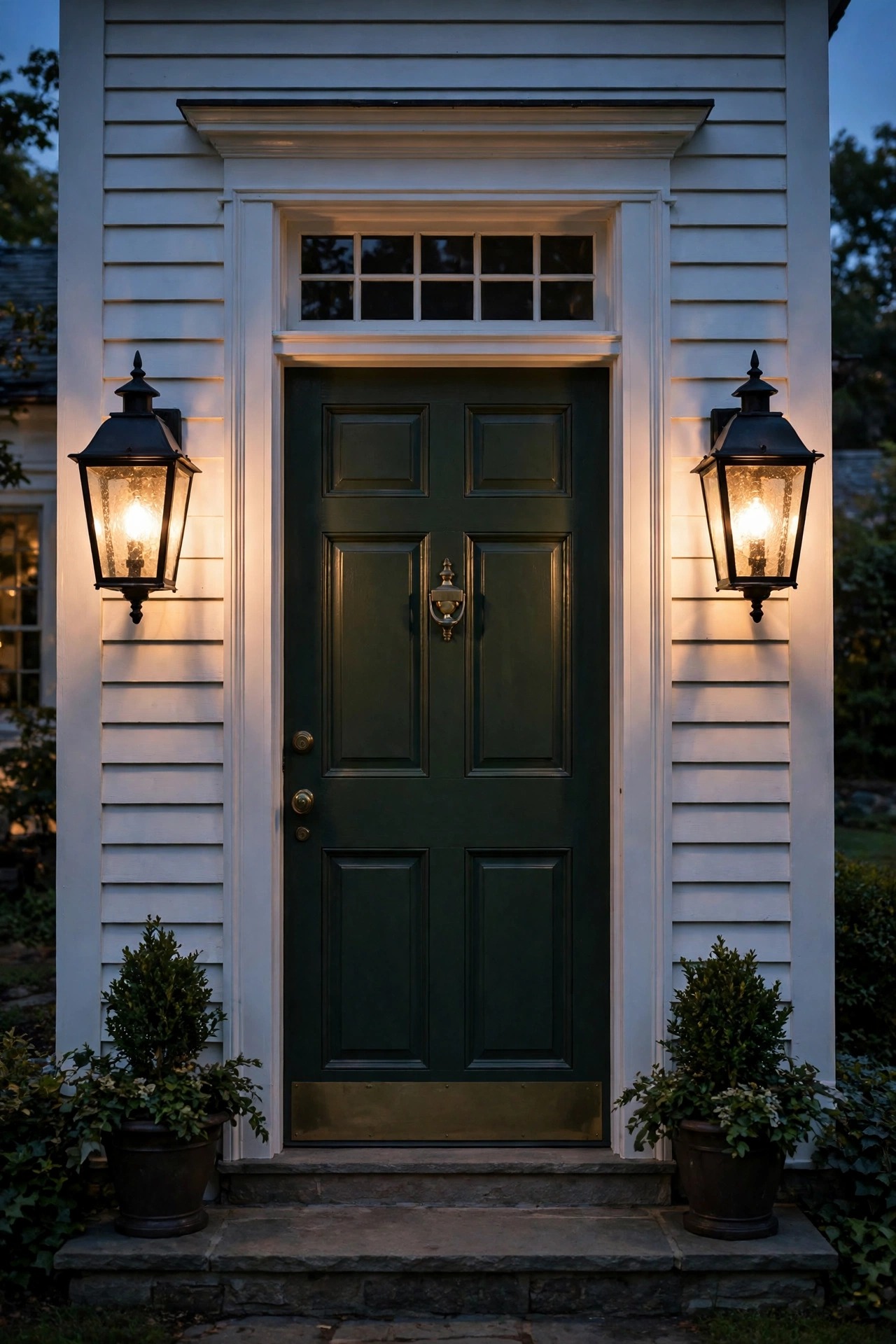
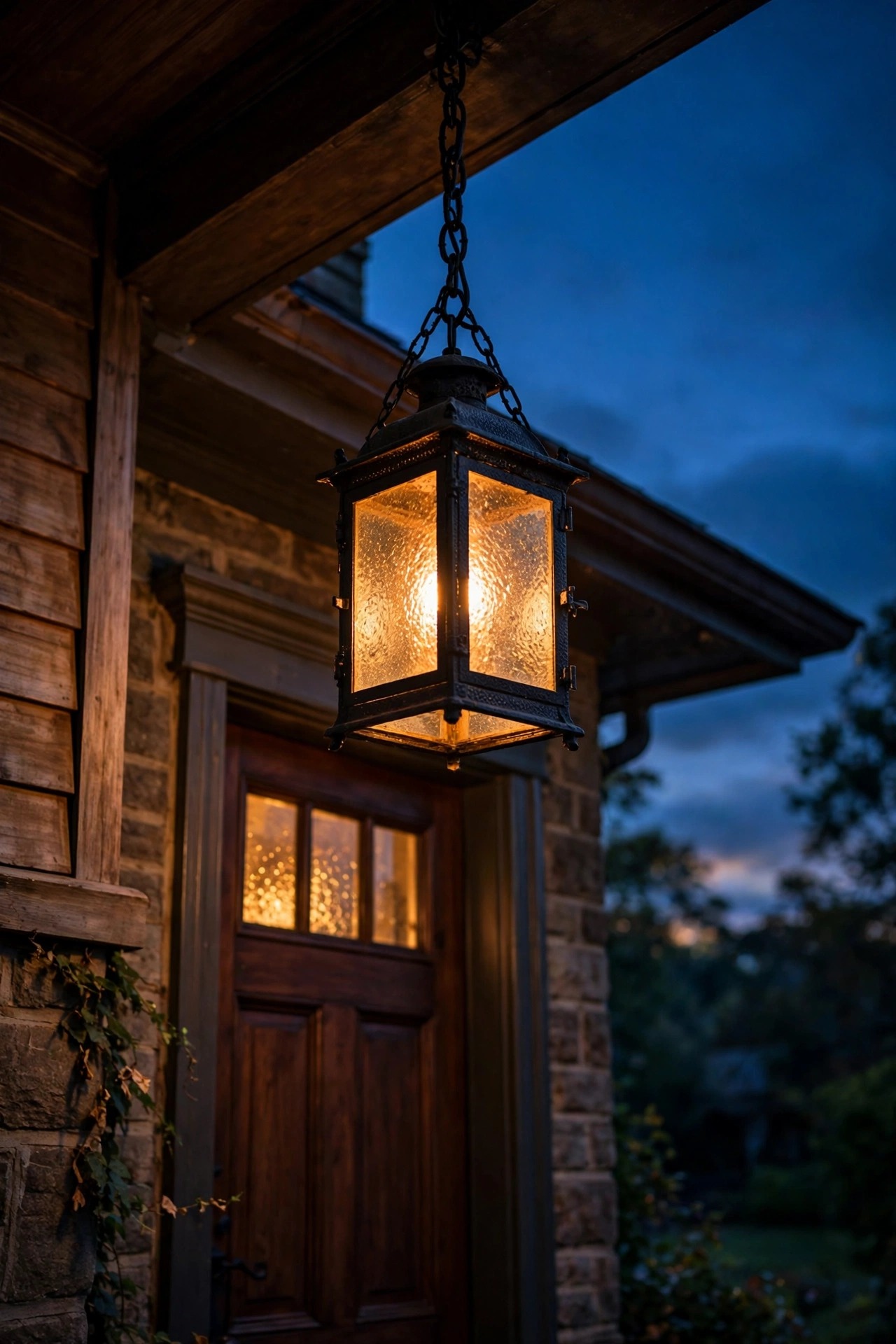
3. A Chain-Hung Carriage Pendant Over the Entry
On a porch with a ceiling of 9 feet or more, a chain-hung carriage lantern pendant is the piece that makes the whole scheme feel finished. Hung over the front door or centered above the seating area, it gives the welcome layer a soft overhead pool of light that sconces alone cannot create. The chain matters more than people think: it lets you set the height precisely, and a few honest links of blackened chain look far more traditional than a rigid stem. Aim for the bottom of the fixture to clear about 7 feet above the porch floor so tall guests never duck, and size the pendant so its width is roughly one third the width of the door or table below it. Choose a damp-location rated fixture — covered porches still pull in mist and humidity — and use a dimmable 2700K filament-style bulb so you can drop it to a candle-like glow on quiet evenings. In my experience, one beautiful pendant beats a row of recessed cans every time; it reads as furniture for the ceiling, not hardware.
Suggested budget range: $90 – $350.
4. Gas-Style Flame Lanterns for Old-World Flicker
Nothing says timeless grace like the gentle flicker of a gas flame, and modern LED flame-effect bulbs let you have the romance without a gas line. These bulbs use layered orange LEDs around 2000 to 2200K to imitate a dancing mantle flame, and inside a lantern sconce or pendant the effect is honestly convincing from the sidewalk. I like them most in the fixtures guests see up close — the door pair or a post lantern — where the movement of the light rewards a second look. A word of caution: if you want true gas lanterns, that is licensed-plumber territory, never a DIY conversion, and many areas require permits and a shutoff valve. The LED route needs none of that and costs pennies a month to run. One discipline tip: keep flame bulbs to one or two feature fixtures and use steady 2700K bulbs everywhere else, or the whole porch starts to look like a stage set. Used with restraint, that soft flicker is the finishing note that makes people slow down as they walk past your house.
Suggested budget range: $60 – $300.
5. Seeded Glass for a Soft, Period-Correct Glow
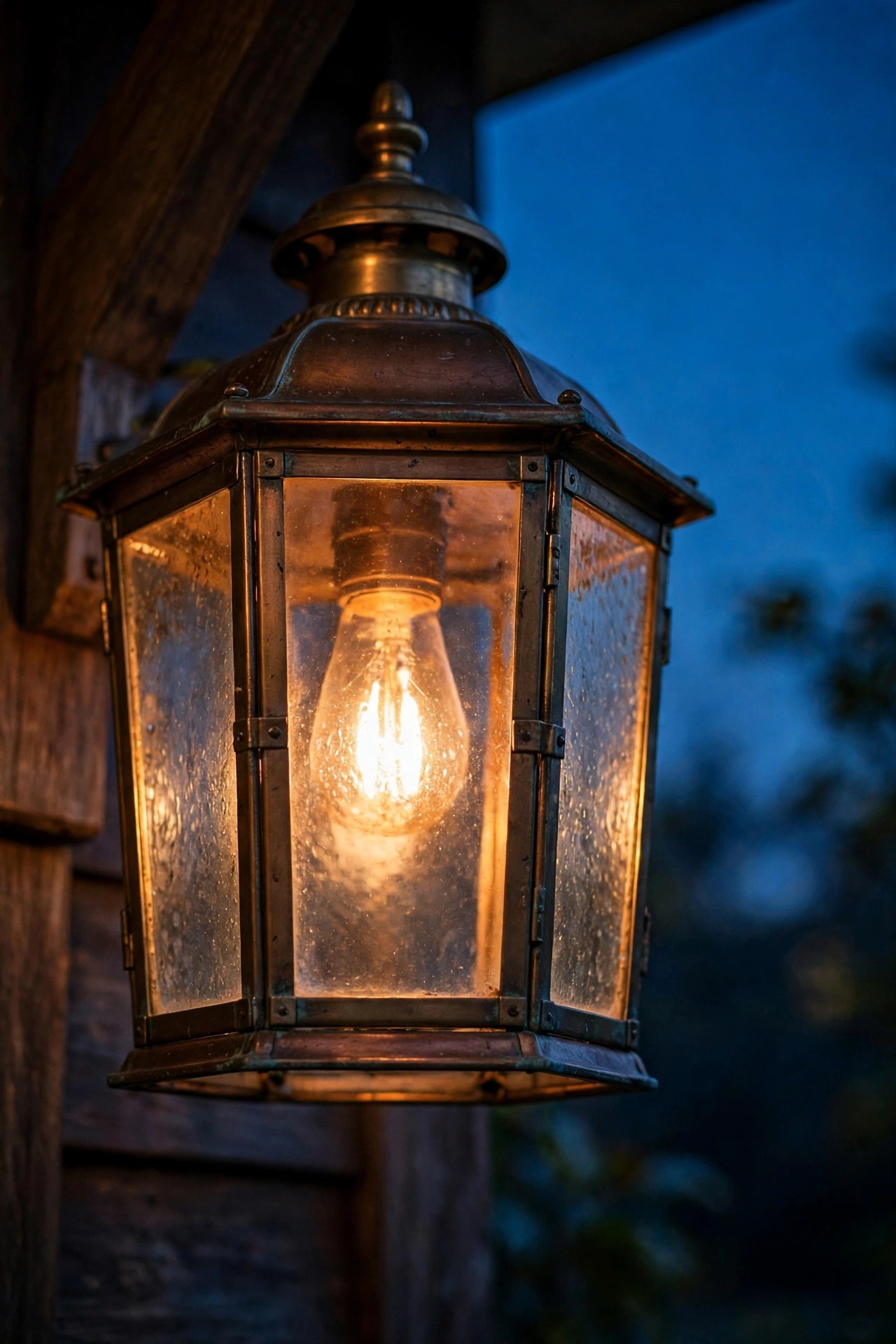
The glass you choose changes the light as much as the bulb does, and for a traditional porch, seeded glass is my default recommendation. Those tiny trapped bubbles scatter the light just enough to hide the harsh point of a bare bulb, so sconces and pendants glow like old lantern glass instead of glaring like a work light. It is also historically right: hand-made glass on period homes was never perfectly clear, and that slight imperfection is exactly what makes a new fixture settle into an older house. Seeded glass pairs beautifully with filament-style bulbs, because you still see the warm coil shape, just softened. Frosted or opal glass is the other classic option, and I reach for it on ceiling fixtures where you look up into the bulb. What I avoid on a traditional porch is anything tinted blue, smoked, or mirror-like — those belong to modern schemes and date-stamp a porch instantly. One practical note: seeded glass hides dust and water spots better than crystal-clear panes, so your fixtures look gracious longer between cleanings.
Suggested budget range: $80 – $320.
6. Copper and Aged Brass Finishes That Improve With Age
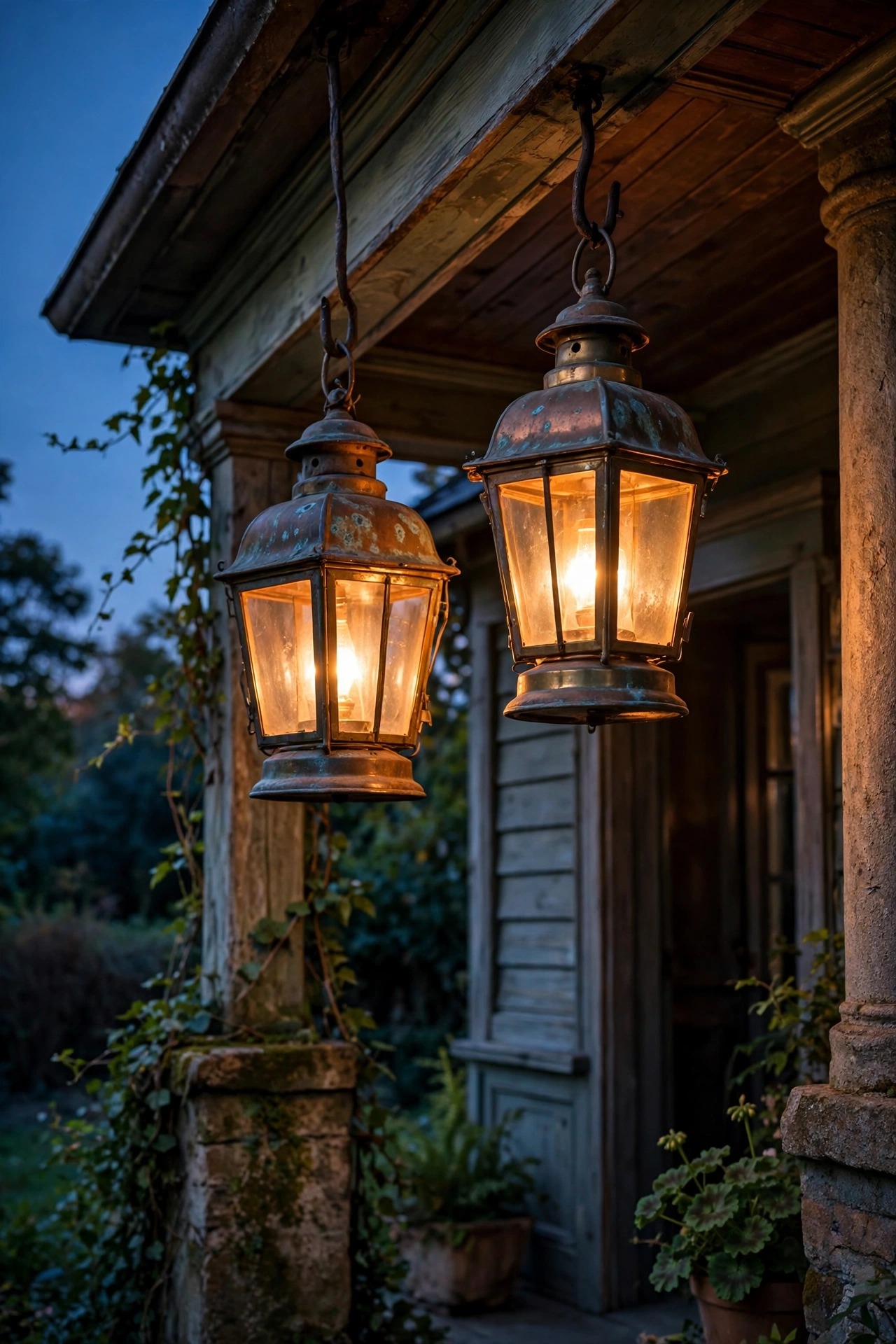
Traditional porches are finished in metals that grow more beautiful the longer they hang there. Unlacquered copper and brass start bright, then deepen within a season or two into the mellow, variegated patina you see on century-old lanterns — and that living finish is the whole point. If you prefer a steadier look, oil-rubbed bronze and aged blackened iron give the same period weight without changing over time. The rule I never break is two finishes maximum on one porch, and ideally one: sconces, pendant, house numbers, and door hardware should all speak the same metallic language. Mixed metals are where classic schemes quietly fall apart. When you shop, hold the finish sample against your door color in daylight; warm metals flatter brick, cream siding, and deep green or navy doors beautifully. Powder-coated aluminum versions of these finishes are a smart budget route near the coast, where salt air eats solid metals faster — just confirm the fixture is rated for wet locations and the finish is guaranteed against corrosion. Choose once, choose classically, and let time do the decorating.
Suggested budget range: $100 – $450.
7. Flameless Candle Lanterns Along the Steps
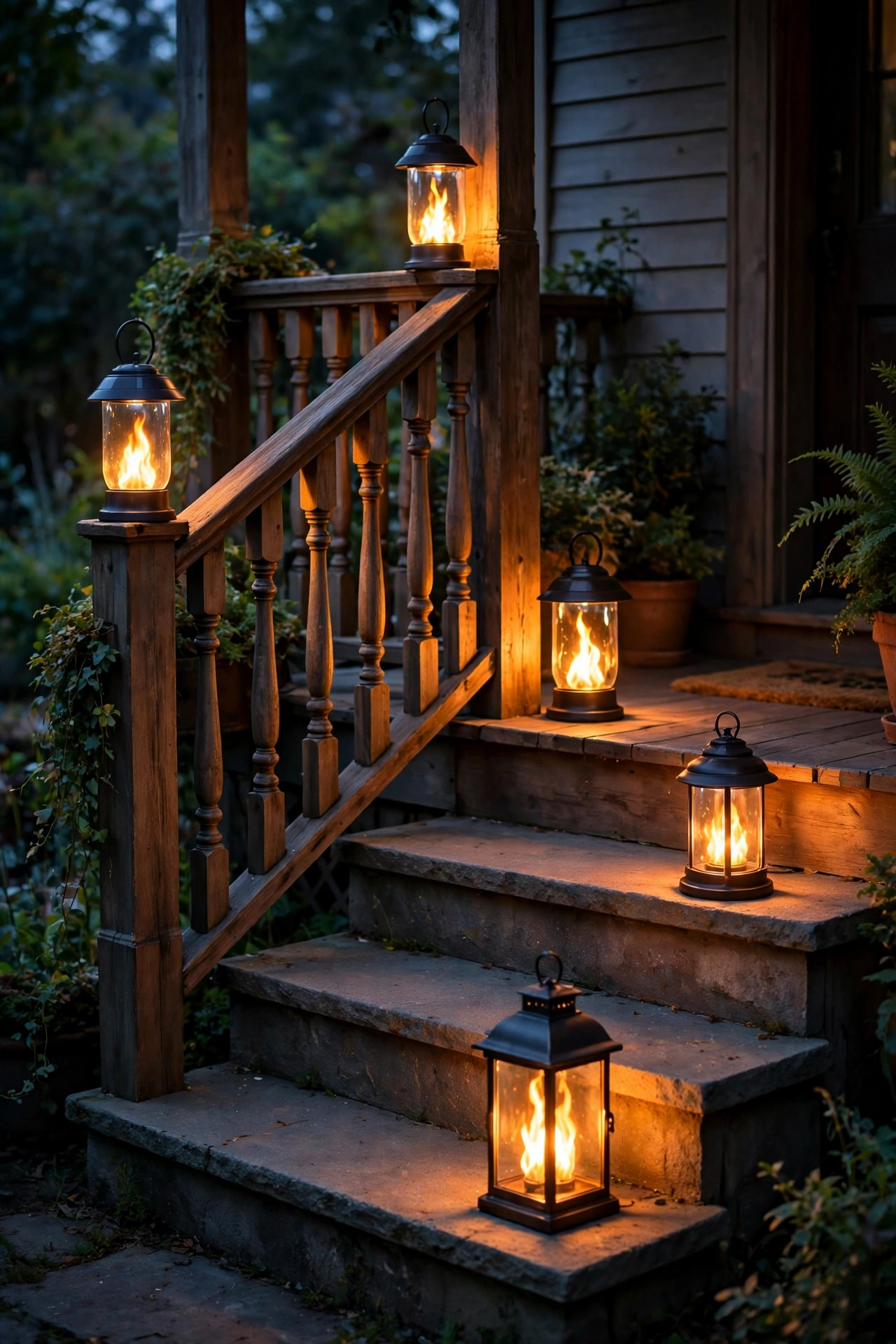
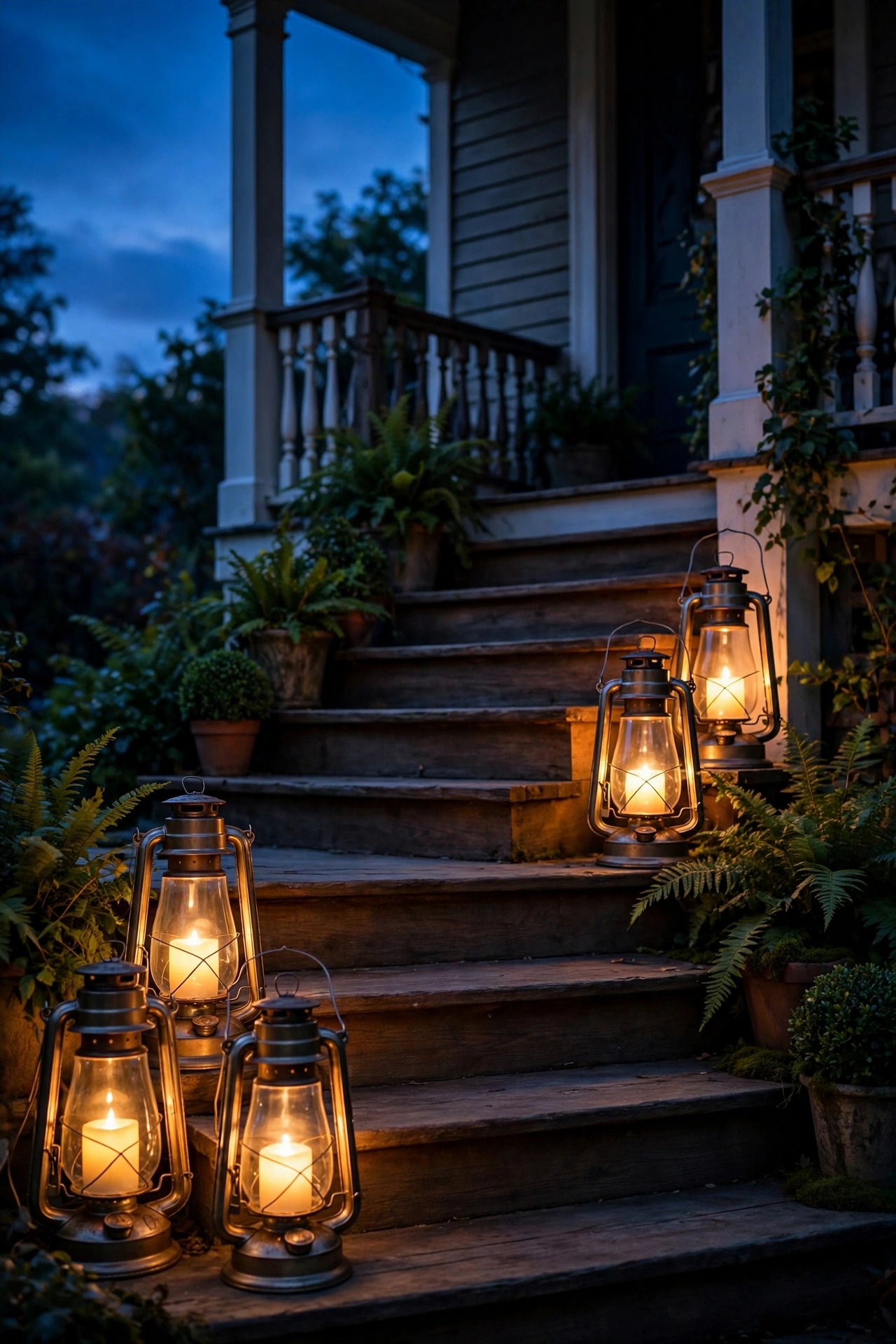
The guidance layer of a traditional porch has been candlelight for most of history, and flameless candles in hurricane lanterns bring that feeling back safely. I set lanterns on the porch floor beside the steps — never on the treads themselves, where they become a trip hazard — and one more on the landing, grouped in twos and threes so the eye reads a rhythm climbing toward the door. Choose flameless pillars with a built-in timer, and set them once to a six-hours-on cycle at dusk; after that the steps light themselves every evening without you touching a thing. Real flames near steps, door mats, and dried seasonal greenery are a risk I simply do not take, and the LED versions have gotten so good that guests rarely notice the difference. Look for lanterns in the same finish as your sconces so the steps feel like part of the scheme rather than an add-on. On wide farmhouse-style steps, a slightly larger lantern at the bottom and a smaller one at the top creates a graceful taper.
Suggested budget range: $40 – $150.
8. A Classic Ceiling Flush Mount for Low Porches
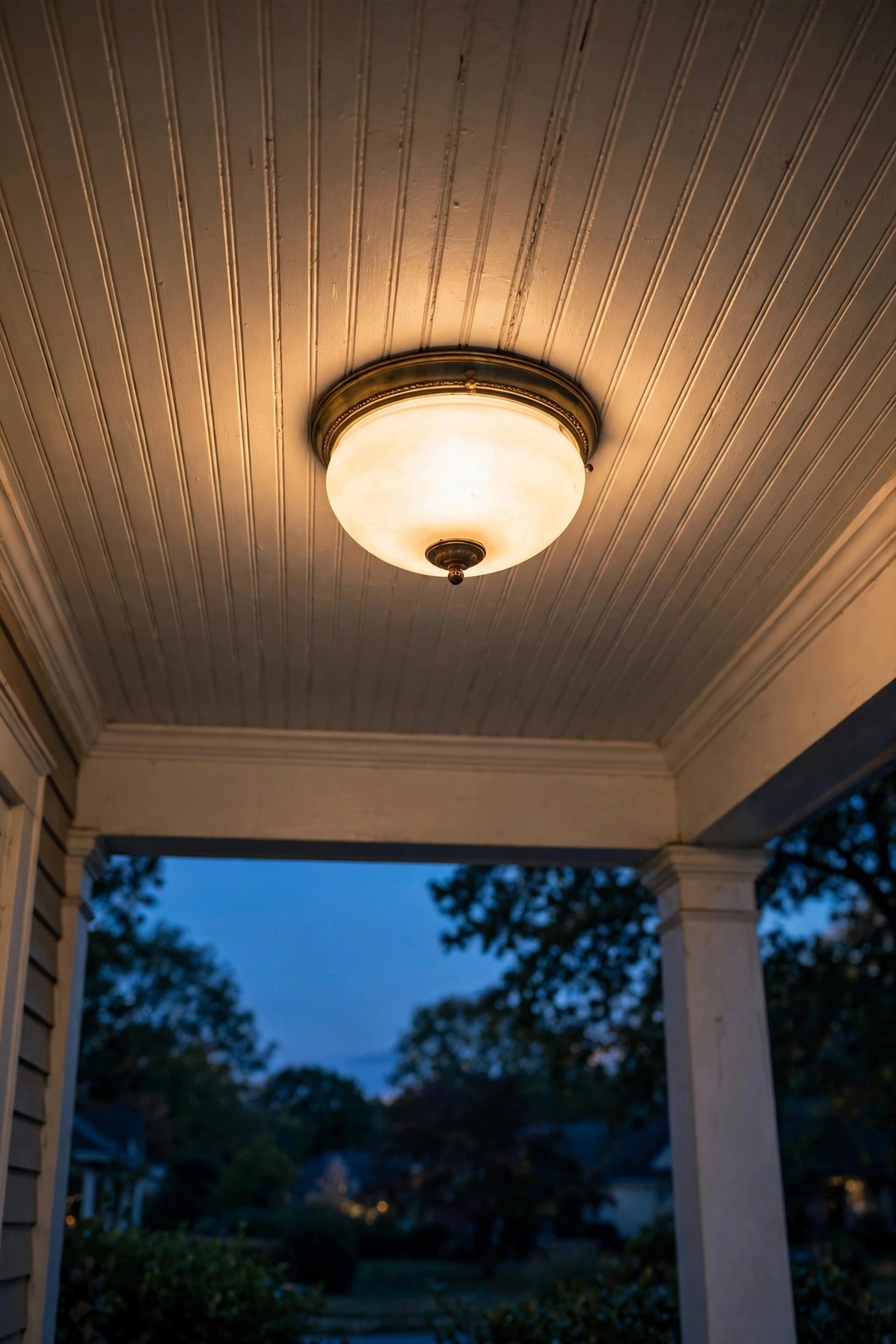
Not every porch has the ceiling height for a hanging pendant, and a well-chosen flush or semi-flush mount keeps an 8-foot porch looking just as gracious. The traditional choice is a round fixture, 12 to 16 inches across, with an opal or seeded glass dome and a simple bronze or black frame — the kind of light that has crowned porches for a hundred years. A two-bulb model spreads light more evenly and avoids the single harsh hotspot a lone bulb makes on a low ceiling. Mount it centered on the door swing or over the main seating area, and put it on a dimmer if you can; at full brightness a ceiling light can flatten all your careful layers, but dimmed to half it becomes a soft moon overhead. Confirm a damp-location rating at minimum, since porch ceilings collect condensation even when they stay dry. In my experience this is the hardest-working fixture on a small porch: it is the light you actually switch on to find keys, greet guests, and bring in packages, while the lanterns do the looking beautiful.
Suggested budget range: $70 – $280.
9. Softly Uplit Columns for Architectural Grace
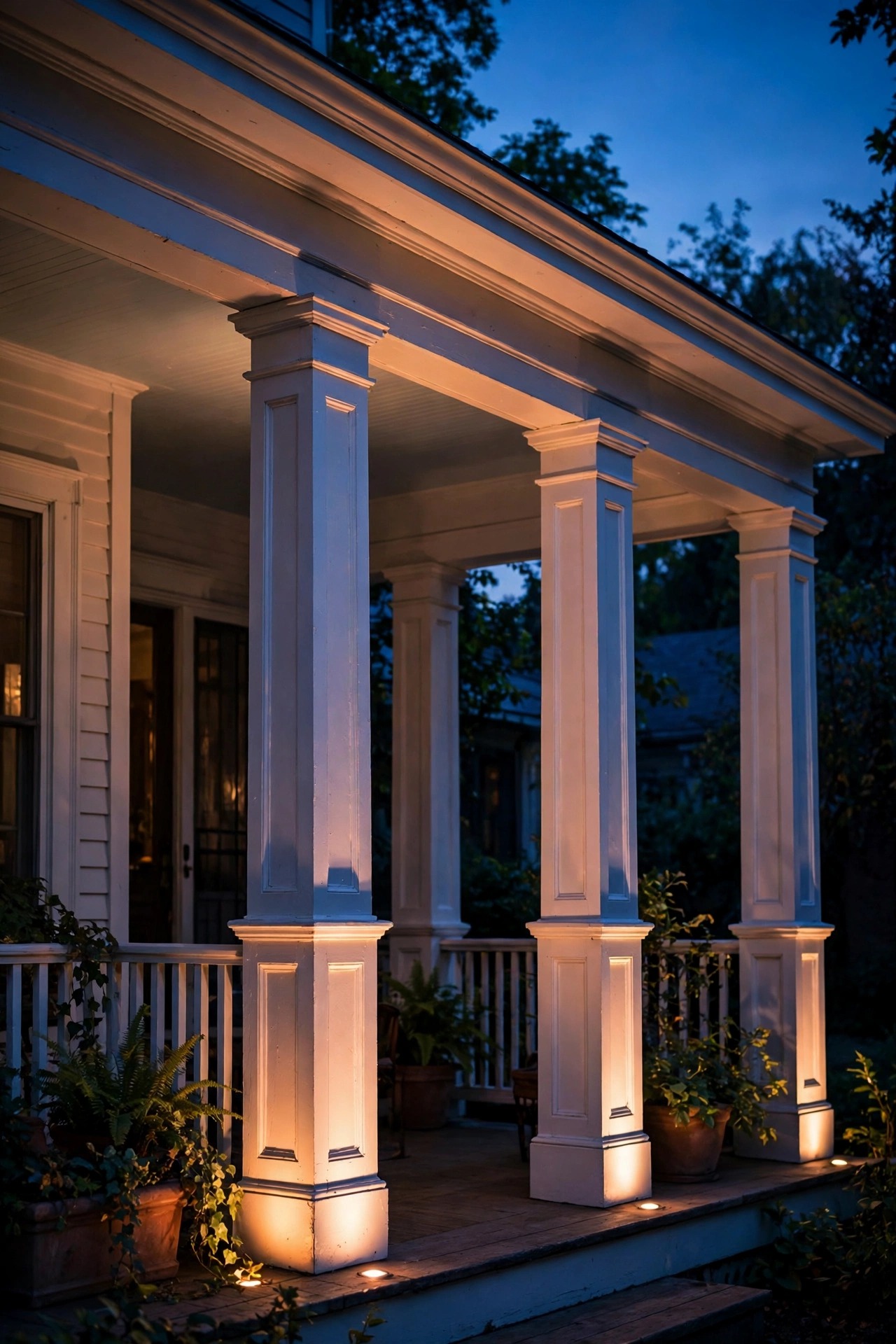
Columns are a traditional porch signature, and a whisper of uplight turns them into the accent layer after dark. Small low-voltage spotlights or well lights tucked at the base of each column, aimed straight up with a narrow 30 to 45 degree beam, graze the surface just enough to show its shape without turning your porch into a monument. Keep the brightness modest — you want the columns to read as gently lighter than the night, not searchlit — and stay at 2700K so the wash matches the lanterns. This trick borrows from classic colonial exterior lighting, where lit columns have framed entries for centuries. Two practical notes: aim carefully so no beam spills into a neighbor window or the eyes of anyone on the steps, and if your columns are wood, set fixtures a few inches out from the base so heat and splash-back never sit against the paint. On a porch without true columns, the same treatment works on brick piers or the corner posts of a railing. It is a small spend for an outsized amount of evening architecture.
Suggested budget range: $80 – $300.
10. Coach Lights at the Garage That Echo the Porch
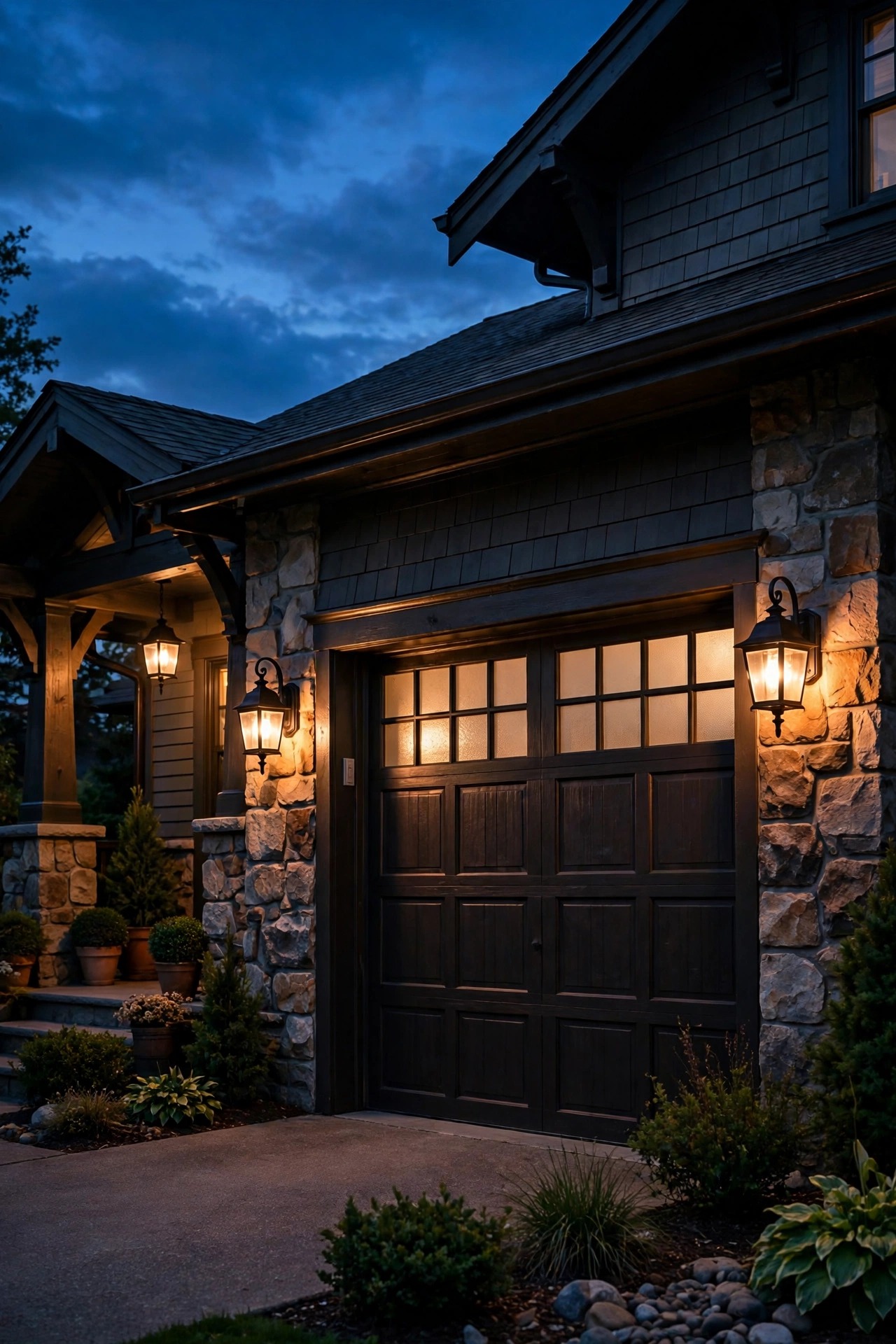
A traditional scheme should not stop at the porch steps. Repeating your porch fixture family at the garage — same lantern profile, same finish, same glass — ties the whole front of the house into one composed picture, and guests read that cohesion instantly even if they cannot name it. Coach lights are the classic choice here: a scaled-up lantern on either side of the garage door, mounted with its center around 6 feet up, echoing the door pair in a slightly larger size. Buy them in the same shopping trip if you can, because finishes drift between production runs and a near-match looks worse than an honest contrast. Keep the bulbs at the same 2700K as the porch, and consider photocell versions so the garage lights join the evening routine on their own. If the garage sits far from the porch, that is fine — the repetition still works across the distance, like matching candlesticks at either end of a mantel. It is the difference between a house with some lights and a house with a lighting scheme.
Suggested budget range: $120 – $380.
11. One Warm Color Temperature, Everywhere: 2700K
Here is the discipline that quietly holds every traditional scheme together: every bulb on the porch, and ideally the whole front of the house, at the same warm 2700K. The moment a cool 4000K or daylight 5000K bulb sneaks into one fixture, the porch stops feeling like candlelit grace and starts feeling like a parking lot — I have seen a single wrong bulb undo an otherwise beautiful entry. When you set up the scheme, buy all your bulbs in one order, same type, same temperature, and label two spares with a marker so replacements match years from now. Filament-style LED bulbs give you the period look with modern efficiency, and most are dimmable, which effectively warms them further as you lower them. The one sanctioned exception is flame-effect bulbs at 2000 to 2200K in a feature lantern or two; because they read as firelight rather than electric light, the eye forgives the difference. Everything else stays at 2700K, no debates at the hardware store. Consistency is invisible when you get it right, and glaring when you do not.
Suggested budget range: $25 – $90.
12. Photocells, Timers, and Dimmers for Set-and-Forget Evenings
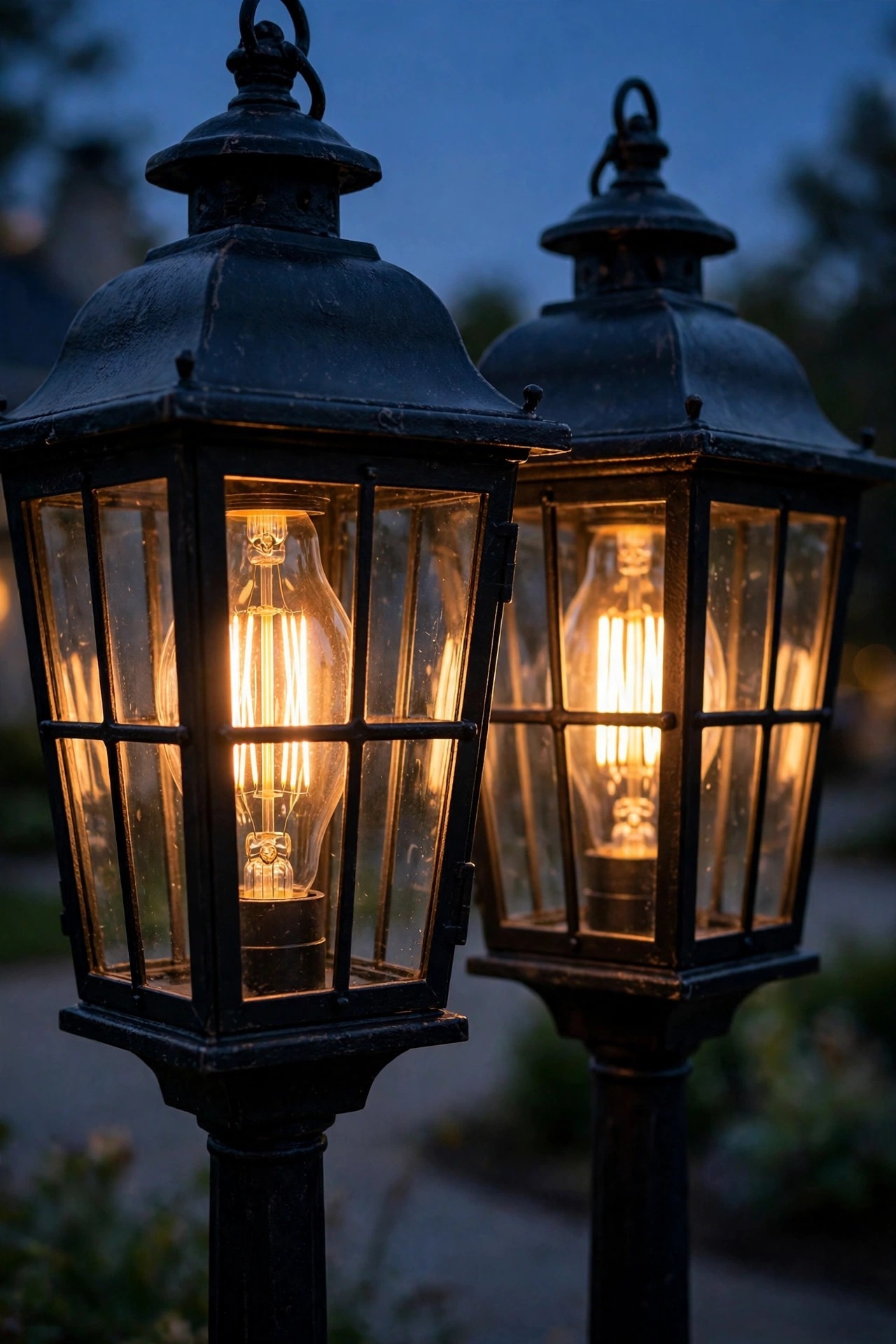
A traditional porch should light itself, because a scheme that depends on you remembering a switch will spend half its evenings dark. The simplest layer is a photocell: many classic sconces come with a dusk-to-dawn sensor built in, or you can choose bulbs with the sensor in the base, and the door pair simply wakes at sunset and sleeps at dawn. For the pendant and ceiling light, an astronomical timer switch is my favorite upgrade — it tracks the seasons on its own, so the porch glows at 5 p.m. in December and 8:30 in June without reprogramming. Add a dimmer for the seating-area lights and you gain the whole mood range from bright welcome to low evening murmur. One caution: confirm your LED bulbs are rated dimmable and pair them with an LED-compatible dimmer, or you will get flicker and buzz. Set the timer to switch off around 11 p.m. if late-night light bothers bedrooms or neighbors; a gracious porch is also a considerate one. Automate once, and the house looks lovingly occupied every single night.
Suggested budget range: $30 – $180.
13. A Rocking-Chair Corner With Its Own Low Glow
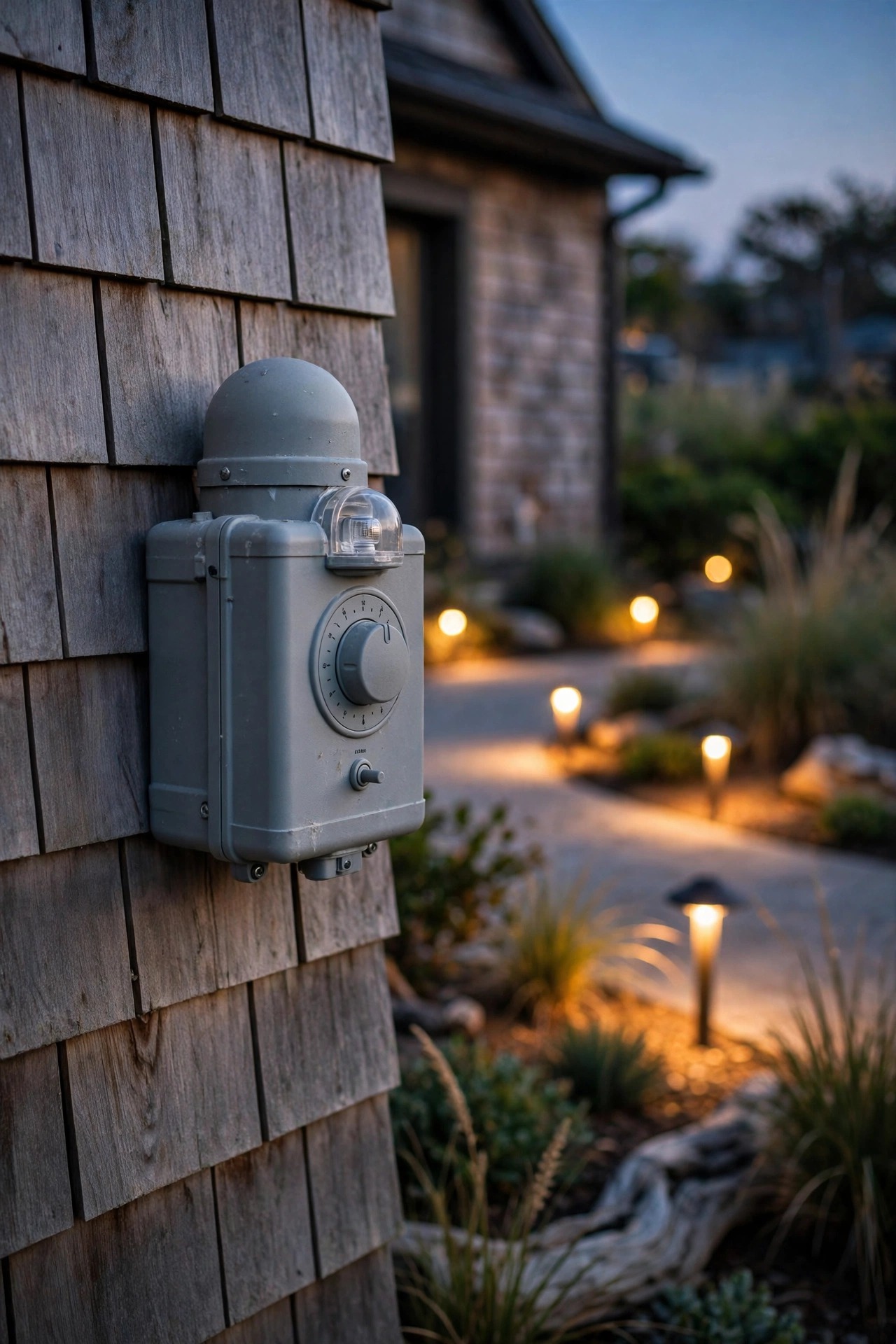
Every traditional porch deserves one spot that is lit for lingering, not arriving. In the corner by the rocking chairs or the porch swing, I add a single low light source: a small shaded lantern on the side table, or a hurricane lantern on the floor beside the chair, glowing at seated eye level or just below. The key is shade or glass between you and the bulb — a bare bulb at eye height is glare, while the same bulb behind seeded glass is company. This little pool of light does what the door lanterns cannot: it makes the porch feel inhabited, like someone just stepped inside for lemonade. Keep it on the dimmer or choose a low-lumen bulb, around 2700K as always, and let it be the softest light on the porch. Safety note: any lantern near cushions, throws, or a wooden floor should be flameless, full stop, and cords for plug-in versions should run along the wall, never across a walking path. This is the light I miss most when I visit porches that only light the door.
Suggested budget range: $35 – $160.
14. Lit House Numbers and a Mailbox Lantern
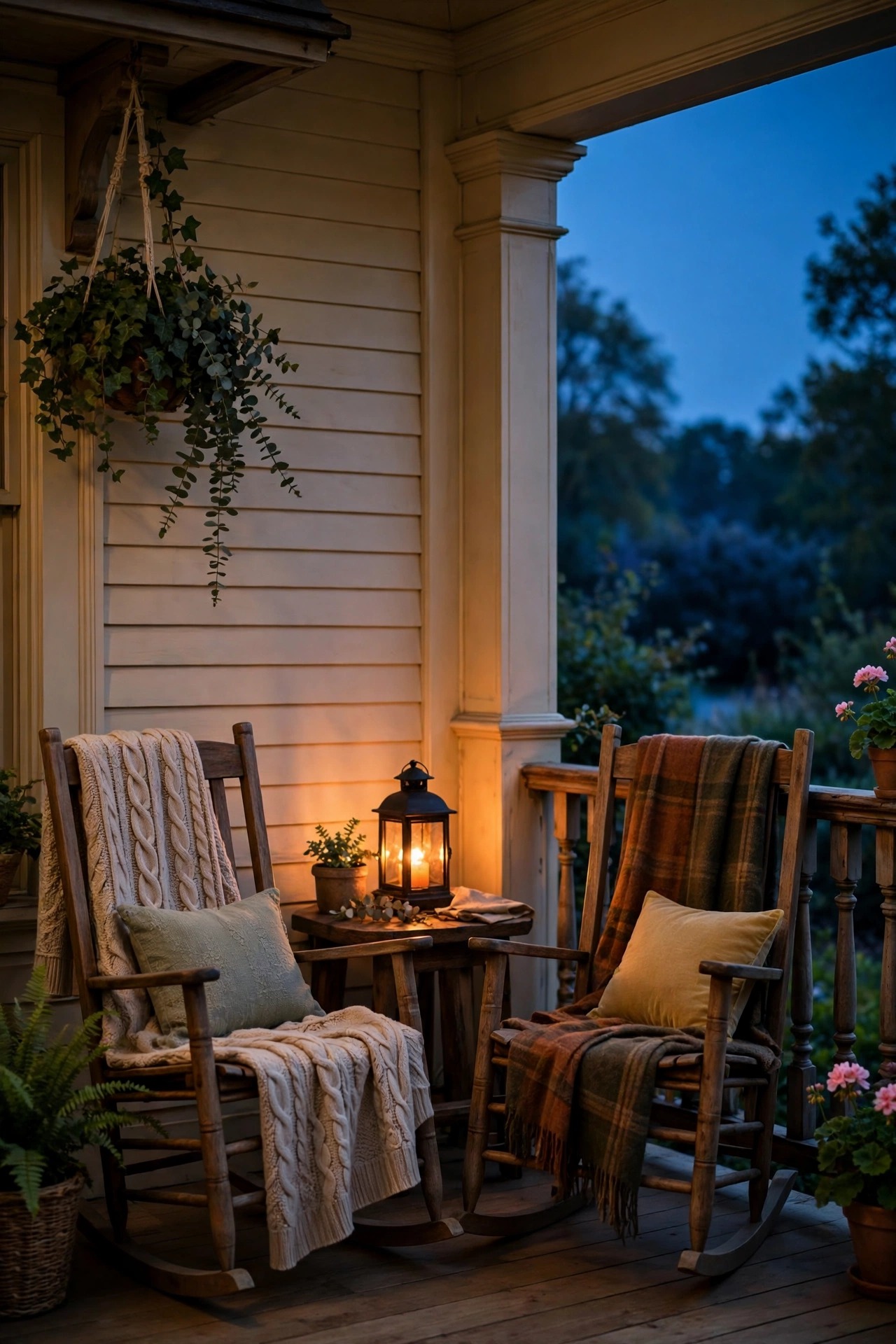
Grace is in the details, and few details work harder than house numbers a guest can actually find at night. Traditional styling favors classic serif numerals in the same finish as your lanterns, sized at least 4 to 6 inches tall so they read from the street. Place them where the sconce wash reaches them — under or beside the door pair is ideal — or choose a softly backlit number plaque if the wall beside your door sits in shadow. If your mailbox sits at the curb or on a porch post, a small lantern above or beside it finishes the story and helps the mail carrier and the pizza driver alike. Whatever you choose, check it from a car at the street on a dark night; numbers that look obvious from the porch can vanish from the road. This is also a quiet safety feature, since paramedics and delivery drivers find a lit address faster. Keep the light warm and modest — the numbers should be easy to read, not glowing like a shop sign.
Suggested budget range: $30 – $170.
15. Hurricane Lanterns on the Porch Table
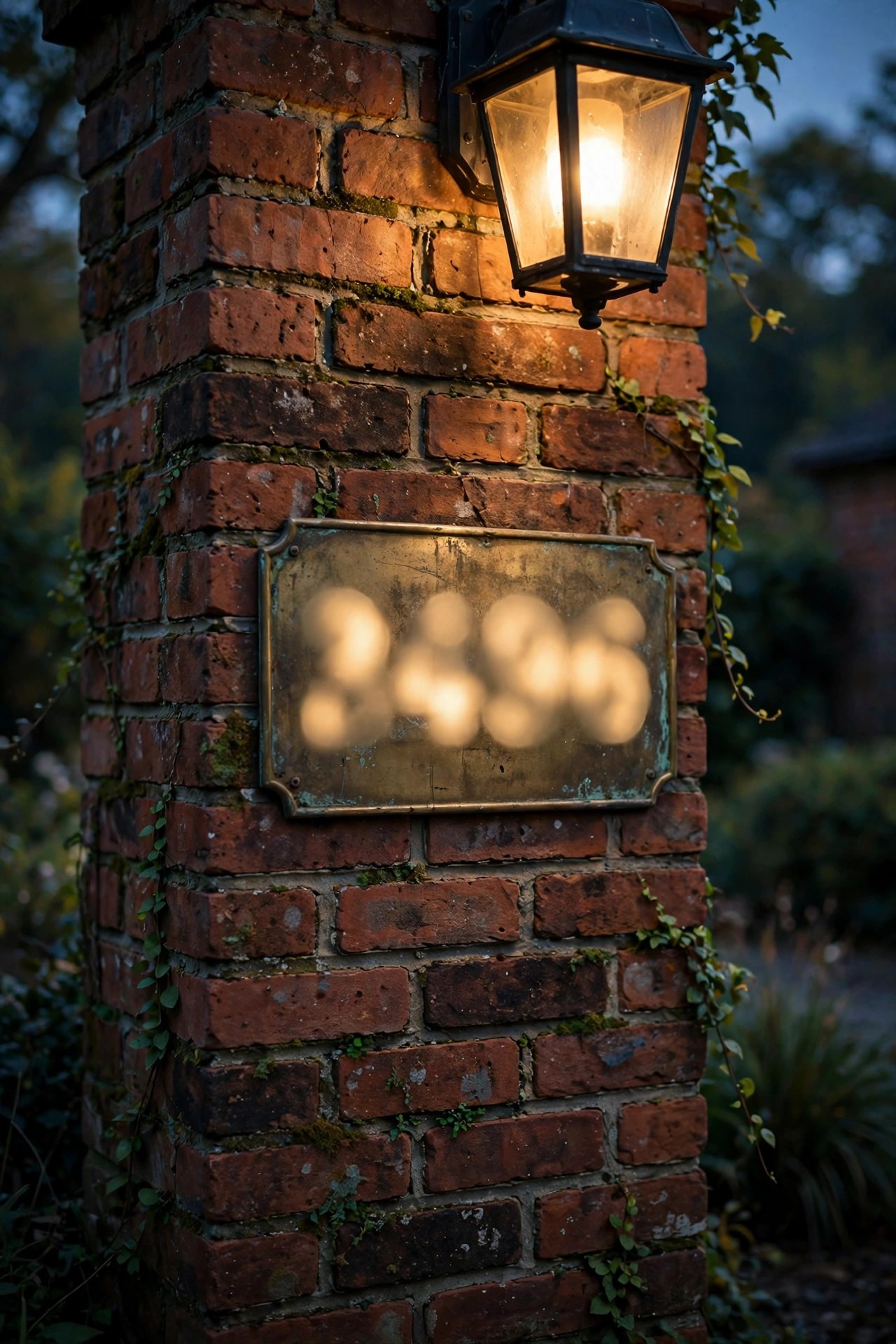
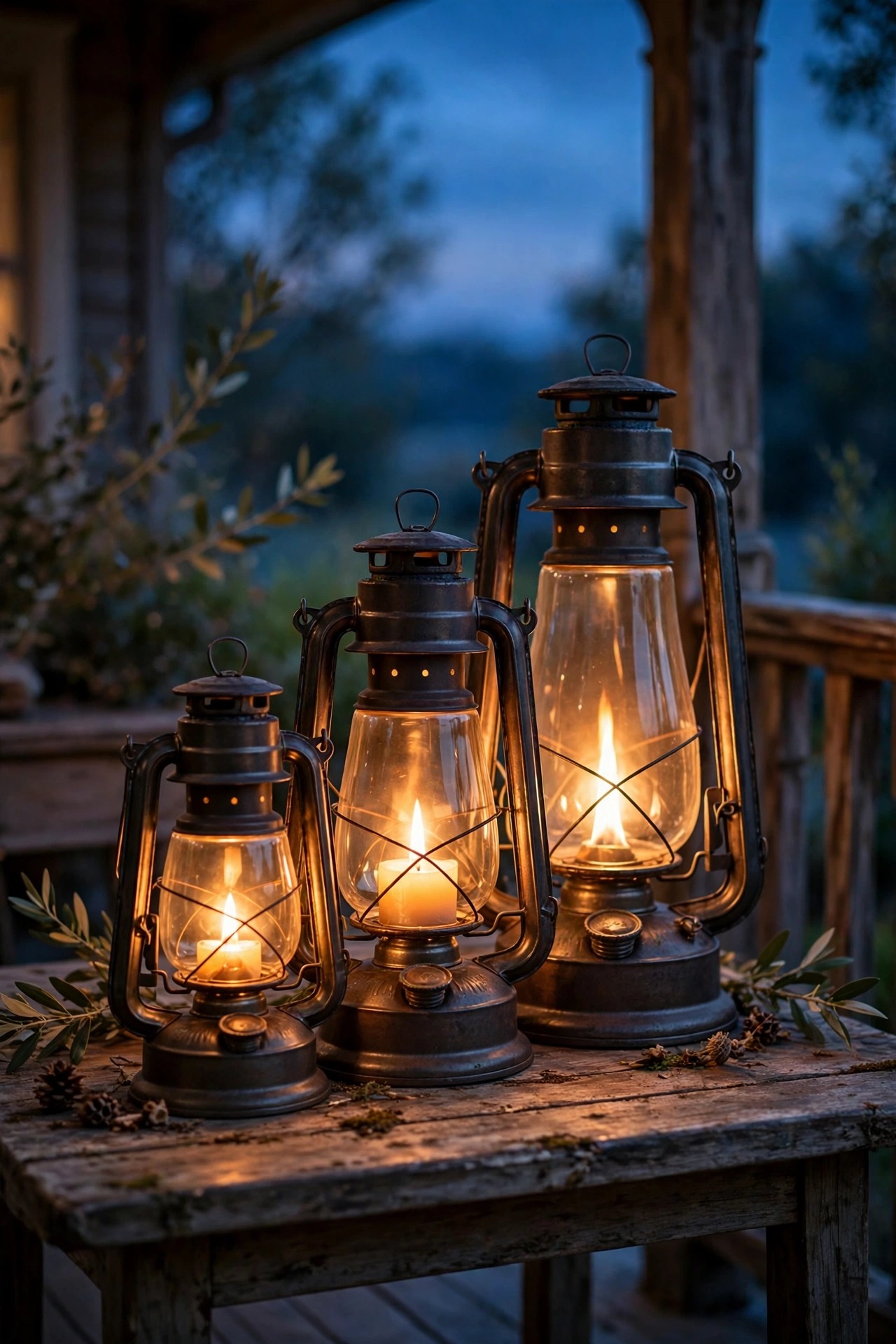
For the porch table or a wide railing, a small cluster of hurricane lanterns gives you movable, candlelit-style glow wherever the evening gathers. I group three lanterns in graduated heights — tall, medium, small — in the same finish as the fixed fixtures, and let the asymmetry of the heights keep the arrangement relaxed instead of staged. The tall glass chimneys are not just pretty; they shield the glow from porch breezes, which is exactly the job they were designed for two centuries ago. Use flameless candles inside, always: real flames near cushions, table linens, and dried wreaths are a risk with no upside, and modern flameless pillars flicker convincingly at a fraction of the worry. On a long porch, two smaller clusters at either end of a railing look better than one big centerpiece. Because these lanterns are unmounted, you can carry them to the steps for a party or to the garden gate for guests arriving after dark. They are the flexible friends of the fixed scheme, filling any spot that feels a degree too dark.
Suggested budget range: $45 – $140.
16. Seasonal Garlands and Wreaths, Lit Gently
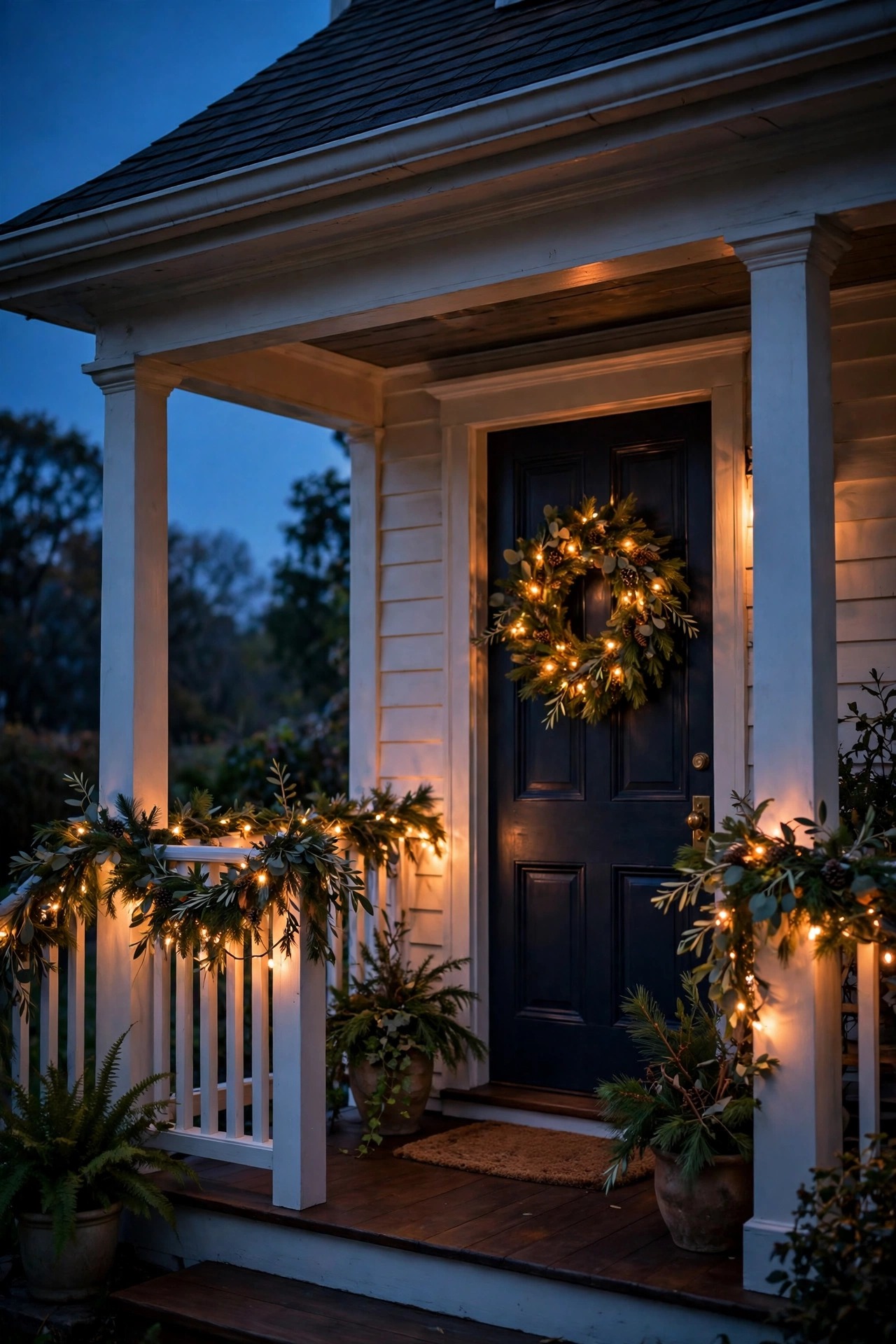
Traditional porches change their dress with the seasons while the fixtures stay constant, and a lit garland is the easiest graceful touch of all. In autumn and winter I weave warm-white micro fairy lights — the fine copper-wire kind — through a garland along the railing or door frame, and add a simple wreath with a few lights of its own above the door. The wires disappear into the greenery, so all you see is a constellation of tiny warm points echoing the lanterns. Two rules keep this safe and pretty: LED lights only, since they stay cool against dried greenery, and a battery pack or timer so the strand runs its six hours and switches itself off. In spring and summer, swap to a plain green or floral garland with the same strand and nothing else changes. Resist multicolor strands on a traditional porch; warm white is what keeps the look timeless. Take the greenery down when it dries out, but leave the routine in place — next season is just a fresh garland and five minutes of weaving.
Suggested budget range: $25 – $120.
17. Traditional Porch Lighting Ideas Pass the Dusk Walk-Through
Finish every scheme the same way: wait for full dusk, then walk the porch the way a guest experiences it. Start at the street and look at the house whole — are the layers balanced, or is one fixture shouting? Walk the steps slowly and watch for any tread that falls into shadow between lanterns. Sit in the rocking chair and check for bare-bulb glare at eye level. Stand at the door and look out: the porch should glow warmly without a single cool or mismatched bulb in the frame. I take a phone photo at each stop, because the camera catches hotspots and dark corners my eyes forgive. Then edit without mercy: dim the pendant a notch, angle a column light two degrees, move a step lantern six inches left. These tiny corrections are the difference between a porch that is merely lit and one that feels composed. Do the walk-through again after the first bulb change or seasonal garland, and your traditional porch lighting ideas will keep their grace for years with almost no effort.
Suggested budget range: $0 – $60.
Frequently Asked Questions
What color temperature looks most traditional on a porch?
Warm white at 2700K is the classic choice, because it sits closest to the glow of candlelight and early electric bulbs that traditional homes were designed around. Flame-effect bulbs at 2000 to 2200K work beautifully as an accent in one or two feature lanterns. Avoid anything at 4000K or above: that cool, bluish light belongs to offices and parking areas and will make even the prettiest lanterns feel wrong. Whatever you choose, use the same temperature in every fixture so the porch reads as one scheme.
How high should I mount porch sconces?
For most porches, the center of the fixture should sit about 66 inches above the porch floor — roughly eye level — with the pair spaced evenly on either side of the door. If your door has sidelights or the wall space is tight, it is fine to mount slightly higher, but keep both fixtures at exactly the same height, because the symmetry is what the eye reads as traditional. Leave at least a few inches between the top of the fixture and the porch ceiling or trim so the lantern does not feel crowded.
Can I mix solar and wired fixtures in a traditional scheme?
Yes, as long as each type does the job it is good at. Wired fixtures should carry the important light — the door pair, the pendant, anything you rely on for safety — because they are bright and dependable every night. Solar lanterns and flameless-style solar stakes work well as gentle accents along steps or in planters. Two cautions: solar fixtures under a covered porch roof may never charge properly, so place them where sun reaches, and check that their color temperature is a warm 2700K so they blend with the wired lights instead of glowing blue-white.
How much does a traditional porch lighting refresh cost?
A do-it-yourself refresh using your existing wiring usually lands between $400 and $1,200: a quality sconce pair, a pendant or flush mount, matching bulbs throughout, and a few lantern accents. If you need an electrician to add or move a junction box, budget roughly $150 to $300 per location on top of the fixtures. The scheme does not have to happen in one weekend — start with the door pair and the bulbs, live with it a month, then add the pendant and accents as the budget allows.
Conclusion
A timeless porch is never an accident. It is three gentle layers of light, one warm color temperature, finishes that age with dignity, and details — lit numbers, a glowing rocking-chair corner, a garland in season — that show someone cares. Start with the pair at the door, keep every bulb at 2700K, and add pieces slowly; traditional porch lighting ideas reward patience more than any other style. When you are ready to plan the next corner of your entry, browse my full guide to front porch lighting ideas for more layouts, sizes, and schemes to make your own.