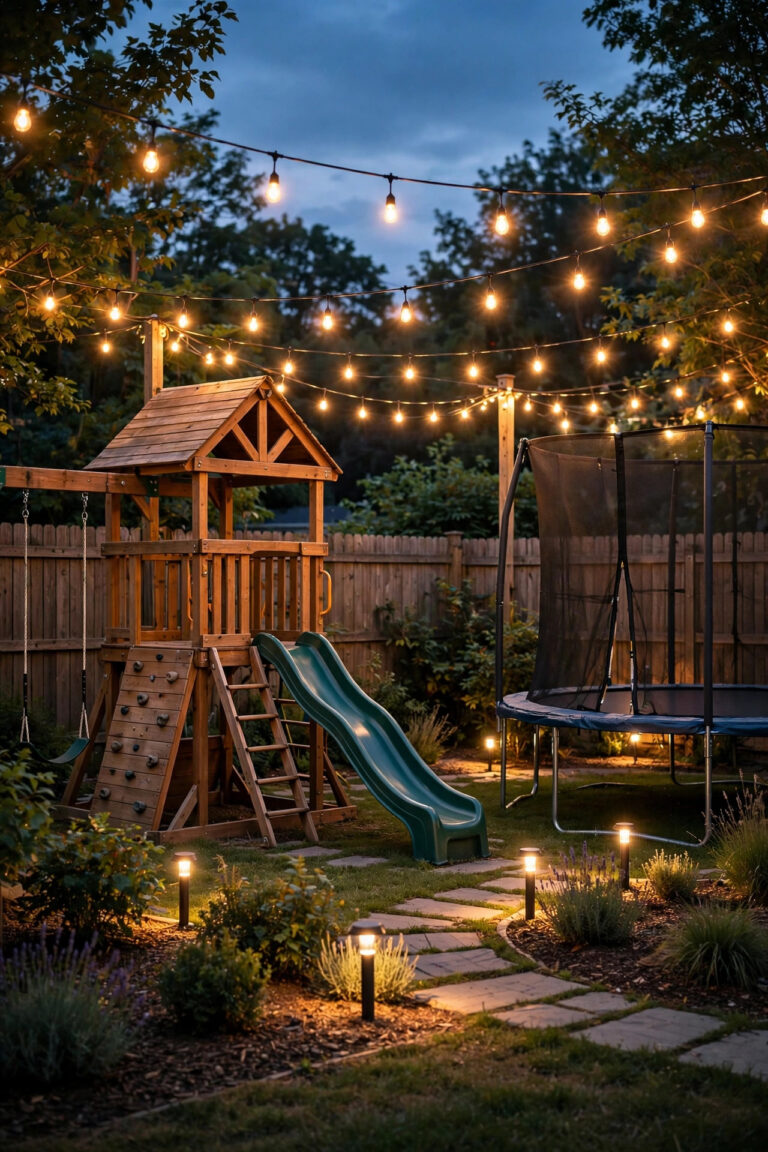
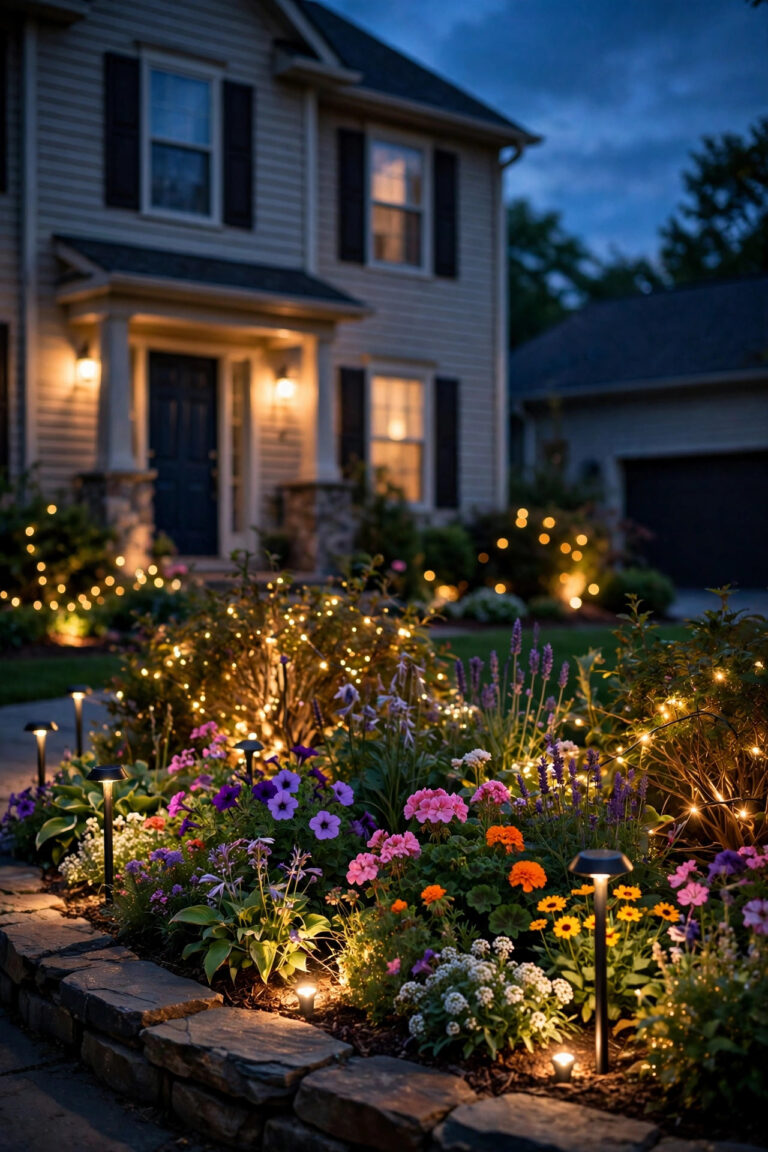
There is a special kind of joy in pulling into your driveway at dusk, saying one short sentence, and watching your whole yard glow to life. After testing and living with the best smart outdoor lights across three porches, two patios and one very long driveway, I have strong opinions about what actually works outdoors, and what only sounds good on the box. The secret is the same layering I use with regular lighting: soft ambient light for mood, task light where you walk and work, and accent light on the trees and architecture you love. Smart versions let you schedule, dim and group each layer from a phone app or with your voice. Below, I compare the 11 types worth your money, with honest strengths, real limits like outdoor Wi-Fi range and what still works when the internet drops, and who each one suits best. If you want the deeper setup walkthrough after this shortlist, my full smart outdoor lighting guide covers planning step by step.
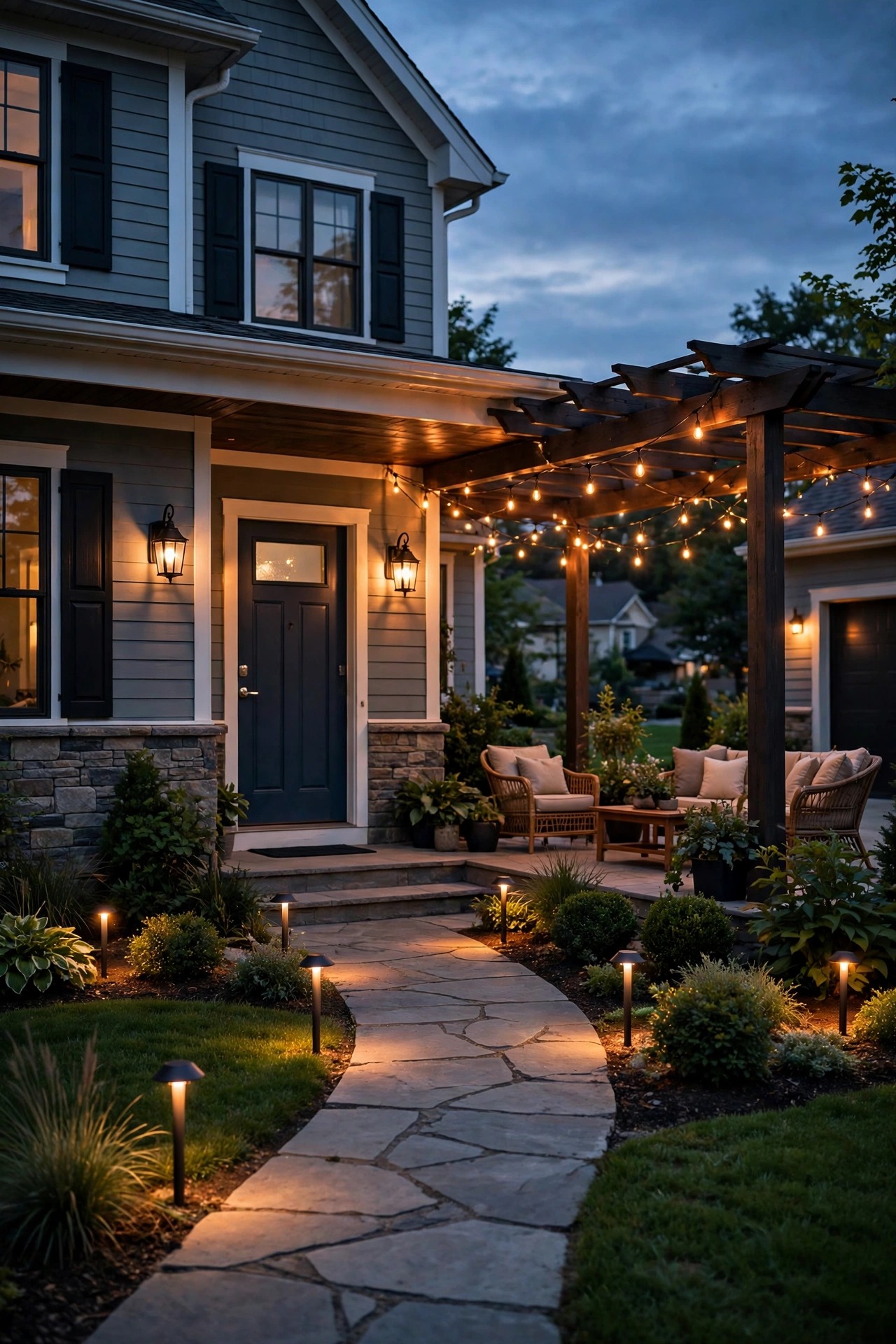
1. Smart Flood Lights: The Best Smart Outdoor Lights for Serious Security
When friends ask where to start, I point at the garage. A wide-beam smart flood light covers the driveway, lights the walk to the door, and doubles as security, all from one fixture. The good ones dim smoothly, so you can run them at a soft 30 percent glow from dusk to dawn and let the built-in motion sensor push them to full brightness when a car pulls in. From the phone app you can set schedules, group two floods together, and ask your voice assistant to turn the driveway on while your hands are full of groceries. Honest limits: floods sit high and far from the house, which is exactly where Wi-Fi gets weak, so check your signal at the mounting spot with your phone before you buy. Most need a hub-free Wi-Fi connection and a standard junction box, and they go a bit dumb during an internet outage, though saved schedules usually keep running. If your driveway is dark, your porch is shadowy, or you simply want one purchase that changes how the whole front yard feels at night, start here.
Suggested budget range: $40 – $120.

2. Smart Porch Bulbs for the Fixtures You Already Love
If you already love your porch fixtures, do not replace them — make them smarter. A smart bulb screws into the socket you have and adds app control, smooth dimming and sunset schedules in about five minutes, no wiring, no electrician. I run mine at a warm 40 percent from dusk onward, and the entry looks calm and expensive instead of interrogation-room bright. Voice control shines here too: hands full of grocery bags, one sentence, and the porch lights up before you reach the steps. The honest limits are real. Enclosed glass fixtures trap heat, so choose bulbs rated for enclosed fixtures and damp locations. A smart bulb only works while the wall switch stays on — flip it off and the bulb vanishes from the app until someone flips it back. Most single bulbs top out around 800 lumens, fine for a porch, not for a big yard. During an internet outage, simple on-off schedules saved on the bulb keep working on some models and not others, so check before you buy. Perfect for renters, fixture collectors, and anyone who wants automation tonight.
Suggested budget range: $12 – $35.
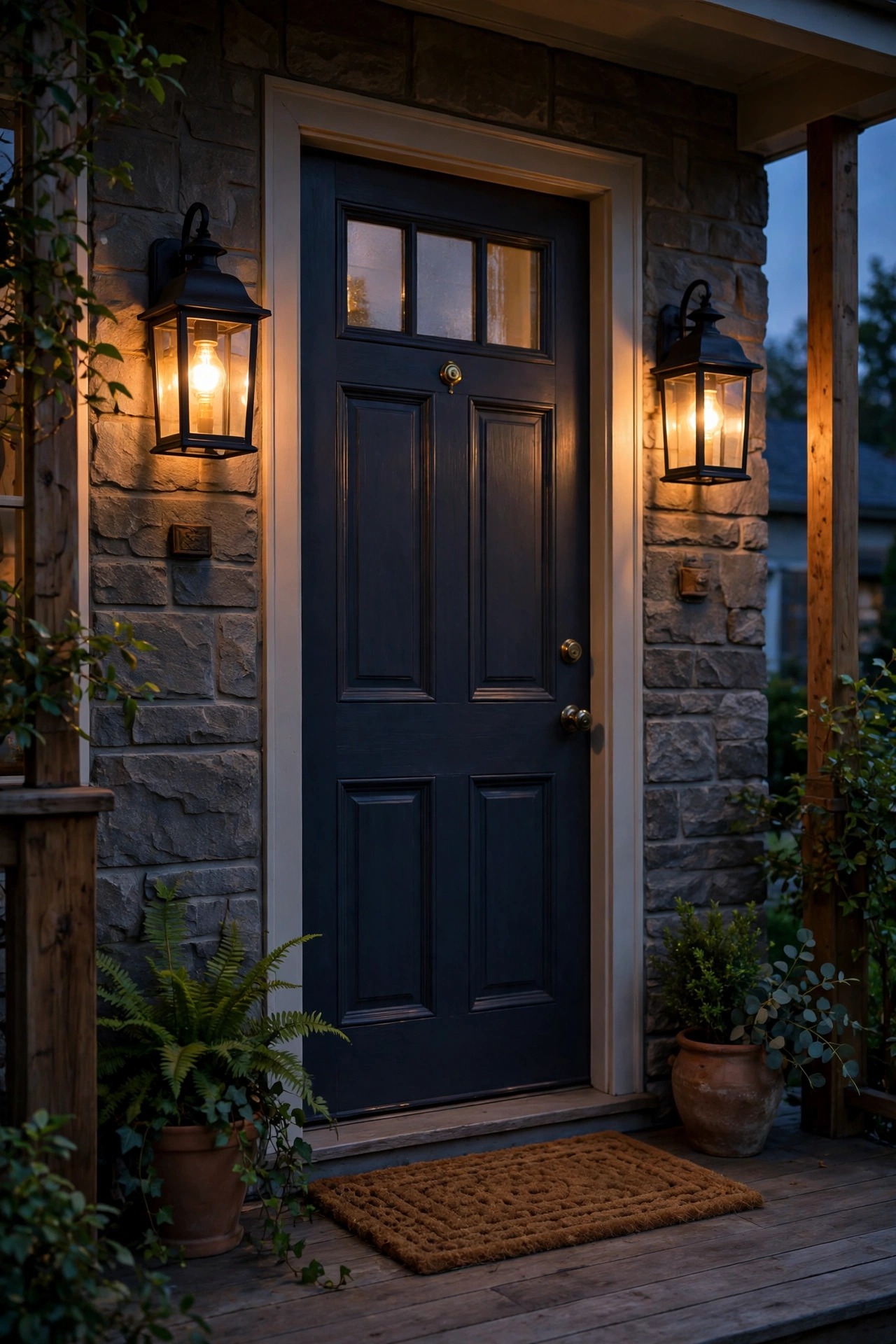
3. Smart Path Lights That Guide Every Step
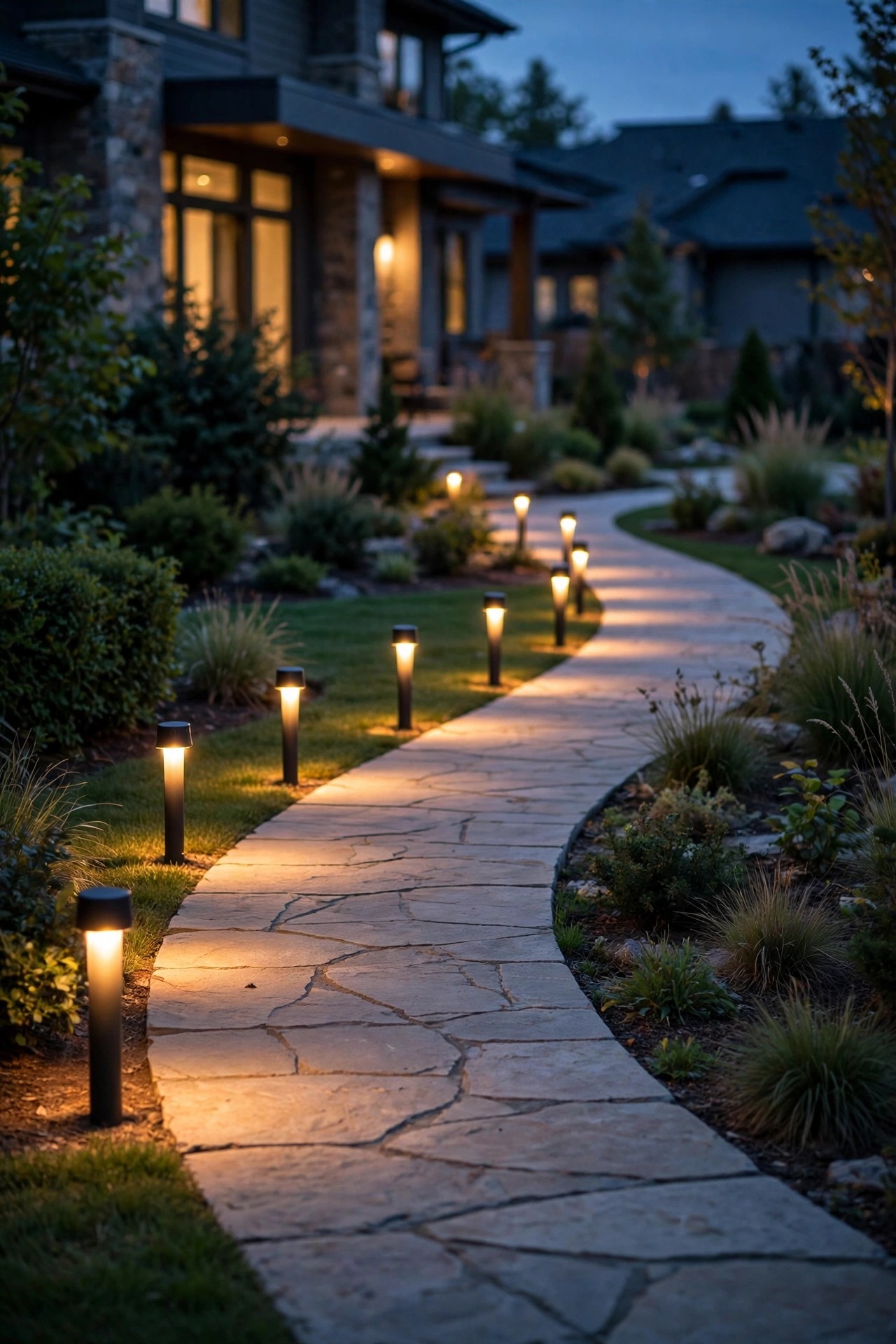
Few upgrades change the feel of a yard like a lined path. Smart path lights stake along the walkway and link together, so the whole run dims, brightens and follows one schedule from the app. I keep mine at a low guide-glow most of the night and let them rise to full for the hours guests actually arrive. Most smart path sets use a small hub or a short-range wireless link between fixtures rather than raw Wi-Fi, which honestly suits them: the hub sits indoors where the signal is strong and relays out to the yard. Battery models are the easiest install you will ever do, but plan on recharging or swapping batteries a few times a year, and cold snaps shorten their run time. Low-voltage smart sets cost more up front and need a transformer, yet they shrug off winter and never need charging. Brightness is modest by design — these are guide lights, not work lights — so pair them with a porch light for real task brightness. If your front walk goes dark and patchy every night, this is the fix that makes the whole house look finished.
Suggested budget range: $50 – $140.
4. Smart String Lights for Instant Patio Atmosphere
Smart string lights are my most-used outdoor upgrade, full stop. Picture a heavy-duty strand over the patio, hung once and then controlled by schedule, app, or one lazy voice command from the hammock. Look for strands rated for permanent outdoor use, with shatterproof bulbs you can replace one at a time when one finally gives up. The app earns its keep with dimming: bright while you cook, low and golden once dinner lands. Now the limits. A 48-foot strand at the far end of your patio is a long way from the router, so hang the strand, then stand under it with your phone and check the signal before the return window closes. Cheap strands drop offline and quietly become regular string lights, which is not a tragedy, just not what you paid for. Read the box for a true wet-location rating, and keep every connection off the ground and out of puddle range. These suit patio people, pergola owners, and anyone whose outdoor room only really comes alive after dark.
Suggested budget range: $35 – $90.

5. Smart Spotlights for Trees, Flags and Facades
Spotlights are the drama layer, and the smart versions add app control to the show. Stake one at the base of a tree and angle it up through the branches, wash a stone facade in warm light, or give the flag its own pool of glow. From the app you can dim each head, group the front-yard spots into one scene, and set them to fade up at sunset like a theater curtain going up. Wired smart spots are the reliable choice for big yards because they draw steady power and hold their connection; battery and solar smart spots install in minutes but dim themselves to save charge on long nights, and their wireless range is the shortest of anything on this list. Keep the count honest: two or three well-aimed spots beat seven scattered ones, and always stand across the street at night to check for glare into drivers' eyes. A hub-based set keeps its sunset schedule running even when the internet drops, which is when you least want a dark facade. Best for homeowners with one beautiful tree, a long facade, or a flag that deserves its moment.
Suggested budget range: $30 – $85.

6. Smart Switches That Make Regular Fixtures Smart
Here is the move most people miss: replace the wall switch, not the lights. A smart switch makes every fixture it controls app- and voice-ready at once — the porch pair, the garage sconces, the patio ceiling light — while the switch itself still works with a normal tap, which guests and grandparents appreciate. It is also the cheapest way to smarten a whole circuit, because plain LED bulbs cost a fraction of smart bulbs. I compared this route head-to-head with bulbs in my smart switch vs smart bulb guide, and switches win for multi-fixture setups almost every time. The caveats are electrical. Most smart switches need a neutral wire in the box, common in newer homes, missing in some older ones, so check before you order. Installation means working inside the switch box; if that sentence made you nervous, an electrician finishes the job in about twenty minutes. During a power cut nothing works, obviously, and when the internet drops you lose app control but keep full manual control at the switch itself. Ideal for whole-porch control and any home with several fixtures sharing one switch.
Suggested budget range: $25 – $60.

7. Smart Plugs: The Easiest Upgrade for Lights You Own
Already own string lights, a fountain, or a landscape transformer you like? An outdoor smart plug makes them smart for the price of a pizza night. Plug the device into the smart plug, plug that into a GFCI outlet, pair it, and suddenly your regular string lights follow a sunset schedule and answer to your voice. Two-outlet models run two zones independently, which is how my patio strings and my fountain stopped sharing one tired timer. I rounded up the features worth paying for in my guide to outdoor smart plugs and timers if you want the nitty-gritty before you buy. Know the limits first: a standard smart plug only turns power on and off, so it cannot dim — any dimming has to live in the light itself. The plug needs a weatherproof housing or a covered in-use outlet box, and connections last longer kept off the ground. Wi-Fi plugs are the most common and the most range-limited, so test the outlet location with your phone first. This is the best first smart purchase on this entire list: cheap, reversible, and useful in every season.
Suggested budget range: $15 – $40.

8. Smart Lanterns for Tables, Steps and Porch Corners
Not every light needs to be wired to the house. Smart lanterns are rechargeable, portable pools of glow you carry where the evening goes — the porch steps, the picnic table, the reading chair in the garden. The app-connected ones let you dim a matched pair together, soften the light to a candle-like warmth, and schedule them to wake at dusk on the steps so nobody trips while carrying drinks. Because they run on batteries, the install is literally setting them down, which makes them a dream for renters and for older porches with no outdoor outlet at all. The trade-offs are gentle output and finite charge. One lantern is ambiance, not task light, so do not expect it to light a grill station. Batteries fade fastest in freezing weather, and a lantern forgotten on the lawn will not love the sprinkler cycle, whatever the water-resistance rating claims. Bring them in for hard freezes and they will serve you for years. Reach for lanterns when your lighting problem is one dark spot, not a whole system — a stair landing, a side gate, a table sitting just beyond the patio light.
Suggested budget range: $30 – $85.

9. Color-Changing Smart Bulbs for Holidays and Game Nights
Color-changing smart bulbs are the party trick that quietly becomes a habit. Ninety percent of the time, mine live at the same warm white as every other bulb I own, because warm white is what makes a house look its best. Then October arrives and the porch goes orange, December turns it soft red and green, and on game nights the patio glows in team colors — all changed from the couch in about ten seconds. In a porch fixture or a patio socket, these bulbs behave like regular smart bulbs: schedules, dimming, groups and voice control included. The honest fine print: in color mode they run dimmer than in white mode, so colors read as accent, not illumination. Some neighbors and some neighborhood rules prefer a calmer porch, so save the bold colors for occasions. Integrated color fixtures cost more than color bulbs dropped into fixtures you already own, with no real gain. Power draw is the same few watts as any LED. Buy color bulbs for the two fixtures seen from the street and the patio if you host a lot; the fun per dollar here is honestly unmatched.
Suggested budget range: $14 – $45.
10. Smart Motion-Sensor Lights That Watch the Yard for You
Smart motion-sensor lights are the watchful layer: dark most of the night, instantly bright when someone walks the side yard, and quietly logging each visit in the app. The app control is the real upgrade over old-school motion lights. You can tune sensitivity so passing traffic stops triggering them, set the brightness and how long they stay on, and get a phone alert when the back gate lights up at 2 a.m. Battery models mount with three screws anywhere, which is brilliant for gates and sheds with no wiring; hardwired models never need a ladder-and-battery trip in January. Cold weather shortens battery life, and a busy sidewalk can turn alerts into noise, so aim sensors across the path people walk, not along it, and limit alerts to nighttime hours. Most keep sensing and lighting locally even if the internet drops, though the alerts pause until the connection returns. Choose these for side yards, driveways, gates and any corner where light should mean something happened, not just something pretty.
Suggested budget range: $35 – $95.

11. A Smart Transformer: The Best Smart Outdoor Lights Upgrade for Low-Voltage Systems
If you already run low-voltage landscape lighting — path lights, spots and deck lights fed by one transformer — a smart transformer is the single smartest upgrade on this list. Swap the old transformer for a smart one and your entire existing system gains app control, per-zone schedules and voice commands without replacing a single fixture. Better models run two or three zones independently, so the front path can follow a sunset schedule while the backyard trees stay on a party timer. Many include an astronomical clock that tracks sunrise and sunset all year, stored right on the unit, which means your schedule keeps running even when the internet or the power grid has a bad night. Installation is a real project: you are working at the transformer location with line-voltage input, so follow the instructions to the letter or hire it out. The up-front cost is the highest here, and smart controls will not rescue failing cable runs or corroded connections. But if your wired system is sound and you are tired of walking outside to flip it off at night, this is the smartest money you can spend on your yard.
Suggested budget range: $120 – $300.

Frequently Asked Questions
Do smart outdoor lights still work when the internet goes out?
Mostly, yes. Schedules saved on the device or on a home hub keep running, and motion sensors still trigger locally. What pauses is phone-app and voice control, since both travel through the internet to reach your lights. When the connection returns, everything picks up on its own — you should not need to set anything up again.
How far will my Wi-Fi reach outside?
Plan on one or two walls of strength, then a fast drop-off. The reliable test is your own phone: stand where the light will mount and check the signal there. If it is weak, move the router closer to that wall, add a mesh satellite near the yard, or choose a hub-based system whose hub stays indoors where the signal is strong.
Can I put a smart bulb in a sealed outdoor fixture?
Only if the bulb is rated for enclosed fixtures and for damp or wet locations, and many smart bulbs are not. Sealed fixtures trap heat, and heat is what shortens smart bulb life the fastest. When in doubt, make the switch smart instead and keep a plain outdoor-rated LED bulb in the sealed fixture.
Do smart lights waste electricity by staying connected?
Barely. A connected LED bulb sips roughly half a watt on standby, which works out to pennies a month, and the scheduling usually saves far more by ending the all-night, full-brightness habit. The bigger saving is dimming: a bulb running at 40 percent uses a small fraction of its full power.
Conclusion
The best smart outdoor lights are not the fanciest ones. They are the ones that come on at dusk without you thinking about it, light the steps your kids and guests actually use, and make the yard look like the cozy photos you saved. Start with one layer — porch bulbs or a smart plug are the cheapest experiments — live with it for a month, then add the next. Smart or not, warm layered light around 2700 to 3000K is still what makes a house feel like home at night. Browse the rest of my outdoor lighting ideas here on the site and build your layers one warm glow at a time.