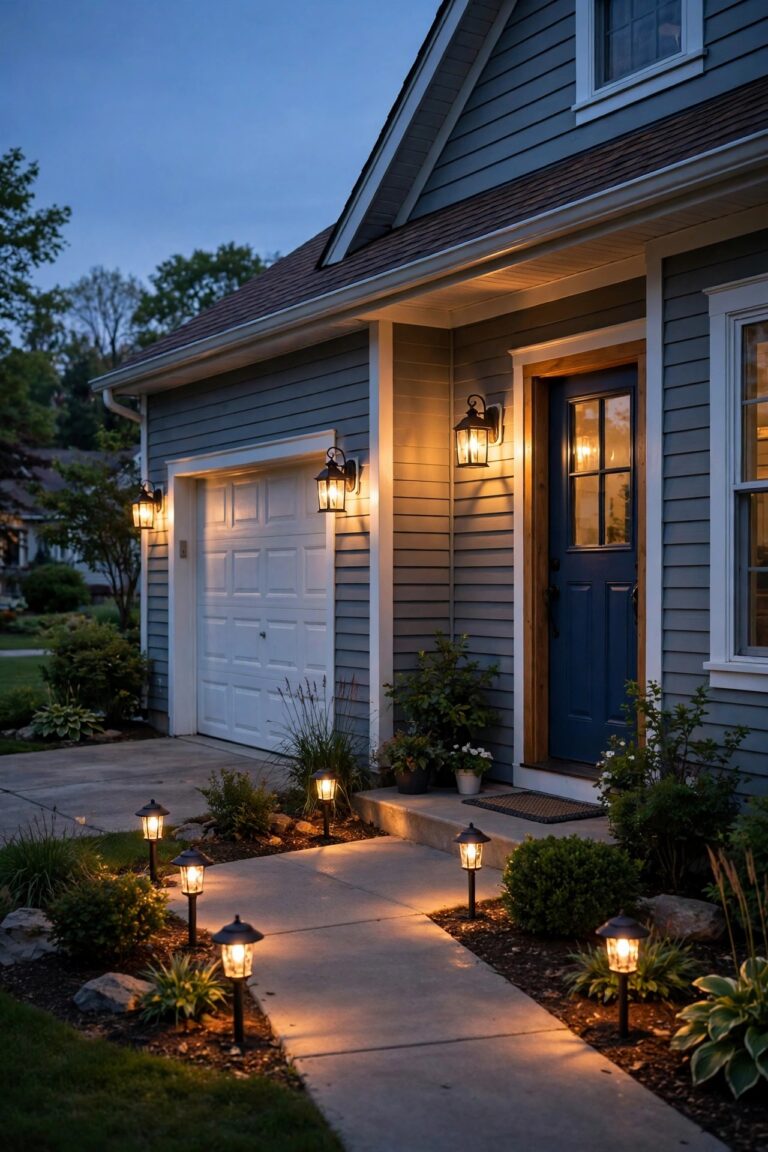
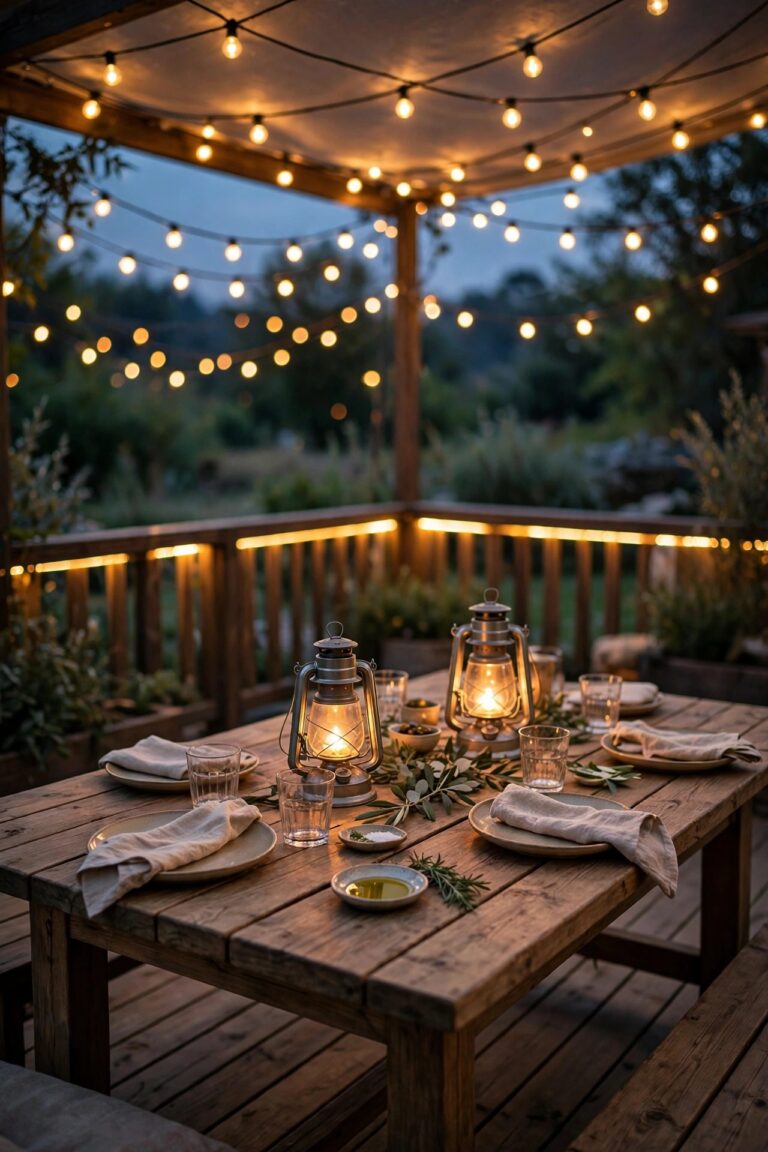
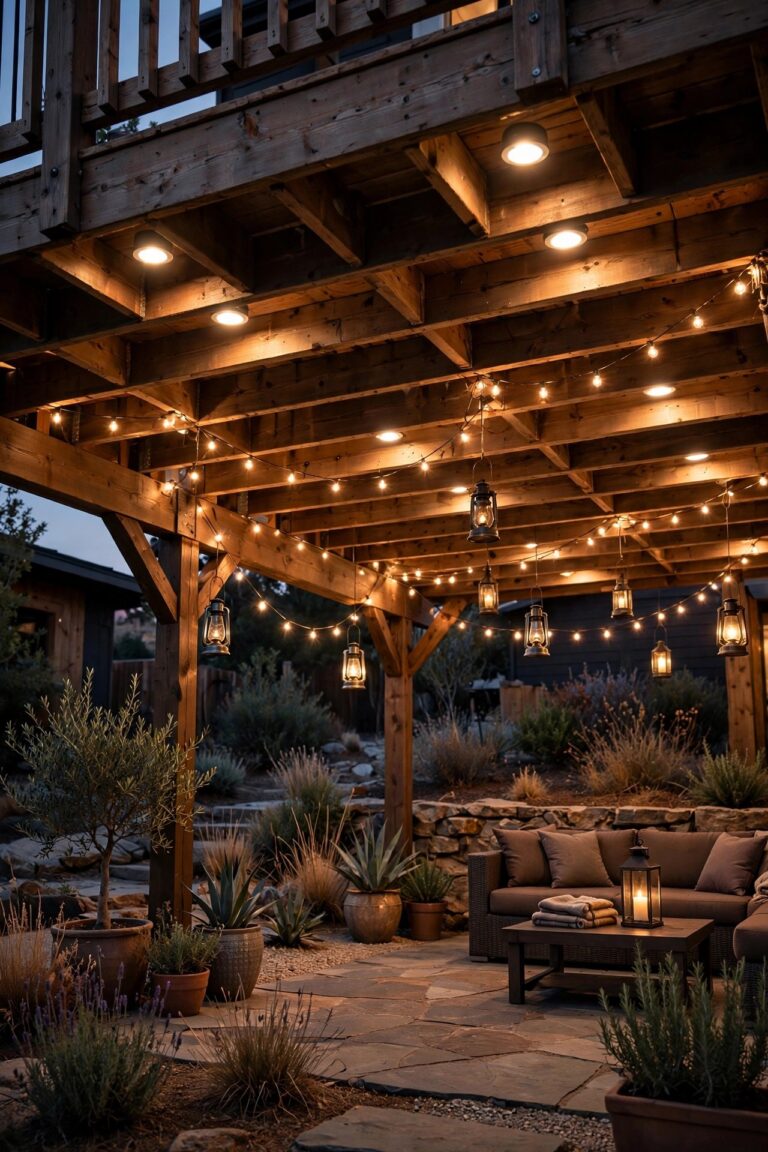
Confession time: the first path lights I ever bought cost about a dollar each, and they looked it. Bluish light, wobbly plastic stakes, half of them dead by Halloween — the front walk glowed like a landing strip at a sad little airport. What I have learned since is that cheap-looking is almost never about the price tag. It comes down to three fixable mistakes: cold blue-white light, flimsy plastic housings, and spacing that marches in a stiff soldier line. The best budget path lights under $50 a set skip all three traps, and honestly? Guests cannot tell them from sets I have seen at three times the price. Here are the nine types I reach for when a walkway needs to look polished on a real budget, with honest notes on what each cannot do. I think in layers: a soft guide light along the path, a warm accent where the eye lands, and enough brightness to keep steps safe.

1. Metal-Housing Solar Stakes: The Best Budget Path Lights to Start With
If you buy only one type from this list, make it a multipack of solar stakes with real metal housings — die-cast aluminum or powder-coated steel instead of all-plastic bodies. The weight alone changes everything: they push into the soil straight, they do not wobble after the first storm, and the finish reads like a fixture, not a toy. Look for glass lenses too, because plastic lenses cloud and yellow within a season or two, and that hazy glow is exactly what makes a yard look tired. A six- or eight-pack with warm-white LEDs is the sweet spot for a standard front walk. My full solar path lights guide covers panel sizes and brightness if you want the deeper buying picture before you shop. The honest limits: brightness still varies a little from light to light in budget packs, the ground stakes themselves are often plastic even when the housing is metal, and a deeply shaded walk will starve them by December. Who they suit: most front walks in reasonably sunny yards, and anyone who wants the biggest visible upgrade for the least effort.
Suggested budget range: $30 – $48.

2. Low-Voltage Wired Starter Kits
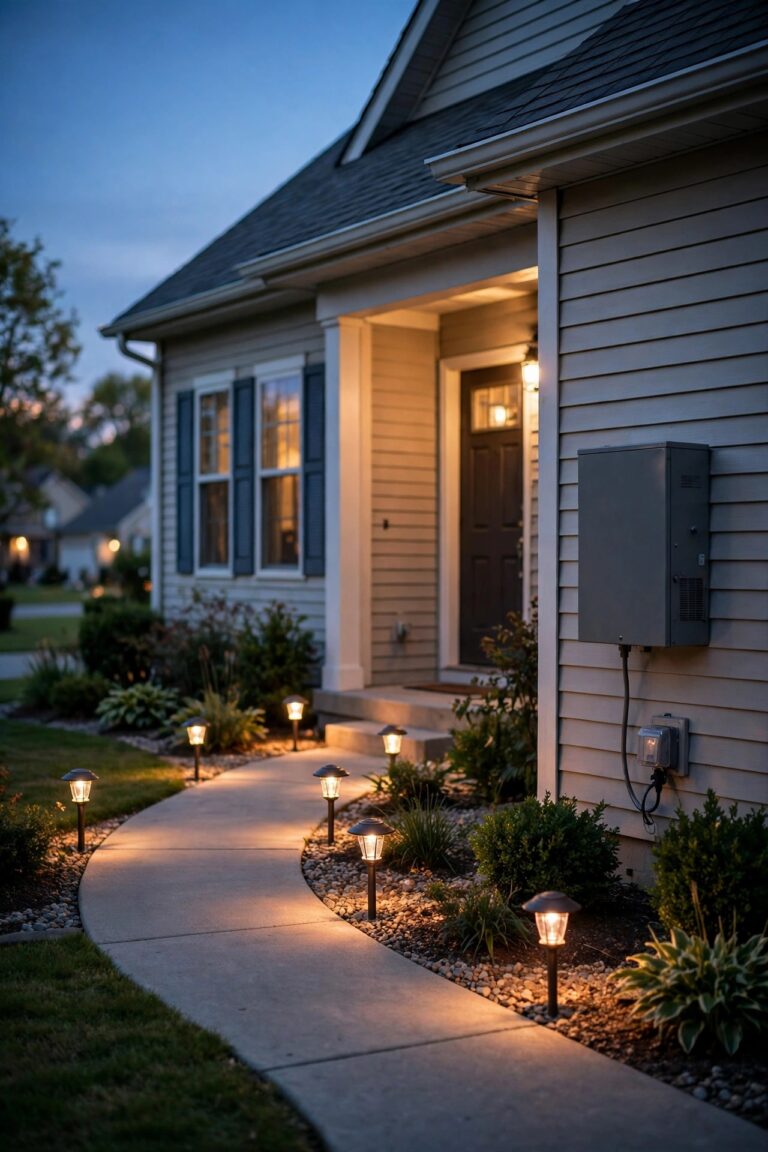
A small low-voltage starter kit — a compact transformer, a coil of cable, and four to six path lights — is the closest thing to a cheat code in budget lighting. Because every light draws from the same power supply, the brightness is perfectly even from the first fixture to the last, and even output is the single biggest reason expensive installations look expensive. There is no charging, no fading by 10 p.m., and no winter slump; they burn at the same warm level in January as in June. Basic six-light kits regularly land right at the top of our $50 frame, especially in plain black or bronze finishes without decorative extras. I keep a detailed walkthrough of transformer sizing and cable runs in my low-voltage path lights post if you want to plan a bigger layout later. The trade-offs are real, though: you will spend an hour or two burying cable a few inches down, the transformer needs an outdoor outlet, and expanding later means planning the cable run now. Who they suit: a permanent front walk you are not going to re-landscape next year, and shady yards where solar simply cannot keep up.
Suggested budget range: $40 – $50.
3. Warm-White Solar Stakes (2700–3000K)
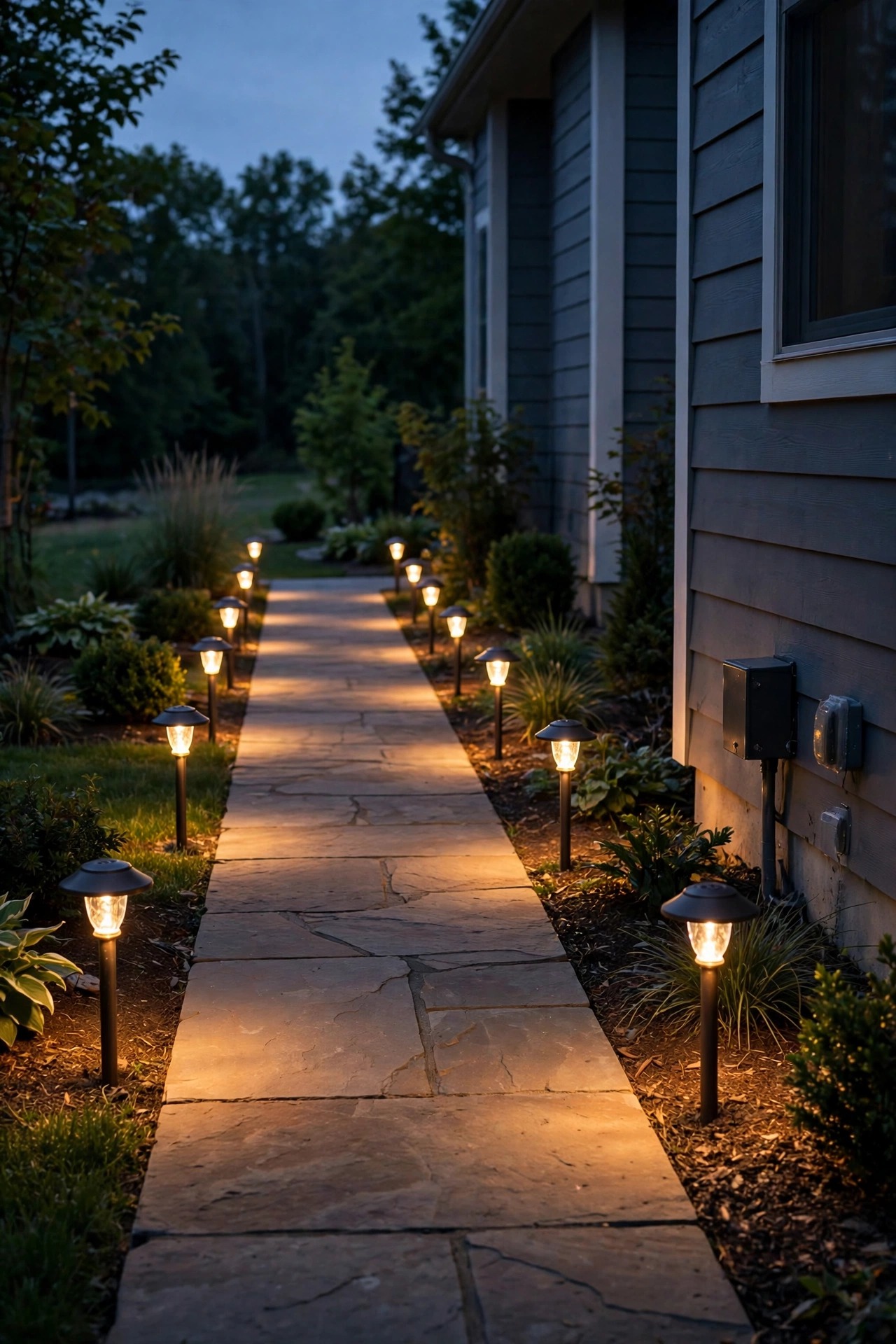
Here is the secret nobody prints on the box: the cheap look is usually the color of the light, not the light itself. Budget solar stakes that glow blue-white — anything up around 6000K — read as gas-station glare and make every plant look slightly ill. The same money spent on warm-white stakes in the 2700–3000K range gives you that candlelit, boutique-hotel glow that instantly flatters brick, stone, and siding. When you shop, hunt for an actual Kelvin number or the words "warm white" on the listing; if it brags about "bright daylight white," skip it. Mix in one accent layer — a slightly brighter light at the curve or the steps — and the whole walk looks designed rather than decorated. Honest limits: warm LEDs can look a touch dimmer than cool ones at the same output, and the very cheapest warm stakes sometimes lean orange, so order one pack first and live with it for a week before committing to three more. Who they suit: traditional, brick, and cottage-style homes, and anyone whose current solar lights feel harsh. If your walk gets decent sun, this is the fastest five-minute transformation on the list.
Suggested budget range: $22 – $40.
4. Lantern-Style Solar Path Lights
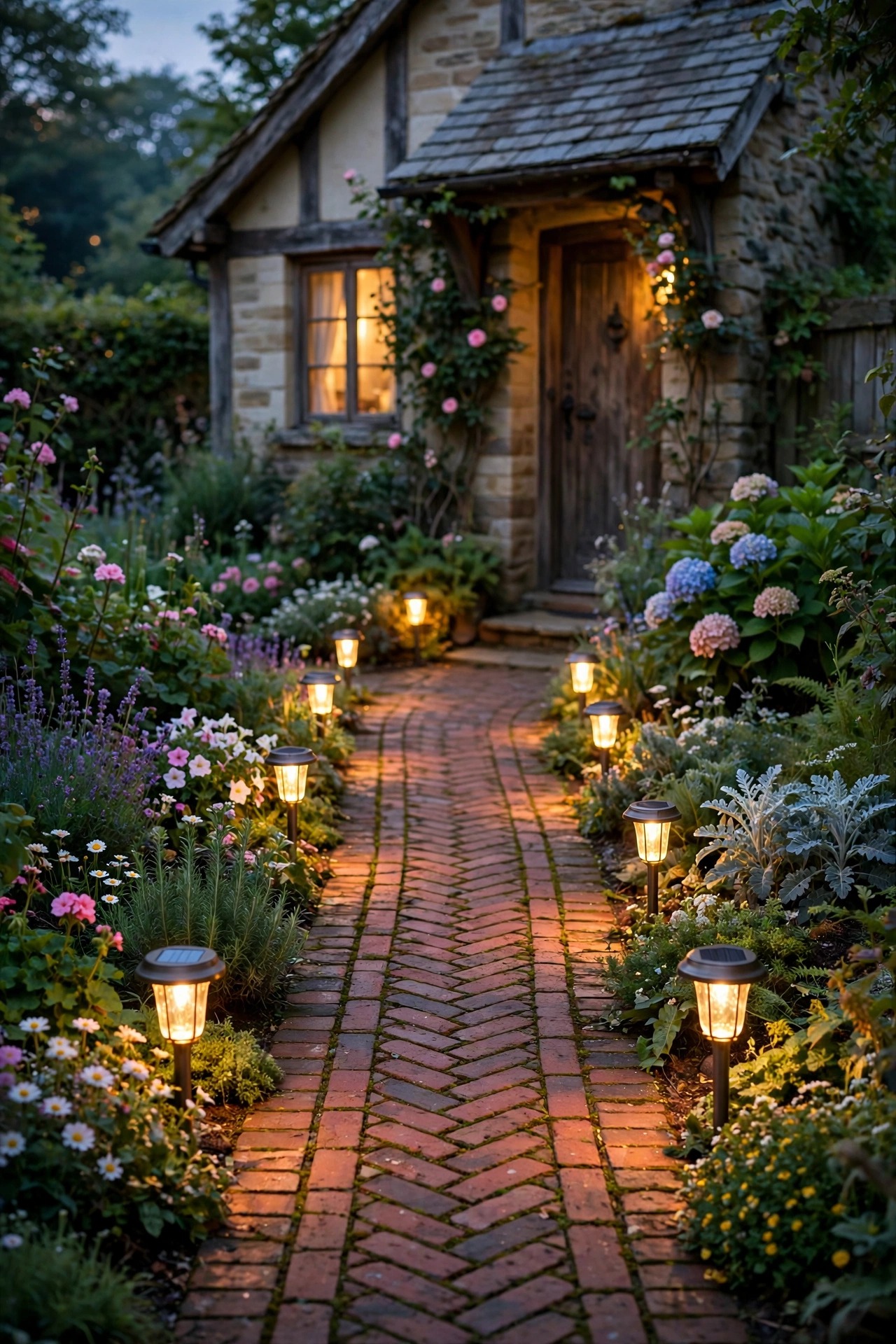
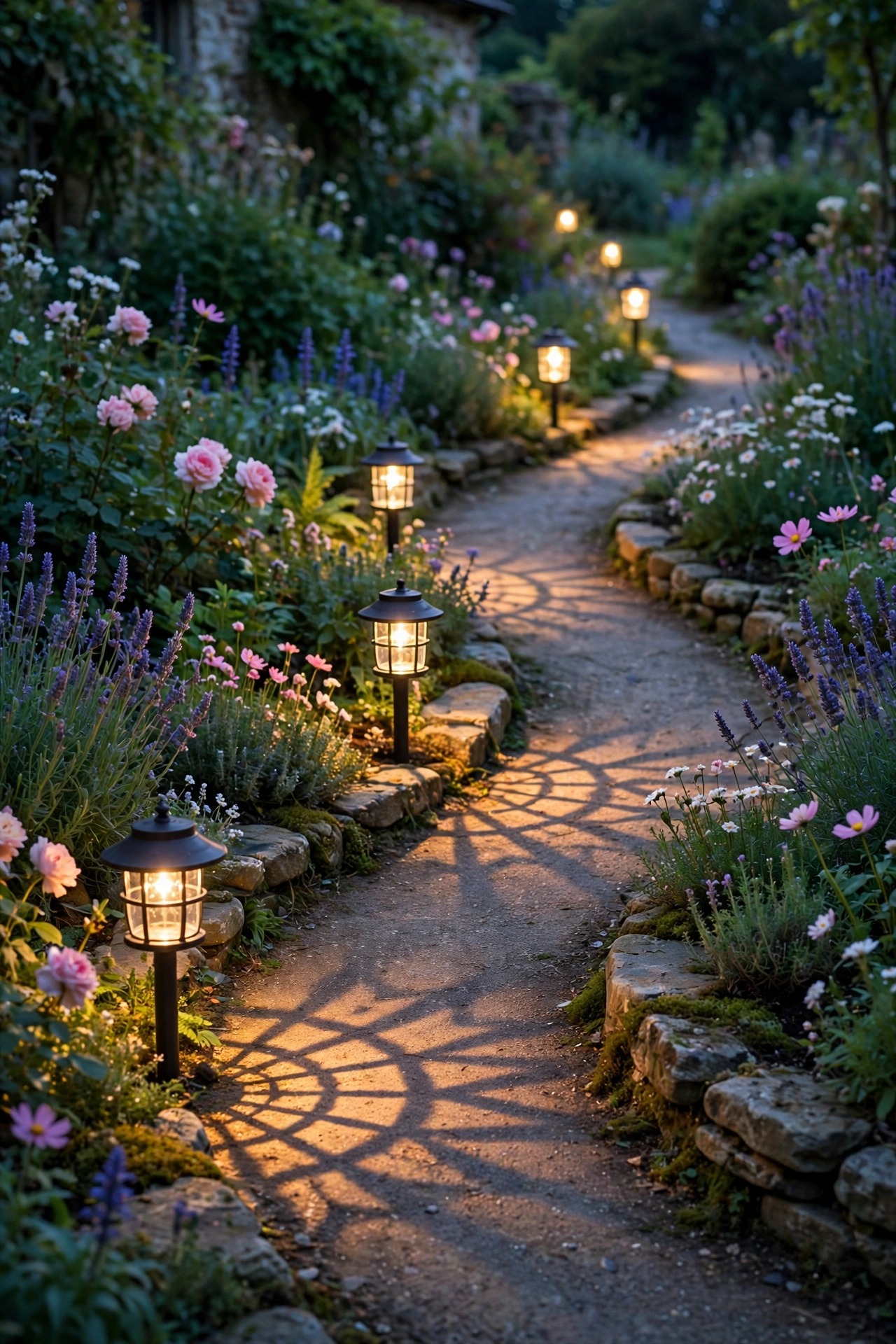
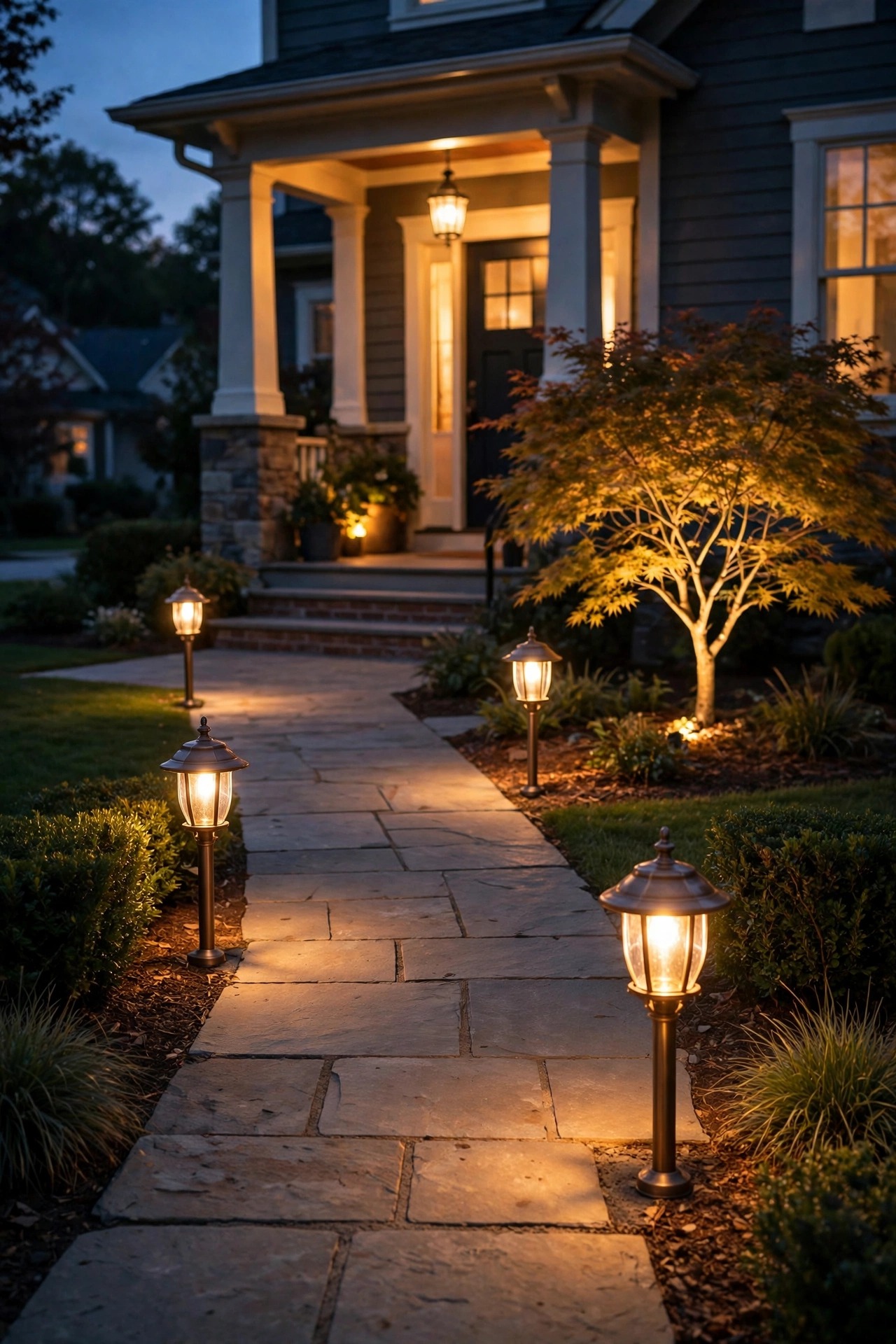
Lantern-style stakes carry a tiny lantern silhouette — a small framed cage around the bulb, often with seeded or lightly frosted glass — and that little bit of architecture does a lot of heavy lifting. Instead of a bare glowing dot, you get a fixture with a shape, and many of them throw a soft starburst or patterned pool onto the path, which reads as intentional and charming rather than utilitarian. They are my go-to along curved garden walks and anywhere guests linger, because the light feels like decor first and equipment second. Space them a little closer than plain stakes, about 4 to 5 feet apart on curves, so the patterned pools overlap into a gentle ribbon. Now the honesty: these are atmosphere lights. The cages and textured glass that make them pretty also eat some brightness, so they will not light a steep step or a dark corner on their own — pair them with one brighter fixture where footing actually changes. The solar panel usually hides in the lantern cap, which means overhanging branches hurt them more than top-panel styles. Who they suit: cottage gardens, curved paths, and anyone who wants the walk to feel like an evening stroll.
Suggested budget range: $28 – $46.
5. Flush In-Ground Solar Discs
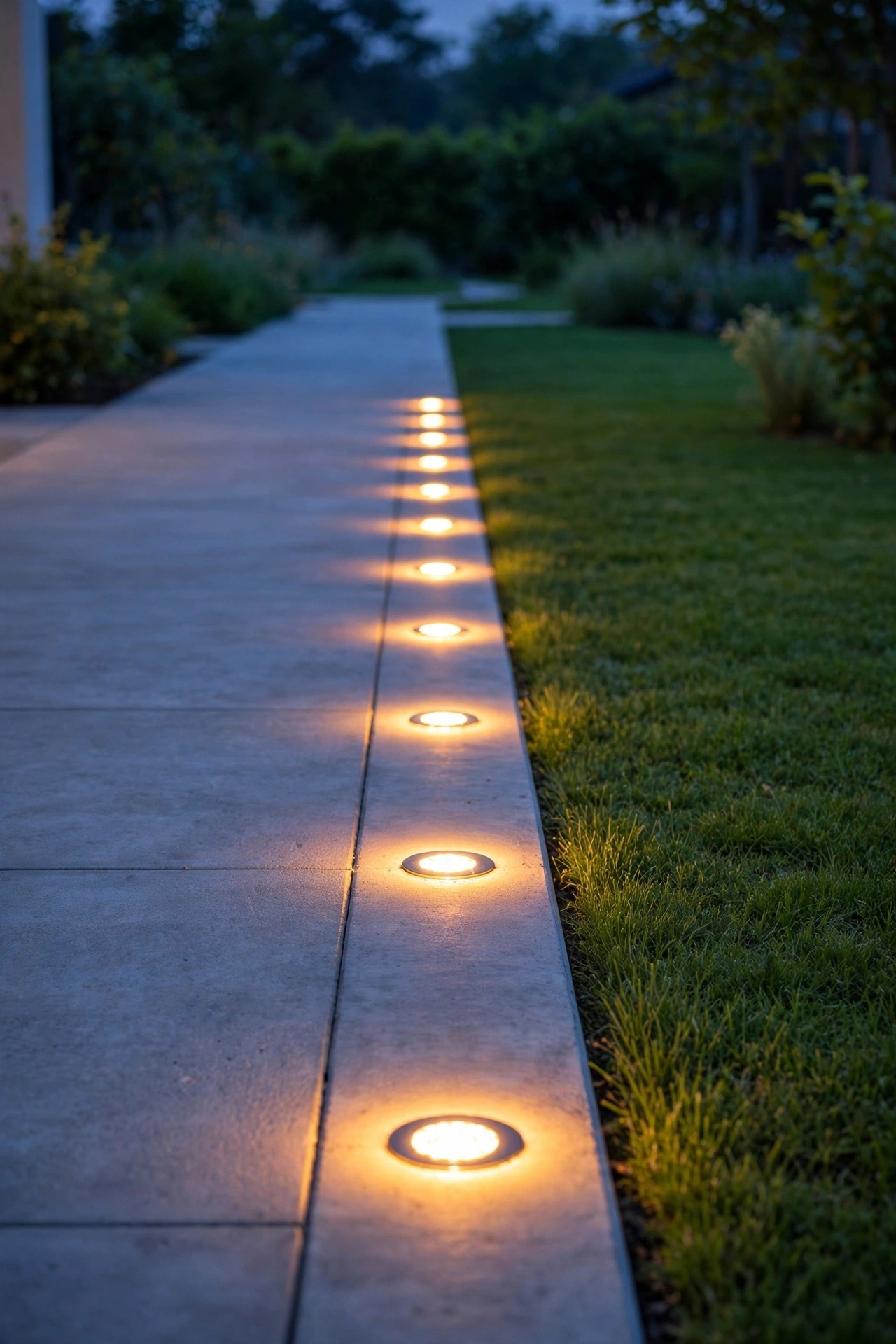
Flush solar discs sit flat in the soil or between pavers, and nothing about them sticks up to catch a mower wheel, a snow shovel, or a toddler. That low profile is exactly why they look so high-end: the light seems to rise out of the walkway itself, like the in-ground fixtures at resorts and modern hotels. Most budget sets come eight or twelve to a pack, so a long edge of driveway or a wide patio border is very doable inside our $50 frame. Install them where the lawn meets hardscape, or dotted singly into garden beds as quiet markers. Here is the honest part, though. A flat panel only sees the sky straight above it, so discs under trees or on the north side of the house charge poorly, and the light itself is a marker glow, not real illumination — you see the disc, not the ground around it. They also vanish completely under the first inch of snow. Who they suit: modern and minimalist homes, mower-heavy yards, and anyone marking edges rather than lighting steps. Keep expectations at "runway marker" level and you will love them; expect them to light stairs and you will not.
Suggested budget range: $24 – $42.
6. Bollard-Style Solar Lights
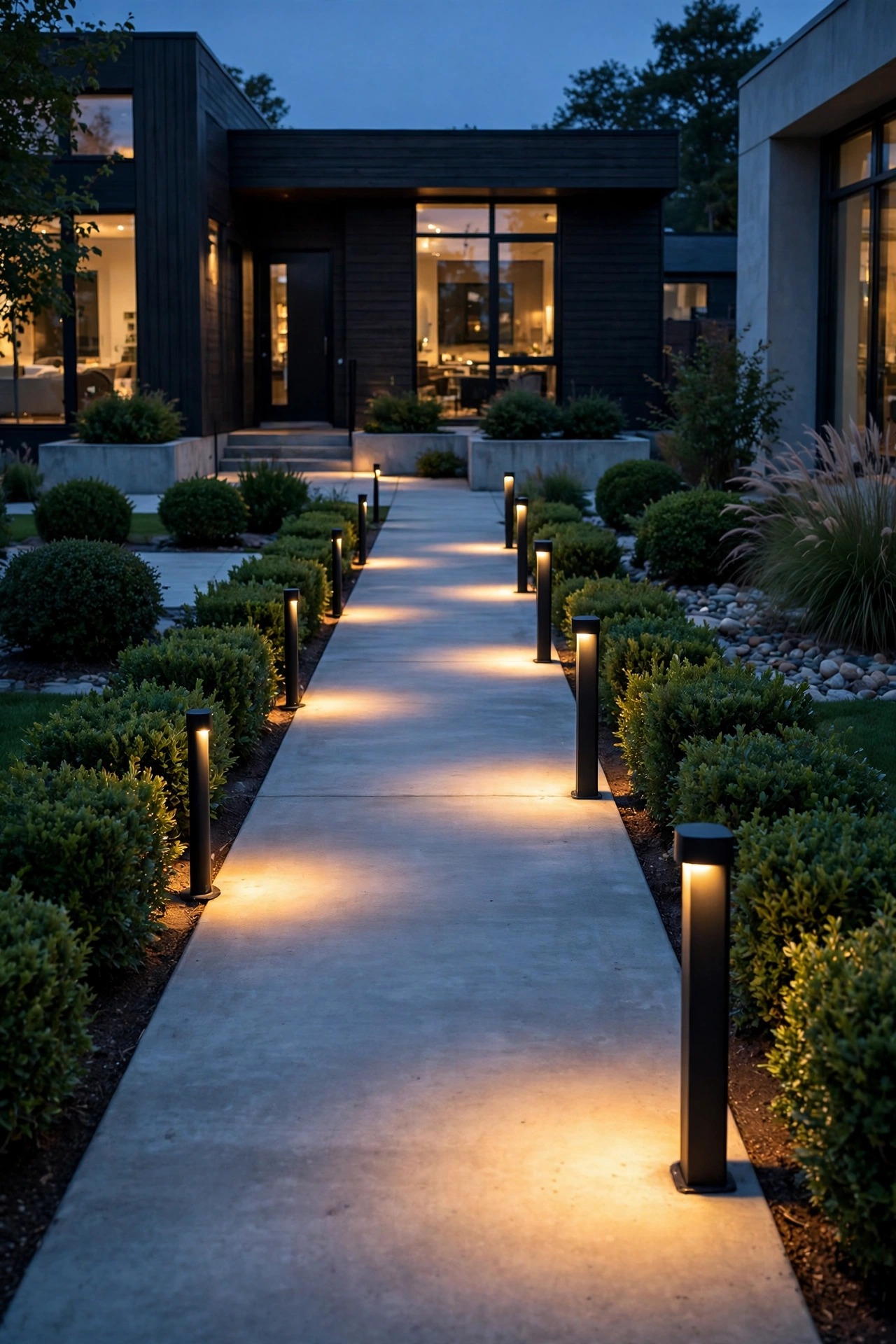
Bollards are the short, architectural posts you see outside nice hotels and office courtyards, and the solar versions have quietly become one of the strongest budget buys. Because the housing is a simple cylinder or rectangle, even inexpensive ones look clean and deliberate, and the light is aimed downward into a defined pool instead of spraying everywhere. Metal-finish bollards in black or bronze photograph like fixtures costing four times as much — this is the pick I recommend when a neighbor asks how to make a plain concrete walk look "done." The catch is arithmetic: bollards cost more per unit, so a pack under $50 usually holds four, sometimes six, lights. That means wider spacing, roughly 6 to 8 feet, and a walk that gets pools of light with soft shadows between rather than a continuous ribbon — a look I happen to love, but it is moodier and dimmer overall. The taller the bollard, the more it wobbles on soft soil, so push them deep or choose the shorter styles for flower-bed edges. Who they suit: straight contemporary walkways, driveway borders, and anyone who prefers a calm, architectural rhythm over maximum brightness.
Suggested budget range: $36 – $50.
7. Solar Picks With Replaceable Batteries
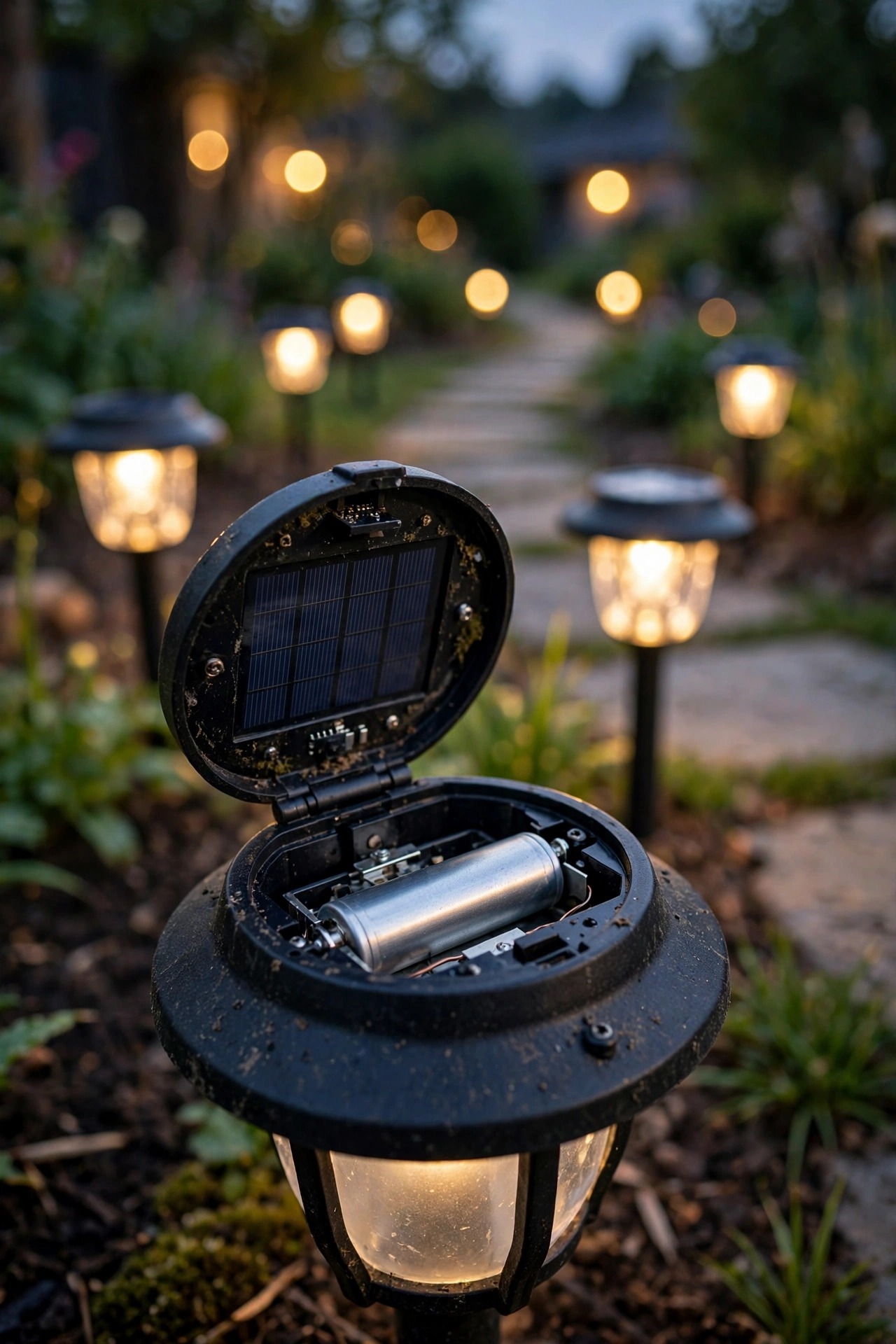
The real budget killer is not the purchase price — it is the throwaway cycle. Most cheap solar lights are sealed units, and when the little rechargeable cell inside dies after a season or two, the whole light goes in the trash and you buy the set again. The smarter buy is any style on this list — stakes, lanterns, bollards — built with a battery door and a standard AA or AAA NiMH cell you can swap in thirty seconds. I keep a spare set of cells on a small charger and rotate them each spring; my oldest budget stakes are on year four and still glow like new. My step-by-step for replacing solar light batteries shows the swap and how to test a tired cell before you blame the panel. The honest costs: lights with battery doors run a few dollars more per pack, replacement cells add roughly $8 to $10 every year or two, and a fresh battery will not rescue a panel that has gone cloudy. Who they suit: anyone tired of rebuying the same set every spring, and anyone trying to keep plastic out of the landfill.
Suggested budget range: $26 – $44.
8. Motion-Activated Accent Lights for the Front Walk
Motion lights are not really path lights, and that is precisely their role in a layered budget plan: they are the accent layer that fires when it matters. A pair of small solar motion lights at the gate, the first step, or the dark gap between driveway and door gives guests a bright, welcoming burst exactly when they arrive, then settles back to a faint standby glow that costs almost nothing to run. Because they spend most of the night dim, the little solar panel keeps up easily, and the battery lasts through stretches of cloudy weather that would flatten an always-on light by midnight. Mount them at about knee-to-waist height aimed along the walk, not straight out at faces — glare in the eyes helps nobody find a step. Honest limits: they cannot replace a continuous guide light on a long or crooked path, shrubs waving in the wind and neighborhood cats will trigger them, and the cheaper sensors sometimes stay on too long after a trigger. Who they suit: side paths, gates, basement stair entries, and anyone whose main walk is already lit but has one sketchy dark corner.
Suggested budget range: $18 – $38.

9. The Finishing Trick: Put the Whole $50 Into One Zone of Best Budget Path Lights
My last pick is not a product type at all — it is a buying strategy, and it is the one that makes the biggest visible difference. Twelve dim lights scattered across a whole yard look like a compromise; four genuinely good lights finishing one zone completely look like a design. So take the full budget and spend it on the front walk only: a better metal multipack, spaced properly at 5 to 6 feet, with one accent uplight on the small tree or the house numbers if the money stretches. Layering works because the eye reads a finished, glowing entry as "the whole house is lit," even while the side yard waits for next season. This approach also protects you from the worst budget trap, which is owning thirteen almost-matching lights from four different sale packs. Honest limits: the back path stays dark for now, and you will need patience to expand zone by zone instead of all at once. Who it suits: new homeowners, anyone starting from zero, and perfectionists on a budget — which, between us, is most of us. Start at the front door and work outward; curb appeal compounds.
Suggested budget range: $42 – $50.
Frequently Asked Questions
How many path lights do I need for a typical front walk?
For a standard 20- to 30-foot front walk, six to eight lights is the sweet spot. Space solar stakes about 5 to 6 feet apart, alternating sides on curves so the pools of light overlap gently, and bollards about 6 to 8 feet apart. One multipack in the $30 to $48 range usually covers a typical entry walk with a spare left over for the garden gate.
Do solar path lights really work in winter?
They work, but with shorter hours. A budget solar light that runs 8 to 10 hours on a June night may only manage 4 to 6 hours in December, and less after two cloudy days in a row. Wiping snow and frost off the little panels helps more than people expect. If your walk is a safety route in a northern climate, a wired starter kit or replaceable fresh batteries will serve you better than sealed solar units.
What color temperature makes path lights look expensive?
Warm white, in the 2700–3000K range, almost every time. It mimics candlelight and incandescent glow, flatters brick, stone, wood, and skin tones, and reads as intentional. Blue-white light above 5000K is the single biggest giveaway of a bargain-bin set, no matter how nice the housing is. Check the listing for an actual Kelvin number before you buy, and be suspicious of anything described as daylight white.
How long do budget path lights last before they wear out?
Expect two to four seasons from a decent budget set. The usual failure order is: the rechargeable battery fades first, then plastic stakes crack or lenses cloud. Metal housings and glass lenses survive much longer, and lights with replaceable batteries can go four years or more with a fresh cell each spring. Rinsing the panels, storing cheap solar lights indoors over harsh winters, and keeping fixtures out of sprinkler spray all stretch the lifespan.
Conclusion
The pattern I come back to on every walkway is simple: warm light, a housing with some real heft, and spacing that follows the shape of the path. The best budget path lights are never the cheapest ones on the shelf — they are the ones that got those three things right for under $50 a set, and then got left alone to do their job season after season. Pick one type, finish one zone, and let that glowing front walk convince you the rest of the yard is worth doing next. If you are ready to keep going, browse the other lighting ideas here on the site for porches, decks, and garden beds — your evening curb appeal is just getting started.