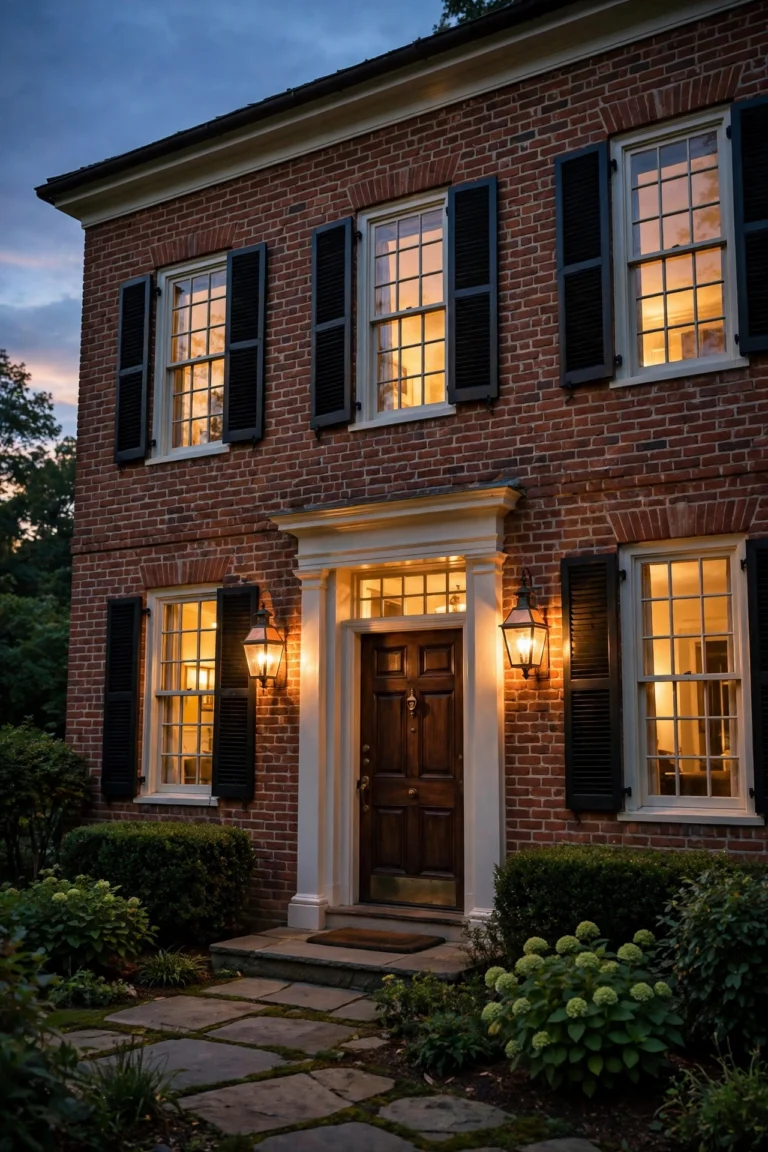
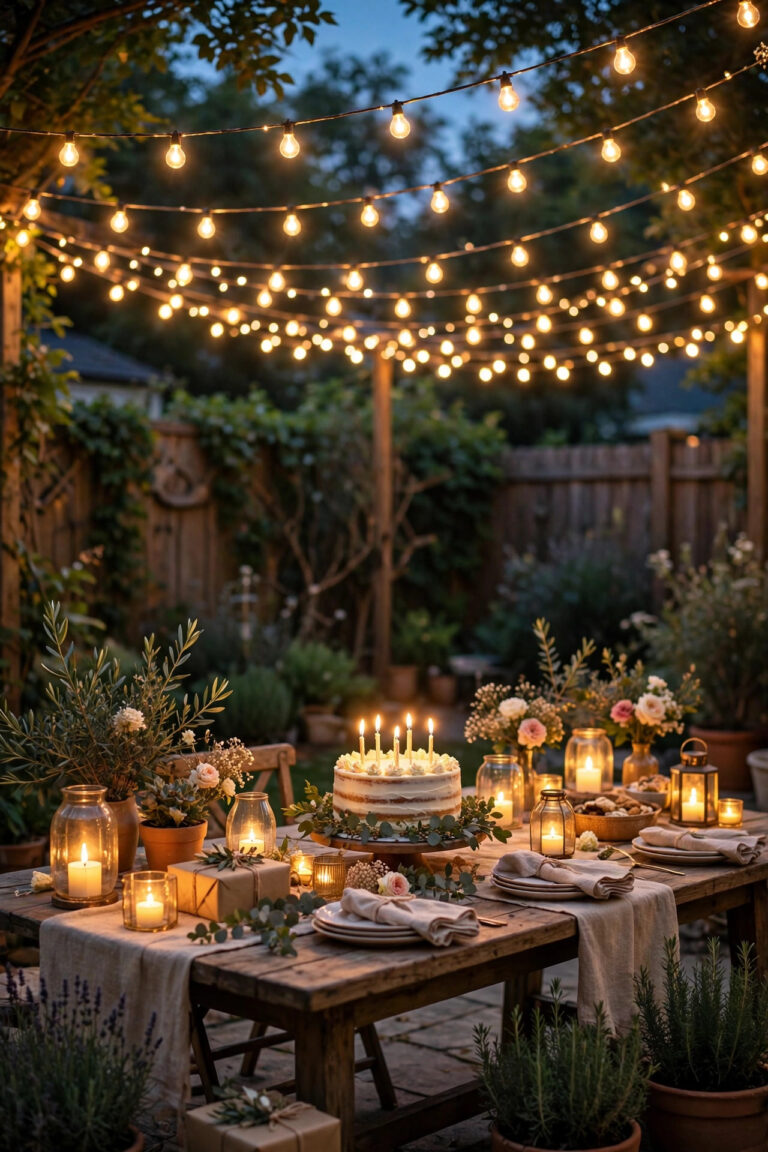
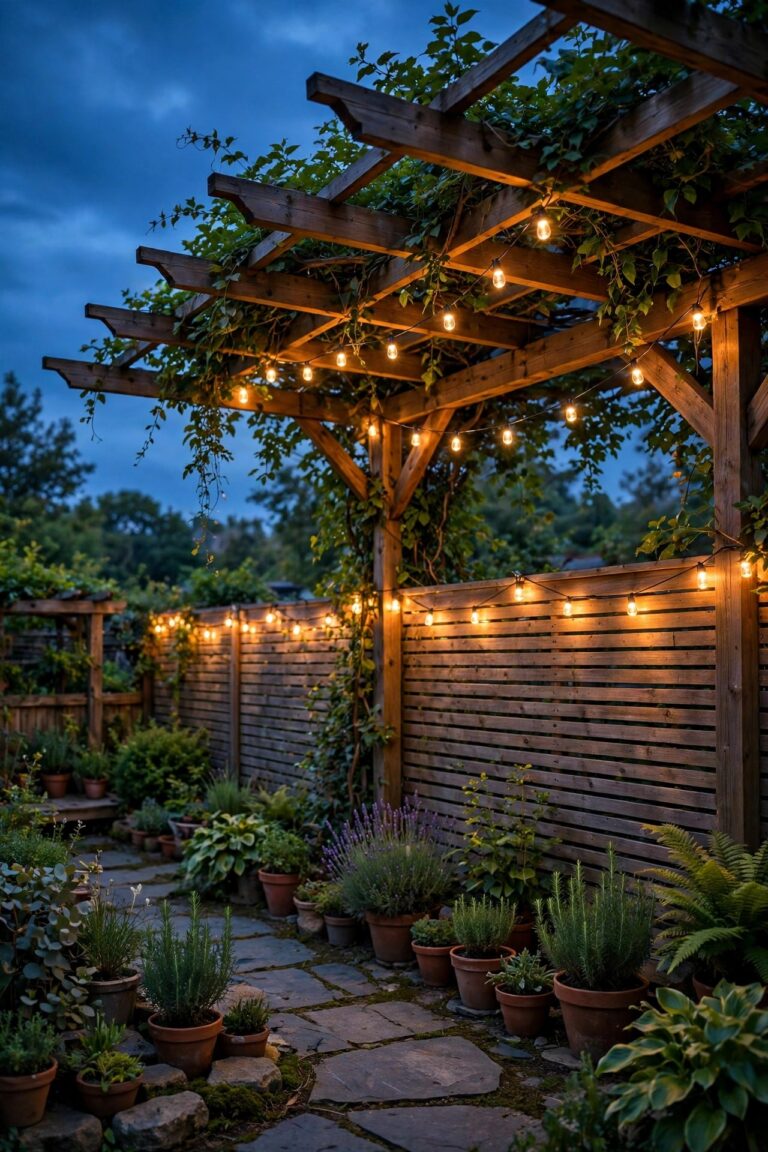
There is a particular kind of peace in pulling into the driveway after dark and finding your house already lit — porch glowing, path lights awake, the garage corner handled — without you touching a single switch. That is the promise of dusk-to-dawn lighting, and honestly, it is my favorite kind of outdoor lighting because it asks nothing of you after install day. The catch: the best dusk to dawn outdoor lights are not the brightest or the prettiest on the shelf. They are the ones whose little light sensor — the photocell — can actually see the sky, night after night, season after season. A photocell reads darkness, switches the light on at dusk and off at dawn, and slides its own schedule as the days lengthen and shorten. Place that sensor in permanent shade, or where it stares at its own glow, and the same fixture will strobe at midnight or burn at noon. I think of outdoor light in layers — a welcome layer at the door, a guide layer along paths, a guard layer at the edges — and below I have ranked the eleven types that handle each layer best, failure modes attached.
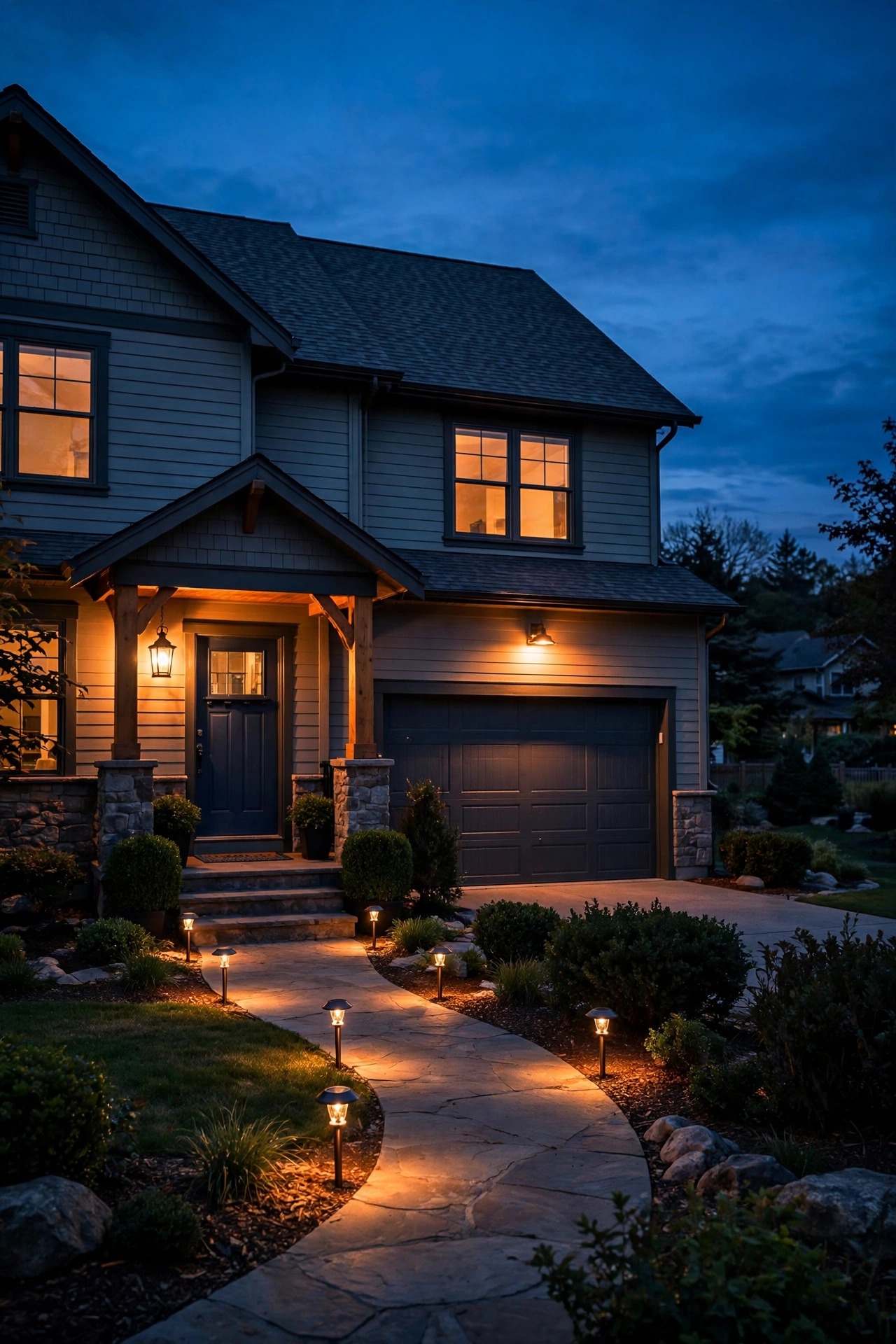
1. Wired Porch Lanterns — the Best Dusk to Dawn Outdoor Lights for Your Front Entry
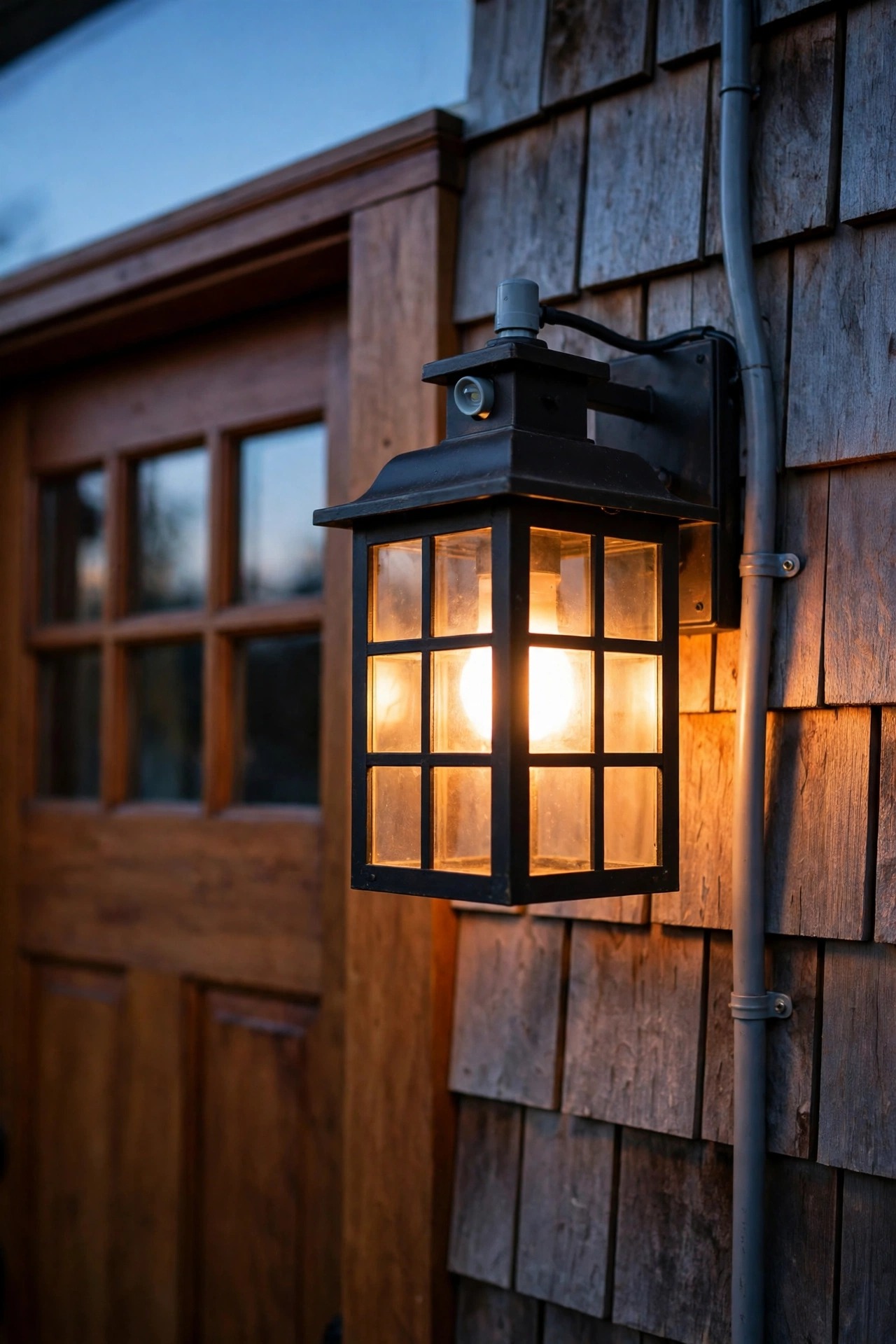
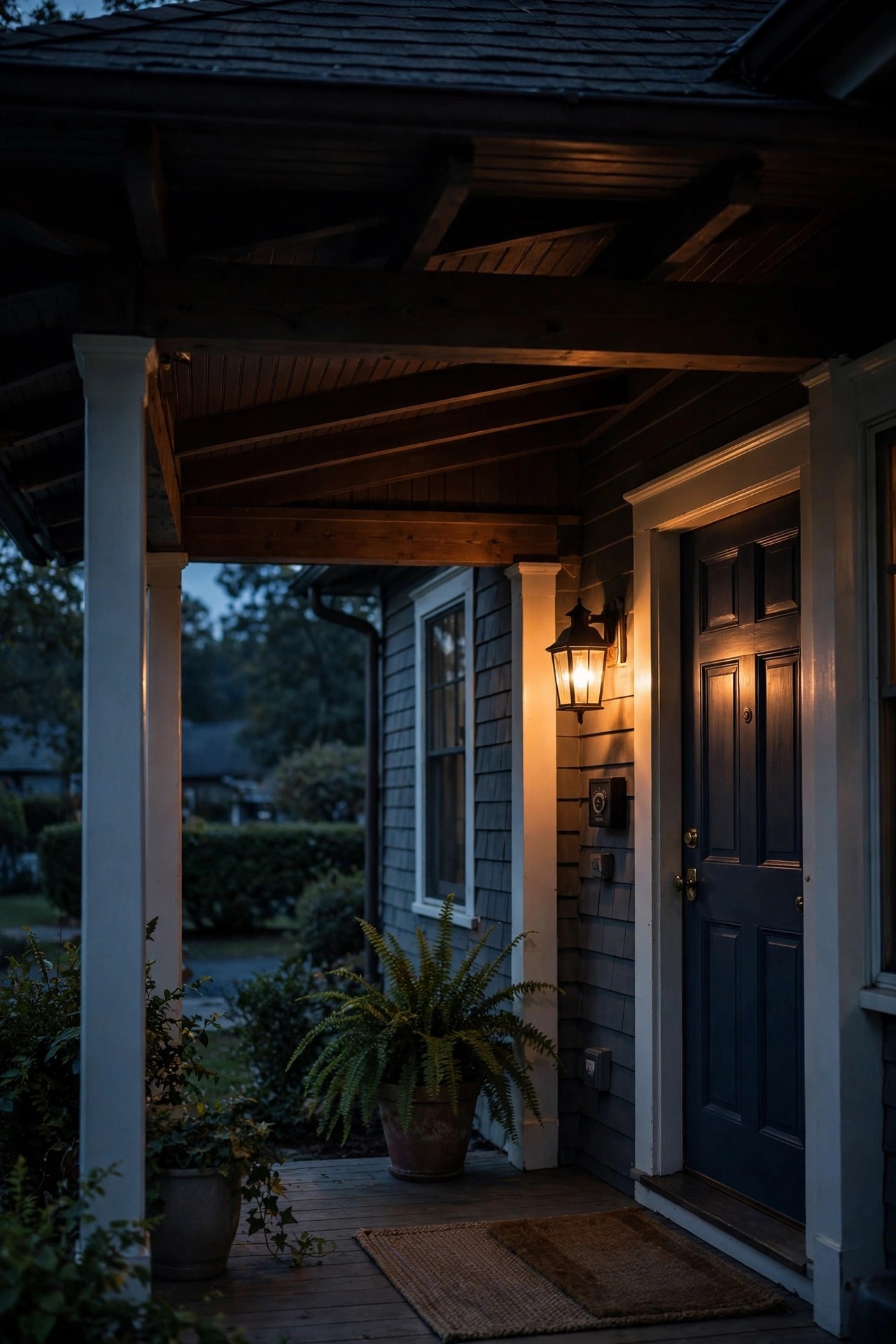
This is the classic, and it is still where I tell most people to start: a hardwired lantern beside the front door with the photocell built into the fixture body or the mounting canopy, so there is nothing to program, ever. The sensor is a small dark eye on the canopy, quietly reading the sky. Mount the lantern so its light source sits around eye level — roughly 66 inches from the ground to the fixture center beside a standard door — and choose a warm 2700–3000K LED in the 450–800 lumen range, which is plenty to welcome guests and find the keyhole without glare. Two failure modes to know before you buy. First, on a deep covered porch the sensor lives in permanent shade, so it switches on well before true dusk and lingers after sunrise — wasteful, though harmless. Second, pale siding or a glass storm door can bounce the lantern's own light back into the sensor, and the fixture clicks off, then on, then off all night like it is haunted. A sensor on a short adjustable stem, aimed away from reflective surfaces, fixes both. My strongest advice: choose a lantern whose photocell is a replaceable stem or threaded sensor rather than sealed inside, because sensors typically last five to eight years while the LED behind them lasts fifteen or more. If you are new to the whole idea, my plain-English overview of dusk-to-dawn outdoor lights explains how these sensors think.
Suggested budget range: $30 – $95.
2. Photocell Wall Packs and Coach Lights for the Garage and Driveway
The porch lantern's bigger sibling handles the hardest-working wall of the house. A wall pack, or a matched pair of coach lights flanking the garage door, gives you real task light for unloading groceries, punching the keypad and backing in after dark. Aim for 1,000–2,000 lumens mounted 7–9 feet up; the photocell usually sits on top of the housing, so check that your eave or soffit does not shadow it — a sensor buried under a deep soffit may keep the lights burning until mid-morning. Two of my rules from experience. First, choose shielded, downward-aimed designs: a bare wall pack at full brightness is the fastest way to start a fence-line feud with the neighbors, while a cut-off fixture keeps the beam on your own concrete. Second, if you install a pair, know that two fixtures with two independent sensors can drift a few minutes apart and switch on unevenly, which looks sloppier than it sounds. One sensor-equipped fixture controlling both — or a matched pair from the same line — keeps the rhythm tidy. After snowstorms, brush the sensor clear; a cap of snow reads as midnight to a photocell.
Suggested budget range: $35 – $120.

3. Solar Path and Stake Lights That Run Dusk to Dawn
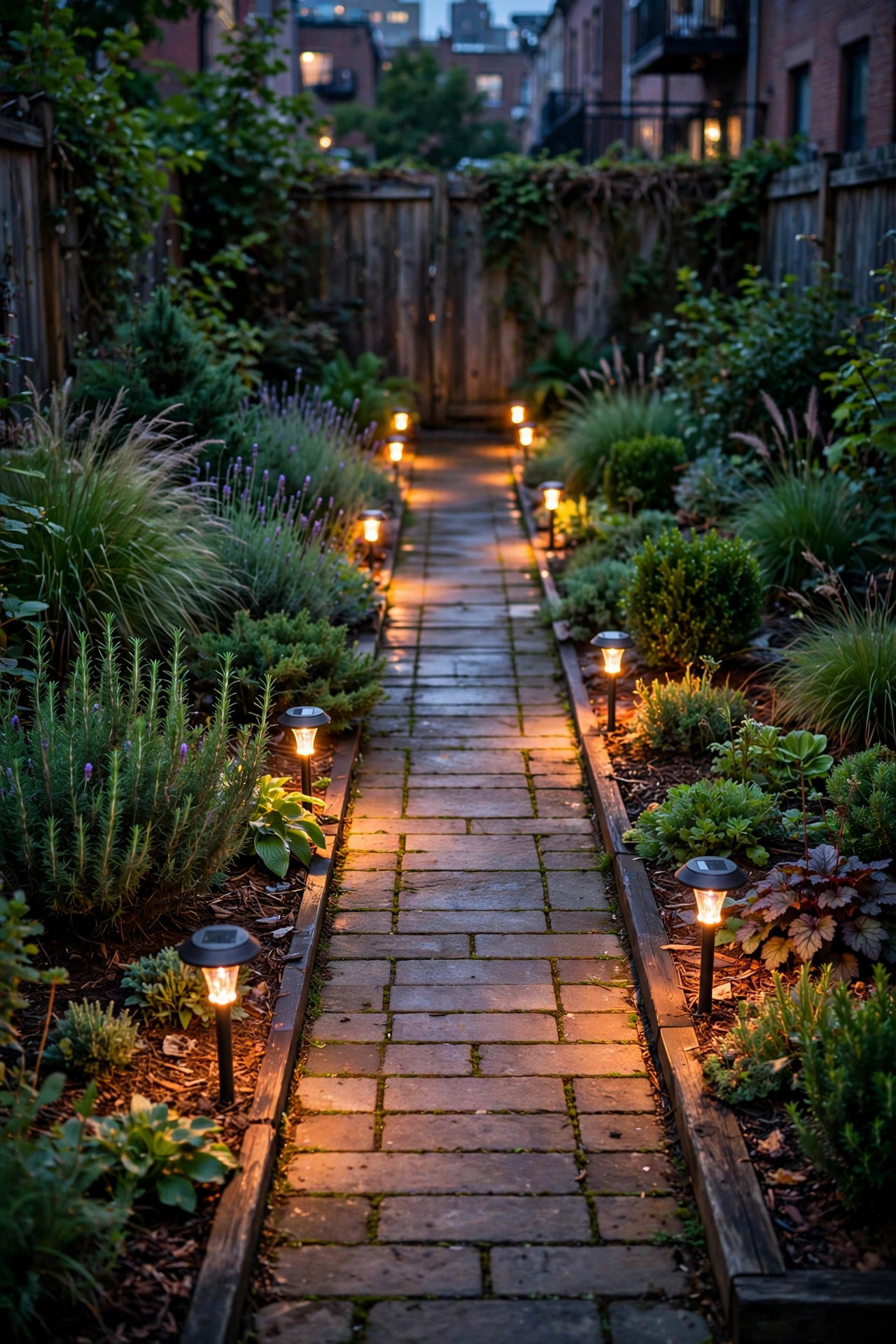
On a solar light there is no separate photocell to buy or fail — the solar panel does double duty, charging by day and telling the light it is night when its voltage drops. That makes these the simplest set-and-forget guides you can own: stake them every 6–8 feet along a walk, and the rhythm of small glows does the wayfinding for you. Now the honest limits. Output is gentle, roughly 10–40 lumens, which reads the path beautifully but will not help you find a dropped earring. Runtime follows the day's charge — eight to ten hours after a clear summer day, sometimes only four or five in December — and the panel needs about six hours of direct sun to deliver even that. The classic failure surprises everyone the first time: a stake planted inside your porch light's spill never thinks night has come, because its panel reads your porch glow as daylight and the stake stays dark while everything around it shines. Move it a few feet beyond the spill and it wakes right up. Wipe the panels when you think of it — a film of pollen quietly steals charge — and favor models with replaceable batteries, because the cell will tire long before the LED does.
Suggested budget range: $20 – $60.
4. Photocell Bulbs That Retrofit the Fixture You Already Love
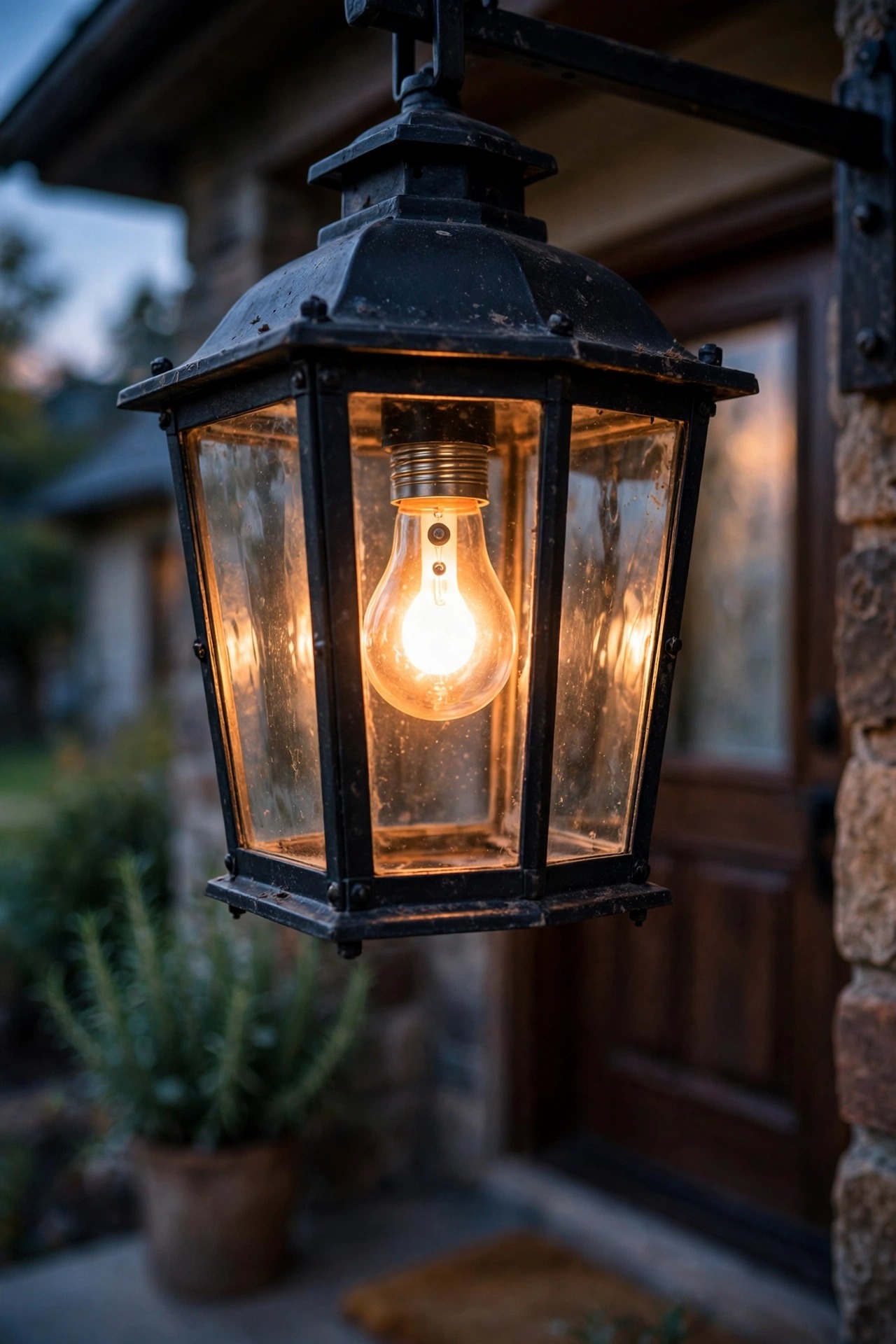
Sometimes the right move is not a new fixture at all. A photocell bulb looks like an ordinary screw-base LED bulb with a tiny sensor built into its neck; screw it into the porch lantern, post light or coach fixture you already own and that fixture becomes automatic by tonight. This is the renter's pick, the gift for the indecisive, and the only option when your fixture is a beloved vintage piece no modern lantern could replace. Choose 2700K, around 800 lumens for an entry, and remember the one-brain rule: never put a photocell bulb on a dimmer, a timer, or a motion fixture — two controllers fighting will flicker like a disco. The honest weaknesses live inches from the bulb itself. Because the sensor sits right beside the light source, clear glass wrapped close around the bulb can reflect enough of its own glow back to trigger a slow, sad flicker; frosted shades and open-bottom lanterns behave far better. Heat matters too — only use bulbs rated for enclosed fixtures inside sealed ones, or their life shortens fast. And the sensor is not replaceable: when it dies, the bulb goes with it, though at this price I can live with that. If a retrofit bulb blinks or sulks, work through my photocell light troubleshooting checklist before blaming the bulb — nine times out of ten it is reflected light.
Suggested budget range: $10 – $25.
5. Flood and Security Lights With a Photocell-Plus-Motion Combo
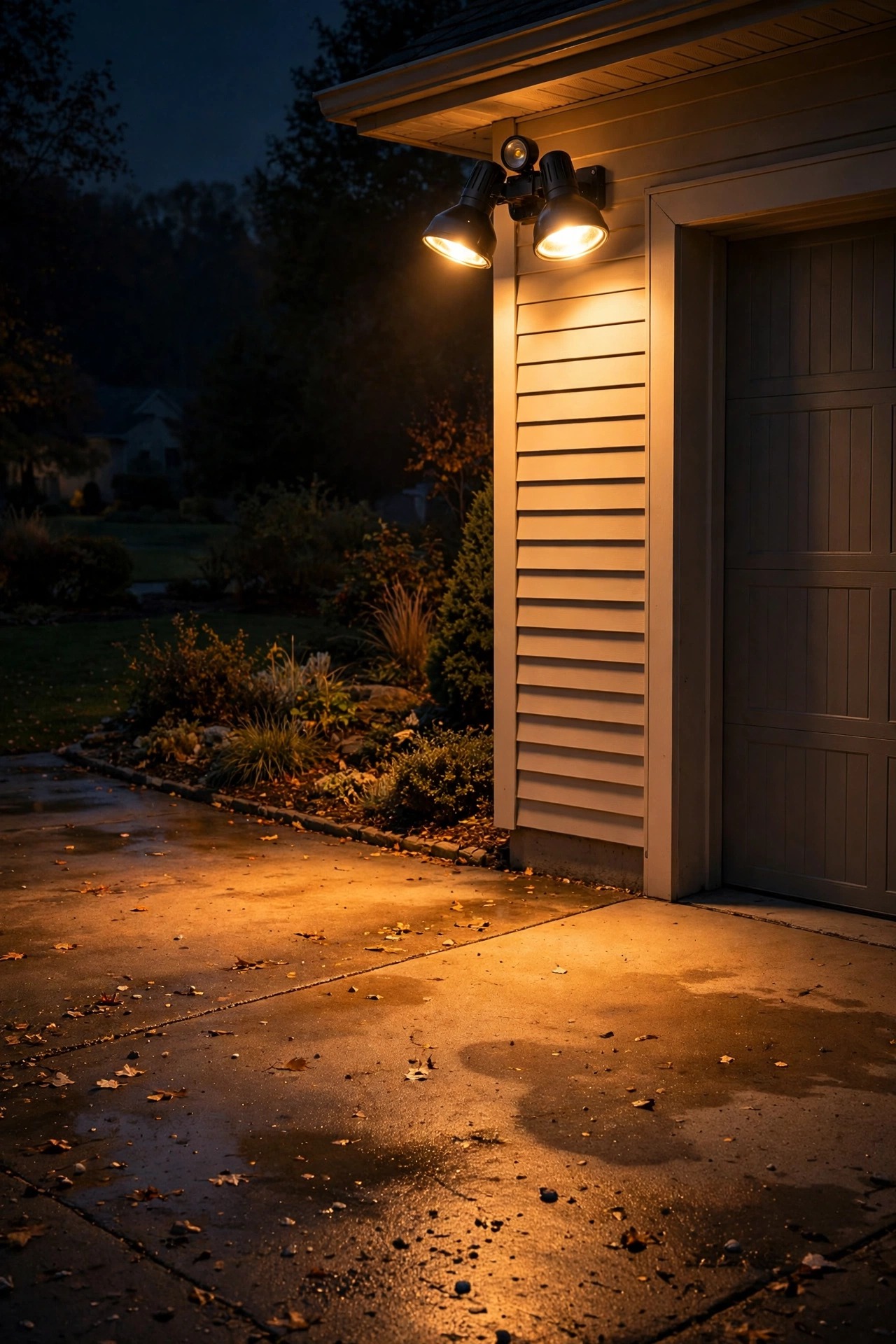
This is the guard layer, and the smartest version of it pairs two senses: the photocell arms the light at dusk, and the motion sensor decides when it actually performs. My favorite configuration idles at a low 20–30 percent glow — enough to read the driveway's shape — then jumps to full brightness when someone approaches, which feels welcoming instead of prison-yard. Look for 1,500–3,000 lumens, a motion range of about 40–70 feet with adjustable sensitivity, and dual heads if you need to cover a corner. Mount 8–10 feet high and aim down your own driveway, never across the street. The failure modes here are almost funny until they are yours: spiders adore a warm housing, and a web stretched across the motion lens will strobe your yard at 2 a.m., so wipe the sensors twice a year when you do the smoke-alarm batteries. Learn the two-sensor diagnosis, too. A light that fires constantly all night usually has a dirty or aging motion lens; a light that burns all day has a shaded or failed photocell. Different symptom, different culprit, five-minute fix either way.
Suggested budget range: $35 – $110.
6. Barn and Yard Area Lights for Big, Open Coverage
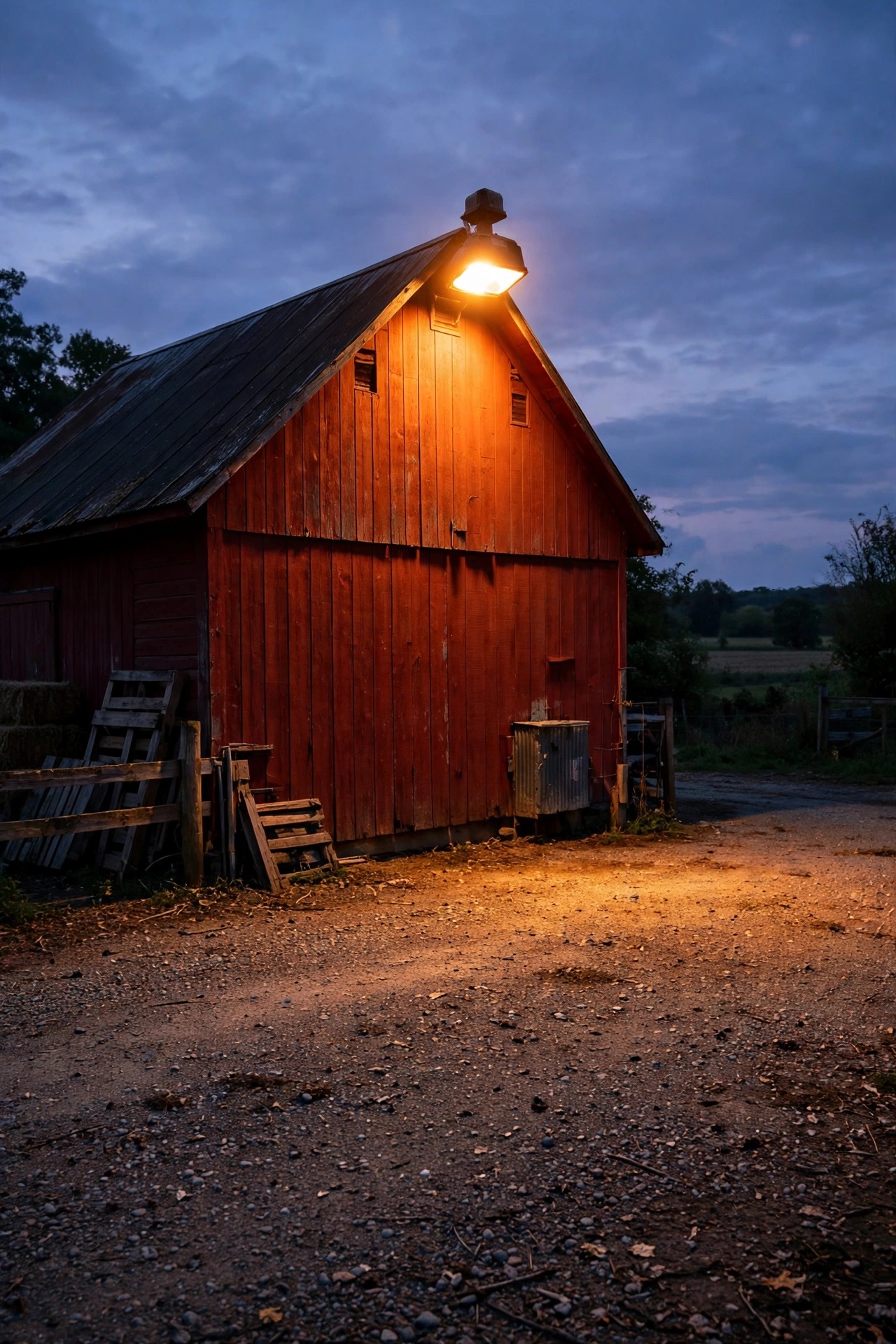
The farm classic earns its place on acreage, long driveways and big back lots: one high-output area light on a barn gable, a garage peak or a pole, flooding a whole work yard from a single point. Mounted 12–20 feet up, a modern LED version throws several thousand lumens across a circle 60–80 feet wide — enough to load a truck, hitch a trailer or find the dog. Here is the detail I love most: the photocell on these is usually a twist-lock sensor on top of the housing, the most replaceable sensor on this entire list. It swaps in seconds with no wiring, so when the sensor tires in year six you twist in a fresh one and the fixture rolls on for another decade. That is how set-and-forget is supposed to work. The honest limits are about manners and scale. This is a lot of light; on a tight suburban lot it will trespass into bedrooms — yours and the neighbors' — so insist on shielded, full-cutoff models that push light down, not out. Rural readers replacing an old power-hungry yard light will watch the electric bill drop noticeably.
Suggested budget range: $40 – $130.
7. String Lights on a Photocell Plug for the Café Layer
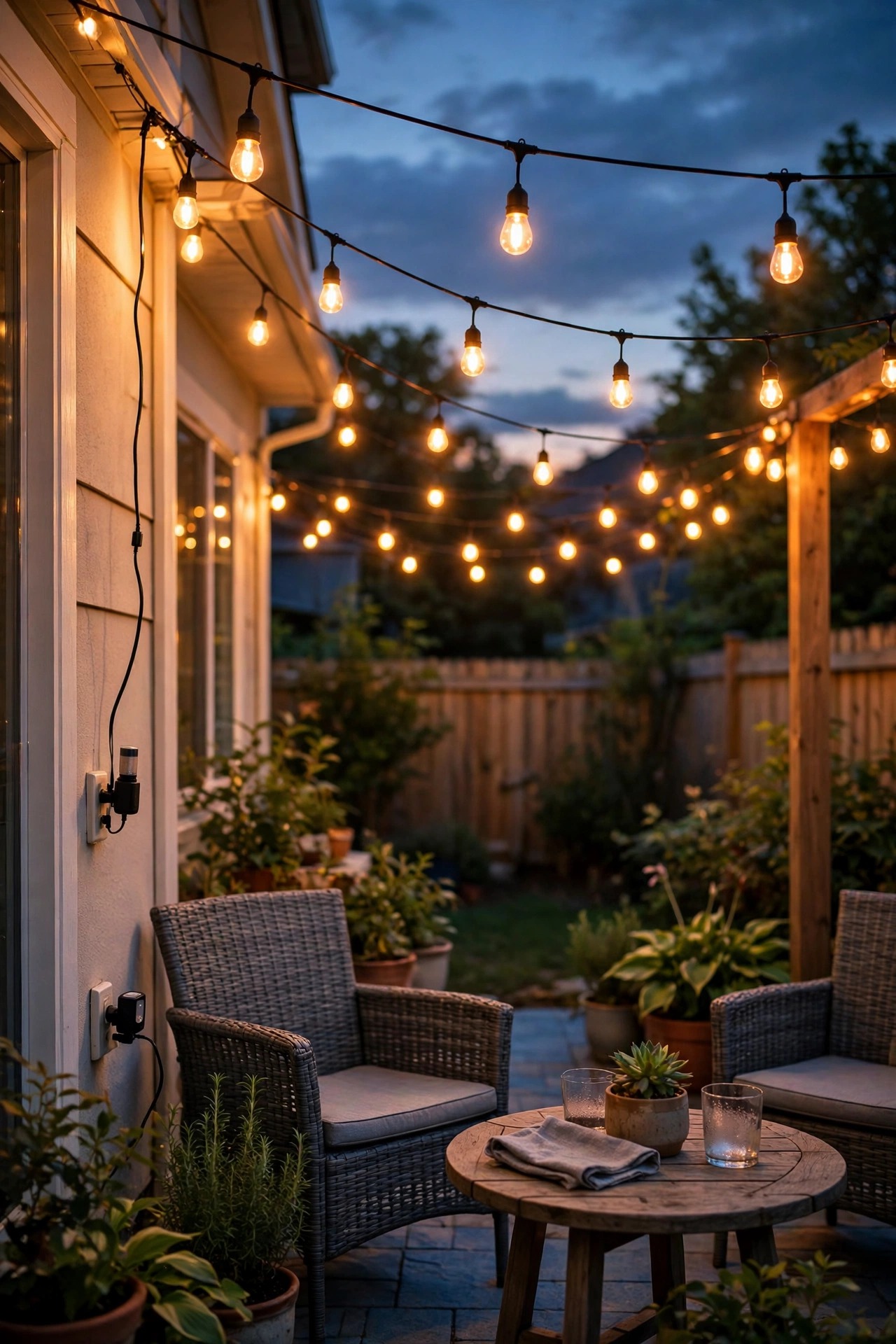
String lights are the prettiest layer and the dumbest — they have no brain at all — so give them one. A photocell outlet adapter plugs into your outdoor receptacle, the string lights plug into the adapter, and your patio café lighting now keeps its own hours. The installation takes four minutes, including finding the ladder you do not need. The catch is sensor placement, as always: most outdoor outlets live under eaves or inside covered patios, in permanent shade, and a shaded adapter will switch your strings on at four in the afternoon. Look for an adapter with the sensor on a short lead or an angled face so it can peek past the eave's edge into real sky. Check the amp rating before you load it — LED strings sip power, so one adapter comfortably runs a typical patio set — and keep the connection weatherproof with an in-use outlet cover and a drip loop in the cord, on a GFCI-protected circuit. One more honest note: the adapter is the cheapest sensor you will ever own, and it behaves like it, lasting two to four seasons outdoors. Keep a spare in the drawer and even its failure becomes a non-event.
Suggested budget range: $30 – $85.
8. Lantern-Style Dusk-to-Dawn Lights for Tables, Hooks and Steps
Every layer so far has been about seeing; this one is about feeling. Lantern-style lights — solar lanterns on shepherd's hooks, lantern stakes along a garden bed, table lanterns with flickering flame-effect LEDs — are the jewelry of the yard, and nearly all of them run on the same trick as solar path lights: the little panel on the cap reads the dark and lights the lantern. Group them in odd numbers, vary the heights, and let the glow pool where people gather. The flame-effect versions give you candlelight with zero fire risk, which matters near cushions, mulch and dry leaves — LED only, always, anywhere near anything flammable. Honesty time: output is 5–30 lumens, pure ambiance. A hanging lantern sways, so its light sways too — charming at dinner, useless for reading a step edge, so never let lanterns substitute for real step lighting on stairs people use at night. And the porch-roof trap applies here in miniature: a table lantern living under a patio umbrella reads shade all day and may glow at noon while sulking at dusk. Give every little sensor its patch of sky and these are the most forgiving lights on the list — no wiring, no transformer, no electrician, just glow.
Suggested budget range: $25 – $80.

9. In-Ground and Well Lights Run by a Photocell Transformer
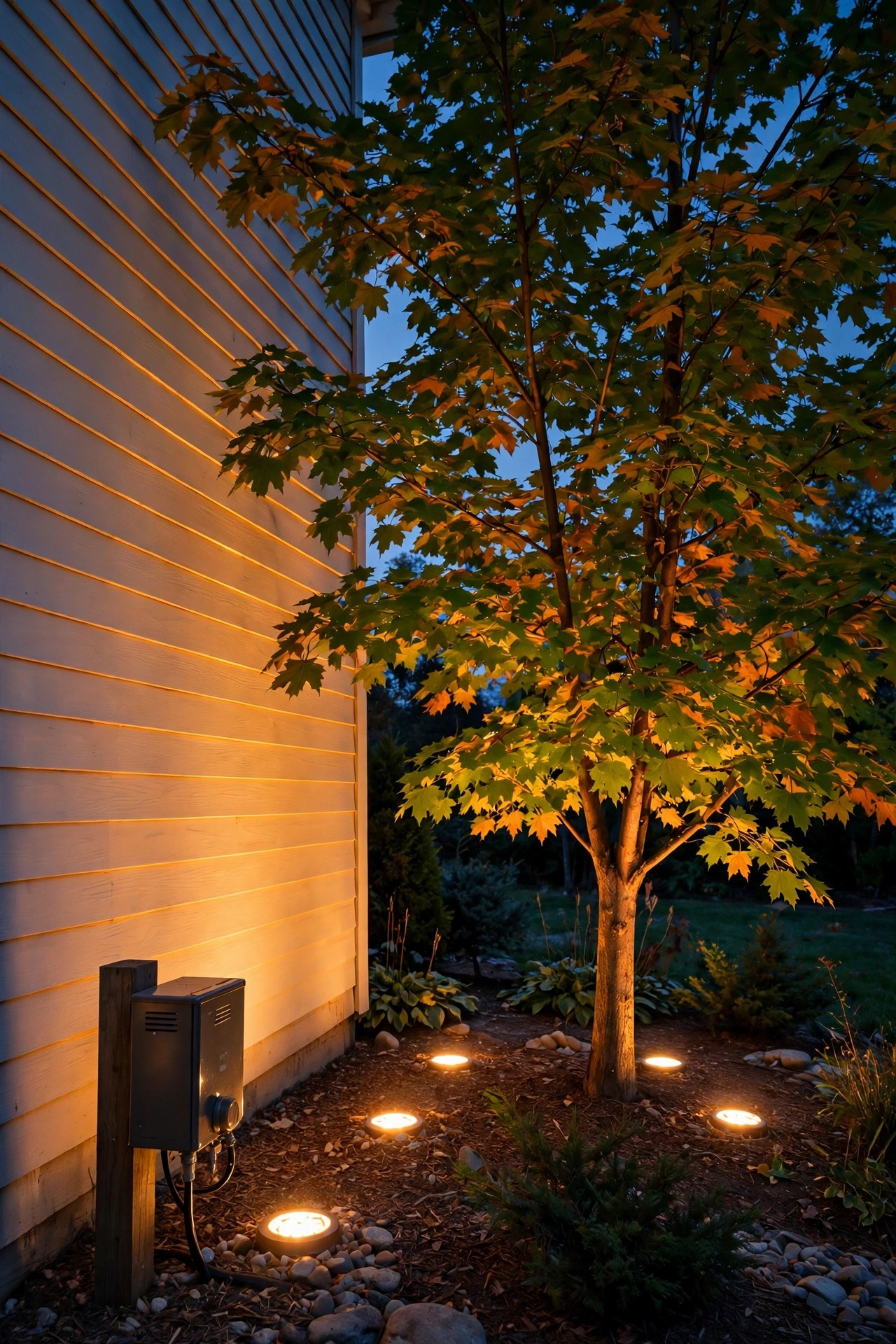
The most designed look on this list hides its brain in a box: flush in-ground well lights uplighting the maple, washing the house wall and marking the driveway edge, all low-voltage, all fed by one transformer — and the transformer's built-in photocell is the single sensor running the whole garden. I love the math of that: instead of fifteen little sensors to place well, you place one. Which means placement is everything. Transformers usually mount on a post or the wall near the outlet; hang yours inside a gloomy garage corner or behind a shrub and the entire landscape will burn cheerfully at noon. Mount it where the sensor sees open sky, or choose a unit with a remote sensor on a lead that you can stake out in the sun. Many transformers also offer a timer override — on at dusk, off at midnight — which trims the electric bill without losing the evening show. Honest limits: this is the priciest pick and the most install work, since cable gets buried, and well lights need a gravel drainage bed so they never sit in water. But the per-fixture cost stays low, the LEDs last for years, and no other pick makes a yard look this intentional.
Suggested budget range: $60 – $180.
10. Socket Adapters and Photocell Controls for Everything Else
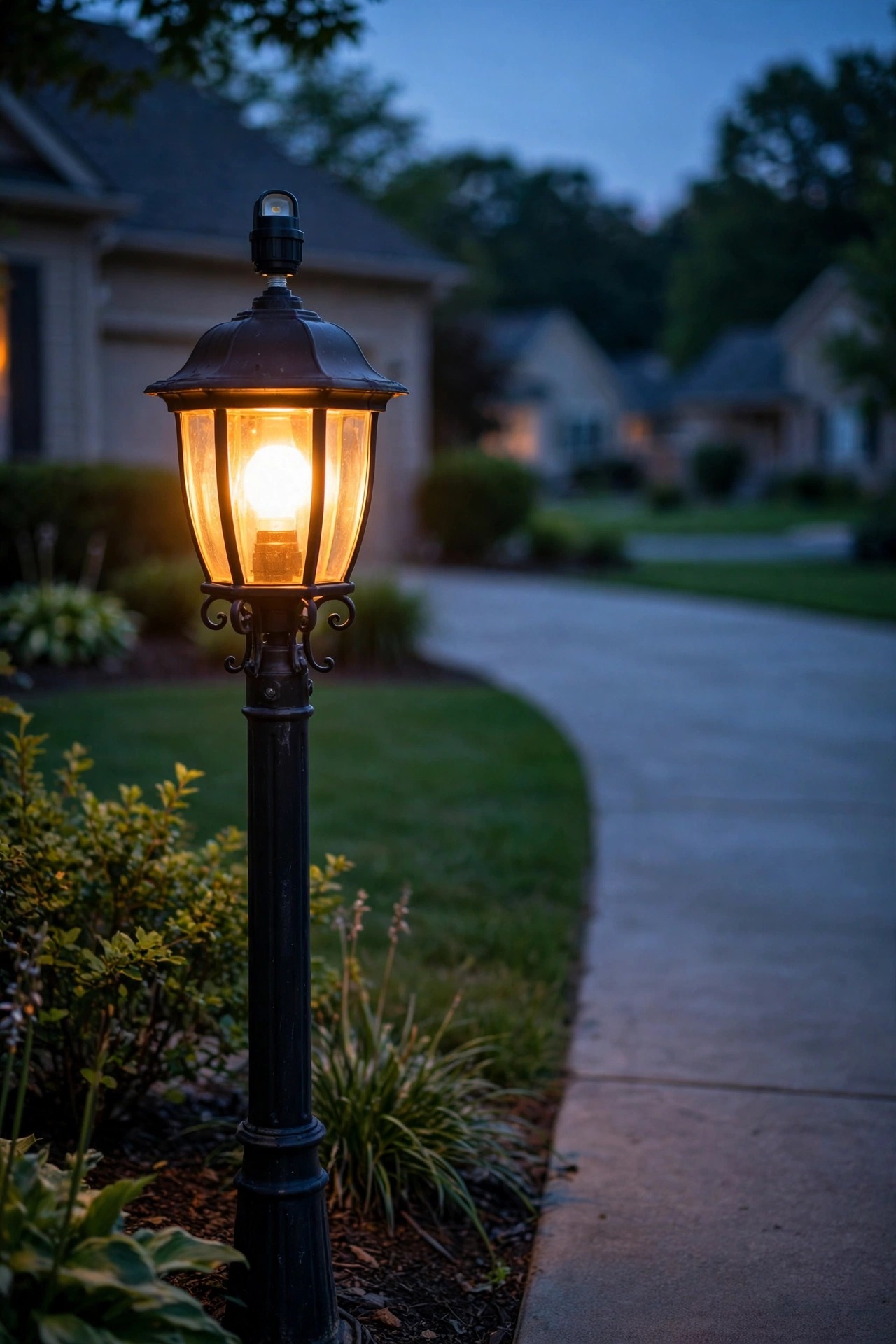
These are the universal translators, for every fixture that fits no other category. A screw-in socket adapter threads between bulb and fixture and lends any lamp a photocell; a plug-in photocell outlet does the same for plug-in loads like rope lights and holiday strings; and a stem photocell hardwired into a junction box or fixture knockout is the permanent, professional version of the same idea. I reach for socket adapters on the lamp post by the drive and on odd fixtures I refuse to replace, and they work — with two caveats. The adapter adds roughly an inch and a half of length, so confirm the shade or door still closes before you commit. And because the sensor sits inside the fixture, it suffers the same reflected-light trap as retrofit bulbs; open fixtures behave, tight clear-glass ones may flicker. Set expectations honestly: these are the hardest-working and shortest-lived sensors in the roundup, heat and weather aging them in two to five years. The good news is they cost little and swap in minutes, so I treat them as consumables, like batteries — keep one spare and a failure is a shrug, not a project.
Suggested budget range: $12 – $35.
11. Astronomical Timer Switches — the Best Dusk to Dawn Outdoor Lights for Shaded Porches
Sometimes the best sensor is no sensor. An astronomical timer switch — installed in place of a wall switch or in-line with the circuit — computes sunset and sunrise from the date and your latitude, so it keeps perfect dusk-to-dawn hours without ever looking at the sky. Nothing to shade, nothing to fool with reflected light, nothing for a snow cap to blind. This is my standing answer for the deep covered porch, the north-facing entry and the fixture under the big maple: anywhere a photocell's view of the sky is basically a lie. Set it once and it tracks the seasons exactly like a photocell does, and it can do one trick no photocell can — an offset, so the lights come on at dusk but retire at 11 p.m. instead of burning till dawn. Honest limits: it needs correct setup (date, time, region) and a battery backup or non-volatile memory so a power outage does not scramble it; an in-wall install means working inside a switch box, so kill the breaker and hire an electrician if that gives you pause; and it cannot react to a genuinely dark stormy afternoon the way a sensor can. If your photocell history is a trail of flickering, noon-burning fixtures, start here — my astronomical timer setup guide walks through programming one step by step.
Suggested budget range: $25 – $60.
Frequently Asked Questions
Why does my dusk-to-dawn light stay on all day?
Work through three suspects in order. Most often the sensor sits in permanent shade — under a deep eave, on a north wall, behind a shrub — and honestly believes it is always night. Second, a dirty or yellowed sensor dome reads the world darker than it is; wipe it clean. Third, the photocell itself has failed, and photocells usually fail in the "on" position, which is safer for security but rough on the electric bill. Clean first, shade-check second, replace third.
Why does my photocell light flicker or switch off and on at night?
Because it can see itself. Its own light bounces off pale siding, a glass storm door, snow on the ground, even a white car in the driveway, reaches the sensor, and the light concludes dawn has arrived — then darkness returns, and the cycle repeats. Angle the sensor away, shield it from the reflection, or move the fixture a few inches. Passing headlights and a bright streetlight can cause the same brief, confused offs.
How long does a photocell sensor last compared with the light itself?
Expect roughly three to eight years from a photocell, depending on heat and weather exposure, while a modern LED source is rated for fifteen years or more. The sensor is almost always the first thing to die, which is why I favor fixtures where it can be replaced — twist-lock, threaded stem or plug-in — over sealed designs. A sealed fixture with a dead sensor is landfill, however young its LED is.
How much does it cost to run dusk-to-dawn lights all night?
Less than you fear. A 10-watt LED burning an average of eleven hours a night uses about 40 kilowatt-hours a year — roughly six or seven dollars at typical US residential rates. A whole layered yard of LEDs might cost fifteen to twenty-five dollars a year, and solar picks cost nothing to run at all. The expensive option is the old incandescent or halogen yard light, which can burn ten times the power for the same glow.
Conclusion
A dusk-to-dawn setup that works is boring in the best possible way: it simply keeps its promises. Match the type to the layer — a sensor-smart lantern at the door, solar guides along the path, a motion combo standing guard, one well-placed sensor running the garden — and give every sensor an honest view of the sky. Do that, and the best dusk to dawn outdoor lights stop being gadgets you manage and become part of the house itself, greeting you home every single night. If you are planning a full-yard refresh, browse the rest of my lighting ideas here on the site and build your layers one evening at a time — the glow compounds faster than you would think.