When I was renting, my patio had exactly one sad porch bulb and a lease clause that basically said no to everything fun. No drilling, no hardwiring, no permanent anything. I spent one whole summer eating dinner in the dark before I realized how many renter friendly outdoor lighting ideas exist that never touch a drill, a wire, or your security deposit. Honestly? Some of them look better than the permanent installations my homeowner friends paid electricians for. The secret is the same layering I use everywhere: light low along the ground for safety, light at seating height for faces and food, and a little sparkle overhead for atmosphere. Every single idea on this list either stands on its own, clamps on, sticks on with removable adhesive, or plugs into an ordinary outlet. When moving day comes, it all packs into a box in under an hour, and the patio looks exactly like the day you moved in. Let me show you the 17 setups that carried me through three rentals without losing a single dollar of deposit.
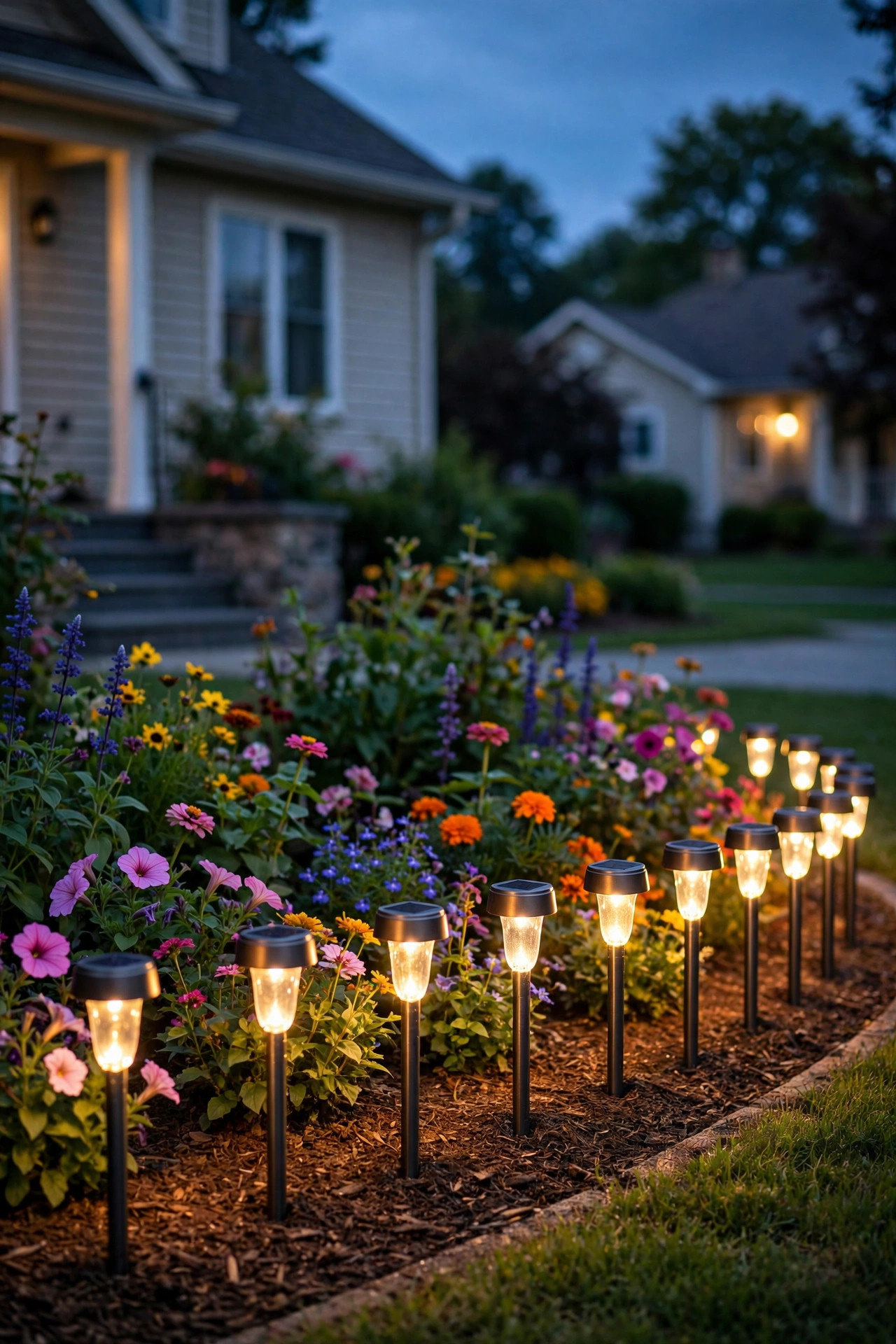
1. Start With Solar Stakes, the Easiest Renter Friendly Outdoor Lighting Ideas of All
If you only buy one thing on this list, make it solar stake lights. They push straight into soil, mulch, or a planter, charge themselves all day, and switch on at dusk without you lifting a finger. There is no wiring to hide, no outlet to hunt for, and absolutely nothing attached to the building, which makes them the most landlord-proof lights I own. I line them 4 to 6 feet apart along a walkway or around the edge of a patio so the pools of light just overlap. Look for warm white versions in the 2700K to 3000K range and brightness around 10 to 30 lumens each for gentle marking light. In my experience, the cheap sets fail because the solar panels are tiny, so choose stakes with a panel at least 2 inches wide and give them 6 hours of direct sun. Wipe the panels with a damp cloth once a month; dust and pollen quietly cut the charge in half. On a balcony with no soil, just push them into potted plants and they work exactly the same. When you move, pull them up, rinse them off, and they come with you.
Suggested budget range: $15 – $40.
2. Hang String Lights From Freestanding Poles Instead of the Walls
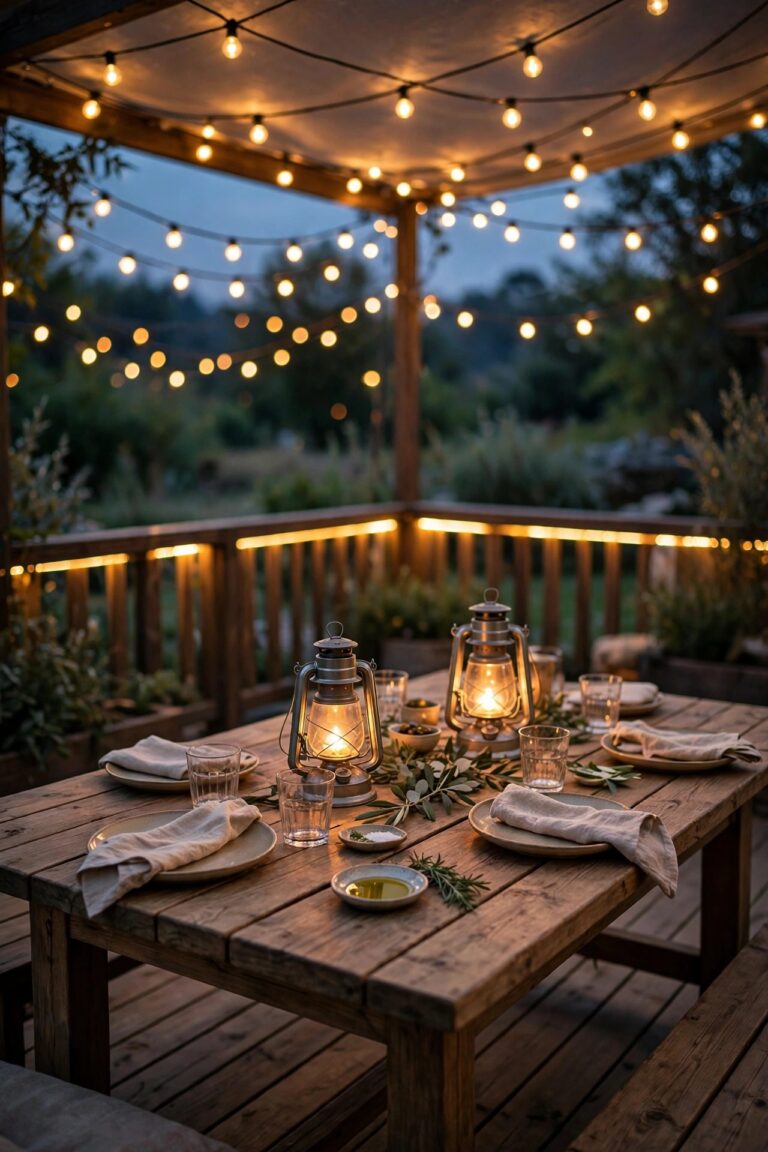
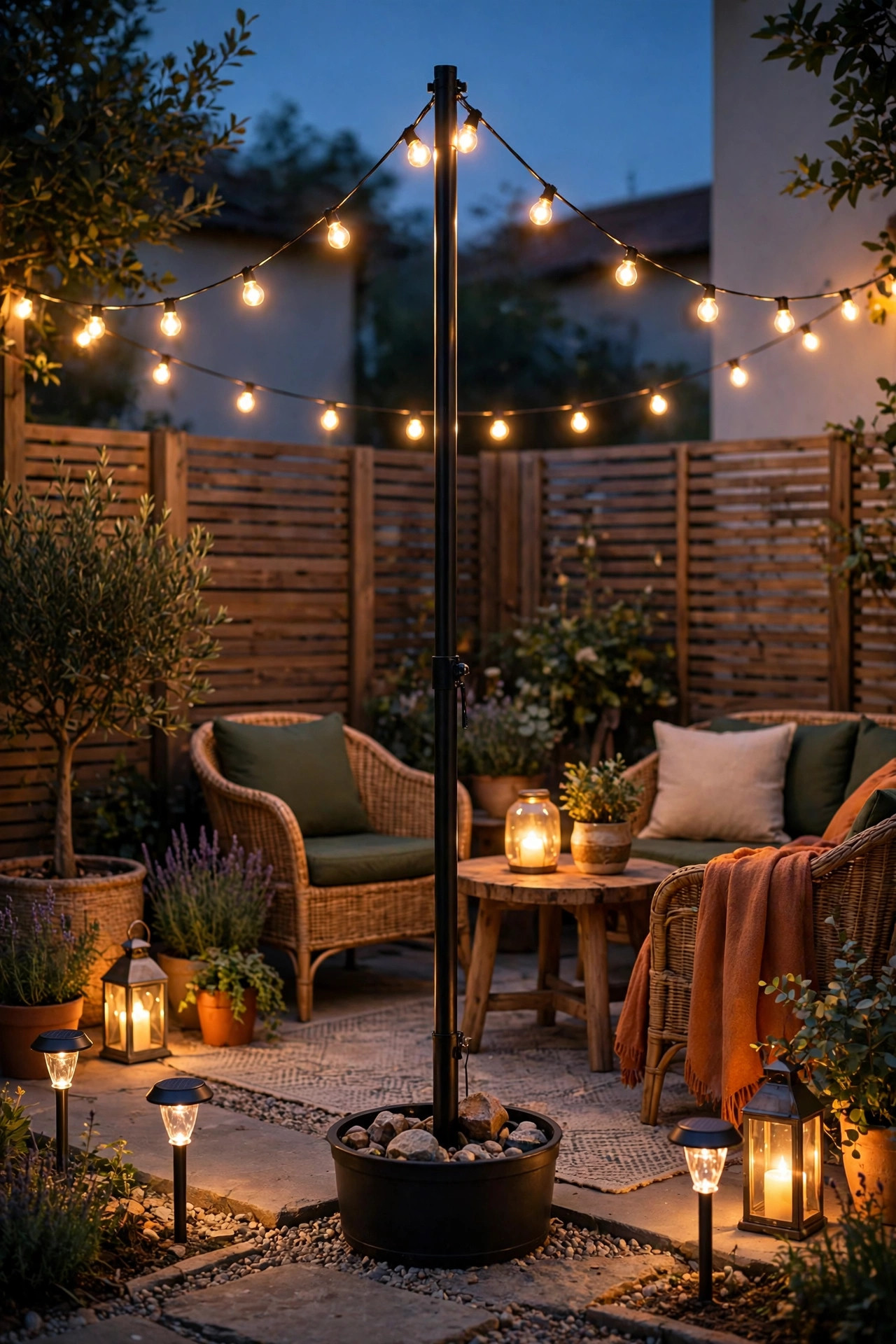
String lights are the whole reason most of us want outdoor lighting, but renters cannot screw hooks into siding. The workaround I swear by is freestanding string light poles: heavy steel poles with a forked top that either stake into the ground or stand in a weighted base or a big planter filled with gravel. Two poles plus the house-side railing give you a perfect swag over a patio, and nothing touches the building. Space poles about 8 to 10 feet apart and let the strand dip 12 to 18 inches in the middle for that relaxed cafe look. Choose outdoor-rated strands with shatterproof LED bulbs, since glass bulbs over a concrete patio are a cleanup nightmare. If you do have a wooden railing, removable outdoor adhesive hooks rated for 2 to 3 pounds each also work beautifully and peel off clean with a pull tab. I run my full research process in my roundup of backyard string light ideas if you want more layouts. Hang the lights before sunset, stand back, and adjust the swag from the ground; your deposit stays perfectly safe.
Suggested budget range: $30 – $90.

3. Clamp Lights Onto the Railing Where You Actually Sit
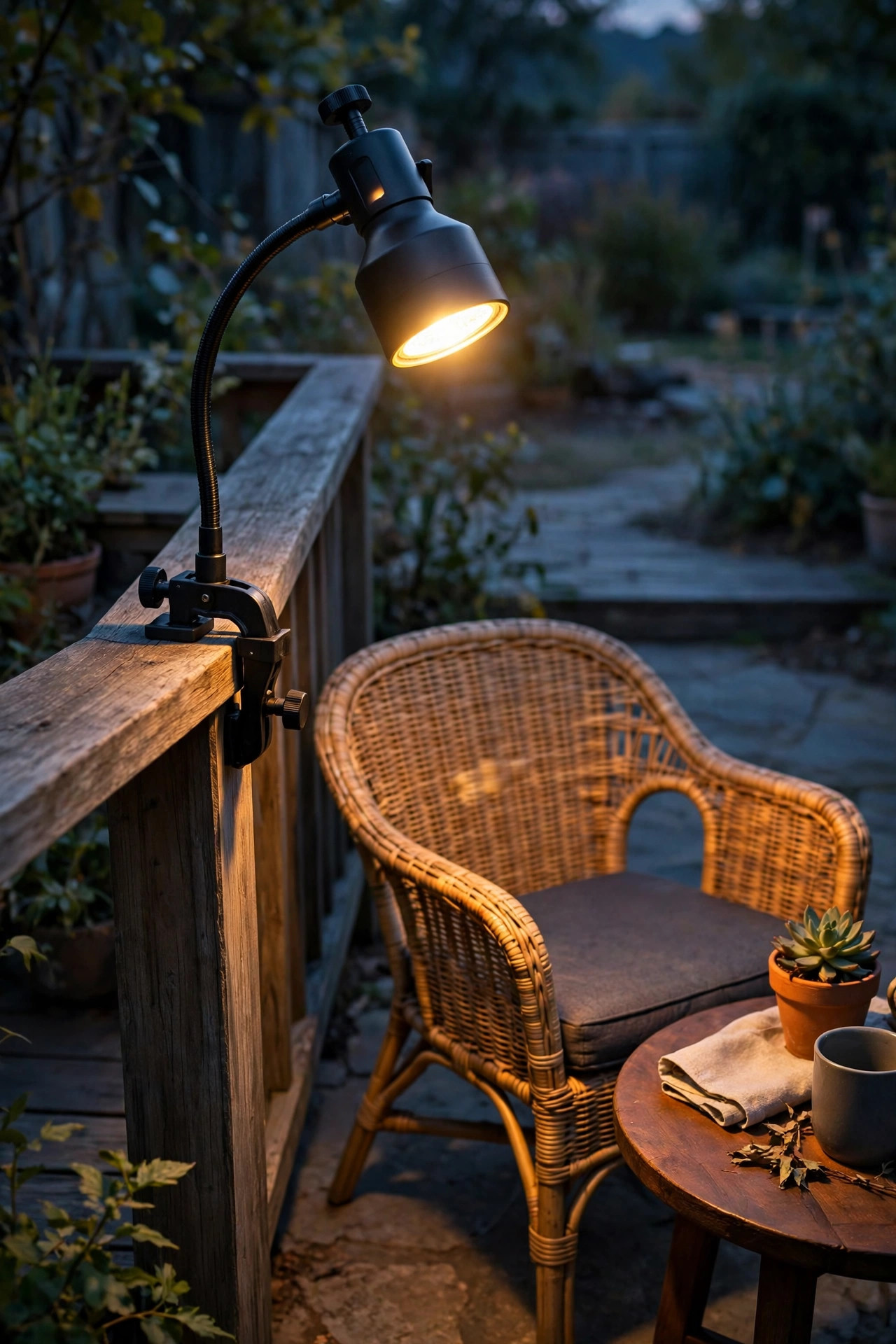
Clamp lights are the renter's secret weapon. A clamp-on LED fixture with a padded jaw grips a railing, a fence top, or the edge of a deck board and aims light exactly where you want it, and when you leave, it unscrews by hand. I use one over the grill and one over my reading chair, because task light is the layer everyone forgets. Look for clamps that open at least 2 inches wide, with a gooseneck or swivel head so you can angle the beam down instead of into your neighbor's yard. Battery-powered models with USB charging are the most flexible, since many rentals have exactly one outdoor outlet in the worst possible spot. Aim for 200 to 400 lumens for real task work, warm white around 3000K so food looks appetizing instead of clinical. The padded jaws matter more than you would think; bare metal clamps can leave marks on painted railings, and marks are what leases actually punish. Add a small piece of felt inside the jaw if yours came unpadded. In my experience, two clamp lights do the job of a whole hardwired system for a fraction of the cost and zero commitment.
Suggested budget range: $20 – $50.
4. Line the Balcony Rail With Clip-On Solar Cap Lights
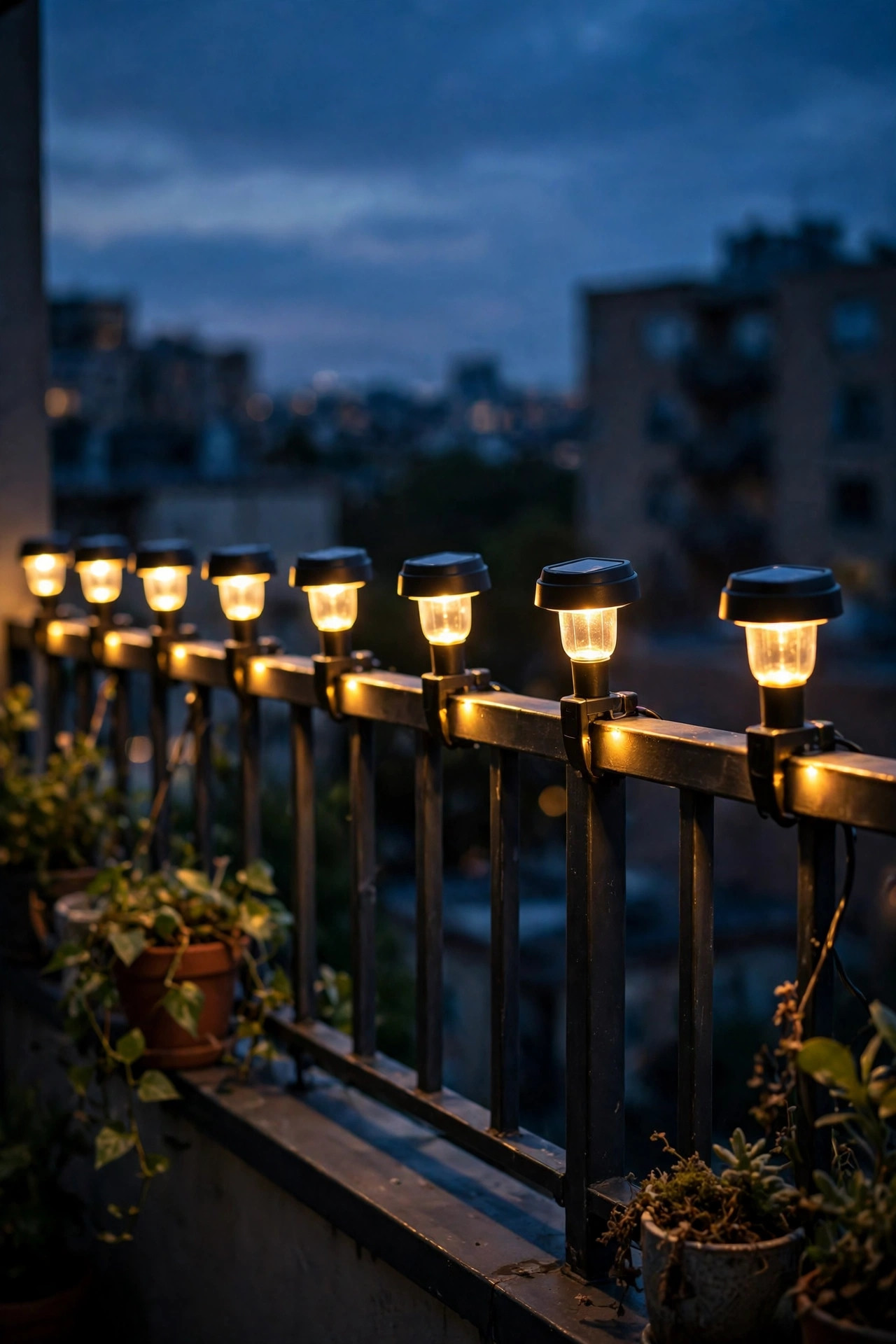
Balcony railings are prime lighting real estate, and clip-on solar cap lights were clearly designed by a fellow renter. They hook over the top rail or clamp onto balusters, face outward or down, and need no screws at all. I space mine every 3 to 4 feet along the rail so the balcony reads as a soft glowing outline from the street, which honestly looks more expensive than most permanent setups. Most models give you 5 to 15 lumens, which is marker light, not reading light, so treat them as your atmosphere layer. The solar panel sits on top, so railings in full shade struggle; if your balcony faces north, choose the versions with a separate panel on a short lead you can drape over the sunny side. My guide to balcony railing lighting ideas covers even more rail-friendly tricks. One caution from experience: check that the clips grip tightly before a windy night, because a light that drops two stories becomes nobody's friend. A loop of clear fishing line as a safety tether takes ten seconds and solves it completely.
Suggested budget range: $20 – $45.
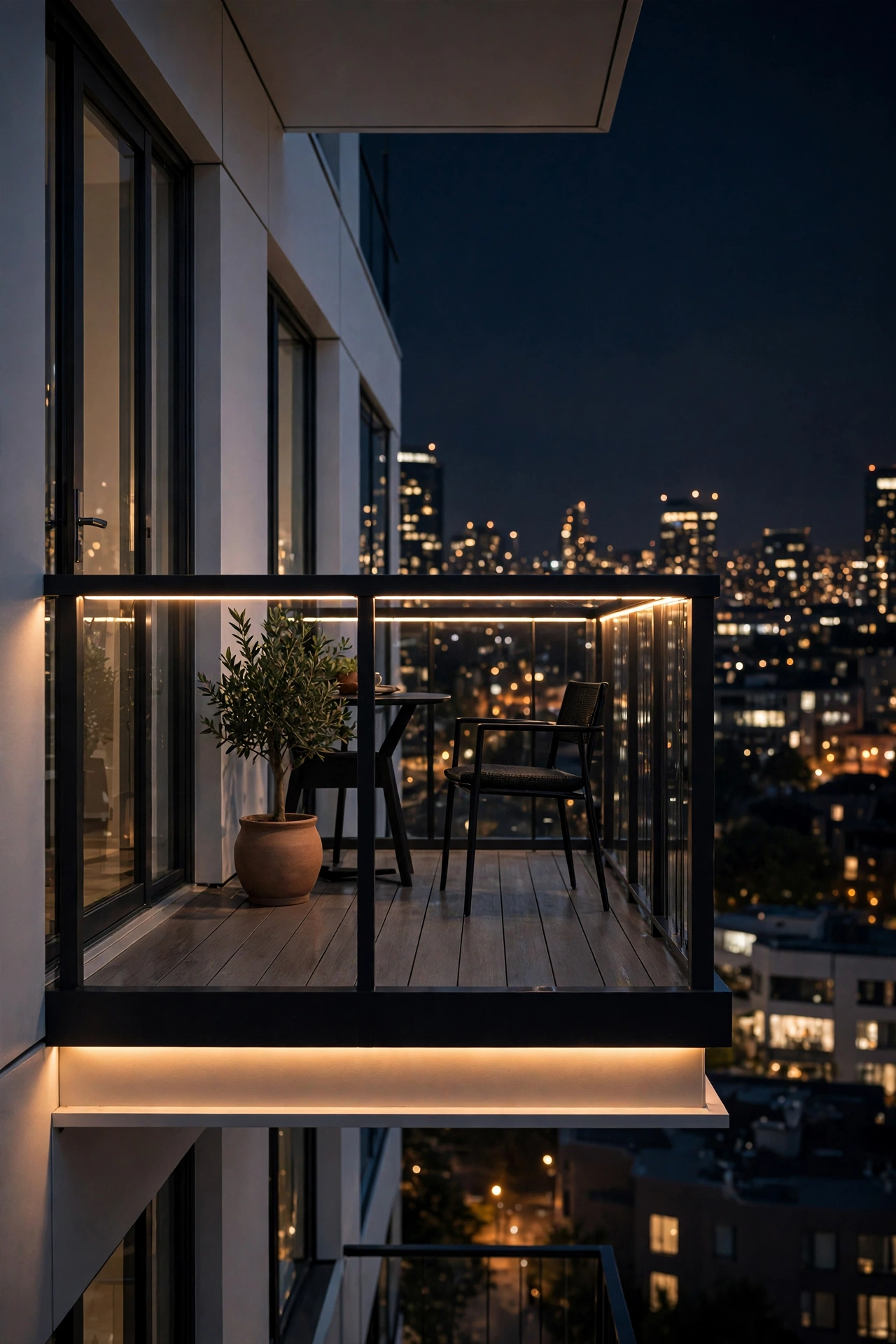
5. Peel-and-Stick LED Strips Under Rails and Steps
Adhesive LED strip lights give renters the sleek, built-in look without a single screw. The outdoor-rated strips come with a peel-and-stick backing, and the renter-grade trick is to mount them on removable adhesive strips instead of pressing them directly onto paint. Run a strip under the top rail of a deck, beneath the lip of a step, or along the underside of a patio table edge, and you get a floating ribbon of light that makes the whole space look designed. Hidden placement matters: the strip itself should never be visible, only the glow it throws downward. Choose waterproof strips rated IP65 or higher, warm white 2700K, and a battery pack or USB power bank version if your outlet situation is grim. A 16-foot strip uses so little power that a decent power bank runs it all weekend. Steps deserve special attention, because a lit tread edge is the single best safety upgrade on this list and landlords quietly love anything that prevents falls. When you move out, warm the adhesive with a hair dryer for thirty seconds and it releases cleanly. Honestly, this is the idea neighbors ask about most.
Suggested budget range: $15 – $35.
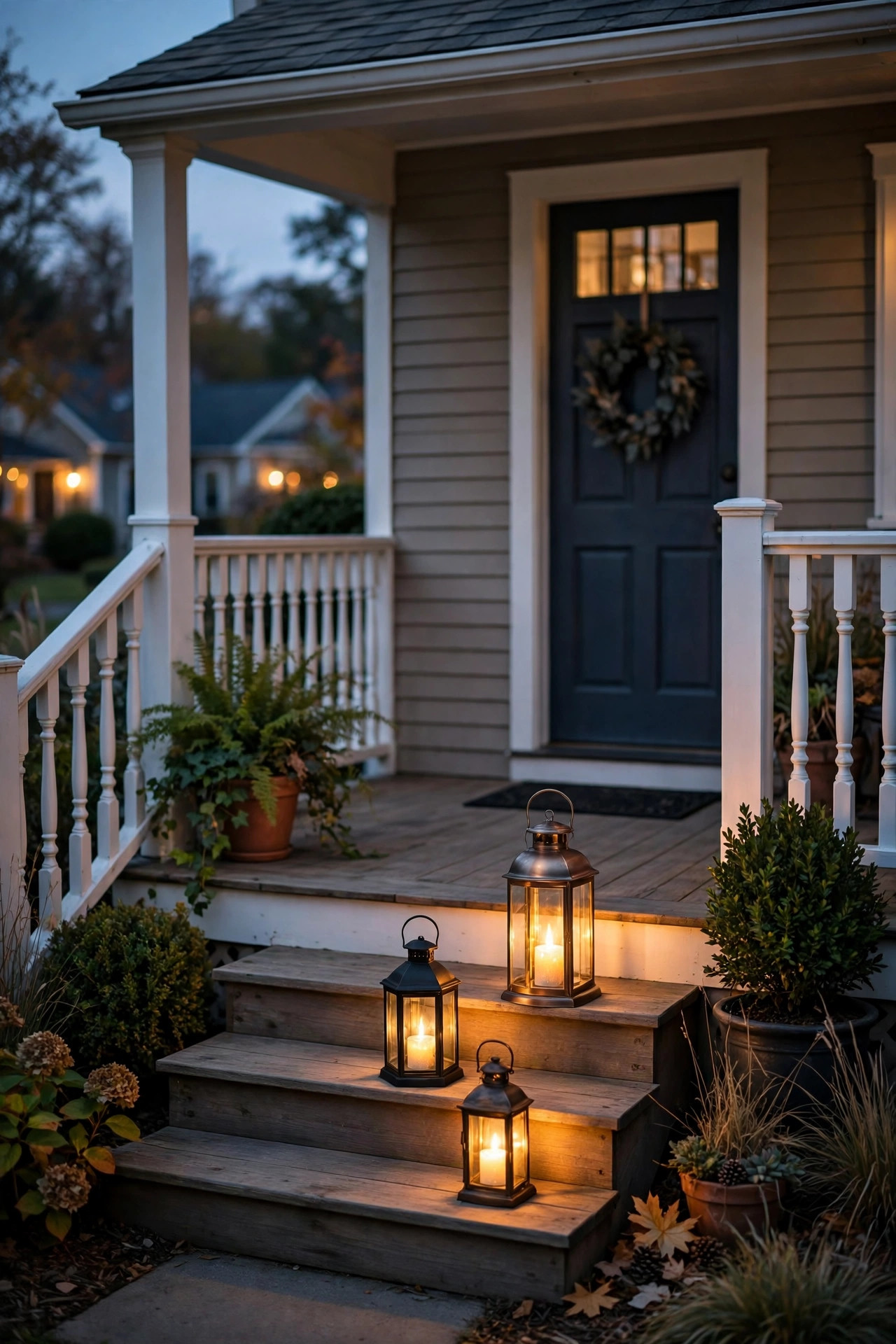
6. Battery Lanterns You Can Carry From Room to Patio
Every rental I have lived in had a box of battery lanterns that moved with me, and they are still the hardest-working lights I own. A good LED lantern gives you 100 to 300 lumens, a dimmer, and 20-plus hours on a charge, and it goes wherever the evening goes: the patio table, the front step for deliveries, the picnic blanket in the yard. Hang two from the string light poles with carabiner clips and you instantly get that layered, restaurant-patio depth. I keep a mix of sizes, a tall statement lantern for the table center and small ones for the ground beside chairs. Flameless candles inside glass lanterns are the close cousin here, and they are the only glow I trust near curtains, cushions, and paper decorations. Look for lanterns with a warm 2700K setting, because the cool daylight modes make a patio feel like a parking lot. USB-rechargeable beats disposable batteries every time, both for your wallet and for not discovering dead batteries on a Friday night. Best of all, lanterns double as emergency lighting during power outages, which makes them the easiest purchase on this list to justify.
Suggested budget range: $25 – $60.
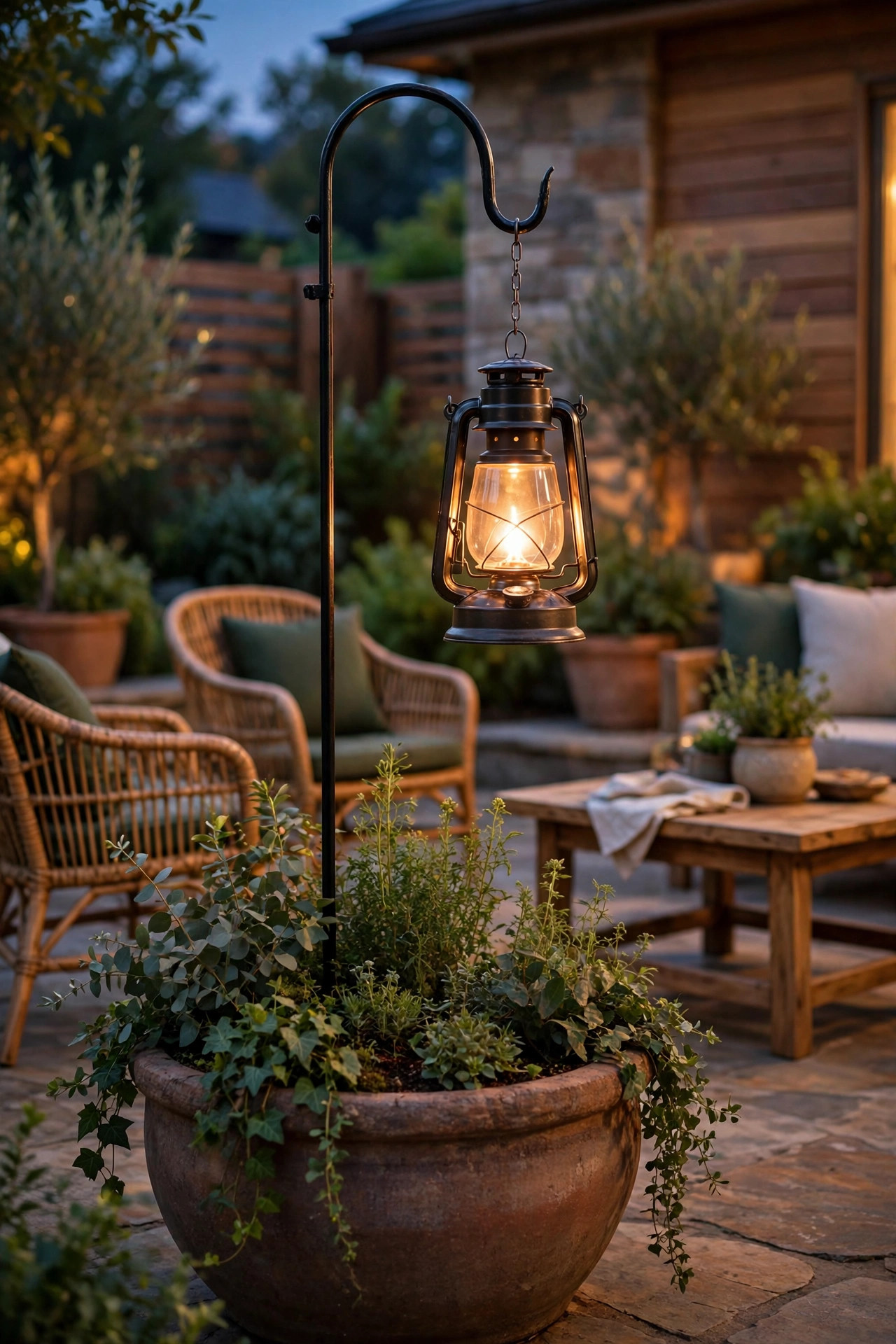
7. Shepherd's Hooks in Planters for Hanging Lights Anywhere
A shepherd's hook stuck in a heavy planter is a hanging-light station you can put literally anywhere, and it is how I light rental yards with no trees and no structures. Use a planter at least 14 inches across, set the hook deep, and backfill with soil or gravel so it stands firm; then hang a lantern, a hanging solar light, or a small basket of fairy lights from the curve. I group three at different heights around a seating area and the effect reads like a garden that has been glowing for years. Hooks run 36 to 48 inches tall for planters; the taller 5 to 6 foot versions need a ground stake, which most landlords tolerate since a stake hole in a lawn disappears in a week. Keep hanging weight under about 5 pounds per hook so it does not lean, and hang the light 18 to 24 inches above the nearest seat for flattering, shadow-free faces. Solar hanging lights with a remote panel work best in partly shaded yards. This is also my favorite trick for lighting a rental's front walk for guests: two hooks, two lanterns, instant welcome, zero installation.
Suggested budget range: $25 – $55.
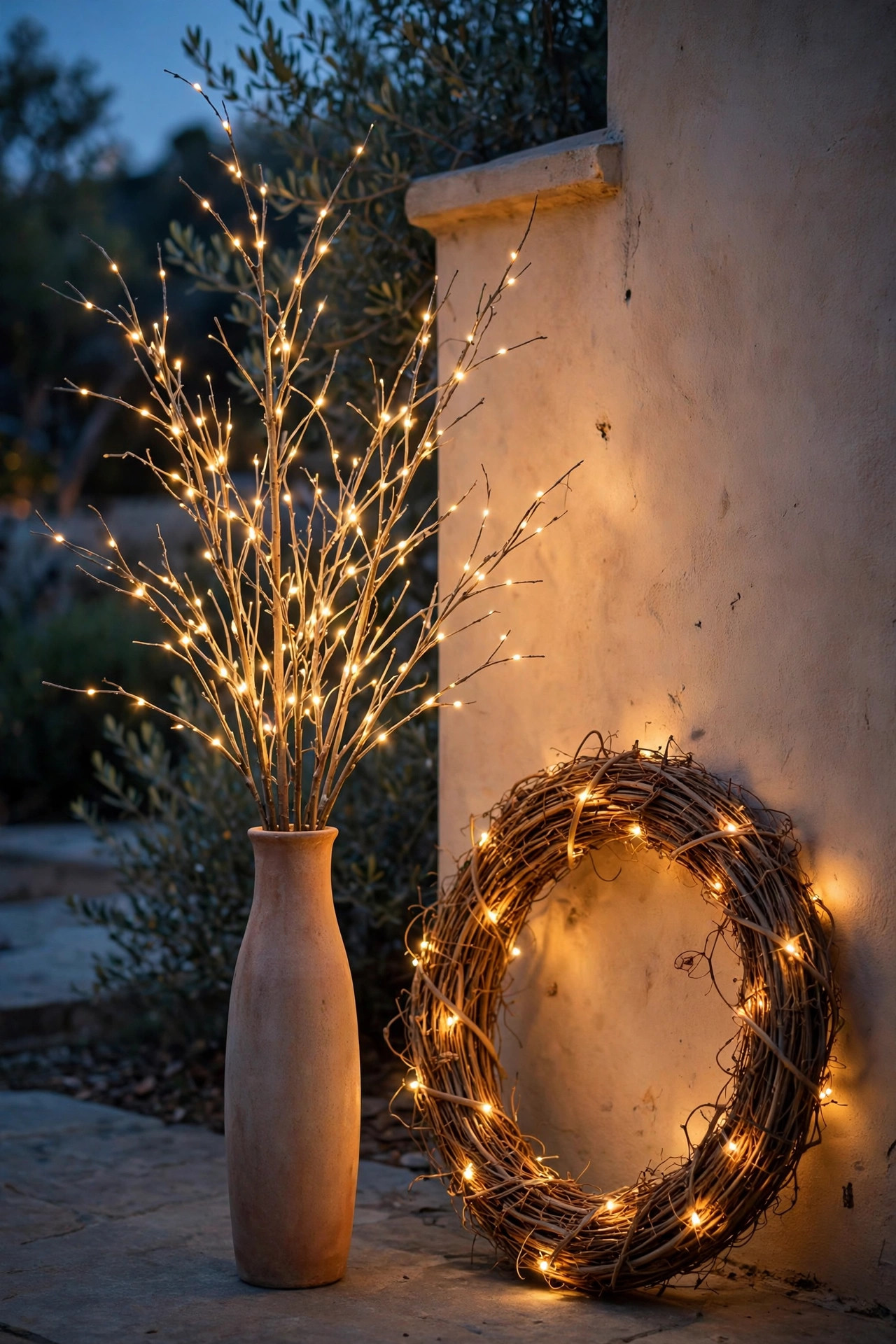
8. Lean a Lit Grapevine or Twig Wreath Against the Wall
Not every light needs to mount, hang, or stake. A battery-lit grapevine wreath or a bundle of lighted branches in a tall floor vase simply leans against the wall or stands in a corner, and it fills that dead spot every patio has with warm texture. I discovered this during a rental where the outdoor outlet was behind the grill and completely unreachable; a branch bundle with copper-wire fairy lights ran on a battery pack for a month of evenings. Lighted branches are sold with 60 to 100 tiny warm LEDs on flexible stems, so you can bend them into an arrangement that suits your corner. Battery packs with a built-in 6-hour timer are the detail to shop for, because lights that switch themselves on at dusk and off at bedtime feel like magic and save your charge. Keep the battery pack tucked in a small waterproof box or inside the vase, off the wet ground. This idea is pure decor, so pair it with real task and path light elsewhere. When you move, the whole arrangement lifts into a box as-is, and honestly it looked so good it was the first thing I unpacked at the next place.
Suggested budget range: $20 – $50.
9. Motion-Sensor Lights With Adhesive Mounts for Steps and Gates
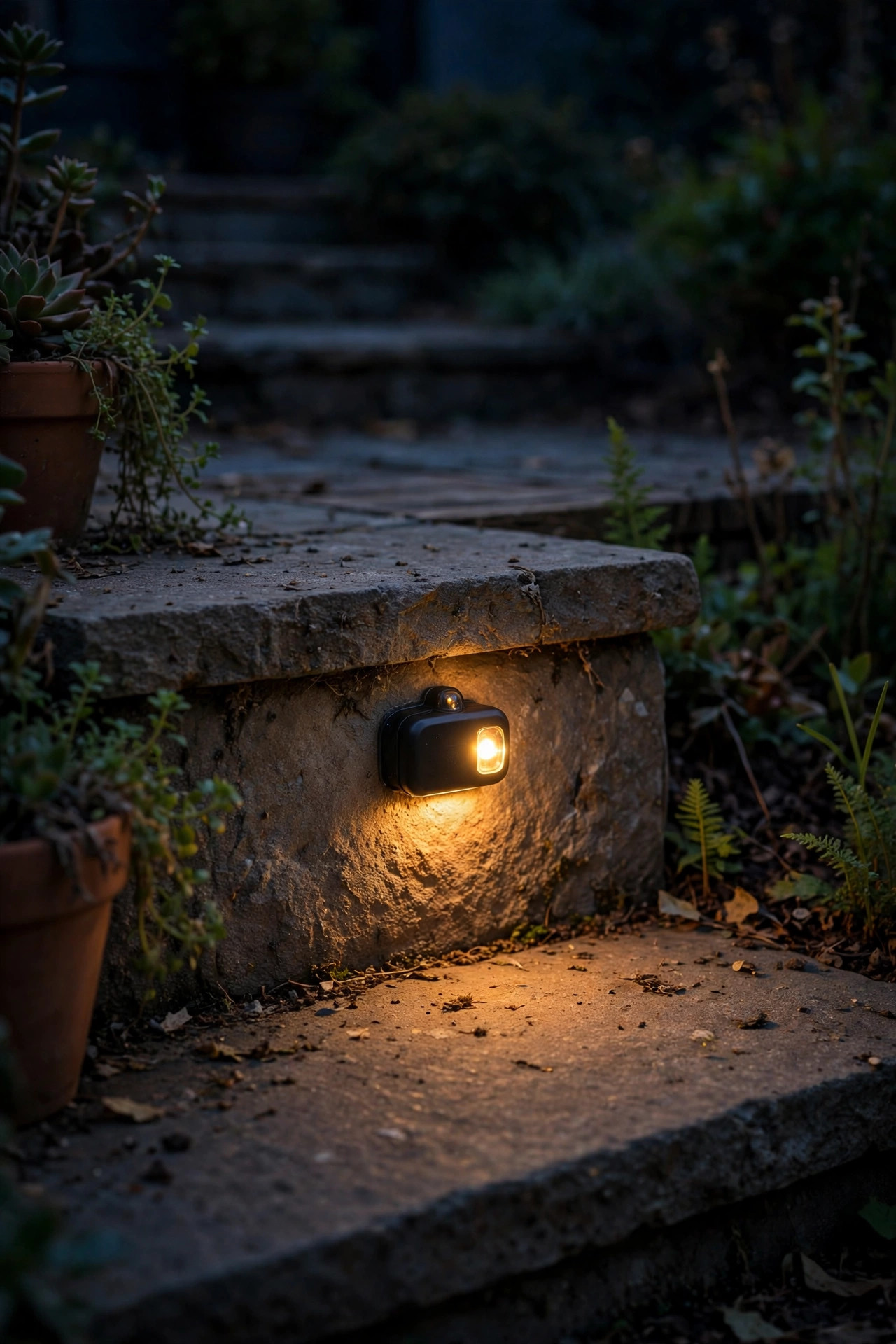
Some rental spots only need light when you are actually there: the steps down to the yard, the side gate, the path to the trash bins. Battery motion-sensor lights with adhesive or magnetic mounts were made for exactly this. Peel, stick, and the light wakes up when you approach within about 10 feet, then sleeps again after 20 to 30 seconds. I mount mine at knee height on stair risers and at waist height beside gates, angled down so the beam hits the ground where your feet land. Choose models around 100 to 200 lumens with a warm or neutral tone; a harsh blue-white blast at midnight helps no one. The adhesive question matters again here: mount the bracket on removable strips sized a pound above the light's weight, and the light itself usually snaps off the bracket for charging. In my experience these are the lights guests comment on, because they feel thoughtful, like the house is looking out for you. Landlords tend to approve of them too, since nothing about a well-lit step has ever hurt a property. Zero holes, zero wiring, all safety.
Suggested budget range: $15 – $40.
10. Umbrella Lights That Clip Into the Canopy You Already Own
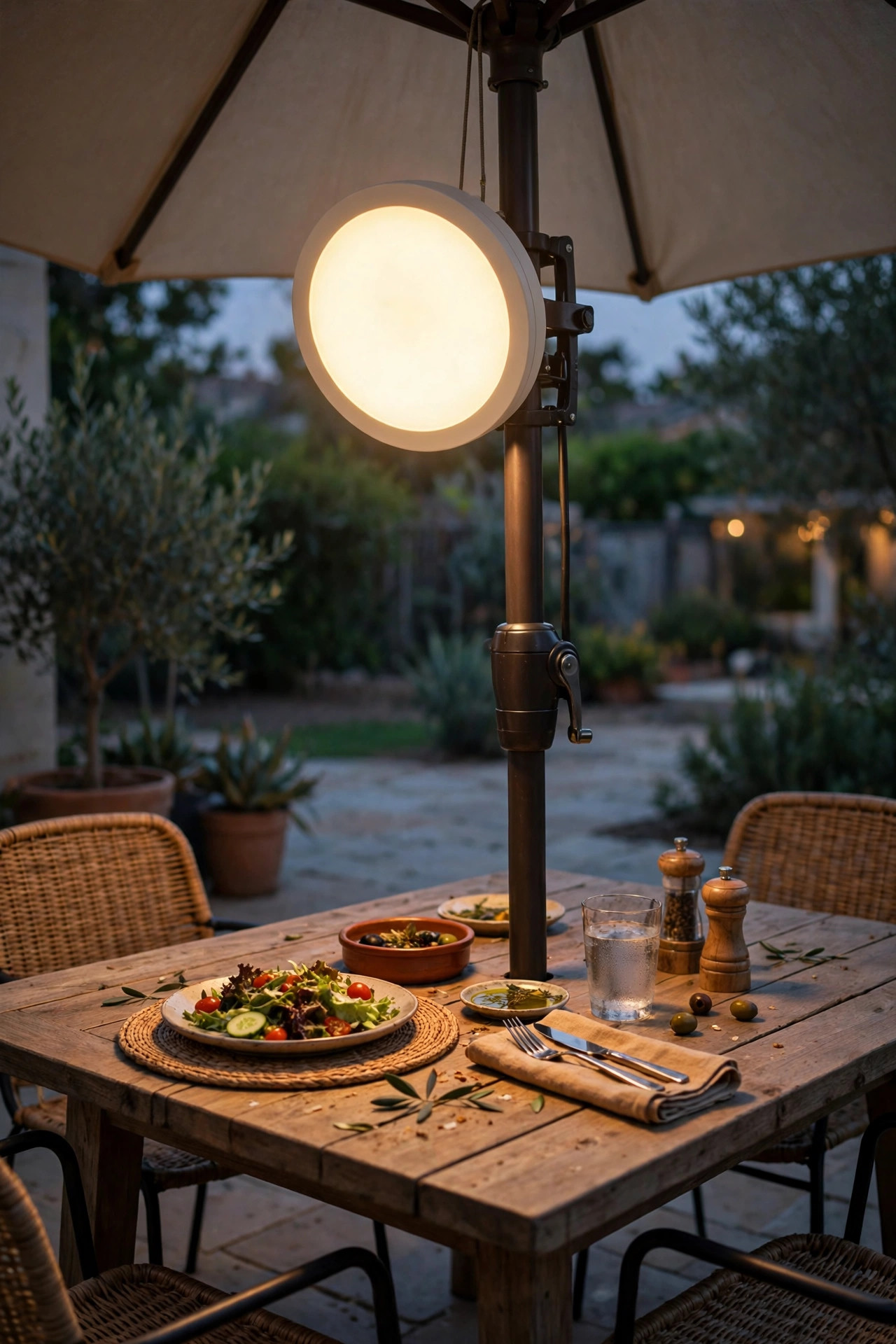
If your rental patio has a market umbrella, you already own a ceiling; it just needs a light. Umbrella lights are disc-shaped fixtures that clamp around the pole or clip to the ribs and shine down onto the table, and they install in about ninety seconds with no tools. The pole-clamp versions are the sturdiest: loosen the center ring, slide it over the pole under the canopy, tighten by hand, done. Mine has three brightness settings and runs on rechargeable batteries, giving a soft pool of 150 to 300 lumens right where plates and board games live. That downward focus is flattering and practical, and it keeps light out of the neighbors' windows, which matters in close-set rentals. If your umbrella is a cantilever style, clip-on spotlights aimed at the canopy bounce a lovely indirect glow instead. Always bring the light in with the umbrella when storms roll through, because canopy clips are not rated for a flapping umbrella in wind. Honestly, dining under a lit umbrella is the closest a rental patio gets to a bistro, and when the lease ends, the light drops into your kitchen junk drawer until the next home.
Suggested budget range: $15 – $35.
11. Fairy Lights in Jars, Bottles, and Planters for Pure Sparkle
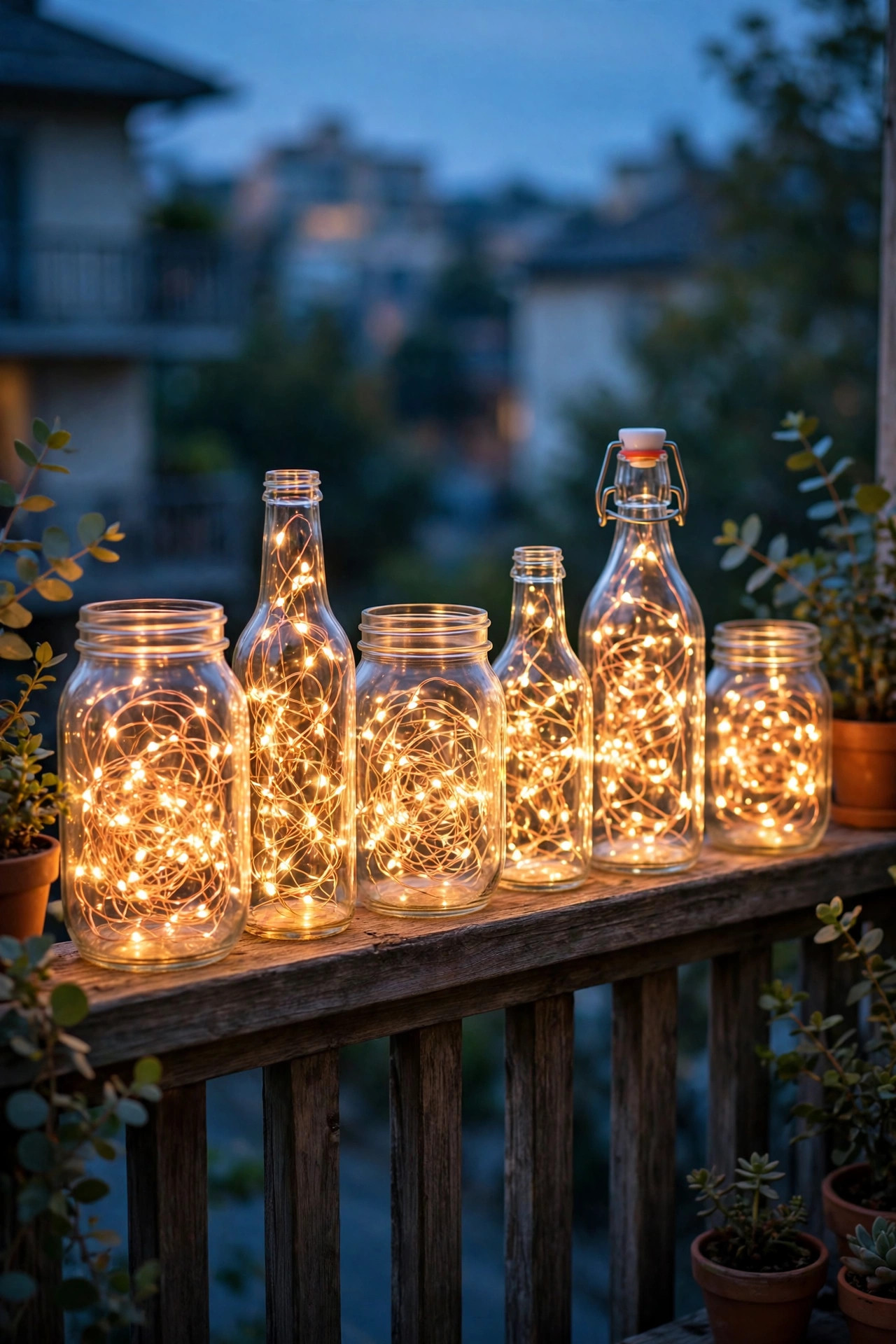
Copper-wire fairy lights are the cheapest transformation in all of outdoor lighting, and for renters they are close to perfect: featherlight, battery or solar powered, and they attach to nothing at all. I stuff them into mason jars for table lanterns, coil them inside glass bottles for a glowing row along a railing, and weave them through planter greenery so the plants themselves seem to sparkle. Solar jar lids, which are just a small panel and LED string built into a mason jar lid, charge by day on the railing and glow by night with zero effort. Warm white wire lights disappear into foliage by day, so the effect feels like fireflies rather than decoration. Keep battery packs out of standing water, and choose the timer versions so you are not fishing through a planter every night to find a switch. A single 33-foot string handles a whole balcony rail with enough left over for two jars. In my experience, this is the layer that makes guests pull out their phones for photos, and it costs less than the pizza. When you move, the whole sparkle layer coils into one shoebox.
Suggested budget range: $10 – $30.
12. Swap the Bulb, Not the Fixture, in Your Porch Light
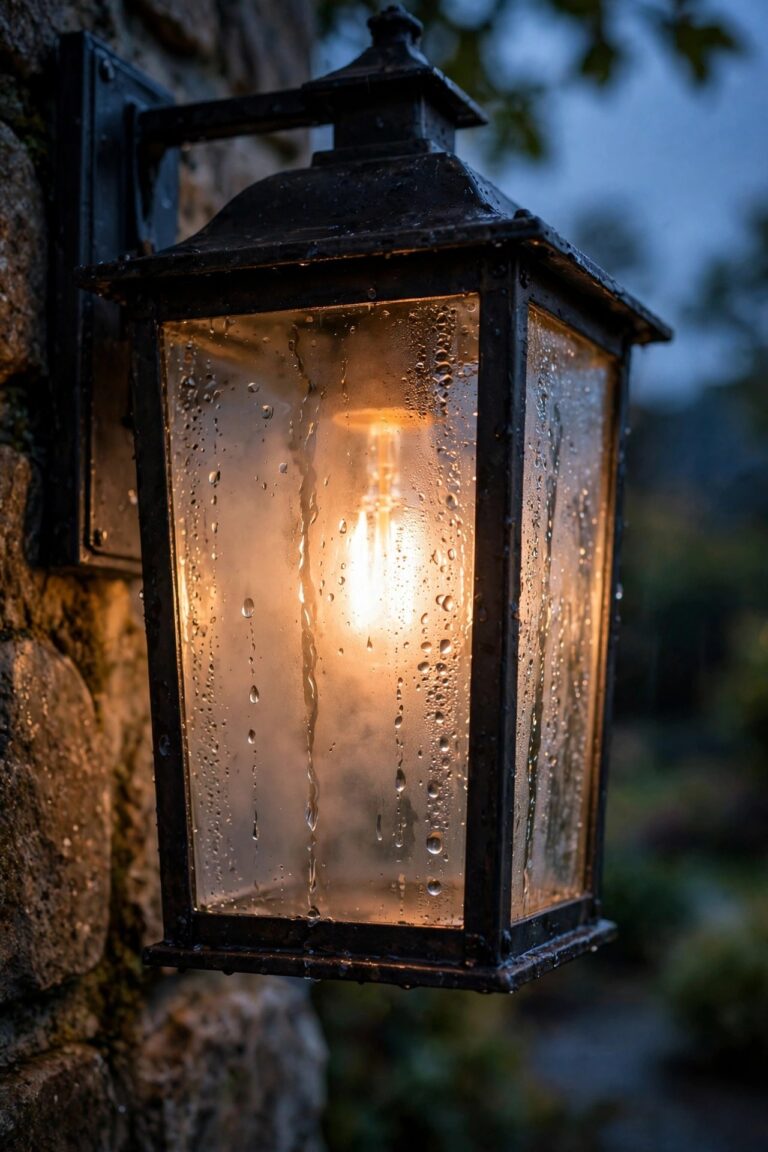
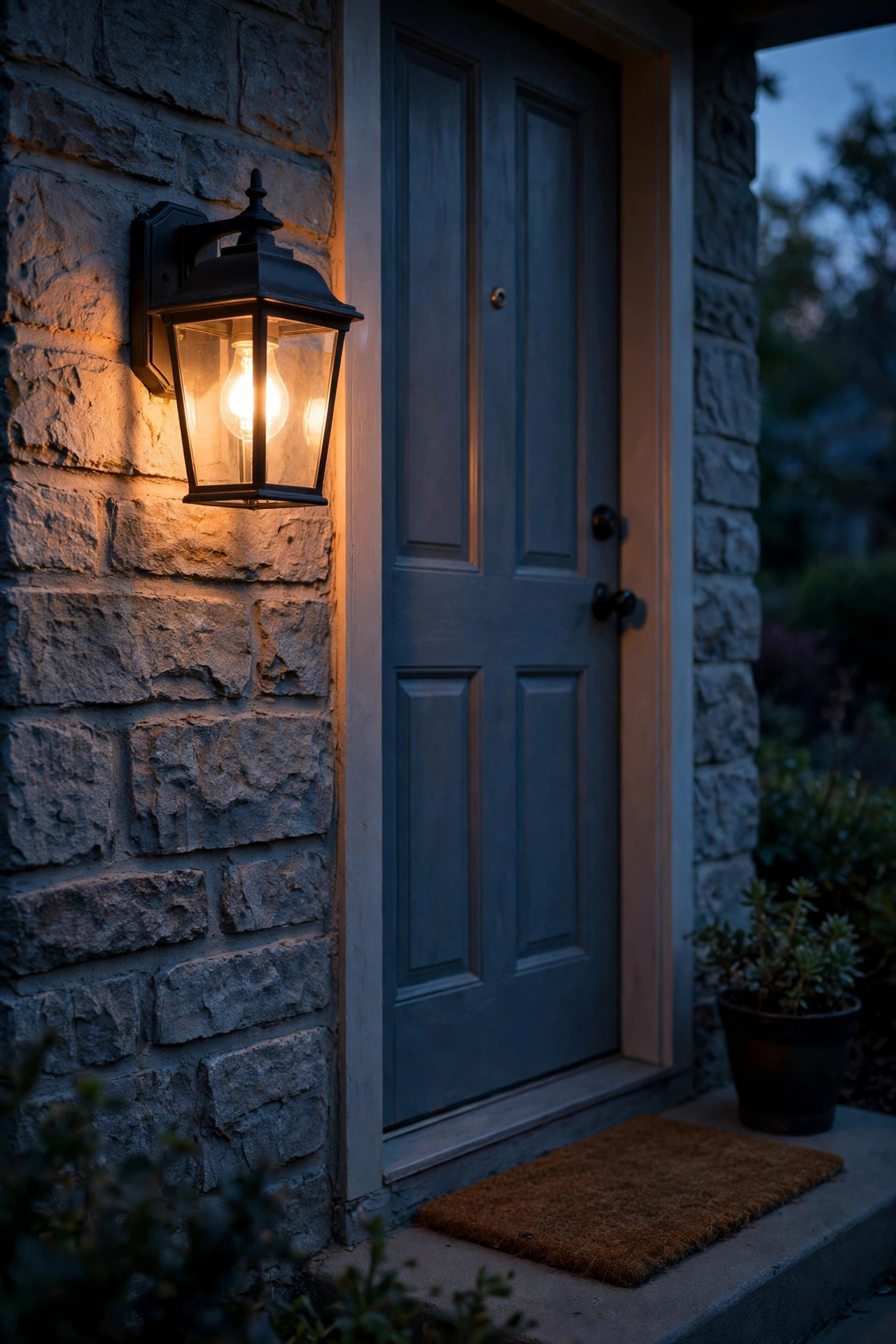
Most rentals have one existing outdoor fixture, usually a porch or patio light with a sad, glaring bulb in it. Renters cannot change the fixture, but the bulb is fair game, and swapping it changes everything. Replace the bulb with a warm 2700K LED around 800 lumens, and the same fixture suddenly feels like a design choice. Even better, use a smart bulb or a dusk-to-dawn bulb with a built-in sensor, and your porch light turns itself on every evening without a timer or a thought. Motion-sensing bulbs exist too, brilliant for a front step you only cross twice a day. Keep the landlord's original bulb in a labeled bag in a drawer, and swap it back on moving day; that five-minute courtesy protects your deposit and your reference. Check that the fixture takes a standard base bulb before you buy, and if the fixture is enclosed, choose a bulb rated for enclosed fixtures so it does not overheat. This is the smallest idea on the list and possibly the smartest: one bulb, zero tools, and the only permanent thing about it is the habit of good light it teaches you.
Suggested budget range: $8 – $25.
13. Net Lights Draped Over Bushes and Railings
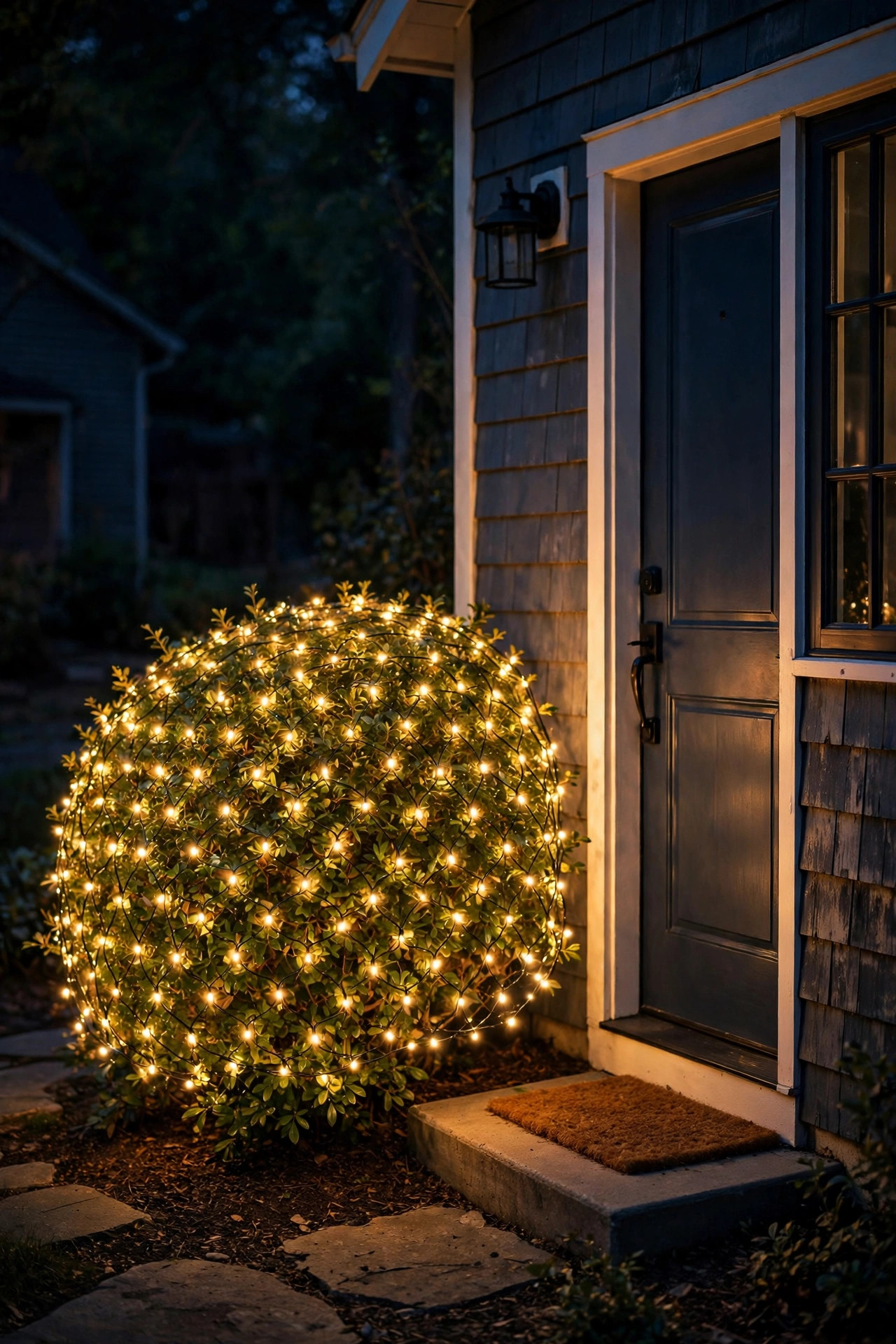
Bush lighting usually means wrapping individual strands around branches, but net lights do the whole job in one drape, which makes them a renter's best friend at the front of the house. A net light is a grid of small LEDs you lay over a shrub, a railing, or a small fence, and it settles into place with no clips, ties, or fasteners at all. The solar versions are completely self-contained, with a small staked panel you tuck into the sunny side of the bush. Warm white nets over the front shrubs give a rental that finished, magazine look from the street, and gravity does all the installing. Solar sets usually cover about 5 by 7 feet, so measure your shrubs before buying two. In my experience the even spacing of a net reads as intentional and tidy, which landlords quietly appreciate far more than a lopsided tangle of clips. Keep the net off any plant your lease says you cannot prune, since removing it at move-out is simply lifting it away. At the end of the season, shake it out, fold it loosely, and store it flat so the grid stays tangle-free for the next home.
Suggested budget range: $20 – $45.
14. Freestanding Torch Lights and Stake Lanterns for the Yard
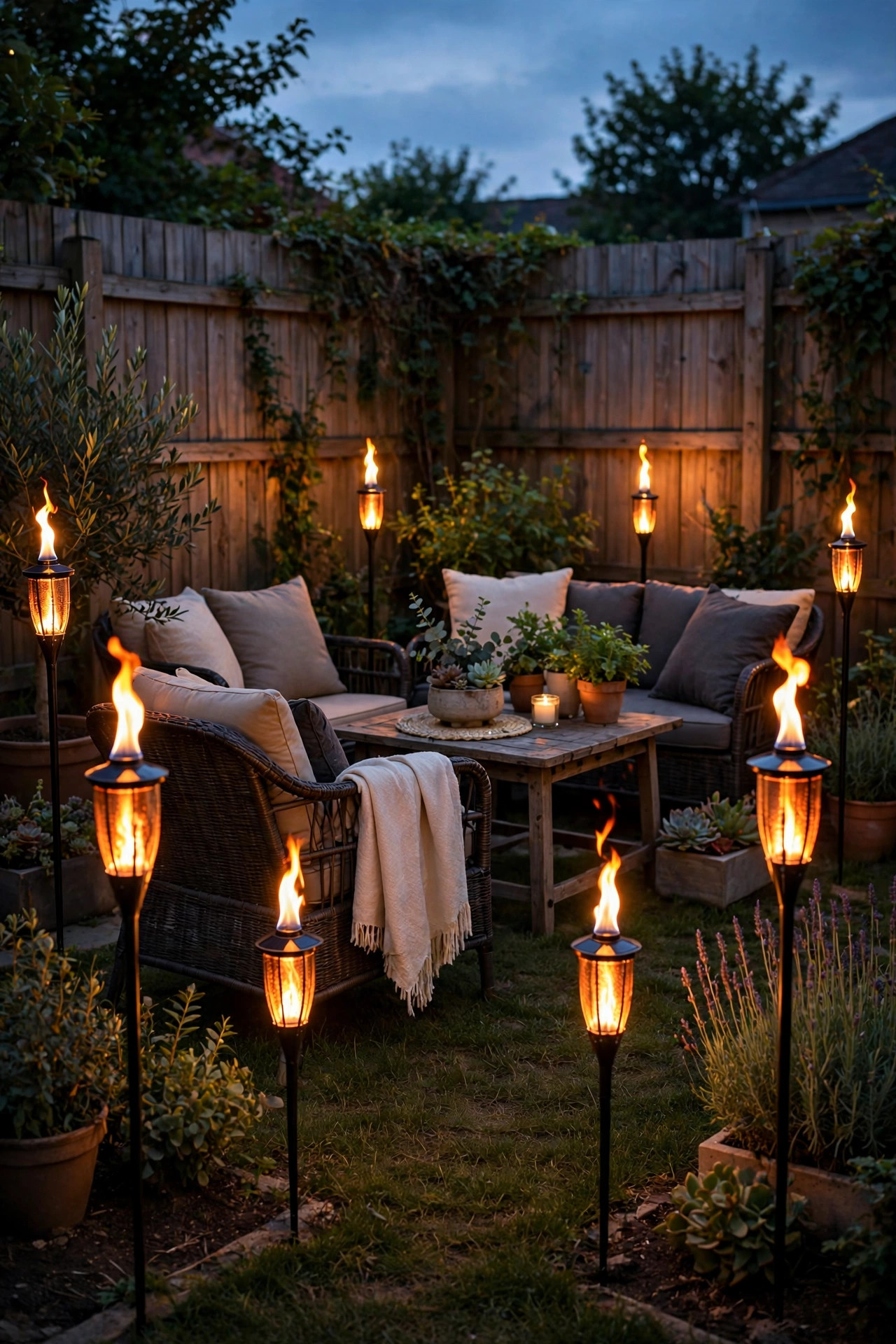
A rental yard can feel like a borrowed field until you give it edges and a center, and freestanding torch-style lights do both without a single mount. Solar flame-effect torches stake into the lawn and flicker like real tiki torches, minus the fuel, the smoke, and the fire risk that no lease on earth approves of. I place four around a seating area and two flanking the steps off the patio, spaced about 6 feet apart so the flicker reads as a loose ring of firelight. Modern versions run 8 to 10 hours on a full charge and stand 2 to 3 feet tall once staked. If your soil is rock hard, the same fixtures often come with a weighted tabletop base, which is even more portable. The flame effect matters: it signals gathering place to the human brain, so people naturally pull their chairs into the ring. LED-only flameless designs stay cool to the touch, which is the version to buy if kids or dogs share the yard. Nothing screws, sticks, or wires in, and the whole campfire mood rolls up in minutes when the moving truck arrives.
Suggested budget range: $25 – $55.
15. Plug-In Cafe Lights on a Timer for the One Good Outlet
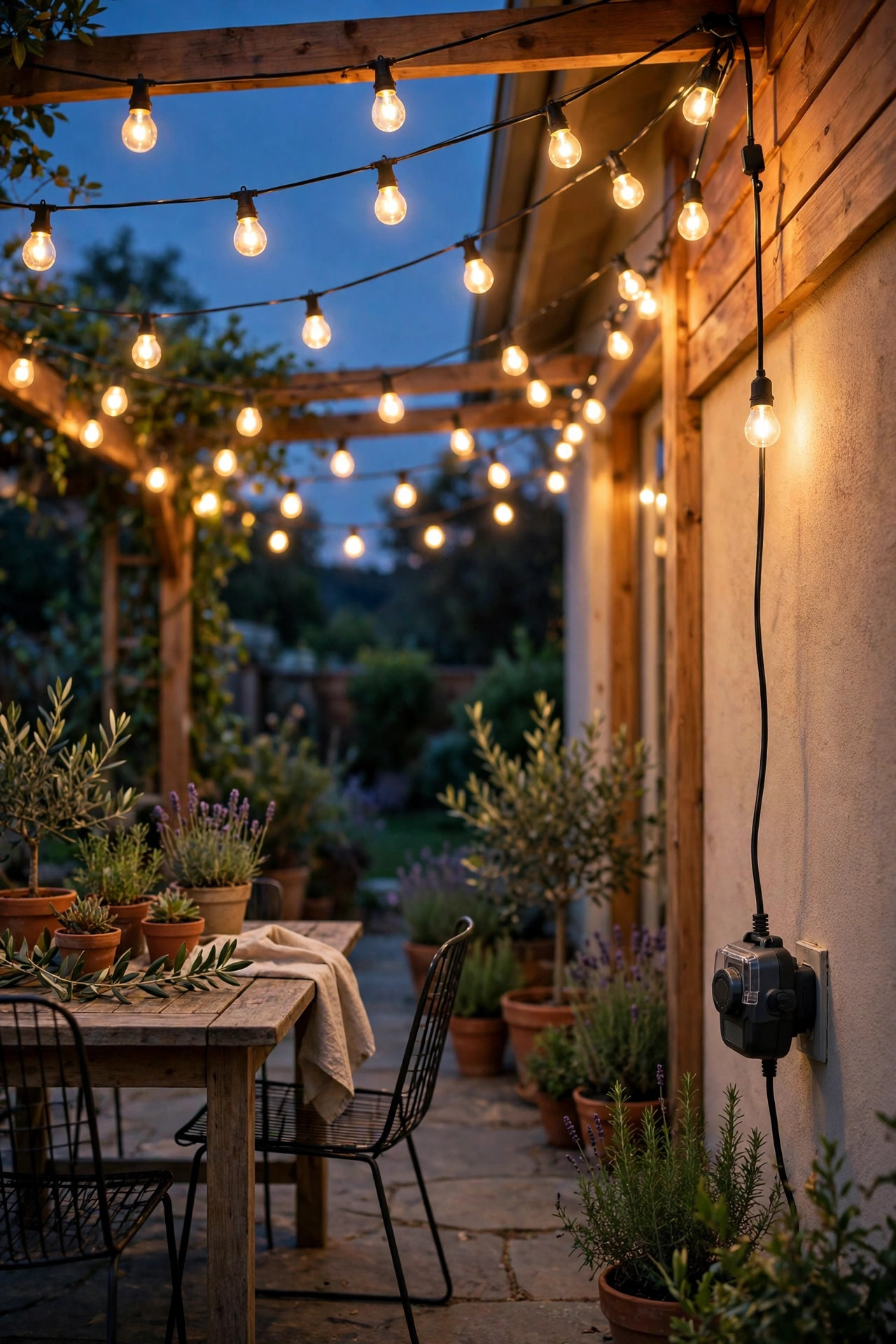
Nearly every rental has one outdoor outlet, and the secret is making it work like a whole system. Plug your string lights or a pair of plug-in lanterns into an outdoor smart plug or a simple mechanical timer, set it for dusk to 11 p.m., and your patio lights itself every evening with no apps to babysit. Because everything plugs in rather than wires in, the entire setup is unambiguously yours and leaves with you. A timer also wins the landlord conversation, since lights that shut themselves off are lights nobody complains about. Weatherproof the connection like you mean it: use an in-use outlet cover, keep the plug off the ground on a small hook or brick, and add a drip loop so rain runs away from the socket instead of into it. Extension cords, when you must, should be outdoor-rated, a single run with no daisy-chaining, and routed along walls where nobody walks. My own pattern is timer plus one strand of cafe lights plus the lanterns from earlier on this list, and honestly guests assume an electrician designed it. Total install time: one trip to the outlet and ten minutes of swagging.
Suggested budget range: $20 – $50.
16. Window-Facing Light Curtains and Icicle Strands on Tension Rods
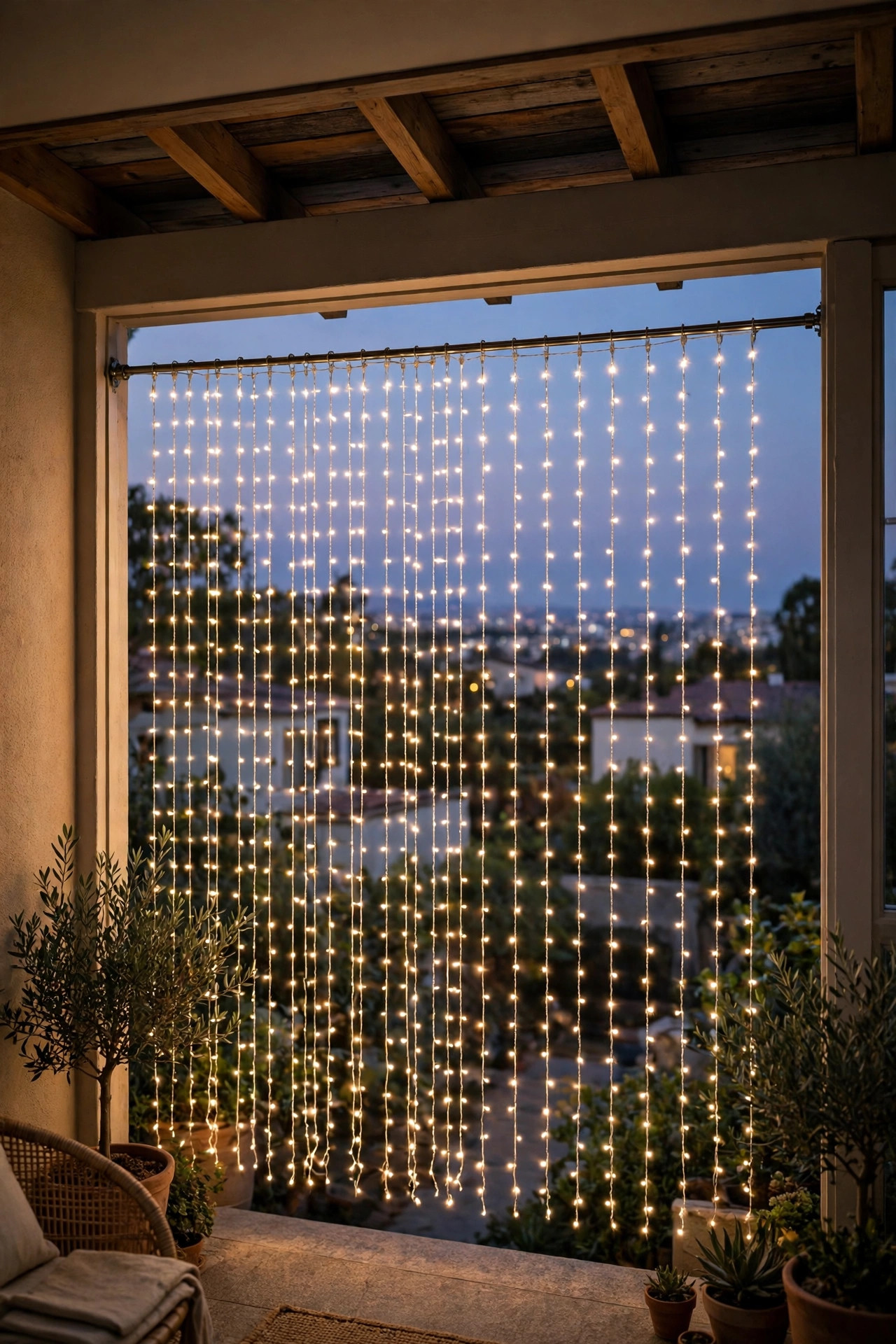
For balconies and patios under a covered roof, a curtain of light solves the problem of having no wall you may touch. Hang a warm white curtain light or icicle strand from a spring tension rod wedged between two posts, or from the underside of a balcony above using removable hooks, and the whole opening turns into a glowing backdrop. The effect is soft, even, and incredibly forgiving, because hundreds of tiny points of light blur into one wash. Curtain strands usually span 6 to 10 feet wide with drops of 6 to 7 feet, so measure your opening before ordering. Battery and USB versions abound, which keeps you independent of that one awkward outlet. I hang mine behind the seating area rather than at the edge, so the light wraps around people instead of silhouetting them, and faces look warm in every photo. Keep strands a few inches clear of fabric curtains and dry plants, even though LEDs run cool. When the lease ends, the rod twists down, the curtain folds into a bag, and not even a scuff remains. It is the most theatrical idea here, and somehow also one of the easiest.
Suggested budget range: $20 – $45.
17. A Portable Everything Kit, the Renter Friendly Outdoor Lighting Ideas That Travel
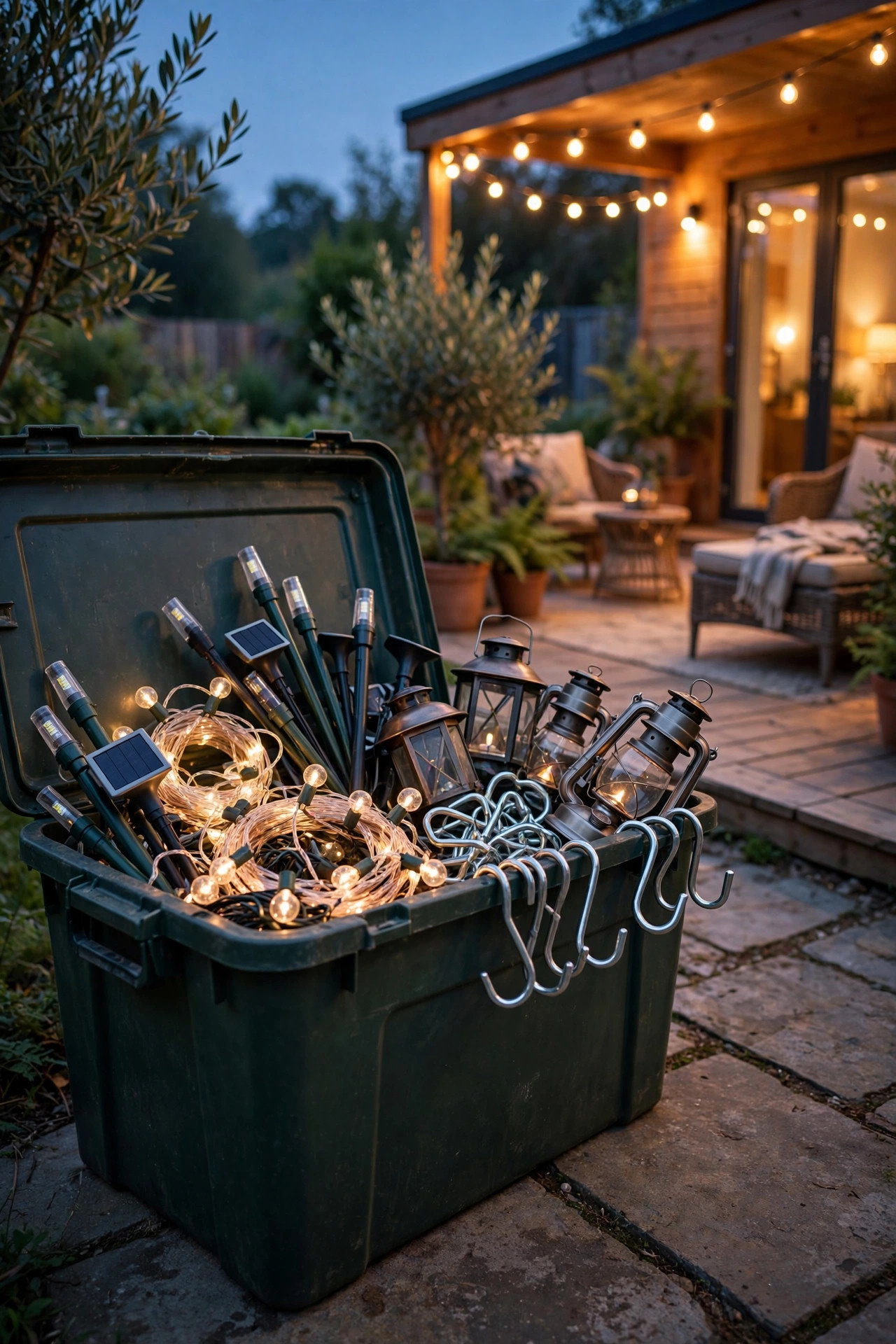
My last idea is really a habit: build one portable kit that holds your whole system, and every future home gets lit on the first weekend. Mine lives in a single plastic bin: two strands of string lights, a coil of fairy lights, six solar stakes, two lanterns, the clamp light, removable hooks, zip ties, and a small bag of spare batteries and charging cables. Buying with the kit in mind keeps every purchase compatible, battery types consistent, and your per-home cost dropping toward zero after the first rental. It also makes moving day strangely satisfying, because the patio comes apart in one pass and nothing gets left behind for the landlord to find. If you are starting from zero, my notes on lighting a yard without any outdoor outlet pair well with this approach, since a kit built around solar and batteries never cares what the next place offers. Treat the kit as the permanent thing and the house as the temporary one, and you will never eat dinner in the dark again, no matter whose name is on the deed.
Suggested budget range: $75 – $150.
Frequently Asked Questions
Will any of these lights actually damage my deposit?
Used as described, no. Every idea here avoids screws, nails, and hardwiring, and the adhesive options use removable strips designed to release cleanly from paint. The two habits that protect your deposit most are padding any clamp jaws so they cannot scuff railings, and keeping the landlord's original porch bulb in a labeled bag so you can swap it back on moving day. Before drilling anything, ever, get written permission; with this list, you will not need to ask.
What color temperature should renters choose for outdoor lights?
Warm white, in the 2700K to 3000K range, flatters skin, food, wood, and brick, and it hides a multitude of rental-grade patio sins. Cool daylight bulbs around 5000K make outdoor spaces feel like parking lots and tend to annoy close neighbors. Whatever you buy, keep the whole set within the same temperature range, because a mix of warm and cool light is the fastest way to make a patio feel accidental instead of designed.
Are solar lights reliable enough to be my only lighting?
For paths, edges, and atmosphere, yes, provided each fixture gets about 6 hours of direct sun and you clean the panels monthly. For a north-facing or deeply shaded balcony, solar alone will disappoint you, so anchor the space with battery lanterns and a plug-in timer strand, then let solar handle the sparkle. That hybrid approach is exactly how I light shaded rentals, and it has never left me in the dark.
How do I light a rental patio with no outdoor outlet?
Build around solar and rechargeable battery lights: solar stakes and torches for the ground layer, USB-rechargeable lanterns and clamp lights at seating height, and fairy lights or a curtain strand on battery packs overhead. A decent power bank extends any USB light for a full weekend. In my rentals with no outlet, that combination covered everything except the porch bulb swap, and even that works with a dusk-to-dawn battery sconce mounted on removable strips.
Conclusion
Renting never meant living in the dark; it only meant choosing lights that stand, clamp, stick, and swap instead of lights that screw in forever. Layer something low for safe footing, something at seat height for faces and food, and something overhead for magic, and even the plainest rental patio feels like yours by the second evening. The best part is that the system compounds: every lantern and strand you buy now moves with you, so your next home starts glowing on day one. These renter friendly outdoor lighting ideas ask nothing of your landlord and nothing of your deposit, which is exactly how it should be. If you want to keep planning, browse the rest of the outdoor lighting ideas here on the site; your perfect no-holes setup is probably one small box away.