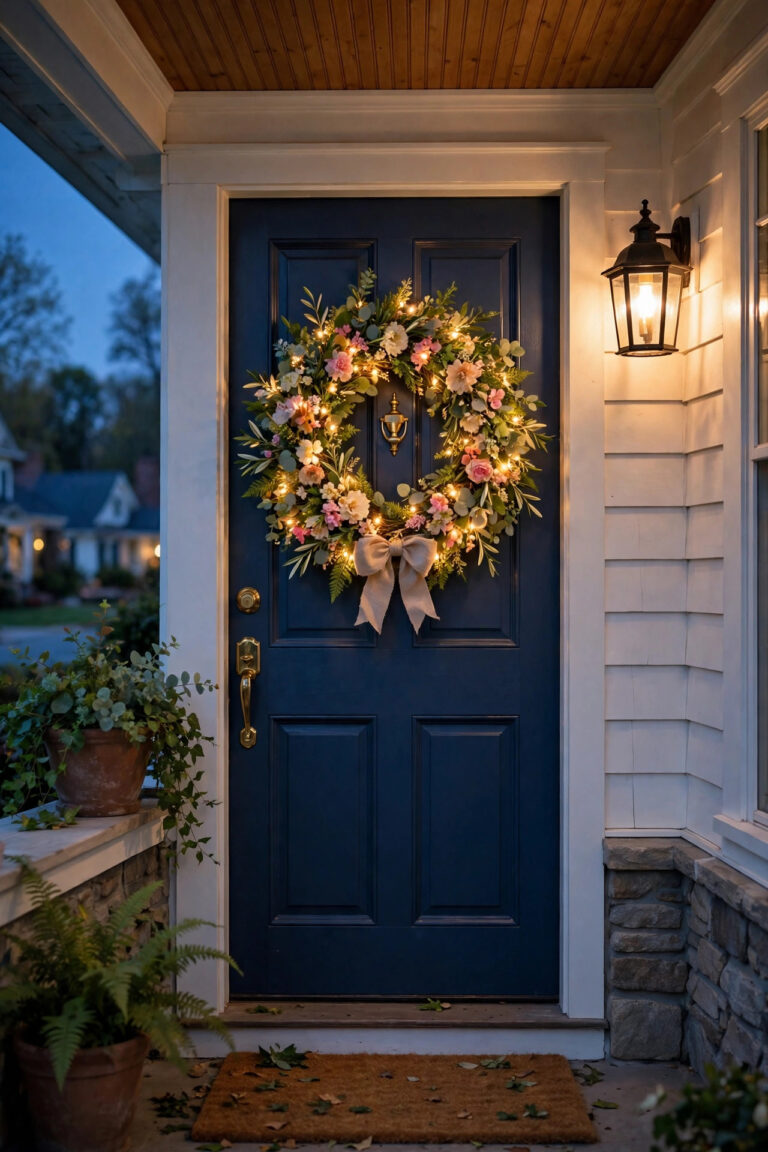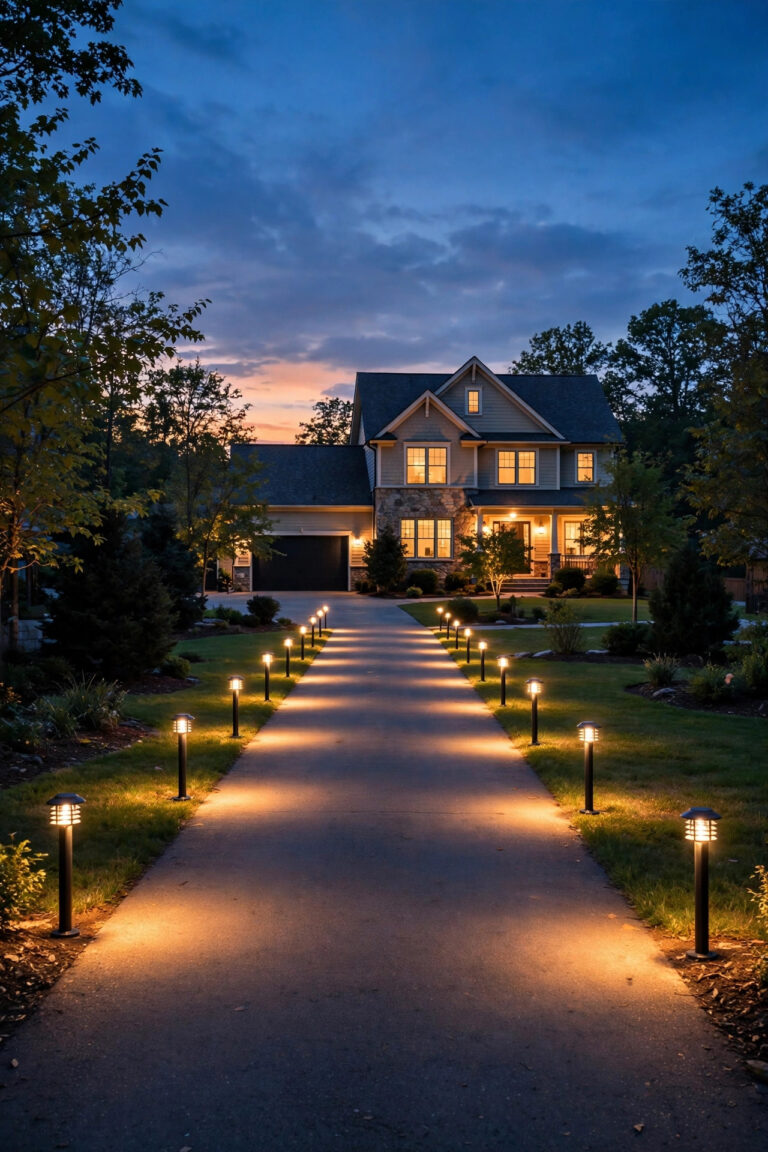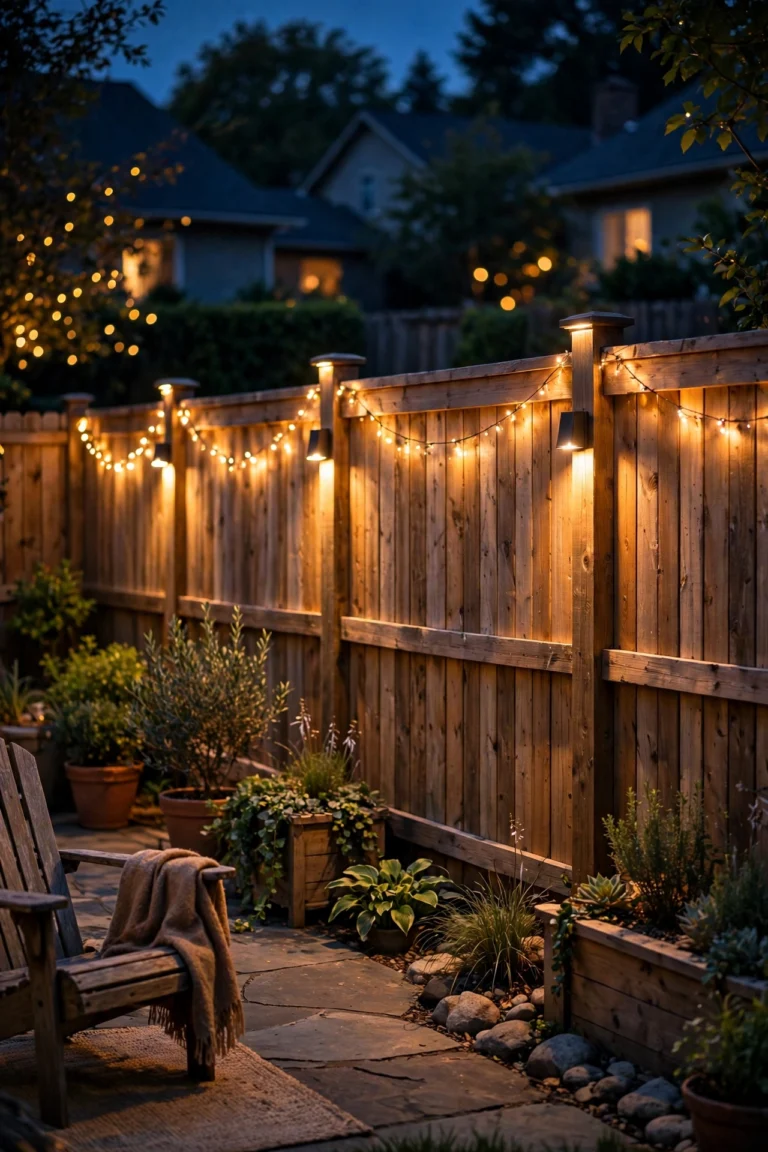
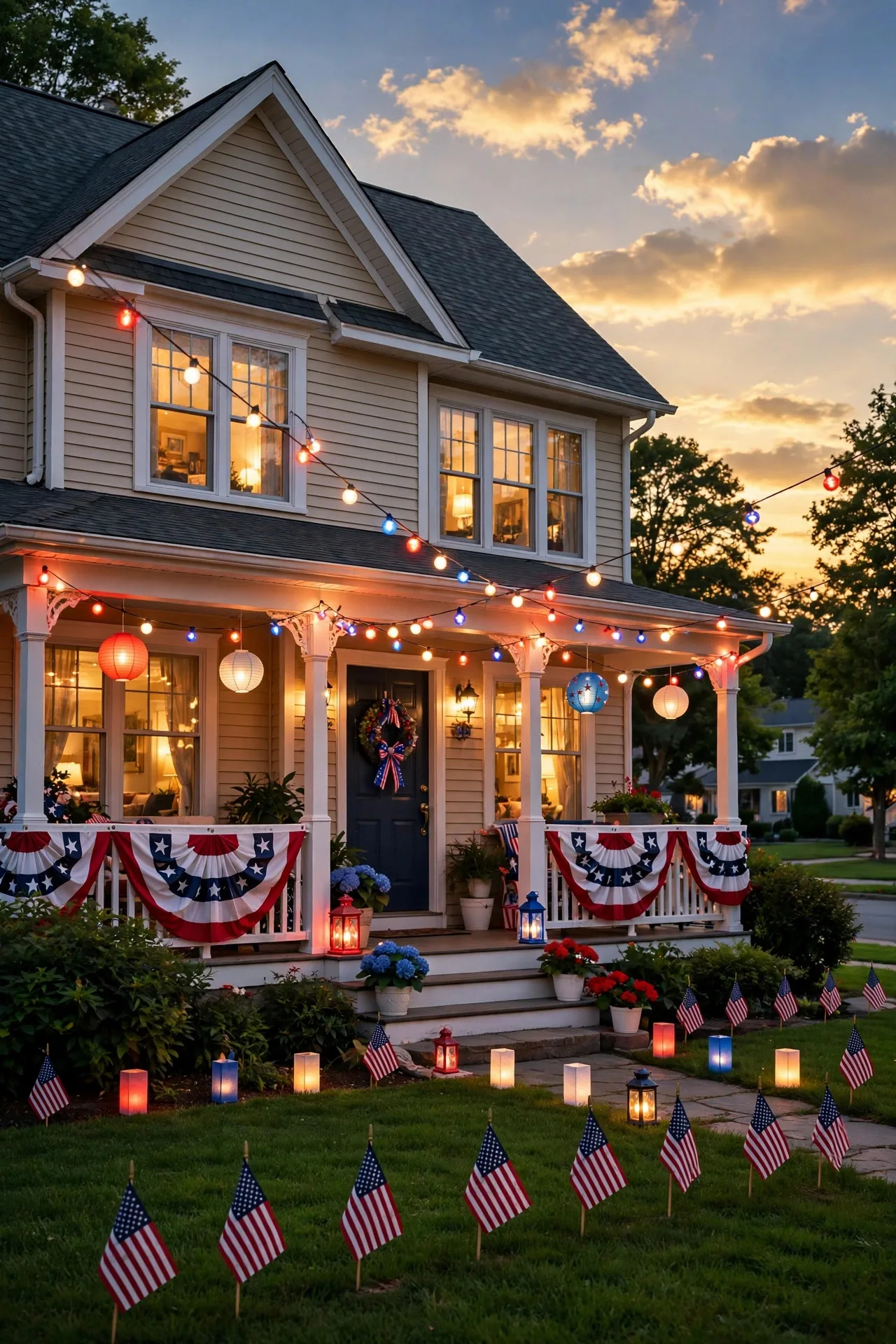
There's something about a yard glowing red, white, and blue that makes the Fourth of July feel official. The fireworks are the grand finale, but honestly? The lighting is what makes people linger — it turns a regular backyard into the kind of place guests photograph before they even sit down. These fourth of july outdoor lighting ideas all follow the same philosophy I use for every seasonal display: layer your light. Start with a soft ambient base across the yard, add focused light where people actually gather (the food table, the seating, the steps), and finish with festive sparkle — the patriotic accents that make everyone say, "Wait, I love this."
Below you'll find 17 ideas that work for real yards and real budgets, from a $10 strand of fairy lights in a mason jar to a full red-white-and-blue canopy. Everything here is weather-friendly for early July, party-proof, and easy to take down once the holiday weekend ends. Pick three or four ideas and layer them together — that's where the magic happens.
1. A Red, White, and Blue String Light Canopy — My Go-To Fourth of July Outdoor Lighting Move
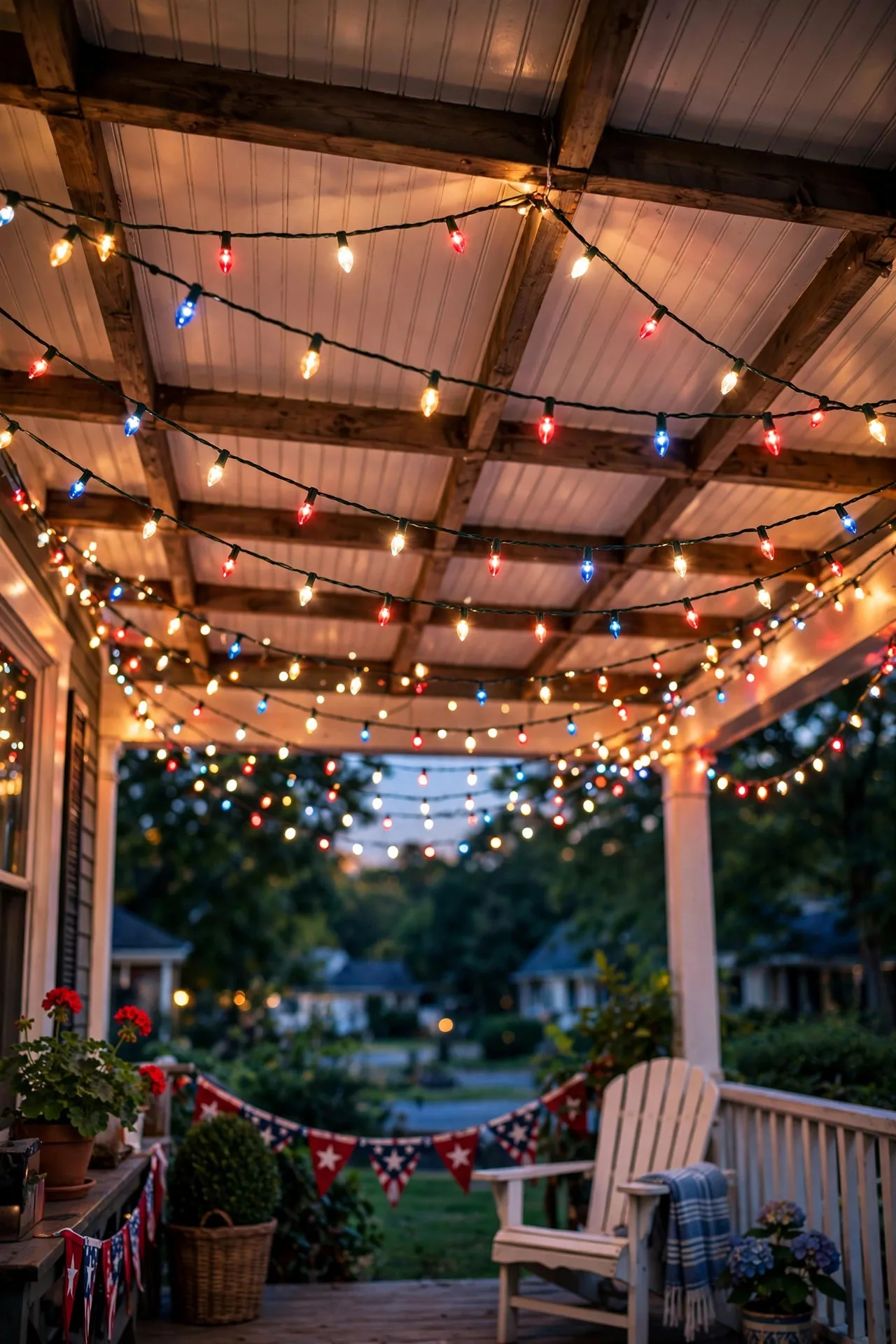
If I had to pick just one idea from this whole list, it would be this one. Crisscrossing strands of red, white, and blue mini lights across a porch ceiling or patio cover instantly makes the whole space feel like a holiday party. I always recommend mixing solid-color strands rather than buying a single multicolor one — alternating one red, one white, one blue gives you that crisp, intentional look instead of random confetti.
Here's how to hang it: space strands 2 to 3 feet apart and let them sag slightly between attachment points for that relaxed cafe feel. Use screw-in ceiling hooks or adhesive outdoor hooks every 6 to 8 feet on the porch ceiling, and connect strands end to end (most LED strings let you connect 20+ in a run). Always buy lights rated for outdoor or wet locations — July brings surprise thunderstorms — and plug the whole display into a timer so it switches on at dusk without you thinking about it. From the street, this reads as pure celebration; from the porch swing, it's the warmest place in the neighborhood.
Suggested budget range: $30 – $60.
2. A Patriotic Lantern Trio on the Steps
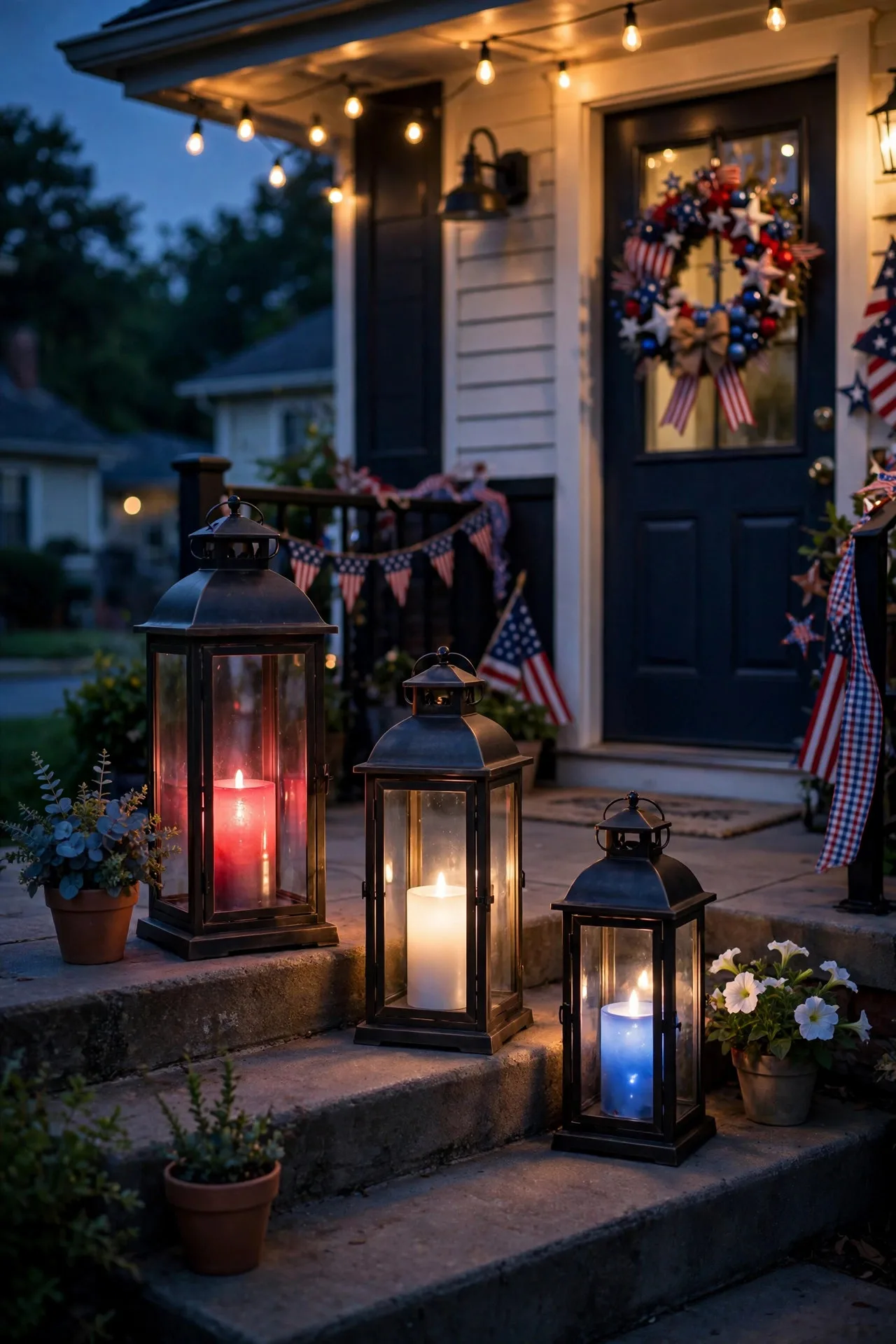
Stairs and entry steps are the perfect stage for a little moment, and a trio of lanterns is my favorite low-effort, high-impact styling trick. I set three lanterns of graduated heights (tall, medium, short) on every other step or clustered on the landing, and tuck LED flameless pillar candles in red, white, and blue inside each one. The glass keeps breezes from stealing your glow, and the grouping looks intentional instead of scattered.
In my experience, lanterns read best when you layer textures around them: a few small potted plants, maybe some river rocks, and the lanterns as the stars. Use battery-operated lanterns or LED candles so nothing is ever a fire hazard, and look for warm white 2700K candles — cool white can make red look pink and odd under night light. If your steps are narrow, go with wall-mounted or hanging lanterns on shepherd's hooks flanking the stairs instead. Set them on a timer to click on at sunset and your entry welcomes guests before you've even opened the door.
Suggested budget range: $25 – $50.
3. Star-Spangled Pathway Markers
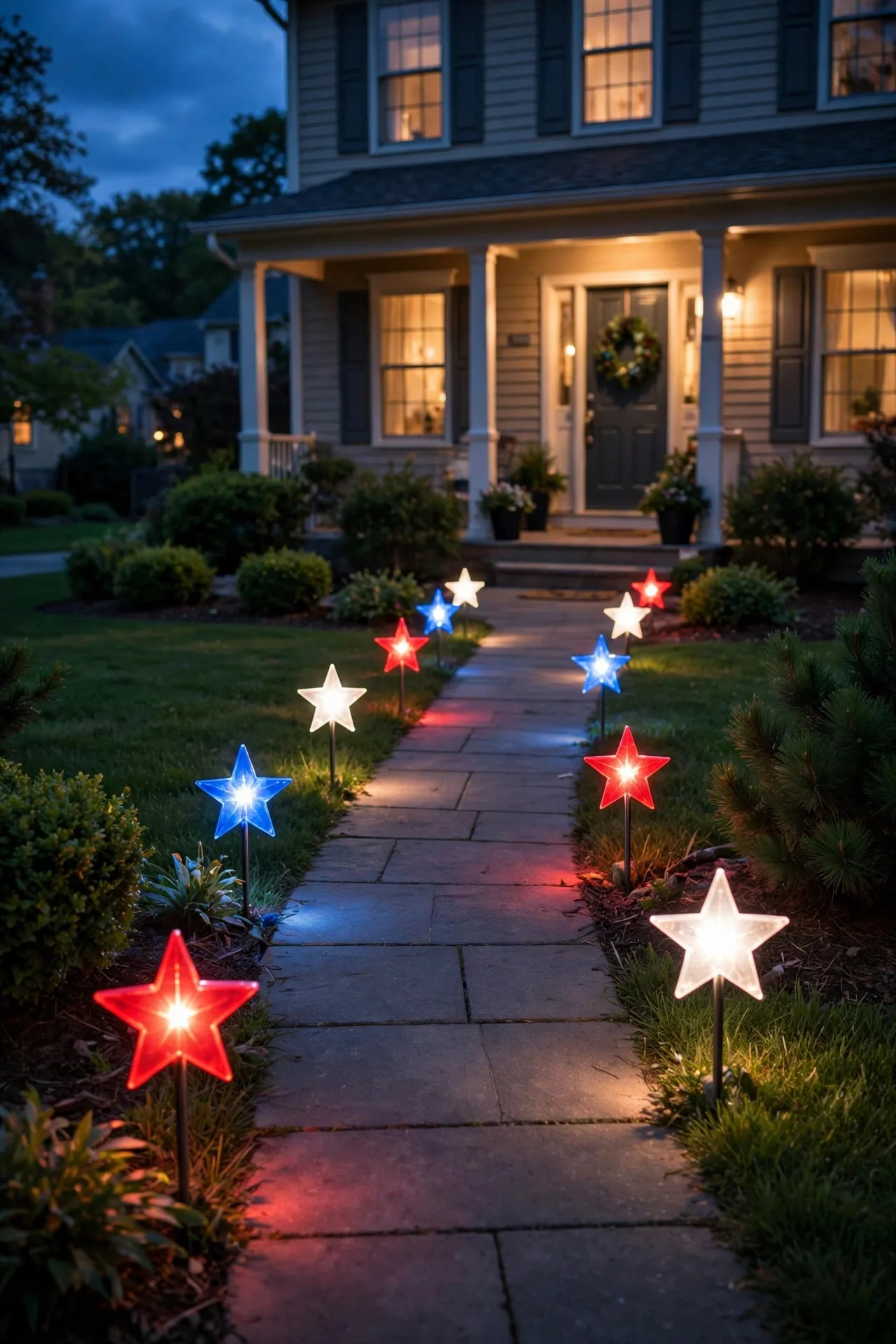
Guests can't admire your setup if they can't find the walkway — and July parties run late, so a well-lit path is both pretty and practical. I line the front walk or the path from the driveway to the backyard with star-shaped solar stake lights, alternating red, white, and blue, spaced 3 to 4 feet apart and pushed firmly into the ground.
The trick to solar stakes looking good instead of sad is full sun exposure: plant them where they'll charge 6 to 8 hours during the day, and wipe the little solar panels with a damp cloth before the holiday so they run all evening. On a 30-foot walkway you'll need 8 to 10 lights. These won't illuminate like a floodlight — they're markers, not headlights — so pair them with brighter step or porch lights for actual safety on stairs. After the party, they pull straight out and store flat in a box until next year. Zero wiring, zero electric bill, zero excuses.
Suggested budget range: $15 – $30.
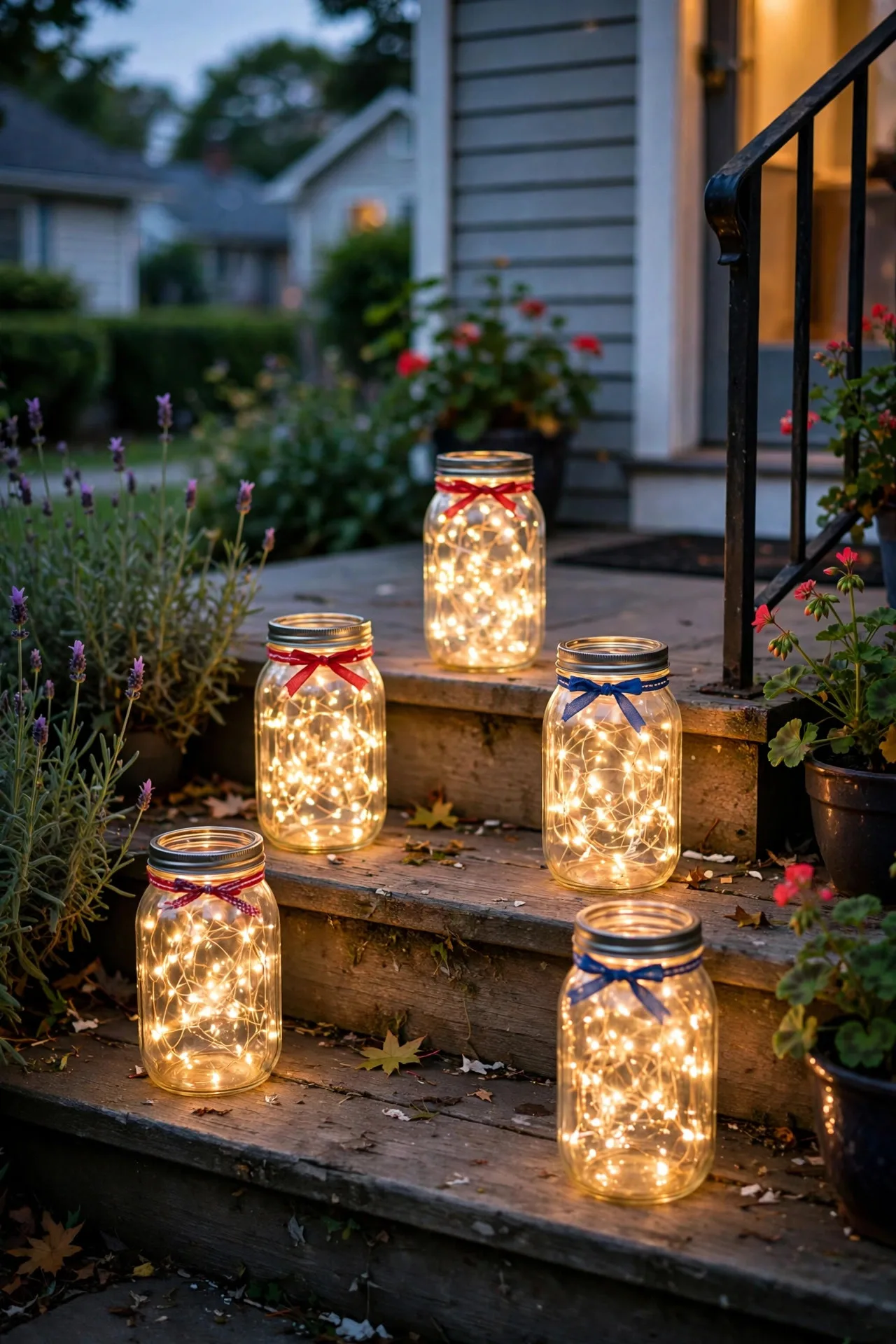
4. Mason Jar Firefly Glow
This is the crafty one, and honestly? It's the idea guests always ask about. Fill a handful of clear mason jars (pint or quart size both work) with a short strand of warm white fairy lights on copper wire, scrunch the wire loosely so the bulbs nestle through the glass, and set the jars along steps, the mantel-free windowsill, or down the middle of the picnic table. Tie a scrap of red or blue ribbon — or thin twine with a tiny wooden star — around each neck for the patriotic nod.
Battery packs tuck neatly under the lid or behind the jar, so there are no cords to trip over. Run them on a 6-hour timer and they'll light the whole cookout window from dusk to midnight without you touching them. I like using the firefly-style wire lights with 20 LEDs per strand; the wire is flexible enough to coil without kinking. Cluster jars in odd numbers — threes and fives always look better than pairs — and vary the heights with a small wooden crate or a stack of books underneath.
Suggested budget range: $10 – $25.
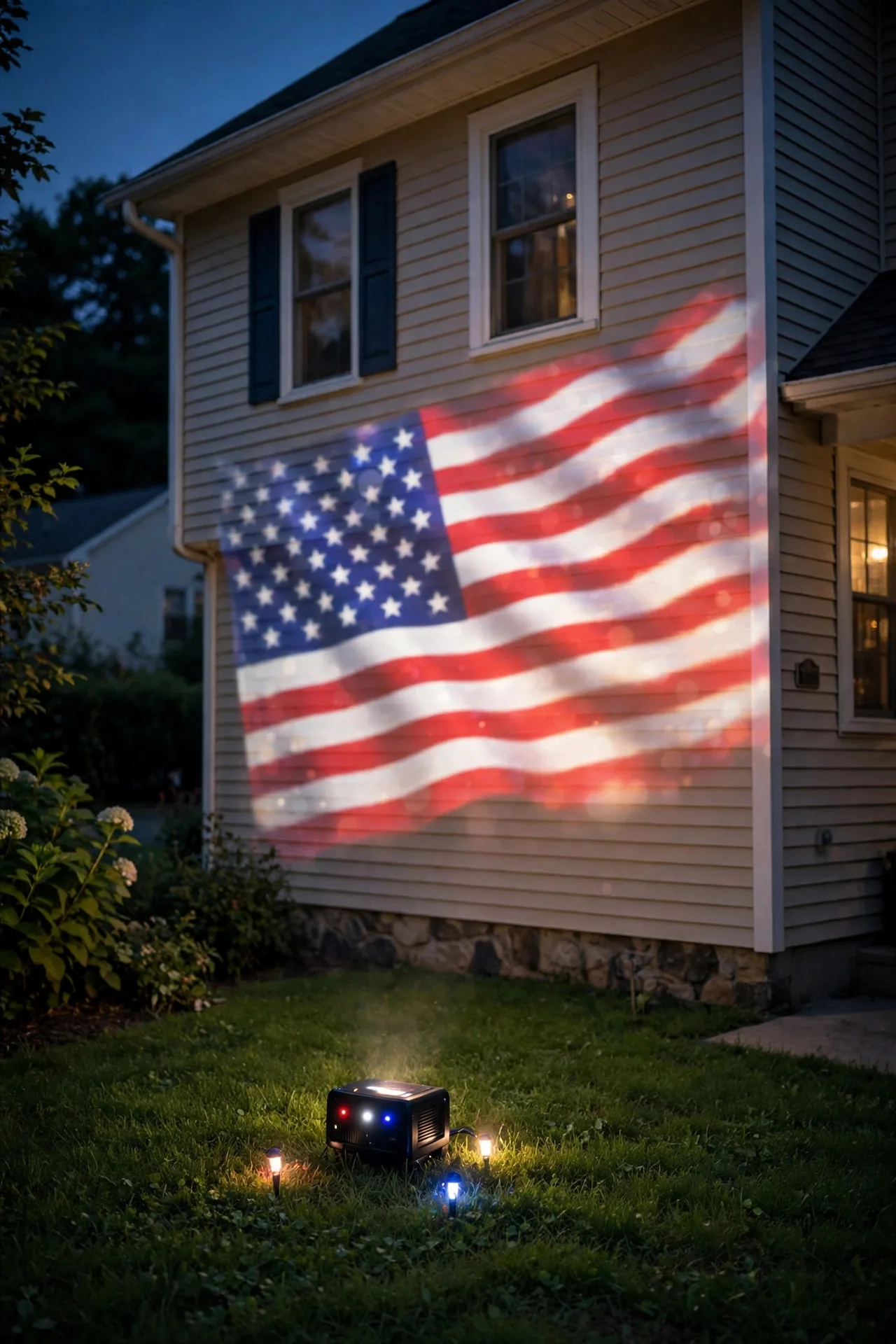
5. Flag-Waving Light Projection
Want the biggest impact with the smallest effort? An LED holiday projector is your friend. These stake-mount or tabletop projectors throw a waving-flag pattern, drifting stars, or a red-white-and-blue ripple wash across a house wall, garage door, or fence from 15 to 25 feet away. You stake it in the lawn at dusk, plug it in, and suddenly your entire facade is part of the celebration.
I always recommend testing the placement one night early: projectors look best aimed at a flat, light-colored surface, and bushes will chew up the image. Keep the lens clean, stake the unit on level ground so rain drains away from it, and only buy models rated for outdoor use with a proper waterproof housing. One projector covers a surprising amount of wall — usually a two-car garage door or a full porch facade. If you've enjoyed projector ideas at other holidays, you'll love how little setup this one takes; browse more light projector ideas for year-round inspiration.
Suggested budget range: $25 – $50.
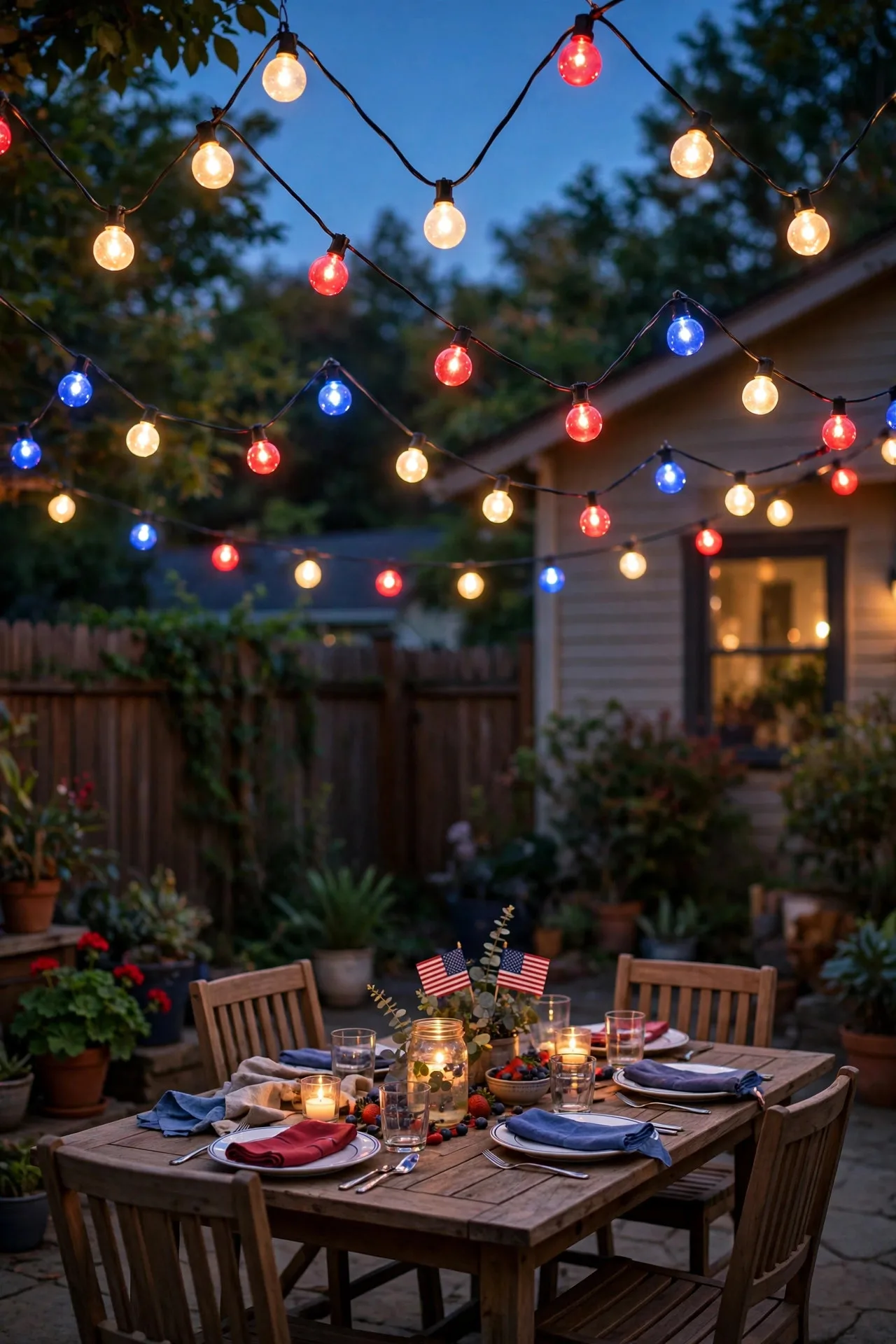
6. Bistro Light Canopy Over the Patio
This is the setup that makes dinner on the patio feel like an event. Zigzag café-style string lights with globe bulbs across the whole seating area — anchored to the house eave, a pergola beam, and a couple of sturdy poles — and you get a ceiling of warm light that photographs beautifully. For Fourth of July, mix warm white bistro strands with red and blue globe strands for a patriotic twist that still feels classy, not costume-y.
A little math helps: for a 12-by-16-foot patio, plan on three to four strands of 24 to 48 feet, hung in loose swags with 18 to 24 inches of sag between support points. Use only outdoor-rated LED globe lights (they stay cool and sip electricity), and plug everything into a single weatherproof outdoor timer or smart plug so the whole canopy glows to life at dusk. Keep strings at least 8 feet above walking areas so tall guests don't graze them. If you're layering other lighting around the yard, this canopy is the ambient base everything else plays off — explore more backyard lighting setups to build around it.
Suggested budget range: $40 – $80.
7. Lit Bunting Swags on the Railing
Fabric bunting says "holiday" like nothing else, and adding light to it is the step most people skip — which is exactly why it looks so good. Drape red, white, and blue fabric bunting in 6-to-10-foot swags along your porch railing or fence, then weave a strand of warm white fairy lights loosely through the pleats so the whole swag glows from within at night.
The safety rule here is non-negotiable: LED-only near fabric. LEDs run cool; incandescent mini lights run hot enough to scorch fabric over hours of contact. Attach the bunting with outdoor clips or zip ties (never staples near wiring), and let the fairy-light strand rest on top of the fabric rather than threading through tight folds. During the day the bunting carries the patriotic look; after dark the lights take over. When the holiday is done, coil each swag with its light strand into a gallon bag so next year's setup takes about ten minutes.
Suggested budget range: $15 – $35.

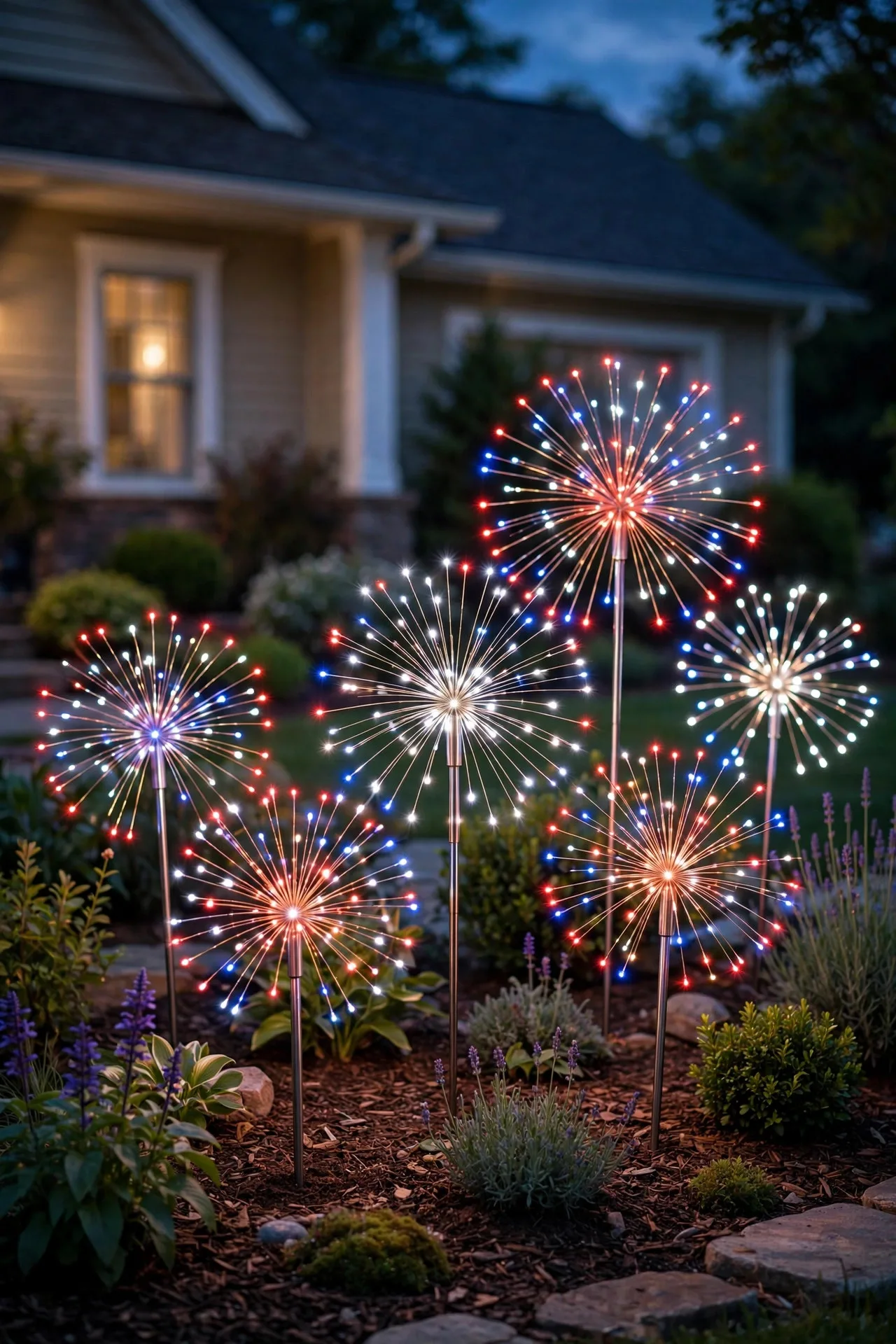
8. Solar Firework-Burst Stake Lights
Real fireworks are for the pros (and the neighbors with a permit) — these little beauties are for the rest of us. Solar "firework" stake lights look like frozen bursts of light: a cluster of thin wire branches tipped with LEDs that spread into a 12-to-18-inch starburst when you fan them out. Stick them into flowerbeds, planters, or the lawn, and after a full day of sun charging they twinkle like miniature fireworks all evening.
Buy them in red, white, and blue — or one of each and alternate them through the bed for a fireworks-finale look. They need 6 to 8 hours of direct sun, so don't bury them behind the rose bushes; place them front and center where the panel sees sky. Two or three look lonely; I always recommend clusters of five to seven for a real "show." They're featherweight, so anchor the stake deep in the soil or tuck them into planters with packed soil around the base. At ten bucks apiece, they're the cheapest way to get actual fireworks energy without an actual fire hazard.
Suggested budget range: $20 – $45.
9. A Glow Ring Around the Fire Pit
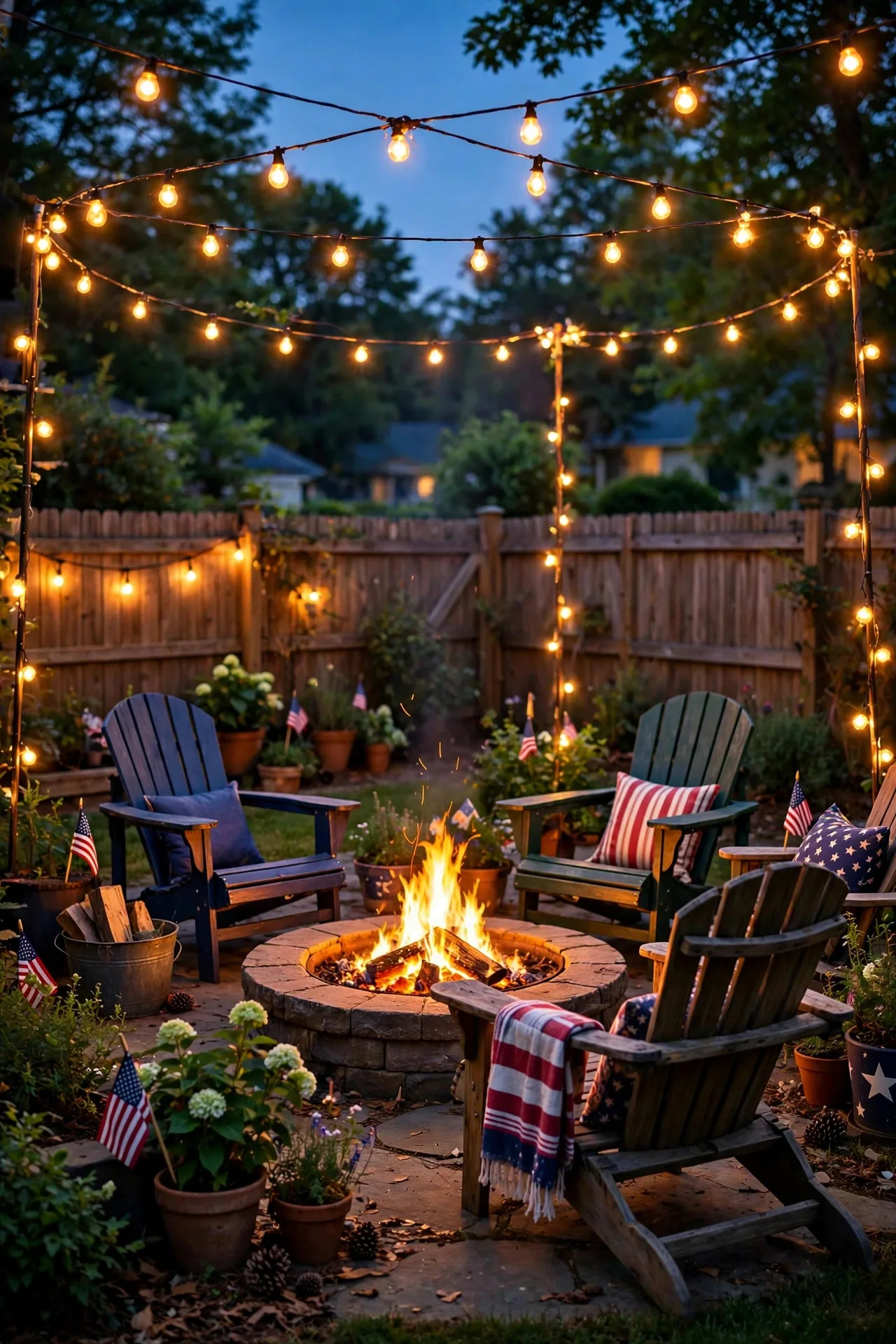
If your Fourth of July includes a fire pit — and in my experience, the best ones do — don't let the pit hog all the attention. Wrap a ring of outdoor string lights around the base of your seating circle: weave them through the legs of adirondack chairs, coil them around the low stone wall, or string them between short shepherd's hooks set 6 to 8 feet apart in a circle about 12 feet across.
Warm white or amber LED strands work best here because they harmonize with actual firelight instead of fighting it. Keep all electrical connections at least 3 feet from the fire pit itself, use only outdoor-rated strands, and run the cord back to the house along the ground where nobody walks — tape it down or tuck it under an outdoor cord cover. The result is a defined "room" in the yard that glows even before the fire gets going, and it keeps the conversational circle feeling intentional. This is one of those outdoor lighting hacks that costs almost nothing and changes the whole evening.
Suggested budget range: $20 – $40.
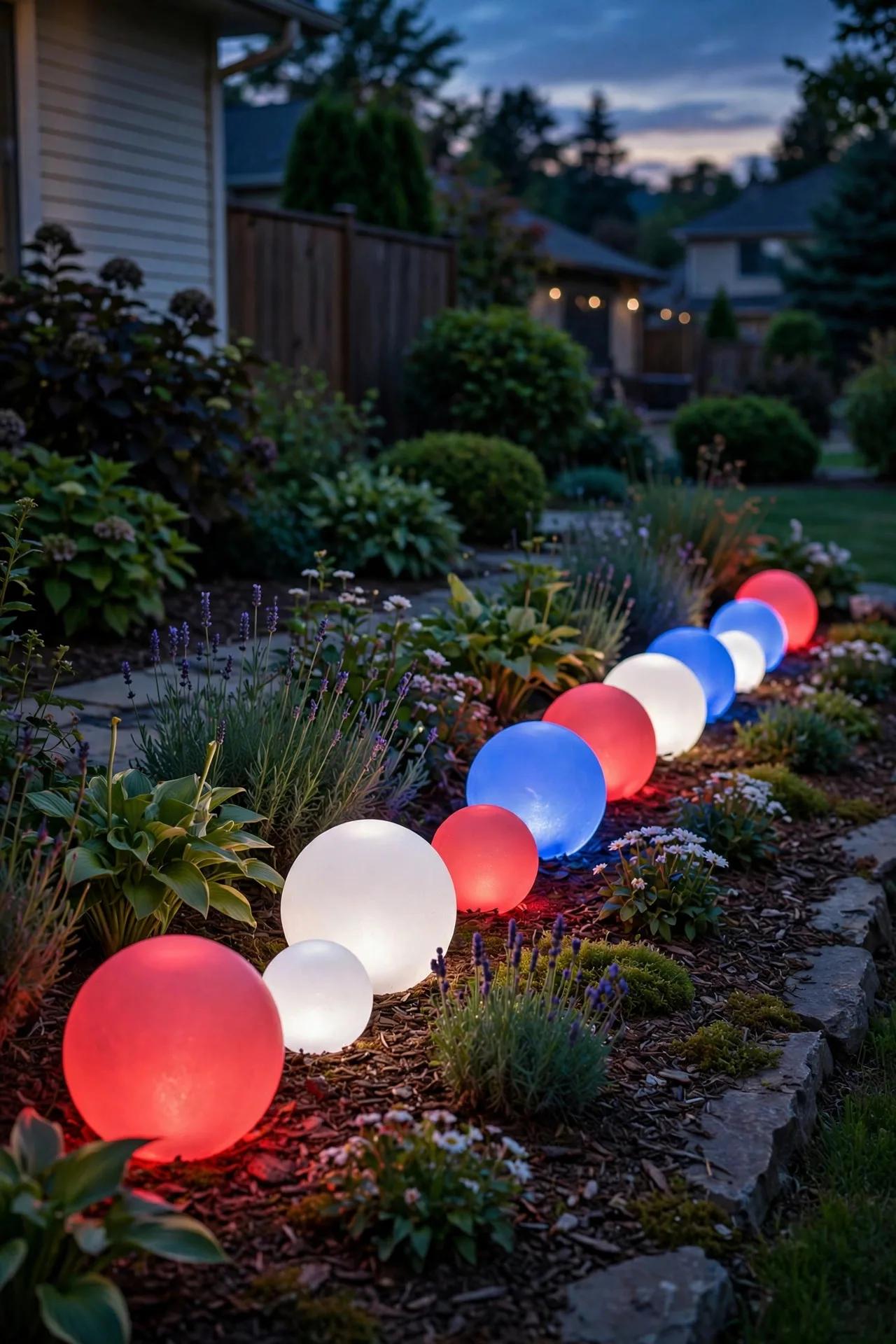
10. Red, White, and Blue Glowing Orbs
Lighted garden orbs — those resin spheres with LEDs inside — look like magic floating at ground level. I set groups of three (one red, one white, one blue) along the edge of a flowerbed, flanking the front steps, or floating in a shallow section of a decorative pond. The smooth glow reads completely different from string lights: it's sculptural, modern, and very photogenic.
Most orbs are solar or battery-powered with a 6-to-8-hour runtime, so place them where they'll catch daytime sun or remember to charge them before the party. Vary the sizes — 8-inch, 10-inch, 12-inch — in each grouping for a designer look; matching sizes look like a set from a warehouse. On hard surfaces like a porch or driveway, orbs can roll in a breeze, so nestle them into a ring of mulch, a shallow bowl, or a planter. After the Fourth, keep them out all summer as plain garden lighting — they're one of the few holiday pieces that earn year-round shelf space in my garage.
Suggested budget range: $30 – $60.
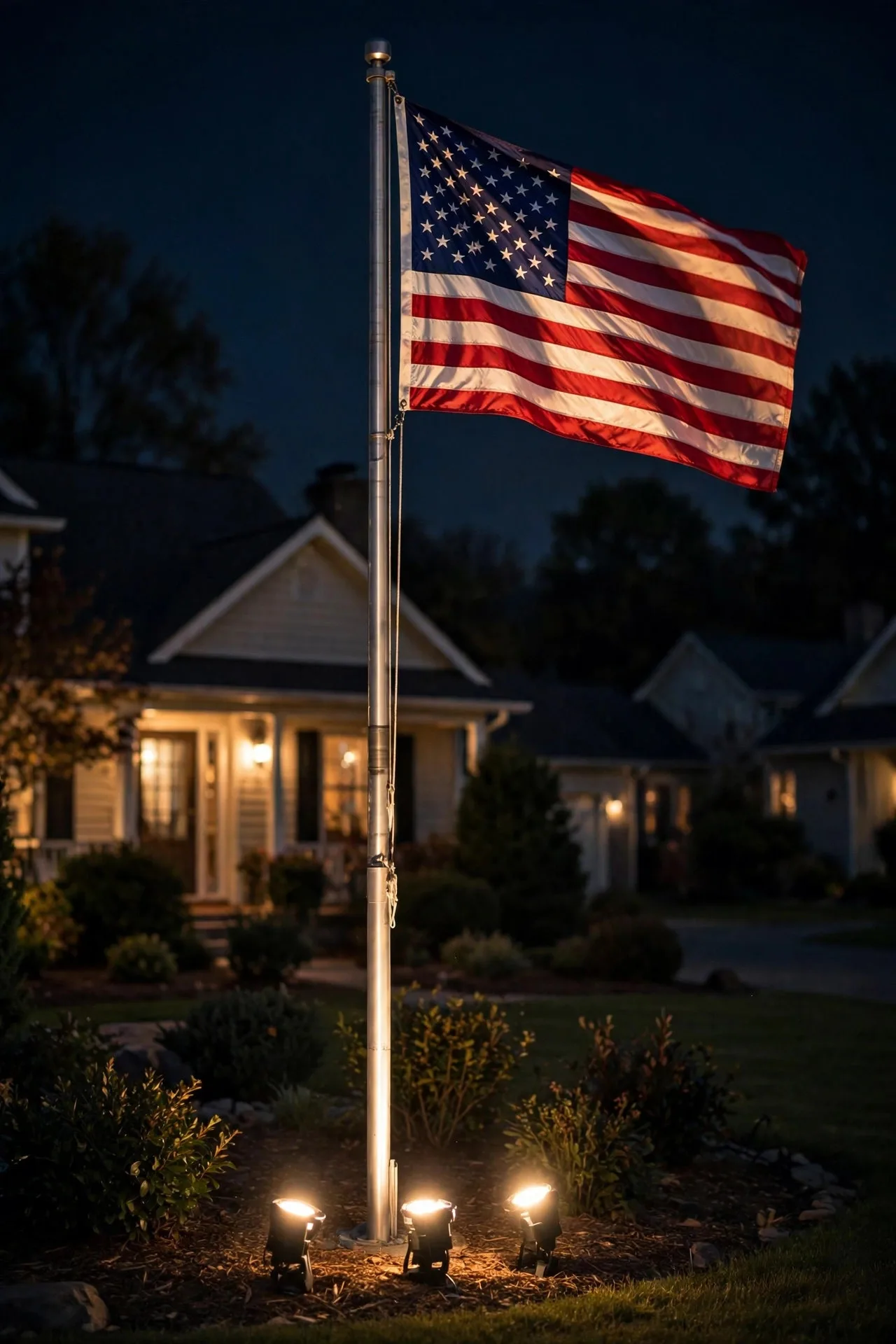
11. Flagpole Uplighting
If you fly a flag, lighting it properly after dark is both beautiful and, frankly, the respectful thing to do. A pair of low-voltage LED spotlights staked at the base of the flagpole, aimed upward, will wash the flag in light all evening — and on the Fourth of July, it turns your flagpole into the centerpiece of the yard.
Position the spots 3 to 5 feet from the pole base, angled about 45 degrees up, one on each side so the flag is lit evenly as it moves. Use 2700K–3000K warm white LEDs; cool white can wash out the red into a washed pink and make white look bluish. Connect them to a photocell timer so they switch on at dusk automatically — flag etiquette says an illuminated flag may stay up around the clock, and this makes it effortless. Low-voltage landscape spots (12V) are the safest, simplest option, and the wiring just runs along the ground back to a transformer. If your pole is 20 feet or taller, step up to two slightly stronger spots or add a third.
Suggested budget range: $40 – $90.
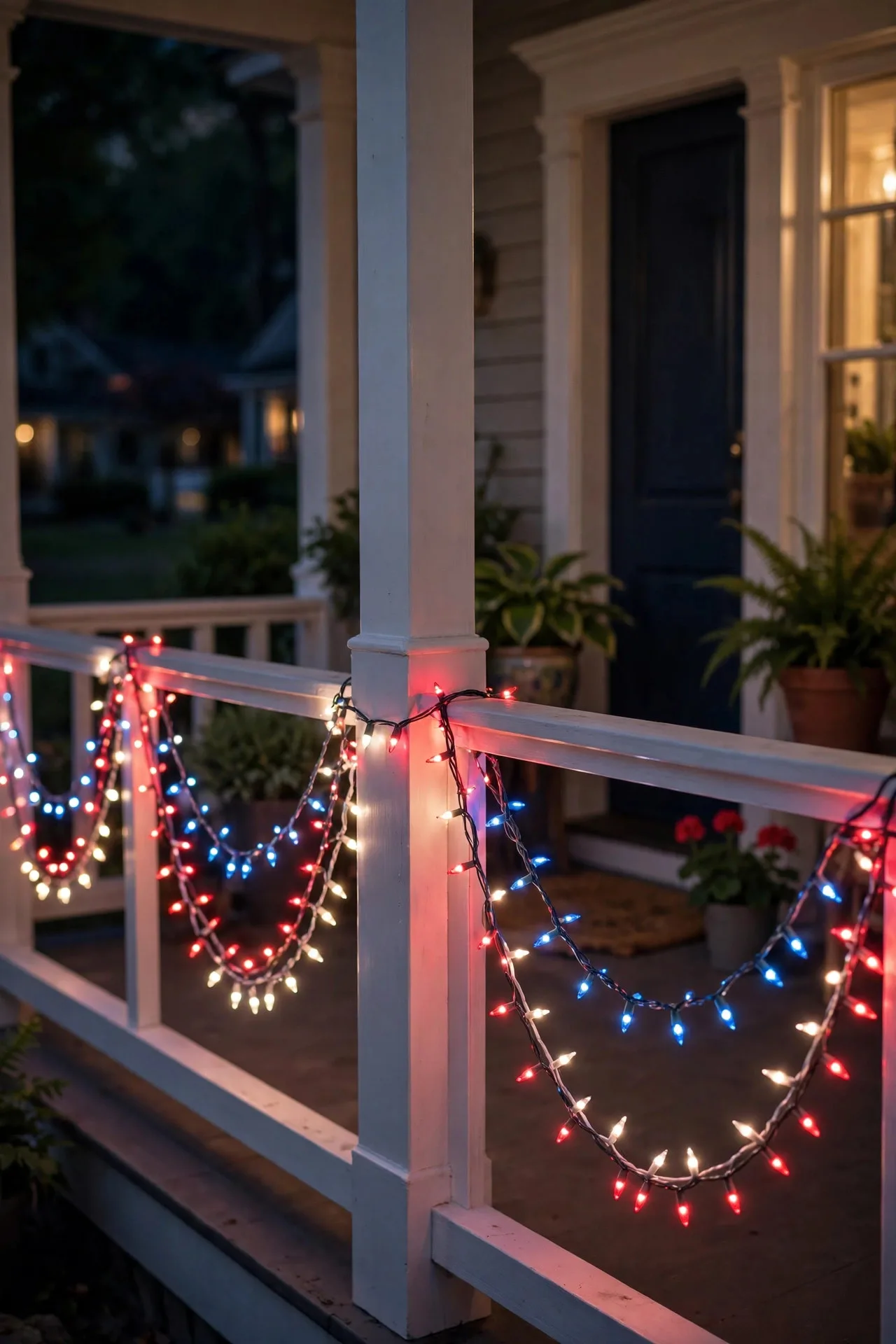
12. Patriotic Drapes of Railing Lights — A Fourth of July Outdoor Lighting Crowd-Pleaser
When in doubt, drape more lights. Looping strands of red, white, and blue mini lights in deep swags along the porch railing — or the deck railing, or the fence — is the fastest way to make a house look party-ready from the street. I loop each strand in swags 2 to 3 feet deep, securing the top of each swag with an outdoor clip so the lights cascade like bunting made of pure glow.
The trick to making multicolor drapes look intentional is order: run one full strand of red, then white, then blue — repeating the sequence — instead of mixing colors randomly along one strand. Outdoor LED mini lights connect end to end, so a 60-foot railing takes about three 20-foot strands. Secure every 4 to 5 feet with clips so wind doesn't shift the pattern, and keep plug connections off the ground and out of puddle zones. Add this over an already-lit porch and the whole front of the house reads as one big celebration; honestly, this single trick is why half my neighbors' houses make the "nice street" cut every July.
Suggested budget range: $20 – $45.
13. Red, White, and Blue Curtain Lights on the Fence
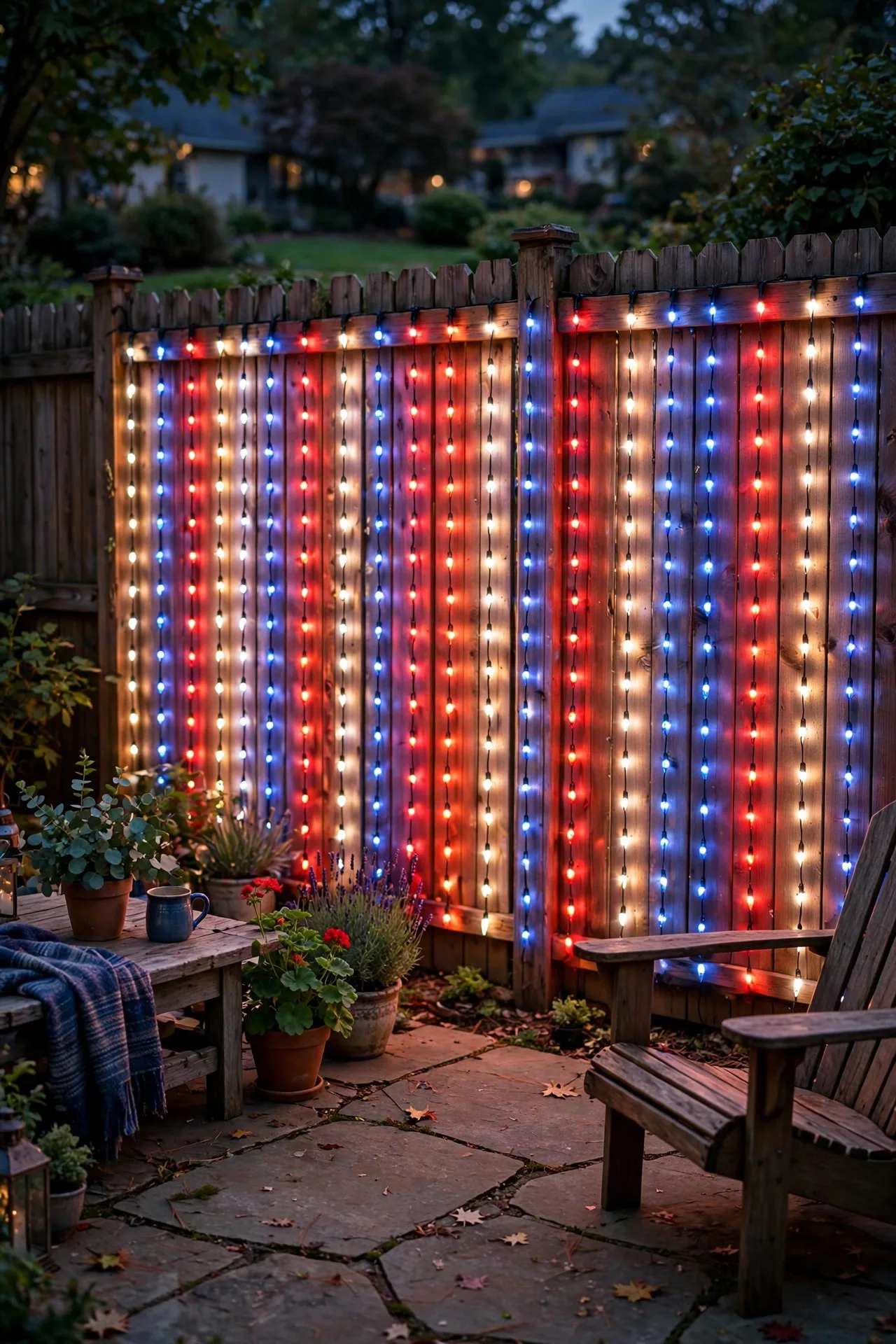
Curtain lights — those hanging strands that drop straight down from a top wire — turn a plain wooden fence into a glowing backdrop, and that backdrop is what makes backyard photos look incredible. Hang a 10-by-10-foot curtain (or two side by side for a longer run) across the fence behind your seating area, mixing red, white, and blue strands or hanging three solid-color curtains side by side for crisp color bands.
Mount the top wire with outdoor hooks or zip-tie it to the fence top rail, and weigh down the bottom of each strand with a small clip so July breezes don't tangle everything into a knot. Plug into a weatherproof outdoor timer, and keep the drop height in mind — a 10-foot drop over a 4-foot fence needs to be centered so strands don't puddle on the ground. From the patio, this creates a glowing wall of color that hides the neighbor's yard and makes the whole space feel like a venue. It's dramatic, it's easy, and it takes one person about twenty minutes.
Suggested budget range: $25 – $55.
14. Paper Lantern Strands in Red and White
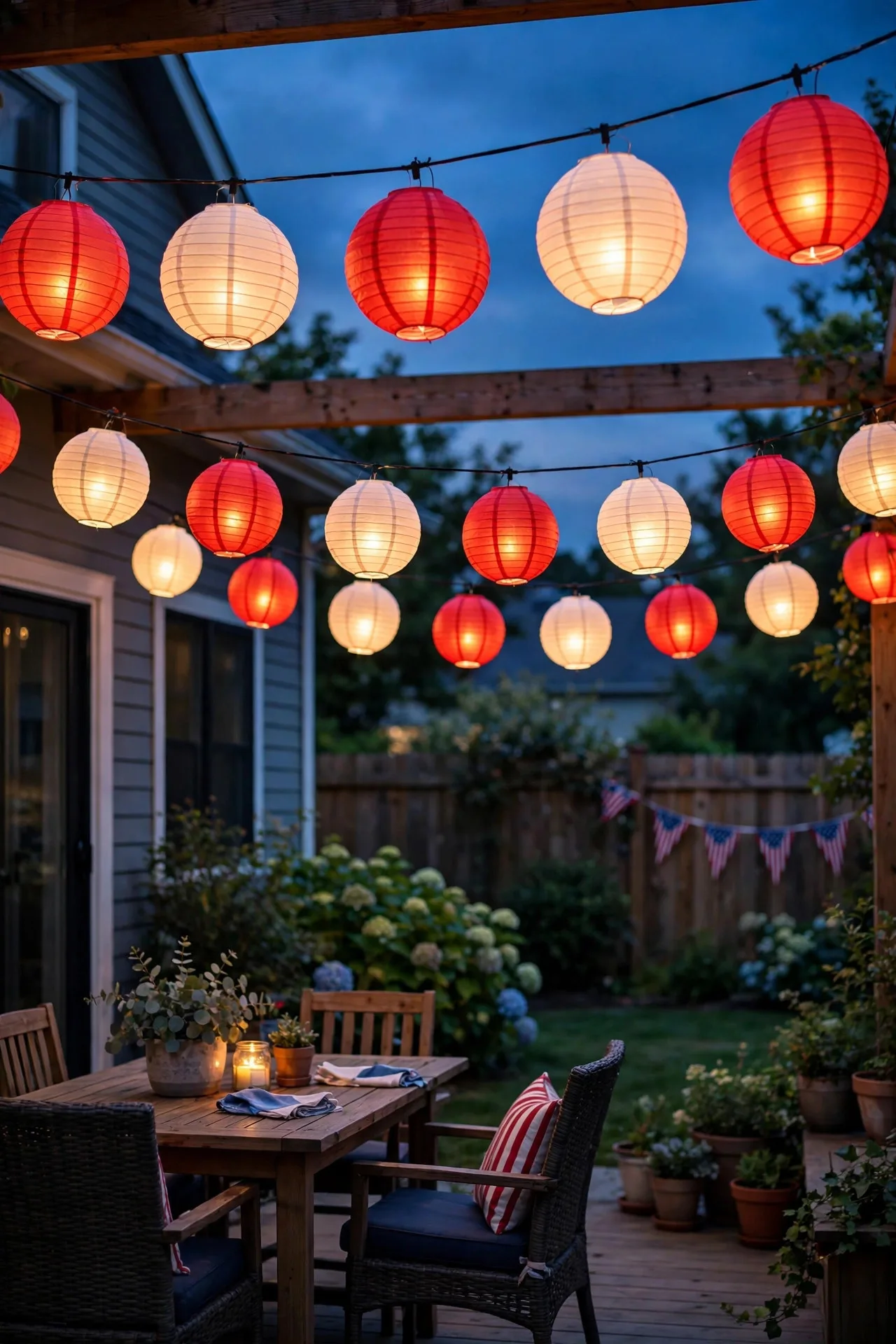
There's a reason party planners reach for paper lanterns: nothing diffuses light as softly. I string alternating red and white paper lanterns (8-inch and 10-inch sizes mixed) across the patio or along the porch beam, each with a small warm white LED light inside. The paper glows like a full moon in your yard — soft, flattering, and very festive.
Two practical notes from my own trial and error. First, only use battery LED lights inside paper lanterns — never real candles or hot bulbs; paper and heat are a bad combination. Second, bring paper lanterns in if a storm is coming, even if they're labeled "outdoor," because soggy lanterns don't recover. Hang the main string from the eave or pergola, 7 to 8 feet high, and add a second lower strand over the food table if you want the glow concentrated where people gather. Blue lanterns mixed in can look busy; I stick to red and white and let blue show up in the table settings instead.
Suggested budget range: $15 – $35.
15. Lit Star Planters Flanking the Door
Your front door is the first thing guests see, so give it a moment. I plant two identical containers (14-inch pots or wooden crates) with trailing greenery — sweet potato vine or ivy work beautifully in July — and push a lighted star into the soil of each one as the "topper." A warm white star on a stake, 10 to 12 inches tall, glows above the greenery like a little beacon.
Water the plants normally (the star stake is fine in damp soil), but keep the star's battery pack or solar panel accessible — tuck the pack just inside the pot rim under the foliage. If you use solar stars, the panel needs a few hours of sun, so position planters where they won't sit in full shade all day. Flank the front door symmetrically for a classic look, or place one by the mailbox and one by the garage for a wider greeting. Swap the red-white-and-blue ribbon on the pot for each holiday and the planters work from Memorial Day straight through Labor Day.
Suggested budget range: $25 – $50.

16. Poolside Patriotic Glow
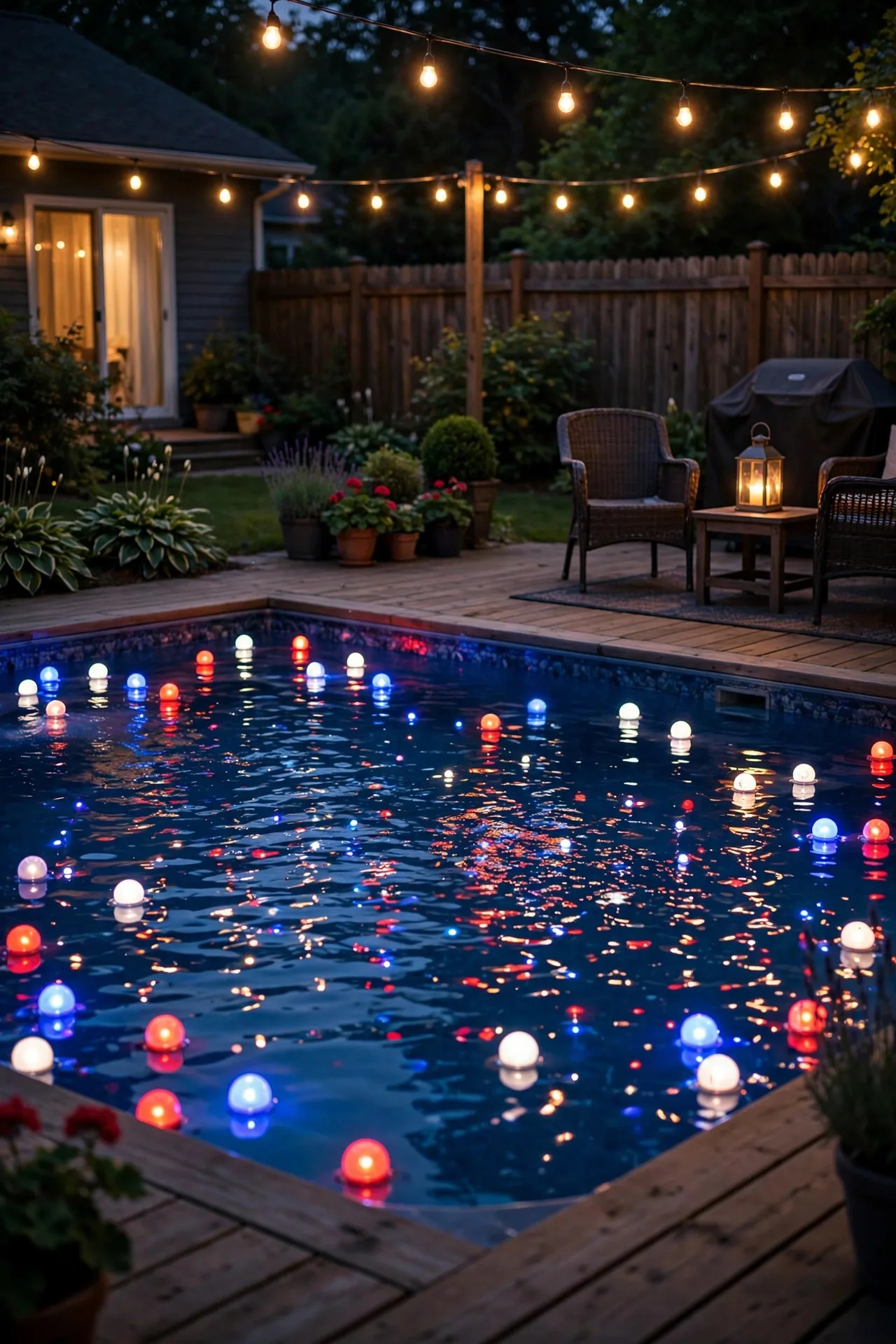
If you have a pool, it's the biggest natural light feature in your yard — lean into it. Floating LED pool lights in red, white, and blue turn the water into a glowing centerpiece after dark, and I scatter a few along the pool's edge in the shallow steps where they shimmer on the surface. Battery or solar floating lights run 6 to 8 hours, which covers the whole cookout.
Stick to floating lights specifically rated for pool use with sealed waterproof housings — regular solar stakes do not belong in water, ever. Add a couple of glowing orbs or lanterns on the deck around the pool's edge (kept well back from the waterline, and never with open flames), and keep the surrounding deck lit enough for safety: wet feet and dark decks are a bad combo. The pool glow doubles as the party's ambient light, so you can keep the rest of the yard softer. Honestly, a lit pool at dusk on the Fourth is the single best "wow" in this whole list if you've got one.
Suggested budget range: $30 – $70.
17. Firework Meteor Tubes in the Front Yard
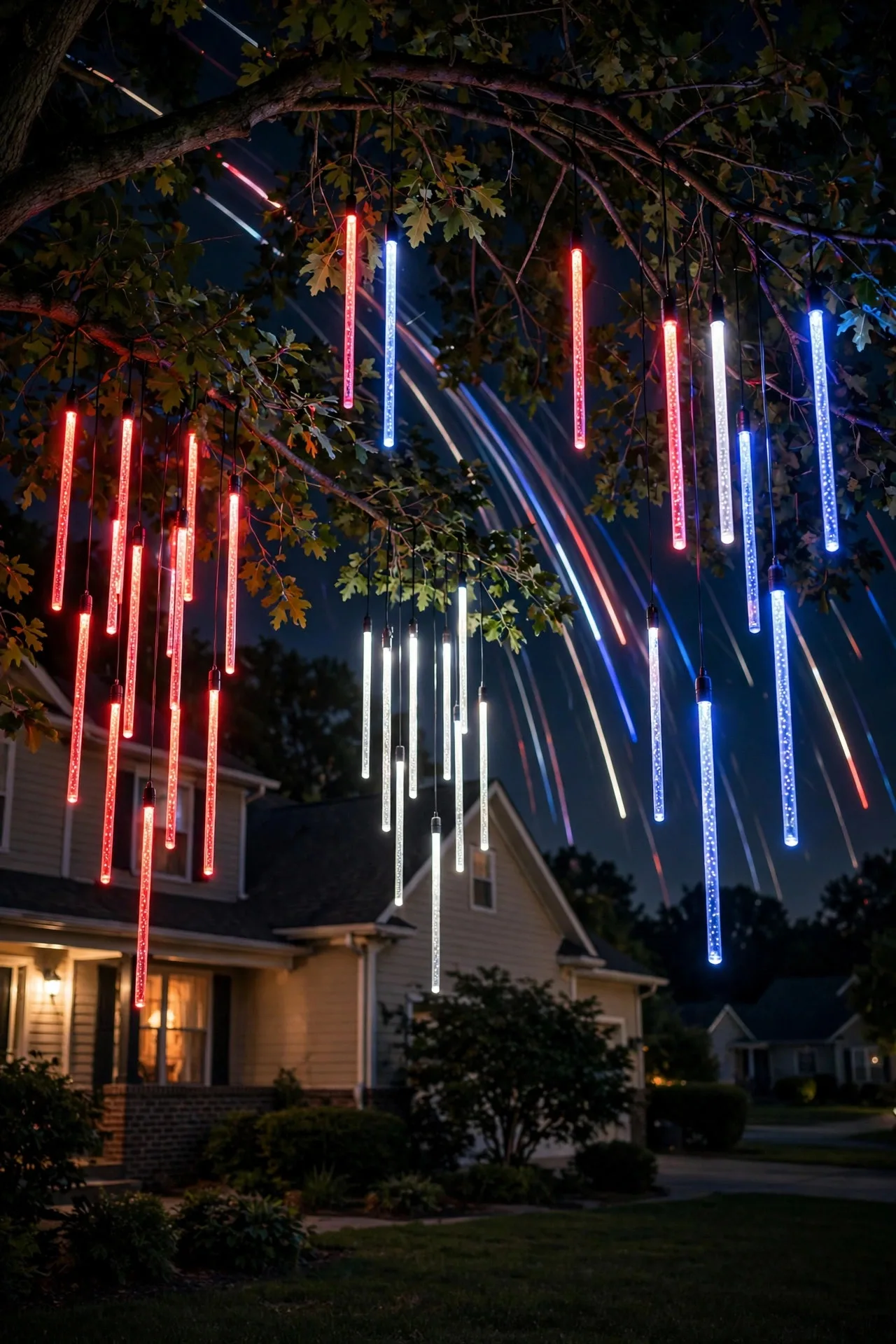
Meteor shower lights — those hanging tubes that chase light downward in sequence — look exactly like fireworks frozen mid-burst, and they're perfect for the front yard where the whole street can enjoy them. Hang 8- or 12-tube sets from tree branches, the porch eave, or shepherd's hooks along the front walk, spacing tubes 6 to 12 inches apart so each "burst" reads clearly.
Red, white, and blue meteor sets exist specifically for the Fourth, and they connect end to end so you can run several sets off one plug. Hang them at least 7 feet off the ground on walks so nobody ducks, and secure them against wind with zip ties — July storms love to turn hanging tubes into tangled wind chimes. Most sets are IP44 or better for rain, but keep the plug connection in a weatherproof box off the ground. Run them on a timer from dusk to about 11 so the whole street gets the show, then let the neighborhood sleep. It's the finale your yard deserves.
Suggested budget range: $20 – $50.
Frequently Asked Questions
When should I put up Fourth of July outdoor lighting?
The weekend before the holiday is the sweet spot — it gives you time to troubleshoot a dead strand and lets you enjoy the display for the whole week. Most people leave the lights up through the first weekend of July, then pack them away. If your setup uses neutral red, white, and blue (no holiday-specific words), it can honestly stay out from Memorial Day through Labor Day as summer decor.
Will rain ruin my Fourth of July lights?
Not if you buy outdoor-rated lights. Look for an IP44 rating or higher on the packaging — that's splash-proof, which handles July thunderstorms just fine. The weakest link is always the plug connection, so keep connections elevated and sheltered (a weatherproof connection box or even an upside-down storage bin works). Solar lights are naturally weatherproof by design. After the storm passes, check that stakes haven't loosened in softened soil.
Should I use solar or plug-in lights for the Fourth?
Both, honestly — it depends on the spot. Solar wins for pathway markers, firework bursts, and anywhere far from an outlet, as long as they get 6 to 8 hours of direct sun. Plug-in LED strands win for porches, patios, and anywhere you want bright, reliable, all-night light. My rule of thumb: solar for accents scattered through the yard, plug-in for the main display where dimming at 2 a.m. would be embarrassing.
What color temperature works best with red, white, and blue lights?
Warm white, around 2700K, almost every time. Warm white flatters red (keeps it rich instead of pink), keeps white looking creamy, and doesn't fight blue. Cool white (4000K+) can make red look washed out and gives everything a harsh, parking-lot feel. The one exception is pure-blue accent strands, which can pair with a neutral white — but when in doubt, warm white is the cozy, celebration-ready choice.
Light Up Your Night
The best fourth of july outdoor lighting isn't about buying the most strands — it's about layering. A glowing canopy overhead, a few bright accents at ground level, and one showpiece (a projector, a lit flagpole, a glowing pool) in between. That's the formula, and it works whether your budget is thirty dollars or three hundred. So pick your three or four favorites from this list, grab a timer so everything clicks on at dusk without you lifting a finger, and enjoy the one night of the year when the whole neighborhood is outside together. If this got your wheels turning, browse more of our lighting ideas for your next seasonal display — your yard will thank you.