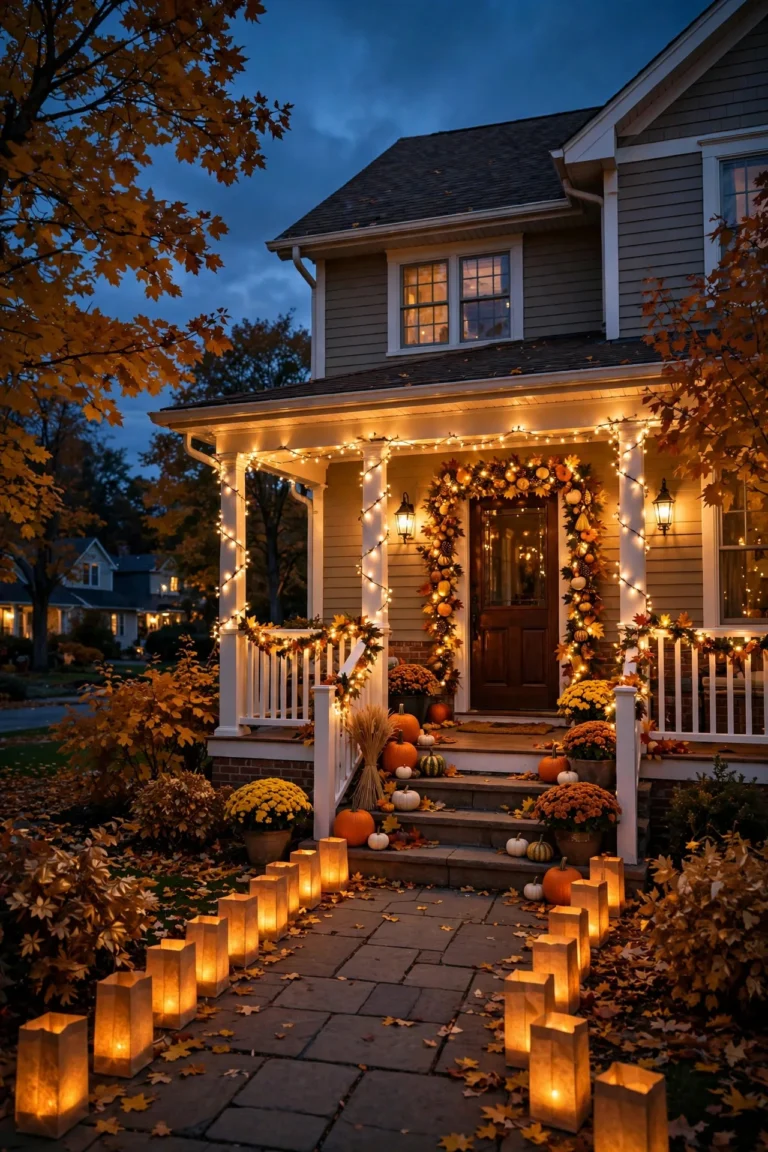
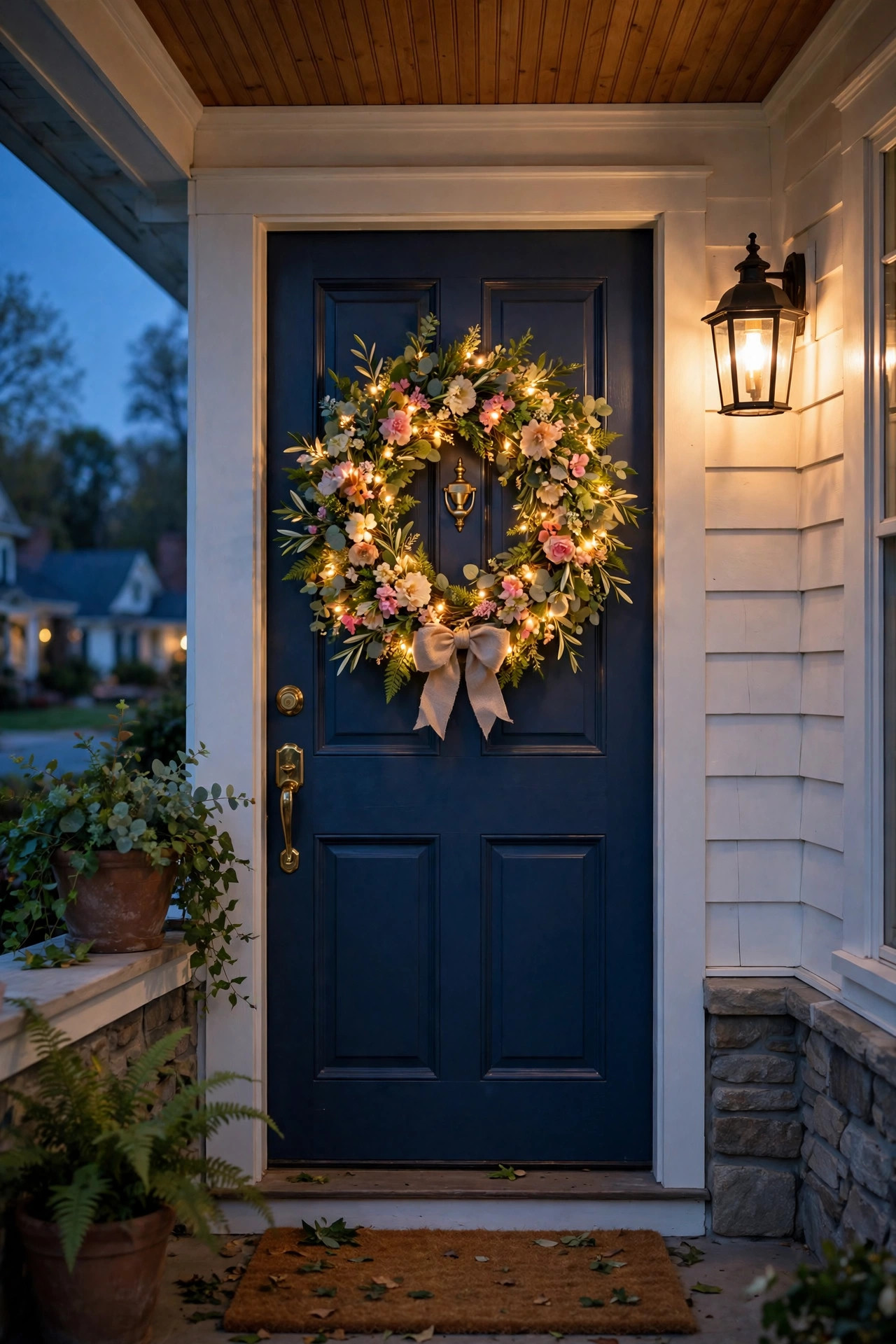
There is a special kind of magic in a front door that glows at dusk in spring. The air is warm for the first time in months, the evenings stretch a little longer, and a lit wreath turns an ordinary entryway into a welcome. When I was gathering spring wreath lighting ideas for my own door this year, I realized the wreath itself is only half the story — the lighting is what makes people stop and smile as they walk by. My whole decorating philosophy is layering: no single light source should have to do all the work. A lit wreath looks its best when it is supported by a soft porch light, a glow from the walkway, or a lantern nearby. The wreath becomes the star, and everything else becomes the stage. In this post I am sharing 17 ideas I have tried, admired, or am planning for my own front door — from fairy-light-wrapped grapevine to solar-powered wreaths with zero wiring. Each one includes real how-to details, bulb and placement notes, and a budget range so you can pick what fits your spring refresh.
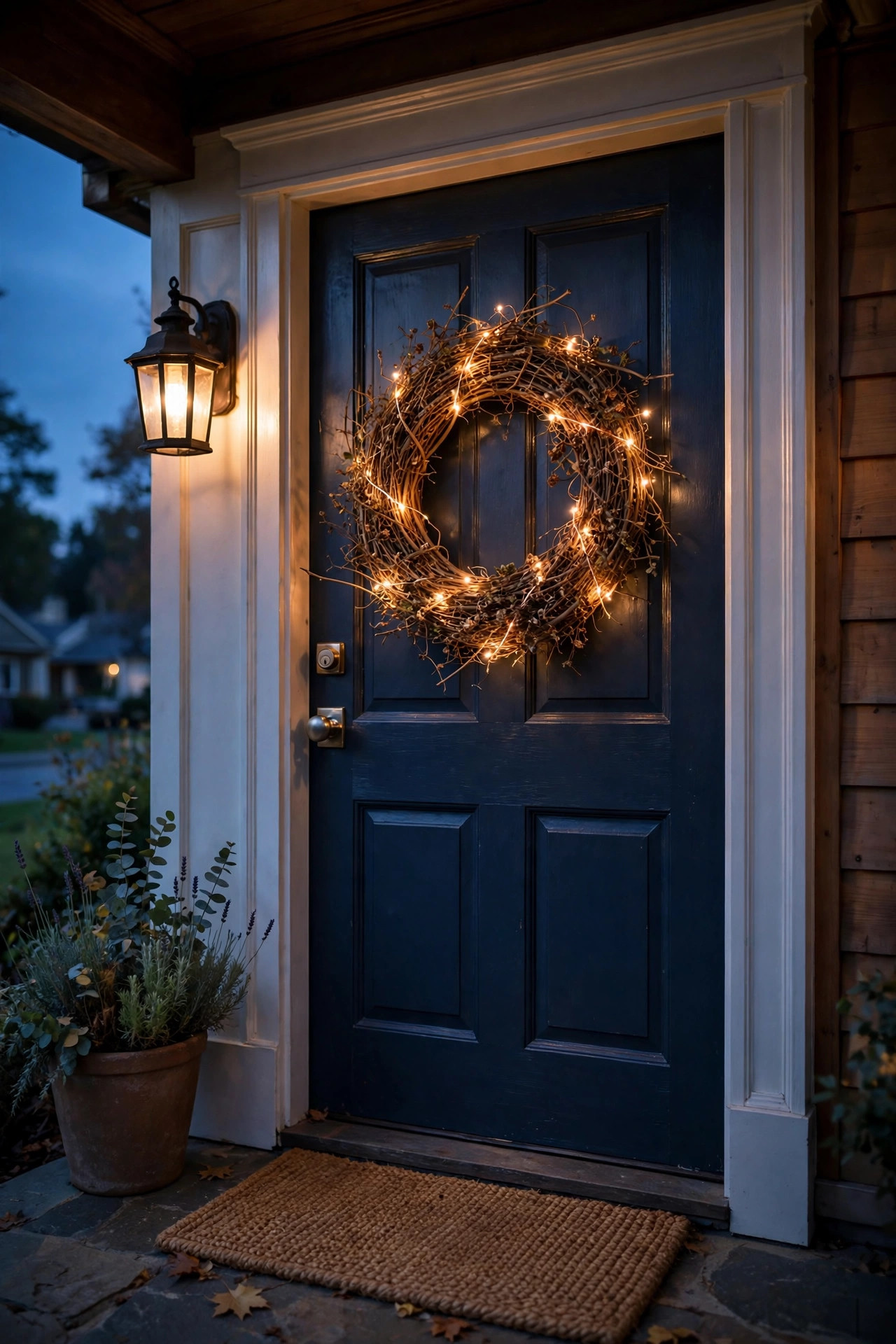
1. A Classic Grapevine Wreath Wrapped in Warm-White Fairy Lights
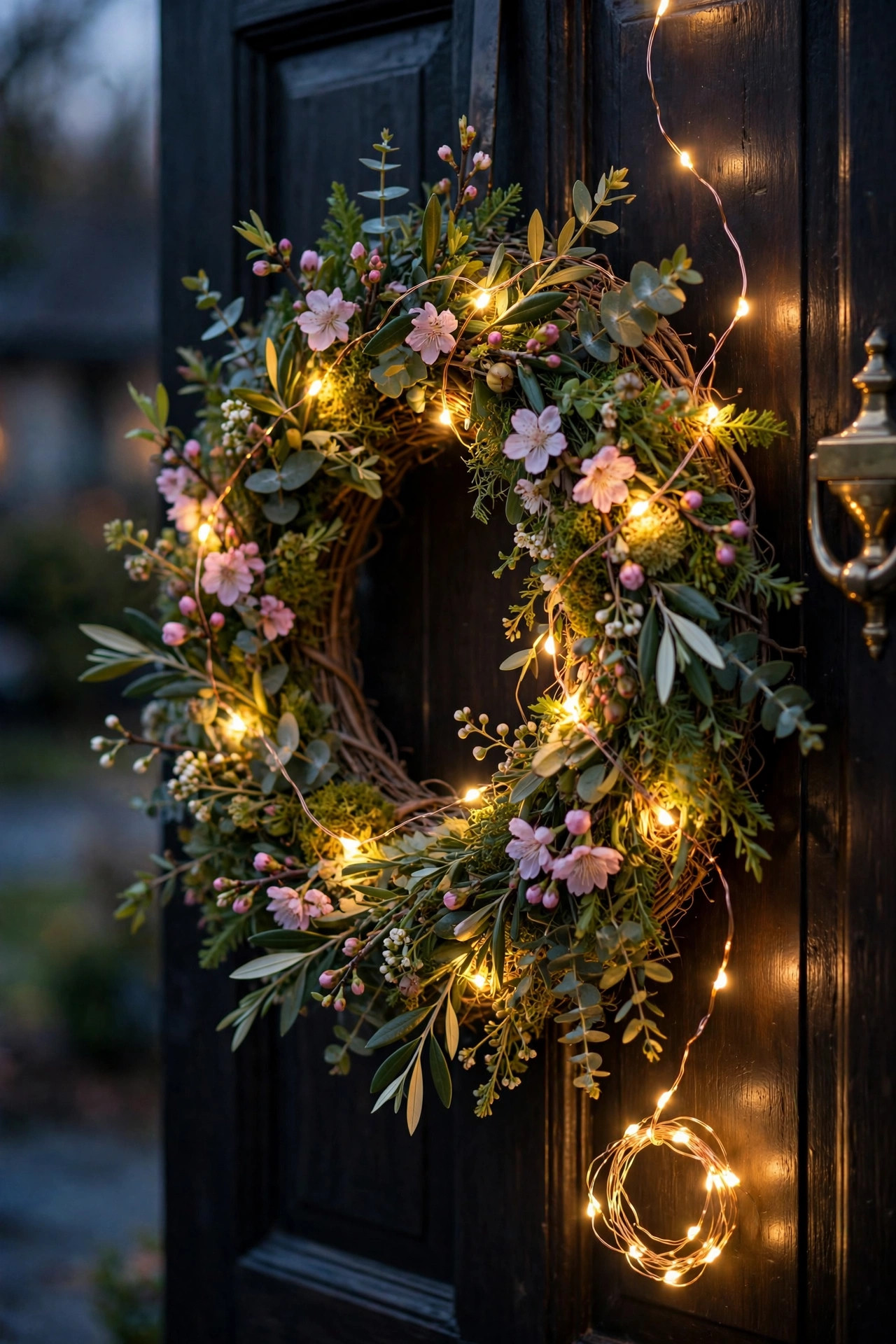
This is the look that started my whole obsession, and honestly it is still my favorite. A natural grapevine wreath is the perfect canvas for spring wreath lighting ideas because the twiggy texture catches light beautifully. Start with a 24-inch grapevine wreath and a 20-foot strand of copper-wire fairy lights — the kind with 60 to 100 tiny LEDs on a nearly invisible wire. Weave the lights through the vines in a loose spiral, tucking the battery pack or solar lead into the back of the wreath. I always recommend warm white (around 2700K) because it flatters the natural brown tones and looks like late-evening sunlight. Hang it with an over-the-door wreath hanger or a sturdy adhesive hook rated for outdoor use. For power, a battery pack hidden in a small pouch behind the wreath works for a season, but a solar strand with the panel pinned to the top of the door frame is the set-it-and-forget-it option. Set a timer so the lights come on at dusk and switch off around 10 p.m. Safety note: use LED lights only — they stay cool — and keep the wire away from anything flammable. A wreath on a south-facing door will get plenty of sun for solar charging.
Suggested budget range: $25 – $60.
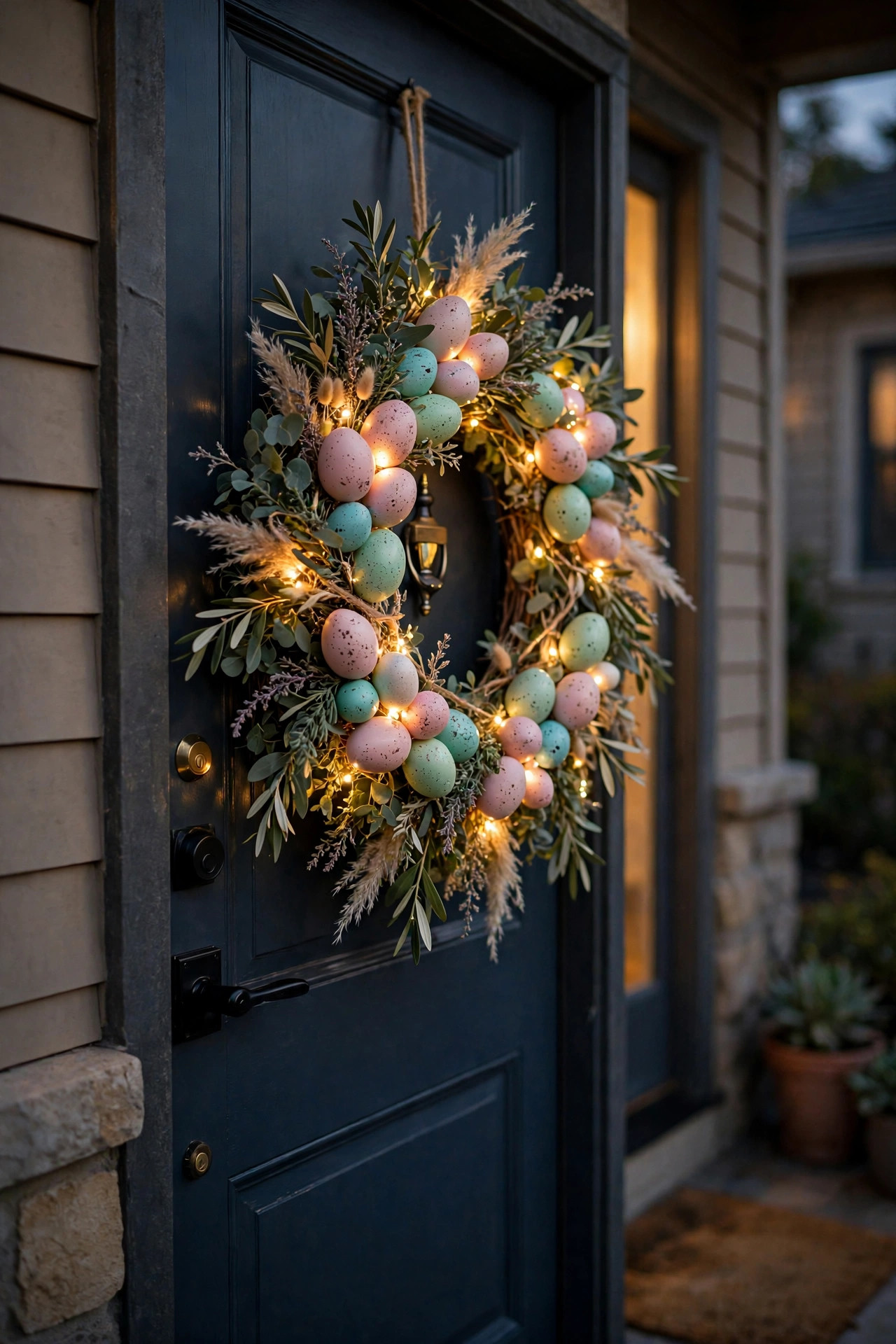
2. Pastel Easter Egg Wreath With Mini LED String Lights
If you celebrate Easter, a pastel egg wreath with lights is pure spring joy. I made one last year with a foam wreath base, speckled faux eggs in blush pink, mint, and robin's egg blue, and a short 10-foot strand of mini LED string lights. The trick is to nestle the lights deep in the wreath so the glow comes from inside the egg clusters, not from wires sitting on top. Wrap the strand around the foam base first, then hot-glue the eggs in clusters over the lights — the light leaks through the gaps and makes the whole wreath glow from within. Keep the wire length short so the battery box tucks neatly behind. Place it on the door rather than on a glass storm door if you can; glass traps heat and the reflections can look muddy at night. I set mine on a 6-hour timer starting at dusk. A safety tip that matters here: never drape non-LED lights near foam or glue, and choose lights rated for outdoor use if the door gets rain exposure. Swap the eggs for flowers in late April and the same light strand carries you straight into summer.
Suggested budget range: $30 – $55.
3. Lavender Spring Wreath Lighting Ideas With a Soft Purple Glow
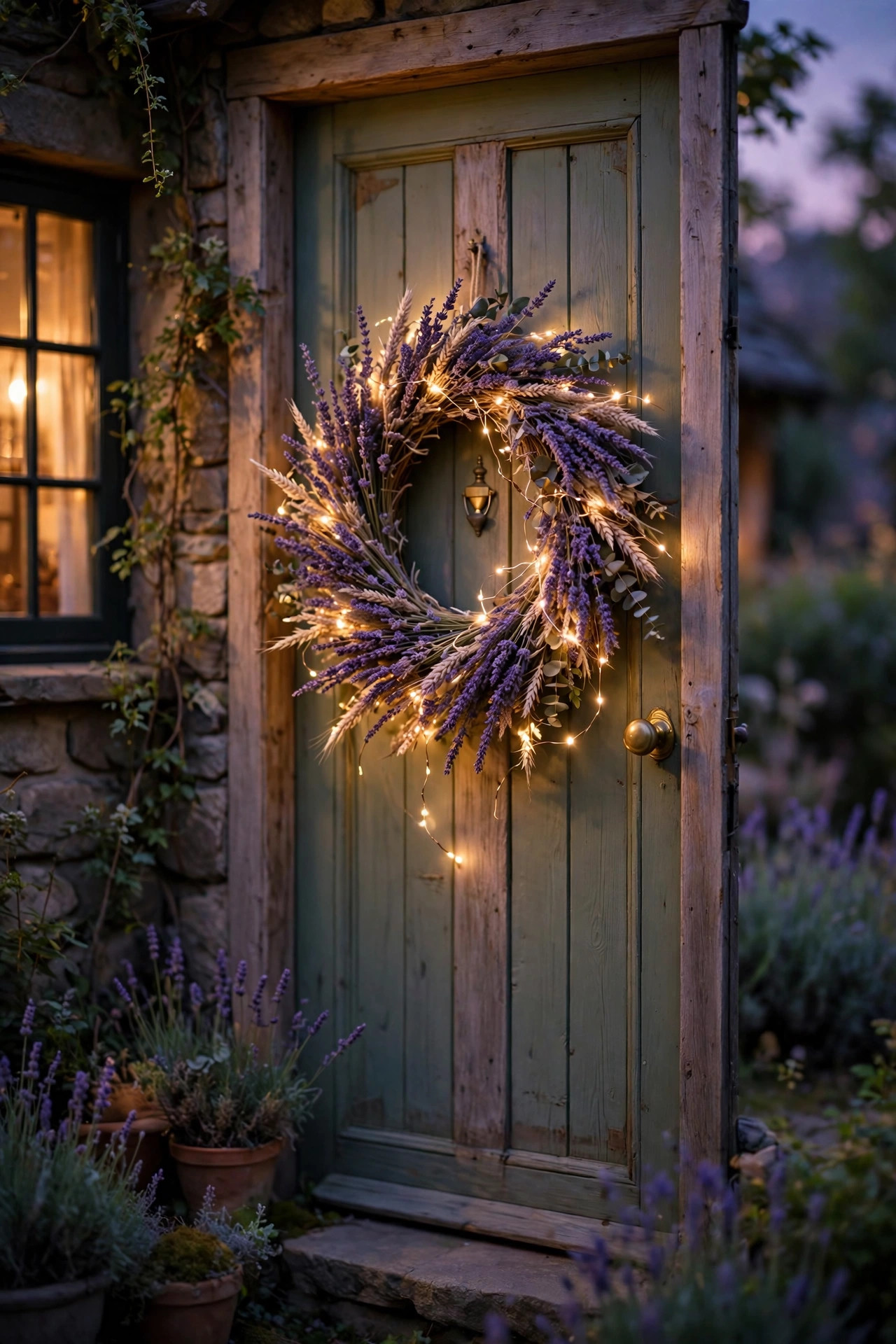
Dried lavender is one of my favorite spring wreath materials because it smells wonderful and keeps its color for months. The challenge is that dried flowers are fragile, so you need the gentlest possible lighting. This is where copper-wire micro fairy lights shine — they weigh almost nothing and you can drape a 16-foot strand over a lavender wreath without crushing a single stem. I use a cool-neutral warm white (3000K) because it keeps the purple looking true instead of washing it yellow. Build the wreath on a thin willow or wire frame with lavender bunches wired in a single direction for that full, harvested look. Lay the light strand over the top in loose waves and secure it with a few twists of floral wire — no glue needed. Since dried lavender is genuinely flammable, this is an LED-only zone, no exceptions, and battery packs go at the bottom of the door away from the wreath. In my experience, a lavender wreath under a porch roof lasts all spring and into summer, fading to a lovely silvery tone.
Suggested budget range: $35 – $70.
4. Pair a Fresh Tulip Wreath With Warm Sconce Light
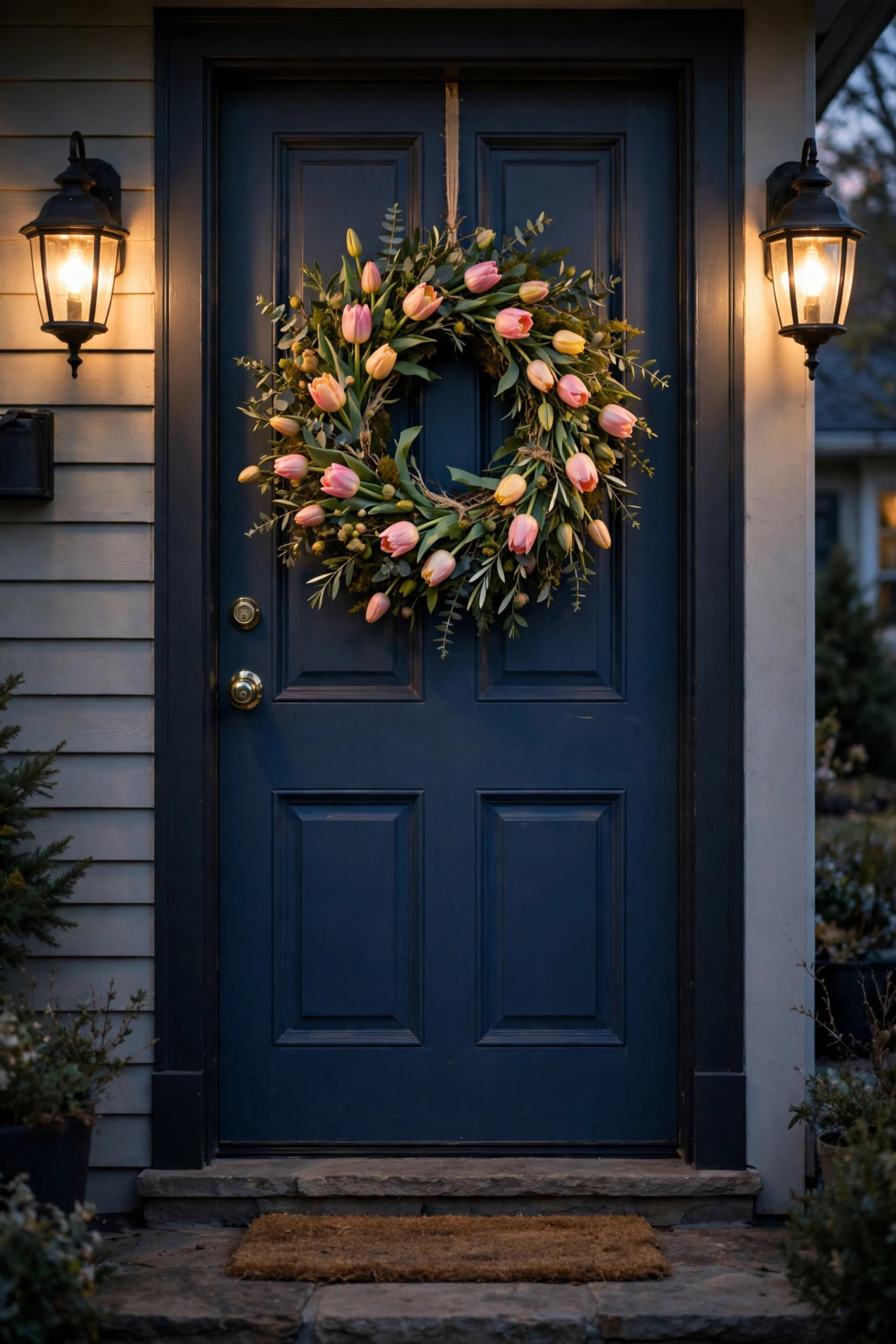
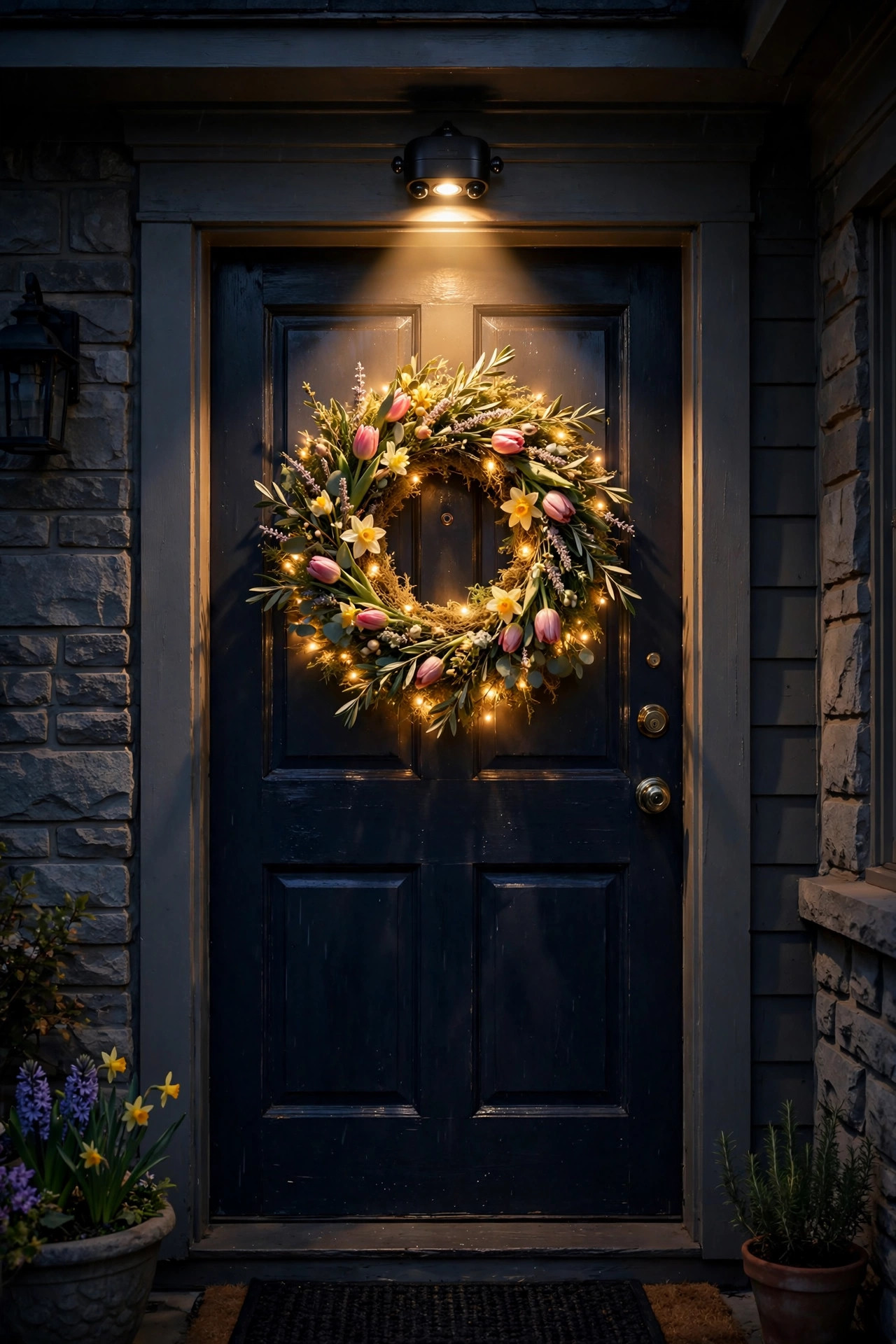
Fresh flowers and electric lights rarely share a wreath, but here is the workaround I swear by: let the wreath be the flowers and let the light come from beside it. Hang a fresh tulip wreath — real tulips wired onto a moss base stay perky for about two weeks in cool spring air — and flank your door with two warm wall sconces or lanterns instead of wiring the wreath itself. The side light rakes across the petals and creates gorgeous depth that lights strung through the flowers never could. In my experience, this is the most photographed look on my whole porch. Choose sconce bulbs at 2700K with a wide beam spread, mounted about 66 inches from the ground and 6 to 8 inches from the door frame. If you don't have wired sconces, two battery-operated lanterns on shepherd's hooks or plant stands do the same job. Keep fresh tulips out of direct afternoon sun and mist them every few days. And when the tulips fade, the sconces keep working with whatever wreath comes next — that is the beauty of layered lighting.
Suggested budget range: $40 – $120.
5. Solar Spring Wreath Lighting Ideas With Zero Wiring
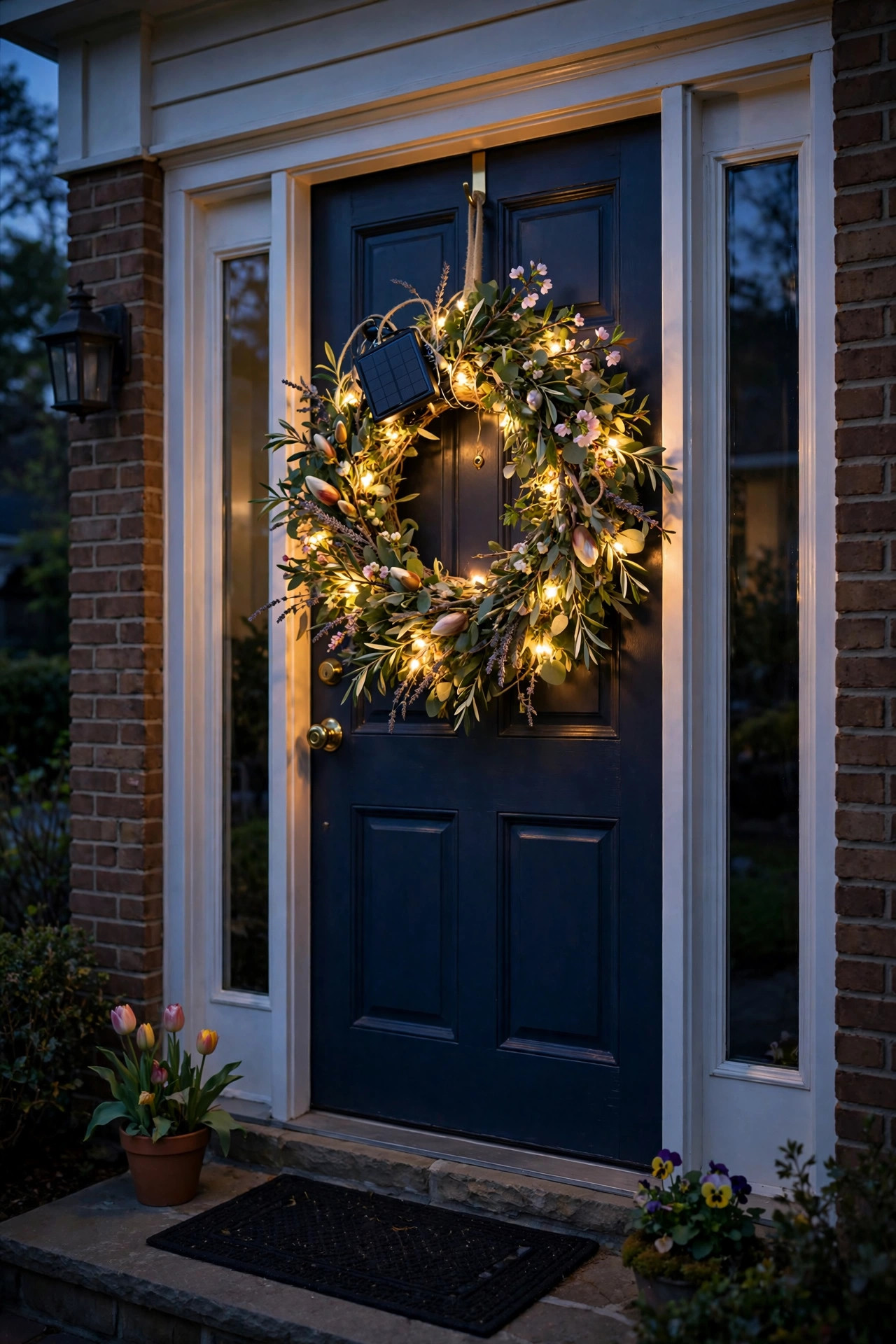
For pure simplicity, nothing beats a solar prelit spring wreath. These come with tiny LEDs pre-woven through faux greenery and a small solar panel, usually on a clip or pinned to the top of the wreath. I tested one on my north-facing side door — the toughest solar location — and even there it glowed for about 4 hours after a decent spring day. On a sun-facing door you will easily get dusk-to-midnight. Look for wreaths with at least 50 LEDs on a 22-to-24-inch base; fewer than that reads sparse at night. The panel needs direct sun for 6 to 8 hours, so hang it where morning sun hits — east-facing is ideal. No wiring means no timers to set and no batteries to change, which is exactly why this is one of the most practical spring wreath lighting ideas for busy households. The one safety note: keep the solar panel clear of spider webs and pollen in spring, since a dirty panel can cut charging by half. Wipe it with a damp cloth once a month.
Suggested budget range: $35 – $85.
6. A Modern Hoop Wreath With Trailing Fairy Lights
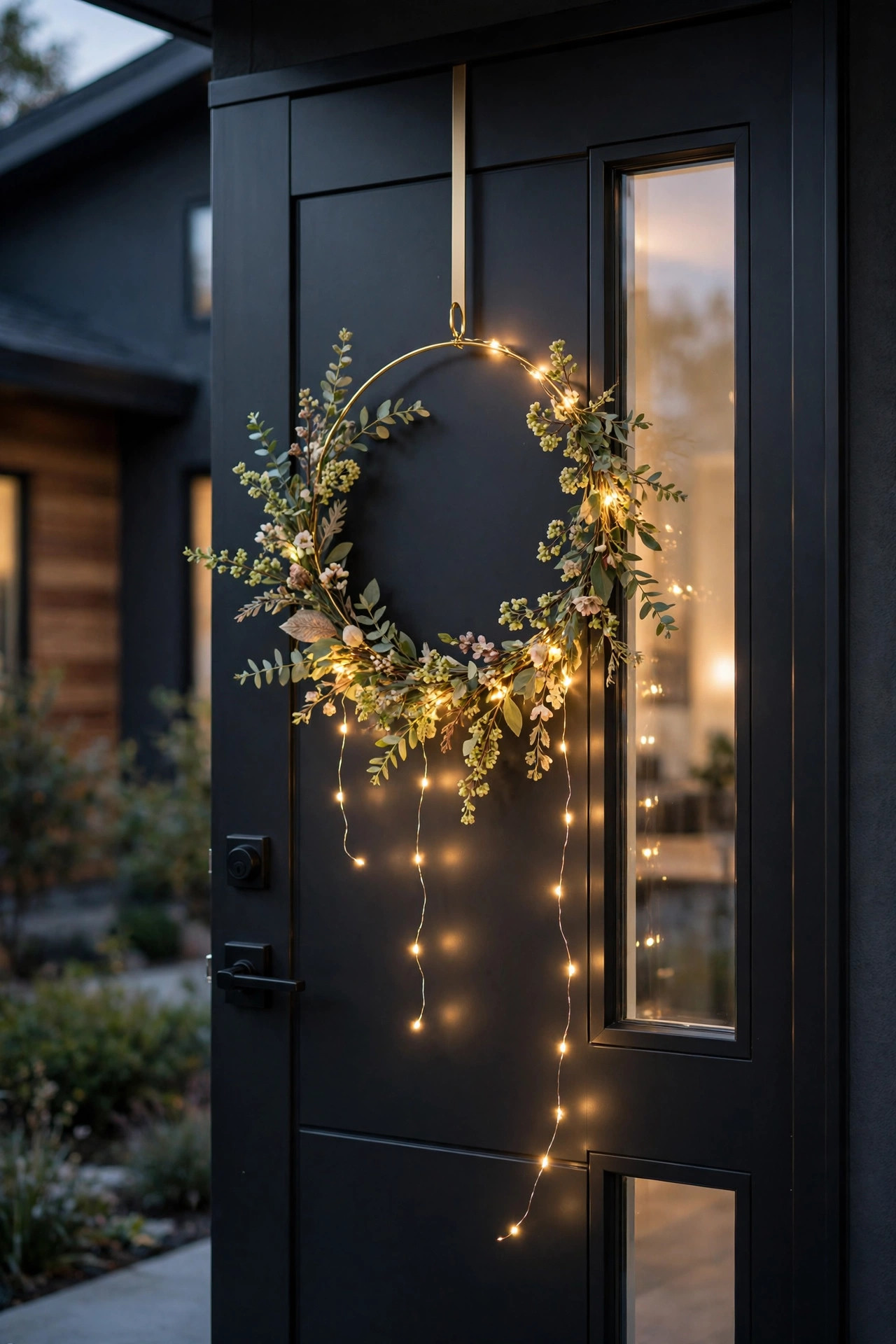
Hoop wreaths — just a brass or gold metal ring decorated on one side with greenery and flowers — are wonderfully modern, and they take lighting beautifully. The open circle gives you room to play: I wrap a 20-foot strand of copper-wire fairy lights around the bottom two-thirds of a 14-inch hoop, letting the last few feet trail down like a lit vine. Hang the hoop from a ribbon so the trailing lights hang free below it. This look is especially pretty on a glass door because the lights reflect in the glass and double the sparkle. Stick with warm white micro-LEDs; colored lights can make a minimal hoop look fussy. A battery pack the size of a matchbox hides behind the ribbon knot at the top. One practical tip: measure your door clearance first, because trailing lights plus a ribbon can add up to 30 inches of drop, and you don't want them catching on the door handle. This is my go-to recommendation for apartment doors and smaller entries where a full lush wreath would feel heavy.
Suggested budget range: $20 – $50.
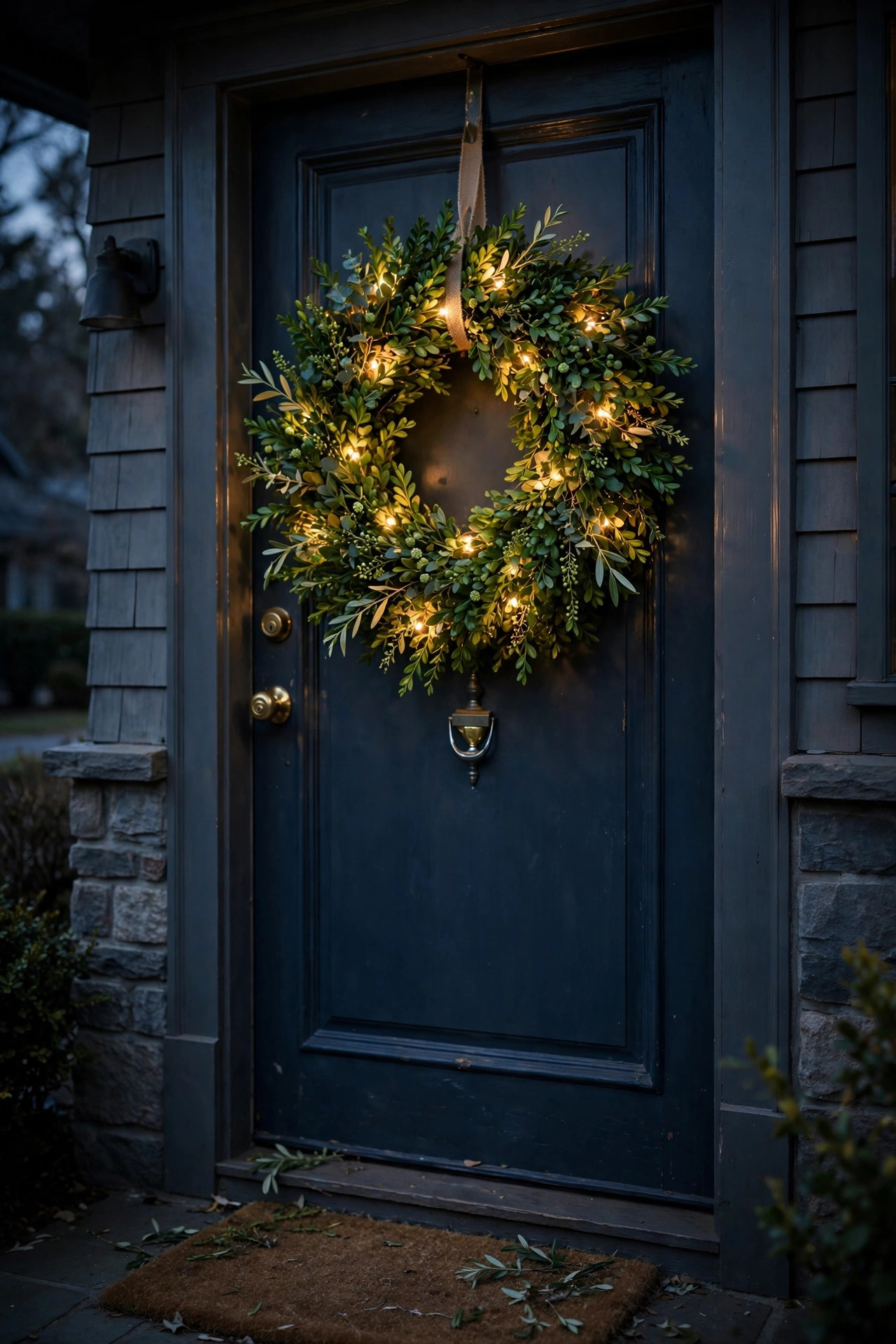
7. Boxwood Wreath With Hidden Micro Lights
Boxwood wreaths read polished and classic, and the trick to lighting one is invisibility — you want glow, not visible wires. I use a 10-foot strand of green-wire micro lights (the green wire disappears into boxwood foliage) and push the LEDs deep into the leaves with a chopstick, spacing them about 2 inches apart around the ring. The result is a wreath that looks unlit in daylight and magically luminous after dark. A 24-inch preserved boxwood wreath is the best base; faux boxwood works too but preserved has a richer texture that hides the wire better. Because the lights sit inside the foliage, make sure they are LED and rated for outdoor use — damp leaves plus electricity demand the right rating. I run mine on a plug-in low-voltage strand with a timer since the door is near an outlet, but a battery pack works for doors without one. Keep preserved boxwood out of heavy rain if possible; under a porch roof it will last for years.
Suggested budget range: $30 – $75.
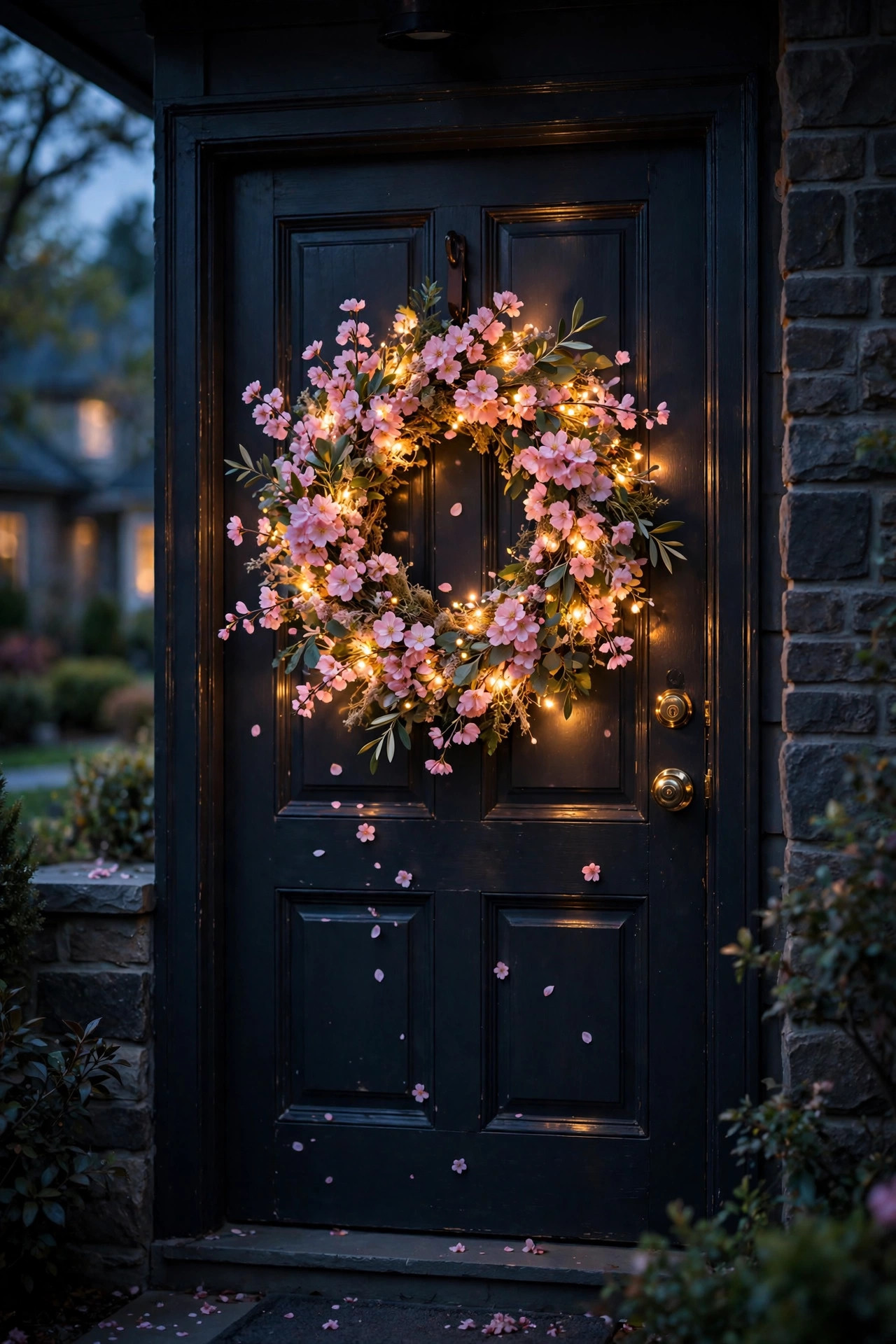
8. A Blushing Cherry Blossom Wreath
Cherry blossoms are the unofficial flower of spring, and a blush-pink blossom wreath with lights is pure romance. I build mine on a grapevine base, layering faux cherry blossom branches in one direction, then weaving a warm-white fairy light strand through so the pink petals catch the light. The key detail: use lights with a slightly pink-leaning warm white or add a few blush-tinted LED orbs among the blossoms — the reflected color makes the whole wreath blush. This wreath wants a dark background to shine, so it looks best on a dark-painted door or after full dark. Hang it centered at eye level, about 60 inches from the ground. A spring rain tip: faux blossoms shed a little color when soaked, so give the wreath a shake after storms and hang it where it gets some shelter. In my experience this is the wreath neighbors ask about most — it photographs like a dream for anyone sharing spring porch styling.
Suggested budget range: $35 – $80.
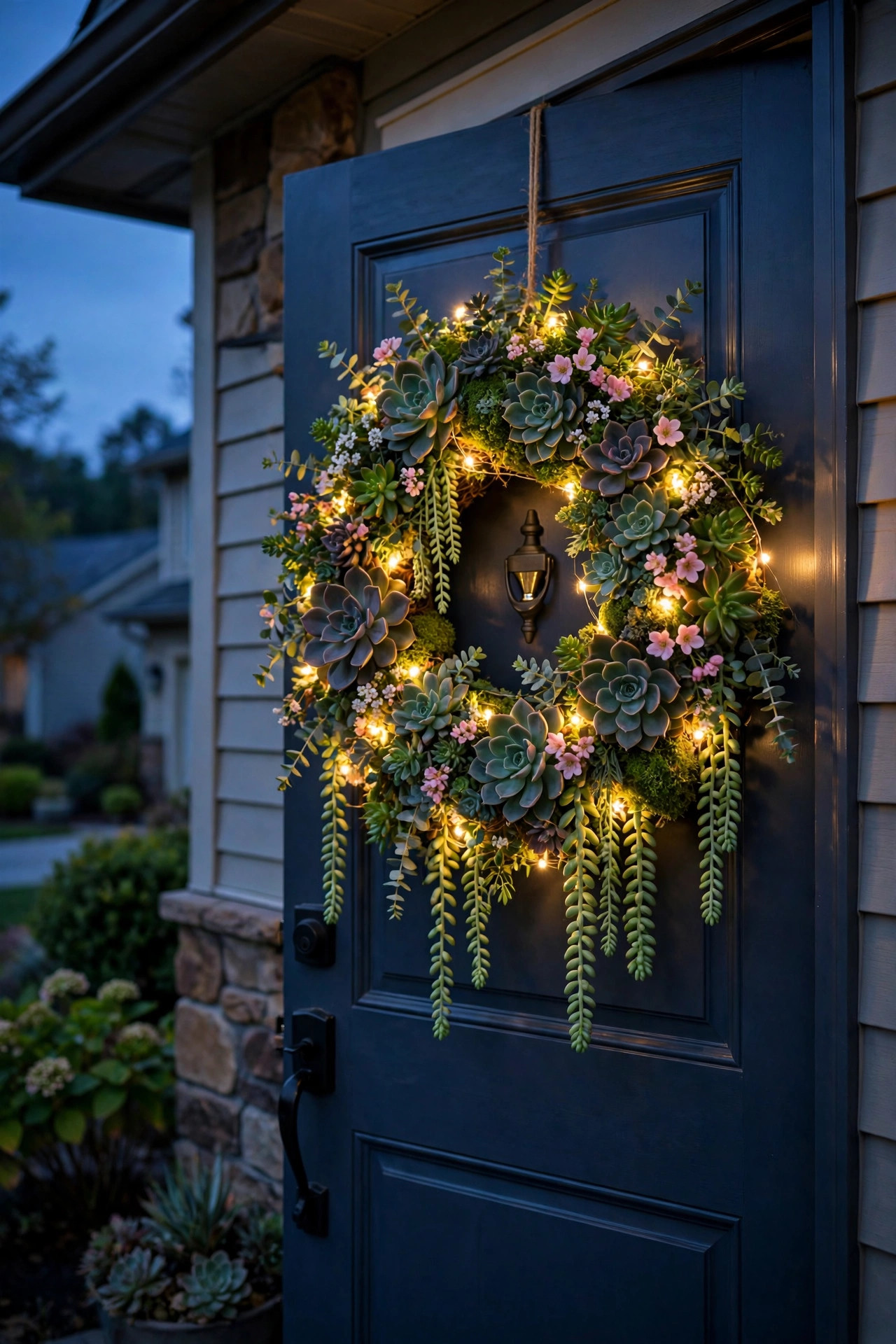
9. Living Succulent Wreath With a String of Lights
A living wreath is such a fun project, and yes, you can light it. Start with a wire wreath form filled with sphagnum moss, plant small succulents — echeveria, sedum, and hens-and-chicks are my favorites — and let it root for two to three weeks flat before hanging. Then add lighting the gentle way: a short strand of solar fairy lights draped loosely over the top, resting on the leaves rather than threaded through them. The succulents' plump leaves catch the tiny points of light beautifully. Water by soaking the whole wreath in a tub for 10 minutes every week or two, and remove the solar strand before soaking so the panel stays dry. Hang on a door that gets morning sun — succulents need light too, and the solar panel needs it as well. This is one of those spring wreath lighting ideas that keeps giving: the wreath grows fuller all season, and by midsummer it is lush and established. Just remember LED lights only, and never wrap lights tightly enough to bruise the leaves.
Suggested budget range: $40 – $90.
10. Wildflower Meadow Wreath With Twinkling Lights
For a cottage-garden feel, nothing beats a wildflower wreath — daisies, cornflowers, poppies, and Queen Anne's lace on a loose twig base. The lighting approach I love here is a twinkle-effect strand: tiny LEDs that fade in and out randomly, like fireflies settling into the meadow. It sounds gimmicky, but on a wildflower wreath it is pure enchantment. Use a battery-operated twinkle strand with at least 50 LEDs and drape it through the wreath in three loose loops, letting some LEDs peek out between flower heads. Keep the battery pack at the back bottom of the wreath where it won't show. Choose a twinkle mode that is slow and subtle — fast strobing reads as holiday, not spring. As with all dried-flower wreaths, LED-only is the rule, and keep the wreath under a porch roof since dried wildflowers fade fast in direct sun. This is the wreath I hang when I want my entry to feel like a storybook.
Suggested budget range: $30 – $65.

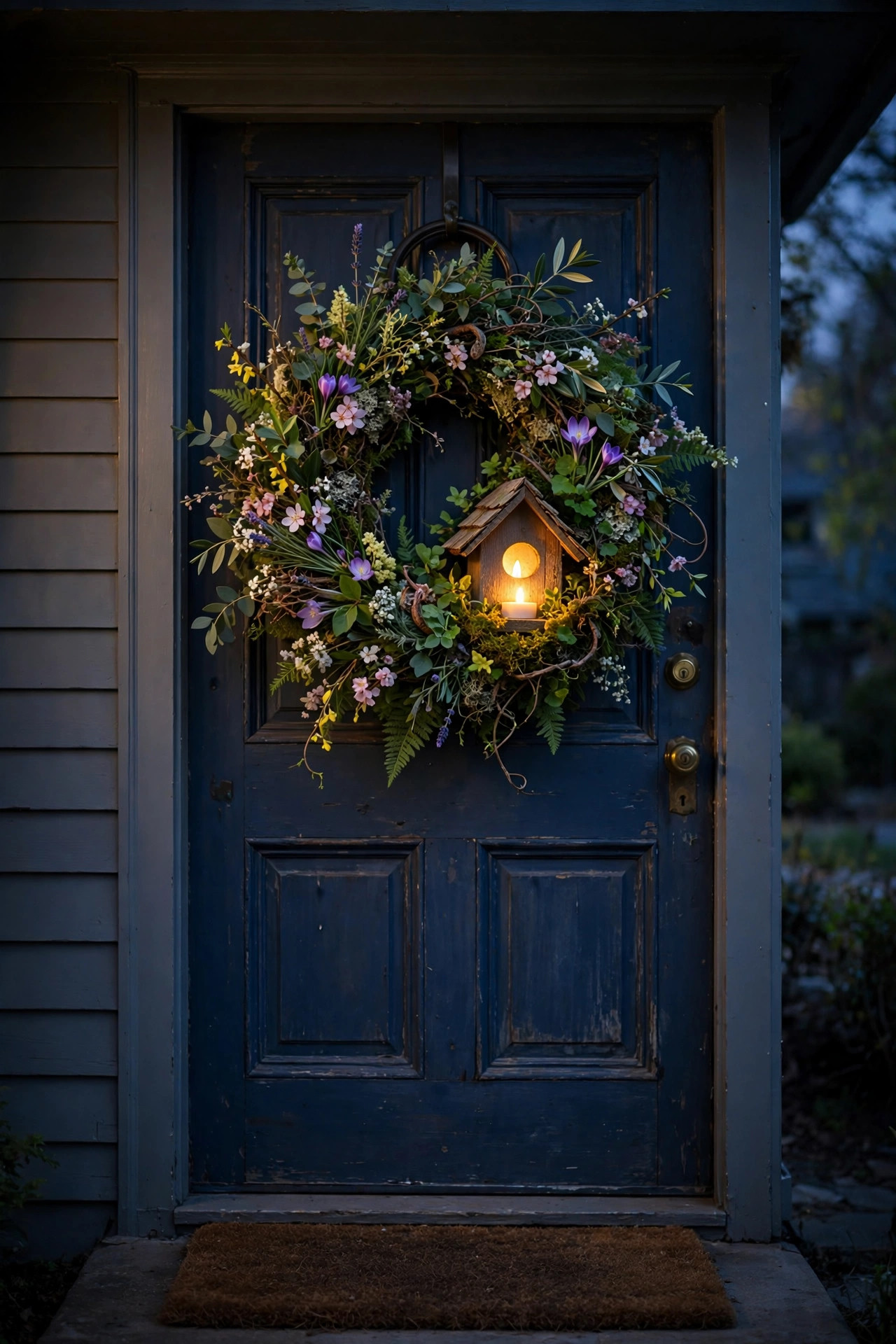
11. A Birdhouse-Themed Wreath With a Tiny Glowing Window
This is my whimsical pick and the kids in the neighborhood adore it. Build a spring wreath around a small decorative birdhouse — nest it into a grapevine or moss base surrounded by faux greenery and a few spring flowers. Then put a single warm-white LED tea light or a micro fairy light inside the birdhouse so the little doorway and window glow. The effect is a tiny lit cottage in the middle of your wreath, and at dusk it is irresistible. I always recommend flameless LED tea lights for this — never a real candle — and choose one with a timer so it clicks on at dusk automatically. Secure the birdhouse to the wreath with floral wire through its back so it doesn't shift when the door moves. A small solar panel can power a wired micro light if you'd rather not deal with batteries; pin the panel to the top of the wreath. For more seasonal styling ideas to pair with a themed wreath like this, I love browsing seasonal outdoor decor inspiration. Keep the tea light's battery fresh each spring — a dim glow ruins the magic.
Suggested budget range: $25 – $55.
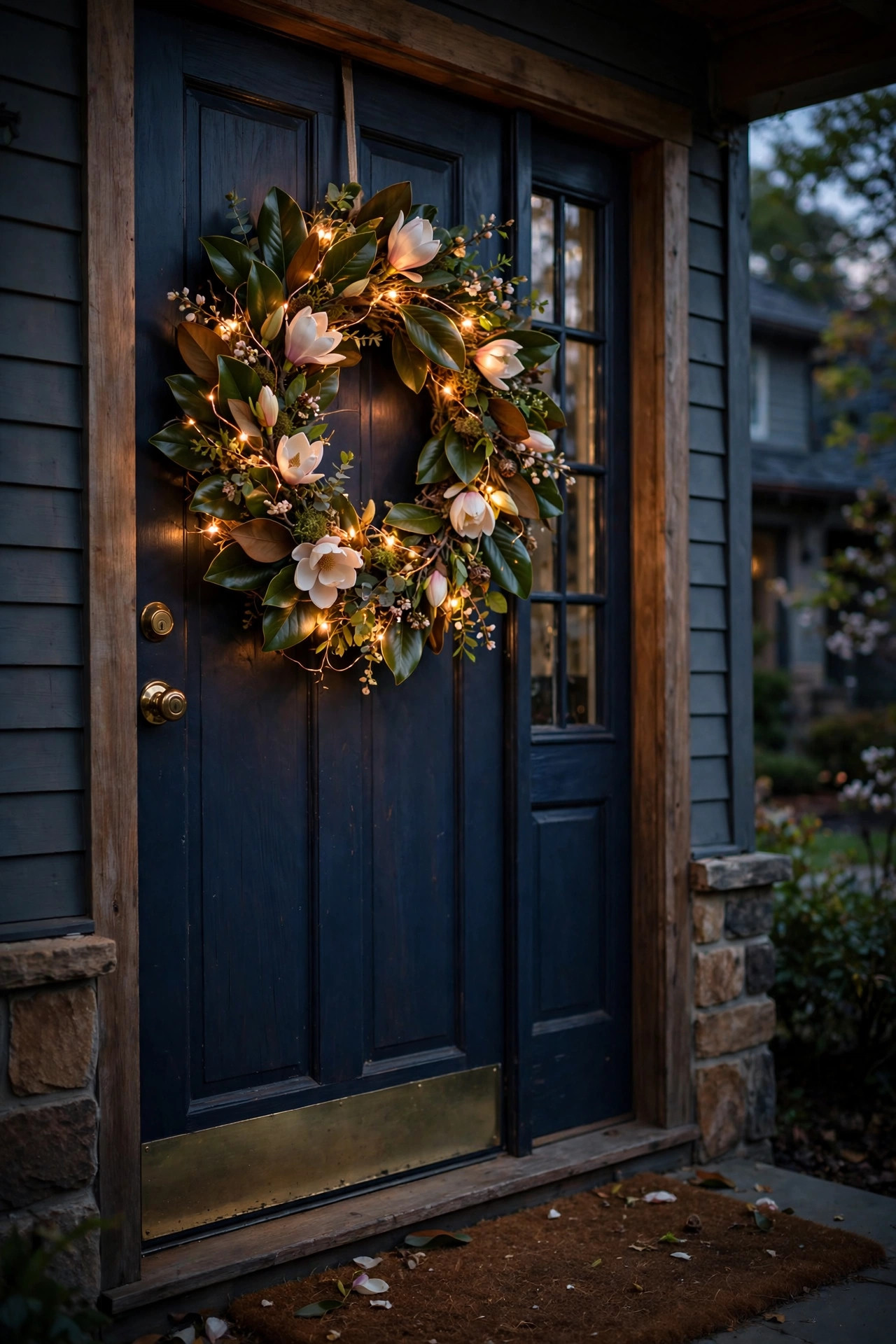
12. Magnolia Wreath With Copper-Wire Lights
Magnolia leaves — glossy green on top, velvety brown underneath — make a substantial year-round wreath, and in spring I lighten mine with cream blossoms and copper-wire fairy lights. The copper wire is a styling choice: against magnolia's rich tones, the coppery strands read as jewelry rather than wiring. Weave a 20-foot strand through the leaves in a loose figure-eight, letting some LEDs rest on the glossy leaf surfaces where they reflect beautifully. Magnolia wreaths are heavy, often 4 to 6 pounds, so hang yours from a sturdy over-door hook or a screw-in hook rated for at least 10 pounds — adhesive hooks usually aren't enough here. I use warm white lights at 2700K; anything cooler fights the magnolia's warm undertones. Since magnolia leaves are thick and the wreath is dense, push LEDs slightly outward so their glow isn't swallowed. A timer set for dusk to 11 p.m. keeps the look effortless. This wreath transitions beautifully — remove the spring blossoms in June and the lit magnolia carries you through summer evenings.
Suggested budget range: $45 – $95.
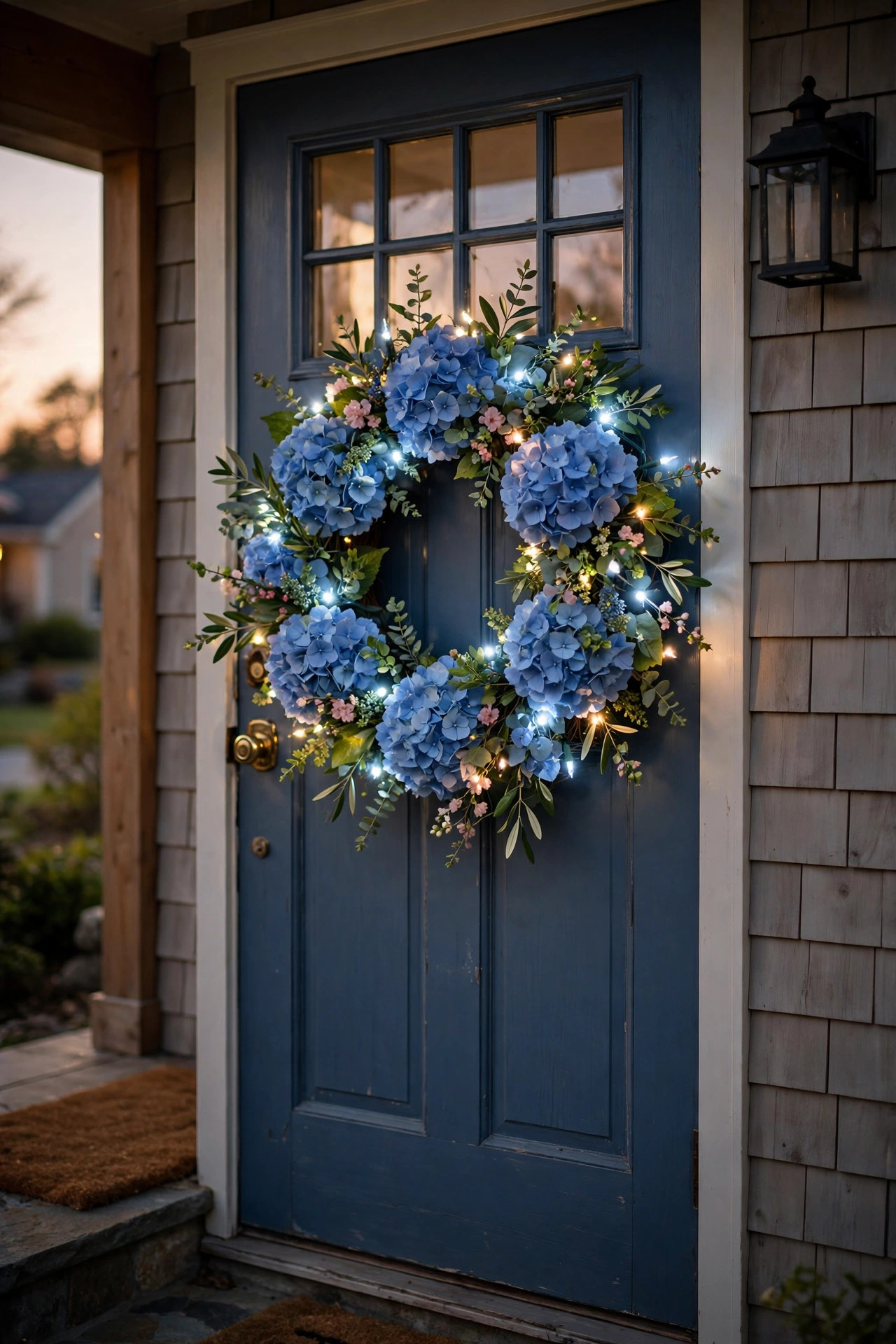
13. Hydrangea Wreath — Warm White vs. Cool White, Tested
Hydrangeas deserve a lighting note of their own because color temperature genuinely changes how they look. I tested the same blue hydrangea wreath with warm white (2700K) and cool white (4000K) lights, and the difference was striking: warm white made the blue blooms look dusty and a little gray, while cool white made them pop with a fresh, dewy clarity. So my rule is — match the light to the bloom. Blue and white hydrangeas get cool-neutral white (3500–4000K); pink and cream hydrangeas get warm white (2700–3000K). Build the wreath on a foam or grapevine base with dried or faux hydrangea heads packed tightly, then weave a short LED strand through with the bulbs tucked just under the bloom edges. Dried hydrangeas are delicate, so drape rather than wrap, and LED-only as always. Hang under cover, since dried hydrangeas crumble in heavy rain. This is one of those spring wreath lighting ideas where a small technical choice — the Kelvin number on the box — makes the whole wreath look professionally styled.
Suggested budget range: $35 – $75.
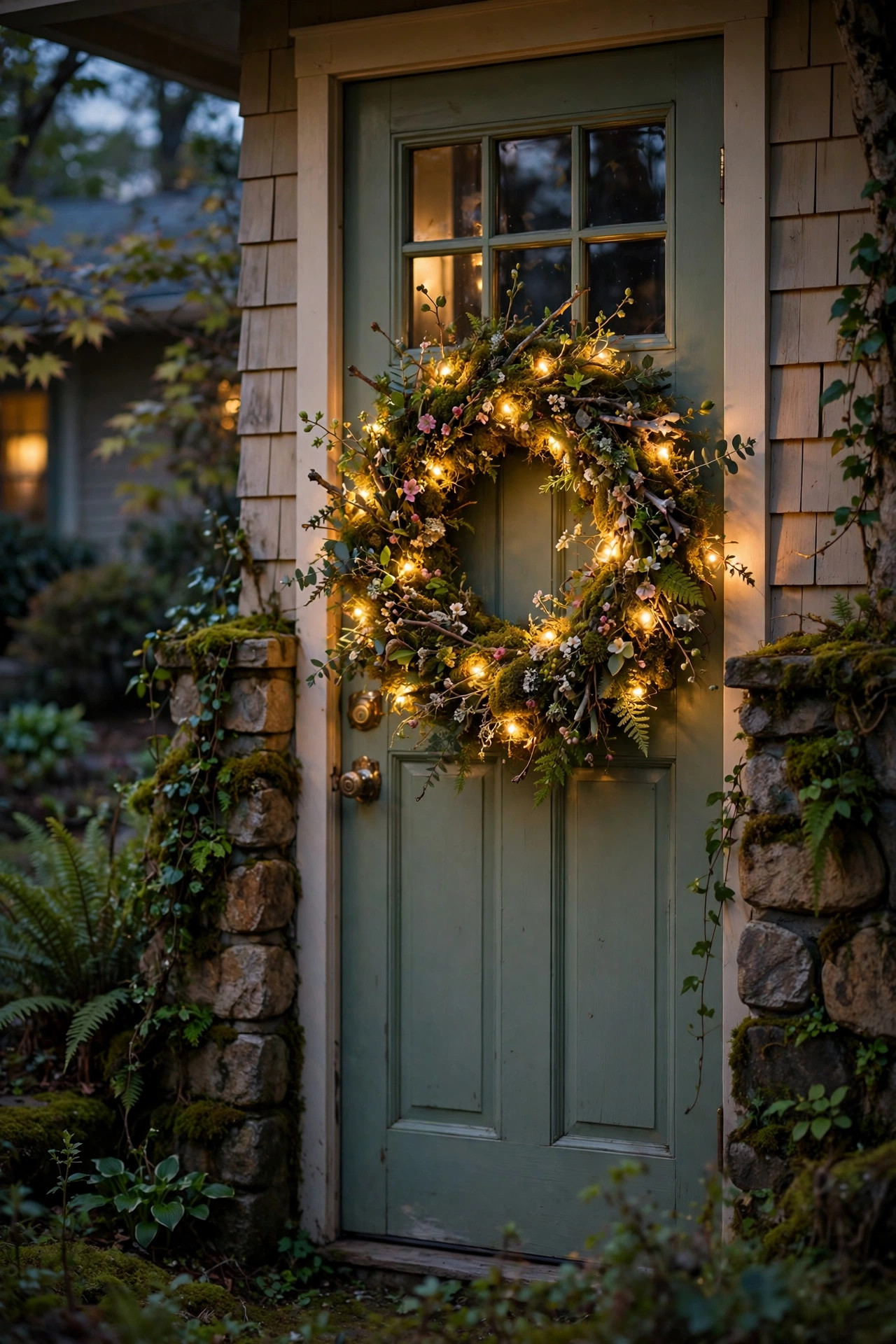
14. A Moss Wreath With Fairy Lights for a Woodland Look
For a quiet, woodland-garden mood, a simple moss wreath with fairy lights is unbeatable. Cover a foam or wire form with preserved sheet moss, add a few faux mushrooms, tiny ferns, or a bird's nest with speckled eggs for spring, then drape a warm-white fairy light strand loosely over the whole thing. The moss swallows the wire completely, so the lights look like they are growing out of the wreath — pure fairy-tale. I hang mine on a side or back door where visitors discover it as a surprise. Preserved moss holds up well outdoors under a porch roof but will shed if it gets soaked, so shelter matters. Use a battery pack in a small waterproof pouch behind the wreath, and choose a strand with a built-in 6-hour timer to save battery life. If your whole porch leans woodland, this wreath pairs beautifully with a layered entry — my fall porch lighting ideas post shows how I layer wreaths with lanterns and planters, a formula that works in every season. LED-only near moss, no exceptions — dried moss is flammable.
Suggested budget range: $25 – $60.
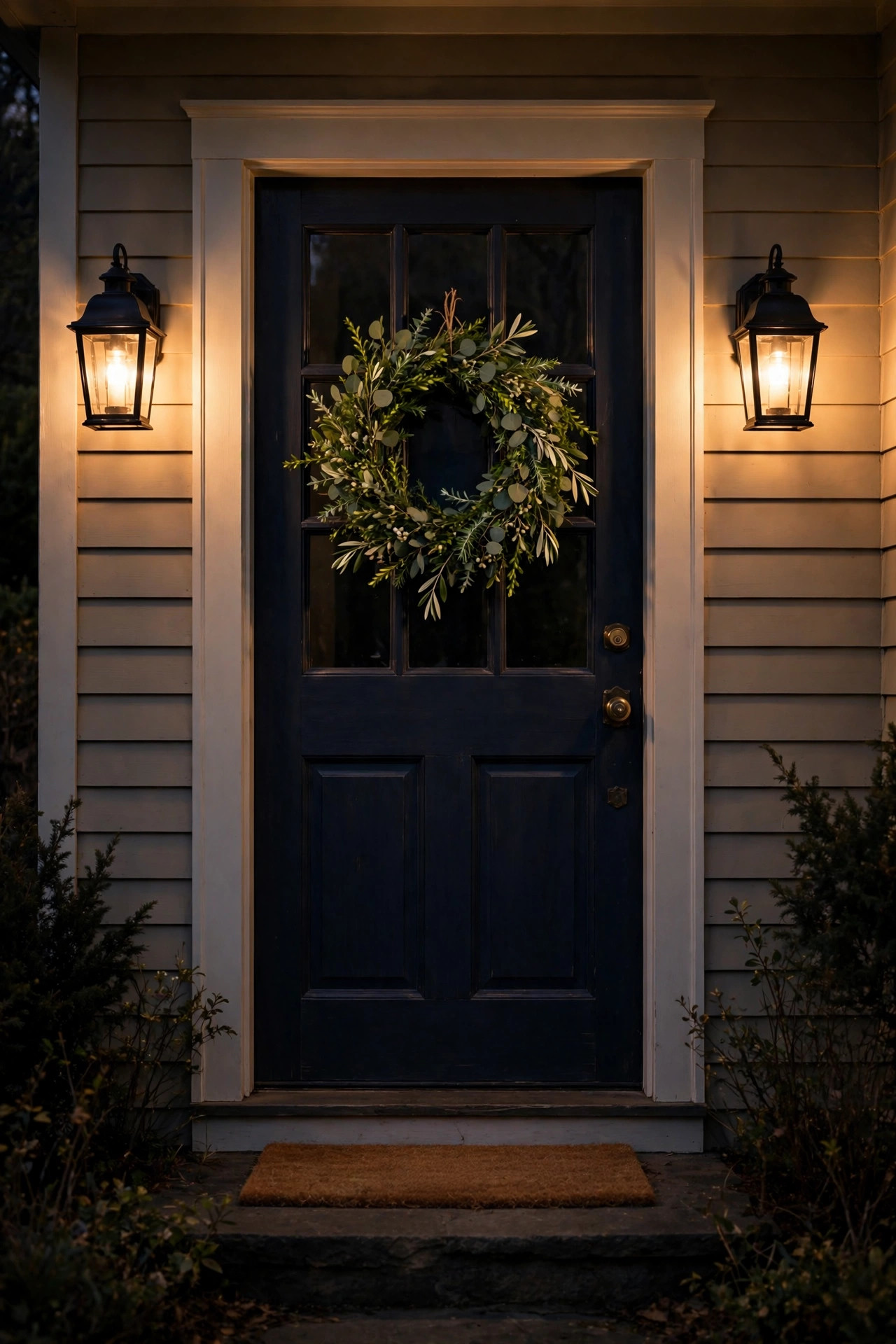
15. Layer the Wreath Between Two Lanterns
Sometimes the best spring wreath lighting ideas aren't about lighting the wreath at all — they're about lighting around it. My layered formula: a simple greenery wreath on the door, flanked by two lanterns (one on each side) holding LED pillar candles or fairy-light bundles. The lanterns throw a warm pool of light that makes the wreath glow by reflection, and the whole entry feels designed rather than decorated. Use lanterns at least 12 inches tall so they hold their own against a 24-inch wreath; anything smaller looks lost. Place them on the porch floor, on plant stands, or hang them from shepherd's hooks at matching heights. I always recommend LED candles with a realistic flicker mode — they give you candlelight warmth with zero fire risk near a door that opens and closes. Put everything on the same timer so the wreath lights and lanterns come on together at dusk. This approach also solves the wiring problem completely: nothing on the door needs power. It is my top recommendation for renters and for anyone with a door that gets slammed by kids.
Suggested budget range: $40 – $110.
16. Aim a Motion-Sensor Spotlight at Your Wreath
Here is the dramatic option: a small motion-sensor spotlight aimed at your wreath. I installed a battery-powered motion-sensor spot on my porch ceiling, angled down at the wreath, and the effect is theater — the wreath sits softly lit by its fairy lights, then blooms into full brightness when someone approaches. It is welcoming for guests and a genuine security plus. Mount the spot 6 to 8 feet from the door, angled at about 45 degrees so it washes the wreath without blinding visitors. Choose a warm-white spot (2700–3000K) to match fairy lights; a cool security-flood look will clash. Set the motion sensitivity to medium so passing cars don't trigger it, and angle it slightly downward. Battery-powered spots last a few months per charge in spring; hardwired is better if you have porch wiring. One caution: if your wreath has delicate dried flowers, check that the spot is LED and doesn't throw heat — most modern spots are cool-running, but verify on the box. This is the idea I suggest when someone wants maximum impact with minimum fuss.
Suggested budget range: $30 – $80.
17. Spring Wreath Lighting Ideas on a Budget: Refresh Last Year's Wreath
My most budget-friendly of all these spring wreath lighting ideas: don't buy a new wreath — relight the old one. Pull last spring's wreath out of storage, fluff the greenery, replace any tired flowers with a few fresh faux sprigs, and wrap it in a brand-new strand of fairy lights. A fresh light strand makes a three-year-old wreath look brand new because our eyes read the sparkle, not the foliage. This is also the moment to upgrade: swap an old battery strand for a solar one, or try the copper-wire style you have been eyeing. While you are at it, check the wreath's hanging hardware and replace any rusted wire. If you are going solar this year, solar exterior house lights have come a long way — the panels are smaller and the batteries last longer than the ones from a few seasons ago. Total time: about 30 minutes. Total cost: the price of one light strand and maybe a few flower picks. Honestly, this is the idea I recommend most to friends, because the best wreath is the one you already love, made new again with light.
Suggested budget range: $15 – $40.
Frequently Asked Questions
What color light is best for a spring wreath?
Warm white (2700–3000K) is the safest all-around choice — it flatters greenery, pastels, and natural materials like grapevine and moss. The exception is blue or white hydrangeas and anything icy-toned, which look crisper under a cool-neutral white (3500–4000K). When in doubt, I always recommend warm white; it reads as candlelight and never looks harsh against spring colors.
Are solar wreath lights bright enough for a front door?
For most doors, yes. A good solar prelit wreath with 50 or more LEDs gives a soft, welcoming glow that reads beautifully from the street. They won't match a plug-in strand for brightness, so place the solar panel where it gets 6 to 8 hours of direct sun and keep it clean. On shaded or north-facing doors, a battery-operated strand is the more reliable choice.
How do I keep wreath lights safe outdoors?
Three rules cover nearly everything: use LED lights only (they stay cool), choose strands rated for outdoor use if the door gets rain, and keep all lights away from dried flowers, moss, and foam unless they are LED. Tuck battery packs into waterproof pouches, plug outdoor transformers into GFCI outlets, and bring delicate wreaths inside during severe storms.
When should I hang a lit spring wreath?
I hang mine in early to mid-March, as soon as the worst of winter weather passes — the lights make those still-chilly evenings feel hopeful. A spring wreath with lights typically stays up through May. Set the lights on a dusk timer so they come on automatically; as the days lengthen, check that the timer still matches sunset every few weeks.
Conclusion
These 17 spring wreath lighting ideas all come back to one principle I return to every season: layer your light and let the wreath be the star. Whether you wrap a grapevine wreath in warm fairy lights, go wire-free with solar, or simply flank a plain greenery wreath with glowing lanterns, the right lighting turns a pretty decoration into the warmest welcome on the block. Start with one idea that fits your door and your budget — you can always add layers next spring. If you are hungry for more ways to make your entry glow, browse the rest of our outdoor lighting ideas and find your next project. Happy spring decorating, and may your front door be the one everyone slows down to admire.